

The Influencer: Secrets To Success And Happiness With Brian Ahearn
Posted by John Livesay in podcast | 0 comments

Developing your ability to influence people is crucial to success and happiness. Your business needs to have a solid foundation, and you also have to know how to widen your network. Join John Livesay as he talks with Brian Ahearn on the science behind the influence process. Brian is a dynamic international keynote speaker, author, coach, and consultant. He specializes in applying the science of influence in everyday situations. Tune in to discover how to recognize powerful opportunities and influence people!
—
Listen to the podcast here
The Influencer: Secrets To Success And Happiness With Brian Ahearn
Our guest is Brian Ahearn, a return guest from October of 2020. When he reached out to me and said that he has a new book called The Influencer: Secrets to Success and Happiness, that is a business parable and follows the life of John Andrews, who’s an ordinary person who becomes an extraordinary influencer as he learns from coaches, mentors, and clients. I thought to myself, “I need to have Brian back on.” I, myself, have written a fable. What he is doing is using the storytelling format to reach a new set of readers. It is about applying what is in The Influencer book on the impact that influence can have both professionally and personally.
—
Brian, welcome back to the show.
John, I appreciate you having me on. It’s good to talk to you again.
I know that one of the things that excited you about this book is that nearly every character is based on a real person that you have learned something from. What a great combination of your life’s work? I know what that feels like. You think I couldn’t have written this book several years ago, and I couldn’t have done it.
Absolutely. I didn’t start out writing the book with that in mind, but I started to quickly realize, “This character is based on Loring, Ben or Dwayne.” I started utilizing those first names so I could clearly visualize them, but it was an honor to share with the world the things that these people taught me that were so helpful on a professional and a personal level.
For those who haven’t read your episode from October 2020, give us a little snippet of your own story of origin. You can parallel that with the book as well. You do an amazing analysis and research to give some exposition on who this lead character is. I wonder if any of those things mirror your own story of origin.

The Influencer: Secrets to Success and Happiness
They do mirror my story. I had people ask me, “Is this your story?” Its bits and pieces are. For example, when John goes off to college, he takes a Psychology class as a freshman, which has a big impact on him. That happened to me. I didn’t come across influence, but I do clearly remember that class. It obviously had a big impact, but John is a lot smarter than I was. The things that he learns, he lays hold of and puts into practice so that he starts reaping the benefits.
It took me a lot longer to figure that part of the game. Certain things do parallel. Many of the things that he learns throughout the book are things that I learned from significant people, coaches, clients and mentors throughout the course of my life. To go back to that episode in 2020 and let people know my area of expertise is the science of influence. I look at the decades of research from Social Psychology and Behavioral Economics. I look at ways to put that into practice to help clients get to yes more often. That usually means, on a personal level, a lot more success when you are in the office and usually a lot more happiness at home when people are more willingly saying yes to you.
As a storytelling keynote speaker, what I have found is that when people learn how to tell better stories, it not only helps them in their sales career, it helps them in their personal life. You do such a great job in this book of showing how the two things work in this character’s life. Can you give us a little snippet of when you fix, learn, or improve one area of your life? It is not in a siloed, “This only helps me in my career.”
I think it takes creativity to figure out how to take some of the silos and combine them. As a personal example, I’m a disciplined individual. It came from sports at a young age, football, weightlifting, running marathons, and things like that. It took me a while to figure out how do I take that silo and put it into my career to have more success. Once I figured it out, all of a sudden, especially as I stepped out on my own a few years ago, it has never been hard for me to get up early, put my head down, and put in 8 or 10 hours a day towards the business where a lot of people might say, “I would not have that self-motivation.”
That is a personal thing for me. In the book, I tried to help the character as he learns these bits and pieces. He has got this vision of what he is trying to put together in this puzzle. He doesn’t know what the picture is going to be ultimately, but he knows that these snippets of ideas that are helping him somehow have to come together to form a philosophy of life. At the end of the book, he completes the puzzle and knows what that picture is.
One of the intersections of what your work and my work is people inevitably get this objection, which is, “I don’t feel like I’m ready to make a decision right now. I need to think it over.” You have helped people come up with some things to either avoid that from happening or what to say when it does happen. Can you give us some insight on that?
I think a great way of avoiding that is very early in the sales process. John, the lead character, is a medical supply sales rep. When you understand the principle of consistency, it tells us that we feel an internal psychological pressure and external social pressure to be consistent in what we say and what we do. The bottom line, we feel better about ourselves when our words and deeds line up.
[bctt tweet=”Don’t say ‘no problem’ after someone thanks you. Give people everything they need upfront to make saying yes easier.” username=”John_Livesay”]
If a salesperson learns to ask the right questions early on, when you get to the point where you are trying to close the sale, it becomes much easier because you can reference back to. For example, “John, when we initially talked, you told me that you needed this particular price, timing, and these terms in the contract. It looks like we have done all of that and a little bit more. Go ahead and start working on the paperwork and consummate this deal.”
It becomes much harder for you to say, “Let me think about it.” It is not that you want to remove yourself from the situation. There is always a little bit of fear when you are making a change and a purchase. Learning how to ask those questions to trigger this principle of consistency allows somebody to feel good about themselves by saying yes because they are only responding that you have done everything you said you would.
The other thing that almost all of us have happened to us at one time or another, especially if there is some emotion involved in it, like if someone is breaking up with you, for example. They said, “It was never my intention to hurt you.” I know this happened to me exactly. At that time, I found that so unsatisfying of an answer and I thought, “Why is that not landing as a sincere apology or making me feel any better?”
Someone said later, “Wouldn’t it have been great if you could have said back? I’m sure it wasn’t your intention to make me feel loved by that behavior either.” I didn’t have that in my repertoire to say when it happened to me. You talk about almost all of us having that situation where we go, “I should have said this instead of that or not saying anything.” What do you show in the book that helps us with these situations?
This guy, John, is a smart and good person, down to the poor, which most people are. We want to do the right thing. He does run into situations where he ends up hurting his wife because he is making some decisions without consulting her. She was looking at this like, “This is a partnership, and you may not think this is important, but I’m not even in on the decision-making.”
He does feel bad about it, but he continues to make this mistake at times. It is never to hurt. He sometimes feels boxed into a decision, and all of a sudden, he is responding. I will say that he begins to learn his lesson, and that makes things better, having to sit down with somebody in a situation like that and not try to defend why you did what you did because we all have reasons to be able to say, “I am so sorry. It was never my intention. Here is what went on with me. I hope you can forgive me.”
That is an integral part of having relationships being able to say you are sorry and asking for forgiveness. I think asking for forgiveness is important. We could think that everything is okay because we apologize and have not gotten confirmation from the other person that they are okay. I think it is important to admit the mistake and then say, “Can you forgive me?” If that person says yes, you are in harmony. If they say, “This is going to take some time,” then you have got to be patient.

Influencing People: It takes creativity to figure out how to take some of the silos and combine them as a personal example.
I think what the frustration was, at least, for me, and I see it in other situations where it is not that big of a dramatic moment, but it is when someone doesn’t want to own responsibility for what they did or the outcome. The fact that it wasn’t my intention to hurt you means I’m off the hook. There is nothing to even ask for forgiveness for because it wasn’t my intention. I think in a business situation, it is the same thing because I have worked with clients that have lost clients and tried to win them back. We have to do the same thing as we do in our personal relationships and own that we made a mistake, explain what we are going to do, that it doesn’t happen again and have some empathy for what that other person is feeling.
The other part of what you do so well is when someone is looking for a sales keynote speaker. They typically do a Google search. Oftentimes, I have come up against a couple of other speakers. They had a meeting and interviewed the final three candidates and looked at our videos and our books. Sometimes, as many as 8 or 10 people have to agree on who is going to be the speaker. You hoped you had created somebody in there that is going to be your internal champion to rally for you. No matter what the decision is, getting a consensus can be challenging with a team. What kinds of tips are we going to learn from your Influencer book?
When you are going into a situation like that, try to discern, first of all, is this person the decision-maker, or there going to be other individuals who are part of it? Can you get some of those other individuals on the call? For example, I had the second call with a client. The first there was the lead-in, but we had a call with that lead-in’s boss and a peer of the boss. There are still other people that are going to make the decision. I know that now having a positive influence on three different decision-makers and being able to speak their language in the middle of that sales conversation gives them confidence that this guy knows what he is talking about and he can relate to us.
Three people will be a lot better for ultimately making that decision than if I had that single individual. Discerning who the decision-maker is and doing what you can to bring in other people also asking, if you and I were having the conversation and I might say, “John, it is a great conversation. I’m excited about the potential opportunity to work. Who else will you be talking with? What can I give you beyond the conversation to support your recommendation for me as a speaker?”
If it is that bio, the customer list, the videos, and all of that stuff are usually out there for any speaker. My goal is to make your life a little easier and directly give you that information so that you are ready at that moment to say, “I talked to the person, look at the list. Let’s watch this five-minute video and get that traction.”
I think that is so valuable. Sometimes you get hired because you are easy to work with, given everything else is the same. The simplest things of, “You are connecting the dots for me. I don’t have to go searching for something, or you have some empathy and are trying to put yourself in my shoes going, “You might need this. I’m happy to send it to you. You don’t have to spend five minutes looking for it,” or whatever it might be. Those little things do add up.
I had a client in 2021. I’m very diligent about staying on top of the email. When I would email that person, they are like, “Thank you so much for getting back to me quickly.” I said, “Part of my job is to make your job easy.” She was like, “You would not believe how many people don’t do that or hard to get ahold of. They don’t get me information.”
[bctt tweet=”An integral part of having relationships is being able to say you’re sorry and ask for forgiveness.” username=”John_Livesay”]
I also know this when I get something. If she had said, “Give me the bio, the customer lists, and a link to a video,” I almost always would put in the beginning, “Name as promised to make what you need.” It is only highlighting that, “Brian is a guy who does what he says he will do.” Those little bits continually work on somebody. That is when they look for a speaker again, and they say, “This person was great on stage. They were so easy to work with.” They want you back.
It is that whole thing of pre-suasion that you are such an expert at. You are reinforcing, as promised, is a subtle subconscious thing of almost edifying yourself that you keep your promises.
If you go into a store, you may have a wonderful experience, but it can be reinforced when that person says something about, “We hope you had a great experience shopping here now,” or the server who comes up. The server, like in a restaurant, should never, ever, come up and say, “Is the food okay?” Nobody goes to a restaurant for okayed food.
That is all we are aiming for.
Is the food delicious? If you come back and say, “Delicious,” you have convinced yourself that this is pretty good. I should probably come back. If it is not, they have an opportunity to say, “I am so sorry. What can I do to change this? Can you bring it back and have it warmed up or something like that?” That act becomes viewed as reciprocity, “That server was nice.” He or she went out of their way to make sure this was warmed up. I’m going to tip them a little more and come back here. Those little interactions back to that customer mean a lot.
I had an experience of this personally. I was in New York to go see some Broadway shows. You now have to stand in line to show your ID and vaccination and then another line to show your tickets. You are standing outside. It is cold and winter. They have those people saying, “Welcome back to Broadway.” Suddenly, everyone is happy in the line. You don’t mind the cold. You are excited to see a show that you have seen for many months. That one phrase said by the people who are running the line made a whole energy shift for everyone to remember why they are there. You have a great story in here about a major insurance company that was able to recover from a $700,000 mistake with post-it notes. Please share what that is.
The first book that I wrote, Influence PEOPLE: The Powerful Everyday Opportunities to Persuade that are Lasting and Ethical, looks at a lot of business case studies. There was a piece of research that intrigued me. It was around a company trying to increase the response rate for a survey they sent out. When they sent the survey out with a cover letter, I think 36% of the people responded. When they put a little handwritten note on the cover letter, it bumped it up to 48%. Taking a little extra time to sign that personally and put a little note on there increased the response rate, but in a third variation, they put a yellow sticky note. They had the same handwritten note that had been on the cover letter before.

Influencing People: There’s always a little bit of fear when you’re making a change and you’re making a purchase.
The response rate was 75%. They more than doubled it. When people hear that, they are fascinated, but they don’t always know how to put it into practice. At the company that I used to work for several years, I would come back from an extended Christmas break, and almost immediately, I was called into a room with half a dozen people. “Here is the situation we face, John. We had overpaid insurance agents in one of our operating states, $700,000 in total, 150 agents had their commission for the month of December doubled. We needed to get the money back because, at the end of January, we were going to be paying year-end bonuses to those agents. It would be nice to have an extra $700,000.”
As we strategized about it, we didn’t have the ability to go in electronically and take the money out. We were going to have to inform them that there had been a mistake and ask them to write a check. That is no easy task. If you get a letter that says, “John, I’m so sorry, but we overpaid you $5,000 last month, would you sit down and write us a check right away?”
That is where cold calling becomes more appealing than writing the $5,000. The head of accounting had been through some of my training, and I turned to him and said, “Steve, remember what I taught you guys about the sticky notes?” He said, “Yeah.” I said, “When you send out that letter that talks about the mistake and asks for the money back, make sure you put a sticky note on every one of those, personally sign it or put a little note.” He said, “I will do it.”
It was a couple of weeks later, I called them up, and I asked, “How was the collection going?” His exact words were, “John, I’m floored.” I said, “Why?” He goes, “We have already gotten money back from 130 of the 150.” The optimist in me said, “You mean we didn’t get it all back?” He laughed at me and went, “We are talking about money because I get them to say, ‘Take it out of next month’s commission, put me on a payment plan’ or anything, but ‘Sit down and write the check.’”
When we had lunch a few months later, we had collected in full from 147 of the 150. This is a hardcore accounting, black and white numbers guy, and your sales staff is BS. I don’t believe in that. He believed in the use of yellow sticky notes. He was a believer after that because he knew that was a radical change in behavior from these people to pay us that money back.
When you go, the extra effort to other people is a great way to end the episode. The book itself again is Influence PEOPLE: The Powerful Everyday Opportunities to Persuade that are Lasting and Ethical. It is on Amazon, but this concept of the unrecognized power of saying thanks and responding properly to thanks, there are two questions in that. One is, saying thanks, how is that unrecognized as a good thing to do? The second part of it is, when someone thanks you, there is a proper way to respond as opposed to maybe, “You’re welcome,” not saying anything or a smile. Let’s take the first part of that question. Are most people not aware that there is power in saying thanks, and that is why they don’t do it?
[bctt tweet=”Having positive influence on different decision makers and being able to speak their language in the middle of that sales conversation is important.” username=”John_Livesay”]
I think what you or I might have called good manners as we were growing up had gone by the wayside. I have always found that, for example, if somebody asks me something and I say, “Yes, please or no, thank you,” I have a lot of people go, “It is so nice to interact with somebody who has manners.” I will say, “My mom raised me right.” The story that I put in the book was about a man named Lieutenant Murphy who was a Navy SEAL and was killed in action.
He had to make a call back to base and expose himself on a rock. He knew he was going to die and be shot. In the middle of that, he called for airstrikes and said, “Thank you,” at the end of the call. The individual who relayed the story, a commanding officer, said, “That is the man that he was,” in the middle of a firefight and he did lose his life. My point with sharing the story is if he can find the time, life and death situation, to say, “Thank you,” then we all should.
It acknowledges that other person like, “I appreciate what you have done.” On the flip side, the other story and that you asked about how we respond to that, we never wanted to dismiss somebody’s thanks to you. When somebody says, “No problem. No big deal. No worries,” you are de-valuing what somebody felt like was valuable. The proper way when somebody says “thank you” is to say something like, “John, that is what partners do for each other. You helped me. I will help you. I’m happy to do this.”
If you want to be funny, sometimes I have said this, “It would have killed an ordinary man, but you were worth it.” Something that acknowledges you heard them. You had put forth an effort and I appreciate what they did. It is the grease of the wheels that make our relationships better. Little things like that make customers want to come back because they feel good about the transaction.
I want to thank you publicly, but most people won’t be able to see what I see, which is you did something very personalized and customized as you have a monitor with my show’s image logo. It says, “Hello, John,” on it. I have done over 350 episodes. It also shows pictures of your wonderful books. I have never had a guest do that ever.
I appreciate you saying that. I joke with people, I say, “Everybody should have their name in lights once a day,” but I’m a fast learner like John was in the book, The Influencer. Once I see that something means something to people, I make it a point to go out and make sure that I recognize and prepare for the time that we are going to spend together. It is a wonderful selling tool, too, because then people ask questions. I can stand up and talk about the virtual studio that I put in because of the pandemic. It creates a win for everybody.
Any last thought? Obviously, if people want to reach out to you, they can go where?

Influencing People: Learning how to ask questions to trigger the principle of consistency allows somebody to feel good about themselves by saying yes.
The best place to go to start is LinkedIn because I post a lot of content. If you reach out to me and don’t tell me how you found me, guaranteed, I will come back and say, “How did you find me?” I like to know why people reach out. It allows us to have a little bit of interaction. It makes social media social. If you let me know how you found me, I will still say “thank you,” and we will have a little interaction. You are going to get some one-on-one.
The other place would be my website, which is InfluencePeople.biz. There you find links to the books. You can see previews of my LinkedIn learning courses and all kinds of other information. I have been blogging weekly for several years. There are a ton of free resources available if you are a reader, and I have been on well over 100 podcasts. If you want to listen to podcasts, there are lots that are listed there.
Thanks for sharing your wonderful wisdom and fable. It is a fun way to improve our skills in becoming better influencers and having better connections with people.
Thank you, John. I appreciate you having me on the show. It was great to chat with you, and hopefully, as we get out of the pandemic, we might find each other at the same venues speaking to some audiences.
That would be terrific. I look forward to that day. Thanks again, Brian.
Important Links
- Brian Ahearn – Previous Episode
- The Influencer: Secrets to Success and Happiness
- Influence PEOPLE: The Powerful Everyday Opportunities to Persuade that are Lasting and Ethical
- LinkedIn – Brian Ahearn
- InfluencePeople.biz
- Better Selling Through Storytelling Method Online Course
Wanna Host Your Own Podcast?
Click here to see how my friends at Podetize can help
Purchase John’s new book
John Livesay, The Pitch Whisperer
Share The Show
Did you enjoy the show? I’d love it if you subscribed today and left us a 5-star review!
- Click this link
- Click on the ‘Subscribe’ button below the artwork
- Go to the ‘Ratings and Reviews’ section
- Click on ‘Write a Review’
Love the show? Subscribe, rate, review, and share!
Join The Successful Pitch community today:
- JohnLivesay.com
- John Livesay Facebook
- John Livesay Twitter
- John Livesay LinkedIn
- John Livesay YouTube
Happily Ever Always with Michael Rosenblum
Posted by John Livesay in podcast | 0 comments

 Episode Summary:
We often look for happiness in different places and people. But no matter how much we look, we can’t seem to find it. Michael Rosenblum believes we all deserve to live Happily Ever Always and for him, that is about looking within oneself. He is a self-made man and one of America’s most successful real estate brokers—deemed even as the broker’s broker. He talks about how much of his success comes from loving what he does and in serving other people. Shedding some life into real estate, he gives light and comforting advices on going to listings, selling, buying, and marketing. Ultimately, he believes that money can’t buy you happiness but happiness can make you rich.
—
Listen To The Episode Here
Happily Ever Always with Michael Rosenblum
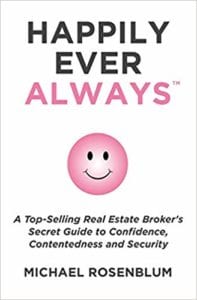
Happily Ever Always: A Top-Selling Real Estate Broker’s Secret Guide to Confidence, Contentedness and Security
My guest is Michael Rosenblum, who has written a wonderful book called Happily Ever Always. He reveals the winning philosophy by his amazing route to becoming one of America’s most successful real estate brokers. He has this amazing story where he takes you on a journey where you go through all these exercises to get in touch with what your thoughts are about happiness. He tells us that good business isn’t good enough. As someone who passionately believes his joy is measured in the equal proportion to the happiness of those around him, you could imagine that he makes everybody feel happier. He said, “We’re intentionally seeking this spiritual connection because it triggers greatness and we all want that. When you realize why you always deserve to live happily ever always, you have the secret to not only a happy life but a happy business life.” Michael, welcome to the show.
Thank you, John. I’m delighted to be here, certainly humbled, to say the least.
I always like to ask my guest to tell us your story of origin. You can go back as far as you want. You can be a little boy dreaming of being rich. You can be high school, college, wherever you want to start that had, “I want to be happier than the people I see around me.” Whatever you think would be relevant to give us a sense of how you all started on your journey.
I should probably begin by saying I was one of those children who never felt as if he fit in with other kids. I was a little different. In being different as we all maybe have experienced at one time or another in our life, you get bullied when you’re different by people who sometimes are not happy themselves. As I began to grow and learn to like myself, I decided through my trials and tribulations of life that I wanted to find out if there was some formula for being happy. As a young person, I thought happy was being rich, having a lot of money, all material possessions. I came to learn over time of a successful business that I wasn’t happy.
[bctt tweet=”Don’t wish your villains away” username=”John_Livesay”]
I remember having a job one time. I was paid so much money and it was blocks from my home here in Chicago. I would wake up every morning and I would cringe to go to the office because I wasn’t enjoying myself. I was able to go to dinners and buy different things and yet I wasn’t happy. I thought maybe happiness is when you meet the love of your life, when you meet that right person and you have that connection. I was blessed to have that experience and it didn’t work because you fall in and out of relationships.
That’s a lot of pressure to put on one person, “You have to be responsible for my happiness, now go.”
Together, being with someone, I was thinking that was the epitome of happiness and it wasn’t. In short, what I realized was that happiness came from within me. I had to figure out who I was and what was going to make me happy. What I found that was going to make me happy was having a sense of security of my own personal truth. Accepting me for who I am, growing with that and accepting the flaws, the favorable aspects and the gifts that are buried within me.
It’s an interesting way of looking at life because a lot of us, especially in the business world and sales, are looking for people to like us, accept us, typically in the form of hiring us. This whole podcast is about the successful pitch. If you’re constantly pitching to get hired or to sell a product or a service and your big concern is like Sally Field, “Do they like me?” You’re never going to ever feel completely happy because not everyone’s going to like you or what you’re selling.
That is the truth to heart. Furthermore, what’s interesting is that when you find that you like who you are, you have the ability to present yourself in an authentic way. You’re not concerned what other people think and you’re not concerned that the product you might be selling isn’t going to be favorable to somebody else. You can sell yourself best when you like yourself. When you find your own sense of happiness, then you have the world by the tail and you can do everything and anything that you ever wanted to.
You certainly have the world by the tail when it comes to business as one of the most successful brokers in Chicago. You’ve generated sales of over $400 million and then inducted into Berkshire Hathaway’s Hall of Fame. You’re constantly in the top 1% of 46,000 real estate brokers. There must be something to that success that has allowed you to stay consistently at the top. Yet if people think that that’s going to make them happy, they’re still not getting the message.
It falls back on the fact that you have to be happy with yourself. You have to like yourself. You also have to be authentic to who you are. By understanding who you are, then you present yourself in a real way. When you present yourself in that real, authentic way, you will find that people will gravitate towards you and you can do anything. My success in real estate is probably driven by the fact that I just want to do a great job for people because that’s what I would want to be done for me. I often call myself the broker’s broker. The reason why I call myself the broker’s broker is because I treat my clients in the same manner that I would expect my broker to treat me.
[bctt tweet=”Reincarnation: Do you want to come back as you?” username=”John_Livesay”]
It’s almost like a doctor saying, “I’m going to treat this patient like it’s a family member and not just another job.” I love this concept of when we are our authentic selves because in the marketing world if you try to be all things to everybody, you’re nothing to everybody. As opposed to picking a lane, picking a niche, who this is for and who this is not for. Therefore, when you go out to pitch to get someone to hire you, to give you a listing, what is it that you do or say that makes people want to work with you versus someone else? Separate from all the bells and whistles of, “This is our marketing strategy.” I want to hear, if I can, what’s the mindset you go in with? What’s the energy? What is it that somebody could say that would cause you to say, “This isn’t a fit?” Anything you can share in that arena?
I believe the driving force when I go into a listing appointment that separates me from other brokers is number one, my enthusiasm for the work that I do. Number two, being able to give a clear, concise presentation and of course not to forget the word compelling. We all suffer a little bit from not having the most robust attention spans because we’re busy. You need to have your presentation done in a succinct way where for me, one of the things that I do is I like to cover four points. I bring a wonderful presentation book of real estate comps and all the marketing we do. It’s a wonderfully thick book that we leave behind with our clients. What I do is number one, talk about who I am and a little bit about my background. Number two, I get into the comps. Number three, I talk about the marketing that we are going to implement in order to drive traffic to a particular property. Number four, we talk about how we’re going to service you, the client, so that we’re answering your questions before you ask them.
I would imagine that other brokers do a similar process in terms of the research and a little bit about their bio. What I’m looking for is your secret sauce. Do you paint a picture of what life is going to be like? Do you paint a picture of the process which can be stressful being less stressful because of your happiness focus?
It’s probably the oodles of enthusiasm that I seem to generate when speaking to somebody. I’m asking them questions about why they’re moving and why they’re contemplating this sale. If I’m working with a buyer, in going through an assessment program with the buyer, it’s trying to find out what’s the motivating force and then talk around that. I think it’s probably coming in and having an enormous amount of enthusiasm for what I’m doing. The other thing is just having the knowledge. You would be surprised at how many people don’t have a lot of knowledge about their industry. Fake it to make it.
What I hear then is if our audience wants to be more successful and happier, bring your enthusiasm, which has to be authentic. Ask questions that are specific to that particular person’s reason for making a change. Most importantly, prepare and don’t underestimate that can separate you from the competition. If someone is also saying, “I’d like to overcome some self-doubt. Maybe I don’t have the years of experience and this amazing track record that you have, Michael.” What would you recommend people do?
[bctt tweet=”When you find your own sense of happiness, then you have the world by the tail.” username=”John_Livesay”]
I believe everyone has certain gifts that are a little different than someone else’s. When you don’t have an experience in selling a lot of real estates, you might have a skill set that you can comport from a prior profession you were involved in. For instance, maybe somebody was in party planning. What they can talk about is the fact that when they get a listing, they build a marketing plan around that particular listing to figure out how to get the optimum amount of traffic. They’re taking their skill set from planning parties, which involves understanding menus and understanding possibly how to get press, depending upon the type of party it is. It’s taking a skillset from a prior profession, going ahead and comporting that to real estate and implementing it. Your enthusiasm can drive a contagious and infectious road path to get people to do exactly what you might like.
One of the things you talk about in the book, Happily Ever Always, is listen to your gut, not your wallet. That goes back to that earlier question I had about when do you say no to a potential client? Your gut’s saying, “I’d love the commission on this listing.” You’re listening to your gut and not your wallet. Do you have a story around that you can share?
First and foremost, you have to trust yourself. You have to believe that others are going to do the same. When you’re genuine, you win. If you have an agenda only for money, you won’t. Sometimes I’ll go into an appointment and I’ll sit down with a potential seller. They’re telling me that this is where their property should be priced and that they know exactly how it should be sold. It begins to make me feel as if, “What am I here for?” I should probably back up and say when I meet somebody who tells me that they’ve sold a lot of properties and this is where it should be priced despite the comps. I’ve cued them on different reasons as to why they believe that and I don’t feel that it is genuine or it makes sense. I step back and I’ll say, “I don’t think I can meet your expectations. I’m not the person for you.”
I realized that if someone’s telling me that they’ve sold six properties and I’ve sold over 1,000 properties, I have a better track record in deciding whether or not something’s going to go. Therefore, if I feel the person’s contentious, I realize it’s only going to be blood money. It’s not going to be harmonious. When you are in business with someone and when you’re selling something for someone, you’re married to them and you want to have that harmonious relationship. If it’s not there, then you’ve got to listen to your gut, not your wallet. You could end up spending a lot more in the long run.
[bctt tweet=”You get bullied when you’re different by people who sometimes are not happy themselves.” username=”John_Livesay”]
You also said you called it blood money, which leads me to my other question. You talk about, “Don’t wish your villains away.” Tell us what that means.
That’s an excerpt from my book and you should never want to wish your villains away. For lack of better word, I’ll use the word dreadful. Sometimes the dreadful people we think that come into our lives we wish weren’t there are the very people that can teach us lessons, not only about our self but also be a springboard to take us to a greater place. You might say, “Michael, why would you make that statement?” John, I would make that statement because sometimes mean people do things to us. It irritates us to the point where we say, “I’m not going to be your doormat. I’m not going to let you walk all over me. I am going to rise to the occasion and I’m going to be better.” That villain motivated you.
Even Cruella de Vil is someone that could motivate us if you look at it the right way is what you’re saying.
Another thing that I’d like to touch on is the point that is there anything bad in life? I guess we could say there are things that are bad in life, but sometimes from the tragedy comes the victory. We don’t see that necessarily when we’re settled in a situation that is terrible and that is painful. Sometimes if we step out of it, which takes a lot of courage and a lot of strength, we end up finding that we are strong and we can endure and we end up winning.
Is there a time in your business life when things fell apart and you still were able to find happiness?
There was a time in my twenties, I remember specifically where I wasn’t getting paid worth my salt. I felt in all the times that I kept asking my boss for a raise, which was over a two-year period that she wasn’t interested in doing that. I had looked for another job but hadn’t found one yet. I believed that until I took a hold of my life, believed in myself, quit my job and didn’t worry about the fact that I didn’t have another job. I knew that I would get a job or I could wait tables or do something rather than work for somebody and not get paid worth my salt, I went ahead and I quit.

Happily Ever Always: When you find that you like who you are, you have the ability to present yourself in an authentic way.
The next day in making phone calls, I had two job opportunities. What was interesting to me here was the fact that I probably needed to do what I did. I wasn’t going to find the security of getting one job and leaving another job. Perhaps I believe what the universe was saying, “Stand up for yourself. Don’t be a doormat. Believe in yourself. Believe you have great talent and things might not work in that alphabetical order that you want, but if you take the risk, you will find the reward.”
Is that what motivated you to want to write Happily Ever Always?
What motivated me to want to write Happily Ever Always was going through life’s trials and tribulations and realizing that we all deserve to be happy. Therefore, I found myself in my 30s and 40s starting to write different things. By the time I got to 52, I figured it’s a do or die situation. It’s time to write and put it together.
A lot of people have a dream of writing a book and they never make it happen. What was it that made you say, “I’m going to do this now,” besides time is running out?
I feel I am a fortunate person. I’m not the smartest person, I’m not the wealthiest person, I’m not the best-looking person, but I love being me. If I was asked to be anybody in this world, who would I want to be? I would want to be me. To be honest with you, it’s because I can say that with great conviction that I would not want to be anybody but me. I hope in my next life, if we believe in past lives, that I can come back as me. I felt that happiness needs to go in a book and needs to be shared with other people so that they can feel the same way. In writing the book, I felt rather than give my philosophies, pontificate and narrate, I needed to invite the reader to answer questions. As I narrate the story of my road to happiness, I prompt the reader to answer specific questions at the end of each chapter. That when they’re done with the 150-page read, they might have found their personal truth, which will always allow them to live happily ever.
[bctt tweet=”You can sell yourself best when you like yourself.” username=”John_Livesay”]
We’re not going to wish our villains away. We’re going to listen to our gut and not our wallet. We are going to keep our commitments no matter what. Those are the real things that you say will help us be happier in our personal and our business life and that they are in fact connected. Can you speak to the connection between personal and business?
The connection to personal and business is believing in yourself. When you believe in yourself, everyone else will too. In the business world, your colleagues will believe in you and they’ll trust you. In your personal, the people who love you and you love and the people who haven’t come into your life will also find that halo of happiness that seems to surround you as a person.
The book is Happily Ever Always. Congratulations on having a mission and a purpose to help other people get happier and want to be happy with whom they are that they wouldn’t want to be anybody else. The outcomes of that are all the trappings of success, but it’s coming from a completely different place from the inside out instead of from the outside in. If people want to follow you or certainly if people want to hire you to find them a place to live in Chicago or hire you to help sell their place in Chicago, how can they reach you?
They can reach me at HappilyEverAlways.com.
Thanks for being a guest on our show, Michael. It’s been a real pleasure and a happy experience for me and I’m sure the audience.
Thank you, John.
Links Mentioned:
Wanna Host Your Own Podcast?
Click here to see how my friends at Brandcasting You can help
Get your FREE copy of John’s latest eBook Getting To Yes now!
John Livesay, The Pitch Whisperer
Share The Show
Did you enjoy the show? I’d love it if you subscribed today and left us a 5-star review!
-
- Click this link
- Click on the ‘Subscribe’ button below the artwork
- Go to the ‘Ratings and Reviews’ section
- Click on ‘Write a Review’
Happiness From The Inside Out with Rob Mack
Posted by John Livesay in podcast | 0 comments

 Episode Summary:
Many people get stuck on thinking as soon as something happens then they’ll be happy. The fact of the matter is your circumstances only account for 10% of your overall happiness. People have to realize that the outside achievements are not the end all, be all to being happy and wanting to stay on the planet. Positive psychology expert Rob Mack you can achieve happiness from the inside out and the opportunity for happiness in this day and age is greater than it’s ever been in the history of time. Rob shares some insights into how to persuade and influence people easily and effortlessly, and how to have a sense of peace, confidence, and joy when you pitch anything so that you are happy regardless of the outcome.
—
Our guest is Rob Mack, the author of Happiness from the Inside Out. Rob talks about how many people get stuck on thinking, “As soon as something happens and then I’ll be happy,” when in fact, your circumstances only account for 10% of your overall happiness. He has some insights into how to persuade and influence people easily and effortlessly, and have a sense of peace, confidence, and joy when you pitch anything so that you are happy regardless of the outcome.
Listen To The Episode Here
Happiness From The Inside Out with Rob Mack
I’m honored to have my friend, Rob Mack. He is an Ivy League educated Positive Psychology Expert, a Celebrity Happiness Coach, an Executive Coach for those of us who are not celebrities, a published author, and a TV host and personality. He’s been endorsed by the likes of Oprah, Vanessa Williams, and many others. He is hosting and producing a show that I had been fortunate enough to be on called Good Morning LaLa Land, which is a daily live streaming morning show focused on positivity. He’s always being asked to come on camera and consult for shows on OWN.
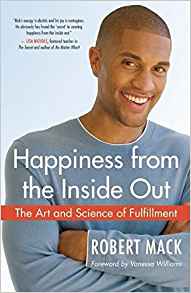
Happiness from the Inside Out: The Art and Science of Fulfillment
He was a Celebrity Love Coach for Famously Single on E! and he’s been on many different kinds of shows. His first book, Happiness from the Inside Out: The Art and Science of Fulfillment, is important to anyone who might be struggling with depression or anybody you know in your life. It is both an art and a science. He’s received his Bachelor’s Degree from Swarthmore College and he conducted his MBA coursework at University of Miami. He is an all-around nice guy that walks his talk. Rob, welcome to the show.
Thank you so much for having me, John.
I love to ask my guests to take us back to their own story of origin. You do that in your book, Happiness from the Inside Out, but I’m going to let you go back as far as you want. It could be college, high school, or younger than that. When did you start to get some insights into your own world of, “I maybe not as happy as I want to be and I’m going to figure out how to get there?”
I feel like at birth I was deeply in touch and in tune with my own stress and anxiety. I was aware of that from a young age. I felt uncomfortable, insecure and unsure about myself with respect to all people, all places and all things. At a young age as far as I can remember and as I grew up, that only increased. I became more of a ruminator. I think more about the stress, anxiety, and insecurity that I felt. As I moved into school and into sports, I found that on one hand I was able to do pretty well in sports with respect to academics in school. I didn’t feel any better for it, and I would keep upping the ante.
I’d get an A, and then the A wasn’t good enough. I would get a perfect score. I’d do well in cross country or in baseball. It was never enough. I could have hit two homeruns, but it should have been three. I could have gotten a perfect 4.0, but I should have gotten a 4.3 if I take that advanced class. That mentality, I continued to build on that unwittingly and unknowingly. It got to a place where I eventually was deeply, beyond dysphoric. I was deeply depressed and suicidal for many years.
What age did the suicide thoughts happen?
I would say probably about sixteen or seventeen, maybe a little younger. I remember reading a book, my first glimpse into the possibility that I could turn around my thinking, my confidence and my happiness. I probably read that book at around thirteen, it was Psycho-Cybernetics. It gave me a glimpse that something could be changed. I toyed with it but I didn’t find a whole lot of success because you’ve got to be persistent, you’ve got to put the time in and it doesn’t happen overnight all the time. I’d say thirteen, fourteen. When I think about it, that went at least through my mid to late twenties.
With some recent sad news about some relatively famous people like Kate Spade and Anthony committing suicide, it triggers a lot of issues in people. What I noticed is this mass consciousness illusion that if I had all those things, money and fame, I would then of course be happy. When you see someone having that at a high level, very few percentage of the population get that success or fame and they are not happy. It breaks the illusion a little bit that people think, “If I keep working hard enough and get more money, more fame or get famous, then I will be happy,” and then you’re like, “That’s not the answer?” When we talk about helping people with their pitch, whether it’s a pitch to get hired, a pitch to get their startup funded or even a pitch to get a new client if you’re in the business of anything, you always have to be selling to get new clients. Why now?
Why is now an important time for this product to come along? If you look back at Uber, without a majority of people in urban areas having smartphones, Uber wouldn’t have worked. The why now, Rob, is your mission. I’ve read your book, I’ve seen you on camera several times, I’ve heard your story and that’s why we’re so happy to get you on the podcast because your time is now more than ever. Your whole life, from my perspective, has led up to this very minute that you are being called to help people in the business world and other worlds, specifically in the business world. Realize that the outside achievements are not the end-all be-all to being happy and wanting to stay on the planet.
[bctt tweet=”Happiness is a science and an art. ” username=”John_Livesay”]
When you look at what’s going on, it’s like, “I went through all these struggles but for what? What’s my why? What’s my personal mission?” When someone else can hold a mirror up to you and go, “Here’s what I see. This is why you went through that,” and here’s why now is more important than ever to help all the people that might be reading this, going through whatever struggles, personal, business. The sense of wanting to give up, even if you’re not willing to give up in a dramatic way like checking out, but giving up on your dreams. How did you get from being this great athlete but still not feeling good enough to saying, “I’m going to get into being on camera,” whether it’s doing a movie with Vanessa Williams?
The one thing without question is that the opportunity for happiness in this day and age is greater than it’s ever been in the history of time. We’ve got more unhappy people on the planet now than ever, and we have those unhappy people on the planet despite the incredible technological advances that have been made in medicine, health and well-being. That has been made in the quality of our lives. This phenomenon of life getting objectively better, but people filling subjectively worse for it. Things on the outside getting better in general, on average, but people feeling worse on the inside is what we know is the progress paradox.
When I was going through this experience and contemplating suicide, I had stumbled upon this term and this idea that there was something happening in society that mirrored what was happening inside of me. That I was doing great athletically, I was doing great scholastically, but I was feeling worse for it, whatever reason. That began to allow me to begin to tease out what’s happening there and discern between true happiness and the happiness that was dependent on things outside of me. There was a difference between those two things.
As I began looking at this more closely, I found this program at Penn. The program at Penn is a Masters in Applied Positive Psychology. The study in science of what makes life worth living. It’s all this Ivy League science that’s accumulated over decades. They put it into one body of research and they call it Positive Psychology. As I began studying that more I thought, “I should probably do something here with this.” At the same time, in order to pay for that school because it’s a very expensive program, I moved on from my consulting career and I was trying to figure out what to do. At this time, I had moved to Miami. I was walking along the road. Some guy come up to me and said, “Have you ever thought about modeling?” I was the most insecure guy in the world. My high school class voted me Most Shy. I was the ugliest person on the planet. I had always felt that way, truly.
[bctt tweet=”The greatest challenge most people face is that they’re letting whoever they’re pitching to dictate what they’re thinking and feeling.” username=”John_Livesay”]
When he came up to me and said this to me, I thought, “I wonder what he wants. I certainly don’t have much money.” I didn’t take it all that seriously. He gave me a card. Another week later, another agent came up to me and said, “You should stop by the agency,” happened to be the same agency, different agent. I stopped by and I joined this modeling agency. I started doing modeling. I didn’t have any real future plans. I didn’t know what’s going to do with respect to my career at this point. The Positive Psychology ideas in my head weren’t all that clear. I hadn’t quite discovered the Positive Psychology world yet. I started the modeling thing. I was doing it basically to pay the bills while I figured out what I wanted to do with my life. Life is what happens when you’re busy planning for it.
Over a course of a couple of years I was doing this, enjoying my life, really focused on being happy. I’d given up this idea that success and money can make me happy. I was clear about that at that point in time. The more I read, the more I discovered how true that was. I’m doing the modeling. I had a female friend who was a model. She said, “Rob, are you go to this casting?” I’m at the pool, I’m going to relax. I’m not going to book whatever casting it is anyway. My hit rate with casting wasn’t great. I was sitting at the pool and she said, “Would you mind giving me a ride? You sure you don’t want to go?” I said, “I’ll come pick you up on the scooter. I’ll drop you to casting, I’ll wait for you and then we’ll go home.”
I get there, so I go and then the next thing you know, it was originally supposed to be a role for just a model, a model guy in a new show called South Beach that was airing on The CW. I was going to have no lines, walk the runway and whatnot. One of the producers comes over and says, “You three or four guys here, we’ve got this role. It’s for this guy named Paco. He’s an abusive model, boyfriend type of guy. Do you guys want to audition for that?” I was like, “No, I don’t think I could pull it off. I’m not an actor.” He ended up saying, “Give it a shot. Here are the lines.” Part of it was I was indifferent about whether or not I’ll book it or not. I had fun with it.

Happiness From The Inside Out: To find success, you’ve got to be persistent and you’ve got to put time in because it doesn’t happen overnight all the time.
The next thing you know I booked the role. It was opposite Vanessa Williams. That’s where my interest in the entertainment world began to take a look. I thought, “This is pretty interesting. I’m not even trying hard and things are happening in this direction, so I’ll trust that a little bit.” I was collecting notes on how to be happy for a long time and she encouraged me and said, “Rob, what are you going to do with those notes that you’re taking on being happy? You should share them with people. People always ask me about why you’re smiling and whatnot.” I thought, “Maybe I should,” so I eventually published it. It became Happiness from The Inside Out.
What a great story. The takeaway is when we’re not attached to the outcome of something and goes with the energy that’s flowing along and then people can feel that. You’re more relaxed during the audition process. Bringing it back to people who are in the mindset of pitching, if you are desperate to get an investor for your idea or if you’re desperate to get this client so you can sell a house, hit your quota the sales, get someone to join your startup or even get a job to get hired, people feel that. It’s a lot like dating. Since you were a Celebrity Love Coach, there’s some transference and some observations there that you might be able to share with us on what mistake or mistakes did you see people making when it comes to, “I’m attracted to this person. I don’t want to come across desperate, but I want to let him know I’m interested.” What’s the happy medium there?
For my executive coaching clients, we call it executive presence. It’s the ability to persuade and influence effortlessly, easily and enjoyably. I would say that at the root of it, the greatest challenge that most people face is that they’re letting the client, customer or whoever they’re pitching dictate what they’re thinking and feeling. This is a good thing. We want to calibrate and recalibrate based on our audience. That being said, you want to be able to do that in a way that your ability to regulate your emotions isn’t compromised. What do I mean by that? It’s an immovable, unshakable peace and confidence that I feel most people are challenged by.
The folks I see that are being at their most successful in terms of pitching anything, they have an immovable, unshakable sense of peace and confidence, and there I say joy. Regardless of the way in which the customer, client or the audience is showing up. They continue to persist and are consistent in this ability to regulate their emotions. When dating, what that means is that no matter whom I’m with or what I’m doing, my intention is always to have as much fun as humanly possible. To share as much love as humanly possible, and I don’t care whether I get it back or not. I don’t care if they’re having fun, that’s the challenge.
Normally what happens is, you’re not getting it back until you stop giving. You don’t have to continue to give to someone that’s being rude or disrespectful. We’re not talking about that. I find that same principle, this principle of deep, immovable, unshakable equanimity, confidence and joy that isn’t based on this quid pro quo idea that I’ve got to get it back. That isn’t even dependent on whether or not you sell anything.
[bctt tweet=”Have a sense of peace, confidence and joy when you pitch.” username=”John_Livesay”]
My brother and my sister are great. They’re both phenomenal sales folks. My brother does medical device sales. My sister does luxury homes. They weren’t always fantastic sales folks. The way they thought and felt was dependent on the responses they got from people that they weren’t very good. The second they detached those things that they detached the response they we’re getting from the way in which they were showing up. All of a sudden they would sell effortlessly, easily and they had a lot more fun. I would say that it’s a number of things. Mostly I’d say it’s being independent of the ways in which other people are showing up that you continue to show up in the same, positive, happy, confident, strong and you don’t make that dependent on anything or anybody.
Have a sense of peace, confidence and joy when you pitch. That’s my real takeaway there. It’s a constant, “Am I grounding myself? Am I centered?” One of the things I say to myself when I’m deciding, and it comes from branding. I do this with clients all the time, “What three words define you as a brand?” It empowers people, especially when they’re interviewing, to think of themselves as a brand going to work for another brand, and not some poor, desperate person. The three words are integrity, passion, and joy.
The people I might be working with are an integrity, I’m passionate about this and they are and it brings me or someone else joy. All three of those boxes get checked off then I do it, because that’s my moral compass and that’s my criteria. Having something behind that intention of always being peaceful, confident and joyful helps a lot. If you’re able to think on your feet, do you have three words that you would define the Rob Mack happiness within brand?
It’s going to sound cliché but it is. I would say that the very heart of it is peace, love and joy. The one thing I’m clear about as a Positive Psychology practitioner is that an emotion is more contagious than anything else on the planet. By far and large, that’s proven. My brand is being as deeply and independently peaceful, joyful, and loving as possible. My experience has been when I stay out of the results place, when I embody that fully and I’m deeply and truly present, that in and of itself is persuasive. I’m not trying to persuade you of anything. I’m not trying to influence you to anything. I find that all of a sudden you’re persuading, influencing directions that I love.
I would say it’s trying to embody that as fully and deeply as possible. It’s taking out all this reciprocity thing, it’s dangerous particularly when you’re pitching, particularly when you’re selling. I have to be intentional about that when I’m trying to pitch anything or I’m trying to sell anything, that I do it because I love it. I communicate that and stay out of reciprocity. It’s a little dangerous and people feel that. It’s hard to hide even if you don’t speak to it. People feel that you’re pitching, you’re selling something and attempting to get something from them and that’s not my approach. It hasn’t worked for me.
In the same way in the dating world and what you said really resonates with me about not all or nothing black and white thinking and that comes from your education. That’s one of the goals of therapy is to let go of having everything be all or nothing, black and white and there are shades of gray. If someone’s not returning the love and the joy in a dating situation back to me, it doesn’t mean I have to shut off being who I am. It’s just not right for them. The same thing when I’m offering someone an opportunity to buy something from me, it doesn’t mean they say no it’s no forever. Even if it is no forever, it doesn’t mean I suddenly dimmed my light because someone has said no.
It’s funny that you say that, by funny I mean interesting and profound. When I was modeling, I learned many things that I never expected to learn through modeling. I can be a little over analytical. I used to think of trying to get clear about what is it about the jobs I’m booking versus the jobs I’m not booking, and how is that related to my personality, my looks and all this stuff. It can drive you a little mad. I started discovering little things. I would always book the job that I had no interest in booking. The one that was I most indifferent about, I would book. The South Beach thing was a perfect illustration.

Happiness From The Inside Out: An emotion is more contagious than anything else on the planet.
I started asking friends, and I’d find another trend. One of the other trends was that some of the most successful models were trust fund kids at birth? They’d go into the casting or audition, and they did it because it was fun. They were having a good time, they’re totally relaxed, there’s no desperation when they hand you the comp card or they handed the book to the client. It was all coming through in every pore of their being that they didn’t need that job. They were there because it was fun. They enjoyed interacting with other people.
That being said, there are many shades of gray. It can become complex and every person’s a little bit different. Sometimes it’s good to be strong and even communicate it. You expect nothing in return if that’s the approach that works for you. I believe in what using what works, but in my experience, there’s no higher principle than been fully, truly, and deeply present and not thinking that anybody else is the source through which your abundance comes. That to me is deep.
In your book, Happiness, you say it’s both a science and an art. There are a lot of listeners that are structured, data oriented and measure things, but that’s not enough to being happy. It’s not like you lift many weights, so many times and increase the weight, do this kind of eating and then you’ll get this physique. There’s a little more to it when it comes to happiness that it’s not strictly a science like that. There’s an art to it. Can you explain how that’s worked in your life as an art form?
I believe in taking calculated risks. I want to take calculated, informed, and well-educated guesses when I can. Roll the dice if I can legally and ethically in the direction that is the best interest of everyone including myself. That means looking into the science and seeing what it says about happiness. What does lead to a happy life and what does not? We’ve got a lot of data there. You have to custom tailor and customize everything in your life, including the science. Science is changing all the time for one, for two, it doesn’t study Jesus or Buddha. It doesn’t study the Oprah’s of the world. It studies everyday people.
There’s a lot about science that isn’t necessarily included in every single study that you see, or even most studies. That means the truth of life, the truth of my life in particular is within me. I like to use my own experiences for the data that I want to learn from. It’s the data of my own life experiences that have been most valuable to me. That means a number of things. One, based on Positive Psychology research, after $70,000 additional dollars mean very little in terms of your happiness. Education doesn’t lead to happiness. Even great health doesn’t lead to happiness. Being married doesn’t lead to happiness. Having kids doesn’t lead to happiness. Nothing leads to happiness.
When you have a perfect life, that means when you have as much money as you could possibly imagine. When you’ve got the perfect partner or the perfect dating life, the perfect number of kids or none, depending on what your ideal life is. When your life is perfect circumstantially, all of that together only accounts for 10% of your happiness. That means 90% of your happiness are other things that are beyond the conditions and circumstances in your life. That’s where the art comes in. It’s trying to understand, based on science, what I personally need to do to make me happy. I found a number of things that worked for me. All that science says, “When you move to a sunny place, does it really change your level of happiness?” I found that it did for me. Little things like that.
[bctt tweet=”Happiness makes your life more successful and better.” username=”John_Livesay”]
The big awareness there is, “If I get all my ducks in a row, the life, the income, the house, the job, the car, the relationship, the money, the time to travel, I get all of that finally at the optimum level and then I’ll be happier.” That only contributes 10%. A lot of it has to do with your mindset and your genetics, because you can always find something to not be happy about is the bottom line to it all.
That’s the bottom line and you’re right. One thing I highlight real quickly, which is a great thing you’ve underscored here is that even with respect to genetics, they’re completely malleable. Meaning they’re changeable. Based on the thoughts you think, experience that you have and the feelings that you have, that DNA is malleable, it’s changeable. We often thought of our happiness as being something. It was at least partially hardwired. Not true at all.
It is the mindset as you nailed. It is also some of the behavioral things that we do. Do we exercise? Are we part of a spiritual community? Do we have social support? At the end of the day, remember that even within the context of all those additional things, there have been people in the world and there are people in the world. John, you’re a great example. Hopefully, I’m an example. There’s Jesus, Buddha, Lao Tzu and all these people are great examples that you can find and be happy, despite not having any of those things that most people think that you need to have in order to be happy. In fact, you can even be happier.
There’s a lot more to happiness and I would say success as well. The other interesting finding in this Positive Psychology body of research is that when you’re deeply, truly happy, you increase your odds of being successful in every single life domain. That means that the happier you are, the quicker, the earlier you get married, the longer you stay married. Even if you’re not married, the happier and healthier all your relationships are, the more money you make. You make $600,000 to $700,000 more than your less happy counterparts. Your health is objectively better, you live six to seven years longer. Even within those longer years, you’re healthier during that time. You experience less job burnouts. In every way, happiness makes your life more successful and better. That’s why it’s a huge key to being a pitch whisperer, if you will, like yourself.

Happiness From The Inside Out: When you’re deeply, truly happy, you increase your odds of being successful in every single life domain.
It’s the chicken and the egg, “As soon as I get all this success, then I’ll be happy.” What I hear you saying loud and clear is no. Choose to be happy now and then the other things will come or not come, but you won’t be attached to the outcome either way.
You’ve already got the ultimate success. That’s the greatest test in the world to be happy. The only reason we do, achieve, accomplish, acquire anything is because we think we’ll feel better. If you can feel better without doing all that stuff, you’re the smartest person in the planet.
The book is Happiness from The Inside Out. We can catch you Monday through Friday on Live Facebook, Good Morning LaLa Land. If someone wants to hire you for your executive coaching, how can they find you?
Everybody can find me at CoachRobMack.com.
Rob, I can’t thank you enough for being such an insightful and happy guest that allows us to feel happier.
John, I appreciate you so much. You have no idea. I mean that both as a professional but as a friend. You’re such a great guy with a huge heart. I learned so much from you. I want to thank you for your time and your energy.
My pleasure.
Links Mentioned:
- Happiness from the Inside Out: The Art and Science of Fulfillment
- Rob Mack
- Good Morning LaLa Land
- Psycho-Cybernetics
- Good Morning LaLa Land on Facebook
- CoachRobMack.com
- https://m.youtube.com/watch?v=FvYl-PqCcJE
- Quantmre.com
Wanna Host Your Own Podcast?
Click here to see how my friends at Brandcasting You can help
Get your FREE copy of John’s latest eBook Getting To Yes now!
John Livesay, The Pitch Whisperer
Share The Show
Did you enjoy the show? I’d love it if you subscribed today and left us a 5-star review!
-
- Click this link
- Click on the ‘Subscribe’ button below the artwork
- Go to the ‘Ratings and Reviews’ section
- Click on ‘Write a Review’