

Can You Sell? with Alex Rubalcava
Posted by John Livesay in podcast | 0 comments


Episode Summary
All startup companies want to develop their businesses effectively. However, funding can be a hindrance for some who want to scale. Alex Rubalcava, General Partner and co-Founder of Stage Venture Partners, gives more information about their company and shares their passion for investing in a startup, particularly in enterprise software. Alex shares why and how they filter companies that approach them for potential funding with their three “why” criteria and three “can” questions. Find out what those questions and how you can stand out from the crowd of startups out there.
—
Listen To The Episode Here
Can You Sell? with Alex Rubalcava
Our guest is Alex Rubalcava, who is a General Partner and Cofounder of Stage Venture Partners. With experience in both public equity and venture capital investing, Alex has been a professional investor since 2002. He started his career as an analyst at Anthem Venture Partners, which is a leading venture capital firm in Santa Monica. While Alex worked at Anthem, the firm backed startups such as TrueCar, Myspace and Android. After Anthem, Alex launched a long/short equity fund where he ran for nearly ten years. In addition to his investing work, Alex was an active board member at several nonprofit organizations in Los Angeles. He was appointed by Mayor James Hahn to the LA Animal Services Commission. Later, he served on the board of KIPP LA Schools and South Central Scholars. He serves on the board of stage portfolio companies Sightline Maps, Balto Software and WhiteFox Defense Technologies. He graduated from Harvard in 2002. Alex, welcome to the show.
John, it’s great to be here.
What I love to do is to ask you to take us as far back as you want. It could be childhood, high school, college, whatever it was that led you into this passion for investing in startups.
I did not know what a VC was or what startups were when I was growing up. All I knew was that I didn’t want to be a doctor or a lawyer. Those were two things that did not appeal to me. I tried a lot of things while I was in high school and college. I worked selling t-shirts by the side of a road in a motorcycle rally. I busted tables, worked at an advertising agency, in a real estate development firm and a couple of startups. This is all before I was 21. I discovered investing around that time when I got an internship at a venture capital firm. Ever since then, I’ve worked in finance. I think that the idea of helping to finance growth companies is tremendously exciting and I’ve been doing that for my career ever since.
When you were at Harvard, your focus was on government, was it not?
I did study government to college. It was a major that was somewhat relevant but not terribly so. I took a lot of classes in the History of Science, which was a unique major at Harvard that had I known about it when I started as a freshman, I probably should have majored in that.
You have three criteria that you ask someone who comes in to pitch you for potential funding. Would you walk us through those three why questions?
To give a little context, I’ll tell you a little bit about what we do at our firm. We are a seed venture capital firm investing in enterprise software startups. What that means is that we’re investing in companies that are very young, usually one to two years old. Often, they have fewer than ten employees. Sometimes they have a product in the market, sometimes they don’t have yet. Almost always, they are approaching us looking to raise their first institutional funding. They may have had funding from friends, family and Angel investors prior to approaching us but they have almost always raised less than a million dollars. They’re now looking to raise that first $1 million to $3 million of institutional capital.
That’s who they are when they get to us. When they do, we have to filter through the vast set of companies that are pitching on us. To give you a little bit of an idea of the volume, we had about 1,300 new companies approach us, we approached or that somehow got into our database. We met with 500 of them. We did serious work on about 75 and we wrote checks to seven companies in 2018. 1,300 down to seven. These questions that we’re going to go through are how we filter from 1,300 down to seven. The three whys: why you, why now and why us. Why you is a question about the founder. Why are you uniquely capable of building the company that you are building? Why are you uniquely credible? We use the word like credible or capable deliberately because those words are open-ended. You can earn credibility from prior work experience. Maybe you founded a startup before, maybe you are a senior executive at a high growth startup or maybe you earn that because you’re one of the best technologists in the world.
There’s evidence of the fact that you know more about a particular area than other people do. Maybe you have vertical expertise. Maybe you know more about drone defense than anybody else in the world. We try not to be prescriptive when it comes to the type of expertise that we are seeking out. Rather, we try to be open-minded and to recognize that world-class credibility comes in different forms but somebody on the founding team has to be world-class at something. We will then hire around that person’s skills. We don’t look for well-rounded individuals. We look for pointy individuals and we built a well-rounded team around them. We look for pointy people. People who if you graphed their capabilities, they would be no better than anybody else at large numbers of things but at something important for growing their company, they’re one of the best people in the world.
[bctt tweet=”Why you, why now, and why us? Can you hire, ship, and sell?” username=”John_Livesay”]
In terms of why now, we believe that time matters a tremendous amount when it comes to starting and growing in a company. If somebody comes to us and pitches a company, a product or an idea and it could have been built using the techniques and the tools that were available years ago, our interest fades very rapidly. It’s the kind of thing where our belief is there’s so much capital out there, there’s so much entrepreneurial energy that if something was possible years ago, it was tried years ago. Something meaningful has to have changed in order for it to be worth trying again. The why now question is all about where’s the world now? What are our customer’s demands and expectations? Where is the technology in the world now? Is there something recent and important that has changed that will enable customers’ expectations and the capability to build something to be met in the middle?
The example I always use is Airbnb. If the economy hadn’t been bad back in 2008, people wouldn’t have been opened to renting out a room or their entire home to strangers. There was a time that people were so hungry for a solution, if they were losing their jobs or fear of that. They were open to that idea. Had that happen before, the technology wouldn’t have been available anyway for people to be looking like that. The timing was key to their success. You’ve done over 23 of these investments and to go back to that math, I’m fascinated by that. The strategy is the investors invest in 1% of the pitches they hear. That resilience and tenacity that it takes to be a founder seeking funding.
I don’t think people understand the numbers. It’s not to dissuade anybody but if you want to be an actor, you can’t let those numbers dissuade you either. You talk to 1,300 companies, meet with 500, do due diligence in 75 and write checks for seven. That’s even less than 1%. These questions that you’re sharing are helping people, not just getting the 1% club but even the smaller club. If you wouldn’t mind, pick one of your favorites. If it’s possible, companies that are on your website. I’m particularly fascinated by the WhiteFox Drone Defense but anyone you want that you can give an example of the why now.
In the case of WhiteFox, no one needed drone defense years ago because there was not a large consumer market of drones. Nobody was flying around $800 unmanned aerial vehicles. You can go on Amazon and buy any number of consumer drones for $800, some of which can lift a fair amount of payload, fly over any fence and any wall in the world. For owners of sensitive property, whether that is a nuclear power plant, a military base, a stadium, an oil pipeline or anything like that, it used to be sufficient to put up a twenty-foot wall. Maybe put a few cameras along the wall to monitor your wall and your perimeter. If your perimeter extends from that twenty-foot wall up to 20,000 feet into the air and you now have to protect the air column above you, as much as you protected the ground access to your facility before.
A customer need was created there by the availability of these new drone technologies and the need for a solution was recognized immediately by a number of operators. We met with people who have guns that will shoot RF radiation at a drone to try to jam it. We met with people who will send other drones to intercept a hostile drone and throw nets at it. We’ve met with people who are training hawks and falcons to go intercept the drones. For a variety of reasons, we didn’t think any of those solutions were truly robust. When we met WhiteFox, which was founded by a 21-year old college dropout named Luke Fox, we found a company that had what we believe is the only truly scalable solution in the market.

Investing In Startup: Somebody’s always trying to do it cheaper and give somebody an alternative.
That also speaks to one of the key things I want to get your opinion on is what’s your secret sauce? Without competition, in my opinion, and what I’ve heard from other investors like you, it means there’s no market. Clearly, there are a lot of other alternatives out there but they have the best. Would you agree that that’s important that there has to be some competition for the market to be something that the why now could kick us in?
Some of our companies don’t have meaningful competition. We have a company called SPIDR Tech that developed software to help police departments communicate more effectively with their citizens. Imagine if you had vandalism at your home, the police department sent you a text message and an email immediately upon logging your case and said, “Here’s your case number.” Forty-eight hours later, they sent you another one with the contact info and the bio of the detective who was assigned to your case. A week or two later when a suspect had been identified, you got a notification and when that suspect was arrested, you got a further notification.
That chain of communication is almost identical to the chain of communications that you get when you order something from Amazon or a pizza. If you were not a cop yourself, you might not have seen that market opportunity. More importantly, you might not have the credibility to be able to go to a police chief and sell this product to them. The company that we invested in SPIDR Tech is founded by two former cops Elon Kaiserman and Rahul Sidhu. They recognized an opportunity that no one else had. We added their seed around 2017 alongside other investors, including Google and we have yet to encounter a competitor.
That’s very unique because usually if someone is the first to market and they’re growing, that spurs competition. Somebody’s always trying to do it cheaper and give somebody an alternative. That’s fascinating that it hasn’t spurred any competition. I’m sure they’re making the most of it because that’s pretty rare. The third question which goes to the due diligence on the part of the founder that’s coming to pitch you. A lot of people somehow don’t take the time to do this and it’s obviously a problem, especially when they’re going to get asked a certain question.
Why us and that’s one reason why our ratio of deals that we do to ones that we don’t is deceptively stringent. In the sense that we pass on a lot of investments that we’re pretty sure are going to get funded by other good investors, but we would not offer anything to the company besides capital. We also get a lot of proposals and requests for capital that are not well targeted for us. If you look on our website, you will see that we invest exclusively in enterprise software companies. It shouldn’t be a surprise that the number one category of new deals that approach us are enterprise software companies.
[bctt tweet=”Try to be open-minded and recognize that world-class credibility comes in different forms.” username=”John_Livesay”]
To me, it is still surprising that the number two category is companies doing all manner of things with cannabis. We have never funded a cannabis-related company. We are not going to. We are not the smart money there. There are plenty of other people who are the smart money there and yet for some reason, a lot of people doing cannabis deals reach out to us. If any of you are doing cannabis deals, please do not reach out to us. I know nothing about your market. I’m the wrong guy for you but there are plenty of people out there who are the right investor for you.
Let’s say somebody in emerging software technology specifically for B2B, not B2C, you’re very targeted. You have a portfolio that gives very specific examples. You’ve mentioned a few of them and they get to this level of the 75 where you’re doing the due diligence on. You also shared with me there’s another level within the why you that said, if you almost will, I call it double clicking on that with some more dropdown questions. Let’s talk about what those are.
When it comes to investing in a startup, the most important consideration for us at all times is our assessment of the quality of the founder and his or her team. In particular, there is an enormous number of things that can go wrong with the startup, almost all related to the founder. Those questions are often related to speed and execution. The way that we assess the founders when it comes to speed and execution is a set of three questions. Can you ship? Can you sell? Can you hire? Can you ship is about can you deliver a 1.0 product in a workable condition that is valuable to a customer? Ideally, a third party customer who is not your mother or a mother-in-law that’s willing to pay real money for. Can you do that earlier rather than later?
A lot of people come to us asking for money to build out their 1.0 product. Maybe they have no progress on that and assume that we are interested in funding companies that don’t even have a line of code written. Plenty of people get to us were for $50,000 or $100,000 worth of angel capital invested in the company. They’ve developed a product that beats all their competitors and has already been adopted by major companies. Obviously, it gets our attention when someone comes to us having already accomplished that.
It’s way beyond the minimal viable product if you’ve got someone paying you.
I’ll call the first few customers evidence of a minimal viable product but not much more than that. That’s all that’s needed at the stage at which we invest. When we see a company that has been able to ship a product on very little capital that gives us a degree of confidence that when we increase the amount of capital that the company has to work with, that product development will continue to happen on time, on budget. They’ll continue to innovate in an efficient and timely manner. The money will not be spent in endless revisions and refactoring of code bases. When it comes to the second question, can you sell? We are often investing in companies that are selling high ticket software. We tend to have two buckets of companies.
We have companies that are selling software over the phone and email, which means inside sales or something between $10,000 and $40,000 a year. We then have a group of companies that are selling software at much higher prices, around $100,000 a year and up where you have to put somebody on a plane to go sell that software. Regardless of which type of software you’re selling, there needs to be some evidence that the founders and/or some early members of the team are capable of selling the product and they have some idea about where customer leads come from. They have some idea as to what their conversion rates and their sales cycles look like and they have some idea as to what the payback period looks like on that customer acquisition. Not all of that needs to be figured out, when you’re a seed investor you are not necessarily a metrics-based investor in the way that a Series B investors would do, but we are looking for evidence that people are on the way to figuring that stuff out.
This is my world that I love talking about, which is selling and it all starts with a good elevator pitch to even get on the radar. You have to be able to sell yourself and your vision to potential clients but also to potential investors so that they can easily understand who you help and what problems you solve. That’s the first big hurdle that a lot of technical people in particular struggle with. They get into the technology and not the basics of who they help and what problem they solve. Do you ever look for the team to have some marketing plan in place of what their strategy is to generate the leads and all that?
If you don’t know where to acquire your customers, you’re going to play all around and spend money without discipline trying to figure that out.
If you’re selling expensive $40,000, $100,000 software, what kind of training is there going on for the salespeople? How you are teaching them to sell it in a way that they can handle objections that they’re going to get because every sale has an objection.
[bctt tweet=”Something meaningful has to have changed for it to be worth trying again.” username=”John_Livesay”]
One example that we see a lot of startups have an idea that they will be able to sell through a channel because they have seen large companies sell through a channel. If you’re IBM and you have documentation, products that are twenty years old, channels of value-added resellers and the like give me a good way of getting the product to the market. That does not work for a new product. That does not work for a new company.
They want proof of concept. I’m a Cofounder at QuantmRE. We’ve raised some money. We built some products and we are helping homeowners get cash for the equity in their home. We’ve had some initial conversations with, for example, Home Depot who we could send them clients to use that money to remodel but before they become a partner, they want to see thousands and thousands of people using this that they can interview before they would want to do anything big. If you’re only starting in one state, like Uber did before you grow and they’re national. You need to figure out how you’re going to do it without channel partners is what I took away from what you said.
The early good market is entirely the responsibility of the startup. Maybe when you’re at $10 million or $100 million in annual revenue, you can start to think about what a channel strategy would look like, what a platform would look like or any other ways of going to market.
It helps you scale but you need to know where that first hundred thousand customers are going to come from without it.
You need to know where those leads are coming from, how you identify them, how you qualify them, how you moved them through the process. Software for the most part, especially expensive software is sold, not bought. Low-cost software is often purchased and is adopted in a viral way. Things like Zoom is a great example of a company like that but higher ticket software is much more of a consultative sale.

Investing In Startup: If you don’t know where to acquire your customers, you’re going to play all around and spend money without discipline trying to figure that out.
You’ve asked the founder, the why you has been answered as well as the why now and why us but you’re into the weeds with them saying, “Can you ship? Can you sell?” The final question, which I think is key.
Can you hire? The hardest thing for any company is to assemble a great team. You have to convince people who are rock stars at their job, who are probably earning a lot of money, with highly secure jobs, are on track for promotions and are working for companies that their friends from college and their in-laws recognize prestigious jobs, to then come and join you at a startup that nobody has ever heard of. Working out of a random garage or a co-working space with no perks, with no prestige that typically comes from a career and to be in the weeds with you on a tough journey. That is not an easy sale, it’s not easy to convince people to do, especially in a market like California, where there are tons of great startups hiring. You have to stand out from the crowd of all the other startups out there. It is not an insignificant challenge.
Do you have a story of someone that your company has invested in that did make a great hire that made you feel, “They really have this down?”
There are so many to choose from. I don’t even know where I would start but of all the companies in our portfolio, WhiteFox Technologies, our drone defense company, has shown the most interesting ability to hire. They have multiple people who have been presidents and CEOs of companies before working on the team. Luke and his team have been able to recruit all of those people because everybody sees the size of the market, the urgency of the problem and the quality of WhiteFox’s solution.
It has to do with the vision being explained in such a way that people can see it, understand it and want to be a part of it. It’s an emotional decision as well as a logical one in my experience. You’ve certainly given us a lot of valuable content. The why you, why now, why us and if you’re in that next category, how do you get into that less than 1% club? You better have some good answers on can you ship, can you sell and can you hire? Are there any last thoughts you want to leave us with, Alex?
[bctt tweet=”The hardest thing for any company is to assemble a great team.” username=”John_Livesay”]
If any of you are pursuing highly technical enterprise software product and are looking for a seed investor to please reach out. We’re pretty easy to find. My email is [email protected] and we’d be happy to hear from people.
I can’t thank you enough for sharing your criteria and your wisdom. Congratulations on all your success.
Thanks, John. It’s great to be here with you.
Links Mentioned:
- Alex Rubalcava
- Stage Venture Partners
- Anthem Venture Partners
- Sightline Maps
- Balto Software
- WhiteFox Defense Technologies
- SPIDR Tech
- QuantmRE
- [email protected]
- http://www.StageVP.com/
Wanna Host Your Own Podcast?
Click here to see how my friends at Brandcasting You can help
Get your FREE Sneak Peek of John’s new book Better Selling Through Storytelling
John Livesay, The Pitch Whisperer
Share The Show
Did you enjoy the show? I’d love it if you subscribed today and left us a 5-star review!
-
- Click this link
- Click on the ‘Subscribe’ button below the artwork
- Go to the ‘Ratings and Reviews’ section
- Click on ‘Write a Review’
Crack The Funding Code with Judy Robinett
Posted by John Livesay in podcast | 0 comments


Episode Summary:
—
Listen To The Episode Here
Crack The Funding Code with Judy Robinett
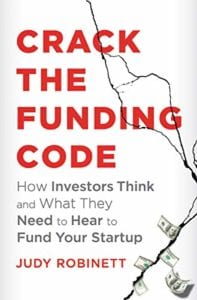
Crack the Funding Code: How Investors Think and What They Need to Hear to Fund Your Startup
I’m honored and thrilled to have a return guest. It’s a very rare thing on The Successful Pitch, Judy Robinett. She is the author of How to Be a Power Connector. She has a book called Crack the Funding Code. That book has all kinds of information on how to get your startup funded. Judy has been profiled in Fast Company, Forbes and Huffington Post. She is the super-connector who has an amazing network globally. Not only have people that are influential but investors from Angel groups to VCs. In over 30 years as an entrepreneur, she herself has served as the CEO for both public and private companies. She’s been on the advisory boards of Illuminate Ventures, which is an early-stage venture capital based in Menlo Park. She is well-connected literally around the world. Judy, welcome to the show.
Thank you so much, John. I’m thrilled to be here again with you. What you didn’t tell your guest is that you’re featured in my book probably because you’re the best guy I’ve ever worked with in my life on pitch decks and understanding what a true value proposition is. I’m excited to be here.
Tell your own little story of origin because that always is so impressive of how did you become this super connector and this expert in this ecosystem of getting startups funded?
I grew up in the same town where they filmed the movie, Napoleon Dynamite, so I was a nobody. I was shy as a kid and had been bullied. I very quickly figured out when I worked for a couple of Fortune 50 corporations that with keeping your head down and working hard, the thought was you’d get noticed. I found out you didn’t. I read the book, How to Win Friends & Influence People, and that helped me to understand the power of strategic networking to get any resources you need to get anywhere because there’s no lack of resources. There are billions of people on the planet. There’s $296 trillion of private global wealth. There’s no lack of money to get funded. What I learned was that most people are in the wrong room with the wrong story. Having been an investor for a number of years and then working with the VCs and accelerators like Springboard, which to date raised $9 billion, had seventeen IPOs and 185-plus strategic sells. I was so saddened when I would meet founders who had a great business idea, usually a solid business model. Unfortunately, they either met up with bad actors or they had felt like they’re running this endless rat maze trying to figure out where the cheese is. I decided I was going to help them figure that out.
When that happens, nine times out of ten people are doing both. Your expertise is getting people in the right room. I want to also say what I’ve observed is your skillset is so immense that you can get them in the right room at the right time. If you are not prepared when you have that opportunity to meet someone one-on-one or get in front of Angel Group or a VC for your ten-minute pitch and you haven’t done your due diligence, it can still all fall apart even if you are in the right room.
This happened to me. I was referred to a gentleman who has an amazing startup called Logical. He has investors and is doing well. He has proof of concept and 148,000 in sells, but he’s not pitched too high-end Angel groups or to early stage VCs. I started from where I usually do with people, “Send me your pitch deck. Send me your financials.” Nine times out of ten, in some level, they suck. I’m being clear and people have done a lot of work. The problem is they don’t know what they don’t know. The next two phone calls I make, one of them is to David Meister, who is a top CFO expert on pro formas for startups. David doesn’t charge a ton, but will go through all of those proformas, help you develop them if you need. He drills down to how do you mitigate risk as viewed by the investor.
[bctt tweet=”Mitigate the risk for investors.” username=”John_Livesay”]
You’ll hear all the time, “You’d better know your numbers.” He delves into your assumptions behind the business model. Usually, the second call I make is to you, John, because people have a hard time so much in the forest that they can’t see the trees. Particularly from an investor’s standpoint, the investors, number one, want to know what the exit is. How are they going to get their money back? How quickly? You have to mitigate risk as viewed by the investors. That’s usually where I start and that is how you get a good story. You can tell me what your business proposition is in two sentences. You have a pitch deck that speaks to the competition, you go to market strategy, who your team is, some of the basics. You’ve done your homework on the financials. That is getting the right story. You can be ready to get in the right room.
I love this concept that when you mitigate the risk, that’s when you get a yes from an investor because people have so much trouble having empathy for what the investor thinks and how many pitches they hear in a year. Can you share your observations? The statistic is only 1% of pitches get funded. Do you find that to be true? How do you help people solve that problem?
I don’t believe that. The majority of startups fail if you drill down, you find out they came from the Small Business Administration or some government agency. The truth is a business may not have failed at all. They may have reincorporated as a different entity. They could have sold to somebody else that made the business successful. It is tough. As Einstein said, “If you’re going to play the game, you’d better know the rules.” One of the big reasons I wrote the book was to help people understand there is no lack of funding. Different phases of your company require different types of investors. You usually start with friends and family. That’s the biggest pot of money that’s available. The next one is the Angel groups. People need to understand there’s no lack of these people.
There are 300 Angel groups. They’re equal from north to south to west to east. You don’t have to get on a plane and go to Silicon Valley or go to New York City. One of those little rules of the game is 75% of Angel investors will only invest in the state where they live because they want to be able to visit you, to coach you, and to help you. Understanding that piece of information and then going on Google and type in Angel groups in Utah, Angel groups wherever. You can do the same with family offices, which now have some 80% of them are now also investing in startups. Having that information, doing a little research, I often tell people to go look at New York Angels in New York City. They’re one of the best Angel groups in the world. They walk through what you have to have ready, what the application process is. If you do that, then you’re geared to be much more successful above that 1% who get funded.
A lot of getting in that 1% Club, so to speak, is having a warm introduction to get into that right room.
That is correct. A VC out of California once said to me, “Judy, if they can’t figure out how to get to me, they can’t figure out how to get a customer.” One of the reasons is people get bombarded with thousands upon thousands of business plans, models, and executive summaries. It comes from someone that they know, like and trust. If you put on the New York Angels that somebody has referred you to them, inside their group of 70-plus, you’re pretty well-assured that you’ll probably get a slot to get in the door. It absolutely helps. A key point is they also have to know you, like you, trust you before they’ll fund you. The number one thing is to start building those relationships.
You’ve often said that there are two big reasons why small startups fail; lack of customers and lack of funding. Can you speak to both of those?
[bctt tweet=”No competition means no marketplace.” username=”John_Livesay”]
This is a quote from one of the founders of Y Combinator. I’ll often meet people and they’ll say, “If I had the money.” The reality is they need the customer. Often people have what they think is a brilliant idea and it turns out it’s a hobby. It’s something that they wanted. It doesn’t necessarily solve the problem for a customer. Until people are willing to open that wallet and pay you, all you have is a hobby. The quicker you can get some funding in the door after you’ve got your customer. Focus on getting those customers in the door first, then it’s much easier to get funding because you have proof of concept.
As one investor said to me, “If you’re selling dog food, I’d love to see those dogs eating the food already,” which I love that image. One of the things you touched on earlier was the importance of competition. I have seen and heard with you sometimes people say, “I don’t have any competition.” One of the key questions that I think people need to be prepared for is what’s your secret sauce? What’s the barrier to entry? Can you tell us about your thoughts and experiences and maybe a story around that?
There are a few key sentences that if I hear them uttered, it tells me instantly that the people are amateurs. One of those is there’s no competition. If there’s no competition, there’s no market. There’s no need for your product or service. There’s always competition. It shows me you’ve not done your homework well. It’s absolutely critical to figure out who your competition is. I was in Belgrade for eleven days working with a couple of startups. One of them I’m already on their Board of Directors and own a part of the company. The second one is a new one to me. They arguably have something that is arguably the next step up from AI, artificial intelligence. Sure enough, three minutes into their pitch, they assured me they had no competition.
I always smile. I made them go do a little research. It turns out everybody from Microsoft, IBM and who else is also playing in this game and somehow could be construed as a competitor. The other thing they will tell me is they need money like the day before yesterday. They don’t see any need for an exit. The exit is the only way the investor gets their money back. This also was from this group. I said, “Nobody is going to invest because they want their money back.” They said, “We would consider doing a strategic sell.” The majority of exits in the United States are strategic sells. Another thing I have people do is get on PitchBook, which is free and there are several competing services that are like that. They can tell you who bought what company, who the competitors are. You can do it by Google, by industry to find out exactly who those competitors are.

Crack The Funding Code: Nobody can create a successful business by themselves.
You need to be able to talk about them in a way that is not insulting to them or coming across as arrogant. Let’s talk a little bit about how important it is. It leads right into the team. Your overall attitude and persona of confidence versus arrogance. Can you talk about what you’ve seen and how can people make sure they’re confident but not arrogant?
One of the biggest turnoffs to investors is a know it all. Investors will immediately say, “Go for it. Just not with me.” That shows that you’ve got a problem with your thinking. Nobody can create a successful business by themselves. That’s a big turnoff. It shows that you’re arrogant. It shows that you’re a fool. You think you know better than the rest of the world. That’s problematic because Angel investors invest. They want their money back, but most of them have been successful entrepreneurs themselves. They love to coach. They love to help you to get to that successful exit. Avoiding as we call it, hair on the deal, not making mistakes that are going to make you un-fundable or that you’ll never be able to sell the company.
My takeaway from that is to be coachable and confident when you pitch.
[bctt tweet=”Be coachable and confident when you pitch.” username=”John_Livesay”]
Being confident is fine but let me tell you, if somebody says, “I don’t know but let me get back to you on that,” that’s a much better answer than lying about it because these investors, many of them see a thousand deals a month. You’re not going to pull the covers over their eyes, but sometimes it’s fear. Everybody knows you’re broke. That’s why you’re there to get money. If you’re smart, you will agree that you want their expertise. You want more than their money. You can be confident. You can say very confident driven things. Also, if you show a little bit of humility and make a couple of comments like, “I hadn’t thought of that. What a great idea. Could we talk about that more?” job one is to build a relationship because you want the second date. They’re not going to meet you and then write you a check. They’re looking for a level of confidence.
They also look for a level of your character. Howard Stevenson who was the head professor at Harvard for many years for entrepreneurs wrote a great little book and it’s for investors. It’s how to pick deals. It’s a great one for people to look through and see what the investors are looking for. He said, “The first time someone lies to him, he’s out of there.” It’s like you would flush your money down the toilet, so it doesn’t matter how great your deal looks, what your ROI is. If there’s an inkling that you’re not telling the truth, you’re history.
Does the book go into some details, Crack the Funding Code, on how to prepare for due diligence once you’ve gotten a yes to make sure that everything is opened up?
Yes. We do have a section on that and probably one of the most important chapters is Chapter Nine, which is mitigating the risk as viewed by the investors. They want to make sure you can execute. They want to make sure you have a solid team. There are many execution risks. You had mentioned barrier to entry. My book does go in into that. It’s good for you to take your blinders off and pretend like the investor is your customer because, at this point in the funding process, the investor is your customer. You need to be open-minded with any concerns or any issues that they raised. This is from usually decades of experience that they have. Often, they’re trying to be helpful and then test you a bit to see what your response is because they want to take a peek under the hood at that character of yours.
In other words, do you get defensive right away or do you stay calm? One of the things I know that you’re all about is putting together a great team because the investors are asking themselves, “Why is this the best team to execute this idea?” Can you speak to the importance of having complementary skills on the team?
We start with a founder and hopefully, they’re a sales guy. If not, then you’d be needing a salesperson first because cash is king and you want that proof of concept that you have customers. I usually tell people to get somebody like David Meister as a fractional CFO because you don’t need a full-time finance person. It is good to have a high-level guy, who can help you as the company begins to grow. That’s important. Often you don’t have money to build out a lot at this point. You can put in your deck if you need a CTO, chief technology person, on or some guru. You can put this person is going to be hired upon completion of this round that you’ve already had interest from them. A rule important one in my mind is positioning the company for success.
Often you as a founder, you don’t have years and years of success behind you. Find two to three people who do have success. I helped a woman get the first CFO from PayPal on her advisory board. Another one I helped get a director out of Microsoft for fifteen years. It literally speaks volumes. People look at the company and go, “If this person is in, they’ve done the research, the due diligence, and they believe in this concept.” The other one is to surround yourself with service providers, your law team, your banker that have a level of expertise. I meet a lot of people and they’ll say, “I’ve got this great bookkeeper that put together my pro formas.” That’s not going to cut it, neither is your accountant. It’s very different getting pro formas done by somebody who understands startups. We engaged with Wilson Sonsini. They’re the number one law firm in the world for startups. It’s like that old commercial when JP Piper speaks, everybody listens and everybody turns. If you have a good banker, good lawyers, it looks like you’ve put together a solid team of people who can advise you. I’m leery. I don’t work with people who tell me they don’t need an advisory board. That’s right up there with, “I know it all. I don’t need any help.”
[bctt tweet=”Most people are in the wrong room with the wrong story.” username=”John_Livesay”]
Can you tell a story of how you were able to help a company get a good exit above what the valuation would have been on paper by assembling a good advisory board?
A company that I worked with out in Park City had developed a biomedical device for permanent sterilization that could be done in a doctor’s office very inexpensively. Initially, she had gone the rounds in Utah trying to find Angels. She kept hearing no. When I was introduced to her, I said, “Let’s up the game here.” I brought on one of Howard Stevenson’s protégés out of Boston, Eileen Shapiro, who has been a top consultant at McKinsey, has been an investor probably for 35 plus years. That helped. It turned out the relationship with her resulted in a much higher significant sell of the company than she would have had out doing it by herself. That’s why it’s so important to have people that are in the industry that you’re targeting. Lots of lawyers can write contracts. You want people who can also open doors for you, who have expertise in the industry that could help you find potentially strategic partnerships.
What would you say is the biggest mistake a lot of founders make who haven’t read Crack the Funding Code?
Probably the biggest mistake is trying to find love and trying to find money in all the wrong places. I meet people that feel like they’ve been kicked in the guts hard and everybody is telling them no. It’s because they haven’t done the match of where the money is, who’s got it, and who’s most likely to fund you. Often, they are missing a couple of components of the story. The big one is mitigating that risk as viewed by the investors. Locally, you can go to Score. You can go to the SBA, the Small Business Development Center. Your local college or university has professors, people who are experts on entrepreneurism. Find a pitch event and that’s where investors hang out. It’s also where people hang out that love startups. We’ll happily give you some advice.

Crack The Funding Code: The higher you go up that food chain in the venture capital world, the more sophisticated those investors are.
You have worked with so many powerful people from Kevin Harrington from Shark Tank to Mark Burnett, who produces Shark Tank and several other shows. You’ve also helped people get in front of a venture capitalist. Let’s say someone who wants to read your book, Crack the Funding Code, because they’re like, “I’ve got some seed round from an Angel Group. I’ve got some revenue, but I don’t know how to break into the venture capital world.” How different I should speak there versus an Angel group? I know Crack the Funding Code goes into that. Can you share some of those insights?
The higher you go up that food chain in the venture capital world, the more sophisticated those investors are, the tougher the questions will be. Back to looking at the New York Angels, then I would have you google White Star Ventures, a top VC firm that’s now global, started in New York. One of their best access has been The Shave Club, $1 billion-plus. You can Google early stage VCs. You can look and see what specifically they’re looking at. Many VCs are very niche focused. They realize they can’t do it all. There are ones that specialize in the oil patch, everything to do with gas and oil industry. There are ones that all they do is life sciences. There are other ones that only do the B2B play or the B2C play, business to customer direct. You need to have done your homework and understood the jargon of the VC world. One of them is the one you quoted, “Does the dog eat the dog food?” Another one, “Is there hair on the deal?” They want to make sure that there’s no potential litigation coming down the pack. That you’ve protected your IP if you have it. How you approach them is very different. There’s a chapter in my book on doing strategic networking that can easily move you forward.
In addition to being this amazing author and consultant to startups, you’ve also a speaker. You’ve spoken at NASA. The White House, you’ve been involved and invited to. Give us a little snippet of what kinds of speaking engagements typically are you called in for.
[bctt tweet=”Until people are willing to open that wallet and pay you, all you have is a hobby.” username=”John_Livesay”]
I’m usually called in on strategic networking. People needing to understand, “This is my goal. I’ve got A2B, but I cannot for the life of me figure out how to get from B2C.” This is another one of Einstein, my favorite quotes, “A and B, you can get there with logic every time. B to C usually takes imagination.” It boils down to strategy. You can create luck. People say to me, “You can’t create luck.” I’ll say, “Go stand on the train tracks for 24 hours. Tell me if you’ve got good luck or bad luck.” How you position yourself is absolutely critical.
The book again is called Crack the Funding Code. People can buy it on Amazon. It’s on Kindle and Nook and every place you can get a book. Judy, is there one last thought you want to leave our audience with about what they need to look for in Crack the Funding Code?
One of the biggest pieces of advice I’ll tell everybody out there is to kick fear to the curb. In Hebrew, there are two words for fear. The first one is when you think the sky is falling, for me, I’m running to my cave with dark chocolate. The second one is like you’ve stepped into this brighter, bigger space than you’ve ever been in. It’s fearful but it’s on inspiring as well. Everybody at some level deals with the fear. When I did my first startup, a franchise restaurant, I thought I was going bankrupt. I went to an attorney scared to death. I’m shaking in my boots. He said, “You’re not even close.” I said, “I’m broke. I don’t have any money.” He said something that changed my life. He said, “Judy, they can break you, but they never can eat you. Don’t let fear persistence wins time over time. It’s not the brightest person in the room. It’s the person who will learn and the person who keeps going.”
Judy, thanks so much. Thanks for being a phenomenal guest. I know this book is going to be a big success and help a lot of people.
Links Mentioned:
- Return guest – Judy Robinett previous episode
- Crack The Funding Code
- How to Be a Power Connector
- Illuminate Ventures
- How to Win Friends & Influence People
- White Star Ventures
- www.JudyRobinett.com
- Quantmre.com
Wanna Host Your Own Podcast?
Click here to see how my friends at Brandcasting You can help
Get your FREE Sneak Peek of John’s new book Better Selling Through Storytelling
John Livesay, The Pitch Whisperer
Share The Show
Did you enjoy the show? I’d love it if you subscribed today and left us a 5-star review!
-
- Click this link
- Click on the ‘Subscribe’ button below the artwork
- Go to the ‘Ratings and Reviews’ section
- Click on ‘Write a Review’
Unleash Your Inner Company with John Chisholm
Posted by John Livesay in podcast | 0 comments


Episode Summary
 Today’s guest on The Successful Pitch is John Chisholm, the author of Unleash Your Inner Company. He has such an impressive background from MIT and Harvard and has coached thousands of entrepreneurs on how to be successful. He shares those secrets with us today. In fact, he said, “Passion is an attitude but perseverance is a behavior.” He does a deep dive into the psychology of growing your mind from the inside out. He really shares what he looks for when he hears a pitch as an investor. I think you’re going to get a lot of value into learning what it takes to reduce the risk by hitting certain milestones and showing an upside potential so that your pitch becomes irresistible. Enjoy the episode.
Listen To The Episode Here
Unleash Your Inner Company with John Chisholm
I am thrilled to have John Chisholm today as my special guest. John has an amazing background. He went to MIT. In fact, he’s now president of the MIT Alumni Association. From there, he went to Harvard. He was one of the early employees at Hewlett-Packard and Silicon Valley. He has an amazing book called Unleash Your Inner Company. He has also founded two companies. He co-founded a third. He sold a fourth company. He’s advised literally thousands of entrepreneurs across five continents. John, welcome to the show.
John, thanks so much for having me.
I have so much respect and insight for what you’re doing. You have such an amazing career and journey. Let’s start with this whole concept of you’ve been both an entrepreneur and an angel investor. Let’s just dive right in. What do you listen for when you hear a pitch?

Unleash Your Inner Company: Use Passion and Perseverance to Build Your Ideal Business
I think it’s helpful to have been an entrepreneur, when you’re both evaluating pitches and trying to be helpful to entrepreneurs, I listen very closely for a real unsatisfied customer need. Until I hear one, it’s hard for me to get very excited or to be very focused on the opportunity. So many entrepreneurs focus on their really cool technology rather than a real customer need. I like to say, I started my first company with a really cool technology for which there was no customer need. It took me six to nine months to let go of that cool technology and swap it in favor of something for which there was a real customer need, namely doing surveys on the internet.
My first company which I founded in 1992 was Decisive Technology which published the first software for automated surveys via email and later via the internet. Start with a real customer need, that way you know that your business will be addressing a real customer need. It’s okay to use your resources, including your technologies if you have some, to suggest real customer needs, but make certain that you’re satisfying one. In the book, I talk about ways to come up with a potentially infinite number of unsatisfied customer needs even just in the areas you’re passionate about and to test them and to confirm that they’re real.
How do you suggest somebody test that the problem is real? Do you have any ideas on that?
Yes. First of all, let me talk about how you come up with unsatisfied customer needs. Start with any product or service in an area that you’re passionate about. For example, you’re passionate about running. One of the products and services we runners use are running shoes. Then ask yourself, what are the limitations of that product or service? I can think of three for my running shoes. Number one, they start to smell after I’ve worn them too many times. Two, if I want to change the shoelaces to match the color of my outfit, it’s a hassle to thread and re-thread them every time, two laces of different colors. Three, the shoes don’t tell me how far I’ve run or how fast I’ve run and they should know that, shouldn’t they? Those are three possible customer needs.
I have to confirm that they’re real and unsatisfied. Real means that other people besides just me have the need that means talking to people, going online seeing if other people seem to have the need, doing interviews. Also, I have to confirm that they’re unsatisfied, which means that another product or service isn’t already satisfying them. That means seeing what products and services are currently available, going to shoe stores. If I can satisfy myself that they are real and unsatisfied, great. That’s an opportunity for me to come up with a possible solution to that need. Let’s say, I can’t find anyone who addresses the problem of changing shoelaces easily to match the color of my outfit. That’s an opportunity to be creative and maybe I can think of a way to let a set of shoelaces to snap on or off. For the other needs, the shoes that smell and the shoes that don’t tell me how far or fast I’ve run, there are obviously solutions for those footpads and sprays and so forth.
Then ask yourself, what are the limitations of those solutions? Sprays have to be done every day. Footpads have to be changed frequently. What if there were a way to go for weeks or months without having to use the spray or change the footpads? That would have some advantages over the current product. Now, I have a new potential customer need that is the leftover need from the original need that’s not fully satisfied by the product or service currently available. Similarly, for the shoes that don’t tell me how far or fast I’ve run, there are solutions to those. There are Fitbits, there are odometers and so forth that you can wear while you’re running, but those I have to put on and take off. What if there was a way to have it built into the shoes so that I didn’t have to worry about putting it on or taking it off? Then that’s another potential need.
You can see I started out with a single product or service in an area that I’m passionate about. It blossoms into a tree of potential unsatisfied customer needs that I can consider evaluating. That’s how you can get a potentially infinite number of unsatisfied customer needs from even just one product or service in an area that you’re passionate about.

Unleash Your Inner Company: Come up with unsatisfied customer needs.
That’s so helpful. I’m always telling everybody: when you pitch, paint a picture. You just did that for us, John. You talked about it blossoming into a tree and you showed us how each branch leads to another branch by this logical way of exploring what the problem is. You’re really getting into the head of a potential customer’s problem that they may not have even thought about. “Yeah, my shoes smell.” They accept it. If you can really figure out a way to prevent that, they would love it. That’s really helpful.
John, sometimes I hear from budding entrepreneurs, “What if my areas that I’m passionate about aren’t very business oriented?” Let’s say I’m passionate about long hot baths, kittens and comic books. None of these sound very businesslike, do they? But even in these areas, there are potentially an infinite number of unsatisfied customer needs.
Warm hot baths. People like to read, listen to music, talk on the phone when they’re in the tub. How about a floating waterproof case for my iPad or iPhone that lets me do those things when I’m in the tub? Kittens. They lose a lot of their cuddliness when they grow up to be cats, don’t they? What about a diet or genetic therapy that allowed a kitten to stay a kitten its entire life? There would be a lot of demand for that, wouldn’t there? Comic books. The hugely successful and popular tradeshow Comic Con in San Diego attracts about 150,000 people. Hugely profitable, people sign up, attend dressed up as their favorite comic book character. No matter what your passion is, even if they don’t seem very businesslike, like those three, there will be unsatisfied customer needs in those areas. You just need to find them.
I love that. I’ve actually been to Comic Con. Talk about finding people who are passionate. This enthusiasm, whether it’s somebody who rides a Harley and they get that tattooed or the Nike people that get the swish tattooed. If you’re that passionate and there’s a whole other group of people that are equally passionate about what you’re doing, that’s great advice, is to focus on solving that problem and you’ll solve other people’s problems. In your book John, you talk about using passion and perseverance as a positive feedback loop, which is just the very beginning of Unleash Your Inner Company. I would love to have you talk about, how we can get a positive feedback loop going in our own head?
What do we mean by positive feedback loop? I mean people or things that reinforce each other. Passion is an attitude, perseverance is a behavior. In many aspects of our lives, our attitudes and behaviors reinforce each other. If I deeply love an activity, you know how the hours can go by like minutes when I’m engaged in that activity. It’s easy to persevere in those circumstances. That’s an example of passion driving perseverance. Similarly, if I just stick with an activity long enough so I start to get good at it and then get better at it and then start to like it and then start to love it, that’s an example of perseverance driving passion.
If you can think of any aspect of your life where you’ve experienced this positive feedback between passion and perseverance, that’s probably a really good area to consider starting a new business. It could be in any realm of life. It could be in family, sports, some area of scholarship, travel. You name it.
[Tweet “Unleash Your Inner Company: Passion is an attitude, perseverance is a behavior.”]
You talk about the psychology of entrepreneurship, and certainly passion and perseverance is a big part of that. Is there anything else that you want to share with us about the importance of the psychology of entrepreneurship?
I have an entire chapter in the book called Growing Your Mind from the Inside Out. It’s really hard to start a business. You’ll run up against lots of obstacles. I talk about many of the obstacles I’ve run up against in the last 25 years starting businesses. I’ve had to lay off people, cut back salaries, factor receivables so I had enough cash to make payroll. At one point I reduced my salary to minimum wage. We had to move to smaller more modest offices. All of these are hard and humbling steps to take. You have to be very deliberate about building your own self confidence to be successful as an entrepreneur in my experience, or at least it’s helpful to do so.
In this chapter, Growing Your Mind from the Inside Out, I offer a number of techniques. One of the techniques I offer is this: If there is some aspect of yourself that you genuinely can’t change, find a way to view it as an asset. I use myself as an example. When I was in my early 30’s, I accepted the fact that I’m gay. Most people wouldn’t view that as an asset, at least from a business standpoint. I disagree. For me, it’s been an asset for at least five different reasons.
[Tweet “Unleash Your Inner Company: Growing Your Mind from the Inside Out”]
One, when you are growing up gay, you know unambiguously with absolute certainty that at least some of the world’s routine assumptions aren’t wrong. People routinely assume that guys are attracted to girls and vice versa. You know that it’s not universally correct. I think growing up gay has helped me not necessarily accept the status quo, think outside the box. That’s made me a better entrepreneur and executive. Two, it wasn’t socially acceptable to be openly gay when I was growing up and so at least some of the energy I might’ve put into dating, I put into sports, studying and career instead. 30 years later, I’m hugely enjoying the benefit of that early investment. Maybe I wouldn’t have gone to MIT if I hadn’t been gay.
Three, I’m not a minority in any sense that I can think of other than being gay, so it has sensitized me to what it’s like to be a minority. Four, when people see that I’m not trying to hide my sexual orientation, they can see I’m being honest with them and that helps build trust between us. Five, I think it further conveys that I have strength and reserve if I can be open about the fact that I’m gay.
Similarly, if there’s some aspect of yourself that you genuinely can’t change, find a way to view it as an asset. Set the bar very high. Don’t use this as an excuse to accept some aspect of yourself that you can change and would like to change. If you genuinely can’t change it, if you can find a way to view it as an asset, it’ll be hugely empowering for you as it was for me. That aspect of yourself will become one of your strengths.
A few years ago, I was telling this exact same story to a group of undergraduates in Guatemala in an auditorium. About half way back in the auditorium, a young man was sitting. As I spoke, he slowly made a fist and gently moved it up to his chest and pressed it against his chest. At first I thought it was a small gesture of agreement or support for what I was saying. Then, when I looked again, I could see he wasn’t making a fist at all. His hand had no fingers on it. I imagine he was saying, “This I cannot change. This is my strength.”
[Tweet “Unleash Your Inner Company: Turn your challenges into an asset.”]
How moving. I love what you said so much. I personally relate to it as I’m also gay. I know that before I was comfortable talking about that, it was always a secret that you’re keeping. In order for anybody to trust you, I’m a big believer that before anybody wants to work with you, hire you, invest in you, they have to trust you. The best way to be trustworthy is to be authentically who you are, because otherwise people feel like you’re hiding something and they can’t put their finger on it. If you’re comfortable with who you are, more times out of not then other people are too. They pick up your energy, whether you like yourself or not. Thank you for sharing that so much. It’s so great.
One of the questions I always get asked by people I’m helping with their pitch is, “Is this the right time for me to be looking for money? Do I have to have a lot of traction or can I get funded with just an idea and a minimum viable product?” What are your thoughts on that?

Unleash Your Inner Company: I definitely think there are right times in a startup’s life to raise money.
I definitely think there are right times in a startup’s life to raise money. They’re not when you’re running out of cash. Then you have no credibility or negotiating leverage at all. They’re not even when you’re about to run out of money. I would say that the right times are when you either, A) significantly in reduced risk or B) significantly increase your upside potential as perceived by the investor. Let me say a word or two about both of those.
First of all, significantly reduced risk as perceived by the investor. What do I mean by that? Each time your company reaches a milestone, such as a positive cash flow of revenue, your first customer, your first working prototype, each time you reach one of those milestones, you have eliminated a risk in the business. If you have positive cash flow, you’ve eliminated the risk that you can get revenue. If you have revenue, you’ve eliminated the risk that you can get customers. If you have customers, you’ve eliminated the risk that the market will accept your product. If your market is accepting the product, that eliminates the risk that your prototype works, and so forth. Each time you can reach one of those milestones you have significantly eliminated or reduced a risk to the investor.
If you’re about to achieve one of those milestones, that’s a particularly good time to raise money, both before and after. Let’s say you’re very confident that you’ll achieve one those milestones in the next 60 to 90 days, schedule a time to visit the investor. Layout your value-add, the customer need that you satisfy, your solution, your team, your track record and so forth. Say to them that in the next 60 to 90 days, you will achieve this milestone. Then, ask if you can come back 60 to 90 days later after you’ve done so. Then go ahead, achieve that milestone, go back and talk to the investor again. That starts building your credibility with the investor even before they become an investor.
I love that. You said two things that I really want people to have as a big take away. One, don’t wait until you’re running out of money to seek money because you’re desperate. Just like in dating, nobody wants to date someone who’s “desperate.” What you just said here is just so important. Investors invest in who you are, your integrity and how you think. John just laid out for you step by step what to do, to prove that you have integrity, that you do what you say you’re going to do because you have thought through something. That your word means something because then they know if they invest in you going forward and you say you’re going to deliver a milestone, odds are you will because you’ve already proven it to them.
Beautiful, John. Thank you so much. They may or may not invest in that round but they’ll remember, “Those were the guys who said that they were going to do X and who did X.” You’ve made a positive impression, they could well be investors on the subsequent round. That’s one set of times when it is a good time to raise money, in my experience. A second set of times are the converse of reducing risk, which is right after you increase upside potential.
One of the things I talk about in the book, Unleash Your Inner Company, is the bowling pin model. Think of the growth of your business over the next three to five years as a series of bowling pins. You knock down the first bowling pin, that bowling pin helps you knock down the next bowling pin, the next, and next and so forth. Each of the bowling pins is a customer or market opportunity. It could be a city. It could be a vertical market.
Let’s say you’re located in San Francisco. Your first bowling pin might be the region of San Francisco, where you live. Your next bowling pin might be the city of San Francisco. Then the next bowling pin might be Oakland, which is a nearby city, then Sacramento, then San Jose, then Los Angeles. Establishing a market presence and awareness and customer base in each of those cities will help you further penetrate the next city. These bowling pins could be vertical markets instead. If you’re in IT, maybe it’s accounting as an application for your software. Maybe it’s supply chain management, maybe it’s customer relationship management and so forth. You could grow that way.

Unleash Your Inner Company: What builds confidence in the investor’s mind that your company has upside potential is when it’s really credible.
What builds confidence in the investor’s mind that your company has upside potential is when it’s really credible, that by knocking down one bowling pin, it will indeed help you knock down the next bowling pin, the next and so forth. One way that you can help build that credibility is by showing that you’ve knocked down one bowling pin and it is helping you already start to knock down the next bowling pin. I’ve got a set of customers in one vertical market, maybe the markets are like retail, maybe they’re B2B customers in retail financial services, telecom and so forth. Maybe your initial set of customers is in financial services and you are expanding from that base into retail or into telecom or vice versa. The first few customers that you get in the telecom space or whatever the next bowling pin is, that builds the credibility that it really is true that by knocking down one bowling pin you can knock down many bowling pins.
Again, another really good time to raise money right before and after, when you’re very confident that the first customer or cluster of customers in the adjacent vertical market or whatever the market is will be knocked down. Let your potential investors know that you’ll be achieving that within 60 to 90 days. Go out and do it, then come back to them 60 to 90 days later and show them that you’ve done it. This technique is like a two-edge sword. If you succeed in doing what you set out to do and said you’re going to do, it is a huge win. If you fall significantly short of doing what you said you were going to do, that’s a big negative. You want to be very confident that you are going to achieve whatever it is you’re going to achieve in the next 60 to 90 days. If you need to wait a little bit longer to make absolutely certain that you’re going to do it, that is something you might well consider. All of this raises the question, how would I fund my business in the interim until I’m at a point to raise money?
In the book, I laid out three different ways to fund your business in the interim until you’re at a point where you can attract outside investment. They are, number one, living frugally yourself. In the book, I offered the example of my friend, Nick Winter, a successful entrepreneur here in San Francisco, who has reduced his physical possessions to exactly 99 things. He has one laptop, one cellphone, two pairs of jeans, one wedding ring and so forth. My list on 99 things is in the book. This is an extreme case of minimalist living, which seems to me is an emerging trend.
I know that I have experienced downsizing from a big spacious three-story town house in Menlo Park to a compact town house in the town of San Francisco seven years ago. When I did, I had a whole new sense of freedom from having to take care of day to day maintenance on my house. When I clean out a closet or my kitchen and free up space in the closets, I have a new set of freedom and spaciousness. I haven’t gone to the extreme that Nick has but I can certainly empathize with how simplifying your life and minimalist living frees up mindshare and money to invest in your business. In the book, I talk about how skipping Starbucks can save you $1,250 a year, which is enough to buy a very nice coffee machine with gourmet coffee for several employees for the first few months that you’re in business. Living frugally is one technique, and freeing up mind share, resources and cash to invest in your business.
Two is providing services. If there is some skill that you are uniquely skilled at and expert at, then potentially you can offer those services as a way to generate revenue to fund your business. For my second company, which was in enterprise feedback management, which means automating the customer feedback and surveys for corporations, we had learned about that field from my first company, Decisive. The second company was called CustomerSat, the website is still CustomerSat.com. We had early experience in doing surveys. For my second company, we used the product of my first company to do large scale surveys for corporations and used the earnings that we made from those services to fund the development of our platform for the second company.

Unleash Your Inner Company: Use whatever skills you have to generate cash to fund the development of your new technology.
You can do the same. Use whatever skills you have to generate cash to fund the development of your new technology. If the skills that you’re providing or the services you’re providing relate to the new business, so much the better. In fact, that’s the ideal case because there you’re not only generating funds, but you’re building customer relationships, you’re learning about customer requirements and all of that. You can fold it into the new company that you’re starting.
The third way is friends and family. If your friends and family see that you’re living frugally, see that you’re serious enough about your venture to provide services to fund it, then that will show them how serious you are about that new venture and make them receptive to consider investing in your new venture or lending to you for your new venture. Those are three techniques that you could use before you reach the point where you’re ready to either get crowd funding, angel investing or approach a venture capital firm.
That’s so helpful. Live frugally so that investors feel like you’re going to be good stewards of their money. Provide a service as a way to generate additional revenue for yourself in the interim. Especially if, let’s say, you’re really great at tech and that’s what you’re bringing to your start up, then you could probably get hired as a tech consultant. Those people that are hiring you could even become customers. I always like to say, if you really hit the jackpot, you come up with a startup idea that a customer becomes an investor because they love what you’re doing so much. Have you ever seen that or experienced that yourself, John?
Absolutely. The company I co-founded two and a half years ago, Pyze.com, their largest investor came to them directly through one of their customers. Incidentally,if any of your listeners are developing mobile apps, they should check out Pyze.com because the applet gives their mobile app a ton of customer intelligence, free of charge in the basic version of the product.
That’s great. Unleash Your Inner Company has received over 85 five star reviews on Amazon, soon to be 86 when I get on there. How did you come up with the name of your book? I’m always interested in that story of origin.
The catalyst for writing the book was a TED Talk. After I sold my last company in 2009, I was invited to talk to young entrepreneurs in Silicon Valley. I started out with a 30-minute talk and then a 90-minute talk, then a half-day workshop, and a full-day workshop. Then I was invited to give a TEDx Talk, which meant cutting it back to eighteen minutes. I had a full day of material. I had to figure out what was the most important for the eighteen minutes. That process of deciding what was most important and distilling the most important parts to eighteen minutes was so clarifying. I realized for the first time after I’ve done that I could turn this into a book. That TED Talk is a TEDxUFM, University of San Francisco Marroquin in Guatemala.
That was 2011, I already had a great deal of material to work with. Originally, the name of the talk was Release Your Inner Company but then I changed it to Unleash Your Inner Company because that seemed more powerful. I spent about a day a week in 2011, two days a week 2012. It was a full time activity by 2014. I finally submitted the book to my publisher in 2015. It was five years in the making. A labor of love. Probably on average about a half time activity over that five years. The book came out in October 2015. It’s now been out for almost a year and a half.
What’s the best way for people to follow you? Obviously, we’re going to put the link to buy Unleash Your Inner Company on Amazon. You have a wonderful website called JohnChisholmVentures.com. Your Twitter handle is just your name?
It’s @johndchisholm. The website for the book is www.UnleashYourInnerCompany.com. The website for my consultancy in angel investing practice is www.JohnChisholmVentures.com.
John, I can’t thank you enough for sharing your wisdom, your insight, your passion and your expertise on how we can all learn to unleash our inner company and make it happen with the passion and perseverance that you’ve clearly shown and continue to show in the way that you live your life.
John, it’s been a pleasure. Thanks so much for having me.
My pleasure.
Links Mentioned
- J Robinett Enterprises
- John Livesay Funding Strategist
- Unleash Your Inner Company – book
- CustomerSat.com
- Pyze.com
- Unleash Your Inner Company – book on Amazon
- JohnChisholmVentures.com
- John Chisholm TEDxUFM
Crack The Funding Code!
Register now for the free webinar
The Successful Pitch – Book Trailer
Share The Show
Did you enjoy the show? I’d love it if you subscribed today and left us a 5-star review!
-
- Click this link
- Click on the ‘Subscribe’ button below the artwork
- Go to the ‘Ratings and Reviews’ section
- Click on ‘Write a Review’