

Gain The Edge With Jim Padilla
Posted by John Livesay in podcast | 0 comments

Meet Jim Padilla. Jim is a master saltrainer, an expert team builder, launch expert, and one of the founders of Gain The Edge LLC. Jim has great success in helping entrepreneurs gain the edge in their business such as building teams and leading them to find their true potential. He is also great at busting everyday myths such as the “win-win” or “not being attached to the outcome”. Join your host, John Livesay as he sits down with Jim to talk about his five core values in his business and how he applies these pieces of wisdom every day.
—
Listen to the podcast here
Gain The Edge With Jim Padilla
In this episode of The Successful Pitch, Jim Padilla busts some myths about getting people to know, like and trust you. He busts the myths that win-win doesn’t work, and also the myth that you shouldn’t be attached to the results. He talks about the importance of curiosity driving the day. We get into a deep conversation about when you’re protecting yourself, you’re not serving others. Enjoy the episode.
—
Our guest is Jim Padilla, who is the visionary captain of the ship for a company called Gain The Edge. He is a master sales trainer, an expert team builder, and a launch expert. He’s got over twenty years of experience in building teams and leading them to success. He has a solid track record of achieving results. More than that, he’s a launch expert. He and his team, which consists of his lovely wife, Cyndi, have led dozens of entrepreneurs to huge success in their launches, driving sales, and surpassing goals and expectations. He shared the stage with Jay Abraham and Les Brown. Jim brings an exceptional level of experience and talent to the world of sales. His real talent is that he can inspire his team to achieve their full potential. Who doesn’t want that? Jim, welcome to the show.
Thank you so much for having me here, John.
Let me ask you your own story of origin. You can go back as far as you want. You can go back to childhood or to when you were in school. How did you start thinking about, “I have a talent here of inspiring people, I see that there are some problems when people try to grow a company that I might be able to fix?”
I will go back to childhood because it sets the context. I was born in a pretty unfortunate situation with teenage parents. My dad took off right away. Mom pretty much freaked out and responded with a lot of fear, rage and anger to a tough situation. It was an abusive, loveless and Godless home that I grew up in. I ended up in foster care and on the streets at sixteen running in gangs and getting into lots of trouble and in jail by nineteen.
You can imagine spending every waking moment trying to read the room and figure out how to influence people in your direction, not because you needed them to buy something but because that was the only self-defense mechanism I had. If you didn’t close the sale there, there was a lot more at stake. Little did I know that years later, I’d be making millions of dollars teaching other people how to read the room and influence people in their direction, so that they won’t see you as a threat and they’ll let down their defenses and be able to buy from you.
There’s so much there. First of all, you’re an amazing storyteller. I love that line, “Little did I know.” Suddenly we’re on the journey with you. The premise of any good storyteller is that the stakes are high. If you’re in jail at nineteen, it doesn’t get higher than that. The stakes are pretty high for basic survival. Let’s talk about reading the room. I joke with people now, you still have to read the Zoom even if it’s a virtual call. That’s why I’m big on having people have their cameras on. Even if people are on mute, you can still read the Zoom, the room or the energy a little bit in my humble opinion. Let’s go back to some basics of reading the room in general. Everything from, “This is where I lost them, where they got confused and where they got distracted.” Pick any one of those three things to talk about how people can be better at reading the room.
[bctt tweet=”Curiosity drives the day.” username=”John_Livesay”]
We can touch on all three of them. There are some common threads, a through-line if you will, for all of them. The first and foremost is you have to come to complete surrender to the reality that it’s not about you. If it’s about you, meaning you have to make the sale. You’re positioned a certain way and you can’t tarnish that. You can’t say certain things but you’ve got to say others. You’ve got to self-censor. If all of those things are in play, you are not focusing on the audience. You are not focusing on the other person, which means you are not going to serve them because you’re in conflict with serving you. That is going to impact all of this.
You have to get to a place where curiosity is what drives the day. You have to assume the best of the person you speak to always. If I assume you’re trying to hurt me, then I now have to start protecting myself. If I’m protecting me, I’m not serving you. Everything has to be outward-focused and you have to come to that place where you believe the best intentions of other people. We have five core values in our company and they tie into our values as people. It’s ownership, relationship, partnership, flexibility, and optimism.
I am an eternal optimist. I don’t mean glass half full, I mean, if you turn around and see that your dog took a crap on that rug, your immediate thought should be, “I have been wanting a new rug.” You have to see the high side of everything. In transparency on that, I had a big blessing from God to help make that happen. He dropped me in a bombshell of an upbringing. I learned at a young age that everything is overcomeable. When I see a problem, I don’t go, “Oh my God, a problem.” I go, “How do I solve it?”
Let’s reframe and restate those wonderful values, not just business but personal because that’s the first takeaway. They’re not separate. We’ve all experienced that now in a much greater way than we ever did. I’m one person at home and one person at work. Now that’s been blended for a while, people are like, “Oh.” These all have to be consistent: partnership, relationship, ownership, flexible, and optimist. This concept of ownership, to me, means you’re not pointing fingers, you’re not blaming other people. The framework of being a partner means that when someone is a little down, you might be there to help boost them up and that it’s a win-win thing. Of course, the relationship is the premise of that long-term view. Even if I get mad or I say something that hurts your feelings, we don’t throw the whole thing away.
If you notice, they’re all tied together. All of them are interwoven. We talk about them so much here. We make business decisions based on that. We’ve let people go from our team who were fantastic humans. We started realizing, “How come there’s all this friction here all the time?” We started evaluating. We say, “The way they handled that demonstrated no ownership. They didn’t take partners. They didn’t demonstrate any flexibility. There was no optimism, there was only finger-pointing.” It didn’t work and it’s not because they weren’t great people, they don’t fit here. We look at that through all things.
Here’s another huge takeaway you gave everybody, Jim. If you don’t define your brand, values, culture, whether you’re a one-person company or not, then you don’t have a moral compass to decide whether you should take an action or not, “Is this a fit for me or not?” That comes back to what you were also saying about this premise of reading the room and building trust. When you have these five values, as you described, defined, integrated, and not just pieces of paper somewhere, what that allows you to do is to trust your gut even more because you know who you are at such a defined level. That is where most people think, “I don’t need to define my culture. My values don’t matter.” They then wonder why things are hectic, chaotic and not streamlined. Without this map and this compass, moral or otherwise, no wonder you’re lost, both emotionally and in your business.

Gain The Edge: You end up teaching people how to read the room and how to influence them so that they won’t see you as a threat. By doing this, they’ll let down their defenses and be able to buy from you.
Part of the success of what you do with companies is you’re digging things that are hard for people, like getting leads, closing business, and getting people to trust you. I’ve never heard anyone say what you said, which is, “If I’m protecting myself, I’m not serving you.” I need to take a minute and let that land not just intellectually but emotionally. You start looking back on personal relationships, maybe breakups or conflicts with friends. What this reminds me of is years ago, when I was in my twenties, someone said to me, “It’s the old question, do you want to be right or do you want to be happy?” It was the first time I’d ever heard it framed like that. All these years later, I’m hearing you say it differently but still equally impactful. Are those things connected?
Yes, very much so. You mentioned the term win-win a little bit ago. Not to douse out your fire on that, but we take a different perspective. I had analyzed this for a while because you hear everybody talk about the win-win. It’s a common term. When I hear the win-win, it implies equality. It implies that you and I are both here to give something to this. Most of the time, it requires me to give you a certain amount and you to give me a certain amount. Usually, there’s some measurement involved. John, neither one of us is equal. There are things that you’re better at. There are things that I’m better at. For us to both be equal, then one of us has to compromise. I’m going to say, “If John is going to give me this much, I’ll reduce what I’m going to give,” or you do the opposite. We’ve tweaked that term and we come from the perspective of win-them. What that means is we show up to ensure they win. That means I give 100% of me and you give 100% of you. If my 100% is bigger, that’s the way it goes.
I love busting myths. We talked about another one we’re going to bust later. That’s why I wanted to go through all of those five to make sure that I was having the same semantic meaning. I’m glad that you said no. Let’s put it in terms of personal relationships. People sometimes can go, “I see myself in that story.” If you’re in a relationship with someone and they’re keeping track of how many times they take out the garbage versus you taking out the garbage, first of all, that’s exhausting. People can get caught up in that minutia because they are coming from that premise of everything has to be equal.
That goes back to childhood. I have two younger sisters and my mom would make us lunch and put out the three glasses of milk and pour it. My sisters and I would hold the glasses next to each other, and if one person got half a millimeter more, we would complain that it wasn’t equal. The poor woman, she’s trying to make kids’ lunch and now we’re like, “It’s not equal. It’s not fair.” If you do that with your relationships outside of your siblings, let alone in the business world, it’s not just exhausting but it’s counterproductive, isn’t it?
It is. I’ll give you a real-world example and our company is involved. We provide outsourced sales divisions for scaling entrepreneurs. We have a strong, well-known client we’re working with who has an internal team. We have our team. There are two different initiatives that are usually happening. While we worked on a project, their team and our team were working. My team kept coming to me. Even if we have a situation, they’re like, “We need to get them to do this. We need to get them to do that.” If the client needs this, I’m like, “All those things we need to get them to do costs money, time or both. What are we going to do?”
Taking ownership. Are we taking partners in that or are we dictating? Are we being flexible in saying, “How do we adapt?” Are we being optimistic and saying, “How do we help them get there?” Are we taking the partnership? Are we taking ownership? Here’s my definition of ownership, so you have it. My part of ownership says I’m going to help you. However, I can get the result. Your part of ownership says that you’re going to get the result whether I help you or not. That’s ownership. That means I’m going to get it done somehow. We’re not taking ownership of that situation. We’re saying, “They need to do this and I’ll do that.” I’m like, “No. We need to bring solutions, optimism, strategy, vulnerability and flexibility often.”
[bctt tweet=”When I protect myself I am not servicing you.” username=”John_Livesay”]
We need to show up as a partner. That’s how this works. What that’s going to help them do is they’re going to help them go, “They’re awesome partners. Look at what they’re doing. They’re thinking of us first.” We’re showing up going, “I can’t be all in for you because I’ve got to cover my back.” That’s the whole definition of win-win. If I show up to ensure you win, I automatically assume you’re doing the same for me, and I don’t have to worry about anything else.
You also talked about seeing the best in people and trusting. Do you ever find yourself regretting that sometimes or saying, “Somebody took advantage of me. They didn’t keep their word. How do I navigate that so I don’t make that same mistake again?”
I answer that a little differently than I would have when I was 22. At this point, I have to assume. To quote my good friend Susie Carter, “The tongue in your mouth and the tongue in your shoes are misaligned for some reason that I can’t identify.” If your mouth says one thing and your tongue in your shoe says something else, there’s something going on that I haven’t been able to figure out. You’re promising me something because you feel you need to, but then you’re doing something else. I have to look at that as much as what was my part of that. What do I own in that process? Was there something I could have said or done differently? Could I have chosen a better partner more wisely? It’s easier for me to go, “Jim, this is a you problem. How do we fix it?” If I created the problem, then good news, guys, I can fix the problem. If the problem is yours, I can’t do anything to fix it.
Who owns the problem? It has always been a big part of that analysis of that and emotional intelligence. I want to get your opinion about this, Jim. Is it not being attached to anyone’s outcome or anyone’s sale having to go a certain way? Is that part of it too?
As a generalization, you could say yes, but that phrase has always bugged me a little bit.
Let’s talk about it. We’re trying to come up from not being attached to one thing making us happy or successful are changing our self-esteem. How else can we look at that?

Gain The Edge: Name one thing that you’ve bought recently from somebody you didn’t know, like or trust. You didn’t buy it because you knew, liked, or trusted it. You bought it because you wanted it.
First of all, in the way I see it, if I don’t care enough, if you purchase this product, on some level, I’m having to admit that I don’t care if you solve your problem. What does that make me? I have to do a better job of preparing you for what we are trying to solve or make it crystal clear that this isn’t a good fit if you’re not committed to solving this problem. All we do is solve your problem and help you get there. I have to be able to own that frame. Do I claim all of my future success on whether or not this transaction goes through? Absolutely not. I’m a smart business owner. I know how to do this. However, I have to be attached on some level, otherwise, I probably shouldn’t be in business. That’s my lens on this.
I get it. We can be attached to solving a problem but if that person is not attached or committed to solving a problem, then we go, “That’s not a fit then.”
We have to be real. If you and I were in a sales conversation and the opportunity was presenting itself, at some point, I have to be able to come to the fact that my job is to make sure you had crystal clarity about all options on the table, and all consequences of not taking action. That way, I know you made an eyes wide open decision to do what’s best for you. That’s all I can do.
Let’s talk about that because that’s a big thing that most people don’t present or think about, let alone tap into what is the cost of not making a decision or taking action now? They come up with all kinds of excuses why they can’t take action now or something’s changed, “I said I was going to, but now I’m doing this instead.” The endless rounds of reasons why. There’s one thing when people say, “No, this isn’t a fit,” and there’s one who’s like, “I’m going to do it,” and they change their mind and you’re like, “What?”
A lot of times too it’s about being incredibly aware and present at the moment. Let’s say you and I are talking, and we spent twenty minutes and you’re saying, “I am so done with this situation. I cannot stand having to decide, do I go serve this client or do I go to my son’s soccer game? I am so tired of lying to my wife about the fact that we’re not making money in this business because I don’t want her to think I’m a failure,” or whatever that is. Then they say that they’ve got the option to take advantage of the business offer and they go, “I’ll wait until next year.” “I’m good with that. I’m good with you waiting until next year because I’m going to be in business next year and I need clients too.”
This is all good. However, I want you to be crystal clear on whether you’re going to survive that, and I’ve got a real challenge for you, John. Why is it okay for you to continue to live your life? Why are you making a choice every day of, ‘Do I go see my son’s soccer game or do I go serve a client?’ when you should be able to do both? What are we going to do to solve that? Are you interested in solving that? Because we’re not solving the problem of you getting more clients. We’re solving the problem with you having more choice and freedom, and being the man that you told your wife you were going to be. All that is, is me being an unapologetic truth-teller.
[bctt tweet=”You have to come to complete surrender to the reality that it’s not always about you.” username=”John_Livesay”]
Without making them feel horrible.
Was that abusive, the way they laid that out to you?
No.
It’s truth-telling and it’s because I care.
You can teach other people to do this. That’s the other thing. Some people are like, “Ugh.” We talked before the show that one of the big myths out there besides win-win or not being attached to the outcome and now we have a third one. To get people to buy from you, they have to know, like and trust you. Get people to know you. Start networking or whatever. We both are on the same page that that is the worst way to run your life and your business. What are your thoughts on why that doesn’t work?
I call it the myth of the know, like and trust. It’s in our realm. We’ve got the KLT with a line through it. That’s what that means all the time whenever we write that because we talk about it a lot. It’s funny, even from a simple list perspective. Anybody reading this, name one thing that you’ve bought from somebody you didn’t know, like or trust? I guarantee it’s happened, whether it was a burger or a car. You didn’t buy it because you knew, liked and trusted them, you bought it because you wanted it. We do that all the time. Somewhere and some way, I want to know who this guy is. I want to give him all the credit for it.

Gain The Edge: A win-win implies equality between two parties. The truth is that neither one of them are equal. In order for there to be equality, one has to compromise.
Some guy somewhere was the first person to use the know, like and trust as a factor, and everybody thought it was so good that they started repeating it. It’s in every sales book in the history of man and I don’t get it because it’s not a factor. Here’s the biggest one. First of all, you need to be able to know yourself and know your outcomes as a result of moving forward. You need to be able to like the path that is laid out. You need to be able to like the fact that you can make a great decision about this and like the decisions that you make.
You need to be able to trust the fact that you are in a position to make the right decisions and that whatever decisions you make are good ones. You do not need to know, like or trust me. Here’s the thing, as a salesperson, here’s the number one killer for you. Salespeople, are you paying attention to? Stop what you’re doing, pay attention right here. Pause on whatever it is you’re doing right now. If you are focused on getting people to like you, you are your biggest problem because you need to be able to speak the truth to clients, and not being liked is in direct conflict with speaking the truth.
You gave us an example of speaking the truth without being worried about whether the person who heard it liked it or stopped liking you. Zooming back into personal relationships, so many people struggle with the rule of a parent is, “I want my kids to like me.” Sometimes they’re not going to like you. You give them boundaries and structure. If you give them everything they want all the time so they would like you, they don’t need another friend. They need a parent. That’s the same fear that happens in the business world. It’s like, “I’ve got to be friends with everyone who buys from me, otherwise I don’t feel good about myself.” You’ve reframed that up to, “You need to be a truth-teller.” It’s the same thing with your kids, “I’m sure you don’t feel like doing your homework, but you have to do it before you get to do something fun or whatever it is.” It’s the same structure. I love that instead of getting somebody else to know, like and trust us.
Flipping that back as a mirror to them and saying, “You’ve got to know yourself, like what decisions you are making, and trust that you’re on the right decision that you trust your own.” That is a big reason why people don’t buy and it’s an unspoken one in my observations. They’ll give you 101 excuses or objections but at the bottom of all of that where your intuitive skill is able to go do that is they don’t trust themselves to make the right decision. Therefore, it leaks into every area of your life. This is the person that can’t decide what to order at the restaurant or can’t decide where to go to a restaurant. Everything is so overwhelming to them, so why would that suddenly stop when they have to decide what car to buy, what house to pick or whatever, let alone hiring someone.
Here’s the beauty of this. When you learn to tell the unapologetic truth, you’ll learn to do it in such a way that people won’t run. You’ll start recognizing that this is what keeps them closer to you, not pushes them farther away and it becomes something that you start to own and appreciate. I can tell you that I am more direct. The Bronx Puerto Rican to me comes out a lot but I also lead with my heart. I care about people immensely. I’m at a place where I don’t censor myself about anything. I say what I’m thinking.
Do you know how many people hang up on me? It has been a few years since the last person who hung up on me. Why? Because the truth is magnetic. We’re wired for the truth. They may not like it, they may not want to hear what you’re saying but they need it. That’s why they don’t go away. Here’s a great one. The last time that I can recall somebody specifically hanging up was when one of our sales managers was running an event years ago. We had a client who was in Sweden and he came to this event in San Francisco, a week after his parents died. It was a big effort. He was going through this big emotional weekend and he got to this place that’s going to make a $12,000 investment.
[bctt tweet=”You have to mentally get into a place where curiosity is what drives the day.” username=”John_Livesay”]
He had all kinds of excuses and our sales manager, Mike at the time said, “Here’s the deal. You’re not committed. You don’t want this. I don’t want to spend my time trying to convince you of something you don’t want because you’re not committed. You don’t have a dedication and commitment to what you say you want. I’m going to wish you well.” He hung up after he yelled at him for five minutes, “How dare you? I flew across the country a week after my parents died. I committed. I want this.” He hung up on him, and the next day called him back and gave him his credit card. He goes, “You’re so on point. If I want this, I’ve got to do something about it.” He hung up on him, but then he couldn’t sleep because he knew the truth hit him in the face.
If people want to work with you and learn more about Gain the Edge, you do everything from a done-for-you sales team, to launching products for companies, to continuing to help them grow. It’s one of three different kinds of buckets. They can check out your website, GainTheEdgeNow.com, but what’s the best way for people who want to learn more to see if what you have is a fit for what they need?
I’m going to do something bold here. I don’t know why I felt compelled to do this but in the interest of truth-telling, authenticity and taking partners, I’m going to drop my number here. You guys can call me. I can give you any one of our opt-ins, all that stuff. I was going to say, text me. My phone has been on silent for over years. I don’t even know if it’s ringing. I can’t afford the distraction. If I’m here with you, I can’t worry about what’s happening on the phone. Text me and tell me that you heard me on this show here and let’s talk. Please, don’t spam me and stuff. The number is (916) 587-1946. Give me a text and tell me what’s up. I’d love to talk about what you are doing, how are you scaling your business? What problems are you trying to solve? Who are you trying to solve them for? How can we help you? How can I introduce you to somebody who can?
Thank you for sharing those words of wisdom and your own vulnerability. I could talk to you forever. Anybody would be smart to take you up on that offer to text you to take a look at the truth, as they say, sets us free. You’ve got the proven track record that I’ve seen in action and working for a lot of mutual friends. I’ve seen it in their actions as well. Thanks again, Jim, for being on the show and telling us all that we needed to know.
Thanks for being able to share. Guys, please go put this stuff in action. Trust yourself. You’ve got everything you’ve ever needed to be able to have great, powerful and influential conversations at any time. You’ve got to stop thinking you can’t because you’re the only hurdle that you’ve got.
Important Links
Wanna Host Your Own Podcast?
Click here to see how my friends at Podetize can help
Purchase John’s new book
John Livesay, The Pitch Whisperer
Share The Show
Did you enjoy the show? I’d love it if you subscribed today and left us a 5-star review!
- Click this link
- Click on the ‘Subscribe’ button below the artwork
- Go to the ‘Ratings and Reviews’ section
- Click on ‘Write a Review’
Love the show? Subscribe, rate, review, and share!
Join The Successful Pitch community today:
- JohnLivesay.com
- John Livesay Facebook
- John Livesay Twitter
- John Livesay LinkedIn
- John Livesay YouTube
College Success Habits With Jesse Mogle
Posted by John Livesay in podcast | 0 comments


What do college and business have in common? In many ways, the very habits that bring you success in the former are the same habits that will help you succeed in the latter. Join John Livesay as he discusses some of these habits with professional speaker and lifestyle architect, Jesse Mogle, author of College Success Habits and host of From Sobriety to Recovery podcast. Jesse Mogle’s spent 12 years in college while battling addiction. Looking back at all those years, he reflected upon the things that he did that somehow got him through until graduation despite his condition and condensed all that learning into seven actionable principles that will help you succeed not only in college but even in your career and personal life. Listen in as he talks about the importance of a growth mindset, discipline, flexibility and the sheer tenacity to just show up, ready to receive success.
—
Listen to the podcast here
College Success Habits With Jesse Mogle
Our guest is Jesse Mogle, the author of College Success Habits. He said something in the episode, “I’m afraid of missing out on the best version of myself.” He wrote a book to help not only college students but all of us figure out some principles that we can live our best life starting with having a growth mindset and then the importance of embracing discipline and taking action. The one that we talk about is not arguing for your limitations and giving yourself excuses. Jesse is known as a lifestyle architect. I think you’re going to enjoy learning from him tell you how to brand yourself and make your own best life. Enjoy the episode.
—
Our guest is Jesse Mogle who spent twelve years attending college and is not a doctor. However, he is a good friend and an internationally-published journalist who has worked in Singapore, The Bahamas, and Western Europe. He’s been a radio DJ, a copy editor for many publications, and the lead news anchor for a television station in Los Angeles. He’s worked with companies like Universal Studios and Disney, plus working with schools like the University of Florida and USC. He’s an avid motorcycle rider. He once traveled from coast to coast over 12,000 miles in a summer spreading his mother’s ashes in over 100 locations in 29 states. In his free time, he hikes mountains, adds to his 700 and counting concert attending, takes pictures of street art around the world and drives hundreds of miles for sunrises and eggs Benedict. He was raised on the family farm in Indiana, on the beaches of Florida, and resides in LA. Jesse, welcome to the show.
It’s quite an intro right there. I feel like we could do conversations just off of that stuff.
We didn’t even get to your new book, which is called College Success Habits: 7 Powerful Principles to Help You Excel in College and Beyond. You’re someone who embraces life. That’s what I get out of reading about your adventures. You’d love to travel. You’re passionate about life in general. The fact that you were spreading your mom’s ashes, there’s a story there that’s begging to be told. I’m going to ask you to take us back as far back as you want to that family farm or when you started college or wherever you’d like to start the story.
Where to start the story? If I look back, my family and I moved away from Oklahoma when I was four years old. From there, my stepdad was constantly getting promoted and buying new businesses. He was an entrepreneur. About every year we would move into a new school system. I would get used to meeting new friends. At a young age, I got socially-compliant with the idea that we’re going to move in a year and constantly be on the go. A lot of people think I was a military brat, having a serial entrepreneur as a father who bought car dealerships and sold them at will is the same except your dad doesn’t go to battle. Because of this, I became adept by being able to travel, move around, pack light, and go places. The older I got, the more this bug got in me.
Unfortunately, my mom got sick when I was eight years old with Crohn’s disease. That changed the entire dynamic of the family. We were able to go on the adventures that we had always talked about. Once I got older and into my teens and twenties, this thirst for adventure became my responsibility to take on it and do with as I pleased. From there, I’ve been able to live in and visit over sixteen countries. I’ve worked abroad. I’ve visited or lived in the top twenty major cities in the United States. They say you only live once. You die once, you live every day. I have this fear of missing out on my best version of myself other than many other things. Mind you, a whole sidebar to this conversation could be my 22 years in alcohol and drug addiction. I do believe you have to seize those moments in life and make the best of things. Traveling is one of the best ways to do that.
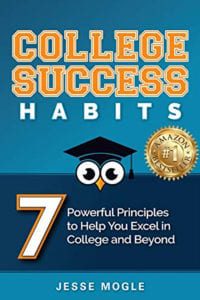
College Success Habits: 7 Powerful Principles to Help You Excel in College and Beyond
We’ve all heard that phrase, “Fear of missing out” before, but I’ve never heard anybody say, “I have fear of missing out on the best version of myself.” I think that’s key. We know there are a lot of jokes around, when people go to college, that’s when you get drunk a lot and you party a lot and all those things. You have talked about your own challenges with addiction and yet, you’re writing a book about college success. Connect the dots for us.
Twelve years in college and it wasn’t on accident. The easiest place for an addict to hide out is in college because alcohol and drugs are prevalent. No one is paying attention to the abuse that’s going on there. If you binge drink five days a week but you can still manage to get grades and stay in school, no one pays any mind to that. I believe that once I left school, I would get sober, meet a woman, get married, go straight into the American dream, which is not how it played out because my addiction graduated with me. There were those moments when I finally had to stop binge drinking, stop doing the drugs, buckle down, and get the As and Bs in order to pass and get onto the next semester, I was able to utilize a fluid mindset.
When I started to get into addiction recovery and think, “What is it that I could teach the future addicts of tomorrow in order to help them see the choices they’re making today become the habits they have to live with and contend with tomorrow?” I started diving into, “What were my behaviors when I straightened up to get the good grades? What were the principals? What were the drivers behind my behavior that allowed me to get a 3.0 after twelve years in school even though I was not the best student?” When I started making a list of all the principles and asserted to ween them out for the ones that had the most impact on me now and the ones I knew I was using then, the book came from that. That’s where the seven powerful principles manifested from was this whole thought process of what did I do then and what can I teach now?
I love this phrase, “My addiction graduated with me.” That’s powerful that we think we will outgrow our addictions or if we change status, change jobs, change cities that somehow magically that will come. I’m fascinated to talk to you about the connection between habits and addiction. Is it a habit that I tend to want to eat dessert? Is it a sugar addiction? Can you speak to those distinctions and how much of addiction is a habit if you think that is the case at all?
That’s a great question because if you like to have a dessert after every single dinner, if it’s not causing you any detrimental harm, if it’s not bringing about a negative consequence into your life, then generally I would say that you’re maintaining a well-balanced mindset around that dessert. If by eating that dessert you start to shame yourself, you go into a guilt spiral. You start to get jealous about somebody else who has a better body than you. If negative emotions come with the eating of the dessert, now you’re starting to talk about where it’s an addiction because you’re eating it and at the moment you’re enjoying it, but then you’re going to beat yourself up for the next six hours about it. That’s not healthy. When you find yourself doing that, then you can say, “Could I just not have the dessert tomorrow?” If tomorrow comes and you eat the dinner, you are craving it and then you start to shake, then you start to beat yourself up. “I only live once and I’m not going to miss out on life and seize the day.” You start to put that kind of thought process into it. Now you’re starting to create closer into the addiction.
[bctt tweet=”The choices you make today become the habits you will have to live with tomorrow.” username=”John_Livesay”]
It’s a really process. Nobody thinks, “I’m addicted to sugar.” They start to look at themselves and think, “I drink six Coca-Colas, I have two cheesecakes, and I have six cookies.” That’s a lot of sugar. If I told you that I used to drink a fifth of Jameson every day, you’d be like, “That’s a lot of Jameson.” Did you know that 250 grams of sugar a day is an awful lot of sugar? Go and measure that out. I can assure you, it looks like a big humongous pile. Now imagine that you’re consuming that every day, that is going to have detrimental effects on you long-term.
When you talk about the seven principles to help everybody excel, not just in college but beyond. Let’s tap into a few of those. What’s your favorite 1 out of the 7?
Hands down, it’s the first one, develop a growth mindset. Everything is built upon the growth mindset. When I started to write all of these out, it became the most obvious of them all. When I looked back on my history when I was going to college, I would have said I had a growth mindset because that wasn’t a trending term. When Carol Dweck, a professor from Stanford wrote the book called Mindset, she put into the lexicon this idea that there’s a growth versus fixed mindset. Once I heard that, it’s almost like somebody shone a light upon the Grand Canyon and a mountain at the same time. All of a sudden, I could see the depths at which a fixed mindset sends you. I could also see the heights at which a growth mindset could send you.
It is hands down the number one most important thing everybody needs to begin to procure within themselves. The shocking thing when people listen to me talk about mindset is, they think, “If I have a growth mindset around my education, physical fitness or my health and nutrition, that means I have a growth mindset everywhere,” and that is not the case. You think in the gym that you can accomplish anything and you approach that with a growth mindset, but then when it comes to your relationships, your partner or the way you take on new challenges at work, you could have a fixed mindset. Your growth in one area does not mean that your growth in all areas. This is something that I cannot stress enough.
I’m fascinated by that because I look at people and I say, “That person’s in great shape, but their finances are a mess or that person’s successful in business and they look like they’re going to have a heart attack any minute.” They’re stressed out, overweight, smoking and drinking and whatever. I totally concur that success in one area does not mean you’ve got everything handled. However, I am interested in your thoughts on if we are able to master let’s say the discipline we have in the gym, could we then take that to the discipline of keeping track of our calories and our exercise? Could we transfer that and say, “I’m going to be disciplined about looking at how much money is in my checking account and maybe even balancing it.” Do you think there are some transferable skills that one person can take from one area to the next?

College Success Habits: Everything is built upon the growth mindset.
The beautiful thing about a growth mindset is when you prove to yourself that you have it in one area, you can then take the skills that you learned. “Let’s go back to the gym. I’m good at the gym. I may not look like Arnold Schwarzenegger from Conan the Barbarian, but I’m good in the gym.” I’ve learned, you mentioned principle number five, is embraced discipline. If I was going to pick all of them again, how do you pick which 1 of your 7 children is your favorite? Being disciplined is one of the most important attributes to all of this because you have to turn it into a habit. You have to go in day by day if you are good and consistent going to the gym five days a week, sticking to the program, being flexible while you’re in there and learning to adapt.
You are then able to see, “I can do that there.” Let’s take that same skillset and now let’s transfer it over to my finances. There will be a learning curve, which is what everyone should expect. If your credit score is 450, but you can bench press 300 pounds, you’re not going to wake up tomorrow with an 800. It will take time and that’s where the discipline shows in. I think it’s integral that everybody sees where they’re growth-minded and then ask themselves, “Why do I have a growth mindset around my health and nutrition? What does that look like within my health and nutrition? How have I accomplished it there?” You then take that why, what, and how, you would slide it right over to your finances and be prepared for the learning curve, but also be prepared for the success that inevitably will come because you’ve already proven that you can do it in one area, you know you can do it at another. Everybody has at least one area. I don’t care if you’re doing crack and sleeping in an alley, you have figured something out and you are the expert at surviving in that alley. You can take that skill and you can transfer it anywhere you want.
The myth for people in college is once you get out of college, you don’t have to learn anything. You don’t have to read any more books. There are no more tests. You’re done. Certainly, in the business world, things are changing rapidly and new technologies, new books, and new social media platforms. You need to figure out, “Am I going to learn blockchain or not? Am I going to learn to go on Tiktok or not?” It doesn’t stop. I think your book about things that help you excel beyond college is relevant especially for a lot of entrepreneurs. I’m guessing, is one of the principles flexibility since you’ve spoken about that?
That is number six, embrace exercise flexibility.
Let’s keep the metaphor going a little bit. I remember once when I was speaking at a yoga convention and they wanted me to help the people there become better sellers of yoga mats and all the other things that they had at all the booths. I took a yoga class and I wanted to immerse myself a little bit in that world. The teacher said, “Most people either have strength or flexibility, but rarely both when they’re doing yoga.” I thought, “That’s interesting. I could relate that to the business world.” You either have a lot of ad dollars and strength to power your message, but maybe you’re not flexible on price changes in the market or a pandemic coming. You’re not flexible or nimble. What can people do to become more flexible in their life?
[bctt tweet=”Planning is priceless, but plans are worthless.” username=”John_Livesay”]
I love the metaphor that you pulled out there because you think about a company like Coca-Cola and how flexible can they be because they are this humongous Goliath in the industry versus some mom and po company that is going to be a much smaller market share. Flexibility comes from knowing that no matter what comes up in the future if you go into it with a growth mindset, you will figure out a solution. The rigidity that comes is when people say, “This is my plan. I must stick to my plan.” One of my favorite sayings is, “Planning is priceless, but plans are worthless.” You can plan all day long. You should.
You don’t go into the gym with just saying, “I’m going to work out biceps today and wing it,” and hope that you figured out. You go in with a plan. The planning is priceless, but the plans are worthless because, at any moment, some hurdles could get in the way. Now all of a sudden you have to shift because somebody’s on your machine and now you have to do another one. I can’t do this yoga pose because I have tight hamstrings, but I can do this other one that allows me to loosen up my hamstring. The rigidity comes from thinking, “I have a plan and the plan must work. If the plan doesn’t work, I’m going to freak out and shut it all down.” What are you going to do? Are you going to go home and sit in the dark?
Number four is take action in the book. If you’re taking action, then you’re going to be flexible because you’re going to realize that no matter what hurdle comes up, you’re going to be able to hop right over it and go around it. There’s always a way around a hurdle. You have to be willing to take one step. If you want to have flexibility in your life, pick an area now, I guarantee you that something will get in your way. Something will not go right. Driving to work, a light will turn red when it shouldn’t. How can you be flexible at that moment and allow everything to ripple away?
I know for myself and other friends of mine like you who are also speakers, you go to a lot of colleges and speak. They’re not in session, they’re all learning online now and companies aren’t usually having in-person sales meetings for me to speak at. What if we did a virtual sales meeting? What would that look like? Suddenly you’re like, “I have to get good sound and good lighting instead of a home studio with a good camera and make this much more interactive digitally than it would be in person.” Maybe call on somebody in a talk, which you normally don’t do to keep people’s attention going so that they don’t require a whole flexible thing.
In fact, one of my clients said, “Can you help us not only become better storytellers but can you help us train our sales team on how to sell on Zoom?” They’ve never had to be on camera before, unlike you as a former DJ and journalist. You’ve been on camera a lot, but many people haven’t. It’s a skill that we take for granted because we’ve worked on it and been trained on it. You can’t just ask 200 salespeople who’ve never had to present to potential clients on camera to start doing it without any training suddenly. While it’s changed one opportunity, it created a need for another, which is, “Can you help us be good on camera?” I’m like, “I happened to have been on television so yes I do know how to do that.” It’s a fascinating experience if you stay flexible that some other opportunities come out of something where we instantly judge it as though this is a disaster and this is horrible. As opposed to looking for, “How can I stay flexible and maybe figure out something that people would need that they didn’t before?”

College Success Habits: Flexibility comes from just knowing that no matter what comes up in the future, you will figure out a solution.
It’s a swift pivot. Knowing you as being friends with you for as long as I have, I’m not surprised that you were able to see twenty opportunities that came quickly. You don’t get to speak on a stage anymore, which is that one thing of speaking on stage. Now you’ve got twenty things people are asking of you because you have skillsets that go far beyond presenting on stage.
What’s interesting and I would love your insights on this. Oftentimes we get ideas of things we should do, want to do, and might do. There’s a moment in everyone’s life like when you decided you’re going to write this book. It’s not your first book, you’ve written other books, or started your podcast. There’s a moment when everyone has to take action. It’s one of the principles. I remember back in September of 2019, I thought, “I think I’m going to create an online course based on the principles in my book.” There’s an internal voice that can kick in and was like “Are you sure you want to do that? That’s a lot of work. How are you going to sell this? Is anyone going to buy it?”
I was able to quiet that voice down and say, “Let’s do it and we’ll figure out how you’re going to sell it after it’s created.” Don’t overwhelm yourself and stop yourself from doing something. Now you fast forward to February, March of 2020, the fact that the course took me six months to create. It’s like a book, you don’t just whip one out in 30 days if you want it to be good, is now in demand more than ever. As part of a virtual talk, “Do you have a course our people can go through to keep the storytelling skills alive?” I could never have predicted that being something that would help me get virtual speaking gigs. I’m sure you have a story of a time, whether it’s the book you wrote or a podcast you launched. When you had a lot of reasons, doubts or fears, you didn’t know all the details of how to do something, but you still went ahead and did it. Can you speak to that?
To mirror what you brought up with your online course, I’m doing that. For the College Success Habits book, I wanted to teach myself this software where you shoot the videos and you put it on one of these sites. I’m sure you’ve heard of all of them. I’m not going to plug them because they’re not paying me, but there are sites you can put the education stuff on and then people can go register for it. I’d never done any of that. I sat down one day and was like, “Let’s do a quick seven minutes on each one of the principals, 7 for 7 and let’s knock it out. Let’s make it super simple. I’ll shoot it via Zoom. I’ll put a front card, a back card.” That was it. I taught myself this software. I reacquainted myself with the Final Cut Pro editing software. I have all the mics, I had the lighting, and I had everything all ready to go.
I’m doing that with addiction recovery stuff because I also work within the addiction recovery field. Since the college speaking gigs have dried up, the people I would normally be interviewing for my podcast, College Success Habits, are no longer in the office therefore not available. Now I’ve pivoted over to my other podcast, From Sobriety to Recovery, and now I’m gearing everything I do towards that. Luckily for me, I’ve got two different brands going. I’m like, “Well let’s build a program for people in addiction recovery.” It’s like you said, “You don’t knock it out overnight,” but certainly it’s all about taking that first step.
[bctt tweet=”There will be hurdles along the way, but if you are tenacious, you will succeed.” username=”John_Livesay”]
If anyone out there is reading and they’re like, “I want to make a program or I want to start working out.” I call it future pacing but if you start trying to look too far off into the future about what step 27 is going to look like and you haven’t even taken step one, even if you were to plan all the way to step 27. What did we already discuss? Planning is priceless. Plans are worthless. There is a 0% chance that step 27 is going to look the same as it does now when you’re standing at step one. Why even do all that to yourself? Stop. What is something you can do now? Sometimes it’s writing the table of contents for the program.
That’s how I started my first book. I wrote chapter titles on a piece of paper and thought, “What would this look like?” I remember interviewing Rob Angel, another friend of ours who created Pictionary. He said he took out a dictionary and a pad of paper and said, “I want to create a word Aardvark down because now I’m no longer a waiter. I’m a game inventor.” That’s another example of taking that first step. I talked to young college students myself and sometimes they go like, “I don’t know what I want to do for sure.” I said, “You don’t have to know.” All these people want to be lawyers and engineers. I was always amazed when I was in college. I was like, “How do you know that’s what you want to do the rest of your life?” Back in the dark ages, that’s what people did. You did one thing your whole career.
Now I say, “The job you might end up doing doesn’t even exist yet if it’s AI or virtual reality, who knows?” Get skills and be curious. What I love about your takeaway is don’t put all your eggs in one basket. We’ve heard that 100 times. Don’t make all of your sources of revenue one thing. You have two things going on and during a pandemic, unfortunately, there are a lot of addiction issues. People feel out of control and abuse is up. Unfortunately, those things that get triggered and there’s a reason that a lot of liquor stores are considered essential businesses because of people’s addiction to it. I think I can’t even imagine if they know.
Those never got shut down. Even the corner little store that sells maybe fourteen-year-old M&Ms but a lot of booze never got shut down.
If you’re a borderline, you’re functionally, but suddenly you don’t have to be anywhere. It gets a lot easier to hide those addictions. The depression that comes and all that other stuff when things are disrupted. The fact that you’re able to help people do that, it’s a testament to who you are as a person, a man and as a friend. If anybody needs your help in that area or has a college student or is a college student that wants to figure out how can I have a good habit while I’m going to college online? This book could help you prepare because that’s been hugely disruptive. A mutual friend of ours has a son that’s nineteen years old. He was telling me how sad his son was that they had to spend his birthday without his friends. As adults, we hopefully develop some emotional intelligence, but at nineteen it’s not that keen on fair. “Why is this happening to me? Even though it’s happening to everybody.” It’s still your ability to deal with disappointment. Your skills aren’t as honed as they would be hopefully later. I think what you’re doing is amazing. Do you have any last thoughts, quotes or any last principle you want to share from College Success Habits?

College Success Habits: Embody tenaciousness every day.
Number seven, embodied tenaciousness. Every day, you got to show up, step up, and be the best version of yourself. If you want to sit there and you want to argue for your limitations, you want to argue and fight for how your past somehow created this version of yourself and you had no control of it because mommy or daddy didn’t love me enough or I didn’t have enough money like my friends had. If you want to continue fighting for those limitations, congratulations. You get to keep them. It’s all yours. You can sit there and you can complain about how your life is all somebody else’s fault and it’s not your own. You can realize that while the trauma, whatever that might look like that happened to you in the past, wasn’t necessarily your fault.
Trauma that happens to you isn’t your fault. Whatever happened as a child, it’s okay to admit that was not your fault, but it is your responsibility to heal it. It’s your responsibility to move through it. No one’s going to pull your ass out of bed in the morning and say, “Let’s go to the gym and I’ll lift the weights for you so it’s super easy.” No, you’ve got to do it on your own. It’s not that I’m trying to coddle anyone whenever it comes to my coaching. I am very much in your face. I’ll give people the space to complain and to be, “This is what happened to me.” That’s great. I’ll let you have your moment in the sun. We’re then going to snap you back and I’m going to be like a 1960s college football coach screaming in your face that you can do anything you want if you’re just willing to take that first step.
It reminds me of Miss Piggy from the Muppets saying, “I’m so rich, I pay somebody to exercise for me.” I thought that was hilarious because it was never something that I ever thought about. I was like, “I’m sure if somebody wishes they could pay someone to exercise for them and it would count for them.” This concept of no one’s going to come to rescue you. My whole TEDx Talk is called Be The Lifeguard of Your Own Life. I think why you and I are such good friends is we have that similar philosophy that we’re responsible for our own life, our own feelings, and our own healing. Jesse, if people want to follow you, hire you, where should they go?
First and foremost, if you go to JesseMogle.com and you go up to either College Success Habits if that’s where you find yourself or From Sobriety Recovery, there’s a little contact link you can click on, it’ll give you a registration form. You can answer a couple of questions. That goes directly to my inbox. By all means, the College Success Habits podcast is located anywhere you listen to podcasts as well as From Sobriety to Recovery. I was new and noteworthy for both of those shows on iTunes. It’s not hard to find me there. @FromSobrietyToRecovery on Instagram. I’m huge on there. I’m always there answering questions, also social media at @JesseMogle because I’m the only one on the planet.
It is not hard to find me. Google Jesse Mogle. I’ve been around the world. I have yet to find another Jesse Mogle. That is not permission to name your child Jesse Mogle. Do not take this from me. Please go to my website, click on College Success Habits or From Sobriety to Recovery, reach out, whatever it is. I call myself a lifestyle architect. I help you build the life and have the lifestyle you’ve always desired. It is one step away. It is one of my genius powers. Whatever you say you want to create, I can help you lay out the plan and be ready for some hurdles. I guarantee if you’re tenacious, you will succeed.
You’re the lifestyle architect. Thank you, Jesse, for showing us how to lay our plans out and congratulations on your wonderful book, College Success Habits. Thanks.
Important Links
- Jesse Mogle
- College Success Habits: 7 Powerful Principles to Help You Excel in College and Beyond
- Mindset
- Rob Angel – Previous episode
- Be The Lifeguard of Your Own Life – TEDx Talk
- College Success Habits
- From Sobriety to Recovery – Apple Podcasts
- @FromSobrietyToRecovery – Instagram
- @JesseMogle – Twitter
- Better Selling Through Storytelling Method Online Course
Wanna Host Your Own Podcast?
Click here to see how my friends at Podetize can help
Purchase John’s new book
John Livesay, The Pitch Whisperer
Share The Show
Did you enjoy the show? I’d love it if you subscribed today and left us a 5-star review!
- Click this link
- Click on the ‘Subscribe’ button below the artwork
- Go to the ‘Ratings and Reviews’ section
- Click on ‘Write a Review’
Love the show? Subscribe, rate, review, and share!
Join The Successful Pitch community today:
- JohnLivesay.com
- John Livesay Facebook
- John Livesay Twitter
- John Livesay LinkedIn
- John Livesay YouTube