

Think It, Be It with John Mitchell
Posted by John Livesay in podcast | 0 comments

Episode Summary:
Everybody wants to raise their income and have success in their careers. However, even with so many things written about achieving that, it is still pretty difficult to find one that you can follow. Taking the legendary book, Think and Grow Rich, entrepreneur and success mentor John Mitchell has created a technique that practically applies its ideas through his 12-minute-a-day Think It, Be It. Debunking the idea that hard work makes you successful, John talks about working smarter instead by influencing your everyday actions and thoughts. He gives out the four categories that will change your programming so that you can see your life in a way that allows you to pull in the people and success that you want.
—
Listen To The Episode Here
Think It, Be It with John Mitchell
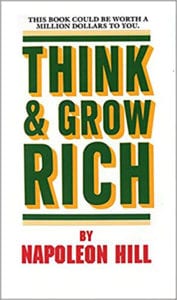
Think and Grow Rich
Our guest is John Mitchell. He has a 12-minute-a-day Think It, Be It technique that’s rated as the top practical application in the world of the legendary book Think and Grow Rich. When he applied his technique to his own life, he saw his income go up to over $5 million a year. Previously for twenty years as an entrepreneur, he earned low six figures and that twenty times difference happened because his daily technique significantly increased his control over himself by probably double. It made them laser-focused every day on the two or three things that move the needle in his business. It also allowed him to rapidly evolve his strategy for success. He was simply operating every day at a higher level than he ever had before and it showed up in his income.
The science behind his technique was profiled in a Time Magazine cover story. While John started out as a CPA, he became an entrepreneur at a very young age of 30. He’s owned companies in a wide variety of industries including real estate development, restaurants and publishing. Turning 50, he wasn’t as successful as he thought he should be. He found the top book of success written, Think and Grow Rich and he developed his own 12-minute-a-day technique. That what you envision in detail on a daily basis is what shows up in your life. John, welcome to the show.
Thank you. I’m glad to be here.
I always like to ask my guest to take that little intro that I gave and bring it to a life of your own story of origin, not so much about being a CPA. I want to hear the story of origin of turning 50 take us there and saying, “I thought I’d be more financially independent. I worked hard. I’ve been an entrepreneur and things aren’t what they need to be.” Tell us what the a-ha moment was for Think It, Be It book.
When I turned 50, I wondered if success looks what I thought I should be. I had a couple of goals in my life to make enough money, so I didn’t have to work and to find the woman of my dreams. As I assessed my life, I realized that I was falling short on both. As an entrepreneur, I’m always blessed to make well into six figures but never close to seven. On finding the girl at 50, I’d never been married. I can tell you, it was not from lack of interview. I did a lot of interviewing. The defining moment happened three days after I turned 50. I’m in my office, kick back and my feet are on the desk. I started thinking about my life and I do the math. I realized, “If I don’t make over $1 million a year, I’m never going to have that exceptional life that I’d always dreamed of.” The freedom, the lifestyle, the sense of accomplishment and that hit me like a ton of bricks. It was clear, I had to make things happen in my 50s. I made the decision that hard work doesn’t work.
While it works for making six figures a year but clearly it didn’t work for making seven. I knew there had to be something other than hard work. I made the decision to find out whatever that something else was. Three months after turning 50, as I’m puzzled about how to change this direction, a pearl of wisdom hits me. Why not find the top book in the world on success and achievement ever written and then apply it word for word to my life? The logic was so simple and compelling. After some research, I’ve found that there is one book that excels over all others and it’s Think and Grow Rich. Are you pretty familiar with Think and Grow Rich?
[bctt tweet=”‘Hard work doesn’t work for making seven figures.'” username=”John_Livesay”]
I am. It’s all about investing in real estate and letting that real estate grow for you.
It’s not quite, but I guess you’re in some of that.
That feels a little like Rich Dad, Poor Dad.
Here’s what’s significant about the book. First is the book has sold over 100 million copies whereas the next bestselling book on success and achievement has sold under ten million copies. Clearly, it’s a top book ever written on success by a factor of ten. The second thing is the book has created more millionaires and billionaires than any other book on the planet. It’s basically applying science to your life to up your success. I read the book and the central concept is what you envision in detail on a daily basis is what shows up in your life.
It’s very much along the lines of The Secret or Abraham Hicks, that whole mindset of The Science of Mind of Ernest Holmes or Your Thoughts Create Your Reality.

Think It, Be It: You got to work smarter by influencing the actual part of your brain that influences the thing that determines your success.
I read that and then I discovered there’s a problem that I and probably all of us have encountered 100 times. It’s a great idea but how to apply it in a practical way. I probably moped around for a couple of weeks not knowing how to apply it and then it hit me that maybe I had to come up with the practical application myself. I did and I applied it to a new business I was starting in the financial services industry. Over nine years, I continually tweak my 12-minute-a-day methodology. Over those nine years, my income went from low-six figures a year to $5 million a year. I felt so incredibly blessed. It’s quite a change from my twenty-year history. I could see why it was happening. By applying science to my life for the first time ever, I was influencing my daily actions and thoughts. Clearly, I was operating at a higher level than I ever could before. I could feel it. The best news was I also met the woman of my dream from applying this methodology.
It’s about pulling people in. Energetically, it’s almost like a metaphysical principle that the science is based on.
It really is. That sounds a little woo-woo, metaphysical.
Quantum physics does if you’re talking about energy for people who prefer that. Let’s go and dive right into this concept of a lot of people who go, “I don’t have time to meditate. I don’t have time to fill myself up with a bunch of positive thinking.” Give us an example of how the 12-minute-a-day methodology works.
This is essentially how it works. You’re going to feed yourself every day exactly the person you want to be, exactly what you want to accomplish and precisely how you’re going to achieve your clearly defined goals. When you feed that to yourself every day, after about 21 days, the science kicks in. That starts showing up in your thoughts and actions automatically without thinking. That’s the magic of it because when your thoughts and actions automatically start reflecting your programming, it immediately takes you to a higher level.
[bctt tweet=”Success is when your thoughts and actions match your programming.” username=”John_Livesay”]
What’s an example of somebody who did? Let’s focus on the career at the moment.
I’ll give you an example. Everybody wants to raise their income, their success and their career. To backtrack a little, the way this works is, you’ll take your life and compress it down to one sheet of paper, front and back. On the front is the ideal you and the five key areas of your life: yourself, your health, your romantic relationship, your spirituality and your career. That’s on the front. On the back are the improvements you want in each area of your life and your three goals for the quarter. That’s essentially it. One of the things in a career that we do is we articulate your succinct business plan, your strategy for success or the two or three things that move the needle. The linchpin issue that takes your business to the next level.
You feed that to yourself every day. I found that three things happen. First, your business plan is so easy to implement because it’s so top of mind. Secondly, you do become laser-focused on only what moves the needle. Everything else falls by the wayside. The third thing is that suddenly I had a way for evolving my strategy for success in the business plan in a way that moved it forward by like twenty times what I’d ever experienced before. That was happening because when you’re feeding your business plan or your strategies for success to your subconscious mind every day, it’s constantly challenging it and refining it. It had such an impact on me. I have that ability to continually refine my strategy and it made me more successful.
This is why I wanted to have you on the show, John, because I’m so fascinated by this premise. From my own speaking career, for example, when I had the courage to say out loud to people, “I want to give a TEDx Talk.” All your self-talk comes up, “Who am I to give a TEDx Talk? What a big goal? You’ll never achieve it. It’s never going to happen.” If you keep saying it to yourself and putting it out to people and let go of all the negative self-talk and worrying about whether the other people think you’re crazy to do it, then someone said, “I know someone who puts one on in San Diego. He might be able to help you figure out what you need to do to get a yes.”
The thought process of that laser-focused, keeping it top of mind, knowing that having a TEDx Talk would be one of those key drivers that you talked about moving the needle that gives you credibility as a keynote speaker. We got the laser-focused, then I get introduced to someone for saying it. It still took me a year and a half to get someone to say, “Yes.” It had nothing to do with my talk. It doesn’t fit our theme. You had to get used to those noes. This question that someone gave me that is what I hear you saying, which I want to tell everyone reading is if we plant in our seed this question of challenging that question, why is it that I’m a successful TEDx speaker? Why is it that my TEDx Talk has over a million views? That’s what I hear you saying is by having that laser-focus and then asking, “Why is it that I have my perfect soul mate in my life now?” Your brain starts matching that programming. Is that the gist of what you’re saying?

Think It, Be It: Just as you’re baking a cake where you can’t keep opening the oven, we have to give our goals and thoughts the full time to bake.
There are two parts to success. Using your example is probably a good idea. Your desire to do a TEDx Talk, that’s setting the goal. That’s being clear about what it is. Equally important, if not more important, are the action steps that you have to take to achieve that goal. You no doubt had a detailed vision of exactly what you needed to do to make that a reality. That’s the power of this 12-minute-a-day technique is that it takes those action steps that you’re going to need to take to achieve that goal. By feeding it to yourself every day that causes your thoughts and your actions to reflect your programming. That’s the game-changer. When people wonder about, “What makes me more successful or how do I become more successful?” Most people think, “I’ve got to work harder.” No, I don’t think so. You’ve got to work smarter. You work smarter by influencing the actual part of your brain that influences the thing that determines your success, which is your everyday actions and ongoing thoughts. Does that make sense?
It does. We talked about this a lot. I’ve interviewed investors to fund startups. They say, “Please tell your clients, don’t try to boil the ocean.” I tell people Amazon sold books first and have proof of concept that worked before they started selling everything. If you try to pitch Amazon now, it would be like, “That’s boiling the ocean.” I love this concept of laser-focus. People say, “I have top of mind what my goals are. I’ve figured out what I should be focusing on to take some action. Your secret sauce, from what I can gather, is this questioning your mind of visualizing it already happening where you’re saying, “Why is it that? This has already happened.” When you are fighting, in my case, when I finally did stand on that TEDx stage, on that red carpet, it seemed like, “I’m here,” or like you’re meeting the woman of your dreams for a date. It’s like, “She showed up.” It doesn’t seem like a surprise or magic. There’s the science of it because you’re doing this. The 12-minute-a-day, you mentioned the four categories: yourself, health, romance, spirituality and career. Do you spend a couple of minutes on each of these categories for the twelve minutes or do you spend twelve minutes on one?
No, it’s twelve minutes in total. Probably more of it is spent on your career because originally, I created this because I wanted to go to seven figures a year net. That was my big focus. It’s a little more towards the career, but it has all of those areas.
What is your life like? There are all these studies on happiness that we pass a certain Maslow’s Hierarchy of Needs, our basic needs are met in terms of food and shelter and what have you. In other words, the difference between making $100,000 and $1 million is not the same exponential increase in happiness as it is in money. Has that been the case for you?
When I was making six figures a year, in some ways, I was afraid to look at creating an exceptional life looked like because I wasn’t sure I’d ever get there. Once I got there and I started making $5 million a year, I was like, “This is way better than I thought it was.” Finally, I had enough money not to have to work. Because I was so fascinated by the stuff we’re talking about, I sold my company. I guess it was probably two or three months after I sold the company, I met the former chancellor and president at the University of Texas at Austin. I told him my story. He said, “You’ve got to teach this at the University of Texas and why don’t we teach it together?” I said, “That’s fine to teach at the high achievers.” My passion is to get those people that were like mad that struggle to go to that next level and teach it to them because I so relate to the pain that I had back then and so many people have.
[bctt tweet=”What you envision in detail on a daily basis is what shows up in your life.” username=”John_Livesay”]
You have empathy because you’ve been in their shoes is my big takeaway from what you said.
I had freedom was the feeling I’ve gotten as I crossed over and didn’t have to work. The best things were not material things. The lifestyle is great. That’s small potatoes compared to that sense of accomplishment, that pride of accomplishment, the level of control that this gave me over my life, that level of control was immensely great.
You’re the perfect person to ask this question to. In my observation of entrepreneurs and business people in general, a lot of people have the money thing down, but they don’t have the fitness thing down. They’re physically fit but not fiscal fit and then vice versa. There are a lot of fit people out there that have no money. You have both. You’re physically fit and you’ve got financial freedom. I tell people, “If you can get one area of your life, take the discipline you have, knowing how much your cashflow is, and what’s in your checking account and apply it to the calories and exercise you’re doing and vice versa.” Take the discipline from working out to your money. I don’t see many people talking about that. You seemed to be embracing all of this. Another reason why I wanted to have you on is you’re not talking about careers, you’re talking about all areas of our life. Can you speak to how this Think It, Be It applies? The concept of visualizing is discipline and focus from one area. Let’s say fitness can also be applied from your career.
I’m so glad you brought that up because here’s my definition of an exceptional life. You’re making seven figures a year. You’ve got a great romantic relationship and you’re fit and trim. To me, that’s the trifecta of an exceptional life. I see so often that to your point that people maybe are doing well financially. They got a lousy marriage or they’re overweight. They can’t control their weight. I particularly find this issue about having a great romantic relationship important. If you think about it, that relationship affects your happiness more than any other external factor there is. This affects all three areas at the same time. One of the things I think that you’d find interesting, this is something that we all have to overcome. We’re all using an antiquated operating system to run our lives. It’s like playing the game of life with one hand tied behind our back. The effect is that we’re all innately geared to daily survival. The effect of that is three things.
First of all, 90% of your thoughts are fear-based. Secondly, you have less than 20% control over yourself. Thirdly, you’re reactive rather than proactive on your report and agenda. All that is great if you’re running from a lion. It’s exactly the opposite of the way you need to be if you want to be productive, creative and happy. You have to overcome that. The part of your brain that controls your everyday actions and ongoing thoughts is your subconscious mind. That antiquated operating system is what’s running your subconscious mind. It’s gearing you exactly the opposite way you need to be. That’s what this 12-minute-a-day technique does. It overlays an operating system that gears you to productivity, creativity and happiness.
You have mentioned that there are two scientific discoveries that affect how much we achieve in life. Can you tell us what those are?
Over the last 30 years, there’s been a lot of scientific interest in what separates the mega achievers from the moderately successful. It comes down to two things: control of self and focus. Those are the two exact things that this affects. The principles that you’re referring to, it is that antiquated operating system. The other one is, you have a reticular activating system, which is a part of your brain that’s about the size of the tip of your little finger. It’s a filter for your brain. It determines what gets in and what doesn’t. It’s like the nightclub bouncer for your brain. When you’re feeding every day to yourself exactly the person you want to be, exactly what you want to accomplish and precisely how you’re going to achieve your clearly defined goals, then it knows what’s important to you. It brings in stuff that isn’t coming in. That’s what amazed me when I first started doing this, I saw my reticular activating system reacting to what I was doing for twelve minutes a day.
Is it the amount of time? Is there something special about twelve minutes versus ten versus fifteen?
The beauty of twelve is it’s doable. It’s not too much. I’ll give you an example of how it worked in my marriage. This illustrates how it works with everything. I didn’t get married until I was in my 50s. When I did, I discovered something that unfortunately my married friends had failed to share with me. Every once in a while, your spouse will say something irritating. I know that probably hadn’t have happened to you, has it?
It’s happened to everybody.
[bctt tweet=”Success is a necessity, not a preference.” username=”John_Livesay”]
When it happened to me, I didn’t like it. I didn’t like what would come out of my mouth. While it didn’t happen a lot, it did happen. I thought, “I’m going to put in my visualization that I’m going to be flexible, patient and thoughtful.” I’m reading that every day. Fifteen days in, I’m no more flexible, patient or thoughtful than I was at the start. About the 21st, the 22nd day, my precious wife, Ginger, said something irritating and in that moment, I was flexible, patient and thoughtful. I didn’t have to think about it. That’s who I had become.
It’s a tipping point. That 21-day thing of the brain getting reprogrammed.
I have done this with so many people. It is amazing about this 21-day mark. Some things the subconscious mind is going to accept at ten days in. I have consistently seen that around the 21st day, it then accepts everything.
I love stories. I always use the analogy of, if you’re planting a seed, you can’t keep digging it up going, “Is it growing?” If you’re baking a cake, you can’t keep opening the oven and be like, “Did it rise yet?” That’s what we tend to do with our goals and our thoughts. We don’t give it the full time to bake in this case, 21 days.
That brings up something else that’s interesting. This works on everyone, but it’s not for everyone. Maybe that’s even a negative about this. What I mean by that is it works on everyone because it’s pure science. It has to work. It cannot work. There’s one caveat to that. It’s not going to work if you don’t do it. It’s not going to work if you are trying not to do a habit or the other thing is if more success is just a preference, which is the case with most people as opposed to a necessity. It’s not going to work. More success has to be a necessity for you because if it’s not, you’re not going to spend twelve minutes a day.
Those twelve minutes a day, is it a journal that you’re writing in? Is it words you’re reading over and over? Is it making sure you’re top of mind on your action steps? What do the twelve minutes look like?
It’s pretty much all of the above. Keep in mind and picture this, you’ve compressed your life down to one sheet of paper, front and back. It’s sitting in a plastic stand that sits on your nightstand. The first thing in the morning before you get other things into your head, you spend twelve minutes a day to read it. You’re reading what’s moving the needle in your business. You’re reading the way you want to be with your spouse. You’re reading the things you want to make happen with your consistent exercise and how you eat. In the career, you’re feeding your succinct business plan, your strategy for success and your three things that move the needle. Also at the bottom of the visualization, you’re tracking every week on Sundays, the key behaviors associated with your goals. It’s that combination that has such a transformative effect on you.
The website is ThinkItBeIt.net. You have a five-day free email course that anybody who goes to the website can get. They can start to explore from that.
You can text me at 44222 and then the word, Genius, and that gets you the five-day email course.
John, I can’t thank you enough for sharing your success formula. You obviously are walking your own talk, which gives credibility. It’s been a pleasure having you on the show. Is there any last thought or quote or inspiration you want to leave us with?
I’ll share with you a story you might find interesting. When I created this a few years ago, I decided to go find the top expert in the world on success and achievement. I determined that the person is Darren Hardy. He is an amazing guy. I figured out a way to get to him. I’m able to sit down with him for three days and visit with him. Finally, we sat down and he looked at what I’ve created, this visualization. He studied it. He said, “This is good.” He looked a little closer and he said, “This is good. You’ve got a problem, though. Most people are not going to spend twelve minutes a day on anything to impact their success. That’s how it is.” I was like, “Darren, how can that be?” It’s twelve minutes a day. It’s based on the top book ever written on success and achievement. He goes, “I know, John. You’ll do it, I’ll do it. That’s a dirty little secret of the success in human achievement field is that most people won’t do anything to impact their success and achievement. The people that were a success is a necessity as opposed to a preference. They’re going to do this. It’s going to be their advantage in life for creating success.” I was like, “That’s what I experienced.” It was pretty gratifying to have him say that. Now, that we’ve done this with a lot of people and I get the inputs from how it’s changing their lives and how the template that we have makes it easy to do this, it’s gratifying.
Thanks again, John.
Links Mentioned:
- Think It, Be It
- Think and Grow Rich
- Rich Dad, Poor Dad
- The Secret
- The Science of Mind
- Your Thoughts Create Your Reality
- www.ThinkItBeIt.net
- Quantmre.com
Wanna Host Your Own Podcast?
Click here to see how my friends at Brandcasting You can help
Get your FREE Sneak Peek of John’s new book Better Selling Through Storytelling
John Livesay, The Pitch Whisperer
Share The Show
Did you enjoy the show? I’d love it if you subscribed today and left us a 5-star review!
-
- Click this link
- Click on the ‘Subscribe’ button below the artwork
- Go to the ‘Ratings and Reviews’ section
- Click on ‘Write a Review’
Financial Peace Of Mind with Michael Nathanson
Posted by John Livesay in podcast | 0 comments

Episode Summary:
While being a lawyer and financial planner, Michael Nathanson was diagnosed with a brain tumor that completely changed his life. Realizing how we need a specialist in the medical field, he believes that the same should be true with our financial health. Now, Michael is the Chairman and Chief Officer of The Colony Group. He shares the reasons why going to someone who knows what they are doing is key to achieving financial peace of mind. Discover the five pillars for getting financial peace of mind and financial independence and learn some tips on finding the right advisor for you.
—
Listen To The Episode Here
Financial Peace Of Mind with Michael Nathanson
Our guest is Michael Nathanson, who is the Chairman and Chief Executive Officer of The Colony Group. He’s been recognized ten times by Barron’s Magazine as one of the top 100 independent financial advisors in the nation and has been selected six times as a super lawyer as published in the Massachusetts Super Lawyers. He’s been included in Worth Magazine’s list of the countries top 250 wealth advisors. He’s published articles on a wide variety of financial, tax and legal topics and has a book out that we’re going to be talking about. That book is called Personal Financial Planning for Executives and Entrepreneurs, which is a path to financial peace of mind. Michael, welcome to the show.
Thank you for having me, John.
I always like to ask my guest to take us back to their own story of origin. You can go back as far as childhood, college or wherever you want. You are a lawyer and a financial planner. I’d want to get a sense of when did it all start and what came first. Is it the interest in legal stuff or financial stuff?
I grew up in the days of a show called LA Law.
[bctt tweet=”Riches are in the niches.” username=”John_Livesay”]
I remember that show. Harry Hamlin, Susan Dey and the whole gang.
It was a great show. You mentioned the Harry Hamlin character whose name was Michael Kuzak. I loved that character and that’s what I wanted to be. My father is a lawyer as well. He always has been an inspiration for me. I always wanted to be a lawyer. I got into a great law school. It turns out that when I got to law school and looked around, there was a guy named Barack Obama. In all my first-year classes, we were in the same section. Neil Gorsuch was in our class, who is now in the Supreme Court. We had quite the group of very inspirational group of people to be around. You can imagine the dynamic when I went to school having a class comprised of such people. I thought I would always practice law and I wanted to be a litigator. I went to a great law firm and got interested in investment management companies. I started doing legal work for some of these companies. I practiced tax law primarily but became a business lawyer as well. Over time, I found this company, The Colony Group. It became one of my clients. At the time, it was a small company and I liked the group of people there. They recruited me to leave my law firm, which was a very hard decision. That’s how I got myself into financial services. As a tax lawyer, it was a natural transition for me.
I have interested myself in becoming an executive and in becoming an entrepreneur. I had been a great practitioner and had a great career for thirteen years and was looking to do something different. While all this was happening, I received one of those diagnoses that can change your life. In the year 2000, I was diagnosed with a brain tumor. Fortunately, it was not cancer but unfortunately, it was not something that can be operated on. That event changes your perspective on things. My story is one where I was on a clear path and I thought for sure I’d practice law my whole life, my whole career. I never imagined that I would be someone talking about having a brain tumor, but things happen. I had this great client, The Colony Group, that I wanted to go and join. I had this life-altering experience. The way stories go, sometimes you know the ending and sometimes you have no idea. I found myself where I am right now and I’m very happy to be where I am right now.
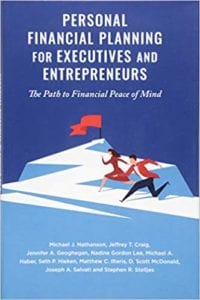
Personal Financial Planning for Executives and Entrepreneurs: The Path to Financial Peace of Mind
I must ask the question that I’m sure all the readers are asking themselves. You still have a brain tumor that’s still inoperable, but it’s not cancer so you’re still alive. Is that what you’re saying?
I do. I have a three-centimeter brain tumor. I used to not talk about it because it was something that I was afraid would diminish me and something that people would say, “That guy has got a brain tumor. He’s not long for the world. He’s got some diminished capacity.” I got into physical fitness and I met someone at the gym. This is the way stories transpire. You never know what’s going to happen. I met someone whose daughter happened to have a brain tumor. He was raising money for the National Brain Tumor Society, which is the largest nonprofit brain tumor organization in the country. Long story short, he recruited me to get involved in the organization. I became a board member in 2011 and in 2013, I became chairman of the board. I served as chairman from 2013 until the end of 2018.
When you have a position like that and you have a leadership role in a community in need, you’ll learn to talk about it. You’ll learn to own it and have pride in who you are and what you have. I’m very fortunate. My tumor should not end my life. It’s something that is treatable with medication. It’s inoperable because of its location, but it is treatable with medication that keeps it from growing. It doesn’t make it go away. I’m very fortunate. I must go get an MRI every year to make sure that I’m stable. I’ve been stable now for just about twenty years. I’m in good shape and I’m very grateful for the experience because while I would never have wished to get a brain tumor, I’m very happy to be part of this community. It’s a great community. It’s a community in need and one where I feel that I’ve made a difference in life.
You also talk about the similarities between medical and financial. You compare financial planning advice to medical advice. Can you expand on that?
I drive from my experience in the brain tumor community. I’m not a doctor or a researcher, but I’ve learned a lot about medical research. It occurred to me that as we make greater and greater advances in the medical space, there’s this thing called precision medicine. Precision medicine is the concept that some of the best and most effective treatments are treatments that are designed specifically for an individual. It’s not necessarily the same treatment that your neighbor would have. It’s designed for the specific DNA, the specific circumstances of a particular individual. Some of the most effective treatments are precise in nature. I also think from the medical space that there’s this concept generally in specialization.
[bctt tweet=”Financial peace of mind starts with a plan.” username=”John_Livesay”]
As you think about specialization, if you have a neurological issue, you tend not to go see a cardiologist. You might go see a general practitioner, but you want to see someone who’s a specialist that deals with your needs. As I got more and more into the world of financial planning and financial services, what I realized was that there were too many people trying to be everything to everybody. What we need to be thinking about is to provide the most effective type of financial planning service. It has to be targeted, it has to be precise in nature and it has to be delivered by specialists who understand the specific needs of the recipient.
I love that because I’m always saying the riches are in the niches.
For example, you mentioned our book. It’s about corporate executives and entrepreneurs. Corporate executives and entrepreneurs are very different from the professionals, from a lawyer, from an accountant, from a professional athlete. These are people who have very specific needs. They have very specific DNA. I believe that the right kind of service requires specialization and a precise approach.
There is such a difference because entrepreneurs do not have a lot of money to invest because we’re putting it all into the company. Who is your ideal client? How do you work with entrepreneurs? Are they people who’ve already raised series A and B versus starting out?

Financial Peace Of Mind: The decisions we make at the beginning of getting into a business starts with what choice you want to make in terms of what kind of entity to operate out of.
Certainly both because some of the best entrepreneurs are those that are just starting out. Often, you get someone who’s an entrepreneur that’s already done something before and now they’re on to another project. Let me just talk a little bit about the subject. The executive is a broad term that can include entrepreneurs. Many entrepreneurs are themselves, executives. It’s quite common to create a company and to have a product and to go get some financing. That person may have a title like a chief executive officer, chief financial officer, chief operating officer and yet that person is also an entrepreneur, which is why we wanted to write about both.
What we did was we wrote about the example of two people, and we tell a story around this where one person is a startup entrepreneur and one person pursues a more traditional executive at a large company type of opportunity. Their needs are related but different. The entrepreneur, especially in startup mode, should be thinking about foundational decisions such as choice of an entity that needs to be made at the very beginning in order to achieve the best financial results. Whereas the executive at the more mature company is going to have another series of needs and those needs will include the need to be thinking about employment agreements and equity compensation.
It sounds like you have a lot of advantages of being both a financial planner and a lawyer. It’s not like you have to go back and forth and say, “You need a contract. You need to put your LLC together here in Delaware,” or whatever the needs are that fit into the overall picture of financial planning. Would that be accurate?
That would most certainly be accurate. Our philosophy at The Colony Group is that we believe that effective financial planning advice should be delivered by a team that includes lawyers. In fact, we have around twenty lawyers that work for us because lawyers provide their own perspective. That is not just in the area being able to think about things like choice of the entity or thinking about provisions in a will or trust. Lawyers also have the ability and are trained to understand risk and to measure risk and to manage risk. I think that’s an important part of providing advice.
[bctt tweet=”Some of the best entrepreneurs are those that are just starting out.” username=”John_Livesay”]
Can you expand for people who may not know what choice of entity is since you’ve mentioned it a couple of times?
Choice of entity is when you begin in a business, that starts without an entity like a corporation or a partnership or a limited liability company around the business. It may start as a sole proprietorship, but the decisions that we make at the beginning of getting into a business start with what choice you want to make in terms of what kind of entity to operate out of. Do you want to be a corporation, an LLC, a partnership? It’s a complex set of choices. About what the right choices are, it depends on the facts. It also depends on the state of the law. The law has changed with the Tax Cuts and Jobs Act of 2017. There are lots of nuances that go into that decision.
You also talk about the five pillars of financial peace of mind, not just peace of mind. Let’s give the audience a quick little description. The first one is maximizing the rewards of working as an executive. What do you mean by that?
In order to answer that question, we have to understand why corporate executives are different. Executives are different for a variety of reasons. One of the reasons is that they often are employed under formal agreements. Many people are what we call employees at will, but executives tend to have some formal agreement in place. What we mean by maximizing the rewards of being an executive, first and foremost, is looking at your agreement. It’s negotiating appropriately and respectfully a good agreement. It’s understanding what’s in your agreement so you can harvest the benefits of your employment agreement. Maximizing the rewards of being an executive also includes understanding corporate benefit plans. It also incorporates understanding of equity incentives and other incentives that are put in place. Sometimes they’re cash related such as long-term and short-term incentive plans and making sure that the executive is well positioned to maximize the benefits of those programs while also observing the other four pillars.

Financial Peace Of Mind: The greatest strength of an entrepreneur is their passion. They have this courage where they don’t fear the risk.
The next one is achieving financial independence. What does that mean for you? Does that mean I never have to work again if I choose? How much money does someone need to have financial independence these days?
I want to be clear what that concept is. The concept of financial independence is a personal determination. It’s different for different people. This is not about, “If I have this much retirement and I take out 4% a year, I can be in retirement for this many years before I pass away.” This is beyond thinking about retirement. This is the concept of understanding what the person’s goals are and what their needs are going to be. Do they want to own two homes? Do they have kids that they want to educate? Do they want to leave money to their children in the future? When they do retire, what will their needs be from a lifestyle perspective? Understand all of that and come up with a plan to get to the point at which work is no longer necessary. That does not mean that you will retire at that point. It simply means at that point, you have the ability to do whatever you want. That’s what financial independence is. It’s understanding where you need to be. It’s getting to that place and then deciding at that point whether that may mean retirement or maybe it doesn’t mean retirement.
Planning and minimizing taxes is more important than ever now with the new laws. Certain states are not letting you deduct as much as they used to in terms of state taxes.
That’s right. Putting a cap on state and local taxes was a huge bite, especially in high tax states including some of the states on the East and West Coast. The third pillar is minimizing taxes. This is where many people go wrong, especially among executives and entrepreneurs. There are so many opportunities to minimize taxes. Whether that’s in the area of simply maximizing opportunities to defer taxable income, to maximizing use of deductions, to understanding the benefits of having capital gain versus ordinary income, to understanding how we’re using equity incentives by using a good tax approach that allows you to minimize taxes over the years. That in itself can generate a return that can sometimes exceed the great investment returns that we’ve been able to see over the last several years. People need to focus on a regular basis on the need to minimize taxes.
[bctt tweet=”Financial independence means understanding where you need to be.” username=”John_Livesay”]
Finally, planning for others. I don’t think most people think about that. Tell us a little bit about that one.
Planning for others, the fourth pillar, is the act of thinking about those that we love but also the causes that we care about. Planning for others is thinking about our dependence, thinking about people that we want to take care of while we’re here and while we’re not here after we pass away. That includes some traditional estate planning and thinking about dependent care planning, but it also goes beyond that. It’s also thinking about what are the causes that are important to an executive or entrepreneur. We find that most of our clients do have a passion for helping others and from making a difference in the world for what I called legacy planning. Think about what your legacy is going to be when you’re no longer on this earth. A big part of the planning exercise is identifying those causes and then figuring out the best ways to help those causes, not just economically but also in terms of providing your own services or just being part of the organization in some way. It’s complex. Choosing the right organization, understanding which organizations to get involved with and how to support them is itself a very complex undertaking.
Managing risk is so interesting to me because when you’re pitching to get your startup funded, you must minimize the risk for the investors by showing them that you’ve got proof of concept and who’s on the team and all those things. Even selling yourself in any situation to get people to change their behavior or the way they’re doing something with your product or service is also part of managing the risk that’s involved. How do you approach this for your clients?
Managing risk is something that we think about in many different perspectives. We must think about it in some of the most obvious perspectives, which would include from an investment perspective and talking about stories. One of the inspirations for writing this book is thinking about companies like Enron, WorldCom, Global Crossing, Bear Stearns or Lehman Brothers. I could go on. Years ago, these were companies that executives were just thrilled to be at. These were companies that the whole world admired. Those that had too much risk in those companies and those that had too much invested in those companies paid a very heavy price when each one of those companies suffered a very uncomfortable demise.
We think about investment risk. Investment risk can simply be asset allocation. It’s thinking about asset allocation strategy, thinking about the concentration of wealth issues, thinking about what your goals are and only taking the amount of risk necessary and no more to achieve those goals. That’s the more obvious way of thinking about it. A slightly less obvious way of thinking about it is thinking about the use of insurance. That insurance is life insurance. It’s casualty insurance. It’s directors and officer’s insurance. It’s thinking about all the ways that we’re exposed to risk and utilizing insurance to hedge that risk. Then we get to the broader and more nebulous areas of risk, which are the ones you were touching on.
Think about your business and think about all the risks that you take in your business. Most people don’t even have a clue as to how bad that risk can be. You get people who are so passionate about what they’re doing. That’s the greatest strength of an entrepreneur. The greatest strength of an entrepreneur is their passion. It’s their vision. Some people don’t have that kind of vision. That’s what makes the entrepreneurs the best. They had this courage. They don’t fear the risk. Fears are the instinct that we don’t always have. Fear is designed to make you exercise caution. As we operate our businesses, you should take as much risk as you need to take and hopefully know more than that. It is part of the business plan as well thinking about how much risk you’re taking to achieve your objectives.
You’re also talk about the criteria that people should use to decide what financial planner they should do. Should everyone have one? How do I find a good one?
There are studies that talk about executives. One of the studies that we talk about in our book indicates that executives worry more than other wealthier people about financial planning in every single category of financial consideration. They’re worried a lot. You might think that, therefore they’re also all going to be likely to go and hire someone to help them. That is true, but to some extent, it’s not true. We find that executives are prone to want to work with a planner, but only when they can partner with that planner. They don’t want to just completely delegate. They want to partner with an advisor that they can work with on a regular basis to achieve the best results. It may be a little bit of a surprise or an irony and that you think of an executive as someone who delegates. In fact, the larger group is the group of executives that want to partner with an advisor. There is a number that also wants to do it on their own, but they do understand that this is very important. What we found was that about two-thirds acknowledged the need for some third-party expertise.
[bctt tweet=”Fear is designed to make you exercise caution.” username=”John_Livesay”]
Whether that’s a formal financial advisor or whether they’re trying to do it themselves and work with a series of people like a lawyer, an insurance professional, an accountant, about two-thirds of executives want to work with someone. What are the choices? The choices generally relate to a couple of different service models. Most people are unaware of these models. One is what I’m going to call the suitability model. There is a legal standard called the suitability standard, and this is what is generally applicable to what we call wirehouses, the big brokerages. The standard at these brokerages is that the advisors there are bound by a standard that requires them to make sure that anything they do for a client is suitable in nature. They’re taking into account their personal circumstances, but they’re allowed to have conflicts of interest and operate in a way that may benefit them at the expense of the client provided what they’re doing for the client is suitable in nature.
That may sound like a negative way of saying it. That is the standard. I do want to be clear that there are many excellent people at these organizations who do great work for their clients. It’s about getting the right person. The other standard is the standard to which we adhere and are required by law to adhere is called the fiduciary standard. That is the standard by which an advisor must always put the client’s interest first. There will still be conflicts of interest. There are always going to be conflicts of interest, but they must be mitigated. You’ve got to mitigate your conflicts of interest and put your client’s interests first. That’s the preferred standard. You can get great advisors on both sides. It’s about getting the right person. It’s important to think about what the right standard is. Someone who goes to a fiduciary-based advisor is more likely to be able to get peace of mind that they know that their interests are being put first.
Michael, I can’t thank you enough for sharing your wisdom and your personal story. You inspire us all to not give up, have a plan and get some financial peace of mind.
It’s my pleasure, John. Thank you for having me.
Links Mentioned:
- Personal Financial Planning for Executives and Entrepreneurs: The Path to Financial Peace of Mind
- The Colony Group
- Quantmre.com
Wanna Host Your Own Podcast?
Click here to see how my friends at Brandcasting You can help
Get your FREE Sneak Peek of John’s new book Better Selling Through Storytelling
John Livesay, The Pitch Whisperer
Share The Show
Did you enjoy the show? I’d love it if you subscribed today and left us a 5-star review!
-
- Click this link
- Click on the ‘Subscribe’ button below the artwork
- Go to the ‘Ratings and Reviews’ section
- Click on ‘Write a Review’