

Chasing Failure With Ryan Leak
Posted by John Livesay in podcast | 0 comments

While most people try to steer away from obstacles to avoid failure, there are those who go straight at them. And most of the time, these are the successful people. They have figured out that the path to success is to chase what others are afraid of: to fail. In this episode, Ryan Leak, the author of Chasing Failure, shares some lessons he has learned from failure and how it has helped him succeed. Looking at it from a psychological standpoint, he discusses how the fear lies in shame and embarrassment. Take a pause for a moment today and try to look at your biggest obstacles as the greatest opportunity to succeed. Tune in to this inspiring conversation as Ryan gives us a new perspective on what it takes to succeed.
—
Listen to the podcast here
Chasing Failure With Ryan Leak
Our guest on the show is Ryan Leak, the author of Chasing Failure. In this episode, he talks about how there is no version of your life that is not risky, so you might as well take some risks that follow your dreams and that you can’t get better if you don’t get started. Enjoy the episode.
—
Our guest is Ryan Leak, who is an executive coach, author, filmmaker, and motivational speaker that trains over 15,000 leaders and speaks to over 200,000 people each year. He teaches leaders how to solve problems that keep them from winning in life and business. He’s known as an ultimate risk-taker from his two documentaries, The Surprise Wedding and Chasing Failure. His most recent project is Chasing Failure, where he went on a journey to conquer his fear of failure by trying out for the Phoenix Suns. Through his books, films, and keynotes, Ryan gives organizations the tools they need to see their biggest obstacles as their greatest opportunities. Ryan, welcome to the show.
John, it is an absolute pleasure to be on your show. We got to connect a few months back, and I am super excited to chat with you.
One of the things that grabbed me when I first met you was your energy. I watched your speaking videos and thought, “Here’s an example of someone being completely authentic on and off the stage.” That is not always the case, whether you’re a speaker or an entertainer. I know a lot of people were sometimes surprised by certain talk show hosts not being the same person they were on the show as they were off stage. I want to talk about authenticity. Before we get into that, let’s talk about your story since this is all about the successful pitch and how to tell your story in a way that makes you memorable. You can go back to childhood or school. Where did you get the idea that this is the career you wanted?
My dad was a pastor, and he had a stroke when I was in fifth grade. I was super young, so I had to grow up pretty independent. I looked at my mom and said, “Keep dad alive. I’ll figure everything else out,” type of deal. I felt like I became an entrepreneur in sixth grade. I felt like I had to do that not to succeed but to survive. Throughout all of that, I noticed that whenever I was asked to speak or if I was asked for advice, it went well. It was one of those things where the way I view communication, speaking, and conversations are I’m always looking to serve the other person, and how can I add value to somebody else’s life.
What I learned is that whether it’s through consulting, coaching, or speaking, I learned that the way that I felt like I could add the most value to the world around me was through communication. That was a craft that even to this day, I would go, “I’m a good speaker.” Now, I would go, “I’m a dedicated and motivated speaker.” That so happens to be a book. For me, I don’t wake up going, “I got this.” I wake up every morning going, “How can I get better? How can I fine-tune some things in order to add value to people that are listening or watching?”
That’s a key thing for everyone, no matter where you are in your career. There’s this phrase that I used to have when I was in college, which was, “As soon as this happens, I’ll be happy. As soon as I graduate, as soon as I get out of the cold weather, as soon as I have this job, this car, house, or whatever.” It’s a very elusive way of not being in the present moment, but this thing you said, Ryan, is particularly interesting.
A lot of people think, “As soon as I get to this level, then I can take the foot off the accelerator and coast through the rest of my life and not have to learn anything new or make anything better. Good enough is good enough, and I’ll be fine.” The irony is it’s not a very satisfying way to live. Great athletes and actors are constantly working on their craft. For a lot of people who aren’t aware of speaking as a craft, you’re certainly someone who could speak to that. Do you look at footage of yourself like an athlete does?
I work with a few different NBA teams, and I very much relate to them more than any other industry in terms of the amount of travel, sleeping in different places in different cities and different time zones, what you put your body through, and all of those things. I’m not running on a court, but the travel does take a toll on you physically. Also, having to be on at a very high level.
I very much approach it how someone might approach it in an athletic competition. I’m watching the footage in real-time, taking notes on what didn’t work or what was working. I’m always trying a new story, illustration, or joke. Sometimes I’ll say something on accident that people think is hilarious, and I went, “That’s interesting.” There are some times when I tell a joke that I think is hilarious, that nobody thinks is funny.
It doesn’t land. This is an interesting topic. I had the same experience when I was talking with somebody, “I read this research that taking a cold shower burns fat, fights depression, and reduces inflammation.” I go, “You had me at burns fat,” and he started laughing. I thought, “I wasn’t trying to be funny. I was just being me.” I wonder if an audience would think that’s funny.
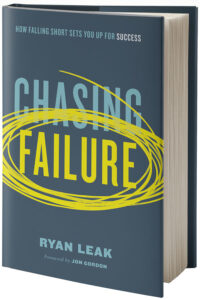
Chasing Failure – https://www.ryanleak.com/chasingfailure
I tested it, and they laughed. I’m like, “All right,” but sometimes the audience doesn’t laugh, and you’re like, “How bizarre is that?” Is it because of the time of day? Is it the delivery? What are your thoughts on that? If something’s funny 90% of the time, but not 10% of the time. Stand-up comics and Jerry Seinfeld is constantly refining what he does. What do you think is the reason? Should you throw it out then, or do you go, “No, this usually works?”
What I try to do is what I call my first base jokes. They’re jokes that I don’t you to be falling out of your seat laughing. I only need to know, “Do you smile?” Where are we at? Are we a target group? Are we a Walmart group? If you’re doing an event in Boston versus Atlanta, it’s two completely different mindsets about the world. There’s Southern hospitality in Georgia. There’s a natural emotional response to speakers that you’ll get in the South.
I went to Boston 4 or 5 times in 2022. Every time I landed there, the Uber driver was pissed off from the jump. If there’s a Southern hospitality, I call it sometimes a Northern pissivity. There’s a little bit of an edge already that you have to earn their respect a little bit more. I usually will kick off with things that don’t need to be funny, but let’s just see where their humor is and where everybody’s at. I’m always trying new things, trying to add, and trying to get better.
Your book Chasing Failure is a topic I want to talk about because so many of us feel like we focus on what doesn’t work the one time. If things work 9 times out of 10, but it didn’t work one time, then here’s where I see, myself included. I had to stop this behavior, which is all the way back to school. If I didn’t get an A and I got a C or something, I must be a failure. I’m a loser. Am I a great speaker if the audience didn’t laugh as much as they normally do?
I’m curious to see if you have this experience. Maybe you’re thinking, “I don’t know. This is going okay. It’s not going great. I’ve had to have the audience be a lot warmer.” You then get off stage, and people come up to go, “I loved what you said.” You’re like, “Somebody liked it out of the 500 people or whatever it was.” We can’t judge ourselves on what we’re experiencing at the moment. Is that what you’re saying?
Absolutely. Think of it like this. Somebody sends you a link to something funny. It’s a video. It’s an Instagram clip. It’s a meme. You might respond with a crying laughing emoji but you’re not. You’re like, “That’s funny,” in real life, but on text, you’re the furthest thing from crying or laughing. That’s what audiences are doing sometimes. We have to give ourselves some grace. Sometimes they’re going, “That was pretty funny,” but there’s no noise.
I did an event for a company where I spoke to 500 of their employees, and then they did two breakouts where they split the group in half and said, “Ryan, you’re going to speak to the whole group at 9:00, and then you’re going to speak to half of the group at 11:00. We’re going to break from lunch, and then you’ll speak to the second half at 1:00.” It’s pretty simple. I get my baseline by speaking to everybody in the morning. I go to that first half and a different talk, but that room was rocking. I’m like, “I know these people. I’ve spent the day with them.” I did the same talk at 11:00 that I did at 1:00. It flopped at 1:00, and it crushed at 11:00.
This is so valuable for everyone to read.
It’s the exact same slides, one room falling over laughing at some of the stories. There is some research out there that says after people have had lunch, they’re in that mode. A client will say, “What time do you want to speak?” I’m like, “I’ll speak whenever.” All time slots are not created equal. There are times when you’re the first thing in the morning at 7:30. I’m speaking. I’m doing a diversity, equity, and inclusion breakfast at 7:30 AM.
You have to prepare a little bit differently than your normal 10:00 AM keynote. One of the things that I have to tell myself before I speak is to make sure that I have fun, even if nobody else does. Enjoy the fact that you are one of the very few people on the planet that get an opportunity to talk for an hour and get paid for it. That’s amazing. I never let that leave me. I’ve never arrived. I’ve never like, “You all owe me this.” This is a privilege that I have, and I tell a lot of my professional athletes that too. I go, “Just in case you forget, you’re paid to play a game.”
[bctt tweet=”Make sure you have fun, even if nobody else does.” username=”John_Livesay”]
This is a dream very few people get to achieve.
Imagine somebody walking up to you and going, “Do you want to play Monopoly? We’re going to pay you to play Monopoly.” That’s your life. I feel the same way when it comes to speaking. I pinch myself every day to go, “I can’t believe I get to do this and get to add value to people’s lives.” Whether there’s a standing ovation or not, I say, “I want to make sure that at least I have a good time. I enjoy the fact that I get to be here and try to help people.” I am not trying to impress you. I am trying to help you go to the next level.
When I keep that at the forefront, then I’m not looking for affirmation from the audience anymore. I’m trying to help them. It positions you differently. Your countenance is different. One of the largest insurance companies in the world was having me speak. One of the questions I asked in pre-event calls is I say, “Who have you spoken to before that you love and why? Who have you had in the past? You don’t have to say their name, but I want you to tell me what they did that made you say we’re never going to have them again.”
I always like to make sure I don’t step on a landmine. This insurance company says, “The best figure we’ve ever had was Doc Rivers.” I was like, “Doc Rivers is a well-known NBA coach. That’s great.” It’s not a crazy surprise, but then I said, “Why was he the best figure you’ve ever had?” They said, “He was agendaless.” I thought, “Agendaless isn’t even a word.” However, it changed my approach to even how I work with clients going, “This next hour is not the Ryan show. It’s not about me. In fact, my only agenda is to help you.”
Here’s the interesting thing. Doc Rivers never used the word, “I’m agendaless.” It can be felt. There is something about a stage presence where people can feel when a speaker is trying to impress them versus going, “I’m here to talk about failure, and here’s what I realize about you. Sometimes it holds you back. Now, I’m going to help you reframe how you’ve seen this thing that has terrorized your career before.”
Right away, there is a difference, authority, and command of the room, “I don’t need you to like me. I want to help you overcome something in your life that’s holding you back. I’m going to tell you about some things that have happened in my life on how failure gave me a whole career. I keep trying to fail something every single day, and it has revolutionized my business.”
From there, you are more in command because you’re not trying to win them over. It’s like, “I’m trying to help you solve a problem.” When that’s the forefront of your brain, it’s amazing how relaxed and funnier you are because what you’re doing is you’re taking everyone’s guard down a little bit of going, “This guy’s a real guy. He’s an authentic guy. He’s not trying to sell me something right now.” I literally will watch people in the audience go from a folded arms position to a relaxed position.
The best I can ever get is when someone would come up to me after the talking, “I usually don’t pay attention to somebody talking that long. I’m on my phone or my mind wanders but those stories kept me engaged.” I’m like, “Great.” This concept of being agendaless is another version that is not being attached to whether someone likes us or what the outcome is. As you said, I’m not going to let my self-esteem go up and down based on whether I get a standing ovation or not.
No matter what your career is, do I need my boss to give me a rave review on my annual review, or do I know I did a great job or all those constant outside things that can make you feel less than others? This concept around chasing failure is interesting because most people, as you said, are terrorized by it, which is a great word. Why would I ever chase something that terrorizes me?
Can you tell us some of the lessons that are in the book that would get someone to go from, “If I ever meet a saber-toothed tiger, I’m running the other way, and I don’t care what you say?” This is not that kind of fear. This is fear of failure. Is it because we’re so in our heads, worried about what people think of us?

Chasing Failure: When you look at the fear of failure from a psychological standpoint, it’s really the fear of shame and embarrassment.
There’s a lot that goes on with that. When you look at the fear of failure from a psychological standpoint, it’s the fear of shame and embarrassment. What I’ve found is that there’s typically a particular person or group of people that we want to impress, somebody that we don’t want them to see us fail. It means that they were right. It means that our ex-girlfriend or ex-boyfriend will go, “Yes. I made a good decision.”
There is something underneath the hood of going, “If I fail, there’s somebody that’s watching, or at least, I think that they’re watching.” If they knew how this story ended, that’s what I’m afraid of. How I guide people through getting past this fear of putting themselves out there is a couple of things. One, every single person we look up to, admire, and read about has all failed.
We don’t realize that. We think, “This person’s always had success after success after success. Everything they touch turns to gold,” which is not true.
We have to dismantle the story we tell ourselves about other people that we watch their lives online. It’s not true. I’ll prove that it’s not true. I have a family photo. I’m on Zoom quite a bit. People are like, “What a beautiful family you have there. That’s great.” This is not indicative of how the day went at all. It was one of the worst days of our life. One of the kids was throwing up tons of stuff.
This was the only one picture of the thousands that we were taking that day because he was just trying to find one good photo and trying to get them in matching outfits and whatever, yet people will get my Christmas card and think, “What a beautiful family. This is how it always is.” It’s like, “No. That’s never how it is.” We can’t get them to sit on the couch for two seconds. If we’re honest, we don’t ever post our true story anyways. We post our very best and hide the rest. Everyone’s doing that. For you to be a failure, you have to deem somebody else successful. Why do you deem them successful?
It’s because of what they posted or because of what they showed you, but they won’t show you their pain. They won’t show you their scars, and oftentimes, they won’t show you their failures. What I started doing is I started showing people my behind-the-scenes. I started sharing about the different failures that I experience on a daily basis where I completely whipped it with a pre-event call or a sales call or completely lost a client. It’s like, “We won’t share that on LinkedIn, but it’s true. It happened all the time.” We’ve got to dismantle this belief that there’s somebody successful, that’s how I view success, and there’s me over here. It’s because usually, for us to be a failure, we have to be a failure compared to somebody else.
It’s a frame of reference.
We first have to navigate that. The second thing that is vitally important is whenever you’re thinking about trying something new or putting yourself out there, there’s no version of your life that is safe. There’s no version of your life that isn’t risky. Some people think, “I’m going to take my ball and play it safe in the corner. I’m going to do my 9:00 to 5:00.” Salesforce just laid off 8,000 people.
Companies are laying off thousands of people at the same time, and you’re going, “I thought you said it was safe.” Tell me, what is safe? I know so many people that have degrees from Stanford, Harvard, and Princeton that aren’t looking for jobs. Someone, please show me the safe route. I’ve yet to see it. The average CEO tenure is five years.
With CMOs, it’s eighteen months.
[bctt tweet=”If you learn from a failure, then you are not failing.” username=”John_Livesay”]
If you’re telling me, “My goal is to get here, and then I will feel secure,” that’s not a secure job. If you’re talking about doing it at a publicly-held company, good luck, buddy.
Look what happened at Disney. Bob Iger leaves, and then they promote somebody up. In less than two years, Bob’s back, and you’re out. Imagine that guy’s mindset.
I tell people, “There’s no version of your life that isn’t risky.” If there’s no version of your life or career that isn’t risky, you might as well do something that moves you toward your dreams. The other thing that is vitally important to understand about failure is you got to learn from it. If you are learning from your failures, you’re not failing. As long as you are taking notes on your failures, you are winning.
If you continue to fail the same way twice, you are just not taking notes. You’re not paying attention. You shouldn’t fail the same way twice. You should be tweaking something, a different angle, or something. The other thing that I write about in the book is as motivational speakers, we’re supposed to tell people to never give up. That’s terrible advice, especially if you’re talking to 1,000 people.
There are people that definitely should give up. We’ve seen them on American Idol. We’ve seen them on The Voice, and we went, “Somebody told you to never give up, but they should have told you instead to say, ‘Let’s see what some of these failures can teach us not to do.’” Again, you’re still learning. There are some things that I went, “Maybe I could. In my company, we tried doing Instagram 60-second documentaries.”
I thought it was going to be a hit. It flopped. It was terrible. It sounded like a great idea until it was fully flushed out. It was like, “No, it’s just an expensive 60-second video that people are just going to scroll by.” I learned that lesson. The platform isn’t designed for that. While I was trying to be innovative, sometimes you have to know when to give up.
One of the chapters in the book is to never gives up-ish. I’m like, “Go for it, but be smart.” Take some notes to go, “We’re going to try some things.” In the book, I laid out the top 100 companies in the world. I added up their research and development budgets. It’s billions. They’re failing on purpose every day in spending money to say, “We have to figure out a way to get this right.”
It’s because if we don’t, the competition will. If you look at Blockbuster, they used to be on every corner. The thought that that wouldn’t exist forever was like, “What else could ever place this? How did we live without this?” You also give a keynote talk on sales leadership. I love what you’ve said about putting your own spin on things. If you have heard of the concept leaders are readers, I like to say leaders or storytellers as well. You may not be somebody who likes to sit down and read a book. You found a way that works for you. Would you share what that is?
There are a couple of ways that I go about consuming content. One, I’m an Audible guy. I love listening to books. I can do that in a terminal. I can do that while I’m walking. I can do that while I’m exercising. Your brain can hear two times faster than it can talk. That’s why that scale is there on a lot of our audio devices to be able to do that.
Also, there’s another app called Blinkist, which gives you summaries of some of the top books in the world. There are some books that, for me, I love the person, but if I already know what you’re going to say, I am very familiar with a lot of your content, and I follow you, I only need the cliff notes. I need the one-liners. I need the overarching idea because that’s all I’m going to walk away with, anyway. I subscribed to Blinkist, and it’s amazing. You can get through a Blinkist in eleven minutes.

Chasing Failure: What people see is not always the true story of what it costs to be that person.
It’s another great tool. Your book is on Audible, Chasing Failure. Did you narrate it?
Yes.
I figured you did, as a speaker. That’s a whole process too. The concept that people think that you sit down and read your whole book in one take is not the case. Nobody usually has a session go more than two hours because you can’t keep the energy up. They listen to all the mistakes you made. You got to rerecord it and do pickups. If you’ve never thought about it or you go, “That Ryan is flawless in his reading.”
That is not the truth.
I mentioned Hoda in my book, and they’re like, “You’ve totally mispronounced her last name. We got to redo that.” I’m like, “Okay.” It is everything. Everything is a constant refinement of writing and recording your book. At the end of the day, people buy you. They buy your energy, vulnerability, transparency, and authenticity. That’s why you speak so frequently. I get it. You walk your talk. You don’t judge yourself, and therefore, people don’t feel judged when they’re in your presence. At least, that was my experience of being here.
One of the questions I often ask people is, “What does it cost to be you?” It’s a very important question because what people see is not always the true story of what it costs to be that person. They don’t see our flight schedule.
They only see the glamour.
They see the great photo, the arena, and the video highlights. They don’t see flight delays. They don’t see you jumping on one plane to catch another one. Whenever I see somebody that I admire most, I am like, “What does it cost to be you?” When people ask me for book advice, I say, “Don’t do it.” I don’t know that you have it. It’s not that I don’t think that you’re smart. It’s not that I don’t even that you can write a book, but writing a book is the easiest part about doing a book. Selling a book, marketing a book, and getting it into people’s hands are different. Do you have the schedule to sit in a studio and the patience and the cadence? You were like, “I want to tell my story.” It isn’t that easy. It’s not that simple. I’m like, “Unless you want this to be a thing, it’s going to cost you more than you think.” Know the cost. It’s not that I don’t believe in you. I’m only letting you know. It is harder than it looks.
When I had a corporate job and I would have to travel and there would be a delay, I’d be like, “As if this job isn’t hard enough. Now, I got to deal with that.” Now, when I have a travel delay and I’m speaking, I’m like, “I will put up with anything because I love what I do so much,” versus I like my job, but not enough to want to get up at 3:00 in the morning to catch a plane to be in New York in time for a cocktail party or whatever was required.
When you figure out what it is, then your home mindset of being instead of the angry Uber driver, you’re doing something you love, and you go, “That’s the cost.” The joke is we speak for free, and they pay us to travel. People go, “What do you mean?” You’re like, “The odds of a crying baby, a mechanical, and the weather is up there and/or a cab ride that has a flat tire.” It’s 101 things. I look at everything as, “This will make a great story.” That’s how I look at it, or, “I wouldn’t have met this person had I not missed that plane because the connection was delayed or whatever.”
[bctt tweet=”You can’t get better if you don’t get started.” username=”John_Livesay”]
Otherwise, you can’t show up and be fully present and alive. Also, whether you’re watching an athlete an actor, or a speaker, they shouldn’t have to know what you went through. They want to, “I’m here now. Wow me. Entertain me,” or whatever. Nobody cares about your drama unless they want to go into it. You have to be able to let all that go and not walk on the stage with a chip on your shoulder for God’s sake. As you said, it’s a privilege.
It is a privilege. Being in DFW, I’ve had mostly great travel experiences. Kudos to all of the different airlines that service our business, but DFW is a pretty good place to travel out of.
I often have to go there, “There’s no nonstop, so you’re going through Dallas.” “Okay.” It’s out of Austin. Any last thought or quote that you want to leave us? This question is great, “What does it cost to be you? There’s no version of your life that’s not risky.” You’ve given us so many incredible things to think about and reframe how we see failure and how we see ourselves, especially other people, and not compare ourselves so much and come up short.
The last line I would leave everyone with is you can’t get better if you don’t get started. You can’t make a book better if you don’t start writing. You can’t make a talk better unless you write one. Stop waiting for an audience. The greatest tool that a speaker or anybody that’s wanting to do something public-facing is social media. It’s the great equalizer. You might speak for Coca-Cola now, and I might speak for Facebook tomorrow, but guess what? Both of us have the opportunity to record something for Instagram right now.
It will show you if that resonated or not, “You got so many views on that,” versus this other thing I posted, “I got a lot of views. What’s the difference?” It’s instant data feedback. You’re like, “That works.”
There are things that I’m constantly trying on the internet every day. The biggest difference between myself and somebody that may be struggling to get some things off the ground is I’m willing to fail every day. I’m willing to fail more than most people. I’m willing to write a chapter that’s just okay, “I wrote a chapter, and you didn’t.” I’m willing to post a video that doesn’t get that much engagement.
In fact, the videos that will get the least engagement get the most. The videos that I think will get the most engagement get the least. It is one of those things where, as I said at the beginning, I don’t think you ever arrive. You consistently put yourself in the position of a student of, “Here’s what I’m learning. Here’s what I’m seeing. Here’s how I’m going to utilize that information to help the people around me.” You can’t improve something you never got started in the first place. If you don’t start the podcast, write the book, or start the business, you can never improve something that doesn’t exist. That’s what I want to leave people with.
Thank you. The book again is called Chasing Failure. If you want to find out more about Ryan or book him as a speaker, go to RyanLeak.com. Ryan, thanks again.
I appreciate it, John.
Important Links
- Chasing Failure
- Ryan Leak
- Blinkist
- RyanLeak.com
- Better Selling Through Storytelling Method Online Course
Wanna Host Your Own Podcast?
Click here to see how my friends at Podetize can help
Purchase John’s new book
John Livesay, The Pitch Whisperer
Share The Show
Did you enjoy the show? I’d love it if you subscribed today and left us a 5-star review!
- Click this link
- Click on the ‘Subscribe’ button below the artwork
- Go to the ‘Ratings and Reviews’ section
- Click on ‘Write a Review’
Love the show? Subscribe, rate, review, and share!
Join The Successful Pitch community today:
- JohnLivesay.com
- John Livesay Facebook
- John Livesay Twitter
- John Livesay LinkedIn
- John Livesay YouTube
Keep On Pushing: Lesson Learned From Cool Runnings With Devon Harris
Posted by John Livesay in podcast | 0 comments

Have you ever wondered what it would take to become an Olympic athlete? A member of the original Jamaican Bobsled Team, Cool Runnings, Devon Harris achieved his grand dream when he became a three-time Winter Olympian. Devon joins John Livesay as he taps in with the same energy, determination, and skill that enabled him to bobsled with the best in the world. Following his Olympic crash, Devon recalls how it was not all rainbows and butterflies for him and shares how he managed to emerge victorious from his misfortunes. As one of today’s sought after international motivational keynote speakers, Devon continues to inspire audiences to face adversities and get over life’s failures. Listen in as Devon sparks audiences of all ages to dream big and take their “game” to the next level.
—
Listen to the podcast here
Keep On Pushing: Lesson Learned From Cool Runnings With Devon Harris
Have you ever wondered what it would take to become an Olympic athlete, or what it would be like to have someone make a movie about your experience at the Olympics? In this episode’s guest, Devon Harris shares all of his secrets about how that happened for him. Enjoy the episode.
—
Welcome to the show. Our guest is Devon Harris, who was raised in the violent ghetto environment of Olympic Gardens in Kingston, Jamaica. The greatest gift he ever received was the belief that a positive attitude and a ‘never say die’ philosophy would carry him farther than a sense of injustice and a heart filled with anger. He graduated from the prestigious Royal Military Academy Sandhurst in England, received a Queen’s Commission in December 1985, and served in the Officer Core of the Jamaica Defense Force until December ‘92 when he retired as a captain.
He’s also an original member of the 1988 Jamaican bobsled team and was Captain of the ‘92 and ‘98 teams and a three-time Olympian. He achieved his grand dream and now, his dream is to inspire others to achieve theirs. He’s an international motivational keynote speaker. He taps the same energy, determination and skills that enabled him to bobsled with the best in the world to audiences of all ages and take their game to the next level. When he’s not speaking, he’s also writing books, including his one called Keep on Pushing: Hot Lessons from Cool Runnings.
—
Devon, welcome to the show.
Thank you so much for having me. How are you?
I’m great. I can already feel the energy coming through. It’s wonderful. What an amazing story you have of two separate careers from what I can see of an Olympian career and a military career. Let’s go back a little bit to where you get this concept that you weren’t going to let your circumstances define your mindset.
[bctt tweet=”People hesitate to make goals because of the fear of criticism or ridicule. ” username=”John_Livesay”]
Every time I’m asked that question or a version of this question, I blame my grandmother. It’s her fault. I spent my early years with her until I was maybe five. The thing I remember about her was that she was an amazing storyteller. Certainly, the ones that had the greatest impact on me were the ones she told me about soldiers and these amazing things they could do and not get hurt. That fired up my little five-year-old imagination and inspired me to want to become a soldier but more importantly, to want to do things that other people thought were impossible or difficult.
What a sweet legacy she left too. As a storytelling keynote speaker, when I hear somebody say that she or he told great stories, it always warms my heart because that’s the power of storytelling. Those emotional stories, in particular, make impressions on us and keep us memorable. Let’s talk a little bit about the concept of goal setting since it’s such a big part of what you do and the power of visualization. You decide whether you want to take us down your Olympic career path first or the military one. Where did you start learning how to start visualizing the outcomes you wanted?
We all grew up imagining things such as wanting to be a superhero like Superman, but I don’t think we realized at the time that we’re using the powers of our imagination. We’re visualizing. The successful ones are those who harness that power and use it in a very deliberate and focused way. Growing up in Jamaica, I wanted to go to high school because we had to pass an exam to get to high school. It’s so much a rite of passage. You dream about that, imagine it, and work towards that. For the first time, I can truly remember in a focused, deliberate way using imagination and visualization was when I ran track. I did not even know there was such a word called visualization, but I would visualize myself running and winning.
To be honest, there were a few races that I didn’t win, and I look back and realized that it was because I was nervously visualizing a result that I didn’t want and sometimes, whether as a salesperson, you go for an interview and you’re nervous because you’re visualizing an outcome you don’t want. Those things are self-fulfilling prophecies.
Let’s talk about goals a little bit. There are a lot of reasons that people resist setting goals. Do you feel that it’s because they’ve done it in the past and it hasn’t worked? Nobody wins an Olympic medal without having that be a goal. It’s not like, “I stumbled into this medal. I don’t know how it happened. I didn’t set any parameters or visualize it at all.” Yet so many people think, “I’m not going to go through my life like that in terms of my career or even my personal life.” What is it that you think causes people not to set a goal? Is it that fear of feeling worse off that they didn’t even try?

Cool Runnings: People who are able to tackle this fear of failure and ridicule develop really tough skin. If you laugh at them or tell them they can’t do something, it makes them more determined to do it.
The big F word or fear word is the thing that keeps people from not setting goals. One is the fear of failure. They’re like, “What if I don’t hit the goal? Maybe I shouldn’t set it because if I don’t hit this goal, I’m going to feel awful.” They don’t realize that by simply not setting goals, you have already accepted failure. They are afraid people might laugh at them and go, “What kind of ridiculous thing is that? What makes you think you can do it? You have to be ready for the fear of criticism and ridicule. Imagine four fools from Jamaica deciding they wanted to go to the Winter Olympics. People were like, “Are you kidding me?” People laugh but who’s laughing now? That’s the question.
I certainly have experienced the fear of failure myself. I had another guest on, Jay Samit, who said it’s just feedback. You keep going until you get a zombie idea that’s so great it won’t die but I’ve never had anybody come on and talk about the fear of being ridiculed. Let’s dive into that story. Take us back to 1988. You’re in Jamaica. To my knowledge, it doesn’t snow there and yet somehow, you and these friends of yours decided to compete in a sport that requires snow where other countries that get snow have a little bit of an advantage, if not a lot. How did that all come up? Whose idea was it? Where did it come from?
For the Cool Runnings fans, they’ll remember Sanka in the movie racing this wooden cart down the winding mountain road so it’s like bobsledding except for the ice to crease the guys going down the side of a mountain in a cart. These two American guys realized that a big part of a bobsled race as a start is you need sprinters, so they went to the guys at our summer team. They didn’t want to do it because it was a harebrained idea. They came to the Army looking for athletes and people who were either brave or foolish enough to try this thing. My colonel suggested that I try out for the team. To go back to the whole business of goals and dreams, I’ve always had Olympic aspirations, so there’s like, “It’s a little bit different. It’s not running but am I going to go to the Olympics? Yes. Let’s jump on the sled, as it were.” Honestly, even for myself, initially, it sounded like a ridiculous idea until it didn’t sound like a ridiculous idea. I was like, “I could ride this thing to the Olympics literally and figuratively.”
I’m sure when you were doing this, you never dreamed it would become a movie.
That’s just icing on the cake. That’s the thing that Hollywood stories are made of. We got started. Not only did we have to contend with a fear of failure because it was a steep learning curve but we also had to deal with the ridicule. It’s not just some from a couple of friends who were teasing us but people from all over the world and the stuff in the press. The thing with people who tackle this fear of failure and ridicule is that they develop thick and tough skin. I have an attitude whereby if you laugh at me or tell me I can’t do something, it makes me more determined to do it.
[bctt tweet=”Let go of the fear of failure.” username=”John_Livesay”]
Let’s talk about the movie for a while because a lot of people fantasize that, “They’re going to make a movie of my life. A particular part of my life is going to be in a movie. Who will play me?” Were you happy with the actor that portrayed you? What did you think about watching that movie back after the first time?
The thing is that the characters in the movie are different from real-life characters. If I had to choose one, I’d say it was Yul Brynner, the baldheaded guy played by Malik Yoba, but more so because he was a dreamer. He’s a dude that wanted to go to Buckingham Palace to live. How I see myself as well as a dreamer. I never dreamed of going to Buckingham Palace to live, but I’m a dreamer. Overall, I enjoyed the movie. I thought it was a good human interest story with some real positive life lessons. It wasn’t true to form and I get it. If they had told a story as it unfolded truly, people think that some of it are corny. Fact is stranger than fiction.
It’s the ultimate underdog story. Rocky is an underdog movie about boxing and this happens to be even more of a dichotomy. A lot of movies, because I love storytelling so much, are around fish out of the water. I can think of a more fish out of water genre than someone from Jamaica competing in a bobsled Olympic competition. That’s part of the reason why our brains are drawn in to say, “What in the world is going on here?” How did you transfer that skill and achievement into becoming a motivational keynote speaker?
As I was working to qualify and compete in my third Olympic games, I ended up working with a guy who wanted to be my agent. I’d never had an agent before. It sounded cool. He goes like, “You should be a motivational speaker.” I’m like, “I’ll do that after the Olympics.” I wish there was a far more strategic approach to this. I went to the Olympics, came back, started telling my story and people resonated with it. One of the things I’ve learned over the years is that success principles are universal. There is something about my life, about your life and about this person over here that’s reading this. Each of us has a story we can tell that is going to resonate with somebody else. Encourage them and inspire them. I started with no final plan. I just started telling my story and here we are having a conversation.
When people are having trouble, what do you think is making them stay motivated? A lot of us say, “I’m going to set this goal, hit this quota and sales. I’m going to lose weight,” or whatever their goals are, then they hit the first block and give up. Do you have a story of when you had some obstacle come along either while you were competing for the Olympics and/or in your military career?

Cool Runnings: Success principles are universal. Each person has a story he can tell that is going to resonate with somebody else and courage them and inspire them.
I’ll tell you a story, which is a giving up story. When I was in high school running, my goal was to win gold and nothing else. I didn’t want silver or bronze but gold, and then for some reason, I thought I was not going to win the gold. I was the one that jogged. Finishing fourth is worse because I didn’t want any medal that wasn’t a gold medal. I ended up in this race where it wasn’t going as well as I expected it to go, and I started jogging. I did horribly and learned a valuable lesson because I was striving for perfection, which is a problem in itself. Perfection is amazing because it does motivate us to work like a maniac, but the thing is that in the end, you can never know until you see this thing through how it will work and end up.
I look back at that particular race like, “I could have probably won that race if I had given my best.” That’s the lesson. It’s not perfection but excellence giving off your absolute best at the moment. That best that you’ll give may not be the greatest performance of all time but in the end, you can go, “At that moment on that day, that’s all I had and I gave it all.” On one level, I hated the fact that I had that experience, but I’m so grateful for it because it has made me even more determined and resolute. When I do meet those obstacles, setbacks and frustrations, it’s not like I don’t feel them inside, and I don’t get frustrated but I absorb the disappointment and come off swinging.
What you said there is key. A lot of people think that if you’re an Olympic champion or successful in whatever, that you’ve never had a disappointment or an obstacle but to hear from someone like you saying, “I had disappointments. I just absorbed them as opposed to letting them stop me,” that concept is almost like an energetic, “I’m going to take it in and then let it out.” It’s not, “I’m going to take it in and have it freeze me.”
I use a metaphor. First of all, recognize that we don’t live in a world where those things don’t exist. I wish we did. I’m sure you do too, but we don’t live in a world like that so you have to learn. If you have ever watched boxing or any other contact combat sport, it is rare unless you’re Mike Tyson, who knocks out a guy in the first nineteen seconds. You’re not going to go with 10 or 15 rounds without getting hit so the dude or the girl who ends up winning got some good clobbering along the way but they didn’t go, “That hurts. I’m done.” They absorbed the shock, punch and pain, then they come out swinging again and that’s what we have to do in life.
How did you become Captain of the Olympic team? Is that something that the team votes on? You had it happen twice, so you did something right.
[bctt tweet=”Fear is the thing that keeps people from setting goals. And by simply not setting goals, you have already accepted failure.” username=”John_Livesay”]
Interestingly enough, when I started on the team, three of us were Army guys. One was a private. I was a Lieutenant at the time, and the other guy was a Captain. When we were voting for Team Captain, it was obvious that the soldiers were going to vote for the Army Captain to be Team Captain and then, that dude ended up leaving the Army, and I became an Army Captain afterward but I was always there from the beginning. I always, as you can imagine, had the lead role on the team. By the leadership roles that I played in 1992, I was voted team captain.
Those lessons of being a Team Captain for an Olympic team transfer over to being a leader in the corporate world when you’re giving talks?
Yes. In the same way, success principles are universal. Leadership principles are universal. Maybe, the talk about talks, the first thing is communication. As a leader, you must be able to and when I say communicate, not just curable speech and vomit all over people with information. It’s about talking to them at their level and connecting with them.
Not asking anybody to do anything that you wouldn’t do or can’t do. Is that also a part of it?
At least unwilling to do, because I don’t think that the leader on any team is necessarily going to be the guy or the girl who can do everything or do it better than everybody else but if you are expecting the team to sacrifice a certain way, you better be willing to do it as well. You can’t expect and that’s coming from my Army days. You can’t say, “Private Jones, you go run over there and draw the fire,” if you’re not willing to do it yourself so you can’t have the boardroom and the company ask Mary to make certain sacrifices if you, as a leader, isn’t willing to make those sacrifices.

Cool Runnings: The first thing for a leader to learn is communication; it’s about talking to your team at their level and connecting them.
The other thing I find very impressive is in the 2018 Olympic games in Korea, you were inducted as an Olympian for Life by the World Olympians Association for your contribution to society. What did that feel like when you got that honor?
It was surprising because I’m an Olympian and I assumed that I was going to be an Olympian for life. It was very flattering. It’s a program that started in Rio, where they honored five Summer Olympians. The next time around was in Pyeongchang, where they honored 5 Winter Olympians, and I was among the first 5. It’s cool to be honored by your peers. That’s one of the most flattering things when your peers go, “Among all of us, you are one of those guys who deserve to be honored.”
Are you involved with deciding who else gets inducted? Is there a criterion for that?
No. They gave it to me like, “Run along. Keep doing what you’re doing.” They have a committee that has smarter minds than mine.
What’s next for you? Are you going to continue to give talks to companies? You’ve got this great book out. What are your goals for the next year or so?
[bctt tweet=”Instead of letting others’ criticisms knock you down, let it energize you to prove them wrong. ” username=”John_Livesay”]
To go back to why I got that award from the World Olympians Associations, giving back is important. My foundation, the Keep On Pushing Foundation’s goal is to provide practical solutions to some of the issues that are preventing kids in disadvantaged communities from getting properly educated. We’ve started working at my elementary school in my old neighborhood and a couple of other schools. We distribute school supplies, breakfast programs and computer labs trying to set a foundation that’s going to help them to compete in the 21st century.
If someone wants to reach out to you to hire you as a motivational keynote speaker, where should they go?
I tell people I’m the easiest guy to find. You’ll probably disagree but DevonHarris.com is my website. They can email me directly from there.
Is there any last thought or a quote that you want to leave us with?
I could modify a quote by Thomas Alva Edison who says, “Whatever lies before you and behind you is totally and completely insignificant to what lies inside of you.” Remember that.
[bctt tweet=”Whatever lies before you and behind you is totally and completely insignificant compared to what lies inside of you. ” username=”John_Livesay”]
Devon, thanks for sharing your incredible story of tenacity and grit and inspiring all of us a little bit more.
Thank you for having me and for having a program like this that’s putting such good work out in the world. I encourage your audience to continue to support that work and share it with everybody they know because it’s amazing.
Thanks. As a storytelling keynote speaker, I love hearing other people’s stories and sharing them with the world, so it’s a great platform to do that. Yours has certainly been one that I know people will come back to more than once.
Thank you. Stay well.
Important Links
- Devon Harris
- Keep on Pushing: Hot Lessons from Cool Runnings
- Jay Samit – Past episode
- Keep On Pushing Foundation
- Better Selling Through Storytelling Method Online Course
Wanna Host Your Own Podcast?
Click here to see how my friends at Podetize can help
Purchase John’s new book
John Livesay, The Pitch Whisperer
Share The Show
Did you enjoy the show? I’d love it if you subscribed today and left us a 5-star review!
- Click this link
- Click on the ‘Subscribe’ button below the artwork
- Go to the ‘Ratings and Reviews’ section
- Click on ‘Write a Review’
Love the show? Subscribe, rate, review, and share!
Join The Successful Pitch community today:
- JohnLivesay.com
- John Livesay Facebook
- John Livesay Twitter
- John Livesay LinkedIn
- John Livesay YouTube
Raise Your Standards With Mark Evans
Posted by John Livesay in podcast | 0 comments

There’s an old way, and there’s the new way of selling – which side are you on? It’s about time you raise your standards and get intentional with your sales. In today’s episode, host, John Livesay, is joined by Mark Evans, author and Standard Sales Company founder. Mark talks about the significance of building systems into your sales process and salespeople. He also deals with the subject of fear of rejection, the four types of people you interact with, and how to do follow-ups without being pesky. Discover how sales is not something you do to somebody and how to ask the right questions to start meaningful relationships that close the deal.
—
Listen to the podcast here
Raise Your Standards With Mark Evans
Our guest is Mark Evans, the author of Raise Your Standards: The Definitive Guide to Building Seven-Figure Sales. One of the things that Mark is known for is his energy. People call him one of the most enthusiastic people you’ll ever meet. His love of sales and the game of business is infectious. That’s one of the reasons I wanted to have him on the show. He believes that in its very core, sales doesn’t have to be manipulative or sleazy. He thinks it’s the greatest job in the world and he helps companies and individuals reach the seven-figure sales mark and beyond. Mark, welcome to the show.
John, thanks for having me. It’s a treat to be on here.
You are welcome. One of the questions I always love to ask my guests is to tell us your own story of origin. Were you born happy and enthusiastic? Did you love selling as a kid? Take us back as far as you want and tell us how you get to become you.
I come from a family of entrepreneurs. My parents are both entrepreneurs. My wife and her side of the family are all entrepreneurs. My story started back my parents, when I was a young boy probably 3 or 4. They had always been a part of other family businesses and that worked out okay, but they decided to risk it all and start their own business. They moved my entire family, my three sisters and I, about four hours away to a town they had never been in, to a city that they didn’t have any connections with to buy this business. From a young age, I was working with them and that’s where I got my first exposure to realize that sales is critical. It’s the lifeblood of all organizations, especially small and medium-sized businesses. At a young age, that was drilled down into me. It wasn’t just sales for corporate earnings or for a private jet. We weren’t close to that at all, but sales were what led to our family vacations and the tuition to my little parochial school in the town where we came from and basketball shoes. That’s where I got started and fell in love with sales as a young kid.
[bctt tweet=”Don’t just show up without preparation. Be like a chef. ” via=”no”]
I’m fascinated that you grew up with entrepreneurs and you married one. Sometimes for couples, it’s challenging if one is an entrepreneur and one is not or doesn’t have that background. They don’t understand the ups and downs, and the lack of a steady paycheck. It can be a big challenge for people to adjust to. What was your first sales job once you got out of school?
My family is in the printing industry and when I graduated, it was the week where the recession hit. I remember there was a Newsweek article or there was some news publication that probably isn’t even in business anymore that said, “Now is the worst time ever to get a job.” I remember thinking like, “This is something great to see after our graduation ceremony.”
To be clear, this is not the 1932 crash, correct?
Correct.
[bctt tweet=”Use video in your emails.” username=”John_Livesay”]
I’m guessing this was back 2008?
Yes. It’s the 2008 Great Recession. I may be balding but I’m not that old. I graduated and I went to work at a company. This is the start of my new book that’s coming out. I went to work for a commercial printing company and within three days of me being there, they laid off 40% of their workforce. In that same conversation said, “Don’t worry. Mark is here. He’s going to help us.” I said, “Is there someone else here besides me?” That’s where I started and that’s where I got the idea of two types of different companies. One that have and build systems into their sales process, where they’re systematic and intentional with their approach, both in their systems as well as with their salespeople. Those that are scattershot, are showing up and throwing up all over the place, whether it comes to their sales systems or their salespeople in general.
That concept, the old way of selling, “Let’s just throw a bunch of spaghetti up against the wall and see what sticks.” It doesn’t work well anymore. Let’s talk about the three things that you have of mindset, the preparation and the actual work of asking the right questions and getting the yes. Let’s start with the right mindset. Many people, especially if they’re professionals, architects or lawyers, you name it, they don’t like to think of themselves as salespeople. How do you help people who have that mindset?
There’s an old saying that I’m sure you’ve heard as well as the rest of the ones have heard, “If a tree falls in the forest and nobody’s around to hear it, does it fall?” The same thing can be said for companies. If you have a product, a widget or service and it can’t be sold, do you have a company or do you just have a hobby? That’s where I like to start the conversation off with people that say, “We’re not in sales.” You’re in business. I hate to break it to you, but sales are going to be the lifeblood of your organization. It’s going to be critical to everything you do. That’s where I start the conversation off. My book goes into four parts of what I consider the standard sales models. The first is mindset. You have to build your house on rock, not on sand. If you don’t have the proper mindset, whether it’s going to be in sales or whether you’re in any career, you’re not going to have a successful life and I truly believe that. The next part is prep work. John, are you familiar with a concept called Mise en place, a French cooking technique?
[bctt tweet=”Curiosity is a lost art.” username=”John_Livesay”]
I’m not since I don’t cook American, let alone French.
That’s okay. You’ve probably experienced it. Whether you’ve gone out to a great restaurant in LA or you’ve gone to waffle house, not that it’s not great, but let’s call them two different restaurants. Both of those restaurants are using a technique called Mise en place. If you have an 8:00 PM dinner reservation, the chef didn’t show up at 6:30 or 7:00. They’d been in the kitchen all day. They’d been there since 9:00 AM or 10:00 AM prepping, cutting vegetables, getting the meat ready, and getting the sauces right. When you come and experience the restaurant, you get this amazing experience where the dinner service flows and you have a great meal. Many salespeople and many sales-driven companies are showing up and throwing up. They’re showing up with no intention and with no schedule. If we can do this in a restaurant and if restauranteurs, chefs and servers can be intentional with their approach, then why can’t we do that in sales? The second principle that I talk about is all about making sure everything’s in its place before you start reaching out, start emailing, start cold calling or whatever you’re going to do to make that happen.
The tweet will be, “Don’t just show up without preparation. Be like a chef.” People will get that because everyone knows a chef, if you’ve hosted any dinner party, don’t show up when people are arriving to eat. That analogy is fantastic. Going back to the mindset, I want to get your thoughts, Mark, on rejection. People have such a fear of rejection. Since that falls under mindset, any tips that you have in your book or in life on that?
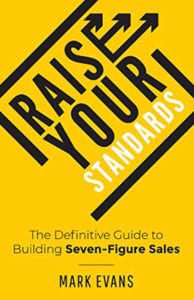
Raise Your Standards: The Definitive Guide to Building Seven-Figure Sales
I saw this study back a couple of years ago or so. I believe that about 90% of all the prospects that you meet, at any given time, aren’t ready to do business with you. Only 10% are ready to do business now. I was having this conversation with a client who was putting all of this weight into every single meeting. He was psyching himself out, to be honest with you. He’s trying to change almost his entire business model because 1 or 2 people have said no to him. We had this conversation, “Not everybody’s going to be ready that day to sign on the line that is dotted, especially the higher end and the higher level of service, widget or product that you provide.” You know this better than anyone, John, when selling luxury goods. Not everybody’s ready to drop six figures on something.
The next part of this is the actual selling and there are a lot of different steps to that. Do you reverse engineer it? Do you think to yourself before you even start building rapport, “How can I create a win-win?”
In creating a win-win and creating that type of scenario, you’ve got to have that in your mind. You’ve got to go in with some intention, but I caution salespeople to come in because I’ve been in situations where what the salesperson thinks I’m coming in for and the solution that I want are apart. We’re almost like train tracks where this person is going in one direction and I want to go somewhere else or we’re completely apart. I do a little reverse engineering, but honestly, I just want to be curious in sales conversations. That curiosity is a lost art and a lot of salespeople could benefit from being curious about the other person across the table, the company, the solution and where that company or person is trying to go.
I love a story, so I’m guessing you have a time where the buyer and the seller had a different track, then you had come in for something. Give people a story so that it locks in, whether you’re buying a car or matches.
I’ve made every mistake when it comes to sales, so I’ve got lots of horror stories if you will. I believe that there are about four types of people and I consider them to be either bowls. If you’re type A, you go get them and take no prisoners type of people. You’ve got your party people, that’s someone like me, energetic. We usually got cocktail parties. You’ve got your fact folks. Those are usually your CPAs and your engineers. The I’s are dotted, the T’s are crossed, and then they want to show you the math behind all of it. Your people pleasers are the type of individual that even if you eat their lunch right in front of them, they won’t say anything. They just want everybody to get along. How we interact with those types of people can be successful in a sales conversation.
[bctt tweet=”Sales is the lifeblood to all organizations, especially small and medium-sized businesses.” username=”John_Livesay”]
One story that comes to mind is I was trying to sell someone who is an electrical engineering manager. It’s almost the definitive individual when you think of fact folk. I saw his garage 1 year or 2 later and it was like you could eat off of it. It was impeccably clean. For the better part of a year as I tried to sell a high-end engineering solution to his company, I was constantly going up to this individual and there’s a way to build rapport and relationship. I was offering him tickets to a local sports team and front row seats. I offered him these great events where we’d have a table where he could network with fellow engineers and fellow people. I didn’t realize that and it didn’t dawn on me until a little bit later, that this person going out in public and trying to meet someone who is a complete stranger is a nightmare scenario for this guy and for this individual. He said, “Mark, I don’t want to be in a crowd. I don’t want to be around people socializing and networking. That’s a nightmare to me.” It was only when I said like, “Yeah.” Instead of trying to push these tickets on them, how about I just provide the facts and the figures that he’s asking for? As soon as I was able to do that, the business became a lot easier. We formed a great relationship.
You also talked about the fourth thing being follow-up and most people don’t do it. I know in my own career, it’s a big key to my success. How do you suggest people follow-up without being pesky?
A lot of people don’t want to be that “used car salesperson” where they feel like follow-up is something scary. They don’t want to be a pest. If you have a solution that’s providing value to someone, it’s in your best interest to follow-up with them. You can change their life if you follow-up and have a good consistent follow-up process. There’s a stat that I read that said something like 20% of salespeople are following up more than 3 or 4 times, whether by call or by email. That same study said that only 80% of all buyers will only respond to or buy something after the sixth or seventh connection attempt. We got this massive difference between salespeople that are stopping at three connects and people that are only buying at 5 or 6. John, for example, how many emails do you get in a general day?
I don’t even know anymore. It’s a lot. I can barely keep track.
[bctt tweet=”As a salesperson, your one voicemail or email is not going to make a difference. Don’t be afraid to follow up.” username=”John_Livesay”]
Probably north of 100, 150 or 200. The average executive gets over 250 emails a day. If you, as a salesperson, are out there thinking that your one voicemail or your one email is going to make a difference and reach out, that’s not going to happen. People are busy. They have lives, kids, spouses and parents that get sick or they get busy going on vacation. I always tell people like, “Don’t take it personally. It’s not up to you. It’s not about you, so don’t be afraid to follow up.”
You’re also a keynote speaker. Who’s your ideal audience?
I try to speak to companies that are looking to go to becoming sales-driven organizations. Maybe in the past, they’ve had a couple of salespeople or not professional sales organization and they want to be proactive when it comes to the sales process. That looks like a variety of different industries, whether it’s software as a service, professional services like CPAs, commercial real estate or realtors. It’s about those individuals and those entrepreneurs that want to grow their business, but they just don’t know how to get to that next level, especially when it comes to becoming sales-driven.
How did you come up with the title of your book, Raise Your Standards?
[bctt tweet=”If you have a solution that’s providing value to someone, it’s in your best interest to follow up with them.” username=”John_Livesay”]
I struggled with a title for a couple of weeks and nothing was coming up at all. I liked the Raise Your Standards part. I have a business coach. His name is Craig Ballantyne and he is out of Canada. He’s a New York Times bestselling author for 3 or 4 times and he’s a great guy. I was beating my head up against the wall for 3 or 4 weeks and within five minutes of one of our first conversations, he said, “It should be Raise Your Standards: The Definitive Guide to Building Seven-Figure Sales.” After explaining what I do and how I help a lot of sales companies, I loved it, but at the same time I was like, “Craig, how could you do this to me? You’ve figured this out right away.”
That’s what good people who have experienced do. I figured it out quickly, but it was 30 years of experience that allowed me to do that fast. We talked that your book can help people not feel pushy, sleazy or even difficult. Is there something in the book using these standards that takes it from feeling complicated or sleazy?
The core thesis of the book is that sales is changing. There’s the old way of selling and then there’s a new way of selling. John, I love your perspective on the new way of selling and you preach an intentional type of sales process. What I’m talking about is your personal interactions. Sales don’t have to be something that you have to do to somebody. You don’t have to use manipulation and kitschy techniques in order to close a sale. All you’ve got to do is ask some good questions, build some great rapport, and understand where that person is trying to go. If you have a solution, a product or a widget that can help them, then it’s your duty to make that pitch to make that ask of them. The sales approach and the sales genre that I’m trying to preach is that you don’t have to change and be the guru in front of a private jet or in front of a Lamborghini. You can work with someone else in order to get a win-win and to create a good long-lasting relationship.
Mark, what do you think makes a good question? We all know the difference between a close-ended question, yes or no or an open-ended question, but sometimes people feel awkward asking people a question. They don’t want to feel intrusive. How do you help people ask good questions?

New Sales Approach: Being in sales is like being a chef. You don’t just show up when people start coming in. There is an intentional approach and lots of preparation before you start reaching out to people.
When it comes to asking questions, that’s the core element of a good sales meeting and a good sales approach. The questions are where the magic happens. The level of depth, level of intention and level of thought that you put into your questions reflect on how you are approaching and how you are respecting your client or your prospective client. The framework that I like is thinking about what’s in it for the other person. Everybody’s tuned into the most, “What’s in it for me?” They’re trying to think of, “Where are they at currently? Where are they looking to go?” Those are the questions I tried because I firmly believed that if you can articulate the problem that your buyer or your prospect is having, better than even they can, they’re automatically going to think that you have some answer.
That’s the a-ha moment for many people. The better you can explain the problem, the better they think you have their solution, which in my mind requires some homework and some empathy. It’s not just, “It sounds like your problem is this,” but put some feeling behind it. “It must be frustrating to struggle with this particular problem and never figure out how to solve it or the same thing keeps happening and all that.” That is what makes people think, “You get me.” You have something where you say, “The first objection is not a real objection.” That intrigued me, Mark. Let’s say a couple goes into therapy and they said, “We’re here because we’re having trouble with our sex life.” The therapist is like, “That’s what you think is the problem, but there’s something underneath that.” How does that work in the sales world where you say, “Your first objection is not the real one.”
I had not heard that part but I liked that. That’s true and it’s an a-ha moment for me. John, if you’ve ever gone into a store even if you’re busy and even if you’re looking for someone and that helpful clerk comes scampering around and says, “Can I help you with anything?” Most people’s first answer is, “No, I’m just browsing. I’m just looking.” People naturally love to buy, but they don’t like being sold to. “I want to buy a new car. I love the thought and the thrill of driving off the lot, but I don’t like being sold at all.” That first objection often is real, whether it’s that therapy case. We put up these guards and barriers because we don’t want to let people in. We don’t want to be vulnerable and answer some questions. You’ve got to break through that.
Are you considered a Millennial or not?
I still fly into that, but I watch a lot of old movies and old books. I’m an old soul.
You’re what’s considered a digital native which is someone who grew up with computers as opposed to older people who had to learn it. You have whole expertise around how to stand out using video email. A lot of people don’t even know you can do it and they don’t even know what video to put in an email. Because this is your digital native, can you give us some tips on that?
One tactical that anybody who’s out there that is cold prospecting or trying to book appointments or book meetings with about anybody can benefit from is through video email. The average executive gets, let’s say 200 plus emails a day. Most of those are all text-based. One way I’ve found and my clients have found that’s effective in standing out in the inbox is a video email. The system that I use is called Vidyard. There’s a paid version and a free version. I use the free version, to be honest with you. I record a simple and easy video that can be converted into a GIF of me waving or me holding something up where I hold up my book and say, “John, it’s Mark. I’m the author of Raise Your Standards. I’d like to talk to you about X, Y, Z. We’d love to do this. I’d love to make an introduction.”
That little video stands out in people’s inboxes. Every time I send this or every time one of my clients starts using this practice, we see their conversion rates immediately jump. We see conversations come out of it. I use this to schedule a bunch of different appointments at a conference that I was attending, a big industry event. I was reaching out to different CEOs and executives and I became almost like this little mini-celebrity at these events. People are like, “I got your video. I loved it. It was amazing.” I’m still seeing the puddling effects or the ripple effects from that.
Give me the name of the service that you use.
There are two. The first is called Vidyard and the second one is a Wistia product called Soapbox.
Do people know that it’s a video in the email with the subject line somehow or you still got to get them to click to see the video?
They’ll see it when the actual video uploads. You can load it directly into your email, especially if you have Gmail or Outlook. In the email itself, there’s a little thumbnail like you would see any thumbnail. It almost looks like a YouTube box and you can turn that into a GIF. There’s motion like I’ll wave in it, I’ll move around or I’ll hold a sign up of that other person’s name. It will say like, “John, watch this video.” People naturally want to click. It’s clever. People can’t help but click on it.
What can sales teams learn from sports teams since you’ve written about this?
There are a ton that they can go with. Let’s start with the CEO, the entrepreneur who’s the head coach. I see a lot of CEOs who are the head coach and also trying to be the quarterback, the linemen, the person popping popcorn and the guy parking cars out in the parking lot. These small and medium-sized business owners are trying to be everything for everybody. The first thing is to start getting a team. Get your star performers and also start getting a good set of other coaches that can help you level up the entire team.
The book again is called Raise Your Standards. Any last thoughts or enthusiastic tidbits you want to leave us with?
In the end, sales are one of the greatest crews you possibly can be in. It doesn’t have to be something that’s manipulative. It can be a great career and at its core, it’s all about helping someone else.
Thanks for being with us, Mark.
John, thanks for having me. I appreciate it.
Important Links
- Raise Your Standards: The Definitive Guide to Building Seven-Figure Sales
- Vidyard
- Soapbox
- MarkPatrickEvans.com
- Vidyard.com
- Better Selling Through Storytelling Method Online Course
Wanna Host Your Own Podcast?
Click here to see how my friends at Podetize can help
Purchase John’s new book
John Livesay, The Pitch Whisperer
Share The Show
Did you enjoy the show? I’d love it if you subscribed today and left us a 5-star review!
- Click this link
- Click on the ‘Subscribe’ button below the artwork
- Go to the ‘Ratings and Reviews’ section
- Click on ‘Write a Review’
Love the show? Subscribe, rate, review, and share!
Join The Successful Pitch community today:
- JohnLivesay.com
- John Livesay Facebook
- John Livesay Twitter
- John Livesay LinkedIn
- John Livesay YouTube