

How To Delight Customers And Retain Top Employees With Jason Bradshaw
Posted by John Livesay in podcast | 0 comments

When it comes to business, the customer is always right. Sounds obvious but putting this into practice is a lot harder than it seems, especially when we direct it to employees, also known as the company’s first customer. Joining John Livesay in this episode is Jason Bradshaw, a global guru on customer service and author of It’s All About CEX! The Essential Guide to Customer & Employee Experience. Jason shares how putting customers and employees first ultimately leads to greater returns and better employee retention. Doing business is not just about selling a product; it’s about the experience.
—
Listen to the podcast here
How To Delight Customers And Retain Top Employees With Jason Bradshaw
Our guest on the show is Jason Bradshaw, the expert on customer and employee engagement. He said, “If you get your customers’ and employees’ metrics, everything else follows. When you have a team of people, the way to get them to be engaged is to ask them to share their dreams. When you ask your employees for feedback, it’s not enough to just get the feedback. You must take action from it.” Enjoy the episode.
—
Our guest is Jason Bradshaw, all the way from Australia. He created his first business at the young age of fourteen, where he was selling telecommunications and computer equipment in the Australian Regional City of Toowoomba. The lead-up to this was he was inspired by books like, The Pursuit of Wow by Tom Peters, which opened his eyes to the power of customer and employee experience. Jason tested and implemented strategies for improving the experience in a variety of sectors, including telecommunications, retail, media, finance and many more. He’s worked with companies like Target Australia and Volkswagen. A cornerstone of his career has been this unwavering commitment to improving the lives of customers and employees. Jason, welcome to the show.
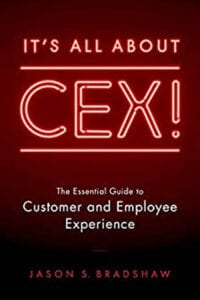
It’s All About CEX! The Essential Guide to Customer & Employee Experience
It’s great to be on the show. Thanks for having me.
It’s my pleasure. I always say, “Let’s start your story of origin and figure out where to start.” In your case, it makes me want to say, let’s please know the story of how in the world did you decide at fourteen that you wanted to start a business, and pick telecommunications and computers?
I know it sounds like I was on some great plan to conquer the world when it came to computers or telecommunications. It was simple. I like gadgets. I’m not fourteen anymore and I like more expensive gadgets. I needed to find a way to fund them. I decided instead of buying stuff at retail, I would buy it at wholesale, but I needed to be able to prove to suppliers that it wasn’t just for my bedroom. If you read a copy of my book, you’ll know that even before the age of fourteen, I was dabbling in different things. My parents and grandparents were all entrepreneurs. One of the many suits my father had was a gunsmith. I was sitting in the lounge room in our family home many times, bottling oil for people to clean their firearms and stuff with trade shows that would give me a small part of his display. I would sit there talking to anyone that came by, trying to pitch my oil to them.
You were encouraged at a very young age, which is not always the case. For myself, growing up, I didn’t even know what the word entrepreneur meant. They’re the ones who either worked for a company or owned a dry-cleaning or a plumbing business, but we still didn’t put an entrepreneur tag on that. Certainly, I didn’t know anybody inventing or starting anything from scratch. It’s fascinating that more young people are saying, “Hmm?” In your case, you saw it being modeled for you. Especially at fourteen, what’s there to lose? You might as well give it a shot. That’s a big part of why a lot of people are afraid to leave the security of a corporate job. The income is not steady and they’re not sure if their idea works. There are 100 reasons not to do it. If you get that out of your system at a young age and have some traction, I would imagine it encourages you to go, “I can do this.” How did you get from that into becoming this expert on helping people give their customers better experiences?
Life’s a wonderful journey, isn’t it? By the time I was 21, I had started three successful businesses. I went from telecommunications and computers into domestic and commercial cleaning. If you think about carpet cleaners and shop cleaners, I had the vans on the road. I had the telemarketers annoying you at dinner. I had an even crazier idea. I had what was perhaps a great learning lesson but I wouldn’t say that’s how I put the successful spin on it, but my third business was a video rental store. I’m dating myself now.
Like Blockbuster here.
[bctt tweet=”Make your customers and employees feel seen and heard. ” username=”John_Livesay”]
They say location is everything in real estate. Location is even more when it comes to video rental. I learned some lessons there. From there, I jumped into the corporate world. My entire career, whether it was a business that I was running or an organization I was working for, I was always the guy in the room saying, “What about the customer? What about the employee? Why do we need 300 steps in our process? It makes no sense to me. How do you think I’m going to delight the customer when I’m trying to follow steps 1 to 300?” Perhaps because of my readings as a young child, going to mom and dad’s place of work or their various ventures, I was always advocating for customers and employees. Naturally with that, as my corporate career took off, I continued to go up the corporate ladder, always with that customer and employee focus.
I haven’t always been the head of the customer and the chief customer officer. In fact, I worked for Australia’s largest government organization, the New South Wales Government Office of Procurement. I was the Director of Procurement Transformation. What’s the customer guy doing in an organization that’s designed to buy hospital beds, diesel, all things like that. Apart from changing processes, my job as a Senior Executive in the New South Wales government was to put the people of New South Wales back into the procurement process. As a government organization, we started thinking about our ultimate customer, as opposed to the agency down the road that needed to buy the hospital beds or diesel for the trains or whatever the case might be. I’ve always found a way in whatever job that I’m doing to bring that customer and employee lens into the fore. My experience is that if you take care of your employees and customers, all the other metrics follow. You sell more, make more money and have loyal customers.
It reminds me of the importance of storytelling, who’s in the story and what the focus is. If you’re in this government job, it’s easy to get caught up in the paperwork, not see the big picture and forget that you are serving the people who live in that country as the end-user, make them the hero of the story, and all of your actions from there as opposed to trying to get something done. This concept of, “If we take care of the customers and the employees, all the other metrics follow,” instead of being so focused myopically on, “What are the sales this quarter and this month?” If we go, “How can we delight the customer better?” That’s such an interesting insight. I want to know a little bit about your days as the Chief Customer and Marketing Officer. That would be a CCMO title instead of a CMO. It’s certainly a C-Suite level that you worked your way up to of doing Volkswagen in Australia. Obviously, it’s not from and in Germany. I worked with Lexus based in Southern California. There are Japanese companies in America like the luxury brands like Mercedes and BMW.
Everyone’s competing in an out-of-country environment. The thing that jumped out on your LinkedIn profile for me is that you have a loyalty program for cars. Most people think, “There are loyalty programs for airlines,” but I don’t think most people realize how important it is to get that repeat buyer or the person who’s leasing the car for two years to stay within the brand. Can you speak to what you did with customer loyalty as it relates to Volkswagen? I’m sure people can extrapolate for whatever industry they’re in and some ideas?
My role is Chief Customer Experience and Marketing Officer at Volkswagen Group Australia while focused on the Australian market. I did have the great privilege of working with my colleagues in North America. In Mexico, we republished the book that we wrote for the Mexican audience. It was great to work across both running a market but also to assist some colleagues in North America to understand the similarities more than what you might expect. One of those, as you alluded to, is the importance of the customer coming back during the lifetime of the ownership.

Retain Employees: Employees feel much more engaged with an organization if there is a continuous investment in them.
There’s this misconception out there. I certainly know I had it before I worked in the automotive industry that you go, buy your car, and the dealership has a 50% profit margin in the vehicle. I don’t know if that day ever existed but it certainly doesn’t exist now. The margins in an automotive dealership from the front end, the new vehicle out there are really small. Where dealers and automotive manufacturers make most of their money is in the service and accessories side of the business. It is extremely important for consumers to come back into the dealership to get the vehicle service.
If I put up my automotive hat, I’m going to tell you there’s a whole range of reasons why you should do that. The pure commercial reason is that’s where they make their money. From a customer lens, you should have a better product experience. I always think that when you buy a car, every single day when you hop in it, that product experience is what’s reminding you that you made the right or wrong decision. That service experience, getting the software updated, getting the oil changed and all the various other things that you do in the service, making sure customers get that completed by a trained professional should lead to a better daily product experience which should lead to loyalty. We launched in Australia a product called Service Packs or Volkswagen Care.
It was essentially a prepaid service package for your vehicle. You could pay for it upfront, package it in with your lease if you’d like, and every twelve months or whenever your vehicle was ready for a service, you’d come in and there’d be no more to pay. Interestingly enough, when we first package that product up, it didn’t sell and people weren’t interested. The sales teams in dealerships begrudgingly spoke about it. Why? There wasn’t value in it. We didn’t take a customer-centric view to create the product.
My team led a piece of research. We went out and asked her a range of people what they were looking for and what it would represent value for them in that post-buy purchase experience. We relaunched the product, renamed it and changed the inclusions. Interestingly enough, the price point didn’t change substantially. We had done some studies that showed that if we bring a prize to a particular point with these inclusions, it would maximize sales and retention. We made those changes all with the customer in mind. We had a 284% increase in sales instantly. Two and a half years on, that sales increased and that new sales run rate has maintained. I believe it’s simply because we created value from a customer lens.
If you don’t understand something, you’re not going to buy it. The confused mind always says no. If you make it hard for the salespeople to explain it or the customer to understand it, they’re like, “Do I want to increase my monthly lease?” No. Unless you frame it through their lens of convenience and not having to come up with the money. Do you have examples of brands that you as a consumer have experienced, not any place that you worked that did a poor job? You don’t have to name them. You can say it’s a hotel or a restaurant. We learn from both extremes. You described a great thing you did at Volkswagen, upping the consumer experience and customer experience of car owners or at least, people. What’s an example of somebody doing it wrong?
[bctt tweet=”Be sure you follow up with feedback your team gives you.” username=”John_Livesay”]
If I might, I’ll start with a B2B example. I’ve had senior roles in customer employee experience over many organizations. As a result, you tend to pitch multiple times for various solutions that you tried to create. As a result, sometimes you get to see the same people you hang with from company to company. I had this one company pitched to me four times in four different companies the exact same solution. They never once changed their pitch despite the fact that it was the same team pitching to me. The requirements were funny enough very similar, so I was leading it each time. After each pitch, I had given them feedback about why they didn’t win. Yet, the fourth time, they still hadn’t changed. I sat in the meeting going, “You’re here trying to tell me that you can help me with customer experience, yet you’re not listening to a potential customer.” It blows my mind away when people say, “This customer experience stuff is full B2C.” No, it’s B2Everyone.
Your book is It’s All About CEX!: The Essential Guide to Customer and Employee Experience. The fact that you’ve married the two, in other words, you can’t treat your employees badly and expect them to give customers a good experience. An example of a good company would be Starbucks, when Howard Schultz was giving his part-time employees health insurance here in the states way before other companies were. Those people felt seen, heard, valued and they would remember your drink order if you came in every morning at the same time. You can’t pay people to do that. Their job is to ask you what you want and give it to you but if they feel valued, “I’m getting healthcare and I’m only part-time, then I’m going to go the extra mile.” Those are the little details that a lot of people don’t see the ROI right away.
“Why would we do that for part-time? If we don’t have to, why would we ever give something to an employee?” That to me is an example of why you would do that. Let’s put on the hat of a manager, how important it is to keep top talent? We all know there are always the top performers, whether they’re in sales or whatever the department is. The line is that people don’t leave their job, they leave their boss. When you give keynotes to companies and you’re talking about not just how to delight the customer, what tips do you give them to keep their top talent?
There’s some research that’s come out that shows that 67% of employees feel that their company or manager asked them for feedback on their experience. That’s a pretty decent number. It could be higher but 67% is not a bad starting point. The alarming thing is that only 29% of employees feel that the company does anything with that feedback. The first thing that I say to managers in the board room is, “If you’re going to ask a question, be prepared to do something with the answer.”
Otherwise, you’re just blowing smoke and letting people talk. That’s more frustrating. You pretend to care and not care.
Quite often, when I say that people came back to me and said, “What if they ask for something that we can’t afford to do?” I’m not saying you have to do everything they asked for. I’m saying that you have to address their concerns. That might be saying no to something but explaining why it’s a no. It might be trying to find the middle ground in some instances. It’s not about doing everything at once. A focus on being a little bit better every single day is much better than spending six years trying to launch a new program for your employees to keep them only to have six years of people walking out while you say you’re working on something. People like to see progress. When it comes to experience, I don’t think there is a finish line.
Think about the number one selling motor vehicle in 1970 in America, it didn’t have airbags and seatbelts but the expectation of customers now is that there’s more than seatbelts and airbags. It’s the same with employees. That journey is a never-ending one that’s why it’s important to crystallize what is it that I promise to you as an employee. What am I going to deliver every time? In Starbucks, that’s things like healthcare and tuition assistance. For other organizations, that could be something smaller or bigger. That doesn’t matter what it is, but if you say you’re going to do it, you need to do it.
You need to ask for that feedback, be open and honest and say, “We’re not going to fix everything or we’re not going to agree with everything, but here are the three things that you told us that make you want to jump onto LinkedIn or Indeed job site. We’re going to focus on those over the next 90 days or over the next year. Every month, we’re going to communicate with you around what we’re doing on that journey.” That way, people don’t go, “I left some feedback but their companies not listening.” Often, their company has listened and done stuff but hasn’t told anyone.

Retain Employees: There’s a lot more learning that happens in the commission of getting it wrong than in the celebration of getting it right.
You’re not letting them in behind the scenes. I’ve heard from a lot of clients when they bring me to train their team on how to become better storytellers. Not only does it help them close more sales but they also feel like the company cares about their career. They’re learning a skill, in this case, storytelling, that is going to help them, whether they stay at 1 or 10 years or leave tomorrow. They’re getting something from that company that’s empowering them to be better at their job but also maybe better people. Have you seen this happening? Is there research that backs any of that up that you’ve seen?
There’s no doubt to suggest that employees feel much more engaged with an organization if there is a continuous investment in them. I want to make sure that we differentiate creating a website that people can go and do a whole pile of self-case studies. Some organizations have that these days. It’s nice to have but that only works for the employee that is a go-getter that’s a self-motivated learner. Certainly, across the board, there is research that shows, “If my boss understands that our biggest challenge is not being able to sell storytelling. He or she goes and sets up some training for us around storytelling, that shows that they care and importantly, they’re investing in my success.”
The worst thing you can do as a manager is to say, “The target this month is $1 million. I’ll see you on the 31st.” If it was that simple, sales leaders wouldn’t exist. As people leaders, our job is not to solve their problems but guide our people so that when we see that there’s a collective problem, we can bring in some help to fix that. At the end of the day, as a leader, our job is to help our teams be successful. Through this success, we become successful.
The other thing that you talk about in some of your keynotes is crisis leadership. You’re once accused of castrating the men of Australia when you were head of the customer experience with a major retail group? That begs me to know that story.
It’s not something that I ever expected to read. When I was working for Target, we decided to take off sale the game GTA 5, the Gran Turismo 5. It’s a PlayStation and Xbox game. For various reasons, we decided to stop selling it. There was a petition for us to stop selling it, and there was a petition for us to start selling it. In between, while letters were coming to me saying things like I was castrating the men of Australia because that was prohibiting the sale of GTA 5. The reality is in almost every location, you could have walked across the whole of the mall and bought it at another store. It wasn’t our store. I don’t have that power. It was certainly interesting to see how emotional people came about the perception that they couldn’t buy a product.
You could have bought it from us, but you could buy it anywhere else. We weren’t making a judgment about you or your product. Certainly, people felt that they were. While I was at Target, I also got called all things like killing babies. Discount department stores’ big box retail is full of stories. You could speak to any leader in a big box retailer and you’ll get everything. I remember a colleague of mine in the US. She said, “I used to hate getting the 2:00 AM phone calls about a fire in the store. Now, I got a 2:00 AM call because some cashier accidentally left off her rifle or a pistol.” Castrating the men of Australia was certainly one for the storybooks. Ultimately, we didn’t change our position. We took it off sale and left it off sale to this day. Target doesn’t have it on sale.
It’s fair for organizations to make a decision but it comes down to communication. In the GTA example, there were 40,000 social media comments about our decision to take GTA 5 off sale. Some organizations would have just told their teams to ignore those comments, don’t comment on them. I insisted that our social media team follow up on every single comment. There were some canned pre-scripted responses, but whether you were for or against it, you were engaging with the brand. I wanted you, the customer, to feel heard. The customer that wrote to me about being castrated, my response was dry compared to his letter. It’s important that during a crisis that you communicate, you help your employees and your customers when you’re next going to have some use for them so that you take away some of that unknown. A crisis is all about the unknown.
[bctt tweet=”If you take care of your employees and customers, all the other metrics will follow. ” username=”John_Livesay”]
I remember, at Target, we took off sale or recalled a range of denim products because the production process of denim included the use of a dye called an azo dye. There was some research that suggested that it could cause cancer in extremely rare situations. Their company wasn’t breaking any rules. The Australian guidelines were all being met. We weren’t the only ones doing it, that’s everyone’s excuse, but it was fairly commonplace to use this azo dye in denim products. The company made a decision boldly to take it off the shelves and to recall the product.
The advice that we were getting was changing and being updated by the hour. We bunkered down with the teams and said, “Every hour we’re going to give you an update.” To our consumers, we were saying, “Every day at 9:00 AM, we’re going to publish an update.” You still had people asking questions in between but you had a large number of people that said, “The company said at 9:00 AM. As long as they meet that commitment at 9:00 AM, that’s fine. I won’t engage.” Whether it’s being accused of castrating people, giving children cancer, the list goes on. In any crisis, the very first job as a leader is to create some milestones where people can start to get some certainty of comfort.
That’s been seen time and again if your plane is delayed. If they communicate how long it’s going to be, what the update is, versus leaving people sitting there hours on end with no information, how agitated they get. Let’s leave on a happier note. You also help people discover employees’ untapped potential. What is a tip you can give someone to either discover their own potential or someone on their team’s potential?
I’m a big believer in creating space for team members to share their dreams with me. If someone came into my office and said, “One day, I want to stand on a stage and deliver a keynote,” I might say they’re crazy but I would get them to tell me the story about why that’s important for them. I would find ways to incorporate experiential elements into their job so that they can learn that skill. I had a colleague of mine who moved to a new job and she was speaking to me. She’s like, “I am drawing on everything I’ve learned over the six years of working for you.” I said, “That’s fantastic. I’m glad that the job is going well for you. I knew you could do it.” She’s like, “Sometimes you gave me a task and said, ‘Get it done.’”
The tip would be this. Show your team members that you trust them to do the unexpected and what they haven’t done before. You know in your teams the people that no matter what, they are going to find a way to make things happen. You also know people in your team that are the shrinking violets, the solid achievers. It’s our job as leaders to give them permission to try. Importantly, if they don’t succeed, that might be okay as well. As long as they haven’t gone against your wishes, there’s a lot more learning that happens in that commission of getting it wrong than in the celebration of getting it right. I always encourage, “Give your people the chance to try new things. If they get it wrong, turn that into a teachable moment, not a, ‘You’re on my naughty list and I’m never going to let you do anything else again.’”
If someone wants to find out how to work with you as a speaker or consultant, what should they do and where should they go?
The easiest way to reach out to me is at JasonSBradshaw.com and on all the social channels, @JasonSBradshaw. It is important that you don’t forget the S in the middle. Otherwise, you’ll be buying yourself some real estate in California.
Thank you for coming on and inspiring us to have our team members share their dreams and remembering the importance of following up with feedback once we get it whether it’s from a customer or an employee.
Thanks very much, John. I appreciate it.
Important Links
- Jason Bradshaw
- The Pursuit of Wow
- LinkedIn – Jason Bradshaw
- It’s All About CEX!: The Essential Guide to Customer and Employee Experience
- Better Selling Through Storytelling Method Online Course
Wanna Host Your Own Podcast?
Click here to see how my friends at Podetize can help
Purchase John’s new book
John Livesay, The Pitch Whisperer
Share The Show
Did you enjoy the show? I’d love it if you subscribed today and left us a 5-star review!
- Click this link
- Click on the ‘Subscribe’ button below the artwork
- Go to the ‘Ratings and Reviews’ section
- Click on ‘Write a Review’
Love the show? Subscribe, rate, review, and share!
Join The Successful Pitch community today:
- JohnLivesay.com
- John Livesay Facebook
- John Livesay Twitter
- John Livesay LinkedIn
- John Livesay YouTube
Business Elevation with Chris Cooper
Posted by John Livesay in podcast | 0 comments


Episode Summary:
It takes a brave leader to listen to feedback because often, leaders are scared to face the reality of the situation and forget how engagement must start with them. Chris Cooper, author, speaker, and host of the show Business Elevation, talks about an employee engagement program that allows employees to give anonymous feedback so they can be heard, moving the management to take action. In return, employees will become more engaged, productive, and loyal while the overall business becomes elevated. Furthermore, Chris gives us a peek into his book, The Power to Get Things Done: (Whether You Feel Like It or Not), which contains techniques and strategies focusing on what’s essential in getting things done.
—
Listen To The Episode Here
Business Elevation with Chris Cooper
Our guest is all the way from the UK. His name is Chris Cooper. He’s a business engagement and elevation specialist, a speaker, an author and a broadcaster himself. I’ve had the pleasure of being on his show called Business Elevation. His real specialty is helping big brands to small and medium enterprises for the last few years. He’s got an employee engagement program that helps you measure and achieve a higher rate on engagement. He helps people make sure that they’re getting good employees and keeping their stress levels down. He’s written a book called, The Power to Get Things Done. Chris, welcome to the show.
John, it’s a pleasure to meet you.
You’re in the UK. I always want to ask people their own story of origin and I know you used to work for a big company called Mars. Is there anything in your background before that that led you into this world of business elevation and engagement that you want to share?
[bctt tweet=”If people are happy and engaged, productivity soars. ” username=”John_Livesay”]
There are a lot really. I was brought up in a steel town in the North of England. I didn’t have an opportunity to travel. My father was a steelworker and my mom worked for the local newspaper. My dad used to go to the steelworks and he was an electrical engineer. Sometimes he would look after a very large steel plant when senior management was away and manage workers and schedules and people doing the right sorts of things. I remember he never seemed to be very engaged with it. I don’t think he’d found his passion. I remember one day, I was probably about thirteen years old and my father took me on an open evening to the steelworks. I got the opportunity to look around because where I lived, the natural thing because the steelworks was such a big employer, was people went from school and they went to work in steelworks.
We went around this plant. It was like hell on Earth. There were molten metals flying around and it was dark. It was noisy. It was smelly. We went afterwards into a little room and had a few sandwiches and a few crisps. I remember this very tall man walking in and my dad suddenly straightening up. He must have been the CEO. My dad had never actually ever met the CEO. We don’t ever see him in pictures. He walked straight over to me and he said to me, “Have you enjoyed yourself?” I said, “Yeah.” He said, “When you grow up, do you want to come and work for us?” I said, “You must be joking.” My dad was fuming. On the way home, he was really angry with me, “How could you do that? One day you want to go and work in the steelworks and you fancy say that to him. I’ve never even met him before.” I said, “Dad, you aren’t happy, why should I be? Why would I want to work there?”
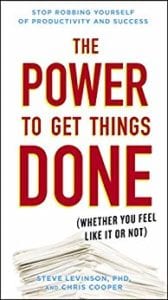
The Power to Get Things Done: (Whether You Feel Like It or Not)
At that point, I realized that I wanted more than to live in a steel town when I was older and I went through my career. Eventually, I worked in the motor industry and then I worked for companies like Mars. I saw how people really engaged in the work in some companies, less so in others. When I look back on my career and I ended up becoming the Director of a very big company, looking after logistics for 5,500 pubs. Then I set up a procurement consultancy which grew quite quick. Many years ago, I decided that my passion is people. Looking back through over that career and over the several years of working, I think one of the things I’ve realized is that when people are happy and where they’re engaged on in their work, you achieve so much more. Therefore, it makes every sense that every employee should give the best of themselves but want to because there’s an environment that supports them and cares for them and enables them to realize their full potential. In that way we all benefit, the company prospers and the individual prospers. Hopefully, having a good life at work leads to a good life at home and it leads to good health. It’s an important message, John.
Your childhood story is fascinating. It reminds me of some of those movies we’ve seen of the steelworkers and certainly here in America with a generation after generation working for the car companies and factories and finally people saying, “Either the job is not there anymore or I want to do something else with my life.” I can get that in a big way. What I love with what you just said is, “If people are happy and engaged, productivity soars.” That’s such a great soundbite for what you’re doing. Let’s go back to when you were working at Mars, you told me that you heard hundreds and hundreds of people pitching you to buy their marketing services because you worked for a big company that had the budget to do that. What are some of the tips you have from hearing all those pitches that people can take away of how to get good a pitch, so they get people to hire what you’re selling?
I had the opportunity with Mars. I went to a sales job. I was a salesman and business development manager. I spent in marketing and training of people. I thought from the salesperson, “Wouldn’t it be really helpful to understand what goes on when people buy and how does the mindset of the buyer work?” I moved on having had a sales and marketing background to look after the buying of marketing services. I literally arranged sales promotional pictures, big PR pictures and in one instance for over £1 million. I got United Biscuits and all the advertising spend. I had the opportunity to arrange these events with the marketeers who are the clients. I would facilitate those events and we would introduce some suppliers. I manage the rosters of suppliers.
To answer your question, you get to a short list of maybe three suppliers. On one occasion for big Mars or big Snickers, we launched Celebrations. I launched that with a big PR campaign with a train that was branded with different celebrities and different characters and people getting married there and TV shows being filmed and all things. The first thing I think people have to do is it’s not just about the pitch. It’s about that relationship that you established beforehand. I know there’s this process where people formally can be asked to come in. Marketing can be quite an expensive and creative process, but what goes on outside the room is important. If you can establish a really good relationship and rapport with people outside of that pitch, that will also help to influence the buyer.
[bctt tweet=”People buy emotionally and then back it up with logic.” username=”John_Livesay”]
I also noticed the marketeers that sometimes it wasn’t always the most rational decision they got through. It was the one that struck the emotions of the marketeer and they can do something. If you think about a marketeer or many people in roles where they’re buying, particularly in marketing, they’re often only in a job for a couple of years. Quite often they were motivated by doing something different and doing something creative, as opposed to maybe continuing something that had been successful before. They want to make their mark in their job.
They’re looking for that creativity. Where I worked, it wasn’t always about costs because they did have some quite big budgets. You could give some options with some different cost options. The thing is it’s got to be creative, it had to connect emotionally. The other thing is that with companies often, we’d see these amazing people who would be the lead of an agency and they’re full of engagement and enthusiasm. On one occasion, I saw one jump up on a table and stopped moving on the table when the PowerPoint suddenly broke. It was all captivating. However, what we knew was that we also had to see the people who work for those individuals because sometimes it was the sales pitch, but afterwards you get the real team. You need to make sure that the team who support the projects or the activity and the campaign is also of good quality. We’ll be measuring creativity, we measure the quality of accounting. We’ll be measuring how well it was thought through and planned and how it could execute. Also, somewhere in the next two would be the price.
My big takeaway there is that people buy emotionally and then they might back it up with some logic. Whoever comes in with an emotional hook is more likely to get a yes then the emphasis on selling the team. It’s not just the razzle-dazzle people who sell it and then you never see them again, but painting a picture, if you will, of what it would be like to work with these people and why they would want to work with them. I see that time and again myself when I work with clients who are pitching themselves whether it’s an architecture firm or any firm that it’s really, “Do we like you? Do we trust you? We’ve got to work with you for a while. Are you going to be easy to work with? Are you going to have our back? Are you good listeners?” Things that people tend to not mention in a pitch, but what I hear you saying is these are all big criteria that people should address.

Business Elevation: Employee voice is important. A lot of companies don’t give employees the opportunity to share how they feel.
If we’ve not worked with them before as well, knowing that they’ve got some good case studies and good testimonials. One example I had quite a significant pitch. I was actually asked to give no credential to talk and to turn up without a PowerPoint and facilitate the session which was quite interesting to understand the training and development needs of this organization. About ten people turn up, some quite senior ones. What I did was I broke the ice with some storytelling and I told a little bit of fun stories about my past rather than going into detailed credentials. Some of them really connected with them.
I noticed it was somebody’s birthday as well. I made something of that and then opened them up. There was great rapport in the room, and then I could start to facilitate this conversation around training needs and working a route forward. As I walked out, I remember getting an arm around my shoulder from the HR director who said, “That went so well.” I got in the car and I have to say, I actually had a few tears because I just felt I was in there on my own. It was almost like I was being supported by somebody guiding me through the process. It went so well and it probably did my confidence a lot of good as well. I won that and then I won another big piece of work with them almost immediately afterwards. Engaging with the storytelling with a heart that you support is important. I even talked about a girlfriend who dumped me, which moved them but that was perfect and they related.
A little vulnerability makes people feel connected to you and that they want to spend time with you. I love the title of your book, The Power to Get Things Done: Whether You Feel Like It or Not. That’s a big a-ha for a lot of people because they’re like, “If I could get motivated to get this project done or do my expenses, things I don’t really want to do and I keep procrastinating.” What is your secret sip there? How do we get things done if you don’t feel like you want to do it or motivated but somehow that’s still not working?
[bctt tweet=”Having a good life at work leads to a good life at home, and it leads to good health.” username=”John_Livesay”]
When I left the corporate world to set up my own business, I hadn’t realized that there was an important support network, line managers, board meetings, events and finger-pointing at times. There was a whole mechanism that held me to account, but when you set up your own business, that infrastructure doesn’t exist. You have to create it yourself. Therefore, what you tend to do in a corporate job often is a good system, the things that are important to getting that job done. You may forget about your health or people forget about the relationships. When you set up your own business, the whole lot has to have some structure around it. What I realized in the corporate world is that in good companies like Mars, there is an infrastructure that is actually, you might not like it but it’s your friend. It helps you perform.
When you’re out on your own, you’ve got to create your own structure, what you have to do, if something’s really important. It’s very important to ensure that you create situations that mean that you have to act whether you feel like it or not. It’s almost like you’re sitting on a seesaw and there’s a very heavy weight on the other side. If you’ve got on the top of that yourself, you wouldn’t be able to press it down. It’s an elephant sitting on the other side, you need to put weight on your side to be able to lift the elephant. It’s important to get very clear about what’s important in your life so you don’t get too many things and take them very seriously, but then create situations that mean that you act whether you feel like it or not. I’ve quite a lot of examples if you want me to share any.
Please share an example of how we could create a situation or maybe even talk about how you were detoxifying dreaded tasks. A specific story would be great.

Business Elevation: A lot of leaders think they must get all the people, troops, and employees engaged; what they forget is as a leader, they need to engage themselves.
With that particular story and the thought came through for that is the detoxifying, sometimes something might seem just too big a step. For me, I started off by asking some of my clients to come along and I did some book study groups. From the study groups, I started interviewing a few people and another audience came and with social media then. That stepping stone gave me the confidence to move to my radio show and hosting that. Where I really thought about this was I remember my children, I’ve got two boys, Matthew and Daniel. We went to a wildlife park on the South Coast of England while we were on holiday. They had this reptile and book show, but I don’t like snakes.
We walked into this place and there were lots of seats. There were quite a lot of people in there. My kids tried and went to the front row but I managed to carefully guide them to the back without them realizing I was a complete coward. We sat on the back row. This guy from the front said, “Is there anybody out there who’s scared of snakes?” I ducked down and my kids started pointing at me, “Him,” and my wife was looking at me and they all started pointing at me. This guy said, “That gentleman on the back row, would you like to overcome your fear of snakes?” I kept my head down and then people started joining in and there was a little bit of a clap that started. I had to get up and I went out to the front. It was me in front of about 60 people. I basically passed around this snake, which was quite a nice-looking thing actually. I passed it around a few people but I had to hold the snake.
He passed it over to me and my heart was pounding, but I held the snake and it moved around in my hands. I thought, “It’s not as bad as I thought it was.” I felt reasonably comfortable with it. I gave it back to him and I started to walk off. He said, “No, stop. I thought you wanted to overcome your fear of snakes.” Suddenly, two people walked out with this huge box with a rope handle on each side, and they gently placed it on the floor. He opened this lid and there was this enormous Boa constrictor in it. He picked the thing up and pulled it over his shoulders and said, “That wasn’t a snake. This is a snake.” He said, “Are you going to pick this up?” People were like, “Go on.” I put this snake around my neck and held it. I’ve got this photograph of it looking at me straight between the eyes. I’ve never been scared of snakes in that way since and that really helped me. Therefore, if you break up tasks into little sections, it becomes easier or you can do like a friend of mine did. She is a Tennis World Champion from Denmark. She’s a speaker and she wanted to add more comedy into her speaking. What would your strategy be if you maybe talk some small steps towards being able to add more comedy into your speaking, John?
[bctt tweet=”It takes a brave leader to listen to feedback.” username=”John_Livesay”]
I’d start to watch comedians and improv situations and maybe even try to get up and do a couple of minutes.
I think that’s a good strategy and it will be my natural strategy. Read about it, watch it on the TV or maybe do some improv, but what she did was she booked a 1,630-seat conference hall in Tivoli Gardens. She paid the money in advance which is about $18,000 and she advertised that she was going to do a one-woman stand-up comedy show because she’s a celebrity in Denmark. She sold it out entirely and then had five months to learn how to do stand-up comedy. That’s creating a situation that means you have to act.
Let’s go into your formula for success and Business Elevation, which is the name of your company. It’s also the name of your show. You talked about engaging leaders plus an engaged team, plus getting things done gives elevation to a business where absentee goes down, well-being and productivity go up and the turnover goes down. That’s a big problem out there especially with Millennials as a lot of them enter with a mindset of, “I’m only going to be here a couple of years.” The cost of turnover is so huge. You’ve got some solutions that you talked to me about that I got so excited that I want you to share with me what you are doing with something called an Engagement Multiplier.
I was referred to a gentleman called Stefan Wissenbach as a guest on my radio show. Being interested in this side of workforce engagement, we do programs around elevation which might be working with a leader to help them develop and grow their business and being a mentor to them, a coach to them. I may be doing team development with their team and helping them through that evolution. I’ve got many clients I’ve helped grow their businesses. In this area of engagement, what I wanted to do was have a methodology whereby we could actually survey and get some real data on the company. You could use a thermometer to take a test of the temperature of the company.
When I interviewed Stefan, I realized that he was onto something pretty amazing. He invested £11 million in terms of developing some software, which enables you to measure engagement. He created a great book and a great story around this book. It was heavily researched. He had a vision that he wanted to help eleven million people become more measurably engaged. In America, your engagement level is a bit higher than over in Europe. It may only be 30% tops of people who are really engaged in their business and then about 50% of people who are coaching and then the remainder would have had sabotaged your company or they’re definitely looking for a new job. If you could turn that around, what could you do?
This survey enables you to take a test for your company. What we’re able to do through the survey is to offer an entire survey for free. I know you love this as well. You could go to John and he will be able to help you do this but you can utilize this amazing online tool. There’s an anonymous dialog in there. Your staff will give their feedback and comments and share how they feel. Getting an employee voice is important. In a lot of companies, employees don’t get the opportunity to share how they feel. You can also respond anonymously. You’re looking at how engaged people are with your purpose, how engaged they are with your leaders, how engaged they are with the owners of the business if that’s different? How engaged the customers are and how engaged are they personally and sharing all sorts of wisdom and insight?
[bctt tweet=”Engagement starts with the leader.” username=”John_Livesay”]
You get this amazing report but you do this quarterly. What the company showed is that if you take this survey quarterly and you developed some action steps each quarter, someone like John or in the UK, someone like myself can help you by looking at that information and helping you with the action steps. Engagement shifts from maybe 60%, 70% in the company to 90% they found over a twelve-month period. In ten years, it’s the best survey tool I’ve come across. I love the principles behind it as well. I shared it with you and you felt passionate about it too.
One of the things that I think is really interesting about this concept is that the leaders have to have a level of courage to be able to hear anonymous feedback as opposed to just pretending that they think they know what people are thinking and feeling. Can you speak to that a little bit?
The company always talks about you want a business with brave, identifiable and caring leaders. Often, people are scared of what the reality of the situation is. They’d rather not know because we often don’t like getting feedback and knowing how people perceive us in case we come up in the survey. It takes a brave leader to be prepared and to listen to that feedback. I sat with the company as they went through their first survey. I was sitting with the CEO and the leadership team. I did say to him, “Remember, this is just a perception. Those people out there might not be relative but those people out there, that’s what they believe. Once we know that perception, then you’re in a situation to be able to do something about it.” Firstly, he was a little bit defensive and then he said, “Chris, you’re absolutely right. All that feedback is valid.” I’m not going to make it mean anything but now we’ve got that information we can act and he said, “This is the biggest no brainer. It’s amazing to have this. If we can do this quarterly and it’s not that inexpensive. It’s cheap as chips really for what it does for us. We understand some real data about our businesses.”
The problem of flying blind, if you will, is all the things like disgruntled employees and people feeling like they matter. The opposite is when they do feel like they have a voice and most importantly, I would imagine that the leaders take action from the survey. That’s when the real magic happens.
I’m thinking about the other company where we use the survey. Initially, there was a learning and development person and he said, “We need to go with something called best companies.” The board was about to go and they’ve got this new person on board and they changed their mind and went with this other survey and methodology. They just found it so unwieldy that within six months they came back to us with the learning and development person kicking and screaming and said, “We want to do one of those surveys that you talked about because it sounds more like it meets our needs.”
When they did the survey and within one hour of the results coming out, the CEO and this is quite a sizable business, he got the report. He scanned it and he immediately went to his PA and said, “I want every director in the company who’s available in my office in an hour.” They went through the report and started to put in place some actions actually. It was mind-blowing for them. This is astonishing. Very sadly, the L&D person lost their job as a result of refusing to budge and getting in the way rather than supporting what was really needed. That was a shame but they missed an opportunity because it’s proving so valuable for them.
It’s not enough anymore to just be dictatorial especially for the Millennials, which are the majority of the employees now. They want to be heard. They want to be acknowledged and they want to feel like they’re making a difference and that they understand the vision of the company. Clarifying any of those issues is going to help productivity, employee retention and engagement. I remember Starbucks starting out and Howard Schultz gave part-time employees health benefits when nobody else was doing that for part-time employees. Those people feel like they matter and so they go the extra mile. If you come in every day at the same time, they would say, “Chris, do you like the double whatever latte?” That person is so loyal to Starbucks. You can’t pay people to go that extra mile because their job is to take your order and serve it, but if they’re engaged and feel like you care, then that’s when you get extra service out of people. Would you agree with that?
I do agree with that. I think it was Starbucks where they used to have it. It’s one of those little cards and people would come in and you get a card and it gets stamped each time. You get a free latte or something once you bought seven. They decided to get rid of that and they just said to the staff, “You can give so much coffee, tea and whatever away for free to people when you think it’s most appropriate.” What they did is they gave the discretion to individuals to give the odd cup of coffee to somebody who may deserve it, who looked a bit harassed because they got the kids running around their feet or people who came in regularly. That autonomy and that discretion make a big difference. I know people about places like Zappos, they allow their customer service staff to send bunches of flowers and things like that to people if they think it’s important. That trust gives someone that ability to empower some of that and you feel more special when you can do that.
Besides hosting this successful show that you have, Business Elevation, helping people with their employee engagement, people hire you also to speak. Tell us about what speaking opportunities are best-fitted for you?
I speak about the power to get things done whether you feel like it or not. I do that fairly regularly and I’ve spoken at big companies like HSBC and various others. I also speak about engagement. One of the areas I like to talk about is Engagement Starts with You. A lot of people think we must get all the people, all the troops, all the employees engaged and what they forget as leaders are that they need to be engaged themselves. It starts before you get into the office. It starts with how you prepare your mind and prepare yourself mentally and physically so that when you step into the office, you are absolutely engaged. Therefore, you can spend your time in showing your team’s engagement is higher. Unless you’re walking the talk, then it’s not going to happen. That’s one of the keynotes that I love to share actually is engagement starts with you.
Time goes so fast with a guest like you, Chris. You’ve done so many interesting things and you have so many wonderful stories. Thank you so much for sharing. We all know a little bit more than we did on how we can get things done whether we want to or not.
Thanks, John. It’s been an absolute pleasure talking to you.
Links Mentioned:
- Chris Cooper
- John Livesay on Business Elevation
- The Power to Get Things Done: Whether You Feel Like It or Not
- Mars
- Engagement Multiplier
- Stefan Wissenbach on Business Elevation
- http://ChrisCooper.co.uk/
- https://www.EngagementMultiplier.com/partner/johnlivesay/
- https://www.Amazon.com/Power-Get-Things-Done-Whether/dp/0399175849/ref=sr_1_2?keywords=the+power+to+get+things+done&qid=1554137130&s=gateway&sr=8-2
- Quantmre.com
Wanna Host Your Own Podcast?
Click here to see how my friends at Brandcasting You can help
Get your FREE Sneak Peek of John’s new book Better Selling Through Storytelling
John Livesay, The Pitch Whisperer
Share The Show
Did you enjoy the show? I’d love it if you subscribed today and left us a 5-star review!
-
- Click this link
- Click on the ‘Subscribe’ button below the artwork
- Go to the ‘Ratings and Reviews’ section
- Click on ‘Write a Review’