

Winning Is Better With Bob Wiesner
Posted by John Livesay in podcast | 0 comments

“Winning is better” has got to be the slogan of many companies and businesses. The question is, how do you start winning? We tackle this question and more as John Livesay and Bob Wiesner of The Artemis Partnership grapple with the mechanics of persuasion. We take a deep dive into Bob’s book, Winning Is Better, to look at building trust, leveraging the non-technical aspects, and positioning yourself for success. Tune in to learn more from the masters in pitching.
—
Listen to the podcast here
Winning Is Better With Bob Wiesner
In this episode, Bob Wiesner talks about his new book, Winning is Better, and how to stop coming in second place. We talk about how important it is to build trust and how to do it fast. Finally, he talks about making a win room instead of a war room. Find out what he means. Enjoy the episode.
—
Our guest is Bob Wiesner, who has always been fascinated with how people make decisions. Even as a kid and a huge baseball fan, he was more interested in the operations of the front office than in action on the field. He studied Psychology as an undergrad and graduate student and went into advertising, where his focus on decision making shifted to the advertiser.
After several years where some of the biggest ad agencies like BBDO and McCann Erickson, he shifted focus again from the mass persuasion of advertisers to the individual persuasion of a seller relative to a buyer. He is all about this practice. People know him as the Pitch Doctor. As the Pitch Whisperer, I would like to welcome the Pitch Doctor to the show.
Thank you, and thank you for not whispering as well. We can talk out loud. I appreciate it, John. I’m glad to be here.
This premise of a whisper of anything, we horse whispers, dog whispers, we also go to the doctor for them. We trust them and ask a bunch of questions to figure out what is going on specifically. Before we get into how you came up with being known as the Pitch Doctor, take us back to what inspired you to be interested in how people get persuaded, I know for myself. I watched a TV show called Bewitched, where there was a character that worked for an ad agency. I thought, “That looks like a cool job.” What was the initial thing that pulled you into? I want to learn how people get motivated to change their minds.
It was not a lot unlike yours, John. I stumbled my way into advertising by accident. I graduated college, and before I decided to go to grad school, I was looking for a job, and I did not know what to do. I had a buddy who worked for a large ad agency. I asked him, “What did you do? It sounded interesting. Do you need special training or education for that?” He said, “Anybody could do it.” I said, “Sign me up.” I did find a job in agency life and enjoyed it.
What I liked about it was a combination of a couple of things. First of all, it was about persuasion. I found that getting an undergraduate degree in Psychology, there is nothing remarkable about that but the whole idea about how people think about things and how they perceive things, they perceived the impact of those things on themselves was something that I had studied, and it was interesting. I loved the creative aspect of it.
[bctt tweet=”Show you have a deeper understanding to build trust.” username=”John_Livesay”]
Here we were creating things for a reason. We were creating them to be different yet to be purposeful, to have an objective at the end of the day, which was to sell and soak. That was something I wanted to know more about. I stayed in the agency business in total for eighteen years with some graduate school mixed in there and focused entirely on mass persuasion, how advertisers who spend tens of millions of dollars persuaded millions of people. Later, I realized, I wanted to get a little bit more personal about it and turn my attention to how individuals are persuaded by other individuals.
What were you doing at the agency? Were you media account services selling the agency to win new business, or were you the creative team?
Yes and no. I started in media planning and buying. I moved over into account management. I spent some time in a new business. I forget what the 4th one was but not creative but I touched on all different facets of the agency. To this day, I feel like I do understand how agencies do their thing and how they persuade people.
You now are morphing into instead of trying to convince the masses to prefer one brand over another. Let’s get into helping one person persuade another person to pick a client, to hire them, whether it is a speaker or an architecture firm, you have several clients in several different industries. I love what you say in your book, Winning is Better: The Journey to New Business Success. Can people look at the roster of clients that you are now working with and say, “That does not seem to have a lot in common?” Yet, at the end of the day, there is one thing that is in common with all of them, and you say, “We are all people, and people are wired pretty much the same.”
Before I started Artemis, which is only two years old in 2022, I was doing this for other firms and doing this on my own since the mid-’90s. What fascinated me was that a decision-maker is a person. They are not a role or a job description. They are human beings. As human beings, while there are obvious differences from person to person, they are also predictable aspects about how they think. It does not matter whether they are thinking about advertising, accounting or management strategy. They are still a human, and they still have needs, desires, and mechanisms for processing information.
I don’t think that as a rule, a lot of professional services firms like advertising, architecture, and accounting understand that aspect of the person that they are pitching to. My goal since I’ve got into this part of the business is to help my clients get a deeper understanding about how decision-makers perceive their offers and use that understanding to differentiate their offers from their competitors.
One of the things you talk about in the book that is counterintuitive for many people is, “Don’t pitch everything.” Especially for me, coming from a sales background, we were told the old way of selling is to throw as much as you can up on the wall and hope some of it sticks, which is a nightmare. It is not targeted and strategic. You have a much more strategic approach to let’s define who your ideal client is and the work you love to do. In the book Winning is Better, you talk about how sometimes you can take a bid to get something, and you even win it. If it is not something you love, the win is a chore. It is not a joyful experience. I thought, “What a great distinction.”
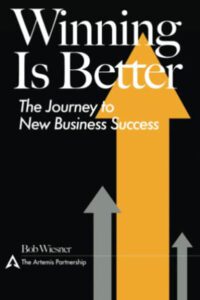
Winning is Better: The Journey to New Business Success
That is something that is easily overlooked by sales organizations and by business development professionals. It is the price of winning or the cost of winning. It is one thing to rack up numbers to get your percentages up. It is one thing even to get your revenue up but what is the impact of that win on my organization both short-term and long-term?
We define a chore as something that we are capable of doing that people will pay us to do but that nobody gets any leisure from doing. We are competent at it but that is far as it goes. You start layering a lot of that stuff into an organization, and people start turning off to it. Your workers start to shrug their shoulders and say, “Not again. Do I have to do another bathroom design? Do I have to design another landing page on a website? I would like to do something more exciting, interesting, meaningful, purposeful.”
John, everyone now knows about the Great Resignation. Is that even contributing to the Great Resignation? The fact that you are. “We are a successful company. We are growing and winning new business left and right,” your people have to do stuff they do not enjoy doing. Now, maybe they do not even want to stick around to do it.
Without people sticking around, the cost of turnover, and consistency, you are selling the team’s ability to work well together. If all that goes out the window, you are a commodity.
You have got this short-term impact of, do people want to be doing this work, and you get the long-term impact, which is if it is the work I do not love to do if people are not sticking around to do it, and if it is a commodity exactly as you say it, where is the growth opportunity going to come later on? How is this client going to turn into a bigger client down the road if the initial work that I won is one where I’m churning out a product without any passion, excitement or cultural lift from it?
Let’s double click on that word, that phrase without any excitement. I have a belief that people buy your energy. I know for myself, as a sales keynote speaker, I often have to compete. I get interviewed like big companies when they are in the final 2 or 3. I remember getting an email from the speaking bureau saying, “Congrats, they picked you. They liked your energy.” Rarely, it’s that specifically called out. I then talked to the person and they said, “You made us feel good. We figured you could make the whole ballroom full of people feel the same way.”
That energy you bring to the 45-hour however over your timeframe is presentation or interview, whatever you want to call it is important that people are going, “How do we feel? Can we see ourselves enjoying this journey if we are going to hire you to work with us?” In the case of an architect, sometimes 4 to 6 years on renovating an airport or something. People forget that that is a key part of you can’t give away anything you do not have. If you are burnt out from doing all these bathroom jobs of designing bathrooms, and you want to be designing a whole airport, you are not bringing your best energy to the room.
[bctt tweet=”Listening and empathy create chemistry.” username=”John_Livesay”]
What people lose sight of is not only that, and I’m not diminishing the importance of it but from a decision-maker standpoint, that is our thing. It is about the buyer. They are comparing you as the potential speaker to seven other people they are interviewing to be potential speaker. It is not your energy level in the absolute sense that they are looking at. It is you relative to everybody else.
How do you differentiate yourself from other people? Your content may be awesome but their content may be pretty good too. They might not be able to tell the difference between the topic you are going to speak about and the topic someone else is going to speak about. If it comes to your energy, passion, commitment, drive or what you might more broadly call the cultural fit, that could be the differentiator that wins you the business way more important than any topic or content that you might be proposing to them. That is what competing firms lose sight of is the importance of the non-technical aspects of their pursuit.
We talk about the importance of trust, and most people will go, “Yes, I know trust is important.” You have a formula for how people can be better at building trust that you reference here. I thought it was clever that trust is not just, “You are safe to be within the room. You’ve got a good referral. That is maybe 1/3 of it.” Can you walk us through what companies can do if they are walking into a room cold and have to present to build some trust?
The trust will worthiness equation was first identified by David Maister, Charles Green, and Robert Galford in a book called The Trusted Advisor, which alongside Winning is Better: The journey to New Business Success should be on everybody’s bookshelf. What they articulated was that trust has four components. It has credibility, reliability, transparency, and self-orientation.
One area that every sales organization blows consistently when it comes to building trust is this area of self-orientation. In other words, they always seem to be selling something. They seem as if the relationship that they are attempting to build with the buyer, again, buyer perception maybe not be a reality but it seems like all they want to do is talk about themselves, products, and price and try to extract money from the buyer.
All that torpedoes trust faster than anything you can possibly do. You layer onto that, whether they are credible in the space, deliver on their promises or are open and honest. All those factors together influence whether you are viewed as being tried trustworthy. Our point of view is that when initiating a conversation with a prospect, regardless of what stage you are in the sales journey, think about how are they perceiving your trustworthiness and what are you doing to build it up or diminish it?
Sometimes, part of it is being a little bit vulnerable and not pretending that you have all the answers all the time.

Winning Is Better: When initiating a conversation with a prospect, regardless of what stage you are in the sales journey, you have to think about how they perceive your trustworthiness and what you are doing to either build it up or diminish it.
That is what Maister, Green, and Galford called intimacy, which I don’t think is a 2022 word. I prefer the word transparency but being honest with people about, “Here is what I’m capable of doing. I’m good at it, and here is what I’m not so capable of doing. I’m not going to take on the project if it is not directly in my area of expertise and brilliance.” A lot of buyers appreciate that.
Let’s close that open-loop I did at the opening. How did you become known as the Pitch Doctor?
In the firm that I was working for at that time, the part of our practice that focused on helping our clients as you are doing now, John, is helping them be more effective with pitching. Not everybody in my firm back then liked doing that work. It was high-pressure work. Unlike the usual training and development stuff that the firm was doing back in the ‘90s and early 2000s, this one had results attached to it, either you win the pitch or you do not.
I loved that. That fits my personality and my motivation for working perfectly, so I raised my hand. I said, “I want to learn more about how to do this. I want to take our principles that we were training and apply them in real-time to actual new business pitches.” I did that. I worked on dozens of them for ad agencies, IPOs, and management consulting firms for an Olympic bid. I became the go-to person within the US operation when there was a client who wanted help on a specific pitch, so I became known as the Pitch Doctor.
When I talk to people who say, “We are so tired of coming in second place.” I know on The Artemis Partnership, that is one of the things that you are solving because, unlike in the Olympics, there is no medal for second place that will say, “Did you ask why you came in second place?” Oftentimes, they will say, “We were too salesy.” It goes back to what you were saying earlier, “You are too self-absorbed about bragging about how big your company is, and it has nothing to do with them.” Those kinds of things. Are you seeing a current consistent reason why people do come in second place that you are able to fix?
If someone tells you that you came in second because you are too salesy, that is great feedback, and it is better feedback than most organizations are either seeking or able to get. There are a couple of factors here. First of all, a lot of companies do not get accurate feedback at all, which makes it difficult for them to understand why they come in second.
That is a whole separate chapter of the book because it is important to get that good feedback. We hear this more from the buyers than we do from the sellers. Buyers will tell us that they did not select a firm because they did not trust them, did not connect with them, and did not provide any additional reason for why they should be hired. They followed the RFP. They met the minimum standards.
[bctt tweet=”What competing firms lose sight of is the importance of the non-technical aspects of their pursuit. ” username=”John_Livesay”]
The firms that win always have gone beyond what was initially accepted. Now the beyond could be defined emotionally. I knew you used the word energy before. We hear the word passion a lot, commitment, drive, and dedication. We also hear buyers say, “I selected that firm because they showed a deeper understanding of what I was looking for. They answered the questions in the RFP but they went beyond that to show that they understood what we looked for and they cared about it.” What is interesting is that a lot of losing firms wind up losing because they did what was asked of them but whereas the winning firms did what was asked of them and did more.
This is so insightful and valuable. For everyone reading, take that in, that it is not enough to answer the questions. You need to show the person making the decision that this is not another client or checklist for us to do. I have a philosophy. It sounds like you agree with this. The better you can describe someone’s problem and put it into words that they have not even used before, they think, “You get us that feeling of you understand us, the fact that you can express our challenges and what keeps us up in the middle of the night. Therefore, I trust you to have our solution because you understand our problem well, even if it is beyond what we described in a proposal.”
We see that manifested in a few different ways but the firm that stands out from others is a firm that shows a better understanding of the challenges of the problem. It could be the upside, a better articulation of the opportunity. That absolutely matters. That takes us back because everything is connected to a point you made earlier in our conversation, John, which is about the importance of pitching less or chasing fewer opportunities.
I cannot get the depth and the information that will help me win if I’m chasing everything. I do not have the time, bandwidth or energy for it. Whereas if I’m more selective about what I chase, I can get more depth and more understanding. I can have that diagnostic that you mentioned that deeper understanding of the problem because I took more time to do it. Everything goes hand in hand. The buyer gets that right away. They can distinguish the 6, 10 or 16 firms they are talking to. They can tell the 1 or 2 of them that took the time to get to know them from the other fourteen that did an autopilot and submitted a proforma response even if it answered all the questions.
You and I, as authors and being on a show, it is evidently clear within the first five minutes if the host has read your book or not, versus reading through some provided questions from the publicist. Going back to this concept that if you can go beyond the expectations and show a deeper caring than the come-up competition. I want to give people an example of what that looks and sounds like.
When I was working with an architecture firm on the presentation, we were having dinner the night before the practice. One of the guys said, “As an architect working in airports, I travel over the world and gets to move wherever the job is but this is my hometown. If we win this, this is a hometown game for me. The whole point of this airport is to reflect the new version of this city.” I go, “That is what we are going to be saying on the team slide. This isn’t another job for you.” That personal connection to the city for the people making the decision of what firm is going to redesign the city’s airport came through time and again. That is what you were talking about as an example.
I want to get into your wonderful pie chart on the truth about decision-makers here. You are helping people have empathy for what they are thinking about. The first part of this is people go, “You win or lose business based on what your solution is, and you say no.” That is only 28% of the decision. Let’s talk about what the other three quadrants are.

Winning Is Better: If you’re going to be a politically unsafe choice, compensate for that by pumping up some of the other parts of your sales initiative recommendation. But if you are going to be politically sound or even advisable, then leverage the heck out of it.
The next one up, which ranks higher than the solution, is the understanding me. We have touched on that. I want to get people the full fork pieces of the pie. If you have your solution, we can see that it would work. Now 31% of my decision is going to be based on how well you show me you understand me. That goes above and beyond my problems.
I’m glad that you emphasized the word me because decisions are made by individual people. They are not made by anonymous groups using groupthink. Each decision-maker is going to judge the options in front of them based on, “Did this team or organization understands what I personally was looking for, what my concerns were, what my fears were, what my hopes and dreams were, and what my own personal decision criteria are,” which might be completely different than anything published in an RFQ or RFP.
Each decision-maker, person, and influencer needs to know that the pitching team was addressing their individual needs. Sometimes, you have to be nuanced or careful about how you articulate them but you still have to make it clear that you heard them and that you’ve got it. Now that is distinguished from understanding my company or the project, which is important. They are both necessary but they are not sufficient to win. You have to go deeper, get to know the people, and show you understand the individuals.
The other part of it is chemistry. We know chemistry is with dating, and we know whether we have chemistry when we watch a movie. Although, those actors did not have the chemistry that does not work. The script is great. The chemistry in the business scenario is, “Do I want to work with you? Is this somebody I want to go have a drink with after work? Is this somebody who would have my back or would they throw me under the bus?” All those things come into play.
It is all of those but it does not necessarily have to go that deep. It depends, frankly, on whether or not I have spent enough time with you to even know that you have my back. In the first meeting that you will have with people, long before they reach the conclusions that you accurately pointed out, they are going to be able to perceive, “Do we communicate on the same wavelength? Do we use the same language? Do we waste each other’s time with irrelevant facts? Do we cut to the chase? Do we seem to care about each other as people? Are we listening well? Are we showing empathy?”
These are all factors that go into this idea of chemistry. They are easily represented even in a Zoom meeting, and they set you up for then getting to know the person even better. By the end of the process, I will believe that you and I are simpatico, we will look out for each other, I will enjoy having you around my job site for the next five years or having you auditing my books for the next three months. I would not say I would enjoy having you auditing my books but I will enjoy having you around my office. Those things will look eventually get there. I want people to understand that the chemistry is evident from the first conversation that you have with people, and it carries on from there.
Finally, chemistry is 25%. That leads a remaining 16% to the category of politics, which most people feel uncomfortable and hazy about, “Do I want to get involved with the company’s politics? Is it being aware that there is politics involved? If 16% of the decisions are based on politics, help me, Bob, how do I navigate that?”
[bctt tweet=”Competing firms lose sight of the importance of the non-technical aspects of their pursuit. ” username=”John_Livesay”]
You may not be able to but you at least have to be aware of what it is now. Internal politics are about, “What do decision-makers care about internally? Who evaluates them? Who needs to approve their decision? How will they look to these other stakeholders, that could be their bosses or colleagues? If you are selling into a marketing department, how will the marketing people feel when they go to the sales department and say to the sales guys, ‘We hired this firm to do our social media?’ Are they going to like it, or are they going to hate it?”
If you are a large organization, maybe you are publicly traded. You’ve got to worry about the shareholders. How will they feel about things? This information is not easily discovered but it is findoutable. If you can at least know what it is, you can anticipate how important it is. If you are going to be a politically unsafe choice, you can compensate for that by pumping up some of the other parts of your sales initiative. If you are going to be politically sound or even advisable, leverage the heck out of it.
If you say we have picked this social media company or we picked John as a speaker, we are going to have the Pitch Whisperer come to speak to us, give them some ammo to present why you are the good choice to get somebody excited with, especially if they are not involved in the choice. If you are an architecture firm pitching to redo an airport renovation, realize all the taxpayers and city officials that are involved in giving opinions on this as it goes along that is way more than the eight people in the room listening to the presentation. Before I let you go, I want to talk about your wonderful book at the end here, the pursuit field manual, where you have a win room. You are all about winning is better, focused on the winning more than the selling. What is a win room and how can people start to create their own?
Many people in sales and business development are familiar with the term war room. We prefer to call it a win room because we want to be more optimistic about what the purpose of the room is. The typical war room that I have seen, and John, you have probably seen it as well, is oftentimes constructed around what our offering is going to be. It is like, “What is our strategy? What is our weaponry out? How flank the other guy is? Where are we going to put our battalions? What about us?”
The win room is about the buyers. Not surprisingly, as we have been talking about. The win room is built around how much information you have about decision-makers and influencers. You probably do not have enough. How do you get more? It becomes a formula for how do I convert these inputs, which is the information you have about decision-makers and influencers, and convert that into outputs, which is your messaging.
Messaging that differentiates you from your competition persuades the buyer that you are not just viable but you are an optimal choice for them and seals the deal in your final proposals and your pitches. The win room differs from the war room, not in name or attitude but while war rooms are much more product and firm centric, the win room is entirely prospected centric and builds all of its efforts around that.
Before the show started, you and I had a little chat, and we talked about how you need to keep your flexibility at the moment. If you get feedback right before you are about to go present that a client checked your references, find out what the reference was asked, and possibly use that as part of their criteria that might not have been in the proposal to open up your messaging, you are playing at optimizing things in the win room.
[bctt tweet=”Pitching and winning isn’t about having the best product and solution, but how you position and offer it up.” username=”John_Livesay”]
One of the interesting things about the win room is that you never close your win room. It has never been done. You continually input right up until the last minute because every little nugget of information you get could make the difference.
The book again is called Winning is Better. You can get it on Amazon. People can also find you at TheArtemisPartnership.com.
Connect with me directly on LinkedIn. They are both effective.
Any last thought or quote, you want to leave us with Bob?
This has been a great conversation. I loved it. We are like-minded because we both believe that pitching and winning are not about having the best product and solution. It is about how you position it and how you offer it up. Your readers will do well to follow your advice on selling and storytelling. They would also want to read some that we have to say about the overall strategic approach to pitching, and you put these combinations together. You will be a powerful force in the market, and your competitors will be trying to figure out what the heck you are doing. That is driving them crazy.
Thanks again, Bob.
John, it was a pleasure. Thank you.
Important Links
- Bob Wiesner
- Winning is Better
- BBDO
- McCann Erickson
- The Trusted Advisor
- LinkedIn – Bob Wiesner
- Better Selling Through Storytelling Method Online Course
Wanna Host Your Own Podcast?
Click here to see how my friends at Podetize can help
Purchase John’s new book
John Livesay, The Pitch Whisperer
Share The Show
Did you enjoy the show? I’d love it if you subscribed today and left us a 5-star review!
- Click this link
- Click on the ‘Subscribe’ button below the artwork
- Go to the ‘Ratings and Reviews’ section
- Click on ‘Write a Review’
Love the show? Subscribe, rate, review, and share!
Join The Successful Pitch community today:
- JohnLivesay.com
- John Livesay Facebook
- John Livesay Twitter
- John Livesay LinkedIn
- John Livesay YouTube
Be Concise And Precise With Tim Pollard
Posted by John Livesay in podcast | 0 comments

The key to effective communication lies in the human brain. The brain wants and needs to consume information in a certain way. When you align with the way the brain works, you can be incredibly successful. Tim Pollard, the Founder and CEO of Oratium and the author of The Compelling Communicator: Mastering the Art and Science of Exceptional Presentation Design, joins John Livesay on the show today to explain how one can be concise and precise to become an exceptional communicator. Tim is a regular contributor to the Forbes Coaches Council and a leading thinker in advanced communication skills. He shares some insights from his experiences and journey in understanding the “science” of excellent communication and developing a holistic model for effective sales and marketing conversation. Enjoy the show and unlock the keys to get your message across to your listeners effectively.
—
Listen to the podcast here
Be Concise And Precise With Tim Pollard
Tim Pollard is the Founder and CEO of Oratium, a leading messaging consulting firm. He’s a sought after speaker and author of the acclaimed books The Compelling Communicator: Mastering the Art and Science of Exceptional Presentation Design and Mastering the Moment: Perfecting the Skills and Processes of Exceptional Presentation Delivery. Tim also draws insights from a long career in sales, marketing and communications for companies such as Unilever, Barclays Bank, and The Corporate Executive Board. I got the pleasure of seeing Tim in action. We’re in for a big treat. Tim, welcome to the show.
John, it’s a pleasure to be here. Thank you.
I know you’ve had this amazing experience and stories to share with us. Would you mind taking us back to your own story of origin? You can go back as far as you want, college, high school. When did you start to realize that you had a love of presentation, communication, and more importantly, connection?
I think I’ve had a fascination with communication almost my entire life. In the last 10 to 20 years, I’ve been particularly obsessed with understanding why does communication fail so often? When it works, why does it work? When it doesn’t work, why doesn’t it work? That led me through a very interesting journey of pursuit. It turns out that fundamentally the key to communication is one simple thought, which is it’s all about the human brain. The brain wants and needs to consume information in a certain way. When you align with the way the brain works, you can be incredibly successful, but when you misalign with the way the brain works, you’ll be incredibly unsuccessful. In nowadays world, most communication, which is dense, convoluted, complex, and PowerPoint-driven isn’t annoying, but it almost perfectly misaligns with the way the brain works. That’s one of the reasons why so much communication is ineffective.
[bctt tweet=”The left brain is about what is, and the right brain is about what things mean.” username=”John_Livesay”]
Across about the last 10 to 15 years, I invested a lot of time developing a model that would allow you to design and deliver communications to be exceptionally successful in terms of getting the outcomes you want from your audience. That draws from all kinds of weird and interesting places. There are lessons from Shakespeare. There are a lot of lessons from neuroscience and functional mapping in the brain. There are even lessons from standup comedy. All of these come together. What we did is put them all together into one holistic model that allows you to build a conversation, particularly a sales conversation and have it be much more effective. That’s how we got to where we are now.
Let’s touch on a little bit of each of those things. You got your MBA at Warwick, which is in the UK.
That’s right, close to where Shakespeare was born.
Since you mentioned Shakespeare, that was worth bringing up. You were telling me that Oratium comes from the Latin word oratur. I always like to hear the story of the origin of a company name because that’s equally important so the people have an emotional connection to it. You could have named your company anything. Ten years ago or so, you decided, “This captures what we’re going to be helping people with.”

Effective Communication: One of many new things you have to master if you’re going to sell in a virtual world is the ability to be crisply articulate, which probably was not as important in a live meeting.
Oratium is a little bit of an unusual word. It’s Latin for an oral argument. In some colleges in Europe, if you’ve done a big piece of work like a dissertation, you would do an oratium, which is your oral defense of the piece. It’s the same root word you find in orator and oratory. Our particular emphasis has always been on how do you make an oral argument? The principles of communication apply equally to written communication, letters, emails, proposals, even web design. A lot of our clients use our principles for those other nonverbal settings. A lot of what we focus on is equipping people particularly now in a virtual setting for that live sales conversations.
The other thing you said that I’m fascinated with is how you also study standup comics. Since you and I are both sales keynote speakers, we love to see what is it that makes an audience laugh. More importantly, when I’m watching Ellen DeGeneres, Jerry Seinfeld or any of them, I noticed that when they tell a story, oftentimes it’s in present tense dialogue. I wanted to get your thoughts on that.
I haven’t given a tremendous amount of thought to the tense of a story. I don’t know if it is necessarily funnier to tell it in the present tense or the past tense? Stories are better to tell it in the first person rather than the third person. People tend to engage more if they think this was an experience I had rather than something that happened to my buddy. The main lesson we’ve drawn from comedy is linguistic precision. In any presentation setting, there is an absolute premium on linguistic precision or saying something in exactly the right way, not fumbling your words, not taking 30 words to say something that could be said in ten words. Not saying something three times before you finally say it the right way. That has always been an important attribute that salespeople should cultivate, linguistic precision. That becomes geometrically more important in the virtual environment. The virtual selling environment that we’ve all found ourselves in, and that we’ve been forced into in 2020 is a much more socially-constrained environment.
Customers are more distracted. They have less bandwidth. Their actual intellectual capacity physically measurably drops. You have to get your message arrow through a narrow window. One of the ways you have to do that is with precision and economy in language. I simply don’t have the time or space to fumble around for poor, imprecise, bland language. I have to go for absolute precision. What that raises is one of many new things you have to master if you’re going to sell in a virtual world. One of them is the ability to be crisply articulate, which probably was not as important in a live meeting. I’ll give you an example. We’ve been doing some research. The average live sales meeting, you fly somewhere. You’re going to get 2.5 hours, 3 hours almost unfailingly often where lunch before or drinks afterwards.
[bctt tweet=”Create viewer anticipation when you present.” username=”John_Livesay”]
That’s very common. I was talking to IBM, Cisco, Rockwell about this. All of them are reporting meetings coming down now between 30 minutes and 45 minutes, no lunch. You’ve got a much narrower window and it’s changing the standard of precision because you don’t get to do the things you used to do in a three-hour meeting. You’ve got to be much more precise. Funnily enough, standup comedy is perhaps the nonsales discipline in society that might have best practiced that level of linguistic precision. You’ve got these interesting hyperlinks between selling and other forms of communication.
I love this concept of linguistic precision. The tweet for this episode could be, “Be concise and precise,” because that’s what you’re in essence saying.
In a virtual world, you couldn’t go too far wrong with those two premises.
One of the things you said that I was interested in at the beginning was communications is all about how our brain works. What’s the biggest mistake that you see people are making that causes them to push people away or repel them even because that’s not how our brain works, and that’s how they’re communicating?

Effective Communication: Too much sales messaging is thoroughly confusing that the value is unclear.
It’s almost hard to pick the single worst brain violation. I would say there are three. The first one is we tend to pack too much information into our messaging frequently. I look at a large technology company, the very dense, bloated, PowerPoint decks they produce. This creates complete cognitive overload. What we know from science and psychology is that once somebody feels overloaded, they ignore everything. We’re working with a large pharmaceutical company. An interesting story. The average sales meeting has got longer for pharmaceuticals, which is unusual. The reason is doctors, rather than seeing reps briefly between patients, they’re having one long sales meeting in the end. What pharmaceutical reps are doing is packing so much into that 30 minutes because they think they’re taking advantage of more time. They’re completely destroying themselves. Violating bandwidth is the most egregious problem. Death by PowerPoint and too many slides.
The second biggest brain violation is that too much sales messaging is thoroughly confusing. What I mean by confusing is the value is unclear. We do not do a good job in particular and I’ll write here the word flow, develop a good narrative story arc. We present slides with topics. The human brain does terribly badly with random information. It’s why you can’t remember a 7, 8, 9-digit phone number. I think about some of the messaging we built like with Cisco Systems, our goal here and our entire purpose is to create messaging with a logical narrative story arc. If we think about it, any great sales message is a three-part symphony. The problem you have is a customer solution, why our solution solves that problem better, and then action, how we move forward together. That macro narrative flow is a critical solution to the lack of narrative.
It’s so powerful what you said. I want to double click on that before we go to the third mistake, this confusing part. Many people love to use acronyms to try and prove how smart they are. They assume everyone else knows. What I’ve seen and I want your opinion on it is that the confused mind always says no, and the client will never let you know they’re confused. It’s up to us to read the room.
There are a lot of different places you could go with that. Any use of insider language, acronyms terminology that we understand that the customer doesn’t is an immediate fracture. We use a similar phrase. People do not buy what they don’t understand. It is hard for most people and particularly most sellers to understand what that buyer does and doesn’t know truly. For example, it’s tempting to think that if I’m selling technology and you’re buying technology, we all understand the same technological terms. That’s nonsense. If you’re a CIO of a large bank, you live in the world of banking. If I’m a seller for a technology company, I live in my world. Those two worlds are not the same. The moment you create that fracture, people are going to tune out.
[bctt tweet=”In any presentation setting, there is an absolute premium on linguistic precision, saying something in exactly the right way.” username=”John_Livesay”]
You hinted at something that is important. In a live sales meeting, you generally get to read the room. At least if you commit that mistake, you might get to correct it. In the virtual world where you have taken a thoroughly social process which is selling, and you’ve moved it now into an asocial environment. The asocial environment has three different characteristics that a seller has to understand. The customer is more distracted. The customer has less mental bandwidth. You also experience a loss of social cues. This is the one you’re talking about. When you lose social cues, you may never see that the customer was confused. Virtual selling now exists at the confluence of these three different social dynamics. If you’ve lost them for any reason, too much information, confusing, no narrative flow. There’s another piece of this that we discussed, which is your material is too technical. In the virtual environment, you may never find that out. What we know is the virtual selling environment has an amplifying effect on traditional messaging mistakes.
Three big mistakes people make because our brain is wired to learn, accept and retain information in certain ways. Without it is a disaster versus pushing out too much information, secondly is confusing them, and then the third mistake you see people making is too sender-oriented.
This is interesting because you used a particular term, which is the most extreme idea. It’s you haven’t failed to engage but you have actively got them to disengage and push you away. This is the problem of sender orientation. I got in with a story about me and I could pick up any one of these traditional slide decks. This is a 100-slide deck from a large industrial company. There is within it no single reference to a customer, a business problem, a business goal or an objective. The assumption we make often as sellers is that the customer will infer why this solution is good for them. That is entirely not good enough. At extreme, you literally have pictures of buildings, ponds and how many cool people we have and how many offices. Too much information and confusing messaging will tick people off and it’ll irritate them, but sender orientation will drive them away from you.
I could come in and talk about my great solution and they’re going to say, “Good for you. Why should I care? Why would I even be interested in this?” In a world where people are overloaded with information, the default goal is always to leave that sales conversation and do nothing. If you don’t come in with a reason why you should consider my solution, they are immediately going to default to, “Great, this meeting ended and I do not have anything on my to-do list.” Sender orientation, I’m not going to say it’s the most toxic of the three. Any one of those three will devastate a sales pursuit. These are in combination. What you see is almost all sales messages conform to these three toxic hallmarks.

Effective Communication: In a world where people are overloaded with information, the default goal is always to leave that sales conversation and do nothing.
Tim has been doing something quite unique and it’s an ability to break through the bandwidth because our brain craves new things. It’s a fight or flight response like, “Do I need to pay attention to this?” If it’s a shiny new object, we get distracted sometimes, but it also is a technique to pull people in. I’ve never seen somebody writing on a screen. How is he doing that? Your brain starts to go, “Is he writing backwards? How’s that even possible?” Please share what it is you’re doing. For those who are not able to watch, you might want to hop over to my YouTube channel and see it in action, and how this is something that you’re working with a lot of companies to help them get into this sweet spot that you were drawing those three circles of intersection.
Backing up to where you were, the brain likes variety. That’s why in any message, you need to have some degree of multimedia. I don’t mean gratuitous for the sake of it, show a video. The brain always likes you to punctuate a slide run with some white-boarding, maybe with a short video, or with some conversation. The brain craves variety. The second point is there is a particular value that has been known for a long time in sales for white-boarding or build as you go content. The reason is there are two different psychological forces that are the same thing. One is called the Gap Theory of Curiosity and one is called the Viewer Anticipation Effect. If I start drawing randomly, you suddenly want to know, “What is this? Where is he going with this?” Your brain wants to know how it ends. If I draw this three-circle model, you want to know what’s in the three.
All good communicators and particularly sales communicators should figure out where a load-bearing white-boarding moment is. The key here is not to be gratuitous. You don’t write random things. This would not be what you do. You want to make sure you’re developing load-bearing ideas and hyperlinking between them. As far as the actual technology in a live meeting, I do a lot of white-boarding but in the virtual meeting, I can do this, which is a light board. We do make and sell these because they’ve become an important communication technology. I cannot write backwards and I am not a witch. This is a pane of optical standard glass, which is weird. It’s lit from the inside, which is what’s key. As I write on it, inner lighting illuminate pigments in these special pens. The computer then flips the image. However, if that’s true, how am I able to hold something up? Post-pilot analysis, this is an interesting sales message from one of our clients. How can I hold that up and have you read that? I will let your audience figure that out for themselves.
Let’s talk about this Gap Theory a little bit and the concept of closure. I know when taking a journalism class, they were talking about how you frame yourself on camera and how you frame a story. You don’t want your head to be too high or too low from the top of the frame. Yet sometimes when people take a picture or an artist creates a painting, they won’t show the whole head because our brain completes that circle for us. I think that concept of filling in the gap, that there are a lot of ways our brain is wired to complete a circle. It pulls us in a little bit more as opposed to it being, “I’ve seen that kind of picture or painting. That’s somebody’s head.”
[bctt tweet=”The brain likes variety. That’s why in any message, you need to have some degree of multimedia.” username=”John_Livesay”]
If it’s cut up in a unique way, we don’t want to do that on virtual calls. If it is a piece of art, it’s done because our brain is craving some completion, interaction, and anticipation of imagining what is there. Let’s go into a passion of both of ours, which is storytelling and framing a story in such a way that people see themselves in your story, which in my opinion solves this big problem that I completely agree with you on which is sender orientation. That somebody is, “Here’s all about us and how long we’ve been in business,” and then you’re the person’s waiting and waiting for something relevant to them. When you craft a story of maybe another client you’ve helped or what have you, then that framework completely changes from “here’s how great we are” to a story that someone ideally can see themselves in. How do you help your client with that?
There are different themes interweaving here. Let’s break it down. As we all know and as science now knows, you have a left brain and a right brain and joined by a little bit of tissue called the corpus callosum. It’s widely misunderstood how they work. It’s not as simple as some things happen in the left and some things happen in the right. The basic understanding of the way the brain works is the left brain is good at and all about fact, detail and analysis. If you imagine a bird trying to feed, it’s looking for seeds in gravel. That would be a highly-engaged left brain. However, simultaneously the bird has to keep an eye out for predators and what it needs to do is look for patterns.
If the bird heard a squawk, saw a shadow, saw some other birds flush, the right brain puts all that together and says, “Hang on. That could be a predator.” The left brain is horrible at this. The left brain cannot do that. The right brain looks at patterns and interprets meaning. A nice phrase is the left brain looks at what something is but the right brain looks at what something means. If the left brain does the analysis, the right brain does synthesis. It’s analysis, analyzes, breaking things apart. Our right brain synthesis, putting things together. Why does this matter? All human decision-making resides in the right brain. The right brain also is the center of emotion, which is a very important part because all human decision-making is emotional by nature, not rational. It’s clearly proven by functional MRI. There’s the science background.
What all this means is when you present using a traditional sales model, we tend to present using a very left-brain, Western rationalist argument, all facts and data. Engaging the left brain, the right brain can reach over to the left brain and source left brain information for decision-making. If you want to engage a customer’s decision-making and emotional centers more directly, then you can reach into the right brain using imagery and storytelling particularly. A lot of people understand they should use story but they don’t understand why. The reason why is that you want to engage the customer’s decision-making centers, which are thoroughly right brain.

Effective Communication: The virtual selling environment is governed by an entirely different set of social rules. If you don’t understand those, they’ll destroy you.
A good way of doing that is to imagine the customer has a problem, and converting their problem into a story. Imagine you’re a doctor and you’re really tired. You’ve come off the night shift. You go and lie in the break room. You’re trying to clear your head, so you’re binge-watching Netflix on your iPad. Meanwhile, that sucking of bandwidth is preventing some key patient monitors sending signals to the nursing station and lives are being put in danger. What I did is I taught you a message we built with a technology client. I took a sterile topic, which is network bandwidth reliability and I turned it into a story. You visualize the doctor laying on the couch watching Big Bang Theory or Brooklyn Nine-Nine. You visualize maybe the baby in distress, and the nurse at his or her station not getting the signal.
Storifying a customer problem is a particularly powerful tool, and a keyword here and a critical word is the word visualize. Almost everything you’re doing as you try and engage the right brain of an audience or a customer is about helping them to visualize either their problem or your solution. We’re huge believers in storytelling as 1 of 5 tools to engage the right brain. What I’ve shown you is the underlying science and purpose behind that.
The left brain is what is and the right brain is what this means. That’s a fantastic soundbite there. Our time goes so fast with someone as knowledgeable, entertaining and insightful as you. Is there any last thought you want to leave us with before you tell us how people can find you to hire you as a speaker or if they’re interested in this amazing light board for their company?
I think probably two things. One is a lot of people don’t believe they can communicate exceptionally, whether that’s them personally or even their sales messaging. You can take any personal or corporate organizational donor message, and you can make it exceptional if you understand the structural rules of messaging that emerged from understanding the brain. We’ve seen superficially bland or uninteresting solutions converted into stellar sales messages when you apply our models. Can you have compelling, winning messaging in the market? Yes, you can.
[bctt tweet=”All human decision making is emotional by nature, not rational.” username=”John_Livesay”]
The second thing is that people have thus far completely failed to understand what’s really happened as selling has moved into the virtual environment. Most people think it’s a matter of mastering the technology. Where do I put the camera? How do I share my screen? How do I share the document? That’s total table stakes. The thing you have to wrestle with is that the virtual communication or the virtual selling environment is governed by an entirely different set of social rules. If you don’t understand those, they’ll destroy you.
Think about this. You already tend to pack too much in. What’s going to happen when you do that to somebody with less mental bandwidth? These are two trains waiting to collide. You have to understand how to communicate effectively and you have to then do that through the lens of the changes in a virtual environment. That’s what we teach companies and people how to do. It’s fascinating but if you don’t adjust to this new environment, you’re going to be in serious trouble.
I’ve always believed that whoever tells the best story in person is the one that gets the sale. Now I believe even more because you’ve given us some evidence. Whoever tells the best story and gets people to visualize themselves in that story in a virtual world is the one that’s going to stand out and leave the competition behind.
I couldn’t agree more. I’ve used that phrase, whoever tells the best story wins. That is 100% right. I would define that as the broad sales story, not a story within the sales conversation, but we’re saying the same thing. The company is Oratium. We are our Oratium.com. The website is undergoing a major revamp, which will be done fairly soon but we got contact forms there. If people want to buy the books, they can reach out to us for help if you would like.
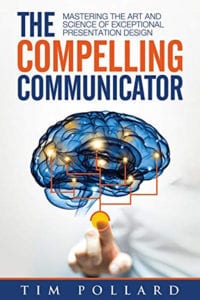
The Compelling Communicator: Mastering the Art and Science of Exceptional Presentation Design
Tim, thanks. What a pleasure. I was so impressed the first time I heard you speak and I’m equally impressed getting to know you personally and to hear your passion. It’s always so much joy for me to share this with my readers and the world when you get somebody else to validate. It’s almost like a parent relying on a friend or a teacher to tell their children something. I keep singing the same song and people believe it. Now to have somebody else singing the same song, even if it’s not necessarily being heard at the same moment by the same ears, contributes to that wonderful tipping point that book is all about. Thanks.
Likewise, it’s fun to encounter people who are like-minded. If I’m not mistaken, you did a podcast with Mr. Cialdini who talked about cross validation from different people reinforcing each other’s messaging. We are perhaps fulfilling a previous podcast.
Full circle, completing the story there about the power of edification. Thanks, Tim.
Thanks, John. See you soon.
Important Links
- Tim Pollard
- The Compelling Communicator: Mastering the Art and Science of Exceptional Presentation Design
- Mastering the Moment: Perfecting the Skills and Processes of Exceptional Presentation Delivery
- YouTube – John Livesay
- Mr. Cialdini – Past episode
- Better Selling Through Storytelling Method Online Course
Wanna Host Your Own Podcast?
Click here to see how my friends at Podetize can help
Purchase John’s new book
John Livesay, The Pitch Whisperer
Share The Show
Did you enjoy the show? I’d love it if you subscribed today and left us a 5-star review!
- Click this link
- Click on the ‘Subscribe’ button below the artwork
- Go to the ‘Ratings and Reviews’ section
- Click on ‘Write a Review’
Love the show? Subscribe, rate, review, and share!
Join The Successful Pitch community today:
- JohnLivesay.com
- John Livesay Facebook
- John Livesay Twitter
- John Livesay LinkedIn
- John Livesay YouTube