

Why Customers Leave With David Avrin
Posted by John Livesay in podcast | 0 comments

Customers have more power now than they had before. If your service or product isn’t great, they won’t think twice about leaving. They’re going to write you a bad review and that could be it for you. It’s very important to understand your customer’s journey really well. Know what they value and offer that to them. The competition is only getting tougher so you need to be conscious, creative, and intentional with how you deal with your customers.
Join John Livesay as he talks to David Avrin about the new landscape of business and why customers leave. David is a best-selling author and an in-demand customer experience speaker. Learn how to properly do your business by putting the customer front-and-center. Start upping your game when it comes to customer experience.
—
Listen to the podcast here
Why Customers Leave With David Avrin
Our guest for this episode is David Avrin who’s the expert on why customers leave and how to get them back. He said, “You need to keep changing to match customers’ ever-changing needs and when your customers have a problem in their mind, you have a problem you need to solve. Reputation is more important than any marketing.” Finally, his big tip is to be ridiculously easy to do business with. Enjoy the episode.
—
Welcome to the show. Our guest is David Avrin who is one of the most in-demand customer experience speakers in the world. He shares his high-energy and content-rich presentations with audiences across North America and the world, including presentations in Singapore, Monte Carlo, London, and Dubai.
He’s the author of five books, including the acclaimed, It’s Not Who You Know, It’s Who Knows YOU!, Visibility Marketing, and Why Customers Leave (and How To Win Them Back). He’s a former CEO Group Leader with Vistage International and a marketing firm owner. He’s also the Chairman of the Legacy Board. David, welcome to the show.
Thanks for having me.
Let’s start with your own story before you became a customer experience expert and speaker. We can go back to childhood, high school, or college.

Customer Experience: With a customer journey, you can have a greater predictability of your customer’s behavior. You can plan and budget for that. The problem is your customers don’t know how they’re supposed to do it.
It was interesting. I’m the second oldest of six and maybe it’s an issue of trying to stand out in a crowded field of competitors for that last slice of pizza, but I was involved in the performance. I did theater and music. I went to college on a full-ride theater scholarship and realized about halfway through that, “At some point, I’m going to have to be able to support a wife and kids.” I didn’t want to see myself doing community theater in God’s Wrath, Iowa when I’m 50 years old. Apologies to those who live in God’s Wrath, Iowa.
Now, playing the father and Captain Von Trapp in The Sound of Music, David.
In with 42 seats in the back of a converted movie house. I went to college and changed my major halfway. I gave up my scholarship and went into Broadcast Journalism. When you got a deep voice people are like, “You should be on the radio.” I did radio for a while and I studied Journalism. When I came out, I have lots of friends in the press. I did PR for several years and they said, “I went to the dark side,” and I became a PR flack.
It was PR and marketing for much of my career as you do. Talk about how we describe what we do in a way that is persuasive, whether it’s for sales, helping politicians with constituents, or corporations better manage their image. It’s how we describe ourselves and communicate that. It was a big part of my career for years.
[bctt tweet=”If there is a problem in the customer’s mind, there is a problem.” username=”John_Livesay”]
In recent years, I’ve come to the recognition that while what we say about ourselves is important, it is less powerful now than what other people say about us. I have made a pretty profound shift in my business, research, and books to talking to organizations about how we provide an experience that creates true differentiation. Now, I speak and consult on customer experience.
With the pandemic and all the complaints, the post-pandemic of shortage of staff makes the service go down. There’s the unspoken second part of it that I wanted your expertise on. If the majority of people in business have any interaction with the public, whether it’s an airline, a restaurant, you name it, or have new people because of turnover, then what happens to all those people’s first day on the job?
You make a lot of mistakes. You leave the restaurant and think you have your order right, and it’s not. Not only is there a shortage of staff causing planes to be canceled or restaurants saying, “We can’t take a reservation,” but when you do get the service, it’s not usually very good because they’re new and that’s another reason to leave. I’m sure you’re seeing that as a speaker. People are going, “Can you help us in this situation?”
We’re seeing it a lot. What’s interesting is customer experience is evolved into a separate discipline, even from customer service. We’ve been talking about customer service for years. If you don’t know how to be nice to people, you’ve got bigger issues in your business. The experience has changed in so many significant ways how we engage with businesses. It’s not just that straight retail transaction.

Customer Experience: Rules and regulations seem to grow every year. The reality is it should be reducing every year. People should be putting leaders in a room to simplify the process.
In 1968, walking into an appliance store and having some old guy or teenager explain the features of a refrigerator. Now, how we communicate, buy, complain, and have products and services delivered to us have changed in profound ways. Back to your point, there are so many mechanisms we can put in place and safeguards that should help to make those situations better, but they don’t. Part of it is because we’ve become a little bit rigid.
Businesses have become wary of so many external forces they cannot control. We can’t control the internet, governments, pandemics, Amazon, or anyone else. We try to control what we can. We create this customer journey. “Here’s how they’re going to learn about us and reach out, contact, communicate, buy, modify or customize, pay, and deliver. All of that works and we tweak it. It works for us if we’re in business. Where it doesn’t, we fix or tweak it. If we can have greater predictability of our customer’s behavior, then we can plan and budget for that.
The problem is your customers haven’t read your employee manual. They don’t know how they’re supposed to do it, but what they are learning is that they can do it faster, cheaper, and more conveniently through so many other retailers that the patience is down to zero. People are getting annoyed very fast. When mistakes happen, we have so many vehicles at our disposal to complain about. We have Yelp, Tripadvisor, Rotten Tomatoes, and Glassdoor, and that social proof has become a primary drive in all of those.
There are all of these things that are converging at the same time that make it very challenging for businesses to compete and keep people happy. That said, here’s my response. “What are you going to do about it?” The nice thing is there are so many great new mechanisms for helping people replicate in some ways of things that Amazon and Apple are doing with being able to track merchandise when you order something when you know it’s coming. “I’ve got furniture delivery coming sometime in the next 45 minutes or so, and it will show up on my phone. They will be at the door.” I don’t know if I’m answering the question, but it is a challenging environment.
[bctt tweet=”You need to change to keep up with customers’ changing needs.” username=”John_Livesay”]
One of the things you have on your website that is a great soundbite is customers are changing, and so if you wanted to stay competitive, you need to change as well. When I spoke at the Coca-Cola CMO Summit, I met the CMO of Domino’s Pizza. I said, “I love your app because it’s so specific. Sally put the pizza in the oven. George is going to deliver it. It will be there in ten minutes. You will have a sense of where things are and who the people are.” He said, “That’s our marketing challenge is to get tech people to come work here.”
For me, that was a big a-ha because I always think of marketing in terms of, “How do we get more customers?” They have to use marketing to get tech people to go there instead of Amazon. That is another way of how things have changed so much that getting the messaging, not just for customers, but also for the right employees to come.
Reputation is important. They call that EX for employee experience. There’s CX for customer experience and then UX for the user experience. Can you do it with facial recognition? If you put in your username and your password and one letter’s wrong in the password, you have to put your username back in, which is so frustrating. That said, a problem in the mind of your customer is a problem.
These tech teams that you’re talking about are trying to shave quarter seconds off the process. Smart companies are simplifying the process. I interviewed somebody on my show who was talking about how the rules and the regulations seem to grow organizations every year. “Here’s a new policy. Here’s a new procedure.” The reality is we should be reducing them every year. We should be putting leaders in a room. “How can we simplify the process? How can we shorten the timeframe? How can we expedite contact, delivery, communication, and complaint resolution?” Smart companies are the ones who are putting a mind toward that customer journey and becoming more customer-centric.
Customer Experience: Companies can’t just form alliances to bolster their offerings, they still need creativity. They need to understand what the customers value and how they can deliver that differently.
We’re looking to shave microseconds off that transaction so that people can get what they want quickly or get resolution faster. They can get communication, delivery, and all of those things. The reality is people won’t wait. It’s not that they’re getting furious. They are, but we can bolt a transaction like that. We have all gotten the email, “You left something in your shopping cart.” There was a reason. Something frustrated us. Something wasn’t intuitive or overly complicated. We know that the next choice is one click away.
For organizations looking to be competitive, walk your customer’s journey and simplify that process. Eliminate hassle, time delays, and frustrations. This is interesting because several years ago, who had the most clever jingle made you more memorable. Now, everybody’s good. I speak across the country and around the world and they argue with me about that all the time. “We’re better at this.” “You might be, but sometimes good enough at a better price point is a better choice. The reality is everybody’s at least good enough because if you weren’t, you would be outed quickly on social media, Yelp, Tripadvisor, and all the above.”
There’s been this universal leveling. The bad players are weeded out pretty quickly. What’s left is a marketplace replete with quality choices. The words are important because we have to be able to clarify and educate our people, get that pitch, get the description and the benefits clear. What people say about you is more meaningful, oftentimes than what we say about ourselves because we trust the preponderance of the evidence. There was some article about Yelp that as much as a third of the reviews are fake. Nobody’s surprised by that, but it starts with the recognition that the world has changed. That’s a real opportunity for a lot of entrepreneurial companies.
Going back to the Domino’s Pizza CMO, he said, “From the time someone has a thought, ‘I want a pizza,’ we want to shorten that time to when they have a pizza at their door and in their mouth.” It’s the same thing with Amazon. I happen to live here in Austin, Texas near one of their distribution centers, and the first time I got something on the same day I ordered it, I looked outside for the drone. I was like, “What?” That’s a whole another level of fast.
[bctt tweet=”What you say about yourself is less powerful today than what other people say about you.” username=”John_Livesay”]
We’re getting that stuff all the time. I saw a story on the news and I was talking to my wife about this. We were watching TV and I’m one of those annoyingly interactive with the TV, “That’s crap.” She nods her head, “Yes, dear.” There was a story about Bed Bath & Beyond. There was a representative from Bed Bath & Beyond that was trying to explain that their revenues had dropped significantly for the last couple of quarters. The person said, “We’ve had supply chain issues. People are frustrated and haven’t been able to find some of the things.”
I looked at my wife and I said, “That’s a complete pile of garbage.” They aren’t down because people couldn’t find what they were looking for at Bed Bath & Beyond. They’re down because people bought their stuff on Amazon. They didn’t go to some other store and say, “I can’t find it. I better go to Amazon.” They go straight to Amazon because it’s that fast. Sometimes it’s the same day. Sometimes it’s the next day. Even retailers are having to think about where their competitive advantage is. “Are they a showroom for the online retailers? Can they be a showroom for their own online presence?”
I saw that big time with Best Buy in electronics. People were coming in and shopping for what they want to go and then go buy it online.
I will freely admit that I’m one of those people. I had to buy a higher-end camera for my studio and I wasn’t going to buy it online. I went in, looked at them, felt them, and compared them, then I walked out, hit buy on Amazon, and bought it for $162 less. Should I feel bad about that?
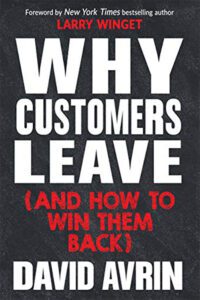
Why Customers Leave (and How to Win Them Back): (24 Reasons People are Leaving You for Competitors, and How to Win Them Back*)
No, they need to get their pricing competitive. I would love your insights on this. What I find interesting is that Walmart and Target, two typical rivals, join forces to try and compete against Amazon. Because the behavior is so ingrained and I’ve got the Prime membership already, it’s working, and you’re not going to give me a cheaper price than Amazon, I’m not so sure that even the Walmart-Target combination can’t get people to change the behavior. There’s no real reason to change unless Amazon messes up that I would maybe consider getting stuff.
It’s interesting. We’re going to see a lot of creative alliances. We’re seeing that certainly in media with a lot of integration on some of the media outlets. We’re seeing that integration in terms of home security, Wi-Fi, ring doorbells, and all of that as well. We’re going to see a lot of that to bolster the offering to be more competitive, but it also requires and continue to require a pretty high level of creativity of recognizing being more customer-centric, understanding what we value as customers, and being able to deliver that differently. Not everybody can do what everybody can do. The question is, “What can you do?”
I was talking to a huge group of small business owners, probably 1,500 in the audience. I did a session afterward. They were saying, “We can’t compete with Amazon and they’re doing free shipping. We can’t afford that.” I said, “What can you do?” The whole idea of positioning yourself as a specialist in a sea of mega generalists is a real opportunity.
I always counsel clients, “Never trash your competitors ever. Compliment your competitors. Just don’t compliment what your customer needs.” You say, “They’re phenomenal if you need this and this, but this is what we do. We do this better than anyone. Everything we do is geared towards delivering this.” “That’s what I need.” “We’re a better choice.” You aren’t one of many different things.
[bctt tweet=”When dealing with customer, you have to be conscious, creative, and intentional. You can’t afford to be in cruise control right now.” username=”John_Livesay”]
I talk about it and not drowning in a sea of sameness and stories that you can share and make you memorable of what makes you unique. You travel so much and a lot of people can relate to this. It’s that excuse you were referring to with Bed Bath & Beyond. If the planes are being canceled now and they go, “It’s the weather or pilot shortage,” I’m like, “I don’t believe it. You didn’t sell enough tickets. It’s not profitable to have this flight go out half empty, so you’re canceling the flight and jamming us all into another one.” My question is it’s not a shock why customers leave, but it’s more about how we win them back. What can an airline do to win them back or do they even care about winning us back?
You stand in any line at an airport and there is constant exasperation up and down the line. You look at the people look and they’re like, “Unbelievable. What’s going on?” They do know what they’re doing, but they’re wrestling a lot of beasts. I don’t have a lot of sympathy for them because we’re all paid full-time wages to get the job done, but we’re seeing it worldwide.
We’re coming out of the pandemic. There was no script for this. What they thought was a great short-term measure to save revenue is they gave early retirement to a lot of people, and then everything came roaring back. The part I will fault them for is they continued to sell tickets for flights that they didn’t know they had pilots for. They assumed they would find some way, even though understanding it takes weeks.

Visibility Marketing: The No-Holds-Barred Truth About What It Takes to Grab Attention, Build Your Brand and Win New Business
I’ve been speaking for 25 years. I’ve never missed a scheduled presentation. Six times, I’ve driven all night to make it to an event. Eventually, knock on wood here, something’s going to happen, but in the last few weeks, I’ve been at three events where a speaker was unable to show up for their time slot. This is my livelihood. This feeds my family and my staff. It’s the same thing when somebody needs something delivered to their home. What’s the backup?
I spoke at a huge conference of major manufacturers. They’re backed up for several months because of supply chain issues. They were talking about 600 vehicles sitting on a lot for a year, waiting for a small motor for the windshield wiper blades that they could not deliver to their clients. It’s going to take years. There is no political party that is to blame because this is global. If I had the answer, I would be far too rich to be taking time to be on shows with my good friends and colleagues. We’ve got to be conscious, creative, and intentional, but nobody can afford to be in cruise control mode.
Speaking of being creative, your website is one of the best I’ve seen for speakers.
Thank you, sir.
24 countries, 13 lost luggages, 1 million plus miles flown, 3 million plus laughs, and 0 events missed. You have a strategy to make sure you can continue to deliver on that promise. Putting it in there in a playful way is also creative. I’ve never seen anybody else do it.
Think about this in terms of the pitch. Let’s take it back to that. What is it that in every industry, there are certain criteria that the people buy from you or looking for? First and foremost, it’s safety. Is this a safe choice? Am I going to get screwed? Can I mitigate the risk? If it is package delivery, you mitigate through risk by giving a tracking number. It also reduces the number of incoming calls from people checking the status.
In my industry, the number one concern is whether it is going to be relevant and well-received. I put a video to alleviate that. They can watch me speak and see what I’m doing. When I throw in little funny things like zero missed engagements, that says something. Maybe it’s subliminal or other, but it’s important for every business to say, “What are the criteria by which the people are choosing between competitors? Are they going to hire you?”
They’re saying, ” I have a need and a number of options. Who’s the best choice for me? Who’s the safest choice? Who’s the most tailored choice?” It’s the same thing when we talked about the specialist over the generalist. When I go to a professional speaker’s website and they say, “Specializing in leadership, change, future, and marketing,” I’m not going to hire them for any of those things because if I need somebody who’s a futurist. I’m going to hire somebody that’s all they do because it’s their gig. They’re futurists.

It’s Not Who You Know, It’s Who Knows YOU! A Practical Business Guide to Raising Your Profits By Raising Your Profile
What I love is the story behind the six times you had to drive. That shows the willingness to do what it takes to have zero events missed. In addition to double booking flights, driving when you need to, cars, planes, and whatever, there also is a subliminal message there that you keep yourself healthy. I saw a speaker posting about having to give a talk with a bad back going out. You never know what’s going to happen. You can still get to the city and then have something go wrong. There’s a lot of thought that goes into it. You’re probably not out partying the night before an event.
If I did, they would never know. Here’s the other thing. I don’t understand this. I’m an oversharer on social media, but sharing every time that you’ve got sick, or “I’m at this event. I feel horrible,” sounds heartless. They have booked you several months in advance. They have 900 people sitting in that audience, but it’s the same thing. I have this video series called The Morning Huddle that I have a new book based on.
Don’t be the hero of your own story. “Look what a martyr I am.”
It goes back to the story, but we deliver because people are relying on us. Whether it’s our staff, our family, our audience, or our customers, we step up.
If anybody wants to book you as a speaker and get your books, they can find all of them on your website, DavidAvrin.com. Is there a last quote or thought you want to leave us with?
The last thought is the real key post-pandemic in the new world is you can win in business. Quality is a foundation by being ridiculously easy to do business with. Don’t make your people work for it. I’m so geeked out on new technology. I’m so bullish on the opportunities that have come about as a result. In many ways, COVID accelerated what’s long been predicted about how we’re going to do business. The ones who sit back, waiting for the cheese to come back are going to be left behind. There are huge challenges, but that creates opportunities for those who are willing to do more, and I am.
I love it. Note, be easy to work with. Thank you so much, David. It’s been a pleasure hearing your stories and wisdom.
Be well.
Important Links
- David Avrin
- It’s Not Who You Know, It’s Who Knows You – Amazon
- Visibility Marketing – Amazon
- Why Customers Leave (and How To Win Them Back) – Amazon
- The Morning Huddle
- The Morning Huddle book – Amazon
- Better Selling Through Storytelling Method Online Course
Wanna Host Your Own Podcast?
Click here to see how my friends at Podetize can help
Purchase John’s new book
John Livesay, The Pitch Whisperer
Share The Show
Did you enjoy the show? I’d love it if you subscribed today and left us a 5-star review!
- Click this link
- Click on the ‘Subscribe’ button below the artwork
- Go to the ‘Ratings and Reviews’ section
- Click on ‘Write a Review’
Love the show? Subscribe, rate, review, and share!
Join The Successful Pitch community today:
- JohnLivesay.com
- John Livesay Facebook
- John Livesay Twitter
- John Livesay LinkedIn
- John Livesay YouTube
How To Delight Customers And Retain Top Employees With Jason Bradshaw
Posted by John Livesay in podcast | 0 comments

When it comes to business, the customer is always right. Sounds obvious but putting this into practice is a lot harder than it seems, especially when we direct it to employees, also known as the company’s first customer. Joining John Livesay in this episode is Jason Bradshaw, a global guru on customer service and author of It’s All About CEX! The Essential Guide to Customer & Employee Experience. Jason shares how putting customers and employees first ultimately leads to greater returns and better employee retention. Doing business is not just about selling a product; it’s about the experience.
—
Listen to the podcast here
How To Delight Customers And Retain Top Employees With Jason Bradshaw
Our guest on the show is Jason Bradshaw, the expert on customer and employee engagement. He said, “If you get your customers’ and employees’ metrics, everything else follows. When you have a team of people, the way to get them to be engaged is to ask them to share their dreams. When you ask your employees for feedback, it’s not enough to just get the feedback. You must take action from it.” Enjoy the episode.
—
Our guest is Jason Bradshaw, all the way from Australia. He created his first business at the young age of fourteen, where he was selling telecommunications and computer equipment in the Australian Regional City of Toowoomba. The lead-up to this was he was inspired by books like, The Pursuit of Wow by Tom Peters, which opened his eyes to the power of customer and employee experience. Jason tested and implemented strategies for improving the experience in a variety of sectors, including telecommunications, retail, media, finance and many more. He’s worked with companies like Target Australia and Volkswagen. A cornerstone of his career has been this unwavering commitment to improving the lives of customers and employees. Jason, welcome to the show.
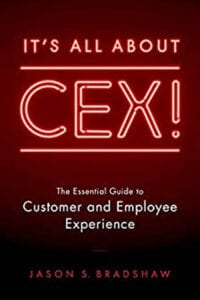
It’s All About CEX! The Essential Guide to Customer & Employee Experience
It’s great to be on the show. Thanks for having me.
It’s my pleasure. I always say, “Let’s start your story of origin and figure out where to start.” In your case, it makes me want to say, let’s please know the story of how in the world did you decide at fourteen that you wanted to start a business, and pick telecommunications and computers?
I know it sounds like I was on some great plan to conquer the world when it came to computers or telecommunications. It was simple. I like gadgets. I’m not fourteen anymore and I like more expensive gadgets. I needed to find a way to fund them. I decided instead of buying stuff at retail, I would buy it at wholesale, but I needed to be able to prove to suppliers that it wasn’t just for my bedroom. If you read a copy of my book, you’ll know that even before the age of fourteen, I was dabbling in different things. My parents and grandparents were all entrepreneurs. One of the many suits my father had was a gunsmith. I was sitting in the lounge room in our family home many times, bottling oil for people to clean their firearms and stuff with trade shows that would give me a small part of his display. I would sit there talking to anyone that came by, trying to pitch my oil to them.
You were encouraged at a very young age, which is not always the case. For myself, growing up, I didn’t even know what the word entrepreneur meant. They’re the ones who either worked for a company or owned a dry-cleaning or a plumbing business, but we still didn’t put an entrepreneur tag on that. Certainly, I didn’t know anybody inventing or starting anything from scratch. It’s fascinating that more young people are saying, “Hmm?” In your case, you saw it being modeled for you. Especially at fourteen, what’s there to lose? You might as well give it a shot. That’s a big part of why a lot of people are afraid to leave the security of a corporate job. The income is not steady and they’re not sure if their idea works. There are 100 reasons not to do it. If you get that out of your system at a young age and have some traction, I would imagine it encourages you to go, “I can do this.” How did you get from that into becoming this expert on helping people give their customers better experiences?
Life’s a wonderful journey, isn’t it? By the time I was 21, I had started three successful businesses. I went from telecommunications and computers into domestic and commercial cleaning. If you think about carpet cleaners and shop cleaners, I had the vans on the road. I had the telemarketers annoying you at dinner. I had an even crazier idea. I had what was perhaps a great learning lesson but I wouldn’t say that’s how I put the successful spin on it, but my third business was a video rental store. I’m dating myself now.
Like Blockbuster here.
[bctt tweet=”Make your customers and employees feel seen and heard. ” username=”John_Livesay”]
They say location is everything in real estate. Location is even more when it comes to video rental. I learned some lessons there. From there, I jumped into the corporate world. My entire career, whether it was a business that I was running or an organization I was working for, I was always the guy in the room saying, “What about the customer? What about the employee? Why do we need 300 steps in our process? It makes no sense to me. How do you think I’m going to delight the customer when I’m trying to follow steps 1 to 300?” Perhaps because of my readings as a young child, going to mom and dad’s place of work or their various ventures, I was always advocating for customers and employees. Naturally with that, as my corporate career took off, I continued to go up the corporate ladder, always with that customer and employee focus.
I haven’t always been the head of the customer and the chief customer officer. In fact, I worked for Australia’s largest government organization, the New South Wales Government Office of Procurement. I was the Director of Procurement Transformation. What’s the customer guy doing in an organization that’s designed to buy hospital beds, diesel, all things like that. Apart from changing processes, my job as a Senior Executive in the New South Wales government was to put the people of New South Wales back into the procurement process. As a government organization, we started thinking about our ultimate customer, as opposed to the agency down the road that needed to buy the hospital beds or diesel for the trains or whatever the case might be. I’ve always found a way in whatever job that I’m doing to bring that customer and employee lens into the fore. My experience is that if you take care of your employees and customers, all the other metrics follow. You sell more, make more money and have loyal customers.
It reminds me of the importance of storytelling, who’s in the story and what the focus is. If you’re in this government job, it’s easy to get caught up in the paperwork, not see the big picture and forget that you are serving the people who live in that country as the end-user, make them the hero of the story, and all of your actions from there as opposed to trying to get something done. This concept of, “If we take care of the customers and the employees, all the other metrics follow,” instead of being so focused myopically on, “What are the sales this quarter and this month?” If we go, “How can we delight the customer better?” That’s such an interesting insight. I want to know a little bit about your days as the Chief Customer and Marketing Officer. That would be a CCMO title instead of a CMO. It’s certainly a C-Suite level that you worked your way up to of doing Volkswagen in Australia. Obviously, it’s not from and in Germany. I worked with Lexus based in Southern California. There are Japanese companies in America like the luxury brands like Mercedes and BMW.
Everyone’s competing in an out-of-country environment. The thing that jumped out on your LinkedIn profile for me is that you have a loyalty program for cars. Most people think, “There are loyalty programs for airlines,” but I don’t think most people realize how important it is to get that repeat buyer or the person who’s leasing the car for two years to stay within the brand. Can you speak to what you did with customer loyalty as it relates to Volkswagen? I’m sure people can extrapolate for whatever industry they’re in and some ideas?
My role is Chief Customer Experience and Marketing Officer at Volkswagen Group Australia while focused on the Australian market. I did have the great privilege of working with my colleagues in North America. In Mexico, we republished the book that we wrote for the Mexican audience. It was great to work across both running a market but also to assist some colleagues in North America to understand the similarities more than what you might expect. One of those, as you alluded to, is the importance of the customer coming back during the lifetime of the ownership.

Retain Employees: Employees feel much more engaged with an organization if there is a continuous investment in them.
There’s this misconception out there. I certainly know I had it before I worked in the automotive industry that you go, buy your car, and the dealership has a 50% profit margin in the vehicle. I don’t know if that day ever existed but it certainly doesn’t exist now. The margins in an automotive dealership from the front end, the new vehicle out there are really small. Where dealers and automotive manufacturers make most of their money is in the service and accessories side of the business. It is extremely important for consumers to come back into the dealership to get the vehicle service.
If I put up my automotive hat, I’m going to tell you there’s a whole range of reasons why you should do that. The pure commercial reason is that’s where they make their money. From a customer lens, you should have a better product experience. I always think that when you buy a car, every single day when you hop in it, that product experience is what’s reminding you that you made the right or wrong decision. That service experience, getting the software updated, getting the oil changed and all the various other things that you do in the service, making sure customers get that completed by a trained professional should lead to a better daily product experience which should lead to loyalty. We launched in Australia a product called Service Packs or Volkswagen Care.
It was essentially a prepaid service package for your vehicle. You could pay for it upfront, package it in with your lease if you’d like, and every twelve months or whenever your vehicle was ready for a service, you’d come in and there’d be no more to pay. Interestingly enough, when we first package that product up, it didn’t sell and people weren’t interested. The sales teams in dealerships begrudgingly spoke about it. Why? There wasn’t value in it. We didn’t take a customer-centric view to create the product.
My team led a piece of research. We went out and asked her a range of people what they were looking for and what it would represent value for them in that post-buy purchase experience. We relaunched the product, renamed it and changed the inclusions. Interestingly enough, the price point didn’t change substantially. We had done some studies that showed that if we bring a prize to a particular point with these inclusions, it would maximize sales and retention. We made those changes all with the customer in mind. We had a 284% increase in sales instantly. Two and a half years on, that sales increased and that new sales run rate has maintained. I believe it’s simply because we created value from a customer lens.
If you don’t understand something, you’re not going to buy it. The confused mind always says no. If you make it hard for the salespeople to explain it or the customer to understand it, they’re like, “Do I want to increase my monthly lease?” No. Unless you frame it through their lens of convenience and not having to come up with the money. Do you have examples of brands that you as a consumer have experienced, not any place that you worked that did a poor job? You don’t have to name them. You can say it’s a hotel or a restaurant. We learn from both extremes. You described a great thing you did at Volkswagen, upping the consumer experience and customer experience of car owners or at least, people. What’s an example of somebody doing it wrong?
[bctt tweet=”Be sure you follow up with feedback your team gives you.” username=”John_Livesay”]
If I might, I’ll start with a B2B example. I’ve had senior roles in customer employee experience over many organizations. As a result, you tend to pitch multiple times for various solutions that you tried to create. As a result, sometimes you get to see the same people you hang with from company to company. I had this one company pitched to me four times in four different companies the exact same solution. They never once changed their pitch despite the fact that it was the same team pitching to me. The requirements were funny enough very similar, so I was leading it each time. After each pitch, I had given them feedback about why they didn’t win. Yet, the fourth time, they still hadn’t changed. I sat in the meeting going, “You’re here trying to tell me that you can help me with customer experience, yet you’re not listening to a potential customer.” It blows my mind away when people say, “This customer experience stuff is full B2C.” No, it’s B2Everyone.
Your book is It’s All About CEX!: The Essential Guide to Customer and Employee Experience. The fact that you’ve married the two, in other words, you can’t treat your employees badly and expect them to give customers a good experience. An example of a good company would be Starbucks, when Howard Schultz was giving his part-time employees health insurance here in the states way before other companies were. Those people felt seen, heard, valued and they would remember your drink order if you came in every morning at the same time. You can’t pay people to do that. Their job is to ask you what you want and give it to you but if they feel valued, “I’m getting healthcare and I’m only part-time, then I’m going to go the extra mile.” Those are the little details that a lot of people don’t see the ROI right away.
“Why would we do that for part-time? If we don’t have to, why would we ever give something to an employee?” That to me is an example of why you would do that. Let’s put on the hat of a manager, how important it is to keep top talent? We all know there are always the top performers, whether they’re in sales or whatever the department is. The line is that people don’t leave their job, they leave their boss. When you give keynotes to companies and you’re talking about not just how to delight the customer, what tips do you give them to keep their top talent?
There’s some research that’s come out that shows that 67% of employees feel that their company or manager asked them for feedback on their experience. That’s a pretty decent number. It could be higher but 67% is not a bad starting point. The alarming thing is that only 29% of employees feel that the company does anything with that feedback. The first thing that I say to managers in the board room is, “If you’re going to ask a question, be prepared to do something with the answer.”
Otherwise, you’re just blowing smoke and letting people talk. That’s more frustrating. You pretend to care and not care.
Quite often, when I say that people came back to me and said, “What if they ask for something that we can’t afford to do?” I’m not saying you have to do everything they asked for. I’m saying that you have to address their concerns. That might be saying no to something but explaining why it’s a no. It might be trying to find the middle ground in some instances. It’s not about doing everything at once. A focus on being a little bit better every single day is much better than spending six years trying to launch a new program for your employees to keep them only to have six years of people walking out while you say you’re working on something. People like to see progress. When it comes to experience, I don’t think there is a finish line.
Think about the number one selling motor vehicle in 1970 in America, it didn’t have airbags and seatbelts but the expectation of customers now is that there’s more than seatbelts and airbags. It’s the same with employees. That journey is a never-ending one that’s why it’s important to crystallize what is it that I promise to you as an employee. What am I going to deliver every time? In Starbucks, that’s things like healthcare and tuition assistance. For other organizations, that could be something smaller or bigger. That doesn’t matter what it is, but if you say you’re going to do it, you need to do it.
You need to ask for that feedback, be open and honest and say, “We’re not going to fix everything or we’re not going to agree with everything, but here are the three things that you told us that make you want to jump onto LinkedIn or Indeed job site. We’re going to focus on those over the next 90 days or over the next year. Every month, we’re going to communicate with you around what we’re doing on that journey.” That way, people don’t go, “I left some feedback but their companies not listening.” Often, their company has listened and done stuff but hasn’t told anyone.

Retain Employees: There’s a lot more learning that happens in the commission of getting it wrong than in the celebration of getting it right.
You’re not letting them in behind the scenes. I’ve heard from a lot of clients when they bring me to train their team on how to become better storytellers. Not only does it help them close more sales but they also feel like the company cares about their career. They’re learning a skill, in this case, storytelling, that is going to help them, whether they stay at 1 or 10 years or leave tomorrow. They’re getting something from that company that’s empowering them to be better at their job but also maybe better people. Have you seen this happening? Is there research that backs any of that up that you’ve seen?
There’s no doubt to suggest that employees feel much more engaged with an organization if there is a continuous investment in them. I want to make sure that we differentiate creating a website that people can go and do a whole pile of self-case studies. Some organizations have that these days. It’s nice to have but that only works for the employee that is a go-getter that’s a self-motivated learner. Certainly, across the board, there is research that shows, “If my boss understands that our biggest challenge is not being able to sell storytelling. He or she goes and sets up some training for us around storytelling, that shows that they care and importantly, they’re investing in my success.”
The worst thing you can do as a manager is to say, “The target this month is $1 million. I’ll see you on the 31st.” If it was that simple, sales leaders wouldn’t exist. As people leaders, our job is not to solve their problems but guide our people so that when we see that there’s a collective problem, we can bring in some help to fix that. At the end of the day, as a leader, our job is to help our teams be successful. Through this success, we become successful.
The other thing that you talk about in some of your keynotes is crisis leadership. You’re once accused of castrating the men of Australia when you were head of the customer experience with a major retail group? That begs me to know that story.
It’s not something that I ever expected to read. When I was working for Target, we decided to take off sale the game GTA 5, the Gran Turismo 5. It’s a PlayStation and Xbox game. For various reasons, we decided to stop selling it. There was a petition for us to stop selling it, and there was a petition for us to start selling it. In between, while letters were coming to me saying things like I was castrating the men of Australia because that was prohibiting the sale of GTA 5. The reality is in almost every location, you could have walked across the whole of the mall and bought it at another store. It wasn’t our store. I don’t have that power. It was certainly interesting to see how emotional people came about the perception that they couldn’t buy a product.
You could have bought it from us, but you could buy it anywhere else. We weren’t making a judgment about you or your product. Certainly, people felt that they were. While I was at Target, I also got called all things like killing babies. Discount department stores’ big box retail is full of stories. You could speak to any leader in a big box retailer and you’ll get everything. I remember a colleague of mine in the US. She said, “I used to hate getting the 2:00 AM phone calls about a fire in the store. Now, I got a 2:00 AM call because some cashier accidentally left off her rifle or a pistol.” Castrating the men of Australia was certainly one for the storybooks. Ultimately, we didn’t change our position. We took it off sale and left it off sale to this day. Target doesn’t have it on sale.
It’s fair for organizations to make a decision but it comes down to communication. In the GTA example, there were 40,000 social media comments about our decision to take GTA 5 off sale. Some organizations would have just told their teams to ignore those comments, don’t comment on them. I insisted that our social media team follow up on every single comment. There were some canned pre-scripted responses, but whether you were for or against it, you were engaging with the brand. I wanted you, the customer, to feel heard. The customer that wrote to me about being castrated, my response was dry compared to his letter. It’s important that during a crisis that you communicate, you help your employees and your customers when you’re next going to have some use for them so that you take away some of that unknown. A crisis is all about the unknown.
[bctt tweet=”If you take care of your employees and customers, all the other metrics will follow. ” username=”John_Livesay”]
I remember, at Target, we took off sale or recalled a range of denim products because the production process of denim included the use of a dye called an azo dye. There was some research that suggested that it could cause cancer in extremely rare situations. Their company wasn’t breaking any rules. The Australian guidelines were all being met. We weren’t the only ones doing it, that’s everyone’s excuse, but it was fairly commonplace to use this azo dye in denim products. The company made a decision boldly to take it off the shelves and to recall the product.
The advice that we were getting was changing and being updated by the hour. We bunkered down with the teams and said, “Every hour we’re going to give you an update.” To our consumers, we were saying, “Every day at 9:00 AM, we’re going to publish an update.” You still had people asking questions in between but you had a large number of people that said, “The company said at 9:00 AM. As long as they meet that commitment at 9:00 AM, that’s fine. I won’t engage.” Whether it’s being accused of castrating people, giving children cancer, the list goes on. In any crisis, the very first job as a leader is to create some milestones where people can start to get some certainty of comfort.
That’s been seen time and again if your plane is delayed. If they communicate how long it’s going to be, what the update is, versus leaving people sitting there hours on end with no information, how agitated they get. Let’s leave on a happier note. You also help people discover employees’ untapped potential. What is a tip you can give someone to either discover their own potential or someone on their team’s potential?
I’m a big believer in creating space for team members to share their dreams with me. If someone came into my office and said, “One day, I want to stand on a stage and deliver a keynote,” I might say they’re crazy but I would get them to tell me the story about why that’s important for them. I would find ways to incorporate experiential elements into their job so that they can learn that skill. I had a colleague of mine who moved to a new job and she was speaking to me. She’s like, “I am drawing on everything I’ve learned over the six years of working for you.” I said, “That’s fantastic. I’m glad that the job is going well for you. I knew you could do it.” She’s like, “Sometimes you gave me a task and said, ‘Get it done.’”
The tip would be this. Show your team members that you trust them to do the unexpected and what they haven’t done before. You know in your teams the people that no matter what, they are going to find a way to make things happen. You also know people in your team that are the shrinking violets, the solid achievers. It’s our job as leaders to give them permission to try. Importantly, if they don’t succeed, that might be okay as well. As long as they haven’t gone against your wishes, there’s a lot more learning that happens in that commission of getting it wrong than in the celebration of getting it right. I always encourage, “Give your people the chance to try new things. If they get it wrong, turn that into a teachable moment, not a, ‘You’re on my naughty list and I’m never going to let you do anything else again.’”
If someone wants to find out how to work with you as a speaker or consultant, what should they do and where should they go?
The easiest way to reach out to me is at JasonSBradshaw.com and on all the social channels, @JasonSBradshaw. It is important that you don’t forget the S in the middle. Otherwise, you’ll be buying yourself some real estate in California.
Thank you for coming on and inspiring us to have our team members share their dreams and remembering the importance of following up with feedback once we get it whether it’s from a customer or an employee.
Thanks very much, John. I appreciate it.
Important Links
- Jason Bradshaw
- The Pursuit of Wow
- LinkedIn – Jason Bradshaw
- It’s All About CEX!: The Essential Guide to Customer and Employee Experience
- Better Selling Through Storytelling Method Online Course
Wanna Host Your Own Podcast?
Click here to see how my friends at Podetize can help
Purchase John’s new book
John Livesay, The Pitch Whisperer
Share The Show
Did you enjoy the show? I’d love it if you subscribed today and left us a 5-star review!
- Click this link
- Click on the ‘Subscribe’ button below the artwork
- Go to the ‘Ratings and Reviews’ section
- Click on ‘Write a Review’
Love the show? Subscribe, rate, review, and share!
Join The Successful Pitch community today:
- JohnLivesay.com
- John Livesay Facebook
- John Livesay Twitter
- John Livesay LinkedIn
- John Livesay YouTube
Brain+Trust With Tim Hayden
Posted by John Livesay in podcast | 0 comments

In today’s fast-paced world overrun by technology, understanding how the human brain behaves, works, and reacts is an important aspect of digital consumption. John Livesay delves more into this topic with Tim Hayden, the founder of Brain+Trust and chief business strategist at The Next Practice, by discussing how empathy and getting a full grasp of audience emotions can result in a compelling marketing strategy. Tim also explains how data science is being applied to COVID-19 trials as well as the concept of sonic gardens.
—
Listen to the podcast here
Brain+Trust With Tim Hayden
Our guest is Tim Hayden, who is the Founder of Brain+Trust, which is an agency that helps companies use empathy and technology to anticipate how to get inside their customer’s head. He’s also involved with a company called The Next Practice, which is about anticipating what’s coming around the corner. We go into things like how to tend to your sonic garden, a consent management platform, what’s happening in the world of AI, and consent and data privacy. All through a lens of how do we make the world better. Enjoy the episode.
—
Our guest is Tim Hayden, who has many years of marketing and business leadership experience. He’s been the founder of new ventures and a catalyst for transformational progress with some of the world’s largest brands. He is a strategic business executive, studies human behavior and how media and mobility are reshaping all of the business. From operations to marketing and customer service, he assembles technology and communications initiatives that lead to efficiency and revenue growth. He’s an investor and advisor to technology startups. He actively works with entrepreneurs and ventures to capitalize on opportunities and shifts across many different industries. Tim, welcome to the show.
John, thanks for having me. I appreciate that introduction.
Tell us your own story of origin and take us back a little bit. You can go back to childhood. You can go back to your days at Texas State. How did you get interested in being involved in startups in general? It seems to be a part of your path.
Growing up, my mom was a school teacher and later on, she became an executive with several nonprofits including The Hurst Euless Bedford Chamber of Commerce, right in the middle of the Dallas-Fort Worth. My dad on the other hand was in software. That’s probably what made me acutely aware of what was happening with technology and how it was iterating as time went along. Technology got faster. It got better. My dad, I wouldn’t say it was cumbersome, but he was absent for a lot of my formative years because he was working for somebody else. That’s the easiest way. I’ve always thought if I could wake up on Monday mornings knowing that the world is on my shoulders to win, to survive, or to do whatever else, that’s the path I’m going to take. That’s even been the case when I’ve gone to work for a large corporation or somebody else. I’ve always tried to be entrepreneurial in my approach.
Doing my research in preparation for this is, you have a fascination with human behavior and that’s why we’re looking forward to getting to talk with you because I share that passion from my advertising background. That’s what made me get into advertising was, what motivates people to change their behavior or buy one product over another. The same concept to persuade one person doesn’t necessarily work for another. You have certainly done a deep dive into that. Let’s start with what you’re doing at a company where you’re the Chief Business Strategy at The Next Practice? I find that concept fascinating “unlocking what’s next?” This premise that we all have to find what’s coming around the corner, we can’t stay in our comfort zone is what I get from what you’re doing there.
I’ve worked across a number of industries. You take municipalities and state local governments. This comes from even me sitting on the board of the Austin Chamber of Commerce at one time. The art of economic development is always being able to look 5 to 10 years in the future to understand what do you need to do to develop an infrastructure, the systems, the processes, and the environment for business to be conducive for a long period of time. That’s one part of it, but at The Next Practice, we’re all about doing that in terms of marketing customer experience and communications. We think that without calling it digital transformation, how can we help organizations with their endeavors be able to realize revenue growth, find new customers, and experience repeat behaviors from the customers that have already bought from them?
[bctt tweet=”Going on the next level by having empathy is what every entrepreneur should keep in mind.” username=”John_Livesay”]
How can we do that and always be ready for how behavior is going to change? That’s the important takeaway there is that, as the world becomes more automated as immediacy. During COVID, we can buy anything and have it delivered to our house in a matter of minutes, hours or days. That’s been a reality for some time, but we all know it way too well and we expect the rest of the world to be that way. At The Next Practice, we’re about being always on the next level if we can. It doesn’t mean that we’ll overshoot what needs to happen, but it means that we’ll have an understanding or maybe empathy with where things need to go from here.
You were very involved with the Austin Chamber of Commerce. Let’s give a shout-out to Austin and what an amazing community. I live here myself. I’ve been impressed by the friendliness, openness and collaboration that everyone finds here. A lot of people are moving from Silicon Valley here. The city has been voted the number one place to live for a couple of years in a row. There’s so much that it has to offer. From your perspective, both with your experience at the Chamber of Commerce and being an entrepreneur here, what is it that makes Austin special for you?
I went to school in San Marcos about 30 miles South of here. In the early and mid ‘90s, I was exposed to a lot that was happening with Austin. My wife went to UT. Neither one of us grew up here. She grew up in East Texas. I grew up in the DFW area. It’s the vibe that Austin has built on the edge of the Hill Country with a river running through it. It’s between the University of Texas and Ohio State, which has the largest public university in the country. Lots of young people live near the middle of town. You put a state government in the middle of it. The state government that leans a different way than the local government leans. It makes for an interesting mix of developments in terms of culture and business. That’s why Austin is the place for a creative class and for people whether they want to start new companies or they have fresh new ideas, this is a wonderful Petri dish to do that in.
You add in how green it is with an aquifer, the beauty of all the parks, amazing food, and live music. There are many special sauces to it that companies, even Tesla are coming here. It continues to attract and see what makes it unique. The thing you said that resonated with me, Tim, is as it relates to The Next Practice is this concept of empathy. Can you define for everyone reading what empathy is from a business standpoint? How is that a great tool to anticipate what’s coming next?
We look at it through the lens of design thinking about being human-centered, customer-centered in business is to understand exactly the preferences, needs and disposition of your audience. You said it first, “No two people have the same behavior traits, no two people have the same wants and needs, or have that same disposition.” When you talk about empathy, it’s about putting yourself in someone else’s shoes as best as you can. That’s a tall order. It’s an impossibility to do at scale, but thanks to the way we’re connected digitally these days and more so every day, we have the beauty of data turned into insights. That helps us understand how people behave, what their preferences are, what they imply and state, and maybe how they respond to questions we put in front of them.
It’s always about understanding and being customer-centric. That goes for internal communications, as well as understanding teams and business units, how can they better share information, how can they be on the same page having a true north of insight on that customer behavior. We believe at The Next Practice and Brain+Trust partners, that’s the remit for companies that want to not just survive, but want to succeed and grow over the next decade.

Brain+Trust: Being customer-centered in business is to understand exactly the preferences, needs, and disposition of your audience.
Let’s take some companies, maybe Kodak or Blockbuster. They had a little more empathy and been able to take a look at what’s coming. Maybe they would have seen that the business model that they had relied on for so long wasn’t going to stay either because the technology was changing and customer preferences were changing. The hassles of back in the day going to a store. Imagine young people today, they don’t know how to even operate a rotary phone. Let alone the concept of you had to wait for a movie to be returned before you could see it. All that is fascinating to me. You touched on Brain+Trust. As I said, you are busy in many projects. Tell us your role at Brain+Trust and what the story of origin was there?
In 2016, I was in the process of moving back from the Bay Area in California to Austin. I was out there in the Bay Area for two years. I had a couple of colleagues that I knew who had come from large global digital media roles with major companies. We all had a conversation and said, “There’s a wave of new technology coming into the market.” Artificial intelligence, machine learning, automation, not to mention what was happening with social media. Not to mention what’s happening in mobility in the automotive space with cars getting smarter. Some cars are able to drive themselves. All of this and the speed at which it’s happening is extremely confusing to decision-makers and leaders.
We built Brain+Trust, first and foremost, to be a sage counsel and at least a resourceful guide to be able to help business leaders roadmap where they need to make investments and decisions for investing in the future, whether that’s new process and operations or new technologies. Thanks to the pandemic in one way, it accelerated the need for companies in light of customer data privacy laws. In terms of the imminent threat that companies like Amazon and others pose to certain verticals, is to build a direct and personalized experience with your customers and to operate on their terms, which brings us back to empathy. Understanding your customers in their needs and serving those needs, that’s what businesses must focus on.
I spoke at the Coca-Cola CMO Summit and it was the CMOs of all of their quick-service restaurants that serve Coke. I was speaking to the CMO of Domino’s Pizza. He was explaining that their philosophy was creating the perfect pizza experience. Meaning you have a thought, “I’d like a pizza,” and it magically appears and fast. He and his team created that app that tracks the thing. I want to ask you about that whole thing of transparency and that people feeling part of the process is a new behavior. They’re using artificial intelligence.
That’s one of your areas of expertise. They said, “If you tend to order the same pizza at the same time every day, and you open the app or pick up the phone, the AI notices it and says we’re going to take a risk the odds or whatever. Put the pizza order in before you finish completing what you want on it to try and shave off a few seconds of the delivery time.” The bigger picture is the perfect pizza experience, and that’s where I’m fascinated to get your insights on because technology is great. Unless we’re connecting it’s feelings and emotions. What’s coming next and have this overall vision of in this case. I think about a pizza and it shows up and then using AI to make that happen without the customer even knowing it is something that you’re talking about.
We used to call that surprise and delight. KLM Airlines does this in several airports in Europe, where if you put up a signal, if you tweet or back in the days when everybody’s to check in on Foursquare. If you let the world know you’re at the airport and KLM has got their ducks in a row from a technology standpoint. They sense that you’re at the airport because you said you were. They already know what flights you’re on, what gates you’re on. They’re going to surprise you with a gift. They’re going to surprise you with something. We’re going to see more and more of that. What’s fascinating though is that because of the choices that consumers have, in terms of where they can get the goods and services they need. The way they can go about discovering new flavors, new products, and new brands. We got to be careful.
[bctt tweet=”Understanding your customers in their needs and serving those needs—that’s what businesses must focus on.” username=”John_Livesay”]
We need to know that it’s okay when I call my local pizza. I order from East Side Pies a lot here in Austin. If I call them up, I’ll ask, “What did I order last time?” They tell me what I did. I said, “Let’s do it again.” I don’t have to tell them my name. Because of caller ID, they knew who I was. That’s good but understanding that maybe shaving a few seconds off the delivery doesn’t mean that you have to preempt the consumer. Let’s allow our customers to be in control as much as we can. Let them opt-in. You’re required to do that because of data privacy laws that are popping up in 27 states. The bottom line is let’s make sure that they’ve consented, they’re opting in, and they’ve given you the green light to do that thing.
Which leads me to an article you wrote about, “If you can’t give a customer a cookie.” You talk about this premise of Consent Management Platform or CMP. Tell us what that means and how that can help businesses do better marketing.
Most people that are reading this are going to be aware of websites, especially news websites that they visit. That has a little banner that comes up and says, “Will you accept these cookies?” Most of those outlets will allow you to click on a different link and be able to see how your information is used. That’s how global data privacy regulations in Europe, which started a few years ago. That’s how that spelled out and how you’re supposed to do it. That’s how the California Consumer Privacy Act, which went into effect here in the United States. That’s what it says you need to do. What’s happening is Google is no longer going to support third-party cookies, which empowers brands to do so much from tracking a customer from a search result to the website. Maybe to the mobile app, to an eCommerce store, to a physical location and to do so on their terms, not Google’s.
Google is saying no longer will they support third-party cookies or use them in terms of how they do everything from rank searches and guide people to your doorsteps. You’re going to see probably more of investment directly with Google that will be required to leverage the behavior that’s there within Google. Apple at the same time has come out with a new operating system, iOS 14, which puts the customer in total control of who gets access to their data. Who gets to understand where they go with that device, whether an iPhone or an iPad or a Mac. What is consumed on that device, where has it been used, maybe what speed were you going, what direction you were going back to your place. Your point about predictive pizzas, “Does he drive by here every day?”
What we’re seeing is twofold. One, commitments to customer data privacy. That’s what we see there, but we’re also seeing that Apple, Google and others are doing all they can to be able to compete with Amazon. They understand that in Apple’s case with maybe Apple News before but with Apple TV plus, they’re getting more minutes of the day and more hours of the day with you in their ecosystem. You’re consuming media that flows from Apple. You already have the devices. You carry Apple with you all day that, how do we get more of your time while you’re in at home, your vehicle, and other environments. That’s what’s going to be fascinating over the next few years, as we see that shake out alongside more scrutiny to customer data and customer data privacy.
The other thing that I was interested in and impressed by was your Brain+Trust partners are a member of The Next Practice Group and you’re working with the Johns Hopkins University on their trials during the COVID. Can you explain how you’re helping all of that effort that everyone is concerned about?

Brain+Trust: The flip side of understanding consumer human behavior is how to get on the other side with behavior change.
I can’t tell you everything, but I can tell you that we’re employing data science to be able to identify audiences and opportunities to have people enroll in the trials. This is for convalescent plasma. This is a partnership between Johns Hopkins University, UCLA and several other universities. It’s about helping them as quick as possible as the trial needs to run, because with COVID, it’s a race for everybody to get the best possible treatments in place. The best possible vaccines through the approval process and trials. It’s a treatment with convalescent plasma and it’s not different than a company that’s trying to get to market as fast as they can before their competition does. In this case, their competition happens to be a virus.
It’s always a race and this case, the stakes are very high. How wonderful that you and your team have the technology that you used, crafted and honed to help companies have successful launches and anticipate what’s around the corner and play all scenarios out of imagining. What could go right, wrong and how can we mitigate those to help us all lead happier and healthier lives again without this fear hanging over us. There are some to going back to the empathy thing. There’s a toll that we all feel over time that we’re going to start to look at. What is the toll of isolation, depression, and all these other things that are separate from the fear of getting sick? I was talking to people at assisted living and how much longer it’s taking to get people to put their parents in an assisted living home because of those fears. Not being able to visit the parents and all those issues come up into play. You’re at the cutting edge of anticipating what’s going to be needed to help people get through what could be seen as a post-traumatic syndrome situation when this is finally over.
That’s the flip side of understanding consumer human behavior is how do you get on the other side of it with behavior change. How do you be able to temper expectations because there are many statements being made some by the government, some by brands companies that purport to have solutions, whether that’s vaccines, it’s more hospital beds, or it’s certain types of treatment or medicines. In terms of the fear that hangs over us, it’s intimidating or even worse than that it creates anxiety. There’s the associated things that happen there if going to the office was the only time you socialized with others. I think is the case for a lot of people.
There are some problems that can occur in terms of depression and isolation. How do we manage this in terms of a much calmer approach to educating people on how to stay safe. Educating people on when there may be changes to certain protocols, whether that’s businesses reopening, schools reopening, or new types of testing being available in the market. There’s much in the way that we can all learn from this experience on how we should go about education, which is a communications remit. Not only understanding behavior, but helping change results in better outcomes for certain populations or the population at large.
I have to ask you about your concept that we all need to tend our sonic garden. First of all, nobody loves words and can appreciate good writing as much as I do with my advertising background, speaking and helping people become storytellers. That’s what sticks is when our brain goes, “I know where the garden is. I know what sonic waves are. What is a sonic garden?” You have the skill of pulling people in with your words crafts. Tell us what you mean by tending a sonic garden.
People talk about elevator pitches. There are certain tones that when you’re on your couch, in your home, and a TV spot comes up of your favorite fast food restaurant or an automotive brand, you can tell within the first few seconds who that is. Even without looking at the screen, you usually can tell. The same thing with jingles, for shows tones like for Intel Inside, these are all pieces of us at Brain+Trust. I need to give all the credit in the world to my business partner, Tracy Arrington. She comes from years of advertising and has always looked in audio, especially with radio, satellite radio, and podcasting. The opportunity to build more trust with an audience and to do with certain sounds, audio cues, messaging, and the narrative you put forth.
[bctt tweet=”How to forge better relationships with your audience and catch their interest? Understand their needs and emotions first.” username=”John_Livesay”]
Back in the day, television shows used to have a theme song and then they got so frenetic about every second costing money. They’re like, “Can we cut that out and have a show without a theme song, friends, and all that stuff?” A song that people would hear that and they smile. Now because they want more time for ads, they have cut that out. If people want to know more about Brain+Trust or The Next Practice, any other way you want people to follow you? I see you’re big on Twitter.
I don’t know that I’m big on Twitter. I’m @TheTimHayden on Twitter. I always doing a podcast or anything like that would say, “If you had about anything we talked about or want to challenge me on it, please do it out in public. Bring it on Twitter.”
Any last thought or quote you want to leave us with, Tim?
We have a number of things that are going to greatly reshape how the country and our cities and our states are run because of all the different positions and different referendums that are up. The sun is going to come up tomorrow. Saddle up. Know that there’s always a new day.
Thanks so much, Tim.
You got it, John. Thank you for having me.
Important Links
- https://Braintrust.Partners/
- https://NextPracticeGroup.com/
- @TheTimHayden – Twitter
- Better Selling Through Storytelling Method Online Course
Wanna Host Your Own Podcast?
Click here to see how my friends at Podetize can help
Purchase John’s new book
John Livesay, The Pitch Whisperer
Share The Show
Did you enjoy the show? I’d love it if you subscribed today and left us a 5-star review!
- Click this link
- Click on the ‘Subscribe’ button below the artwork
- Go to the ‘Ratings and Reviews’ section
- Click on ‘Write a Review’
Love the show? Subscribe, rate, review, and share!
Join The Successful Pitch community today:
- JohnLivesay.com
- John Livesay Facebook
- John Livesay Twitter
- John Livesay LinkedIn
- John Livesay YouTube