

CEO Secrets: The Strategies And Tips Of Being A CEO With Christy Budnick
Posted by John Livesay in podcast | 0 comments
Being a CEO of a company requires great responsibility. It demands excellent leadership skills and strategies to help the company grow. In this episode, the CEO of Berkshire Hathaway HomeServices, Christy Budnick, shares her secrets about being a CEO. She provides insights about her strategy in leading her agents and staying aligned with the company’s growth. Tune in to this episode as Christy shows how culture, diversity, and inclusion play a role in leading her company towards success.
—
Listen to the podcast here
CEO Secrets: The Strategies And Tips Of Being A CEO With Christy Budnick
Our guest is Christy Budnick, the CEO of Berkshire Hathaway HomeServices. We talk about how they are not only a forever agent and a forever brand, but for everyone and how important it is to paint a picture when describing something to someone. She believes that nose-to-nose and toes-to-toes is the best way to connect. Find out what her biggest surprise was becoming the CEO. Enjoy the episode.
—
Our guest is Christy Budnick, who serves as the CEO of Berkshire Hathaway HomeServices, a global residential real estate brokerage franchise network. In her role, Christy oversees the global real estate brokerage franchise network, which is made up of more than 50,000 real estate professionals and nearly 1,500 offices throughout the US, Canada, Mexico, Europe, the Middle East, India, and The Bahamas.
The network, among the few organizations entrusted to use the world-renowned Berkshire Hathaway name, brings us to the real estate market, a definitive mark of trust, integrity, stability, and longevity. Christy is listed among the Swanepoel Power 200, which ranks 1 of the 200 most powerful and influential executives and leaders in the residential real estate brokerage industry. I’ve had the privilege and honor of speaking at two of her events.
—
Christy, it is an honor. Thank you for sharing your wisdom and joining me on the show.
Thank you, John. It is so good to see you again, and I appreciate you inviting me.
It’s great. We’re going to have a lot of fun. I touched on the surface of your incredible background, but I would love you to take us back to your own story of origin of when you got interested in real estate and how that all happened.
First of all, I love your phrases “your story of origin.” It paints a picture in my head. Our family was a Navy family, and we lived overseas, among many other places. For the first 10 years of my life, we lived in 17 different places. When we moved back from Japan in 1979, my mother decided to divorce my father at that time. At the same time, she earned her real estate license. It was something she’d wanted to do, but because we moved around so much, she hadn’t been able to do it up until that point. As a single mother of two young girls, my career was born out of necessity.
She needed help with marketing, walking flyers around the neighborhood, the open houses, measuring houses, and all of the things that you do as a real estate agent. At the age of 11, I began my career in real estate. I have told the story a few times. I did not intend to stay in real estate. As a matter of fact, in 1988, my mother opened our family’s company, which was Prudential Network Realty at that time. That was the same year that I went to college.
I had decided that I was retired from real estate at that point, and I was going to do anything except real estate. It’s funny that it has a way of getting in your blood and staying there because, post-graduation, I did do some other things. What I found was every time I’d get together with my mom, which was real frequently, we were talking about real estate, like how things were going in the market, challenges she was having, successes, etc. I was getting drawn in more and more every time. I joined the company many years ago and have never looked back since. I love it almost every single day.
There’s a term when you’re a daughter of a real estate agent. What’s that term called? Isn’t it an acronym?

Being A CEO: The top agents look toward the future, and they plan for the future.
I’m trying to think of what it is.
It is DOR or DAM or something.
Something like that. We never use that, but I’ve heard others use it.
It’s more common than people realize.
It is interesting to see. As a matter of fact, when I would bring on new agents to our company, I’d always ask the question, “What made you decide to get into real estate?” If we brought on 10 to 15 people, both experienced and inexperienced, to the company each month, we found about 1/3 or more had family ties to real estate, like mother, father, grandparent, or something very close.
What that does for you when you’re evaluating if someone’s going to be a good fit for Berkshire Hathaway HomeServices is they know what they’re getting into. Firsthand, this is not like, “I might want to try this,” but, “I’ve lived with it, and I know what I’m getting into.” I love it because what I have seen with the friends that I have that are successful is, for them, it’s like a childhood birthday. They love seeing open houses, even if it’s not their listing. That passion is you’re in the right job.
The one thing I’ll say about real estate compared to my prior career is every day is completely different for every client and their needs, desires, and emotions. That, to me, is what I love. The other part of it is it doesn’t ever shut down. You’re running. I love the challenge, it’s fast-paced, and every day is so different. I never think to myself, “I wish I could shut this off because I love what I do.”
Take us to the moment in your career where you’re running this successful business and managing some people in the Florida region, and then you’ll get the phone call or the tap on the shoulder, “We’d like to promote you to be the CEO.” What did that feel like? What do you think made them pick you?
I was running our family’s company. I was President and CEO, and it’s a fairly sizable company. I will tell you, becoming the CEO of the franchise was never on my radar. I thoroughly enjoyed what I was doing. I loved being a part of the franchise. I believe in the Berkshire Hathaway HomeServices name and all that we stand for.
That day, I got the call from Gino Blefari, our chairman. He said, “Do you have a moment?” It was a Saturday morning. I said, “Sure.” It wasn’t that uncommon for him to call me on a Saturday morning, so that part didn’t surprise me. He said, “I’d like to talk with you about something confidential. We’re going to have an opening in the CEO role. I’d like you to consider putting your name in the hat.” My daughter was sitting right next to me. She didn’t know what was going on, but she could see me. She was looking at me, and she said, “Are you okay?”
[bctt tweet=”Raise your level of professionalism by going the extra mile. ” username=”John_Livesay”]
You could have blown me over. I truly wasn’t expecting it. The emotions I was feeling were I was proud that Gino would even consider me for the role because we have some talented people that make up the franchise network. It would be very easy to select several people from the network. Pride was the 1st thing and then the 2nd thing was, what in the world does the CEO of a network do? It was funny. That was the question I asked. I said, “I’m thrilled that you’ve made this call and I’m very honored, but I have to ask you, what does the position entail?”
His response, I will never forget this, “It’s pretty much everything that you do now except you’re over 500 agents, mortgage company, a title company, insurance company, relocation, builder, etc. Now, you’ll be over 50,000 agents globally.” I thought I’d never been one to back down from a challenge, so I said, “Let me talk with my family and I’ll get back to you.” I did, and I called him back the next day. I said, “I want to throw my name in.” He said, “You’re my first choice. I would love to have you take the position.” It was a complete whirlwind. I was static.
From 500 people to 50,000 is almost like you’re looking at a home. You’re like, “Add a bunch of zeros.”
I’ve been a part of the network for so long. The other franchise network members and all of the CEOs that make up, particularly the top companies, are like family to me. I’ve grown up with them. That part was special because they wanted to see me succeed and they took great pride that one of their own had taken the helm. It was the right move at the right time. I’m so grateful to Gino.
When I was your sales keynote speaker, I saw you meeting some of your team for the first time after the pandemic in person. One of the things that stood out to me consistently at both events was you’ve been in our shoes and understand our challenges, so respect is there. You then did something you and I are so in sync on, which is everyone has to figure out how they’re not going to drown and what I call a sea of sameness. You have a clever, unique way to do that. That reef solves a bit of a problem of drowning in a sea of sameness, but you do it in a way that elevates your team that other people aren’t doing. Would you share that strategy with us in terms of perception and becoming not a transaction but a forever agent?
At my former company, Berkshire Hathaway HomeServices Florida Network Realty, we were big on real estate portfolio reviews and serving our clients. We’ve never been a lead generation type of company or anything like that. We’ve always been about relationships. As a part of our service, one of the things that the agents do is a real estate portfolio review. What that consists of is, in the world of real estate, we scratch our heads and wonder why in the world we are looked at in the realm of ambulance chasing attorneys and used car salespeople. Good agents are some of the hardest-working people I’ve ever met. They provide an incredible service and deal in people’s largest asset. For us to be considered in that realm bothers me to my core.
Everything I do is to raise the level of professionalism, as my mother would say, in real estate. If we want to be seen as similar roles as financial planners, CPAs, and things like that who provide those financial services, we have to do similar activities. Anybody that works with a CPA or a financial planner sits down with their clients at least once a year and reviews their portfolio and financial situation. They consult with them to see how they’re doing. Are they on target to reach goals? I believe in portfolio reviews for that reason. Basically, the crux of it is an agent reaches out to their client. You do this for about 50 clients a year to start because it does take time and it is a commitment.
You reach out to your client and let them know that one of the services you’re going to be offering for your best clients is a realistic portfolio review. That takes into account the value of not only the home they live in your local area but also any other home they may own, whether it’s abroad outside of the United States or in another state. Because we have such a big network, we’re able to work with agents across the globe and this needs to be a sit-down, face-to-face meeting.
It is not intended for a sales pitch or anything like that. It is truly to review that person’s value of their properties so that the next time they meet with their CPA or their financial planner, they’re able to take them. I strongly suggest that the agent bring two extra copies of the review, one for the CPA and one for the financial planner. That person is then able to update their financial outlook with the true value of their real estate portfolio. Doing things like that is very client-centric and client-oriented. Again, it raises us in the eyes in terms of professionalism.
Two things you said there that stand out for me is you asked your team to start with 50. One a week and take two weeks off. It’s not overwhelming. It is a very bite-size action item workweek. It makes them think, “Who are my top 50 clients?” You’re then providing a level of service without trying to sell something. You’re showing empathy. What you and I love is the storytelling part, which is you then have a story of, “Here’s a story of somebody in Florida who started with 50, went to 100, went even higher of doing this multiple times, and the results are astounding.”

Being A CEO: 100% of top agents do an outstanding job of staying connected to their clients, and there’s something to be said about the human voice and that connection it creates.
It’s off the charts. If you do that alone and focus on your client’s needs, you won’t have to do anything else to succeed in real estate. That is my true belief of how powerful this one thing is.
When you were talking about a client that has a high net worth and owns homes literally around the world, of course, that’s very lucrative as a real estate agent to have that client, they need that VIP service. My favorite definition of luxury is anticipating a need before somebody knows they need it. That’s what this program is.
I love it because if I have multiple homes, the fact that Berkshire Hathaway HomeServices has multiple offices around the world is no longer a feature to me but a benefit to me because you’re going to give me multiple reports of what my current home is worth everywhere. I can make a decision with my financial planner about, “Is it time to sell one,” or whatever the issue is.
I’m no longer guessing of the Zillow estimate that is not that accurate, or I’m going to say what I think it’s worth if it’s gone up. I have a finger on the pulse and the consistency that you tell your team to do this. Whether they sell anything or buy anything from you or not, they know what’s going to happen. Those people are going to talk about you. They’re wealthy high net friends, and they’re going to be like, “My agent is not doing that. I don’t even remember the last time I talked to them.”
The CPAs and the financial planners, too, have people that want to buy and sell real estate. I guarantee they don’t see people that provide that service. It doesn’t need to be for high net worth. It’s for any client period that you consider your top clients. Frankly, if you can ultimately extend that to all of your clients, that’s even better.
What a great story of standing out in a sea of sameness when the competitors are not doing that. Do you have a big surprise now that you’ve been the CEO for a few years? Is there a happy surprise to being the CEO you hadn’t expected?
The thing that I’ve enjoyed about it is getting out, spending time with the network, getting to meet the agents, and hearing their stories. Every time I go out and spend time with any company, I love to be able to sit down with a group of agents and say, “What are you doing that’s working? What are you doing that’s not working? Where are your struggles?” The amount of information they share and share with one another, which I love, is so tremendous. That truly has been my favorite thing. Certainly, working with the CEOs as well. I have to say working with the one-on-one with the agents. I absolutely love that.
You’re traveling and you’re opening up offices. I believe Rome was a recent one, correct?
We did. We opened up in Rome and they have three offices there already. We’ve got some additional non-US locations opening up. We’re rocking and rolling and very excited about the future.
The other thing that impressed me was your marketing team. Let’s give a shout-out to them. They came out with this adorable, clever concept called Pawfect. It is a little video of the house and then it’s how many square feet. It seemed small to me and then no bathrooms. I’m like, “What in the world? Tell us what that is. It’s finished executing now and how it’s successful.
[bctt tweet=”Have a plan and execute it daily.” username=”John_Livesay”]
That was so much fun. John and BBDO are the marketing firm we worked with that helped bring that whole idea to life. They are incredible, but our marketing team did execute it beautifully. The inspiration for it was in 2021. When we were first talking about it, COVID was still weighing people down, and it felt like everything was heavy. We said, “We need to do something that’s fun and brings joy.” One of the things that we all realize is during the COVID time, so many people adopted pets.
Dogs, in particular, but there were cats, birds, reptiles, and all different sorts of pets, and home became more important than ever. We thought, “Why not do a sweepstake that is a lot of fun and silly, but it speaks to people’s hearts?” It is because that’s where their hearts are. It’s with their pets. We had an overwhelming response to it and we have already selected the sweepstakes. People have selected three of the winners so far. I believe we still have two more that were vetting the process. I’m really excited. Those folks are over the moon. They are so excited that they were selected.
What you do is if you win, Berkshire Hathaway HomeServices will create a replica of your actual house for your dog. That’s why there’s no bathroom in the house.
Not even just for the dog. Let’s say you have an iguana. We didn’t exclude it. It’s for everyone. Back to our forever agent, forever brand, for everyone. It could be a bird cage or for a fish. So far, I believe the winner does have dogs, but you’re exactly right. It’s a replica of their home. It’s pet size and pretty special.
Let’s double-click on that. Before the show started, we had a little pre-chat about you’re not a forever agent and forever brand. You are for everyone, which includes a real culture, brand of diversity, and inclusion for who you want to work with and who you want to talk with. That’s a very important criterion for so many people.
In addition to this amazing program you’ve discussed where you’re giving clients this analysis of all their homes, is there something that successful agents are doing? Maybe it has to do with a mindset or resilience that other people who aren’t in real estate that couldn’t say, “I could take that and use that to make my career more successful.” The people I met winning consistently year-after-year top awards. Is there something you see them doing that would be useful for everybody, whether they’re in real estate or not?
For the top people in the business, one of the things that they do is you typically find top agents working from some sort of a plan. It may not be a formalized business plan, but they know exactly what they’re going to do the next day before they go to bed the day before. They’ve got it planned out. Most of them will work from an office at some point because you do get energy and inspiration from others. There are also so many learning opportunities and even referrals that come out of being in the office. The top agents I’ve worked with over the years, the biggest thing I would say they do is look toward and plan for the future. That’s important. A lot of people get into this business.
One of the things that can be very difficult is you’re an independent contractor. There isn’t a set plan that you have to work from. As a matter of fact, the broker is not allowed to tell you that you must do this, clock in at this time, or anything that. For somebody who has been an employee and is used to a very rigid schedule, that can be a real difficult change.
Make sure you’re not shooting from the hip, working from a plan, and having a morning routine so that you’re hitting the ground with the right mindset every single day. Going back and evaluating yourself, how did you do on your day? What went well? What didn’t go well? What do you need to do differently next time? Those are some of the things that I see top agents doing very regularly.
It’s the old make your plan and work your plan. That’s as smart as driving all over the place if you’re going to start somewhere. Make sure that you’re driving, especially with the price of gas. When you think of professional athletes who practice or actors who rehearse before they get on set or on stage, yet a lot of us feel we don’t have to practice or rehearse what we’re going to say, what our stories are going to be, or what we’re going to share. I’ll just make it up. As you said, from the hip or wing it in the moment, yet nobody does that getting ready for the Olympics.

Being A CEO: There’s no such thing as a shortcut to doing the hard work to get the results.
Here we are dealing with people’s largest asset in most cases and people that wing it makes me wacko, actually.
One of my favorite quotes is from Arthur Ashe, the famous tennis pro. That is, “The key to confidence is preparation.” It seems to me that’s right on target with your philosophy here.
The other thing that I would say that top agents do is they do a good job of staying connected to their clients. Whether it’s through lunches, coffees, networking events, charitable activities, or whatever it is, they stay very connected, face-to-face, nose-to-nose, toes-to-toes with your clients. They’re not afraid of picking up the phone too. It seems that’s somewhat of a lost art. People are trying to use texting as a replacement. There’s something to be said about the human voice and the connection that it creates. Those are some simple things, but they’re very important.
I tell people your voice is a musical instrument. The volume, the pauses you take, and the intonation create an emotional feeling because we know everyone makes their decisions on what broker to use and what house to pick. Emotionally, they back it up with logic. If you’re the one that has those tones, as you said, nose-to-nose, toes-to-toes interactions and that emotional connection are there, that’s what’s going to separate you.
You touched on something that I know is near and dear to your heart, and it certainly is to mine, which is a charitable part. Let’s describe what Berkshire Hathaway HomeServices is doing around charity that makes people feel like, “That’s something I want to make some of my choice and support.” What is one charity that Berkshire Hathaway HomeServices is focusing on?
The Sunshine Kids is the charity that the network as a whole focuses on and that charity helps families who have children that are battling cancer. To listen to these children tell their stories and then the parents as well tugs at your heart and you want to do anything you can to help them. We give them all sorts of different experiences, whether it’s trips or help in terms of financial help. Many of our brokerages participate very heavily in that.
We have a number of different things, too, besides making donations. When we did the Pawfect campaign, we also had a day where you could take your dogs for a walk and make a donation to the Sunshine Kids, where you got a little bandana for the dog, a water bowl, and that sort of thing. It’s a great way to make it fun and make a difference, as well as closing gifts and things like that. The thing that tugs on my heart strings is to hear those children tell their stories and the strength they have at such a young age. What they’ve been through is chilling, but it makes a big difference in their lives and their families.
It also gives us a perspective of we’re having a tough daw, somebody went with a different agent, or whatever, and you’re like, “In the scheme of things, I don’t have any problems. I need to focus on what I do have and be grateful for that.” This thing you said about tugging at the heartstrings is what stories do. When we have the ability to share a story of a child or the client that we’ve helped, or we talk on those heartstrings, people open the purse strings because it’s an emotional connection that that’s where you want to put your investments, time, and money with someone.
You made me think of a story. In 2022, we have the Sunshine Kids front and center as we do every year. Our entertainment was Lenny Kravitz, who I am crazy over. One of the things that we did is we had the kids perform some of his songs because it so happened that the kids that are the spokespeople in 2022 are very musically and theatrically talented. The night of Lenny’s performance, the kids got to be right upfront at the base of the stage. and they were so excited. After the event, Lenny invited a couple of us, the Sunshine Kids, and their parents backstage for a meet and greet. To watch him talk to the children, listen to them, and draw stories out of them was so special.
It’s something I’ll never forget. One thing that was neat was one of the young ladies named Maya, when we were about to wrap up, Lenny was asking, “What do you all have going on coming up here soon?” She was going to star in an off-Broadway production, and she didn’t tell him that. Lenny’s daughter is an actress, so I knew that this was something that he’d be very interested in. I said, “Maya, you’ve got to tell Lenny about your off-Broadway performance that’s coming up.”
[bctt tweet=”So the top people in the business typically find top agents working from a plan that knows what they will do the next day.” username=”John_Livesay”]
Here it was, it was going to be at the end of May 2022 and Lenny was like, “What? You’re staring in an off-Broadway production. That is so cool.” She was like, “I’m so excited. I don’t even know Legally Blonde.” He said, “When is it?” She said, “it’s at the end of May. I don’t remember the dates offhand.” He said, “Isn’t it in New York City?” She said, “Yeah.” He goes, “I’m going to be in New York at the end of May. If it works out, I would love to come and see it.” Here’s the superstar who immediately made this connection with these kids. It was so special.
That’s why you’re such a great CEO. You connect the dots for people. Without you having heard and shared that story, that would never have happened. He then gave the gift of being completely and fully present with each and every child and you as well. That is a gift that we can all eat. We don’t have to be a superstar to give the gift of being completely present with people. You also do that.
I saw when someone’s speaking to you, or you’re meeting somebody for the first time, you are 100% present with them. That is a gift that makes them want to have their picture taken with you and makes you memorable. That is how we all stand out from the sea of sameness. Christy, what a joy it’s been to catch up with you again and hear all your words of wisdom. Is there any last thought or a quote that you’d want to leave us with?
One of my favorite quotes is from a former business partner and a dear friend of mine. He’s been a very successful career person. He’s always given me sage advice over the years. His name is Tom Petway. The thing that always resonates with me, whether it’s personally or professionally, he would tell me from a young age, “There’s no such thing as a shortcut. You have to do the hard work in order to get the results.” That is in business as well as personally. Anytime I’m thinking about, “I could do this, and we’ll get this result. What does Tom say?”
It’s sage advice for all of us. Christy, if somebody wants to follow you on social media or find out more about Berkshire Hathaway HomeServices, where should they go?
I’m on Facebook and Instagram. Of course, BerkshireHathawayHomeServices.com or BHHS.com is our web address.
Christy, thanks again. It’s been a pleasure to catch up. I am so excited to watch you as you continue to make a difference and help the company grow.
Thank you so much, John. It is such a joy talking with you. I appreciate you.
I sure appreciate you as well.
Take care.
Important Links
- Berkshire Hathaway Home Services
- Holding The Calm
- Pawfect
- Sunshine Kids
- Facebook – Christy Budnick
- Instagram – Christy Budnick
- Better Selling Through Storytelling Method Online Course
Wanna Host Your Own Podcast?
Click here to see how my friends at Podetize can help
Purchase John’s new book
John Livesay, The Pitch Whisperer
Share The Show
Did you enjoy the show? I’d love it if you subscribed today and left us a 5-star review!
- Click this link
- Click on the ‘Subscribe’ button below the artwork
- Go to the ‘Ratings and Reviews’ section
- Click on ‘Write a Review’
Love the show? Subscribe, rate, review, and share!
Join The Successful Pitch community today:
- JohnLivesay.com
- John Livesay Facebook
- John Livesay Twitter
- John Livesay LinkedIn
- John Livesay YouTube
Discover Your WHY With Dr. Gary Sanchez
Posted by John Livesay in podcast | 0 comments

There’s a big difference between knowing your why and not knowing your why. When you don’t discover your why, you can’t understand yourself. When you don’t understand yourself, you won’t find the words to articulate your message. John Livesay’s guest is Dr. Gary Sanchez, the creator and founder of the WHY Institute. John discusses with Dr. Gary how important your “why” is in figuring out your marketing strategy. Join in the conversation and discover how you can find your “why” and why you need to!
—
Listen to the podcast here
Discover Your WHY With Dr. Gary Sanchez
Our guest is Dr. Gary Sanchez, the Creator and Founder of the WHY Institute. He talks about his own personal journey, how specific pains and frustrations have been a motivator for him to create solutions. He said that sometimes the fear of looking bad causes people to say nothing, and that if all you’re saying is what you do, then you blend in with your competitors. Find out how to find out what your why is and how it can change your life. Enjoy the episode.
—
Our guest is Dr. Gary Sanchez. He is the CEO and Founder of the WHY Institute. His own personal why is to find a better way and share it. How he does this is by making things clear and easy to understand. What he brings are simple solutions to help people move forward. He and his team at the WHY Institute have worked with over 40,000 individuals, as well as 500 companies, from a small yoga studio to a Fortune 500 company. He helps them get clear, stand out and play bigger. Gary, welcome to the show.
John, thank you for having me. I’m excited to be here.
Your story is fascinating to me. I want to invite you to take us back to your own story of origin. Did you grow up wanting to be a dentist your whole childhood? Was that a new thing? A lot of people may not think of dentists as entrepreneurs, but they really are. Let’s start your story wherever you want. You can start pre-dental school, in dental school, and then we’ll get to how you got to the WHY Institute.
Like a lot of people who are probably reading this, I had no idea what I wanted to do. It wasn’t a lifelong passion or dream that I had to be a dentist. When I was in college, I started with the major of undeclared. I kept that until the last possible second until I almost had an emotional breakdown or something when I had to decide what I’m going to major in. I picked Biology because that was the only thing I had a good grade in. That only prolonged it for a few short months because soon, you got to figure out what are you going to do with the major of Biology. My dad was a dentist. I knew the lifestyle and said, “I’m going to give it a shot.” Off I go to USC Dental School. I enjoyed it. I had a great time there. When I graduated, the advice that I was given from the experts at that time was to build a great product and people will come. Have you ever heard that before?
I have heard that. It’s very Field of Dreams. Build and they will come. Work hard and you’ll get promoted. Build the best mouse trap and somehow, magically people will find you.
That’s exactly it. I took that to heart and spent about twenty years doing that with my brother. We went to the best institutes. We reached the highest levels you could go to as far as technical dentistry. We built a beautiful facility. We had a well-trained team and all the latest technology. For us, that wasn’t enough because everybody says they have everything, even if they don’t. If all you do is talk about what you have, you blend in with everybody who has what you have or what you do. If I went to a cocktail party or something and they say, “What do you do?” I say, “I’m a dentist.” They say, “One of my nephews is a dentist too,” or something along those lines. I’ve spent twenty years perfecting my craft. Their nephew had just gotten out of dental school and we were considered the same. It was very frustrating. How do you stand out in this crowded marketplace? I’m in Albuquerque. There were like 600 dentists here. How do you stand out when everybody says they do the same thing? I’m guessing many of your readers have experienced the same thing.
Yes. Even if you’re not in the professional services industry like doctors, lawyers, accountants, a lot of people think of all that being the same and then that becomes commoditized. You’re an entrepreneur trying to come up with a new idea and maybe you’re trying to even get funding. If you make the fatal mistake of saying, “I don’t have any competition,” then investors say, “Then you don’t have a market.” One extreme or the other is bad. Being lost in a sea of sameness is the kiss of death. That’s the big problem that you’ve solved with the WHY Institute.
The other thing about you that fascinates me is most people would be like, “I’m going to double down, be the best dentist and figure out how to grow my practice, even though a lot of people don’t see what I’m doing is different.” You said, “I’m also going to start something called the Health Chair.” That was way before people were even thinking of that as an investment. We have beds that we now spend a ton of money on sometimes. There’s been Herman Miller of the world that companies get to spend a lot of money on fancy conference room tables and chairs. Was it from a personal pain point where you’re sitting in an uncomfortable chair as a dentist and then that led to this? Those are always the best story of origins as you’ve experienced the pain yourself.
[bctt tweet=”Fear of looking bad causes us to say nothing at all.” username=”John_Livesay”]
Pain is a motivator. Before dental school, I was very active. I was playing professional racquetball. I was traveling around the country, playing all these tournaments. I went from being very active to getting into a dental school where I sat all day long. I would show up at 8:00. I would sit in the chair until 10:00 at night, five days a week. My back was killing me. I kept injuring my back to the point where I couldn’t do much. I had to give up all the sports that I loved. All that skiing, basketball, racquetball, squash and tennis. All the things I want to do, I couldn’t do. I started going to different experts, chiropractors, massage therapists, physical therapists, acupuncture and Rolfing. I went to all these different people to try to get results and nothing would work. I learned that you could not out-therapy bad posture.
That’s like you can’t outrun your diet when people think they can just exercise to compensate for bad eating.
I was at this chiropractor’s office and he gave me this book called The Egoscue Method of Health Through Motion. It’s written by a guy named Peter Egoscue out in San Diego. It was like, “You got yourself into this and you can get yourself out.” It was exactly what I was looking for. I flew out to see him in San Diego. I went through his program. It was about a six-month-long process of straightening up your body, getting your body to function correctly, and then it would heal itself, which was exactly what happened. When I graduated from his program, I had to carry a 200-pound guy on my back through an obstacle course. No problem and I went on. After that, I played in the World Racquetball Championships. I won the World Championships. I had played 52 games in five days.
I learned the value of good posture. Good posture starts with sitting correctly. I started buying chairs. I tried to find a chair that would fit me and I couldn’t find one. I took all these chairs that I bought. I had a whole room full of chairs. I cut them apart and developed the Health Chair. The difference between the Health Chair and any other chair, when you sit down on this, it forms itself to you versus you having to form yourself to it. You push these buttons and the chair forms to you.
Would it be fair to say it’s almost like some of those mattresses that take your body shape a little bit, except yours is automated with technology where you push buttons?
Imagine looking at a regular chair that you see anywhere. Who does that fit? Nobody. It’s a universal size that doesn’t fit anybody. The chair that I developed has two individual backs that go up and down, forward and back individually. When you sit down on it, you push these buttons on the side of it and the chair forms itself to you. You can put the lumbar exactly where you want. You can have as much lumbar as you want. You can just form it to exactly how you like to sit. Periodically, you change the position, so you’re not stuck in one place. That was another better way.
The reason I wanted to talk about this before we go into the WHY Institute was that early seed of, “There’s a problem I’m experiencing and I want to solve it.” Using the skills that you have, not just as a dentist who is good with your hands and understands how the engineering of things, and that whole MacGyver description of what you did with those chairs, it’s like taking spare parts from robots and creating a new one. That led to you experiencing another kind of problem, which was distinguishing the “how do I stand out” problem. You worked with experts like Simon Sinek, figuring out the why. What you’ve done that I am so impressed with is you’ve figured out a way like you did with the chair, where you push certain buttons and then out pops up people’s individual why. You have an actual formula that’s based on that research and now using artificial intelligence to make that available for people in a whole another way.
Let’s rewind the story of, you’re on your own quest. You’re the hero in the story, trying to figure out, “What is my why? How can I explain it to people that makes my dental practice take off?” Once we hear that, then we’ll be able to apply it to whatever our business is. Let’s start with you’re on this quest. You learn some things from Simon, getting to talk with him, not just watch his talk like a lot of us, but get to ask questions and figure out your own why. What was the big click for you of, “Now that I know what my why is, that’s going to help me stand out?” How do you connect those dots?
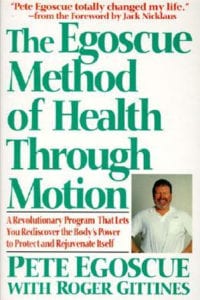
The Egoscue Method of Health Through Motion: A Revolutionary Program That Lets You Rediscover the Body’s Power to Protect and Rejuvenate Itself
I had hired a coach previous to that. His name was John Assaraf, who you might be familiar with and the movie, The Secret. Through John, I learned how to use the internet. I learned how to do websites, SEO, drip campaigns and video marketing. I learned how to get my message out to the world. Now, I can tell everybody about how great I am, but the only problem was what am I going to say that doesn’t make me sound bad, desperate or like I need new patients. Since I didn’t know what to say, I bet a lot of your audience is this way. When you don’t know what to say, so you don’t say anything for fear, which is what I had. As a professional, you don’t want to look bad to the public by what you say.
I didn’t say anything until I heard John interviewed Simon Sinek. Once I heard about this concept of why, how and what, it made so much sense to me. I was like, “That is the missing piece. I’ve got a great what but I don’t know my why. Until I know my why, it’s going to blend in with everybody else.” I became obsessed with discovering my why. That’s when I called Simon. I said, “Simon, I need you to help me discover my why.” He said, “That’s not necessarily what I do, but let’s take a stab at it.” He and I spent about eight months together, going back through my life, looking for clues as to why I do what I do. As we kept working and working, I finally figured out that my why is to find a better way and then share it. My life made so much sense to me. That’s why I developed this chair. That’s why I’ve made the decisions I have. That’s why I haven’t made other decisions. It was all based on finding a better way and then sharing it.
Since that was the case, I went and took what Simon was trying to do and made it better. First, I went from 6, 8 or 10 months to helping people discover their why in about an hour. I can sit down with you, John, and take you through this series of questions. We could develop your why and discover your why in about an hour. I did this so many times all over the world, on stages, on Skype, in different languages that I started to keep track of all the whys that I discovered. I figured out that there are only nine different whys. That was the most important thing I discovered because once I saw that, then I could help someone discover their why in about fifteen minutes. I got more data, developed the algorithm and wrote the software to where you can now go online and discover your why in about five minutes.
Let’s take a pause on all that incredible journey from figuring out yourself, interviewing enough people, and then figuring out a way to automate it so that people can now do that. Let’s zoom out again when companies or coaches don’t know their own personal why, they have a very hard time expressing it in their marketing materials, LinkedIn profiles, and the messages when they’re talking to potential clients. Once you figured out someone’s why, the next steps are now the what fits into the why and the how much like Simon’s talk. Can you give us a story of what you did with your dental practice once you found out your why? What did you say in your marketing materials that made potential patients care that you want to know or find a better way of doing things? You had to figure out what it meant to them.
This is something I know that’s important for you, John. That is authenticity. That’s why telling a story is so important because it’s authentic. When you develop your message, it has to be real. It can’t be some marketing firm that goes into a closet and comes back out and says, “Here’s what you’re going to say, John. Here’s what I want you to talk about yourself.” That doesn’t feel good. It doesn’t feel right. It’s not authentic. It’s not truly you, so you don’t want to say it. When it comes from you, that’s the big difference between knowing your why and not knowing your why. You can not only understand yourself, but you’ll have the words to articulate your message to say it. Your branding, messaging, marketing and culture all become based on your why.
The simplest example is a radio spot that you got in millions and millions of dollars that people are going to love that will bring it all the life. In that radio spot, you’ll notice that I don’t talk at all about crowns, bridges, fillings, gum care, X-rays, pricing, none of that. It’s all based on what we believe that life is better when you have great teeth. You can’t have a good life when you have bad teeth. There are so many people who are being held back from who they were meant to be by their teeth. It doesn’t have to be that way. We’ve developed a process where they can sleep through their visits so they can get the smile they’ve always wanted smile so they can be who they were meant to be. You’ll hear that in the radio spot and it’s very powerful. Often, we get people who are coming into our office saying, “I was driving down the road. I heard that radio spot and that is me. I know I’m in the right place.”
That’s your headline on your website, “Great teeth, better life.” That is connecting the dots. You figured out that your why is all about a better way. Your better way in this case was people hate going to the dentist. Let’s not pretend that’s not a thing. They’re not only worried about paying, but they’re also worried about being scolded, “You’re not flossing enough.” You addressed all of that on your website, which then people go, “He has found a better way for me to not dread going to the dentist.” Would that be a fair connecting of the dots?
It’s very much, no scolding, no lectures, just a healthy mouth in about an afternoon.
[bctt tweet=”When you are passionate about what you do, you have unlimited energy.” username=”John_Livesay”]
People are like, “I’ll do it. Why do I need to be?” We can get into all the details. I happened to be passionate about this study as a hobby that oral health connects to your heart health. Most people aren’t even aware of that. Your premise is based on science again that you can’t be having your best life if your mouth isn’t healthy because we all know heart issues. It’s this concept of, “Why then do I avoid it?” It’s like, “Why do I avoid exercise?” You’re going, “There’s a better way to exercise. There’s a better way to sit in a chair. Now, there’s a better way to take care of your teeth so that you can have a better life.”
What I work with people on is, “We have to grab their attention.” What you’ve done is you’ve taken your why and used it to stand out from the clutter. Instead of just saying to somebody at a cocktail party, “I’m a dentist,” you’re saying, “I help people have a better life.” You might even leave it at that. They’re like, “What do you mean?” “I help people get over their fear of the dentist and the dread of it.” That is a much easier thing to remember and certainly something to look at. If you’re looking for dentists and you hate going to the dentist, he’s promising a better life. It doesn’t matter. They don’t need to know. That’s connected to your why. That’s what sticks. That’s the story that brings it together.
Here’s another way to say it that I use. Instead of just saying, “I’m a dentist,” I’ll say, “I believe that when you have your health, you have a thousand dreams. When you don’t, you have one.” I help people have a better life and reach their dreams by helping them have great teeth. We’re having totally different conversations then, “How much is a crown? How much is a cleaning?”
It’s that whole premise of, what do you notice about somebody first? Is it their smile? Is it their eyes? Is it their whatever? Your confidence level and everything gets connected to all of that. A lot of people don’t connect those dots. You’ve talked to anybody who doesn’t feel confident that they have a good smile and how that shuts them down and not speaking out. They don’t want to draw attention. They speak with their mouth closed. They’re not putting themselves out there. They’re not living their best life because of this shame and guilt around my teeth are crooked, stained or whatever the issue is that takes them away from not feeling attractive. If you can fix that, then the emotional stuff starts to come and soar.
The great part of this interview is, how do I apply this to my career? You have these nine whys. Do you find that people who have similar whys get along better? Your why is to find a better way of doing things. Mine from taking your test is to clarify. Do you find that people who like to clarify get along with people who like to find a better way of doing things? Is there any connection between the compatibility between the whys?
What we haven’t talked about yet is there’s your why, how and what. What I found is that 1 of the 9 whys is your why, 1 of the 9 whys is your how, and 1 of the 9 whys is your what. My why is to find a better way. How I do that is by making things clear and understandable to clarify like you. Ultimately, what I bring is a simple solution, which is simplify. My why is a better way, my how is clarify and my what is simplify. Your why is clarify, which is right in line with how I think. In my case, if it’s not better, clear and simple, I don’t want it. In your case, it’s got to be clear.
We’re speaking the same language. We’re just emphasizing one over the other, but it still feels like we’re in the same lane. One of the outcome is when people hire you to speak or take your workshops to all these companies. If you’re trying to get your boss to take action, promote you or approve something, and you know their why, how and what, and you phrase things in that lens, you’re not asking them to shift gears at all. I think that is the secret sauce. The other thing that you had said that I want to bring out is there are a lot of other companies that are known for testing personality types and people trying to figure out all that, but you’re not in that competitive set at all or before that. Can you clarify that?
There are a lot of great assessments out there. There’s Myers-Briggs, Kolbe, StrengthsFinder, DISC. You go on and on. They are awesome assessments. They are all about how you take action, but not why you take action. The why is the essential first step. When you are trying to figure yourself out, your culture, your marketing or your messaging, the first step that you take is discovering your why, and then everything else will make a lot more sense to you. You’re starting with your why and then your how. Your how is all these other assessments. They’re great, so you use the why first and then you see the other assessments from the perspective of your why. They’ll make a lot more sense to you. They’ll be much more valuable for you when you look at them from the perspective of your why.

Discover Your Why: Telling a story is so important because it’s authentic. When you develop your message, it has to be real.
We’re not competing with them. We’re collaborating with them. Whichever one you like the best as far as understanding your how, that’s great. That will work for you. What’s interesting John is when I talk with a lot of coaches, consultants or speakers, you hear them often refer to the why, “We love the why. We love Simon Sinek’s work. In fact, we help our clients discover their why.” I say, “That’s great. How do you do that?” They’ll say, “We read a couple of books. We talk about different things going on in their lives. We look for clues.” I say, “The client you’re working with right there, what is their why?” They’ll say, “We’re still refining that. We’re working on that.” I say, “What is your why?” They’ll say, “I’m still working on mine too.” It has become this airy-fairy, mysterious thing helping someone discover their why. If it’s that critical, how can you not know it? How can you not be clear on it? That’s where the why discovery came in. That was what happened to me. I heard so much about it from so many different experts that I have to know my why, but nobody ever helped me discover it.
In a way that was scientifically backed up and you’ve done that with the algorithm. The analogy for me is anyone building a house knows you must have a strong foundation. Anyone building a practice, whether it’s a dental practice, coaching practice, sales team, etc., you have to have the why as the foundation. If it’s airy-fairy, you’re not solid and it changes with the wind or whatever the latest trend is, then that’s not how you build a brand. I wanted to give the readers another example of using these nine whys in a format you gave yours so eloquently.
For me from taking the test, it instantly resonated. I am all about my why is to seek clarity. How I do it is teaching people how to tell stories which then creates authenticity and builds relationships built on trust. In sales, that’s what you need. The what of what all this comes down to for me is we found a better way to sell. It’s not pushing information out. It’s pulling people in with stories that target their heartstrings. That’s how I’ve processed this. It gives me a completely different framework to explain what I do.
Let me take a stab at it as well. For you, things have to be in clarity. The only way to get clear on what we’re talking about is to enhance it with a story. Your why is to make things clear and understandable. How do you do that? It was by making sense of these challenges that people are facing. It’s taking in all this information and boiling it down to the thing that’s keeping them stuck. What you bring is a better way to help them move forward, utilizing storytelling. Make things clear by figuring them out and understanding them so that you can bring a better way to help them move forward.
If someone else is maybe an engineer, they love making sense out of complex things. That’s their left brain at work. That’s their why, then they’ll have a different way of expressing that in the world. It is so valuable to all kinds of people, whether they’re entrepreneurs or big companies. Do you have a story of a big company that’s brought you in to speak and having the why, how and what formulated and not guessing at it? You have some incredible testimonials. I’m trying to get you to tell the story of one of them. I’ll let you pick.
I’ll tell you two. One quick that will bring it home very simply because everybody knows about Apple. I have not worked with Steve Jobs, but I know what his why, how and what are. His why is to challenge the status quo. How he does that is by finding better ways and what he brings is a simple solution. You see that in his life everywhere, the way he dropped out of school. He didn’t want to do it the way they said he should do it. He found a better way and snuck into the ones that he wanted to go to. He simplified the process. He found a better way and simplified it. You take his why, how and what and you apply that to Apple.
In everything Apple does, they challenge the status quo and think differently. They go into that market, whether that’s phones, computers, watches or the music industry and then they find a better way. What they bring is a simple solution where a 3-year-old and a 93-year-old can use it and do it. Their why is the exact same why, how and what as Steve Jobs. What is Apple’s tagline? It’s, “Think different.” Where do you think that came from? From Steve Jobs. His why is to think differently. All of their commercials and stuff are about thinking differently and challenging the status quo. Your why, how and what are directly related to the why, how and what of your business if you are the visionary.
As you said, people can relate to that. I want to let them have a second to digest that. When I was selling advertising and I had them as a client, they took that because my whole passion is getting people to see themselves in the story. We were talking about when you communicate and you know someone’s why, it’s much clearer. They go, “Think different, not differently.” Even that alone makes you go, “What? Are you doing something a different way?” They would show people in the ads who thought different like Picasso and you would say, “Oh.” It begs the question, “Maybe I don’t relate to Steve Jobs, but I relate to Picasso. I’d like to be the Picasso of my business, even if I’m not in the art business.”
[bctt tweet=”Pain is a motivator.” username=”John_Livesay”]
By having those kinds of people in the campaign, that’s a great example of the WHY Institute at work because it kept going. It’s not just Picasso, it’s Amelia Earhart. It’s all these people, Maria Callas. It makes you want to know their story. What I love so much about what you’re doing, what we’re doing and why there’s such synergy is, why are those three people chosen to represent think different and bring that why to life? There’s a story that you have to understand of them thinking different like Cubism in Picasso’s case or not letting the fact that you’re a woman stop you from flying and all that. That’s where people are pulled in. The same thing is true whether it’s a dental practice or a Fortune 500 company. Now, your next story.
I was called by a gentleman. He was the CEO of one of the larger investment firms, a $565 billion investment firm. I had helped him with one of his daughters, who was struggling with some things. He said, “I own about 1,500 companies. I’d like you to start working with some of them.” I said, “Okay.” The first one was one of the larger venture capital firms on the East Coast. I went out and worked with the executive team. I took the CEO through discovering his why, which was trust, creating relationships based upon trust, being that trusted source.
What they wanted us to do was redevelop their website, messaging, marketing and more specifically, their presentation deck because they needed to raise a lot of money for their next round. We did that. We went through all of their belief statements and created their tagline. Their tagline became, “Trusted relationships, better outcomes.” We redid their deck. They had all the right things. It was all in the right order to tell the story. They raised $300 million in that next week. He gave me a $10,000 tip. I’ve never had a $10,000 tip. He said, “How much do we pay you?” I told him and he went, “That’s not enough.”
Talk about over-delivery, that’s fantastic. That’s a better way to get paid is to have so much value that people decide they need to pay you more.
That was quite a fun experience. They won. We won. Everybody won. It was a great experience for us. They love the results. They’re still using it. There are lots of stories like that. I’ve done it with school systems, cities, country clubs, banks and so many different kinds of businesses. We’ve gone through this same process. Locally here, we’ve got a country club that had gone bankrupt. We went in, worked with the new owners, developed their why, how and what and used that for their tagline, website and branding. Now, they have a waiting list. It’s on fire over there. There are lots of stories that way. When you get that right, when you start with the right foundation, all the rest becomes a lot easier.
You’re cutting through the clutter. People go, “This is for me. This is not for me.” You’re not trying to be all things to all people. If people want to interact with you, there are so many options. They can listen to your show called Beyond Your Why. They can go to the WHY Institute website and take their WHY quiz and get the results very quickly. They can hire you as a speaker. Companies can put their team through your workshops and training programs. I might be missing something, but please expand if I have.
If you go to the website, there is the WHY Discovery there. You can take that as your first step, discovering your why. The next step is we have launched the WHY.os Discovery, what we call your why operating system. That’s the system that drives you, which is your why, how and what. There will be a discovery there. You can go online and discover your why, how and what. There are ways to either use that to get on the right career path or take your business to the next level, depending on where you’re at in your entrepreneurial stage. Any of those would be great.
It’s not just for yourself but for other people. There’s always an unspoken question when I’m working with salespeople that they need to address, which is, “Will this work for me?” If you’ve told a great story and people see themselves in the story, the answer is yes. They want to go on the journey. What I love and admire so much about your work, Gary, is you’ve done it for yourself. You weren’t somebody who’s like, “I’m going to figure this out and try to see if I can help coaches and their clients figure out their why.” You were like, “No, I’m an entrepreneur. I helped my dental practice soar.”

Discover Your Why: Knowing your why is the essential first step.
You’ve got a proof of concept that works for you. A lot of people might be saying, “I’m still not a dentist. I’m not as smart as Gary.” You go, “No, it works.” As you’ve listed, banks, country clubs, companies, then we start to say, “It would work for me because it’s been proven and it’s scientifically backed.” It’s not something that changes with the wind or the time of day you were born. It’s complementary to existing programs that people might have to see what personalities will work in certain cultures.
At the end of the day, all of this is helping us emotionally connect and communicate. That helps you break through the clutter, but more importantly, it makes you feel seen, heard and appreciated. That’s what the best people, leaders and companies are all doing. They pull people in. You’re doing it in such a way that’s accessible for people without them having to stay stuck in this land of confusion. I can’t thank you enough for being on the show and doing this incredible work that the world needs more than ever.
John, thank you for having me here. I’m a fan of what you’re doing. I appreciate you helping me bring this to the world. Our vision is to be that essential first step in self-awareness. Our goal is to reach one billion people in the next five years to help them discover and live their why and make decisions based upon their why. That’s where we’re headed. I would love for everybody to help us be part of this. It’s going to be a fun journey for everybody involved.
Because if you know that, then you don’t have any regrets on your deathbed. That’s what everyone’s fear. Thanks again.
Take care, John.
Important Links
- WHY Institute
- The Egoscue Method of Health Through Motion
- John Assaraf
- Beyond Your Why
- WHY.os Discovery
- Better Selling Through Storytelling Method Online Course
Wanna Host Your Own Podcast?
Click here to see how my friends at Podetize can help
Purchase John’s new book
John Livesay, The Pitch Whisperer
Share The Show
Did you enjoy the show? I’d love it if you subscribed today and left us a 5-star review!
- Click this link
- Click on the ‘Subscribe’ button below the artwork
- Go to the ‘Ratings and Reviews’ section
- Click on ‘Write a Review’
Love the show? Subscribe, rate, review, and share!
Join The Successful Pitch community today:
- JohnLivesay.com
- John Livesay Facebook
- John Livesay Twitter
- John Livesay LinkedIn
- John Livesay YouTube
The 10 Cent Decision With Laurie Guest
Posted by John Livesay in podcast | 0 comments
The core of every successful business starts from the small actions you do. By putting energy into the little things, you are actually creating a big impact on customer service. Entrepreneur, keynote speaker, and author of the great book called The 10¢ Decision, Laurie Guest, is the go-to resource for customer service excellence. In this episode, Laurie joins host John Livesay to talk about the power of not saying “no” and replacing that with the word “actually,” as well as the impact of doing small things and matching your energy zone with people to create loyal customers.
—
Listen to the podcast here
The 10 Cent Decision With Laurie Guest
Our guest is Laurie Guest, who is an entrepreneur, keynote speaker and author. She is a go-to resource for customer service excellence. For more than two decades, she has shared her practical point of view on customer service and staff development with audiences and companies across the country. Blending real-life examples and proven action steps for improvement. Her book, which I’ve read and loved, is The 10¢ Decision: How Small Change Pays Off Big. Laurie, welcome to the show.
Thanks for having me.
It’s so clever that you’re in the customer service world and your last name is Guest.
We should marry what we seek to be. If I wanted to be a guest speaker, I had to find a man named Tom Guest. I’ve often told people I should’ve been looking for Tom Skinny. That would have made all my problems go away.
That’s an illusion that we all have. People often ask me if I’ve changed my last name or was I born Livesay and became a speaker. I said, “That’s my name.”
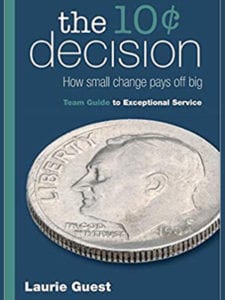
The 10¢ Decision: How Small Change Pays Off Big
You’re living up to it.
Let’s talk about your own story of origin before you were Laurie Guest and married to Tom. You can go back as far as childhood, high school or wherever you want to start. Tell us a little bit about your own experiences. Did you always know you wanted to be an entrepreneur? How did that come about?
I don’t think I’ve ever been asked that before and that’s interesting. I have been an entrepreneur since I was five. I was born wanting to invent businesses. I started out selling sweet corn on the corner in Somonauk, Illinois at a 1,300-person community, about 60 miles West of Chicago. My mom and dad were great with people. They taught me early on how you’re supposed to treat a customer. I sold more sweet corn than any other stand in town. That’s how I became an entrepreneur. Each idea I came up with was appropriate to my age level.
I kept doing stuff and building, selling and learning something and moving on one way or the other. Eventually, my trail took me as a young adult into healthcare. The core of my professional life prior to owning my own business was actually ophthalmology, the eye business. I was a trained technician and I would measure eyes for intraocular lens implants and schedule people for surgery. Our doctor was fabulous at customer service. Not only were they great surgeons but they knew how to train us to treat our patients.
That’s where all my wisdom came from early on. Other industries started calling and saying, “Could you come and share the secrets of your customer service and how you have such a thriving business?” My doctor looked around and he went, “Laurie, you like to talk. You go.” I jumped on that. I was born that way and I did that for quite a few years for him. One day, it dawned on me that there was actually a business I could have all on my own to be a customer service speaker and trainer. With his blessing, I left the firm and started out on my own. That was years ago. Here I am still owning my own business and I love it. Sales and entrepreneurship, we are the same kind of breed.
I want to double click on something that you intrigued us with. What was this doctor doing that maybe people can apply to their own business or life that made it so special and separated them from other people? Was it remembering birthdays?
We could talk all night long on what I learned there. Here are the big ones that came to mind. He had a mantra. He believed that a doctor should do only what a doctor must do. Examine, diagnose and treat and everybody else should do the rest of the stuff. What that means is you do what you do best. Whether there’s a guy reading this that owns a shoe store or a woman who owns a boutique, whatever it is, you should be doing only what you have to do. That means you have to hire great people, create a culture that they understand how you want your customers treated, empower them and the hard part is you’ve got to enforce these rules that you’ve made and the boundary that you’ve set. That’s where the problem comes. It’s easy to set the rules but it’s sure a lot harder to discipline and enforce them. It’s like parenting.
[bctt tweet=”Replace ‘No’ with ‘Actually.’ ” username=”John_Livesay”]
The more you reinforced those boundaries, the more people realize they’re real and you can’t negotiate your way around them. This concept of culture, even in a small company practice or business is so important that a lot of people don’t even take the time to define what the culture is. It influences everything. Not only who you hire and if it’s a fit culturally, regardless of their background and skill fit, but how you treat clients. I want to learn more about your thoughts on how defining culture impacts customer service?
It’s important that when people define a culture, they don’t confuse it with that special mission statement with all the perfect words and punctuation that has been matted, framed and hangs by the front door of your business. Most of your employees cannot recite that mission statement unless you force them to do it. I want to make sure that we define with people what we mean by culture. I’ll define it and you tell me if you agree. Culture is what we all agree to be true here. In this organization, we all agree that we’re going to and it’s X, Y, Z. It can be different for different places. In general, it’s going to be things like, “Treat the customer right and deliver the best product and service.” It becomes this bullet list that everybody has.
What differentiates our culture from your culture? It’s the delivery from the people who put it out there. Let’s say you and I both own a pizza place. You want a culture that you want good food served hot on time at a fair price. It sounds like my same list. Why would your pizza place be busting at the seams and people are waiting in line to get your pizza, assuming that mine is an equally good product, we’re not comparing pizzas here. We’re comparing service. Why do I have open tables and people are waiting to get in to see you. The only difference can be the delivery of the culture. The delivery of what we believe to be our values.
What’s so fascinating about that is, Domino’s has this mobile app that personalizes your whole experience. It’s like, “Billy placed your pizza in the oven and now Susie is wrapping it up. George is on his way and you can track it.”
It’s absolutely brilliant.
People are like, “I’m involved in the process and I never knew I needed to know the name of the person packing my pizza, but now I do.” It’s that level of extra care that comes along with it.

Creating Loyal Customers: You should be doing only what you have to do. That means you have to hire great people, create a culture that they understand how you want your customers treated, and empower them.
Before you go on, have you heard the new thing that Domino’s is doing about requesting?
No.
My college-aged daughter has left for college. She told me one summer she wanted pizza and she was insisting we order from Domino’s. We don’t normally use that vendor. I said, “Why?” She goes, “Go to the special request square, when you order it online, tell them that you want them to draw something inside of your pizza box and people do it.” I said, “You’re kidding me.” She types in something about, “Draw my dog named Lucky.” That’s all it says or something that. We don’t even have a dog named Lucky or something like that.
What happened was, when the doorbell rang with the pizza, she gets off the couch, came running like a 50-yard dash to the front door. She whipped open the door, she grabbed the pizza from the guy, I’m left to pay him. She runs into the kitchen, she opens the lid and sure enough, there’s a stick figure of a dog and he’s got a little collar on and it says Lucky. Somebody somewhere in my town drew what she asked for. That’s what I call a 10¢ decision. It cost them nothing to do that and she’s running to the door to get her pizza.
It’s customized and the fact that there’s a human being, especially with artificial intelligence taking over a lot of customer service. Press one, if you want this, and two, if you want that. This experience is the opposite of that. I have a King Charles dog and I get his food from this place called The Farmer’s Dog. They specialize in healthy food for your dog. I was emailing back and forth scheduling stuff with their customer service person. He ended the email with, “Give a belly rub to Pepe for me.” They knew the name of the dog from the order and he took the time to throw that in. That personalization of everyone who works there loves the dogs.
It’s where it’s at. Have you heard about Chewy that’s an online store?
[bctt tweet=”Match your energy zone to the moment.” username=”John_Livesay”]
Yes.
Here’s that culture. I love this. I have not experienced this but I’ve read about this. There was somebody that I know of that wanted to return two bags of dog food they had bought. They wrote and they said, “Our dog has passed away. We have these two bags of unopened dog food.” Chewy writes back to them with the condolences and said, “Please donate that food to your local shelter and you have our heartfelt sympathies.” It was something like that. It was genuine. A day later, fresh flowers arrived on the doorstep from Chewy at the house.
That unexpected extra that the person will never forget. That story gets passed on and on.
They’re going to have another pet. Most of us who own pets are not one and done. You’re always going to have another one and that’s where they’re going to be ordering their food, plus the story gets told.
That’s what I love and it’s unexpected. My favorite definition of luxury was doing something before somebody knows they need it. When I was working with Banana Republic, they wanted to up their game and they tested it in their flagship stores where you could charge your phone while you’re shopping. “It’s an unexpected luxury that I didn’t know I needed, but how great.” They were doing it to be unexpected. It turns out the sales went up because people kept waiting for the phone to fully charged and kept shopping. You hinted at what The 10¢ Decision is and I want to go back to that. It’s such a great title and easy to remember. The small changes that people can do, whether it’s writing something on a pizza box, sending flowers as condolence over, above and beyond and anticipating something like, “You might want to charge your phone when you’re shopping.” Things like that give us this little extra oomph. You have your own 10¢ story that you’ve talked about.
I do have my own 10¢ story. The way it came about is, as a speaker, I’m a frequent traveler and one time I checked into an expensive hotel. It must’ve been $350 or $400 a night. When I got to my room, as with all hotels, there were two bottles of room temperature water waiting for me with a tag on it that said $7. I thought, “I gave you $350 or whatever it was and now you want $7 more.” You and I both know why they’re doing that. It’s a brand standard. If I stay in that chain of hotel, it’s always going to be that water in that position. We also know that they could bring in a semi load of that water for about 10¢ a bottle if they wanted to, but they choose not to.

Creating Loyal Customers: It’s easy to set the rules but it’s sure a lot harder to discipline and enforce them.
They don’t make a 10¢ decision that makes a big impact. The next hotel that I went to, I get to my room, and this is a boutique hotel, it’s not a chain so they have the ability to make any decision they want. I get to my room and there’s a black mini-fridge. In the fridge, there are two ice-cold bottles of Ice Mountain, my third favorite water and sign on top of it that say, “Dear valued guest.” First of all, I love it when they take the time to put my last name on the sign. It said, “Dear valued guest, complimentary bottled water is found in the refrigerator. Please enjoy.” They spent almost nothing. It’s a 10¢ decision for my perceived value to be incredibly high. In the speech, I go on to explain the third stop which I won’t take the time to do in this interview, but at the third stop, there was a dramatic bottle of water waiting for me. It was a Bling bottle of water.
It was also free on a pedestal and an ice bucket. It had a brass plaque next to it that said, “Enjoy. Additional bottles may be purchased in the gift shop for $25.” Now, I have value. My point in this entire thing is we can either have a brand standard that says, “Not only are we going to take your $350 but we’re going to charge you $7 for a 10¢ bottle of water. We’re going to be the place that gives it to you for free or we’re going to be the place that goes, “We’ve got something spectacular for you and we’re going to make sure it has a value.”
The three levels is fantastic. You’ve got to pay, we’re going to give it to you for free and we’re going to give it a wow factor with the surprise. I’ve even had an experience where I’ve checked into a hotel and they offer me free water at the desk, “You must be thirsty after your trip.” I don’t even have to wait in my room to see if it’s free or I have to pay. I love that.
Here’s another interesting question. I rented a car from a well-known chain but I won’t name them. When I was waiting for my car, they handed me an ice-cold bottle of water. It was nice of them to do. When I got in the car for some reason, the only way you could charge your phone was with one of that cigarette lighter chargers of which there wasn’t one in the car. I didn’t have one with me and I usually use the USB port, but this car didn’t have it. It must have been older. I go back to the counter to get one of those cigarette lighter things for $16 and I’m thinking, “The 10¢ decision here is to have one of these in every car with their logo on it and with encouragement that you take it with you.” Every time I pulled that thing out of a cigarette lighter and it would have that brand caught on it and that would cost them probably about the same as the bottle of water if they wanted to make that choice. Isn’t that fascinating?
It is. For anyone stealing it or keeping it by mistake, we have to mark it up and all that stuff. Even when you go to Europe and they go, “If you want to have an adapter for to charge, you’ve got to pay us this.” The thing you talk about that I love in your 10¢ Decision book is matching the E-Zone of your buyer. The E-Zone is the energy that people bring to work every day. I could talk about energy all day long because when I initially got picked and it was between me and two other speakers, the speaking agent emailed me and said, “Congratulations. They picked you to be their next speaker at their annual meeting.”
We always go on three packs. You won the three-pack war.
[bctt tweet=”We should marry what we seek to be.” username=”John_Livesay”]
I did. We’re going to talk about that too. They said, “They liked your energy.”
You do have good energy.
Thanks but people realize, “They’re going to hire me or I’m going to sell this product or whatever it is I’m selling if I have the best price, information or whatever it is.” People don’t realize the value of your energy that people want to be around. Especially if you’re a speaker, you and I are. If you can make people feel good during the interview, they go, “I feel inspired after talking to him or to her. Maybe the audience will too.” Let’s talk about the E-Zone and how should I keep it up if you’re doing something that is your own customer service that might be a little rote or you’re having a bad day. You have this concept of the Big Seven of Service and my favorite one of there is where you talk about real greetings and not robotic acknowledgments.
Let’s move that all together. People are attracted to energy like a moth to the light. Let’s say you go to a cocktail party and you don’t know anybody. You’re scanning the room for who you might want to chat with. I don’t mean somebody that you’re romantically interested in. I mean a person to talk to. You’re going to scan the room and you’re going to spot the person that’s showing some energy. They’re making eye contact with you, they look they’d be friendly and could chat about anything. You and I would walk in a room as complete strangers and find each other because we each could talk all day long about absolutely anything.
If that’s what you seek, that’s what you’re going to find. We put that energy out there in our behaviors. When I talk about the E-Zone, I see it as a cardiac monitor and that there’s a heartbeat that goes inside this certain range. There are some people that come to work outside the range. On the top side, those are our Susie Sunshines. They’re coming to work going, “Good Morning,” and their pitch is high. I don’t believe them, I don’t believe you. You’re outside the zone. Underneath are the Boring Bobs. Those are the ones dragging themselves to work without any energy at all and complaining that it isn’t Friday yet. In between those two people is the zone, the place we want to be. That starts the moment you walk in the door. It’s a head game more than anything else.
When I was sixteen, I got a job at a grocery store and had to get up at 5:00 in the morning on the weekends and go make the donuts. You might remember a commercial years ago where the guy would get up and he’s like, “I’ve got to go and make the donuts.” That’s how my mom would wake me up in the morning, “It’s time for you to go make the donuts.” I’d show up to work. By the time the customers appeared at the grocery store, I had better be ready to sprinkle and deliver and keep on going. That’s the early age when I learned the energy thing.

Creating Loyal Customers: You have to believe in your own fees, even if you’re not the one who set them.
Inside the zone, we’ve got to match the moment and that’s where I bring the heart monitor part into it because people are disconnected. I’ll use healthcare as an example. If you’re sitting in front of me and I now need to give you a bad diagnosis or I need to perform a test on you that’s not going to be comfortable. It is a disconnect if I’m bringing my Susie Sunshine high-end like, “John, I’ve got you. This is only going to hurt a little,” and my pitch is high and I’m way off the energy zone. You’re uncomfortable with that. I need to bring the energy down and still stay in the zone but bring you that engagement that matches the severity of the situation.
Sometimes you do have to have tough decisions with people and not treat them children, which is what you’re talking about. Don’t be robotic. This needs to be authentic. That’s where empathy comes in big time. I’ve seen some people do this well in customer service when someone’s angry, they want to quit or return something. If the culture allows for that person to say, “I could see how that could make you mad. I would be mad if I was in your shoes.” That can diffuse the situation.
It can make a big difference. The whole idea of empowering people to be able to find those resolutions is an extremely big part of the culture we had. Our doctor felt that if the decision you made was the best thing for the patient and the practice, I back you on that decision rather than handcuffing us and not letting us do anything without permission. That becomes a culture choice.
We talked before about some of the clichés that people sometimes do only because they don’t know how else to ask the question. In a phone call situation versus an in-person one, they’re told, “Get the person’s name and try to use the three times within ten minutes.” They’re going, “To whom do I have the pleasure of speaking with now?” Nobody talks like that in person so why because when we’re on the phone, do we talk that to each other?
You get the idea that they’re reading a script to you. A script that doesn’t even match this conversation.
Talk about not matching the moment. I role-played with somebody and I said, “Let’s pretend I work here.” I said, “My name is John, I’m from XYZ company.” They say, “I want to do this or that.” I said, “Great, let me reintroduce myself to you because many times, people don’t hear it at the beginning. My name is John and you are?” That’s what I would to do in person. Do you have other ways?
[bctt tweet=”We put energy out there in our behaviors. What you seek is what you’re going to find. ” username=”John_Livesay”]
Sometimes it’s a simple question of, “May I ask your name?” How hard is that? That sounds so much better. There’s a well-known food chain that has taught its people to do this glorious greeting. They say, “It’s a great pleasure to serve you today.” When the greeting doesn’t match what we believe to be the reality, we have a disconnect. I do not believe you are that enthusiastic about giving me my chicken sandwich. We’ve got to figure out how do we give that energy and this service that you and I are both talking about in an authentic way? What’s weird about this is you would think it would be common sense, but it’s not. We have to train it. You have to teach what we want the words to be, but allow them to bring their own personality to the table.
The other thing in customer service/support sales is to build rapport and ask people questions. People don’t feel comfortable. I’ll go, “What questions are you asking them to say?” They’ll go, “We thought we’d start with, ‘How’s your day going?’” It seems it’s so off purpose for why the person called. They’re not calling to make a friend. Even if you are meeting somebody for the first time in a networking event, you probably think of something else to say besides that.
That would be a great title in the future book you’re going to write on sales. It’s like, “They’re not calling to make a friend.” Isn’t that the truth? They’re calling for results. They want a solution and an answer. I have this in the book. I am not a fan of the phrase, “How are you?” Unless you actually care and want to hear the answer. My replacement for that is, “It’s nice to see you.” I don’t say, “How are you?” I say, “It’s nice to see you.” It starts a conversation and you’ll be amazed how often do you first start using it. People respond, “I’m pretty good, thanks and you?” It’s so robotic. They’re so used to what the answer is supposed to be.
This concept of trying to be authentic and instead of saying, in this case in real estate, “How’s your day going?” I came up with another question that’s more pertinent, “How’s the house hunting experience going for you? Is it a nightmare?”
It’s so much better.
That’s a relevant question that I’m more than happy to answer and I feel that you might actually care about my experience from that question.

Creating Loyal Customers: Believe in your product and service enough that you feel the people will be lucky to have you.
As we used to say, “Get focused on the body part you care about,” so to speak, which is the same with the real estate. I worked in ophthalmology and if you’re coming to see us and I asked you, how are you feeling or how are you doing? What you’re going to do, especially as an older adult, is show me the scar from your most recent surgery. You’re going to tell me that you didn’t feel good last night. I at least got to get to the right body part. We were trained to say, “Tell me how your eyes are doing.” We’ve at least narrowed it down to what I can do something. That’s the same thing with real estate, “How’s your house-hunting going?” We’re not getting all this extra stuff. That’s a great one.
You talk about anticipating a customer’s needs and that small gestures can create loyal customers. Can you tell us what that means?
I do think that there are small things you can do to create loyal customers. The first one that comes to my mind is, a few years back, we did a remodeling at our home and we called four different contractors to come to the home to look at it and give us a bid. Two of them never showed up. One of them made the appointment and didn’t call back at all. The fourth one showed up when he said he would exactly on time every time he came. He explained things to us in a way that we would understand, not the internal lingo and if he used a lingo word, he would define it right behind it.
The biggest thing that I loved was when he explained that there are change orders, “After we go in with a quote, it’s locked in. This number will not change but if you decide you’re going to put in fancier windows, there will be a change quote and you’ll see the additional cost it’s going to be.” When the project was over, he came in at the penny of what he promised that it would. These are not dramatic things that he offered but I’ve been talking about him in the decades since we did this remodel because he was unique in his industry. You show up on time and do what you say you’re going to do.
Isn’t that amazing that that’s the new differentiator as opposed to the minimum acceptable behavior these days? That’s what it is. That’s how you can do this. You and I love words. You have a whole chapter devoted to choosing words wisely.
That’s my favorite chapter as a matter of fact.
[bctt tweet=”What differentiates a culture from another is the delivery from the people who put it out there.” username=”John_Livesay”]
You know that I love alliterations. The way you’ve structured your writing is Words Wisely. You talked about Careful Communication. It’s two Ws and two Cs. I want to get a hats off to that. That is important. Let’s do a couple of these great examples. You have version one which is going to cost you about $259 or the fee for that service is $259. That would sound fairly close to a lot of fees versus costs. What is that?
Fee versus cost and the other thing is your personal attitude towards the cause. One of my jobs was to help eye doctors who sell you glasses help them be successful. I would go in and therefore they would refer more people to us because we didn’t do eyeglasses in our firm. My point is when I would go and watch their teamwork, if the person checking you out from the eye care place thought that $259 was a lot of money to pay for a pair of glasses, they would say things like, “That’s going to cost you about $259.” The tone in my voice is, “You don’t want to pay this, do you?” We would have to train them to say, “The fee will be $259 and we take 50% now or I’ll need 50% now.” We would give them the words to say, you need to lean into this number because if you don’t believe they should pay it, they’re certainly not going to want to pay.
I use this all the time, “The investment to work with me is,” or “You’re getting a return on your investment when you hire me.”
We were at the dentist. We wanted to have some teeth whitening done for one of our children. It was going to be expensive under $500, but we would pay anything to help her smile. We want to do this. Multiple times, different people on the team kept going, “That’s going to be about $500. Why don’t you try the Crest white strips? Why don’t you try this?” They talked us out of it. We were begging. When I got in the car with my husband, I said, “We are begging for them to do this task. Why don’t we find another provider?” When we went to the other provider, they were all over it. They’re like, “Let us show you how we do this. It’s under $500.” It was the same fee. She called it under and had all this enthusiasm, that energy zone. We were like, “Sign us up.” The procedure has now come and gone and we’re thrilled with it. What bothers me about it is, don’t assume that I don’t want to pay the money. If I want that service or that product badly enough, I might’ve been willing to pay $1,000 for it. In fact, I was willing to.
It affects confidence and outlook. You think to yourself, “If I wanted that version of going and buying something from the drug store, I’m getting the results of that. If I want someone to take the time to match, what’s your skin tone? Your teeth should be this shade and not that shade. This is not a one size fits all. What you’re buying when you’re buying teeth whitening is how you’re going to feel. Does smiling more make you more confident? There’s research that says it elevates your mood. You know as well as I, that they tell people on the phone, “Smile,” because people can hear it your voice. If you don’t like your smile, you’re not going to smile all the time.
I want the salespeople who are reading, especially those who maybe are emerging salespeople that one of the most important things is you have got to believe in your own fees. Even if you’re not the one who said them, even if you have no control over the fees, you better believe in your product and service enough that you feel the people will be lucky to have you. It’s the same way in our business, John. We have to decide what our fee is for a certain job and if we act we’re not worth it or we’re not going to bring the value, then nobody’s going to pick you out of that three-pack. They’re going to go with somebody else. Sales to me are not about pushing you to buy something you don’t want. It’s educating you on why this is the right thing for you at the price I’ve set it at. There’s a big difference between those two.

Creating Loyal Customers: Sales is not about pushing people to buy something they don’t want. It’s educating them on why this is the right thing for them at the price you’ve set it at.
You’re singing my song because I talk about the old way of selling is to push out a lot of information and the new way is to tell a story that pulls people in.
The story is so critical because everybody wants to hear a story. Think about when you’ve been someplace, maybe it’s a church or something where someone’s talking a lot and you’re losing interest, and they click into a story and you’re back. That’s the same way with sales. It’s powerful that you teach that.
I want to leave the readers with one of my favorite parts of your book, which is, “Replace the word no with actually.” I’m going to be the person that the answer is negative. I’m going to say, “Can I expect to receive my lawn chairs tomorrow?”
The wrong way would be, “Nope. We don’t see those coming in until next Tuesday because of the holiday.” The right way to say it is, “Actually, that delivery is due on Tuesday.”
“Okay. Tuesday it is.” It’s so great. If you took nothing else from this book and believe me, that’s the tip of the iceberg of all the incredible value in The 10¢ Decision. I highly recommend people getting it. Laurie was generous enough to offer a little discount. Laurie, how can people get that discount and follow you on social media?
To get the discount, you can go to the book website, which is TenCentDecision.com. You can either do it as 10 or spell it out. Either way, it gets you there. When you go to buy the book, there’s a place where you can apply a coupon code. Anybody reading can use the word podcast, all one word. That tells us that you heard about it on this podcast. They can get 20% off for that. I’m on Facebook, Instagram and all the regular ones. I’m happy to connect with people there as well as LinkedIn. My regular website is LaurieGuest.com and we do reply to all messages on social media. Talk to us and we will talk back.
They’ll talk back in the right energy zone. That’s for sure. Thanks, Laurie, for being such a great guest, having such great energy and giving us such great tips. I’m never going to say the word no again. Even if somebody asked me out on a date, “Actually, I’m not available.”
Actually, you should be so lucky.
There we go. Thanks again.
You’re welcome.
Important Links
- The 10¢ Decision: How Small Change Pays Off Big
- The Farmer’s Dog
- Chewy
- Facebook – Laurie Guest
- Instagram – Laurie Guest
- LinkedIn – Laurie Guest
- LaurieGuest.com
- Better Selling Through Storytelling Method Online Course
Wanna Host Your Own Podcast?
Click here to see how my friends at Podetize can help
Purchase John’s new book
John Livesay, The Pitch Whisperer
Share The Show
Did you enjoy the show? I’d love it if you subscribed today and left us a 5-star review!
- Click this link
- Click on the ‘Subscribe’ button below the artwork
- Go to the ‘Ratings and Reviews’ section
- Click on ‘Write a Review’
Love the show? Subscribe, rate, review, and share!
Join The Successful Pitch community today:
- JohnLivesay.com
- John Livesay Facebook
- John Livesay Twitter
- John Livesay LinkedIn
- John Livesay YouTube