

Raise Your Resiliency With Kris Coleman
Posted by John Livesay in podcast | 0 comments
No matter what field or industry you’re in, it’s always a good thing to raise your resiliency in order to achieve your goals. In this episode, the founder, President, and CEO of Red Five Security, Kris Coleman, shares some of the skillsets he’s gained in his time with the CIA that will improve your understanding of what it means to be resilient. Learn how he defines critical thinking and how to translate it into your business through communication. Know the importance of building trust, not only with those people you work with but your clients as well. He also talks about the ripple effect that you can originate from you towards the people around you when you decide to be a resilient and self-sufficient individual. In addition, learn how you can train yourself to be resilient if you believe you’re not quite there yet.
—
Listen to the podcast here
Raise Your Resiliency With Kris Coleman
Our guest is Kris Coleman, who’s worked for both the FBI and the CIA and has a wonderful book out called Raise Your Resiliency. He talks about how important it is for us each to be responsible for our own resilience and about getting off the X. More importantly, how critical thinking includes empathy. Enjoy the episode.
—
Our guest is Kris Coleman, who founded Red Five Security back in 2004 to provide world-class state-of-the-art security and protective intelligence services. He continues to use his knowledge, experience and integrity to grow Red Five into a multifaceted company that focused on bespoke security solutions for unique clientele. He’s also the author of Raise Your Resiliency. Kris has worked in both the private and the public sectors throughout his many-year career and served with the Central Intelligence Agency, the FBI, and is a former principal with Good Harbor Consulting. His depth and range of experiences allow the Red Five team to specialize in high-quality, proactive and discreet security services. Kris, welcome to the show.
Thank you, John. It’s a pleasure to be here.
You’ve worked with both the FBI and the CIA. What a fascinating background that is because after 9/11, a lot of people think those two agencies aren’t known for communicating well-enough, let alone sharing staff or having one career lead to the other. That’s something I want to explore. Before we get into that, let’s let you decide where to tell your own story of origin, where you as a child, growing up and you saw an FBI TV show or a movie or a CIA thing and said, “That’s for me.” How did you get into this world?
I had many different majors in my college career. I was undecided, but I was a great fan of different works by Tom Clancy and other writers that were that whole international entry. I’m looking for a job. I’m trying to figure out what I am doing with my life in college. I went to a career fair. There was a CIA that day. They were like, “We’re looking for people that can be trained, that can think critically, and apply their skills to National Security.” I’m like, “What could go wrong? Let’s go.” I signed up, and they were happy to train me and give me some amazing experiences from the training perspective. That was how we got started. I was trained to do a whole lot of things, as you can imagine. I did a lot of time overseas with that particular organization.
Is there a myth that a lot of people have about what happens at the CIA and/or the FBI that you would like to bust?
It’s not everything that you see on TV and in the movies. I got paid to travel the world and see some amazing things, work with amazing cultures, very diverse experience, and then carry out some of the best work in my career in trying to protect this country in a proactive way. I can’t say enough about my coworkers and my colleagues at both those organizations, CIA and FBI. The dedication, sacrifice, and evidence is in the memorials and it’s in the successes that they’ve had. Both those that are publicized and those that are not. That’s my shout-out to those organizations.
I know you were a member of the FBI Enhanced SWAT team, as well as when you were at the CIA, you were a senior instructor and a team leader. My question is that experience has got to help you with what you’re doing at Red Five. Both in terms of figuring out who’s a good fit for your company and the training that’s required because you touched on that in your story of origin there about, “We’re looking for people who have critical thinking.” That leads to the obvious question for me, which is how do you define what critical thinking is? Everyone has their own version of it. I would love to know yours with your incredible background, being trained in it as well as now using it for your clients.
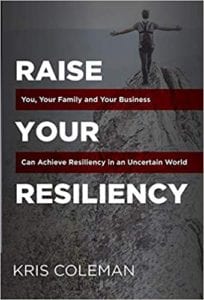
Raise Your Resiliency: You, Your Family and Your Business Can Achieve Resiliency in an Uncertain World
Both organizations spend hundreds of thousands of dollars to train new employees that are new special agents or new intelligence officers. A lot of that, as we said, is about critical thinking. It understands the psychology of who you’re talking to. It’s being able to empathize with who you’re talking to. When you are an active listener, whether you’re interviewing a potential criminal or you’re investigating a crime or talking to a victim, or perhaps trying to understand someone in an overseas country that may want to work for the US government and for the US government’s interest, you need to understand who they are, where they come from, what their motivations are. When you hear them talk, pick apart what they’re saying to you. Get every little bit and piece of the meaning and the nuance out of the conversation.
Whether you’re reading a piece or doing an interview or talking to someone, critically taking it apart and understanding its totality of what’s being said to you, what’s being communicated is important. We do that when we do our deliverables to our clients. We make sure that those things are very clearly articulated. We mean what we say, and we say what we mean and what we write. We can back it up. It’s not just, “When we went to this place, we saw these things, and we wrote these things down.” It’s like, “This is what this means, and this is why it matters.” That’s important. A lot of our products are like that, “This is what it means. This is why you need to listen to us.”
You’re connecting the dots, you’re not just reporting on facts. You’re putting it through the lens of, “Here’s why we recommend doing this or not doing that because of our in-depth understanding and ability to put ourselves in somebody else’s shoes.” This concept that critical thinking includes empathy is fascinating to me. I don’t hear a lot of people saying that. Empathy, storytelling, listening have been labeled sometimes as soft skills. Soft skills can make you strong. It sounds like that’s the direction that you’re also leading that when you have empathy, and you’re this example, that allows you to make those hard skills choices of taking action or not. Whether you can trust someone or not. Can you speak a little bit about how someone can build trust? What’s your red flag when you don’t decide not to trust somebody?
We were trained to look at a whole variety of things when we were talking to people, whether it was interviewing or eliciting information from a foreign source or whatever it might be. There’s a whole element of reading body language, eye contact. Are they leaning forward? Are they speaking in an active voice? Are they hanging back? Are they defensive by turning away? There’s a whole variety of things, eye movement. You’re taking all that in but depending on what your objective is, as the listener, are you trying to help them? Are you trying to recruit them to work for us? Are you trying to get them to confess? Whatever your objectives are of the conversation matter. You need to go into the conversation, knowing what you’re trying to achieve.
In normal daily life, you may not have an objective just to sit down and talk to a friend or to grab a coffee, but in a professional environment, knowing what your objective is and then using empathy to communicate non-verbally as well as verbally with the other person is important. If you want them to work for you, give you information, and collaborate, then that empathy has got to be there. “I understand your current situation.” “No. You need money or you need medical help or whatever it is you need.” In showing that verbally or non-verbally, they’re going to be more likely to collaborate with you, whether they’re a victim, an interview on a witness, or whatever it might be.
One of the services that you offer at Red Five is Private Family and Family Office Security. That’s certainly been in the news with William and Meghan talking about their own security. One of the things that resonated with me was it’s about trust, not about wealth, and that it’s about the mindset. However, you have a whole thing called Measured Risk Management. Can you explain what that is and why it’s important?
We’ve done a lot of work with private families. Since the inception of Red Five many years ago, we’ve been working with high net worth and families that consider themselves more private than others. Discretion is a huge piece of that. We trade and trust. That’s our currency. Our discretion, where we came from in those two organizations. How we know how to keep things quiet and be discreet is important. When you talk about trust, it’s not selling them things they don’t need. There was a big piece of that. There’s a lot of families that have this, “Are you going to give me the Smith family special price?” Which means they’re going to gouge me because I’m wealthy. The reality is we never do that.
[bctt tweet=”Critical thinking includes empathy.” username=”John_Livesay”]
We come in and say, “I know you approached us with an emotionally charged problem. This was happening in the family, or this happened to the state that we were in or while we were traveling, but it’s not my place to take advantage of that. It’s my place to solve the problem.” I will approach it in a way that says, “I hear you. I understand this is a problem. Let me provide you some solutions. What you’re telling me I should do as your vendor, as your partner may not be what you need,” that emotional, “I need a protective detail. I need ten people to protect my family.” You may not need that. It was my job to come in level-headed, take a look holistically at the situation, and give you a measured risk management response. You’re not paying for stuff you don’t need. I’m not taking advantage of the situation. I would never do that.
The approach may be that you’re wildly off in the emotional state of the solution you think you needed. You need me and my team to come in and go, “Here’s a measured risk management approach. We’re going to do A, B and C.” It’s not about men and women, earpieces, sunglasses, and suits standing around a black Suburban or a black Escalade. It is about us changing the process of how your domestic staff walks into the house or how you set up your travel arrangements so that people don’t know that you’re traveling. There are many things we can do that are below the radar in a relatively inexpensive that could raise the security of a private family. That Measured Risk Management approach is a big part of us, building that trust, then I’ll be displaying competence and delivering excellence.
It totally leads right into your expertise on resiliency, which can include safe rooms. I see that sometimes on shows and movies, but that part is real from what I can see on your website that certain families and situations do require a safe room. In a way, I never thought of it as a resilient thing, but it’s a backup. Ithas other options. For example, being here in Austin, when the power and the water went out, the airport closed, the roads were icy, didn’t have stuff going on, and the grocery stores were closed, you had a firsthand experience of, “There’s not a lot of resiliency. I can’t zig or zag here. The heat is up, there’s no water, there’s nowhere to go. I can’t fix this with money.” There are many situations of the need for resiliency over and above the pandemic that everyone is taking a look at a whole new way of looking at it. That’s your expertise, isn’t it? It’s analyzing what could go wrong so that there is something that you never find yourself in this situation that so many of us were in Texas when all that happened.
To talk about safe rooms, you’ve seen them in Hollywood movies. It’s this seven-figure, very expensive, extremely elaborate high-tech room that people run to when things go bad and it doesn’t have to be that. We operated in environments overseas where it’s going to be a closet that we throw a bunch of sandbags in on the lower level floor of a building in Bosnia during the war. We’re going to set up defensive positions, and that’s going to be the safe room. In Africa, we used to set up a whole floor of a house. It would be on the upper-level floor. We would have multiple layers of protection, a strong front door, in the hallway, at the top of the stairs, and at the bedroom.
We’re building into that detection element. Is there a problem than a delay element to slowing down, trying to get in the house? You have to get into this concept of neutralization of the threat. Ideally, by the time they’re getting to that 2nd and 3rd layer of the cavalry, it is coming over the hill and they’re going to save the day. Same thing with wealthy families. Not even the wealthy families and private homes in the US. We’re seeing questions and people are coming to us and saying, “We need a safe room because of the riots or because of some of the uncertainty in our neighborhoods.” That doesn’t have to be a million-dollar room. We can talk about simple upgrades to make that a safe room.
People don’t want to sell you that because it’s not expensive and not a big price tag, but it goes back to measured risk management. We’re going to build you what you need. To speak to Austin in the winter polar vortex for easy guys went through. I had a number of examples come in from my colleagues. They were like, “I am making sure my well though that it doesn’t freeze. I am boiling snow. I am working through two different generators to power the house to keep the well warm, keep the TV on, lights on, the refrigerator.” People were taking food out of the freezer and putting it in the front yard because it’s colder outside than it is in the freezer. There are smart things about that. It’s food, water, shelter and self-defense. We start there and make sure that all those things are taken care of by the family.
What that experience taught Texas and should have taught the rest of the country is that our electrical grid is very fragile, also our infrastructure and supply chain. We built all these things so they are efficient. You only get what you need right when you need it. You hit the button and it shows up at the front door. The reality is those networks and those supply chains are extremely fragile because they are at the last minute. They are built that way on purpose. What we need people to do when we talk about this in the book is if each individual family and each individual thought of themselves as resilient self-sufficient, the whole nation becomes more self-sufficient and more resilient. It’s a National Security thing if you ask me. The more families are resilient, then the more resilient we are going to be as a country. We’re looking at hurricanes, tornadoes, wildfires in the West, all those things drive resiliency. We need to be more aware and become more resilient.

Raise Your Resiliency: The individual is the cornerstone of resilience. As an individual, you have to decide to be resilient and learn to be if you’re not.
You talk about it’s time to get real in the book, Raise Your Resiliency. A lot of people is like an ostrich that we bury our head in the sand, “Let me know when this pandemic is over. Let me know when this crisis is over. I don’t want to ever pretend that there’s never going to be an earthquake in California again.” What I like about what you wrote here is it’s not just the business. It’s you and your family. Everything is connected. This virtual experience we’ve all been through, we used to be one person at work and another person at home.
Now, all that’s completely changed. We’re like, “This is who I am. This is me at home. This is me working.” Those lines have blurred, which increases the need for a book like this. We talked before the show that this cover is fantastic about somebody on the edge of a mountain and holding their hands out. It reminds me a little bit of our mutual friend, Alison Levine, who climbed Mount Everest, talk about resiliency and a mindset. How did you and your publisher decide on that image in that cover?
The premise of the book is that the individual is the cornerstone of resilience. If you, as an individual, decide you’re going to be resilient, and you can learn to be, if you’re not. That’s a key part of the book, but then if you’ve made the decision to be that, that means that those around you will have a chance to benefit from that. If you have a family, then you will then be that cornerstone for the family and the family is going to be resilient. If you’re an entrepreneur or a founder, or you work in an organization that is open to that, you can then be a key element of resiliency in that company or your own company, or perhaps, in a corporation. It could be a nonprofit as well. There’s an element there of the individual achieving resilience.
Getting to the top of that mountain and knowing that we’re going to get knocked back down. We’re not always going to be at the top. There will be people in adversaries and things that we refer to as the jackal that always tries to knock us down. It might be an illness, a divorce, a natural disaster, or a career setback, but regardless of the jackal coming at you, you’re going to make it back to the top. That is the whole core of adversity. The real deal of resiliency and is that you’re bouncing back from adversity. Whatever knocks you down, you get right back to the top of the mountain.
The speed at which you get back up is crucial. From other people I’ve interviewed about salespeople getting a rejection, for example, some people shake it off and move on. Some people keep holding onto that. The ability to get back up fast is like any other skill that we can practice. How important that is to model that for people in our world, whether it’s our family or our coworkers, is to not let something that’s knocked us down keep us down. Is that a good definition of resilience?
Yes. What we talked about is the mindset in the book. It’s one of the five pillars. The mindset is that there are no doomsday thinking. There is no catastrophic thinking like, “I didn’t get picked for the job because I’m this or that. I wasn’t as good as this person. I wish I had done these things.” The reality is it’s all about a positive growth mindset. When you have a setback, it’s like, “I’m going to learn from that. I’m going to turn right around, pick myself up, and get back up there.” That is an important piece. That was drilled into the US at the CIA and FBI. You’re going to have a bad day. You’re going to be confronted on the street.
You’re going to be attacked perhaps by terrorists, whatever’s going to happen to you. You’ve got to mentally be prepared to fight through the gunfight, to fight through the attack that you’re going to experience. We always talked about, “Get off the X. Something bad is going to happen.” Don’t sit still and let it happen. It’s much like a career setback. “Don’t just sit there and let it happen. Change direction, get off the X. If you’re moving forward, stop. If you’re sitting still, move forward, turn left, turn right.” The point is get away from that adversarial environment and move forward through the problem. That is the important key to resiliency.
[bctt tweet=”Get off the X. Get away from the adversarial environment and move forward through the problem. That’s an important piece of resiliency.” username=”John_Livesay”]
I literally experienced when the power went out here. I had a friend’s son visiting me. Suddenly, my responsibility for what I do is not just on what I’m going to do for myself and my choices that I would make for myself. I said, “Your mom will be mad at me if something happens to you while you’re here.” A friend of mine had called and said, “We have electricity. We’re about 12 miles away. If you can get here on these icy bridges, you can stay here. You can bring your dog and your friend. The house is big enough.” Thank goodness for all of that. It reminded me of that moment in the movie where you see people leaving their car in a storm. You’re like, “Should they leave the car?” I’m like, “Technically, we’re safe here in this place, but it’s getting down to 40 degrees inside.”
We decided to get off the X. We’re going to take the risk and drive without snow or icy roads. We saw some cars in the ditches. A truck went by and threw a bunch of snow on our windshield. It was not an easy, fun, 12-mile drive by any stretch of the meat. We are 20% of the way there. I’m like, “That’s all? It seemed like forever.” It was the right choice to make. You would rethink that if you were in the ditch and how long it would take somebody to come get you was a whole other choice. Do you have water in the car? That fight or flight response that you’ve been trained to not have, which is we are deer in headlights, and you freeze. This is a calculated risk, but the reward is worth it. That’s what I think you say about this get off the X.
That’s one of the things we talked about in the book is you shelter in place. What would you have done? Had you stayed, or did you evacuate to a place that appears to be, and by all reports, is safer? You’re making that judgment decision, “I’m safer here. I have a shelter. I have a defense. I have food. I don’t know how long the power will last or how long it will stay warm.” At some point, you may make the decision that it’s safer to take the risk, to travel to point B instead of point A. We talk about what you should have in your vehicle and what you should have at home, then what should be at the other location. If the other locations are predetermined safe place or location, we call like a bug-out location.
You’ve got a bug-out from where you are to get to where you want to be. What supplies are there? What have you already pre-positioned in that other location? Ideally, if they’re saying, “Come to our location.” They’ve got enough water, beds, power, food, and they are in a safe location. Now you’re making a judgment call that a travel element where you are now exposed to other things that you weren’t exposed that when you were at home is a smart choice. Those conditions will be different. Whether it’s a winter storm, a terrorist attack, an earthquake, a wildfire, the conditions will change.
That’s another one of the pillars is awareness. You have to be aware of what’s going on around you. It may not be that Facebook Feed that’s giving you the best information. You may need to turn to an actual news source that’s trusted and then use that or call someone, which we like is get information on the ground in that other location so that someone is telling you firsthand, “I saw this. This is the situation here where we are.” That awareness piece is another key pillar that we talk about in the book to resiliency.
There are five pillars that are in this wonderful book, Raise Your Resiliency: real awareness, real mindset, real fitness, real skills and real relationships. The one that we haven’t touched on that I think might surprise some people is fitness is an attribute of resiliency. I’m not probably ever going to have to fight somebody. We’re talking about stress. Fitness can include a meditation practice, anything to help you not “freak out,” stay calm, and not panic. That’s what your training has done. That’s what this book can help us become a roadmap so that we can not only raise our own resiliency but those around us.
Fitness, emotional, mental, physical. It’s not how much weight you can lift or how many miles you can run. It’s about your flexibility, endurance, whether or not you’re emotionally mature. Are you professionally mature enough to deal with what’s going on around you? That’s a big piece of this fitness. We talk about it when we get into the biophysical elements of stress. If you have poor physical fitness and/or emotional fitness and more poor mental fitness when that stressor hits, your body performance drops, and it usually drops below what we call the hard deck. That’s when you talk about deer in headlights. When you drop below that hard deck, your body dumps a lot of adrenaline in the system, and you typically lockdown. You are now the deer in headlights, and you can’t move.

Raise Your Resiliency: If you’re not resilient, then seek out scenario-based training experiences. Create muscle memory to do good things regularly and have it be an innate part of who you are.
You’re going to go to some level of paralysis. It’s more of an adrenaline lockdown. That’s when people, unfortunately, bad things happen to them. They died in place when things happened because they just froze. If you’ve got that fitness level tool to a higher plateau, where when that stressor does, you don’t drop below. You might go below but you come back quick or you drop down, you’re close, and you may be stressed, but you’re not freezing up. That’s where we were lucky to be fitness-wise. Mentally, emotionally, and physically, don’t drop a low hard deck. Keep your wits about you, and then move to the problem. Get off the X.
Your book and your company, Red Five Security, have never been more needed than they are now. I’m grateful that you and your team are out there helping us all. I highly recommend the book Raise Your Resiliency. Any last thoughts or tips that you want to leave us with?
What we talked about with people is that it can be a learned experience. If you’re not resilient now, if you’re not self-sufficient, you don’t see yourself as ready or prepared in your business, then seek out scenario-based training, experiences like we offer because you can read it in a book. You can do it a single time at a shooting range, but those aren’t training. Those aren’t experiences. Those are one-time things that you did that don’t embed and create muscle memory to do good things regularly and have it be an innate part of who you are. We want resilience to be learned, people to get experiences, then they’re immersed in the environment. They can learn from them and repeat the solutions, so the next time when it hits, they’re ready to go. That’s the ideal path or someone looking to be resilient.
My TEDx Talk is called Be The Lifeguard of Your Own Life. That’s what you’re preaching. Thanks so much, Kris. Thanks for being who you are in the world and for this wonderful book.
Thank you very much for having me.
Important Links
- Kris Coleman
- Raise Your Resiliency
- Red Five Security
- Be The Lifeguard of Your Own Life
- Private Family and Family Office Security
- Measured Risk Management
- Better Selling Through Storytelling Method Online Course
Wanna Host Your Own Podcast?
Click here to see how my friends at Podetize can help
Purchase John’s new book
John Livesay, The Pitch Whisperer
Share The Show
Did you enjoy the show? I’d love it if you subscribed today and left us a 5-star review!
- Click this link
- Click on the ‘Subscribe’ button below the artwork
- Go to the ‘Ratings and Reviews’ section
- Click on ‘Write a Review’
Love the show? Subscribe, rate, review, and share!
Join The Successful Pitch community today:
- JohnLivesay.com
- John Livesay Facebook
- John Livesay Twitter
- John Livesay LinkedIn
- John Livesay YouTube
The Art Of Charm With AJ Harbinger And Johnny Dzubak
Posted by John Livesay in podcast | 0 comments

If you’ve ever struggled with feeling awkward at a social gathering, hating small talk, or feeling like an imposter in your own body, then this episode is for you. AJ Harbinger and Johnny Dzubak from The Art of Charm, Inc. share their secrets, backed by science, on how to become more comfortable, showing how building stronger connections with people and expressing yourself are indeed an art form. They talk about their separate histories, AJ being in science and Johnny in music, and how it eventually brought them together to form The Art of Charm. Together, they share about the things most people are struggling with, along with the importance of body language. Through their years of coaching experience, AJ and Johnny help everyday people learn how to become higher performers, better spouses, partners, and co-workers. Join them as they dig deep into human behavior, the science behind it, and figure out what we do and why we do it.
—
Listen to the podcast here
The Art Of Charm With AJ Harbinger And Johnny Dzubak
If you’ve ever struggled with feeling awkward at a social gathering, you hate small talk, or have even dealt with feeling like an imposter, this episode is for you. I interview the hosts of the Art of Charm podcast, AJ and Johnny. They share their secrets backed by science on how to become more comfortable, stronger connections with people, and expressing yourself is an art form. Enjoy the episode.
—
I am honored to have two people I call friends that host their own amazing podcast called Art of Charm. There’s not one problem a guy can have that these two guys, AJ Harbinger and Johnny Dzubak, can’t solve. Let me give you a snapshot of who these guys are. Johnny said that his mission is to help guys overcome disruption in their lives, whether it’s in their relationships or their careers. AJ said he bought into that concept that hard work is what determines success. He has a scientifically-proven field-tested technique to show men the quickest path to success by building all kinds of relationships that last. Together, they have got everybody covered. Guys welcome to the show.
Thank you.
Thank you for having us.
You are quite an impressive duo. AJ, we’ll start with you. Give us a little more of the background that caused you to shift from, “Hard work is not enough. There are some other ways I can be successful.”
Growing up in a blue-collar household with a single dad, who instilled in me that hard work and education were the two paths that you had to cross for you to reach success. My dream, from a young age, was to become a doctor to check both of those boxes for my dad to make him proud. I found that I loved science. I soaked it up as a kid. When I got to college, I was excited to start pre-med and become a doctor. I got my first job in a hospital, I realized that I hated it. I did not feel comfortable interacting with people, I had some social anxiety being forced into a high-pressure situation, having to deal with patients and family members, and of course, all the type As that go into medicine. I felt like a fish out of water.
I didn’t want to let my dad down, but I didn’t feel like this was the correct path for me. After graduating from college, I decided to take a year off and try to figure out what it was that I wanted to do with that biology degree of mine. My dad told me, “You need to get a job. That’s numero uno important because you’ve just got your degree. You’ve got to put it to work, you’re going to be left behind in the workplace.” As much as I wanted to travel, I followed my dad’s advice. I got my job at a college as a researcher. As a junior researcher, you’re toiling away in the lab trying to get results for your boss so that you can publish that paper and get some credit. After about one year working on this cancer biology project, we were excited, both me and my boss, to get some fantastic results around head-neck cancer stem cells and publish. Of course, the benefits to my boss was this was going to put him on a tenured track as a professor. For me, I was hoping that this could springboard my career in science.
[bctt tweet=”Don’t focus on your words. Focus on your body language. Go from small talk to smart talk.” username=”John_Livesay”]
Unfortunately, I got some bad news that Stanford had scooped us and I’d actually never even heard that term. I was such a junior researcher. I didn’t know how articles were published. Essentially, Stanford’s lab reached the same conclusions as us but they were a little bit more successful at that point. They were able to get the results into the hands of a top-tier journal before us to be published. Of course, that put my boss into a tailspin. He was nervous about his career. He reached out to Stanford and made a deal to combine our results. In the process, I got zero credit for all the hard work I put in. That was my first major disappointment where that lesson of hard work that my dad told me was going to make me successful, didn’t pan out. I was distraught.
My dad cautioned me, “This happens, stick with it. Keep on this track of hard work and you’ll breakthrough,” but I did not see it that way. I was incredibly disenchanted with science at that point, not realizing that part of this was the fact that my lack of social skills was holding me back. I wasn’t persuasive enough. I didn’t have a voice to stand up for myself in this situation. Of course, I got trampled. My boss could sense that I was devastated. His idea was to have me apply for a PhD program at the University of Michigan. He was going to help me get in to make it up to me. I was cautious about this whole idea of a PhD. I wasn’t sure about science at this point, but he and my dad both said, “This is a great path for you.” I took the plunge. When I got to graduate school, it is not at all what I thought it was going to be.
When you talk about graduate school, you talk about students who have a passion for that, so much so that they want to continue with school. With me wavering internally, I developed a solid case of imposter syndrome. I felt like I didn’t belong. I felt like everyone there was smarter than me, and my social anxiety shot through the roof. That’s essentially when I decided to start working on myself to try to figure out to unlock the social skills and the voice that I needed to get ahead in my career. I started the podcast with Johnny more than a decade ago, documenting that journey, how to understand the science behind building confidence and those social skills that you need to advance your career, to have better relationships in. I was also worried about my dating life. Looking at all of that launched what we call the Art of Charm podcast back then, and it turned into the training company that we have.
It’s become a movement from my perspective, and thinking of all the people that you’ve helped so much. Johnny, you have a little different story of origin with a little music background. I’d love to have you tell us about that.
I’m much like AJ. I was born in a blue-collar background. My dad was a factory worker, my mom was a hairdresser. My house was liberal, it was an arty house. My dad played in bands on the weekend. I had grown up watching them prepare and get ready, get all dressed up every Friday, Saturday night for this ritual of seeing my dad perform. Of course, as any young man, I gravitated towards that. They rehearsed in the basement, the instruments were always there. It was an easy thing for me to start tinkering around with music. The more I did, the more I was encouraged and I got a lot of positive reinforcement from performing and playing.
My value through that intrinsically got wrapped up in that action. As I have gotten older, I set off on a career in music growing up. Growing up at that time, where we’re talking about leaving the ‘70s into the ‘80s, that whole scene and then the ‘90s, more of the DIY college rock boom was going on. I wanted to be a part of that. At 21 years old, I had an opportunity to move to North Carolina, Chapel Hill, where that college music scene was taking off. I got to be in the presence of a lot of musicians and bands that I had grown up listening to. That was great. That was a lot of fun. I learned the industry through that place and that time as a talent buyer, club manager. Going on the road with my band and spending all of my waking moments in that world.

The Art Of Charm: As a junior researcher, you’re toiling away in the lab trying to get results for your boss so that you can publish that paper and get some credit.
This is about the early 2000s. We’re out of the ‘90s. We’re moving to the 2000s and the music industry is changing. It’s unrecognizable to what I grew up with wanting to be a part of. It was rapidly changing and no one knew what it was going to be. You have to remember at this time, it was Napster. It was LimeWire. There were no streaming services yet. No one even saw that coming. The world that I wanted to be a part of, it didn’t exist anymore. You could make the argument that that industry and everything that I had worked for up until that point was basically pulled out from under me. The decision and the question were, “Do I want to continue working in a career that is unrecognizable from what I wanted to be a part of?” Along with the fact of, you don’t even know what it’s going to become. Everything that I was interested in, that just seemed passé. It was not there anymore.
I turned inward to do some work on myself to start asking those hard questions because I was going to need some hard answers of which direction was I going to go? It was at that point that I had chosen self-development as an opportunity to rediscover myself because I never spent much time on myself before. I had known what I wanted to do from an early age. When the obsession of music went into the obsession of self-development, I started implementing these little ideas that I had read about that infinitely and definitely changed my life to such a degree.
The joy and happiness that I was feeling, I was like, “I want more of this.” That dive into self-development, self-improvement, social skills, pitching, mindset shifts, and all these things were new, interesting, and fun that led to getting a job in self-development and meeting AJ. Seeing our paths crossing at that point and deciding that we were both interested to such a degree that it was worth venturing into business together and starting some work together. Building something that was bigger than both of us.
Like any good story, oftentimes, whether it’s a romantic comedy, or two people starting off in business, and you see, “Those guys worked well together.” Whether it’s Steve Jobs and Wozniak, there are many examples. Sometimes, in your particular case, you didn’t like or didn’t get along that well. Who wants to tell that story?
It’s funny when Johnny and I first crossed paths, I was in this podcast journey. I just started the podcast and started to realize that there was even a coaching opportunity in front of me. As the podcast started, it was more of a hobby to document my journey into developing my social skills, getting more confidence in my dating life, and ultimately upping my game, so to speak. As the podcast took off in popularity, we started to get an influx of listeners asking for coaching from me. I was still in graduate school at the time.
Hopping on the phone and coaching on the side, it was not sustainable, but the demand was there. We were trying to figure out if I couldn’t do the coaching, who else could do the coaching? Maybe we could refer some of these listeners to another company who does self-development work and coaching. I was invited to see Johnny in action down in DC. It’s funny because when people meet us, they always ask the same question. “I love everything about the Art of Charm and what you guys are about, but how are you two connected?” Not only do we look fairly different, but our personalities are also pretty different. When we first met, Johnny being rock and roll and me being a little bit more buttoned up and stiff at that time, I wouldn’t say that I made the greatest first impression on Johnny and vice versa.
[bctt tweet=”People put too much emphasis on the words and not enough emphasis on their body language.” username=”John_Livesay”]
What did stand out to me after that weekend of hanging out with and seeing Johnny in action was how much he cared about the clients. He was in a role that wasn’t the best fit for him. A company that wasn’t the best fit for him. What I took away from that weekend spent in DC was how much Johnny cared about the transformation that everyone was there hoping to accomplish. When we got back to Michigan and we were talking about, “What do you think,” comparing notes, that stood out to me. I remember that to this day vividly about him going above and beyond. When it came time to actually hire a coach to join the team and work on this amazing project together, Johnny was the first guy that I thought of, and we ended up striking a deal. Johnny moved out to New York to start our first location.
There are so many things the two of you have said that resonates with me. The feeling you had, AJ, of being an imposter and that imposter syndrome. The thing that I love about what you guys offer is you’ve been in the people’s shoes. You know what it feels like to be an imposter. I would say almost everyone, myself included, I’ve ever met has experienced that at multiple points in your life. It’s not like you handle that and you never feel like an imposter again. Johnny, when you were talking about finding your passion and you get to the point where you’re saying to yourself, “I want more of that.” What a great combination of, “I feel like an imposter to the journey of how can I get to the place?” “No, I want more of that. I deserve this and I want to be there.” Let’s dive into some of the big challenges that you see over and over again with people who may be great at their careers. The technical part, I call it the hard skills, but the soft skills of being a good listener, showing empathy, knowing how to feel comfortable in a company party, or something like that comes up over and over again. AJ, what’s the number one thing you see guys struggling with that you have figured out how to help them?
The number one thing that we see time and time again, is that they put too much emphasis on the words and not enough emphasis on their body language. That side of what we communicate when we enter a room can be far more impactful than the words we choose to start that conversation. We often get in our heads that it’s the icebreaker or the opening line that matters the most. What science shows is actually, it’s two things that stand out in our memory. It is the high point when there’s the biggest burst of emotion, and the conclusion. When we talk about first impressions and conversations, many of us are focused on the wrong area. We’re not paying attention to the big win, which comes from that nonverbal communication.
How about you, Johnny?
There’s certainly a lot of over-analytical and problem-solving thinking when it comes to our careers. A lot of us have been to school where we have gotten good at critical thinking. When we look at problems, we’re able to figure out how to make things work if given enough time. When that lens gets turned on to ourselves, or that lens gets used in social situations, it all goes awry. The reason that it does is because socialization, self-expression is an art form. It is not an analytical, critical thinking issue.
What happens is, if that lens of critical thinking, analytical problem-solving puts clothes on your back, allows you to put food on your table, affords you a beautiful home, you know it works. You continue to double down on that lens that has worked well in all these other areas. All it does when it comes to art is it gives you more problems because that’s not the right tool for the job. Because you’ve been successful, it’s difficult to let go of that tool and learn a brand new one that you will be making mistakes with, that is going to be uncomfortable, and quite frankly, you’re going to fumble around with it. However, with the Art of Charm, it was our obligation and it was our duty to give the guys a safe environment in which they could use these new tools. Get some victories, start to feel good in using them that when they leave, they have everything that they need to continue developing the skills with them.

The Art Of Charm: You have to be able to see yourself where you are and work on your problems for the way that they are, rather than trying to come at them through a complex web of excuses.
It reminds me of when my dad would take me to the parking lot that was deserted outside the church to practice my driving skills. When you drive stick shift for the first time, usually, it’s not smooth sailing. These new tools that you’re teaching about something out of people’s comfort zone, it’s not the same critical thinking that they’re used to using in social connections and interactions. You have to be willing to not be perfect out of the gate. That vulnerability issue must come up a lot. Do you see people struggling with the need to be perfect a lot, AJ, when they first come to you?
Absolutely. As Johnny was saying, that helps us in our career and it hurts us socially. When we set up the curriculum to train people in-person on the soft skills, the entire goal with the training is to get you outside of your comfort zone. That includes your hometown where failure has a social impact for you. Your reputation can take a hit. A lot of us, not only are we afraid of failing, we don’t want to do it where we live. We don’t want our friends and family or neighbors to see that happening as we’re trying to build out our charisma and supercharge our social skills.
For us, the goal as Johnny said is to create an environment that’s safe, like that church parking lot to practice in, to learn the lessons that a lot of us didn’t get in school. School oftentimes creates an environment that doesn’t allow the introverts to learn the social skills necessary. It caters more to the extroverts taking the lead. If you don’t have a lot of experience in this area, it can become daunting when your career demands social skills, leadership, and your communication to get that team to complete the project to get the results that your boss is after.
I want to add to that quickly. When you fail in using the tools that have gotten you the house, the car, and the nice bank account. When that tool does not work in these other areas, out comes the excuses that soften the blow of why you can’t figure this out. That needs to be detangled. The smarter you are, the more elaborate and complex these excuses become.
You become like a lawyer defending your excuses.
All of that needs to be detangled and be able to see yourself where you are and work on these problems for the way that they are, rather than trying to come at them through these complex webs of excuses. All of that needs to be deconstructed.
[bctt tweet=”People don’t remember what you say or what you do. They only remember how you made them feel.” username=”John_Livesay”]
Not to sound scary and daunting. The fun part about this as well is in this group environment experience of learning and working on these skills together, you are seeing and hearing from strangers how you appear in the world. You’re getting that unfiltered feedback. Many of us have friends and family members who cuddle us and protect us, “You’re good enough. You’re smart enough. You’re a good-looking guy.”
They’re not telling us the hard truth. “You cross your arms, you furrow your brow, you talk down to people, your tonality is off.” There are many of these little signals that are completely driving people away from us that we are unaware of. The people in our life that matter oftentimes either look past them because they love us, or they themselves don’t have the tools to communicate them.
I have seen you guys in action. If someone asked me, “What does the Art of Charm Bootcamp do, or what is it that people get?” I go, “They teach people how to go from repelling to becoming magnetic in social situations,” because when you described all those things that we’re unconsciously doing that repel people, and you turn that off. Suddenly, their natural magnetism comes out, and hence, the charm that everybody’s talking about. Does that resonate with you?
Absolutely.
There are two things I want to ask before I let you go. One is this concept of, is it possible that you can teach people how to enjoy small talk who absolutely hate it? AJ, would you mind answering that and then we’ll jump to Johnny’s insight.
The key here is that many of us when we are in small talk, we are paying attention and listening to the wrong details and information. That’s why we feel like we are stuck in small talk. The best conversationalist can listen at a deeper level than just the surface level information that often gets exchanged in small talk. They can read the other person’s emotions. They can recognize emotional bids that actually open up the conversation so that deep enthralling, exciting, compelling conversation that we’re all looking for.

The Art Of Charm: The best conversationalist can listen at a deeper level than just the surface level information that often gets exchanged in small talk.
We’re stuck focused on these minute details that don’t matter. We get bogged down in the weather and what someone does instead of what enlivens them. What are they passionate about? What excites them? Those are much more interesting conversation topics but when we feel a little nervous. When we feel a little judged or uncertain, or we’re worried about putting out our best first impression, we often play small. We often focus on details that don’t matter in that conversation.
We’re focusing on the wrong things. My question for you, Johnny, is it possible that when people attend your Art of Charm Bootcamp that they can go from being the kind of guy that their wife or girlfriend has to babysit at a party to being somebody that doesn’t have to be worried about that? They can actually engage with strangers.
Absolutely. First of all, get people comfortable using these new tools. It’s almost as if you’ve unchained these people who have been imprisoned by this lack of skills for so long. All of a sudden, now that they’ve been unchained, they’re able to see this progress. Not only are they full pedal to the metal then because this is a new world to them that has been opened up. They get excited about all the brand-new opportunities that they have never been able to partake in before. Those new opportunities all lie socially. You’re not making the excuses about having to go to this party where your girlfriend is going to know everybody. You have an opportunity to get excited, open the doors to new opportunities. Be somebody that she’s going to be more excited to be with when she sees you holding court, owning the room, and chatting people up.
It reminds me of life before Art of Charm Bootcamp is the black and white Wizard of Oz experience. You’re dragging yourself through and how everything’s bland. After people attend your Bootcamp or take your online classes, suddenly, everything comes into color. They can’t wait to explore things that they’ve avoided because they didn’t have the tools. How can people find out about this magic recipe that you offer that’s proven and backed up by science, and I’ve seen work firsthand?
First and foremost, thank you so much for having us on the show. We have a podcast as well that is the best place for all of your followers to check out and learn these fundamentals of social skills. We have special episodes called our Toolbox Episodes where we go deep into the science of the soft skills that were not taught in school. If you’re interested in any of our coaching or Bootcamp programs, you can check those out at TheArtOfCharm.com.
I can’t thank you both enough. Is there one last thing each of you want to leave the readers with? A word, a quote, a book that you like?
[bctt tweet=”We owe it to ourselves and to the people who are around us to be at our best.” username=”John_Livesay”]
The one that jumps out at me is that people don’t remember what you say. People don’t remember what you do. They only remember how you made them feel.
You’ve certainly made me feel both on this interview and in-person when I’ve had the opportunity to be with you, excited, passionate, and happy. Johnny, what about you?
We all know what we need to do to be at our best when it comes to eating, sleeping, and exercise. When we’re at our best, our lives are better. When our lives are better, the people’s lives around us are better. We owe it to ourselves and to the people who are around us to be at our best. Anything that you can do to enhance your performance to be at your best, it is your obligation.
What a great note to end on. If we’re at our best, it’s not just for us, it’s for the people that we care about. When we show up being our best, not only do we bring out the best in other people that we care about and our friends, but we are able to make a bigger impact in the world. You are certainly doing that. AJ and Johnny, thank you for being on the show.
Thank you for having us, John.
Thank you, John.
Important Links
- Art of Charm – Podcast
- Toolbox Episodes
- TheArtOfCharm.com
- https://www.managinghappiness.com/
- Better Selling Through Storytelling Method Online Course
Wanna Host Your Own Podcast?
Click here to see how my friends at Podetize can help
Purchase John’s new book
John Livesay, The Pitch Whisperer
Share The Show
Did you enjoy the show? I’d love it if you subscribed today and left us a 5-star review!
- Click this link
- Click on the ‘Subscribe’ button below the artwork
- Go to the ‘Ratings and Reviews’ section
- Click on ‘Write a Review’
Love the show? Subscribe, rate, review, and share!
Join The Successful Pitch community today:
- JohnLivesay.com
- John Livesay Facebook
- John Livesay Twitter
- John Livesay LinkedIn
- John Livesay YouTube
Critical Thinking + Listening = Success with Lisa Warren
Posted by John Livesay in podcast | 0 comments
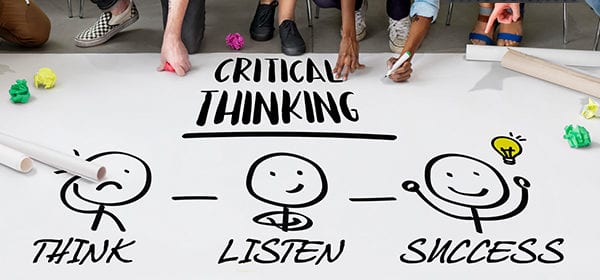
Episode Summary:
Critical thinking and listening are two of the most important skills you’ll ever have in any kind of business. This is according to Lisa Warren, a partner at SpeakInc, which helps meeting planner clients identify and retain the brightest, most relevant speakers in the business. Lisa shares how she ended up working with speakers. She takes us through her journey and motivation and job transitions. Lisa enlightens us that along with business transactions, building a relationship is the key to be successful.
—
Listen To The Episode Here
Critical Thinking + Listening = Success with Lisa Warren
Our guest is Lisa Warren, a partner at SpeakInc, which represents top speakers around the country. Lisa started her career as a sports marketer and went to law school. While being a speaking bureau representative, she’s now a partner at the firm. She said, “Critical thinking and listening are two of the most important skills you’ll ever have in any kind of business.” She explains how she wants to go out and, “be in the trenches with the clients to see firsthand what’s going on.” While she’s doing that, she’s also checking out new speakers to represent. Before joining SpeakInc in 1998, Lisa has held various positions in sports marketing and PR. She became a partner in 2000 and she’s a graduate of the University of Colorado and of Concord Law School. She enjoys reading, writing and running as opposed to reading, writing and arithmetic. Lisa, welcome to the show.
Thank you so much. Thanks for having me on.
We had the opportunity to meet at a mutual friend’s event and I just loved your energy. You have this ability to smile and light up the room and make people feel instantly welcomed. Take us back as far as you want. It could be childhood, college or whatever when you started on this journey of becoming you and getting interested in communication.
My undergraduate work was at the University of Colorado. I’m a Colorado native now based in San Diego for about 25 years, but I was born and raised in Colorado. I went to CU Boulder and majored in journalism. At that point in my younger days, I desperately wanted to be an intrepid reporter. Back then, the newspaper was a big goal. It’s not so much the hot medium now, but I wanted to be a newspaper reporter. Fast forward through my journey as a journalism student, I quickly realized that I wanted to pair my love of sports with my degree. I began working in the sports information department working with the media and writing media guides and so forth. Coming out of undergrad, I decided I wanted to work in sports. To make the long story short, it’s a very difficult business to work in, especially as a woman back in the late ‘80s and early ‘90s. I had a wonderful opportunity to work with the University of Florida after I graduated. I was there when Emmitt Smith was there. I worked in that big-time college sports realm and did a lot of traveling and made very little money.

Critical Thinking And Listening: If you’re in your dream job traveling around and working with athletes, you will not mind not making a lot of money.
At the time, I didn’t need a lot of money. I’m traveling around and working with athletes. Media was a dream job and I had a lot of fun at that. That’s where I started off applying my journalism skills, doing a lot of writing and interacting with the media. At some point, I realized that I need to make some money here. I begrudgingly left the sports world and I ended up in San Diego working for a company which is now called Vistage. Back then it was called TEC, The Executive Committee. It’s an organization that works and operates on the theme of being lonely at the top. They organize meetings of small to medium sized company owners. They work in monthly meetings and I would book the speakers that would come in for these monthly meetings. The groups were comprised of leaders of different industries. They weren’t competitors so they felt free and open to speak about their business issues and come together monthly. It was a good opportunity for me to work with folks who were trying to better their companies and their organizations for their employees. That’s how I started off working with speakers.
That’s a great transition from working with athletes to working with top CEO people because there are a lot of similarities, discipline, focus, passion and personalities that come into play around all of that. Law school somehow happened in between there. What was the motivation there? That’s not something that you just see people casually doing.
I had been speaking for fifteen years before I decided to go back to school. I left Vistage at some point and came to SpeakInc. I started booking speakers and working with clients which I loved, but at the time, I just needed another challenge so I decided to go back to law school part-time. Fortunately, there’s a completely online law school, which at that point was Concord. It’s now owned by Purdue University. It’s a global law school. I was able to keep my full-time job at speaking and satisfy my need to engage my brain in a different realm and do law school part-time. It was a great and crazy journey.
[bctt tweet=”Listening skills and critical thinking are key. Get in the trenches with your clients.” username=”John_Livesay”]
Most people have relationship challenges during law school and the pressure that only one of the three of you is going to make it and all of that drama that goes with it. How have you used your law degree in contract negotiations for the kinds of speakers you’re doing?
That was one of the things that’s intriguing to me because I didn’t want to get out of the bureau business. I love what I do. I’m a partner with the company and have now been here for over twenty years. I wasn’t looking to leave, but I was looking for something that would challenge me and also compliment what I do every single day and that is negotiating contracts. That was super helpful. Law school is a great way of focusing your brain and you’ll think differently after going to law school.
I’ll never forget my sister coming out of law school and saying, “I don’t mean it in a pejorative sense.” I said, “What does that word mean?” She said, “Condescending.” I’m like, “Let me get this straight. You’ve used a condescending word that only lawyers use to say condescending and you don’t mean to be condescending?” We’re in a whole other world here.
You do talk a lot about reasonableness and whatever a person would think. There is lingo but it does sharpen your listening skills and your critical thinking. That can be applied in any business. Working with clients from all different industries in various levels and speakers who come from lots of different backgrounds helped me. It sharpens another tool in the toolkit.
I love that Maslow quote that if the only tool in your toolbox is a hammer, you tend to go around looking for nails to hit. I use that in my keynote talks as it relates to selling. The only way you know how to sell and get someone to close a sale is one hammer. There’s a whole new skillset available. I wanted to double click on what you said, Lisa, about critical thinking because it’s so important in these times of disruption. Almost every industry that I’m speaking to is being disrupted from technology to healthcare you name it. I’m assuming that critical thinking is a key way to handle disruption for your business.

Critical Thinking And Listening: Working with clients from different industries in various levels and speakers from different background can sharpen another tool in your toolkit.
It’s dovetailing on what you were saying about the sale. This business like many businesses is very much relationship. It’s not transactional. We work with clients that we’ve worked with for twenty-plus years and we’re very proud of that, but it does take a lot of critical thinking. It takes creativity. You’ve got to be prepared to meet the various challenges that come up in creative ways. Especially when you’re working with a long-time client, things are going to come up and competitors are going to come into the view. If you’re not willing to be creative, think critically, and be innovative with the way you engage your clients, you’re going to be in trouble.
What are some of the things you’ve noticed in the last five years out of the twenty that are ways that require some innovation both from your position as well as the speakers that you bring in or expected to innovate in some ways.
There are a lot of factors. Technology always plays a role not just in the last five years but I remember ten or twelve years ago, everybody was worried about disintermediation. Now their clients can go directly to the internet and look for speakers directly. They’re like, “Our bureau’s going to go out of business.” Fortunately, that answer has been resounding, “No, there’s always going to be a place for bureaus who take good care of their clients, know their preferences, go above and beyond, negotiate on their behalf.” The internet and just the access to information can be overwhelming. Another challenge that we find is having worked with some of our clients for so many years. We’ve got to constantly be finding new and up and coming speakers, but they can’t be so new. We’re worried that 100% they’re going to deliver. That becomes a big challenge and it’s a good challenge to have because it means we’ve got clients that we’ve been working with fifteen to twenty years. We’ve just got to always be on the lookout for new and interesting people to put a put in front of them.
The innovation comes in two places is what I’m hearing you say. One, technology has provided some access that wasn’t previously available. It’s almost like a travel agent, “If I can book my own flights, do I need the travel agent?” Yet it’s still a human connection that needs to come through when a keynote speaker up in front of an audience. It needs to come through in relationships because the technology can be very impersonal. The other part of what you just said that I find so fascinating is, “Bring us new speakers but make sure they’ve got qualifications that you trust because we trust you. We can’t keep having the same speakers over and over again.” Your ability almost reminds me of what I see here in Los Angeles of what agents need to do.
[bctt tweet=”Law school is a great way of focusing your brain which makes you think differently.” username=”John_Livesay”]
We’re going to give somebody a role in a movie that’s never been in a movie before. They have a movie but they’ve never been the lead or wherever the criteria is that allows you to tap into talent. There are a lot of people that always want to take their business up to the next level who are our audience. We use the speaking as a metaphor for everyone, whether they want to be a speaker or are a speaker. The concepts of what you look for of the speakers that you decide are, worthy enough being on your platform and that you feel confident recommending. Let’s talk about how important a book is, for example, in terms of authority and credibility.
A book can be very important. There are a lot of clients who have been doing this for a long time. They’ll say to me, “Great, he’s got a book but a lot of people have a book. A lot of people have access to self-publishing. What else did we get?” One of the things I’m focusing on for 2019 was when I go out to visit clients, which we frequently do. We find it very important to get clients. We do so much over email and phone. We make it our business to get out and travel and see our clients as often as possible. Speakers are in the area that I can tack on a trip and go see a speaker that I haven’t seen live. I can report it back to my client having seen with my own eyes and heard with my own ears.
It’s whole different energy. You see the people in the audience responding. It’s very different than a demo video.
I find that it’s hugely helpful and clients appreciate our ability to report from the field so I’m making a big push for that this 2019.

Critical Thinking And Listening: There’s always going to be a place for bureaus who take good care of their clients, know their preferences, go above and beyond, and negotiate on their behalf.
I’ve read and heard so many executives talk about the importance of getting out behind their desk. Let’s say if you’re Howard Schultz and you serve coffee at Starbucks or you’re at a factory. You own a business that has a factory making clothes or whatever and you’re hearing from your employees directly. My experience has been that, whoever can explain the problem the best is who the clients think has the best solution. What I hear you doing is going and hearing the clients tell you firsthand or watching it and say, “This is a problem. You’re a healthcare professional or you’re a tech company. I see the competition’s coming from you that hasn’t been there before.” Now, you’re pulling all your people together to handle this problem that you saw firsthand when you visited your factory or office. I now have a much clearer sense of who I’m going to recommend as a speaker because I’ve either watched their demo reel or heard from other people that have come in. They know exactly what to say to this audience to help them with this specific problem because you understand the problem at such a deeper level.
Even just small things like being at a client conference behind the scenes and seeing what the challenges are with the AV or how the speaker reacts and if something doesn’t go quite right, I call it being in the trenches with my client. Meeting planners have a tough job. It’s very visible. When things go right, they’re a hero, but when things go wrong, it’s the exact opposite. It cements the relationship when I’m onsite with the client and in the trenches. If the speaker does great, we’re both heroes. If he bombs, I’m right here with you in the trenches and we’re going to survive it together and have some lessons learned. They appreciate that.
Arthur Ashe has this great quote about, “The key to success is confidence and the key to confidence is preparation.” When I’ve given a keynote talk, I was down in San Diego speaking to KPBS when they needed to learn how to pitch to get funding, not for the network, but for a whole building. It was not the normal way of raising money and they needed to justify why they needed a new building and they didn’t know how to do it. Towards the last fifteen minutes of my presentation, their projector stopped working. I was so prepared and knew what the next slide was that I could keep going without the visuals. I’ve never had to do that before and you hope that your preparation will be there when you need it. I feel happy that I keep going in that situation because I was so prepared and knew my material so well.
It’s one of those things that a lot of people take for granted. It can happen and when it does, if you can’t roll with the punches, it’s going to be a big issue.
[bctt tweet=”Businesses are very much about relationships; it’s not transactional.” username=”John_Livesay”]
What tips do you have when you are approaching a new client and saying, “I know you’ve got all you these options of which speaker bureau to use. Here’s what we do and say that separates us so that you’re not seen us as a commodity?” Do you have pitch tips that you could share with us?
There are lots of wonderful bureaus and the separation between the top is tricky because, for the most part, we can all book the same speakers. It’s not a product consideration in terms of who owns the product. It’s not a pricing consideration because, for the most part, all the speakers are quoting the same fees. It is a bit tricky. One of the things that separate us from most bureaus is that we don’t have any exclusive speakers. We have no speakers under contract that we’re obligated to book a certain number of times. That frees us up to hone in on what the client’s objectives are for the meeting. We focus on their budget and the topics thereafter. We can, with a clear conscience, recommend the best speaker based on their parameters. We don’t have to push any particular speaker. That’s not the case for a lot of bureaus. That’s one thing that sets us apart. We also have been in the business for quite some time. We’re one of the oldest bureaus. In terms of our staff, the least tenured person has been here for over ten years so we’re not old. We’re just seasoned and wise.
Your president is a great guy and he clearly sets a culture that attracts and retains talent. It’s a key factor because of the costs for not creating loyalty at a company based on Millennials, in particular, known for not staying loyal. The fact that you create that culture and if that’s a problem that your clients are having, then you go, “I have a speaker that can speak on that. I know myself what we’re doing to keep loyalty at all.” You’re leading and keeping it together.
It’s a good culture. The other thing that we try to communicate with our clients is we’re very flexible and very creative. For example, I’ve got several clients for whom I have crafted custom contract. It’s just a huge time saver when they come to me and we book a speaker. They don’t have to go round and round with their legal team because I book them classes that we’ve decided in advance. I try to keep it stocked up.

Critical Thinking And Listening: Meeting planners have a tough job. When things go right, they’re a hero, but when things go wrong, it’s the exact opposite.
The traditional marketing tools they talk about and the four Ps and all that good stuff. That product and pricing and PR and packaging. You’re talking about the unique challenges in the speaking bureau world that as you said, the product’s the same. We all have access to almost all the same speakers and all the pricing. It’s not like we’re going in and saying, “We can get to that speaker for less.” That’s not how the industry works. You have to tap into this relationship integrity mindset. You describe the fact that you don’t have exclusive contracts and have an obligation to promote this person X number of times a year, almost like a quota and what that means to your clients.
That’s my favorite phrase to give people a benefit statement. They’re like, “If you don’t have exclusive speakers, I still don’t get why that’s important to me or why I should care.” You did it so beautifully when you said, “What that means to our clients is it frees us up to match their needs to their budget without any potential conflict of interest or a pressure to push things.” It’s almost like a financial planner that’s incentivized to push people into a mutual fund because they get a high commission. None of that is happening to you. I see now why you and speaking are so successful. It’s because of the trust and the willingness to be in the trenches and then this additional element of integrity that comes into play.
It’s what we had to do. It is tricky because we all need and want to get our message out there in a way that’s not pushy and not heavy handed. Having been doing this for so long and being able to get that message out at the right time with the right people without sounding like a big commercial.
There’s a level of confidence that comes with experience. Whether it’s an experienced speaker that can promise you as a potential bureau that would represent them or when they get on the phone for those shootouts. When it’s between you and somebody else, if they’re going to hire or invest in or buy a product or service or in this case, as a speaker by you, it’s not so much about the credentials. No one’s going, “What law school did you go to? How many books did you sell?” It’s about, “Do you understand our problems enough to give us a unique solution that’s going to change our business? Do we like you and do we trust you?” I talk about all of that all the time. If people trust you first, then they get to like you and then they get to know you. That’s the relationship building that you were talking about.
It takes us out of this old school way of selling. Even beyond the consultative selling, which has been popular now to a whole other level of, “Let me tell you a story of someone else I helped at their events.” Once that story starts happening and you can bring that to life like, “The last time I was in the trenches with my client, what I found was.” Then suddenly you have a new way of communicating with potential event planners on why they should pick you over somebody else that they go, “Lisa has empathy for what I do. She knows another person that’s facing the same challenges and she’s there for that person. Now I found my bureau.”
The relationships that we’ve built with the speakers we work with a lot is a huge piece of it. We find ourselves connecting with clients saying, “I’ve worked with a speaker and he raved about you. He’s worked with you for ten years.” That’s having other evangelists and we do the same for our speakers too. If you worked with someone multiple times and you know they’re going to do a good job, I’ve told my clients, “I can almost give you money.”
That’s that personal passion and connection, yet you’re still challenged with finding a new speaker that has experience. That’s a relationship building that requires, “Let me talk to some other speaking bureaus that maybe represent you. Let me speak to a client and beyond just the testimonial they wrote to build your own confidence level in your mind before you can get to hear them live yourself.” All of those are steps that allow people to get into your ecosystem. Are there any last thoughts or inspirations you want to leave us with before we say goodbye?
This is a great industry. It’s a pie. There are a lot of players but it is a big pie. It’s never a dull moment. I enjoy the chance to chat with you about it.
Thanks. What you’ve said reminds me of our mutual friend, Tim Sanders, who’s an amazing speaker and author. He was kind enough to write the foreword to my book and he talks about the importance of having an abundance mindset instead of a scarcity mindset. I find that I gravitate towards people with the abundance mindset in business and in my personal life and we keep meeting more of each other. You build your tribe that way is how I liked it. If people are interested in finding out more about you, the website is SpeakInc.com. Lisa, thanks again for being such a great guest.
Thank you so much. Talk to you soon.
Links Mentioned:
Wanna Host Your Own Podcast?
Click here to see how my friends at Brandcasting You can help
Get your FREE Sneak Peek of John’s new book Better Selling Through Storytelling
John Livesay, The Pitch Whisperer
Share The Show
Did you enjoy the show? I’d love it if you subscribed today and left us a 5-star review!
-
- Click this link
- Click on the ‘Subscribe’ button below the artwork
- Go to the ‘Ratings and Reviews’ section
- Click on ‘Write a Review’