

Sales Sidekick With Dan T. Rogers
Posted by John Livesay in podcast | 0 comments


Everyone wants to be a superhero, but if you’re prepared, being a sidekick can be just as rewarding. Sales Sidekick is the brainchild of this episode’s guest, CEO Dan T. Rogers. As he says on their company website, “Your customer wants to be a superhero. You become their sidekick.” Together with host John Livesay, Dan explores what he calls “The Sidekick Mentality” We get a look at what experiences Dan drew on when he built his company. We also get their insights on sales and why Dan calls it a transfer of enthusiasm.
—
Listen to the podcast here
Sales Sidekick With Dan T. Rogers
Our guest on The Successful Pitch is Dan Rogers, who’s the Founder of Sales Sidekick and also the CEO and Founder of Point to Point Transportation. Dan talks about that every superhero needs a sidekick and that sales is an energy transfer with an informed worldview. He also has a phrase about mistakes at full speed. Find out what he means. Enjoy the episode.
—
Our guest is Dan T. Rogers, who’s achieved monumental success by helping others realize their dreams. “The best way to get ahead is to help others get where they want to go,” he says. He’s been on the Inc. 5000 list for seven years as the CEO of a Seattle-based company, Point to Point Transportation. “It’s easier and more fulfilling to help someone with their plan than to convince them to be part of mine,” he said. The mindset and mission are part of Dan’s company, Sales Sidekick, which captures his decades of sales and entrepreneurial experience and translates it into actionable steps for leaders to take and grow their own business. Dan, welcome to the show.
Thank you for having me.
I love this wonderful sidekick mentality that most people think, “Sales is all about me.” Before we get into that, take us back to this concept of, what’s your own story of origin? Were you always artistic as a child? You can start the story anywhere you want.
I come from modest means, so 5’7″ guide built to barrel-load. I’ve worked through high school and I did primarily manual labor jobs and settled in as a furniture mover. Quite frankly, the mentality started where we would help people get to where they wanted to go. Based on my frame and everything, I was good at transporting things. I don’t know how long that would have lasted, but it lasted for a little bit. I was wired. First, it was just household moving, moving people across town.
I worked for a fairly successful moving company and Seattle was exploding at the time. This is in the late and early ‘90s. We started doing big office moves. I was part of the crew that moved Microsoft into their first building on campus. This is where the physical became abstract. On a regular basis, we would move folks in and double them up in offices, and then come back a couple of weeks later and then move them. We saw this churn of new furniture, desks, and boxes. I’m going to approximate but it’s close to this. We move them off of what was their building negative zero into Microsoft building one that’s still on their campus now. That building was roughly twice the size of what we moved them out of.
Buildings 1 and 2 were both that same size. Buildings 3 through 6 were both twice as big as 1 and 2. Buildings 5 through 8 were twice the size of the previous. I saw that doubling of building, people, desks, and boxes firsthand for about eighteen straight months. It was a thing to watch. That crossover of seeing how we physically transport somebody. It’s been incredibly profitable for the greater Seattle area to be a sidekick to companies like Amazon, Microsoft, Costco, and Starbucks. I’ve been a benefit of proximity. A huge part of my success story is I didn’t move out of Seattle.
Those are all choices we make. I moved to Austin from LA. Where we live has a big influence in who we meet. I often thought when I was in college, “What if I picked a different school?” I would not be having any of these experiences. You’re being a little humble because there’s a lot of people that live in Seattle that weren’t able to capitalize on Microsoft and Amazon. Even a moving company has to pitch themselves.
[bctt tweet=”Sales is a transfer of enthusiasm. Don’t push people, pull them in.” username=”John_Livesay”]
One thing that I was fortunate and I haven’t thought about this a long time, but I was a mediocre football player in high school. Another mediocre football player I played in high school with, we went to high school together. When I was moving furniture out at Microsoft, he was working for Microsoft facilities. These are the actual numbers. I thought I had one over on him because I was making $7.50 an hour and he was making $7. I’m not going to mention his name. As of a couple of years ago, he was still there and his stock options added up a little faster than my $7.50 an hour.
What I saw in that was exponential growth a couple of years later when I was trying to graduate college and I ended up taking a part-time job to accommodate my school schedule at a small little burrito chain. We have three stores and it started with eleven employees. One of the owners took me under his wing and sold me the vision. He’s like, “We want to be Subway with burritos.” I was like, “I’ve worked at Subway before and I can help you recreate that.” I dropped out of college and never did get the degree to roll burritos.
In the next 2.5 years or so, I ended up opening at least four dozen restaurants. I wrote an operations franchise manual, helped them set up a central commissary and figured out how we delivered all the food. That was a firsthand experience of demystifying what business was. These guys were hardworking and they’re honorable about it. They were willing to do anything to be successful. That demystified because what I saw at Microsoft was magical stuff. I didn’t understand what computers are and what Bill Gates was doing.
The three owners were generous and gracious enough to let me in. I got to participate in all the conversations and see that we made decisions with incomplete information or we made decisions that we weren’t sure of, but we had to decide which way to go. In those 2.5 years, I got to see what it was like to run a business. I was done at that point and I was like, “I have to do this at some point in my life.” That was what solidified it for me. As good fate or fortune would have it, by the grace of the universe, they didn’t offer me any equity. The moving company that I used to work for offered me a job in sales. The unlimited conditions were certainly alluring, but the idea that I could go run my own thing and I understood how shipping worked and all that. We moved off of burrito rolling onto sales and specialized shipping. That’s where it all got started.
I love that you say on your LinkedIn profile that your definition of sales is a transfer of enthusiasm. I was up for a speaking engagement against two other speakers and they interview us. We give a pitch and present what our thing is. My agent emailed me and said, “Congrats. They picked you. They liked your energy.” I thought, “What a great reminder that’s what we’re selling.” Not our content, book, course, or whatever. It’s our energy. Money is energy and people respond to that. Later, I was working with him and he said, “You made me feel good. I figured if you could make me feel good on a Zoom call, you’d certainly make 300 or 400 people feel good as well.” They want to learn something and have an ROI, but it all starts with that, doesn’t it?
Absolutely. This is all in the rearview mirror. I have some restraints I try to live by and one of them is mistakes at full speed. I’m talking as if I figured it out in the ‘90s. It’s more looking back and it is systematizing and eventually, we got there. As I settled into sales, what I realized was I was good or bad, right or wrong. I was an expert in this narrow, but deep pool and that was my deep water. If I approached it in an act of service, I could help them uncover for themselves what they were looking for and do that with some enthusiasm. Enthusiasm looks different with different types of people. You want to hit them where they are or whatever.
I was having the same conversation over and over again. I don’t put it on LinkedIn because it’s a little too much information without all the context, but my full definition of sales is it’s the transfer of enthusiasm around an informed worldview. If we think of our product or service or expertise as one thin slice of worldview, what I’m hoping salespeople would do in a selling situation is like, “Are you aware of what your worldview is in this space? Does it serve you? Are you happy with it? Does all this other stuff align to that worldview?” If it does, that’ll lead to happiness and effectiveness. It may or may not turn out that what we do fits into what you what you’re trying to build here, but that’s what it was. One of my other restraints is if you’re bored, you’re boring. Life is 100% optional. It’s like, “If we’re going to do this and it’s not a good time, it’s probably on me more than them.” That’s a little bit of the transfer of enthusiasm as I see it.

Sales Sidekick: What Sales Sidekick tries to do is to hold businesses to a higher standard and say, “Look, you’ve got it almost right.”
That’ll make a great tweet, “Sales is a transfer of enthusiasm with an informed worldview.” You’ve touched on something briefly, so I want to go back because I love this concept. You’ve come up with eight restraints and one of them is mistakes at full speed. I can guess what that means. I’m not being afraid of making a mistake, but I’d love to know how did you come up with the concept of it being restraints?
There’s a sidekick framework that we have. We’re somewhat in the middle of it, which is fine. A restraint is a self-imposed constraint. The way that I would define a constraint for the purpose of this context is a constraint is imposed upon us by the universe or by forces beyond our control. A restraint is my leaning in, learning about it, processing it with some knowledge, getting some understanding, and then based on that understanding, and imposing my restraints.
Good or bad, right or wrong, I have this brain that functions considerably better with guardrails. I talked about it as if I figured it all out. This is all in the rearview mirror. Folks that I worked with or that we worked together in the early 2000s are like, “Dan used to call these Dan’s rules and there were five of them and now he’s calling them restraints and there’s eight of them.” I’ve been working on this for a while. It’s my habit to be effective. I’m not proposing that other people take mine unless they work for them, but they’ve definitely served me well.
For example, I’m talking to a nutritionist and they said, “The kitchen is closed at 8:00 in your house.” You’ll not eat after 8:00. That’s an example of a restraint that you put on yourself.
You got some information and you found out that too many calories are a bad thing, so it’s like, “I’ll self-impose.” That’s a perfect example. To give you a little bit of how my brain works, restraint number eight is you can always add one. How I try to filter that is first, the recognition of good or bad, right or wrong, you can always add one. The boss is super generous. You can think of the largest number you can think of. You can add one and do it again. You can do that forever.
Let’s be careful and intentional about adding one. Are we past diminishing returns? Are we doing this because we’re avoiding doing something else or does adding one make sense? Mistakes at full speed is the bonus restraint. “See restraint eight,” you can always add one. Mistakes at full speed don’t go as fast as you can because that’s irresponsible or maybe even potentially harmful. It’s the idea that going slower will not prevent mistakes that will slow down learning.
That is so powerful. I want everyone reading to imagine that you’re climbing Mount Everest or going on a hike that you’ve never been on before. You think to yourself, “I got to step gingerly every little step because I don’t want to make a mistake and step in dog poo,” or whatever it is. Yet, no matter how slow you go, you might still fall or whatever. Yet, we don’t want to run rapidly without looking around us, so there’s a happy medium here.
[bctt tweet=”It’s actually way cooler to be a link in the chain than it is the tip of the spear.” username=”John_Livesay”]
I use the word mistakes, but I don’t think I process that word the same way that most people do. To me, it’s just all reference points and I want a strong reference. I don’t enjoy big mistakes. I’m certainly an inelegant learner. My face turns red and there are some f-bombs along the way for sure. The reality is I get uncomfortable if I hit too many home runs in a row. I’m probably playing in the wrong league. I want to get too deep into it because it’s not part of the show, but I come from fairly modest means. At one point, I wasn’t the best personnel in the world. I certainly am not now, but I’ve tried serving myself and it was a miserable existence.
Rolling burritos at $6 an hour was an absolute joy and a huge joy. It was just serving the rest of God’s kids. The abundance that’s been provided in my life when I asked the boss, “Why me? What am I supposed to do with this?” I’ve gotten a consistent answer for over 25 years. The answer is, “You’re right, you don’t deserve it, but you get it anyways. Do me a favor. Go make the most of it that you can, share it with the rest of my family, and show everyone how cool I am.” That’s the answer that I’ve gotten. The answer that I’ve gotten is, “You’re right. I’m the luckiest guy in the room.” You can be as lucky as me, but I’ve never met anyone luckier than me.
That’s a huge part about the sidekick mentality. I tried aligning to the universe, trying to get with me on top and it occasionally worked. I’m not saying that I’m proud of what I achieved when it worked, but it does work. You can’t do it. I don’t like the feeling that it generates inside me, the residue that it leaves in my life, but you can do it. When I focus up on things bigger than me about how I can serve those or how I can align myself or how I can align my team, my company, or whatever into something bigger that serves something bigger, it’s a heck of a lot easier to do and it’s so much more rewarding.
Before I bought the company, I won the sales awards and all that other stuff and got to cruises. It was good for half a second, but some of my greatest accomplishments that I would brag about is when I was part of something that was substantially bigger than what I contributed. I was just one of many that made that happen. It’s way cooler to be a link in the chain than it is the tip of the spear. Being a link in a highly functional chain is as good as it gets as far as I can tell. I’ve yet to meet anybody that’s experienced that doesn’t agree with that. There’s a bunch of people that have never tasted it, but I’ve met people that have tasted it and we all look at it the same way.
I didn’t invent the sidekick mentality. It existed long before I got here, but it served me well to serve others and it doesn’t make any sense. It’s like, “How can this be so good for me aligning to other people?” When you think about it, I can’t think of an example. When I tend to share my opinions and my experience, facts are valuable and scientific research is valuable. This is more of my own common sense and my own practical experience. I cannot think of one single example of an honorable individual who’s achieved any success in any walk of life that first didn’t pour substantial value into the marketplace before they began to take deposits out of the marketplace. You can look at athletes, artists, business people, or whatever. There’s this massive pay in and then you produce such value that people cross the room to work with you.
Knuckleheads look at it and go, “That person got this or this.” It’s like, “No, you missed.” Malcolm Gladwell tells us 10,000 hours or whatever. I don’t know what the math is. I just know that substantial value, you put it in. My point is we all understand that as individuals, but then we design companies and we get a bunch of individuals together and we forget the rule. The rule is you put more in than you take out. That’s how you get wealthy. You spend less than you make. We understand that, but we’re thinking too narrowly. Part of what we’re trying to do with Sales Sidekick is hold businesses to a higher standard and say, “You’ve got it almost right. We just need to expand our vision about what value we can produce.” We’ve totally figured out how much value we can take. We don’t need any more work on that. We need more work on what’s the value that we can produce in the communities that we serve.
You and I are so aligned because I talk about when you tell a story of another client that you worked with, you’re not the hero of the story. Your client is. You and Sales Sidekick talk about it in terms of, you become the sidekick and your client is the superhero. It could be the salesperson is Yoda or the Sherpa. That’s what you’re saying here. Here’s the big thing that I love that you have. Every superhero needs a sidekick. That is something that is unique. I’ve not heard anyone say that before. We all know Batman has Robin and all those kinds of things, but I don’t think that we automatically say to ourselves, “I’m the client and I’m the superhero in the story.” I’m like, “Where’s my sidekick? Is it my team or is it an outside person coming in?” Talk a little bit about that because it’s so near and dear to what I talk about.

Sales Sidekick: The rule is you put more in than you take out. Like that’s how you get wealthy. You spend less than you make.
We’re definitely working on the pitch. Restraint number five is copy off the smartest kid in the class. I reserve the right to learn more on this show than any of the readers or you. You’re the pitch guy, so I’m definitely taking notes on how you read packages for us. One test is like, “If you want to be a superhero, do you have a sidekick? If you don’t, then you’re probably not a superhero.” That’d be the first thing. I’m a spiritual person and that’s not for everybody. I’m totally fine with that. There’s a practicality to what we’re offering up.
If we say forget all the woo-woo non-stuff, whatever abundance, reporting to the boss, and all that crazy stuff that Dan talks about. Let’s just look at business like my MBA and all that. Everybody nowadays wants to be a superhero or a social media influencer. If that’s what everyone wants to do, then you can make a ridiculously handsome living supporting that. They can come and go and you can continue to be a sidekick to that.
In Seattle, in the early ‘90s when I was selling specialized transportation and everyone else was in the dot-coms, they were all about their hot technology, all of which is completely irrelevant later. Eventually, we won’t need truck drivers, but we’re going to need trucks until they figure out teleportation. I was like, “It’s not terribly sexy but it’s got some serious staying power.” I’ve always been looking at the foundational piece. Forget all the woo-woo stuff. There’s good, practical common sense to being in a support or a foundational role and taking that perspective. It’s better business to align up than it is down. It’s magnitudes of scale. You get all that largeness working for you instead of trying to create it for yourself.
One of your other restraints is pull, not push. I talked about that with stories, pull people in. My whole thing is when you tug at heartstrings, people open the purse strings. We buy emotionally and back it up with logic. Most people keep pushing out information. How do you help people reframe that as a sidekick? Give me a story of someone that you saw pushing and you went, “We’re going to start pulling people in now.”
I agree with everything that you said. That aligns completely with what I’m going to say. It might not sound like it initially, but we’ll definitely get there. You mentioned the constraints before these things that are imposed upon us. This is an opinion. Physics would support this, no degrees on the wall, but from my vantage point, the universe is 100% pull. That’s how it works. You don’t have to like it. Somebody asked me one time, “Dan, give me an example of that.” I gave some awful examples.
He then said, “What about gravity?” I’m like, “Yeah, that’s exactly it. Gravity is a straight pull.” Not recognizing that as a fundamental source of how the universe works, it’s a bad idea to go against reality and the universe. It’s not a super good strategy. That’s the first part of it. The second part of it is, I have a level. It’s not that I’m Mr. Humble Guy. My arrogance is so other level that I want people to want what we’re doing. I want them to pull it in. That says we have to have such a compelling offer for such a small fraction of people because you can’t have a compelling offer for a bunch of people. You can have iPhones for a few years, but no one lines up for iPhones anymore. Sooner or later, you have to serve a small sliver and work for them, so they want what you have.
We eat our own dog food at Sales Sidekick. We’ve got a couple of folks that we’d love to work with. We’ve made a proposal and we don’t follow up. We’ll follow up after we agree to work together, then we’re working together in a relationship, but we leave every conversation at Sales Sidekick, “The ball’s in your court.” I hope this translates. I’ve mentioned it a bunch of times, so it’s okay to put it out there. I’ve talked to people and I said, “I want to be helpful. I reserve the right to learn more in this conversation than you. I frequently do. If you want me or our team to think about you in between the phone calls, you have to pay us. If not, you can schedule time with us, and we’ll try to be helpful. We could be a lot more helpful if we track on it.” Not frequently track on it, but that’s what it is. It’s 100% pulled.
[bctt tweet=”It’s not about us. It’s about them.” username=”John_Livesay”]
I’ve had people ask me, “Why aren’t you worried about people fill up your calendar?” I’m like, “If that’s what somebody wants to do, God bless them.” That’ll take care of itself. That’s how the pull works for me. I’m not suggesting that you do that stuff, John. I’m still a student of yours, but the stuff that I’ve digested so far, we’re in complete alignment here. Traditional sales is backwards. It’s a lazy premise followed up with some lazy habits, and then the only way to make that work is to push hard. Whereas if we hold ourselves to a little bit more disciplined premise with similar disciplined habits, then we can have people crossing the road to do work with us.
It’s hard to do. You got to first get your business to be viable. You got to get your offer to be viable and all that, and you don’t want to minimize that, but after you get to viability, then you’re silly not to make a 100% pull. I learned this one the hard way. Early in sales, I had way more success than I was supposed to because I accidentally closed people that didn’t want what we had. I had such enthusiasm for what we’re doing and I had such credibility because I knew how to move the stuff that we’re doing so they would buy from us, but they didn’t want what we had. We then had to keep reselling them.
I got to a place, and I won’t use her name, but we had a team of incredible customer service people. One of them, it was like, if this person’s going to upset her, they’re not our customer. She was not difficult, but she was such an embodiment of what we were doing. It’s like, if you don’t jive with her, you don’t jive with us. I then started looking, “Is there a good fit with what we’re doing?” That’s where it got a little bit more nuanced. You’re serving them too. It’s harder.
I have a friend who has a successful business. It’s been around, it’s multigenerational, and he’s the CEO. In order for him to do an estimate for what they offer to the marketplace, he has to have a conversation with the other CEO of the other company. I thought I was wacko. I was like, “Holy smokes.” He’s like, “I want to make sure that our leadership is in alignment because they’re going to enter into my system.” I was like, “Wow.” At first, I thought he was crazy, and now, like everything else, I think he’s brilliant.
It’s a difference between auditioning to get someone to hire you versus them auditioning to work with you, is what are you saying?
Yeah, I’m a happy client. A strategic coach, Dan Sullivan, has got a concept of ABC, always be the buyer. I’ve learned plenty, and he’s got a bunch of great thinking models. There’s some of the stuff that I accidentally or just did prior to becoming a strategic coach client. One of those, before I bought the company, when I was actively selling, I can say unequivocally for the years that I was active, I was far more qualifying them than they were qualifying me. There’s no doubt in my mind that I had gotten to a place that I’m so systematic in how I approach stuff that it was completely me evaluating them.
Which is the opposite of the old way of selling, which is to throw enough stuff up against the wall like spaghetti and see what sticks, that causes a lot of frenetic behavior, and the emphasis is on the quantity of calls instead of the quality and all of that stuff that nobody likes. If you’re being pushed so hard internally, then, of course, that causes the behavior to push potential buyers. The Sales Sidekick is desperately needed. Congratulations on launching it. I can’t wait to be cheering you on and being, hopefully, a part of it and letting people understand these new framework/restraints that are going to make a huge difference not only in the culture but also in their outcome. If people want to find you, there’s a wonderful website. Why don’t you share that with us?

Sales Sidekick: Everybody nowadays wants to be a superhero or a social media influencer. Well, if that’s what everyone wants to do, then you can make a ridiculously handsome living just supporting that.
What we’re doing for simplicity’s sake is everything starts at my LinkedIn profile. If you go to Dan T. Rogers on LinkedIn, that’s a great starting point. There is the website on SalesSidekick.com. You can see some stuff there. We’re also proud of P2Ptransportation.com, Point to Point. As the entire corporate event industry has been impacted by a Coronavirus, we’re fortunate that it’s still a viable entity. That’ll give you a little bit of an idea of what this looks like in real life. Sales Sidekick’s website is a little light purposely, but if you want to see what it looks and feels like and how we did it in reality, P2Ptransportation.com gives you an idea.
One of the greatest compliments that we would get, what we do there is we support corporate events. We were sitting on all these planning meetings and people with ridiculously expensive glasses and incredible haircuts say, “I’m going to deliver a marketing experience.” I’m thinking, “No, we’re going to deliver,” but whatever. Occasionally, when we would get put together, they would look at our website and they would say, “I want to be sure. You are a shipping company, right?” I’m like, “Yeah, we are.” They’re like, “Your website doesn’t look like any other shipping company.” You look at ours, we look like a creative agency website because that’s who our customers are. It’s not about us, it’s about them.
You’re speaking your language. You’ve got superheroes. You’ve got gorgeous graphic colors. You’re pushing the features. You’re selling the emotion of it. I love it.
It’s like, “Do people want to see pictures of warehouses and trucks? Will that make you feel better? We can take some pictures of the warehouse if you want.” As two sales guys, we got to do a couple of sales things. This is where people don’t think it all the way through. I don’t think I’m going to share anything new here. I don’t know who originally said it. Sales 101, people buy benefits, they don’t buy features. They don’t buy drills, they buy holes in the wall. We all understand that. We all agreed to it, but then we violate it everywhere we go. I’m preaching to the choir here. Your whole approach about telling the story and all that, they’re such honor. You’re telling the story to try to connect with the customer in a way that makes sense to this customer, that’s going to bring value to the customer. I enjoyed the conversation, but I don’t think I’m telling you anything that you haven’t already put in play here.
I do love this concept that every superhero needs a sidekick. That’s new. It’s new in bringing it to the awareness. When you think about that, you go, “Yes, of course,” but I haven’t heard it enunciated or framed that way. I love watching that. As a kid, you just take. This is the world you’re in. You don’t analyze that Batman needed Robin. You assumed they figured it out but the keyword there is need, not, “It would be nice to have. He could do it on his own if he needed to, but he’s lonely,” or whatever. It’s way more than that.
In the spirit of being a sidekick, I would also throw out there that sidekicks and superheroes have a lot in common. One thing that they have in common is they both need to story.
Everyone has his own story of origins.
It’s been a lot of fun.
Dan, thanks for sharing your wisdom and your insights on how we can start reframing our perception of ourselves as Sales Sidekicks instead of pushy salespeople.
Important Links
- Sales Sidekick
- Point to Point Transportation
- Dan T. Rogers – LinkedIn
- Better Selling Through Storytelling Method Online Course
Wanna Host Your Own Podcast?
Click here to see how my friends at Podetize can help
Purchase John’s new book
John Livesay, The Pitch Whisperer
Share The Show
Did you enjoy the show? I’d love it if you subscribed today and left us a 5-star review!
- Click this link
- Click on the ‘Subscribe’ button below the artwork
- Go to the ‘Ratings and Reviews’ section
- Click on ‘Write a Review’
Love the show? Subscribe, rate, review, and share!
Join The Successful Pitch community today:
- JohnLivesay.com
- John Livesay Facebook
- John Livesay Twitter
- John Livesay LinkedIn
- John Livesay YouTube
Scale: Seven Proven Principles To Grow Your Business And Get Your Life Back
Posted by John Livesay in podcast | 0 comments

Sometimes, in the pursuit of success, people tend to lose track of what really matters – their life. Jeff Hoffman, the Global Chairman of Dream Tank, joins John Livesay in this episode to talk about what you can do to get your life back and still grow your business. Jeff shares his personal story and how he discovered a straightforward formula to achieve success. Leaning on the notion of working efficiently instead of working all the time, he dives into the details of how this strategy contributed to his success. He also touches on the biggest mistakes you can make when pitching to investors and reveals what approach you need to use to capture their interest.
—
Listen to the podcast here
Scale: Seven Proven Principles To Grow Your Business And Get Your Life Back
Our guest is Jeff Hoffman, who is one of the Cofounders of Priceline. He tells great stories about how he got his philosophy of life, which is to dream big, work hard, and create value. He then goes on to tell us about it’s important when you pitch to not be so dependent on your slides and when you use stories instead of slides to make your point and have logical transitions, you’re going to be much more successful. You’ll find out about what he’s doing to help small businesses during the COVID. Enjoy the episode.
—
Our guest is Jeff Hoffman who is a successful entrepreneur, a proven CEO, a worldwide motivational speaker, a bestselling author, Hollywood film producer, and a producer of a Grammy-winning jazz album and the Executive Producer of an Emmy award-winning television show. In his career, Jeff has been the founder of multiple startups. He’s been the CEO of both public and private companies and served as a senior executive in many capacities. Jeff has been part of a number of well-known startups, including Priceline.com/Booking.com, UBid.com, and many more. Jeff, welcome to the show.
Thank you so much for having me.
We know we have a mutual friend, Brandon Adams, and I know you’ve been involved with producing his show about success but you have so many wonderful examples and lessons to share with the audience in your own story of origin if you don’t mind. Let’s go back to when you were growing up. It could be a child, high school, or college. When did you start getting the urge of what you wanted to do with your life?
The Beginning
I was born at ten years old because my mom couldn’t afford toddlers. I had a single mom, four kids, grew up in the Arizona desert. My mom was always working on multiple jobs. When I was a kid, the concept of independence was big because I didn’t want to bother my already stressed out hardworking mom. When it was time to ride our bikes to the mall to get pizza and go to the movies, I didn’t want to ask her because I knew it was stressful. Early on, I discovered this relationship between hard work and freedom because I would go down the street and say, “Do you need your lawn mowed?” In Arizona, I would go to people who had pools. “Do you want me to clean the leaves out of your pool?”
I delivered the newspapers in the neighborhood. I went out in the hot sun and found a way to get paid by doing hard work. I always had a little roll of money in my pocket that was mine. I realized that working hard is a good way to be independent and make your own decisions. I was doing it honestly to not stress my mom out. Once I did it, I discovered there is a real relationship between how hard you work and how much control you have of your own life. I went to this big public school where even college, honestly, wasn’t that big of a deal. I had this huge educational goal.
[bctt tweet=”There is a real relationship between how hard you work and how much control you have of your own life.” username=”John_Livesay”]
I wanted to go to Yale which my guidance counselor in my own school laughed in my face. She said, “People from here don’t go to a school like that. You go down the street to the community college.” I said, “That’s not what I want to do.” She laughed. I said, “That’s your answer? Are you going to help me or not?” She didn’t help me. My mom had to call the school and say, “Could you fill out the paperwork and give the kid a shot at least?” When I got to Yale, the very first day, I got booted out of class because I didn’t pay the whole tuition. I said, “I gave you my scholarships, my aid, everything I have.” “You didn’t pay,” which is fair.
You can’t pay for 2/3 of your meal at Outback. You had to pay for your meal. I couldn’t go to school. I was faced with my first big defeat. I worked so hard to get into this school and then they’re sending me home and I said, “I’m not going home. Not after all that, not after everything I did.” I remembered that formula. “Why don’t I find some way to do something valuable enough to someone else that they’d pay me to do it for them because that’s the formula?” I later wrote this in three little sentences on my wall, “Dream big, work hard, create value.” I wrote that down back then and I was like, “This has to be the right formula.” You’ve got to have a big dream.
Yale is a big dream for a little kid in the desert. Work hard because you have to work as hard as your dream is big, but create value. If you’re working hard doing something no one cares about, it still doesn’t get you to success. Dream big, work hard, create value. I was like, “I’m going to try that again.” I started my first little company writing software to solve people’s business problems while I was a college student. I funded my entire Yale education and graduated in four years. I never used the word ‘entrepreneur.’ I always thought of it as there’s a way to solve your own problem if you’re willing to do whatever it takes to do that. There’s a saying I saw once, “Everybody wants to be successful just until they find out what it takes.”
“This is harder than I thought. I’m out.” Dream big, work hard, and create value, what a wonderful takeaway right out of the gate. I love that you ended that story letting us know that you got kicked out of Yale in your first day for money challenges and payment issues. You did, in fact, figure out a way to not take that no and finished on time. That alone is a fantastic example of all of that coming alive. Let’s fast forward. You were out of Yale and you’ve got this great experience in computers. How did you apply these principles for Priceline?
The Dream
Let me tell you one story before that. Doing the three things I talked about, I did have a big dream. Since I grew up in a little town where no one ever went anywhere, I wanted to see the world. I heard an old man one day talking about all the countries he visited in his life in different continents. He’d been to 33 countries. I was like, “I’m going to visit 50 countries before I die.” I’m some broke kid in the desert. I had a big dream and I got an engineering job at a big engineering company writing software out of college. The problem was I wasn’t living any dream at all. I went to my cubicle every day and watched the clock because I hated my job. I didn’t hate my paycheck but it wasn’t worth it because I was getting paid to hate my life every day. That didn’t make sense. I was like, “How am I ever going to live this dream of seeing the world while I’m sitting in this cubicle?” My job doesn’t require me to go anywhere but the fourth floor on the elevator every day. Even the cafeteria was already on my floor. I don’t even get to go to another floor.

Growing Your Business: In this entrepreneurial world, if you don’t create value, you don’t eat.
For someone who’s got the urge to see the world, that’s not exactly exciting every day.
I walked out and quit. My mom was mad at me. I was completely broke, unemployed, but I was like, “Now that I don’t have somewhere to go tomorrow, I can take a shot at this dream.” I’m going to work way harder on it because, this is in the entrepreneurial world, if you don’t create value, you don’t eat. If I want to keep the lights on, now that I’m unemployed, I better create value for someone so someone pays me. That was where my journey started in the travel industry. It was because I wanted to see the world but I wanted to keep the lights on and pay the bills. I was trying to come up with a solution that enabled me to live my version of an epic life.
We want everybody reading to define their own and live it but be a responsible adult because everyone was yelling at me for quitting my job. I did not want to ask anyone to borrow money when I was broke because I knew they were going to mock me for quitting. I was in the airport, a busy Friday. The ticket I bought to see my mentor, I have an idea it was expensive for an unemployed twenty-something. To get a boarding pass, you had to check-in at a ticket counter back then. It was an hour and I missed a flight. I was upset. I’m at the bottom. There’s no dream. I’m not going anywhere. I’m unemployed and broke. I’m going to have to borrow money for groceries. Everything sucks. All of a sudden, the light bulb went off. Here’s a chance to combine all the things that I told you about.
My big dream, my work ethic, and a way to create value. It took an hour to check-in to get a boarding cart. I got all fired up. I went home and that Friday, I started my first startup. If you’ve ever gone to an airport and checked yourself in at a self-check-in kiosk that prints the boarding pass, that was my first invention. I created those and I started a company, and now they’re in airports all over the world. Instead of sitting in my cubicle all day, my job was to fly to a different country every week because everybody wanted to buy these things. Not only did I get to go to all those countries, I’ve now been to 95 countries, but I got paid to go to them all because they wanted to buy the product. That forage into the travel industry led us to look at the front end of the reservation process instead of printing your boarding pass, which is how I wound up getting involved with Priceline, Booking, and even Expedia before that. I got into the travel business because I wanted to travel.
I want to analyze what you said for everyone. There are so many great takeaways. First of all, clearly, you’re a great storyteller and you’re taking us on the hero’s journey or in the startup world, that’s called the trough of despair where we reached that low point. We’re like, “I missed my flight. I don’t have money. I’ve quit my job. The stakes are high. What am I going to do?” Most people think, “It’s over for our hero. Poor Jeff.” Then you have that moment of epiphany of, “I’ve had this problem of missing a flight for waiting in line so long, then others have too.” When I coach people on their pitch to get their startup funded, that ability to explain a problem if you’ve been in the customer’s shoes for potential investors makes them feel you have the solution as opposed to trying to imagine the problem.
[bctt tweet=”Dream big, work hard, and create value.” username=”John_Livesay”]
On a personal level, having worked as a ticket agent at TWA at O’Hare years ago, I know what that feels like to be behind the counter and see a line out the door of people asking back in the day, “Smoking or non? Window or aisle?” where you would get stuck or they’d be in the wrong line to buy a ticket and not get a boarding pass. There were so many reasons why those lines were so long. That story resonated with me. It’s so great because that’s the ultimate story of origin that people can start to look at and say, “What problem am I experiencing that many other people can and I get to live my dream?” You’re tying in all your values. “If I want to travel, I’m getting paid to travel. I’m solving a problem for travelers.” It’s so good.
You have to be intentional about it. You have to be thinking about those things or you won’t see that moment.
I know you’ve interacted with Steve Wozniak and many other successful founders. One of my favorite quotes from Steve Jobs is, “You can’t connect the dots looking ahead, only looking back.” That’s why the value of hearing your stories allows us to see how those dots get connected so we can start to, as you said, intentionally set our own vision, goals, and define what that looks for us. You also have written this wonderful book, Scale: Seven Proven Principles to Grow Your Business and Get Your Life Back.
You had this concept of either, “I live my dream and don’t have a job,” or “I do a job I don’t like and I’m getting money.” They seem mutually exclusive to live your dream and make money. This concept of growing your business, “I’ve got to have to sacrifice my life. I don’t have to have a personal life.” This concept, again, you’re mirroring for all of us and mentoring us, if they’re not mutually exclusive. The snippet to get people to want to buy the book is, what is the secret sauce to grow your business and still have a life?
Work Efficiency
I’m so glad you said that because people accept that those things are mutually exclusive. As soon as you accept that, then they are. You have to not accept that. Here’s the thing. Again, I’m glad you picked this topic. When people, entrepreneurs especially and small business owners, brag about their work hours, “I’m an entrepreneur. I work 24/7. I work around the clock because I’m an entrepreneur,” let me tell you something. Working all the time is not a badge of honor, it’s a badge of inefficiency.

Growing Your Business: The biggest mistake is that people don’t tell a story; they give a presentation.
One day, I said, “I’ll work around the clock when I have to.” That’s the difference. What entrepreneurs do that you don’t have to necessarily do in other types of jobs is when it’s time to go, we go. I once did three all-nighters. I never went home in three days. I snuck into the gym in the building and showered. When it’s go time, we get it done but don’t accept that. I remember saying to myself one day, “Jeff, I’m giving you a new challenge.” I’ve never referred to myself in third person in my entire life. One day, I gave myself a challenge. I said, “You should try to figure out how to do in two days what it takes everybody else the whole week to do.” The design goal is not to accept that we work like dogs if we’re entrepreneurs.
The design goal is to say, “Can I build a business that is so well run, well designed, efficient, and automated that I could be at the beach three days and the business is running and I’m getting paid?” I’m only in the office two days when I used to be there 6:00 or 7:00. That should be your goal. Again, I’m going to use the word intentionality. If you’re not looking at your business and saying, “What things could I turn from a week to two days? What things could I automate, outsource, and do better?” with the design target of saying, “I want to do as much work as everybody else in way less time than it takes them to do it.” That’s what David Finkel and I wrote that book for. It was to help you go through the list. It’s like a workbook in it of things that you need to do so that your business becomes more efficient and your time requirement goes down.
Pitching Mistakes To Avoid
The value of setting your intentions much defining the culture you’re in and all of those things, people think, “I don’t need to spend any time thinking about my intention. I just want to make money.” That’s never the right vision to have for a company. You and I were talking about a producer friend of yours who’s very successful at creating content and doing the work but struggling a little bit with the ability to tell a story in a way to pitch it to get it funded to make it happen. What are some of the biggest mistakes you see people making, whether they’re in the entertainment business, trying to get a show made or a startup trying to pitch to an investor to fund their idea?
I was so excited to join you here on your show specifically because you address this elephant in the room. This big topic that so many people do wrong. In this part of my life, I listen to hundreds of pitches all the time, that’s what I’m doing. I see it all the time. Here are some of the things. The most important thing, and you’ve already said it, is to tell a story. People don’t tell a story, they give a presentation. Do you know what I do a lot of times? I have people to take a dry run when I’m helping people get ready for a pitch. I reach over and unplug the projector. They say, “The projector is off. You can’t see my slides.”
I say, “You’re going to give the pitch without looking behind you at your stupid slides.” If you can’t tell the story, if you need a PowerPoint to give a pitch, you’re already way behind. The reason why is you should tell a story not like you’re formerly dressed up in a suit and tie and giving a pitch to investors. You should tell a story like you ran into your friend at Starbucks and he goes, “Jeff, what are you up to?” and the story has to sound like a story. The reason why is pitches and presentations, a lot of times, every slide should come from the previous slide logically and lead to the next on, and they don’t. I’ve been sitting in pitches and people say, “Let’s talk about our forecast.” They say, “We’re going to show you the members on the team.”
[bctt tweet=”Everybody wants to be successful, just until they find out what it takes.” username=”John_Livesay”]
The slide before had nothing to do with the slide after and vice versa. You wouldn’t do that when you were telling a story. If you were in Starbucks and someone said, “Jeff, what are you doing?” I would say “I was in the airport and the line was so long. I missed a flight. I started talking to people and I realized everybody is sick of these lines. I was like, ‘Is there a better way to solve this problem? It looks like this in every airport in the country, in the world right now.’ I went home, did this research, and I was like, ‘The self-check-in kiosk.’” I got some people together and we started a company. My friends were like, “What are you building? How does it work?”
I said, “The kiosks will do this. It will be connected that way.” Your friend would say, “How are you going to sell it to the airlines?” “I’ve got this idea. I’m going to call these people.” I’m telling a friend a story in a coffee shop, “How are you going to make money? How much are you going to charge?” That’s how your story should be to an investor. This is how I always start my pitches. I always use the default assumption that I assumed when I’m walking in to pitch you, what you are thinking is, “Why am I wasting my time listening to this moron? I have a busy day and I’ve already heard twenty morons before him.” Is that true? No, but if you assume that, you will start with a compelling story. You’ve got seconds to get the person’s attention.
Even if they sit there for your whole 25 minutes, they tuned out after minute two, because you didn’t set the hook or you started and then you straight off in a bunch of slides. It’s not a story. The biggest mistake is you should be able to tell your whole pitch with no slides, no PowerPoint, no visual aids because you’re telling it in the logical order that people would ask you questions if you were telling it to a friend anyway. “How do you build these things? How much do they cost? Who’s going to pay for that? You don’t have any money to buy those.” Do it. Tell it to a friend that has no idea what you’re talking about. Make a list of the questions they asked in the order they asked them. That’s the story you should be telling.
“Use stories, not slides,” that says it concisely. When I work with people on their elevator pitch, I completely teach them what you said, be conversational. I teach people to open up their elevator pitch with, “You know how,” and then you go into describing a problem or a person that you helped. Most people start with, “I do this. I’m a lawyer,” or whatever. I go, “No, make it conversational.”
It’s an invitation. You start with an invitation to stand next to me in the airport line when you said you know how. “You know how it takes forever to get to check-in at the airport?” That’s your example. I’ve invited you to mentally stand next to me in the airport line and now you’re with me. I completely agree with you. Start with an invitation.

Growing Your Business: Don’t work around your business. Your business has to work around your life.
Dream Tank
The whole goal of an elevator pitch or even a pitch that you get ten minutes in front of an investor group is to intrigue people enough to want that second date. “Tell me more, then we’re going to invite you back,” not to tell everybody everything. That is so hard for people to not boil the ocean. I go back and I tell people, “Remember Amazon sold books first?” If they had launched doing everything now, they would never have gotten there. It does help to do that. I want to touch on what you’re doing now helping small businesses because I’m fascinated with this whole concept. You’re the Global Chairman of Dream Tank. Tell us a little bit about how that started and what you’re doing to help people in small businesses now.
There are three things I spend my time on right now. One is I am the Chairman of the Global Entrepreneurship Network. We now have people on the ground in 180 countries. We launched this with a simple mission statement, “To help anybody anywhere that wants to launch their own business do so.” That’s what the Global Entrepreneurship Network is. We built it all over the world to help people turn their idea into an actual running business and achieve economic freedom. I’m also the founding board member of something called the Unreasonable Group. Unreasonable is the same thing.
That’s named after the George Bernard Shaw quote where he said, “A reasonable person adapts to the world around them. An unreasonable person expects the whole world to adapt to them. Therefore, all progress is dependent upon unreasonable people.” The Unreasonable Group is social entrepreneurship. The Global Entrepreneurship is all kinds of network. In Unreasonable, we help entrepreneurs who are specifically trying to solve some of the world’s biggest problems that align with the United Nations’ seventeen goals. The third one is I’m also the Global Chairman of Dream Tank which is everything I said about with kids. It’s a youth-driven problem-solving network.
We’re trying to engage young people all over the world to come to the table where the world’s problems are being solved and include them in the conversation. Those are the three places I spend my time now because I’ve made a commitment to teaching entrepreneurship to as many people as I can. I don’t even call it entrepreneurship. I’d rather call it self-determination. What is the future you want? What is the world you want to live in? What does the company you want to work for and the job you want to have? Why don’t you create those things? Go design the future, don’t wait for it. It’s about self-determination.
That’s why I like entrepreneurship. Entrepreneurship is not a job, it’s a mindset. That being said, we started in this process, then COVID hit. A lot of these small businesses we work with all over the world were in the worst possible situation. I was on national TV reporting that two million small businesses in America closed their doors permanently in the second quarter of 2020. In 90 days, two million little businesses in the US disappeared. In fact, on TV, I said it’s a pandemic how we’re losing millions of small businesses so we look into it. The government has this program. Everybody knows in the US the PPP program to save small businesses.
[bctt tweet=”Working all the time is not a badge of honor; it’s a badge of inefficiency.” username=”John_Livesay”]
When we look at the numbers, it’s not working. It’s not getting to enough small businesses and it’s definitely not getting to minority-owned small businesses. In this case, my organization, Global Entrepreneurship Network or GEN, and friends of mine that have a small business resource form that is called Hello Alice. We teamed to start giving out $10,000 cash grants to as many small businesses as we can. We’re trying to find the people that if we give you $10,000 cash right now, would that help you for a while? Would that keep you alive so you could at least still eat?
Some of them literally are out of cash. That’s what we’ve been doing with this program. Some of your audience might have seen one of my good friends has partnered with me on this and that’s Pitbull, the Fireball singer. Pitbull and I did a public service announcement on television to try to make sure that small business owners that are hurting knew about it. I’ll end by telling you it’s COVID19BusinessCenter.com. People can go there if they want to apply for some cash from us.
I want to go back to what you said, Jeff, which is your personal mission is to teach people how to be self-determined to as many people as possible. In my case, my personal mission is to help as many people as possible get off the self-esteem roller coaster. You’re only feeling good about yourself if your numbers are up and bad if your numbers are down or things are going well because I was on it and it’s exhausting. When you have a mission statement bigger than yourself, then you can use your creativity to find ways to do that. You and I are both keynote speakers so we get in front of audiences.
My audiences tend to be salespeople and teach them how to get out that self-esteem roller coaster judging your worth by your numbers. I want to touch on your ability to get in front of not just TV audiences but as a speaker. When I give my talks, I see a picture of you with Michael Phelps. I was able to meet him when I was at Condé Nast. Everyone says, “You’re such a great swimmer because your feet are fins. You’ve got this huge lung capacity.” I’m guessing there’s something else. He told me this story of his coach asking him if he would workout on Sundays and he agreed to do it. He goes “We’ve got 52 more workouts in your competition.” That little moment for me was, “That totally dives into your philosophy of work harder.” I asked the audience, “What are you willing to do that your competition is not to be at that Olympic level?”
The Secret To Success
For you, when you met Michael Phelps, he came out narrating and telling his own story in the HBO documentary, The Weight Of Gold. Getting to talk to you at this perfect time is so exciting for me because what he talks about is, who am I after I’m no longer an athlete and the depression that comes along with that. Your whole book is about, don’t let your business define you. Do you have a story about what you tell audiences or to intrigue us to want to hire you as a speaker or anything around Michael Phelps that you want to share?
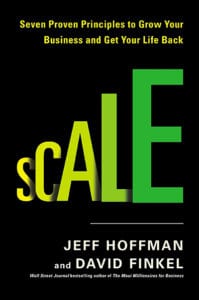
Scale: Seven Proven Principles to Grow Your Business and Get Your Life Back
No, but you triggered what I am going to share something else. Let me summarize that piece that you said from the book because I finally found a more succinct way to say it. Your career, job, and business should be the vehicle that takes you to the epic life you want to live, not the obstacle that prevents you from it. That’s the point of the book. Many people, when they’d see me and say, “You’re out traveling the world. I’ve got a business to run.” That’s the mutual exclusivity. Most people allow their business to be the obstacle that’s preventing them from living the life they want to live instead of the vehicle that takes them there.
I didn’t look at that like, “What epic things can I do around my business?” I said, “How can I re-engineer or design a business so that I could live my life?” That’s the question you should be asking yourself. Don’t work around your business, your business has to work around your life. People say, “Of course, it’s hard having an epic life.” No one hands you that whatever your own version of epic is. People say to me that that’s hard. That is why I’m so glad you brought up the Michael Phelps swimming on Sunday. I’m going to tell you a different story because it’s how I learned it.
I learned it from an athlete friend. A friend of mine was a boxer and it turned out his left hook was good. His name is Evander Holyfield. Evander and I have been friends for decades. He was the Heavyweight Champion of the World at that time. The people that don’t know boxing don’t know Evander. They all know him because Mike Tyson bit my friend’s ear off. Everybody knows that story even if they don’t know boxing. Evander is training in his house, getting ready to go to Vegas for him to fight for the Heavyweight Championship of the World. He’s doing this exercise that he does 300 reps a day. It is an insane exercise. A normal human being couldn’t do ten reps and he does 300 a day. I think it’s crazy. Why do we need to do that? What’s the point?
I’m spotting and counting. We’re in the gym and I’m like, “299, 300.” At the end of these ridiculous 300 reps, Evander looks up at me and he goes, “Jeff.” I said, “What?” He goes, “Was that 299 or 300?” I was like, “300.” He said, “Jeff, I ask you again, did I do 299 or 300?” I said, “You did 300.” He looks at me for a second and then he goes back to the ground and does another rep. As he’s doing it, he says, “I think that was only 299.” As he’s sitting back up, I rolled my eyes like, “Are you kidding me? You do this every day. It might be 299 now.” I rolled my eyes and when he sat up, he goes, “Jeff, look at me.”
I turned and I looked. I have to tell you, John, I’m looking at this guy. The muscles are rippling and the sweat. I was like, “My life was short-lived. I hope someone will notify my next of kin.” What he said next, and I’m being serious, was a life-changing epiphany moment for me. He turned and he looked me in the eyes and he said, “The difference between 299 and 300 is the difference between being the heavyweight champion of the world and every other boxer.” I had chills. I had goosebumps. He got up and he walked away in silence. I closed my eyes and I didn’t move for ten minutes because I was like, “This has to sink into my soul, into my very being.”
[bctt tweet=”Design the future, don’t wait for it.” username=”John_Livesay”]
I sat there and when I went home, I made a sign. I wrote 299. I put a red circle with a slash through it, no 299s here. I stuck it on the wall. Do you know what’s cool, John? When I speak all over the world, I got one from Bulgaria, someone will take a picture of a no 299 sign on their wall. The times when I feel like good enough is good enough, I’m walking out of my office, and I look at that, no 299, I ask myself, “Did you come in here to do 300 and did you quit at 299?” If 299 is good enough, it’s almost 300. Tomorrow, 298, that’s almost 299.
Michael Phelps is down the street doing 300 and he’s going to kick your butt. The same applies to everything you do in life. I always ask myself and people that know me, sometimes will call and say, “I finished something and I looked at my 299.” I went back in and said, “That was 299. I’m going to do 300.” Winners swim on Sunday and winners finish the 300 every single day. There is no shortcut. I was on TV once and this reporter goes, “Jeff, what’s the secret to success?” I’m like, “The secret to success is there is no secret. Everyone was out trying to find one, I was at work.” It’s like, “It’s not the answer I was expecting.” I was like, “That’s all I’ve got.”
What a wonderful story to end on. You opened with an incredible story of being a paperboy, figuring out your key lessons, not wanting to let your mom down, getting into Yale to now speaking, impacting the world, and helping small businesses. This great line, “Your job is the vehicle that takes you on the epic life you want, not the obstacle.” Jeff, I can’t thank you enough. Your website is JeffHoffman.com. Anything else you want to tell us about how we can find you or learn more?
Thank you, John. That’s the best place. I’m most active on LinkedIn. My email is [email protected]. It’s right there on that website. As I said, those organizations, Dream Tank is DreamTank.co, Unreasonable group is UnreasonableGroup.com, and Global Entrepreneurship Network is GenGlobal.org. Those are all the things that I’m part of. Again, if the $10,000 would help somebody, go to COVID19BusinessCenter.com. Thank you for having me.
It’s been a pleasure. Thanks for doing everything you’re doing to make the world a better place and following your own mission to help us all live epic lives.
Thanks.
Important Links
- Jeff Hoffman
- Priceline.com
- Booking.com
- UBid.com
- Scale: Seven Proven Principles to Grow Your Business and Get Your Life Back
- Dream Tank
- Global Entrepreneurship Network
- Unreasonable Group
- Hello Alice
- COVID19BusinessCenter.com
- LinkedIn – Jeff Hoffman
- [email protected]
- Better Selling Through Storytelling Method Online Course
Wanna Host Your Own Podcast?
Click here to see how my friends at Podetize can help
Purchase John’s new book
John Livesay, The Pitch Whisperer
Share The Show
Did you enjoy the show? I’d love it if you subscribed today and left us a 5-star review!
- Click this link
- Click on the ‘Subscribe’ button below the artwork
- Go to the ‘Ratings and Reviews’ section
- Click on ‘Write a Review’
Love the show? Subscribe, rate, review, and share!
Join The Successful Pitch community today:
- JohnLivesay.com
- John Livesay Facebook
- John Livesay Twitter
- John Livesay LinkedIn
- John Livesay YouTube