

Easier: 60 Ways To Make Your Life Work For You With Chris Westfall
Posted by John Livesay in podcast | 0 comments

Chris Westfall is a sought-after speaker, consultant and author who has helped hundreds of clients achieve transformational results. Chris knows that there is an easier way to make things work for you. This is what John Livesay and Chris get into as they look into how you can transform your business. Chris looks at leadership, storytelling and connecting with people as ways of transforming your business. Tune in and learn more from Chris as he delves into storytelling and sales.
—
Listen to the podcast here
Easier: 60 Ways To Make Your Life Work For You With Chris Westfall
Our guest is Chris Westfall, the author of Easier. He talks about the best way to make things easy is to realize you always have a choice. Just because the train goes by does not mean you have to ride that train. We talk about storytelling and how important it is to make sure that you are not the hero of all the stories you tell. Make people want to see themselves in your stories and go on the journey with you. Enjoy the episode.
—
Our guest is Chris Westfall, who’s one of the most sought-after business coaches and sales keynote speakers in the world. He has helped launch over five dozen businesses and has appeared on every network out there. He’s a regular contributor to Forbes, and worked with thousands of leaders at Fortune 500 companies, nonprofits, and high-tech startups. A coach to entrepreneurs and executives around the world, his clients have appeared on Shark Tank, Dragons’ Den, and Shark Tank Australia. He regularly consults with top-tier universities, and is the author of three other books, but the one we are here to talk about is Easier. Welcome to the show, Chris.
John, thank you so much for that introduction. It’s great to be here.
You and I both share a passion for storytelling. You were all about whoever tells the best story wins, and I have a modern version of whoever tells the best story gets the sale, depending on what yours is a broader concept of what winning is. As storytelling keynote speakers, we love to help people tell better stories.
You would find this true too that it not just helps people’s careers but helps them in their personal life. With that said, let’s go into your personal life a little bit and tell us your story of origin. How did you get to be who you are? You can go back to high school or even earlier if you want, wherever you want to start.
[bctt tweet=”Things become easier when you realize you don’t have to hop on every train that passes.” username=”John_Livesay”]
I’m going to start in junior high. I’m in eighth grade, and my English teacher approaches me. She says, “I want you to give the speech at eighth-grade graduation.” I was not valedictorian and anything special. I was just a guy that got approached about giving a speech. I said what I have been saying my entire career, which is, “Yes.” I agreed to do it. That was the very first time that I stepped in front of a group and gave a presentation. There were probably 1,000 people in the audience. It’s a pretty large class of mine in junior high.
That was at age fourteen where I started as a speaker. I went on and lived my life, graduated from various schools, had a career, and all these things. I would always be pulled in front of audiences during my career to speak. I always fought it. I was always like, “This isn’t who I am.” It was a quest to come back to that place of realizing who I am, realizing the person that stepped on that stage at age fourteen is still inside of me.
To recognize that identity and step into it has been something that I have come to realize in my later life has been the most fulfilling part of my career. When you talk about storytelling and particularly storytelling in sales, it’s not just a part of my career. It’s part of my history. It’s something that I grew up with.
Look how far you have come in several years. You have been running a very successful consulting firm, and you speak at these different things. Who is your favorite client to give a talk to?
My client is typically frustrated. They are successful but they want more. My client asks themselves this question, “Is this all there is?” When organizations are looking for more and trying to access a greater market share, sales opportunities, places to make an impact in their careers, and employee engagement, these are a number of things that I touch on but ultimately, there’s a frustration. We know we can be better. We just need to understand how to get there.

Easier Life: Personal or general data protection, privacy law concept
It sounds like you give them a roadmap of how to get there no matter where they are on the frustration line.
A big part of the work that I do is to show people that while I may have a roadmap, they have an internal GPS. I’m going to speak about human nature. We all have inside of us that internal GPS. We have the ability to reroute when our thinking settles down. Even in the midst of very difficult circumstances, if we allow ourselves to see things in a new way, we can take new action.
From my point of view, that new perspective is always available. There’s always a new perspective, no matter what you are going through. It doesn’t matter whether you are going through a divorce or trying to hit a quota that is impossible. There’s always a fresh way of going about whatever it is that you are up against. That’s the premise behind Easier. There is always an easier way, even when life isn’t necessarily easy.
One of the things that stood out to me when I was reading it was not giving up on the concept that there’s an easier way to do something when it seems completely not easy. You feel stuck, and you don’t even ask yourself the question because it seems impossible. The first takeaway I’ve got from the book was, “I need to open my mind up to the possibility that there might be an easier way to get this sale, this funding for the startup, whatever it is I’m doing.”
Part of your background is that you have been helping people get funding and judging at Southwest some pitch contests. The show is called The Successful Pitch. I would certainly be remiss if I didn’t ask you some tips or thoughts on what makes a good pitch. Let’s talk about it in the framework of Shark Tank, where you are pitching investors since that’s part of your expertise.
[bctt tweet=”An Olympic swimming coach is out of the water to gain perspective.” username=”John_Livesay”]
You and I line up on one particular aspect of what makes an effective pitch. Your pitch is not a superhero story, where you stand up and beat on your chest and talk about your experiences. Not only is that insufferable but nobody wants to hear that. The story that people want to engage with is the story where the audience is the hero. Maybe you can’t make your investor or customer your hero, but it’s a good idea to start trying now, and taking your attention off of yourself will help you to create a greater connection in the sales conversation, investor conversation and in every conversation.
When you take that attention off of yourself, you are not going to forget your product knowledge and lose your ability to sell, compel or be engaging. That’s never going to be taken. Like the song says, “They can’t take that away from me.” The point is when we take our attention off of ourselves, what shows up? Here’s what I know from speaking on thousands of stages. You tell me if you see this too.
There are two questions you never want to ask yourself when you are in the middle of a high-stakes presentation. That’s a sales presentation or a presentation in front of 500 salespeople. The first one is, “Who am I?” The second one is, “How am I doing?” It’s a self-awareness that points towards self-consciousness. When you are focused on yourself, do you know what you are not focused on? It’s the sale and everything that matters.
I fell into that trap a few years back when I was hired by Coca-Cola to speak at their CMO Summit. The night before, they gave us a little program of all the speakers for the next 2 or 3 days. I’m like, “Harvard graduate, New York Times bestseller. What am I doing here? How did I get on the stage? The person who hired me is going to get fired.”
I had to talk myself off the ledge of, “Do I care how many books the speaker has sold?” No. “Do I care where they went to school?” No. I care about how they make me feel. If you don’t trust yourself at the moment, maybe you trust the person who has been at Coca-Cola for over twenty years that she knows what she’s doing and saw something.

Easier Life: You got to keep your eye on the ball. It means keeping your eye on the customer, on the client and focusing intently on how you can serve them more deeply, more fully.
I think for myself that I had to focus on, “How do I not fall into that trap,” because that’s the worst mindset in the world before you get on stage the next morning. For me, the minute I start comparing myself to other people, I say, “Cut. Stop.” It’s like a movie. The gateway drug to Imposter syndrome is comparing yourself to other people, “He’s more handsome, taller, leaner, and smarter.” It’s endless. That’s in the dating world, let alone the speaking world. I would love to know if you have any tips for people on how to avoid that horrible Imposter syndrome besides not comparing yourself.
I will tell you a story that a coach of mine shared with me. It starts with a weird question, “Do you have to be an Olympic-level swimmer to coach someone who is swimming in the pool?” In other words, do you have to be an Olympic-level swimmer to be of service to someone who is swimming in the pool? The answer is no.
As a former lifeguard, I would say no.
How do we all know that it is True, not where it’s a matter of belief for a faith that someone on the side of the pool can coach someone in the pool? It is not because of their experience, height or color of their swimsuit. It is because of their perspective. The thing that you bring that is powerful is your perspective. That guidance and wisdom for your audience is a function of your experience but there’s more to it than what you have done over the course of your career. The experience that is so valuable when you speak to sales audiences is the experience you create for the audience.
It’s the same thing for salespeople. If you think, “I don’t carry enough quota to be in this room. I have not sold enough to be in this room,” that’s the wrong question to be asking yourself. The question is, “How is your client doing? How is the person in the pool?” Look at them. That’s where your attention needs to be. It’s because of your perspective, not because of your quota, experience or where you went to school, but because of your perspective. You can share and serve, and if you get out of your own way, you can sell.
[bctt tweet=”We know we can be better. We just need to understand how to get there.” username=”John_Livesay”]
What a great solution to that because I have taught everyone from infants how to swim. You are in the water, and we are having them blow bubbles and stuff to being coached in competitive swimming. If the coach is in the water, he can’t see if your elbows are at the right height. He’s eye level with you, not above. I love this concept of zooming out and getting a perspective.
The second problem you said or question we should never ask ourselves is, “How am I doing?” Whether it’s a talk or sales pitch because it takes you out of the moment. You are not listening anymore. You are worrying about whether people like you or not, which is always the kiss of death. We start making up stories in our heads. If someone gets distracted, “I lost them. They are on their phone,” or they went to the bathroom, or whatever is going on. It may not even be true but we are making it up, and we are not in the moment.
It’s like a field goal kicker in a football game. The reason I think of it like this is that my dad kicked field goals. He was a field kicker in college. He used to say to me, “When I’m kicking a field goal, where do you think my attention should be? Should it be on how I am doing? Should it be on what the coach told me last week? Should it be on the fans and the crowd? Should I be thinking about how I’m going to be the hero of this game if I make it through the uprights or how I’m going to be the absolute bomb if I don’t?”
He would say, “Chris, none of those things matter. You’ve got to keep your eye on the ball.” In this case, keeping your eye on the ball means keeping your eye on the client and focusing intently on how you can serve them more deeply and fully. If you think you can do that by putting your attention on yourself and worrying about your likability factor, you are looking at the wrong place.
I imagined a professional baseball player at home plate, getting ready to swing. As the ball is coming, he suddenly looks up at the crowd and goes, “Do you all like me?” He misses the ball. It’s like, “Strike.” That analogy holds up. I see that you’ve got this great testimonial from a mutual friend of ours, Brant Pinvidic, who wrote The 3-Minute rule. He has been on the show. I have been on some adventures with him. He’s quite the cool guy.

Easier Life: It’s not about controlling your mind. It’s not about controlling your thoughts.
He said that your book, Easier, is unlike any other coaching guide he has ever read. What is it that makes this book so unique? What’s an outcome someone can get? I can share mine, and Brant can share his but I love to ask the author. What was your intent? This book is for people who are frustrated and somewhat stuck and know they can do better but after reading Easier, they are not only going to ask themselves, “Is there an easy way to do this?” but fill in the blank.
The power behind Easier is the power of storytelling. Whatever people take from this book and the uniqueness that Brant is talking about, I would like to think that it comes from the story that unfolds. There are two ways to share information. One is to come down like Moses off a mountaintop and say, “Here are the Ten Commandments. Do these ten things, and the right results will follow.” The other way to tell it is via a story. What people will take away from Easier, whatever it is that they gleaned, the subtitle promises 60 ways.
I was going to get to that. It’s the old Kenny Rogers song, 50 Ways to Leave Your Lover. You came up with 60 ways to make your life easier.
The way that those discoveries are made is through a story. If you find the story engaging and see yourself in the characters represented and the challenges that they have to overcome, that is where the lessons are learned. It’s not so many lessons learned. That sounds like school. It’s more like the discoveries are made if you are looking for a way to blow your quota out of the water to create a deeper market share and an impact on your customers.
I’m not going to say that training is not valuable but those discoveries you make when you are in front of your customer, when you are looking in the mirror and considering the ability to serve, that’s inside of you are much more powerful than these Ten Commandment-type lessons. Training is valuable. You have to understand how things work. You have to be onboard. You have to understand how you create connections, ask intelligent questions, and all those things. My question for the folks reading, and it’s a question in the book is, who are you when you aren’t on your mind?
[bctt tweet=”When you’re focused on yourself, you’re not focused on sales, on everything that matters. ” username=”John_Livesay”]
It’s very much like screenwriting. I took a course that years ago, and they said, “If you want to show a particular character is honest, don’t say it in dialogue. Show it in a situation where they could steal something and not get caught, and they still don’t do it.” You tap into this. It’s Chapter 4 where we are talking about, “Am I the person that eats all the Oreo cookies or am I the person that saved someone’s life? Which self do I put on the shelf? How can I integrate all the different parts of my personality that I’m judging? One aspect of my personality where I am decisive and able to not be afraid, why doesn’t that show up consistently?”
That’s an example of why this fable is so engaging because you start to think of yourself that rare is not the same all the time. Wayne Dyer, back in the day, who was a motivational speaker, used to say, “When you squeeze an orange, you always get orange juice. It doesn’t matter what time of day, in the middle of the room and the corner. What happens when somebody squeezes you, and you get stressed out? Do you get orange juice or do you get anger and fear?” That metaphysical question is my sweet spot of, “Who are we? How can we be more authentic? Why are we, at our best, not at others?” If you could speak to that a little bit and how easy it takes people on that journey of self-acceptance.
It is a journey of self-acceptance. You are right. One of the things that I have accepted in my career once upon a time, which I now reject, is this idea that peak performance comes from mindset and the idea that our minds are set is false. I anticipate that on any given day, we have between 6,000 and 60,000 thoughts running through our brains. Our minds are not set. If we try to set our minds, we are trying to stop the wind or waves from hitting the shore.
What makes things easier is when we realize that we’ve got some thinking going on at all times around a particular subject, and here’s the realization that has shown up for me that has been so powerful. Just because a train of thought shows up, you do not have to ride that train. It’s not about controlling your mind and thoughts and thinking about one thing all day long. That’s not sustainable. That’s not how thought and minds work.
When we get in concert with the way we work, we show up differently. We stop burning cycles trying to rope the wind or stop the waves. Instead of trying to stop the waves, we get on a board, get out in the waves, and start surfing. We start writing and understanding that there is a power inside of these thoughts that can lead us to new realizations and perspectives but we have to step back and stop spending our energy trying to grit and grind things out when there is an easier way.

Easier Life: Storytelling is always selective and sales is selective, and selecting the words that are going to help you most is the key to creating that compelling conversation.
I can relate to that because this concept of not having to respond immediately to something that somebody says or sends you in an email, sometimes, no response is an answer. A lot of people get all triggered. The front of our brain gets hijacked, and we are in fight or flight mode. We are like in that concept of sleeping on it. Get back to perspective, “Is this going to bug me five years from now? Probably not. Why am I letting myself get so upset?” All of that is a key lesson to learn about. Just because somebody says, “Let’s play tug of war,” doesn’t mean you have to pick up your end of the rope.
Many times, we zoom in on things, and it activates the front part of our brain. All of a sudden, we create these stories that don’t serve us, stories around our obligations and duties. The deadline is the deadline but isn’t there a way for you to relate to those deadlines, obligations, that email that you’ve got that can shift your perspective? That’s what you are talking about.
One of the things that I share in the book is a simple strategy. I call it the YAHOO strategy, which is not about the search engine but YAHOO stands for, You Always Have Other Options. If you are struggling in sales and wondering, “Why can’t I crack this customer? Why can’t I get in front of the people I need to get in front of?” You always have other options. What are those options? Thomas Edison said it best, “There is a way to do it better. Find it.”
Keep looking until you find it. As someone who writes books as we do, usually, our first idea is not the best. We go, “Is there another way I could say that? Is there a better way to say that? Is there a way to say that it’s easier for people to understand?” That’s where I see so many people in sales going down the rabbit hole of, “Let me prove how smart I am with all these acronyms and get into the complexity of everything as opposed to.” The simpler you make it to understand, the more likely you are to get someone to say yes. Just because you are making something easy to understand doesn’t mean you are not smart. That, to me, is a big takeaway from your book. It’s the reverse. The smarter you are, the easier you make things.
If sales is about proving how smart you are, that doesn’t sound very smart to me. Do you want to be smarter or do you want to be richer? Do you want to instruct or do you want to inspire? Do you want to describe or do you want to compel? Are you just there to relay information about the product or are you there to relay information so that your customer can take action, step toward you, and say, “Tell me more,” and continue the dialogue that leads to the exchange that is the transaction you are looking for? That’s so important, John.
[bctt tweet=”Training is valuable. You have to understand how things work. You have to be on board and you have to understand how to create connections and how to ask intelligent questions.” username=”John_Livesay”]
Otherwise, we are trying to impress other people as opposed to making that emotional connection that you understand their problems. That’s why you and I both decided to write fables because, through the lens of storytelling, people are not so analytical in a story like they are a movie or any other fiction that they are learning without realizing they are learning, and that sometimes sticks a little bit better.
I know you are interviewing me but I have to ask you a question. Why did you choose to write a fable? What was it that appealed to you about creating a story around The Sale Is In The Tale?
The thing that motivated me to write The Sale Is In The Tale was I kept thinking to myself, “I have given people the steps on how to tell a good story, and with my coaching, they are able to get better.” Having taken the screenwriting class years ago, they are always about show and don’t tell. I thought, “What if I did create a fable where I showed somebody going through this frustration of not making their quota, losing a big sale, not getting a promotion, and all the things that happened to people in their lives but made somebody see themselves in the story?”
You and I talked before the show that the gold standard of whether somebody takes action is if I see myself in your story, I’m going to buy, say yes or change my behavior. That’s what the motivation of, “Let me see if I can do it.” It was a stretch. I have never written a screenplay or anything that had characters in it, distinguishing that, and painting the picture and setting it here in Austin using real places that I enjoy going to and making that come to life. Having moved here years ago, the book is a love letter to Austin too.
We both set books in Austin. That is so fascinating to me. It’s Austin and Dallas for mine. What I take away from your story, and hopefully people take it away from mine as well, is that there’s an emphasis on relatability. That relatability is what makes stories compelling and engaging. Maybe not necessarily that you see yourself in the story but you see the circumstances and identify with what people are going through. That is certainly my hope, and it sounds like it’s yours as well.
[bctt tweet=”It’s no secret that sales is a people business. It’s where business gets personal.” username=”John_Livesay”]
That is the power of storytelling. Bringing that storytelling aspect back to the sales conversation and focusing on the sales folks who are reading this that are looking in the direction of relatability and receptivity. In other words, how open is the customer? Relatability and receptivity are not there. You are never going to get to slide 47 or if you do, they are looking at their phone.
One of the outcomes for us as sales keynote speakers is that people who have read the book are going to want to have us come speak because they are going to want to ask questions about the story like, “How did you come up with this idea? How did you decide to set this? I related to what you wrote in this book, which is different than other books you have written, which are some instructional tips on how to be better at sales, leadership or whatever it is.”
I heard Elizabeth Gilbert speak about her book around creativity, Big Magic. I was completely into the stories that she was talking about her own journey of creativity. It was very different than reading a book on how to be more creative because there were stories in there. The other outcome is it will get us engaged with the audiences before we even show up if they have discovered our fables.
The questions they may want to appear into the discoveries they might want to make on a personal level because it’s no secret that sales are people’s business. It is where business gets personal. To be able to share that perspective with an audience and give them an opportunity to ask you questions and gain the insights of the author, that level of personalization, from my perspective, I certainly welcome it. I’m early in this process. The feedback that I’m getting and the way people respond to this book are fascinating to me.
For us as sales keynote speakers, the key thing to remember is that aspect of connection with the customers, audience, and in a story that goes from point A, point B, to point C that takes you through on a journey that is realistic. That is not to say that it’s completely chronological like, “Let me tell you my life story from birth up until yesterday.” Nobody wants to hear that. Storytelling is always selective, and sales is selective. Selecting the words that are going to help you most is the key to creating that compelling conversation that doesn’t just describe or inform, it’s the conversation that compels. That’s the conversation that I’m here for, and you are too.
You have so many great quotes in your book. Everything in the past, from anonymous to a quote about being lazy from Bill Gates. Can you end this wonderful interview you gave us with a favorite quote of yours, either 1 of those 2 or something else that you like?
Here’s what I’m going to share with you, “Never confuse a single defeat with a final defeat.” That’s from F Scott Fitzgerald. Those are the words to live by. I don’t know about you but I have gone up in my head. This customer called it and went, “The way that I wanted it in is the end of the world. I’m going to get fired.” That’s a little extreme but we go there because we want to win and do well. I can relate. Me too, but never confuse a single defeat with a final defeat because, YAHOO, You Always Have Other Options. The battle is not over. As long as we live to fight another day, the story goes on.
If people want to find you to hire you as a speaker or as a coach, where should they go?
First of all, if they want to hire me as a speaker, I want to say they have excellent taste. My website is WestfallOnline.com. If you head to that website, you will see in the lower right-hand corner a little Contact button. You can send me an email or you can also set up a time to talk and chat for 30 minutes. If you’ve got objectives that you are trying to achieve, sometimes it’s better to parse that out in a conversation. I’m always happy to create that conversation, whatever that might look like. You can also find me on YouTube, Instagram and Twitter, @WestfallOnline. That’s where you can find me at all of those places. You can also find me on Facebook as well.
Thanks, Chris. It has been a delight. What a joy to share a passion for storytelling, fables, and connection with people.
I’m grateful for the connection with you, John. Thank you so much for having me.
It’s my pleasure.
Important Links
- Easier
- The 3-Minute rule
- Big Magic
- WestfallOnline.com
- YouTube – Chris Westfall
- Instagram – WestfallOnline
- @WestfallOnline – Twitter
- Facebook – Chris Westfall
- Better Selling Through Storytelling Method Online Course
Wanna Host Your Own Podcast?
Click here to see how my friends at Podetize can help
Purchase John’s new book
John Livesay, The Pitch Whisperer
Share The Show
Did you enjoy the show? I’d love it if you subscribed today and left us a 5-star review!
- Click this link
- Click on the ‘Subscribe’ button below the artwork
- Go to the ‘Ratings and Reviews’ section
- Click on ‘Write a Review’
Love the show? Subscribe, rate, review, and share!
Join The Successful Pitch community today:
- JohnLivesay.com
- John Livesay Facebook
- John Livesay Twitter
- John Livesay LinkedIn
- John Livesay YouTube
Big Fun Is Serious Business
Posted by John Livesay in podcast | 0 comments

Attending events can be so fun yet, the amount of work put behind the scenes to make them successful is no joke. Take it from the founder of Eventmakers, Guy Genis, who said that big fun is, in fact, serious business. In this episode, he joins John Livesay to share how he is working with huge clients to create memorable and immersive events. He taps into the power of storytelling, taking people from beginning to end with events, and making connections that help propel your business. Guy also talks about interior design, working with clients, and balancing that fine line between giving them what they want and keeping it within the constraints of what is going to look best.
—
Listen to the podcast here
Big Fun Is Serious Business
My guest is Guy Genis, the Founder of Eventmakers, which has been in business for over 30 years, working with huge clients like McDonald’s on creating memorable events in multiple different places. When we describe some of the events that he’s created, the experiences and how immersive they are, you’re going to feel like you’re right there. We talk about the power of storytelling and how that makes events memorable. He said that big fun is in fact serious business, and that you’re only as good as your connections. Enjoy the episode.
—
My guest is Guy Genis, the President and CEO of Eventmakers. He founded Eventmakers back in 1990. He’s produced over 1,000 events in his 30 years and his knowledge and expertise in event creation and execution clearly speaks for itself. Before Eventmakers, he charted and planned events on luxury yachts in partnerships with the Ritz Carlton hotels. When he’s not doing that, he’s busy with Guy Genis Designs as an Interior Design Expert, which is all part of the experience he creates for his events. Guy, welcome to the show.
Thank you.
Let’s talk about your own story of origin. Before the show, we were talking about you have a history with your mom and your grandmother in the world of design. Is that true?
That is true. It’s an interior design dynasty. It’s grandmother. Mother was a successful interior designer for multiple celebrities including DeNiro, Marlon Brando and Rod Stewart. My sister, in her own right, is successful and works with my mom. Now, I’m collaborating with my sister on interior design projects all over. We did a 6,000 square foot home in Kona, Hawaii overlooking the Four Seasons golf course. We did a 12,000-square-foot home in Newport Coast. That’s when I’m not doing producing events.
How did you get into this 30-some years ago? Did you say, “I want to take my passion and skills from creating beautiful spaces for homes and started an event company?”
No, it dates back and I didn’t even know I was doing it. I was the Social Chairman of my fraternity at University of the Pacific. I never knew I would end up for a living producing events. I was an actor when I graduated. I was on a bunch of TV shows. I played a nerd name Earl on Saved by the Bell on a couple of episodes. I was a day player on Coach and Dear John and Anything But Love with Jamie Lee Curtis. It’s amazing when you’re acting and to be on a 3, 4 camera shows is incredible. When you’re not working like all actors know and going on auditions and not getting them, it’s a little depressing. My father was in the film industry. I came from a creative background. My dad produced the special effects for Star Wars with Lucas. He created those iconic titles that went off into space.
[bctt tweet=”If you enjoy what you’re selling, you could sell anything.” username=”John_Livesay”]
Let’s take a moment. I think any person that has any creative aspect in their life dreams of creating something that iconic and that will live on long past their life. To grow up around that, you have a sense of anything is possible, I would think.
It was a great combination of one parent being on the creative scientific end and the mother could be creative in the interior design.
You are the mix of science and creativity. When those things come together, magic happens. It reminds me of the story of Jonas Salk down in La Jolla wooing Francoise Gilot who was with Picasso in the ‘40s. She’s like, “Why do I want a data scientist? I’m an artist.” He used the architecture of the Salk Institute. He said, “Architecture is the bridge between art and science. I want to have artists here as well as someone like Francis Crick working on DNA.” You’re the only other person I’ve ever heard connect those dots like that. What I think is interesting around what your dad was doing with Star Wars is there’s a lot of creativity, obviously creating something that’s still the iconic opening, the once upon a time storytelling, but there’s some science behind it too. He wasn’t a graphic design person, correct?
That is correct. I drifted away from your question. The real answer is how I got into it is I went to my dad who had a post-production company and they were doing the audience reaction spots for Disney. I said, “Dad, I’m bummed out. I’m not getting these auditions.” He says, “Go to work for the company that plans our events.” I ended up for a low salary and a high commission going to work for this boutique company in Marina Del Rey, California chartering yachts for the Ritz Carlton. We would do these extravagant corporate events. I ended up the cold call king. I knew if I enjoyed what I was selling, I could sell anything. My acting partner, when I would go on auditions, this female happened to own a McDonald’s.
She said, “You are crazy if you don’t call the regional office in Woodland Hills and try to get a meeting or an event.” After thirteen cold calls, they said, “You’re bothering me. Come in.” I ended up closing a holiday party for 1,000 guests for McDonald’s. Flash forward 30 years later, my twin brother and I produced the majority of owner-operator meetings throughout the country for McDonald’s. That’s where I think you, as a motivational speaker, when I learned about you and selling and storytelling could be perfect for our McDonald’s clients as well.
Also, I want to zoom out for everyone because you had a story of persistence. You had a friend saying you’d be crazy not to try something, but you’re used to rejection like salespeople are. An actor’s life and a speaker’s life are very similar. We can’t take rejection personally. Yet when you are creating content, and in my case it’s creating a show and interviewing great people like you, I happened to interview a mutual friend of ours, Amber Allen. That’s how we met because you knew Amber. You’d worked with her when she was at Warner and Disney and you did events for her. You heard me interviewing her about her virtual reality company, Double A Labs.

Events Business: More than anything, you can’t sell your style to a client. You have to listen first and make sure that you understand where they’re coming from.
You reached out to me. You never know how relationships are going to start and the connections and the need to keep creating something that’s valuable. You get into other people’s networks and other people’s worlds. I’m sure that’s how you have been able to grow Eventmakers where you’re working with not McDonald’s but Coca-Cola, American Express, Fox and many others. You get the trust transferred over is what I’m saying.
You are only as good as your connections. I would say Amber is a highly talented cutting-edge person producing these technological events where using augmented reality. That’s why she’s an innovator. She’s on the cutting edge and we all help each other. You can’t advance your company without having strong connections like this.
Also what I admire about you, Guy, is your multiple sources of income. It’s a basic business strategy. Yet a lot of event planners, a lot of speakers suddenly go, “If I’m not doing a live event that’s shut down for a pandemic, I don’t know how to else to make money.” You have the design business. You’re already planning months in advance for when live events come back. Have you been able to do any planning for virtual events to make those special?
Yes. As a matter of fact, McDonald’s has embraced virtual events. We’ve invested in a full studio in Orange County with one of our partners. We have full capabilities to stream. We have a green screen, we have Johnny on the spot custom to produce for a network, camera crews that go out and do interviews of these executives. We’re doing these virtual meetings for McDonald’s throughout the country.
Everyone knows about Tony, the famous motivational guy. He’s invested millions of dollars in having a virtual ability to connect with people. I think when a company like you creates a new way of doing something. Let’s talk about that. Over your 30 years of running Eventmakers, what other kinds of pivots or challenges have you had to face and how have you done it like Tony Robbins has done?
The interior design is the perfect pivot. It was right in front of my face, but yet it’s one of those things you have to come to a real realization that, “I’ve done this all my life.” It’s such an easy pivot and you’re already good at it. It’s a form of storytelling as well.
[bctt tweet=”You are only as good as your connections.” username=”John_Livesay”]
We were talking about one of your clients, GameStop, and how you turned a game into an experience in a specific location that was completely relevant to what the game was about. Can you tell us that story?
The end client was 2K. It’s a video gaming company based in Novato. The game itself was called Mafia 3. The backdrop of the game is about the mafia in New Orleans in the 1960s where the mafia started. The purpose was to sell 5,000 GameStop managers in three minutes, which is a challenge. How do you tell a story beginning, middle, and end, get the GameStop managers motivated and have them leave the arena with the intent of an excitement to sell this game through at a GameStop? We came up with the story of creating a real live New Orleans funeral where we had a cast of 50. We had the cast of 50 dressed by Emmy award-winning costume designers in those 1960s outfits. They were doing a real funeral procession down the aisles, pushing the caskets. The audience didn’t know that this cast of 50 was a world-class choir. They get up on stage and they come in and we have them led by a sixteen-piece jazz band singing The Saints Go Marching In like they would do in New Orleans.
They get up on stage and 25 peel off to the right on the bleachers and 25 peel off to the left and they begin the choral of Can’t Always Get What You Want by The Rolling Stones, which is the perfect song and lyrics to talk about the mafia. It was a big surprise in the audience didn’t know that this was a world-class choir, the Angel City Chorale from out of Los Angeles. They made it to the finals of America’s Got Talent. All of a sudden, after they start, I put together a world-class rock band led by Chester Bennington of Linkin Park, Dave Navarro. I had the drummer from Queens of the Stone Age. I had the bass player Scott from Weezer and they go into Can’t Always Get What You Want.
We outfitted every single GameStop manager with LED wristbands. We control the color of 5,000 in the audience and they went bananas. While this was all happening, we edited scenes from Mafia 3 above them on a 100-foot video screen. It was a full visceral, they were enveloped, sold on the game footage, a world-class band and choir. It was a full sensory emotional experience. They came out of there pumped up. Some people were crying from GameStop, the managers, and they said they’ve never seen anything like it.
For everyone reading, let’s break down what Guy told us. A story has to be three things: clear, concise and compelling. In three minutes, you have to tell this amazing story that pulls people in. I always say, when you tug at people’s heartstrings, they want to open their purse strings. When you learn a good story, craft it, make it concise and compelling, then it touches us on an emotional level. Any good story has a little bit of drama and unexpectedness to it. First, it’s cool enough that these people are dressed and carrying a coffin and wearing stylish period clothes. That alone pulls you in. The surprise is those people are professional singers. You keep escalating the wow factor.
You take it one step further. You were describing where it became interactive that they felt part of the story with the colors. If you’re trying to figure out, “How do I tell a story to get people to want to hire me? How do I tell a story to get people to join my team? How do I get to tell a story to get people motivated and re-energized?” Those are some real key tactics. What I love helping people do is take these examples like you gave and turn them into stories so that people see themselves so much in the story that they want to go on the journey with you. You did something I’m not even aware of that you did because you’re such a natural storyteller, which was you gave a resolution to that story. It was telling the story of the guy who runs it saying he was almost in tears and so was the audience. He’d never seen anything like it. That’s the resolution of that story.

Events Business: “Big fun is serious business.”
Imagine the Wizard of Oz if the movie stopped when Dorothy had gotten on the balloon to go back to Kansas. It wouldn’t nearly be meaningful, but we need that resolution of her back in her bed and all the lessons, there’s no place like home. All of that is what makes any movie a story compelling. You gave us a great example of it and how when we tell those stories, sales happen long after people keep talking about it. That’s the other wonderful thing about storytelling is it makes things memorable.
I might add one more thing that these three minutes was only an introduction to introduce the game developer. By the time the game developer comes on stage, they’re already sold. All he has to do is now show them all this great content that they haven’t seen yet. It was making his job easier, getting them excited and that’s storytelling at its best, I think.
One of my previous guests is Robert Cialdini, who wrote a book called Pre-Suasion. He talks about the power of edification. When you edify somebody before they come on stage or speak, it’s good intros, but you did a whole production to edify somebody. They’re already sold emotionally and then they’re backing up their decision with his own story hopefully if what the game is about and how fun it’s going to be to play. Storytelling as a tool to edify is something I like and have not heard people put those two things together. Thanks for that. I had to share that detail. When you get hired as part of your design expertise, what is it that you do that separates you from all the other people who do interior design?
Everybody has their own style. I would call myself a minimalist. I think listening to the client is important, but we tend to have a clean look. We also do a lot of research on the latest in furniture whether it’s already made or do we need to custom make it. It’s more of a custom-tailored approach to every single client. I think more than anything is you can’t sell your style onto a client. You have to listen first and make sure that you understand where they’re coming from. You also need to let them know if there are any limitations to what they want to do, which is important. You have to be able to direct them in the right way. It’s a fine line between what they want and what you think they should have.
It’s almost like an event. That’s why it’s similar. I’m trying to guide somebody. You want to give them something new, it has to be within a budget. One of the techniques that I use, and I’m curious to see if you do this, which is a future pacing somebody. You say, “Let’s imagine that it’s a week after the event. What would have to happen for you to feel happy that this was the best event ever? In the case of designing a home, let’s imagine it’s all done. You’ve had this amazing Thanksgiving dinner, inviting everybody to come see it. What would you think would be the wow factors in the house?” Those kinds of things help people start imagining the future with you even before they’ve hired you.
That is crucial, which is why I always start with what are their goals? Where do they want to be? They’re living in this house every single day. What’s going to make them the happiest? It’s like walking that fine line between giving them exactly or as much as they want, but yet keeping it in the constraints of what I think is going to look the best.
[bctt tweet=”People get bogged down with data and don’t pay attention.” username=”John_Livesay”]
The other thing I think you do for people is there’s a whole book called The Paradox of Choice. Too many choices overwhelm and maybe even depress us sometimes. Unless we have someone like you, Guy, that we trust your taste, your experience, and that you know what we like even before we see it. You’ve curated something for us. Instead of showing somebody 100 samples of floor coverings or window treatments, or color scheme, if you curate that down to here’s three choices, none of them are wrong. It’s let’s brainstorm together what’s the right one. That takes much stress off of people that you don’t even realize what a gift that is that you’re giving to people. It’s the ability to not overwhelm them by too many choices. That trust factor that you have and that’s what a good salesperson does too.
It all boils down to focus and you want to keep them focused on the goal of getting this done the best way and the most creative way possible. I’m also interested. I’m aware that you sold a major institutional interior design firm Gensler on a $1 billion project. I’m interested to go more in-depth on how you did that because it’s something that would help me in my interior design endeavors.
They hired me originally to speak to their team on storytelling for client relationships. We need to connect with our existing clients better. It became how do we tell better stories in our interviews when we’re competing against other firms. They didn’t understand what made a good story or how to structure a story. They weren’t telling stories. They were showing typically before and after pictures of work they’d done and hope that whoever had the best design would get the business. In this particular case, they were told, “You’re in the final three. All three firms could do the work. Otherwise, you wouldn’t have made it to the final three. We’re going to hire the people we like the most.” They said, “Let’s get John in here.” We don’t even know where to start with that criteria.
I flew to Pittsburgh with them for two days and worked with them. I said, “On this team slide here, what are you going to say?” They said, “If we run out of time, we might skip it even.” I’m like, “That’s the most important slide.” This is the secret, Guy. People hire you, and then the company, and then your designs in this case. Most people jump to the design. I said, “What are you going to say?” There are ten pictures of ten people that would be working on this that they got the job. “My name is Bob. I’ve been here ten years. This is what I do.” I said, “No, Bob. What made you become an architect?” “I played with Legos when I was eleven and now I have a son that’s eleven and I still play with Legos and bring that same passion.” “Sue, how about you?” “I was in the Israeli Army before I worked here.” I go, “You’re going to bring a lot of discipline and focus. Since you’re in charge of making sure this thing comes on time and under budget, you’re the perfect person.”
Each one of them had their own stories that they told that made them memorable and likable so that the clients said, “We get them. That’s who we’d like to work with for the next six years.” When we got to the part where they had to showcase studies, they had some beautiful before and after pictures, but no story. I taught them how to take those pictures and facts about square footage and things into a story. It sounds like this. “Two years ago, JetBlue at JFK hired us to come in and renovate that wing. One of the challenges we had during that four-year project was you had to rip off all the tiles in the middle of the night and rewire everything. We had to do it between 9:00 at night and 9:00 in the morning to make sure the stores could still open and not lose revenue. We had all our vendors on call in case something went wrong.”
“Sure enough, at 2:00 in the morning, a fuse blew. We got the vendor to fix it there in twenty minutes. At 8:59, the last tile went down and all the stores opened on time. Now a year later, sales are up 15% in those retail stores because we’ve designed a place that pulls more people in and causes them to spend more time shopping.” It’s a short little story, but it’s got the elements, the exposition. We know where we are. It’s JFK years ago. We know the story. The difference is most people make the mistake of saying, “We use critical thinking to anticipate problems.” That’s corporate-speak. I teach people how to tell a story. You see, I show them critical thinking by having all those vendors on call.
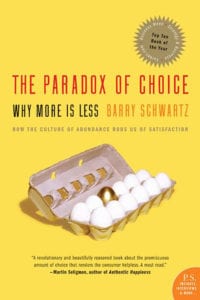
The Paradox of Choice: Why More Is Less
I read some of your literature and it says that people get bogged down with data and don’t pay attention. That is the main purpose for the story. Everyone loves a story.
The magic question then becomes, does that sound like the journey you’d like to go on? The people at the Pittsburgh airport saw themselves in this journey that they had done for JetBlue at JFK, they said, “Yes, that’s the journey we want to go on. We have an emotional connection to you from your story of origins. Now we have a case story that we’ve seen ourselves in that makes us want to pick you.”
It’s an excellent way to approach sales.
The awkwardness of do you want to buy? What do you think? I also work with people on having a great opening and a great closing. You know that from being an actor and designing things. When you’re going into space, you need that wow factor. You need a wow factor in your opening. Most people waste all that time with cliché statements like, “Thanks for this opportunity. I’m excited to be here.” I tell people, “First of all, it’s not about you. Nobody cares that you’re excited. We need to open up with something that’s going to grab their attention and make it about them. In this case, you’re a CEO tasked you with getting the airport ranked from 24 to 1 in five years because we’ve done it before for another airport.” That’s much stronger than, “Thanks for this opportunity, I’m excited to be here.”
The closing, when you’re going to a great party or an event, there’s usually some closing of the event whether it’s music or something that ends it. Unfortunately, without proper training, a lot of people end a meeting or a presentation or a pitch with, “That’s all we got. Any questions?” It’s bad. I train them on recap what you’ve said, “If this sounds like the journey you’d like to go on,” recapping what they need to get their ranking up and imagining the future. “We’d like to invite you to join us on this journey together.” That closing question is part of the story. It’s not pushy.
One of the things we haven’t touched on yet, which is such a big part of Eventmakers is the ability to tell a story through an exhibit. We are designing and producing exhibits in a great way to tell a story for one of our clients Starbreeze, which is a video game company based out of Sweden, is they had The Walking Dead license. We designed and produced The Walking Dead exhibit at E3 and it won by multiple press companies, best exhibit. We recreated the actual fort from the video game that is realistic with the seats that were tires. Things in The Walking Dead movie and TV show where they build things out of scrap junk. We made it come to life. The extra layer was hiring the actual makeup artists from The Walking Dead and having actors in clothes. We had eleven zombies walking around for both photo op. It was effective and it told the story.
The photo op, what a great example of making something memorable and then people post it on their social media and then the event memory, the experience lives on and on. That’s the takeaway that resolution part of it that people go, “I’m going to remember that.”
We had produced fake guts and the attendees and the press would eat the guts. They were in there with them. It was effective and fun.
The more senses we get involved, the more interaction we have going on, the more people are emotionally connected to any story. That’s why we were talking about the Madison Square Garden Sphere opening in Vegas. That’s going to be interactive where you can smell things and feel the wind in your hair like a Disneyland ride or something. The new way of creating events is to have it be completely immersive. The sound is as good in the first seat as it is in the back row. If you’re are showing an example of a concert or what it’s like to land on the moon, you feel like you’re in the story in a 360-degree experience. You’re certainly positioned as the right event company to make those experiences happen because you’ve already done it. Now, technology is catching up with your skillset and vision. Any last thoughts or quote you’d like to leave us with, Guy?
We always under-promise and over-deliver. The other one that I learned from a famous event planner, John Daley was, “Big fun is serious business,” because the more that the bigger the event, it is a serious undertaking. It’s a three-ring circus and you’ve got to go to the next level to make this immersive and impressive.
Guy, thank you so much for coming on and sharing your passion about storytelling, your own amazing history with your family and how you’ve been able to continually adapt and create new virtual experiences for people. I can’t wait to see what other amazing events and designs that you put out into the world.
Likewise, I look forward to working with you on some big motivational appearances.
Thanks.
Take care.
Important Links
- Amber Allen – Past episode
- Robert Cialdini – Past episode
- Pre-Suasion
- The Paradox of Choice
- Eventmakers.com
- https://www.GuyGenisDesigns.com/
- Better Selling Through Storytelling Method Online Course
Wanna Host Your Own Podcast?
Click here to see how my friends at Podetize can help
Purchase John’s new book
John Livesay, The Pitch Whisperer
Share The Show
Did you enjoy the show? I’d love it if you subscribed today and left us a 5-star review!
- Click this link
- Click on the ‘Subscribe’ button below the artwork
- Go to the ‘Ratings and Reviews’ section
- Click on ‘Write a Review’
Love the show? Subscribe, rate, review, and share!
Join The Successful Pitch community today:
- JohnLivesay.com
- John Livesay Facebook
- John Livesay Twitter
- John Livesay LinkedIn
- John Livesay YouTube