

Humbitious – The Power Of Low Ego, High Drive Leadership With Amer Kaissi
Posted by John Livesay in podcast | 0 comments


The best leaders often do not see themselves as above anyone. They recognize the things they don’t know thus, striving to become even better not only for themselves but for others. If we could name the qualities that this point, it would be humility and being ambitious. Award-winning Professor of Healthcare Administration at Trinity University, Amer Kaissi, Ph.D. put the two together and came up with what he called Humbitious —which is also the title of his new book. In this episode, he joins John Livesay to shed light on these qualities and why he thinks they are important for leaders. He talks about the power of low ego, high drive leadership and being both compassionate and decisive, breaking down misconceptions in seeing kindness as a weakness. When leaders behave with both compassion and action, humility and ambition, good things happen. Let this conversation show you.
—
Listen to the podcast here
Humbitious – The Power Of Low Ego, High Drive Leadership With Amer Kaissi

Humbitious: The Power of Low-Ego, High-Drive Leadership
Our guest is Dr. Amer Kaissi, who is an award-winning Professor of Healthcare Administration at Trinity University, which is a top fifteen national program. He is the author of the book Intangibles, which has won the 2019 Healthcare Book of the Year award. At Trinity, Dr. Kaissi teaches courses in Leadership, Professional Development and Public Speaking and is the Director of the Executive Program. His research interests include leadership and strategy. He’s a national speaker with the Studer Group and a faculty member with the American College of Healthcare Executives.
He is also a certified Executive and Physician Coach. He works with MEDI as an Executive Coach, where he consults with hospitals and healthcare organizations in their strategic planning efforts. He lives in San Antonio, Texas, down the street from me as they say here in Austin. What is also very exciting is he has a new book coming out that I am looking forward to hearing more about. It’s called Humbitious instead of ambitious, combining humility with there, I’m guessing. Welcome to the show.
Thank you, John. Thanks for having me. I’m excited about this.
Let’s hear your own story of origin. You’ve got such an impressive background. You’ve got your PhD, obviously and all of these things. You can go back to childhood or when you were getting your PhD. How did you get so interested in EQ and all of these issues?
I will go back into childhood a little bit. As the audience can tell from my accent, I wasn’t born in the US. I was born in Beirut, Lebanon. My childhood coincided with the Lebanese Civil War, which some audiences may be aware of. It was not a regular childhood per se but I would say it was a happy childhood. One of the main things that influenced me growing up was that my mom worked as a Director of an orphanage. A Civil War was happening so there were a lot of orphans. With the nature of her job, she had to be there 24/7. My mom worked long days. She worked weekends, holidays and summers. During those times, I would go with her to the orphanage.
[bctt tweet=”Humility is being open-minded.” username=”John_Livesay”]
As a child, you will go through the orphanage, what are you going to do? You are going to play with the kids. For years, I played with the kids every single day, I ate and spent time with them. I felt like I was one of them. I was the son of the director but kids don’t care about this stuff. These experiences started teaching me about the value of humility. The value of not seeing yourself as above anyone else because your parents have more money, you have more education or whatever it is.
At the time, I didn’t realize it was humility but now reflecting back at it, that experience influenced my personality and primed me to start becoming a little bit more interested in this topic of humility. The rest of my childhood was normal. The war in Lebanon ended. I ended up going to college. I did an undergrad in Public Health. I then started focusing on Healthcare Administration. I always knew that I loved teaching.
For some reason, teaching was my passion. I call it my first love. I knew that if I wanted to work in higher education in teaching, I needed to get a PhD. I started looking at PhD programs. We didn’t have 111 so I looked at programs in the US. When you are overseas and looking at a program in the US like Nebraska or in Oklahoma, it all sounds the same. I ended up going to Minnesota in the middle of the winter. That’s where I did my PhD.
I was young when I started my PhD. I was 23. I had no business doing a PhD at age 23. No one should do that. That’s my advice to the audience. Don’t do a PhD at that age but for a variety of reasons, I did that. Going into the PhD program, I was thinking to myself, “I’m a pretty smart guy. I’m book smart. How hard could it be?” I didn’t know what I didn’t know.
I went into this program and the people who were doing their PhD, at that time, were at least 15 or 20 years older than me and they have work experience. They had done stuff with my life and I was a 23-year-old kid. I knew nothing. That also taught me another aspect of humility, which is to recognize what you don’t know and to try to know what you don’t know.
In that situation, I did what everyone should do, which is I stayed quiet. I listened because I had not much to contribute to the conversations that were happening in the classroom. Here, I was sitting next to people who had worked and healthcare for years. They had experience and had stories. I had nothing. All I had was book-smart. I learned from them and I started to improve.
I would say these two major experiences primed me for studying humility later on in my life. I then finished my PhD. I’ve got the job here at Trinity in San Antonio. I started teaching graduate students in healthcare administration. For the audience that is not familiar with healthcare administration, this is preparing people to manage hospitals. It’s like an AI program but for healthcare administration. I started working with graduate students who wanted to work in hospitals.
One thing I started to realize is that both our educational system as well as our organizations do not value humility. If you are going to think about it, in the classroom, this is something that I admit that I used to do earlier on in my career, we reward the loud students. We reward the students that are raising their hands all the time and talking before they speak.
We reward that behavior but we don’t reward the students that are a little bit more humble in terms of, they want to take their time to think about things. They don’t want to open their mouth before thinking. That was happening in the classroom but I also noticed that organizations didn’t value humility that much. When they’re hiring for leadership positions, typically you tend to hire the person who is self-promoting, who is charming, maybe a little bit of narcissism in there. Whereas like the humble person, the humble people tend to get passed on for promotions for development in the organization. So all of this stuff together made me think more and more of what the value of humility in our lives and especially within the context of leadership.
All of this stuff together made me think more about the value of humility in our lives, especially within the context of leadership. One major study that I’ve looked at got me into starting to study that in a more formal way. In 2014, the Harvard Graduate School of Education published a report in which they interviewed middle school and high school students. They asked them, “What is the most important thing for you? What is your priority as a 12, 14 or 16-year-old? What do you want to achieve?” The middle schoolers and the high school about half of them said that their priority is an achievement, which is not surprising. They said, “I want to get good grades. I want to go into college. I want to get a good job.” That was not surprising. A little bit less said that their primary priority is happiness. “I want to chill. I want to have a good life. I want to have fun.” As my kids would say, “I want to vibe.”

Humbitious: Organizations don’t value humility that much when they’re hiring for leadership positions. They typically hire the person who is self-promoting, charming, and maybe a little bit narcissistic.
That wasn’t surprising either but what surprised me was about only 22% of the middle schoolers and high schoolers said that caring for others was a priority for them. Think about this, 1 in 5 younger Americans say that caring for others is a priority for them. That got me concerned, especially as an educator, because I started thinking about it. I’m like, “These kids are in middle school and high school now, which means that in a few years, they are going to be in my classroom. More importantly, a few years later, these are going to be the people leading our organizations.”
Only 1 of 5 of them said that, “Caring for others is important.” I dug a little bit more into the values of empathy, compassion at work and how that impacts individual outcomes but also team outcomes and organizational outcomes. I started doing more research on that. I ended up writing the book that you mentioned earlier Intangibles and that’s why I published my second book called Humbitious.
[bctt tweet=”Leaders should have agility, humility, and kindness.” username=”John_Livesay”]
One of the other guests I had on the show, Dr. Diana Hendel was talking about her 100th day as the CEO of the hospital all the tragedy happened with a former employee coming in and killing some people. If you are not prepared with some compassion, as a leader in that situation, if you are only good with spreadsheets, let’s say or leading from your ivory tower, that is not nearly enough in those situations.
That’s why leaders of countries and the president of our country, whoever it is at the time when there’s a tragedy like that, people need to see compassion for what people have gone through and empathy skills in those situations. You may not think that will ever happen to you or under your watch. If you haven’t done any work on developing that skill, you are going to be seen as coming up short in those situations.
In the story that you shared, every leader has one of these stories where there’s some crisis, a major negative event where you have to show up as a leader with humility, compassion and empathy. I agree with you 100%. This is important for leaders but I would say it’s not enough. In addition to compassion, what people want from you is action and decisiveness. That’s where I start talking about the importance of compassion but also courage.
You mentioned the title of my book. It’s not only humility. It’s humility and ambition. These traits, humility, compassion and empathy, I would say they are necessary but not sufficient. If you only have that, you are not going to be successful as a leader, whether during a crisis or during regular times. You need to add more to that. You need to add more tools in your toolbox if you will and have action, competence, courage, ambition.
Let me share with you a story that many people may be familiar with because it happens at the world stage. I don’t know if you are familiar with the Prime Minister of New Zealand. Her name is Jacinda Ardern. You have heard of her and I’m sure many of the audience have heard of her. Jacinda Ardern became the Prime Minister of New Zealand a few years ago. She was the youngest female leader in the world.
Typically, when that happens, people are a little bit skeptical and they were like, “What does she have to offer? Is she going to rise up to the challenges?” She had a challenge right away. Right after she became the Prime Minister, they had a shooting attack in the sound of Christchurch. It’s very similar to the story that you shared. There was an event, deaths involved, victims, mourning and all of that. The first thing that she did showed up as a compassionate leader and was there with the families of the victims mourning with them.
That wasn’t all she did because right away, she went into action. One of the first actions she took was to go to her parliament and force them to pass Gun Control Law. Now, I don’t want to get into the politics of Gun Control Law because I know people agree or disagree with that. I want to focus on the actions themselves, which was Gun Control Law in New Zealand worked fast two weeks after the attack.
That shows that leaders can do both. You can be compassionate, humble, empathetic, and be there with the victims and people who need you. You can also be courageous and take action. You need to have the competence to get things done in these situations. I realized that example because it shows how we can combine these two traits.
Fast forward to the COVID crisis. Again, when New Zealand, like any other country, was facing a global pandemic. What the first thing Prime Minister Jacinda Ardern did was action. They closed their borders. You can agree or disagree with her actions but she was decisive and at the same time, every single day, she was on LinkedIn, social media, talking to the people in her country and trying to understand what are the concerns of the small business owners. She’s trying to emphasize with them and tell them how the government is going to help them to stay above the surface while the lockdown was happening.
[bctt tweet=”Humility is in the value of not seeing yourself as above anyone else.” username=”John_Livesay”]
I have been following New Zealand on what’s happening there for a while now because that interests me. In June of 2020, they had zero active cases of COVID-19 in New Zealand. It’s a small country. It’s an island different than the US. The point remains that when leaders behave with both compassion and action when they behave with humility and ambition, good things happen.
The other thing that you talk about is kindness. That’s something that I resonate with as well. I interviewed the author of a book about deep kindness and the old way of selling, which is my background it’s Always Be Closing, ABC. I have changed it to a new acronym of ABK, which is Always Be Kind. I have people write it on Post-it notes, post it on their mirrors, phones and their computers.
If we can’t be kind to the way we talk to ourselves, how can we possibly give it out to others? I would love to hear how you incorporate kindness, compassion and humility into leaders. I also interviewed Tim Sanders and he goes, “Sometimes people confuse being nice with being weak and it’s not true at all that nice and smart people are successful.” It’s not being kind. Much like you were saying, humility is not something to be avoided but instead, embraced.
I agree with that. Many people have this misconception that being kind is being weak. “She’s sweet or He is so nice.” That’s not what we are talking about here within the context of leadership. We are talking about being kind in a way that you care about the other person, whether the other person is your employee, a client that you are trying to sell something or you care about them. You want good things to happen to them with that concept of kindness, compassion and humility. My background is in healthcare so I want to share with you this healthcare story.
This is a story that was told to me by a physician, a friend of mine who I was working with. Let’s call him Dr. Lee. That’s not his real name. Let’s call him Dr. Lee for the sake of the story. Dr. Lee told me about the time when his diabetic patients came to see him. The patient was there for a regular foot exam. Now that specific patient was severely obese. We are talking about someone very big. Now the patient came in for the foot exam. After the foot exam was over, the patient was sitting on the chair but was having a hard time putting on his socks and shoes back because of his size.
What Dr. Lee did, he noticed that the patient was struggling so very quietly and gently, he went towards that patient. He knelt on his knees and kindly helped that patient. He slipped his socks on, put his hand behind his foot and allowed him to put his shoes on. At the moment, that patient was at first embarrassed but then he started feeling an overwhelming sense of gratitude. He thought to himself, “Look at this prestigious doctor. He’s kneeling in the very humble way, in a compassionate way to help me put my socks on and my shoes on.”
Six months later, that patient came back to Dr. Lee having lost 60 pounds. He told him, “I have been trying to lose weight all of my life. I have never been able to lose more than 5 pounds at a time but because of the act of humility and compassion that you showed me that day, I lost 60 pounds. I have always been sabotaging myself when I tried to lose weight but because you showed me that compassion, I was able to show that compassion to myself.”
He said, “Mark my word, in six months, I’m going to come back having lost another 60 pounds.” That story shows the power of kindness, compassion and humility. When we talk about these traits, we are not only talking about the basic stuff like saying, “Please and thank you,” and all of that. We are going beyond that. We are talking about an act that transformed the life of the other person because you show them how much you care about them.

Humbitious: The real test is how do we behave when the world punches us in the mouth? When we’re in crisis, when someone on our team commits a mistake, when you, yourself, make a mistake. Are you still humble, kind, and compassionate?
When we are talking about leaders in organizations, they all can do similar stuff that showed their employees that you care about them as whole human beings. Same with entrepreneurs or salespeople. You can do similar acts of kindness towards the person that you are working with to show them that this is not only a transaction. “I don’t care about me selling you this product. I want to build a relationship with you because I want what is in your best interest.” That’s how I understand and I studied these concepts within the context of business.
The need to be seen, heard and acknowledged that we have as a child when you jump in a pool and I watch me swim or whatever it is to your parent it doesn’t go away in a job. When you can make employees or patients feel seen and heard, not only a cog in a wheel, then you get incredible results from them because they feel seen and heard.
The flip side of all this is we still get triggered. We hope that our best self shows up and we have acts of kindness and compassion. There can be situations where we get embarrassed. You wrote about this in a blog about this one-second gap that we can have between feeling angry, scared or whatever the issue is before we relax. Can you talk a little bit about that?
[bctt tweet=”Another aspect of humility is recognizing what you don’t know to try to know what you don’t know.” username=”John_Livesay”]
A great philosopher once said, “Everybody has a plan until they get punched in the mouth.” Do you know who that great philosopher is? Mike Tyson. How does this connect to your question? I believe that most of us want to be humble, kind and compassionate, especially when the world around us is behaving the way that we want it to behave.
When I wake up in the morning, the sun is shining, it’s a beautiful day, I have my morning coffee, my kids are listening and there’s no traffic on the road, I tend to be very humble, kind and compassionate but that is not the real test. The real test is how do we behave when the world punches us in the mouth? When they are in crisis, when someone on your team commits a mistake, when you, yourself, make a mistake. Are you still humble, kind and compassionate? That’s why it’s so important to remain calm under pressure. It’s important to delay the response.
Viktor Frankl once said, “Between stimulus and response, there is a space. In that space is our freedom. Freedom to choose how we are going to react.” We are all are getting stimuli from the environment. We are all getting stuff that’s happening to us that irritates us. It may be a colleague in a meeting that rolls their eyes on you, your boss that dismisses your idea, a client that you are going to see or you call who behaves rudely. All of these are happening around us.
We can’t control that but what we can control is our reaction to it. What we can control is how to fall. That’s the One-Second Rule. It could be more than one second. It’s about giving yourself space to react intentionally, rather than to react on autopilot, to lose your cool, yell and scream or get upset, irritated and all of that.
You can still do that later on if it’s appropriate but at least you are doing it intentionally. You are driving the emotion rather than the emotion is driving you. There’s a concept in psychology that people refer to is called the Amygdala hijack. Very briefly, this region in our brain says the emotional region. When we don’t take time to pause, when we are reacting emotionally, the amygdala literally takes over the whole brain and the rational parts of the brain stopped.
There’s no rationality and no logic anymore. An example of that is when you get an email that annoys you and you reply right away in all caps. Five seconds later, you are like, “What have I done? Why did I act in this way?” The One-Second Rule may be the One Night’s Rule, which is sleep on it. Don’t reply to this email right away but allow yourself to be calm, controlled and think about it before you react with it. This is not a call to be submissive or accept everything that people tell you. Not at all.
You can still send an angry email in the morning but at least, now the anger is controlled. You are intentional about you being angry may be appropriate to go and confront that colleague that dismissed your idea but when you do it, you are doing it in a way that you are driving the emotion, rather than the emotion is driving you.
That’s key because where the thinker is thinking our thoughts and not the other way around. I remember Dr. Wayne Dyer, when he was alive said, “When you squeeze an orange, you’ve always got an orange juice. Doesn’t matter what time of day. You squeeze it in the corner, it’s still orange juice,” but what happens when someone squeezes us, we are pressured and in the corner? Do we still get kindness and love or do we get a little anger?
[bctt tweet=”In addition to compassion, what people want from leaders is action. ” username=”John_Livesay”]
I was parked in a parking lot. I wasn’t driving and someone bumped me with their car. I was like, “For God’s sakes, I’m not even driving.” He bumped into my car and I was like, “Take a breath.” When I looked and he didn’t damage the car. It was this big truck and I had said to the driver, “Back up,” and they dinged it again, then my amygdala got hijacked because I was like, “What? You made the same mistake twice?”
You realized that person probably got their amygdala hijacked. They were so nervous. They went the wrong way and didn’t do it intentionally. Once I calmed down I thought, “You have made the same mistake more than once sometimes yourself,” but you don’t have a lot of compassion for somebody when your brain has been hijacked like that.
Let’s get back to reminding everybody if they want more of this insight, skills and takeaways, the book again is called Humbitious: The Power of Low Ego, High Drive Leadership that allows people to realize that they are not mutually exclusive, you can have a low ego and still be a high drive high-performance leader.
To dig a little bit deeper into this concept of humility, what does this concept mean and how do we combine it with ambition, sometimes when you look at the word, it helps you go back to the origin of the word. Sometimes I do that. I’m a professor. I went through the Latin origin of the word humility. Now the Latin origin is humus. What humus mean is close to the ground or close to the Earth. Think of that definition and its application to leadership, and business situations. For someone humble and close to the ground or the Earth, how does that look like in a real-life leadership position?
Let me share with you the story of a leader that not a lot of people are familiar with. Although, he was the CEO and Founder of one of the biggest companies that we all know. This is a story of a guy called Jim Sinegal, the Cofounder and CEO of Costco. We all know Costco. I don’t think anyone is not aware of Costco. We all love Costco.
Jim Sinegal, when he was CEO of Costco and when he cofounded it, if you want us to go and talk to him on any given day, you couldn’t find him in his office. The company headquarters is in Washington State but he was never there. The reason he was never there, it’s because every single day, he still kept playing and visited a different Costco store. Think of that.
Some days he would visit more than one store. Why did he do that? He would show up like that with a name tag that said, “Jim.” He would go into the store with no entourage, no fanfare and he would start talking to the employees working at that specific store. In a very informal conversation, he would ask them, “What do you like about working at Costco? What are some things that you need so you can do your job better? How can we help you? How can we support you?”
[bctt tweet=”When leaders behave with both compassion and action, when they behave with humility and ambition, good things happen. ” username=”John_Livesay”]
In the same way, he would walk up to customers and say, “Why do you like shopping at Costco? There’s a stem club down the road. Why don’t you shop there?” Every single week he would do that, then on Friday, he would fly back to the offices, meet with his executive team and make decisions based on what he learned.
When we think about, what does humility mean? What does this abstract concept mean? That’s what it means. It’s close to the ground or the Earth. Being close to the people that you are leading. He didn’t stay in his ivory tower, in his corner office, closes the door and makes decisions based on what he thought was the right way to do it. He listened to the people and that’s how he made the decision.

Humbitious: One of the main aspects of humility is to be open-minded to realize that you do not have a monopoly over the truth.
One of the main aspects of humility is to be open-minded to realize that you do not have a monopoly over the truth. You are confident in your abilities, experience, qualification. You have done this before but still, you don’t know everything. That’s why you need to be open-minded. In humility research, we call it teachability, that you are willing to be teachable, whether you are talking to a fellow executive or the janitor in your organization. You go into that conversation with curiosity. You go into it with the open-mindedness that, “I’m going to learn something new from this conversation. I don’t know everything.”
I have been reading a lot of autobiographies of movie Directors like Mike Nichols. They obviously have their own ideas, they were also open to other people, the actor’s ideas. If somebody else had an idea of how an ending should come that they were struggling with, they were open to anybody’s input. I love the Costco story. It wasn’t only talking to customers but talking to the employees and getting feedback from both.
I think that shows the willingness to hear both sides of how you can improve and not like, “I don’t care what the employees think. I care what the customers think,” and vice versa. You need both, which is it’s great. Any last thought or do you want to send someone to a particular website to learn more about you as a speaker or a coach?
[bctt tweet=”One of the main aspects of humility is to be open-minded to realize that you do not have a monopoly over the truth.” username=”John_Livesay”]
They can go to my website AmerKaissi.com as well as to anywhere where books are sold. They can get themselves a copy of Humbitious. My hope is we change the way with humility. Let’s stopped doing it as a weakness but we recognize that it’s a strength. It takes courage to be humble, especially when we are combining it with ambition and with competence.
You remind me of the research that Brené Brown does on shame. You are doing it on humility, which obviously the world needs both. Thank you so much for your work and for sharing your insights with us.
I appreciate that. That’s the ultimate form of flattery to be in the same sentence as Brené Brown.
Thanks again.
Thank you. I appreciate it.
Important Links
- AmerKaissi.com
- Trinity University
- Intangibles
- Humbitious
- Studer Group
- American College of Healthcare Executives
- MEDI
- Diana Hendel – Past Episode
- Tim Sanders – Past Episode
- Better Selling Through Storytelling Method Online Course
Wanna Host Your Own Podcast?
Click here to see how my friends at Podetize can help
Purchase John’s new book
John Livesay, The Pitch Whisperer
Share The Show
Did you enjoy the show? I’d love it if you subscribed today and left us a 5-star review!
- Click this link
- Click on the ‘Subscribe’ button below the artwork
- Go to the ‘Ratings and Reviews’ section
- Click on ‘Write a Review’
Love the show? Subscribe, rate, review, and share!
Join The Successful Pitch community today:
- JohnLivesay.com
- John Livesay Facebook
- John Livesay Twitter
- John Livesay LinkedIn
- John Livesay YouTube
Trustworthy: How The Smartest Brands Beat Cynicism With Margot Bloomstein
Posted by John Livesay in podcast | 0 comments
With competition getting tougher by the day, how can you make your brand stand out in the market? John Livesay has the perfect guest who can tell you which brands are doing it right and which ones are doing it wrong. He sits down with the creator of BrandSort, Margot Bloomstein. Bringing her book, Trustworthy: How the Smartest Brands Beat Cynicism and Bridge the Trust Gap, she highlights the importance of regaining the trust of cynical consumers through empathy and authenticity. While having the ability to understand and share the feelings of your customers is key, understanding yourself should come first. Margot then dives into the importance of knowing who you are as a company and brand so you can be in a better position to engage with audiences.
—
Listen to the podcast here
Trustworthy: How The Smartest Brands Beat Cynicism With Margot Bloomstein
Our guest is Margot Bloomstein, the author of Trustworthy. We get into conversations about which brands are doing it right, and which ones are doing it wrong, and why trust is so important as well as an interesting conversation around empathy. Enjoy the episode.
—
Our guest is Margot Bloomstein, who is one of the leading voices in the content strategy industry. She’s the author of Trustworthy: How the Smartest Brands Beat Cynicism and Bridge the Trust Gap and Content Strategy, with real world stories to strengthen every interactive project, as well as being the Principal of Appropriate, Inc., which is a brand and content strategy consultancy based in Boston. She’s a speaker and a strategic advisor. She works with marketing teams, leading organizations for the last several years. She’s the Creator of BrandSort where she developed the popular message, architecture-driven approach to content strategy. She teaches the content strategy graduate program at FH University in Austria, and lectures around the world about brand driven content strategy. Welcome to the show.
Thank you so much. I’m delighted to be here.
I always like to ask my guests their own story of origin. You can go back to childhood, school. Where did you get interested in this concept of trust and content and all that good stuff?
I’ve been working in the content strategy industry for many years, and over that time, I’ve had the opportunity to work with organizations in a pretty broad variety of industries in healthcare, retail and financial services. The common thread that I always see between all of them is this interest in meeting unsolved problems and identifying the problems for their audiences and their customers, and then figuring out how to combine what they offer with what their audiences need. My background before content strategy was in design focused on problem solving. That’s where my interest has remained over time. Our problems and our client’s problems have become more and more complex, but still, some of the tools that we use to meet them around establishing personal relationships and trading and empathy and compassion to meet their needs, those things haven’t changed.
[bctt tweet=”What responsibility do businesses have to care about trust? Why do trust and credibility seem like they’re under attack?” username=”John_Livesay”]
I am all about empathy. I’m always telling audiences when I’m in front of them about the importance of putting on your empathy hat, and the better you can describe a problem, the better people think you have your solution. What are you seeing in your work around empathy?
It’s interesting because in design, in content strategy, in the web industry and how we make the modern web, empathy has become almost like a buzzword in our industry. We talk about empathy and authenticity and transparency, a lot of marketing departments throw around those terms. Over the past several years as we’ve seen different social issues and different social movements come more and more to the forefront. Businesses are trying to figure out how they fit into them if they should comment on them at all. Empathy has become more and more of the latch word. I want to push back on that and say that sometimes empathy demands a level of arrogance of saying that “I can understand exactly your needs, even if I don’t have your life experience.” What we’re realizing more and more is that empathy maybe is a big ask for a lot of organizations, but let’s start with compassion and respect for our audiences first.
How did you come up with the name of your book, Trustworthy?
As I was looking at this problem of trust and seeing how cynicism and gaslighting were undermining the marketing and sales cycles in so many industries, I was starting to notice the brands that were doing it right, that were rising above and saying, “We can still combat cynicism. We can still establish rapport with our audiences. We can still build trust.” I want it to look and see what were the brands that were doing it right, and then figure out why, what can we learn from them, what can we unpack. In Trustworthy, a lot of what I profile are the organizations, brands, campaigns that are doing it right. It’s easy for us to find bad examples of organizations that are destroying trust and we can pile on them, but we don’t necessarily learn from them either.

Smart Brands: Empathy is a big ask for a lot of organizations. Start with compassion and respect for your audiences first.
What’s an example of one that you like?
They’re all my favorites in the book, but one of the ones that keep it much where we all are now is Zoom. When we look at how they’ve faced different challenges over the past several years, it’s a model in how you build trust. Starting back in probably December of 2019, they were seeing maybe 10 million daily users, 10 million daily business users. It’s mostly people coming from within businesses, within marketing departments, having meetings that were all supported by IT teams that were teaching them how to follow security protocols and set passwords. Within a few months, that all changed. Now they have something like 90 million daily users. People are using it that don’t have the support of an IT team. Every schoolteacher or preschool teacher, everyone that wants to get together with a happy hour with their friends over Zoom or celebrate a holiday with family over Zoom.
They’re not doing it with the support of an IT team. That’s when we saw the rise of Zoom bombers pretty early on in the pandemic and all sorts of problems around that. Zoom could have responded by saying, “You’re seeing problems because you’re using it wrong.” They didn’t. Instead, last April 2020, the CEO wrote this open blog post that came out as an apology to say, “You’re having problems with this? That’s our problem. That’s our fault. Thank you for noticing some of these security issues. We appreciate our critics calling out these problems. Here’s what we’re going to do about it.”
He phrased it first in the first-person singular saying, “I’m sorry,” and pivoted to that plural saying, “Here’s what we’re going to do about it.” Calling out his team and giving them credit. He proceeded to say, “Here’s what you can expect to see as far as changes from us. Here’s how we’re going to shift a lot of our engineering resources to support improving security and privacy. We’re going to submit to third-party audits. You can expect to hear from me at this frequency.” He was accountable. That way of building trust when he was at such a point of vulnerability, when the company was at such a point of vulnerability and in the public eye to say, “We’re sorry. Here’s how you can hold us accountable and here’s why things are going to improve from here.” That’s a model in building trust.
[bctt tweet=”Know what your organization is, who you are, and how you are so you don’t lose yourself when engaging with the rest of the marketplace.” username=”John_Livesay”]
The concept of building trust also comes into play for those companies that are trying to win back customers they’ve lost for whatever reason. I was working with one and they had said they didn’t make some deadlines. They were then let go for a year, then they had an opportunity to come back in and convince them to work with them again. I said, “What are you going to say?” They said, “We have all this research we’re going to share on how things have changed.” I was like, “You need to own that you caused the problem, even if it was other vendors and even if it’s the new team, you still have to own it.” What you said is so valuable. That’s why I want to underline it. You have to say, “Here’s what we’re doing to make sure this never happens again.” If you don’t have those systems in place, don’t even bother taking the meeting.
It sounds like you’re describing where a client was saying, “Here’s our new research. Here’s how things have changed maybe in the industry.” When you need to apologize, when you need to demonstrate accountability and show how you are responsible and ethical as a company, it isn’t about pointing to external research. You need to point the mirror back on yourselves and say, “Here’s what we’re doing. Here’s how we are changing.”
Texas was out of electricity and water. People want answers and they want to know what are you doing to make sure this never happens again? It’s not just a business thing. It’s a personal thing. It’s a political governing thing. This concept of trust is in the news.
Texas is a wonderful example. I had the opportunity to speak with someone in their Department of Public Works because I saw him tweeting in a personal way. It was a thread where he was saying, “Yes, this is a problem. I want you to know what I’m experiencing too in this leadership position. Here’s what went wrong. Here’s why we think we’re experiencing this problem. Yes, I am experiencing it too. Customer, as well as a leader here. Here’s what we’re going to do to make sure that hopefully we can right this ship now so that we don’t have this problem in the future.” I reached out to him because I said, “That’s wonderful.” I would love to see that level of discourse and detail and vulnerability as well as voice speaking in a way that your audience can understand. I’d love to see that from more public officials. We can learn from that. That’s what I would love to see moving forward.

Smart Brands: When you need to apologize, demonstrate accountability, and show how you are responsible and ethical as a company. It isn’t about pointing to external research; you point the mirror back on yourself.
You brought up something that if you can explain someone’s problem or their pain points, because you’ve experienced it yourself, your trustworthy factor goes up big time because you’ve been in their shoes. You also talked about that we should double down on qualities that we find that make us unique if we want to increase our social media engagement. The first question I’m thinking our readers will have is, what’s the quality that makes me unique? Let’s start there. How do we even find that?
As you mentioned, a lot of my focus within content strategy has been around brand-driven content strategy, looking at how organizations do identify, what makes them unique so that they can establish that consistent, cohesive, persistent tone of voice. When an organization does that, it does a few things. This is digging into ancient history, but that idea of gnothi seauton. It was carved over the door of the temple in Delphi. Ancient Greece, they said, “First, gnothi seauton.” Know thy self. Before you engage with anybody else, know who you are. In modern branding and modern marketing, we need to embrace that idea, know what your organization is, know who you are and how you are so that you don’t lose yourself when you’re trying to engage with the rest of the marketplace and prospective customers, prospective clients.
That idea of first figuring out who you are, that’s what I dig into around message architecture. A message architecture is simply a hierarchy of communication goals. I developed a tool called BrandSort to help organizations figure out is it more important for us to project that we’re innovative or traditional? We’re maybe witty and polished or scrappier and more creative, because knowing that can then help you determine which platforms should you be using. Where should you be investing your time? What’s the right tone of voice as well as then visually and verbally?
What’s the right look and feel and the color scheme and the style of imagery that projects those qualities? When organizations can first prioritize understanding themselves, then they’re in a better position to engage their audiences, as well as then differentiate better from their competition. I would argue it is a service that we offer our users, our audiences. It’s a service that we provide in saying, “It’s a crowded marketplace. If everybody’s competing with similar products, here’s how we’re different. Here’s how that we aligned with what.”
[bctt tweet=”When organizations can first prioritize understanding themselves, then they’re in a better position to engage their audiences.” username=”John_Livesay”]
Do you have a story from your book of a brand that does that well?
It’s one of the first examples that I have in the book. Writing this book was such a wonderful opportunity to talk with lots of different brands, hear their stories and gather up those examples because we all love the stories. It’s always good to get new stories from brands. One of the first organizations that I spoke with was Mailchimp, because in marketing, small business owners know them well. When Mailchimp first started out, they were a small business serving other small businesses. They’ve grown tremendously over time. Something like 60% of the world’s email marketing now goes through Mailchimp. As they’ve grown over time, they’ve offered new services. They’ve rolled out new offerings to their audience. That was always with a little bit of risk, because for their legacy customers, there’s always that concern of like, “Are you going to forget about me as you’re rolling out new eCommerce offerings? Are you going to forget about what I need and stop servicing basic email marketing customers?”
They’ve made choices to, first, solidify and codify what their brand means and how they manifest their brand. Their voice and tone guidelines are a model in the industry, and they’ve published them publicly so that other organizations can also see the level of detail that they document in them. Their design system, as well, is becoming more and more codified so that their content creators internally know where the guardrails are and then how to be creative within them. It helps them become more efficient and more effective. It also ensures that all their communication is more consistent. It’s serving their different audiences as well, because as they’ve grown over time, they’ve realized that there are parts of their brand that don’t scale or don’t make sense anymore.
It used to be that you would hear error messaging and calls to action in the voice of Freddie, their Mailchimp monkey, their little mascot. You don’t get error messaging from a monkey anymore though, but they have maintained other aspects of their brands, still the same sunny yellow, a lot of the tone of voice is still similar and it’s still consistent. They’ve varied other things around their illustration style, some of their phrasing. They’ve also varied it depending on the different audiences they’re trying to reach. Their guidelines document all of that, both to make things easier for their internal users, their copywriters and any freelancers that they might engage, as well as then their external audience. They know who they are, and they know how they’ve had to change over time to maintain visibility, a familiar face as well as then reassure their audience that, “Yes, we’re still Mailchimp, still the organization you’ve known and trusted for years. You can still make sure and feel confident that you know who we are and how we are and where we’re going.”
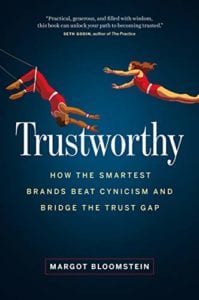
Trustworthy: How the Smartest Brands Beat Cynicism and Bridge the Trust Gap
You bring up a good point about the need to be evolutionary instead of revolutionary as you’re growing your business. If you’ve made your core customers feel they’re not seen and heard or appreciated trying to go after bigger ones, you can trip yourself up there.
Moreover, those customers need to feel both that they’re still important and that they still matter, but also that they know where you’re going. It can be as simple as strategically sharing your roadmap to build that buzz, but also so that people feel confident that, “This is a company I’ve known for a long time, and I know where they’re going in the future.” Also, by giving them hooks of familiarity so that you’re not relaunching your brand right now, you’re still maintaining elements of it that helps to maintain their confidence in themselves that they still know this brand. They feel like they can still trust this brand, that they made a good decision in going with this brand and investing with it. That’s especially important right now because there is so much upheaval in our world and in our economy. For organizations that say now is the time to relaunch, now is the time to completely overhaul our website, when I hear that, I shudder and my head and say, “No, now is not the time for revolution.” It’s more about evolution. Your audience needs to feel they still know you. If you can offer them that level of comfort and confidence in you and in themselves, that’s helping to ground them in a time that is so otherwise unsettled.
In your book, Trustworthy, you have a three-piece action plan. Can you give us the highlights of what that is?
The framework that I present in Trustworthy, it focuses on three parts, voice, volume and vulnerability. I present this as a framework for anybody that’s in professional communication. Designers, the CMO, copywriters, content strategists. If you’re the small business owner and you’re wearing all of those hats, great, this is something that you can take on. To build trust, you need to focus on those three areas. Voice, we’ve been talking about that a lot. Voice refers to the familiar and consistent way in which a brand engages with the world visually and verbally, so word, choice, the overall look and feel of the organization, the different content types you use across different platforms. That’s your voice. That’s what Mailchimp does so well. Some of the other examples I share like Banana Republic, the early days of that, they did so well.
[bctt tweet=”Be evolutionary instead of revolutionary.” username=”John_Livesay”]
The second section, volume, that refers to the volume of information that you’re publishing. The length and level of detail that you go into, in blog posts, in long form copy, if you’re deciding between long form copy and bulleted lists, as well as then, visually. Are you using images that maybe have a great level of detail in them, or are more streamlined to project the sense of simplicity? Do you have images that are maybe in 1 of 50 in a photo gallery or are things more streamlined so that people can get the gist more quickly? For some organizations, they feel like in order to build trust, they need to publish a lot. They need to have a lot of content marketing. That makes sense for some organizations. I profile in the book, Crutchfield Electronics, in order for their audience to feel good about a purchase, maybe it’s high-end audio equipment or camera equipment, they spend a lot of time on the site.
If you look at the pages on that site, they’re long. There’s a lot of different types of content there. You can make sure that you understand a product fully by the time you’re ready to buy because that’s what’s right for their audience. They know that it’s right. They can measure the success of that in the rate of product returns. They’re low because when people are finally ready to make that decision, they can make a decision with confidence. That’s how you know you’ve got enough content, when people can make good decisions and feel good about the decisions they make.
The third section, vulnerability, that focuses is, we were talking about on how organizations maybe prototype in public, come back from a big mistake, take that risk to say, “Do we double down on what we did that was maybe stupid? Maybe the CEO did something wrong or do we seize this opportunity to say we messed up. Here’s how we’re going to own it and here’s how we’re going to make sure it never happens again. Help us in this process, watch how we’re improving, keep giving us feedback.” It’s a tremendous opportunity to bring your audience closer.
The other way that I look at vulnerability in the book is also around how organizations make their values visible. One of the organizations that I profile there is Penzeys Spices. They’re a spice retail chain based in the Midwest. They’ve been bold talking about their politics, why they support immigration, why they oppose some of the other big intractable social problems that we’re facing now and their stance on it. When they first took to social media, sharing their politics, people pushed back. People said, “Stay in your lane there, spice boy. Why are you sharing this?” It was largely the CEO sharing his personal politics. He was pretty upfront about it. He said, “This is our lane. Not only are we a business that sees itself as part of a community, therefore issues in the community are important to us, but also the stuff that we trade in, spices, they come from war torn regions. Furthermore, cooking as an act of love, that’s not just our tagline. We believe that. Many of the recipes that we all love come here on the backs of immigrants. This is much our lane.” It was risky for him to take that position, but when organizations share their values in such a visible way, what usually happens is that people don’t look away. They respond loudly and they got a lot of headlines for that. They lost a lot of customers.
They expanded their audience. They gained a lot of customers, and they weren’t just people that were interested in cooking, they were people that said, “Your values align with my values. This is where I’m shopping next Christmas to get presents for my family. The people that I know that do cook, this is where I’m going to buy presents for them.” They saw something like 50% growth year over year in their profits after they got more political and made their values visible. It’s such an act of vulnerability, but more and more, what we hear is that people do want that level of insight into the organizations where they spend their money.
The book again is called Trustworthy. It’s available wherever you can buy a book. Any last thoughts or link you want to leave us with?
No, thank you so much. This was wonderful. If you want to learn more about it, please visit AppropriateInc.com/Trustworthy. You can follow me on Twitter @MBloomstein. I look forward to hearing how more people use the ideas in this book.
Thanks, Margot.
Important Links
- Trustworthy: How the Smartest Brands Beat Cynicism and Bridge the Trust Gap
- Content Strategy
- Appropriate, Inc.
- BrandSort
- @MBloomstein – Twitter
- Better Selling Through Storytelling Method Online Course
Wanna Host Your Own Podcast?
Click here to see how my friends at Podetize can help
Purchase John’s new book
John Livesay, The Pitch Whisperer
Share The Show
Did you enjoy the show? I’d love it if you subscribed today and left us a 5-star review!
- Click this link
- Click on the ‘Subscribe’ button below the artwork
- Go to the ‘Ratings and Reviews’ section
- Click on ‘Write a Review’
Love the show? Subscribe, rate, review, and share!
Join The Successful Pitch community today:
- JohnLivesay.com
- John Livesay Facebook
- John Livesay Twitter
- John Livesay LinkedIn
- John Livesay YouTube
Courage, Compassion And Rescue with Marty Brounstein
Posted by John Livesay in podcast | 0 comments

Episode Summary:
Urging leaders to make a positive difference wherever they are, Marty Brounstein talks about doing the right thing when you find yourself in a situation where it’s fear-based. As a master storyteller, he discusses the power of using stories as a way to teach people, not only engaging them but getting themselves imagine being in it. He shares his book, Two Among the Righteous Few: A Story of Courage in the Holocaust, about a young Christian couple out of Netherlands who saved the lives of over two dozen Jews during World War I. Highlighting the three key takeaways of courage, compassion, and rescue, he relates all that into the present day and ties them into how to be a better leader.
—
Listen To The Episode Here
Courage, Compassion And Rescue with Marty Brounstein
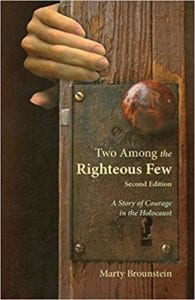
Two Among the Righteous Few: A Story of Courage in the Holocaust
Our guest is Marty Brounstein, who is a master storyteller. He’s the author of Two Among the Righteous Few: A Story of Courage in the Holocaust. It’s a true story of courage, compassion and rescue involving a young Christian couple out of the Netherlands who saved the lives of over two dozen Jews during World War II. Marty has been on an unexpected journey himself and sharing the story of how non-Jews and Jews involved in the resistance and rescue during the Holocaust. Delivering storytelling presentations that audiences have found educational and inspirational as any good story does. This is in the eighth year where he’s been speaking about this. He’s based in San Francisco. It’s great to have you on the show. We love storytelling experts. Welcome, Marty.
Thank you very much.
I always ask my guests to tell their own story of origin. Can you go back and tell us a little bit about your own childhood, high school or college? However far back you want to go where you started becoming enthralled with storytelling.
I grew up in the Chicago area, which is why now I live in California. The winter’s got me. Early on, I always had an interest and fascination with history. In my early professional life, I was a history teacher. Part of what made history come alive for students is the ability to tell stories. As my career evolved as a Human Resources Executive over 25 years, I ran a management consulting business dealing with leadership development and performance effectiveness. We deliver seminars and even executive coaching. Stories are always part of how you teach. It’s a great way to make examples come alive. In essence, it hit me early on and now I realize it more. The journey with this story is all about storytelling at its best.
Let’s double-click on what you did as the leadership development consulting. What lessons did you learn that the audience could take away so that they can become better leaders?
One of the biggest things was engage your audience in whatever you’re teaching them, whenever you’re talking to them rather than talking at them. Part of even now when I do storytelling, but even when I did training, I’m often throwing questions to the audience to get them to be thinking about what’s going on. How would they handle it? What do they know about these kinds of situations or this history? Often as much as when I did the training, having them get involved hands on to practice what we were teaching. All of that engagement, the interactive nature of it is what gets, especially adult learners, but even children, far more involved and far more learning than if they’re just sitting back and receiving.
[bctt tweet=”Help can be as simple as asking, What can I do for you?” username=”John_Livesay”]
When you’re engaging an audience, telling a good story is one way. Getting people to imagine themselves in the story is what I found is the key, especially when you’re giving a case study of someone else you’ve helped and you’re trying to paint a picture as opposed to just presenting a bunch of stats of what you’ve done for somebody else. Can you describe what you have done in your leadership consulting around storytelling as a sales tool?
Quite often in the sales side of it is where I’m meeting a prospective client, as I did many times, I would share stories of what I had done with other clients. It wasn’t just telling him, “This is what I can do for you, but here’s an example of it of how this client took this service and made something good happen.” Those always resonated for people. In teaching of the activities, the skills and the lessons that are a form of sales because you’re trying to get people to sync, open up and learn new behaviors, the power of stories is very helpful to get people to relate. Often, I would tell people, “Do you know where I get the stories from that I’m sharing with you? They came from other managers and executives just like you, who put into practice these skills.” You’d get some nods around the room going, “This is real.” Part of the power of stories is that these aren’t fictional stories. These are always real stories that I’ve told and still tell now with this one on Two Among the Righteous Few.
The phrase that you said there, “Leaders just like you,” is a real great takeaway for the audience to start incorporating into their storytelling so that people can see themselves in the story. One of the questions people have when they listen to a story is, “That’s great for that person, but would that work for me?” If you can paint that picture that they were just like you, they were struggling, they had some challenges, then they overcame those struggles. I was their mentor or Sherpa up a mountain and together, we were able to get them to a place now and that things are great. Do you have some thoughts on the structure of what makes a good story?
This journey with the special story I’m doing, Two Among the Righteous Few, I had a public storytelling presentation event. I had some audience members come up afterwards and going, “I don’t know if I could have done it with Frans and Mien Wijnakker, but I was thinking about it.” It’s the whole idea of putting people inside the story. I’m so excited when I hear that, and I often say it’s not whether you would have, hopefully you never face with the life and death risk they were, but the idea that you were thinking about that, wonderful. Then you’re showing that you have an awareness and an openness. That’s the real key.
To your question about the structure of a story. A story is similar to any good presentation. There’s an opening to get the audience attention. Then you relay, “Here’s what happened,” and then you’re doing some wrap-up. Especially with stories, whether it’s in a sales situation, a teaching situation, as you do that wrap-up, you’re connecting it back to the people right there. How do you apply this? What does it mean to you? It’s relevant. Stories are somewhat like jokes in the same way. When you tell it and it doesn’t fit into the context of what we’re talking about, it falls flat. Nice story, but big deal versus there’s a point to it at the end that connects to people and that’s always the key part.
Otherwise, it’s interesting information but it didn’t emotionally connect with them.
It has to make sense to them that it’s relevant to what we’re dealing with here.
How did you come up with the idea to write this book? What inspired you to write it?
I often tell people, this is a story I stumbled into by accident on a trip to the Netherlands with my wife in May of 2009. The story is about this young Dutch Christian couple named Frans and Mien Wijnakker. During World War II when their country was under the brutal occupation of Nazi Germany, they got involved but most did not. In the end, they saved the lives of over two dozen Jews from a certain death. It’s a story of courage, compassion and rescue. I had heard of their name and the keyword in the book title is the word, righteous. They received a heroic honor called Righteous Among the Nations, which is the honor from the Holocaust museum in Yad Vashem, Israel for the non-Jews like Oskar Schindler. For those Jews who risked their lives to save the lives of Jews in the Holocaust. Not many did it that’s why the title is Two Among the Righteous Few and not Two Among the Righteous Many. Out of curiosity of my wife who has an element into this story, I got to meet the five Wijnakker children. Frans and Mien are not alive, but their five children are.
In that meeting by accident creates the sparks as once I knew of that honor, when I found out that that’s what their parents had received, I was blown away. I understood what that meant. You don’t get that for showing up, something heroic happened. One thing led to another and eventually, not only did I write a book. Early in my eighth year, was my event number 646. It’s taken over our lives but in a very positive way.
Let’s talk about each one of these three words: courage, compassion and rescue. Let’s take each one and describe your definition of it and then pull something from the story that showed unexpected courage.
[bctt tweet=”Listen without judgement” username=”John_Livesay”]
Courage, bravery are in simple terms, the ability to stand up for what you believe or they see the need for help when it may not always be easy. It certainly may not always be popular and there may be risk involved. Certainly, for Frans and Mien Wijnakker, if you’re going to get involved because the consequences were dangerous to deadly. The Nazis didn’t kid. If you got involved to try to help the people they are most after, Jews, you had the same consequences, “We’re going to send you to the concentration camps,” or in some cases, executes you. Compassion, that’s the ability to care for others beyond yourself. I do workshops out of this story in workplaces under the title, The Courage and Compassion to Do the Right Thing: A Lesson in Making a Positive Difference. We have people apply the lessons from the story in their jobs and compassion is one of those things that we look at to what you’re asking.
I often say, “If you could sprinkle the powder of compassion on everybody you come into now and it would forever be their behavior, what a wonderful country we have.” It’s so easy to think about yourself or maybe those near to you, but to be able to show that you care about others beyond yourself is powerful. Frans and Mien did that to the highest degree. All these people that they helped, they knew none of them. They had never met a Jewish person in their lives before they were Catholic and yet they thought that you should care for people in dire need. That teaches a wonderful lesson. The word rescue, and this is to the highest degree, was helping people to be safe, helping people to escape danger. At the height of this, they often had ten Jewish refugees in their own home with their four little children. They created a rescue network in the little towns of their countryside area where they would place Jews with people there. Over two dozen got saved because of their courage, compassion and rescue efforts.
Since you’re doing workshops on this, do you have an example or a story on an actual company where they’ve learned these lessons of courage and compassion? How does it relate? Does it relate to the culture of the company or does it relate to how they treat their clients and customers?
What’s neat about the workshop is I’m going to give you an example that happened with a company. The theme of making a positive difference is I let them take that theme that’s relevant to them. For some of them it’s their core values they want to reinforce. For some, it’s the client service they want to reinforce. In other cases, their leadership. It’s a diversity and inclusion. Sometimes, it’s all those aspects that are important to them. I did a company as an example. They had a management retreat, so I was there working with the management team of 25 or so that they had there and often we have bigger groups. After the storytelling, which they certainly were very inspired, “How do you apply the lessons of the story into your leadership practices on the job?” then we let them draw those conclusions and apply it. In the end, they have to put down a commitment to go forward. The discussion was so rich. It was neat to see the things that came out and we even took it a little deeper because they wanted to do more than that.

Better Leader: We know it’s not easy, so recognize that but don’t let it eat at you.
We looked into leadership behavior that makes a positive difference. We examined some things with them about that that you could just see people in their comments and in their discussions in the small groups, very reflective. Including as we were closing to share some reflections, the general manager, so the top executive in this group speaks up. It was so neat to see and talk about some of her own behaviors, the things that she does, and the things that she has to be more aware of to make her leadership even more have a positive difference. I couldn’t have paid somebody better than that comment at that time as we were getting ready to close. You could see what the power of this was doing for them, and so it was wonderful to see the reception we got from it all.
A lot of people in the business world think that the only way they can motivate, let’s say their sales team is fear-based, if you don’t make your numbers, you’re going to get fired. It is pressure. The opposite of fear is courage. What lessons or advice do you have for people that might find themselves in a fear-based results only driven place of employment to find the courage to not let fear overtake their life in their career?
If you’re in that environment, now you probably have more choices if you have those skills and experience. If you’re sticking it out, it’s not to lose focus on what you’re here to do your job for. If it’s sales, sure you’re there but sales is more than just driving numbers. It’s about giving the clients and customers that quality service. If you say that’s your focus, more than likely the numbers will come with it anyway. Sometimes you have to block that out. One of the strategies when I was doing my management consulting business that still comes up in this workshop too as advice is nod and smile, which is the whole idea. Let them rant and rave, nod and smile. Go back and do what you know is the right thing to do, but stay focused on doing the right thing. Don’t use it as a de-motivator to say, “What’s it going to matter anyway?” You have to do it for yourself because sometimes you’re not getting the positive reinforcement you wish. Don’t let it stop you.
I want to ask you about compassion for yourself when you’ve had a bad day or you’re getting discouraged and then compassion for other people, whether it’s your coworkers or clients. Tell us what tips you have on how we can be more compassionate with ourselves as a starting point.
[bctt tweet=”Let go of negative self-talk, turn the corner” username=”John_Livesay”]
There’s the, “Be kind to yourself.” Sometimes in our heads, we can get all that negative self-talk going if we’re running through some rough patch or people are frustrating. Then you’re browbeating yourself and that doesn’t get you up. There’s that recognition, “What’s going on?” Sometimes a phrase I use is, “Turning the corner.” Put those things aside, go around the corner, stay positive, stay patient. We know it’s not easy, so recognize that but don’t let it eat at you and get you down because that will show. The other part is compassion with their team members. To me, it starts with if you’re a professional as you do your job and it’s also recognizing these people I work with, some I’m going to like more than others. I don’t have to bring any of them home. I need to have good working relationships. If I’m taking steps to consistently treat people with respect, to listen to where people are coming from and not be quick to pass judgment and I’m there when we have challenges to focus on problem-solving. You show that you have compassion then. You show that you can care for people. You show that you can work with people of all types. That’s when you’re performing at your highest level as well.
The third one is rescue. I gave a TEDx Talk called Be the Lifeguard of Your Own Life. Unlike in a hurricane, no one’s going to come and rescue you if you don’t evacuate. What are your thoughts on rescue in the corporate world?
In essence, we don’t have life and death situations in terms of the rescue people may think of. I look at it more of the willingness to help. If you see others in need, whether they’re asking for it or not, it doesn’t mean you go and pose it. If you can do things to cooperate, to lend an extra hand, sometimes help is very simple. You responded to somebody’s email rather than leaving them wondering did you even get it. You can say, “I can introduce you to such and such source who could be the best one to help you with your situation or thank you for opening that door.” Help can be often done in simple ways. When you ask that question, people often say, “How can I help you?” Mean it. Sometimes people say it and it’s like, “Yes,” because you were trained to say the words, but you have no meaning. There’s no sincerity and you don’t want to be bothered. If I need to put something down to come over to help you and do something to get it done, it makes it easier if I need to ask you for helping me. It’s all about building that win-win relationship.
Help can be as simple as asking, “What can I do for you?” It’s so profound yet simple and yet often overlooked unless it’s this grand lifesaving rescue we don’t think any little bit of help makes a difference, but it seems to me you’re saying it does and that it’s cumulative.
I find one of the most simple and powerful forms of help is their willingness to listen to others without judgment. Sometimes what people most need is somebody who’s supportive. Somebody that I can bounce ideas off to vent a few frustrations and it doesn’t come back to haunt me. That’s very helpful when you can do that for people.
I’ve seen it in action myself when I’ve helped clients win that clients they’ve lost because the client feels like, “They didn’t listen to me and things went off track. Now, this project isn’t done on time. I’m mad. I’m not going to work with you anymore.” The ability to listen without judgment, to let them vent, understand, put your empathy hat on as I call it from their perspective of how frustrating it was to not feel like anybody was listening to the warning signs before it was too late, it allows you to be compassionate, rescue the account and save it from being lost. The other big takeaway that you’re talking about here is emotional IQ. Do you have any thoughts around this whole courage, compassion and rescue as it relates to having emotional intelligence?
It does relate as you’re getting it very well there because there’s the intellectual intelligence. You have a good knowledge but do you have, in simple terms, people’s skills? Do you have the skills to get along? Can you understand where other people are coming from? Can you accept the differences and not see them as flaws or things that run from? All of that shows the emotional intelligence. The big part of that is the self-awareness of your own behavior to put yourself in check, to tune in to cues that are happening, both verbal and nonverbal, so that you’re consistently respectful with people. When we listen in the news, the political things happening and the #MeToo Movement, you get that emotional IQ was very low, but the thirst for power was very high to take advantage of people. We don’t need any of that and certainly not in workplaces. We need professional positive environments and emotional IQ was key for making those kinds of environments become real.
What I love about what you did there was take something that happened in World War II and you brought it out into present-day situations of courage and rescue, and the courage it takes to say something to someone who’s powerful. Then it becomes cumulative again. Where there’s one, there are usually many. You’re not the only one, but at the time you think you’re the only one. In your book, were they aware that other non-Jews were helping the Jewish people stay safe or do they think they were the only ones taking that risk?
[bctt tweet=”To be able to show that you care about others beyond yourself is powerful.” username=”John_Livesay”]
Initially, Frans and Mien Wijnakker got involved in this rescue effort by accident, not by design. Frans was doing his black-market business. He’s a risk-taker already because if you get caught, you’re thrown in jail. This is under the Nazi occupation in World War II. This doctor, acquaintance who was a customer he had done business with before, before he leaves the meeting, the doctor says, “Would you be willing to help?” In the end, as the doctor explains, “This young girl, could you take her home to where you live in the countryside for three weeks? She happens to be Jewish. Would you be willing to help?”
Frans was that helpful kind of guy. He always viewed himself that way. He acted that way and here’s the call for help. He doesn’t quite recognize the dangers he’s just taken on and his wife, Mien, when he brought her home right with him, was saying, “Then let’s help.” Then one thing led to another and it built over time. As things built and they got involved with a resistance group that helped them build this rescue network, then they realized there were others doing it but not a lot. They didn’t have awareness of what’s going on in the country. If anything, their awareness grew of how dangerous this was and how careful they had to be because those stories were coming. The Nazis were brutal to any form or resistance, but even more so to those helping hide Jews and yet they didn’t turn away.`
That simple question, “Would you be willing to help?” I also find that when you ask people, “Would you be willing to give me your opinion on something or your advice on something?” It’s amazing how that opens the door to have a conversation that’s collaborative and productive.
The power of questions, which fits well into stories. I start my storytelling presentation on this story, by asking my audience three questions to get them thinking, and that puts them into the story. If they want to go into it, it starts. I have people at the very end as they come up to visit afterwards often say, “Those three questions made me keep thinking through your whole presentation.” I’m like, “I’m glad you were thinking. I’m glad it sparked that awareness.” Luckily, we don’t have to make those kinds of decisions about life and death. You make those decisions and translate it into your behavior.

Better Leader: Do not turn a blind eye to misconduct. If one could get away with it, more will do it.
That’s what I’m doing inside school classrooms to when I take these workshops to organizations and professional conferences. We get past the storytelling and apply the lessons. Especially when I’m dealing with a management group and we talked about applying the lessons, I emphasize if it hasn’t come up, do not turn a blind eye to misconduct. We hear that always in the news. The managers would look at the other way and then here’s this problem manager, the executive that everyone knew about, but nobody ever said or did anything about it. You cannot afford that. That’s what creates these toxic environments. If one could get away with it, more will do it. The idea of when you have a very professional environment, you have far more ability to be a productive one. Sometimes it takes the courage to step up and say, “That’s wrong. We’re going to get it addressed.”
What are those three questions? You’ve got us all intrigued with an open book?
Question one, would you be willing to help others whose lives are in great danger? I pause and say, “Think about that,” because that’s a tough question. Question two, would you be willing to help others whose lives are in great danger knowing if you got involved, you would probably put your life in great danger? Would you still help? Question three, would you be willing to help others whose lives are in great danger knowing if you’ve got involved you’d probably put your life in great danger, when these people who most need the help, everybody else wants to hate them or be indifferent to their plight, would you still get involved and help? I pull it together. Two Among the Righteous Few: A Story of Courage in the Holocaust is a true story of a Christian couple that answered their definite yes to three of those questions in a time period when most said, “No.” They are true heroes.
[bctt tweet=”The opposite of fear is courage.” username=”John_Livesay”]
What I find fascinating about the third part of that question is when other people are either hating them or at best indifferent to them, there’s no obvious social acceptance of, “We have to help them.” It reminds me a lot of what’s going on with certain refugees and things, “I don’t necessarily hate them, but I’m indifferent to their plight. It’s not my world.”
During one of my presentations, that comes up from the audience sometimes. They relate these things to the present day.
It’s a fascinating way for us to take lessons from history, apply it to how we’re reacting to what we see in the news and decide which side of the right thing to do we are on and what we can do to take action. Any last thoughts you want to leave us with, Marty, about your book or how we can be more courageous or compassionate?
If you take all of that seriously and we’ll talk in the context of wanting to do your job, especially if you’re a leader in your role, managed positions are viewed as leadership roles, although not all people in those roles act as leaders. Every day, if I approach my job, I’m here to make a positive difference whether I’m in sales, service, whatever role you’re tearing, you then have the right focus. Then you’re going to be always thinking about how do I best work with people? How do I best treat people? How do I best get my job done to get the results that I need? It’s all about making a positive difference and that’s what this story has all been about.
How can people follow you on social media?
I have a website, www.MartyABrounstein.com and there’s a Facebook page for the book under my name as well. When you put the link in my email, I don’t mind people contacting me directly, so I welcome that. I hope to see them at some of my presentations or maybe these are the people who will invite me to come to their organization to share this special story. At the very end of the story, I have a very meaningful personal connection to this story and its heroes as well. I always reveal that at the very end. When they read the book, they will find out. I always close every presentation with, “Thank, God, for the courage and compassion of Frans and Mien Wijnakker.”
Thank, God, for your inspiration, courage and compassion to take this message out into the world. Thanks, Marty, for being on the show.
Thank you so much for having me, John.
Thank you, John.
Links Mentioned:
- Marty Brounstein
- Two Among the Righteous Few: A Story of Courage in the Holocaust
- The Courage and Compassion to Do the Right Thing: A Lesson in Making a Positive Difference
- Be the Lifeguard of Your Own Life – John Livesay’s TEDx Talk
- #MeToo Movement
- www.MartyABrounstein.com
- Marty Brounstein Facebook page
- https://www.Amazon.com/Two-Among-Righteous-Few-Holocaust/dp/B005XHMX96/ref=sr_1_1?ie=UTF8&qid=1538155403&sr=8-1&keywords=marty+brounstein
- Quantmre.com
Wanna Host Your Own Podcast?
Click here to see how my friends at Brandcasting You can help
Get your FREE copy of John’s latest eBook Getting To Yes now!
John Livesay, The Pitch Whisperer
Share The Show
Did you enjoy the show? I’d love it if you subscribed today and left us a 5-star review!
-
- Click this link
- Click on the ‘Subscribe’ button below the artwork
- Go to the ‘Ratings and Reviews’ section
- Click on ‘Write a Review’