

Enthusiastic You! With Joshua Evans
Posted by John Livesay in podcast | 0 comments


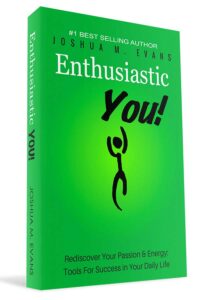
We deserve a life of enthusiasm and passion. However, because the human condition is so fragile, it is easy for everyone to find discouragement and lose focus. In this episode, Joshua Evans, the #1 best-selling author of Enthusiastic You!, shares his thoughts on how you can provide meaning in what you do and succeed in your life. Bringing it to your organizational culture, he talks about how the team becomes passionate when your purpose is connected and identified. Joshua also dives into combating workplace traps and avoiding spreading toxicity, emphasizing that complacency leads to mediocrity, obscurity, and nothing. Tune in to this conversation to rediscover and reclaim your purpose!
—
Listen to the podcast here
Enthusiastic You! With Joshua Evans
Our guest is Joshua Evans who is also the author of Enthusiastic You. He talks about his model Is/Does/Means, how you can take an inanimate object and give it meaning, and how that allows you to find your purpose so you can rediscover and reclaim it in your career. Enjoy the episode.
—
Our guest is Joshua Evans. Joshua has quite a story to share with us. He has studied workplace behavior for over fifteen years. He’s a keynote speaker and a TEDx programmer. He’s the number one bestselling author of Enthusiastic You. He is an adventure seeker. He’s also the father of three. Welcome to the show, Joshua.
Thank you so much for having me, John. It is a pleasure to be here.
Let’s talk about how you got into what you’re doing. You can take us back to childhood and school. What was your first adventure or passion point that led you into being so enthusiastic?
I have always had a zeal for life, excitement, and palpable enthusiasm behind everything that I did. The way that I thought as a young child is how I continue to think as an adult. If you’re not willing to throw your entire self toward something, then why are you going to put in the effort at all? You need to do that. What’s funny is that enthusiasm was never a word that I used in my vernacular but it’s fascinating. I’ll give you how I got into what I’m doing now, and then we can even back up from there.
I was in Corporate America. I studied business and workplace behavior. I studied clients, conversations, and communications. I was in a technology company selling software and working with lots of dynamic teams. It was a very fascinating place for me to work. One day, I got into an argument with a guy that I work with. We had walked into a client’s office, and he came with me as a technical resource because I’m not a technical guy. We talked with a client and turned this small $100,000 deal through one conversation into something that was over $2 million for our company.
It was going to be a huge project. I was excited. You get happy ears as a salesperson. I’m thinking about the commission checks. I’m excited, “We’re about to solve all these problems. We’re going to make all this money. It’s going to be great.” My technical guy goes, “Why would you tell him we could do that?” I go, “We can’t do that. I didn’t lie.” He goes, “We can but it’s going to be so much work.” I was like, “That’s why we’re getting paid.” I was so frustrated with how despondent he was. That evening, I was home by myself because my wife was working late. This was before I had children.
I was having a scotch with my dog. I was like, “People should care about their work. They should be enthusiastic.” I started venting in dictation mode to my iPad. It grew to tens of thousands of words. By happen chance, I ran into a publisher. We started chatting. She goes, “I want to publish your book.” When she published it and it became a number-one bestseller, I said, “That’s it.” I quit my job. I put in my two weeks and said, “This is what I’m going to do full-time.” That’s how I jumped into the keynote-speaking world. It’s in my desire to bring passion back into the workplace and to get people to care about the things that they’re doing so that their lives can be much more fulfilling.
One of your topics that grabs me because I love soundbite and alliteration is Purpose or Perish. It’s so much in the news. Are people coming back to the office? Is it going to be hybrid forever? What is the future of work? How do we get top talent? You say that pay and benefits are no longer enough to keep people engaged. What is the missing link? How do companies figure out how to make people feel engaged?
Everybody starts with a deeper sense of purpose in their work. On the first day, when they walk into their jobs, they’re excited because nobody shows up on the first day like, “I can’t wait to be mediocre.” Over months and years within a role, we lose sight of why we cared in the first place. We get stuck in that day-to-day minutia. We’re staring at the KPIs, the unread emails, and the office politics. All those little things distract us from why we cared so much in the first place. We forget.
My goal with this idea behind Purpose or Perish is we have the decision. We can either choose to have a purpose in our work, or we’re going to perish, never having achieved that result. The interesting thing is if you can dig deep enough into anybody’s career or anybody’s job, as long as they’re not doing anything illicit, and if you can dig deep enough into what somebody is doing and follow the impact that their work has on somebody, you can show them that purpose was there the whole time. I love watching people rediscover it and reclaim it in the work that they’re doing. All of a sudden, this light bulb comes on, and they realize, “This whole time, I did have a purpose. I just didn’t realize it.”

Enthusiastic You!: How amazing would organizations be if we took those moments to tell people the amount of meaning their work has to us?
Rediscover and reclaim it. That reclaiming is where people feel empowered. You do workshops and retreats on this as well. Paint a picture for us of what that looks like in a workshop and a retreat.
When I work with companies that want to bring me in for one of their leadership retreats or a team retreat and workshop, my goal is to dive into their business. The more I can understand their business, the better I’m going to be at tailoring my messaging, tools, and methodologies that I share with them directly to the organization. I can give you a good example. I spoke to a medical company. They rent very high-end medical equipment to clinics, hospitals, and doctors that can’t afford to own that equipment. Because of this company’s efforts, people are now able to rent out these amazing lasers. They’re able to bring those to the underserved areas. Patients are now getting access to unbelievable technology they never would have had access to before.
We were talking with their team. The interesting thing is at a moment’s notice, they fly all over the country delivering these tools but they never have time with the patient. Because of HIPAA laws and all the sorts of governing factors within the medical industry, they don’t get to connect with a patient. They don’t get to see the impact of the work that they’re doing. They get to interact with the doctors. They will show up after the patient has been sedated, but they don’t get to talk with the patient afterward to see how they’re doing and how their life has changed because of the work that they did.
They have this disconnect. Not all of them but some of these people have started developing this disconnect between the work that they’re doing and what it means to the end user. A lot of us do that because it gets so comfortable to sit in what our role is and what somebody in our role does. It’s easy. Our role is our title. It sits in our LinkedIn profile. It’s on your email signature. It’s on your business cards if you still hand out physical business cards, but it’s not compelling. It doesn’t make me on Monday go, “I’m so excited. I have this title.” Nobody cares.
The next thing we’re good at is talking about what somebody in our role does. It’s comfortable. It’s all the tasks, functions, and responsibilities we have in our role like responding to emails, talking with clients, and the things that I have to do on my to-do list but then again, looking at a to-do list is also not compelling. The problem is most organizations stop there. Most employees stop there as well. Whether we’re talking about what our organization is and does or we’re talking about what our role is or does. We forget to go that extra step and talk about what it means. Here’s where the rubber meets the road. I can share a fun story about another organization that I work with.
I love a story.
I was brought in for a leadership retreat for one of the top five law firms in the United States. It was a leadership team. In this small conference room, we were going through this methodology that I have of getting to what it means. Going past Is and Does and moving to Means. While we’re walking through this, there’s one guy that is in this audience. He’s the manager of IT. His name is Joe. To understand, Joe in IT is at the table with the partners or the executive team of this firm.
You can tell that he feels a bit out of place. We’re going around the room and working through Is, Does, and Means. I get to Joe and say, “What is your role?” He goes, “I’m the IT manager.” “What does somebody in your role do?” He’s like, “What somebody in my role does is we manage the firewalls, make sure emails are working, and make sure people aren’t going on the wrong sites. That’s all I do.” I go, “What does the work that you’re doing mean to everybody else at this table?”
All of a sudden, Joe looked a bit crestfallen. He looked down at the conference table. He goes, “I don’t know. It just means the computers are working.” My heart broke for him. He can’t see the deeper meaning. He doesn’t see purpose in his work. He sees tasks to be completed and personalities to be managed. That’s such an abysmal place but the problem is most people live there.
I was about to say something. I would love to say something because I’m a speaker. I was about to jump in when all of a sudden, one of the senior partners at this firm stood up and said, “Joe, are you telling me what your role means to us? You don’t know that. You have no idea what your role means to us.” He went on almost a tirade but it was positive. He goes, “Two weeks ago, Joe, when our servers went down, you showed up on a Saturday to get things fixed. I can’t think of a single function in this office that isn’t dependent upon everything that you’re doing.”
[bctt tweet=”A company culture should be unique.” username=”John_Livesay”]
“Without the work that you’ve done and that you make sure continues to work, we would never talk to our clients. We wouldn’t be able to talk internally. We would have nothing. We would not have a firm without the amazing work that you’ve been doing. If I haven’t told you this before, I’m sorry. The work you’re doing means so much to me and every other partner at this table.”
What a great story.
Here’s the crazy part. It hung in the air. I’m observing at this point and taking notes so I can retell this story because it’s so emotional. Joe looked up. The smile on his face told me that he had rediscovered purpose in his work, but the tears in his eyes told me that he had never been told that before. How amazing would organizations be if we took those moments to tell people the amount of meaning that their work has to us?
It’s so rare that you see somebody smiling and also tears in their eyes at the same time. I love that you were able to notice both of those. It’s almost like the sun is up and the moon is up. That doesn’t happen at the same time. Every once in a while, you can see those phenomena but you put meaning to them. The smile told me he loved being recognized, and the tears told me no one had ever told him that before. It was very moving for him to rediscover.
It was such an emotional experience for me as an observer because the human condition is so fragile. We’re all humans that are based on these emotional situations. We don’t always allow ourselves to be that vulnerable or authentic but there in that room, something happened. Something deep and existential connected these people together. I guarantee you none of them viewed their work the same way after it.
I’m sure because everyone starts looking through that lens. You also give a keynote on the topic of building strong cultures and passionate teams. What I love about your work is that it all fits together like a jigsaw puzzle. If you have a purpose, and when that gets connected and identified, then the team becomes passionate again. You have a culture that is palpable. Would that be fair?
I’m of the opinion that not everybody should like your company culture. If you build a good company culture, it should be unique. There should be people like, “I don’t like that at all.” It should be like jalapeno basil strawberry ice cream. Some people are going to be like, “That’s disgusting. I want no part of it.” There are a few people that are like, “That sounds delicious. I want some of that.” Those people are going to be living purposefully within their work. They will drink the Kool-Aid. I’m a huge fan of if you make a good Kool-Aid, get your employees to drink it. I’m a huge fan of that but it needs to be unique. It can’t be a cookie-cutter off-the-shelf culture. We need to do it intentionally.
Do you have a story of a culture of a company you spoke at that you thought, “They have nailed this. They know who they are and who they’re not.”
It happens with a lot of organizations because a lot of organizations will want to hire somebody like yourself or somebody like me to come in. They’re already thinking about those things. I had a great client in Northern Michigan. They’re such a cool company. They have a slide in the middle of the break room. It’s a giant two-and-a-half-story slide. It’s metal. It’s so fast. They warned you before you get on it. I got to ride it.
You got to be this tall to ride the ride.

Enthusiastic You!: Complacency leads to mediocrity. Mediocrity leads to obscurity. Obscurity leads to nothing.
They have stand-up paddle boards because people take breaks to go to the lake right next to their office. All those things are great but they know that those are just perks or bribes to keep employees happy at the moment. They needed to do something deeper. Having become good friends with the HR leader in that organization, when COVID first hit, I called him, “What’s going on? You’re the CHRO. How are you handling this?” The laws in Michigan got very strict quickly.
Anybody without essential jobs had to go home. They’re a manufacturing company. You can’t manufacture stuff at home. They still have to be on the manufacturing floor but all the administrative pieces, sales pieces, and management had to go home. What do you do when an organization has no work-from-home policies in place? They have never allowed anybody to do that ever.
We have people with desktop computers wheeling them out to their cars on their office chairs. How can you get your team to stay cohesive? How do you build that collaboration when they are so remote? They were telling me about the things that they did. It’s about developing this collaborative sense that we’re all in this together. We’re all in the same boat, the same team, or whatever you want to call it.
What they ended up doing is on their Monday morning calls, they would have a few of their employees do a home office edition of MTV Cribs, “Show us your home office.” I got to see some of their videos. It was amazing because they had people like, “I’m in my kid’s playroom. I’m sitting in Play-Doh. There are a bunch of puzzles over there. I stepped on a Lego.” They would show somebody else. Their wife was unhappy with them working from home. They were stuck in their shed next to a lawnmower.
My favorite one was one of them had no room for an office in his house. He set up shop in his laundry room. Since he missed the stand-up desk that he had at the office, he was using his ironing board as his stand-up desk. It’s those little things that humanize us. They reconnect us emotionally to not just our goals within the organization but to the people that we work with and the people that depend on us.
You also have a third topic. It talks about combating workplace traps and how to avoid spreading toxicity. What is a workplace trap?
This is a big conversation. While that’s not a topic I’ve been given recently and I’ve moved on, that is something important to remember. We get stuck doing stuff with an organization using our preconceptions, knowledge, experiences, and how we have seen other people do it. Organizations have this problem too. Somebody comes into a role with an organization and starts reforming it how they have seen it done before. The problem is that makes people complacent. Complacency leads to mediocrity. Mediocrity leads to obscurity. Obscurity leads to nothing.
Now that you’ve written the book Enthusiastic You, you’re not only helping people rediscover their passion but you’re giving them tools that they can use. Give us a little sneak peek of what’s inside the book of a tool that you think that people could say, “I need to rediscover my passion before I can reclaim it. I don’t even know where to start.” What would be one thing inside Enthusiastic You that tells them they could start doing?
One of the simplest tools is the IDM or Is/Does/Means. I have people do an interesting exercise where they take an inanimate object and write down what that object is. I had them write down what that object does, and then I challenged them to talk about what that object means and to get as emotional as they possibly can. I was doing an event for American Express. I had a group of their management team. We walked through this exercise. I pitted these different teams against each other in sharing the most emotional way to describe their inanimate object.
The best one I got was sunglasses. I go, “What is it?” They go, “It is a pair of sunglasses. It has darkened lenses and frames. That’s what it is. It’s not compelling.” “What does it do?” “A pair of sunglasses block the sun. It can make me look cool. It’s shade. It’s a fashion statement. It’s still not compelling. That’s what a pair of sunglasses does.” “Tell me what a pair of sunglasses means.”
[bctt tweet=”Find the meaning in what you do.” username=”John_Livesay”]
This small group of leaders whispered to each other back and forth, stood back, and confidently went, “I’m going to be honest. What a pair of sunglasses means is that my eyes are protected to see the things in my life worth seeing.” He went deeper than that. He goes. “I can see the smile on my wife’s face. I can watch my daughter walk down the aisle. That’s what a pair of sunglasses means to me.”
Having never watched grown men cry in a group setting like that, it was pretty fun and emotional. That small or simple tool of using an inanimate object but somehow getting to a deeper piece of meaning or something very deep to it is so invaluable. If we can do that for an inanimate object like a pair of sunglasses, why can’t we do that with our role? Why can’t we do that with our company? We fail to follow the impact that our work has and the people that depend on the work that we accomplish. We had stuck thinking about the efforts, not the impact of those efforts.
If people are thinking, “This is great for my professional life to rediscover and reclaim my passion,” is there any of this that gets transferred to their personal life, whether it’s discovering their role as a parent or a loving spouse? I’m guessing there is. You might have an example of that.
Everybody starts from a place where they are engaged in any relationship, whether it’s a professional relationship or a personal relationship. It’s like a glass door. In the beginning, it’s so clear but over time, smudges begin to appear. It obscures and distorts our view of the role that we find ourselves in. We get stuck thinking about all the daily challenges and the minutia of our life. We forget. It happens in all of our roles, whether you’re the VP of X, Y, Z, or the Chief Blankety Blank Officer. It happens in our personal lives as well in the role of a parent, friend, or partner. We forget what doing a great job means to those that depend on us. We forget why we cared so much.
It’s easy for us to get stuck in the day-to-day minutia of who didn’t do the dishes, who forgot to pay that bill, or whatever it might be. We get stuck in that minutia. We forget the commitment that we had and the purpose that is underlying everything that we’re doing. If we can bring that back, all the small tasks, actions, and decisions we have to make are less significant because we have this underlying foundation of purpose within the work and lives that we live.
What I hear you saying is when we can figure out how to rediscover and reclaim our purpose at work, it can help us be better people, friends, spouses, and parents, and that it’s not this separate, “I’m one person at work. I’m another person at home.” It all gets connected to one big purpose. I love it. Before I let you go, do you have a favorite quote or book besides your own that you want to leave us with?
My favorite quote is by Virgil. It’s, “Audentes fortuna juvat.” It means fortune favors the bold.
What does that mean to you?
I’ve always been a very bold person. I’ve always been the person that people have told, “You’re being too loud. You need to settle down. You’re too enthusiastic,” but that quote to me means that I’m very content living my fullest being bold. It means to me that I shouldn’t apologize for living out loud like that because others are too afraid to do it.
Let’s go full circle to your story of origin. Did your parents encourage you to be bold?
Enthusiastic You
Both my parents are very bold people. They’re loud people. They encouraged me along the way.
Are any of your three children bold?
All three of them.
If someone wants to buy your book or book you as a speaker, where should we go? Where should we send them?
Come on over to my website, JoshuaMEvans.com. You can check out my Reels there, buy my book, and book me to speak.
I love it. Thanks so much for sharing your enthusiastic and bold passion for living. You’ve got us all re-energized.
Thank you, John.
Important Links
- Enthusiastic You
- Purpose or Perish
- JoshuaMEvans.com
- Better Selling Through Storytelling Method Online Course
Wanna Host Your Own Podcast?
Click here to see how my friends at Podetize can help
Purchase John’s new book
John Livesay, The Pitch Whisperer
Share The Show
Did you enjoy the show? I’d love it if you subscribed today and left us a 5-star review!
- Click this link
- Click on the ‘Subscribe’ button below the artwork
- Go to the ‘Ratings and Reviews’ section
- Click on ‘Write a Review’
Love the show? Subscribe, rate, review, and share!
Join The Successful Pitch community today:
- JohnLivesay.com
- John Livesay Facebook
- John Livesay Twitter
- John Livesay LinkedIn
- John Livesay YouTube
Strategy Sprints For SaaS With Simon Severino
Posted by John Livesay in podcast | 0 comments

Do you want to know the secret to becoming irresistible to your clients? John Livesay’s guest might just have the thing for you. In this episode, John talks with the man who created the Strategy Sprints method, Simon Severino. Simon talks about how strategy sprints work, and how they help improve businesses. Simon and John discuss business strategies that can help double revenue. Simon shares his insights on using strategy sprints to help run your business smoother. Join in and get a few pointers on improving your business profits.
—
Listen to the podcast here
Strategy Sprints For SaaS With Simon Severino
Our guest is Simon Severino who is the Founder of Strategy Sprints. He helps companies focus on what they need to do and how to do it to get their business to scale. Enjoy the episode.
—
Our guest is Simon Severino. He helps business owners run their company smoother and improve sales. He created the Strategy Sprints Method that doubles revenue in 90 days. He is the CEO of Strategy Sprints. He’s also a Forbes Business Council Member, a contributor to Entrepreneur Magazine, and a member of Duke Corporate Education. Simon is the Founder of Strategy Sprints, which is a global team of certified Strategy Sprints coaches helping business owners run their company smoother and doubling their revenue in 90 days. Simon, welcome to the show.
It’s so cool to be here, John.
You and I have become friends. I have seen your strategy in action. I have seen some of the ability to get people to focus and not be overwhelmed or as one person once said to me, “Many entrepreneurs try to boil the ocean and instead of being known for one thing.” Of course, we remember that Amazon just sold books and yet people forget that. They think, “I want to be Amazon, sell and do everything.” I think what you are doing is smart. Also, there are sports analogy there, obviously with sprinting. Let’s go back to when you were a young lad, childhood school, wherever you want, give us a flavor of some of the things you learned from your parents and how you’ve got to have this wonderful focus.
Back in school, Rome, the ‘80s, I was a nerd. I was the guy where you go, “What did he say? What?” You could say a philosopher. I was thinking fancy, very far away, somewhere in the universe, while my colleagues were playing sports. I was like, “I don’t get this thing with sports. I like books.” That’s what I was. The question was, “What is eternal and what is ephemeral?” For me, it was always about, “What’s this whole thing?” Before I do one thing like I become an engineer or a doctor or one of these boring things in here, “What’s the whole thing? What is a human being? How did we get here? Where did we go to? Does anybody have a clue? If I don’t have a clue, I don’t want to become an engineer or a doctor. I want to get the whole thing first. What is this?” That’s how I was, very strange.
I know you had a Philosophy and a Psychology background in school. You then went to MIT Design Thinking. This is not something that you just did on a whim but it was very strategic. I’m sure we can weave in as we discover more of what you are doing now, the importance of having a sense of self and a sense of purpose that gives you the focus. Would that be accurate?
It was a long road up to here what I’m just focused on one thing and it works on a global scale. The journey was super complicated, long with a ton of twists. The first part was studying Psychology and becoming a Psychotherapist. In between, I studied Philosophy because I was searching for this answer. “What is this thing? What is the whole thing and what are the parts?” I did find some answers in philosophy. They then sent me to psychology. They said, “What you were asking, you have to ask these Freud guys there. It’s the other department.” I went to the other department. I started that stuff and I liked it a lot, but it was everything backward. I said, “Beautiful. This department has taught me a lot but where is the forward part of that?” Individuals have their history but what about the future? How do we shape the future? What’s next? They then said, “You then have to talk to the other department. These are the coaches and so I landed with the coaches.
This is where I belong because coaching, I love it. It transforms stuff. You don’t take things as a given, but you break through and it’s always forwards. This is where I found my place. I am a coach. I belong in this world. I am thriving in this world and I love it. I am now certifying coaches on a global scale and we meet every Monday. We have a great time. We are helping people by having more cash and more time, which is a great act of service. What is more important and what makes more fulfillment than serving somebody?
You talk about helping people become irresistible to clients, which is you are singing my song. That’s what I love to do as well through storytelling. How do you do it through Strategy Sprints? What is it that allows people to become irresistible once they have this method in place?
Week one of the sprint, which is always twelve weeks. We have found that you need around twenty days to break current patterns and you take around 80 to 90 days to install new patterns. That’s why 90 days is the minimum chunk and this is our cycle, 90 days which is 12 sprints of 1 week. Week one is always the equalizer. Equalizer means find your niche. Do your Blue Ocean Strategy. What does that mean? Look around yourself. You are swimming in that direction. Who else is swimming there? You could call it, technically, it’s competitive analysis. Where are they swimming? Where’s the next thing that you need to swim around?
[bctt tweet=”Have a vivid vision. Get a unique niche.” username=”John_Livesay”]
This is the equalizer, which asks the question, what’s your uniqueness? This is important because if you just do what others do, you have to swim out of competition. There is only one John. There is only one Simon. What makes you, you? The equalizer helps you get that on a numerical level. It asks first and I’m happy to share it at the end of this episode with the people to share my real equalizer that we do every month for half an hour because it’s such a great tool.
For half an hour, you ask five questions. The first is, “What’s your competitive arena? What are your top three competitors plus what else can the customer do?” That’s why it’s a competitive arena and not just the list of top three competitors. It’s because your customer can not only go to another supplier, they can also have behavioral alternatives themselves. They can say, “If I don’t buy from you, I have Mike, the intern does it.” That’s a behavior alternative. That’s what they compare you to.
“If I don’t buy from you, I can hire somebody and do it internally, I can make a robot do it, I can just do nothing.” These are real alternatives that they are comparing. You make a list of the real alternatives, then you make a list of the features. What they are looking for? You rate from 1 to 10 if you are winning or if competitors are winning. Now, the equalizer does it for you because it’s a smart spreadsheet that creates three clusters. One cluster is where you are winning and the other cluster, is where you are losing.
You are taking a concept that’s intuitive and putting a numeric around it. What you are doing is so smart because you are allowing people to get their focus off of themselves and put their empathy hat on and say, “Where do people see me? Not just between me and my competitors but what else do I have to do?” For example, before Uber came, people could either walk in the rain, drive in the rain, rent a car or get a cab. Those were still other choices when they decide not to get an Uber. That’s an example of what other behavior they could do besides Uber versus Lyft, let’s say. Being able to understand your customer’s choices besides you and your competitors, is smart. I have never heard anyone else say that. Assigning then a number to it is even another level of sophistication.
As a speaker, I have done this exercise where I list about 7 to 8 qualities that speakers have, again putting myself in the shoes of an event planner or a client hiring a speaker, for example, how famous am I compared to other speakers? I’m not Steve Wozniak and yet I’m not unknown completely. I have been on TV. There’s a level of what that number is and then you look at what’s my marketing materials on a scale of 1 to 10. You go down each of those things and then you start to get a little scorecard for yourself. Of course, when you start doing that plus analyzing where your competitors are, again you are putting that lens on of, “Here’s where I can improve and here’s where my standing is.” What I think you are doing is giving people not just a roadmap, but here’s where you are on the map.
That’s a unique distinction, Simon. I want to say hats off to you for taking it another level beyond, “Here’s the roadmap of all your choices now, but where are you on this roadmap?” I haven’t heard of anybody else doing that analytically for people because when that happens, then I can see now where you are able to deliver on one of your promises, which is to be immune to competition. What a fascinating choice of words that is. This equalizer is just the first of many twelve weeks of sprinting and getting that in. Let’s face it, if you are an athlete, as a former swimmer we just didn’t jump in the pool and started swimming laps we had, “When are we going to swim? What’s the timeframe?” Many of us in the entrepreneur world without this awareness just start swimming and hope for the best. Of course, that’s why they flounder.
If you think of a swimmer, a swimmer will think a lot about what distance they compete in, when they compete and then the training plan will be on many levels. You have sleeping, eating and not-drinking and not going out plan. You have periodization of your training, where the cycles get more intensive the nearer you get to the race, which is a simulation of the intensity. Before you will build up in cycles the intensity of what you do and this is exactly the Strategy Sprints Method. You’ve got the point well because every single 1 of the 274 templates does exactly this. It’s a GPS that helps you locate yourself where you are in the context of your competitors and your clients. It helps you empathize, see yourself from the client’s needs, perspective and then define the one next thing that you will improve or fix, which is the next bottleneck.
You know where you are. You know where you want to go. You know what’s needed, not just what your team geeks out but what people want to get or grab from you because they need it. They want it. It’s a real problem that you are solving. Now, you define the one thing that you will improve by 1% this week. Sprint by sprint, week by week, that’s why it works. Everybody asks, “How can you double revenue?” We go, “We have twelve times the chance to the course is correct.” Even if you screw up six weeks, you have still six times the chance to course-correct.
Here’s an analogy for you. Imagine if the Titanic captain had twelve weeks to go through your course, correct and make decisions of how fast they were going in the dark and make that decision to turn before the iceberg scraped the side of the ship. If your company is the Titanic and you were full speed ahead in the dark and it’s too late to turn because you can’t turn fast enough and you still have leaks happening in this case, maybe it’s cashflow or whatever, so that Titanic analogy holds up for you. You know me, I love visual to go on a story, to go with what you are doing.
The other question I have for you is on your Strategy Sprints’ website. You talk about your core values and nobody loves an alliteration more than I do. You have focused, freedom and flow, then three Hs, Humble, Hungry and Happy. I’m curious to ask when you work with clients on their sprints and what makes them unique, do you get into helping them define values like this so that again, it laser focuses them and lets people know who it’s for who it’s not for?

Strategy Sprints: Being humble is when you see somebody and say, “Oh, he can be my teacher about this. I can learn from this person.”
Yes, because its core. Culture is key. It’s maybe the most vital part of a business. You wouldn’t expect this from somebody who calls his company, Strategy Sprints but culture is where the magic happens. The only thing is there is no direct button to change the culture because you change culture via structures, processes and strategy. The way you do it every day creates the culture. This is important because we help in improving the tool vital things which are more time, more cash. Now, how do you do it?
First, you need to get the founder out of the weeds. Usually, the people who founded it out of love, of passion and nerding out are now the bottleneck. You need to get them out of the weeds, create space for them to work on the business, not in the business. We do this in week two by mapping out the key components, the marketing, sales and operational activities. We map them out. We ride them down. We pull the single people out of that because now the process can do it. People can come in and out of the process. You can easily hire people in other countries to do it. Now, we have pulled out of the weeds, the founder.
To make sure I heard you right because I love this phrase. It will be a great tweet. “You help people work on the business, not in it.” Is that correct?
Exactly. You have to work on the business of business. This is our operating model, the business of business, improving, form, fit and function of the marketing, sales and delivery system. To do that, when you get the founders out of the weeds, now they are working on the business, what is this on business? It’s growth and culture, creating activities, growth-related activities, joint ventures, bigger leveraged corporations. The list of Dream 100 clients, the vivid vision on five pages of how it feels, smells and tastes. This is important and hiring and firing. The next thing is culture. That’s defining the values and what is important to you.
Let’s talk about what your values are here. You are helping people focus and get freedom. When all that happens, things happen and their businesses are inflow. They are not starting and stopping. I think that is my understanding and observation of what you are doing. The concept is staying humble, hungry and ultimately being happy, which ties into the freedom aspect of it as well, whether you are not overwhelmed and so stressed out. I think we know what it means to stay hungry and not get lax but a lot of people don’t talk about humble being a value. What does humble mean to you and how do you incorporate that into your values and culture?
We can always learn and we are always 1% worse the next week and 1% better than last week. When we meet somebody, we see them as a teacher. I can learn from John. The first time I saw you, your superpower and what amazing transformative power you have. Immediately, I asked you to come into my mastermind and teach it to the whole community. Bring your superpowers.
Just to be clear, I’m not Superman. My superpower is helping people fix their elevator stories for those people who don’t know what you were referring to. Like, “What is he doing?”
Being humble is you see somebody and say, “He can be my teacher about this. I can learn from this person this.” The opposite would be, I see somebody and say, “I am the expert here. I am the big speaker.” Everybody is great at something. When you see somebody, do you come from a place of, “I can learn from you or do you go into a competition?” This is humble. I can always learn from people I need.
“Do I learn from you or do I see you as a competitor?” If you have that mindset of, “I’m going to learn from you,” then that’s where the collaboration and the growth come as you talk about these partnerships that can happen. I want to ask you two questions. One, who’s the ideal client for this Strategy Sprints program because I’m guessing it’s not somebody who just has an idea or probably maybe I’m wrong. It’s not a Fortune 500 company like Coca-Cola either. There’s probably something in between.
We have a very specific ideal client. It is a SaaS or service business. Typically, it’s a consulting company, marketing company, with 1 to 10 people on staff doing above $35,000 revenue per month and the owner is still in the weeds.
[bctt tweet=”Culture may be the most vital part in any business.” username=”John_Livesay”]
That couldn’t be clear. In terms of the coaches that you have, what is that ideal background that somebody becomes a certified Strategy Sprints coach?
I was talking about this with Gino Wickman, who has a similar model of certified coaches. I asked him because he has more years in this, “What do you look for in a coach?” I was validated that we have the same approach. We say there are some skills that we can teach and some skills that you just need to have because we cannot teach them. The entrepreneurial skills are what they need to have because you either have them or you don’t.
These are things like responsibility, passion, problem-solving, thinking on your feet, finding stuff out and the capability to endure. If you don’t know something, you Google it. You don’t re-delegate it. That’s what an entrepreneur does. “I don’t know. I have to find out.” Always curious, always moving forward trying out stuff and also always responsible. You will never come with excuses and say, “I didn’t have the time or the resources or this wasn’t working.” You make sure it works.
I want to underline this. I want to circle it, highlight it and put it in a sky banner. If someone can hear what you said, “Emphasize this and stop using excuses,” especially the excuses, “I’m so busy.” I can’t tell you how many people tell me, “I didn’t get to that because I’m so busy. My life is hectic and busy.” After a while, when 10 to 12 people a week are saying that to you, I want to zoom out and think to myself, “Do you think you were the only one that’s busy? Does it imply that you were busier than everyone else? Does it somehow make me think that you’ve got great time management skills? Do you think it’s an impressive thing to brag about?”
I think so many people are unaware of how often they are saying it and what it comes across as, it doesn’t impress me. It does the opposite. I think, “You’ve got to get your act together and not be in the weeds.” You are always implying that your time is more important than mine because you are too busy to do any research or take a minute to just be present. That constant frenetic behavior of overwhelm and stress to somehow make it seem like you are important, I think has the opposite effect. I have never had this conversation with anybody else but you are the perfect person to have it with because this isn’t an unexpected outcome in addition to doubling revenue.
We started from the superficial discussion. Some skills like the coaching skills, we teach them. Other skills, the entrepreneurial, they need to bring them. Why? After years of experience in hiring and firing, I concluded. I do three interviews at the beginning and I have one-month probation and in this phase, I observe exactly this, how do they deal with failure and with stress? If I see that somebody has a pattern that together we cannot flexibilize and not overcome, then this is a reason to quit working together because it doesn’t fit our values. What do I do to be a role model for my kids, for myself and to live it every day?
I have two boys and it’s the same thing. I also am under continuous scrutiny on how I deal with life, the pandemic, the weather and setbacks. My wife and my kids, are watching me and I’m watching myself. Even if I am quite an intentional and disciplined person, I’m a triathlete so I am used to endurance and staying accountable to myself but I have just started a 75 days’ mental toughness challenge because I see that it is continuous work to spot that. When you do this mental thing with yourself and say, “I’m so busy,” I want to spot that and I want to have the strength to say, “I will now decide not to go into that pattern. I will now decide to go into another pattern,” but you need a certain level of energy to do that and that’s what I’m working on every day.
Disrupt the pattern. That’s the takeaway, almost like a needle on a record. Remember it used to scratch? You need to wake yourself up because you are almost in a hypnotic trance. Where’s your go-to excuse? It may be considered socially acceptable to say, “I’m so busy. I didn’t get to that. I’m working hard.” That’s always happening for you. It’s not a limited sprint. Your life is like that because you are trying to boil the ocean, for lack of a better analogy there.
If someone says, “I think I would want to be potential certified a Strategy Sprints coach,” we have a sense of those skills that you can teach and those that you can’t, do they have to have been in business for a while or had any expertise? You have these amazing coaches on your website where you get to see these niches. That’s what I love. You’ve got someone who has got an expertise in automotive and then someone else is an expert in pharma.
Imagine your ideal client saying, “We are a consultant in a marketing agency. We’ve gotten people. Our revenues are 35K a month. I’m still in the weeds but I’m in this industry.” You were like, “No problem. We’ve got Javier on the line, who can help you get this equalizer targeted because that’s this industry.” I thought that was a very smart decision on your part to have not just Strategy Sprints coaches but within different expertise. I’m sure that’s not an accident.

Strategy Sprints: We are always 1% worse the next week and 1% better than last week.
This comes back to what we have talked about before. When I go humble through the world, I see superpowers everywhere. Of course, I have a limited set of superpowers. I can do just 1 to 2 things may be quite good and that’s it. I’m a good super-connector and initiator. That’s what I do. I initiate, I super connect. Now, everything else, I need other experts. I go around. I like people and I like interaction. I make friends and I say, ‘This guy, he was running Google in that country. Now, he’s a management advisor.” I talked to this guy and say, “This is my platform. This is what I do. Who is your ideal client? What do you like to change in their life and their business?” If there is a fit, I invite them into our world. This is how we started the certification program. Now, we have in every time zone, in every country. We have Shanghai, San Francisco, Los Angeles and London. We have different verticals and they have different backgrounds from being the salesperson of Coca-Cola to running a big marketing agency. I can bring together the right project and the right skills.
How do people find you? Is it usually hearing you on a podcast or hearing your own podcast? Is it referrals? What’s your strategy on how people find you?
In terms of sales strategy, we do both. We have an inbound team doing many inbound activities. We have an outbound team doing many outbound activities. I run a daily podcast, which I enjoy a lot and meet a lot of people. I hang out in our community, which is a Facebook group of around 800 people. It’s called Entrepreneurship in Sprints. They help each other and challenge each other. It’s beautiful to be there. The easiest way to find us is StrategySprints.com.
What’s the name of your podcast for people who might want to listen?
I love the consistent branding. Kudos to you for that. Any last thoughts or ideas that you want to share with us?
I would like to share one thing. If people at the beginning were thinking, “I would like to do this equalizer thing, which shows me my uniqueness and in half an hour, I can cut costs and double down on where I’m winning.” If you have half an hour, go to StrategySprints.com/equalizer. You can grab the real template that I use. It’s a spreadsheet. There is a thirteen minutes’ video where I show how I use the spreadsheet. You then put in half an hour with your team there. You will find out where you are currently winning, where you are not winning and it will make some proposals where you should invest more in and where you cut your costs so that you can reinvest in where you are currently winning.
Simon, thank you so much for sharing your passion, your values come across, your happiness, your humbleness, your focus and ultimately the freedom that you are giving people and taking this because you are now in Austria, global. It’s an inspiration to all of us and I just want to thank you for figuring out what your superpower is and making the world better because of it.
Thank you for the chance to share my journey with your beautiful community, John.
Important Links
- Strategy Sprints
- Forbes Business Council Member
- Entrepreneur Magazine
- Duke Corporate Education
- Entrepreneurship in Sprints – Facebook Group
- The Strategy Sprints Podcast
- StrategySprints.com/equalizer
- Blue Ocean Strategy
- Better Selling Through Storytelling Method Online Course
Wanna Host Your Own Podcast?
Click here to see how my friends at Podetize can help
Purchase John’s new book
John Livesay, The Pitch Whisperer
Share The Show
Did you enjoy the show? I’d love it if you subscribed today and left us a 5-star review!
- Click this link
- Click on the ‘Subscribe’ button below the artwork
- Go to the ‘Ratings and Reviews’ section
- Click on ‘Write a Review’
Love the show? Subscribe, rate, review, and share!
Join The Successful Pitch community today:
- JohnLivesay.com
- John Livesay Facebook
- John Livesay Twitter
- John Livesay LinkedIn
- John Livesay YouTube
Gratitude As A Sales Tool With David Reed
Posted by John Livesay in podcast | 0 comments

Whenever we are faced with rejection, the automatic reaction is sometimes to give up. In this episode, David Reed shares his origin story and the roadblocks he needed to overcome. David has a passion for entrepreneurship and wanting to control the outcomes in small businesses. After getting his MBA from UCLA, he ended up working for Pierre Landscape. Together with the owner, Harold Young, they grew the four-employee company to an $8 million-dollar enterprise. Interestingly enough, the company grew to $33 million after he left the management position to go back to being an employee. David talks about the importance of gratitude as a sales tool and celebrating wins with the entire team, not just a select group of people.
—
Listen to the podcast here
Gratitude As A Sales Tool With David Reed
Our guest is David Reed, who’s known as a pre-construction guru. David has quite an impressive background starting from his education days. He went to the University of California in Berkeley and went on to get his UCLA Master’s MBA Program. He has been in the field of construction and working for Pierre Landscape for many years. He’s going to tell us that story of origin what it’s like to grow a company and his own personal passion for what he’s doing and also how he overcomes roadblocks. David, welcome to the show.
Thank you, John. I’m super happy to be here.
I wanted to ask most of my guests is the story of origin. Let’s talk about your days in college. Did you know when you were back getting your MBA and all that landscaping was for you?
Everything has been serendipitous to that degree. At UCLA, when I got my Master’s in Business, there were a number of people that went to interviews for accounting and consulting and finance projects. I felt at the time that small business and entrepreneurship was something that was going to be what I have more of a passion for. It came down to wanting to control the outcomes of things. Prior to going to UCLA, I’d work for manufacturers Hannibal Trust Company in their Latin America division. International banking was a great way to start my career. It felt like it’s a big organization. I wanted to feel like I could have an impact. Small business and entrepreneurship were what I was drawn to at UCLA. Landscaping was something I’ve been doing since I’ve been thirteen. Serendipitously, I ended up after business school doing a home remodel in the Palisades with a friend of mine. Harold Young, who’s the owner Pierre Landscape came in to put a bid on the sprinklers. That’s how he and I met in 1990. The company had four employees and after the house was built, we started Pierre Landscape. From 1990 to 2004, over those fourteen years we grew from four employees to an $8 million company.
[bctt tweet=”Being busy is a sales killer. ” username=”John_Livesay”]
What are some of those growing pains to go from small to $8 million?
It was certainly bootstrapping. We didn’t have any credit lines. It was all internally funded. It was getting new clients, getting new landscape architects and general contractors that would partner with us. I remember getting on the phone and going through the phone book and reaching out to landscape architects and introducing ourselves. Starting out in that way and spent a lot of time sort of driving through our core markets which were in Brentwood and Pacific Palisades and Santa Monica and Hancock Park. Stopping off on job sites and literally walking into the job trailer and introducing Pierre landscape to see what we could do.
It was feet on the ground kind of marketing where you would cold call in person as opposed to an email or phone call.
It was. You’ve talked about areas of genius, things that are walking on the job site with something that I do and did. It’s only in retrospect that I realized that a lot of people don’t have would never do that.
It’s the willingness to be rejected. An in-person person sometimes that fear of rejection is even stronger. Did you have any insights now that you’re looking back or any thoughts to yourself? For every person you would sort of drop in on and say, “Would you like to work with us?” How many of you have to talk to before one would say, “Yes?” One out of ten, one out of 100?
I wish it was as easy as yes or no. It ended up most of the time it was, “We’re in framing,” or, “We’re coming out of the ground,” or, “We’re about to stucco.” Landscaping is the last trade, it was a lot of, “Happy to talk with you but before we’re going to make a decision, it’s going to be something that’s going to be two, three, four or five months down the road.” Persistence was another one of those skills that honed that good follow-up. Having a sense of decadence in the sales process when it was time to follow-up. Making sure that we were there at the right time when they were ready to finally give us a set of drawings to get a proposal or proposals. I’ve been sitting out there and force the cadence of the process to when they’re going to make a decision. Not being afraid to walk on the job sites was definitely one of the big drivers. It is having the team organized and being persistent in following these projects. The sales cycle wasn’t a short one. In some cases, it would be a year or longer when it was finally time.

Gratitude As Sales Tool: Who we are is bigger than our professions. Sometimes it gets mixed together in a beautiful way that we don’t necessarily realize that.
That’s where a lot of people give up. They’re like, “I don’t have the patience to wait a year. I’ve got cash flow problems now.” They don’t have a system in place to follow up on those leads. I know from my own sales career that organized follow-up at the right time. Doing what you say you’re going to do, “I’ll call you in a month,” and you do. That automatically builds some trust which is so important. They think to themselves, “If this guy, David says he’s going to call me a month and he does. When he tells me he’s going to have this landscaping done in three months, if we give him the bid, he probably will keep that word as well.” That’s how it sounds to me. You were building trust. My question for you is, were there any tools you used or recommended using to have this cadence you refer to so that things don’t fall between the cracks?
There are lots of great CRM programs out there. Over the years we’ve used Excel, we used Outlook. We’re settled in on Salesforce. There are other CRM tools out there. Having something that allows me to organize myself and to look at which opportunities are in need to be nudged along. That’s one of the strengths of the top performer in sales is being organized. There are the art and science of selling. The artful part is knowing when to push a deal along and reach out to somebody. As you were commenting on how to make and keep commitments on a small level, over time builds up to a sense of somebody having the confidence that you’re going to be able to perform at the end of the day. A lot of our clients now with Pierre landscape use it, these are people who have been with us for many years. These are people that we’ve got long relationships with. That’s different than working with somebody new. Especially when we started, we didn’t have that kind of history. Those are some thoughts. Having a good CRM and being organized is key to be successful as a relationship.
One of the keys to being successful when you’re launching any business is no matter what its size or growing it. You not only have to be organized to how often you’re reaching out to new clients, existing clients, keeping your word. How do you organize your own day, your own week and month? Especially as a startup, you’re wearing a lot of different hats. You’re selling it. You’re implementing it. You got to attract clients. You’ve got to work on the bids, the invoicing and then deliver it. How did you figure out, “From this hour to this hour I’m dropping in update these people. I’m following up on these people. I’m putting stuff into the CRM?” Did you have a cadence in your head of how you scheduled your day? Did you sort of find yourself reacting and saying, “I have to respond to this proposal and forget cold calling right now. I don’t have time?” How does that all work for you?
My planning process is to plan the week in its entirety either on a Saturday or Sunday before the week starts. Lockout the major things that need to get done and don’t get distracted by things that might come flying at the last minute. There’s always a little bit of margin that I try to leave for work. Great clients have urgent needs for them. For the most part, I feel best about my week in and week out when I got my priority goals the things that are going to move the needle that the things that are going to make my number. If I’m checking those boxes, that’s a good week.
If it doesn’t get scheduled, it doesn’t get done.
We were we’re talking a little bit about the busyness of life and being busy in some ways is a sales killer. Busy means running around. I’m focused and methodical. I’m not a person that likes a lot of drama. Being focused and methodical has generated stronger results than then being reactive.
[bctt tweet=”Don’t be distracted by last minute requests. ” username=”John_Livesay”]
Let’s talk about your own story during this 28, 29-year journey. You, at one point, can tell us when that happened, you decide you’re going to sell your interest back to your partner. Tell us what motivated that? How did it go? What does that look like now?
I’ve been with Pierre Landscape for many years. When I go back to my business school reunions, I talked with my friends who may have had five, six or seven different companies that they’ve worked for since business school. I think to myself, “Are you the smartest guy in the world or the dumbest guy in the world?” I’m one of the two. Part of what your readers might find interesting about my journey is getting to a point in 2004. This is several years after the start of the company, after I partnered up with Harold. We went from four employees to about $8 million in sales. I sold my interest in the company back to Harold to become an employee. For several years, I’ve been an employee of PR Landscape. The company’s gone from $8 million to $33 million. There’s been a huge transformation over that time. Over that several years, I’ve been a salaried employee working as a business developer and pre-construction.
What I found out about myself over those first several years as the company went from four employees to $8 was that running and managing a business and the passion that it takes to run and manage a business. This sense of being consumed in a beautiful way of running and building the business wasn’t something that I had. I could do it but putting on a suit of clothes and arms were too short. If I pulled my arms up the sleeves would get down and sort of fit but at the end of the day, it wasn’t something that was making me happy. We have been working with a business consultant for many years. We had our consultant with us at the time as we were discussing what it would look like for Harold to buy me out. When our consultant first suggested, “Maybe this is the solution that you guys might want to think about.” We both shook our heads and said, “That isn’t that.” A few months later, a year later, we worked through the process of getting to a place where I could become an employee. The management side and the goal setting and vision setting and then driving to the vision, those weren’t my areas of genius. I’m a relationship builder, a business developer. I’m a technical reconstruction person, but vision and driving a vision are different.
Was there already difficulty in letting go of being involved with all the decision making? Did they have trouble stopping asking you to work all these incredible hours?
On one level it was hard, on another level it was easy. One level for me, it was a burden that wasn’t serving me to put that aside was refreshing. On the other side, not being looked to for leadership and guidance because I said, “You know what? That’s not what I want to be bringing to the table.” There’s a sense that there, “I’m not an owner anymore.”
It’s a separation of who I am is bigger than what I do for a living. Letting go of outside labels defining our self-worth. That’s my big takeaway from your story.

Gratitude As Sales Tool: The sales team is the tip of the iceberg, and everybody else is doing the heavy lifting.
It’s accurate and you talked about it in your book. When you lost your job at Condé Nast and then got it back and won the salesman of the year. You’re sitting up there and you’re like, “I’m the same guy.” There is a sense of who we are is bigger than our professions. Sometimes it gets mixed together in a beautiful way that we don’t necessarily realize that. As I look back, I don’t know if it was me being the smartest guy in the room or the dumbest guy in the room. That was what we decided to do the best for both of us.
David, what do you do to keep your team morale up? How do you celebrate wins?
One of the things that I’ve taken on consciously is being a cheerleader inside PR Landscaping, how a good, “Atta boy,” goes such a long way. I think of it as internal salesmanship. I’ve got an internal client and an external client. Typically when I’m listening to a sales podcast or reading a book on sales, it tends to be about the external client who was selling too. Selling internally and making sure that the people on my team from estimating to our production people to our maintenance team. I make it a point of being the person that says, “Thank you,” more than anybody else to my team internally. The internal salesmanship in my mind is key to building a wonderful team and it’s key to being able to bring the best of what our company can offer to the client. When I say, “Thank you,” it makes me feel good too. I walk into somebody’s office and say, “You know what? The way that you handled that maintenance issue with them or the way you handled that warranty issue. Thank you, means a lot to me.”
Do you double back when you win a bid? Do you go back to the people who put the estimate together to let them know that in fact, it came into fruition and to thank them for their part?
We do. It’s always an email to the estimator, the chief estimator, the sales manager and the president. It’s like the chief cheerleader for Pierre Landscape. In those moments, bringing a sense of celebration to a sales big or small is important.
Let everybody feel part of the wind as opposed to the sales team getting all the credit.
[bctt tweet=”There’s an art and science in selling. The artful part is knowing when to push a deal along and reach out to somebody. ” username=”John_Livesay”]
It’s hardly about the sales team. It’s about our estimating team to put together a good estimate. It’s about our production team that does a good job in the field so that we’re able to go out and get repeat business from people. In a lot of ways as we celebrate, it’s the sales team is the tip of the iceberg and everybody else is doing the heavy lifting.
What do you do to keep morale up when you don’t win a sale?
I was going to comment that we’re happy if we’re closing 20% of what we put out. For every ten bids, eight bids we are not going to get. People are going to either go with another company or maybe the job won’t go at all. As an internal salesperson, I try and be super candid with everybody on what I see with certain deals, if they’re going well if they aren’t going well. I’ll be candid about things that are positive about a certain opportunity.
It sounds like you keep people informed so they’re not shocked when it doesn’t happen.
The Reed family gave out Christmas cards to our friends and family. I brought Christmas cards into the estimating team. I wrote down on for each estimator that deals that I wanted to close in 2019. What’s been fantastic is that the Christmas card has been up on their bulletin board.
They have a shared goal and vision.
Giftology: The Art and Science of Using Gifts to Cut Through the Noise, Increase Referrals, and Strengthen Client Retention
We go through it and we’ll highlight the ones we got and go, “We didn’t get that one. We didn’t get that one.” The communication piece is, “Good, bad, beautiful or ugly.” That’s been a good recipe for building trust. I’m going to be honest. I’m not going to tell somebody that this deal is for sure win. I’ve got some signs that know it’s heading the wrong way.
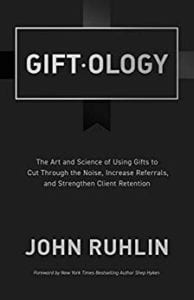
I had John Ruhlin who’s the author of Giftology on the show and he’s an expert at coming up with unique thoughtful gifts both for big clients and internally. Is there anything that you do internally or to your big clients to celebrate or thank them for their business? That’s a little out of the norm.
I am not a creative gift giver. My wife Susan Reed has that beautiful creative side to her. I have started deals over $1 million. I have started bringing in either a bottle of whiskey or a bottle of tequila when we do our turnover meeting making a big deal of presenting it to our estimator. At one point we went out and did a craft brew we called it the Pierre Pale Ale.
You’re onto something there because that’s what I learned from John Ruhlin. When you customize a gift and give people an experience. As well as something that they can remember that experience by. You have the wow factor because for people reading, “If my goals are to close 20% of the bids I put out. What else can I do to increase that?” In my experience, it’s creative gift-giving to grow current business. The second part is, what are we doing in our proposals or in the conversations that we could improve to get to 22% or 25%? I’m a big proponent of telling the story. I have had conversations about what’s the story of your personal passion. What’s the story of Pierre Landscaping? How did it start? What’s the culture that it stands for? If gratitude and appreciation are part of your culture that might attract some people. If you’re not telling that story out externally then people don’t know it. If you can find other companies that have that same value suddenly people have a connection to you. If it’s between you and someone else and everything else is fairly even, then they might go that way.
You’ve prompted me to remember something that I use in most of my conversations with my clients. It’s thanking them in some way the phrase that I use is, “Thank you so much for all the heavy lifting. All the heavy lifting that you’re doing out there as general contractors to get these projects to a place where Pierre Landscape is one of your subcontractors.
It’s a little more customized, “Thank you.” That has a little tongue in cheek there. David, is there something you want to leave the audience with? Maybe a book you like, a quote, a philosophy, advice, anything you want to leave people with?
[bctt tweet=”Bringing a sense of celebration to a sale, big or small, is important. ” username=”John_Livesay”]
The main thing is how powerful it is to say, “Thank you,” for things that others might take for granted. Be a big cheerleader out there. This abundance mentality is something that has served me well when I’m thanking people. There’s a sense of coming in at this whole thing from a better place. Sales is a game. Sales has its ups and downs. Some days are wonderful. When it is wonderful to be sure to celebrate and not on your own. Be sure to celebrate with the team. A team win is more gratifying than an individual win.
If people want to reach out to you? How else can people follow you or reach out to you?
Through LinkedIn. I’m happy to share any insights. I’ve been taken with better selling through storytelling and you are using good open-ended questions and storytelling to engage with my clients. In that way, I’ve connected a lot more people and that’s been a joy to connect with clients in a deeper way over the course of a sales process.
Thanks for sharing your wisdom and your fascinating story of making sure that you’re happy. In turn how that allows you to come from a place of happiness and gratitude and how that continues to create a place of abundance for your company and your life.
Thanks.
Important Links
- Salesforce
- John Ruhlin – Past episode
- Giftology
- LinkedIn – David Reed
- http://www.PierreLandscape.com/
- Better Selling Through Storytelling Method Online Course
Wanna Host Your Own Podcast?
Click here to see how my friends at Podetize can help
Purchase John’s new book
John Livesay, The Pitch Whisperer
Share The Show
Did you enjoy the show? I’d love it if you subscribed today and left us a 5-star review!
- Click this link
- Click on the ‘Subscribe’ button below the artwork
- Go to the ‘Ratings and Reviews’ section
- Click on ‘Write a Review’
Love the show? Subscribe, rate, review, and share!
Join The Successful Pitch community today:
- JohnLivesay.com
- John Livesay Facebook
- John Livesay Twitter
- John Livesay LinkedIn
- John Livesay YouTube