

Building Genuine Connections With Maria Franzoni
Posted by John Livesay in podcast | 0 comments

In any field, but especially in business, being able to build genuine connections are an important skill, and that cannot be overstated. Connecting with clients on so many different levels is the lifeblood of business, and missing out on this might just put you in the position of missing out on a client as well. Maria Franzoni is a UK-based founder of the MFL speaking bureau and works with some of the biggest and best speakers and thought leaders. She joins John Livesay to discuss how to build and maintain these valuable connections that you have with your potential or existing clients.
—
Listen to the podcast here
Building Genuine Connections With Maria Franzoni
Our guest is Maria Franzoni, who has her own company called Maria Franzoni Limited, MFL. It was formed after years of working in both business and speaker bureaus with the support and encouragement of some other people that founded the London Speaker Bureau. Her company is a group of experienced people who want to make a difference to an organization and go beyond the speaker booking to create real change and continued momentum for clients. She’s not in the business to business, but she’s in the human to human, H2H. She has more than a Speakers Bureau, she is an agent of change and does all kinds of workshops. She has her own podcast called Speaking Business. Maria, welcome to my show.
You make me sound good. I barely recognize myself.
Who is that amazing woman? I would like to know her. Speaking of getting to know you, I love to share and give a shout out to people who introduced me to wonderful people like you and our mutual friend, James Taylor, who you represented. He’s a phenomenal speaker on innovation and was kind enough to make this introduction. No matter what business you’re in, those relationships that you form and you give before you ask is in my mind the way to get people to want to introduce you to other people. Let’s start there, Maria. What’s your philosophy on connections and the importance of it?
My entire life has been about connections. That’s interesting that you say that. Ending up in the Speaker Bureau was perfect because it’s not something that I knew about when I started working. It didn’t exist. It certainly wasn’t on my radar. I collect people, I always have. If I meet somebody who’s interesting wherever they come from, whatever background, I make sure I keep hold of them and I keep in contact. LinkedIn to me is wonderful because it helps me keep hold of people, but I don’t keep in touch as often as I would like because you get busy. I try not to forget them and I try to pick up where I left off. I love connections. It’s wonderful. It’s hard because there’s so much noise and so much going on, but life’s about connections.
When someone takes the time to remember your birthday or acknowledge an accomplishment or a promotion, or if it’s a company and their stock price is up, if you make those little connections and take the time to make significant specific feedback, I find it is where the emotional connections grow. Do you have a story around someone doing that for you? Are you doing that for someone?
What’s wonderful is people remember you over a long period. A few years ago, I was in touch with a speaker and things didn’t develop, nothing came of our interactions, but he remembered me. He came back a few years later with an opportunity for us to work together, which is coming off in 2020. It’s an enormous opportunity and I’m going to be positive and say when it comes off rather than if. It will be the biggest deal of my entire life. All from a relationship that goes back a few years and we barely have been in touch over the last few years, but something resonated. That connection was strong. I might have to come back and tell you what it is when the deal is done, but I’m a little bit superstitious about mentioning details.
We don’t count the chickens until they’re hatched, as they say, but the energy around that is what fascinates me. Those seeds get planted a few years ago. Many of us are impatient. The analogy I use is if you’re baking a cake, you don’t keep opening and closing the oven door to see if it’s risen or not. It won’t rise. We plant a seed and we don’t keep digging it up to see if it’s sprouted. Yet we expect relationships to be producing right away and we get impatient when things aren’t happening as fast as we can. Do you have a philosophy around that or any advice for people reading about how we can trust the process a little more and not be impatient?
It’s funny you say that because I like to interview my podcasts speakers. I remember speaking to somebody who said, “It’s taken me several years to become an overnight success.” It’s similar to the music industry and I think it’s the same for me. I’ve been in the Speaker Bureau world for many years, but it’s taken me this long to have the confidence to say, “I know the business. I understand the business. I want to tell you about what’s going on.” Sometimes, it takes a lot longer than you realize. I don’t know who the clever person was that said, “What you think you can achieve in a year, you overestimate it.” I don’t know who said that, somebody very clever, but I think it’s true. There are lots of examples about that, but in terms of the speaking business and booking speakers, it is becoming last-minute much more so than it used to be. That’s a mistake. That’s not great for us, for the client or for the speaker. Having the longer lead time and allowing time to settle, to think, to plan it is much better than doing a short-term lead time.
[bctt tweet=”Integrity is the key to success.” username=”John_Livesay”]
In my experience, good speakers are the ones that take the time to do a deep dive into preparation. If you’re given a month or less, you don’t have a lot of time to interview people that are going to be in the audience to find out what their particular challenges are that you can customize your talk to. Everybody’s scrambling then. That’s when problems can happen like, “We didn’t know you needed a lavalier mic. We have a handheld mic. Where are the slides?” All those little details because when you’re rushed, things can fall away. I want to ask you about your own story of origin. I dabbled in it a little bit at the introduction. Tell us about your encouragement from Tom and Brendan, who founded the London Speaker Bureau to start your own.
It’s interesting because I have run my own business in the past. I came into the Speaker Bureau world a bit later. I wasn’t a spring chicken. I’d had a couple of careers before that and I fell upon the Speaker Bureau world. Because I’d had my own business before, I had strong ideas about how things should be done. Tom and Brendan were fantastic in that they allowed me to put my views and make changes in the organization, but London Speaker has grown fast. As it gets bigger and bigger, you can’t keep tweaking and changing. I’m a reformed and former management consultant. As a manager/consultant, you’re always looking to improve, always looking to change.
My team is used to it. It’s never going to stop. You have to keep improving. I was also doing that internally with the London Speaker Bureau. It got to the stage like, “I want to do this. I think the business can do this.” It was, “I’d like to go out on my own.” Tom and Brendan said, “Don’t do that. Don’t compete with us.” It was flattering. They said, “Instead, start your own office and remain part of our network.” My team and my office run independently. We can do what we like. We wanted to start a podcast, so we did. We want to do training for speakers, so we do. We’re also part of the entire London Speaker group of companies. We’re involved board-level with meetings, communications and with all of the team. We all collaborate and assist each other. I’ve got the benefit of being local, but having that global reach, which I couldn’t have on my own. London Speaker has got 25 offices around the world. That’s useful in terms of having a global roster.
It sounds like you’ve got the best of both worlds. You’ve got the structure and the connections of an established brand while starting your own brand that allows you to be agile and turn on a dime. Without a lot of bureaucracy stopping you or slowing you down and a bunch of people having to hem and haw and approve budgets. You’re like, “This feels like the right thing to do.” You mentioned your podcast, it’s called Speaking Business. Tell us what the number one thing that you love most about it is?

Building Genuine Connections: Having the longer lead time and allowing time to settle, think, and plan is much better than doing a short-term lead time.
It’s so much fun. You must find that too as well. I always find out something different and new. The guests on my podcast are all speakers that we book through the Bureau. It’s my way of saying thank you. We have a good chat and I always discover something that I didn’t know. Some of the speakers I’ve been working with for many years. They’ll tell you something like, “Maria, I was sacked from my first job.” I thought, “Can I put that out on air? Is that okay?” or things like, “I’ve got a license to fire a cannon and I’ve got my own cannon at home.” I’m like, “Really?” The things you find out like, “I was homeless.”
In fact, on my latest podcast, both of us were crying because it was such an emotional revelation. I love the human bit, the human to human that you touched on. The original reason to do it was I wanted to show people, and the strapline at that time and I’ve changed it slightly now, is to get to know the person behind the mic, the person who is the speaker behind the mic, to know them better. It wasn’t about understanding in a short period of time, extrapolating some of their great knowledge because they are fantastic minds and brains. That’s why this business is exciting, but also to find out a little bit about them as well as people.
You touched on something that’s important for everyone reading, and that is this concept of being vulnerable. It’s important. That’s how we connect to people. I talk about all the time letting go of the need to be a perfectionist and being a little too slick that the audience can’t relate to you. If you’re talking about storytelling, confidence, you never had a bump in the road, you were never laid off and you don’t know what that feels like, then people can have a difficult time relating to you, “Easy for you to be confident, you’ve never had a challenge.” When I shared my story of being laid off after several years of Condé Nast in my TEDx Talk, of all the things that I talk about in the keynote and you love when people say, “I learned this or I’ve got this out of it.”
A lot of people resonate with this human thing that we all get knocked down. How fast did we get back up? Do we lose our identity when we lose our job? All those issues that allow them to look inside and realize, “We’re all human.” This concept of getting to know the person behind the mic is fascinating because a lot of people are interested to know what it’s like on the road as a speaker. Where else are you going? Where did you speak before here? Don’t you find that people are curious to know what a speaker’s life is? It’s not something that a lot of people do that you run into.
[bctt tweet=”You must embrace uncertainty.” username=”John_Livesay”]
People think it’s glamorous and it’s not always because you haven’t always got a choice of where the event’s going to be and how easy the travel’s going to be or not. Unless you are somebody who has a full-time role and is speaking four times a year and therefore is selective, a lot of speakers are speaking a lot more than that. It’s not always as glamorous. I’ve got speakers who will go out on a Sunday night and they’ll be traveling to several different countries and then coming back. It’s exhausting because when you’re on stage, you are giving 100% energy and it’s incredibly draining. Sometimes people don’t realize how fit you have to be in order to keep the pace up.
That’s important because you almost have to make a game out of it like, “How can I find something healthy to eat at this airport because there are lots of bad choices. If I get sick, I can’t do my next speaking gig. How do I take care of my voice?” All of those things that people don’t think about are part of the issue. I gave a talk and for people who are reading and wondering about the speaking industry in the world is you oftentimes have multiple audiences to please. It’s not just the person who hired you. For example, there was a private equity company that bought this video company that makes videos for the police to wear body cameras. They wanted to buy that company and improve their sales so they could turn around and sell it in 2 to 3 years.
The private equity company not only bought the video company, but they also hired a sales training company. The sales training company reached out to me to explore having me come to be the keynote speaker. At first, I was confused. I’m like, “Who’s my audience? Is it your company, the sales training? Am I speaking to sales trainers?” “You’re speaking to this video company that the private equity company hired.” I was like, “Let me wrap my head around this.” They’re like, “Okay.” The awareness of how the business operates from your management consulting background. Private equity companies buy companies that are doing well and they want to make them grow even faster so they can sell them. Part of that is let’s get a speaker in here and you think, “This ecosystem.”
I was working with the people who I was interacting with, the sales training team. They meet us in the ballroom at 7:00 AM. We do a mic check, all that good stuff. As I’m walking in, the vice president of sales of the video company recognizes my face and says, “I’m going to be introducing you.” I’m talking to him and meanwhile, the woman from the sales training company comes out to look for me. He grabbed me before I could walk in the ballroom. No worries. I walk in and then, “I’m so and so from the private equity company. I’m the one that followed you on LinkedIn and I’m the one that told the sales training company to hire you.” I’m like, “I’ve got a lot of people to keep happy.” Can you speak to that? How do you advise your speakers that are fortunate enough to be in your world?
As part of the briefing that we do because we get involved in the briefings with the speakers and we normally do it on the phone because often the speakers and clients are not in the same country, sometimes not even in the same time zone. One of the questions I always ask is, what does success look like? Make it as simple as possible so the speaker knows. That forms part of the briefing notes. It’s written on the briefing notes. It even goes on their travel summary as a reminder, “This is what success looks like. This is what the client has bought.” This is more often than not, what they’ve told me when they’d given me the brief to suggest the speaker and what I’ve told the speaker isn’t what they bought or what they want. The result is something different. Often, it’s much simpler than the original brief.
To go back to that example I gave this talk to, the description of what success would look like would be the sales team would start turning their case studies into case stories, which is what I teach. They’re going to start using storytelling instead of facts. The private equity gentleman sent me a short email. He said, “Everyone’s talking about storytelling now, mission accomplished.” I thought, “That’s it, isn’t it?” That is what success looks like when the client says mission accomplished.
It’s such a simple question, but it’s hard often for the client to answer. Once you’ve got total clarity, this is what you need to deliver.
Sometimes, what I often do if someone is struggling to define what success looks like is I describe previous clients I’ve spoken to and say, “Here’s what it looked like for Redfin. Here’s what it looked like for Coldwell Banker. Here’s what it looked like for Coca-Cola. Here’s what Honeywell said.” It starts their mind going, “I got it.” Sometimes I think you as the bureau executive and sometimes the speakers, we have to help the clients define that. One of the tips I have found is in fact to give them some examples if they don’t know instantly. You’re assisting them in creating the best event especially if they’re not quite sure yet what that would be. Let’s talk a little bit about some of the other services you do. You have masterclasses and leadership development. Tell us how that started, who that’s for and how it helps?
[bctt tweet=”When you make strong connections, people remember you over a long period of time.” username=”John_Livesay”]
That started because we have some amazing experts who have great expertise and who feel that they go in, they deliver a speech and they think, “I could do an awful lot more. I could help that company achieve more,” because the speech will do on an amount. It’s not going to cause a change across the whole organization. Sometimes, because they’re buying an expensive speaker, that speaker is going to change the organization in a 45-minute speech. That’s not going to happen. You have to have some follow-up.
It started with speakers, but also with our own desire to have a long relationship with clients, to understand much more about the business. If you do that, you can then preempt what they might be looking to do next. When you meet a speaker or see somebody, an expert and you think, “That particular person would be perfect for this organization. They’ve gone through that. They can take it to the next stage,” you can be thinking ahead and a great resource for them. Instead of a client coming to you once or twice a year for their conference, I’m thinking, “Let’s look at our internal development. Let’s look at our board meetings. Let’s look at our executives. Let’s look at our away days.” That’s a much more satisfying and enjoyable relationship.
That’s why we went on to do that. It’s a different thing to offer education if you like, development and offer a keynote speech. I brought in a specialist. I brought in Mary Tillson onto my team, who was one of my clients many years ago. She was my client at American Express, in-charge of talent and executive development. Now she’s part of our team helping clients who want to put speakers and experts in to deliver, etc. She helps support that. She helps to scope it and helps to support the speakers in their preparation of the sessions.
One of the things people are looking for is a return on investment and how we can continue what we’ve learned here from this event, so the people don’t go back to their daily lives and forget all the learnings and the energy around it and keep it going. It’s amazing how you can be brought in to help us learn how to tell better stories, for example. When I was speaking to Blue Cross Blue Shield during the workshop, there are some people saying, “We also need help with storytelling as a management tool. We’ve got Millennials and then we’ve got some people who are ready for retirement and they’re not communicating properly. How can you help us with that?”
Building Genuine Connections: Being likable is important. If you can tell a good story about a speaker, the client will remember that speaker.
You uncover other things that people need and the fact that you continue that relationship with clients is fantastic. It’s something that I don’t see a lot of and I wanted to give it a special shout out to everyone. A lot of people who are reading might want to know what the 2 or 3 hot things that you see clients are seeking now. Is it about the future? Is it leadership? Is it help us make better sales? Are all of those things or other things that you see people looking to have speakers come to talk about?
I suppose the big one and it’s been around for a while. We’ve had a lot of it certainly in the UK. It’s dealing with uncertainty. How do we deal with uncertainty? How do we continue to be successful? How do we continue to grow? How do we lead? How do we keep going? We’ve had a lot of uncertainty. I think we still have some. That’s been a big one. That covers a lot of other areas. In order to deal with that, people say, “I need an expert. What’s going on in the future? I need an expert. Tell me about the AI situation. I want somebody to tell them about cyber risks. I want somebody to tell me about technology. Tell me about how I’m going to create higher performance when people don’t know.” It’s all underpinning that big thing. We’ve been through this whole Brexit situation and many people said, “The speaker bookings are going to go down because of uncertainty.” Over the few years that we’ve been going through Brexit, we have increased year on year because uncertainty means, “Help. Give me an expert.”
I talk about this in terms of embracing disruption mentally. It’s great to know that there’ll be driverless trucks eventually and what technology is coming, but there’s an emotional concept around it that I feel storytelling helps us through all the change. When people realize, “Is there going to be a need for my job, whether I’m in sales, customer service or whatever else is going on?” That I tell people now more than ever, the emotional storytelling connection, the AI still is not able to do that yet. AI is not great at empathy. It’s not great at making people feel listened to. When you realize that those are skills you have and can develop like any other skills. I’m happy to hear you say that because this concept of soft skills can make us strong through uncertainty.
If you’re realizing that you need to develop those, then people are like, “Oh.” I saw it myself with Gensler, which is the world’s largest architecture firm had me speak to their team about how to win more business through storytelling. They said, “It used to be enough to go in and show our designs. Now, we have to use virtual reality goggles so people can experience the design and that’s still not enough. We were told that a client said between you and two other firms and we’re going to hire the people we like the most because it’s a five-year project to renovate this airport.” They realized, “What? Get John in here. We’re architects. What do we know about likability? How do we do that in a presentation no less? How do we make ourselves likable?” I kept saying, “Tell your story so people can remember it.” That whole premise of everything is being disrupted. You’re being disrupted at a technical level. You have to have new tools, but you also need new tools as a person and communicator to embrace this disruption. You see this all the time between speakers. Clients say, “You’re going to give them maybe 2 or 3 options.” I bet you hear 9 times out of 10, we’re going to hire the speaker that’s the easiest to work with that we like.
[bctt tweet=”As you get bigger and bigger, you can’t keep tweaking and changing what you do.” username=”John_Livesay”]
The likeability thing is huge. One of the programs I always refer to when I’m talking about speakers, I like to match it to music. I’m a big fan of Simon Cowell. Simon Cowell often says, “You have that likability factor. You are likable.” Being likable is important. Going back to what you were saying about stories, if I can tell a good story about a speaker, the client will remember that speaker. A lot of speakers don’t have great stories that I can tell. If they do, they’re memorable. I remember them. We’ve got 4,500 speakers on our roster. I am not going to remember everybody. I remember the good stories.
Here’s an example of what I think is a good story. When Anthem Insurance hired me, they said, “We’ve got nurses and MBAs. None of them want to be perceived as salespeople and yet we need them to start selling our data.” I said, “Ask them to be storytellers, not salespeople.” Light bulb, great. I said, “What’s going on after my talk?” We’re going to do an improv session where the audience is going to shout out objections and see how they handle it in the role-play situation.” I said, “What if I stayed after the keynote and helped them during that improv? I could whisper in their ear if they got stuck.”
“Nobody offered that. That’d be amazing.” During the process they said, “Can you be in my ear all the time when I’m in the field? You are the Pitch Whisperer.” That’s a little story now that people go, “I remember, you’re different.” It’s like, “They love that,” and that’s a story that you can tell. “Is that something you want to do? He’s done it before. He’s combining improv and sales training. What? How does that work?” Those little stories like that, they don’t have to be long. They have to be memorable. That’s what I love about storytelling. Is it memorable and magnetic?
The other thing to add to that is nobody has to remember your name. They have to remember the story. They’ll remember Pitch Whisperer and that is easier. They’ve got an image in their head. It’s easier to remember and that’s important for speakers to have that because there are many speakers out there. I’ve been in this business for many years. When I started, we were looking for experts to speak. We call it the speaker circuit. In other words, you can book this person to speak and pay them. That’s what it means. It’s not a real circuit. They’re not going round and round. On the circuit many years ago, there were few speakers in each of the categories, each of the topics and you were looking for them. Now, I think I get approached twenty times a day. That’s just my office and me.
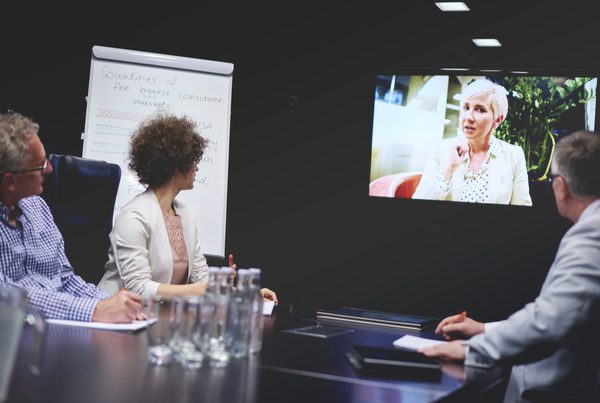
Building Genuine Connections: Video these days is more important than ever from a client’s point of view because they’re too busy to go out and see the speaker live.
Imagine the difference between a warm introduction versus a cold call and the same thing with your relationships with your clients that know, trust and like you. They said, “If Maria says James Taylor or another speaker is good, we believe her. You’ve de-risked our own anxiety about whether that person’s going to show up and do a good job or not.” That’s what people don’t realize. You and I talked about the importance of a speaker having great footage of themselves in a crowd so that people go, “That’s what we have. He can nail that.” Also, the images a speaker uses because you and I have a love of photography and design. I tell people the kiss of death is to read from a slide. You see many people who are not professional speakers, whether it’s executives of the company talking to their team before you get up to speak and you’re like, “You’re boring them to death.” Let’s talk about the big picture of the importance of visuals, whether it’s a video or an image that you’re using on your deck.
Video these days is more important than ever from a client’s point of view because they’re too busy to go out and see the speaker live. Back in the old days, you would go and see a speaker live and think, “I’ll book them for my next event.” You can’t do that now. The next best thing is video. You have to have a video. It’s absolutely essential. Does it have to show an audience? I don’t necessarily believe it does. Clients are sophisticated. They’re quite switched on. They can see if somebody can communicate a message, how they convey themselves. With regard to using visuals, it depends on you. If you’re a good storyteller, you can paint the pictures. A good storyteller can create better visuals in your head than you will ever see. I love that because then that’s unique to you. If you’re going to have visuals and it helps the audience to stay with you, that’s wonderful. It’s all about helping the audience to stay with you. That’s what it’s all about. I also like the use of video during speeches if it’s appropriate.
Do you have any last thoughts or suggestions, books you love, quotes you like that you want to leave us with?
I’m going to give you two quotes from one particular speaker. They were the best bits of advice I have ever had and I still use them now. I hope I remember both of them and getting them both correctly. One of them was, “Do what you say you’re going to do because it’s quite rare.” That was one of the best bits of advice and the speaker is Philip Hesketh, so that you know who he is. He’s an expert in persuasion and influence. The other thing he said which is brilliant is, “The rules of selling are ABC, always be selling.” I didn’t say always be closing. He says, “Always be selling.” People have to remember that this is a business. Always be selling.
[bctt tweet=”The life of a speaker is not always glamourous.” username=”John_Livesay”]
That old philosophy, Always Be Closing, ABC, I put a twist on that at the end of my workshops and I say it’s ABK, which is Always Be Kind. People love that. I say, “Put it on a Post-it Note in your car if you have road rage in traffic. Put it by your phone.” The things we say to ourselves are much meaner than we would ever say to anybody else. How can we possibly be kind to other people we work with, let alone our clients, if we’re not starting with this ourselves? A lot of salespeople struggle with the image of, “People don’t like salespeople or lawyers.”
They’re seen as pushy. If you reframe that to ABK, it’s a nice little memorable takeaway that people like, “I’m using that,” or people will come up to me like, “ABK.” It’s a fun little thing. Those little memorable sound bites whether you’re giving a talk, being interviewed on television, it’s important to figure out who you are and what your brand stands for. Maria, you have nailed that in many ways. It’s been an honor getting to know you more, hearing your story, sharing your particular vision of being a human to human agent of change. It’s been an honor. Thank you so much.
Thank you.
Important Links
- MFL
- London Speaker Bureau
- Speaking Business – Podcast
- Better Selling Through Storytelling Method Online Course
Wanna Host Your Own Podcast?
Click here to see how my friends at Podetize can help
Purchase John’s new book
John Livesay, The Pitch Whisperer
Share The Show
Did you enjoy the show? I’d love it if you subscribed today and left us a 5-star review!
- Click this link
- Click on the ‘Subscribe’ button below the artwork
- Go to the ‘Ratings and Reviews’ section
- Click on ‘Write a Review’
Love the show? Subscribe, rate, review, and share!
Join The Successful Pitch community today:
- JohnLivesay.com
- John Livesay Facebook
- John Livesay Twitter
- John Livesay LinkedIn
- John Livesay YouTube
Emotional Sobriety with Bill Stierle
Posted by John Livesay in podcast | 0 comments


Episode Summary:
Bill Stierle, founder of Corporate Culture Development and a dynamic and commanding thought leader in emotional intelligence and thinking styles, gives an interesting perspective on how we can communicate in business. Bill spills the secrets on how to resolve conflict while giving us a peek into his new book called Emotional Sobriety. He talks about how to become a communications lifesaver while laying down the differences between criticism and critical, empathy and sympathy, and truth and trust. Bill provides great examples that present situations where we can apply effective communication amidst tension where people become defensive in one way or another. He gives a great formula to handle the very common objection of, “I have to think about it.”
—
Listen To The Episode Here
Emotional Sobriety with Bill Stierle
Our guest is Bill Stierle and he is a dynamic and commanding thought leader in emotional intelligence and thinking styles. His impact has been felt everywhere from the top business schools to Fortune 500 companies, nonprofits, and even government institutions around the world. He’s the Founder of Corporate Culture Development and has a unique knowledge of how to create successful training programs. We’re going to ask him to open up the secrets on how to resolve conflict and what happens after he comes in is people have more productivity and performance and are generally more effective. Bill has a book called Emotional Sobriety that we’re going to talk about and he also speaks on the topic. Bill, welcome to the show.
Thank you so much for having me on. This is going to be a lot of fun.
I always like to ask my guest to take us back to their own story of origin. You can go back as far as childhood, high school, college. Nobody starts off as the expert on emotional intelligence. Where would you like to tell us of how this whole concept came about for you?
It came about when I was teaching high school anatomy and physiology many years ago. It started with a very simple question that my brain couldn’t let go of. The simple question was, “Why do people think the way they do?” That’s where it started. At that time of the mid-‘80s, there was a lot of brain research being done from the ‘70s and the ‘80s. They were having the tools and the abilities to stretch into what’s happening in the brain. How does thinking work? How does thinking works with certain jobs? I fell upon a good mentor. His name was Ned Hermann who worked at General Electric. He came up with this thinking tool called the Hermann Brain Dominance Instrument that he used at General Electric in management leadership training as well as human resources. This tool is a 120-question survey that talks about why people think differently. That tool allows us and gives us an insight into the differences between an engineer and a social worker. Those are two different people, as well as an artist and a drill sergeant. Those are two other different people. Those are extreme or focused thinking types.
Engineers are spending a lot of time in logic and rational thinking, whereas social workers are spending a lot of time in interpersonal and connection style of thinking and dealing with human interaction. Artists are in the visual space and drill sergeants are in the organized space and they’re into implementing things. An artist is into creating things. This is the start down the path of why do people think the way they do. I get a lot of work here in the corporate space when I do strategic planning or team analysis. When the start process takes place of here’s what a person is listening for and here’s what a person’s brain is shutting down or shutting off when you talk too much about a certain type of topic. The brain will shut off if a marketing person and an operations person are in the room at the same time because the marketing person is talking about risk and trying to catch as many eyeballs as possible. Whereas the operations person is, “How am I going to manufacture, implement or distribute what that guy over there is trying to sell?”
[bctt tweet=”What can I say or do to meet your need for truth? ” username=”John_Livesay”]
Those are two different brains that are working in different places. An executive team is much like The Avengers. The Avengers are a group of superheroes and they all are sitting in different thinking styles and they’re approaching the world in different ways. They’re doing that in different ways, they have to come together as a team in order to defeat the enemy. The same thing has to happen in an executive team. They all have to come together. The finance person, the CFO, has got to have an honest discussion with the VP of human resources about how much staffing it’s going to take to get certain work done and how much the cost is going to be. That’s called an honest executive discussion. The VP of sales has got to have an honest discussion with operations because whatever they’re selling, the operations person has to be able to distribute or deliver to the person’s doorstep. Those two people have got to talk because if the sales get too big, the customer service and the operations can’t deliver it. Can you see how that one works?
A lot of finger pointing and blaming. You talk about how to become a communication lifesaver. I used to be a lifeguard, so I’m interested to hear how you can help people become a communication lifesaver when those conflicts come up.
That’s the second part of my origin story. I noticed that this work on the brain and thinking only took me so far. Whenever emotions show up, a person’s brain will activate into a protective strategy. Being a communication lifesaver is that if the brain is communicating in a protective way, what winds up happening is not hearing what the other person is saying. As a lifesaver, I’ve got to throw them a communication life ring in order to keep them in a conversation that’s productive and healthy versus one that is safekeeping and reductive and one that puts people at their poles.
Do you have a story of how that would work? What does it look like when someone throws a communications buoy to somebody to keep them in the conversation?
What it would look like is if an engineer or somebody that’s thinking in a logical and rational way quotes a fact or an inaccuracy that another person has said in the room. It’s a critical accuracy piece. The problem is the rest of the room doesn’t hear it that way. The rest of the room hears it as criticism, not critical. A life ring in that moment would be, “Joe, it looks like you’re stating the accuracy for everybody in the room and you’re pointing out how it’s not 39% but it’s 41% when you consider these other data. Is that the accuracy we’re going for?” He wasn’t telling the other person that they were wrong for not knowing the number. He was stating the accuracy piece because his brain needed to express it. Criticism and critical are mixed up. Three-fourths of the people can’t tell the difference between critical and criticism.
Let’s underline that distinction one more time. Criticism sounds like versus being critical.
The distinction would be like this. Criticism is, “You should have known this answer already.” Critical is, “Here’s the fact I would like the whole room to know.” That’s different. The second thing that I need to throw a communication life ring at is the word defensiveness or the construct of defensiveness as a protective strategy. Defensiveness is when somebody is trying to create either order or safety and it’s not considering that the order or the safety or the sequence that they’re doing needs to change. They’ll become defensive and say something like, “That’s not the way it’s done. I’m just following procedures. It takes too much work to rewrite that procedure. We have to keep doing it that way. I’m following the letter of the law.”
All of those are and can be heard as defensive sentences that usually a person points out, “You’re being defensive.” It’s like, “I’m not. I’m just stating what the rule is. I’m just stating what the procedure is. If you want to write the procedure and you want me to retrain people on the procedure, I’ll be glad to do that for you. Right now, I’m trying to follow the procedure.” A drill sergeant is following a procedure. Why? They need to get 30 people to act as one person, to rely on the same set of rules and the same set of procedures. When you have a procedure that’s effective, it creates a lot of stability and a lot of trust. Everybody’s on the same procedural page.
People like structure but the flip side of not becoming defensive, I see that often in selling or pitching. Let’s say you’re pitching to investors to get your startup funded and they ask you some questions. The minute the founder gets defensive as opposed to collaborative then they don’t get funded. If you’re presenting to a customer your product or service and they give you an objection, if you become defensive you don’t get the sale. Do you have any tips on what people can do in those situations where they don’t become defensive?
I do. This one’s going to be a little bit difficult and we have to stretch this one a little bit because this one is a toughie. I’m going to start with a quote that I live by. This quote is valuable. If you can get it in your noggin and do it, it will save a month to two months of time over the next year. Get this sentence and apply it. Here’s the sentence, “Empathy before problem-solving.” Here’s the first problem you have to deal with. The problem is most people have a junkie or an ineffective definition for the word empathy. They don’t know what it means. Here’s the difference. What most people use is a form of sympathy. They don’t do a form of empathy. A form of sympathy is, “I understand what you’re going through.” That’s sympathetic. It’s not empathetic. Here’s another sympathetic sentence, “I hear that happened. That was too bad. I wonder what you can learn from this.” That’s sympathy. That’s not empathy.
[bctt tweet=”Empathy before problem solving.” username=”John_Livesay”]
One of the things that I do in my training on emotional intelligence for executives is I get them to practice real-time empathy and how it takes place. The guideline for a real-time empathy and to know that it takes place is to follow this definition. Empathy only occurs when a feeling word and a need word are connected and agreed upon. You’ve got to have those two fill in the blanks. There has to be a feeling word and there has to be a need word. Let me give you an empathetic sentence to the expression that you gave me. “Huh,” you said. The empathetic sentence would be, “John, could you be feeling inspired because your need for awareness or learning is being met?”
The feeling word is feeling inspired and it’s a question. It’s not an assumption. Could you be feeling inspired because of your need for awareness and learning?
The two of them worked in there and you’re going like, “Something’s moving across from Bill Stierle to John.” You got the jolt and you became a little inspired. Your eyeballs and eyebrows went up a little bit. You leaned in a little bit. Something significant is coming. You got to move across the plate. I better pay attention and my audience better pay attention. This is going to be helpful to the people that I’m working with. Immediately, it’s generating this quality of contribution that people experience on your podcasts. They experience the knowledge transfer and the wisdom transfer and that they can have helpful tools that can enrich their life and their life experience.
Nobody loves the formula and the step-by-step process more than I do. I love that concept of a feeling word and a need word and I totally get it from even a nonverbal response that can elicit empathy. Let’s take it one step further in a real-life scenario. Let’s say you’re pitching someone to buy your product. You’ve gone to all the steps and you’re getting ready to ask for the order and then the person goes, “Your price is too high,” which is a common objection to anything. Instead of trying to solve that problem or even active listening, the empathy factor combines active listening skills but in a new way of that. Let’s try to use this feeling word and need word around, “Your price is too high.”
Let’s do that in real-time. Pretend you’re the buyer and I’m the seller and say, “Bill, your price is too high.”

Emotional Sobriety: Whenever emotions show up, a person’s brain will actually activate into a protective strategy.
Bill, I like what you’re offering but your price is too high.
John, a part of you likes the product that I’m offering. Another part of you is feeling doubtful because you see the value is not at the same level as I see. Is that correct?
Yes.
Notice I got the word yes out of your mouth. That’s how you know empathy has taken place is when the person says yes to the feeling word doubt and the need word value. That’s what I did. In real-time, I filled in the blank of you giving me the objection.
Part of you likes what I’m doing but a part of you is also feeling doubtful that your need for value is not at the same place that I perceived it.
[bctt tweet=”Empathy only occurs when a feeling word and a need word are connected and agreed upon.” username=”John_Livesay”]
The person can’t help but say yes. You’ve actually removed the emotion from the discussion because you got the doubt out of the room. Now with lightning speed, I can say, “John, what do you think might be the value that would fit the product that I was offering?” I’m not trying to justify the value. I’m trying to find out what is in this person’s brain called the value or is it a red herring that they’ve used in the past? It’s too much money. “It’s not too much money, but it might be too much money, but not really.” The person could have a red herring. Now watch this and say, “Bill, it needs to be priced at $250, not $375.” Let’s try that.
Bill, it needs to be priced at $250, not $375.
John, I’m hearing that you’re feeling more confident that the $250 price would work better for you rather than a $375 price that would work in the marketplace. Is that correct?
Uh-huh.
You still gave me the “Uh-huh,” which is good because I’m still connecting with you and your objection. I still haven’t given in and I still haven’t become defensive. I still haven’t brought up criticism or justification. I didn’t bring out spreadsheets to show you that you’re wrong. I didn’t say, “The marketplace has already proved this.” I’m not interested in making them wrong and I’m also not interested in solving a problem that I don’t need to solve. Empathy allows us to get around this particular nuance of communication because the person is using their belief structure to fight my sale, not the reality. The reality is, “If we’re able to get the value or demonstrate in the marketplace that the $375 would work, would that be better for your investment?”

Emotional Sobriety: Empathy allows you to not solve problems that don’t need to be solved.
Yes.
Do you see how that, “Yes,” trickled out of your mouth? You go like, “How did Bill get me to say yes three times?” I’m not working yes on the deal. I’m working yes on the obstacle. This is particularly important in a slide deck. I did an investor slide deck for a workforce educational program. During the slide deck, I said to the guy, “Give me the top ten objections. I want to type them all up.” I typed all the top ten objections, it costs so much, etc. I’m like, “We do not need to prove any of these because I already have the data that proves all these. What we need to do is design empathy sentences for all of those.” “Empathy sentence?” He looks at me. I go, “If I got to get the person’s emotion to change before I get them to buy, not in the place of.” If the sale happens too soon, either they’ll have buyer’s remorse and kick out later or they will develop resentment on the money they spent.
I love what you said that empathy allows you to not solve problems that don’t need to be solved. That’s a big distinction between doing it before solving a problem. Sometimes another big benefit of it is we don’t even have to solve a problem because it may not be what the real objection is.
That’s a great catch there. That’s helpful because people come in with all or many or most, talk about many things that kill a business right now, this sentence here. People work out all the obstacles and overcome all the obstacles and wonder why the person doesn’t buy or refer the product. The reason why is that you did not allow the purchaser to be on the journey with you. You solve the journey before they could discover it themselves. People do not want to buy things that are done. They want to buy the journey of getting it. The sale is a mythic journey. It’s a journey of the hero. Who’s the hero? The person that’s buying it, not the person that’s selling it.
This is a big part inside of the investor pitch deck that I was working on. I told them, “We need to follow this investor, this person” and we’re looking for high net worth individuals to fund this that are looking for a legacy project. We’re looking for them to come in. It’s like, “We cannot solve this thing, it’s got to be a seven-slide slide deck. You’ve got to inspire them to get on that their money is going to get there and we’ll work out the details later.” If we come with all the answers solved, they’ll walk out. There’s no emotional connection. I have to build the investment inside their body before I can take the investment out of their pocket.
[bctt tweet=”People do not want to buy things that are done. They want to buy the journey of getting it.” username=”John_Livesay”]
I say there’s something similar. You have to tug at people’s heartstrings to get them to open their purse strings.
The heart string piece here, the way I see it and especially in the world of conflict is people are going to do something to meet a need of theirs, not to satisfy an emotion of theirs. They’re going to take the action towards the need. If it meets their need for trust, then they’ll invest. If it meets their need for certainty, then they’ll invest. If it meets their need for respect, then they’ll invest. If it meets their need for identity, then they’ll invest. If it meets their need for connection, then they’ll invest. The investment doesn’t come from how much money they’re going to get back. In fact, when surveyed, return on investment is number seven in the list before they invest. The question then is, what is the number one need of the investors that are at the top of the list before you can even get them to move? What do you think that number one is? I’ll push this one to you so you and I can have a little fun.
I would say that somebody has to trust you first.
You are right on top. Number one at the top of the list is the need for trust. That’s the number one need that needs to be met during the presentation, during the content, during the delivery. The weird part about it around the need for trust is you can’t get trust through over solving their problem or over presenting your product. You need to leave the mystery in the journey.
That’s what good stories have. I’m fascinated by the image that you created of how many times have our audience said, “It’s like whack-a-mole. If you got four objections and I whacked them each down, then for sure you will buy and not have four new ones pop up after I leave.” That is valuable. Few people have that awareness that you have, Bill, which the reason is you’re not taking them on the journey. The goal is not to just keep, as Maslow said, using your hammer over and over again looking for nails. It’s this empathy tool versus a hammer tool.

Emotional Sobriety: The feeling of doubt, most of the time, comes from the need for truth not being met.
That whack-a-mole metaphor is exactly right on target because if you empathized with the objection that comes up, you do not have to swing the hammer at all. You’re feeling skeptical and you need some more trust on this. “Tell me what trust looks like? I need to trust that your CFO runs the numbers correctly.”
Let’s do another one because besides money, the other big objection that everybody gets is, “I need more time to think about this.” Either I need to talk to somebody else or we’re not ready to make a decision yet. That’s a common objection, whether it’s an investment or selling something. How can we use this great formula of yours of feeling and a need, so that we can handle that common objection?
I usually empathize with the time objection with the following empathy sentence, “Could you be feeling hesitant because you might need more information or more clarity? Would you be willing to tell me which one is it? Is it more information or is it more clarity that you might need?” These need time. This is the fantasy that not just the investor has, but also the seller has is that they need more time and they’re going to start thinking about it, and then do what? The answer is once they’re walking away, they’re not thinking about your project anyway. What emotion they’re walking away with is skepticism.
Even relief that they didn’t get pressured into something.
I want to know what need is causing skepticism. It could be two or three or four, but watch what happens when I ask the question, “Could you need more clarity or do you need some more information? Which one of those two are you looking for?”
[bctt tweet=”You have to tug at people’s heartstrings to get them to open their purse strings.” username=”John_Livesay”]
That’s valuable because most people assume it’s the same thing. You’re saying, “Do you need more clarity on the information I’ve already given you? Is there something that’s missing for you to understand?” and then it goes back to because you don’t see yourself in the story.
What happens is that they’re looking for a way to get out of the journey. They’re looking for a way to use the great power of doubt and skepticism. Doubt and skepticism as feelings because both of them are two very different feelings. The feeling of the doubt most of the time comes from the need for truth not being met. The feeling of skepticism most of the time comes from the need for trust not being met, but it also could be clarity or it could be information that causes skepticism.
If something sounds too good to be true and you’re like, “I don’t trust this guy or gal.” Let’s double-click on the distinction for people between truth and trust because a lot of people go, “You’re trustworthy if you’re truthful.”
This is the best discussion ever. The reason why it’s such a vibrant discussion is that people don’t know how much power words and language have. Words and language change our physiology instantly. There’s a big difference between saying the word spider and the word ice cream. The same difference is between truth and trust. Truth is that there is either something factually inaccurate or informationally inaccurate or there’s something omitted. I don’t have some truth about something. When something’s too good to be true and I’ve solved all the problems and I don’t have any skin in the game, I will even manufacture doubt because this is all the things that have been answered. There might be something missing. What is the thing that’s missing? Doubt shows up in their body because what happens is they don’t buy the thing, they don’t make the next call, they don’t follow up. You chase them around and they start running. Trust, the reason why truth is a fact thing.
Trust has to do with, “I don’t have any memorable history with you. I don’t have a memorable history with someone that has vouched for you.” There’s no trust because there’s no experience that when the going gets tough, you’re going to be there with me. When the going gets tough for this product, you’re going to be there with the product and be there with my investment. You’re going to treat my investment as if it’s your money, not my investment. As if it’s my money that you get to spend any way you want like a seven-year-old because that’s going on in their mind. Somebody that’s an investor most certainly either has a family member that is not really good with money that they have to keep bailing them out.
They made bad investments before. They’re trying not to make that mistake before.
Truth and trust have a very different frequency to them and also a very different way to establish them. The key question then is to ask this question to the person that is sitting with doubt. It might sound like this. “What can I say or do to meet your need for truth in regard to this product or service that we’re looking to have an experience with? What could I say or do to meet your need for truth?” To the skeptical person, it’s going to be similar, “What can I say or do to meet the need for trust between the two of us?” What that does is that brings us closer together and puts us in the same tribe because now I’m listening and I am ready to repeat back what the person said to me. For example I said, “What could I say or do to meet the need for truth that the $375 would work a little bit better than the $250 thing that you recommended? What can I say or do to meet the need for trust that this number will work a little better?”
What happens there is we’re trying to extract the belief thought that is driving and pushing the button of truth or trust in their consciousness. We want that out in front of us not to solve it but to empathize with it. If I have an investor that’s been burnt before, I do not want that past relationship being in my relationship with him or her. I’ve got to pull that out. Let it air out. Create a new moment between me and that person. I’m not the same guy as that guy. That guy and that product had a whole another set of problems to it. It’s not to say, I don’t have the problems I’m going to have.
We’ve hit the reset button basically.
It’s a reset button because once I’m on truth or trust, once I’m on clarity or information, once I’m on respect or acknowledgment or the need for connection. Once I’m on that need and I know what it looks like to that person, the quality of relationship and the quality of connection deepens.
[bctt tweet=”People are going to do something to meet a need of theirs, not to satisfy an emotion of theirs.” username=”John_Livesay”]
Once you’ve got that connection deepened, then they’re on the journey with you as opposed to you jumping ahead to the end without them going on it. They feel that’s not for them.
They want the experience of incremental moments of success with our product. They are not as much interested in, “Give me the money back with my 30% in the next 60 days,” because they already have the money. They’re interested in the journey that the money’s going to provide them.
This is incredibly insightful and useful. I could talk to you forever. I can’t thank you enough. The book is Emotional Sobriety and there are all kinds of nuances. What’s the one thing you want people to know about your book?
The thing I like them to know about the book is it is the step by step way to diffuse the emotions that come up inside others, as well as the emotions that come up inside ourselves. We’re able to reduce the emotional load that we carry because many folks are carrying a lot of anxious, nervous doubt, some hesitancy, some depression, some anger. We want to be able to diffuse those things on our side and not make it to the outside world that’s doing it to us but it’s how we’re taking it.
We can control our reactions and when that happens, we’re free from walking around with all this anxiety and resentment. I’ve heard somebody say once in personal relationships, “As long as one of you stay sane at any one given moment, you’ll make it through it. We both can’t be crazy at the same time.” That’s the gist of what you’re saying here. If you’re walking around with anxiety of needing, a quota is met or whatever, a fear of losing your job if you don’t sell something. The buyer has got their own level of, “I can’t make a bad decision here,” that anxiety is never a good recipe. Whereas your book, Emotional Sobriety, can help people diffuse that. The buyer’s anxieties can be dealt with in a much cleaner way.
The thing that I like to say about what Emotional Sobriety gets you is with practice. This has been my experience when in the past I’ve been called to come into a city council meeting where people are screaming and feuding or other conflict situations. Usually, it takes me about somewhere between seventeen and 23 minutes to get everybody to calm down and to be on the same page and start working together even though they’d been feuding for months or sometimes years. That’s what it gets you.
What a great outcome. The book is Emotional Sobriety. If people want to reach you for seminars and workshops, what’s the best place to find you?
The best place is CorporateCultureDevelopment.com. You can also do it through my name, BillStierle.com.
I can’t thank you enough for sharing your wisdom on how we can get people to have more empathy connection with us and get out of solving problems that don’t need to be solved.
John, anytime you want to do other topics and things like that, have me back. I’ll be happy to contribute.
Thanks again, Bill.
Thank you.
Links Mentioned:
- Bill Stierle
- Corporate Culture Development
- Hermann Brain Dominance Instrument
- CorporateCultureDevelopment.com
- BillStierle.com
Wanna Host Your Own Podcast?
Click here to see how my friends at Brandcasting You can help
Get your FREE Sneak Peek of John’s new book Better Selling Through Storytelling
John Livesay, The Pitch Whisperer
Share The Show
Did you enjoy the show? I’d love it if you subscribed today and left us a 5-star review!
-
- Click this link
- Click on the ‘Subscribe’ button below the artwork
- Go to the ‘Ratings and Reviews’ section
- Click on ‘Write a Review’
Premiere Speakers Bureau with Shawn Hanks
Posted by John Livesay in podcast | 0 comments

Episode Summary:
Growing up a la the von Trapp family singers, Shawn Hanks has lived with music and performing throughout his life. Now he imparts the knowledge of learning to create a feeling and communicate an idea to an audience among speakers and event partners as the CEO of Premiere Speakers Bureau. Shawn shows us the other way of selling which is to be able to communicate and connect at the same time. He shares some great advice on how you can keep your people loyal just as you do your clients. Shawn also talks about how his merger and acquisitions case became a success, giving tips on how to decide which accounts to target and what to say in your pitch to stand out as a brand.
—
Listen To The Episode Here
Premiere Speakers Bureau with Shawn Hanks
My guest is Shawn Hanks, the CEO of Premiere Speakers Bureau, who adds capabilities from several fields to the team. Over the course of his eighteen years in the event industry, he’s gained valuable experience advising corporate associations and non-profit partners. In addition, he provides direction to speakers on the Premiere roster. He’s an avid football/basketball fan and he and his wife survive CrossFit every day together. They are a couple that works together, stays together in Texas. They’re in mid-Tennessee. They have three children and an adorable golden doodle. Shawn, welcome to the show.
Thank you very much. It’s great to join you. Thank you.
Shawn, I love to ask my guest to tell their own story of origin. You can go back as far as you want, whether it’s childhood, high school or college days. Clearly, there’s some journey that you went on to become the CEO of this amazing speaking bureau, Premiere. I’d love to find out where that all came about, your love of communication and connection.
I grew up in a family that was a very musical family. We traveled and performed. Performing, communication, all of those things in my mind are one large path, which is to communicate an idea or create a feeling or an idea in the audience. That was instilled in me from a very young age and I performed most of my life. My wife and I are both from Texas. We’re high school sweethearts. We went to high school together, college together, married after we graduated and moved to Tennessee in 2000. That is the most interesting part as it relates to the Premiere Speakers Bureau. We were in Tennessee for a few months and a friend of mine interviewed for an agent role at Premiere Speakers Bureau. The interview did not go well. That’s a whole other funny story.
As this friend of ours walked out, she turned to Duane, the Founder of Premiere and said, “I think I know someone who might be interested in this in this career. He’s got a skill set that fits this.” I came and interviewed on Thursday, October 12th of 2000. I remember that date well because Duane offered me the job as I walked out the door. I was in a fundraising role. I was doing development for a large nonprofit. I went to my employer who was a great guy, very generous. I said, “This isn’t what I want to do with the rest of my life. I have a unique opportunity with a speaker’s bureau.” He asked the same question that I asked, the first question of my interview, which is “What is a speaker’s bureau?” That was 2000. Google existed, but we didn’t know how to use it yet.
Maybe it was AltaVista, I don’t know, wherever we were using to search at the time. I didn’t do a great job because I had to figure out what a speaker’s bureau was. He was very generous and said, “I’ll give my two weeks’.” He said, “If that’s what you want to do, go for it. We’ll wrap up all your relationships.” I called Duane on Friday morning and said, “I’d love to take a stab at this thing,” and literally started the next Monday. As they say, the rest is history. I’ve been here about nineteen years or will be nineteen years. That’s the genesis of what brought me to Premiere Speakers Bureau. If I’m honest, we’re still answering that question every day. What exactly is this speaker’s bureau? Hopefully, we’ve found some answers along the way.
I want to double click on this musical touring. I envisioned the von Trapp family from the Sound of Music vibe. Let’s hear a little bit of that because there’s a big connection between music and math and communication and music, and the importance of silence and things like that. You’re touring with your family, performing music. You’re playing instruments and singing, I’m guessing?
You got it right. The von Trapps with less lederhosen. I grew up in a pretty good size family of four kids. My mom and dad were both very gifted. My mom is still to this day, she’s 71 years old and still teaches piano every day. She loves it. Early on in life, I remember I would go to school during the week and on Friday afternoon, we would load up. We had a bus. I thought everyone did this as a kid. As I grew up, I realized it was very unusual and possibly weird even. The Partridge family was big in the ‘70s. That’s what everyone related us to, “You’re the Partridge Family.”
In fact, you plugged the instruments in.
It was required in the Hanks family that every child or kid at the time had to learn a musical instrument. You start with piano because that is a great way to learn theory and all those things. That was instilled in me early on in life. I performed all through high school musicals and all that stuff, church musicals. I have Music Ed degree of all things with a focus on performance and then theory as well. Music is like learning a foreign language. There’s a lot of math and algorithms essentially built into it. It’s a great way to challenge kids and adults’ minds. Keeping young and keep your brain working well. Music is a great tool in a lot of ways. It’s got a lot of corollaries and parallels to the industry I live in, which is communicating and people being able to own a room and control emotions and the journey that a group of people is on together for an hour. It’s a very similar process.
[bctt tweet=”Hire people with money, keep them with gratitude.” username=”John_Livesay”]
What were you doing before that fateful day on October 12th, 2000 after the music experience that allowed you to think that this may not be what you wanted to do, but you at least learn some business skills from?
I had worked at a university for several years in a recruitment role and then also a development role. That was at my wife and I’s Alma Mater, Mary Hart and Baylor, a small private school in Texas. When we moved to Nashville, I assumed a similar role with a large nonprofit based here in Nashville. It was a great opportunity for me. It put me in a room with high-net-worth individuals. I had about 30 to 45 seconds to tell them why I would need their considerable donations versus probably the line of people sometimes literally behind me. They would schedule five meetings in a row and come and pitch me on why your nonprofit has more value or specific value to where I want to invest my asset. That gave me an opportunity to hone those skills of being able to quickly define value and make it unique and essential to someone. I did that for probably about six months and that led to this opportunity. That wasn’t what I wanted to do with my wife if I was really honest. I couldn’t answer that question, what do you want to do with your life? I knew I wanted to do something interesting and unique. That’s where I ended up because I had to figure out what a speaker’s bureau was that made it interesting and unique.
That selling experience, why you should give your money here to this nonprofit versus this, must be somewhat similar except you’re more passionate probably about what you’re doing now of why a big company should work with Premiere Speakers Bureau versus another one. Is that accurate?
That’s perfectly well said. We have eleven agents on our sell side. Selling in our world is the wrong term. I’m a big believer in the term advocacy or consultancy because ultimately we are selling a speaker to a large event. They have a thousand attendees. A great salesperson can convince someone, “Bring in this speaker.” If it’s not the perfect speaker to communicate the right idea, the thrust of the event, it falls flat. Our role here is to talk to our event partners. We’re working with about 2,000 events this year.
Our role is as we chat with each one of those individually, most of those, we have existing relationships for years and we can reference, “This has worked in the past. This has not worked in the past,” or we can say, “In your industry, we’ve seen these things work. Here are two or three speakers we think would be great.”

Speaking: Music is about communicating and having people be able to own a room and control emotions.
They’re all professional speakers, John. You know a lot of these folks. They will all do a great job on stage. There’s that understanding what the client’s need is and how we can help fill that need. That’s real art. I feel like what our eleven agents do every day is not selling. It is understanding what their need is. Finding that point where they align with a speaker and the speaker goes, does an amazing job. That’s the real win for us. If that speaker communicates that important idea what that company is trying to get over to a thousand people in a room, the CEO can stand up there and say it all day. If someone unique comes in and does it differently, those thousand people will leave with that lodged in their head in a different and more memorable way.
You said that if someone from the outside comes and says something that’s in sync with the CEO’s messaging, it somehow resonates. It reminds me of parenting a little bit. When your parents would say something as a kid, you’d be like, “Yeah.” Suddenly a teacher says it or someone else’s parents say it. You’re like, “Oh.” How we process information is so key. This concept of selling as the wrong word, I am on a mission to help people stop pushing something, which is what people perceive when they think of selling. This mindset of how can we be storytellers, consult and tell a story of another client, for example, that had a similar situation. When we brought this speaker in versus another speaker, the outcomes were fantastic in terms of emotional involvement that day, the interactiveness, the actual takeaways and the revenue and painting that picture.
Whether you’re calling yourself a salesperson or an advocate or a consultant, that storytelling is the secret way to pull people in. If they can visualize themselves in the story, then it’s a whole different conversation. The mindset of, “I’m here to help serve you,” as opposed to pushing something out to you is keen. You’re in a fortunate position. This is Premiere Speakers Bureau’s 25th anniversary. Congratulations. You’re in a unique position in that you have a lot of existing clients for years. I’m going to ask you two questions. We’ll start with the first one about that. What advice do you have to people who are reading to keep those clients loyal?
Early on and I give credit to our Founder, his name is Duane Ward. Duane founded Premiere. Twenty years ago, I came in five or six years in. We have always had a very heavy focus on customer service. That’s the thing that everybody says. That’s an easy thing to say. We’ve invested significant amounts of revenue in not just service but the things above and beyond, sending multiple gifts throughout the year to our clients who may book one event with us each year, but they’ll get a number of handwritten notes. They’ll get different gifts from us throughout the year, different items. Small things we’ve discovered over the years resonate with people if it’s done from a genuine perspective.
If you send a gift and call the next day to say, “I want to make sure you’ve got the umbrella I sent you. Buy something from me.” No one wants that because that’s called manipulation. Some of these things sound cliché because it said so often, but I think it’s done rarely. If you see it as a partnership, many of our clients we’ve literally worked with for 20, 25 years, they often send us material from our competitors to say, “Look what I got from one of your competitors.” It lets you know when it’s time for us to get to work, which is probably the highest compliment we can receive that they’re receiving offers and invitations to work with others. We live in a friendly, competitive industry. “These are what your competitors are doing. We’re not going to work with anyone else.”
[bctt tweet=”Growth comes from customized targeted solutions.” username=”John_Livesay”]
To some degree when Premiere started, we were small and scrappy. Our industry, there are two big approaches, John. It’s getting a little bit into the weeds. Those that represent a number of visible names who were former world leaders. There’s a confidence that comes with that that my phone is going to ring from a former president of the United States and I’ll take the orders as they come. If I’m transparent, we didn’t have that opportunity early on. Our focus was we need to cultivate client relationships and then help solve their problems by providing great speaker options and speaker opportunities to them versus answering the phone and say yes or no, is the budget there, all those things.
It feels like we’re doing it well. We can always do it better. As we’ve grown and been blessed and seeing lots of opportunities and we’ve added those world leaders to our roster, we’ve always tried to keep that approach of, “Client, we want to serve you first.” There are security concerns and all these things for these world leaders that we represent. We never want the feeling to be, “Client, you now matter less because we have an important name or an important individual on our roster. Client, we’re still here to serve your needs also.” First is if we’re honest, that’s our approach. That sounds like a thin line, but it’s one I think has served us well. That service piece, we take it very seriously. We invest very heavily in real dollars to make sure our clients know that we appreciate the relationship.
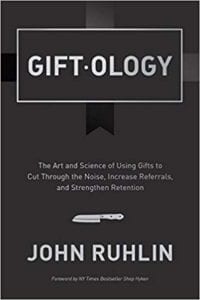
Giftology: The Art and Science of Using Gifts to Cut Through the Noise, Increase Referrals, and Strengthen Retention
I love this personal touch. The concept of a personal Thank You note, which used to be a standard thing years ago. When everyone else emails and you still take the time to write a personal note, it stands out and breaks through the clutter. Ironically, I’ve interviewed John Ruhlin, who did a whole book about Giftology and the importance of smart gift giving and how he works with companies to give thoughtful gifts at unexpected times. When I was in sales at Condé Nast, I put Google Alerts on all my clients. If they had a good stock report, if Guess Jeans’ stock is up X percent, I’d send a little note or a congratulatory gift. All the contact is not about selling, but knowing that I was in their corner cheering them on, congratulating them.
Clients, they understand that there’s a transaction to take place. I’m a client of many people in sales. It’s not a pejorative or negative thing when they sell me something. I think it’s Henry Ford. It’s been attributed to many people that nothing moves until someone sells something. The world is going around. It is the feeling of are you only selling me something or can we also have a relationship while you sell something? Again, it feels like finding the narrow path there. I, as a human being, when I am the consumer, I feel that difference. You do. We’d be naïve to think that our customers don’t feel that difference as well.
I always compare it to being a copilot with your buyer. When you’re on a plane and they say, “We’re now landing in Nashville,” nobody stands up and says, “What? We’re landing? I thought we’re running around forever.” It’s the same thing in a sales situation. Eventually, you’re going to ask them, “Would you like to hire somebody? There’s an event coming up.” You do have to pull the trigger eventually. I think that mindset helps. That’s a great insight as to how you keep your clients loyal. A lot of the people reading the blog would like to also possibly know how do you keep good talent because clearly the same authenticity and thoughtfulness and never taking people for granted that applies in relationships for clients, I’m imagining it applies for the team that you’ve built.
I’ve been at Premiere for nineteen years. I’d love to say that all nineteen of those have been doing it correctly. That would not be disingenuine to say that. Some of that was making mistakes along the way and saying, “I don’t want to recreate that mistake.” We’ve worked very hard to create what every company says family. That’s a bad analogy because you never get fired from your family or you never get laid off from your family. That’s the analogy that holds true in many ways. We worked very hard to make this feel familial in small ways. Everyone at Premiere is very blessed in life as they succeed. They see the results of that.
Every Friday we have a staff lunch in our large conference room, we’ll have 30, 35 people in there. That’s a good excuse for everyone to sit around and talk about what was funny on TV. There’s very rarely an agenda. I’m a big believer that you hire people with money, but ultimately you keep people with gratitude. When someone else approaches one of our team members, if I’m honest, it happens regularly. Often, I hear from that employee very quickly that, “A job offer was made.” If the money is ridiculously different I say, “I want you to have the next step and that’s great for you.” Most of the time it’s, “They offered me 10%. They’re going to have to do a lot better than that to get my attention.”
You acquired another speaking bureau. Can you tell us what generated that and what that experience was like?
John, we are in a competitive industry. I say often it’s a friendly competitive industry in the sense that I have many friends that work at the competing speaker’s bureaus. We have International Association of Speakers Bureaus, the association we’re all engaged with. We’re together many times throughout the year and have drinks and meals. There’s a camaraderie there. It also allows us to somewhat measure ourselves against one of the other and see how different people run their companies. I am a big believer in culture. There aren’t many other speakers bureaus that would be a culture fit. In the fall of ’17, Brian Palmer who was the Owner and Operator of National Speakers Bureau, his father had founded it in 1973, reached out to me and said, “Can I come to Nashville and take you to breakfast?” He did that very thing and it was for the purpose of saying, “I’m ready to start transitioning out of managing a team and managing a company day to day, running a company day-to-day. I want it to land in a place where I know it will fit well.”
We agreed that our cultures could mix and mingle and there wouldn’t be any shock either direction. There are always some surprises but relatively few, if I’m to be honest with you. Over the course of several months, we went through the acquisition process. We did everything. We removed ourselves from the process to a large degree, bring in an outside company to handle the transaction, an outside valuation company because I wanted him to feel like it was a win for him. Premiere is an AESOP. I have a duty to all of our employees here who were technically the owners of the company at this point to get a good value on a purchase. We were able to do that. John, I would say over the last months, the acquisition closed in June. They have not only thrived but significantly grown their production, the number of dates and the speaker relationship. It’s been a win.
[bctt tweet=”I am not the hero of your story, you are the hero.” username=”John_Livesay”]
Would you say that part of the reason this merger or acquisition in your case has been successful, is that you’re bringing some new technology and things that they didn’t have in place that allows them to be more productive?
Yes. National Speakers Bureau had existed much longer than Premiere. It has a very strong core base of clients who adore them. Clients that we not spoken to or worked with before, they had chosen our speakers because of those strong relationships like when we spoke about. We’ve invested very heavily on technology. Our competitors would say Premiere is almost a technology company as much as we are speakers bureau. We were able to integrate them into our systems, accounting, the backend services, logistics, air travel, all of those things within a week or two. I applaud our IT team. We have five people on that team. They integrated NSB very quickly allowing the NSB crew to truly go out and work with clients and continue those relationships and not have to worry or stress over all the heavy lifting that we can do because of our backend systems.
Do you imagine almost every company I have ever worked with, no matter how comfortable you are with these existing customers, there’s still an effort to go get new clients? We’ve already covered how we keep these existing clients loyal. We’ve covered how we keep the team loyal with gratitude and appreciation and acknowledgment. We’ve covered why this was a cultural fit for the acquisition. The last thing remaining would be how do you decide which accounts you’re going to target that might want to work with Premiere Speakers Bureau and what is it that you say in your pitch that allows you to stand out as a brand?
That like many industries is very specific to the sector of the business. You have association clients. They get calls from every bureau every day. That’s an exaggeration but probably not by much. Corporate clients, because they’re event planners, are more shielded. Those are a little bit more strategic where it’s attempting to connect through a third party or something along those lines. There are definitely are some commonalities across those sectors. It does get very splintered quickly. Our big approach is we are comfortable in spending to make an impact or to acquire a client or at least the attention of a client. The other side we have the benefit of we’re not solely focused on one, two, three or four products.
We have ultimately the ability if we see a business sector or an area of our industry that we think is underserved, we can go out and find two or three speakers that we feel are very strong on content that works in those areas. That essentially gives us a product to go to those buyers to say, “This product is perfectly designed for you.” That’s a huge benefit in the speaking industry because if you Google motivational speaker, I promise you’ll get tired before you get to the end of the result page. We have a great opportunity and we have to be strategic in what speakers we add because ultimately that that to some degree determines what type of clients are attracted to what we’re offering.

Speaking: To be the hero is truly to add value and to be a guide in some small way that resonates.
A great tweet based on what you said would be, “Growth comes from customized targeted solution.”
You should be a speaker, John.
I love doing it and I love interviewing people like you who got such a great passion and a message for what you’re doing. Is there any last thought you want to leave us with about either a book you want to recommend or a philosophy that has worked for you to become the CEO or be so successful in life that you would want to share?
John, you have a speaker that lives in your space, the story space, a guy named Donald Miller. If you don’t know each other, you should. You guys could blow a dinner parties minds with your thoughts on the story and conveying the story. I saw Don speak years ago. I knew him from some past relationships. His approach is, “Shawn, the sales process is not the hero of the story. I’m the guide in the story.” I felt like for the first time I’d heard someone describe exactly our approach. Premiere Speakers is not the hero in our event partner’s story. We want them to stand on stage and get the accolades and the applause. We have a product and we sell that product or we make it available.
Ultimately, we want them to be the hero. I felt like personal lives, professional lives as I’ve utilized that approach and been intentional about it that I’m not the hero in your story. If I’m here to add some value, I want to do that and I want to elevate this conversation and the thoughts and other people’s minds for the day. That’s not to be the hero. It’s to add value and to be a guide in some small way that resonates. I have literally written down on my desk, I read it 50 times a day. What I love is 20 or 30 years from now, someone says that about me, I’ll take that as a win.
[bctt tweet=”Small things resonate with people if it’s done from a genuine perspective.” username=”John_Livesay”]
What a great way to end this episode. I’m not the hero in your story. You are the hero. It’s such great insights. I tell people all the time, “I’m your Yoda or think of me as the Sherpa helping you get up the mountain, but you’re going to get there with me as your silver hero.” That’s wonderful stuff. Shawn, I can’t thank you enough. People can find you on the Premiere Speakers Bureau. Are there any social media that you want to promote the best way to reach your company?
Premiere Speakers Bureau. Congrats to everyone in this building and the people that have helped build it for the last 25 years. As we celebrate for the next year, I’m thankful for them. You’ll find us on Twitter, @PremiereSpeaker. If you go to PremiereSpeakers.com, you’ll be able to jump to all the different social media channels from there. We would love to help anyone. Please remind us that you connected with us through John. We’d love to know that.
Thanks again, Shawn.
Links Mentioned:
- Premiere Speakers Bureau
- Duane Ward
- John Ruhlin – previous episode
- Giftology
- International Association of Speakers Bureaus
- National Speakers Bureau
- Twitter – @PremiereSpeaker
- https://PremiereSpeakers.com/
- Quantmre.com
Wanna Host Your Own Podcast?
Click here to see how my friends at Brandcasting You can help
Get your FREE Sneak Peek of John’s new book Better Selling Through Storytelling
John Livesay, The Pitch Whisperer
Share The Show
Did you enjoy the show? I’d love it if you subscribed today and left us a 5-star review!
-
- Click this link
- Click on the ‘Subscribe’ button below the artwork
- Go to the ‘Ratings and Reviews’ section
- Click on ‘Write a Review’