

Win-Win Selling With Doug Brown
Posted by John Livesay in podcast | 0 comments

Overcoming objections is perhaps a salesperson’s biggest challenge when making a sale and the best way to do it is to make the deal a win for both parties. Doug Brown comprehensively discusses how this is done in his bestselling book, Win-Win Selling. In this conversation with John Livesay, Doug explains that storytelling, asking discovery questions, and doing follow-ups are immensely effective tools for win-win selling. If you’re having difficulty in selling and closing the deal, then this episode is for you. Join in the conversation and come out confident and ready to master the art of win-win selling!
—
Listen to the podcast here
Win-Win Selling With Doug Brown
Our guest on the show is Doug C. Brown, who is the Founder of Business Success Factors and also the author of Win-Win Selling. We talked about how 90% of people won’t buy unless they’re asked. What’s causing people to hesitate to ask people to buy? If you’re one of those people who hesitates to ask for the order, this is the episode for you. We also talked about how follow-up is just common courtesy and how in the dating world, if you don’t do it within 12 to 24 hours, you’re out of luck. The same thing is true in business. Enjoy the episode.
—
Our guest is Doug C. Brown, who is the CEO of Business Success Factors. He started working for family businesses at the age of three and now has built over 35 companies himself. He’s got three degrees. He’s America’s number one expert in revenue expansion and sales optimization. When he was at college, he supported himself by selling music equipment to the colleges and some of the world’s biggest bands, such as Billy Joel and the Eagles. He also served twelve years in the US Army where he was awarded a Distinguished Soldier. He graduated second in his class, and then went on to enroll at the Massachusetts Military Academy.
After his service, he worked at and became a top-selling sales representative for a $2 billion company, which laid the groundwork for him to form his own consulting and auditing company. He’s traveled to 47 out of the 50 States. I’m curious to hear which three he hasn’t been to. He’s been an independent president of sales and training companies like Tony Robbins and many others. His efforts have generated over $500 million in sales. Welcome to the show, Doug.
Thanks, John. I appreciate you having me on here. I’m very grateful to be here. It was Alaska, North Dakota, and New Mexico I haven’t been to.
I have not been to nearly as many States as you had. I highly recommend Alaska when the cruise industry comes back. It’s an incredible experience and New Mexico, Santa Fe is amazing and the hot air balloons in Albuquerque. You’ve got lots to look forward to. First of all, thank you for your incredible years of service. I think that’s worth acknowledging. I’ve had some other veterans who have taken their learnings and expertise from the military into the business world. The most intriguing thing for me and the readers from that wonderful introduction that you have is, can you tell us what it was like to go from selling equipment to colleges to getting to be hanging out with the Eagles and Billy Joel?
I was hanging out with Billy Joel’s people. The guitar players in there. It was awesome. I had Billy Joel’s band. I had Paul McCartney’s Wings. I had some of their peeps. I had Extreme Boston, Aerosmith, Joe Wall, the Eagles, and so on. There were others, too. What happened was I was selling music equipment, supporting myself through college, and then one thing led to another. Some of these guys were starting to come into the store and I got to know them. I started becoming their preferred provider. I went to Berklee College of Music in Boston so that’s opened up some other avenues for me. It was a lot of fun. It was one of those things that you were out all night, you get up and had to be back to work at around 10:00 to 10:30 in the morning. You do it all day long and then you go back out again at night. It was how I lived my life going through college.
What a great foundation between the military, the music, starting all these companies and getting to work with big ones. I’m fascinated by CBS television. What were you doing for them?
I was working with the president of CBS eventually. Initially, I started working with CBS as a division that’s like PBS, Public Broadcasting. Their concern and frustrations were they weren’t producing enough sales. I got the call to come into work with them. At that time, they had guys who have been there forever. I was surprised that the imprints of their bodies weren’t firmly affixed somewhere. They were trying to sell like the old Tin Men days, where you beat up on the client and move it forward. We had how to adjust that. Eventually, we ended up having conversations with the president at that time and I worked with them for a while. It was a good gig.
[bctt tweet=”Follow-up is common courtesy.” username=”John_Livesay”]
For those of you who may not know, networks have to convince advertisers to buy time to advertise on their show. They have something called an upfront, where they try and wow them with their pilots. It’s all typically ratings-based, but it’s gotten a lot more sophisticated now where there are some stories to tell, instead of pushing numbers, which is the old way, Tin Men. You referenced it. You’re talking about it there. Sophisticated selling requires storytelling and not more so than in any other industry, which is the entertainment industry. Having lived in LA and worked in that business, the good salespeople would say to an advertiser, “This particular show is going to attract families and your Olive Garden. You’re going to want to be in an environment that is family-friendly while also having some emotion.”
I remember talking to the CMO of Olive Garden about that very thing, “How do you decide which shows you advertise on?” They were going to go on The Good Doctor, which targeting families but also had some drama. It’s very difficult now for families to find a show that they all want to watch because everyone can watch something separately. That industry has changed. I’m sure they needed your help to figure out, “How do we make our show stand out to advertisers against all the other shows?”
You brought up the keyword, which is storytelling. We used to do something called the core story. It’s telling the picture and getting motivation, inspiration and a little bit of pain when needed throughout the story to get the clients to understand to move and you’re right. That industry has changed so much. Streaming services are everywhere and like any technology, it evolves. What was happening is they weren’t evolving their sales process around that. Now, with things going on, even more so. Storytelling is even more important now than it used to be in the past because you can’t get together now, have drinks, lunch and all that other stuff. People are so jaded from not being able to see one another that they love a good story. Isn’t that the way we learned as children? We were told stories.
When you talk about the process, you have worked with so many companies and you see consistent problems across industries. One of them, from what you have said, is that there aren’t systems in place. When that happens, let’s say, for whatever reason, you’ve got an onslaught of demand. Your leads are being lost. It’s taking forever to close a sale. You come in and help fix that. How do you do that? Do you have a story to share on how you’ve done that?
The short way of explaining it and then I’ll be happy to share stories. The first thing to understand is a lot of companies lack systematic processes that are measurable. Take something as simple as hiring. They all want to hire top-producing sales salespeople but the question is, “If you want to hire an A player, are you a company that can achieve holding onto an A player?” We start with what I call the truthful goal, not honest and subjective, but this is the concrete measurable goal. We get very clear about that then we assess the process of where they are right now. What do they have? What’s working great? What could be optimized? What’s not working well? What’s missing? What are the constraining factors in the process as well as all the assets they have?
We build a growth plan together based on what they want to achieve on that truthful goal. It’s a bit different for every company because every company is individual, although most companies have the same 10 to 12 issues going across the board. Smaller companies tend to lack systems. The larger companies because they’ve had to grow larger, it’s a need and a must. They got to have systems and processes in place. Even that gets out of skew because of the people. They’re not following the system and not being held accountable to the system. I had a company that was doing $50 million. They called me and said, “I’d like you to come here and talk with us.” I came in and I did my thing. The truthful goal is they wanted to double their business. On the assessment, I had to go back to the owner of the company and explain to him, “You’re about to lose 60% plus of your sales team.” They had things crazy, John. They had an 82% turnover of help annually.
Some of those reasons are unattainable quotas and bosses who micromanage them. You hit your quota and they double it for next year.
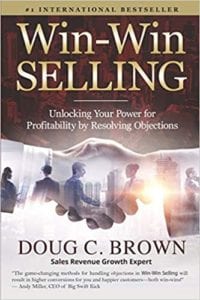
Win-Win Selling: Unlocking Your Power for Profitability by Resolving Objections
It was like, “You’re never good enough no matter what’s going on.” Even the top producers were producing top-wise weren’t rewarding them or showcasing their egos. Let’s face it, salespeople have egos. They wouldn’t be salespeople otherwise. We all have egos to a degree. Some good, some not. I went to him and he said, “No. I built a growth plan.” He was like, “I’ll take it from here.” Two months later, he called me. They have fallen from $50 million to $48 million. Sixty-two percent of his sales team quit in 60 days. He called me back and went, “Can you fix this?” I said, “Sure, I’ll give my best.” I got back in there. I started re-recruiting the people that had left. I got him to agree that this is how we should run the company going forward.
We got some of those back. We hired other new people. After I was doing this actively, I found out that almost 60% of his leads were never going from a lead stage to the first contact. I went back to him again and explained to him. He told me, “No, you’re crazy. This can’t be happening.” A lot of times companies manage numbers from top-line revenue or top-line numbers. They don’t look down below what’s going on and they go, “We’re making money. This is good.” Long story short, we fixed that one ratio. Within the first 30 days, it dropped by half. In the second 30 days, it dropped by another 25%. In the third month, it dropped by a little bit more. Installing that and a couple of other things because it’s usually only a few 3, 4, 5 things. They went from $48 million to $110 million over the next two years.
You get the right processes and systems in place, leads aren’t lost and you treat their people well. It’s not rocket science and yet companies are too inside their own bottle to read the outside of the label. That’s why they need people like you to come in. Almost like a child sometimes with a parent. The parent can say the same thing. Until a teacher says it, it doesn’t stick. Whether it’s a speaker like I am or an outside consultant like you are, sometimes having another perspective and voice helps people go, “That’s the sixth time I’ve heard that. I got to fix it. Let’s try it. What do we have to lose at this point,” especially when things are going down? Thank God he called you when they were only at $48 million and not $20 million and trying to turn that ship around as much harder.
In about six months, he would have been at $20 million.
What do you see the big problem is that salespeople have around rejection? Are they giving up after the first no? They take it personally. I have some ideas around that I’ve experienced being in sales myself for many decades. I’d love to know what you see that causes salespeople to not close sales and take rejection so personally that they are giving up quickly?
No person I’ve ever met loves rejection. I’ve had the opportunity to work with some big names and people. They don’t like rejection, behind every corporate objective is always personal or something. One of the reasons that people do not like rejection is because of how they grew up. All of this goes back to our roots. We grow up and we’re habituated to our behavior. We’re told what’s right and what’s not right by parents, preachers, teachers, classmates and all kinds of things.
What we don’t realize is we’re making agreements all the way through based on what we agree to, even if we don’t agree with it. That sneaks up on people as they become adults because adults are nothing more than grown children who have been taught how to navigate their way through society. However, if one grows up in an environment where it’s rude to interrupt the adults and they are admonished, punished and publicly humiliated going all the way through this, eventually, that starts to become a pattern that they go, “I cannot interrupt people because it’s rude. I won’t get mom and dad’s love.”
[bctt tweet=”Start with a truthful goal.” username=”John_Livesay”]
The core beliefs are founded right there.
They even value it because when they’re not doing that, they might get praise. “Look how well the children are behaving,” and all of that good stuff. That’s well-meant. Fast forward 30 years, they’re now 34 years old. They’re in a sales job. The goal is to make 100 cold calls a day, which is interrupting 100 people a day. What ends up happening is when they start getting rejected, it reminds them of the pain of their youth. There’s a set frame there that until they are aware of it, it’s on autopilot, too. That’s the whole thing. It’s the same thing with closing. It could be a myriad of different things that they learned growing up.
Let’s say that they were taught not to pressure people for whatever reason. No matter how their moral obligation says, “This person needs this. This person wants this.” They’re going to have that duality and that fight within them. I had one sales guy that I help with this. He grew up in an environment where everything was negotiated. “It doesn’t matter. You close the deal, negotiate. That was how we grew up.” I’m sitting there watching. He closed this deal and I was like, “That’s a good deal.” What did he do? He started negotiating right after the deal. Instead of pushing the paper forward and saying, “Can we have your endorsement on this?” He goes, “Well.” He started backing it up again and he undid the deal.
I’ve seen it happen so many times. I tell people, “When you get someone to say yes, stop talking. Don’t tell them ten more features.” It’s so bizarre to me that people feel the false belief that, “You got to get people to know, like, and trust you. I’ll push out a bunch of information. Do you know enough about me now or you still don’t? Even if you want to buy, I still need to give you more facts.” It’s fascinating to tie it all the way back to childhood beliefs that get formed of either the fear of rejection and/or pushy or “I need to negotiate in order to feel like I won.” You’re talking about getting people in the right roles. Some people love to nurture existing clients. Others only like to get the sale and then turn it over to somebody else. They hate the servicing of the clients. If you’ve got the people doing something they don’t like, that’s a big problem, too.
It’s a huge problem. I fully agree with you. Sometimes, that is the solution. I always talk to owners and a lot of times, they make this mistake. They take their top-producing salesperson and promote them to a manager. A top-producing salesperson loves to go out, be social, prospect and do all of those things. A manager loves to do spreadsheets and metrics. You try to take that and say to a top-producing salesperson, “I need you to create pivot tables and this and that.” Without question, it’s a problem. If you have people in the wrong role, they’re not happy and productive.
What I use is sales-specific assessments which will pinpoint, “Are they a farmer? Are they a hunter? Do they have the will to sell?” That’s another closing thing. Because if they don’t, then they’re not going to close well. Closing is not hard. In fact, closing could be a very simple question. “Would you like to move forward with this at this time?” Closing is so important. I’ve seen statistics out there that highly suggest all of them. About 92% of people won’t buy unless they’re asked to buy.
Let’s take a moment on that, 90% won’t buy unless asked. It’s like dating. You’re not going to get someone to knock on your door out of the blue unless you’ve asked them out. No one is sitting at home alone single going, “I don’t know why nobody’s asking me out, knocking on my door. I’m not putting myself out there, but yet I expect that I should not have to do that.” This premise of, “I’ve given you all the information. Please don’t make me ask the closing question because I hate it,” or whatever the belief is, yet I compare it to being a copilot with your buyer.

Win-Win Selling: Storytelling is even more important now than it used to be in the past. It’s telling the picture and getting motivation, inspiration, and a little bit of pain when needed throughout the story to get the clients to understand to move.
I tell the story when I give a talk. When I flew from LA to New York or wherever, the pilot comes on at the end and says, “We’re now landing in New York.” Nobody stands up and says, “What? We’re landing. I thought we’re going to fly around forever.” We see so many salespeople who are afraid to land the plane. The clients are like, “If you’re not going to ask, I’ll keep dragging this thing on forever. I’ll keep picking your brain or asking for more information. We’re doing this endless flight.” Someone is going to run a fuel one way or the other until you start from the get-go going, “This whole journey is expected to have a landing point at someplace. It’s not going to be a shock when I ask you. Does that sound like something you want to move forward with?” It’s like the plane ride. We have a destination in mind. Otherwise, we wouldn’t get on.
We all want that plane ride when it touches down to be smooth and effortless. For too many people in sales, because they’re afraid, they have a fear of rejection or they grew up in whatever environment, “You’re good, but never good enough,” they don’t ask the question or wait until they’re desperate to ask the question. It’s like the plane hitting the runway very hard. No one likes to be in a plane and feel kaboom when it hits the ground because you don’t know what’s going on. When they ask closing questions, a lot of objections will come up because they’ve asked the question in the wrong way. They haven’t made the flight, staying with the analogy, enjoyable all the way through, informative and value-based. Closing begins before you ever meet.
Sales aren’t lost at the end where most people think they’re lost. It’s lost, as you said, even before they meet because of the lack of preparation. Again, with the airplane analogy, pilots don’t just hop on. They go outside and do a whole preflight checklist. We should be doing the same kind of preparation.
If you think about it, the pilot is positioned as the expert because she or he has all of these people’s lives in their hands literally, holding onto the plane. They’re positioned in a place where we respect the pilot. The pilot is like the captain of the naval vessel. What kind of positioning are the salespeople coming in with? Are they positioned as experts, authorities, and advisors? Are they positioned as, “Two salespeople and a manager just came through the door? I bet there are two liars and maybe one honest guy.”
When the pilot comes on and says, “We’re going to be hitting turbulence. Put your seatbelt on.” Nobody says, “How does he know? I don’t believe that he knows we’re going to be hitting turbulence. No, I’m going to risk it. That’s where I’m going to choose to go to the bathroom.” I was like, “Nobody does that.” They went, “He must know coming up. He’s done this 100 times.” Let me ask you about the other big problem salespeople have that I’m sure you have a solution. They struggled to create a sense of urgency. I see that so often without being pushy. Urgency is not, “I need to make my quota.” Many people think that’s what makes this urgent. Can you speak to how you help companies create a sense of urgency for their potential clients?
Again, closing begins before you ever even talk to someone. All of the positioning, marketing and prospecting should be set up in order to have the expectation of what we want as an outcome in a win-win fashion for both parties. In the sales part of this, the conversation that’s going on, all of this urgency must be discovered prior to ever presenting. This is where a lot of salespeople make a mistake. They’re not going through what we would call the discovery process. They’re not asking questions on and around, “What time frame is this to be accomplished? Where are you at? If you made decisions like this in the past, how have you made these decisions?”
They’re not figuring out what the potential is for the close on that particular call. Whether this is a one-call, two-call, or three-call close, whatever it might be in a meeting. A larger sales generally take a little longer time. Not always, but generally. They’re not doing it in the early stages of this. What I see happen with salespeople is they get to this, present, do all this other stuff, and then, “I got to close.” The urgency comes in between the presentation, objections and close side or somewhere around there.
[bctt tweet=”Don’t be afraid to ask questions.” username=”John_Livesay”]
That’s like going up on a big slide and jumping on the slide. When you get toward the end, you figure out where you’re going. You’re going into the water or the sandpit, whatever’s below that slide. If the salesperson or the person selling asks these discovery questions in a non-threatening manner, they will elicit the response that they’re looking to find. Here’s the thing, not everybody is ready to close, no matter what. There’s a Law of Averages. There will be a certain percentage of people who are and a certain percentage of people who are not.
That leads to my next question, which is you have this whole process to help people with follow-up. Much like those leads that get lost, the follow-up and if the system is not in place, “I’ll call you in 30 days.” It’s not on my calendar or whatever and then I never do. Those people aren’t going to call you. Let’s talk about the importance of follow-up and having a system for that. You’re solving all these leaks, I call them, throughout the whole process.
Follow-up is a big leap for a lot of organizations or people, even if they’re solo entrepreneurs. I’ve worked with lots of coaches, consultants and solo entrepreneurs as well. I’ll illustrate it this way. This blew my mind a little bit. I was invited onto a sales consultants’ training call as a guest. I got onto this call and listened to these people. This woman said, “I blew it this time, guys.” They went, “What do you mean?” She went, “I lost 700 units at $500 a unit because they bought from someone else because I didn’t follow-up with them. I did all the work. I got all the way there. We had potential. I didn’t think they were that interested, so I moved on to something else.” That’s a $350,000 sale, if I remember correctly. John, her commission was 50%. Here’s this thing. The average client stays with that particular product or service for 5 to 10 years. She lost somewhere around $175,000 a year in commission for 5 to 10 years each year. The challenge is follow-up is not part of a sale that can be left out because follow-up is a common courtesy. If we think about it in terms of dating, we go out on a date and we have a great time. I have surveyed women for this.
If you don’t call, thank them within a certain period of time, and you try it later, it’s too late. They’re hurt and angry. They’ve made up a story in their head.
It’s 12 to 24 hours depending on the situation. If you don’t call within 12 to 24 hours, every single hour going past there, you’re becoming more in the dirt at that point with the relationship. We meet with somebody, let’s take the first meeting and nothing is recapped and sent. I had another client who went to a trade show. They called me and said, “We went to this trade show.” I said, “How many sales you got?” I think they said about $30,000 in sales. I said, “How many leads you got?” “175.” I said, “When did you get back from the trade show?” They went, “A week ago.” He went, “I called you for a reason.” I said, “I’m not talking to you until you get off this call and at least send all 175 an email or call all of them.”
He went, “I can’t call all of them now.” I said, “Get your team to.” He said, “Why?” I said, “Because you are losing money right now.” They sent an email. They picked up another $35,000 in sales off the email. They followed up with calls. They picked up almost $100,000 more on the calls. All this stuff was going to die. The worst part about follow-up when a person does this is they go through all of the work. They get the client right there and they’re ready to go. They should be calling their competitors, saying, “Give a call upon this client that I just went. They’re all warmed up and you are not going to get the sale.”
I love what you do and how scientific it is. It’s not just guessing. It’s based on data. You’re able to spot these leaks. People can find you at BusinessSuccessFactors.com to explore how you can help them scale their business and fix all these leaks as we described them. Any last thought or comment you want to leave us with, Doug?

Win-Win Selling: If you have people in the wrong role, they’re not happy and productive.
Can I promote my book?
Please.
As we’ve been talking about storytelling, frames, and all of this, I wrote this book called Win-Win Selling: Unlocking Your Power for Profitability by Resolving Objections. You can get it at WinWinSellingBook.com. It brings you right to Amazon. It’s $0.99 for the digital copy. I dropped the digital copy for your folks, John, or $24.95 for a hardcover. This book is written specifically on human-to-human communications. It goes into the psychology, philosophy, formulas and practicality to resolving objections in a win-win fashion. That means they win, you win. It’s not just about business. I’ve had a lot of people comment that they use this in their personal lives and their relationships are better. I go into a lot of what we were discussing on the show. I highly recommend people go do that.
That website again is WinWinSellingBook.com, where you unlock your power for profitability by resolving those objections. It’s a great offer. Thank you so much for that, Doug. Thanks for sharing your wisdom of what’s going on behind these behaviors. Once we identify those beliefs of where did I get so afraid to interrupt anybody and make a cold call, we can get unstuck.
That comes from Alcoholics Anonymous. The first step is awareness or something like that.
Business and personal indeed.
Important Links
Wanna Host Your Own Podcast?
Click here to see how my friends at Podetize can help
Purchase John’s new book
John Livesay, The Pitch Whisperer
Share The Show
Did you enjoy the show? I’d love it if you subscribed today and left us a 5-star review!
- Click this link
- Click on the ‘Subscribe’ button below the artwork
- Go to the ‘Ratings and Reviews’ section
- Click on ‘Write a Review’
Love the show? Subscribe, rate, review, and share!
Join The Successful Pitch community today:
- JohnLivesay.com
- John Livesay Facebook
- John Livesay Twitter
- John Livesay LinkedIn
- John Livesay YouTube
Big Fun Is Serious Business
Posted by John Livesay in podcast | 0 comments
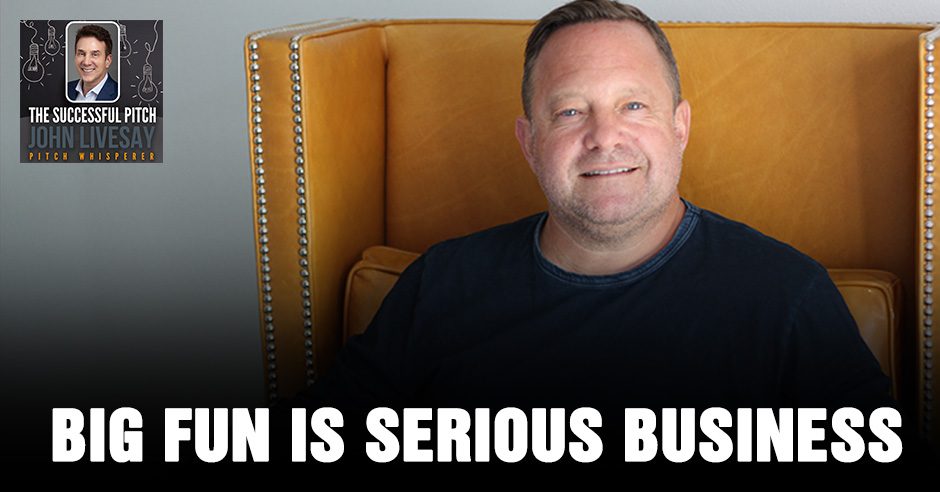
Attending events can be so fun yet, the amount of work put behind the scenes to make them successful is no joke. Take it from the founder of Eventmakers, Guy Genis, who said that big fun is, in fact, serious business. In this episode, he joins John Livesay to share how he is working with huge clients to create memorable and immersive events. He taps into the power of storytelling, taking people from beginning to end with events, and making connections that help propel your business. Guy also talks about interior design, working with clients, and balancing that fine line between giving them what they want and keeping it within the constraints of what is going to look best.
—
Listen to the podcast here
Big Fun Is Serious Business
My guest is Guy Genis, the Founder of Eventmakers, which has been in business for over 30 years, working with huge clients like McDonald’s on creating memorable events in multiple different places. When we describe some of the events that he’s created, the experiences and how immersive they are, you’re going to feel like you’re right there. We talk about the power of storytelling and how that makes events memorable. He said that big fun is in fact serious business, and that you’re only as good as your connections. Enjoy the episode.
—
My guest is Guy Genis, the President and CEO of Eventmakers. He founded Eventmakers back in 1990. He’s produced over 1,000 events in his 30 years and his knowledge and expertise in event creation and execution clearly speaks for itself. Before Eventmakers, he charted and planned events on luxury yachts in partnerships with the Ritz Carlton hotels. When he’s not doing that, he’s busy with Guy Genis Designs as an Interior Design Expert, which is all part of the experience he creates for his events. Guy, welcome to the show.
Thank you.
Let’s talk about your own story of origin. Before the show, we were talking about you have a history with your mom and your grandmother in the world of design. Is that true?
That is true. It’s an interior design dynasty. It’s grandmother. Mother was a successful interior designer for multiple celebrities including DeNiro, Marlon Brando and Rod Stewart. My sister, in her own right, is successful and works with my mom. Now, I’m collaborating with my sister on interior design projects all over. We did a 6,000 square foot home in Kona, Hawaii overlooking the Four Seasons golf course. We did a 12,000-square-foot home in Newport Coast. That’s when I’m not doing producing events.
How did you get into this 30-some years ago? Did you say, “I want to take my passion and skills from creating beautiful spaces for homes and started an event company?”
No, it dates back and I didn’t even know I was doing it. I was the Social Chairman of my fraternity at University of the Pacific. I never knew I would end up for a living producing events. I was an actor when I graduated. I was on a bunch of TV shows. I played a nerd name Earl on Saved by the Bell on a couple of episodes. I was a day player on Coach and Dear John and Anything But Love with Jamie Lee Curtis. It’s amazing when you’re acting and to be on a 3, 4 camera shows is incredible. When you’re not working like all actors know and going on auditions and not getting them, it’s a little depressing. My father was in the film industry. I came from a creative background. My dad produced the special effects for Star Wars with Lucas. He created those iconic titles that went off into space.
[bctt tweet=”If you enjoy what you’re selling, you could sell anything.” username=”John_Livesay”]
Let’s take a moment. I think any person that has any creative aspect in their life dreams of creating something that iconic and that will live on long past their life. To grow up around that, you have a sense of anything is possible, I would think.
It was a great combination of one parent being on the creative scientific end and the mother could be creative in the interior design.
You are the mix of science and creativity. When those things come together, magic happens. It reminds me of the story of Jonas Salk down in La Jolla wooing Francoise Gilot who was with Picasso in the ‘40s. She’s like, “Why do I want a data scientist? I’m an artist.” He used the architecture of the Salk Institute. He said, “Architecture is the bridge between art and science. I want to have artists here as well as someone like Francis Crick working on DNA.” You’re the only other person I’ve ever heard connect those dots like that. What I think is interesting around what your dad was doing with Star Wars is there’s a lot of creativity, obviously creating something that’s still the iconic opening, the once upon a time storytelling, but there’s some science behind it too. He wasn’t a graphic design person, correct?
That is correct. I drifted away from your question. The real answer is how I got into it is I went to my dad who had a post-production company and they were doing the audience reaction spots for Disney. I said, “Dad, I’m bummed out. I’m not getting these auditions.” He says, “Go to work for the company that plans our events.” I ended up for a low salary and a high commission going to work for this boutique company in Marina Del Rey, California chartering yachts for the Ritz Carlton. We would do these extravagant corporate events. I ended up the cold call king. I knew if I enjoyed what I was selling, I could sell anything. My acting partner, when I would go on auditions, this female happened to own a McDonald’s.
She said, “You are crazy if you don’t call the regional office in Woodland Hills and try to get a meeting or an event.” After thirteen cold calls, they said, “You’re bothering me. Come in.” I ended up closing a holiday party for 1,000 guests for McDonald’s. Flash forward 30 years later, my twin brother and I produced the majority of owner-operator meetings throughout the country for McDonald’s. That’s where I think you, as a motivational speaker, when I learned about you and selling and storytelling could be perfect for our McDonald’s clients as well.
Also, I want to zoom out for everyone because you had a story of persistence. You had a friend saying you’d be crazy not to try something, but you’re used to rejection like salespeople are. An actor’s life and a speaker’s life are very similar. We can’t take rejection personally. Yet when you are creating content, and in my case it’s creating a show and interviewing great people like you, I happened to interview a mutual friend of ours, Amber Allen. That’s how we met because you knew Amber. You’d worked with her when she was at Warner and Disney and you did events for her. You heard me interviewing her about her virtual reality company, Double A Labs.

Events Business: More than anything, you can’t sell your style to a client. You have to listen first and make sure that you understand where they’re coming from.
You reached out to me. You never know how relationships are going to start and the connections and the need to keep creating something that’s valuable. You get into other people’s networks and other people’s worlds. I’m sure that’s how you have been able to grow Eventmakers where you’re working with not McDonald’s but Coca-Cola, American Express, Fox and many others. You get the trust transferred over is what I’m saying.
You are only as good as your connections. I would say Amber is a highly talented cutting-edge person producing these technological events where using augmented reality. That’s why she’s an innovator. She’s on the cutting edge and we all help each other. You can’t advance your company without having strong connections like this.
Also what I admire about you, Guy, is your multiple sources of income. It’s a basic business strategy. Yet a lot of event planners, a lot of speakers suddenly go, “If I’m not doing a live event that’s shut down for a pandemic, I don’t know how to else to make money.” You have the design business. You’re already planning months in advance for when live events come back. Have you been able to do any planning for virtual events to make those special?
Yes. As a matter of fact, McDonald’s has embraced virtual events. We’ve invested in a full studio in Orange County with one of our partners. We have full capabilities to stream. We have a green screen, we have Johnny on the spot custom to produce for a network, camera crews that go out and do interviews of these executives. We’re doing these virtual meetings for McDonald’s throughout the country.
Everyone knows about Tony, the famous motivational guy. He’s invested millions of dollars in having a virtual ability to connect with people. I think when a company like you creates a new way of doing something. Let’s talk about that. Over your 30 years of running Eventmakers, what other kinds of pivots or challenges have you had to face and how have you done it like Tony Robbins has done?
The interior design is the perfect pivot. It was right in front of my face, but yet it’s one of those things you have to come to a real realization that, “I’ve done this all my life.” It’s such an easy pivot and you’re already good at it. It’s a form of storytelling as well.
[bctt tweet=”You are only as good as your connections.” username=”John_Livesay”]
We were talking about one of your clients, GameStop, and how you turned a game into an experience in a specific location that was completely relevant to what the game was about. Can you tell us that story?
The end client was 2K. It’s a video gaming company based in Novato. The game itself was called Mafia 3. The backdrop of the game is about the mafia in New Orleans in the 1960s where the mafia started. The purpose was to sell 5,000 GameStop managers in three minutes, which is a challenge. How do you tell a story beginning, middle, and end, get the GameStop managers motivated and have them leave the arena with the intent of an excitement to sell this game through at a GameStop? We came up with the story of creating a real live New Orleans funeral where we had a cast of 50. We had the cast of 50 dressed by Emmy award-winning costume designers in those 1960s outfits. They were doing a real funeral procession down the aisles, pushing the caskets. The audience didn’t know that this cast of 50 was a world-class choir. They get up on stage and they come in and we have them led by a sixteen-piece jazz band singing The Saints Go Marching In like they would do in New Orleans.
They get up on stage and 25 peel off to the right on the bleachers and 25 peel off to the left and they begin the choral of Can’t Always Get What You Want by The Rolling Stones, which is the perfect song and lyrics to talk about the mafia. It was a big surprise in the audience didn’t know that this was a world-class choir, the Angel City Chorale from out of Los Angeles. They made it to the finals of America’s Got Talent. All of a sudden, after they start, I put together a world-class rock band led by Chester Bennington of Linkin Park, Dave Navarro. I had the drummer from Queens of the Stone Age. I had the bass player Scott from Weezer and they go into Can’t Always Get What You Want.
We outfitted every single GameStop manager with LED wristbands. We control the color of 5,000 in the audience and they went bananas. While this was all happening, we edited scenes from Mafia 3 above them on a 100-foot video screen. It was a full visceral, they were enveloped, sold on the game footage, a world-class band and choir. It was a full sensory emotional experience. They came out of there pumped up. Some people were crying from GameStop, the managers, and they said they’ve never seen anything like it.
For everyone reading, let’s break down what Guy told us. A story has to be three things: clear, concise and compelling. In three minutes, you have to tell this amazing story that pulls people in. I always say, when you tug at people’s heartstrings, they want to open their purse strings. When you learn a good story, craft it, make it concise and compelling, then it touches us on an emotional level. Any good story has a little bit of drama and unexpectedness to it. First, it’s cool enough that these people are dressed and carrying a coffin and wearing stylish period clothes. That alone pulls you in. The surprise is those people are professional singers. You keep escalating the wow factor.
You take it one step further. You were describing where it became interactive that they felt part of the story with the colors. If you’re trying to figure out, “How do I tell a story to get people to want to hire me? How do I tell a story to get people to join my team? How do I get to tell a story to get people motivated and re-energized?” Those are some real key tactics. What I love helping people do is take these examples like you gave and turn them into stories so that people see themselves so much in the story that they want to go on the journey with you. You did something I’m not even aware of that you did because you’re such a natural storyteller, which was you gave a resolution to that story. It was telling the story of the guy who runs it saying he was almost in tears and so was the audience. He’d never seen anything like it. That’s the resolution of that story.

Events Business: “Big fun is serious business.”
Imagine the Wizard of Oz if the movie stopped when Dorothy had gotten on the balloon to go back to Kansas. It wouldn’t nearly be meaningful, but we need that resolution of her back in her bed and all the lessons, there’s no place like home. All of that is what makes any movie a story compelling. You gave us a great example of it and how when we tell those stories, sales happen long after people keep talking about it. That’s the other wonderful thing about storytelling is it makes things memorable.
I might add one more thing that these three minutes was only an introduction to introduce the game developer. By the time the game developer comes on stage, they’re already sold. All he has to do is now show them all this great content that they haven’t seen yet. It was making his job easier, getting them excited and that’s storytelling at its best, I think.
One of my previous guests is Robert Cialdini, who wrote a book called Pre-Suasion. He talks about the power of edification. When you edify somebody before they come on stage or speak, it’s good intros, but you did a whole production to edify somebody. They’re already sold emotionally and then they’re backing up their decision with his own story hopefully if what the game is about and how fun it’s going to be to play. Storytelling as a tool to edify is something I like and have not heard people put those two things together. Thanks for that. I had to share that detail. When you get hired as part of your design expertise, what is it that you do that separates you from all the other people who do interior design?
Everybody has their own style. I would call myself a minimalist. I think listening to the client is important, but we tend to have a clean look. We also do a lot of research on the latest in furniture whether it’s already made or do we need to custom make it. It’s more of a custom-tailored approach to every single client. I think more than anything is you can’t sell your style onto a client. You have to listen first and make sure that you understand where they’re coming from. You also need to let them know if there are any limitations to what they want to do, which is important. You have to be able to direct them in the right way. It’s a fine line between what they want and what you think they should have.
It’s almost like an event. That’s why it’s similar. I’m trying to guide somebody. You want to give them something new, it has to be within a budget. One of the techniques that I use, and I’m curious to see if you do this, which is a future pacing somebody. You say, “Let’s imagine that it’s a week after the event. What would have to happen for you to feel happy that this was the best event ever? In the case of designing a home, let’s imagine it’s all done. You’ve had this amazing Thanksgiving dinner, inviting everybody to come see it. What would you think would be the wow factors in the house?” Those kinds of things help people start imagining the future with you even before they’ve hired you.
That is crucial, which is why I always start with what are their goals? Where do they want to be? They’re living in this house every single day. What’s going to make them the happiest? It’s like walking that fine line between giving them exactly or as much as they want, but yet keeping it in the constraints of what I think is going to look the best.
[bctt tweet=”People get bogged down with data and don’t pay attention.” username=”John_Livesay”]
The other thing I think you do for people is there’s a whole book called The Paradox of Choice. Too many choices overwhelm and maybe even depress us sometimes. Unless we have someone like you, Guy, that we trust your taste, your experience, and that you know what we like even before we see it. You’ve curated something for us. Instead of showing somebody 100 samples of floor coverings or window treatments, or color scheme, if you curate that down to here’s three choices, none of them are wrong. It’s let’s brainstorm together what’s the right one. That takes much stress off of people that you don’t even realize what a gift that is that you’re giving to people. It’s the ability to not overwhelm them by too many choices. That trust factor that you have and that’s what a good salesperson does too.
It all boils down to focus and you want to keep them focused on the goal of getting this done the best way and the most creative way possible. I’m also interested. I’m aware that you sold a major institutional interior design firm Gensler on a $1 billion project. I’m interested to go more in-depth on how you did that because it’s something that would help me in my interior design endeavors.
They hired me originally to speak to their team on storytelling for client relationships. We need to connect with our existing clients better. It became how do we tell better stories in our interviews when we’re competing against other firms. They didn’t understand what made a good story or how to structure a story. They weren’t telling stories. They were showing typically before and after pictures of work they’d done and hope that whoever had the best design would get the business. In this particular case, they were told, “You’re in the final three. All three firms could do the work. Otherwise, you wouldn’t have made it to the final three. We’re going to hire the people we like the most.” They said, “Let’s get John in here.” We don’t even know where to start with that criteria.
I flew to Pittsburgh with them for two days and worked with them. I said, “On this team slide here, what are you going to say?” They said, “If we run out of time, we might skip it even.” I’m like, “That’s the most important slide.” This is the secret, Guy. People hire you, and then the company, and then your designs in this case. Most people jump to the design. I said, “What are you going to say?” There are ten pictures of ten people that would be working on this that they got the job. “My name is Bob. I’ve been here ten years. This is what I do.” I said, “No, Bob. What made you become an architect?” “I played with Legos when I was eleven and now I have a son that’s eleven and I still play with Legos and bring that same passion.” “Sue, how about you?” “I was in the Israeli Army before I worked here.” I go, “You’re going to bring a lot of discipline and focus. Since you’re in charge of making sure this thing comes on time and under budget, you’re the perfect person.”
Each one of them had their own stories that they told that made them memorable and likable so that the clients said, “We get them. That’s who we’d like to work with for the next six years.” When we got to the part where they had to showcase studies, they had some beautiful before and after pictures, but no story. I taught them how to take those pictures and facts about square footage and things into a story. It sounds like this. “Two years ago, JetBlue at JFK hired us to come in and renovate that wing. One of the challenges we had during that four-year project was you had to rip off all the tiles in the middle of the night and rewire everything. We had to do it between 9:00 at night and 9:00 in the morning to make sure the stores could still open and not lose revenue. We had all our vendors on call in case something went wrong.”
“Sure enough, at 2:00 in the morning, a fuse blew. We got the vendor to fix it there in twenty minutes. At 8:59, the last tile went down and all the stores opened on time. Now a year later, sales are up 15% in those retail stores because we’ve designed a place that pulls more people in and causes them to spend more time shopping.” It’s a short little story, but it’s got the elements, the exposition. We know where we are. It’s JFK years ago. We know the story. The difference is most people make the mistake of saying, “We use critical thinking to anticipate problems.” That’s corporate-speak. I teach people how to tell a story. You see, I show them critical thinking by having all those vendors on call.

The Paradox of Choice: Why More Is Less
I read some of your literature and it says that people get bogged down with data and don’t pay attention. That is the main purpose for the story. Everyone loves a story.
The magic question then becomes, does that sound like the journey you’d like to go on? The people at the Pittsburgh airport saw themselves in this journey that they had done for JetBlue at JFK, they said, “Yes, that’s the journey we want to go on. We have an emotional connection to you from your story of origins. Now we have a case story that we’ve seen ourselves in that makes us want to pick you.”
It’s an excellent way to approach sales.
The awkwardness of do you want to buy? What do you think? I also work with people on having a great opening and a great closing. You know that from being an actor and designing things. When you’re going into space, you need that wow factor. You need a wow factor in your opening. Most people waste all that time with cliché statements like, “Thanks for this opportunity. I’m excited to be here.” I tell people, “First of all, it’s not about you. Nobody cares that you’re excited. We need to open up with something that’s going to grab their attention and make it about them. In this case, you’re a CEO tasked you with getting the airport ranked from 24 to 1 in five years because we’ve done it before for another airport.” That’s much stronger than, “Thanks for this opportunity, I’m excited to be here.”
The closing, when you’re going to a great party or an event, there’s usually some closing of the event whether it’s music or something that ends it. Unfortunately, without proper training, a lot of people end a meeting or a presentation or a pitch with, “That’s all we got. Any questions?” It’s bad. I train them on recap what you’ve said, “If this sounds like the journey you’d like to go on,” recapping what they need to get their ranking up and imagining the future. “We’d like to invite you to join us on this journey together.” That closing question is part of the story. It’s not pushy.
One of the things we haven’t touched on yet, which is such a big part of Eventmakers is the ability to tell a story through an exhibit. We are designing and producing exhibits in a great way to tell a story for one of our clients Starbreeze, which is a video game company based out of Sweden, is they had The Walking Dead license. We designed and produced The Walking Dead exhibit at E3 and it won by multiple press companies, best exhibit. We recreated the actual fort from the video game that is realistic with the seats that were tires. Things in The Walking Dead movie and TV show where they build things out of scrap junk. We made it come to life. The extra layer was hiring the actual makeup artists from The Walking Dead and having actors in clothes. We had eleven zombies walking around for both photo op. It was effective and it told the story.
The photo op, what a great example of making something memorable and then people post it on their social media and then the event memory, the experience lives on and on. That’s the takeaway that resolution part of it that people go, “I’m going to remember that.”
We had produced fake guts and the attendees and the press would eat the guts. They were in there with them. It was effective and fun.
The more senses we get involved, the more interaction we have going on, the more people are emotionally connected to any story. That’s why we were talking about the Madison Square Garden Sphere opening in Vegas. That’s going to be interactive where you can smell things and feel the wind in your hair like a Disneyland ride or something. The new way of creating events is to have it be completely immersive. The sound is as good in the first seat as it is in the back row. If you’re are showing an example of a concert or what it’s like to land on the moon, you feel like you’re in the story in a 360-degree experience. You’re certainly positioned as the right event company to make those experiences happen because you’ve already done it. Now, technology is catching up with your skillset and vision. Any last thoughts or quote you’d like to leave us with, Guy?
We always under-promise and over-deliver. The other one that I learned from a famous event planner, John Daley was, “Big fun is serious business,” because the more that the bigger the event, it is a serious undertaking. It’s a three-ring circus and you’ve got to go to the next level to make this immersive and impressive.
Guy, thank you so much for coming on and sharing your passion about storytelling, your own amazing history with your family and how you’ve been able to continually adapt and create new virtual experiences for people. I can’t wait to see what other amazing events and designs that you put out into the world.
Likewise, I look forward to working with you on some big motivational appearances.
Thanks.
Take care.
Important Links
- Amber Allen – Past episode
- Robert Cialdini – Past episode
- Pre-Suasion
- The Paradox of Choice
- Eventmakers.com
- https://www.GuyGenisDesigns.com/
- Better Selling Through Storytelling Method Online Course
Wanna Host Your Own Podcast?
Click here to see how my friends at Podetize can help
Purchase John’s new book
John Livesay, The Pitch Whisperer
Share The Show
Did you enjoy the show? I’d love it if you subscribed today and left us a 5-star review!
- Click this link
- Click on the ‘Subscribe’ button below the artwork
- Go to the ‘Ratings and Reviews’ section
- Click on ‘Write a Review’
Love the show? Subscribe, rate, review, and share!
Join The Successful Pitch community today:
- JohnLivesay.com
- John Livesay Facebook
- John Livesay Twitter
- John Livesay LinkedIn
- John Livesay YouTube