

From On Air Anchor To Blockchain with Elsa Ramon
Posted by John Livesay in podcast | 0 comments
 Episode Summary:
One of the keys to success is authenticity. You can’t fake that, and Elsa Ramon has it. She exudes authenticity and effervescent energy on camera. Until recently, Elsa was the weekend evening anchor for CBS in Los Angeles. She made the big decision to leave that industry and her successful career and go out and start getting involved in the world of blockchain and cryptocurrencies. From on air anchor to blockchain, Elsa shares how she made that big decision, what her future goals are, and how you can embrace new technology and still use your old skills in this new world that’s being disrupted every day. She also shares some secrets of what makes a good story.
Listen To The Episode Here
From On Air Anchor To Blockchain with Elsa Ramon
Our guest is Elsa Ramon. She was recently the weekend evening anchor for CBS in Los Angeles. She is a five-time Emmy Award nominee for her excellence in reporting and anchoring. She has worked as an anchor reporter in places like San Antonio, Phoenix, and Dallas in addition to LA. She got her first job on air in Palm Springs. She graduated from UC Irvine with a BA in English Literature. One of her other important accomplishment is she’s the mother of two children, Bella at fourteen and Zev who is five. Elsa, welcome to the show.
Thank you for having me. I love talking to you.
Your effervescent energy on camera, I’m fortunate enough to have had the chance to meet with you in person and it’s the same. One of the keys to your success is your authenticity. You can’t fake that. That is the key to one of your successes. The people that are reading to this are always interested in hearing people’s story of origin, their particular journey. You can jump in from when you were at UC Irvine or even go back further to when did you decide that you wanted to be on camera as an anchor?
It was when I was eleven years old. Before then, I thought I wanted to be a doctor. I thought that was a fascinating career. I was the person that naturally wanted to help people, so I thought being a doctor would be cool. We were living in Austin, Texas at the time. My dad is from Austin, my mom is from LA. We had moved back to Austin and been living there for a couple of years. The woman who lived out on the street, Martha Cerna, I did not know she was a producer for a kid’s television news show that aired on the NBC affiliate in Austin called Kids World. I always found excuses to try to ride my bike past his house, come over, or try to rally all the kids on the street to go play over at Jacob’s house because I had a crush on her son.
Apparently she saw something while we were always over there playing that made her ask my parents if I would be allowed to come down to the TV station and audition for the new season of Kids World. My parents thought about it because my dad didn’t want me to do it. He thought I would get tangled up in this world of on air, things that he hears through the tabloids and all that stuff. My dad’s a real pragmatic guy, Navy, old-school, old-fashioned. He didn’t like the idea of me being in that spotlight and that exposure. My mom was totally opposite and said, “You should let her do this.” Ultimately, my mom won out. I went down to the NBC affiliate in Austin, KXAN, and auditioned.
They had twelve spots open. They were going to get six kid anchors and six kid reporters. That audition day, there was a ton of kids in there. Long story short, I made the cut. I was at eleven years old, shooting stories with a producer and sitting in the editing process and voicing over the pieces that she wrote and going on air with it and fronting it as a reporter at eleven. That was it. I changed what I wanted to do from that point on.
[bctt tweet=”Secret to a great story is the people in it.” username=”John_Livesay”]
What a wonderful experience to find something you love and are good at, at such a young age, and then go from there. You’ve gone on to have such success, what do you think makes a good story? Whether you’re pitching to get a startup funded, pitching to get new clients to hire you or get customers for your business, storytelling is the key to that. Clearly to be a good reporter, and anchor, you know what a good story is. What do you look for when you’re deciding what stories to cover and how to make them memorable?
It comes down to the people who are in the story. You have a story. A lot of people might have the same story. It’s the people behind it that make all the difference. How have they learned from their story? How can we connect to them from what they’ve been through, what they experienced, and what they learned? How willing are they to let you in to learn? That’s the key. It’s vulnerability on both ends. It’s not just the person who is willing to sit down in front of the camera, take that leap and put their story out there. That takes a lot of courage, a lot of guts, and support. Whether it’s a good story, even a bad story, a story we learn from, they have to be vulnerable. They’re showing they are vulnerable by agreeing to be on camera with you and tell their story.
I never took that for granted because that takes a lot for people to make that decision. It takes vulnerability on my end too. I have to let the people know on the other end that they are being accepted and received and the trust that they’ve put in me, is not be taken for granted on my end either. I want them to know that I have the utmost respect and care for their feelings and their experiences because I’m human too. I have a story too, and there are a lot of things I can relate to as well. I want them to know that and feel that right away. It’s people. If you don’t have the people behind a pitch, a story, whatever it is to connect to and endear to, then I don’t think you have anything.
I love what you said. It could be the exact same story, but it’s the people that make it unique and compelling. I hear that from investors all the time that they’re investing in the team. Of course people, when they’re deciding who to buy or who to hire, they want to buy from people that they trust, like, and know. That’s what you’re gifted at, letting people get all that intimacy in a short amount of time in a segment. Would you share one of your favorite stories that you covered in your career? Whether it’s CBS or before?
I don’t know that this was my favorite. This was definitely not a favorite. It was a turning point, and extremely important in my career. I was at my first television job, my first on air job, I should say. It wasn’t my first TV job because before then I had spent about two years working as a production assistant and behind the scenes at KNBC in Los Angeles. I graduated from UC Irvine, I was an intern and I was lucky enough to be offered a position as a production assistant before I graduated from college. I had my foot in the door already. Production assistant ran scripts to the anchors and ran out and grabbed sound bites for the reporters. We were unpaid utility players. I was learning the ropes that way.
I did that behind the scenes before I got my first on-air job as an anchor reporter in Palm Springs in 1996. I had been at the job for a couple of months. Before then I was trying hard to learn the ropes. If you’re learning a sport, to play tennis or golf. When you’re first learning something, you’re concerned about the mechanics of it. Golf, head down, swing back, arms a certain way, stand a certain way and you’re so involved with the mechanics. That’s how I was at the beginning of my career on my first on-air job. I was concerned about the mechanics, the story, composition, beginning, middle, end, and best video first.

On Air Anchor To Blockchain: When you first are learning something, you’re concerned about the mechanics of it.
I was focused on that. I wasn’t seeing the bigger picture. I hadn’t learned yet that it was about the people, until there was this story of this woman who was coming into Palm Springs through the mountains on a motorcycle to come to a family reunion. She was a Harley rider and she was going to ride her motorcycle into Palm Springs to see the family. A lot of people cut through the mountain if they’re coming from Orange County, San Diego through to Palm Springs. She was on that mountainous trail and that mountainous road, she went off the side and was killed. She flew down about 500 feet or more. The family started to become concerned. They eventually found her, at first they became concerned. Where is she? She hasn’t shown up. She should be here by now. They couldn’t reach her.
We’d only had cell phones for a couple of years at that point and they couldn’t reach her on the cell phone. It started to become clear to them that something probably bad happened and they started retracing the steps, the path she would have taken. After calling the fire department, police, and everybody getting involved, they found her. They found the crash scene down 500 feet below. It was horrific. It was sad. It was a really hot summer day. The whole road was blocked off. Fire engines, paramedics, police officers, they were setting up a recovery effort to rappel down the mountain and recover her body. The whole family had come in from parts all over the country, they were all there on the side of the road.
The family reunion turned into this horrible tragedy and they were all there waiting for the fire department to bring up her body. They were all crying and bawling on the side of the road. It was terribly sad and so horrific and so heart-wrenching that I realized at that point that this is not about the mechanics of putting together a story. This is an entire family that’s been shattered by this tragedy. They were all in town for this wonderful time to reconnect with family members, to catch up with each other, take the pictures and talk about the time they had that great family reunion. Now, that was forever marked by her death.
The fact that they even talked to me while they were waiting on the side of the road through their tears, I was blown away that they gave me that trust and that honor in the middle of their tragedy. From that point on, I thought I will never take people’s pain or what they’d been through for granted. I hope to God people don’t have to go through something like this, but doing this for 21 years I’ve seen horrible things. I’ve also seen amazing things of the human spirit and how people come together and rally together when there’s been tragedy to help, to donate. We’ve seen it too as a country during 9/11. We’ve all seen it. During natural disasters and fires, we’ve all seen how people come together and donate money, time, food and clothes. That never ceases to amaze me every time there is something bad that happens. People come together, communities come together.
[bctt tweet=”Blockchain gives people freedom.” username=”John_Livesay”]
My big take away from that was when something is intense and emotional, the training wheels come off the bike riding of, “Am I doing this right? What’s the structure?” You’re in the moment and it’s a heartfelt connection because you trust that the skills are there. For the audience reading, when you’re giving a pitch or trying to get someone to hire you or trying to get a new customer, if you can get back to your purpose and your original reason for doing something, your authentic passion will come through. You can let go of wondering, “What am I supposed to say when this slide is up and did I say it perfectly or not?” and get in the zone. It sounds like that was a big turning point for you in your career. That’s a great example of that in action. More recently, you made the big decision to leave this incredibly successful career and become an entrepreneur in a whole new way. Tell us that story.
I never thought I would do that. This has been my life, my passion. I’ve enjoyed it. It’s been hard. It’s been rewarding. It’s been satisfying. It’s been gratifying. It’s like any job and career, it has its ups and downs, but it was my life. If somebody would have told me that someday, “You’ll leave it and branch out on your own,” there’s no way I would have ever believed that. I also don’t live with my head in the sand. I do realize that the business, after being in it for 21 years, is changing dramatically and I don’t necessarily think it’s for the better.
I also think our world is changing too and the way we operate, not just globally but in the United States. I recently had an opportunity to take a leap of faith and start working in the cryptocurrency, blockchain technology space. I can’t reveal yet exactly what I’m doing, but know that we are already working behind the scenes. This will be brought to light and to air eventually, and I’m excited about this progress and this project. It’s a breath of fresh air. I’ve got a shot of excitement, hope, and learning again. I feel like I did years ago where I’m a little scared, but I’m ready and I’m going to go forward with this.
It sounds that you’re definitely getting out of your comfort zone and getting into the learning zone.
When I say that the television and the news business is changing, I recently gave an interview and said it was a dying business. It’s dying in the sense in the form that we know it. The model that we know is dying with social media, the internet, and people are getting their news from many different outlets. It used to be my parents turned on the TV, they had several choices for their news, they picked one and that’s where they got their news, that or the newspaper or magazines. For immediate news, that was the model. That was it. That’s how it’s been done for decades, but it’s not that way anymore. I started seeing salaries getting cut back, the legacy anchors and journalists in markets like Los Angeles, all the big markets, we’re going backwards.
They’ve been asked over the last several contracts to not get raises but to get cut. I know personally of friends that I worked with who were asked to cut their salaries by up to 30% at their last contract negotiations. They’re in a position of, “I either take that or I don’t have a job at all.” It’s becoming leaner and less content. It’s less about content and quality in my opinion, and more about the shiny object over here. They’re doing what they can to try to hold on to their viewers, I get that. It’s a business. It is a business, butt’s such a struggle because many of us got into it to help people to make a difference, to change a few lives, and we can’t save the world alone.
We’re making a difference, one journalist at a time, I’d like to think. It was getting harder and harder to do that with more and more resources taken away, more and more people taken away. Money is becoming scarce and resources are becoming scarce, I knew that this is not right. It’s going backwards. I need to find something, another passion, because I felt like I was the last of the Mohicans. Even the generation before me might’ve been the last of the Mohicans, the legacy anchors that are there now. My fears were validated and confirmed when I was asked to re-sign my contract, which was great. It’s always nice to be renewed, but then they said, “No raise,“ flat.

On Air Anchor To Blockchain: We’re making a difference, one journalist at a time.
That was devastating to me because I had put in the first three years of that contract so much effort, so much time, so much passion, and so much commitment. I sacrificed a lot of time with my family and then to be told you’re not worth getting a raise and in fact, none of you are. That’s when I knew, “This is not a good situation. I’ve got to do something now.” I was lucky enough to meet some people who are deeply and heavily involved in the cryptocurrency and blockchain technology space and started learning, being enlightened, and here I am.
You are going to be able to take your passion for journalism, which is helping people. You are now figuring out ways that the blockchain stories that you might be exploring and covering could in fact help people, educate them and get them more comfortable with this new technology.
I will tell you the theme of the project we’re working on is freedom, and that is what cryptocurrency and blockchain technology will do. It’s going to give power back to the people, and I know that sounds cliché, but it’s going to be in a way that we have not experienced before here in the United States. We’ve all been lulled into this false sense of security with the way we live in our country. It’s about to be shaken up tremendously. Globally, this is already taking over. In small pockets it is taking over, cryptocurrency and blockchain technology, in the United States too. We’re a long ways away, but we’re going to come a very long way in a short amount of time. That’s what I’m going to do. I’m going to be helping people learn this new way of life, and this new way of operating in this new financial system, in the short amount of time.
[bctt tweet=”Cryptocurrency and blockchain technology is going to give power back to the people.” username=”John_Livesay”]
The concept of freedom is certainly something that everyone is connected to. As you said, if you were used to doing something, everything from buying a house requires that you have to go through Escrow and the title, and all of those things could be changed. How do we know that a particular food is really organic? If it’s on the blockchain, that might change how we get that verification.
You hit the nail on the head. Everything as we know it is going to change with blockchain technology. The agriculture industry, the healthcare industry, the real estate industry. How we notarize documents, how we buy real estate, how we bank, how we use our money, where we use our money, it’s going to change. People might be wondering, how does journalism and this world of technology, of cryptocurrency and blockchain technology, connect? I would say they’re a perfect match because as a journalist, our whole point was to right wrongs and to get some justice for people one story at a time if we can.
There’s nothing more satisfying than resolving something for people, getting them relief, or making them happy after a terrible situation that we could help fix. It’s the same with blockchain technology and cryptocurrency. This is going to right some wrongs. This is going to provide freedom to people who didn’t have it. This is going to provide identity to people who haven’t had one. It’s in line with what journalists want to do. This is exactly what blockchain technology and cryptocurrency is going to do.
You’re the perfect person to be the brand ambassador, to give everyday people the ability to understand what’s available, the inspiration to follow their dream, and shine a spotlight on this new technology in a way that’s accessible and not intimidating. It can embrace everyone and not just be for this select few who are tech experts.

On Air Anchor To Blockchain: There have been excellent articles written in the LA Times and other credible media about what the blockchain can and can’t do.
That’s another thing. We’re going to take away the fear that people might have and the mystery behind it is enough for people to say, “No, I don’t want to learn about it. I don’t care. This is what I know. I know fiat currency. I know money. I know dollars. This is how we live our lives. This is how our parents lived their lives. This is how our grandparents lived their lives.” At some point we all have to adapt and change, or it’s hard to get left behind. That’s with everything. We’ve seen that with cell phones, internet, and TVs. This is another adaptation that we’re going to have to accommodate. Eventually we’re all going to be on board with this. Right now is the time to learn. I feel the sooner everybody learns, the more freedom they’ll have.
Any last thought you want to leave us with either on your philosophy of life or your excitement about the blockchain?
I couldn’t be happier, feel more grateful, and lucky that I met the people that I have over the past year in this space to enlighten me and to encourage me to learn and grow. I feel like I’ve gone from zero to 60 in such a short amount of time. It’s just the beginning. It’s wonderful and I would encourage people to type in cryptocurrency in their search engines, type in blockchain technology, see what stories come up. There have been excellent articles written in the LA Times and other credible media about what the blockchain can and can’t do, the pros and cons of cryptocurrency, and the history of it. I would encourage people to do that, learn as much as they can and get involved now.
[bctt tweet=”Learn as much as they can and get involved now.” username=”John_Livesay”]
If people want to follow you on social media, your Twitter handle is @ElsaRamonOnAir, is that correct?
You will be able to find me on Twitter. Please stand by. I will be announcing on social media, Twitter too, when we are able to go public with what we’re doing. We are going to have an entire social media release and a space for people to go learn, engage, and reach out. I manage my accounts. I respond to everybody that I can. If I miss a few people, that is truly by accident. I really am that connected and I like to engage personally with people. Feel free to reach out to me. I’d love to hear from you.
What a gift you are to all of us. Thank you so much for being on the show, Elsa.
You are so welcome. Thank you for having me.
Links Mentioned:
- Elsa Ramon
- @ElsaRamonOnAir – Twitter Handle
Wanna Host Your Own Podcast?
Click here to see how my friends at Brandcasting You can help
Get your FREE copy of John’s latest eBook Getting To Yes now!
John Livesay, The Pitch Whisperer
Share The Show
Did you enjoy the show? I’d love it if you subscribed today and left us a 5-star review!
-
- Click this link
- Click on the ‘Subscribe’ button below the artwork
- Go to the ‘Ratings and Reviews’ section
- Click on ‘Write a Review’
Rob Nance on Local Investing, Venture Funds, Cryptocurrency, And NYCQ
Posted by John Livesay in podcast | 0 comments
 Episode Summary:
Managing partner of CityBlock Capital Rob Nance gets down into the business of local investing as he shares his new venture called NYCQ, a tokenized venture fund for investment into New York City startups. Starting with his origin story, he relays the milestones that led him to his successful career, from his interest of banking to taking on the opportunities to expand with venture fund. He covers topics about blockchain and cryptocurrency in relation to how his tokenized venture has revolutionized investments by digitizing. He also talks about the role of fundraising and the essence of communication.
—
Our guest on The Successful Pitch is Rob Nance, the Managing Director at CityBlock Capital. He loves to fundraise and he’s going to share with you his secrets on how he has reframed dealing with rejection, how he is willing to leave after five minutes if it’s not a fit in a polite way and really letting go of focusing on getting to a yes versus getting to know instead. It’s such a play on words by getting to know someone versus getting the no. What he’s doing in the blockchain at CityBlock is going to be really interesting for people who want to know how they can possibly invest in real estate in a way that’s never been available before specifically commercial buildings in New York to start with. He’s got an exciting pre-webinar coming up that you’re not going to want to miss. Enjoy the episode.
Listen To The Episode Here
Rob Nance on Local Investing, Venture Funds, Cryptocurrency, And NYCQ
Our guest is Rob Nance, who is the Managing Partner of CityBlock Capital, which launched the NYCQ, a tokenized venture fund for investment into New York City startups. CityBlock Capital sources capital globally and it allocates to proven local investors with track records of profitable exits. Rob is also the Managing Partner of Edgewater Equity, a fully invested early stage venture capital fund based in New York City. He manages a portfolio of early-stage companies around the globe. In addition to all this, he advises a diverse group of operating businesses, everything from restaurants to medical cannabis. Rob holds a Bachelor of Science in Finance from Winthrop University and a Master of Science of Law in International Taxation from Thomas Jefferson School of Law. Welcome to the show, Rob.
Thank you for having me, John.
I always ask my guests to take us back to your story of origin, when you were getting your Bachelor’s in Finance or maybe even before that. Did you always know you wanted to get into venture capital? Did you always know you wanted to start your own company? How did all that start to take place in your head?
I spent a lot of time in banking. It was an interesting place to be because I got to work with a lot of wealthy companies and individuals who had been very successful. While I was always interested in the venture, an opportunity presented itself when one of my clients came to me and said, “I want to start a venture fund. Do you want to come to start it with me?” I said, “That would be an amazing opportunity.” I left my career in banking and started Edgewater Equity, which is an early-stage venture fund. We had a bifurcated investment thesis. The first was invested in enterprise SaaS companies. The second was what we coined Consumer Product Technology. Consumer Product Technology is investing in companies that are bringing material science to industries that haven’t seen innovation in decades. A great example would be laundry detergent or the beverage category. I spent a lot of time doing that, primarily investing here in New York City at the Silvertech incubator. Silvertech is owned by the Silverstein family that owns the World Trade Center site. They have an incubator run by several experienced venture capitalists. I was investing heavily into that incubator.
I met Jon Avidor, who is a co-founder of CityBlock Capital. Jon and I were investing a lot of the same deals. We came up with the idea that it makes a lot of sense for us to co-invest and start a fund together for our fund too. It was his first fund as well. As is typical, when you get ready to start your second fund, you go back to your investors in your first fund. You say, “Give me more money,” for lack of a better term. As one of my investors eloquently put it, he said, “Rob, I like you but the average venture fund lasts twice as long as the average American marriage. I don’t want to marry you twice.” I laughed but actually, it’s a problem. It’s a problem because your money’s locked up for eight to ten years in a typical venture fund. Think about the individuals that invested in funds that invest in Uber. That company still hasn’t gone public and their money’s been locked up for eight years or more. The only liquidity that has come through that is when someone like SoftBank comes in and does a secondary offering at a discount. I started to think, “How can we solve this problem?”
What I saw in the market was a lot happening with blockchain, a lot happening with cryptocurrency, and a nascent market coming up within blockchain, which was the security token market. What’s interesting about this market is the idea is simple. You can take a real-world asset and you can take the interests that are held in this asset, which now are typically on paper and you can digitize them. You can issue a token that represents LP interest in a fund. One person has successfully done that and it was Blockchain Capital. I flew out to San Francisco and met with Bart Stephens of Blockchain Capital to learn how they had done this. He was extremely helpful. He’s a very nice guy. From there, I started to go down this road of, “Can I build my own tokenized venture fund?” I started working with Jon. He’s a lawyer. In our business relationship, I’m the optimist and he’s the guy that says no all the time. We worked through this and spent a couple of months developing the legal framework necessary to build this.
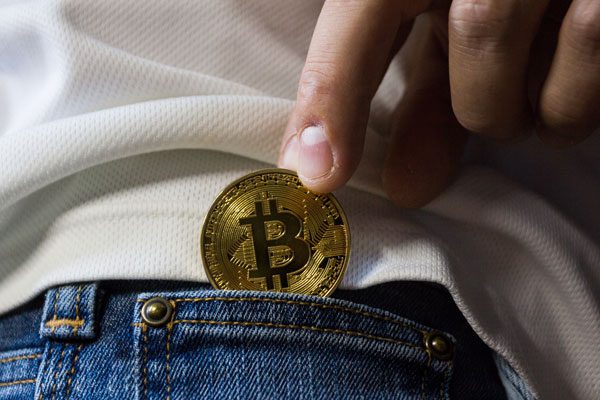
Local Investing: The opportunity that exists today did not exist before cryptocurrency was created.
Along the way, we met our other co-founder, Max Goldstein. We said, “Max, we’re going to tokenize our own venture fund. Maybe we’ll build something bigger in the future.” What Max saw was the opportunity here is not just to issue our own venture fund, but to build a platform that allows us to issue venture funds all over the globe. What I mean is the opportunity that exists now that didn’t exist before was created because of cryptocurrency. We all remember AngelList. Their goal was to democratize venture investing. The thinking was, “This would be an amazing opportunity that people all over the globe can invest into startup companies.” From the standpoint of democratizing venture, they weren’t as successful as they would have liked to then. A lot of their investors are family offices. What they didn’t have that we have now that’s interesting are these pipes that were created by bitcoin, ethereum and other cryptocurrencies.
When you look at what has happened, it was hard for someone in Ukraine or in South Africa to conceive that they could invest in startup companies in the United States. What bitcoin and ethereum have done is it’s broken down these digital walls that existed. For the first time, people can comprehend that they can send money anywhere, seamlessly and effortlessly, using cryptocurrency. We’ve seen these pipes that have been created. Going back to talking to my co-founder, Max, he said, “These walls have been broken down. There’s an opportunity to globally source capital from anywhere in the world and then put that in the hands of someone that is an expert investor where they live.” Most venture funds invest about 80% of their capital within about 100 miles of where they’re based. The opportunity here was, “Let’s find a local manager starting in New York City who understands this market and who understands how to invest in this market. Give them capital to deploy.” What we’ve done is we’ve created a model at CityBlock Capital where we work with what we call investment partners in different cities, starting with New York City, who deploy the capital on behalf of the fund into an investment thesis that we’ve established.
[bctt tweet=”Wall Street meets Blockchain = picks and shovels.” username=”John_Livesay”]
For our New York City fund, we’re deploying capital into the intersection of Wall Street and blockchain. You may hear it called picks and shovels. There is this interesting theme that’s developed, an interesting opportunity which is there are lots of assets that are currently built on paper. Whether that’s venture funds, whether that’s real estate and there’s an opportunity to make those offerings digital. The opportunity to make those digital is a huge market. Something like $700 trillion of paper assets exists. You think of all the privately held companies across the US and around the world. What we saw were the opportunities, “Let’s digitize this venture fund. Create tokens so people can buy and sell them.” That’s the market that we see that that’s important. Our fund is investing in that infrastructure that’s been built to support that. Those are the technology platforms that help issuers, like CityBlock Capital issue their tokens. There are the exchanges that will support this new digital infrastructure.
The thing that’s interesting is this concept of curation and having local people in local cities that they are experts in making those decisions as opposed to trying to find one fund or one group of people that know everything about everything. You’re not only digitizing assets, which are allowing people to own fractions of those buildings.
That’s one use case. A great use case is fractional ownership of buildings. In our case, we had these traditional structures. We’re taking those same structures and creating them in a form that is digital, which allows them to be bought and sold online instead of a cumbersome method of trying to do it through a paper format.
You’re making the user experience more seamless and less paper trail is also an outcome of what you’re doing. Is this a security token that you’re offering?
Yes. When we look at the blockchain ecosystem, I think of it as a three-legged stool. The first part of that would be payment tokens, bitcoin, ethereum. The second would be utility tokens, EOS or Filecoin. The last is security tokens. That’s the area that we fit into, which is taking real-world assets, building them on the blockchain, updating an antiquated ownership structure.
That encapsulates what it is you’re doing. Do people need to buy a utility token from you to get access to your platform or they can use any utility token?
You don’t have to buy any utility token to have access to invest in our first fund, which is called NYCQ. People can invest using Fiat currency, which is US dollar or they can invest using bitcoin or ethereum. There’s no special token to have access to our network. It’s just like you would invest in a regular venture fund, but what we allow is instead of having to wire money to us and has to fill out a paper subscription agreement, scan it and send it back. It’s all done through our website in a digital interface.
Are you the first to do this, Rob?
A couple of other people have done this. Blockchain Capital is one. Science, run by Peter Pham in LA, is another. Internationally, we’ve seen SPiCE VC do this. They’re out at Tel Aviv. A couple of people have done this. What no one’s done is looked at it like we do, which is a platform. We’re not trying to issue one fund. We’re saying, “How do we find people with local expertise in each market? Tap that local expertise and use that to deploy capital more efficiently.”
As you all know from reading this blog, and Rob certainly has heard this since he’s an expert at fundraising, one of the questions you always get asked is, “What’s your secret sauce? What’s your unfair competitive advantage?” From what you said, it seems to me that your secret sauce is these customized, city-specific experts making those decisions. Would that be accurate?
Yes. The example is we’re working with CoVenture here in New York City. What’s interesting about CoVenture the firm is that they have three different main areas of business. One is lending, one is venture capital and the other is cryptocurrency. Who better to deploy capital in New York City, which is the intersection of Wall Street and blockchain, somebody that has experience in the venture, and that has experience in cryptocurrency? We worked hard to curate the right managers for this city that understand that theme. A lot of those companies will be here in New York City because it is the financial capital of the world.
After New York City, I know you’re going to be looking at Los Angeles and San Francisco, correct?
That’s correct. To give you an example, when we think about LA, it’s a great tech city. A lot of venture capitalists and a lot of startups are going there. We think of eSports. We think an interesting area perhaps for our LAQ fund would be someone that has expertise in eSports. We would go find an investment manager that has experience, that understands what we’re doing, the likes of what we’re building at CityBlock, and get them to join us as the local investment partner for LA.
[bctt tweet=”Get To Know vs Get To Yes.” username=”John_Livesay”]
When someone buys your token, are they buying each individual city or one token that represents all of the cities?
They’re buying each individual city. We’re only raising our first token, which is NYCQ. We’ll open the other tokens subsequently as we grow. That token represents an LP ownership in the fund here, just like a regular LP would. We have a two and twenty model, which is the standard 2% management fee, 20% of profits after investors have all of their money returned. What’s great is we look at this, let’s say, in three to four years the fund goes 4X. There may still be more to go but in an early stage, if an investor says, “That’s good enough for me,” they have the opportunity to then go sell that to somebody else and deploy their capital elsewhere.
This is where your secret sauce is. I’ve been watching your Telegram channel, which has such great interaction going on and you’re very involved when you’re talking about locking up your money, whether you’re a venture capital fund, even if you’re an investor. I myself have invested as a tenant in common in a shopping center. I had to wait for that to be sold, even though it’s gone up in value. What I’m hearing you say is if that shopping center had been digitized with your token, I said, “It’s been five years. I got 4X. Even if you’re not selling the shopping center yet, I’m going to sell my part of that.” It was difficult to sell your tenant in common, but this will be much easier. Am I on the right track here?
That’s the idea. The idea is that there’s liquidity. Instead of just sell that interest, you have to find somebody. You have to find somebody that wants it. There would be nowhere to list it for sale on an exchange that exists. That goes back to the infrastructure we’re investing in. Think about the exchanges that will be built to sell those interests. If all the real estate comes online, a lot of real estate switches from this traditional paper ownership to digital ownership. It’s a huge opportunity for exchanges to list that and someone to be able to buy it from you.
You love fundraising. A few guests or founders feel that way. What is it about fundraising that you love so much?
When I set out for my first venture fund, what I was most excited about was investing. What I found quickly is that while I liked investing, what I loved was raising the fund. When I think about fundraising, a lot of people you’ll hear things like, “I hate going out and shaking my tin cup. I hate going out and begging for money.” I look at it from a different frame of reference, which is there are people in the world that understand what you do, like what you do and want to be a part of it, whether you’re raising money for real estate, a venture fund or whatever it may be. I’m super fascinated by human behavior. I’m super fascinated by how people make decisions. I’ve spent a lot of time studying decision making, communication and language processing to understand how to get to know as quickly as possible.
When I look at a situation, you hear a lot of these books that are called Getting To Yes. What I learned quickly is that’s a pretty terrible tactic to sell. A much better tactic is to get to know as quickly as possible. In a strictly business sense, no is the start of a negotiation, not the end of it. I work to get to know because it allows people to feel empowered. If they truly don’t want to work with you, it allows you to move on. I use the example sometimes of going to a bar. Let’s say that someone sees an individual cross the bar they want to talk to. They sit there the whole night looking at that individual going, “Should I go talk to him? I don’t know.” They go up after hour three and that individual is not interested in talking to them anymore and walks away.

Local Investing: In a strictly business sense, “no” is the start of a negotiation.
If they had done that in the first two minutes of being in the bar, there were 30 other people they could have gone and talked to. That’s exactly how fundraising is. If I go into a meeting and someone’s not interested, I’ll leave five minutes into the meeting, but not in a rude way, “This is not a fit for us. This doesn’t work.” What’s important is finding a fit, and people are afraid to get that rejection. I try to get the rejection as quickly as possible if it’s there. If it’s not, if they do like what you’re doing, then it’s a matter of finding a fit. What are the sticking points and how to work through that? Human behavior fascinates me, but also it is being comfortable enough to get rejected as quickly as possible when you realize that something’s not a fit.
Get comfortable with being rejected as soon as possible, as opposed to taking it personally. I talk a lot about this when I get my keynote talks on how to become a storyteller. How to pull people in with the vision you want to have. I’ve had Robert Cialdini who’s written a whole book on Influence and Pre-Suasion. He’s all talking about how do people communicate? My observation is that people have to trust you, they have to like you and then they can get to know you. It’s a gut, heart and head thing. A lot of people start off at the head level and start throwing up a bunch of numbers to someone and they’re like, “I don’t even trust you, let alone like you. Even if this is a great idea, I don’t know if I’d want to work with you.”
I totally agree. 70% of communication is nonverbal, 20% is your tone of voice and 10% is what you say. What you say matters very little. The other thing people don’t realize is the part of the brain that makes decisions has no capacity for language. Going back to what you said, you can throw figures up on the board all day long. When you do that, it doesn’t matter. If people don’t trust you, if they’re not comfortable with you, the best numbers in the world aren’t going to make a sale on the end. Part of sales to me is building a relationship. It’s not coming in and asking for the order the first minute you meet somebody. I like to build a relationship with individuals that are going to last decades. The car salesman example, the car salesman doesn’t sell one car. He sells eight cars over a lifetime. That’s how I think about business. That’s how I think about communication.
I’m fascinated that the part of the brain that you said makes decisions has no capacity to process language and no capacity to process numbers. It’s not just language. Numbers are in that same bucket. It becomes an emotional part of our gut. That’s why stories work well, and then it translates from there.
That’s where gut feeling comes from. You say, “I’ve got a gut feeling. I can’t describe it.” It’s because that part of your brain has no capacity for language. You get a gut feeling and you feel good about it or you’re excited about it, but you can’t quantify it. There’s a particular reason for that.
[bctt tweet=”Get the no as soon as possible.” username=”John_Livesay”]
That’s what they talk about with chemistry with people in a dating situation. Even in business, your co-founders, “Do we have chemistry? Do we like? Do we trust? Is there energy there?” People are investing in all of that chemistry, that’s why people go to the movies if they see the chemistry. There’s no language for it. It’s either there or it’s not. You have a webinar coming up on September 6 that’s free for people if they want to learn more about this new way of investing in commercial property. Tell us about that.
We have a webinar on September 6th. That includes CoVenture, our investment partners here in New York City and Morgan Creek Digital Assets, which is one of the biggest digital asset funds out there. What we’re really talking about is for digital assets and that is who’s working in the digital asset space? By digital asset, I mean security token. What does it mean for investors? Then talking a little bit about how our venture fund, NYCQ, falls into that space. We’re taking a deep dive with some of the best people in the industry, Anthony Pompliano and Mark Yusko, into digital assets. We will be talking about what is being built now and how we’re supporting that digital asset infrastructure that’s being built.
What time is this webinar airing on September 6th?
It will start at 10:30 AM Eastern Standard Time.
How do people find it?
The link will be on our website, in our Telegram group and we’ll have it posted on Twitter as well.
Do you have any last thoughts for our audience on how they can become better at pitching and understanding what people want to hear before they open their purse strings?
I would say the key first is listening and consuming as much information as possible. Lots of people have opinions on what works and what doesn’t work. What you have to find is what works for you. What works for you may be different than what works for someone else. There are lots of great people out there that have great content. I would consume as much as possible. I love consuming audio content, so whether that’s podcast or audiobooks, I do that on the subway. I do that between meetings and at the gym. I would find some people you like that have techniques that you think will be effective, consume that and then practice that.

Local Investing: It’s not enough to take in the information. You have to use them. Every meeting and every interaction is an opportunity to test.
It’s not enough to take in the information. You have to use it, which is a key factor.
It’s beta testing. Every meeting you go into is an opportunity to test it. Every interaction is an opportunity to test it. Whether you’re talking to someone in an elevator or you’re meeting with a potential client, it’s an opportunity to try something that you’ve learned and see what works for you and what doesn’t work.
That also takes some of the fear of rejection away if you’re constantly testing it. It’s feedback and not just something you’re taking personally.
It’s like cold calling. If you’ve ever had a cold calling job in sales, the more calls you make, the easier it gets. If you make 100 calls a day, it’s hard. You make 200 calls or 300 calls a day, it gets a lot easier because you’re used to it. You have to practice over and over again.
What you, Max and Jon are doing at CityBlock is going to be hugely successful. I’m happy to be at the forefront of bringing that out to the world with my podcast. Thanks for being a guest.
Thank you for having me.
Links Mentioned:
- CityBlock Capital
- NYCQ
- Edgewater Equity
- Silvertech
- Jon Avidor
- Blockchain Capital
- Max Goldstein
- AngelList
- Science
- SPiCE VC
- CoVenture
- Getting To Yes
- Robert Cialdini – previous episode
- Influence
- Pre-Suasion
- Anthony Pompliano
- Mark Yusko
- CityBlock Capital group on Telegram
- CityBlock Capital on Twitter
Wanna Host Your Own Podcast?
Click here to see how my friends at Brandcasting You can help
Get your FREE copy of John’s latest eBook Getting To Yes now!
John Livesay, The Pitch Whisperer
Share The Show
Did you enjoy the show? I’d love it if you subscribed today and left us a 5-star review!
-
- Click this link
- Click on the ‘Subscribe’ button below the artwork
- Go to the ‘Ratings and Reviews’ section
- Click on ‘Write a Review’
How To Invest in Cryptocurrency
Posted by John Livesay in podcast | 0 comments
 Episode Summary:
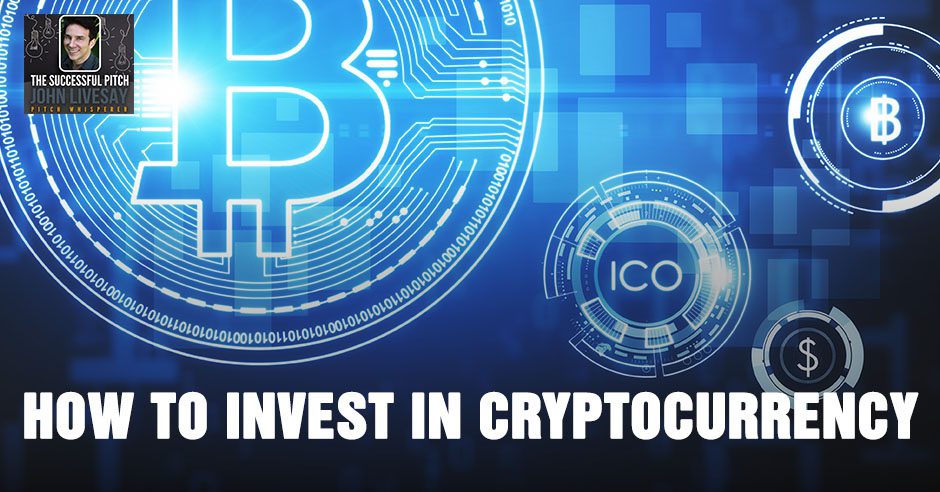
If you have been following the world of cryptocurrency, you may have noticed that Teeka Tiwari and Palm Beach Confidential are trending. That is because we are at the doorstep of the next cryptocurrency boom. Teeka is an editor at Palm Beach Research Group LLC and he is responsible for the firm’s flagship service, The Palm Beach Letter and small-cap and cryptocurrency advisory, Palm Beach Confidential. One of the best case uses of the blockchain is helping homeowners, and Teeka provides professional advice to everyday people on how to invest in cryptocurrency. People need to get in the game because putting your money in stocks, bonds, and real estate and calling it a day is no longer enough. Learn from Teeka as he provides insight information on how to invest in cryptocurrency without having to depend on a broker.
—
Teeka Tiwari has quite an impressive background as an investment banker and now as an expert in cryptocurrency. He shares with us his incredible story of being in foster care in the UK to making it big in America. He said, “When you visualize the future you want, it becomes a reality. When you focus and outwork everyone else, success is inevitable.” He shares a clear understanding of what the blockchain is and why it’s going to change how we all do business.
Listen To The Episode Here
How To Invest in Cryptocurrency
I’m thrilled and honored to have someone I met at a Brenton Woods Economic Summit. His name is Teeka Tiwari and he is the Editor of the Palm Beach Letter and small-cap and cryptocurrency advisory Palm Beach Confidential. He’s a former hedge fund manager and Wall Street executive and he’s widely considered one of the world’s premier cryptocurrency analysts. He epitomizes the American dream. He grew up in the foster care system in the UK and he came to America at sixteen with just $150 in his pocket and the clothes on his back. By eighteen, he’d become the youngest employee at Lehman Brothers. Two years after that, he shattered conventions by becoming the youngest VP in the history of Shearson Lehman. He’s a regular contributor to the Fox Business Network and has appeared on all kinds of shows like CNBC and ABC’s Nightline and a lot of international television networks. Teeka, welcome to the show.
Thank you, John. I appreciate it. It’s great to be here.
I have had the privilege of watching you in action on your amazing webinar. I would love to have you start talking about what it was like growing up in the foster care system in the UK. People are familiar with what it’s like here in the US. It’s usually not a pleasant experience, and I’m hoping it’s a little bit better and not so Charles Dickens-ish as we might imagine.
The first time I entered into a system, I was eight years old. I was in a group home where the average child was at least four or five years older than me and some were considerably older. I would love to tell you that it’s a wonderful place and we sang songs, but it wasn’t. It was a place full of violence and danger. It’s a frightening and very dangerous place for an eight-year-old boy to be in. I’d get beaten up and my things would get stolen. I would have to maneuver a chair at my door to stop people from coming into my room at night. It was a terrible time. From there, I went into a foster home with a family, not a bad family, but not the greatest. I lived in a room over an uninsulated garage. At night in the winter, when you would breathe, you would see your breath. It was like being outside. The room was probably 38 to 42 degrees. It was freezing. My final foster family were very nice people and gave me a wonderful home. I can’t say enough good things about them. It’s definitely a hit or miss when you grow up in the system, and I’m fortunate that I did well regardless of what I went through as a kid.

Invest in Cryptocurrency: It’s very hit or miss when you grow up in the system.
What’s interesting to me is the whole nurture versus nature element that causes people to still thrive despite possibly not having the best childhood. What made you come to America at sixteen? That’s a brave thing to do with very little money as well.
From the age of twelve years old, I had this desire to move to New York and work on Wall Street. I remember I watched some show and they were talking about this new type of person cold a Yuppie, a young urban professional. This is the early ‘80s and I thought, “That’s cool.” I started and I saw all these yuppies who all worked on Wall Street or in the city of London, in finance. I started doing some research on this and I discovered the stock market. The whole idea of being able to buy a piece of paper and be able to sell it later at a higher price blew my mind.
Growing up, I had always seen people trading time for money. I had never seen anybody use their mind to make enormous amounts of money. That idea intrigued me, and it was like inception. It was something in my brain that would not go away. I grew up in horrible poverty and I remembered thinking, “There’s got to be a better life than the one I’m in now.” My focus was get to America and go work on Wall Street. While other kids had posters of soccer stars on their walls, I had pictures of New York. I had travel brochures all over my floor. I would sit there and I would dream about walking the streets of New York City, working on Wall Street and driving a beautiful car. It was very real for me.
The power of visualization is important at any age. I am so grateful that you shared that early visualization and how that came to be. I’m imagining there’s a story of how a young lad from the UK convinced Lehman to hire him. Did you have special skills that they said, “We’ve got to get this guy in?” You probably didn’t know anybody.
I moved to New York at sixteen. I was now eighteen and I was selling typewriter supplies over the telephone, IBM Selectric. This was 1989. I’m making $300 a week and I’m thinking, “This is the American dream. This is amazing.” I met a guy there called Kevin Wong. I would always tell people from the time I came to America, “I’m going to go work on Wall Street.” If I had met you even for two minutes, I was going to tell you about my Wall Street dream. I was telling everybody about my Wall Street dream. I met Kevin, I told him, and he said, “If you’re serious, I know a guy at Lehman Brothers.” I was like, “You do?” He said, “Yes. They’ll treat you like hell, they’ll pay you like hell but they’ll give you a shot.” He gave me a name of a guy called Frank. I called him and he’s like, “Come in for an interview.”
I didn’t have the right clothes to wear to go to Lehman Brothers, so I went shopping. I bought a pair of gray slacks and I didn’t realize that when you buy pants, you have to get them finished. They’re unfinished. My pants are dragging on the ground. I’m wearing fake leather shoes with white gym socks, a pink polyester shirt, a pink polyester tie, and no jacket because I can’t afford one. I walk into Lehman Brothers, which at that point in 1989, 55 Water Street was the highest producing retail brokerage office in the world. It was doing $150 million a year in commission, which was a lot of money for retail.
[bctt tweet=”Visualize the future you want.” username=”John_Livesay”]
I go to the interview with Frank. This guy looks at me and shakes his head and says “You’re a nice kid.” He’s trying to let me down easy. “This is not for you. Thanks for coming in.” I look at Frank and I said, “Frank, I just want a shot. I’ll work for free. I don’t care. Just give me a shot.” There was something about that he liked and he gave me a shot. Back at Lehman, if you work 60 hours a week, they only pay you for 29 hours and they paid us $4 an hour. I was in the door, I would work nights and weekends to make ends meet.
Talk about the determination and passion you had that he was able to see past your clothes to say, “I’m going to give this willing to work for free.” That’s the way you were. That guy must be so happy he gave you that shot. How did you get to be so successful so fast?
I haven’t always been like a natural study at things, but one thing that I have and I consider it the greatest equalizer, is I have an ability to work, focus and outwork anyone. I tried to make myself as useful as possible to as many people as possible to learn as much as I could. Then I read everything on investing, how to give presentations, and understanding and selling to an affluent market. This is not anything people told me to do, I just did it. I would practice presentations because at eighteen, I was driven but I was shy.
Social interactions were very difficult for me, so I knew I had to overcome that. I read a lot and one of the things that I learned was that people cannot tell the difference between somebody who was confident and somebody who just acts confident. That was groundbreaking for me because I wasn’t confident but I could act confident. I could say, “These are the markers of a confident person.” It was a pantomime I’d go through and people would respond to me as if I was confident.

Invest in Cryptocurrency: Make yourself as useful as possible to as many people as possible to learn as much as you could.
Stand up, straight eye contact, all that good stuff that you pantomime. What I’m getting from this is that success is inevitable when you focus in that work with other people and combine that with acting as if you’re already confident and you will be.
I firmly believe that success is an act of will. All creation is an act of will. Some of us were born with these skills and others of us, like myself, had to learn them. These are learnable skills and they have nothing to do with how smart you are at math or how good you are remembering facts. Anybody with average intelligence can become successful in their chosen field. I possess average intelligence and I would say my differentiator is the ability to focus on things that move the needle in my life. I’m a big believer in the 80/20 rule, which says, “20% of your actions create 80% of the results in your life.” I focus most of my time on that 20%. I’ll sit down and I’ll say, “What’s the 20% of actions that move the needle in my business life, personal life, and health?” I build my life around that.
I love that because people get overwhelmed and they don’t know what to do first. If you focus on what’s going to get you the biggest bang for your buck and do that first, you’ll be successful in all areas. You have a success story that I heard on your webinar that I’d love to have you share. What did you do that had you become the youngest VP at Shearson Lehman?
I was good at raising assets, creating great relationships with my clients, and generating a lot of revenue for the firm. I was the number one rookie producing broker in my first year. The second year, I was one of the top five producing brokers in the office. I was very good at what I did. They were afraid that I was going to get poached. I could imagine the discussion was, “We’ve got to make Tiwari our VP,” and it meant a lot to me as a kid.
Everyone’s ego gets stroked by that title but back then, that’s fantastic. I know that your expertise is in the cryptocurrency advisory role. All the lessons you’ve learned from your expertise on Wall Street are now being taken to the blockchain. I hear a lot of people saying the blockchain is as revolutionary as the internet was, and we certainly heard a lot about that at the event that we were at. The analogy I loved was the internet didn’t take off until email and blockchain’s killer app is Bitcoin. Can you share with us what you see as far as impact and opportunity around blockchain and cryptocurrencies that are using it?
A blockchain is a form of a database. It’s not that sophisticated. A traditional database has a central repository of information and then you have a lot of people hitting that database for information. The problem with a centralized database is that it’s very easy to manipulate. We’ve seen companies like Wells Fargo go back and change records on their database because it’s a centralized database. There’s no oversight there to prevent that. The blockchain solves this problem and it does it because it keeps an identical copy of the data on thousands of machines. An example of that would be Bitcoin. How do we prevent people double spending their bitcoin?
[bctt tweet=”When you focus and outwork others, success is inevitable.” username=”John_Livesay”]
The way that’s done is that say there’s 50,000 machines on the Bitcoin network and they all have an identical copy of the ledger. Before somebody can make a change to that ledger, let’s say I want to spend some Bitcoin or you want to send me some Bitcoin, the note that you’re trying to do that through will compare their version of the ledger with everybody else’s version of the ledger. If everybody else’s version of the ledger says, “John has that money that he can send to Teeka,” it allows the transaction to happen. Those transactions happen in ten-minute blocks of time. All those transactions in that ten minutes are correlated and then tacked on to the block of information that came before and that continues.
What’s the advantage of that? You can’t double spend and you cannot go back and change data in the blockchain because you would have to take control with 51% of all the computers on the network and you’d have to do it simultaneously in order to tamper with the blockchain. Because the Bitcoin blockchain is now so large, there isn’t enough computing power available to try to coopt the Bitcoin blockchain. It gives you the ability to have a universal source of truth that you can rely on. When you can do that, it opens up all these new avenues and applications that never existed before.
One prime example is with stocks. When you go and you buy a stock, the person that you’re buying the stock from might not have the stock that you’re buying. They might be lying about it. There’s this three-day period where the firms have to make sure that this person has a stock, make sure you have the money, then they have to transfer it over. That whole process, which is called trade settlement, costs about $20 billion dollars a year. If you put all of that on a blockchain, it says, “John owns us thousand shares of IBM,” and the blockchain says, “Teeka has this $146,000 to buy the thousand shares.” Then you can do the transaction immediately and eliminate any of the of the back-office functions that chew up so much capital and time.
I’ve never heard anybody explain it in terms of ten-minute blocks of time that create a blockchain. Everything the readers and I do is all about what makes a good pitch. What problem are you solving? Who do you help? What problem do you solve? You did a great job of explaining the transparency factor combined with the time savings, which then gives huge cost savings. People will start to get a little bit more in-depth understanding of how the blockchain technology is revolutionizing not just cryptocurrencies, but the authenticity of, “Is that food organic? Is that jewelry or art authentic?”
If we double click on how that’s impacting cryptocurrencies and your expertise in particular, what you offer is insider observations through your ability to focus on in the Palm Beach Letter and the Palm Beach Confidential that is so valuable to people who are overwhelmed and they need someone like you to curate for them. If I want to dip my toe in, where should I start? Is what you’re offering that accurate?
[bctt tweet=”Success is an act of will.” username=”John_Livesay”]
I travel all over the world and meet with development teams, venture capitalists, and the people that are putting together different blockchain types of solutions. My job is to uncover the ideas that are worthy of investment and very few ideas are. There’s a reason why I don’t recommend ICOs or Initial Coin Offerings. It’s because about 85% of them are just fraudulence. Another 10% to 13% of them are bad ideas and maybe 1% to 2% of them are good. You have to go through a lot of different ideas in order to find ideas that will work out over the long-term.
One tip out I’ll leave the audience with is that as you’re examining a coin or use case, you should always think about, “How is this coin going to aggregate users? How are they going to incentivize usage of the coin, adoption of the coin?” Having a great idea is not enough. Great ideas are a dime a dozen. It’s getting people to migrate over and use your solution. The very best projects have great incentives built into them that make it easy to adapt and make it a no brainer for people to adapt their solution. That’s what I try to focus on.

Invest in Cryptocurrency: 85% of ICOs, initial coin offerings, are fraudulent, 10%-13% of them are bad ideas, and only 1%-2% of them are actually good.
There’s been a big shift from tokens being just utility versus now being perceived as security. I’m involved with one that is an asset backed with residential real estate of fractional ownership. That’s our solution. It’s how can we create something that people are understanding and feeling comfortable with because a lot of people understand real estate. I like to say that when Bitcoin gets a cold, the rest of the alternative coins gets pneumonia.
If we’re creating a token that’s backed by actual net asset value of owning small percentages of thousands of homes, we’re not going to be as affected as the other ones that are not backed by assets. I was curious to hear your thoughts on tokens that are backed by assets, whether it’s real estate, gold and art as a potential way that they might have an incentive for people to use it because they understand it.
This is an area of token economics that I’m excited about. What I’m excited about is that we can take previously illiquid assets or assets for the average person could not own a fractional piece because they don’t have enough money and we can tokenize them. For instance, homes, shopping malls, massive buildings, stadiums, these are things that would have required enormous amounts of funding by massive banks that individuals haven’t even been allowed to buy a piece of. Through tokenization, you can create these types of investments that can give you equity ownership directly into a performing asset, can give you income that is directly paid to you via the blockchain, and gives you ownership on something at a fractional level that would never be practical before. You take $100 million building, you can’t make money selling thousand-dollar pieces of it but with the blockchain, you could do that.
That’s why I was so excited to join quantmRE because I saw that there was fractional ownership happening where someone has a million-dollar home and they only have a mortgage payment of $500,000 and they want $100,000 out. Their only option is to refinance it or second mortgage HELOC, which means going into more debt. The ability to give people $100,000 in exchange for owning 10% of their house is fantastic, but it still requires all those investors to wait for that person to sell their house before they get their money back. By tokenizing this, we’re making this illiquid asset of all that equity that’s sitting in people’s homes liquid because now people can buy and sell an asset back token without people having to sell their homes.
To your point, everyday investors who maybe want to get into real estate but don’t have the money to own an apartment building or a rental house can now get in because they’re owning a fraction of a fraction of someone’s home without having to be a landlord. That’s one of the best case uses of the blockchain, helping everyday people who are homeowners and helping everyday people who want to invest. It becomes a great digital on ramp for institutions where your background is. From what I understand, Smith Barney is hiring several hundred people to start analyzing cryptocurrencies for their clients to figure out where they should be going. If people are smart enough to subscribe to your Palm Beach Confidential, they’ll get their own insight information without having to depend on a broker.
I wouldn’t trust brokers yet with crypto research.
They know they need to get in the game because it’s no longer enough for people that say, “Put my money in stocks, bonds and real estate,” and call it a day.
Everybody should have at least a small allocation to crypto. The point that I want to hammer home is that be rational. I recommend if you’re a smaller investor, $200 to $400 per idea, if you’re a bigger investor, $500 to $1,000 per idea. I suggest never put more than 5% to 10% of your liquid net worth into crypto because they’re incredibly volatile. The truth is we are very early in the cycle and some of these ideas won’t make it. Some of them will go to zero. I suggest having a broad-based portfolio and using an equal dollar amount in each one, this way you don’t over own a loser or under own a winner.
It’s a great strategy. If you look at all the dotcoms back in the ‘80s, some made it, some didn’t. Looking at tokens or coins that are backed by actual assets give you some level of comfort that the homes are never going to go down to zero in value. When the housing market went down in 2008, they didn’t go down to zero and now by 2018, they’re all backed up to where they were a little higher. If you’re willing to take a long view, real estate can be a great place to have some of your money in it. With tokenization of it, it becomes a whole new wave because before nobody could get into those assets.
We’re going to see a lot of assets that were once highly illiquid become liquid through tokenization. Another area you’re going to see liquidity come to is in private equity. If you invest in a private equity fund, your money is tied up for seven to ten years and you have zero liquidity. You’ll start seeing private equity funds start to tokenize and a whole secondary market will spring up around private equity as well.

Invest in Cryptocurrency: You’ll start seeing private equity funds start to tokenize and a whole secondary market will spring up around private equity as well.
What is also exciting is that not only do you let people get into something that they haven’t been able to get into and liquid. For those people who want to invest in stocks, you can buy mutual funds. There’s always a certain percentage of people, I call them the “Laptop and Latte Crowd.” Those people at Starbucks with their laptops and they like to invest on their own and think they can outsmart the S&P 500. The blockchain is allowing quantmRE to let people say, “I want to buy homes that are within a certain area code or zip code of where I live because I know this market well. I don’t want to buy all the homes that you own.” When you have that kind of flexibility, you’re allowing people to use their knowledge and creativity to invest in something in a small zoom in way, like monopoly meetings Zillow.
I’m not familiar with quantmRE. This is the first time I’ve ever heard about this project, John.
It’s this concept of using the blockchain to take something that’s illiquid and making it liquid with some social impact thrown in. That goes back to what you said. A good analysis of what’s the incentive for people to adopt using a token that’s backed by an asset. It makes it much more compelling because it’s not so attached to Bitcoin’s volatility.
A lot of people ask, “What’s the point of Bitcoin?” For me, Bitcoin is a store of value. It is the equivalent of digital gold. It’s the world’s most secure way to hold and transfer value. There will only be 21 million of them, and about five or six million of them have been lost forever. When people say, “You can’t go into a store and use Bitcoin to buy a latte,” that’s like saying, “I can’t use my Ferrari to tow a bunch of firewood. It’s not designed for that.”
[bctt tweet=”Focus on things that move the needle in your life and build your life around that.” username=”John_Livesay”]
When you start looking at things on a global level, that’s what interests me. You zoom out and it’s the world looking for some digital currencies where they don’t have to pay fees to convert from dollars to pesos, pounds, and euros. You start to get a picture of how big this can be. I can’t thank you enough for sharing your expertise. Your personal story is riveting. How can people follow you on social media? Let us know what’s the best way to keep track of how you’re continuing to give advice.
We have a free eLetter, which you can sign up for at PalmBeachGroup.com. I don’t use a social media channel.
Go there for the free newsletter and that will get you in the world of your expertise. I personally have studied who you are, what you’re doing, and your expertise. It’s a world that once you start to enter, you feel like you’ve gotten some water after crossing the Sahara because it’s so refreshing and so easily understood in a way that’s not with all the hype but with all the insights. That’s what everybody needs.
Thank you so much, John.
Links Mentioned:
- Teeka Tiwari
- Palm Beach Letter
- Palm Beach Confidential
- Teeka Tiwari’s webinar
- quantmRE
- PalmBeachGroup.com
Wanna Host Your Own Podcast?
Click here to see how my friends at Brandcasting You can help
Get your FREE copy of John’s latest eBook Getting To Yes now!
John Livesay, The Pitch Whisperer
Share The Show
Did you enjoy the show? I’d love it if you subscribed today and left us a 5-star review!
-
- Click this link
- Click on the ‘Subscribe’ button below the artwork
- Go to the ‘Ratings and Reviews’ section
- Click on ‘Write a Review’