

Every Conversation Counts With Riaz Meghji
Posted by John Livesay in podcast | 0 comments

Every conversation counts. They may seem so trivial most of the time, but they are actually key to making significant connections that lead to extraordinary relationships. But sometimes, we get so caught up in our own lives that we forget to ask the right questions, or we simply don’t know what to say. That’s why in this episode, we have human connection expert Riaz Meghji to talk about how conversations spark connections and shape our lives! He shares valuable insights from his book, Every Conversation Counts: The 5 Habits of Human Connection That Build Extraordinary Relationships. Riaz also touches on what to say and how to help someone dealing with grief. You don’t have to be a genius at conversation – just try out new things and keep listening. Tune in now!
—
Listen to the podcast here
Every Conversation Counts With Riaz Meghji
Our guest is Riaz Meghji, who is a Human Connection Keynote Speaker. He talks about how to build connection, which leads to trust and all-important emotional engagement. He has two amazing questions that you can ask someone when they’re grieving the loss of a parent. You don’t want to miss this. Enjoy the episode.
—
Our guest is Riaz Meghji, who is a Human Connection Expert and the author of the book, Every Conversation Counts: The 5 Habits of Human Connection that Build Extraordinary Relationships. His insights have been featured in Fast Company, Harvard Business Review, and Financial Post. After one conversation led him to take a dramatically different career path that changed his life for the better, he became dedicated to exploring the ways that authentic human connection can change lives and organizations. In addition to being a respected thought leader and author on the topic of human connection, Riaz is also an accomplished broadcaster with many years of television hosting experience. He’s interviewed experts on current affairs, sports, entertainment, politics, and business. Riaz, welcome to the show.
John, I feel like this was meant to be, the two of us talking about conversations and stories. It’s great to be here. Thank you.
You are a natural storyteller, and you know how to teach people how to ask questions in difficult situations. We’re going to get to that in a minute. Your bio teases out that little conversation that took a dramatically different career path. I know the answer to it, but I’d love you to share it if you don’t mind, your own story of origin. You can go back to childhood or wherever you want, “Here’s what interested me, and then I thought I was going to do this, and then I did that instead.”
Thanks for opening with this one. It’s so interesting because it’s such a relatable question, “What is your origin story?” For the work that I do and hopefully, invite the audience to think about defining conversations and defining moments, what is one of the most important conversations that changed the trajectory of your path? For me, it goes back a few decades. I was finishing my Finance degree at Simon Fraser University, living my parents’ dream. Not my own South Asian family if you’re not a dentist or financial expert.
An investment banker, yes.
[bctt tweet=”Assertive empathy is the key to connection. Ask questions that show empathy.” username=”John_Livesay”]
You’ve got a few options. In my final semester at Simon Fraser University, I was enjoying the art of presentation. I was presenting at a conference in Quebec City in my final semester. I was fortunate enough to have the co-chair of that conference. He’s still a friend to this day. He sat in on some of my sessions, and they were HR sessions for a student-run group, an international student exchange group.
He pulled me aside at the end of the conference and said, “I know you think you’ve got your life figured out at the age of 22, but I don’t think you should go into Finance.” I remember looking at him and thinking, “Okay.” He said, “From what I saw on stage and your age, you should take a year of your life and explore what’s out there in the presentation space, maybe something on TV.” This was the first time I truly thought about this as a profession. I thought, “That is a compliment, but you recognize my parents are South Asian, so there are expectations here that we need to uphold.” He did not hesitate when he leaned in. He challenged me and said, “When are you going to stop playing safe and start living your life?”
That question is at any age, not just when we’re young in our twenties. Now, as we get older, we get responsibilities, mortgages, and whatever, but this concept of, “We no longer take risks in our life,” you stop taking risks after a certain age is a myth that I would like to bust because we should always be asking ourselves that question, “Am I playing it safe?” What you mentioned that somebody saw on you is what I saw in another guest, Tucker Bryant.
With that kind of talent at such a young age who had a similar trajectory from England, Stanford education, and worked at Google, he was on that path. He was like, “I’m going to be a keynote speaker about poetry and leadership.” Talk about explaining that to mom and dad. What somebody did to you was pointing out that talent. Once you and I have the opportunity to spot that in somebody else at that age, or they’ve already made the decision to do the riskier choice, but it’s their passion, we can double down and say, “That was a good choice. We see why you did it.” That’s the joy of paying it forward or paying it back however you want to look at it.
To build on that, I think back to the gift that the co-chair was able to give me at that moment. It also is a great reminder that he was making a statement, but he was also allowing me to reflect and ask myself the question, “Am I living the life that I truly want to live? Am I playing this game of life safe?” The big opportunity for all of us is to ask first and talk second to have breakthroughs in our conversations because we could feel we’ve got the greatest advice to give to somebody.
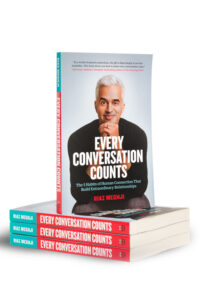
Every Conversation Counts: The 5 Habits of Human Connection That Build Extraordinary Relationships by Riaz Meghi
The conversations you have on this show about persuasion and influence, we cannot motivate, persuade, or influence anybody unless or until we connect with them first. The power of connection starts with the power and quality of the questions we ask. When you have somebody that has seen something that is leaning in with that type of precision, it’s not only a compliment. It’s his opportunity to call me up at that moment and not call me out. That is what true leadership is with storytelling on the questions that we ask ourselves, “How can we call each other up in important moments?”
As a keynote speaker, you’re going into organizations, helping them have better connections with their team and with their clients. You also have this wonderful video talking about you and your brother suddenly losing both of your parents and how to deal with that grief. It’s going to happen to all of us. We’re going to have a situation where we have to grieve, or someone we care about is experiencing loss in their life. Most of us are stuck with the platitudes we see on TV of, “I’m sorry for your loss.” You came up with some incredible questions to ask people while they’re in that state of grief.
I’m going to repeat the questions for you because I want you to then give us some of the experiences and some of the answers you’ve gotten to these questions. That could be a loss of a job or a pet. Grief is grief. It’s different degrees. Let’s say it’s the loss of a parent. The question that hit me was, “What do you want me to know about them?” That person gets to decide. It’s a legacy. The other part is, “What is giving you comfort now?” I thought those were brilliant.
I’ve never heard anyone ask those questions in that situation, and that’s why you’re a thought leader, successful, and in demand. My first thought of, “What gives you comfort now,” makes us look for something. When you’re in that grief, having experienced it with the loss of my dad, nothing’s giving me comfort at the moment, but I have to try and find some answer. Nobody wants to say nothing because you’re still here remembering them, talking about it or whatever it might be. As a former journalist and now keynote speaker on this human connection, how did you come up with those amazing questions?
I’m glad that you introduced this in the conversation. These are probably some of the most powerful moments that come out of the keynote, especially when we talk about one of the habits in the book of assertive empathy. If you’re reading this, and you’ve gone through loss, or you know someone that is going through loss, and you want to be there for them, and you’re not sure what to do or what to say, “What do you want me to know about them,” has been a game-changer question.
[bctt tweet=”Use the power of your curiosity to feel that challenge in front of you to avoid fixing the wrong problem.” username=”John_Livesay”]
I realized before I experienced loss, my brother, my wife, and myself going through this, I had failed everybody that had experienced loss before I experienced it myself. In my mind, I thought, “I don’t want to trigger them, so I’m not going to bring it up. They probably don’t want to talk about it.” I’m making assumptions in my own mind to soothe myself from that discomfort, forgetting about the person in front of me. What do we all do at the moment? You articulated that when something goes wrong, and if there’s loss or some element of grief, it’s autopilot mode, “I’m so sorry for your loss, thoughts and prayers. Let me know if you need anything,” and then what do we do? We step back, and that person is left all alone.
In this message of human connection, I talk a lot about how we combat loneliness. Grief is a huge part of loneliness because you feel like no one can relate, no one can understand, and you feel like you’re drowning. In the early part of 2020, I volunteered with Canuck Place Children’s Hospice every year for their Gift of Love Gala. I found myself in conversation with the Lead Counselor of Canuck Place, Deb Davison. I credit her with this question because she does incredible work to lift parents who have faced the unimaginable circumstance of having lost a child.
She not only is there to support them, but to elevate them, so their parents can take the stage and motivate a community to support the hospice. It’s incredible. I remember saying to Deb at that moment. I was four months removed from the sudden loss of my father and never had truly dealt with grief. I looked at her and said, “Deb, how do you do this? I am profoundly struggling with this notion of grief. How do you do this work? What is the best thing you can say to somebody?”
She reframed my perspective and approach to this question. She said, “It isn’t about what you can say. It is about what you can ask.” When I asked her, “What’s the best question you can ask somebody?” she introduced the question, “What do you want me to know about them?” What that person on the other side needs the most at that moment is to share a piece of that person, their legacy, their story, and ultimately their connection to that person and why it mattered so much. When she said that to me, I remember looking at her and said, “I will never forget this gift you gave me. Thank you.”
Every single person that I knew had lost someone from that point on, one, I recognized my failure in being able to support them wasn’t because of malicious or selfish intent. I just didn’t know. Now, I encourage others to lean with curiosity. What do we all do when the conversations hit a roadblock? Sometimes we fall into the trap of trying to fix it too fast. I encourage others to use the power of their curiosity to feel that challenge in front of them before they fix it, so they’re not fixing the wrong problem and that person is truly feeling seen, heard, and valued in their darkest hour. That person on the other side, as you know, John, will not forget it when you were there to lift them up.

Conversation Counts: Grief is a huge part of loneliness. You just feel like no one can relate or understand you, and you feel like drowning.
That’s what good leaders do. They make their team feel seen, heard, and appreciated as people and not cogs in a wheel. You mentioned in your book, Every Conversation Counts, there are five habits to build these connections, and one of them is assertive empathy. My question is, what determines whether something’s assertive empathy versus regular old empathy?
I love the distinction here. I believe the idea of assertive empathy is leaning in with that empathetic curiosity, even when the conversation is difficult. It’s easy when the emotions aren’t heightened to be empathetic. When it’s difficult or you potentially disagree with someone, there is such an opportunity to understand how you get to that conclusion and the power of our questions and these types of scenarios. I’ll give you some examples.
Think about the idea when someone or I could come to you and say, “John, I presented on stage. Can you give me some feedback?” Before you jump in with that feedback, there’s an opportunity with your assertive empathy to say, “How do you feel that went?” and that’s the opportunity for me to start articulating first and doing that work of reflection. Maybe I’m at a roadblock, and you could simply say to me, “What do you feel is impossible in your life now, Riaz?”
I could express all of this pain, and then you could simply reframe and say to me, “What do you think would make this possible? What’s the first step in making that possible?” You’re not giving me any of the answers, but you are that assertively empathetic guide to unlock the answers that I already have within. I’m just asking for a soundboard that will help me through it and a strategic partner that will ask the questions, that notion we talked about, that will call me up in these moments and not necessarily call me out. It’s an empathetic form of accountability.
Before the show, we had a little bit of a conversation about you being on camera, hosting television, producing segments, and how part of that job and the producers get pitched all the time to have people come on the show and either pitch their book or be an expert on a topic. When people were pitching you to come on your shows, the CityTV Breakfast TV or MTV Canada, what made you say, “I can see that as a great segment,” and what would make you go, “There’s no way I’m having that person on?”
[bctt tweet=”One of the ways to establish trust is putting aside our perfect persona and going first with vulnerability.” username=”John_Livesay”]
The one clear factor that I’d always look at in every single pitch, whether this would be a winner in a 5 to 7-minute live television segment or a complete self-indulgence was looking at this pitch, and is this pitch saying how great this subject is, or is this pitch saying how great the audience can be after this 5 to 7 minutes on TV?
That’s what we do as keynote speakers. We’re all about, “What kind of impact can I have on making this audience’s life better?” Not, “Is the audience impressed with me?” It’s the opposite, but, “How can I serve them?”
I liken it to philosophy, and the whole philosophy behind the book was, “Look at you is greater than look at me.” I believe the interviews that truly resonated, whether we had subject-matter experts or even higher-profile celebrities that came on the show, weren’t about anything that I said. It was the questions that gave them the space to share where they’d say, “I like that guy. He’s on my side,” and giving them space. It’s not only the power of the pitch. If you truly want to impact that audience and move that audience to action, one of the things that I found was the ability for all of us as communicators to embrace the power of productive silence.
What does productive silence look like? More importantly, what does it sound like?
It’s giving the audience space. You, as a keynote speaker, have such great wisdom in the stories you tell. You could give that audience a nugget. Instead of moving to that next point after you drop your knowledge bomb, give them a moment.

Conversation Counts: A strategic partner that will ask questions again is an empathetic form of accountability.
It’s like what I did with you earlier. You said some amazing things like, “Let’s pause here for a second. Let me repeat that for people to digest that.” Is that an example?
Yes, letting it breathe. I feel like there’s this sense of urgency, and maybe because modern culture emphasizes convenience and efficiency. Things move so fast. I’m a firm believer that sometimes efficiency can be the enemy of human connection. How can we slow down these conversations and truly hear each other? You throw something out like, “That resonates with me. I want to reflect on this. Let’s dive into that.”
It’s almost suspending your judgment, your assumptions, and your script. You had beforehand of, “Here’s where I was planning on going with the interview, but you gave me something that I didn’t think was coming. Let’s lean in here.” That’s how you can have a conversation that will be memorable for both sides, where if they can say, “I’ve never shared that before,” that is a gift that you gave them the safe space to do that.
One of the things that really stands out for me watching your keynote speaker video is you have this amazing journey you take the audience on. It’s the awareness that many people are experiencing loneliness personally and at work. Just because you’re in an office doesn’t mean you’re not lonely. Once you show people how to have better connections, that builds the all-important trust, which then builds the engagement for the team to be productive. The same thing is true in sales. You need to connect with that person.
Sometimes that means being a little vulnerable, and that builds trust. You then can have an engagement with that potential buyer or person who’s going to decide whether they’re going to have you on their show or hire you as a speaker. People forget that we, as speakers, have to often pitch ourselves as to what the experience would be like if we’re the speaker that gets hired. That is true in almost every industry, whether you’re a doctor, lawyer, or architect. We’re all having to have some emotional connection. As you said, this efficiency being the enemy of connection, it’s not about how many facts and figures we spiel out, is it?
[bctt tweet=”If you are playing safe, how could you take a small risk every single day and put yourself out there?” username=”John_Livesay”]
No. The facts and figures are going to be vital for the analytical mind, but to make that message sticky with storytelling, you’re going to use powerful metaphors. How do we amplify the emotion at that moment for them, so they truly feel the message? Vulnerability is a big part of this. There’s the notion of, “I think about sales. With your audience, I think about persuasion.” Trust is a huge component of this equation. How do we truly establish trust?
One of the habits I champion is putting aside our perfect persona and going first with vulnerability. Some leaders say to me, “When is it oversharing? When is it too much?” You’re like, “This isn’t the right space and time to do that.” There is a powerful concept in psychology known as the Pratfall Effect, where if you’ve done the work to convey your competence and show that you are that point of authority, are reliable, and establish credibility, your vulnerability will then become a powerful tool to draw people closer and embrace connection.
If they’re questioning your credibility, and then you floor the gas pedal with the vulnerability, that share could fall flat and create distance instead of connections. It’s important that we also convey credibility before vulnerability, but both sides are an important part of the equation to amplify emotion and ultimate impact and motivation for the audience to move.
There is an art to it like there is in selling or storytelling. Everything has a delicate balance. If you’re making a meal, and you over-season something, it ruins the meal. The same thing is true when there’s an order to a recipe for a reason. That makes sense in my head that this has to come first for a reason, and then you add that as opposed to willy-nilly and throw it in any order or any amount. That’s not how you make anything connect as it were.
The science and psychology of the formula are very important, but the formula itself should not be more important than authenticity. Some people would say, “Aren’t you manipulating the person in front of you or the audience or the person you’re trying to sell to?” It’s being who you are. If that fits with who you are, and it’s an authentic display, people will be pulled towards that. If they say, “You’re following a script or a formula. I’m going to back away from that,” nothing trumps authenticity. Authenticity and vulnerability, if we talk about the ingredients of the entire equation, are vital in any message and platform that we’re going to convey.

Conversation Counts: Every audience reacts and responds differently to a particular content. One of the best audiences is the new one who is willing to be open and embrace the message of human connection.
Who’s your favorite audience to speak to?
It’s a real interesting question that makes me think because a lot of strategists will say, “Who is the target audience?” With the message of human connection, there are moments when I’m talking to groups in the HR space with leadership, culture, and collaboration. There are times that I’m talking about how to win customer loyalty. There are times I’m talking about how to grow sales through authentic connections. I feel like there are always two teachers in the room, and every audience is a profound teacher.
To be honest, and this is an indirect way to answer your question, every audience has been this profound teacher where I wait for the moment. In a lot of the keynote, what I do is create a space for interaction. I try to reframe the Q&A into a Q&I that instead of questions and answers and telling them the answers, I try to prompt them to generate their own ideas, so we have a conversation. This isn’t just a sage from the stage. I find every audience is different in how they react and respond to the content. My favorite audience is a new audience that is willing to be open and embrace this message of human connection.
If people want to reach out to you, your book, Every Conversation Counts, is on Amazon. If they’re interested in engaging you for coaching or speaking, it’s your website, your name, RiazMeghji.com. Any last thought or quote you’d like to leave us with?
The final thought about the opportunity we have in any conversation is asking ourselves, “Am I in autopilot mode here? Am I in autopilot mode, showing up with the people I already know?” Sometimes when they’re familiar to you, maybe it’s a lifelong friend, we’re in autopilot mode thinking, “I don’t need to be curious.” What is one thing you can discover about someone you already know?
One of the most profound conversations I had in my career interviewing people for a living for decades was with the late great Wayne Dyer. The reason I introduced this idea of, “Am I in autopilot mode? How do I get intentional with my communication?” whether that’s reaching out, asking more questions, or embracing the power of productive silence, comes down to how we can all create new experiences for ourselves.
I remember I asked Wayne Dyer in the week of his 74th birthday, “What is one of the most important conversations you have when you celebrate the milestone that is your birthday? If I’m lucky enough to make it to that point, I’m curious. How do you celebrate?” He did not hesitate. He looked at me, laughed, and said, “That’s easy. I asked myself a question.” I said, “What’s the question you ask on your birthday?” He said, “Did I live 74 years, or did I live the same year 74 times?” I remember looking at Wayne and saying, “Happy birthday to us. That is a gift.” That always stuck with me. I encourage your audience.
If you’re reading this, ask yourself day in and day out, “Am I in autopilot mode in my conversations?” If you are playing safe, how could you take a small risk every single day and put yourself out there, whether that’s leaning in when the conversations are difficult, having the courage to ask for help when you’re struggling, or maybe intentionally celebrating one another? After reading this, reaching out to somebody right now and saying, “I’m thinking about you. I miss you. Can we get together?” Watching the difference and the small actions in our conversations build profound relationships in our lives.
Thank you so much for helping us all connect better, feel a little less lonely, and have some new wonderful questions to ask so that we can practice assertive empathy.
John, you’re a gift. Thanks for creating these conversations, and thanks for having me on. This was meant to be.
It’s my pleasure.
Important Links
- Riaz Meghji
- Every Conversation Counts: The 5 Habits of Human Connection that Build Extraordinary Relationships
- Tucker Bryant – Past Episode
- Video – Losing Your Parents
- Canuck Place Children’s Hospice
- Gift of Love Gala
- Better Selling Through Storytelling Method Online Course
Wanna Host Your Own Podcast?
Click here to see how my friends at Podetize can help
Purchase John’s new book
John Livesay, The Pitch Whisperer
Share The Show
Did you enjoy the show? I’d love it if you subscribed today and left us a 5-star review!
- Click this link
- Click on the ‘Subscribe’ button below the artwork
- Go to the ‘Ratings and Reviews’ section
- Click on ‘Write a Review’
Love the show? Subscribe, rate, review, and share!
Join The Successful Pitch community today:
- JohnLivesay.com
- John Livesay Facebook
- John Livesay Twitter
- John Livesay LinkedIn
- John Livesay YouTube
Road To Revenue And Happiness With David Meltzer
Posted by John Livesay in podcast | 0 comments

Pain is a turn signal, not a stop sign in your life. This is one mantra David Meltzer has always believed in his whole life. David is the Cofounder of Sports 1 Marketing and formerly served as CEO of the renowned Leigh Steinberg Sports & Entertainment Agency, which was the inspiration for the movie Jerry Maguire. Today on The Successful Pitch, he joins John Livesay to talk about his life mission to empower over one billion people to be happy. He also shares how you can be happy and successful without being pushy. Don’t miss this episode and be on the road to revenue and happiness.
—
Listen to the podcast here
Road To Revenue And Happiness With David Meltzer
Our guest on the show is David Meltzer, who has many great takeaways for you about how to be happy and successful. He said, “Pain is a turn signal, not a stop sign in your life.” Also, he said that the secret to a great pitch is credibility. Read the wonderful stories he tells about how you can be happy and successful without being pushy. Enjoy the episode.
—
Our guest is David Meltzer. He’s the Cofounder of Sports 1 Marketing, and formerly served as CEO of the renowned Leigh Steinberg Sports & Entertainment Agency, which was the inspiration for the movie Jerry Maguire. I’m happy to have David on board. His life mission is to empower over one billion people to be happy. This simple yet powerful message has led him on an incredible journey to provide one thing, value. In all his content and communication, that’s exactly what you’ll receive. As part of that mission for the past many years, he’s been providing free weekly training to empower others to be happy. David, welcome to the show.
Thank you. I’m excited to be on a pitch show. I’ve done so much to help people share a vision and they neglect the pitch so much. I’ve executive produced Elevator Pitch with Entrepreneur the TV show. My TV show is called 2 Minute Drill, which is a two-minute pitch show on Bloomberg and Amazon. I do a Perfect Pitch on my free Friday training as well. It’s nice to have someone that understands the value of whether it’s a 1, 2 or 10-minute pitch.
That right off the get-go is a big value. You need to have variations of your pitch. Most people only have a ten-minute version. They don’t have a 2 or 1-minute version and they get completely overwhelmed. If your ten-minute version, it’s not the first minute of your pitch, it still has a beginning, middle, and end. Before we get into all your expertise around this, let’s go back to your own story of origin. I’m always fascinated to hear if you can go back to childhood, school, college, what was it that made you start your whole journey into business? I want to hear how you came up with your own personal mission statement because I think that’s important for people to realize the why of what you’re doing besides making money is crucial. Take us back as far as you want.
[bctt tweet=”‘Pain is the turn signal, not the stop sign in my life.'” username=”John_Livesay”]
My journey started with money. I wanted to be rich at five years old. My dad had left. Six kids and a single mom, a terrific mom. She worked two jobs as a second-grade teacher, packed her dinner in a paper bag, put us in the station wagon, and filled up the turnstiles at convenience stores with greeting cards. I said to myself, “Someday I’m going to be rich. I’m going to buy my mom a house and a car,” and that was going to make me successful. I wanted to be rich because the only time I wasn’t happy in my childhood was when there was financial stress. I’d catch my mom crying because we didn’t have enough money for food or a summer camp or the car broke down. There’s always something and it always revolved around money and so I believed that money bought happiness and love.
One advantage of that journey is that I was always looking at opportunities to make more money. Unlike a lot of kids, including my siblings whose parents tell them to be a doctor, lawyer, or failure, and they stay limited in their scope of what they’re supposed to do in life, I was completely open-minded because I wanted the highest paying gig. I used to tell people I’d shovel crap with my hands six days a week, twelve hours a day to buy my mom a house and a car. I didn’t care. I wanted to be rich. My journey led me through wanting to be a professional football player. I played football in college but got ran over by Christian Okoye, better known as the Nigerian Nightmare, AFC Player of the Year. That’s when I realized lying on my back, “Doctor, lawyer, failure.”
I thought I’d be rich being a doctor. That’s when my oldest brother who was a doctor gave me the best advice of my life. I told him I hated hospitals. He said, “Dave, you’re eighteen years old. What do you mean you hate hospitals? You’re pre-med. What are you talking about?” I said, “I want to be a sports doctor. They’re not in hospitals are they?” He goes, “David, you need to be more interested than interesting.” That became truly a perspective of mine. I no longer was going to be an interesting person. I was going to learn what I call, “Find the light, the love, the lessons, and everything.” Ask as many questions as I could, which ended up being a great tool not just in pitching, but in selling in general. You are an expert at selling and you know how important it is to be more interested than interesting.

Being Happy: The lens of gratitude will give you the ability to find enjoyment and the lesson in what you’re doing.
I went to law school instead, but while I was in law school, I kept my options open. I ended up with two job offers. One to be an oil and gas litigator, which is one of the highest paying jobs out of law school. I also had found a sales job in this new thing in 1992 called the internet. This new thing piqued my interest and I told my mom, “I’m thinking about taking the sales job. I’m not going to be a litigator.” My mom almost died. She is like, “You’re going to ruin your life. The internet is a fad. Don’t do it.” That’s the next lesson that I like to teach people. Just because somebody loves you doesn’t mean you get good advice. That helped me throughout my whole career. Voting for what you want, not seeking other people’s approval, knowing your own values, these are all tools not only in selling but in pitching in general. To understand what the objectives are, what your aligned values are in seeking advice from people who sit in a situation you want to be in. I took the sales job nine months out of law school, millionaire, bought my mom a house and a car, had a little bit left over to pay my loans.
Here’s the interesting thing. I graduated law school at 24, 25 in 1993. Everything I did reinforced that money bought love and happiness. I became the favorite child of my mom in my mind. 1995 came, we sold the company I worked for $3.4 billion to Thompson Oils. I then went to Silicon Valley and raised hundreds of millions of dollars in the wireless proxy service space, the middleware space. I then became CEO of the world’s first smartphone. I worked with Microsoft. It was a Windows CE device. I worked with Samsung manufactured by them. I was a multimillionaire by 30. I married my dream girl from the fourth grade. Every single thing that I did reaffirmed that money buys love and happiness. That’s when the journey shifted because I then became the CEO of Leigh Steinberg Sports & Entertainment. You’ve interviewed Leigh, the most notable sports agent in the world.
I surrounded myself with celebrities, athletes, entertainers, and I truly started to realize one thing, that I had moved from a world of not enough, where I was a victim. I was always looking at, “Why me? Why does John have that and not me? I’m as good.” I was a victim. I then became a millionaire and it was everything enough for me. If I wasn’t happy, I’d buy things I didn’t need. If I wasn’t happy, I’d buy more things I didn’t need. If I wasn’t happy, I’d buy different things I didn’t need. If I still wasn’t happy, I’d buy things to impress people that I didn’t like. This was not the best world to live in. It wasn’t a world of abundance. I was barely philanthropic. I gave to receive. Everything I did was to help other people, but I wanted something back. I wanted acknowledgment, recognition. I wanted some quid pro quo or trade. I wasn’t living in the world of more than enough.
[bctt tweet=”Be interested, not interesting.” username=”John_Livesay”]
That’s where my journey took me is I learned to shift the paradigm of value to understand, to receive so I can give. I talk about a world through me to others. I’m always looking from, what am I going to receive? How’s it going to come through me for others? I’m inspired, not motivated, to receive as much as I can. That value paradigm, that value shift, that transformation has helped me. I am a natural salesperson. One who oversold, backend sold, lied, manipulated, and cheated like a lot of salespeople in the name of commissions, territories, and quotas to somebody who provides more value than I receive. I guarantee more value in everything. I carry an energy of providing more value than I receive. That’s the context and basis for why I wanted to come on your show to share these ideas of how we can and truly make a lot of money, help a lot of people, have a lot of fun, create abundance for everyone, and to empower others to be happy.
There’s much to unpack there. Let’s start with the myth that it can be fun to make money. I think a lot of people think, “It’s going to be hard work, grit, pushing, and frustrating.” I think you are showing that is not the case when we come from a place of, “Am I having fun?” That is not mutually exclusive. The concept when we were growing up was you have fun on the weekends and at night, but not at work. Now that the whole wall has come down in a big way and the more fun you are to be with, the more people want to buy with you and hang with you.
I came up with this definition that aligns specifically with what you’re talking about. Instead of attaching my emotions to an outcome to the weekends, to the nights, I have shifted my emotions to enjoying the consistent every day, persistent without quitting, pursuit of my own potential, my own objectives, my own what tied to my own why. By doing so, I don’t believe in the word we’re working more, talk about a shift in the paradigm and perspective that people have. I believe there’s an activity you get paid for, an activity you don’t get paid for, and you should enjoy them equally. You should try to maximize the activity you get paid for that you enjoy more than the activity you don’t.

Being Happy: When we can be accountable as salespeople, we become empowered and in control of everything.
One of the things that you offer are these wonderful quotes on your Instagram account, which is @DavidMeltzer. The one that stands out for me, David, is “Be kind, not right.” Let me tell you why that resonates with me on two levels. One, from being in the traditional sales training, it was ABC, Always Be Closing. I shifted that to ABK, Always Be Kind to the way you talked to yourself so you can be that way to other people. That in a nutshell is a huge paradigm shift. You’ve taken not just be kind, you’ve added this premise of not right. I remember years ago someone saying to me, “The question for you is do you want to be right or do you want to be happy?” Since happiness is part of your branding as well, I’m completely thrilled to be able to ask you about this whole concept of happiness and choosing kindness over being right, and how that all connects for you.
It connects by the fifth daily practice. The most important daily practice that I have learned over all these years and that’s practicing ending fear. What I realize is we have primary and secondary fears. These are the interferences, the corrosion between us, that unbelievable source of light, love, lessons, and happiness that we’re connected to at all times. It’s the thing that creates resistance, voice, and shortages to the sales that we’re making in our pipeline and energy sucks that exist out there. What I realized was why don’t I have a practice to end the need to be right? I guarantee you, if you take the need to be right or the need to be offended which is closely attached to the need to be right, the need to be separate, inferior, superior, anxious, frustrated, worried, and angry, any of these, if you took the time, emotion, and money that you wasted trying to do these things, it wouldn’t matter how good of a salesperson you were.
You’d be a millionaire, a billionaire if you could get all that time back and harness it towards what you want. I decided what was the higher frequency over being right, over being separate, inferior, superior, offended, resentful, guilty, and all these feelings. It was happiness and kindness. It was a truth that was so much easier to have gratitude in my life. The pain would present itself as it always does when you live in an expansive world and you’re trying hard with what I call the Law of GOYA, Get Off Your Ass, like you and I, people who know how to be productive. We don’t sit around dreaming about what we want. We dream, but we go ahead and we take action to go get it.
[bctt tweet=”Find the light, the love, and the lessons in everything.” username=”John_Livesay”]
When you look at the number, one, gratitude. The lens of gratitude will give you the ability to find enjoyment in what you’re doing. To find the lesson in what you’re doing. What it does is it says, “Pain, mental, physical, spiritual, emotional, financial pain, and pipeline pain which is no closing. You’re an indicator. You’re not a stop sign.” I’m not going to quit. You’re an indicator pushing me to something better. You’re teaching me a lesson. That pain is there to indicate I have a lesson to learn. It’s not a stop sign. It’s a turn signal that there’s a better way to go. A better situation to be in. Using gratitude, it allows pain to be a turn signal in my life. Leading then to forgiveness because if I have forgiveness, I can forgive others.
Most importantly in sales and pitching is accountability. Asking myself two questions, one, “What did I do to attract this to myself?” Two, “What am I supposed to learn from it?” I find the biggest detriment in salespeople’s careers is they lack accountability. They live in a world of blame, shame and justification. When we can be accountable as salespeople, we become empowered and in control of everything. The lessons keep on coming until we learn them, but they start coming bigger, better and faster. We become statistically more successful and productive as well as accessible to others. This is an extraordinary thing. The number one piece of advice is ignored by most people. People think that they have all these different things about a pitch that you should have.
The number one thing you can have in a pitch is credibility. If I was 100% credible, if I could attain 100% credibility, which I’ve never been able to do, maybe in my mom’s eyes. That’s because she thinks I’m better than I am, but 100% credibility, all I would have to do for a pitch is say, “John, wire me $1 million tomorrow and I will wire you back $2 million on Friday.” If I was 100% credible, you’d say, “Okay.” The difference is most people don’t realize when they’re pitching that the minute they diminish their credibility, dissolve their credibility, create overselling, backend selling, manipulating, lying, shortages, avoids obstacles, some sort of insecurity, of credibility, people start harnessing and focusing on that. You create many more obstacles for yourself because you exaggerated something.

Being Happy: Time, emotion, and value are the three reasons people change their minds.
I told you, I had the two TV shows, Elevator Pitch and 2 Minute Drill. This guy gets on, he’s pitching and goes, “Our revenue is up 300% this year.” In my mind, I’m like, “He’s an over-seller.” If his revenue was at all decent, he would have said, “We did $1 million last year. We’re at $3 million already this year, which is a 300% gain.” I’m thinking he did $1 last year. He’s tried to BS me and sell me on an accumulated number. All of a sudden, I wasn’t listening to him anymore. I was trying to pick holes in everything that he said. He had a credible company when I ended up vetting it after the pitch, but he would have lost me if it wasn’t a TV show. People do this all the time. If you’re going to have one takeaway on pitching from me, someone who’s done six episodes of Elevator Pitch, created Bloomberg TV’s new series, 2 Minute Drill. Be credible. Make sure to fine-tooth comb. Eliminate the negatives. Be honest. Don’t oversell, backend sell, manipulate, lie and cheat. You’re going to ruin your pitch no matter how long it is.
We’re certainly going to make that one of the tweets from the show. Credibility is the number one secret to a great pitch. The other tweet I love that you said is, “Pain is the turn signal in my life.” Let’s double-click on that and then we’ll get back to credibility. A big fear that causes the blame shame justification you were referring to that salespeople can fall into is the fear of rejection. I tell people, “You’ve got to stop rejecting yourself.” If someone says no to you, you go, “I must be bad or my product must be bad.”
You take it on personally as opposed to you saying, “That’s a signal, it’s not a stop sign.” That would be helpful for people whether you’re pitching to get a new job, get your startup funded, or get new clients, rejection is part of the journey. You’ve said, “I look at it as a turn signal even if that’s not working. Let me try something else.” As opposed to, “I’m going to give up.” What else do you think about rejection and how we can build up our tolerance especially as it relates to your sports experience? There’s a lot of pain involved in sports.
[bctt tweet=”Don’t sit around dreaming about what we want. Dream but take action to go get it.” username=”John_Livesay”]
I have two rules when it comes to no. Number one is a perspective rule. I always tell myself, “I’m 25 noes from getting what I want.” What it does immediately in that framework is when you tell me no, I’m like, “Good.” When I’m at ten noes, I’m like, “All right.” I’m the only one that gets super excited after 24 noes because I know it’s coming. The idea of it is, I’m only many noes from getting what I want because I take the turn steering wheel strategy. I know that pain is indicating I have a lesson to learn. Every time someone tells me no, I have a lesson to learn. I love to learn because I’m more interested than interesting. That great line my brother told me at eighteen has changed my life because it allows me to find the light, love, and lessons, and know because I have an opportunity to grow, accelerate and expand because someone’s telling me no.
The second no rule that I have is interesting because people are made by the people that say no to you if you understand how no works. In the context of someone being interested in the follow-up context, when people waste time and they wonder, “I’ve called him eighteen times.” I say, “There’s a three-time closing rule.” You’ve got through the process. You’re calling for either a meeting or an order, something that has been agreed upon. The person says, “Sorry, I had a flat tire.” That’s one no to me. I’m accountable and honest to people. Even I who’s a student, my calendar, every once in a while I’d miss a call. Usually, it’s an important call that I missed. I don’t know how that happened, but if I miss it, I still count that as a no.
The third no is I love to shift the energy of it. I’ll always tell someone, “This is the right time, emotion or value I’ve been able to convey to you. I have a lot of other people who want to do business and meet with me or close. I’ll tell you what, please give me a call if you’re still interested in moving forward. If not, thank you for your time and consideration.” Fifty percent of the time the guy will call back and close, meet me, or do whatever. The other 50% of the time, I never hear back. Do you know what I say to myself? Think about how much time, emotion, energy, and money I saved. I especially as a younger salesperson who is an aggressive, hyper and persistent person, I would hit my head against the wall 50 times thinking I was doing myself a great service because I wasn’t quitting, instead I went from quitting to allowing the deal to happen.

Being Happy: Don’t hug people and make them feel good. Give them a profit and they will love you.
It’s a turn signal. I allow the deal to happen. I don’t make it or force it to happen. When you’re in that close, three times is enough to get a meeting. When someone’s already agreed on it and gave you a yes, there’s something there. If you allow it to happen, note time, emotion, and value are the three reasons people change their minds. Timing has changed. Their emotions on it have changed, or the value has changed. When someone tells you no, it means they have something more valuable to either spend their money, time or emotion on. That’s all it is. Be honest with yourself. You’re not the priority.
In addition to being an author, which we’ll talk about, you’re also a coveted speaker to major companies and talk about the value changing. It’s a great example to those of us who speak for a living or that’s a big part of our living. We’ve had to go from live events to virtual events. I’ve had the experience where a client will say, “You need to resell me on the value of your fee for it to be virtual versus in person.” Whether you’re a speaker or not, this whole exercise is valuable for everyone reading. How do we reframe value when something’s changed like this?
I take quantitative reasons you want me to speak, the quantitative impact you’d like me to have, and the quantitative capabilities that you’d like me to enhance in the readers. Whether I’m on a stage, in person, on Zoom, or whatever other platform you want to use, it’s all about quantifying the value. I’ll usually break it down to per person. I’ll say, “If I was here on stage, value-wise if I increase production 10% of 1,000 people, what’s the value of that? If I help your closing ratio, one extra sale per guy, if I’m able to have people show up on time. What is the value of people who are happier?” Happier people are proven to produce 41% more in a day if you’re happy than an unhappy worker.
[bctt tweet=”The number one thing you can have in a pitch is credibility.” username=”John_Livesay”]
I utilize open and closed-ended questions to say, “What are you doing today? Where are the quantitative reasons, impacts and capabilities? What do you like about it? What don’t you like about it?” Take out the fact that I’m not there in person. The fact that I’m not there in person, it’s only going to save you money. That’s the only difference between me being a person and me being here and also the capabilities of replay, rewinding, and a variety of other extra values I can bring virtually. What I have found is I am getting paid equal or greater to march of what I used to get in person. People are getting acclimated because I’ve been able to completely quantify. There’s a problem with selling called subjective value. The stage and the virtual stage is a perfect place to talk about it.
People love to feature and benefit dump. They love to be that purple dinosaur that’s a cartoon. We know him as Barney. Everybody knows the big purple dinosaur. I get frustrated when I see Barney sellers. I see it in speaking and authors. People who are overselling, backend selling, feature and benefit. They haven’t gotten to the nuts and bolts of, “Can you see any reason why you want to have me speak to you? I am guaranteeing to be a profit center for you. You may pay $50,000 for me, but I’m guaranteeing you’re going to make $100,000. Can you see any reason you will want to move forward?” A Barney seller, what they do when they speak, write books, consult, or do the things that you and I do is they hug you and they say, “I love you. You love me. Nobody makes any money.” Everybody feels good after you’re done speaking because you’re a Barney seller, like the meeting, you’re a Barney seller. Everybody is feeling great when you leave the pitch because you’re a Barney seller. You walk away and it doesn’t wear well. You’re not selling through the client where they’re going, “That’s life-changing.”
I do it in my executive coaching. I had a client right before the interview, all I did was give him the belief, the shift in the mindset and heart set that he’s charging too little. I have him ten times, he closed two people. Let’s say he was making $1,000 a client. I told him to ask for $10,000. I told him why and how to be a profit center at $10,000 to guarantee that the minimum they’ll make is $20,000 if they pay him $10,000 a month. Two closes where he would have made $2,000 a month for the year, which would equate to $24,000 each. He had a total gross of $48,000 that became $480,000. I said to him, “Can you see a reason you don’t want to pay me $20,000 a month? He has no reason. You can do that virtually on stage. People don’t do the work. They’re Barney sellers. Don’t hug people and make them feel good. Give them a profit. They will love you. You’ll sell through them. They’ll brag to everyone how much money they made from you.
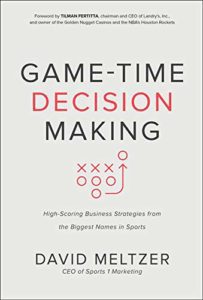
Game-Time Decision Making: High-Scoring Business Strategies from the Biggest Names in Sports
I want to support what you said because if someone’s reading and they’re like, “What does that mean that don’t just give motivation or good vibes?” You need to be tangible. In my situation, I tell people, “I’m going to show you how to tell a case story and whoever tells the best story gets the yes.” If you’re up against competitors, no one’s telling a story and you’re the only one telling a story, that’s going to mean more money, “What’s the average sale? Do you get that? Do you understand their business that well?” One more piece of jewelry. One more airport renovation. Whatever it is they’re doing, you help them win that, then the ROI is great on having you come to speak because it’s not, “Here’s something that would be nice to have.” It’s like, “We’re tired of coming in second place. If you can help us solve that problem, then that’s worth much more money.” That’s another example of what you said in action for people who are still thinking, “How does this relate to me?” I completely support what you’re doing.
You live by it, which is why I wanted to come on your show. What I enjoy about watching your stuff and reading your stuff is that you are the exact same type of salesperson that I am. You create productivity, accessibility and gratitude. You have quantitative value in what you do. You’re able to articulate it in the way that people want to communicate because it’s not what we say as salespeople. It’s what they hear. If you know your stuff well enough to articulate a story that comes to a logical conclusion of, “Can you see any reason you won’t want to do that?” You know how to pitch and you know how to sell like John does.
Thank you, David. You wrote this wonderful book called Game-Time Decision Making. That taps into not only why you, but the why now part of any decision. You talked about time, emotion and value. We’ve talked a little bit about creating value and storytelling creates the emotion. We’re going to end on the importance of timing, how that ties into your book and your upcoming workshops that you do every week on Fridays.
The manmade construct in this vibration is time. Everybody has 24 hours a day, but the productivity, the accessibility within that time of being able to number one, align your values. Your personal non-negotiable values, your experiential values. You’re giving and receiving values to the concept of time. Asking is related to time. If you understand time, you should understand the exponentiality of saying, “Do you know anyone that can help me? How can I be of service or value?” Understanding how time equates to that profit center and the exponentiality of growth, of growing exponentially by asking each person, “Do you know someone that can help me in person, on the phone, email, or media?” When we were young, most people had their card game, their golf group, and their church group. Nowadays on average, some guy you meet on the bus stop has 1,000 people in their network.
If you’re not asking, “Do you know what it can help me?” you’re cutting off your legs. Studying time is paying attention to and giving intention to the coincidence as you want with your time, the activity you get paid for the activity you don’t. Remember, that’s the mathematical equation of luck. Attention plus intention equals coincidence. Another thing about time is do it now. One hundred percent of the things you do now get done. The difference between successful people and others is successful people get stuff done. Ask yourself, “Could I do it now? If not, put it in your calendar to schedule for tomorrow and study that.” Finally, the practice of ending fear, utilizing your time, not to accelerate in the wrong direction, not to create resistance, avoid shortages and obstacles in your life, but to stop, drop and roll when you’re in an accelerated ego-based emotion, like the need to be right.
Kindness will take you back to the center and allow you to roll towards statistical success. More people in your pipeline. More people pitch correctly. More value is provided. More sales are made. More commissions are made to give to others so you can make more money, help more people and have more fun. Time is that manmade construct that you have to work within in order to effectuate that last world, to tie everything together. No more living in a world of, “To me, victimized and not enough.” No more living and buying things you don’t need to impress people you don’t like in the world of enough for me, but utilizing time, you can live as an instant between limitlessness and infinity in the world of more than enough. More than enough of everything for everyone.
When you’re selling and pitching from an abundant attitude that it’s not going to cost you anything, but we’re going to create value between the two of us that there’s more than enough of value for everyone. It’s because I take doesn’t mean you lose. It’s because you lose doesn’t mean I take. Everybody wins in the world of abundance. That’s where we need to pitch from with credibility and emotional judgment. Quantify the reasons, impacts, and capability from a world of more than enough. That’s what you do, John. We hit it off the first minute we ever spoke, we knew a lot of people in the same circles, but you started telling me what you do. I said, “This guy gets it. I’ve got to do more stuff with him.”
If you want more of David and let’s face it, why wouldn’t you want more? For the weekly training, you can go to his website at DMeltzer.com/training. Some of the episodes talk about creating a habit machine, learning to love what you do, and health, happiness and profitability. You walk your talk. The fact that you’re giving this training for free is such a gift to the whole community. I want to thank you on behalf of everyone reading for that. I want to encourage everyone to get this, because why would you not? David, any last thoughts or comments you want to leave us with?
Be kind to your future self and do good deeds. You can always email me at [email protected]. John, thank you for having me on.
Thanks for joining us.
Important Links
- David Meltzer
- Sports 1 Marketing
- Leigh Steinberg – Past episode
- @DavidMeltzer – Instagram
- Game-Time Decision Making
- https://DMeltzer.com/training/
- [email protected]
- Better Selling Through Storytelling Method Online Course
Wanna Host Your Own Podcast?
Click here to see how my friends at Podetize can help
Purchase John’s new book
John Livesay, The Pitch Whisperer
Share The Show
Did you enjoy the show? I’d love it if you subscribed today and left us a 5-star review!
- Click this link
- Click on the ‘Subscribe’ button below the artwork
- Go to the ‘Ratings and Reviews’ section
- Click on ‘Write a Review’
Love the show? Subscribe, rate, review, and share!
Join The Successful Pitch community today:
- JohnLivesay.com
- John Livesay Facebook
- John Livesay Twitter
- John Livesay LinkedIn
- John Livesay YouTube
Tragedy On My 100th Day As CEO With Dr. Diana Hendel
Posted by John Livesay in podcast | 0 comments

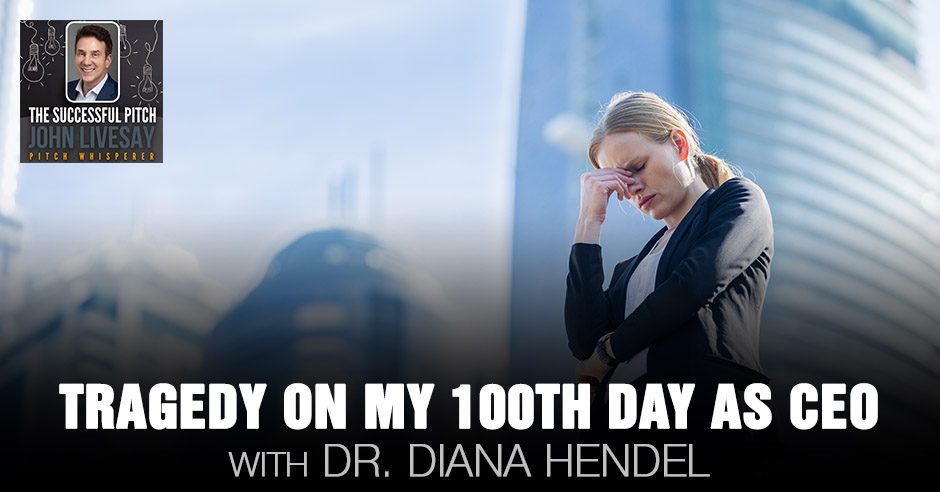
The 100th day is typically a milestone for any career. For Dr. Diana Hendel, however, it came with a tragedy that changed her life and led her to a profound understanding of trauma and how individuals and organizations can come out of it with hope and resilience. Joining John Livesay, she shares the tragedy on her 100th day as CEO, and how she learned to let go of the blame, shame and guilt that came with it. Diana’s career spanned more than 25 years of experience in leadership at all levels of complex organizations. She was the CEO of Long Beach Memorial and Miller Children’s & Women’s Hospital and currently serves as Senior Partner with Partnership Advantage. Join in as she shares the story of how she and her organization came out stronger after the traumatic experience – a powerful message which she brings out to the world through her new book.
—
Listen to the podcast here
Tragedy On My 100th Day As CEO With Dr. Diana Hendel
Our guest is Dr. Diana Hendel, the author of Responsible. She shares what it’s like to be a CEO of a major hospital and have a tragic shooting take place and how she helped heal her post-traumatic stress disorder, as well as that of the fellow employees and the hospital itself. The lessons that we all need about the things that don’t kill us can in fact, make us stronger and how we can let go of this need to have guilt, blame, and shame. Instead, go on a journey where we see themselves or other people in this story of resilience. The book is called Responsible. You’re going to enjoy her story.
—
Dr. Diana Hendel is an experienced healthcare executive, inspirational leader, and a team builder. Her accomplishments span a career of many years with experience in leadership and all kinds of complex organizations. She was the former CEO of the Long Beach Memorial and Miller Children’s & Women’s Hospital. She led one of the largest acute care trauma and teaching medical centers on the West Coast. She is a senior partner with Partnership Advantage, which is a consulting firm that helps individuals and organizations achieve optimal performance for the betterment of the communities they serve. Her areas of expertise include a strategic vision, business growth, as well as creating agile and resilient teams. She’s held many leadership roles with all kinds of hospital and healthcare associations. She has a new book out called Responsible. Diana, welcome to the show.
It’s great to be here, John. Thanks for having me.
I touched on a few things about your career. I’d like to ask you to take us on your own story of origin. You can go back to childhood, college, wherever you want. Where did you start your journey to get into healthcare? Did you always dream of running a hospital? Is that a little girl’s dream that I don’t know about?
I grew up in Southern California and went to school at UC Irvine. I’m interested in biology. My undergraduate degree in major is biology. As I was thinking about careers and where I wanted to best serve, healthcare jumped out at me. There were many aspects of it that were important to me. One, the technical aspects, the operational aspects were quite intriguing. My graduate work was in pharmacy. Systems, processes, analyses, and therapeutics were all interesting to me. More than that, I loved the way hospitals ran. I loved that the focus was on people. The focus was on creating this well-orchestrated team that had to work in sync and that not any one patient can be cared for by one person. It takes an entire team.
When I thought about a career in healthcare and particularly in hospitals, it makes sense that when I was growing up, I was involved in sports and played all kinds of different sports. In those days, you didn’t specialize in the sport. We played all of them. I played a lot of individual sports, but the ones I enjoyed the most were team sports. I liked being part of a team. I liked competing with the outside. We had to create camaraderie and unity. We had to be in sync. We had to settle differences. We had to be well-orchestrated. You can see the analogy between a hospital and being on sports teams. It was natural from my upbringing and my childhood and the things I was interested in to then embark on a career in healthcare and particularly in hospital care.
How does someone get to become the CEO of a hospital? That would be of interest. Not many people achieve that level of success. An analogy would be you’re a teacher and then you become the assistant principal and then you get to be principal. Is it that step-by-step process?

Hope And Resilience: So much has been written about individuals who have been traumatized, but very little has been published about the impact of trauma on organizations and on their culture.
It can be. To your point earlier, did I grow up as a little girl wanting to be a CEO? No, I didn’t. What I was interested in was learning and growing at each stage. How I became a hospital CEO was, I have a clinical background. I started at Long Beach Memorial as a pharmacy student. I did an administrative residency after a clinical residency. I found that as much as I enjoyed clinical pharmacy practice and the department of pharmacy, I liked the inner workings, the operational connections with all the different departments, laboratory, nursing, medicine, etc.
Over the years, I took on more and more responsibility and progressively got larger promotions and more responsibility for hospitals. Over the years, I gained a lot of experience in how hospitals ran and their strategic tactics, working with teams, being effective as a leader. I knew what it was like to be at every level of leadership, from the ground up, from being the student to then becoming the CEO. It was a calling. I love the role of CEO. I loved being involved with the hospital, its operations and its strategic future. I also love the connection with the community. Most hospitals are cornerstones of the community. They’re the bedrock of the community. They’re often one of the largest employers in the community and often a large educator, all the student nurses, physicians, and pharmacists. I like being connected to both the community and running this large business.
How many people were you managing when you’re the CEO?
Our hospitals were three hospitals in the city of Long Beach. They were a part of a larger health system. We had over 6,000 employees and about 2,000 independent physicians and specialists. At that time, there were 2,000 or 3,000 independent contractors and other consultants that worked there. It was a city within a city.
You’re like the mayor of that city. It got its ecosystem and who gets allowed in and all of that stuff. How long were you the CEO before this life-changing incident happened where there was a shooting? How long were you the CEO before that happened?
It happened on my 100th day as CEO. While I’d been in the system and the organization for more than twenty years at that time, it was my 100th day. I know that because I always created 100-day plans. On that day, I stopped and thought about what it meant to be on my 100th day, and the words I said out loud were, “I’ve got this.” What I meant by that is I knew there would be a lot of challenges in the future. I knew I had a lot to learn. At 100 days, I had a strong sense that I knew that I could do this job and I knew I could do it well.
[bctt tweet=”Tell a story that other people can see themselves in.” username=”John_Livesay”]
Take us back to that monumental day. You’re like, “I got this. I’m feeling confident.” There are some contingency plans for anything, whether it’s an earthquake, shooting, flood, you name it. Whatever could go wrong, everybody has to try in some way to prepare for something. Take us back and paint a picture for us, Diana. What day and time was it? How did you find out about what was going on?
It was April 16th, 2009. It was mid-morning. I was in my office, which is adjacent to the lobby. A little before noon, a man came into the lobby and entered the outpatient pharmacy, which was adjacent to it. He shot and killed the supervisor of the outpatient pharmacy. The shooter then traveled through the hospital quite a long distance to the other side of the hospital outside the emergency department and encountered another man who was the executive director of the pharmacy services. He shot and killed him. A few moments later, just before the police arrived, the shooter shot and killed himself.
Did you hear the gunshots?
I did not hear the gunshots. I got immediate reports of the gunshots.
How much time between the first shooting and the second shooting?
About two minutes.

Hope And Resilience: There are patterns of individual responses and reactions that are normal to trauma and they can shape how they respond in the future.
There’s not a lot that you can warn people or anything.
What is important to know is that any shooting and anytime someone comes into a hospital and kills people, it is shocking. What was particularly shocking about this shooting was that the shooter was an employee.
I didn’t see that plot twist coming. Were these personal specific people that he targeted? He knew his way around. I thought it was going to be a disgruntled patient with some pharmacy issues. It’s like the postal workers get accused of being upset at their boss and losing it.
This employee was a beloved employee. The shooter was beloved. He had been our employee of the quarter, recognized the month before. It begs the question and what emerged instantly was why. All motives eventually were dismissed. The only one that remained and became an urban legend was the question of whether he had shot and killed his bosses because of the upcoming layoff. The layoff as motive became ingrained certainly for me, personally. As the CEO, I had made the decision to do that layoff. The pharmacy department was my home department. These were my friends. These were people I knew well. By virtue of my role, I was the first responder to all three scenes within moments after it happened. The shock of encountering the two victims and then encountering the perpetrator who had killed himself was individually or personally to me extraordinarily shocking. My world was shattered.
It’s one of those things that happened where it would be a lot to digest. You know someone who’s been murdered. Two people you know are your friends and the third is a beloved employee. Our system is not wired to handle that back-to-back trauma. You talk about in your book, Responsible, that you realized you were experiencing your own PTSD, which I want to talk about. Is this still painful for you to discuss?
Interestingly it doesn’t trigger me in the same way it did. As I completely processed and integrated it, recovered and healed, I feel it’s important to talk about less the actual details but to introduce and to come out as a leader who had PTSD and as a patient who had PTSD. That wasn’t apparent immediately. I knew I was shocked but I was well-trained to respond to a disaster. Hospitals are good at responding to disasters. We’re practiced in it. Our structures and processes are well oiled. We do them well. This was a situation where we were responding to our trauma. We were accustomed to people being brought to us but not responding to our own.
[bctt tweet=”Let go of blame, shame and guilt.” username=”John_Livesay”]
I’ve heard horror stories of someone being brought into the ER that’s part of a gang shooting and then the gang breaks in to finish the job off. I can only imagine how dramatic that would be. To know the people and then feel on some level that you’re responsible for triggering that behavior, that’s a lot to process. My next question is, how did you come up with the book, Responsible? I’m sure everyone reading is going, “Surely, she’s not saying she was responsible for causing that guy to kill those people and himself.” What does the title mean?
I wrote the book for a number of reasons. One, it’s a tribute to my former colleagues, the ones who were killed and to my former coworkers. I ended up staying as CEO for the next six years. I had grown up in this organization. The other reason for writing it was an exploration of the word responsible. We say, “The leader is responsible for what happens.” We say, “The buck stops here.” We say, “Who’s held accountable for when things happen?” Our first question when something happens is why it did happen. What could have been done to prevent it? What provoked it?
What I discovered is that while it was irrational to believe I was responsible or to feel responsible, it wasn’t all that off-base given our societal messages and my upbringing of responsibility. I didn’t feel like I caused it. It was a slippery slope with a sense of responsibility. I wrote it to introduce that concept and to explore it. When individuals and an organization are traumatized, there are biological responses that happen involuntarily. There’s the fight-flight-freeze response that happens biologically. I thought it was important to introduce how PTSD develops and how you can recover from it, but also the impacts of trauma on an organization. We don’t think of organizations themselves being traumatized.
The first step is realizing you’re a medical professional. Sometimes doctors are the worst patients. That’s the standard line anyway. You think, “Surely, I’m equipped to handle this. I’ve been trained.” You write about it in your book, the sheep in wolf’s clothing. Tell us that story of when you realized, “I’ve got this. I’m suffering from post-traumatic stress syndrome. I can’t sleep. I got all the symptoms.”
I did get help right away. We certainly brought in help for all those affected. I didn’t think I was immune to the need for help. I got help right away. What I didn’t appreciate was that usually, when severe trauma that shatters your worldview or shocks you significantly happens, rarely are you needing to return to the same place that happened. Usually, there’s a distance or separation. You can remove yourself.
It’s like the people in 9/11 don’t need to go back there for a while.

Hope And Resilience: While going through trauma can shatter you and your organization, you can emerge stronger and better than you would have been had you not gone through it.
When things happen in schools, churches, and other places, often they’re torn down. A memorial is created in their place and then they’re re-established. This was a 1 million square-foot hospital that had been there for decades. We certainly weren’t moving or closing. We didn’t close that day. We’re 24/7 operation. There’s no closing. We kept going. We had 600 patients still to care for.
You don’t go home and check yourself. You don’t go like, “I need a minute here.” You’ve got to function and your adrenaline kicked in.
To your point, many people but certainly hospital people are stiff up for lip or resilient or tough. I had been through lots of adversity, hardship, setbacks, failures, and disasters. I’ve had a lot of practice going through that. I knew well enough to get help and I did get help. What I didn’t appreciate was that staying in the same place certainly could have a long-term impact. I don’t suggest anywhere in the book or even now that I should have left sooner, not at all. In parallel, a lot of my healing was because it was due to the bonding, the camaraderie, and the teamwork that we all experienced. It was the worst day of our lives and I saw the best in people. In parallel, the bonding and camaraderie served to heal. I got to a point where I wasn’t going to be able to fully recover and heal without stepping down.
A lot of CEOs are afraid that if they say they have PTSD, they can’t function. They have to step away from their job and miss months or weeks. What was your situation?
That’s interesting. I felt a calling and the importance of staying. It never occurred to me to leave. I wasn’t worried that if I said I needed help that I would not be able to remain CEO initially. What I found was that over time, the organization had moved on. The handful of people who were closest to it had moved on and gone to other places. I found that I became extremely isolated while surrounded by lots and lots of people. It became important that the organization deserved a healthy CEO and I deserve to recover. After six years, I stepped away. I wasn’t as afraid to say I needed help. It was clear that having PTSD, having nightmares, having flashbacks, losing sleep, that was taking a toll on my health.
Do you get triggered sometimes walking in the building?
[bctt tweet=”Your title role makes no difference. It’s all about how you show up in every interaction.” username=”John_Livesay”]
Often, because it had happened in three different locations and in locations that were right near my office, there wasn’t any time that I didn’t walk through. After the shooter situation, that was the new term in 2009. In fact, we didn’t have disaster protocols for that. We wrote them for hospitals thereafter based on our experience. At the time, I viewed the hospital as a sacred place, as an ultimate safe place. I thought it was the safest place I could ever be. That sense of safety and security was shattered. It can be difficult then to remain in that same setting.
That leads to a perfect transition to where we are with some people returning to the office. I’m careful about my wording. I’ve been talking to one of my clients, Gensler, the world’s largest architecture firm. They create a lot of workspaces. It’s not a return to work. When you say that to people, they get angry because they’ve been working hard from home. It’s to return to the office. Suddenly, if the office because of the disease no longer feels like a safe place, your timing is perfect to help people deal with this issue. “Is it safe to go back to a workplace and be exposed to germs, especially if I’m at high risk or I’m living with somebody who’s high risk and all the issues around that?” Before we get into that, I want your expertise on this. What does it look like for an organization to have PTSD? You never thought about it like that and I haven’t either. That will help us help others returning to the office if we can say this is what it looks like when the organization has it. What does that look like? How can people identify it?
Much has been written about individuals who have been traumatized, but little has been published about the impact of trauma on organizations and on their culture. There are parallel paths similar to the individual. Even though everyone within the organization has experienced a trauma, to make a parallel with COVID, even though all of us are experiencing COVID, we’re not all experiencing it the same way, in the same degree, and in the same impact at this moment. That may change in the future. Similarly, for organizations, there were people close to it who had survivor guilt and had self-blame. There were people further removed who thought, “I didn’t know those people. That was tragic but life goes on.”
It’s the ripple effect and the idea that you have this large body of people or this culture of people who all had a different experience with that trauma. The patterns I noticed initially and similar to COVID was, “We’re all in this together.” That sense of camaraderie and togetherness. Also, what emerges is varying degrees of blame, guilt, and shame. When I say blame, it ranges from one end of the spectrum of the shooter being crazy to who and what made him do it and everything in between. One end of the spectrum leaves the shooter very much responsible for the shooting, his actions, but also the notion that if he was crazy, it leaves a lot of unpredictability. Who else among us might be crazy, especially employee of the month?
I would love your opinion on this. I gave my TEDx Talk, Be The Lifeguard of Your Own Life!, around my own experience of being laid off. After being in a job for fifteen years and the industry is being disrupted, it was challenging even though I talk about who we are is bigger than what we do for a living. Especially if you’re a CEO, I would imagine it’s challenging to not let your identity get tied up with your job. If someone is beloved and an employee of the month and they feel like they’re losing that identity, we never know what the trigger is. I would be mad and scared, hurt but I certainly wouldn’t go “ballistic.” That’s you. You’ve got some emotional intelligence, some support group. Maybe this is all that person had. Who knows? How do you not take being laid off personally? If it’s between laying off some people and the company or the hospital continuing to function and pay their bills versus keeping everybody employed and everybody going down, you’re not thinking rationally. Your brain has been hijacked.
That’s the key. Your brain is hijacked. These thoughts and feelings that emerge initially are the results of trauma. It’s not necessarily whether it’s rational thinking. It’s our survival mechanism. To your point, most people who face layoffs do adapt and yet there is an impact on their identity or on their ego. Even the fear of paying bills, it’s much more than losing a job. It equates to our value, all those things. At the other end of the spectrum, it then became this sense of, who made him do it? What pushed him into doing that? There was a wide range of opinions, mostly as the result of our brains being hijacked. The layoff as motive narrative was not the only narrative. It happened to be central to me. There were lots of narratives that emerged. I don’t know all of them. I know most of them but that one resonated and traumatized me for obvious reasons. It’s because I had been the one to decide on the layoff. The overarching is we’ll never know. There’s a sense of uncertainty. We had to grapple with that.

Responsible: A Memoir
It’s fascinating because friends of mine who work in other industries have said that the most stressful part of the whole quarantine situation for them, besides their own impact of having to work from home, teach their kids, not take their kids to school and the kids are traumatized, they miss their friends, all of that. You now need to lay off X percent of your team that you’ve assembled for the last year and a half or two years. I don’t think anybody usually thinks about the person having to do the layoffs and how traumatic that is, especially if you care about your people. You’re focused on the person receiving the news.
If you’re an HR, that’s part of your job. You’re trained how to stay neutral and let the person have their feelings and all that stuff. In this situation, it’s like we’re a speaking bureau. We have to let go. There are no live events. We’re a hotel or we’re a university even, and it’s all online. There’s a lot of gold you have from having gone through this that can help people realize this is not a normal layoff time. You get to be traumatized by having to lay off this many people all at once for no fault of anyone. Who cares?
Let’s get out of the guilt and blame or even shame of being laid off. I don’t think it’s a thing anymore because there are many people that are experiencing unemployment. That can contribute to the fear-fight-flight or “How am I going to get a job now?” It’s this bizarre time on all sides of the experience, even if you’re not someone who has been laid off. What’s interesting is a lot of my friends, their salaries have been cut 20% to 50%. They’re not laid off but they’re sure under some financial stress. It’s like I have half a leg that I had completely amputated.
They’re probably working 2, 3, or 4 hours more a day than they were before.
They’ve had to lay off the staff and they are being blamed for things. “Marketing is not doing their job.” It’s like, “What?” That’s a go-to statement for a lot of marketing people anyway, but now that’s an easy scapegoat. This concept of guilt, blame, and shame is fascinating through the lens of how do you deal with that when you have post-traumatic stress syndrome. What would be the one thing you’d want people to know about the book and why they should get it?
The book immerses you in a story that, while it’s unique, it is relatable. It evokes universal feelings and thoughts. People who read the book will see themselves or others in it. It can help to normalize when individuals and organizations are traumatized, there are patterns. There are responses and reactions by the individuals that are normal to trauma. It can change and shape how we do respond in the future. To your point, in our time, individuals are under extraordinary stress. There are no easy answers. We do a disservice by reducing, simplifying, or making it one dimensional.
We do a great service by talking about the dilemmas and talking about the struggles. That’s where we as humans and our society do well is when we can surface the dilemmas without becoming polarized and without saying, “We have to choose the strength of our economy or the health of our population.” How about if we leverage both? The book surfaces that through a story. The book offers hope. It’s a message that while going through trauma, that can shatter you in an organization. You can emerge stronger and better than you would have been had you not gone through the trauma.
I talk about the importance of telling a story that other people see themselves in and how that takes people on a journey. One of my clients is a high tech healthcare company. Those salespeople are in the operating rooms with the doctors. Because of the shortage of masks and their own health issues, they have to do it virtually. It’s a whole another paradigm for everybody that makes it challenging to even “do your job” if you’re in healthcare. This concept of helping people see themselves in the story is a reason enough to get any book. We’re going to be taken on a journey where we either see ourselves or someone we know in it and we can start to recognize patterns that can help us get some new tools in our toolbox to deal with any situation, whether it’s what we’re experiencing now or something in the future. Diana, how can people find you? I know you also do some consulting. What’s the best way for people to reach out to you?
The best way is via my email, [email protected].
Diana, thank you so much for sharing your story. Your courage and your vulnerability inspire us all.
Thank you, John.
Important Links
- Responsible
- Long Beach Memorial and Miller Children’s & Women’s hospital
- Partnership Advantage
- Be The Lifeguard of Your Own Life! – TEDx Talk
- [email protected]
- Better Selling Through Storytelling Method Online Course
Wanna Host Your Own Podcast?
Click here to see how my friends at Podetize can help
Purchase John’s new book
John Livesay, The Pitch Whisperer
Share The Show
Did you enjoy the show? I’d love it if you subscribed today and left us a 5-star review!
- Click this link
- Click on the ‘Subscribe’ button below the artwork
- Go to the ‘Ratings and Reviews’ section
- Click on ‘Write a Review’
Love the show? Subscribe, rate, review, and share!
Join The Successful Pitch community today:
- JohnLivesay.com
- John Livesay Facebook
- John Livesay Twitter
- John Livesay LinkedIn
- John Livesay YouTube