

Say Something Entertainment: Pitching For Engagement with Kevin Hekmat
Posted by John Livesay in podcast | 0 comments


Episode Summary:
—
Listen To The Episode Here
Say Something Entertainment: Pitching For Engagement with Kevin Hekmat
Our guest is Kevin Hekmat, who is a talent manager and Founder of Say Something Entertainment, which is best known for managing internationally recognized poet, IN-Q, and New York Times bestselling author and speaker, Cal Fussman. Kevin represents artists who changed the way audiences look at their lives. Say Something is built on the idea that inspirational entertainment can bring the most powerful perspective shift, whether through live shows, keynotes, poetry or podcasts. Kevin has brought this idea to dozens of Fortune 500 companies including teams at Facebook, Google, Lululemon, Nike, General Motors and many more. Kevin, welcome to the show.
Thanks for having me.
I always like to ask my guests to take us back to their own story of origin. You can go back as far as you want. Childhood, school or whatever where you first started saying, “I think I want to get into talent management where I want to be involved with the creative arts.” How did you get to where you are now?
I grew up in Los Angeles. It goes back to my parents. My mom is a piano teacher. She has a piano school and my dad is a dentist. I grew up playing piano and grew up doing musical theater in high school. To be honest, it was never that I was the best artist in the class, that I was a great singer. I enjoyed the arts a lot. As time progressed and I started thinking about what I wanted to do, it became a question of, “Is there something in entertainment, in that world that I can see myself doing and living?” I didn’t want to be an artist and I was looking at all the options. Growing up in LA, a lot of options, a lot of people that I grew up with are doctors, lawyers and more traditional jobs in that way. All I knew is that I didn’t want to do that. I knew from a very early age that I didn’t want to go to medical school or get a law degree. Outside of that, I was looking at the options. I was looking at music, entertainment and I traveled for several months after I graduated from college, solo backpacking through Southeast Asia to really figure out what I liked and what I enjoyed myself. Before that, I had started doing a lot of the more motivational, inspirational speaker world.
[bctt tweet=”Value is not something you own, it is something you bring.” username=”John_Livesay”]
I was drawn to a Tony Robbins event when I was in college and that shifted my perspective. He has an incredible personality. If you go to one of his live events, outside of anything he even says, his ability to shift people’s perspectives and experience in a day or a four-day period of time is powerful. That energy he has on stage and the way he takes you on this emotional journey, a very logical journey through your own life and do what you want to do in your own life. When I went traveling, I went deeper in my own enjoyment, my own passion, one through traveling but also through meditation, through mindfulness. It was my first real dive into that world at the end of the trip. I had never meditated before, but I was curious about it and I did a ten-day silent meditation retreat. I thought it would be a fun idea, “It’ll be a great time. I’ll learn how to meditate.” Little did I know it would be one of the most intense and raw experiences of completely taking away any distractions, any stimulations that we normally have in our everyday lives with phone, music, TV, conversations with friends or strangers, going internal and sitting with your thoughts and learning how to be with your own thoughts.

The Third Door: The Wild Quest to Uncover How the World’s Most Successful People Launched Their Careers
When I came back completely, coincidentally that same month, I met both IN-Q and Cal completely separately. I had been to one of IN-Q shows. A friend invited me and another friend of mine named Alex Banayan, one of my closest friends growing up. I had met Cal that same month because Alex is writing a book called The Third Door and Cal started helping Alex write that book. The same month I met both of them, it took me a little longer to start working with Cal. Cal and I were friends, Cal was helping out with the book. I would see him every couple of months and I sit down for coffee or lunch with them. Hear about some of the stories that you heard on the podcast with Gorbachev and Ali. I was on the edge of my seat, “Who is this guy with these incredible stories in this incredible life experience?” He traveled for ten years earlier in his life, without a home from city to city across the world. At first, I started managing Q and that became the beginning of talent management for me.
I want to ask you about that ten-day silent retreat. Did it get easier or harder as the days went on?
I don’t know that it was a straight line in neither direction. It was more of a rollercoaster where it would get easier, harder and then all of a sudden, you’re flipped on your head. In every moment, you would have a different thought that comes up. The key thing that I remember most about that experience was that there wasn’t any distraction. You almost don’t realize not many distractions you have in your life on a normal basis, on a daily basis. In the workday, there’s every work distraction but then outside of that, even when you go home, you have whoever might be in the home with you, you have every little thing you could be doing in the house. You have your phone, you have the TV, you have food and even eating is a distraction. I use it. I know that I use it as a distraction sometimes when I’m thinking about something. In that experience, you’re forced because there are 100 people that were there and you would sit down.
It was a very intense experience too. You’re waking up at 4:00 AM, you’re meditating for nine hours a day, you’re getting four hours of teachings on meditation a day and they would ask you to sit down for two hours to meditate. I had never meditated. I couldn’t meditate more than twenty minutes and a thought would come in my head. I would try and avoid on a daily basis in my own life, maybe a memory, someone that I was angry at. I realized that typically I would maybe listen to music and I forget about it. I’ll talk to a friend and I forget about it. I would push that thing down and I’m sitting there for two hours, for ten days and that thought is not going to leave your head until you make peace with it. It won’t leave your mind until you figure out some way to make peace with that.
They ruminate or they hide, they pop back up. This could be thoughts of anger, thoughts of grief even. The reason I am so curious about your experience with silence, the old way of selling was asking someone to buy something and then whoever speaks first loses. It became this will of silence and that doesn’t work anymore. People are aware of it and people can feel it. It’s this horrible old school way of trying to sell. The concept of getting comfortable with silence has helped me get people to get more sales. If you ask someone if they want to buy a house for example and you’ve got all this internal dialogue going on like you were referencing of, “I need this commission. If I have to show this person one more house, I’m going to lose my mind.” You say something because that’s so anxiety-provoking to have all those thoughts going on. You’re not used to it.
You say, “If I throw the refrigerator in, would you buy it then?” You’ve missed the moment for people to say yes or no. What I work with people on is saying when you quiet the thoughts in your head either through meditation or going on to something like you did for ten days without speaking, you become comfortable with the silence in the room. That is so key, whether you’re performing in poetry, music or speaking, is getting comfortable with those pauses. You as a talent manager, your ability to be comfortable with silence has probably helped you when you were pitching IN-Q and Cal to people, when you tell them how much their fee is or whatever the issue might be. It’s not a battle of wills of who’s going to speak next but it becomes your ability to be comfortable with that silence. Sometimes you don’t know what they’re going to say next, whether it’s an objection or a yes but if you are uncomfortable waiting then you lose out.
[bctt tweet=”Let go of being right-collaborate.” username=”John_Livesay”]
It’s definitely true and I thought that consciously when you’re pitching and I may be pitching IN-Q or Cal or anyone for engagement with the company. That silence is very important because both sides naturally, you’re going to feel something and the other side is going to feel something. After you say it, it’s so easy to try and follow it up with reasoning or something that explains why you have to be silent.
I’m also fascinated by the combination of a piano teacher because I took piano lessons when I was a kid and a dentist. At one time I thought I wanted to be a dentist. I am going to give you my observations but have the unique inside track because you lived in that world. What they have in common is that clearly piano and music in general is about melody, sound and eliciting feelings based on what the music is doing. The dentistry is an art form. The dentists that I’ve met and have been patient of take such pride in their work and think of themselves as a craftsman. Almost like a person who’s a musician composing a song, those are my teeth and then to have those people create a son like you, who then brings that out into the world. I wanted to get your take on if I’m close to your childhood or the takeaways that you learned from your parents.
It’s funny because dentists are normally thought of as not creative people. When you think about what they’re doing, they are working on the thing that is right at the center of your face. Everyone sees this thing and they’re the ones that are making a beautiful. I love that perspective of they’re artists as much as a piano teacher. My mom was definitely the more creative one between the two of them, but I definitely picked that up from both of them. Another thought, jumping back to the silence. It’s sparked an idea, a thought that I actually don’t think about. I love that comparison you made between the meditation and silence there into the work. Not only does it come in pitching, but it also comes in pitching ideas.
As a manager, a lot of the time it’s focused around bringing ideas, whether it’s to the client or whether it might be another client that I’m working with. It could be a company, it could be creative and it could be an artist that we’re working with to create something. A lot of the time it takes giving your idea and putting your perspective in there but then not trying to convince anyone of that, not trying to sway anyone in your direction. It’s trying to understand what they want, what their vision is, giving your opinion in your idea but then letting it sit in silence. Creatives often have to think about what they want, what they envisioned and that idea has to be there.
If you come up with the idea and you try to sell it and push it on somebody, nine times out of ten it’s not going to work. However, if you have collaborative conversations and brainstorm without an attachment to any one outcome, what I’m hearing you say is that allows the decision maker to take ownership of the idea, pick a direction and see you as a collaborator. When that happens, then your clients are definitely the solution to execute that idea.
You can’t be focused on being right. You have to be focused on collaborating and working together to find the solution. If you have that, then you allow the person to actually come up with the idea that resonates with them and that’s going to be the best solution.

Say Something: Thoughts don’t leave until you process them.
Tell me a story of both IN-Q and Cal, one of your favorite stories of an event or an outcome that happened after someone hired IN-Q.
It was a very interesting moment. IN-Q was performing at a WeWork event and he performed at a global summit. It was 6,000 people in the Microsoft Theater in Downtown LA. A month before that, he was at a smaller event and it was 50 people across North America. We were sitting in a room and he was performing for dinner and he was doing this piece called Home. The first line is, “I want to buy a house where I can make memories in every room.” It’s a beautiful piece about having a family and having a house that’s more about what you put into the house in terms of your energy and who you are and the people as opposed to the physical objects. Value isn’t a thing you own, it’s the thing that you bring.
Value is not something you own. It’s something you bring.
We were sitting there and 50 people are sitting at three tables. IN-Q’s doing this piece and we’re all listening. He finishes it and the guy across from me turns to me and I told him beforehand that I was his manager. Five minutes during our conversation right after IN-Q finished performing, everyone’s like, “That was amazing. I loved that.” This guy turns to me and goes, “How many times have you heard that?” I said, “Between hearing it live, hearing it on video and recordings that we’ve done, I would say maybe 100 times, probably more than 100 to be honest.” He goes, “I looked at you while he was performing. I was watching you. You were smiling as if you were listening to that poem for the first time.” It gave me a perspective on that experience that I didn’t have, which was so beautiful. I didn’t realize that I had that perspective. It was beautiful because it is how I feel every time I hear him, I am hearing it for the first time and I’m hearing new things every time, the hundredth time I’ve heard of one poem.
That’s art. We are different when we look at it and all the energy that goes around it is part of that.
They’re different when you hear it. Every moment that you hear someone say something, it can be the same thing over and over. In your life, you’re having different things going on. You’re having a different experience.
[bctt tweet=”If you are uncomfortable with waiting, then you lose out.” username=”John_Livesay”]
That explains your success because people respond to people who are authentic and passionate. You can’t fake that and you are clearly authentic and passionate. That’s why you’re so successful. Am I still as passionate and authentic about what I’m pitching? If I’ve said it 100 times as it was the first time, knowing if you trust what you’re doing and you have a purpose behind it that keeps you alive and going, I would think.
That definitely is part of the journey. It’s figuring out how you can get excited about it because sometimes you forget. Sometimes I’ll go a month, two months, three months without seeing Cal, IN-Q perform live because I’m in the office in LA and they’re traveling and performing. Sometimes you do get separated from the art. You get separated from what you’re selling and that becomes something where I have to go back to why do I love it? What do I love about it? When I see it live again, for me that’s the clearest dive back into the arts and why I love it so much. You do have to constantly go back to why you feel connected. If you ever don’t, you have to look at that, look at the experience, look what’s going on in your life and look at the art and say, “What am I connected to in that?” Every time I go back to the art, I find that I go deeper into it.
When I hear actors talking about doing the same performance on Broadway for years at a time, they always have to find some nuance or it’s the audience response that energizes them to make it fresh for them. That’s part of being fully present and fully alive, which goes back to one of the takeaways you get from going on a ten-day silent meditation.
When you’re listening to the art, it’s that presence. When you’re trying to help someone understand how powerful it is and how it can really make a huge difference in their event or their experience, it’s the presence of understanding and listening. I learned that presence in that retreat. I’ve learned that presence from Cal. He’s incredibly present. That’s the thing I’ll always say is Cal, when he is talking to you, you feel like you are the only person in the room. Especially when you’re saying something that intrigued him, his jaw drops and his eyes open wide. He is enthralled. There have been times where he’ll finish speaking and we will be leaving and we have a flight to catch. We have somewhere to go and I used to drag him. He’s already done an hour of Q&A afterwards, off stage talking to people, answering questions and I’m pulling him away saying, “Cal, we’ve got to go.”
My experience of him is this bottomless curiosity for life and people’s stories. That’s what made him such a good journalist. He’s taking that same passion and tells the stories of everyone from Gorbachev to George Clooney in a way that makes everyone else curious to know what’s going to happen. What’s your goal next?
There are several things within what we’re building with IN-Q and Cal. I looked a lot at why I was drawn to both IN-Q and Cal. Early on, I was managing IN-Q about a year and a half or two years and then I started managing Cal. When I first started managing Cal, people would ask me, “You represent a poet. Do you represent writers?” Typically, you have a manager that represents actors. They represent screenwriters, musicians, comedians. There’s a lane for everything and people would look at me in this complete confusion of who do you represent?

Say Something: If you feel like you’re an island, then you won’t feel any sense of connection to the purpose of why you’re working.
Actors and performers have a talent manager mapping out their career. They have an agent that negotiates their contracts.
I started going around and people start asking me, “Who do you represent? What’s the common thread between IN-Q and Cal, are they writers?” I said, “What it is more than anything? When you see them, whether IN-Q’s poetry or Cal’s storytelling, they both make you think about your own life in a different way.” They challenge you to think about whether it’s your personal life, your work, your social life, your relationships. Both of their art acts as a mirror in a lot of ways and they both allow you to think about that but not only that, they also entertain. Once you are watching IN-Q’s performance or you’re seeing Cal’s speak, you’re not only inspired to think about your own life in a different, but you’re also entertained.
You’re laughing, you’re crying, you’re going through that journey. It’s the balance of those two things that is more powerful than anything. If it’s the balance of making you think about your own life, acting as that mirror but then also entertaining, making someone laugh and making someone enjoy that experience. If I look forward, it’s creating that experience for more people, allowing more people to have that experience. Most people live double lives. During the day they listen to podcasts, they’re watching YouTube videos, listening to TED Talks.
[bctt tweet=”If you come up with the idea and try to sell it by pushing it on somebody, nine times out of ten it is not going to work.” username=”John_Livesay”]
Most people are enjoying them and then they go home. They go out at night on a Friday or Saturday night with a friend on a date, with their wife, husband, whatever that may be and then they lose that. They lose the part of themselves they love so much, the inspiration because they’re going out to comedy. They’re going out to a bar or they’re going out to dinner. How do you bring an experience together where you can fuse the two things? IN-Q does that so well. When you go to one of his shows, it’s that kind of experience. Cal at 8:00 AM at a corporate event will give you that experience where you go in and all of a sudden not only are you learning, not only are you entertained but you are laughing, crying, you’re feeling every emotion. Every person in that room, you feel closer with because you went through that experience and you feel like you’ve shared that experience together.
That is one of the key objectives almost every speaking engagement that I’ve been. Not only do we want you to inspire them, inform them, give them some new tools but the whole experience is supposed to bond them better together. These are siloed departments and people that don’t see each other that often. They’ve all been brought together for a two-day summit. If your experience of speaking can make them feel bonded together and they can start referencing a story you did, a joke or whatever it is, then you are delivering on the overall connection. People have to feel connected to the people on their team, even if they’re not physically seeing them every day in order to feel part of something beyond what their little job is or big job. If you only feel like you’re an island, then you don’t feel any sense of connection to the purpose of why you’re working and then you burn out really fast. The outcomes of having people think about their lives in a different way impact the bottom line. Is there any last thought, book or quotes you want to leave us with?
What I found more than anything is that the art sells itself. Whether the art is a painting, whether it’s poetry, whether it’s a speaker on stage, whether it’s a podcast or whatever it might be, the art will sell itself if someone experiences it and they are shifted by it. That’s what I try and do more than anything. It’s to allow someone to experience the art. I’m sure you’ve experienced this in your speaking. When someone sees you live, that is the best experience they could ever have. You are probably one of the best people at pitching and selling but if they see you live, they have that experience themselves. When they see you take a group of people through an experience, they’re learning. They’re having takeaways, they’re standing up and clapping, that’s going to be the best sales pitch you could ever have. I try and do that as much as I can and put the art out there. Allow people to experience that art because that’s what’s going to get them bought in more than anything else.
[bctt tweet=”The art will sell itself if someone experiences and are shifted by it.” username=”John_Livesay”]
The more people realize the value of this face-to-face connection, whether it’s one-on-one or you’re speaking in front of 6,000 people, it’s still that intense need to be present and in that moment so that you can have an experience. Otherwise, as you said, you’re in your head and distracted about a bunch of things and we wonder why we’re not having more joy in our life. That’s the reason, we’re not in the moment. Kevin, thank you so much for sharing your wonderful journey and these two amazing artists that you’re representing, IN-Q and Cal Fussman. The world is going to be a better place and I can’t wait to see what you do with them.
Thank you so much for having me, I appreciate it. It’s been a fun conversation.
Links Mentioned:
- Kevin Hekmat – LinkedIn
- Say Something Entertainment
- The Third Door
- http://SaySomething.la/
- Quantmre.com
Wanna Host Your Own Podcast?
Click here to see how my friends at Brandcasting You can help
Get your FREE Sneak Peek of John’s new book Better Selling Through Storytelling
John Livesay, The Pitch Whisperer
Share The Show
Did you enjoy the show? I’d love it if you subscribed today and left us a 5-star review!
-
- Click this link
- Click on the ‘Subscribe’ button below the artwork
- Go to the ‘Ratings and Reviews’ section
- Click on ‘Write a Review’
Premiere Speakers Bureau with Shawn Hanks
Posted by John Livesay in podcast | 0 comments

Episode Summary:
Growing up a la the von Trapp family singers, Shawn Hanks has lived with music and performing throughout his life. Now he imparts the knowledge of learning to create a feeling and communicate an idea to an audience among speakers and event partners as the CEO of Premiere Speakers Bureau. Shawn shows us the other way of selling which is to be able to communicate and connect at the same time. He shares some great advice on how you can keep your people loyal just as you do your clients. Shawn also talks about how his merger and acquisitions case became a success, giving tips on how to decide which accounts to target and what to say in your pitch to stand out as a brand.
—
Listen To The Episode Here
Premiere Speakers Bureau with Shawn Hanks
My guest is Shawn Hanks, the CEO of Premiere Speakers Bureau, who adds capabilities from several fields to the team. Over the course of his eighteen years in the event industry, he’s gained valuable experience advising corporate associations and non-profit partners. In addition, he provides direction to speakers on the Premiere roster. He’s an avid football/basketball fan and he and his wife survive CrossFit every day together. They are a couple that works together, stays together in Texas. They’re in mid-Tennessee. They have three children and an adorable golden doodle. Shawn, welcome to the show.
Thank you very much. It’s great to join you. Thank you.
Shawn, I love to ask my guest to tell their own story of origin. You can go back as far as you want, whether it’s childhood, high school or college days. Clearly, there’s some journey that you went on to become the CEO of this amazing speaking bureau, Premiere. I’d love to find out where that all came about, your love of communication and connection.
I grew up in a family that was a very musical family. We traveled and performed. Performing, communication, all of those things in my mind are one large path, which is to communicate an idea or create a feeling or an idea in the audience. That was instilled in me from a very young age and I performed most of my life. My wife and I are both from Texas. We’re high school sweethearts. We went to high school together, college together, married after we graduated and moved to Tennessee in 2000. That is the most interesting part as it relates to the Premiere Speakers Bureau. We were in Tennessee for a few months and a friend of mine interviewed for an agent role at Premiere Speakers Bureau. The interview did not go well. That’s a whole other funny story.
As this friend of ours walked out, she turned to Duane, the Founder of Premiere and said, “I think I know someone who might be interested in this in this career. He’s got a skill set that fits this.” I came and interviewed on Thursday, October 12th of 2000. I remember that date well because Duane offered me the job as I walked out the door. I was in a fundraising role. I was doing development for a large nonprofit. I went to my employer who was a great guy, very generous. I said, “This isn’t what I want to do with the rest of my life. I have a unique opportunity with a speaker’s bureau.” He asked the same question that I asked, the first question of my interview, which is “What is a speaker’s bureau?” That was 2000. Google existed, but we didn’t know how to use it yet.
Maybe it was AltaVista, I don’t know, wherever we were using to search at the time. I didn’t do a great job because I had to figure out what a speaker’s bureau was. He was very generous and said, “I’ll give my two weeks’.” He said, “If that’s what you want to do, go for it. We’ll wrap up all your relationships.” I called Duane on Friday morning and said, “I’d love to take a stab at this thing,” and literally started the next Monday. As they say, the rest is history. I’ve been here about nineteen years or will be nineteen years. That’s the genesis of what brought me to Premiere Speakers Bureau. If I’m honest, we’re still answering that question every day. What exactly is this speaker’s bureau? Hopefully, we’ve found some answers along the way.
I want to double click on this musical touring. I envisioned the von Trapp family from the Sound of Music vibe. Let’s hear a little bit of that because there’s a big connection between music and math and communication and music, and the importance of silence and things like that. You’re touring with your family, performing music. You’re playing instruments and singing, I’m guessing?
You got it right. The von Trapps with less lederhosen. I grew up in a pretty good size family of four kids. My mom and dad were both very gifted. My mom is still to this day, she’s 71 years old and still teaches piano every day. She loves it. Early on in life, I remember I would go to school during the week and on Friday afternoon, we would load up. We had a bus. I thought everyone did this as a kid. As I grew up, I realized it was very unusual and possibly weird even. The Partridge family was big in the ‘70s. That’s what everyone related us to, “You’re the Partridge Family.”
In fact, you plugged the instruments in.
It was required in the Hanks family that every child or kid at the time had to learn a musical instrument. You start with piano because that is a great way to learn theory and all those things. That was instilled in me early on in life. I performed all through high school musicals and all that stuff, church musicals. I have Music Ed degree of all things with a focus on performance and then theory as well. Music is like learning a foreign language. There’s a lot of math and algorithms essentially built into it. It’s a great way to challenge kids and adults’ minds. Keeping young and keep your brain working well. Music is a great tool in a lot of ways. It’s got a lot of corollaries and parallels to the industry I live in, which is communicating and people being able to own a room and control emotions and the journey that a group of people is on together for an hour. It’s a very similar process.
[bctt tweet=”Hire people with money, keep them with gratitude.” username=”John_Livesay”]
What were you doing before that fateful day on October 12th, 2000 after the music experience that allowed you to think that this may not be what you wanted to do, but you at least learn some business skills from?
I had worked at a university for several years in a recruitment role and then also a development role. That was at my wife and I’s Alma Mater, Mary Hart and Baylor, a small private school in Texas. When we moved to Nashville, I assumed a similar role with a large nonprofit based here in Nashville. It was a great opportunity for me. It put me in a room with high-net-worth individuals. I had about 30 to 45 seconds to tell them why I would need their considerable donations versus probably the line of people sometimes literally behind me. They would schedule five meetings in a row and come and pitch me on why your nonprofit has more value or specific value to where I want to invest my asset. That gave me an opportunity to hone those skills of being able to quickly define value and make it unique and essential to someone. I did that for probably about six months and that led to this opportunity. That wasn’t what I wanted to do with my wife if I was really honest. I couldn’t answer that question, what do you want to do with your life? I knew I wanted to do something interesting and unique. That’s where I ended up because I had to figure out what a speaker’s bureau was that made it interesting and unique.
That selling experience, why you should give your money here to this nonprofit versus this, must be somewhat similar except you’re more passionate probably about what you’re doing now of why a big company should work with Premiere Speakers Bureau versus another one. Is that accurate?
That’s perfectly well said. We have eleven agents on our sell side. Selling in our world is the wrong term. I’m a big believer in the term advocacy or consultancy because ultimately we are selling a speaker to a large event. They have a thousand attendees. A great salesperson can convince someone, “Bring in this speaker.” If it’s not the perfect speaker to communicate the right idea, the thrust of the event, it falls flat. Our role here is to talk to our event partners. We’re working with about 2,000 events this year.
Our role is as we chat with each one of those individually, most of those, we have existing relationships for years and we can reference, “This has worked in the past. This has not worked in the past,” or we can say, “In your industry, we’ve seen these things work. Here are two or three speakers we think would be great.”

Speaking: Music is about communicating and having people be able to own a room and control emotions.
They’re all professional speakers, John. You know a lot of these folks. They will all do a great job on stage. There’s that understanding what the client’s need is and how we can help fill that need. That’s real art. I feel like what our eleven agents do every day is not selling. It is understanding what their need is. Finding that point where they align with a speaker and the speaker goes, does an amazing job. That’s the real win for us. If that speaker communicates that important idea what that company is trying to get over to a thousand people in a room, the CEO can stand up there and say it all day. If someone unique comes in and does it differently, those thousand people will leave with that lodged in their head in a different and more memorable way.
You said that if someone from the outside comes and says something that’s in sync with the CEO’s messaging, it somehow resonates. It reminds me of parenting a little bit. When your parents would say something as a kid, you’d be like, “Yeah.” Suddenly a teacher says it or someone else’s parents say it. You’re like, “Oh.” How we process information is so key. This concept of selling as the wrong word, I am on a mission to help people stop pushing something, which is what people perceive when they think of selling. This mindset of how can we be storytellers, consult and tell a story of another client, for example, that had a similar situation. When we brought this speaker in versus another speaker, the outcomes were fantastic in terms of emotional involvement that day, the interactiveness, the actual takeaways and the revenue and painting that picture.
Whether you’re calling yourself a salesperson or an advocate or a consultant, that storytelling is the secret way to pull people in. If they can visualize themselves in the story, then it’s a whole different conversation. The mindset of, “I’m here to help serve you,” as opposed to pushing something out to you is keen. You’re in a fortunate position. This is Premiere Speakers Bureau’s 25th anniversary. Congratulations. You’re in a unique position in that you have a lot of existing clients for years. I’m going to ask you two questions. We’ll start with the first one about that. What advice do you have to people who are reading to keep those clients loyal?
Early on and I give credit to our Founder, his name is Duane Ward. Duane founded Premiere. Twenty years ago, I came in five or six years in. We have always had a very heavy focus on customer service. That’s the thing that everybody says. That’s an easy thing to say. We’ve invested significant amounts of revenue in not just service but the things above and beyond, sending multiple gifts throughout the year to our clients who may book one event with us each year, but they’ll get a number of handwritten notes. They’ll get different gifts from us throughout the year, different items. Small things we’ve discovered over the years resonate with people if it’s done from a genuine perspective.
If you send a gift and call the next day to say, “I want to make sure you’ve got the umbrella I sent you. Buy something from me.” No one wants that because that’s called manipulation. Some of these things sound cliché because it said so often, but I think it’s done rarely. If you see it as a partnership, many of our clients we’ve literally worked with for 20, 25 years, they often send us material from our competitors to say, “Look what I got from one of your competitors.” It lets you know when it’s time for us to get to work, which is probably the highest compliment we can receive that they’re receiving offers and invitations to work with others. We live in a friendly, competitive industry. “These are what your competitors are doing. We’re not going to work with anyone else.”
[bctt tweet=”Growth comes from customized targeted solutions.” username=”John_Livesay”]
To some degree when Premiere started, we were small and scrappy. Our industry, there are two big approaches, John. It’s getting a little bit into the weeds. Those that represent a number of visible names who were former world leaders. There’s a confidence that comes with that that my phone is going to ring from a former president of the United States and I’ll take the orders as they come. If I’m transparent, we didn’t have that opportunity early on. Our focus was we need to cultivate client relationships and then help solve their problems by providing great speaker options and speaker opportunities to them versus answering the phone and say yes or no, is the budget there, all those things.
It feels like we’re doing it well. We can always do it better. As we’ve grown and been blessed and seeing lots of opportunities and we’ve added those world leaders to our roster, we’ve always tried to keep that approach of, “Client, we want to serve you first.” There are security concerns and all these things for these world leaders that we represent. We never want the feeling to be, “Client, you now matter less because we have an important name or an important individual on our roster. Client, we’re still here to serve your needs also.” First is if we’re honest, that’s our approach. That sounds like a thin line, but it’s one I think has served us well. That service piece, we take it very seriously. We invest very heavily in real dollars to make sure our clients know that we appreciate the relationship.
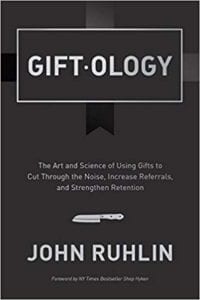
Giftology: The Art and Science of Using Gifts to Cut Through the Noise, Increase Referrals, and Strengthen Retention
I love this personal touch. The concept of a personal Thank You note, which used to be a standard thing years ago. When everyone else emails and you still take the time to write a personal note, it stands out and breaks through the clutter. Ironically, I’ve interviewed John Ruhlin, who did a whole book about Giftology and the importance of smart gift giving and how he works with companies to give thoughtful gifts at unexpected times. When I was in sales at Condé Nast, I put Google Alerts on all my clients. If they had a good stock report, if Guess Jeans’ stock is up X percent, I’d send a little note or a congratulatory gift. All the contact is not about selling, but knowing that I was in their corner cheering them on, congratulating them.
Clients, they understand that there’s a transaction to take place. I’m a client of many people in sales. It’s not a pejorative or negative thing when they sell me something. I think it’s Henry Ford. It’s been attributed to many people that nothing moves until someone sells something. The world is going around. It is the feeling of are you only selling me something or can we also have a relationship while you sell something? Again, it feels like finding the narrow path there. I, as a human being, when I am the consumer, I feel that difference. You do. We’d be naïve to think that our customers don’t feel that difference as well.
I always compare it to being a copilot with your buyer. When you’re on a plane and they say, “We’re now landing in Nashville,” nobody stands up and says, “What? We’re landing? I thought we’re running around forever.” It’s the same thing in a sales situation. Eventually, you’re going to ask them, “Would you like to hire somebody? There’s an event coming up.” You do have to pull the trigger eventually. I think that mindset helps. That’s a great insight as to how you keep your clients loyal. A lot of the people reading the blog would like to also possibly know how do you keep good talent because clearly the same authenticity and thoughtfulness and never taking people for granted that applies in relationships for clients, I’m imagining it applies for the team that you’ve built.
I’ve been at Premiere for nineteen years. I’d love to say that all nineteen of those have been doing it correctly. That would not be disingenuine to say that. Some of that was making mistakes along the way and saying, “I don’t want to recreate that mistake.” We’ve worked very hard to create what every company says family. That’s a bad analogy because you never get fired from your family or you never get laid off from your family. That’s the analogy that holds true in many ways. We worked very hard to make this feel familial in small ways. Everyone at Premiere is very blessed in life as they succeed. They see the results of that.
Every Friday we have a staff lunch in our large conference room, we’ll have 30, 35 people in there. That’s a good excuse for everyone to sit around and talk about what was funny on TV. There’s very rarely an agenda. I’m a big believer that you hire people with money, but ultimately you keep people with gratitude. When someone else approaches one of our team members, if I’m honest, it happens regularly. Often, I hear from that employee very quickly that, “A job offer was made.” If the money is ridiculously different I say, “I want you to have the next step and that’s great for you.” Most of the time it’s, “They offered me 10%. They’re going to have to do a lot better than that to get my attention.”
You acquired another speaking bureau. Can you tell us what generated that and what that experience was like?
John, we are in a competitive industry. I say often it’s a friendly competitive industry in the sense that I have many friends that work at the competing speaker’s bureaus. We have International Association of Speakers Bureaus, the association we’re all engaged with. We’re together many times throughout the year and have drinks and meals. There’s a camaraderie there. It also allows us to somewhat measure ourselves against one of the other and see how different people run their companies. I am a big believer in culture. There aren’t many other speakers bureaus that would be a culture fit. In the fall of ’17, Brian Palmer who was the Owner and Operator of National Speakers Bureau, his father had founded it in 1973, reached out to me and said, “Can I come to Nashville and take you to breakfast?” He did that very thing and it was for the purpose of saying, “I’m ready to start transitioning out of managing a team and managing a company day to day, running a company day-to-day. I want it to land in a place where I know it will fit well.”
We agreed that our cultures could mix and mingle and there wouldn’t be any shock either direction. There are always some surprises but relatively few, if I’m to be honest with you. Over the course of several months, we went through the acquisition process. We did everything. We removed ourselves from the process to a large degree, bring in an outside company to handle the transaction, an outside valuation company because I wanted him to feel like it was a win for him. Premiere is an AESOP. I have a duty to all of our employees here who were technically the owners of the company at this point to get a good value on a purchase. We were able to do that. John, I would say over the last months, the acquisition closed in June. They have not only thrived but significantly grown their production, the number of dates and the speaker relationship. It’s been a win.
[bctt tweet=”I am not the hero of your story, you are the hero.” username=”John_Livesay”]
Would you say that part of the reason this merger or acquisition in your case has been successful, is that you’re bringing some new technology and things that they didn’t have in place that allows them to be more productive?
Yes. National Speakers Bureau had existed much longer than Premiere. It has a very strong core base of clients who adore them. Clients that we not spoken to or worked with before, they had chosen our speakers because of those strong relationships like when we spoke about. We’ve invested very heavily on technology. Our competitors would say Premiere is almost a technology company as much as we are speakers bureau. We were able to integrate them into our systems, accounting, the backend services, logistics, air travel, all of those things within a week or two. I applaud our IT team. We have five people on that team. They integrated NSB very quickly allowing the NSB crew to truly go out and work with clients and continue those relationships and not have to worry or stress over all the heavy lifting that we can do because of our backend systems.
Do you imagine almost every company I have ever worked with, no matter how comfortable you are with these existing customers, there’s still an effort to go get new clients? We’ve already covered how we keep these existing clients loyal. We’ve covered how we keep the team loyal with gratitude and appreciation and acknowledgment. We’ve covered why this was a cultural fit for the acquisition. The last thing remaining would be how do you decide which accounts you’re going to target that might want to work with Premiere Speakers Bureau and what is it that you say in your pitch that allows you to stand out as a brand?
That like many industries is very specific to the sector of the business. You have association clients. They get calls from every bureau every day. That’s an exaggeration but probably not by much. Corporate clients, because they’re event planners, are more shielded. Those are a little bit more strategic where it’s attempting to connect through a third party or something along those lines. There are definitely are some commonalities across those sectors. It does get very splintered quickly. Our big approach is we are comfortable in spending to make an impact or to acquire a client or at least the attention of a client. The other side we have the benefit of we’re not solely focused on one, two, three or four products.
We have ultimately the ability if we see a business sector or an area of our industry that we think is underserved, we can go out and find two or three speakers that we feel are very strong on content that works in those areas. That essentially gives us a product to go to those buyers to say, “This product is perfectly designed for you.” That’s a huge benefit in the speaking industry because if you Google motivational speaker, I promise you’ll get tired before you get to the end of the result page. We have a great opportunity and we have to be strategic in what speakers we add because ultimately that that to some degree determines what type of clients are attracted to what we’re offering.

Speaking: To be the hero is truly to add value and to be a guide in some small way that resonates.
A great tweet based on what you said would be, “Growth comes from customized targeted solution.”
You should be a speaker, John.
I love doing it and I love interviewing people like you who got such a great passion and a message for what you’re doing. Is there any last thought you want to leave us with about either a book you want to recommend or a philosophy that has worked for you to become the CEO or be so successful in life that you would want to share?
John, you have a speaker that lives in your space, the story space, a guy named Donald Miller. If you don’t know each other, you should. You guys could blow a dinner parties minds with your thoughts on the story and conveying the story. I saw Don speak years ago. I knew him from some past relationships. His approach is, “Shawn, the sales process is not the hero of the story. I’m the guide in the story.” I felt like for the first time I’d heard someone describe exactly our approach. Premiere Speakers is not the hero in our event partner’s story. We want them to stand on stage and get the accolades and the applause. We have a product and we sell that product or we make it available.
Ultimately, we want them to be the hero. I felt like personal lives, professional lives as I’ve utilized that approach and been intentional about it that I’m not the hero in your story. If I’m here to add some value, I want to do that and I want to elevate this conversation and the thoughts and other people’s minds for the day. That’s not to be the hero. It’s to add value and to be a guide in some small way that resonates. I have literally written down on my desk, I read it 50 times a day. What I love is 20 or 30 years from now, someone says that about me, I’ll take that as a win.
[bctt tweet=”Small things resonate with people if it’s done from a genuine perspective.” username=”John_Livesay”]
What a great way to end this episode. I’m not the hero in your story. You are the hero. It’s such great insights. I tell people all the time, “I’m your Yoda or think of me as the Sherpa helping you get up the mountain, but you’re going to get there with me as your silver hero.” That’s wonderful stuff. Shawn, I can’t thank you enough. People can find you on the Premiere Speakers Bureau. Are there any social media that you want to promote the best way to reach your company?
Premiere Speakers Bureau. Congrats to everyone in this building and the people that have helped build it for the last 25 years. As we celebrate for the next year, I’m thankful for them. You’ll find us on Twitter, @PremiereSpeaker. If you go to PremiereSpeakers.com, you’ll be able to jump to all the different social media channels from there. We would love to help anyone. Please remind us that you connected with us through John. We’d love to know that.
Thanks again, Shawn.
Links Mentioned:
- Premiere Speakers Bureau
- Duane Ward
- John Ruhlin – previous episode
- Giftology
- International Association of Speakers Bureaus
- National Speakers Bureau
- Twitter – @PremiereSpeaker
- https://PremiereSpeakers.com/
- Quantmre.com
Wanna Host Your Own Podcast?
Click here to see how my friends at Brandcasting You can help
Get your FREE Sneak Peek of John’s new book Better Selling Through Storytelling
John Livesay, The Pitch Whisperer
Share The Show
Did you enjoy the show? I’d love it if you subscribed today and left us a 5-star review!
-
- Click this link
- Click on the ‘Subscribe’ button below the artwork
- Go to the ‘Ratings and Reviews’ section
- Click on ‘Write a Review’
How To Be A Secret Weapon with Brian Palmer
Posted by John Livesay in podcast | 0 comments

Episode Summary:
Loyal customers are repeat customers and they surely help in keeping the business running. It doesn’t take a lot to gain loyal customers, but oftentimes in people’s desire to prioritize big fat sales over putting their customers’ need ahead of their own, what is essential is often missed out. Brian Palmer, Senior Vice President at National Speakers Bureau, shares how he has been referred to by his loyal customers as their “secret weapon.” He talks about important lessons that he picked up and learned in his journey where his father served as his guide and influence.
—
Listen To The Episode Here
How To Be A Secret Weapon with Brian Palmer
Brian Palmer began working for National Speakers Bureau part-time in 1972. His father, John Palmer, founded the firm. He became full-time in 1980 and assumed the presidency in 1996. He’s held roles with some of the event industry’s most significant organizations and knows the meeting industry inside out. One of the most important things his clients, coworkers, family and friends know about him is that he sleeps well at night. He’s a man of his word who cares to help his clients succeed, and he’s equipped to do so. He and his violinist wife, Paula, have two children, Adam and Rachel. Brian is also an avid racing enthusiast who built his own car. Brian, welcome to the show.
Thanks, John. I’m glad to be here with you.
One of the things that resonate with me about your background and having the pleasure of getting to know and work with you is that you are a man of your word. I want to ask you to tell us about your own story of origin. Your father was a huge influence on you. Was it always assumed that you would be in the business and how did you learn integrity?
It wasn’t always assumed that I would be in the business. My dad was a musician. He was a bandleader and he traveled all over the country. He got tired of traveling. In some ways, the speaking business is on the fringes of the entertainment industry or was perhaps more so then. He started the company. I was good at licking envelopes, so he enlisted my help. I was in high school then. I began helping in the summers while I was in college. When I finished college, I started here full-time. My dad often spoke of how our customers are putting on these events. They spend hundreds of thousands or even millions of dollars to bring people together. They have a purpose for these gatherings. It’s that purpose which should drive the recommendations we make, not an obligation to fill somebody’s calendar. As expensive as a speaker can be, the most valuable component of that session is the cumulative time of everybody sitting in there and the objectives that the organization has in place. He said, “There’s no room for exaggeration or anything other than the audience and the organization’s objectives and have that be your sole guide. Always tell the truth about your recommendations and the speakers’ capabilities and you’ll be in business for a long time.” He was right.
That’s so valuable for people to take away whether you own your own business or work for someone else. One of the keys to success is this ability to build trust. That comes from what you described, which is a sense of putting someone else’s needs ahead of your own and delivering on what you say you’re going to do, which increases the trust and it keeps building from there. Would you say that’s been your experience?
It certainly has. One of the most satisfying components of the outgrowth of that are some of the men and women who have been customers for literally 40 years. I’ve been to a number of retirement parties, people that we’ve helped. People have said nice things along the way about how we were one of their secret weapons. It’s a powerful skill to be the person who always comes up with the excellent speakers that helped an event sing. There are a variety of components that go into that. Certainly, me doing the right thing and having a client’s objectives in mind is an important part of the longevity that many of our relationships have had.
[bctt tweet=”Avoid criteria creep.” username=”John_Livesay”]
We touched on a couple of things here that I find interesting. One, your father was a bandleader, you’re married to a professional musician and you used a word about making an event sing. Clearly, music and speaking have some similarities there about rhythm, what’s the melody and when you hear a good song or a good talk, there’s an emotional connection. Can you speak to how you see any similarities between music and the speaking industry?
If I might in a side, my wife and I, on our fourth date, she said to me, “By chance, did your dad go to Northwestern University?” I said, “Yes.” “Did he have a band when he was there?” I said, “Yes, he did.” She smiled broadly and said, “My dad played piano in your dad’s band in college.”
You were destined to be a couple, weren’t you?
Yeah, I think so. I could go on and on about stories about my wife. When a presentation connects with ideas that exist in the mind of the audience, when a presentation accounts for the objectives that an executive or an organization has for this meeting, there’s a certain symmetry that can take place there in the coming together or I’ll call it more of a harmony when it works well. It can often make a meeting sing, and a heart sing too. I also want to note that events certainly aren’t always designed as a key objective to make everybody feel good. People put on events to further some objective, whether it’s an organization or sales or recognition of a product. It’s not all that common that when we talk to people about their events, when we ask what they want to do, they want there to be some progress. They want there to be some learning. Often learning and progress as a key component of it or something that’s certainly present is a measure of discomfort.

Secret Weapon: Clients who book your talent have the purpose to bring people together. That purpose should drive the recommendations that you make and not just an obligation to fill your talent’s calendar.
Some of the best presentations often leave an audience quiet and thinking about what they might have to do to accommodate this new direction or this new path that the organization wants to take. While I pay a lot of attention to evaluations that audiences fill out for speakers, I’m usually most interested in what the event owners have to say about that speaker is delivering on, what they have. Usually, the higher-level executives have a higher-level set of objectives in mind. Sometimes lower-level people want everybody to be happy. A standing ovation can be and usually is a sign of a speaker that’s gone over well. Even when there’s a standing ovation, I want to listen to what the end-client has to say and perhaps whisper about how they felt about how the session went.
The other thing that you touched on that is a fascinating formula for people to take a look at their own lives and their own business, which is the integrity that you bring builds trust which equals loyalty. If I was to create a little formula of your success, Brian, that’s the formula I would come up with. I’m the Pitch Whisperer so I like to give people a one-sentence zingy memorable takeaway. Everyone can start looking at that saying, “If integrity plus trust equals loyalty, then that builds my bottom line because loyal customers are repeat customers and that saves you huge expense on marketing to get new business all the time. Loyal customers also give you referrals.” There’s a nice return on investment in addition to the feel-good, “They called me a secret weapon.” I wondered if you had a story of what you did for someone that made them want to call you their secret weapon.
There was one guy that retired. He was at four large financial services firms. I forget how we first came together, but he called and asked me about a speaker who I didn’t think was worthy of his meeting, someone who had a hit book that people loved, but he didn’t seem to care enough about the audience and the organization’s objectives. He was there essentially giving what I call a book report. That’s not what the client wanted. He called wanting that speaker. It would have been a nice fat sale. I dissuaded him from having that speaker. I recommended somebody who charged a good deal less. It went particularly well. That’s what led to my working with him in these four different roles. He’s the guy who referred to me as his secret weapon. He pretended that he didn’t tell other people about me, but he was a fantastic referrer. You could imagine somebody who’s in a senior role making that reference and referring to us that way, it was the genesis of a lot of wonderful opportunities.
[bctt tweet=”Be a secret weapon for your clients.” username=”John_Livesay”]
The takeaway here for everyone is when you put somebody else’s interests ahead of your own, the long-term benefits more than makeup for any short-term financial impact that might have. The fact that you were willing to recommend a more customized speaker at a lower fee than taking the higher fee commissions on a speaker that would have given a book report because it sounds boring. You could read the book out loud almost, that is what people say, “Now I trust you because you could have charged me more. I thought that’s what I even wanted. It wasn’t like you had to push me to buy this,” but you took the big picture, zoomed out and said, “I think you should go this route,” and that’s what built the trust which then built the loyalty that we talk about. That’s a great story for everyone to look at of all of that. This concept of who you say no to is as important as who you say yes to resonates with me.
That’s also a big-time saver. We’re not a retail store. We don’t have to serve everybody that walks in the door because a lot of people have needs that we can’t help where they have the expectations that I’m not going to be able to meet. Some of my biggest regrets in business were saying yes to things that I suspected weren’t a good fit and I spent a great deal of time trying to satisfy somebody who I originally suspected wasn’t going to pan out for them or for me. After sometimes weeks and months of effort, it turns out that initial impulse was right. I’ve gotten better and better, although I still make that mistake, I’ve gotten better at recognizing things that aren’t going to be a fit and saying no to people. Sometimes I’m wrong, but the net of that decision to avoid poor fits has probably served me well. I’m sure I’ve made a few mistakes, but it’s been positive.
This concept of when people call you a secret weapon, I had that happened to me with Gensler, a big architecture firm that hired me to come in and give a keynote talk on client relationships and developing stories that resonate. They weren’t just going in and giving book reports of their previous architecture work. I did a workshop to help them tell stories that would tug at people’s heartstrings and make them memorable compared to their competition. When the Co-CEO, Diane Hoskins, came up to me afterward and she said, “We’re going to have you speak to all the offices because you’re our secret weapon.” I’m like, “Okay.”
When you get that feedback, it’s because you’re giving such value. They see you’re solving a problem which is what I see in every industry, whether it’s technology or architecture or healthcare. It’s how do we stand out and not be seen as a commodity, therefore justify a higher premium price. Let’s zoom out into your world of speaking bureaus. How do you and did you create National Speakers Bureau brand that allowed you to differentiate yourself where people would want to work with you versus some of the other choices?

Secret Weapon: Be a strong believer of not just treating the customer well, but also treating the talent well.
I have to give my dad a lot of the credit. He had a lot of thoughts about entertainment and people who put on a good show and people who were good to work with behind the scenes. He was a strong believer in not just treating the customer well but also treating the talent well. He told the story more than once about pulling up to a venue on a bus and he said there were usually two types of venues. There was the one where the venue manager would come out and would welcome them and say, “Come on in, guys. We’ve got some cold drinks for you. I hope it’s okay but I ordered dinner. We’re going to make sure you guys are well-fed.” There were venues that when the bus would pull up, they’d come out. He’d wave the bus off and say, “Go park over there. We don’t want you in the venue until 8:00. If you have to use a bathroom, there’s a filling station right over there.” What place do you think the musicians would more eagerly play a little longer or be keener to play together better and play in tune better?
My dad would often talk about making sure that we treat the speakers well and treat them as the talent that they are. People became excited to do engagements for us and we got a lot of referrals from speakers because of that. They knew the client was going to be treated well and that the talent would be treated well and that would produce a better result. When I got out of college, my dad had been around at the founding of Meeting Professionals International. He had urged me to join the organization. I went to my first meeting. I was talking to everybody and I collected a fistful of business cards. I came back to the office. I held out that fistful of cards and I put it down on his desk. He looked at them. He took his trashcan and he pushed all the business cards into the trashcan. He said, “I don’t want you trying to collect business cards. I want you to go to those events to learn about the event business, to learn what’s of concern to meeting planners and meeting professionals because I want you to serve the industry and our customers better and then start worrying about getting business out of it.”
I remember he walked out of his office and I thought about it. I set myself on it on a different course, but I also went into his trashcan afterward. We were big supporters of the meeting industry. I was very involved in that association. I became President of the Chicago chapter and had a number of other roles. Setting out to learn about the role of the event owner and the event planner shaped the way that we operated, the offerings that we made and the ways that we went about recommending speakers, the contracting process and the very important execution or advancing of the actual engagements.
[bctt tweet=”Building trust is putting someone else’s needs ahead of your own and then delivering on what you say you’re going to deliver.” username=”John_Livesay”]
You’re also the contributing author of Professional Meeting Management and industry publications. What that tells me is that you understand the pain points or the problems at a deeper level than someone who’s not that involved where people are literally taking down their mask and being open and vulnerable with what they need. You’re hearing it firsthand so you can keep that in mind when you’re servicing them.
It’s hard to know exactly what influence all that industry work has contributed, but I think it has made a difference. It has made people in my company throughout the years more confident that we were doing the right things. It provided a bit of a fallback if something wasn’t going right and what’s at hand here. It helped us focus. It’s not about the sale. Somebody is paying all this money for the speaker to be there and all these people to be there, that has to be right. You don’t have a chance at 9:00 when that speaker is scheduled. He or she needs to have a bright, shining moment. If all the things that we did beforehand were focused on the wrong things, the odds are lower, that things would sing.
You made the decision to merge with the Premiere Speakers Bureau. Can you share with me some of the thoughts that went into that? A lot of people are often thinking, “I wonder if I should do that. Would I stay on if I did do that?” I bet there are some interesting stories there.
There are a lot of interesting stories for me, but the genesis of it was I came to work here right out of college. Other than jobs that I had in high school working at a gas station, painting houses and caddying when I was twelve, this is the only job that I’ve had. I’ve never been to a job interview. I always tell people that when they call and ask me for an interview advise. I’ve been here for 38 years. I don’t have retirement plans. I’m 61. I wanted to change. I gave thought to ways that I might be able to go about our business in a way that would be a change, but in a way that also would allow me to use my experience.

Secret Weapon: You go to business events not to collect business cards but to learn more so you can serve your industry’s customers better.
I looked around at the entities that existed in the marketplace, companies that went about their business in ways that I agreed with. I talked to Shawn Hanks at Premiere Speakers Bureau and relatively quickly, we came to a preliminary understanding. True to my expectations, the deal that we initially discussed and eventually worked out was very satisfying. It has allowed me to do what I enjoy and that is to listen to people’s objectives, make recommendations and provide them with the means on which to make a decision, have that speaker prepare and show up, do a great job and make event owners and most of the people in their audiences very happy. That’s rather simply the way I went about it. I thought about neither one of my kids is interested now coming into the business.
My kids are relatively young. One is still in college and one is a few years out of college. They like the business. I checked with them and neither one was interested now. I thought making this move would be helpful on the personal front and also in terms of the next chapter for me. I don’t have to worry as much about becoming 70 years old and wondering what I might be able to do with my business. That has been figured out. I’m enjoying working in a new entity, learning their perspective on the world and using their wonderful technology and their systems. There’s been a bunch of wonderful cross-pollination that I’ve found very satisfying. They’ve helped me and we’ve helped them. Premiere has always been impressed by the longevity of a lot of our relationships. They’re constantly asking questions how we did that. They’ve got a lot of long-term relationships too but they’ve been around 25 years. Our company’s been around 45 years. There’s a lot of experience there that’s coming together making a much stronger entity.
It sounds like there’s a great cultural fit. If there are lessons to be learned from both sides, which ultimately makes a great joint venture.
[bctt tweet=”Some of the best presentations often leave an audience quiet.” username=”John_Livesay”]
My boss, Shawn, is a wonderful guy. Do you know Shawn?
I do.
All my life I’ve read all sorts of books and articles about great bosses. I’ve got a great boss. I find myself wanting to be a good employee.
I’m sure he thinks of you as more than an employee and more of a partner. This show’s all about having a successful pitch, do you have any suggestions or can you share with us how you pitch a speaker that you’re representing?

Secret Weapon: We have two ears and one mouth so you can listen more. Listening is a key tool to make a persuasive pitch.
That all depends. I don’t have a standard pitch because it depends on the client and what they’re looking for, what their manner is. You can tell often when somebody wants you to be brief. You can tell when somebody wants a lot of details. Custom baking every pitch that we make I think is key. I don’t think sending somebody a bunch of links to spots on our website and saying, “Here are the speakers who I think would be right. Take a look,” that’s not very powerful. I don’t think recommending a lot of speakers for a particular slot is necessarily useful. Although sometimes people do want to take a look at a lot of speakers. There’s something that we call criteria creep, meaning people gave us criteria and we consider it and make recommendations. In the meantime, they’ve gone around the office or they’ve thought about this event, ask questions. That criteria might have evolved somehow.
I make sure that we in a proposal or a pitch that we reiterate what their criteria were so they’re considering my proposal in the context of the criteria we were given. It suggests to them that they were being listened to and it provides the rationale for these recommendations. You’ve probably heard this expression or this joke before. It’s a sign from God that we have two ears and one mouth. Doing a lot of listening is a key tool in making that pitch, one that is persuasive. Not just informative but persuasive because people don’t want to be informed. They want things to happen relatively fast. If you can discern how they want it and give it to them that way, find out what they’re going to do with it because sometimes a lot of speakers are hired by committees. There are some subtle ways that you might go about making your pitch to help that person that you’re dealing with more effectively pitch that speaker to the committee. You know hard it is for five or seven people to agree on one speaker?
The same thing ironically happens for the clients, whether it’s an architecture firm or a tech firm. There’s a committee of people that are deciding on their pitch. It’s no longer one decision maker. That requires everybody having a different skill set of getting committees to say yes. Is it having an inside champion convincing the other people, almost like a jury that you find works?
[bctt tweet=”You build a lot of credibility when you do a great job.” username=”John_Livesay”]
That can be a key tool but also coaching somebody to effectively manage the process. Often people call and they don’t have a bit of information about what the objective is for that session or the event. They just know they want a speaker. If you can give somebody the tools, coming up with a set of objectives and a process by which a speaker will be decided on. We’ve all been to meetings where somebody was good at that meeting. They knew how to run it. They knew how to listen. They knew how to manage a conversation. Doing that and helping people with that process can dramatically improve their ability to bring that decision to a close and produce success. Many of the readers might not be familiar with a gong show, but people sit around listening to a speaker with no basis for a decision, “Do I like this guy or not? No, let’s turn this off. Let’s look at the next preview video.” Helping people with a process and then allowing the pitch to be a fit into that process is one of the keys to making a pitch. It’s some pre-work and a lot of listening.
A lot of listening and avoiding criteria creep because the better you can get people to agree on the criteria and that it’s not changing, the closer they are to saying yes. Because once all those boxes are checked off on the criteria, it’s time to pull the trigger. Brian, I can’t thank you enough for sharing your worldwide wisdom with us. If people want to work with you to hire speakers, what website should they go to?
NationalSpeakers.com is our website. There are some very interesting people on there.
I’m honored to be one of them. I can’t thank you enough for being such a great guest.
Thank you, John.
Thank you.
Links Mentioned:
- Brian Palmer
- National Speakers Bureau
- Meeting Professionals International
- Professional Meeting Management
- Premiere Speakers Bureau
- NationalSpeakers.com
- Quantmre.com
Wanna Host Your Own Podcast?
Click here to see how my friends at Brandcasting You can help
Get your FREE Sneak Peek of John’s new book Better Selling Through Storytelling
John Livesay, The Pitch Whisperer
Share The Show
Did you enjoy the show? I’d love it if you subscribed today and left us a 5-star review!
-
- Click this link
- Click on the ‘Subscribe’ button below the artwork
- Go to the ‘Ratings and Reviews’ section
- Click on ‘Write a Review’