

Think It, Be It with John Mitchell
Posted by John Livesay in podcast | 0 comments

Episode Summary:
Everybody wants to raise their income and have success in their careers. However, even with so many things written about achieving that, it is still pretty difficult to find one that you can follow. Taking the legendary book, Think and Grow Rich, entrepreneur and success mentor John Mitchell has created a technique that practically applies its ideas through his 12-minute-a-day Think It, Be It. Debunking the idea that hard work makes you successful, John talks about working smarter instead by influencing your everyday actions and thoughts. He gives out the four categories that will change your programming so that you can see your life in a way that allows you to pull in the people and success that you want.
—
Listen To The Episode Here
Think It, Be It with John Mitchell
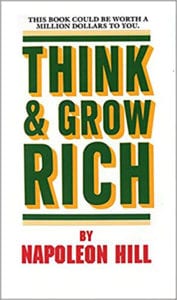
Think and Grow Rich
Our guest is John Mitchell. He has a 12-minute-a-day Think It, Be It technique that’s rated as the top practical application in the world of the legendary book Think and Grow Rich. When he applied his technique to his own life, he saw his income go up to over $5 million a year. Previously for twenty years as an entrepreneur, he earned low six figures and that twenty times difference happened because his daily technique significantly increased his control over himself by probably double. It made them laser-focused every day on the two or three things that move the needle in his business. It also allowed him to rapidly evolve his strategy for success. He was simply operating every day at a higher level than he ever had before and it showed up in his income.
The science behind his technique was profiled in a Time Magazine cover story. While John started out as a CPA, he became an entrepreneur at a very young age of 30. He’s owned companies in a wide variety of industries including real estate development, restaurants and publishing. Turning 50, he wasn’t as successful as he thought he should be. He found the top book of success written, Think and Grow Rich and he developed his own 12-minute-a-day technique. That what you envision in detail on a daily basis is what shows up in your life. John, welcome to the show.
Thank you. I’m glad to be here.
I always like to ask my guest to take that little intro that I gave and bring it to a life of your own story of origin, not so much about being a CPA. I want to hear the story of origin of turning 50 take us there and saying, “I thought I’d be more financially independent. I worked hard. I’ve been an entrepreneur and things aren’t what they need to be.” Tell us what the a-ha moment was for Think It, Be It book.
When I turned 50, I wondered if success looks what I thought I should be. I had a couple of goals in my life to make enough money, so I didn’t have to work and to find the woman of my dreams. As I assessed my life, I realized that I was falling short on both. As an entrepreneur, I’m always blessed to make well into six figures but never close to seven. On finding the girl at 50, I’d never been married. I can tell you, it was not from lack of interview. I did a lot of interviewing. The defining moment happened three days after I turned 50. I’m in my office, kick back and my feet are on the desk. I started thinking about my life and I do the math. I realized, “If I don’t make over $1 million a year, I’m never going to have that exceptional life that I’d always dreamed of.” The freedom, the lifestyle, the sense of accomplishment and that hit me like a ton of bricks. It was clear, I had to make things happen in my 50s. I made the decision that hard work doesn’t work.
While it works for making six figures a year but clearly it didn’t work for making seven. I knew there had to be something other than hard work. I made the decision to find out whatever that something else was. Three months after turning 50, as I’m puzzled about how to change this direction, a pearl of wisdom hits me. Why not find the top book in the world on success and achievement ever written and then apply it word for word to my life? The logic was so simple and compelling. After some research, I’ve found that there is one book that excels over all others and it’s Think and Grow Rich. Are you pretty familiar with Think and Grow Rich?
[bctt tweet=”‘Hard work doesn’t work for making seven figures.'” username=”John_Livesay”]
I am. It’s all about investing in real estate and letting that real estate grow for you.
It’s not quite, but I guess you’re in some of that.
That feels a little like Rich Dad, Poor Dad.
Here’s what’s significant about the book. First is the book has sold over 100 million copies whereas the next bestselling book on success and achievement has sold under ten million copies. Clearly, it’s a top book ever written on success by a factor of ten. The second thing is the book has created more millionaires and billionaires than any other book on the planet. It’s basically applying science to your life to up your success. I read the book and the central concept is what you envision in detail on a daily basis is what shows up in your life.
It’s very much along the lines of The Secret or Abraham Hicks, that whole mindset of The Science of Mind of Ernest Holmes or Your Thoughts Create Your Reality.

Think It, Be It: You got to work smarter by influencing the actual part of your brain that influences the thing that determines your success.
I read that and then I discovered there’s a problem that I and probably all of us have encountered 100 times. It’s a great idea but how to apply it in a practical way. I probably moped around for a couple of weeks not knowing how to apply it and then it hit me that maybe I had to come up with the practical application myself. I did and I applied it to a new business I was starting in the financial services industry. Over nine years, I continually tweak my 12-minute-a-day methodology. Over those nine years, my income went from low-six figures a year to $5 million a year. I felt so incredibly blessed. It’s quite a change from my twenty-year history. I could see why it was happening. By applying science to my life for the first time ever, I was influencing my daily actions and thoughts. Clearly, I was operating at a higher level than I ever could before. I could feel it. The best news was I also met the woman of my dream from applying this methodology.
It’s about pulling people in. Energetically, it’s almost like a metaphysical principle that the science is based on.
It really is. That sounds a little woo-woo, metaphysical.
Quantum physics does if you’re talking about energy for people who prefer that. Let’s go and dive right into this concept of a lot of people who go, “I don’t have time to meditate. I don’t have time to fill myself up with a bunch of positive thinking.” Give us an example of how the 12-minute-a-day methodology works.
This is essentially how it works. You’re going to feed yourself every day exactly the person you want to be, exactly what you want to accomplish and precisely how you’re going to achieve your clearly defined goals. When you feed that to yourself every day, after about 21 days, the science kicks in. That starts showing up in your thoughts and actions automatically without thinking. That’s the magic of it because when your thoughts and actions automatically start reflecting your programming, it immediately takes you to a higher level.
[bctt tweet=”Success is when your thoughts and actions match your programming.” username=”John_Livesay”]
What’s an example of somebody who did? Let’s focus on the career at the moment.
I’ll give you an example. Everybody wants to raise their income, their success and their career. To backtrack a little, the way this works is, you’ll take your life and compress it down to one sheet of paper, front and back. On the front is the ideal you and the five key areas of your life: yourself, your health, your romantic relationship, your spirituality and your career. That’s on the front. On the back are the improvements you want in each area of your life and your three goals for the quarter. That’s essentially it. One of the things in a career that we do is we articulate your succinct business plan, your strategy for success or the two or three things that move the needle. The linchpin issue that takes your business to the next level.
You feed that to yourself every day. I found that three things happen. First, your business plan is so easy to implement because it’s so top of mind. Secondly, you do become laser-focused on only what moves the needle. Everything else falls by the wayside. The third thing is that suddenly I had a way for evolving my strategy for success in the business plan in a way that moved it forward by like twenty times what I’d ever experienced before. That was happening because when you’re feeding your business plan or your strategies for success to your subconscious mind every day, it’s constantly challenging it and refining it. It had such an impact on me. I have that ability to continually refine my strategy and it made me more successful.
This is why I wanted to have you on the show, John, because I’m so fascinated by this premise. From my own speaking career, for example, when I had the courage to say out loud to people, “I want to give a TEDx Talk.” All your self-talk comes up, “Who am I to give a TEDx Talk? What a big goal? You’ll never achieve it. It’s never going to happen.” If you keep saying it to yourself and putting it out to people and let go of all the negative self-talk and worrying about whether the other people think you’re crazy to do it, then someone said, “I know someone who puts one on in San Diego. He might be able to help you figure out what you need to do to get a yes.”
The thought process of that laser-focused, keeping it top of mind, knowing that having a TEDx Talk would be one of those key drivers that you talked about moving the needle that gives you credibility as a keynote speaker. We got the laser-focused, then I get introduced to someone for saying it. It still took me a year and a half to get someone to say, “Yes.” It had nothing to do with my talk. It doesn’t fit our theme. You had to get used to those noes. This question that someone gave me that is what I hear you saying, which I want to tell everyone reading is if we plant in our seed this question of challenging that question, why is it that I’m a successful TEDx speaker? Why is it that my TEDx Talk has over a million views? That’s what I hear you saying is by having that laser-focus and then asking, “Why is it that I have my perfect soul mate in my life now?” Your brain starts matching that programming. Is that the gist of what you’re saying?

Think It, Be It: Just as you’re baking a cake where you can’t keep opening the oven, we have to give our goals and thoughts the full time to bake.
There are two parts to success. Using your example is probably a good idea. Your desire to do a TEDx Talk, that’s setting the goal. That’s being clear about what it is. Equally important, if not more important, are the action steps that you have to take to achieve that goal. You no doubt had a detailed vision of exactly what you needed to do to make that a reality. That’s the power of this 12-minute-a-day technique is that it takes those action steps that you’re going to need to take to achieve that goal. By feeding it to yourself every day that causes your thoughts and your actions to reflect your programming. That’s the game-changer. When people wonder about, “What makes me more successful or how do I become more successful?” Most people think, “I’ve got to work harder.” No, I don’t think so. You’ve got to work smarter. You work smarter by influencing the actual part of your brain that influences the thing that determines your success, which is your everyday actions and ongoing thoughts. Does that make sense?
It does. We talked about this a lot. I’ve interviewed investors to fund startups. They say, “Please tell your clients, don’t try to boil the ocean.” I tell people Amazon sold books first and have proof of concept that worked before they started selling everything. If you try to pitch Amazon now, it would be like, “That’s boiling the ocean.” I love this concept of laser-focus. People say, “I have top of mind what my goals are. I’ve figured out what I should be focusing on to take some action. Your secret sauce, from what I can gather, is this questioning your mind of visualizing it already happening where you’re saying, “Why is it that? This has already happened.” When you are fighting, in my case, when I finally did stand on that TEDx stage, on that red carpet, it seemed like, “I’m here,” or like you’re meeting the woman of your dreams for a date. It’s like, “She showed up.” It doesn’t seem like a surprise or magic. There’s the science of it because you’re doing this. The 12-minute-a-day, you mentioned the four categories: yourself, health, romance, spirituality and career. Do you spend a couple of minutes on each of these categories for the twelve minutes or do you spend twelve minutes on one?
No, it’s twelve minutes in total. Probably more of it is spent on your career because originally, I created this because I wanted to go to seven figures a year net. That was my big focus. It’s a little more towards the career, but it has all of those areas.
What is your life like? There are all these studies on happiness that we pass a certain Maslow’s Hierarchy of Needs, our basic needs are met in terms of food and shelter and what have you. In other words, the difference between making $100,000 and $1 million is not the same exponential increase in happiness as it is in money. Has that been the case for you?
When I was making six figures a year, in some ways, I was afraid to look at creating an exceptional life looked like because I wasn’t sure I’d ever get there. Once I got there and I started making $5 million a year, I was like, “This is way better than I thought it was.” Finally, I had enough money not to have to work. Because I was so fascinated by the stuff we’re talking about, I sold my company. I guess it was probably two or three months after I sold the company, I met the former chancellor and president at the University of Texas at Austin. I told him my story. He said, “You’ve got to teach this at the University of Texas and why don’t we teach it together?” I said, “That’s fine to teach at the high achievers.” My passion is to get those people that were like mad that struggle to go to that next level and teach it to them because I so relate to the pain that I had back then and so many people have.
[bctt tweet=”What you envision in detail on a daily basis is what shows up in your life.” username=”John_Livesay”]
You have empathy because you’ve been in their shoes is my big takeaway from what you said.
I had freedom was the feeling I’ve gotten as I crossed over and didn’t have to work. The best things were not material things. The lifestyle is great. That’s small potatoes compared to that sense of accomplishment, that pride of accomplishment, the level of control that this gave me over my life, that level of control was immensely great.
You’re the perfect person to ask this question to. In my observation of entrepreneurs and business people in general, a lot of people have the money thing down, but they don’t have the fitness thing down. They’re physically fit but not fiscal fit and then vice versa. There are a lot of fit people out there that have no money. You have both. You’re physically fit and you’ve got financial freedom. I tell people, “If you can get one area of your life, take the discipline you have, knowing how much your cashflow is, and what’s in your checking account and apply it to the calories and exercise you’re doing and vice versa.” Take the discipline from working out to your money. I don’t see many people talking about that. You seemed to be embracing all of this. Another reason why I wanted to have you on is you’re not talking about careers, you’re talking about all areas of our life. Can you speak to how this Think It, Be It applies? The concept of visualizing is discipline and focus from one area. Let’s say fitness can also be applied from your career.
I’m so glad you brought that up because here’s my definition of an exceptional life. You’re making seven figures a year. You’ve got a great romantic relationship and you’re fit and trim. To me, that’s the trifecta of an exceptional life. I see so often that to your point that people maybe are doing well financially. They got a lousy marriage or they’re overweight. They can’t control their weight. I particularly find this issue about having a great romantic relationship important. If you think about it, that relationship affects your happiness more than any other external factor there is. This affects all three areas at the same time. One of the things I think that you’d find interesting, this is something that we all have to overcome. We’re all using an antiquated operating system to run our lives. It’s like playing the game of life with one hand tied behind our back. The effect is that we’re all innately geared to daily survival. The effect of that is three things.
First of all, 90% of your thoughts are fear-based. Secondly, you have less than 20% control over yourself. Thirdly, you’re reactive rather than proactive on your report and agenda. All that is great if you’re running from a lion. It’s exactly the opposite of the way you need to be if you want to be productive, creative and happy. You have to overcome that. The part of your brain that controls your everyday actions and ongoing thoughts is your subconscious mind. That antiquated operating system is what’s running your subconscious mind. It’s gearing you exactly the opposite way you need to be. That’s what this 12-minute-a-day technique does. It overlays an operating system that gears you to productivity, creativity and happiness.
You have mentioned that there are two scientific discoveries that affect how much we achieve in life. Can you tell us what those are?
Over the last 30 years, there’s been a lot of scientific interest in what separates the mega achievers from the moderately successful. It comes down to two things: control of self and focus. Those are the two exact things that this affects. The principles that you’re referring to, it is that antiquated operating system. The other one is, you have a reticular activating system, which is a part of your brain that’s about the size of the tip of your little finger. It’s a filter for your brain. It determines what gets in and what doesn’t. It’s like the nightclub bouncer for your brain. When you’re feeding every day to yourself exactly the person you want to be, exactly what you want to accomplish and precisely how you’re going to achieve your clearly defined goals, then it knows what’s important to you. It brings in stuff that isn’t coming in. That’s what amazed me when I first started doing this, I saw my reticular activating system reacting to what I was doing for twelve minutes a day.
Is it the amount of time? Is there something special about twelve minutes versus ten versus fifteen?
The beauty of twelve is it’s doable. It’s not too much. I’ll give you an example of how it worked in my marriage. This illustrates how it works with everything. I didn’t get married until I was in my 50s. When I did, I discovered something that unfortunately my married friends had failed to share with me. Every once in a while, your spouse will say something irritating. I know that probably hadn’t have happened to you, has it?
It’s happened to everybody.
[bctt tweet=”Success is a necessity, not a preference.” username=”John_Livesay”]
When it happened to me, I didn’t like it. I didn’t like what would come out of my mouth. While it didn’t happen a lot, it did happen. I thought, “I’m going to put in my visualization that I’m going to be flexible, patient and thoughtful.” I’m reading that every day. Fifteen days in, I’m no more flexible, patient or thoughtful than I was at the start. About the 21st, the 22nd day, my precious wife, Ginger, said something irritating and in that moment, I was flexible, patient and thoughtful. I didn’t have to think about it. That’s who I had become.
It’s a tipping point. That 21-day thing of the brain getting reprogrammed.
I have done this with so many people. It is amazing about this 21-day mark. Some things the subconscious mind is going to accept at ten days in. I have consistently seen that around the 21st day, it then accepts everything.
I love stories. I always use the analogy of, if you’re planting a seed, you can’t keep digging it up going, “Is it growing?” If you’re baking a cake, you can’t keep opening the oven and be like, “Did it rise yet?” That’s what we tend to do with our goals and our thoughts. We don’t give it the full time to bake in this case, 21 days.
That brings up something else that’s interesting. This works on everyone, but it’s not for everyone. Maybe that’s even a negative about this. What I mean by that is it works on everyone because it’s pure science. It has to work. It cannot work. There’s one caveat to that. It’s not going to work if you don’t do it. It’s not going to work if you are trying not to do a habit or the other thing is if more success is just a preference, which is the case with most people as opposed to a necessity. It’s not going to work. More success has to be a necessity for you because if it’s not, you’re not going to spend twelve minutes a day.
Those twelve minutes a day, is it a journal that you’re writing in? Is it words you’re reading over and over? Is it making sure you’re top of mind on your action steps? What do the twelve minutes look like?
It’s pretty much all of the above. Keep in mind and picture this, you’ve compressed your life down to one sheet of paper, front and back. It’s sitting in a plastic stand that sits on your nightstand. The first thing in the morning before you get other things into your head, you spend twelve minutes a day to read it. You’re reading what’s moving the needle in your business. You’re reading the way you want to be with your spouse. You’re reading the things you want to make happen with your consistent exercise and how you eat. In the career, you’re feeding your succinct business plan, your strategy for success and your three things that move the needle. Also at the bottom of the visualization, you’re tracking every week on Sundays, the key behaviors associated with your goals. It’s that combination that has such a transformative effect on you.
The website is ThinkItBeIt.net. You have a five-day free email course that anybody who goes to the website can get. They can start to explore from that.
You can text me at 44222 and then the word, Genius, and that gets you the five-day email course.
John, I can’t thank you enough for sharing your success formula. You obviously are walking your own talk, which gives credibility. It’s been a pleasure having you on the show. Is there any last thought or quote or inspiration you want to leave us with?
I’ll share with you a story you might find interesting. When I created this a few years ago, I decided to go find the top expert in the world on success and achievement. I determined that the person is Darren Hardy. He is an amazing guy. I figured out a way to get to him. I’m able to sit down with him for three days and visit with him. Finally, we sat down and he looked at what I’ve created, this visualization. He studied it. He said, “This is good.” He looked a little closer and he said, “This is good. You’ve got a problem, though. Most people are not going to spend twelve minutes a day on anything to impact their success. That’s how it is.” I was like, “Darren, how can that be?” It’s twelve minutes a day. It’s based on the top book ever written on success and achievement. He goes, “I know, John. You’ll do it, I’ll do it. That’s a dirty little secret of the success in human achievement field is that most people won’t do anything to impact their success and achievement. The people that were a success is a necessity as opposed to a preference. They’re going to do this. It’s going to be their advantage in life for creating success.” I was like, “That’s what I experienced.” It was pretty gratifying to have him say that. Now, that we’ve done this with a lot of people and I get the inputs from how it’s changing their lives and how the template that we have makes it easy to do this, it’s gratifying.
Thanks again, John.
Links Mentioned:
- Think It, Be It
- Think and Grow Rich
- Rich Dad, Poor Dad
- The Secret
- The Science of Mind
- Your Thoughts Create Your Reality
- www.ThinkItBeIt.net
- Quantmre.com
Wanna Host Your Own Podcast?
Click here to see how my friends at Brandcasting You can help
Get your FREE Sneak Peek of John’s new book Better Selling Through Storytelling
John Livesay, The Pitch Whisperer
Share The Show
Did you enjoy the show? I’d love it if you subscribed today and left us a 5-star review!
-
- Click this link
- Click on the ‘Subscribe’ button below the artwork
- Go to the ‘Ratings and Reviews’ section
- Click on ‘Write a Review’
Raising A Netflix Superstar with Greg Centineo
Posted by John Livesay in podcast | 0 comments

Episode Summary:
Many people don’t realize the work and the strategy that goes into any successful career. The road to success doesn’t come easy even for actors who most people believe have gotten their fame the easy way. Greg Centineo, the father of Netflix sensation Noah Centineo, shares what it’s like raising a Netflix superstar. Greg says getting his son to where he is right now is not an accident. They strategized it and went after it, and worked on it. He narrates how Noah’s passion for art and his energetic aura fueled him to his big break and become what he is today. As a father who cares and loves his child, Greg advises parents to never tell your children the steps to take, but point them into a direction. He says it’s a great experience to see somebody who goes after their dream and wills it into existence.
—
Listen To The Episode Here
Raising A Netflix Superstar with Greg Centineo
I’m thrilled to have back a friend of mine as his second appearance on the show. His name is Greg Centineo. You probably remember him because he was one of my more compelling guests and that’s why he’s back. If you had to come up with one word to describe Greg, it would be energy. That’s what he described himself as. No matter whether it’s a business project or something he’s helping with, he revitalizes you just being in his presence. I’ve had the pleasure of being with him in person as well as on phone calls and Zoom calls, whether it’s a small business or a huge production, it doesn’t matter to Greg. He sees things that others don’t see in themselves and draws that out.
He literally pulls potential where others only see failure and when fresh energy is needed, that’s when Greg is called in. He said, “Potential is limitless.” He attracts all kinds of large numbers of people to common goals by creating a seemingly magical process of transformation or creation. He’s done it not only for himself and clients but for his own son. You might recognize him if I say, “Noah Centineo who’s a multi-movie star on Netflix, one of their top stars.” Greg has appeared on the Today Show with his son, Noah. He knows about how to have energy and how to make himself successful, his son successful and some of his clients. Greg, welcome back to the show.
John, thanks. That was a lengthy introduction, but I appreciate it.
You have a lot going on. I had a gentleman named Isaac Lidsky who gave a TED Talk. He was going to tell people three or four things about himself and see if people could guess which one wasn’t true. He’s blind and he was on a sitcom when he was a kid. He was a supreme court justice clerk and all this other stuff. He goes, “I’ll let anybody want to talk about me being a sitcom star.” I’m guessing that my audience are the same way. They’re like, “You’ve got Noah Centineo’s dad. I want to know about that first please.” Let’s not torture our readers and talk about what’s it like to raise a child who their dreams become true. They get to be an actor, have huge success and watch all that pain.
It’s an experience. Sometimes it’s surreal and then sometimes it’s very normal. A lot of times somebody asked me, “How has life changed for you?” Not a lot. It still feels very normal. Outside of certain elements, you’ll see him on the Jimmy Fallon Show or you see him on Kimmel. You’re scrolling through Netflix, there’s your son’s movie or you’re walking into Starbucks and all of a sudden, there’s a crowd around him. Those are what I call peripheral changes, but everyday life for us has been the same. It’s been a great experience more importantly to see somebody who goes after their dream and wills it into existence. That’s where it becomes exciting and I become proud that he’s had a chance to do that. It’s not an accident. He strategized, we strategized, went after it and he worked on it so it’s great.
Let’s double click on that. The fantasy of being discovered in Hollywood or someone is like, “I’m going to create the next Facebook. I have a dream. I’m going to start this company out of my garage if I’m an entrepreneur.” Many people don’t realize the work and the strategy that goes into any successful career. When did you and Noah start strategizing on his acting career?

The earliest introduction to his dream was when he was about eight when he decided to act in school and put a foot into that trajectory. It got serious by the time he was ten because he was gravitating toward it. He’s 23. A few years ago, it got serious where he was pursuing this but it didn’t stop. He wasn’t 100% focus on what he was doing in acting. He was playing soccer and he was playing baseball. He was in school and he had friends. He had birthday parties to go to. It’s all part of your life. Parenting, for us, was about isolating on both tails on my daughter and Noah and trying to find what their natural bend was and what they were gravitating to.
At that early age, it’s not one thing. No one would allow them to do one thing because here’s planet Earth and they don’t know, so you let them lead. By the time he was ten, he was taking lead roles in plays and shows in school. His personality was developing and he was very outgoing. His energy and his early charisma were evident to everybody. That’s a sign. I always encourage parents to watch their kids. You’ll see things. Noah, strangely enough, at ten would command a room of adults. He wasn’t Noah Centineo at 23. He was Noah at ten, but he had a bunch of auras about him and I recognize that. I started to realize that this kid got something. It’s a God-given or universe-given. He’s got something. Typically with those gifts, it’s meant to do something on a larger scale in front of larger people. That’s when we started to begin to strategize a little bit at the age of ten.
What is it that someone can do either for themselves or someone they care about, whether their parents or not or their own team that they manage? Do you have any tips on staying energized because a lot of people get burnt out? They are maybe working too many hours or they’re doing something they don’t love. Is there anything you can give around this energy? Children have lots of energy and passion, but how can we recapture that if we’ve lost it?
There’s a Springsteen song called No Surrender. It says when hearts grow cold, renew that fire back into its normal. To find what it is that you want to do in life, and I don’t think it’s myopic, it’s a pathway. A lot of times people think it’s doing something and a lot of times, it’s walking in a direction. If you stop focusing on what is it that you want to do, “I want to drive a bus, I want to be in transportation,” you want to move people from one thing to another, you want to move into the direction on what you’re feeling, don’t look for the specific. That’s where people sometimes get discouraged because they don’t know what it is. Walk in that direction.
An old line I used to give my kids that sounded very paradoxical was, “I’ll never tell you what to do, but do what I tell you.” That’s true and it sounds like a paradox. I would never tell them the steps to take, but I will point them into a direction. As a father who cares and loves them, I see things about them that they might not see themselves. I’m not going to tell them the specific, but I’m going to point them into a direction, “You should walk that way and you’ll find what you want.” It’s more holistic. It’s not a single thing, but it’s finding your path and walking on your path even if your dream doesn’t come to fruition in the first five years because you’re walking in your path.
From ten-year-old Noah, when was his real big first break?
[bctt tweet=”Rejection is perspective. It’s all about how you view failure that matters, not how you see success.” username=”John_Livesay”]
At twelve was his first break. Everyone thinks that when everybody knows him, that was the break. No, it was thirteen to fourteen years of grinding and energy put into something and doubt and then renewing of belief to keep going. At twelve was his first big break and it was when he was cast for a movie called The Gold Retrievers, which was an independent live-action film with Steve Guttenberg and Billy Zane. He got the lead and that was his first massive break. As a matter of fact, I will tell you that it’s the biggest break of his career. It’s always your first, not the one that exposes you to everybody. If you don’t have the first one, you’re never going to get exposure because you’re green.
You don’t know how to carry a movie, you don’t know what a set is. It’s too big of a risk.
The biggest break of his life was when he was twelve and he got the chance to do that film. I remember him walking over to me on set. He looked at me and he said, “Dad, this is exactly where I need to be. I love this.” What he was saying was he’s on his path and what he was doing was what was in him. There was alignment and he felt that alignment. As a twelve-year-old, he thinks, “I want this for the rest of my life.” When you’re aligned, you don’t want to change it. That was his first big break doing Gold Retrievers. Then that gave him at least something on his resume that was big and his film.
He had a list of actors that he was starring with and that matriculated itself moving forward, but it wasn’t the end. We’re still navigating his career from Florida. I was doing all this with his mom from Florida. We would strategize and so forth. As a parent and an entrepreneur, I look at everything more of a disruptive way. Everybody does this. I’m looking at what everybody does to become an actor and I thought, “The percentages are low.” It’s not because they don’t have the talent, the path or the drive, but it’s because it’s all about getting in front of people. There’s a lot of luck involved.
It’s fascinating because being a keynote speaker, it’s very similar to acting. You’ve got to get an agent, you’ve got to get footage of yourself. How do you get the agent if you don’t have the footage? What was your insight? You have this great ability to connect the dots and see things that other people don’t see. How did you get Noah that big break if you’re living in Florida and he’s not even in LA? How does he even get in front to audition for a movie of that caliber?
He was doing the work. He was grinding hard at ten and eleven doing school play and flying out to LA occasionally. We weren’t doing LA yet, but he was doing the work in Florida. He was going to acting classes in Florida. He was going through the motions he needs to go through. I came across something in my path that I was doing business in the animation side at the time and I had come across the live-action film that these producers were doing as well. When I heard about the movie and they were looking for a twelve-year-old lead, I said, “I’ve got a boy who’s acting.” They gave him an audition.

It’s those warm introductions that cut through the clutter. Whether you’re trying to get your startup funded. You know that you need that introduction to an investor to have a little bit of sensibility and what you’re saying is relevant and things like that. Let’s fast forward a little bit because no matter how successful you are in any industry, you’re going to deal with rejection. Even Meryl Streep didn’t get everything she auditioned for, I’m guessing. How did you help Noah and how do you help your clients deal with rejection?
Rejection is perspective and it’s all about how you view failure that matters. It’s not how you see success. Failure is the major ingredient to success. If you’re not failing, you’re never going to succeed. That’s the problem. If you don’t fail, you won’t succeed. Most people don’t want to fail so they don’t try. It was about aligning Noah’s perspective of failure and success together. He was rejected. I might be wrong with the number, but I think it was something in the high 80s, where he auditioned and nothing was falling for him. He would get chemistry reads and then go and get it. He’d go to an executive level at Disney right to the top and right to the last minute, they chose somebody else.
I knew things were working for him, but he wasn’t getting the right role. His confidence level was sinking very quickly and he was having it affect him. This was going on for months and this is normal. I sat him down and he said, “I think I’m going to quit.” At seventeen he said, “I think I’m going to quit.” I said, “Why?” He goes, “I don’t know, dad. I probably need a plan B.” You get rejected. I understood that. This is a seventeen-year-old. I looked at him and I said, “Why do you audition?” He said, “To get the role.” I said, “That’s wrong. You audition to generate awareness. The chances of you getting a role when you audition are 1,000 to 1 if I’m kind. It’s not because you’re not good at what you do, it’s because they’re looking for something very specific. The chances of you being that specific needle in that haystack.” Chemistry reads with the star is everything that matters.
I said, “When you walk into a room, your job and your business is creating awareness for yourself.” Who’s in that audition? A casting director, a director, sometimes a producer and a camera person who’s doing that every day in the industry. When you look in that room, your job and role are to make yourself memorable so then when you leave, everyone in that room remembers you. That casting director is going to be casting for something else. That director is going to be directing for someone and one day, they’re going to go, “No,” because you were memorable.
He did something memorable. I work with clients all the time. I’m telling stories when they’re pitching to get them hired. That’s with La La Land. Do you remember that character Emma Stone played? She was a no-no until she told the story about her grandmother in Paris. If you have a personality in a story that makes you memorable outside of just reading the lines and the charisma that’s there back to the energy, then people pick up on that energy. It resonates with them and they go, “I want to be around that person’s energy in addition to the energy and talent they bring whether they’re on camera or in front of the audience as a keynote speaker.” There are so many similarities there on shifting that mindset and not being afraid of failure. Let’s talk about some of the clients that you’ve worked with Duncan Studio in particular, a lot of companies struggle. I’ve got this successful brand and maybe it’s not foreseen anymore as hip and new as it was and there are new competitors coming out. How have you worked with Duncan Studio to help them reinvent themselves?
It goes right back to mindset and everything is energy. Ken Duncan, one of your great animators in Disney history left as an artist-animator in 2007 and said, “I’m going to do my own studio right in the heartbeat of a recession.” He’s an artist. Artists aren’t typically entrepreneurs, but he does this with guts and he creates an amazing studio. His studio did Mary Poppins for Disney. His studio did Mary Poppins and all the animation. Here’s a guy for the last few years who succeeds in a CG animation studio and also they do a 3D hand-drawing animation, but he wants more. He’s got bigger dreams and he couldn’t get that they’re not happening.
[bctt tweet=”Failure is a major ingredient of success.” username=”John_Livesay”]
He succeeds in service. They’re doing films for other studios and so forth, but he wants to do his own and all these goals and all these dreams he had. We’ve been friends for many years. He said, “Can you help me?” I came in and helped. It was about changing the mindset. He’s thinking a certain way and you get what you think. Einstein said something very important. He said, “Everything is energy.” That’s all there is to it. Match the frequency of the reality you want and you cannot help but get that reality. It can be no other way. This is not philosophy. This is physics, Albert Einstein. Energy is a mindset. Energy is a belief. You changed the mindset.
I had to help them change him as a leader and his team their mindset from the energy they were giving off. The level was matching their reality. If you want this reality, we’ve got to change the mindset and we did. It goes from mindset and it changes in the culture of your company. Your culture shifts and it’s that same frequency. If it disseminates out to your organization, then the culture begins to change. That energy begins to rise to that frequency and then the vocabulary change. Cultures have vocabularies. It goes from mindset, culture and then to vocabulary. What ends up happening is your frequency now has risen and so is your reality and it changes everything.
I like that it’s based on quantum physics, metaphysical or whatever you want to call it. If you change your mindset and you’re changing the culture, the culture can be for huge companies or it can be your own one-person show. Noah is a brand and you constantly have to work with him, I’m sure. Even at 23, if he’s anything like you and me when we’re at 23, we’re still figuring some things out. We still need lots of support of, “How do I handle this or have I made it now? What is my brand? What do I want to be known for?” One of the things I’m very curious to ask you about, whether it’s a client like Duncan Studio or helping manage Noah’s career. Is part of the culture or the brand easy to work with? Are you a diva on the set? Are you demanding as a keynote speaker that you have twenty million things you need before you can come and give your talk or are you easy to work with? What are your thoughts around that, Greg?
There’s no question about it. There are some people who don’t have great qualities about them or aren’t kind or aren’t nice or successful. It’s not across the board, but it is a big part of who you are. Success is not money. Success is not fame. Success is you becoming the person you need to become. We never altered that with Noah. When Noah was thirteen, fourteen, fifteen on the set of Disney doing Disney shows, I remember pulling up in the parking lot and he’d get out of the car. We’ll start walking. The guy who sits in the little security house in the parking lot, Noah would walk over and shake his hand and say, “What’s was going on, my man?” He knew him. Noah knew the lighting people and the PAs. He would help. If somebody is pushing a cart up, he’d run over and help them push the cart. It didn’t matter if he was famous or not famous. He brought on to set the energy of kindness, of authenticity and of love.
When he blew up, he blew up not because he’s a great actor. He blew up predominantly. At Jimmy Kimmel, Jimmy said, “You’re growing 300,000 Instagram followers a day.” That’s on his way to eighteen million. Noah said, “There were a lot of people in the movie. It wasn’t just me.” He said, “Nobody else is growing to eighteen million.” It’s not that I’m demeaning any other actors, but I knew once Noah got a platform of awareness and the world had a chance to witness what we have all witnessed for 22 years of his life, the world would love him too. If he was known with 100 people at thirteen, 98 of them loved him. I just thought that if it meets 1,000, 996 will like him and the numbers keep going.
 What blew him up was his interviews as well. When he would interview, people were picking up his kindness. They were picking up his gentleness, his love, his authenticity and people fell in love with him. As a matter of fact, on the morning of the Today Show, he also had a New York Times interview that day. I flew into New York to be with him, I met him at his hotel and we had breakfast at the hotel. This is my studies. He’s 22. He’s all over the place, the media and everything is going on. I looked at him and he looked just an inch awkward for a minute like taking the crowd of people outside the hotel. Sometimes it happens. I looked at him and I said, “There’s no pressure on you.” He looked at me and he said, “What do you mean?” I said, “They love you for who you are.” He said, “What do you mean, dad?” I said, “It’s not like you ended up playing in the Hudson.” Everybody loves Sully because he saved 200-plus people’s lives because he landed a plane in the Hudson as a hero. They love him, but then they had to get to know him. The pressure on him was like, “Will you like me?” He went from not being famous Sully to being famous, but now he had to maintain that. I said, “You didn’t land the plane in the Hudson. They like you for who you are. Continue to do what you’ve been doing. Be yourself.”
That’s great advice because I see that sometimes with Olympic athletes. They win a medal and then they get in front of a camera and they’re not used to being interviewed. There’s no personality and they’re deer in headlights. Being on camera on set is very different than being out. The thing that strikes me about both you and Noah that I see why you both have such huge followings on Instagram and other social media platforms is the accessibility. There are a lot of people that are striving to be authentic, but it’s still through a window. You’re looking in through the glass window with their lives. You and Noah pull people in. You make it accessible like, “Come on, let’s have fun.”
There’s a playfulness in some of the posts, whether he’s climbing a street sign or something and he was like, “I could maybe do that. Maybe I can be a little more playful in my life.” When people see themselves in the story, that’s when they go on the journey with you. You have demonstrated that for him on how to be yourself. The thing that I think you’ve done most wonderfully is giving him the sense of who you are is enough. You don’t have to do anything else. You don’t have to be a hero to be liked. Who you are as likable. If more people had that mindset going around that they wouldn’t have to try so hard to be liked, that’s when the magic happens.
It’s the beauty of being authentic. To be authentic, you have to be self-aware. To be self-aware, you have to be alone with yourself. To be alone with yourself, you have to love yourself. That’s the problem. Most people don’t like themselves.
Let’s take it to the business world one more time. One of your former clients is Washington Mutual Bank. People go, “There’s nothing likable about a bank. There’s no warmth there.” Yet, you were able to transform them again with your word of mouth marketing brilliance. Tell us that story a little bit.
I still don’t like banks but Washington Mutual at the time was America’s premier bank. I got into the bank at that time. I had shifted. I was a minister. Most people don’t know that about me. I was a pastor for over a decade and decided to acquiesce out of that for reasons that I felt like I needed to explore the biggest spiritual ideas than containment. I thought religion was a little too containing. That was a big shift for me. I ended up working with Washington Mutual. I brought in the same thing I brought into every part of my life.
It doesn’t matter what business is to you. I say that in my bio. It doesn’t care what business. I’m Greg Centineo. I’m not a pastor. I’m not a coffee shop guy. I’m not a Michael Jackson hologram guy. I’m not an animation studio. I’m not Duncan Studios. I’m Greg Centineo. Wherever I go, I’m going to bring transforming energy. I’m going to try to succeed with what I’m doing. In what I do, it’s more important to me who I’m doing it with and what I’m doing. That’s the first principle in life and business. Segregate business any more from life, that’s what the Millennials are teaching us. They don’t want that segregation. They don’t want that dichotomy. It never was a dichotomy. It’s all one.
[bctt tweet=”You can do good things alone, but you can’t do great things alone. ” username=”John_Livesay”]
There’s a great quote you reminded me of from Wayne Dyer. He said, “If you squeeze an orange, you always get orange.” It doesn’t matter what time of day, whether you squeeze it in the corner or not. Sometimes we become different people when we’re squeezed into a corner under stress. I think what you’re saying is you’ve got to be authentically yourself all the time, whether you’re “on or off” camera, working or not working, that’s what people connect to.
That should come naturally. You don’t turn it on and off switch to authenticity. You just be who you are. I gave you that process. You have to be self-aware and to be so self-aware, you’ve got to be willing to be alone with yourself because you’ve got to understand yourself. To be alone with yourself, you’ve got to like yourself and love yourself. That’s where the issues fall in. When I got to Washington Mutual, it didn’t matter that I was dealing with the financing, the structure of finance and lending. I just brought myself to the table and study to understand structured finance and then find how I can bring value to my clients. I turn the startup for myself in that bank into a $200 million company. We did that by building my teams.
It wasn’t what I was doing. It was who I was doing it with, the teams I was building and people around me. That’s where the community of fun, the love, the kindness. If you’re going to show up somewhere to spend nine to ten hours a day working with people, it would be better than your family. I build community in what I do everywhere I go and people say, “What’s the ingredient to your success?” That’s the ingredients to my success because humans are involved and if humans are involved, they all have the same exact needs. They want a sense of belonging. They want something bigger than themselves. They want to be loved and believed it and they want to love and believe it.
That’s the perfect ending to the episode, which is your quote that’s on your website, GregCentineo.com. Greg says, “You can do good things by yourself, but you still will never accomplish anything great alone.” You gave us a good example of that. Building a community inside the company and then you build a community on social media. That’s why you and your son have such huge followings on social media. Greg, what a joy to hear your success and your son’s success. Anybody is fortunate enough to hire you to help them get part of that magic. Your energy is contagious. Thank you so much for sharing it with us.
John, thank you. I love coming on your show. I love talking to you. You’re a great one.
Links Mentioned:
- Greg Centineo
- Greg Centineo Guest – previous episode of The Successful Pitch
- Isaac Lidsky – past episode
- Ken Duncan
- https://www.Today.com/video/noah-centineo-on-bringing-new-life-to-the-rom-com-1313312323928
- http://GregCentineo.com/
- Quantmre.com
Wanna Host Your Own Podcast?
Click here to see how my friends at Brandcasting You can help
Get your FREE Sneak Peek of John’s new book Better Selling Through Storytelling
John Livesay, The Pitch Whisperer
Share The Show
Did you enjoy the show? I’d love it if you subscribed today and left us a 5-star review!
-
- Click this link
- Click on the ‘Subscribe’ button below the artwork
- Go to the ‘Ratings and Reviews’ section
- Click on ‘Write a Review’
Radio And Podcast Marketing In 30 minutes with Jim Beach
Posted by John Livesay in podcast | 0 comments

Episode Summary
One of the great ways to promote your business is through radio shows and podcasts. Jim Beach, entrepreneur and author of Free Radio & Podcast Marketing in 30 Minutes, guides us on how to do it. Helping not only your marketing but search engine optimization as well, Jim talks about making your content searchable and ranking out there. He shares the secret to creating a good pitch, laying down the do’s and don’ts of pitching and why you have to make it both informative and entertaining.
—
Listen To The Episode Here
Radio And Podcast Marketing In 30 minutes with Jim Beach
We have a returning guest whose name is Jim Beach. He’s an experienced author and entrepreneur and he hosts School for Startups Radio. He’s been dubbed the Simon Cowell of venture capital by CNN and he’s been interviewed by hundreds of media outlets including NPR, MSNBC and the New York Times. Jim has a book called Free Radio & Podcast Marketing in 30 Minutes. Jim, welcome to the show.
Thank you so much for having me. It’s an honor to be with you again.
You always bring such incredible energy and content and ideas that it’s always great to have someone like you back. You’ve got such a wide depth of experience in this area of radio and podcast marketing and having so many successful shows yourself. What made you want to write this book for people?
I hadn’t planned on doing it. It was very much serendipity. It had been something that I had put together mentally. I have done some presentations on it and I taught some classes on this. I was interviewing somebody one day for my show, the owner and publisher of the In 30 Minutes series. That series is like For Dummies, but if the For Dummies books are too confusing for you, then you go with In 30 Minutes. The For Dummies books are 300 or 400 pages sometimes. They have a lot of information. Our book was designed to be read in 30 minutes. This was the 21st in the series. I was speaking to the publisher. He was a guest and I said, “I got to talk to you afterward.” We finished the interview and I was like, “I have a book idea and this is it. I believe that this is something that’s valuable for small business owners. It can save them so much money. It’s been so successful for me.” In ten to twenty seconds, he was like, “I get it. I want that book. You’re signed up.” I got a book deal from conception. I had the idea to deal with the publisher in twelve minutes.
[bctt tweet=”Make your pitch unique, compelling and sexy.” username=”John_Livesay”]
That’s under 30 minutes, which is what you promise. One of the things that people have a misconception of is that AM/FM radio is not being utilized or listened to anymore. That’s not the case at all, is it?
Everything in the book is for radio and podcast. It’s the exact same. The methods are 100% the same. I used the words almost interchangeably in the book and in real life. Most podcasters think of themselves as communicators like a radio host. There is no real difference there. The distribution method is a massive distinction there. To your first point, AM/FM is still huge. The number of people who get in their car and simply let the radio wash over them as they drive home, especially with these channels that give the traffic and the weather is still very popular. They’re not growing and they’re having trouble financially. I don’t care if my stations are having trouble financially. That still has listeners. My 24 stations add up to about 200,000 listeners a day. That’s still 200,000 people that I’m reaching. I also do a podcast version of the exact same show and I get double the bang.
What I find so fascinating is how clear this book is of who this is for. It’s for anyone who has a book out, anyone who’s a speaker, but also someone who’s running for office or wanting to get their message out. This book shows the reader how to use radio and podcasting to get on shows and get your message out without having to spend hundreds of thousands of dollars on public relations, for example.
No matter what your business is or what you’re trying to sell, there are bunches of podcasts out there that want to have you as a guest. I was the world’s worst chemistry student. In the 10th grade, Dr. Ramsey kicked me out of chemistry because I was too stupid to take chemistry. A few months ago, I got my first patent for chemistry. I and a bunch of five other people invented a paint that blocks Wi-Fi signals. You will ask, “Why?” The single most detrimental thing worse than mothers smoking, worse than caffeine in your cereal, for a baby is Wi-Fi signal. The data from Harvard and everyone that has studied it has found overwhelming evidence that one of the worst things you can expose your baby to is Wi-Fi. It’s so bad that they have banned Wi-Fi in all schools in France and Europe is about to follow suit. I thought, “We need to solve this problem. That’s a problem. How can we protect my babies?”
[bctt tweet=”Quote the host you are pitching.” username=”John_Livesay”]
I have four children and I don’t want them exposed to this. The idea for a Wi-Fi blocking paint came about. There are over 4,000 podcast and radio shows for parents. How many of them are going to want to talk to me about my Wi-Fi blocking paint? I predict all of them. I get to go on for 12 to 30 minutes and get to talk about how awesome my Wi-Fi blocking paint is. I give out my URL and now I have convinced eight to twelve people to go buy my product. Now 1,000 other people know about it and half of them are going to tell their friends, “You’re not going to believe what I heard on the radio podcast the other day about how horrible Wi-Fi is. I know you’re decorating your new baby’s nursery and maybe you want to think about it.”
It can be an ideal gift for a baby shower, this paint, instead of another pair of booties.
For free, I have gone out there and gotten all of the marketing that I would have paid thousands of dollars for. There’s an additional advantage as well. When I run a commercial, I’m a jerk running a commercial. When I’m on your podcast talking about how much I care about my four babies, I am an expert, a thought leader and someone to be trusted. Therefore, my paint should be bought.
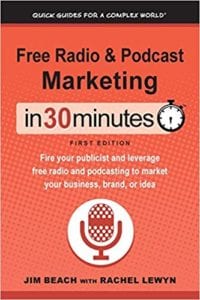
Free Radio & Podcast Marketing In 30 Minutes: Fire your publicist and leverage free radio and podcasting to market your business, brand, or idea
The other thing that your book, Free Radio & Podcast Marketing in 30 Minutes, talks about is that it’s also a great way to get yourself to show up in a Google Search. A lot of people are spending a lot of money on AdWords and they don’t know how to get to their business to pop up. Tell us a little bit about how being on radio and podcast can help our Google Search Optimization.
Every single time you’re on a show, the host or the producer puts up a page about you. It’s where the audio file you can be listened to on the host website. There is also a picture of you, a little bio and a link to your website. That link to your website gives you SEO, Search Engine Optimization, juice. They think that 70% to 80% of Google’s score for you or how high you rank in search engines is determined by how many websites linked to you. It makes sense. If two websites linked to you, are you important? A little bit. If 200 web sites linked to you, are you important? If 200 other people think your website is important enough to link to, therefore you deserve to rank higher. If I’m going on one or two podcasts a week, I go out there and I’m getting a new Google link to my website once or twice a week. These are quality links too, not from a directory or something like that. A podcast link is one of the best links you can get. Let’s say you’ve done 100 interviews over a year. You’re going to have 100 quality links that will drive your SEO juice. I promise you, if you have 100 links, you’re going to be on the first page of almost any search.
I have experienced that myself being on many podcasts and being called the Pitch Whisperer. If somebody googles the Pitch Whisperer, all that content comes up. They don’t have to remember my name or even the name of one of my books. People tend to remember that little hook and they can find me that way. That’s such great value. You also talk about how to use social media as a way to get on radio and podcast shows. Would you mind picking one or two of those platforms and explaining your secret sauce?
The platform is irrelevant, but every time I’d make a post on LinkedIn and someone comments on it, I get an email about that. We all do. That’s the way that the platforms work. I know who is posting about me. Let say if I were to comment on every other tweet, if I make six tweets in a week and you comment on three of them, eventually I’m going to notice that. I’m going to say, “Who is this person? Who likes me so much that every time I tweet, they are giving it a thumbs up or giving it likes?” You’re going to get curious. For example, Ken Blanchard who doesn’t do their own social media. You’re not going to be able to get to him. That’s not going to work with him, but for 99% of the people you want to get in contact with, this works for sales or venture capital or anyone that you’re trying to reach out.
If you follow them and pay attention to their social media, we are such a narcissist that we will notice that. You like five or six of my post, I’m going to know what your name is and then you reach out to me and say, “I’ve been following you on Twitter for six months now and you have some great things to say. I’ve been enjoying getting to know you. I think I’d be a great guest on your show also. I seem to have a lot in common with you, but I’d be a good guest.” The answer is going to be yes because you’ve already done me twelve favors. Every time you liked something of mine, I owe you. The first thing that goes through my mind is, “You’ve done me a bunch of favors. The least I can do is highlight your business for twelve minutes.” It’s a great way of getting on someone’s radar and it all goes back to narcissism. If you like me, I like the fact that you liked me.
[bctt tweet=”No matter what your business is and what you’re trying to sell, there are a bunch of podcasts out there that want to have you as a guest.” username=”John_Livesay”]
It’s almost the micro matching neurons. If somebody smiles, you tend to smile back at them. Except this is done digitally. You have a whole chapter devoted to the do’s and don’ts of pitch writing and you have ten commandments. The one that is so important is to be relevant to topical news stories. Can you explain what that is and how people can use that?
That’s the way to get on a generic radio. That’s not going to work for podcast quite as well because so many podcasts are delayed. Most podcasts are pre-recorded a week, two weeks, a month, three months in advance. It’s hard to be topical there, but if there is another article that comes out about Facebook giving away your data and you are a Facebook company, you should call every radio station in your city or in the United States. You should call them all and say, “I am a Facebook marketing expert. I’m an expert on the news article that you’re going to be talking about on the news. Quote me. I’m available at 7:22 when you do your live segment.” In other words, make yourself available on the topical news of the day and then let the reporters, the people, the podcast host, everyone know that “I’m an expert on this. If that topic ever comes up or if you ever need a hurricane expert because there was a hurricane coming your way, I’m the guy that you should call.”
Remind them when the hurricane is coming by saying, “We spoke six months ago about hurricane preparedness and there’s a hurricane coming in. If you need to get any reports, I’d love to be on your show to talk about it.” You can take this to the limit. It is the National Ice Cream Cone Day. I have a world record for ice cream cone eating. If that’s relevant to me, then that’s your hook. You call up the radio station or the host or the producer. We can talk about how to find that person and say, “I don’t know if you know, but a few weeks from now is national ice cream cone day. I was the eighth-grade ice cream cone eating champion of Dubuque. I think it would be a great segment to talk about that.” That would be the thing that they need. All these people are desperate for content. They have to fill up the time. They need somebody. The unique, compelling and sexy pitch is going to get you on the air. It’s going to get you on the podcast.
There are a couple of things you said there, have a unique, compelling and sexy pitch. You also talk about the importance of a good pitch being both informative and entertaining. Some people have one and not both. That’s a big part. The other thing you said that is so relevant is if you’re going to pitch yourself as the expert in anything from a hurricane to ice cream cones, don’t forget to remind people when that topic is coming up again. You build the relationship up front and then it’s already easy for you to reach out. Don’t wait for the last minute for that to be in the news. If you can build that relationship with a producer or a host before, it makes a big difference.

Podcast Marketing: People have to trust you first, then they like you, and then they decide whether they want to know you or not.
There’s a man here in Atlanta on one of the local TV stations and he’s been doing the news here in Atlanta for 30 years. He interviewed me for a thing. The interview went well and we connected. Six months later, I saw him at a train show. I wasn’t going to the train show. The room next to where I was speaking was a train convention. I bumped into him and said, “I don’t know if you remember me, but we’ve talked.” We had a long conversation about trains. I told him about my train set as a kid. Because we have a relationship, I can get anything I want on the air with him.
Another pitch secret from your book is bust a myth. Tell us what that means.
Anything that the entire world believes, if you tell me the opposite is true and say you can prove it, I want to hear about that. “I’m a little bit of a contrarian. I don’t believe that we’re ever going to run out of gas. I sat down and started researching it and I can prove it. We’re never going to run out of gas. Eventually, we’ll switch to another technology and there still billions of gallons of gas in the Earth.” People hear that and they’re like, “I’ve heard of peak oil, I know about gas. We’re going to run out of gas. We’ve been predicting that for 40 years.” Now the person is interested, they’re engaging and they’re fighting back. “Do you have some data that you can prove that?” “I will give you my seven reasons that were never going to run out of gas on my interview segment with you.” I’m booked. They love that.
They love things with numbers. They love things that are contrarian. The myth is this and this. I’m going to argue the opposite side. There are two guys that wrote a book saying that we’re not going to have twenty billion people 50 years from now on the Earth. The population of the Earth is going to peak twenty years then started going down, which is scarier than it is going up. They’re very contrarian and they’re everywhere now. They’ve done 200 interviews in the last six weeks promoting that book. Because it’s so contrarian, I’ve heard the same thing again and again. I’ve had vanilla every time and now you’re giving me chocolate. Now I want some chocolate because I’m tired of vanilla.
[bctt tweet=”Everyone in the world knows that entrepreneurship is 100% yes.” username=”John_Livesay”]
I loved that as one of the favorite ways of grabbing people’s attention too. The example I use is, the myth is if people know you, then they like you and then they trust you. I said, “That order is completely wrong. People have to trust you first. Then they like you and then they decide if they want to know you or not.” If you start trying to throw a bunch of information that people are thinking, “If they know enough about me and my product, they’re going to buy,” you’re doing it all wrong. That gets people to go, “That’s a myth that the order is wrong.” Anything can be busting a myth there.
My very first book was with McGraw-Hill. The thesis of that book was that entrepreneurship has nothing to do with creativity, risk or passion. Everyone in the world knows that entrepreneurship is 100% creative people taking risks, building businesses that they are passionate about. The thesis of the book was, “No, that’s entirely wrong.” McGraw-Hill said, “I want to see the defense of that thesis.” Then under a week, I had my first book deal with McGraw-Hill because that pitch was so compelling and so unique that they wanted to have it. It’s also sexy because what’s the takeaway? If it’s not about creativity, risk or passion, then anyone can do a sexy thought.
It also has to do with the way our brains are wired. As you said, “Vanilla, vanilla, vanilla. Chocolate, shiny new thing.” Our brain craves new information or looking at something in a different way. That’s how you break people up and break through all the clutter that’s in our brain from the constant barrage of ads and social media posts and tweets and everything else. You alluded that you have some tips on how to get in front of a host or producer. Can you share what those are since you are one? What are some of your favorite ways that people reach out to you?
The last thing I want you to do is to call me. That’s true for most people now. That leaves either the mail or email or what we were talking about before going in the back door through their social media and becoming their Twitter buddy. The easiest and best way to do it is still an old-fashioned email. I used to spend five or six hours every weekend watching football, watching something on television and researching the names of podcast hosts. It’s very simple. You go to Google and type in food health podcasts because I have a food book and I want to be on those podcasts that talk about healthy eating. You will find that there are thousands of podcasts that meet those exact requirements. The trick is to scour them and to try to find the host name. The host of a podcast is a narcissist. I googled food podcasts as I was talking about it and there are 4.2 million hits. That doesn’t mean there are that many shows, but it’s a popular thing to the podcast and talk about.

Podcast Marketing: You don’t buy the first time you see a product; it takes more than that.
Those podcasters or the hosts want to be in communication. Tons of the websites will have a button that says, “Be a guest,” and they’ll give you the instructions on how to be a guest. On my website, you will find it says, “To be a guest, simply email Jim,” and then it gives my email address. They want to be found. They’re not there to be invisible. You’d go through and create a list of 500 podcasts that are appropriate to your market and get the host information. If you’re good at this, you will learn something about the host. I don’t do it that way anymore. I go on Upwork.com and for $50 or even $30, I will have someone there create a list of 500 spirituality podcast host emails. For $30 to $50, I have bought 500 email addresses. They have to do that research. They go out and somehow, they scour the same way I do. Now I have 500 people to contact. I then sit down or hire some pitch whisperer to create the perfect pitch for my product and put together a beautiful email. I send it out to all these hosts. I’m going to say, “I love your podcast.”
They want to know that you have listened to their podcast. If you’re a podcast listener and can prove that you have listened to their show, those people are going to put you on their show. You say, “I listened to your episode with John. He was awesome and I thought he had some good points. I especially liked when he said this. I loved it when you said this.” Quote the host back to himself. He’s going to put you on the show. I build those lists of 500 people. I spend several hours crafting a four or five paragraph email. One of those paragraphs changes for each and every host. “I saw your pitch on your food podcast. I loved when you were talking with Sally Reaves about her no sugar diet. It was the funniest thing ever when you said this and this and I just connected with you. I am working on this and I thought I would be a good guest for your show.” You’re going to get on the show.
That’s specific, not just saying, “I like your show. It’s good. It’s funny.” Quoting the host back when you pitch yourself is the secret sauce that you just gave us. It’s important and few people take the time to do it. Few people know how to do it. Jim, that is gold. Thank you.
I don’t do it. I pay someone to create that moment for me to find the quote. I’m a liar. I didn’t listen to your show. I had someone find me a great quote from your show and I’m quoting it back to you, but I’m doing it in bulk.
[bctt tweet=”Market every day for 30 minutes.” username=”John_Livesay”]
I love stories and you’d have a whole chapter devoted to all in the stories and how people remember stories after we forget everything else. You’ve given us some great stories already, but let’s talk about the one that you talk about in the book, which is about your wife running an Amazon business.
The keyword there is Amazon. A good story is worth telling well. A good story has emotional things like anticipation and fear that I don’t hear the end of the story. If I’m doing an interview on that topic or on entrepreneurship, early in the interview I will drop, “Creativity, that’s totally useless. For example, my wife started a business with $500 on December 26th.” I add in the details because that makes the story truer. “I bought her a book for Christmas on how to start a business. The next day she read it. She was so motivated that she started her business on the 26th. She started making money in January and she made $78,000 in her first year while working a full-time job, while cooking dinner for four kids, while raising four kids, while putting up with an impossible husband like me on the weekends.” I’ll tell you at the end of the interview, “If you remember to ask me, Mr. Host, at the end of the interview, I’ll tell you what the business was.”
That’s an open loop and you were talking about the details of the exposition. What I like about what you wrote in your own book is the impact, what I call the resolution. The unexpected outcome after growing a business like that is and I’m going to let you reveal what that is.
My wife is a shy introvert. We used to go to trade shows together and she would point to something and tell me to go ask about it. Now, she goes to trade shows by herself and comes home with a bag full of 500 booths that she has visited. She now teaches classes on how to run an Amazon business and she organizes and puts it on in our living room. Her career has exploded. She’s had three major promotions and her salary has tripled because of the confidence that she gained by running her small little Amazon business. She now has learned that she can make a living from the living room if she has to.
[bctt tweet=”A good story is worth telling.” username=”John_Livesay”]
That would pull anybody in and that would get any host of any show to want to have somebody come on and talk about that. The outcome of not just making money but the self-esteem going up is what makes that story great in my opinion.
She’s become a whole new woman because of it. It’s amazing to see the progression of her career, her personality and her ability to do all of this stuff. That’s one of the things I love about entrepreneurship. It does that to people. The question you asked is the stories. I know when I go into an interview, I have a basket of ten stories. I’m going to have time to whip out three of them. I do know that a year from now you won’t remember my name, but you will remember the stories that I told.
The last thing that I want to talk about which is in your book, Free Radio & Podcast Marketing in 30 Minutes, is this post show carrot. Since we’re at the end of our time together, you can explain what it is and let us know if you have one for our audience.
The whole point of being on your podcast is to sell my paint, but 99% of the time you have to touch somebody on average seven times before they’re going to buy from you. That’s why ads are repetitious. You don’t buy the first time you see a product. It takes more than that. I can’t market to you if I don’t know who you are. The only way for me to know who you are is to get your email address. I will do anything to trick you into giving me your email address. You see this all the time. We all know about funnel marketing. You have to go and collect the names to start the funnel. How do you do that? You go on radio shows and offer something. I do happen to have a free carrot. If you email me and ask for one of my lists, I will give you my list of 500 sports podcast to be a guest on, 500 relationship podcasts to be on, 500 spirituality podcasts to be on, 500 small business podcasts to be on. I got three or four more topics that I can’t even remember, like religion. I got twelve of these lists that I have built over time. I will send you my list of 500 for whatever category your business is in and help get you started down the path.
The book is called Free Radio & Podcast Marketing In 30 Minutes. Jim, is there any last thought or quote or moments of inspiration you want to leave us with?
Anyone can be successful with this method and use radio and podcast marketing. Don’t worry about your accent. Don’t worry about anything. Sit down and plan out what you want to say. Create a great pitch and I promise this will work for any business. No matter what you’re trying to sell, it will work. I’ve seen it work in every category in the book. In the early chapters, there’s a list of 70 different industries that I’ve seen this work for. We have 10,000 recording opportunities a day for various podcasts. That number has gone up since the research, but that’s 10,000 opportunities a day for you to go out there and get free marketing. Do it. You’re crazy not to do this.
One of my big things is I spend the first 20 to 30 minutes of everyday marketing. Whether I have a business or not, whether I have a project due that day, I know that once the project is going to be turned in, I need a new customer so I better market. I spend fifteen to 30 minutes every day. The first thing I do is I send out three or four requests to three or four podcasters, “I’d love to be on your show.” Two of them say yes and there I am marketing. It works. You can do it. If you’re reading this, I’d love to have you on my show if you can figure out how to get in touch with me.
That is a great offer. I’d be fascinated to see how many people will take you up on that. This concept of scheduling marketing time because if it doesn’t get scheduled, it doesn’t get done. You left us with yet another great tip. Jim, thanks for being on the show.
It’s been my pleasure. Thanks for having me.
Links Mentioned:
- Free Radio & Podcast Marketing in 30 Minutes
- School for Startups Radio
- For Dummies
- Upwork.com
- http://TimelessChair.com/
- http://InternationalEntrepreneurship.com/
- http://SchoolForStartupsRadio.com/
- https://www.Amazon.com/Free-Radio-Podcast-Marketing-Minutes/dp/1641880201
- Quantmre.com
Wanna Host Your Own Podcast?
Click here to see how my friends at Brandcasting You can help
Get your FREE Sneak Peek of John’s new book Better Selling Through Storytelling
John Livesay, The Pitch Whisperer
Share The Show
Did you enjoy the show? I’d love it if you subscribed today and left us a 5-star review!
-
- Click this link
- Click on the ‘Subscribe’ button below the artwork
- Go to the ‘Ratings and Reviews’ section
- Click on ‘Write a Review’