

How to Get More Green Lights
Posted by John Livesay in blog | 0 comments

One of three things happens after you leave a sales presentation.
You either get a green light, a yellow light, or a red light.
The green light is:
All systems go!
Home run!
We want to do business with you!
Send the paperwork!
Happy days!
Do you have a system in place to onboard your new client to make them feel welcome?
What steps are you taking to keep them in this happy mindset?
One quick and easy idea is to find out their birthday and put it into your system, so you can remember it. Then start growing other personal milestones or details from their life.
Yellow light means:
We’re not sure.
Caution
Slow down!
We’re not ready yet.
This is what I call the dreaded friend zone at work.
Let’s stay friends.
We are interested.
Follow up with us in a month.
Result: You never get any traction.
What happened? More times than not, the problem is that you did not tell a story that created a sense of urgency to solve a problem they have now.
Red light is:
Stop
No thanks.
We can’t afford this.
We don’t need this.
We all know what a “No” sounds like. What most of us forget is “No” now does not mean “No” forever.
Many times people leave a job or their circumstances change, and if you’re not following up to see if things have changed, you will miss an opportunity to get a green light.
Or perhaps a client chose one of your competitors. If you aren’t checking back in to see if they’re happy, you might miss an opportunity to get a green-light.
When you’re driving your car and you see a green light, a yellow light, or even a red light, you don’t take it personally. It’s just part of the driving experience and the rules of the road.
What if you zoom out and see the lights that you’re getting in your sales career with the same detached mindset?
You’ll go from feeling rejected or frustrated to being in the moment and being able to figure out what story you need to tell next to get another green light.
Rudeness
Posted by John Livesay in blog | 0 comments
Rudeness rules the day. … Or does it?
Most of us were taught from a young age that being rude is unacceptable behavior.
Children are normally taught to say please and thank you and to not cut the line but instead wait their turn. They also learn that asking somebody how old they are, how much they weigh, or how much money they make is also considered rude.
In fact, from cutting people off in traffic to interrupting people, any behavior that could be considered pushy is often considered rude.

But I’ve observed that now that people have been living through the pandemic and the mask requirements and social distancing, the extra stress has caused people to be a little more self obsessed than normal. This can also manifest by being easily triggered or easily insulted.
If you’re in sales, and my premise is that everyone is in sales (whether it is your job title or not!), we have to sell ourselves all the time. All of us need to have a very high EQ to not be rude if someone is rude to us.
The old way of selling is ABC: Always Be Closing. Many salespeople feel pushy because of the pressure to convince people to buy now!
Let’s change this acronym to ABK: Always Be Kind. Starting with the way you talk to yourself! Are you being rude to yourself with negative self-talk?
As a storytelling sales keynote speaker, I talk to sales teams about how to use stories to win sales. Stories can also help you!
If someone is rude to you, use the 5-5-5 method. Ask yourself, Will this matter in five minutes or five hours or even five days from now?
You can choose to let rudeness from others go in five minutes rather than hanging onto it.
In some ways, when someone is rude to you, it can feel like a slap to the face. Research shows that emotional pain is in the same place as physical pain in our brain… they both hurt equally!
The next time someone is rude to you, or you are rude to yourself with your negative critical voice, take a breath and remember you’re the movie director of your own life.
You decide how you want the story to go. We are all the movie directors of our own lives. And we can yell Cut! at any time.
Just because other people are being rude doesn’t mean you have to follow that trend. As Eleanor Roosevelt said, “It’s better to light a candle than curse the darkness.”
Dancing Dots
Posted by John Livesay in blog | 0 comments
Have you ever heard someone say that if you zoom out and look at Earth from space, we are all just little dots?
I remember when I was in high school on my first trip to New York, I went to the top of the Empire State building and looked down from the deck. People looked like dots moving on the sidewalk below.
From the macro to the micro, dots are also used in Morse Code and in Braille for the blind.
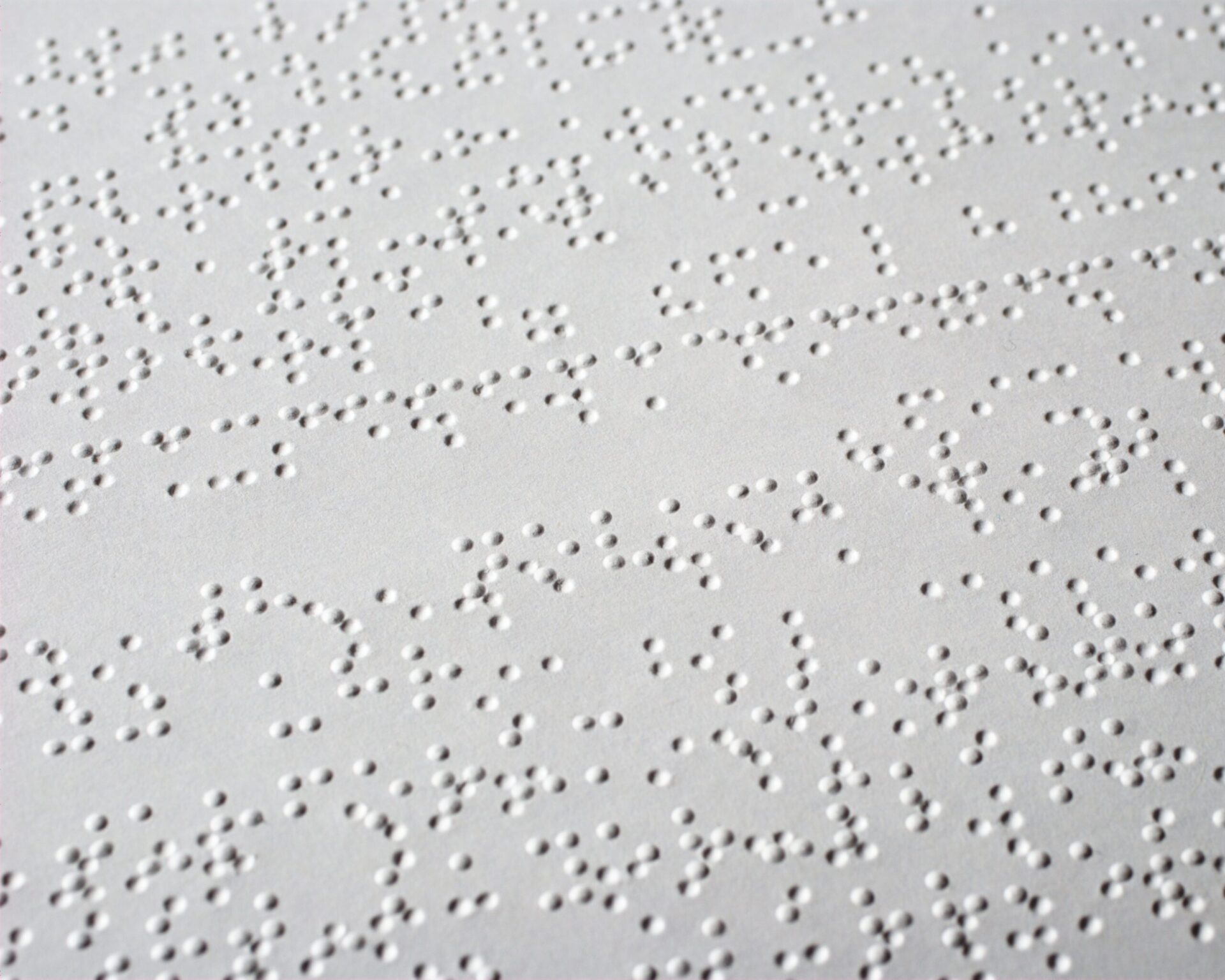
How do we connect the dots in business so our stories resonate with potential buyers to make them want to buy us? This concept was top of mind for me when I was in Columbus, MO, working with two architecture firms on their upcoming interview and pitch presentation to win a huge client.
They had been talking about this project and how to collaborate for over two years. They brought me in for two days of consulting and training to pull their “story” together in such a way that the client would choose them over three other firms who had also made the final cut.
One of the key challenges was to show that these two firms worked together as one team and brought complementary skills to the project. And after years of preparation and proposals, it would all come down to a 45-minute presentation and a 45-minute Q&A.
One myth is that people only care about the design of what you will do, and they make the decision based on that. But the truth is that the team that tells the best stories wins the project. This has been proven time and again, as this was the third time I was called in to work with his team who had won two big projects worth over $1 billion using my storytelling techniques.
Most teams have a weak opening. Something like, “We are excited to be here. Thanks for this opportunity.” (Remember: It is not about you! And nobody cares that you are excited.) Many teams also have a weak closing: “That’ s all we got. Any questions?”
We reverse-engineered the presentation and started working on the closing statement first: how we wanted the decision-makers to feel, what we wanted them to think, and what he wanted them to do. Once we had a closing that tugged at the heartstrings, we crafted a compelling opening statement to highlight what made this team unique and valuable.
Then we worked on each person’s short but memorable story of origin for the team slide, so the decision makers can feel like they had a sense of who these people are and the passion they bring to the project.
Then we honed in on the pitch, from just telling a case study to turning it into a case story. A case story is one that pulls people in so they see themselves in the story.
We practiced several times, including how to best answer questions they would most likely get asked. My work was done on Thursday, and they all felt prepared for the big meeting on Friday morning.
Little did I know that my adventure was just beginning. I was set to fly back to Austin from Columbia via Atlanta, but when I got to the Columbus airport, they told me that the Austin airport was closed. They suggested I get to Atlanta as quickly as possible, since an ice storm was coming to Columbus.
Running to catch the last flight to Atlanta at 6 p.m., I called my sister to ask her to book me a hotel in Atlanta so I would know where I was going when I landed.
I finally landed at Atlanta airport, which is one of the busiest airports in the U.S. It requires shuttles to get to baggage claim, and after what seemed like an endless journey to get outside after two long days, I finally jumped in a cab.
Shortly after the cab left the airport for the hotel, we were on a freeway and the cab driver got a flat tire! As we pulled over to the side of the road, I thought, I have a choice here. I can complain or accept what is happening.
After two years of not being able to give my sales keynote talk or training in person, I refused to complain about the hassles of winter travel and freakish events like a flat tire in a cab. (This was a first for me in all the trips I have taken over the years.)
Luckily, I was able to get an Uber driver to agree to pick me up on the side of the freeway just as my cell phone battery was getting low. You can be sure I gave her a big tip!
The next day, I got on the 12:30 p.m. flight from Atlanta to Austin because the first flight of the day was overbooked. They told me the only seat was in the back of the plane in row 35.
Again, instead of complaining to myself, I was grateful to be on a flight home. I walked down the long aisle to find a man sitting in the aisle seat of my row, and I politely asked him to stand up and let me into the window seat. “Sure,” he said as he stood up. I then noticed he was blind and traveling alone!
This was another first for me in all my years of travel. Nobody was sitting in between us for the trip, so we started talking about how he is married to a seeing woman, and they have five children who are all grown now. Bill told me he started a software company called “Dancing Dots.” His company helps blind and low-vision individuals to read, write, and record their music. He said he came up with the name because of the dots in Braille.
We both share a love of music, and I told him I recently joined the Austin Gay Men’s Chorus. He asked, “Are you a baritone?” “How did you know?” I asked. He said, “I know music, and I can hear people’s voices more distinctly than most other people.”
When we landed, I asked how he usually navigates through the terminal. He said sometimes airline personnel will help him but in the past, they would ask him to sit in a wheelchair. He said, “I can walk, so I don’t want a wheelchair.”
When I offered to walk him through the terminal to baggage claim, he happily accepted. (The Delta flight attendants were wonderful to him during the flight, telling him where his cup was when they poured his beverage and thanking me for helping him.)
As we left the plane, he stood up with his cane and asked me to lead. While I was ahead of him, I shouted out: “20 more rows to go! 10 more rows to go! Turn left now to exit the plane. Step down to the jetway. Nobody but me is ahead of you on the jetway. Now we are halfway there. Now step into the terminal.”
He said, “Since you like to sing, will you sing Broadway show tunes, and I’ll follow the sound of your voice?” So I turned my head sideways so he could hear and started singing and walking with my luggage on wheels. He used his cane to stay close to my luggage.
People were staring at us, and I was not sure if it was because of my singing or watching a blind man in a crowded airport. Austin’s city motto is “Keep it Weird,” so I felt right at home.
We made it to the escalator to go down to baggage claim, and I tried to imagine what it was like for Bill with all the noise and potential ways to get lost or fall. Instead, he said, “You know a lot of Broadway songs!”
When we got to baggage claim, he showed me a picture of his luggage on his phone, and I quickly found it. When I grabbed his luggage, he touched it and smiled. “That’s my bag!” he said. Then I walked him over to a chair near the wall and explained where we were so he could tell his sister who was coming to pick him up.
Wow. What a journey! Sometimes life is a series of “negative or frustrating” dots like a canceled plane or a cab with a flat tire. If we zoom out when those moments are happening and trust another dot that will be more pleasant is just ahead (meeting Bill), then we don’t get stuck in the feelings of exasperation. Had the delay not happened I would not have met Bill. Talking with him was the best part of the business trip. It showed me we can all deal with whatever life throws our way if we choose to focus on what we can do versus what we can’t do!