
Digital Leadership with Erik Qualman
Posted by John Livesay in podcast | 0 comments

Episode Summary:
Technology has greatly changed the dynamics of the world. Great leaders know how this impacts the business and therefore, learned to adapt with it. Taking the two together is best-selling author and keynote speaker, Erik Qualman, as he talks about the concept of digital leadership. Known as Equalman, the Digital Dale Carnegie, and The Tony Robbins of Tech, Erik shares how he has grown in his life by changing his mindset along the way and starting to look at how life happens for you and not to you. He believes that even failure has to be done right. Erik gets down into his work with Digital Leader, the superhero concept he has created a brand around, and why you should set a laughable goal. He reveals his secrets on what it means to give digital hugs especially in a world where it is easy to become impersonal.
—
Listen To The Episode Here
Digital Leadership with Erik Qualman
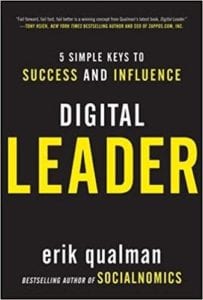
Digital Leader: 5 Simple Keys to Success and Influence
Our guest is Erik Qualman, who’s often called a Digital Dale Carnegie and the Tony Robbins of Tech. He is a number one bestselling author and a motivational keynote speaker who’s spoken in over 50 countries and reached 30 million people. His Socialnomics work has been featured on 60 Minutes to the Wall Street Journal and has been used by the National Guard to NASA. His book, Digital Leader, propelled him to be voted the Second Most Likable Author in the World behind Harry Potter‘s JK Rowling. Qualman was formerly a sitting professor at Harvard and MIT labs and he’s also the owner of an animation studio. Erik, welcome to the show.
Thanks for having me. It’s an honor to be here.
I always love to ask my guests to take us back to some point with their own little story of origin. Did you know that you wanted to get into tech at a young age? Was there a moment in time you went, “This is for me?”
I fell into it backward like a lot of people. I’ve been in the tech space for many years. I grew up in Detroit. Like a lot of kids in Detroit, you go and work for the automotive industry. As an intern, I was working with Cadillac. Part of my job as an intern was to write the meeting notes. I go to the meeting, write out the notes, print them, put them on people’s desks and they had a thing called interoffice mail which had a little red string on it. We’d send that out. Each meeting took me about two hours to produce this. Crazy enough for a lot of your audience out there, email was brand new at the time. I said, “I wonder if I can send an attachment instead of printing these. Can I attach this to this thing called email?” There wasn’t Google. It took me a while to figure it out, but I did. Instead of taking two hours, it took me five minutes. I sent out the note and then the next thing I know, the CEO of Cadillac is standing right next to me. I’m going, “This guy is super pumped. I’m going to be in the executive suite here soon.” I quickly realized it was my time to explain why I should keep my internship. I went, “To save two hours of my time,” but I could tell by the look on his face he didn’t care how I spent two hours of my time. The second thing I said was, “This saves the environment. We don’t have to print the paper.” Remember this was the ‘90s. No one cared about the environment. Last but not least I said, “I can track this if someone saw it.” He goes away. I saved my internship.
A couple months later, they come out with these things called websites and the CMO is talking to the CEO going, “We need this thing called the website.” Try to explain that before they exist. It’s a mission impossible so the CEO goes, “I have no idea what you’re talking about, but go talk to the kid on the first floor.” Keep in mind that your email address is normally your first initial and last name. As Erik Qualman, that becomes EQualman. He goes, “Go talk to the kid on the first floor that thinks he’s a superhero. Maybe he can get us this Cadillac.com thing you’re talking about up front.” It’s been a long ride. I love it. That’s how we fell in it backward, a kid born and raised in South Detroit. We went from there.
[bctt tweet=”Things happen for you, not to you. ” username=”John_Livesay”]
That superhero concept is something that I want to explore because you’ve created a whole brand around it. Tell our audience what the significance is about being Equalman and the colored glasses that you wear and how that makes you memorable and unique.
For those not familiar with me, I wear these bright green glasses. They’re Clark Kent-like glasses. For the beginning of my career, the first many years I hated being called Equalman. Imagine if you’re an intern or a junior associate walking into a meeting and they go, “Don’t worry, Equalman’s here. He can save everything.” I fought it, which a lot of us do. We fight what’s at our core, who we are a lot of times. For some reason, we fight who our true self is. I fell into this a little bit backward. Things happen for you, not to you. I was doing an article with a magazine when the book started to take off. Digital Leader started taking off. They did a magazine article. They wanted to have me on the cover and they go, “Your website’s Equalman since your email address is Equalman, do you mind wearing Clark Kent-like glasses?” I go, “That sounds fun. Let’s have fun.” They go, “Do you mind if they’re green because it’s going to be the Saint Patrick’s Day? It’s coming out in March.” I go, “Whatever helps.” They bring them out and I go, “Those are bright green glasses.”
We do this shoot. I don’t think much of it. A couple of weeks later, I go to Kenya to speak. The night before I’m going to adopt a baby cheetah at a rescue shelter, not to take home but to support the local community. Ironically enough, the day before, Usain Bolt the Olympian, the sprinter had adopted from the same litter. As we drive over to the rescue shelter, the lady that’s with me says, “If you don’t mind, we’re going to film a lot of this because it’ll help promote the shelter. We had Usain Bolt here yesterday and we filmed him. We’re going to splice all this together. For the video, we’d like you to have your green glasses on.” I looked at her and I said, “I don’t wear those green glasses every day. I look like an idiot walking around wearing green glasses like that everyday day.” The look on her face was that of disappointment. She said, “Everyone in Kenya, that’s what they think that you look like.” I never wanted to see that look of disappointment again. Over time, we’ve started to wear them more. Almost all the time I’m wearing them because it’s turned out to be good for business. We lose some business. We don’t want that, “That guy looks a little quirky,” but then we gain a lot more.
Crazy enough we’re in the business of producing these green glasses because I’ll go and perform. There are 2,000 people in the audience and they go, “We want to have some fun. We want to have a big photo opportunity. Can we get some of those green glasses?” Originally, we pushed them to Amazon. Over time, Amazon can’t handle these large orders. Now we’ve become producers of these bright green glasses. It all works out for you in the end. We completely have stepped into being my true self and it’s been learning and a journey for me that help my audiences to say, “You got to step into that discomfort.” Every day I now walk in discomfort wearing bright green glasses. Sometimes I forget I’m wearing it and then people are looking at me strangely. I go, “That’s right. I’m wearing these bright green glasses.” It’s a very long story to say that my cheetah is much faster than Usain Bolt’s cheetah.
The entrepreneurship of making the glasses for your audience is a fantastic full circle there. You said, “Things happen for you, not to you.” Did I hear you correctly?
A lot of us wake up and there’s going to be this challenge every day. With time, it might be a couple minutes, it might be a couple of minutes, a couple of days, sometimes it might take fifteen years, but you can look back and go, “It’s happening for me. It’s not just so I could be made fun of. This thing happened for me, not to me.” Once you change that lens and mindset, your day-to-day is going to be much better.
[bctt tweet=”Evaluated practice leads to progress.” username=”John_Livesay”]
Another example was the disappointment on that woman’s face when you said you didn’t want to wear the glasses. You thought, “That’s not happening to me. It’s happening for me if I embrace this.” Now you’re selling glasses. You don’t need glasses to see. They’re not prescription? Are they plain glass?
Here’s a tip for everyone that’s out there that’s a speaker. Everyone’s a speaker, whether it’s the size of one or size of 10,000. I do wear corrective lenses. I normally have contacts in. I do also wear glasses. The bright greens, we’re trying to figure out how we get bright green glasses and high-end glasses, but that color is hard to come by. It’s only replicable in plastic. On stage, I wear my contact lenses for a couple of reasons and a lot of this is to learn the process. I didn’t know this until we started doing it. Number one, you don’t want to reflect the light back on the audience because it’s going to refract off your lenses when you’re wearing glasses. Secondarily, if they’re taking photos or video of you, it’s a lot crisper when people can see your actual eyes. They can relate more not only the audience there but also the audience that’s abroad when you’re being filmed. Last but not least, as you exit the stage and you’re doing a book signing, there’s going to be in this day and age a lot of selfies being taken or photos being taken with the people that are getting their books signed. The picture is much better when you don’t have the lens in your glasses.
I want to ask you a few questions about your book, Digital Leader. You have something in here that I love, an acronym. Fail forward, fail fast and fail better. Can you give us a little sneak peek on what that means?
Fail fast, another synonym for that is to fail cheap. If you’re going to fail, you might as well do it in an hour. That’s much better to do it than six months and it’s going to be cheaper. If you’re going to fail, which we all should, it’s all part of a learning process. The misnomer, because everyone’s like, “Fail, fail, fail.” You’ve got to do it the right way. That’s why I always say, “Fail fast, fail forward, fail better.” The second one is to fail forward is to evaluate that failure. For those that are into music or have grown up doing sports, there’s the old adage that practice makes perfect which is completely false. Evaluated practice leads to progress. If you don’t evaluate that practice, then practice leads to permanence and probably permanence in the wrong way. It’s about evaluated failure. Fail fast, which makes sense. Fail better is you got to evaluate the failure, which for most of us that goes against their DNA. You want to sweep it under the rug.
With teams at work, they’re not your best buddies. They’re friends. It’s uncomfortable to be like, “John did this or Jim, Kelly, this totally didn’t work,” and what you do is you don’t evaluate it because it’s uncomfortable. If you evaluate it then you can fail better, meaning you’re not going to repeat the same mistake twice. The key though is the first two tenets then they lead to the third. That’s what it’s all about. It’s being fail fast, fail forward and fail better. Failure does lead to learning. Failure’s a part of the process but you’ve got to do it the right way.
That is the secret there because I know there’s a lot of fear of failure and I tell people to look at it as feedback. Your concept here of evaluated practice leads to progress. When there’s death in hospitals, the medical community has a process where they will have a meeting to see what went wrong without pointing fingers. To see if they did something in the surgery that caused that patient to die. A lot of sales organizations could benefit from this concept of failing forward. If they could create a safe enough environment where people were not pointing fingers at what caused a sale not to happen. They can learn from it so they don’t keep making the same mistakes when they pitch. You mentioned the willingness to have fun and with the glasses. One of the chapters in your book is to set a laughable goal. Can you tell us an example or two of what a laughable goal is and how we might be able to do that?
I will tell you my laughable goal because the more I repeat it, the more likely it will become an outcome or it’s reminding me too that, “This is what we’re trying to do.” My laughable goal is to create the next Disney World. It’s to have an actual park, a physical location. Families come in there. It’s more educational-based. There’s still entertainment, but when they leave they’ve been educated. It’s taking that Disney 2.0. I love Disney. I love Disney Parks. If Walt Disney were to arrive, come back and walk around Disney he’d go, “This is all you’ve changed? This hasn’t changed much.” It’s a wonderful place. It’s the happiest place on earth. It’s about taking the amazing stuff that they do and doing it 2.0. Whether in the marathon we may get to Mile 11, Mile 14, it’s about getting to hopefully that 26.2. As it relates to that, the other laughable goal is that we want to entertain, educate and empower seven billion people this decade. In our minds, that is setting the bar low because there are more than seven billion people and there’ll be more than seven billion people when we look out many years from now. It’s about setting it out there. That goal has to be laughable that most people you’d tell, the first reaction is that they laugh. Those that don’t continue to laugh are the ones who are going to help you get there.

Digital Leadership: Those that don’t continue to laugh at your laughable goal are the ones who are going to help you get there.
Sometimes when we have a goal, we’re afraid to share it because people will think we’re crazy or who do you think you are to have that goal. I remember the first time I said out loud to somebody that I wanted to give a TEDx Talk I did a little bit of a gulp. Instead of saying, “That’s never going to happen or you’re crazy,” the person I happened to mention it to said, “I know someone who organizes the ones in San Diego. Let me put you in touch with him and he can give you some tips.” It’s that willingness to be laughed at when you state a goal, however big or small it is that is important in your career. Whether you’re running your own business or working for someone else. It allows people to align with you and that’s how it becomes a reality. The other thing that intrigued me about your book, Digital Leader, is a digital hug. What is that? I’m guessing it’s more than an XO at the end of your email.
More and more now with everyone adopting the emojis, but it’s about understanding that these digital tools are not designed to replace face to face. There, one time and distance is an issue. The beautiful thing about these digital tools is they allow you to scale more than ever before. As much as you are able to are you can give out digital hugs? How do you promote someone else digitally? How do you shine the light on some cool stuff that people are doing in the community? It’s about giving that love out there as much as possible. One thing, for example, is let’s say you’re going to write a thank you note. You write a handwritten thank you note. The digital hug version of that is you take a picture of that thank you note and also send an email in case it gets lost in the post office. That person gets it real-time and they’re more active to respond as well. If they get a note in the mail, it’s great. It makes them feel good, but they’re probably not going to hand write a letter back to you. It’s about understanding that you can’t replace a physical hug, but as much as you can get to scale with the digital hugs.
[bctt tweet=”Give digital hugs.” username=”John_Livesay”]
Certain words and the way you frame things in your emails convey warmth. You certainly do that. I noticed that the people on your team do that. Do you have any tips on how people can not make email cold and impersonal?
We’re not perfect at this and I wrestle with it all day. Keep in mind that sometimes I have to pause and go, “Am I being a jerk here on certain things?” You get wrapped up and you’re like, “Why isn’t this moving as fast as we’d like?” What helps me is I constantly try to take pauses and ask myself, “If I were to receive this, how would I like to receive it? What is interesting?” A lot of the readers out there in sales, what’s intriguing is can I make this person feel a kid again? Can I ask them a question that will provoke thought within and it makes it more fun? At the same time, can I give them some personality? It could be the holidays are coming up. What was the favorite toy you ever received from Santa Claus? I’d sit back and there’s probably one that pops in their mind and they immediately come back. Even if they don’t respond, it’s caused them to think. They’re going to think about that question and then you tell them what you enjoyed it. It’s like, “I’ve got the Millennium Falcon,” whatever it is or, “I’ve got this Playmobil set.” Whatever it is you received, then you’re sharing a little bit of personality. They can relate to you.
I remember mine vividly. Waking up Christmas morning and seeing a shiny red Schwinn bike all assembled in the living room somehow magically, an outdoor thing inside the house in the suburbs of Chicago in winter. Your mind was like, “How did that happen?” I can’t even ride it yet because there’s snow everywhere. Those memories come flooding back. What a great question and an example of pulling that together. Since one of your goals is to become the next Disney World, you’re well on your way with this animation studio. Can you tell us a little bit about how that came about and the kinds of clients you’re helping? I know you’re working with Disney ironically as well as Cartier.
It’s been such a blessing. How it occurred is that for my first book, Socialnomics, I go, “I’ve been talking to a lot of these CEOs for an hour.” This was when social media was first big is when Myspace was big and then it was overtaken by Facebook, fortunately and got that right. In the book, Socialnomics, we said, “Facebook is going to be the killer here.” I’d sit there and the CEO goes, “I got it,” but they weren’t taking action. I go, “I need to do something different,” and the book’s coming out. I need to hit them over the head with a three-minute video about here’s why it matters and to scare them a little bit. We put this together. I was in Cambridge at the time. I grabbed some of the folks from MIT Media Lab. We put together this, this animated video. It also goes massively viral. Most importantly, it started getting people’s attention. People started using it to any meeting they went to go, “This is why this stuff matters or why it’s going to change the world with the way we communicate. Why it’s going to affect elections. Why it’s going to change the way we do business.” That’s how we got started.
I started getting phone calls from these big companies and they’d go, “We love that video you produced or the videos that you’re producing for your books. We’d love if you could do one for us. Can you do that for us?” I go, “No, I do it for myself.” I didn’t think anything of it. By the third knock on the door, the proverbial knock on the door. For all the readers out there, don’t do what I did. You’re not going to get three knocks sometimes. I was fortunate to get that third knock. Finally, I said, “We have a whole studio. We’ll rock it out.” Even though it scared me to death, I go, “Can I deliver on something like this for a client?” and then away we went. It’s been great. Ironically enough, here’s the story with the green glasses. I was about to give a talk in the afternoon. I was in Nashville having breakfast. There’s a guy sitting across from me and kept looking at me. They finally came over and goes, “I saw you speak a couple of months ago.” I got, “Sit down.” We started talking about the Cubs. I’m a big Chicago Cubs fan.
Long story longer is he’s connected to Disney. All of a sudden we got a call from Disney and they go, “We love your videos. We’d love for you to do a video for us.” I even said, “Why don’t you have the Pixar guys do it?” They go, “We like your story writing capability and it’ll be a little faster for you to do it. It’s a little different look. We want you to do it. You get from an outside perspective what we’re trying to do. We’re trying to showcase that Disney is a digital company.” I go, “Fantastic.” That’s how that transpired and it relates back to those green glasses. It’s been a wonderful ride. We take on clients like Disney, Cartier and smaller businesses sometimes. Even speakers, we’ve started to help some people with their speaking reels.
[bctt tweet=”Digital leaders are made, not born.” username=”John_Livesay”]
Let’s hear about what that looks like. You animate speaking reels. You’re bringing 2D or 3D animation into a speaker’s sizzle reel?
For the speaker’s sizzle reels, what we found is that, “There are a lot of speakers out there that need this and we can help them out.” We take a lot of the footage that they have. Sometimes we have to go shoot real footage. We’ll layer in the 3D and 4D animation as well as if they need a voiceover, if they need music, and then that storytelling capability to help them from an outsider perspective, “This stuff, I know you love it. No one’s going to care about it. Let’s hype it up.”
Are you creating any of these kinds of videos for authors?
They’re almost one and the same when you think about it. Almost every speaker is now an author. Usually along those lines when it makes sense. We’re fairly expensive. We still primarily work with the Fortune 500, but we do small business as well. We’ve found it fun to work with a lot of these speakers as well since we’re in the business.
You’ve given many wonderful keynotes around the world. You’ve met Barack Obama. Can you tell us one of your favorite talks and what made it one of your favorites?
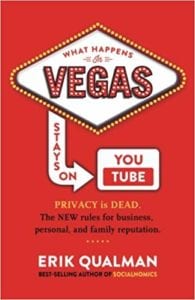
What Happens in Vegas Stays on YouTube
One of my favorites and one of the most interesting are one and the same. I was invited to present on digital leadership in front of 3,300 counterterrorism FBI agents. Not only was the background check interesting and I’m glad I cleared. It is intense. At the time it was Director Comey and it was during the middle of the election, during the middle of all this Hillary Clinton. A couple of things. One, we’re blessed to have all these agents. They’re amazing. To be on the ground and talk with them on a human level, because I’m scared to death like, “What are they looking up? What do they know about me?” I wrote a book, What Happens in Vegas Stays on YouTube. I go, “These guys are probably digging.” Comey spoke on leadership and then I spoke on digital leadership.
Can you give us the distinction between leadership and digital leadership for people who may be wondering? What’s the content different in a talk like that?
The genesis of digital leadership, I’ve been doing this and I’ve been speaking over a decade. I’ve been paid to do it for over a decade. I’ve been fortunate to meet Malcolm Gladwell in the green room and Jim Collins. I started to see a pattern that the top three business books that everyone uses are The 7 Habits of Highly Effective People, Jim Collins’ Good to Great and Malcolm Gladwell’s The Tipping Point. I started to ask myself, “All these books are fantastic and these authors are amazing, great people. They’ve all been written before the iPhone existed, before Facebook, before YouTube, before Snapchat, before Instagram.” The world has changed. We live in exponential times. I’m sure leadership has changed, but the core is still probably there. We wanted to figure out what’s core? What’s still in is by 80% is still the same? Digital leadership is that slight twist knowing we live in a hyper-connected world and that the communication is much different. That’s digital leadership.
We profile a Howard Schultz. The good thing is digital leaders are made, not born. Howard Schultz came back as the CEO of Starbucks when their stock dropped to 2% during the great recession. He comes back from Chairman to be the CEO to run it day to day. He quickly realized that the world has shifted while he was away and he’s back in a day to day. He had to figure out how to become a digital leader. He takes that step and then by the time at the end of his tenure, all of a sudden Starbucks has taken the most mobile transactions of any company in the world. They are a digital company that happens to sell coffee. He was able to transform himself and that’s what digital leadership’s all about. He’s a good example of what it looks like.
I remember the first time I went to Starbucks and I saw somebody buying their coffee with their phone and I thought, “Are they getting a discount? They want to do that for the convenience or the cool factor or the up?” It took that whole vibe of, “I’m part of the club and loyalty and all the things that make how people interact less friction.” The time flies by with someone like you who’s involved in many wonderful things. The insights have been tremendous from giving digital hugs to realizing that things happen for us, not to us and that we can learn to fail forward, fast and better. Any last thoughts you want to close with?
[bctt tweet=”Listen first, sell last.” username=”John_Livesay”]
A lot of the readers out there, they’re trying to figure out probably how to sell better. Everyone’s in sales no matter what you’re trying to do. Whether you’re trying to ask your boss if you can work from home on a Friday, whether you’re a kid trying to get a snow cone from your parents is that all of us are in sales. When we look at it in the digital world, people when they jump in need to understand it’s not about you first. It’s not about the selfie first. It’s about the unsolved. It’s about listening first, digitally. All of us in our DNA, I included, you jump on. Here’s why you need to get me. Here’s why you need to get my product. Here’s why you need to get our service. We’re the best. That doesn’t work. It doesn’t work offline and it doesn’t work digitally. When you think about the offline metaphor is if you went up to four people at a cocktail party, they didn’t know when they’re laughing. They’re having a good time. Maybe it’s a networking conference and they’re laughing, having a good time. You wouldn’t go up to them and tap on their shoulder and go, “Do you mind if I interrupt you and tell you why I’m great for the next five minutes?” We would never do that in the offline world, but when there’s no barrier digitally, almost all of us make that mistake. It’s about listening, interacting, reacting and then selling. It’s to sell last, listen first digitally.
That’s a great reminder of all of us. Listen first, sell last. The analogy I always use is if you met somebody on a first date, you’re probably not going to ask them to marry you. A lot of us make that mistake in selling. We don’t do it in our personal life. Somehow we think, “You just met me. Would you like to hire me or buy my product or whatever it is?” without building a relationship first. The website is Equalman.com. We all know where that comes from. There’s even a logo that goes with it with the equal sign inside of a shield. There are the green glasses and great stuff. I’m sure people are going to be intrigued to look at your animation studio, hiring you for more keynotes and buying your wonderful book. Thanks again for being on the show.
Thank you, John. It’s been an honor.
Links Mentioned:
- Erik Qualman
- Socialnomics
- Digital Leader
- Cadillac.com
- What Happens in Vegas Stays on YouTube
- The 7 Habits of Highly Effective People
- Good to Great
- The Tipping Point
- https://EQualman.com/
- Quantmre.com
Wanna Host Your Own Podcast?
Click here to see how my friends at Brandcasting You can help
Get your FREE Sneak Peek of John’s new book Better Selling Through Storytelling
John Livesay, The Pitch Whisperer
Share The Show
Did you enjoy the show? I’d love it if you subscribed today and left us a 5-star review!
-
- Click this link
- Click on the ‘Subscribe’ button below the artwork
- Go to the ‘Ratings and Reviews’ section
- Click on ‘Write a Review’
Emotional Sobriety with Bill Stierle
Posted by John Livesay in podcast | 0 comments


Episode Summary:
Bill Stierle, founder of Corporate Culture Development and a dynamic and commanding thought leader in emotional intelligence and thinking styles, gives an interesting perspective on how we can communicate in business. Bill spills the secrets on how to resolve conflict while giving us a peek into his new book called Emotional Sobriety. He talks about how to become a communications lifesaver while laying down the differences between criticism and critical, empathy and sympathy, and truth and trust. Bill provides great examples that present situations where we can apply effective communication amidst tension where people become defensive in one way or another. He gives a great formula to handle the very common objection of, “I have to think about it.”
—
Listen To The Episode Here
Emotional Sobriety with Bill Stierle
Our guest is Bill Stierle and he is a dynamic and commanding thought leader in emotional intelligence and thinking styles. His impact has been felt everywhere from the top business schools to Fortune 500 companies, nonprofits, and even government institutions around the world. He’s the Founder of Corporate Culture Development and has a unique knowledge of how to create successful training programs. We’re going to ask him to open up the secrets on how to resolve conflict and what happens after he comes in is people have more productivity and performance and are generally more effective. Bill has a book called Emotional Sobriety that we’re going to talk about and he also speaks on the topic. Bill, welcome to the show.
Thank you so much for having me on. This is going to be a lot of fun.
I always like to ask my guest to take us back to their own story of origin. You can go back as far as childhood, high school, college. Nobody starts off as the expert on emotional intelligence. Where would you like to tell us of how this whole concept came about for you?
It came about when I was teaching high school anatomy and physiology many years ago. It started with a very simple question that my brain couldn’t let go of. The simple question was, “Why do people think the way they do?” That’s where it started. At that time of the mid-‘80s, there was a lot of brain research being done from the ‘70s and the ‘80s. They were having the tools and the abilities to stretch into what’s happening in the brain. How does thinking work? How does thinking works with certain jobs? I fell upon a good mentor. His name was Ned Hermann who worked at General Electric. He came up with this thinking tool called the Hermann Brain Dominance Instrument that he used at General Electric in management leadership training as well as human resources. This tool is a 120-question survey that talks about why people think differently. That tool allows us and gives us an insight into the differences between an engineer and a social worker. Those are two different people, as well as an artist and a drill sergeant. Those are two other different people. Those are extreme or focused thinking types.
Engineers are spending a lot of time in logic and rational thinking, whereas social workers are spending a lot of time in interpersonal and connection style of thinking and dealing with human interaction. Artists are in the visual space and drill sergeants are in the organized space and they’re into implementing things. An artist is into creating things. This is the start down the path of why do people think the way they do. I get a lot of work here in the corporate space when I do strategic planning or team analysis. When the start process takes place of here’s what a person is listening for and here’s what a person’s brain is shutting down or shutting off when you talk too much about a certain type of topic. The brain will shut off if a marketing person and an operations person are in the room at the same time because the marketing person is talking about risk and trying to catch as many eyeballs as possible. Whereas the operations person is, “How am I going to manufacture, implement or distribute what that guy over there is trying to sell?”
[bctt tweet=”What can I say or do to meet your need for truth? ” username=”John_Livesay”]
Those are two different brains that are working in different places. An executive team is much like The Avengers. The Avengers are a group of superheroes and they all are sitting in different thinking styles and they’re approaching the world in different ways. They’re doing that in different ways, they have to come together as a team in order to defeat the enemy. The same thing has to happen in an executive team. They all have to come together. The finance person, the CFO, has got to have an honest discussion with the VP of human resources about how much staffing it’s going to take to get certain work done and how much the cost is going to be. That’s called an honest executive discussion. The VP of sales has got to have an honest discussion with operations because whatever they’re selling, the operations person has to be able to distribute or deliver to the person’s doorstep. Those two people have got to talk because if the sales get too big, the customer service and the operations can’t deliver it. Can you see how that one works?
A lot of finger pointing and blaming. You talk about how to become a communication lifesaver. I used to be a lifeguard, so I’m interested to hear how you can help people become a communication lifesaver when those conflicts come up.
That’s the second part of my origin story. I noticed that this work on the brain and thinking only took me so far. Whenever emotions show up, a person’s brain will activate into a protective strategy. Being a communication lifesaver is that if the brain is communicating in a protective way, what winds up happening is not hearing what the other person is saying. As a lifesaver, I’ve got to throw them a communication life ring in order to keep them in a conversation that’s productive and healthy versus one that is safekeeping and reductive and one that puts people at their poles.
Do you have a story of how that would work? What does it look like when someone throws a communications buoy to somebody to keep them in the conversation?
What it would look like is if an engineer or somebody that’s thinking in a logical and rational way quotes a fact or an inaccuracy that another person has said in the room. It’s a critical accuracy piece. The problem is the rest of the room doesn’t hear it that way. The rest of the room hears it as criticism, not critical. A life ring in that moment would be, “Joe, it looks like you’re stating the accuracy for everybody in the room and you’re pointing out how it’s not 39% but it’s 41% when you consider these other data. Is that the accuracy we’re going for?” He wasn’t telling the other person that they were wrong for not knowing the number. He was stating the accuracy piece because his brain needed to express it. Criticism and critical are mixed up. Three-fourths of the people can’t tell the difference between critical and criticism.
Let’s underline that distinction one more time. Criticism sounds like versus being critical.
The distinction would be like this. Criticism is, “You should have known this answer already.” Critical is, “Here’s the fact I would like the whole room to know.” That’s different. The second thing that I need to throw a communication life ring at is the word defensiveness or the construct of defensiveness as a protective strategy. Defensiveness is when somebody is trying to create either order or safety and it’s not considering that the order or the safety or the sequence that they’re doing needs to change. They’ll become defensive and say something like, “That’s not the way it’s done. I’m just following procedures. It takes too much work to rewrite that procedure. We have to keep doing it that way. I’m following the letter of the law.”
All of those are and can be heard as defensive sentences that usually a person points out, “You’re being defensive.” It’s like, “I’m not. I’m just stating what the rule is. I’m just stating what the procedure is. If you want to write the procedure and you want me to retrain people on the procedure, I’ll be glad to do that for you. Right now, I’m trying to follow the procedure.” A drill sergeant is following a procedure. Why? They need to get 30 people to act as one person, to rely on the same set of rules and the same set of procedures. When you have a procedure that’s effective, it creates a lot of stability and a lot of trust. Everybody’s on the same procedural page.
People like structure but the flip side of not becoming defensive, I see that often in selling or pitching. Let’s say you’re pitching to investors to get your startup funded and they ask you some questions. The minute the founder gets defensive as opposed to collaborative then they don’t get funded. If you’re presenting to a customer your product or service and they give you an objection, if you become defensive you don’t get the sale. Do you have any tips on what people can do in those situations where they don’t become defensive?
I do. This one’s going to be a little bit difficult and we have to stretch this one a little bit because this one is a toughie. I’m going to start with a quote that I live by. This quote is valuable. If you can get it in your noggin and do it, it will save a month to two months of time over the next year. Get this sentence and apply it. Here’s the sentence, “Empathy before problem-solving.” Here’s the first problem you have to deal with. The problem is most people have a junkie or an ineffective definition for the word empathy. They don’t know what it means. Here’s the difference. What most people use is a form of sympathy. They don’t do a form of empathy. A form of sympathy is, “I understand what you’re going through.” That’s sympathetic. It’s not empathetic. Here’s another sympathetic sentence, “I hear that happened. That was too bad. I wonder what you can learn from this.” That’s sympathy. That’s not empathy.
[bctt tweet=”Empathy before problem solving.” username=”John_Livesay”]
One of the things that I do in my training on emotional intelligence for executives is I get them to practice real-time empathy and how it takes place. The guideline for a real-time empathy and to know that it takes place is to follow this definition. Empathy only occurs when a feeling word and a need word are connected and agreed upon. You’ve got to have those two fill in the blanks. There has to be a feeling word and there has to be a need word. Let me give you an empathetic sentence to the expression that you gave me. “Huh,” you said. The empathetic sentence would be, “John, could you be feeling inspired because your need for awareness or learning is being met?”
The feeling word is feeling inspired and it’s a question. It’s not an assumption. Could you be feeling inspired because of your need for awareness and learning?
The two of them worked in there and you’re going like, “Something’s moving across from Bill Stierle to John.” You got the jolt and you became a little inspired. Your eyeballs and eyebrows went up a little bit. You leaned in a little bit. Something significant is coming. You got to move across the plate. I better pay attention and my audience better pay attention. This is going to be helpful to the people that I’m working with. Immediately, it’s generating this quality of contribution that people experience on your podcasts. They experience the knowledge transfer and the wisdom transfer and that they can have helpful tools that can enrich their life and their life experience.
Nobody loves the formula and the step-by-step process more than I do. I love that concept of a feeling word and a need word and I totally get it from even a nonverbal response that can elicit empathy. Let’s take it one step further in a real-life scenario. Let’s say you’re pitching someone to buy your product. You’ve gone to all the steps and you’re getting ready to ask for the order and then the person goes, “Your price is too high,” which is a common objection to anything. Instead of trying to solve that problem or even active listening, the empathy factor combines active listening skills but in a new way of that. Let’s try to use this feeling word and need word around, “Your price is too high.”
Let’s do that in real-time. Pretend you’re the buyer and I’m the seller and say, “Bill, your price is too high.”

Emotional Sobriety: Whenever emotions show up, a person’s brain will actually activate into a protective strategy.
Bill, I like what you’re offering but your price is too high.
John, a part of you likes the product that I’m offering. Another part of you is feeling doubtful because you see the value is not at the same level as I see. Is that correct?
Yes.
Notice I got the word yes out of your mouth. That’s how you know empathy has taken place is when the person says yes to the feeling word doubt and the need word value. That’s what I did. In real-time, I filled in the blank of you giving me the objection.
Part of you likes what I’m doing but a part of you is also feeling doubtful that your need for value is not at the same place that I perceived it.
[bctt tweet=”Empathy only occurs when a feeling word and a need word are connected and agreed upon.” username=”John_Livesay”]
The person can’t help but say yes. You’ve actually removed the emotion from the discussion because you got the doubt out of the room. Now with lightning speed, I can say, “John, what do you think might be the value that would fit the product that I was offering?” I’m not trying to justify the value. I’m trying to find out what is in this person’s brain called the value or is it a red herring that they’ve used in the past? It’s too much money. “It’s not too much money, but it might be too much money, but not really.” The person could have a red herring. Now watch this and say, “Bill, it needs to be priced at $250, not $375.” Let’s try that.
Bill, it needs to be priced at $250, not $375.
John, I’m hearing that you’re feeling more confident that the $250 price would work better for you rather than a $375 price that would work in the marketplace. Is that correct?
Uh-huh.
You still gave me the “Uh-huh,” which is good because I’m still connecting with you and your objection. I still haven’t given in and I still haven’t become defensive. I still haven’t brought up criticism or justification. I didn’t bring out spreadsheets to show you that you’re wrong. I didn’t say, “The marketplace has already proved this.” I’m not interested in making them wrong and I’m also not interested in solving a problem that I don’t need to solve. Empathy allows us to get around this particular nuance of communication because the person is using their belief structure to fight my sale, not the reality. The reality is, “If we’re able to get the value or demonstrate in the marketplace that the $375 would work, would that be better for your investment?”

Emotional Sobriety: Empathy allows you to not solve problems that don’t need to be solved.
Yes.
Do you see how that, “Yes,” trickled out of your mouth? You go like, “How did Bill get me to say yes three times?” I’m not working yes on the deal. I’m working yes on the obstacle. This is particularly important in a slide deck. I did an investor slide deck for a workforce educational program. During the slide deck, I said to the guy, “Give me the top ten objections. I want to type them all up.” I typed all the top ten objections, it costs so much, etc. I’m like, “We do not need to prove any of these because I already have the data that proves all these. What we need to do is design empathy sentences for all of those.” “Empathy sentence?” He looks at me. I go, “If I got to get the person’s emotion to change before I get them to buy, not in the place of.” If the sale happens too soon, either they’ll have buyer’s remorse and kick out later or they will develop resentment on the money they spent.
I love what you said that empathy allows you to not solve problems that don’t need to be solved. That’s a big distinction between doing it before solving a problem. Sometimes another big benefit of it is we don’t even have to solve a problem because it may not be what the real objection is.
That’s a great catch there. That’s helpful because people come in with all or many or most, talk about many things that kill a business right now, this sentence here. People work out all the obstacles and overcome all the obstacles and wonder why the person doesn’t buy or refer the product. The reason why is that you did not allow the purchaser to be on the journey with you. You solve the journey before they could discover it themselves. People do not want to buy things that are done. They want to buy the journey of getting it. The sale is a mythic journey. It’s a journey of the hero. Who’s the hero? The person that’s buying it, not the person that’s selling it.
This is a big part inside of the investor pitch deck that I was working on. I told them, “We need to follow this investor, this person” and we’re looking for high net worth individuals to fund this that are looking for a legacy project. We’re looking for them to come in. It’s like, “We cannot solve this thing, it’s got to be a seven-slide slide deck. You’ve got to inspire them to get on that their money is going to get there and we’ll work out the details later.” If we come with all the answers solved, they’ll walk out. There’s no emotional connection. I have to build the investment inside their body before I can take the investment out of their pocket.
[bctt tweet=”People do not want to buy things that are done. They want to buy the journey of getting it.” username=”John_Livesay”]
I say there’s something similar. You have to tug at people’s heartstrings to get them to open their purse strings.
The heart string piece here, the way I see it and especially in the world of conflict is people are going to do something to meet a need of theirs, not to satisfy an emotion of theirs. They’re going to take the action towards the need. If it meets their need for trust, then they’ll invest. If it meets their need for certainty, then they’ll invest. If it meets their need for respect, then they’ll invest. If it meets their need for identity, then they’ll invest. If it meets their need for connection, then they’ll invest. The investment doesn’t come from how much money they’re going to get back. In fact, when surveyed, return on investment is number seven in the list before they invest. The question then is, what is the number one need of the investors that are at the top of the list before you can even get them to move? What do you think that number one is? I’ll push this one to you so you and I can have a little fun.
I would say that somebody has to trust you first.
You are right on top. Number one at the top of the list is the need for trust. That’s the number one need that needs to be met during the presentation, during the content, during the delivery. The weird part about it around the need for trust is you can’t get trust through over solving their problem or over presenting your product. You need to leave the mystery in the journey.
That’s what good stories have. I’m fascinated by the image that you created of how many times have our audience said, “It’s like whack-a-mole. If you got four objections and I whacked them each down, then for sure you will buy and not have four new ones pop up after I leave.” That is valuable. Few people have that awareness that you have, Bill, which the reason is you’re not taking them on the journey. The goal is not to just keep, as Maslow said, using your hammer over and over again looking for nails. It’s this empathy tool versus a hammer tool.

Emotional Sobriety: The feeling of doubt, most of the time, comes from the need for truth not being met.
That whack-a-mole metaphor is exactly right on target because if you empathized with the objection that comes up, you do not have to swing the hammer at all. You’re feeling skeptical and you need some more trust on this. “Tell me what trust looks like? I need to trust that your CFO runs the numbers correctly.”
Let’s do another one because besides money, the other big objection that everybody gets is, “I need more time to think about this.” Either I need to talk to somebody else or we’re not ready to make a decision yet. That’s a common objection, whether it’s an investment or selling something. How can we use this great formula of yours of feeling and a need, so that we can handle that common objection?
I usually empathize with the time objection with the following empathy sentence, “Could you be feeling hesitant because you might need more information or more clarity? Would you be willing to tell me which one is it? Is it more information or is it more clarity that you might need?” These need time. This is the fantasy that not just the investor has, but also the seller has is that they need more time and they’re going to start thinking about it, and then do what? The answer is once they’re walking away, they’re not thinking about your project anyway. What emotion they’re walking away with is skepticism.
Even relief that they didn’t get pressured into something.
I want to know what need is causing skepticism. It could be two or three or four, but watch what happens when I ask the question, “Could you need more clarity or do you need some more information? Which one of those two are you looking for?”
[bctt tweet=”You have to tug at people’s heartstrings to get them to open their purse strings.” username=”John_Livesay”]
That’s valuable because most people assume it’s the same thing. You’re saying, “Do you need more clarity on the information I’ve already given you? Is there something that’s missing for you to understand?” and then it goes back to because you don’t see yourself in the story.
What happens is that they’re looking for a way to get out of the journey. They’re looking for a way to use the great power of doubt and skepticism. Doubt and skepticism as feelings because both of them are two very different feelings. The feeling of the doubt most of the time comes from the need for truth not being met. The feeling of skepticism most of the time comes from the need for trust not being met, but it also could be clarity or it could be information that causes skepticism.
If something sounds too good to be true and you’re like, “I don’t trust this guy or gal.” Let’s double-click on the distinction for people between truth and trust because a lot of people go, “You’re trustworthy if you’re truthful.”
This is the best discussion ever. The reason why it’s such a vibrant discussion is that people don’t know how much power words and language have. Words and language change our physiology instantly. There’s a big difference between saying the word spider and the word ice cream. The same difference is between truth and trust. Truth is that there is either something factually inaccurate or informationally inaccurate or there’s something omitted. I don’t have some truth about something. When something’s too good to be true and I’ve solved all the problems and I don’t have any skin in the game, I will even manufacture doubt because this is all the things that have been answered. There might be something missing. What is the thing that’s missing? Doubt shows up in their body because what happens is they don’t buy the thing, they don’t make the next call, they don’t follow up. You chase them around and they start running. Trust, the reason why truth is a fact thing.
Trust has to do with, “I don’t have any memorable history with you. I don’t have a memorable history with someone that has vouched for you.” There’s no trust because there’s no experience that when the going gets tough, you’re going to be there with me. When the going gets tough for this product, you’re going to be there with the product and be there with my investment. You’re going to treat my investment as if it’s your money, not my investment. As if it’s my money that you get to spend any way you want like a seven-year-old because that’s going on in their mind. Somebody that’s an investor most certainly either has a family member that is not really good with money that they have to keep bailing them out.
They made bad investments before. They’re trying not to make that mistake before.
Truth and trust have a very different frequency to them and also a very different way to establish them. The key question then is to ask this question to the person that is sitting with doubt. It might sound like this. “What can I say or do to meet your need for truth in regard to this product or service that we’re looking to have an experience with? What could I say or do to meet your need for truth?” To the skeptical person, it’s going to be similar, “What can I say or do to meet the need for trust between the two of us?” What that does is that brings us closer together and puts us in the same tribe because now I’m listening and I am ready to repeat back what the person said to me. For example I said, “What could I say or do to meet the need for truth that the $375 would work a little bit better than the $250 thing that you recommended? What can I say or do to meet the need for trust that this number will work a little better?”
What happens there is we’re trying to extract the belief thought that is driving and pushing the button of truth or trust in their consciousness. We want that out in front of us not to solve it but to empathize with it. If I have an investor that’s been burnt before, I do not want that past relationship being in my relationship with him or her. I’ve got to pull that out. Let it air out. Create a new moment between me and that person. I’m not the same guy as that guy. That guy and that product had a whole another set of problems to it. It’s not to say, I don’t have the problems I’m going to have.
We’ve hit the reset button basically.
It’s a reset button because once I’m on truth or trust, once I’m on clarity or information, once I’m on respect or acknowledgment or the need for connection. Once I’m on that need and I know what it looks like to that person, the quality of relationship and the quality of connection deepens.
[bctt tweet=”People are going to do something to meet a need of theirs, not to satisfy an emotion of theirs.” username=”John_Livesay”]
Once you’ve got that connection deepened, then they’re on the journey with you as opposed to you jumping ahead to the end without them going on it. They feel that’s not for them.
They want the experience of incremental moments of success with our product. They are not as much interested in, “Give me the money back with my 30% in the next 60 days,” because they already have the money. They’re interested in the journey that the money’s going to provide them.
This is incredibly insightful and useful. I could talk to you forever. I can’t thank you enough. The book is Emotional Sobriety and there are all kinds of nuances. What’s the one thing you want people to know about your book?
The thing I like them to know about the book is it is the step by step way to diffuse the emotions that come up inside others, as well as the emotions that come up inside ourselves. We’re able to reduce the emotional load that we carry because many folks are carrying a lot of anxious, nervous doubt, some hesitancy, some depression, some anger. We want to be able to diffuse those things on our side and not make it to the outside world that’s doing it to us but it’s how we’re taking it.
We can control our reactions and when that happens, we’re free from walking around with all this anxiety and resentment. I’ve heard somebody say once in personal relationships, “As long as one of you stay sane at any one given moment, you’ll make it through it. We both can’t be crazy at the same time.” That’s the gist of what you’re saying here. If you’re walking around with anxiety of needing, a quota is met or whatever, a fear of losing your job if you don’t sell something. The buyer has got their own level of, “I can’t make a bad decision here,” that anxiety is never a good recipe. Whereas your book, Emotional Sobriety, can help people diffuse that. The buyer’s anxieties can be dealt with in a much cleaner way.
The thing that I like to say about what Emotional Sobriety gets you is with practice. This has been my experience when in the past I’ve been called to come into a city council meeting where people are screaming and feuding or other conflict situations. Usually, it takes me about somewhere between seventeen and 23 minutes to get everybody to calm down and to be on the same page and start working together even though they’d been feuding for months or sometimes years. That’s what it gets you.
What a great outcome. The book is Emotional Sobriety. If people want to reach you for seminars and workshops, what’s the best place to find you?
The best place is CorporateCultureDevelopment.com. You can also do it through my name, BillStierle.com.
I can’t thank you enough for sharing your wisdom on how we can get people to have more empathy connection with us and get out of solving problems that don’t need to be solved.
John, anytime you want to do other topics and things like that, have me back. I’ll be happy to contribute.
Thanks again, Bill.
Thank you.
Links Mentioned:
- Bill Stierle
- Corporate Culture Development
- Hermann Brain Dominance Instrument
- CorporateCultureDevelopment.com
- BillStierle.com
Wanna Host Your Own Podcast?
Click here to see how my friends at Brandcasting You can help
Get your FREE Sneak Peek of John’s new book Better Selling Through Storytelling
John Livesay, The Pitch Whisperer
Share The Show
Did you enjoy the show? I’d love it if you subscribed today and left us a 5-star review!
-
- Click this link
- Click on the ‘Subscribe’ button below the artwork
- Go to the ‘Ratings and Reviews’ section
- Click on ‘Write a Review’
Say Something Entertainment: Pitching For Engagement with Kevin Hekmat
Posted by John Livesay in podcast | 0 comments


Episode Summary:
—
Listen To The Episode Here
Say Something Entertainment: Pitching For Engagement with Kevin Hekmat
Our guest is Kevin Hekmat, who is a talent manager and Founder of Say Something Entertainment, which is best known for managing internationally recognized poet, IN-Q, and New York Times bestselling author and speaker, Cal Fussman. Kevin represents artists who changed the way audiences look at their lives. Say Something is built on the idea that inspirational entertainment can bring the most powerful perspective shift, whether through live shows, keynotes, poetry or podcasts. Kevin has brought this idea to dozens of Fortune 500 companies including teams at Facebook, Google, Lululemon, Nike, General Motors and many more. Kevin, welcome to the show.
Thanks for having me.
I always like to ask my guests to take us back to their own story of origin. You can go back as far as you want. Childhood, school or whatever where you first started saying, “I think I want to get into talent management where I want to be involved with the creative arts.” How did you get to where you are now?
I grew up in Los Angeles. It goes back to my parents. My mom is a piano teacher. She has a piano school and my dad is a dentist. I grew up playing piano and grew up doing musical theater in high school. To be honest, it was never that I was the best artist in the class, that I was a great singer. I enjoyed the arts a lot. As time progressed and I started thinking about what I wanted to do, it became a question of, “Is there something in entertainment, in that world that I can see myself doing and living?” I didn’t want to be an artist and I was looking at all the options. Growing up in LA, a lot of options, a lot of people that I grew up with are doctors, lawyers and more traditional jobs in that way. All I knew is that I didn’t want to do that. I knew from a very early age that I didn’t want to go to medical school or get a law degree. Outside of that, I was looking at the options. I was looking at music, entertainment and I traveled for several months after I graduated from college, solo backpacking through Southeast Asia to really figure out what I liked and what I enjoyed myself. Before that, I had started doing a lot of the more motivational, inspirational speaker world.
[bctt tweet=”Value is not something you own, it is something you bring.” username=”John_Livesay”]
I was drawn to a Tony Robbins event when I was in college and that shifted my perspective. He has an incredible personality. If you go to one of his live events, outside of anything he even says, his ability to shift people’s perspectives and experience in a day or a four-day period of time is powerful. That energy he has on stage and the way he takes you on this emotional journey, a very logical journey through your own life and do what you want to do in your own life. When I went traveling, I went deeper in my own enjoyment, my own passion, one through traveling but also through meditation, through mindfulness. It was my first real dive into that world at the end of the trip. I had never meditated before, but I was curious about it and I did a ten-day silent meditation retreat. I thought it would be a fun idea, “It’ll be a great time. I’ll learn how to meditate.” Little did I know it would be one of the most intense and raw experiences of completely taking away any distractions, any stimulations that we normally have in our everyday lives with phone, music, TV, conversations with friends or strangers, going internal and sitting with your thoughts and learning how to be with your own thoughts.

The Third Door: The Wild Quest to Uncover How the World’s Most Successful People Launched Their Careers
When I came back completely, coincidentally that same month, I met both IN-Q and Cal completely separately. I had been to one of IN-Q shows. A friend invited me and another friend of mine named Alex Banayan, one of my closest friends growing up. I had met Cal that same month because Alex is writing a book called The Third Door and Cal started helping Alex write that book. The same month I met both of them, it took me a little longer to start working with Cal. Cal and I were friends, Cal was helping out with the book. I would see him every couple of months and I sit down for coffee or lunch with them. Hear about some of the stories that you heard on the podcast with Gorbachev and Ali. I was on the edge of my seat, “Who is this guy with these incredible stories in this incredible life experience?” He traveled for ten years earlier in his life, without a home from city to city across the world. At first, I started managing Q and that became the beginning of talent management for me.
I want to ask you about that ten-day silent retreat. Did it get easier or harder as the days went on?
I don’t know that it was a straight line in neither direction. It was more of a rollercoaster where it would get easier, harder and then all of a sudden, you’re flipped on your head. In every moment, you would have a different thought that comes up. The key thing that I remember most about that experience was that there wasn’t any distraction. You almost don’t realize not many distractions you have in your life on a normal basis, on a daily basis. In the workday, there’s every work distraction but then outside of that, even when you go home, you have whoever might be in the home with you, you have every little thing you could be doing in the house. You have your phone, you have the TV, you have food and even eating is a distraction. I use it. I know that I use it as a distraction sometimes when I’m thinking about something. In that experience, you’re forced because there are 100 people that were there and you would sit down.
It was a very intense experience too. You’re waking up at 4:00 AM, you’re meditating for nine hours a day, you’re getting four hours of teachings on meditation a day and they would ask you to sit down for two hours to meditate. I had never meditated. I couldn’t meditate more than twenty minutes and a thought would come in my head. I would try and avoid on a daily basis in my own life, maybe a memory, someone that I was angry at. I realized that typically I would maybe listen to music and I forget about it. I’ll talk to a friend and I forget about it. I would push that thing down and I’m sitting there for two hours, for ten days and that thought is not going to leave your head until you make peace with it. It won’t leave your mind until you figure out some way to make peace with that.
They ruminate or they hide, they pop back up. This could be thoughts of anger, thoughts of grief even. The reason I am so curious about your experience with silence, the old way of selling was asking someone to buy something and then whoever speaks first loses. It became this will of silence and that doesn’t work anymore. People are aware of it and people can feel it. It’s this horrible old school way of trying to sell. The concept of getting comfortable with silence has helped me get people to get more sales. If you ask someone if they want to buy a house for example and you’ve got all this internal dialogue going on like you were referencing of, “I need this commission. If I have to show this person one more house, I’m going to lose my mind.” You say something because that’s so anxiety-provoking to have all those thoughts going on. You’re not used to it.
You say, “If I throw the refrigerator in, would you buy it then?” You’ve missed the moment for people to say yes or no. What I work with people on is saying when you quiet the thoughts in your head either through meditation or going on to something like you did for ten days without speaking, you become comfortable with the silence in the room. That is so key, whether you’re performing in poetry, music or speaking, is getting comfortable with those pauses. You as a talent manager, your ability to be comfortable with silence has probably helped you when you were pitching IN-Q and Cal to people, when you tell them how much their fee is or whatever the issue might be. It’s not a battle of wills of who’s going to speak next but it becomes your ability to be comfortable with that silence. Sometimes you don’t know what they’re going to say next, whether it’s an objection or a yes but if you are uncomfortable waiting then you lose out.
[bctt tweet=”Let go of being right-collaborate.” username=”John_Livesay”]
It’s definitely true and I thought that consciously when you’re pitching and I may be pitching IN-Q or Cal or anyone for engagement with the company. That silence is very important because both sides naturally, you’re going to feel something and the other side is going to feel something. After you say it, it’s so easy to try and follow it up with reasoning or something that explains why you have to be silent.
I’m also fascinated by the combination of a piano teacher because I took piano lessons when I was a kid and a dentist. At one time I thought I wanted to be a dentist. I am going to give you my observations but have the unique inside track because you lived in that world. What they have in common is that clearly piano and music in general is about melody, sound and eliciting feelings based on what the music is doing. The dentistry is an art form. The dentists that I’ve met and have been patient of take such pride in their work and think of themselves as a craftsman. Almost like a person who’s a musician composing a song, those are my teeth and then to have those people create a son like you, who then brings that out into the world. I wanted to get your take on if I’m close to your childhood or the takeaways that you learned from your parents.
It’s funny because dentists are normally thought of as not creative people. When you think about what they’re doing, they are working on the thing that is right at the center of your face. Everyone sees this thing and they’re the ones that are making a beautiful. I love that perspective of they’re artists as much as a piano teacher. My mom was definitely the more creative one between the two of them, but I definitely picked that up from both of them. Another thought, jumping back to the silence. It’s sparked an idea, a thought that I actually don’t think about. I love that comparison you made between the meditation and silence there into the work. Not only does it come in pitching, but it also comes in pitching ideas.
As a manager, a lot of the time it’s focused around bringing ideas, whether it’s to the client or whether it might be another client that I’m working with. It could be a company, it could be creative and it could be an artist that we’re working with to create something. A lot of the time it takes giving your idea and putting your perspective in there but then not trying to convince anyone of that, not trying to sway anyone in your direction. It’s trying to understand what they want, what their vision is, giving your opinion in your idea but then letting it sit in silence. Creatives often have to think about what they want, what they envisioned and that idea has to be there.
If you come up with the idea and you try to sell it and push it on somebody, nine times out of ten it’s not going to work. However, if you have collaborative conversations and brainstorm without an attachment to any one outcome, what I’m hearing you say is that allows the decision maker to take ownership of the idea, pick a direction and see you as a collaborator. When that happens, then your clients are definitely the solution to execute that idea.
You can’t be focused on being right. You have to be focused on collaborating and working together to find the solution. If you have that, then you allow the person to actually come up with the idea that resonates with them and that’s going to be the best solution.

Say Something: Thoughts don’t leave until you process them.
Tell me a story of both IN-Q and Cal, one of your favorite stories of an event or an outcome that happened after someone hired IN-Q.
It was a very interesting moment. IN-Q was performing at a WeWork event and he performed at a global summit. It was 6,000 people in the Microsoft Theater in Downtown LA. A month before that, he was at a smaller event and it was 50 people across North America. We were sitting in a room and he was performing for dinner and he was doing this piece called Home. The first line is, “I want to buy a house where I can make memories in every room.” It’s a beautiful piece about having a family and having a house that’s more about what you put into the house in terms of your energy and who you are and the people as opposed to the physical objects. Value isn’t a thing you own, it’s the thing that you bring.
Value is not something you own. It’s something you bring.
We were sitting there and 50 people are sitting at three tables. IN-Q’s doing this piece and we’re all listening. He finishes it and the guy across from me turns to me and I told him beforehand that I was his manager. Five minutes during our conversation right after IN-Q finished performing, everyone’s like, “That was amazing. I loved that.” This guy turns to me and goes, “How many times have you heard that?” I said, “Between hearing it live, hearing it on video and recordings that we’ve done, I would say maybe 100 times, probably more than 100 to be honest.” He goes, “I looked at you while he was performing. I was watching you. You were smiling as if you were listening to that poem for the first time.” It gave me a perspective on that experience that I didn’t have, which was so beautiful. I didn’t realize that I had that perspective. It was beautiful because it is how I feel every time I hear him, I am hearing it for the first time and I’m hearing new things every time, the hundredth time I’ve heard of one poem.
That’s art. We are different when we look at it and all the energy that goes around it is part of that.
They’re different when you hear it. Every moment that you hear someone say something, it can be the same thing over and over. In your life, you’re having different things going on. You’re having a different experience.
[bctt tweet=”If you are uncomfortable with waiting, then you lose out.” username=”John_Livesay”]
That explains your success because people respond to people who are authentic and passionate. You can’t fake that and you are clearly authentic and passionate. That’s why you’re so successful. Am I still as passionate and authentic about what I’m pitching? If I’ve said it 100 times as it was the first time, knowing if you trust what you’re doing and you have a purpose behind it that keeps you alive and going, I would think.
That definitely is part of the journey. It’s figuring out how you can get excited about it because sometimes you forget. Sometimes I’ll go a month, two months, three months without seeing Cal, IN-Q perform live because I’m in the office in LA and they’re traveling and performing. Sometimes you do get separated from the art. You get separated from what you’re selling and that becomes something where I have to go back to why do I love it? What do I love about it? When I see it live again, for me that’s the clearest dive back into the arts and why I love it so much. You do have to constantly go back to why you feel connected. If you ever don’t, you have to look at that, look at the experience, look what’s going on in your life and look at the art and say, “What am I connected to in that?” Every time I go back to the art, I find that I go deeper into it.
When I hear actors talking about doing the same performance on Broadway for years at a time, they always have to find some nuance or it’s the audience response that energizes them to make it fresh for them. That’s part of being fully present and fully alive, which goes back to one of the takeaways you get from going on a ten-day silent meditation.
When you’re listening to the art, it’s that presence. When you’re trying to help someone understand how powerful it is and how it can really make a huge difference in their event or their experience, it’s the presence of understanding and listening. I learned that presence in that retreat. I’ve learned that presence from Cal. He’s incredibly present. That’s the thing I’ll always say is Cal, when he is talking to you, you feel like you are the only person in the room. Especially when you’re saying something that intrigued him, his jaw drops and his eyes open wide. He is enthralled. There have been times where he’ll finish speaking and we will be leaving and we have a flight to catch. We have somewhere to go and I used to drag him. He’s already done an hour of Q&A afterwards, off stage talking to people, answering questions and I’m pulling him away saying, “Cal, we’ve got to go.”
My experience of him is this bottomless curiosity for life and people’s stories. That’s what made him such a good journalist. He’s taking that same passion and tells the stories of everyone from Gorbachev to George Clooney in a way that makes everyone else curious to know what’s going to happen. What’s your goal next?
There are several things within what we’re building with IN-Q and Cal. I looked a lot at why I was drawn to both IN-Q and Cal. Early on, I was managing IN-Q about a year and a half or two years and then I started managing Cal. When I first started managing Cal, people would ask me, “You represent a poet. Do you represent writers?” Typically, you have a manager that represents actors. They represent screenwriters, musicians, comedians. There’s a lane for everything and people would look at me in this complete confusion of who do you represent?

Say Something: If you feel like you’re an island, then you won’t feel any sense of connection to the purpose of why you’re working.
Actors and performers have a talent manager mapping out their career. They have an agent that negotiates their contracts.
I started going around and people start asking me, “Who do you represent? What’s the common thread between IN-Q and Cal, are they writers?” I said, “What it is more than anything? When you see them, whether IN-Q’s poetry or Cal’s storytelling, they both make you think about your own life in a different way.” They challenge you to think about whether it’s your personal life, your work, your social life, your relationships. Both of their art acts as a mirror in a lot of ways and they both allow you to think about that but not only that, they also entertain. Once you are watching IN-Q’s performance or you’re seeing Cal’s speak, you’re not only inspired to think about your own life in a different, but you’re also entertained.
You’re laughing, you’re crying, you’re going through that journey. It’s the balance of those two things that is more powerful than anything. If it’s the balance of making you think about your own life, acting as that mirror but then also entertaining, making someone laugh and making someone enjoy that experience. If I look forward, it’s creating that experience for more people, allowing more people to have that experience. Most people live double lives. During the day they listen to podcasts, they’re watching YouTube videos, listening to TED Talks.
[bctt tweet=”If you come up with the idea and try to sell it by pushing it on somebody, nine times out of ten it is not going to work.” username=”John_Livesay”]
Most people are enjoying them and then they go home. They go out at night on a Friday or Saturday night with a friend on a date, with their wife, husband, whatever that may be and then they lose that. They lose the part of themselves they love so much, the inspiration because they’re going out to comedy. They’re going out to a bar or they’re going out to dinner. How do you bring an experience together where you can fuse the two things? IN-Q does that so well. When you go to one of his shows, it’s that kind of experience. Cal at 8:00 AM at a corporate event will give you that experience where you go in and all of a sudden not only are you learning, not only are you entertained but you are laughing, crying, you’re feeling every emotion. Every person in that room, you feel closer with because you went through that experience and you feel like you’ve shared that experience together.
That is one of the key objectives almost every speaking engagement that I’ve been. Not only do we want you to inspire them, inform them, give them some new tools but the whole experience is supposed to bond them better together. These are siloed departments and people that don’t see each other that often. They’ve all been brought together for a two-day summit. If your experience of speaking can make them feel bonded together and they can start referencing a story you did, a joke or whatever it is, then you are delivering on the overall connection. People have to feel connected to the people on their team, even if they’re not physically seeing them every day in order to feel part of something beyond what their little job is or big job. If you only feel like you’re an island, then you don’t feel any sense of connection to the purpose of why you’re working and then you burn out really fast. The outcomes of having people think about their lives in a different way impact the bottom line. Is there any last thought, book or quotes you want to leave us with?
What I found more than anything is that the art sells itself. Whether the art is a painting, whether it’s poetry, whether it’s a speaker on stage, whether it’s a podcast or whatever it might be, the art will sell itself if someone experiences it and they are shifted by it. That’s what I try and do more than anything. It’s to allow someone to experience the art. I’m sure you’ve experienced this in your speaking. When someone sees you live, that is the best experience they could ever have. You are probably one of the best people at pitching and selling but if they see you live, they have that experience themselves. When they see you take a group of people through an experience, they’re learning. They’re having takeaways, they’re standing up and clapping, that’s going to be the best sales pitch you could ever have. I try and do that as much as I can and put the art out there. Allow people to experience that art because that’s what’s going to get them bought in more than anything else.
[bctt tweet=”The art will sell itself if someone experiences and are shifted by it.” username=”John_Livesay”]
The more people realize the value of this face-to-face connection, whether it’s one-on-one or you’re speaking in front of 6,000 people, it’s still that intense need to be present and in that moment so that you can have an experience. Otherwise, as you said, you’re in your head and distracted about a bunch of things and we wonder why we’re not having more joy in our life. That’s the reason, we’re not in the moment. Kevin, thank you so much for sharing your wonderful journey and these two amazing artists that you’re representing, IN-Q and Cal Fussman. The world is going to be a better place and I can’t wait to see what you do with them.
Thank you so much for having me, I appreciate it. It’s been a fun conversation.
Links Mentioned:
- Kevin Hekmat – LinkedIn
- Say Something Entertainment
- The Third Door
- http://SaySomething.la/
- Quantmre.com
Wanna Host Your Own Podcast?
Click here to see how my friends at Brandcasting You can help
Get your FREE Sneak Peek of John’s new book Better Selling Through Storytelling
John Livesay, The Pitch Whisperer
Share The Show
Did you enjoy the show? I’d love it if you subscribed today and left us a 5-star review!
-
- Click this link
- Click on the ‘Subscribe’ button below the artwork
- Go to the ‘Ratings and Reviews’ section
- Click on ‘Write a Review’