
Unlock The Sales Game With Ari Galper
Posted by John Livesay in podcast | 0 comments


Sales may be a real-world problem, but most salespeople live in a world of fantasy, full of impervious myths peddled by one “sales guru” after another. Ari Galper disdains these myths and dismantles them one by one through Unlock the Game, a revolutionary sales approach that overturns the notion of selling as we know it. Ari is the world’s number one authority on trust-based selling who offers his top-notch services to clients in over 35 countries. Does sales seem like a futile exercise of chasing ghosts? Are you constantly encountering resistance right from the get-go? If you’re experiencing any of these, then you are definitely doing a thing or two wrong. Listen in as Ari joins John Livesay in this episode to discuss the most common myths and pitfalls that salespeople fall prey to and shares the best practices that will turn your sales process around.
—
Listen to the podcast here
Unlock The Sales Game With Ari Galper
Our guest on the show is Ari Galper, the author of Unlock The Sales Game. We talk about the importance of storytelling and he has an impressive compelling story to open the episode with. We then talk about some sales myths and why they’re no longer true if they ever were. Finally, he gives us some core principles, some actual new statements to say when we’re trying to get someone to buy something from us. Enjoy the episode.
—
Our guest is Ari Galper. He is the world’s number one authority on trust-based selling and is one of the most expensive sales growth advisors in the world. He’s the creator of Unlock The Game, a completely new revolutionary sales approach that overturns the notion of selling as we know it. With clients in over 35 countries, his global sales system has become the most successful trust-based selling systems of our time. He’s been featured in all magazines like Inc. and Forbes, including the Australian Financial Review. In a day and age where technology rules the selling world for many growth-oriented businesses, authenticity and trust have taken a back seat to the sales process. Unlock The Game puts trust back into the selling in such an elegant and natural way that the truth quickly emerges between the seller and the buyer so that the painful and arduous chasing process no longer has to happen to make a sale. Ari, welcome to the show.
Thanks, John, for having me. I appreciate it.
We were chatting a little bit before the show. I asked you about your experience not only as a trust builder and unlocking this thing that’s been in the back seat for far too long. I agree with you, but you also practice Aikido, which diffuses conflict. That might be a fun place to start. Did you start your sales experience or Aikido first?
The sales experience happened first. The story behind that and my whole philosophy is based upon the Aikido concept of defusing resistance first and trying to overcome resistance. Karate and Taekwondo are linear arts where when someone attacks you, you try and overcome the resistance and you back defend. Aikido is different. If someone comes at you, rather than trying to defend or hit back, you step aside and you diffuse the resistance. The concept is at the end, no one gets hurt. I took that philosophy and bolted it underneath my sales approach, and the rest is history.
One of the reasons I wanted to have you on the show is you have this amazing story about when you were in the trenches. I know storytelling is part of your process as it is mine. I always like to have people who have been in the field as opposed to just writing a book about what they imagine it’s like. Would you tell us that story of when you thought you were going to get a yes for sure, and then one little accident caused you to have a big awakening?
About many years ago, I was a sales manager in a software company. We launched the first online website tracking statistics tools to track website behavior. It is now called Google Analytics, but it had a different name a long time ago. It costs money back then and now it’s free. Essentially, we lost the first online product and a fast-growing business. I had underneath me about eighteen salespeople and I was the manager of the group. Big leads came across my desk. I’ve got big opportunities. One lead crossed my desk. It was a big company. I recognized the name.
They had lots of websites, a big opportunity for the company. If I close this one sale, it will double the revenue of the company with one sale. That’s how big it was. As you can imagine, we’re excited. The whole team was high-fiving me. They were like, “Good luck, Ari. Get that sale.” I was trying to relax and be my normal self. I called the guy back. We had a nice conversation. He’s my contact there. He agreed to a conference call, and we did a webinar to demonstrate what we do on our tool. They finally came on a Friday at 4:00 in the afternoon. I’ll never forget it. I went into the conference room with my CEO and I closed the door behind me. We closed the blinds. No one could look inside the room. In the room, there was a long conference table. On the middle of the table was a speakerphone, the ones with the three legs on it like a spaceship, the corporate ones.
I’ve been there many times in my career. I am in the story. I love it.
I sat in the room and I hit the on the button and the dial tone came up and I dialed the number that he gave me. My contact says, “Hello.” We said, “Hello, how’s it going?” We have a bit of a chat. He says to me, “Ari, let us tell you who’s with us in the room today.” I was like, “Sure, I’d like to know that.” The next thing I hear is, “My name is Mike, I’m CEO.” I was like, “CEO of the whole company. I had no idea.” I then hear, “My name is John, I’m head of IT.” “This is even perfect.” “My name’s Julia. I’m the head of marketing.” It was amazing. Everybody on this phone call was a decision-maker.
[bctt tweet=”There is an invisible river of tension in all sales calls.” username=”John_Livesay”]
They were all there in one place. This is the perfect sales call you’d ever imagine because it’s going to happen right there or not. I was relaxed and stayed calm as much as I could. I introduced myself. We then begin the live demo over the web to show them one of the websites. We collected the data in advanced to show them what it looks like to log in and see their visitors, to flag around the stats around that. These were the early days of the internet. I was showing this to them online and I start hearing this noise in the phone call like, “This is great. I can’t believe we can see this information. This is fantastic.” They started asking me questions like, “How does it work? How do we install it?” There was almost like a love fest on the phone.
They were acting like they already had the product. They’re trying to have you talk about what’s life going to be like after it’s in.
They had all the right questions and I had all the right answers. It was fluid and I was like, “This is wonderful.” I was a student at selling at the time. I had the CDs in my car back then, and the books on my shelves. I went to the gurus’ seminars. I was studying and I answered objections. I built a rapport. I told stories. I was doing everything I was told to do. They were loving it. My boss in the corner was like, “High five, nice job.” He’s on the phone calling for the car. He wants to go to the bonus money like the wheels, the color of the car. He’s excited. Honestly, this could not have been a better call.
An hour goes by and the call comes to a close and my contact says to me, “Ari, this is great. This is what we need. We love it. Give us a call a couple of weeks, follow-up with us, and we’ll move this thing forward.” I said to myself, “Thank you, God. What an amazing ending.” I was excited. I took my hand to reach for the phone in the middle of the table to the off button. As I’m reaching for the off button, by complete accident or divine intervention, my thumb hit the mute button instead of the off button. They were right next to each other and I hit the wrong button by accident. A small click happened and they hung up the phone. That split second, a voice inside of me said, “Ari, go to the dark side, go where no one has ever gone before the sales world. Be a fly on the wall. You got nothing to lose.” In that split second, I pulled my thumb back for a moment. They started talking amongst themselves, thinking I had left the call. You probably know what happens here, but what would you imagine them said after a call like that? What’s the normal thing you would imagine them saying?
The normal thing and what we all hope when we get that feedback is, “Let’s pull the trigger. Everybody agrees. Yes. Set up the next call and sign the IPO. Send them the order form.”
It’s a no-brainer. Let me tell you what they said verbatim, word for word. I’ll never forget it. That’s why we’re here. They said, “We’re not going to go with him. Keep using him for more information and make sure we shop someplace else cheaper.” Knife in the heart twist. I was in a state of shock. I hit the off button, move to the wall, and I said to myself, “What did I do wrong?” I was competent. I was sharing concepts. I built a rapport. I answered objections. I told a story. I did everything I’m supposed to be doing in selling. I asked myself, “Why were they afraid to tell me the truth?” I realized at that moment that finally hit me that somewhere along the way, it has become socially acceptable not to hold the truth to people who sell.
We’re doing it to them.
It’s okay to say things like, “It sounds good. Send me the information. We’re definitely interested,” without having any intention of buying.
I talk about this in terms of people say, “I’m interested. Send me information.” They don’t even get as much positive feedback as you had. People start celebrating and I’m like, “You’re in the friend zone at work.” Just because someone’s interested, it doesn’t mean they’re buying. You got up to what I call the intriguing rung of the ladder which is, “Tell us more. We’re intrigued. This sounds incredible.” You’re inches away from what you think you have is irresistible to them. Until that paperwork is signed, you never know. What’s unique about this story and if you’ve been in sales at all or you’ve been in that situation and you scratch your head. Especially if you are someone who comes from truth, integrity, and you can’t imagine ever doing that to someone, you think to yourself, “How did I read the room wrong? How is my radar off in who else can I not trust that I’ve been trusting?” It can do a mind game with you.
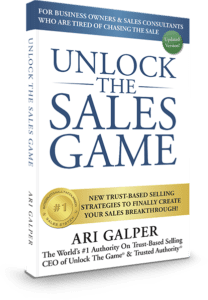
Unlock the Sales Game: New Trust-Based Selling Strategies to Finally Create Your Sales Breakthrough!
I asked myself at that moment, “Why were they afraid to not tell me the truth?”
If they want to use you, they’re not going to tell you.
I realized at that moment that there is an invisible river of pressure that flows underneath every sales and pre-sales conversation you have with someone. If you aren’t constantly aware of that going on, you don’t remove the pressure from the sales process, you will always never build enough trust with someone. They will feel uncomfortable and vulnerable to tell you where they stand. Therein lies the core behind our whole Unlock The Sales Game mindset approach where our objective is shifted from letting go of the end goal of the sale, to instead focus 100% only on building trust with people.
This is great and you’re busting the myths. The old myth of sales training that I went through back in the day was, “Try to get them to say yes as many times as possible. By the time you ask them to buy, they’re already nodding their head and they’re used to saying yes.” You’re flipping the script on that and saying, “No, get them to say no.”
I’m saying your goal is not the sale. Your goal instead is the truth of where they stand. That mindset shift is everything. We’ll walk through examples of how to use this. That mental shift is a game-changer because that allows you to be present with people and believe me, they can tell a mile away if you think you have that next step with them in a split second. That’s where we’re going to go with this.
That’s an amazing story to open the show with. Thank you. I love the story. It’s memorable. It tugs at the heartstrings to do everything right and there’s a takeaway, which is even better. That’s what a good story does. Is there anything else you want to talk about in terms of storytelling before we move on to some other myths that you’re busting?
That is the story and the premise behind this whole shift in thinking, and that was a painful experience for me. That pain got me to the truth of why is it going on in the industry and the fact that we accepted it as normal. We’d be conditioned to not be aware of how to be able to penetrate that wall of distrust. I hope that your readers can learn from this and use some of what I’m about to share, to help them break through that wall of distrust, get the truth to become more successful and not chase ghosts. Do you know what ghosts are?
It’s like being ghosted in dating. You don’t hear back from them.
People will say, “It sounds good. I’m interested. Call me next week.” They spend 80% of the time chasing ghosts and never know the truth of where they stand. If this is a total flip, you can eliminate the chasing game, imagine their possible revenue opportunities, and your state of mind and insanity as well.
[bctt tweet=”Stop chasing ghosts.” username=”John_Livesay”]
Especially that because that’s what causes burnout. This fear of rejection is high in salespeople. One of the things I’ve heard is whoever is asking the questions, that’s who controls the conversation. Is that a myth or do you think that’s true?
There’s a layer beneath that. It’s the person that is building trust cautiously with the other person is the one who is able to create this bubble of vulnerability, while the other person feels comfortable to tell them the truth. From that point forward, you both can decide if you’re a fit together. If you’re a fit, then you either engage or you disengage. We set up the situation so you’re not locked into a yes mode. You open it up to see if it’s a fit or not. If it’s not a fit, you disengage. You walk away with your integrity and your head held high.
One of the things I’ve enjoyed watching your videos from your talks is this concept of the two most common objections we all get. It’s I don’t have enough money, this is too expensive or this isn’t the right time. You have a wonderful phrase that you teach people that I would love you to share. From there, that’s going to trigger all emotion in our audience and more questions. Whatever my objection is, you have the same answer to it. “It’s too expensive. Sorry, we don’t have enough time. This isn’t the right time for us to make a change.” You say what?
With typical traditional selling, when you get an objection, you’re supposed to overcome it. We’re taught that by all the gurus. The problem with that is if they’re giving you an objection that they believe is true and you try to overcome it with them, you break trust with them instantly. The sale is overdone right at that moment because you’re trying to overcome something that they believe is true. You lost the ability to connect with them. I have a whole body of work around trust-based languaging. Not scripts, but phrases you use that does not risk the relationship and re-engage again in real-time and natural flow. Let’s get to this example. We have training around this, but the concept is this. If someone gives you an objection coming to your direction like the Aikido thing, if someone gives you a pressure on you like, “Your price is too high,” for instance. What would be the number one response to that in sales?
“You don’t see the value of it. We have a payment plan,” whatever.
You defend yourself, “We’re the best. We have this.” You start to defend, get your shoulders up and say, “We can work with that.” We either get passive or aggressive. There are only two options. Our approach is different. We’re going to diffuse the pressure to preserve the relationship to re-engage again. It’s the same scenario. The guy says that your prices too high. In this specific situation, what we’re going to say is, “You’re absolutely right.” Here’s the operative word. “It can be perceived as high. If you haven’t had a chance to use it in your company, see the results, document it, and get the ROI. You’re absolutely right, it appears that way from the outside in. There is no doubt about that.” Now stop for a second at the role play. What did I do right there?
You made me feel right. I then feel like, “I’m not arm wrestling you anymore. You said I’m right. You gave me a reason why I should feel right.”
They’re expecting you to defend yourself or negotiate lower prices. That’s the game. That’s called the sales game. We unlock that process by going, “I’m not going to play that game with you. It’s nothing personal, but I don’t operate in that level of that plane.” It can be perceived as high as a true statement. Can it? It’s perceived because you hadn’t had a chance to use it. Obviously, it’s going to be high. It’s logical. It makes sense what they’re saying. You then re-engage with this, “Would you be open to us re-looking at the issues you want to try and solve, and make sure that those problems you want to solve have enough ROI behind it to justify solving them?”
You could use this in a lot of scenarios. You and I are both speakers and we have agents that typically negotiate for us, but that price thing comes up all the time. We’ve never paid more than X for a speaker and that’s below what your minimum is. I love that you could say, “I could see where that would be perceived as a high fee. You’ve never heard me speak. You’ve seen a video clip. Would you be open to going back to the whole purpose of what the sales meetings about in the first place?” It’s like, “We get one more salesperson to close one more sale at $50,000. That seems like that would be an ROI, but maybe not.” It’s that conversation where they’re going, “I got it.” When I called on ad agencies, their job was to get the lowest cost per $1,000. They analyze how many readers you have and you get a bonus if you get them to lower their price every year. The price goes up. We didn’t have any of this training. It was a nightmare for everybody.

Unlock The Game: If you’re trying to overcome an objection that the people you’re selling to believe to be true, you’re breaking trust with them instantly.
It might be helpful if you want to go through some of the sales myths that might help uncover some of this, that people are probably going to be shocked. We’ve been conditioned over the years to believe certain things. Our construct is narrow and I want to bust some of the myths that I think will be helpful for you to understand where we’re coming from. One key myth is this concept called, sales is a numbers game.
Keep calling and calling. I hate that.
The more contacts you make, supposedly the more sales you make. We discovered in our research that it is not how many contacts you make anymore. It’s about how deep you go on each conversation, not how good you are at making more calls, having more contacts or more LinkedIn connections. It’s not about that. It’s how good you are at trust-building. If you aren’t thinking about how good you are at trust-building, you’re missing the whole point of your time and efforts. That’s number one. Number two is that the sale is lost at the end of the process. I’m sure you’ve been there before, John, where you had to deal pending and you worked hard for it.
It’s a green light and at the end, it falls through. They don’t send the contract over and you’re like, “What the heck? What happened?” We discovered in this economy now that the sale is not lost anymore at the end of the process. You lost it at the beginning of the process. I’ll prove it to you in a fun way. If someone calls you on the phone and they say to you, “My name is, I’m with, we are a.” What goes through your mind in about three seconds?
You’re a solicitor.
It’s over at hello. I’ll make the case that most of your readers are losing their sales, not at the end of the process. We’re losing it where?
At the beginning.
It’s the opposite of what they’ve been trained to think about because it’s always been about the sale. It turns out that if you don’t build enough trust at hello, it’s over there and not the end.
I was hired by a real estate company to train their real estate agents that answered phones about setting up appointments for listings and things. They were saying what we’ve all heard 100 times, “To whom do I have the pleasure of speaking?” I said, “That’s so scripted. Nobody talks to people like that.” They go, “We want to get their names so they can use their name in the conversation to try and build trust.” I’m like, “Let me role play with somebody.” They’re like, “You haven’t been trained as an agent, are you sure?” I’m like, “It’s fine.” I said, “This is John with so-and-so real estate.” The person goes, “I have a question about a listing in a house down the street.” I’m like, “I’m sure you didn’t catch my name because I said it so fast at the beginning. My name again is John and you are?” It was little things that people don’t even begin to have a real authentic conversation.
[bctt tweet=”Sales is not a numbers game. It is a trust-building game.” username=”John_Livesay”]
There’s one more myth I’ll cover and this is a big one. The idea that rejection is a part of the sales process and game. It came from the old sales managers who said to you over the years, “If you can’t take a no, if you weren’t tough enough, if you can’t get out there and take the bullets, you aren’t made for success.” That’s the old messaging that we’re being brought up to believe. We discovered that rejection is triggered by certain things you say and do unconsciously that caused the other person to put their guard up, push back, make you chase them, and not tell you the truth.
I brought enough personal triggers in my own life. Let’s get trigger around rejection. What causes people to reject us?
Let’s talk about the principles that will roll into it then behind our Unlock The Game concept. Our core principle number one is the idea of always be diffusing pressure in the conversation. Always seeking yourself, “How can I hit the sales pressure out of this so do they feel I’m authentic and I care about them,” which is hopefully where you’re at. Let me give you an example of a live scenario using our languaging and our approach to how we handle this. Let’s say you’re on the phone with somebody for a first phone call or first lead. You’re on the phone with a potential client. Good conversation and it looks like a good opportunity for you. The chemistry is good. It all looks positive and you’re heading to the end of the call. The call comes to a close. What do we normally say to a call like that? We say, “How about we get together? How about we have the next step?” We’ve been trained to move people forward, that’s how we’ve been trained by the old gurus. What could happen if you try and move somebody forward and they aren’t ready yet? What do you break with them right there at the beginning of your process?
I feel pressured. I’m out.
Your trust is over. They won’t tell you this the whole time that it’s over. They’ll play the game with you, but you’ve broken the trust. The same scenario, but our mindset and our languaging. The call is going well. It’s your first to call with somebody, with a good opportunity. The call comes to an end, and rather than saying, “How about we schedule another call? How about we move forward?” What we say instead is, “Where do you think we should go from here?”
They’re in the driver’s seat.
What’s happening there is a power shift where they now feel they’re in control. When you say that to somebody, they’re usually in a state of shock. They can’t believe somebody in business asked them what they want to do. This is astounding for them. Do you know what starts to happen? They say to you, “I’ve got one more question.” All of a sudden what comes out is the truth. At the beginning of your process, you begin with them by you not trying to move them forward. It is counter-cultural to a traditional sale which is all about moving them to the next step.
Believe me, they know when they’re on your process and it’s over when they feel that from you. When you say that to somebody, you send the message, “I’m with you now, 100%. I’m listening.” Listening takes active concentration, not hearing, which is passive. One of the triggers of rejection is languaging. The phrases that you use to trigger an association of you being with the negative salesperson, stereotype. The other trigger is delivery. What do you notice when I said, “Where do you think we should go from here?”
A lot of pauses and a soft voice. I’m always saying that competent people are comfortable with silence and stressful people are not.

Unlock The Game: Most salespeople don’t lose their sales at the end of the process. If you don’t build enough trust at hello, it’s over there and then.
If you weren’t centered in your mindset, you’ll rush through it, you’ll sound scripted and unnatural. When you lower your voice and you’re relaxed and you say that to somebody, they feel almost obligated to step in, save you and bring you back up again. It’s human nature to step in to help people who aren’t walking on top of them. Part of the languaging and being centered in our mindset is about how to deliver this in the most authentic way possible to send the message that I’m not here for the next step. I’m here for your challenge right now.
You have another question that I love when people give an objection that we talked about. Would you set that one up too? I’m guessing that’s one of your principles. It’s one of the all-time favorites.
Why don’t you give me an objection you imagine?
“This isn’t the right time for us to make any changes.”
We have this magic phrase that we use whenever we get resistance like that. Things like, “We don’t have the time or we don’t have the budget.” How about, “We’re using somebody else. Thank you.” That’s a classic one. Let’s say if someone says we already have another vendor or we’re using someone. It’s common. The phrase you always say to create enough space for you to stay calm and re-engage again is you are going to say, “That’s not a problem.” “I don’t have the time.” “That’s not a problem.” “We don’t have a budget.” “That’s not a problem.” That’s the first thing you say to slow things down, to slow motion because you’ll react fast with defensiveness when someone challenges you like that. “We can’t afford it.” “Wait for a second, you can’t.” We’re conditioned to react and hit back to overcome the moment.
We get stuck in the game and we’re like, “How did I get here?” If you can stay centered and relax and use, “That’s not a problem.” When they hear that from you, they go “Really, it’s not a problem?” They get confused. They’re expecting that. They’re expecting a reaction back. When you say it to them, “That’s not a problem,” they open their mind up waiting for what’s next. There is the next step. The first step is to defuse the moment and have them recognize you’re not going to play the game with them anymore. They can back off a bit. After saying, “That’s not a problem” when they say to you, “We’re using someone else,” you can say this, “I wasn’t looking to replace who you’re currently using.” That’s the first thing you say. What does that do by saying to somebody, “I wasn’t looking to replace what you’re currently using.” What’s happening there?
That’s even more confusing because it’s like, “If it’s not a problem and you don’t want to replace the person, are you thinking I have a budget to hire two people?”
The wall of defensiveness is coming down. They’re like, “That’s good.” You’re relaxing them by diffusing the pressure with the languaging. You’d say, “I wasn’t looking to replace who you’re currently using.” You then say this, “I wanted to see if you’d be open to a different perspective on how you guys track your visitors that you may not have access to before or seen before. Would you be open to that?”
That’s it. Now, you’ve taken down that defensiveness, and 9 out of 10 people love to think of themselves as open-minded. It’s part of their job to look at all the options. Even if it’s just you and you’re running your own show, you’re like, “I’m an open-minded person. No, I’m not open to hearing any other options that are available to me in the world.”
[bctt tweet=”Sales only sucks if you focus on the end goal instead of on the truth.” username=”John_Livesay”]
The keyword there is, would you be open? The sales world is typically, would you be interested? Never again use the word interested forever after this show. That’s the sales word that sets alarms off. Instead, always use these words, “Would you be open,” because the word open doesn’t force them into a yes or no. It creates an open space. It gives them permission to tell you the truth. We get no space to engage as we’re wired to chase the next opportunity.
It’s a whole game changer. I can see why you’re in such demand. The book is called Unlock The Sales Game. You can see how Ari has shown us how to unlock each lock on someone’s head, their heart and their gut. I believe you first got to make people safe. It’s a fight or flight response. Once you diffuse that response, then you might get them to say, “Would you be open,” and then, “Yes.” It then can get into the head a little bit without all those other blocks and reaction happening.
If you remove the noise from the sales process you create a deep human connection, which is called real trust. Not fake trust. Fake trust is the whole rapport-building thing, “How are your kids doing? I love that golf on your wall there. How’s it going over there in Milwaukee?” That’s fake rapport. We’re talking about real trust. It’s when you remove the noise, you connect with them at a deep level, and they can sense that you are present in their world, not your world. I’ll give you one key phrase for everyone to know, and take an oath with me to remove this forever for the rest of your lives.
It’s open, not interested, then we’re no longer going to say the next steps.
This is a new one now. For those who have been in sales for a long time, this might hurt a bit. I’m going to ask everyone to remove this phrase forever and never use it again, it’s follow-up.
I’m following up on a call, a voicemail or an email.
What’s the only industry in the world that uses the word follow-up? It’s sales. You’re trying to be heart-centered and authentic in helping people but your languaging screams the opposite, “I’m giving you a call to follow-up on our last proposal.” They’re like, “What?” It’s over at hello. There are classic ones. Do you remember the old days? There are a few other ones like, “I’ve given you a call to check-in.” That’s a classic one. There’s one more, “I’m giving you a call to touch base.” It’s classic sales 101, the 1980s. These were all horrible words that will kill your trust right there. Let me give you the answer to all of this, which I have in our work here.
Rather than say hi or tap an email, “I’m writing to you to follow-up.” You say, “I’m giving you a call to see if you have any feedback.” Don’t ever ask questions. That’s cross-examination like a lawyer. You say, “I’m giving you a call to see if you have any feedback on our previous conversation, any feedback on our proposal or any feedback on my previous X.” You go backwards, not forwards. Follow-up and touch base is moving things to the sale. When you say feedback, you’re going in the opposite direction. You’re moving the momentum. You’re taking the pressure out. When you say to them, “I’m giving you a call to get feedback on our previous conversation.” Do you know what starts happening? They start talking. They tell you the truth. They tell you everything like, “This guy was right.” It’s like a dam opens up. They’re like, “I got some feedback for you. Here it is.” It comes rolling out their chest. It’s amazing what happens when you change your mindset and your languaging.
That has got to be one of the most insightful things I’ve ever heard from a guest, and I’ve had over 300 guests. The concept of pressure moving forward, destressing people, let’s go back and see if there’s feedback on what we’ve discussed. It causes you to rethink it without making you move forward at a pace that you’re not ready to. How can people find you to hire you as a speaker, to take your course or learn more about how to unlock the sales game so that they can get feedback and never ask people if they’re interested in anything or ask anybody for a next step?

Unlock The Game: Never say “interested”; always say “open.” Never “follow up”; always ask for feedback.
Go to UnlockTheGame.com and there is a free course that they can register for. My book is there. We have a couple of interesting courses that we have in our membership program. One of the courses we finished is called the One Call Sale. How do you onboard somebody on a preset consultation phone call without closing, without pressure, without proposals, and without next steps out of one phone call? It’s a powerful course. You can check that out when you’re in there. After our free course, you can access that. This requires somebody who’s willing to challenge their own thinking and evolve into the future. If you’re stuck in your old ways, please do not approach us because we can’t help you. You got to be open-minded and challenging your current thinking.
It’s a choice. We can continue to be like what Blockbuster was and be, “This is working. Why would we change it,” or be like Netflix and go, “Maybe we should come up with something else besides mailing out an envelope with a disc in it.”
I’ll tell you a funny story. You’ll enjoy this. I was brought to a company in 2019 with a big opportunity, a big sales team and a multimillion-dollar business. I did a talk with a sales team and they enjoy what they heard. They have me come in and discuss moving forward. I told them that my fee was high on a retainer basis. I came in to the conference room myself, they had the sales and the CEO in this conference room. It’s a similar story before, but a little different. The guy says to me, “Ari, we like your program and stuff, but your fee is way too high. We’ve never paid anybody that money before as a consultant from the outside. We need from you a proposal. We need it broken down by ROI. We need to see a document that lays this so we can go to our board to justify getting that fee.”
That’s not a problem.
This is more black belt level now that I’m getting done. What I said to him was, “We don’t do proposals. We don’t know how to do proposals. We’re not in the proposal business. We’re in solve the sales problem business. That’s what we do.” He was in complete shock, John. He turned white and said, “What?” He then said to me, “For that amount of money every month, how much of your time do we get for that?” I said to him, “Not much. It’s not about time. It’s about focusing in on solving the problem. If we have to do a lot of time, that means we’re not focused.” He said, “We’re doing well already. We’re doing $8 million a year. We have sales coming in. Why should we invest in this to change?” I said, “It’s not about how much money you’re making. It’s about the 80% that you’re losing by chasing all these deals that never get closed that falls through your fingertips. All those losses justify this.” The CEO in the corner is listening to the whole thing. He gets up and he says to us, “Enough of the game’s already, just invoice us. Let’s get you paid and get it started right away.”
You have to be confident in who you are and what you do, and not be attached to the results. People can smell that a mile away, just like in dating, if you’re desperate or not. If you are that confident in what you do and you kept shifting the focus of time.
Your prospect wants to frame you. They want to put you in a frame, which gives them control to trigger like a pinball in the pinball machine. They want to be able to control everything, make you bounce and jump, and put your hopes. They want you to play the game with them. We unlocked that game in the beginning. We let them know that we don’t play those games, but we will focus on solving your problem. It’s up to you to choose what you want to do. We walk away from those who can’t accept that and that’s the end of it.
You look at how much time you saved by not chasing people who are going to ghost you anyway.
It’s called the hopium. Do you know the hopium drug? We hope we got the deal and we never get it. The hopium, “It was a great meeting. They loved it.” You go back to the office, “We’re looking good.” You then have this hopium drug in your body. You are so excited and you chase them down, and they will call you back. You just detox the whole hopium. You’re like, “Sales suck,” because you don’t focus on the truth. You focus on the end goal.
I love that it’s about how many deep relationships you have, and not how many conversations you have. That’s true in social media and everything else. What a great gift you’re giving the world, literally. Thank you for being on the show and sharing your wisdom and your insights. I appreciate you. Thanks.
Thank you, John.
Important Links
- Unlock The Sales Game
- https://UnlockTheGame.com/
- Better Selling Through Storytelling Method Online Course
Wanna Host Your Own Podcast?
Click here to see how my friends at Podetize can help
Purchase John’s new book
John Livesay, The Pitch Whisperer
Share The Show
Did you enjoy the show? I’d love it if you subscribed today and left us a 5-star review!
- Click this link
- Click on the ‘Subscribe’ button below the artwork
- Go to the ‘Ratings and Reviews’ section
- Click on ‘Write a Review’
Love the show? Subscribe, rate, review, and share!
Join The Successful Pitch community today:
- JohnLivesay.com
- John Livesay Facebook
- John Livesay Twitter
- John Livesay LinkedIn
- John Livesay YouTube
Big Little Breakthroughs With Josh Linkner
Posted by John Livesay in podcast | 0 comments

Many people are stuck with exciting ideas that could cause significant changes but cannot bring them to the surface because of the lack of resources, funding, and motivation. But by embracing creativity and doing even the smallest, everyday innovations, you can finally realize your full potential. John Livesay is joined once more by Josh Linkner, the author of Big Little Breakthroughs, this time to share how the best concepts always start with lousy drafts and several revisions, all fueled by that single spark just waiting to grow. Josh also discusses how jazz music taught him to become creative in real-time and as fast as possible. Furthermore, he talks about his concept of “dinner mint,” which is all about making a huge impact even with just the smallest yet interesting effort.
—
Listen to the podcast here
Big Little Breakthroughs With Josh Linkner
How Small, Everyday Innovations Drive Oversized Results
Our guest in is Josh Linkner. He’s the author of Big Little Breakthroughs. We talked about creativity and how everyday people can become everyday innovators. Let go of the thought that you’re not creative. It’s not true. He said, “Start before you’re ready.” We also talked about how jazz is creativity in real time. He has a great tip about making sure that you do something that he calls the dinner mint. Enjoy the episode.
—
Our guest is Josh Linkner, who you might remember from being on the show earlier. He’s got a new book out. He is known as a creative troublemaker. He passionately believes that all human beings have incredible creative capacity and he’s on a mission to unlock innovative thinking and creative problem solving to help leaders, individuals and even community soar. He’s been the founder and CEO of five tech companies which sold for a combined value of over $200 million. He’s the author of four books, including the New York Times bestsellers Disciplined Dreaming and The Road to Reinvention.
He’s invested and mentored over 100 startups and is the Founding Partner of Detroit Venture Partners. Josh serves as a Chairman and Cofounder of Platypus Labs, which is an innovation research training and consulting firm. He’s twice been named the Ernst & Young Entrepreneur of the Year and is the recipient of the US Presidential Champion of Change Award. He’s also a passionate Detroiter, a father of four, a professional-level jazz guitarist and has an odd obsession with greasy pizza. Josh, welcome back to the show.
Surely a pleasure to be with you.
[bctt tweet=”Creativity is a skill anyone can work on.” username=”John_Livesay”]
Likewise. Your latest book we were talking about, Big Little Breakthroughs: How Small, Everyday Innovations Drive Oversized Results. Before we jump into your personal story, let’s dive into the story of the book cover, for those who haven’t seen it yet, which looks like a piece of art.
The whole principle of the book is democratizing innovation. We hear about people like Elon Musk and we can be happy for them but you say, “I could never do that.” This book is for innovation for the rest of us. It focused on helping everyday people become everyday innovators. What it does is dispels the myth that innovation has to be giant. In fact, it encourages people to think small and the notion is by putting together lots of small micro innovations, lots of everyday innovations and making a habit of creativity. That is what unlocks people’s potential. The book cover with that context, it’s a pointillism painting. Any one of us can put one simple dot of primary color on the page, the actual individual dot isn’t that difficult. When you put enough dots in the right order and it adds up to something great, that was the art form of pointillism and the inspiration for the cover of the book.
Let’s tap into your expertise in jazz because that’s an easy connect the dots, no pun intended. The way to talk about innovation and innovation is part of jazz.
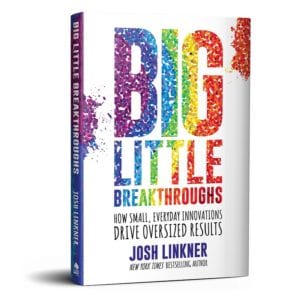
Big Little Breakthroughs: How Small, Everyday Innovations Drive Oversized Results
Jazz is a beautiful art form, in my opinion, whether people like listening or not. It’s cool because it’s spontaneous innovation. It’s creativity in real-time. When I play jazz, less than 1% of the notes are on the written page and the rest of it you have to improvise as you go. It reminds me of the business world that we’re all living in. We’re not given an instruction manual. We have to figure stuff out as we go, which is basically like playing jazz. The cool thing that I learned is that jazz musicians themselves, certainly me included, are no more creative than anybody else but the cultural boundaries of playing in a jazz combo encourage responsible risk-taking and these little breakthroughs along the way. I would say that individually, we are all creative like all human beings are creative. If you put them in the right setting and give them the right structure, we all can to a degree improvise our way forward.
This concept of a lot of people being told as a child or as a self-esteem issue is like, “I’m not creative. I’m not innovative.” If I would look at the theme of your whole career and all of the books that you’ve put out, that’s the myth that you’re busting. When people do start to realize that, “Maybe I am creative and I am somewhat innovative. It doesn’t have to be comparing myself to Elon Musk, I can do it.” What I love about this book is you give us an anatomy of an idea almost like a doctor. We start with this concept of how do we expand our input base? What are your ideas around that?
You touched on something important there, which is too many people don’t feel creative at all. To me, that’s a tragedy. It’s not my opinion. The research is crystal clear that every human being has enormous reservoirs of creative capacity. Your brain is wired as the same as Leonardo da Vinci’s, Paul McCartney’s and Beyoncé’s brain. We have the hardware and capacity, it’s a learned skill. It’s not 1 out of 1,000 of us are creative and the rest of us have to suffer. The other key point here is that we can be creative in our own ways.
[bctt tweet=”Start before you are ready.” username=”John_Livesay”]
I play jazz guitar pretty well. I can’t draw a stick figure if I tried when my third-grade teacher looked at my art and says, “You’re not creative,” what a tragedy. I would encourage everyone to expand your definition of what creativity looks like. We think it only means painting on canvas, doing interpretive dance or something. Why can’t you be creative as a customer service rep, furniture manufacturer, car salesman or writing a line of code? My point is we can all discover ways to express creativity but we all absolutely have it within all of us.
I remember when I was taking a Photo Journalism class in college and the professor said, “Photography is painting with light.” Suddenly, for me, a light bulb went on. I’m like, “I can never paint but I could paint with light?” The way I structure apertures on camera. It was a completely eye-opening way of expressing creativity for me. The other thing you talk about is sparks. What sparks an idea? What sparks a conversation? What you’ve tapped into here is an unspoken feeling that so many people have which is, “I’m a perfectionist and if I can’t do something perfectly, I’m not going to even try. I’m certainly not going to say anything out loud.” Yet you have a concept around encouraging people not to ignore those sparks.
Backing up, you started talking about the anatomy of an idea. I answered a different question that you asked. What I did is I tried to put the creative process, which seems squishy, mysterious and stick it under a microscope and say, “Could we dissect that? Is it wizardry that is some magical power or is it more a magic trick that any one of us could learn to do?” That’s what I discovered. If you dissect an idea, it has different components. The first one you talked about is inputs. Before you come up with an idea, what are the inputs going into it? It’s the ingredients before you make a new stew. Those inputs could be your background, experience, training and learnings that you have.

Everyday Innovations: When you have an idea, do not pressure yourself that it has to be the final work product.
In short, if you want to be more creative and have more creative outputs, it’s helpful to have more creative inputs. The second little part of the anatomy that you’re discussing there is called sparking. You’re exactly right. Too many people think that an idea has to be perfect at launch. It pops out of your head, it’s in a binder, there are tabs and everything lines up. It’s perfectly formatted for the PowerPoint and there’s this bulletproof financial model. When we put the pressure on ourselves to have a perfect idea upon launch, we then look at the first draft and say, “I’m not very creative.” The truth is this. There’s a wonderful saying, I love this, “The one thing that great authors have in common, lousy first drafts.” It gets back to this notion of sparking. When we have an idea, let’s not put the pressure on ourselves.
That idea has to be the final work product. It’s the beginning, not the end. It’s a spark. We’ve got to let ourselves have some time sparking and not judging and not prematurely extinguishing those sparks. Realizing that an initial idea might be flawed but it’s the idea that leads to the idea that leads to the other idea that becomes the magic you’re seeking. In that sparking phase, I want people to let their hair down, send your linear analytical mind off for a Starbucks and let your creativity flow.
Not judging yourself and being in a safe space where other people aren’t judging. From my advertising days, it’s almost like improv, “Yes and not, that’s stupid.” It’s filling in that acting analogy. You talk about taking it out for a little audition and this is a part of your expertise in why you’ve been so successful in startups, I believe. It’s you understand before launching something in a big way the importance of getting a product-market fit, if you will or somebody will pay for something that you think they need. In the framework of auditioning and ideas, it’s clever. What is it that people could do to start an easy audition?
[bctt tweet=”Jazz is creativity in real-time.” username=”John_Livesay”]
Thanks for that. I’ll get back quickly on your previous point. We want to give ourselves creative freedom. If you’ve ever been in a meeting, I’m sure we’ve all been in this meeting, there are five people in the meeting. One person has an idea and the other four become the instantly appointed idea police. They tell you all the reasons that idea is never going to work. We need to give ourselves the creative freedom to let the ideas breathe. Back to auditioning, that’s the other big obstacle when people think about innovation. First of all, it has to be a billion-dollar idea or it doesn’t count, which puts so much pressure on you that we end up doing nothing. We agree that we can have small ideas that are still meaningful.
The second thing is instead of having an idea, the way you test it as you roll it out to every customer and your entire company all at once, why don’t you give it an audition which is embracing an experimentation mindset? The best way to de-risk ideas is to test them before launching them fully. When I say test them, it’s small controlled tests. Next time, fix-money tests. As a leader and when I say leader, you could be a leader of yourself, leader of a big company or anywhere in between, we should all be giving and conducting 5 or 10 tests a week. Those little experiments or auditions are our wonderful chance for us to see if there’s any product-market fit. If there is, double the size of the experiment. If not, let it go. There’s nothing wrong. We’ve been told that failure is like a four-letter word. There’s nothing wrong with 4 out of your 5 ideas not working out at all because that one that’s left, that’s the gem you might be looking for.
When we also say, “Now I need to refine something.” This analogy you have of sanding something to perfection. How do you know when something is ready to go? In your book, there are many versions of the manuscript but at a certain point, a lot of people have analysis paralysis. “It’s still not ready to let this out into the world.” My question around the refinement stage is when is good enough, enough? When do you feel like this is something that people should not keep obsessing on?

Everyday Innovations: The best way to de-risk ideas is to test them before launching them fully.
There’s no magical answer, obviously. It depends on the medium of work that you’re shipping. We were going in order. You talked about sparking and auditioning. Refining is, let’s say you audition 100 ideas and there are three remaining candidates. You narrow the field. The question there is, how can we polish them up before launching them? That interim phase is interesting. One of the people that I covered in the book is Lady Gaga. She says, “We often think of this creative act. You write the song and then it’s done. My creative process is I throw up ideas and it’s fifteen minutes. I might spend two years refining it.”
That refinement phase is often overlooked. The difference between great work and mediocre work is the number of refinements. That being said, you bring up an awesome question. How do you know when to launch? My general belief is when you can look yourself in the mirror and know that you’re putting your best foot forward but at the same time, there’s something magical about getting going. It depends again on the medium. If you’re writing a book that’s going to be in the Library of Congress, that might be one thing. Most of us aren’t always doing work that’s permanent. If you’re writing a report or you’re making a sales pitch, I would recommend this principle start before you’re ready which is polish it up, refine it the best you can but don’t wait. Take the initiative, get it out in the market, be willing to adjust, course correct, tweak, adapt and pivot once it’s already launched.
You also brought up an interesting thing of all these ideas being curated down to the top three. Of course, you’re one of the top speakers on creativity, innovation and speak to companies around the world on this. That’s why Big Little is important for the world to know about how to have these breakthroughs in a corporate environment. Oftentimes, people forget that as speakers, we have to convince somebody we’re 1 of 3 choices. You are so good at over-delivering and figuring out why you are what I call the “irresistible” choice. I thought it would be worth asking you about that because I can’t imagine, interviewing you and not asking about your successful speaking career and how you’re applying the Big Little Breakthroughs in your own speaking career.
[bctt tweet=”The difference between great work and mediocre work is the number of refinements.” username=”John_Livesay”]
We spent a time so far chatting about this anatomy and of idea. Half of the book is focused on what I’ve discovered to the eight-core mindsets of everyday innovators. In the book, I spent over 1,000 hours of research and interview people all over the world. Amazing people, champions of industry, CEOs and billionaires but also a lot of everyday people that have done cool stuff. What I discovered are these common patterns or mindsets that are generally embraced. One of those mindsets directly ties to your question about how do you stand out and win in a pitch situation. That principle is what I call “Don’t forget the dinner mint.” Here’s the gist of it. I’m sure you’ve been to a nice restaurant. At the end, they say, “Here you go, sir, here’s this beautiful little piece of chocolate.”
If you order the chocolate, it would be nice and all but it’s the unexpected surprise and delight, the over-delivery even by a teeny bit that makes the meal itself stand out. My suggestion for those pitching because obviously, that’s the theme of the show is you’ve got the basics, the fundamentals of your pitch, the meat and potatoes down then ask yourself this question, “What’s the dinner mint?” I define a dinner mint is no more than 5% extra effort, money or resources but a little creative flourish, a little something extra and a little bit of surprise and delight that elevates your pitch so that it stands out completely from the competitive set. We can apply that sense of creativity to a product, pitch, process, interview or anywhere in between.
One of the other things you write about, which I love now that I live here in Austin, the theme for the whole city is, “Keep it weird.” You talk about being obsessed with reaching out for the weird. Can you give an example of what you mean by that?

Everyday Innovations: A little bit of surprise may elevate your pitch so that it stands out completely from the competitive set.
We tend to, as human beings, gravitate towards what we know. When you make a decision in life, big or small, you might say, “It’s 1 of 3 things. It’s either A, B or C.” Reaching for weird is saying, “Consider, is there a D or E?” I like I to call them option X? Option X is that weird, unorthodox, bizarre idea that could perhaps make all the difference in the world. I cover a whole bunch of them in the book but one fun that comes to mind. There’s a beautiful seaside town in Iceland. It’s idyllic and it’s lovely but they were having a problem that over the years, traffic incidents involving pedestrians had grown by 41%.
That’s a real problem. You don’t want people getting hit by cars. Think about the obvious approach like your A, B and C choices. You could hire more police officers, install expensive new lighting or issue a bunch of fines but they chose the weird approach. Here’s what they did. They repainted the crosswalks as a 3D optical illusion, so when you drive your car up to the sidewalk, it appears that there are these concrete slabs floating 3 feet in the air. There’s absolutely no way you’re going to barrel through the intersection. It added almost no cost and traffic incidents dropped significantly. Those are these magical ideas where it doesn’t take a bunch of money or resources, it takes a little creativity to uncover a remarkably better answer.
The thing that I find inspiring about this book, Big Little Breakthroughs, is when you say it’s time to take your shot. I’m reminded of the musical Hamilton. I’m not going to miss my shot. It ties full circle back to what we were talking about at the beginning where many of us might’ve missed our shot if we were told we weren’t creative. It’s not too late to take our shot, is it Josh? How can people do that?
[bctt tweet=”Take the initiative, get your idea out, then be willing to adjust and pivot once it’s already launched.” username=”John_Livesay”]
I wrote a lot about Lin-Manuel Miranda, the author-composer of Hamilton. He’s done a bunch of other work. We look at this person who’s this genius and I could never be him but Lin-Manuel Miranda is an average person like you and me. He has good days and bad days. He sometimes has fear, doubt and insecurity. The first thing we talked about with him specifically is saying like, “We’re all the same. We all can be creators. Don’t put somebody else on a pedestal when we, ourselves, can be as creative.” I did close the book with that song from him and the notion is it’s never too late. To be creative, it doesn’t mean you have to be Picasso. It doesn’t mean you have to be Mark Zuckerberg in the tech industry. Let’s think about how we can build a habit of everyday creativity.
Big Little Breakthroughs that I write about is micro innovations. Those little big breaks do a couple of things. First of all, when you think about taking your shot, it de-risks it. If you think about your shot as betting your entire life, your house and your family, that’s terrible. Don’t do that. I love these big little breakthroughs because they’re way less risky. Furthermore, when you do a series of them, when it becomes part of who you are, you develop a skill around creativity.
Think about da Vinci, for example. His Mona Lisa is the most famous painting in the world but that wasn’t his first painting. He first had to learn to paint. He had to learn to paint every day. He had to pay bad paintings before he could get to the good ones. By doing big little breakthroughs or ongoing habit of daily creativity, you build your skill in the same way da Vinci did. You get the double benefit of that. These little things add up to big stuff, you’re building your skillset in the process and it’s much less scary and risky.

Everyday Innovations: Everyone has so much creative potential to do everyday innovations. If each one brings something to the surface, the world will be a better place.
If you had a closing story or a closing thought about what’s the cost of someone not taking a big little breakthrough? What is the real compelling reason for people to take action now? You talk about how important it is not to wait. I want people to have a sense of urgency to get big little breakthroughs. What happens if we don’t keep expanding, growing and trying new things?
I feel that too often, we gravitate toward the status quo but then we look back at the end of our lives with regret. I know this is going to sound like a Hallmark card but I believe that all of us have this huge reservoir of dormant creative capacity inside of us. What a shame if we don’t bring it to the surface. In the book, I don’t suggest that people aim for 1,000% improvement or something. I encourage people to consider a 5% creativity upgrade. Five percent is within our reach that we could do that. If you and me and others around the world became 5% more creative, my argument is that would create a disproportionate set of rewards for our environment, kids, healthcare outcomes, the planet and society.
If we have it inside of us, if we have this natural resource that’s untapped, what a shame if we don’t deploy it. I hope that people do that. It is within our grasp. I’ll tell you a brief story. I wrote about a guy who I got the chance to interview named Trewin Restorick. You don’t know who he is because nobody does. He’s an everyday innovator, which I love even more. Trewin was an average everyday person. He went to college, didn’t get good grades, graduated barely, got an okay job, tried to make it through life and pay the bills. He was an absolutely everyday person like you and me. He was not Mark Zuckerberg. He said, “I care about the environment.” He was always drawn to the outdoors and he lived in Central London. It turned out that cigarette butts and litter on the streets of London are the single biggest litter problem that they face.
[bctt tweet=”We all can be creators. Don’t put somebody else on a pedestal and think of yourself less.” username=”John_Livesay”]
Not only is it unsightly but small kids or animals could ingest it. It’s a safety hazard, bad for the environment and caused a bunch of money to clean up. They’ve tried all these things. They tried shaving people to take compliance like, “Don’t litter.” Nothing worked. Here’s Trewin Restorick, an everyday innovator, he comes up with an idea. His idea is he created something called the Ballot Bin, which is a bright yellow painted box that’s mounted at eye level. It could be mounted, for example, on a street pole.
Imagine, this bright yellow bin and the front of it is glass. On the front, it’s asking a question such as, “Which is your favorite food? Pizza or hamburgers. Which is your favorite superhero? Batman or Superman.” What happens is there’s a little receptacle. It’s a big yellow ashtray. As smokers see this, they get to walk over and literally vote with their butts. They put their cigarette butt in. It’s like, “I like Superman better,” and because it’s glass on the front, there’s a divider, you see the tally. It’s a real-time bar chart made out of cigarette butts showing which people prefer.
This idea didn’t require a billion dollars, PhD, fancy training or a bunch of stuff. This guy came and made this Ballot Bin. What happened? Cigarette litter was reduced by 80%. He started a whole company around it. It’s in 27 countries right now. It’s making a massive impact on our planet. Back to your original question, what would happen if Trewin didn’t do that? What a mess. We all have so much creative potential to do everyday innovations like that. If we all brought that to the surface, the world is a better place.
The book again is called Big Little Breakthroughs. There’s a website BigLittleBreakthroughs.com. You can also check out Josh on JoshLinkner.com. Josh, thank you so much for writing this book and inspiring us to unlock our own creativity and realizing that process can be fun and also make a difference. What a great combination.
John, thank you so much. Thank you for this wonderful show and all the love you put back into the world. One last comment. I put something together for your audience. If they go to BigLittleBreakthroughs.com, there’s a button that says Toolkit and that requires a purchase. Don’t purchase it. You can use the word PITCH, obviously in honor of your show, as a secret code and they can get access to anything that’ll be on there. There are all kinds of downloads, worksheets, assessments, and goodies free for all of your audience. Go to the website and use the secret code PITCH.
Thank you so much. Thanks, everybody. Thanks, Josh.
Thank you.
Important Links
- Josh Linkner – Previous episode
- Disciplined Dreaming
- The Road to Reinvention
- Detroit Venture Partners
- Platypus Labs
- Big Little Breakthroughs: How Small, Everyday Innovations Drive Oversized Results
- JoshLinkner.com
- https://JoshLinkner.com/toolkit/ – Use PITCH as a secret code for free content
- Better Selling Through Storytelling Method Online Course
Wanna Host Your Own Podcast?
Click here to see how my friends at Podetize can help
Purchase John’s new book
John Livesay, The Pitch Whisperer
Share The Show
Did you enjoy the show? I’d love it if you subscribed today and left us a 5-star review!
- Click this link
- Click on the ‘Subscribe’ button below the artwork
- Go to the ‘Ratings and Reviews’ section
- Click on ‘Write a Review’
Love the show? Subscribe, rate, review, and share!
Join The Successful Pitch community today:
- JohnLivesay.com
- John Livesay Facebook
- John Livesay Twitter
- John Livesay LinkedIn
- John Livesay YouTube
The Amazon Jungle With Rick Cesari
Posted by John Livesay in podcast | 0 comments


The Amazon Jungle cannot be traversed without proper planning, knowledge, and tools. The same goes for every entrepreneur who tries to make it big in its online platform counterpart. Rick Cesari joins John Livesay to talk about finding success in the vast jungle of the internet: Amazon. Rick stresses the power of storytelling in connecting with your target audience, particularly in the form of backstories and customer testimonials. He also explains how to take advantage of digital media and why enticing videos are much more desirable to Amazon buyers than simple text and pictures.
—
Listen to the podcast here
The Amazon Jungle With Rick Cesari
Our guest is Rick Cesari, the author of The Amazon Jungle. We talk about how it is a jungle out there trying to sell products on Amazon and break through the clutter. He’s got the perfect experience in his book and in this interview to show you how to make your brand stand out, how to connect, and more importantly, the power of using video as a way to engage people emotionally. Enjoy the episode.
—
Our guest is Rick Cesari who’s been a pioneer in the direct to consumer marketing industry for more than many years. Using his carefully vetted direct response strategies, he helped many build iconic brands and products, including the Juiceman, Sonicare, George Foreman Grill, OxiClean, Clarisonic, Rug Doctor, and many more. As an entrepreneur, author, and speaker, he’s the recognized leader about anything to do with the video. We all know video is important. He’s on the cutting edge of direct response and branding campaigns and his book, The Amazon Jungle talks about how to navigate that complex marketplace. Rick, welcome to the show.
John, thanks for having me on. I appreciate it.
Let’s go back as far as you want. Childhood, school, college, whenever, what propelled you to get into the world of marketing, or maybe you saw some infomercial when you were younger and say, “I want to do that?” I’m not quite sure, but I’m sure the answer is going to be interesting.
I’ll go back to college because my degree is in biology. I was hoping to be a Marine biologist one day. I graduated from college and I knew that I had to go on to graduate school if I wanted to do anything in my field. I was living in Florida at that time and I was doing odd jobs. It’s a little bit of a fun bum type of thing. I was a bartender, lifeguard, and anything to make a little bit of money. I started reading a lot of books about how millionaires made money and it turned out a lot of them made it in real estate.
I started reading a lot of books about buying and investing in real estate. Some of the books at that time were like Robert Allen’s No Money Down book, that type of thing. I started going out, doing that and taking some seminars. I met a guy who was putting on these seminars. I went out and did what he said. I bought a house, turned around, sold it, and made like $12,000. For me at that time, I was 21 years old, it was like $1 million. I was happy about it. I called the local Florida business magazine called Florida Trend. They did a story on the guy and his business took off. He asked me to start working with them and that’s how I got into marketing. I got it to promoting real estate seminars.
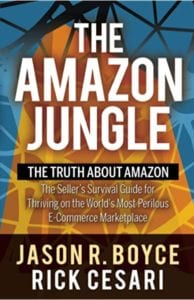
The Amazon Jungle: The Truth About Amazon, The Seller’s Survival Guide for Thriving on the World’s Most Perilous E-Commerce Marketplace
To show you how long ago this was, it was the mid-‘80s. We were using newspaper ads as our advertising vehicle. I did learn a lot of good lessons about direct to consumer marketing and what to put in an ad to get people to respond. Your show is all about the pitch. The pitch was important more from a sales pitch perspective with us because we’d have to get up on stage and convince people to buy a two-day $500 seminar. Little things that you changed while doing the pitch affected the results. That’s why I learned how to sell. I was able to take everything I learned in promoting these real estate seminars, my passion was health and nutrition.
I met a guy who was doing these small seminars and I felt like I could help him be successful. His name was Jay Kordich known as the Juiceman. I took the concept of the models we were doing with real estate seminars but used them to promote juicing seminars or health and nutrition seminars. The name of that company was Trillium Health Products. We were in the right place, right time with the right product. That business grew to $75 million in sales in only four years. We were able to sell it. Timeframe wise is about 1993. We’re still pre-internet. A company out of Chicago named Salton Housewares bought it for two reasons. They wanted our brands that Juiceman and Breadman, but they also wanted to know how to do the type of marketing I was doing.
They brought me a product which turned out to be the George Foreman Grill. I did all the television marketing for that. From that point, I got into the agency business by accident. People were coming to me saying, “Can you make a show or direct response commercial for us?” Sonicare was next and then OxiClean. I was fortunate to work with a lot of great products and watched how the business changed over the years. Starting before the internet to where we did all the television marketing for GoPro and the commercials, but then how you had to have a great online strategy as well as that. I’ve been in the business of pitching products through all of the different campaigns and things that I’ve done and figuring out how to get people to respond to what we said in our pitches.
I’m fascinated especially with something like GoPro, which is all about video. You’re creating a video to promote something that tells people to create their videos. You’re going down the rabbit hole there which is art imitating, life imitating and all that, which is great. When I was selling advertising for Condé Nast, Clarisonic was one of my clients. I used to drive down from LA to San Diego to talk to the agency about that. What a fascinating product and for those who don’t know, it’s a way to clean your face as if you’re getting a facial at home, it’s the quickest soundbite I would have for that.
I have a good kind of Clarisonic story too. The management team that started Sonicare did the marketing for that. They sold that business to Philips Electric for about $500 million.
[bctt tweet=”Stories give you an emotional connection. Video is a powerful way to connect with buyers.” username=”John_Livesay”]
For people who don’t know what that is, that’s for getting your teeth clean.
They held back from the patent or the sale to Philips the Sonic Technology for face cleaning. They started this whole other business, did the same exact marketing, they build good products if you’re familiar with it and started the Clarisonic, but it was a mirror of what they did with Sonicare. In both cases, the thing that launched both those businesses, they had some type of in with Oprah Winfrey and they got the Clarisonic skincare brush on Oprah. As soon as they do that, the business exploded and took off. It’s a fantastic product. It worked well.
Your book, The Amazon Jungle. You’re talking about that. I have a story of a founder I helped with his pitch who because in his culture, it’s a rite of passage into manhood was dropped in the Amazon jungle naked at eighteen after growing up in the Netherlands. He had to survive there for two weeks. I talk about lessons learned from the Amazon jungle, taking it to the concrete jungle of being an entrepreneur as part of his story of why investors invested with him. I love the title, The Amazon Jungle. I know it’s not your first book. What made you want to write this book?
Years ago, I got asked to do the keynote presentation at something called The Prosper Show. It is the main trade show for third-party Amazon sellers. At that time, my background was in direct to consumer marketing, but I knew very little about this platform that a lot of people were having success on. I gave that presentation and my eyes were open because I sat into a lot of the different seminars that were going on. I wanted to learn as much as I could about Amazon. I met a guy there who was at the Top 200 Sellers, named Jason Boyce. It turned out, he lived in Seattle where I live. We started dating together every Friday for coffee and he would pick my brain on what I knew about direct to consumer marketing and direct response marketing.
I pick his brain on Amazon and we came up with the idea said, “We should turn these conversations we are having into a book.” A lot of it is Jason’s expertise. He’s been selling on Amazon since 2003. He built an eight-figure Amazon business and he was at the Top 200 Seller. Now, he has an agency called Avenue 7 Media, but the book is a guide. When you talk about your friend being in the Amazon jungle, that’s scary to me.
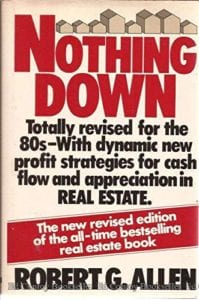
Nothing Down: How to Buy Real Estate With Little or No Money Down
If you do that without some type of guide, knowledge or whatever, you can lose your life, worst-case scenario. With the Amazon jungle, it is like that. It’s very difficult to set yourself apart. There are over a million third-party sellers. How are you going to differentiate your products? The book is a guide for anybody that wants to sell on Amazon from point A to point B. Everything you need to know, even going back to pick a category, a product, how to differentiate your product, how to optimize your listings, a step-by-step guide to be successful on Amazon.
You talk about the importance of sharing your story. That resonated with me that storytelling allows us to build trust. Do you have an example of the client that you’ve worked with that told their story as it related to a product they were selling and why that helped them break through the clutter?
It ties into Amazon a little bit. I’ve been doing that with almost every product we mentioned so far in the show. A good example of one, there were these two sisters that were from Taiwan and they were selling a product on Amazon called Puriya, which is a skincare cream that helps fight eczema. The name of the product was The Mother of All Creams. They were doing very well on Amazon. They came to me and they said, “How can we help our business?” I took one look at their website and the problem with a lot of Amazon sellers is, Amazon does all the marketing for them. They don’t have to do much outside of Amazon.
I felt like, “If they could tell their origin story, it helped their business. It gave some background to their product.” I helped them create an origin story where they grew up in Taiwan. When they wanted to treat an illness, their mother would go to the farmer’s market and buy different herbs. It was this recipe that they put into their product. That’s why they named it The Mother of All Creams because the recipe came from their mother. We put that on their Shopify site. Now, when somebody is on Amazon and saying, “Why should I buy Puriya?” They’ll go check the website and they see that there’s a story behind this product. It’s not some product that’s out of thin air. That’s a good example. Their business is thriving now. Not in the whole part of the story, but it helps build the brand.
That was my question that you’ve answered is the story doesn’t necessarily live in the product description on Amazon, but hopefully, there’s something in there that incentivizes people to go read more about it on the website.
[bctt tweet=”If people like your product or service, they’re more than happy to talk about it.” username=”John_Livesay”]
I’m a huge advocate of origin stories and tell the background story. If I start working with a client, I do a lot of marketing consulting these days. The first thing I do is go to their website, look at the About Us page, and see what happens. When I first come to the website, I’d love to see a video story of who we are, what we do, and why we’re different than the competition. If I want to dive into more detail and if a website doesn’t have that information, that’s one of the first things I tell people to do is to put that story in there because it creates credibility and authenticity to a product and helps their brand in general.
Also, the emotional connection.
That’s the most important part.
Do you have a lot of your clients putting short little videos on their Amazon product, whether it’s a testimonial?
I’m a huge believer in using video. I’ve used it for the many years. First on TV. Now online with Facebook and YouTube. There are all statistics about how powerful video is, and it’s an easy way for people to get information. Amazon is slowly opening up their advertising and even their product listings to include more video. I’m a big advocate of people using video as much as Amazon allows them online. I’m an advocate for doing that.

The Amazon Jungle: Stories create credibility and authenticity to a product and help build a brand in general.
Is that something that they can shoot on their iPhone, or do they need to hire a professional agent?
It’s funny you say that because I come from the background many years ago of you couldn’t go do a video shoot for less than $10,000 because of expensive camera lights. In testing that we’ve done and it’s obvious because of social media, people respond to video that is shot on an iPhone or whatever type of mobile device you have. More so than a very slick presentation. There are a couple of little things and your audio quality is always important. You need to have a nice little microphone and the lighting is good, but if you can go online and look at some basic video production techniques, the technology of mobile phones these days is almost as good as a $50,000 camera, ten years ago.
Since you’ve analyzed many different people selling things on Amazon, what are the common traits that you see that the top sellers have?
What a lot of sellers don’t have and you or your readers can go onto Amazon. Let’s use a coffee maker, for example, big brands that you’ve heard of. You’ll look at the product listing and you’ll see an image, a shot of the product from the front. You’ll see it from the side and they’re boring. They’re almost like something you’d seen in the instruction guide. What I’ve worked with Amazon sellers that we talk about in a book is use those listings. We took this from our success on TV. Each one of those listings should almost be like a magazine ad. If you’re going to show a coffee maker, call out the benefits of the coffee maker and use infographics so that when you’re looking at the image, you talk about the timer.
What’s the benefit of having a timer? You have delicious coffee ready for you when you wake up in the morning. Put people in your images. I was working with another guy who sold gaming products, foosball tables, ping pong tables, and he showed these products, but they didn’t have many people in them. I go, “You got to show people using the products.” It’s a simple thing that seems common sense to a lot of people. You see a lot of Amazon sellers not doing it. Those are some of the suggestions we talk about in the book and I bring to people when they ask.
[bctt tweet=”If you’re marketing a product, you must have a good foundation on Amazon.” username=”John_Livesay”]
It’s a lot like SEO with Google, where part of the problem is, if you don’t show up on the first page of a search for a product, then nobody finds you and you’re helping the book, gives some steps on how to get your product to show up fast.
We do talk about that. Yes, that is a problem. The goal is to be on the first page or first search when you come up on Amazon. We do talk a lot about how to do that with SEO, how you’re advertising both on Amazon and off Amazon can help you do that, people that are leaving reviews, and the importance of reviews. I’m a huge advocate of authentic testimonials. Mainly because they help tell your product story in a very authentic, credible way. I talk to people all the time about using real consumer testimonials on their Amazon reviews, but I tell them to take it a step further and try to get those people that are leaving reviews and do some video testimonials if possible and put those on your website. To me, that’s one of the biggest selling tools that you can have.
When someone left a review for my book, they put their picture with the review, as opposed to being the words, which I thought, “Even just that makes it pop.”
It adds a dimension. I do a little presentation on that. I talk about testimonials and exactly what you said, the basic layer is written with someone’s name, but if you add a photo to that, that’s even better. If you add audio to it, it’s even better. The ultimate is a video testimonial. Believe it or not, advertising wise, the more that you have in that testimonial from the standpoint of video or whatever, it will convert better than just a written Amazon review.
Do you have any tips on what people should do to try and get authentic reviews?

The Amazon Jungle: The goal is to be on the first search results page when you come up on Amazon.
I have one thing. Send me an email at [email protected]. I have a free download. It’s a six-step email template that if you have a database of customers, and even if you have 50 customers, this will still work. It’s something that I’ve used over the years to get people to come in and do a testimonial for you. I find that a lot of people that are product owners are afraid to reach out to get testimonials from people that have used their products. I’ve always found that if people like your product or your service, they’re more than happy to talk about it.
This email sequence is something that you can use to send to your database of customers. It’s a way of setting up and getting testimonials that you can interview. That does two great things. You can get a video testimonial of people that you can use in your marketing, but I also found it’s a great tool for product research. The feedback from someone, if you sit down and ask someone twenty questions, “How did you hear about my product? Why do you buy it? What do you like? What do you don’t like?” After interviewing ten people, you start to see a bunch of trends, and those are things that you can use in your marketing.
I do that with the students that have taken my online course. In the Facebook group, I’ll say, “What was the big takeaway from the session?” It’s fascinating to see 6 out of 10 people saying the same thing. “I learned how important it is to make my pitch conversational. I need to stay concise.” When other people keep reinforcing that that was their takeaway, the students locks in even stronger than just themselves thinking about it. Having people say it out loud, not only helps them, but also the sense of community. It helps me with my marketing knowing what to focus on for future students. If you’re struggling to say, “Be concise.” If you’re struggling not to sound like a robot, then you might need to learn how to tell better stories. It’s a continuous loop is what I found.
It’s a feedback loop. It’s awesome that you’re doing that. You’d be surprised how many people, course owners, product owners don’t talk to their customers. I got a funny story about Sonicare. We were going out doing interviews for Sonicare and we didn’t know what all the marketing messages were yet. It was a relatively new product. After interviewing about fifteen people, probably about half of them said that they had gotten better dental checkups since using the product. We put in the “the better dental checkup guaranteed” that if you bought this product, we guaranteed you have a better dental checkup or your money back. That came from customer feedback.
I’m not trying to imagine what is important to people, but hearing it. If that’s your ideal client, then that’s what we want more of. Let’s also talk about defending a brand. If we don’t have a strategy that sometimes marketing dollars that we think are driving traffic to our product, go to our competition. How does that work at Amazon? Is that unique to Amazon or is this true everywhere?
[bctt tweet=”Start an Amazon business with a product. Having a lot of money is not needed.” username=”John_Livesay”]
That’s probably true anywhere, but Amazon’s a good example. A few years ago, I underplayed the importance of Amazon. Now, you can’t. They own 50% of all the online sales in the US. They’re a gigantic place where people like to buy because it’s convenient and they get good prices. I always tell people, if you’re marketing a product, you have to have a good foundation on Amazon. Otherwise, any advertising dollars that you spend anywhere else people will end up searching automatically on Amazon for your product. Even if you tell them to go to your website, or you have some other special offer place, they can buy it. They’re going to check Amazon first. If you aren’t there and have a good brand page or good listing set up, your advertising dollars are going to drive somebody to buy your competitor’s product. It’s important to have a good Amazon foundation set up before you start spending a lot of ad dollars in other places.
Do you recommend that people start getting a product from China or something and then marking it up and then trying to sell it on Amazon? It’s something that they should have some experience with or where does somebody start to even think, “I guess I like it?” Does it require a certain minimum amount of money to make all this work?
Any business requires a certain amount of money. Starting an Amazon business is pretty low, you don’t need a lot of money. You do need to start with a product. We have an entire chapter devoted to a couple of things. You don’t know where to start. We tell you, “Think of your personal interest, whatever is your interests. You might have a pet. Let’s look at the pet category.” We tell you in the book the way to check different areas of how they’re doing because you don’t want to go into an area where there’s no sales or no interest, or nobody’s searching for it. We tell you to pick out an area where there is a lot of upside opportunity.
If you go over to China and you are going to find a product to market on Amazon, how to make that profit product different than the competition? The last thing you want is they always say, “There are 100 people selling toasters or blenders on Amazon. It’s a race to the bottom, whoever has the lowest price.” We go the opposite direction and say, “How do you take a product and make it more into a brand and differentiate it before you start selling on Amazon?” There some simple design tricks that you can work with the factory. My co-author Jason had an eight-figure Amazon business. He was selling on Amazon since 2003 and has made every mistake under the book. The book is a way of learning from other people’s mistakes.
We do get into various specifics things of doing it. It’s amazing things you find. One of our clients at Amazon Avenue 7 Media is a company that makes wheelchairs for dogs. You’d never think that that’s a big category. They get the same injuries as humans. They’ll torn ACL and they need to use these things. You would think of yourself, “That’s not a very big category.” These guys are doing six-figure business every month. It’s amazing what you can do if you do a little research and we show you how to do that.

The Amazon Jungle: The more testimonial videos you use, the more it will convert than just a written Amazon review.
Any last thought or a quote you want to leave us with?
If I tie it into the book, the biggest thing, and it relates to your friend’s story is that if you’re a seller, Amazon isn’t your friend, they’re your competitor. If you need a guide so that you don’t fall into a trap and let Amazon take advantage of you. We spent a lot of time telling you the pitfalls, what to look out for. It is almost like a map or a guide to be successful on Amazon. That’s probably the biggest thing.
The book is The Amazon Jungle. You can find it on Amazon as well as Rick’s website. Rick, thank you for sharing your fascinating background and all the successes you’ve had and how you continue to go from promoting something in a newspaper to not promoting the Amazon is the new newspaper in a weird way that everyone uses now to access and find information.
Thanks for having me on. I appreciate it.
Important Links
- The Amazon Jungle
- No Money Down
- Trillium Health Products
- Condé Nast
- Clarisonic
- The Prosper Show
- Avenue 7 Media
- Puriya
- [email protected]
- RickCesari.com
- Better Selling Through Storytelling Method Online Course
Wanna Host Your Own Podcast?
Click here to see how my friends at Podetize can help
Purchase John’s new book
John Livesay, The Pitch Whisperer
Share The Show
Did you enjoy the show? I’d love it if you subscribed today and left us a 5-star review!
- Click this link
- Click on the ‘Subscribe’ button below the artwork
- Go to the ‘Ratings and Reviews’ section
- Click on ‘Write a Review’
Love the show? Subscribe, rate, review, and share!
Join The Successful Pitch community today:
- JohnLivesay.com
- John Livesay Facebook
- John Livesay Twitter
- John Livesay LinkedIn
- John Livesay YouTube