
Win-Win Selling With Doug Brown
Posted by John Livesay in podcast | 0 comments

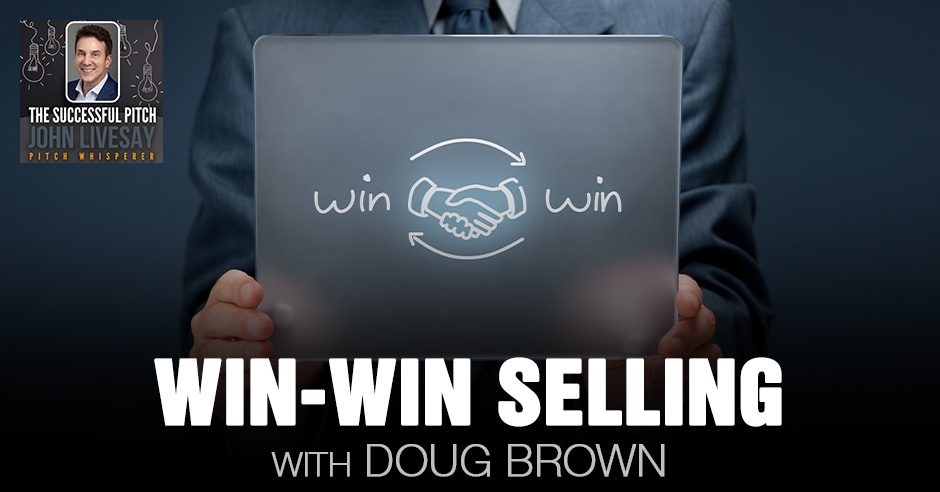
Overcoming objections is perhaps a salesperson’s biggest challenge when making a sale and the best way to do it is to make the deal a win for both parties. Doug Brown comprehensively discusses how this is done in his bestselling book, Win-Win Selling. In this conversation with John Livesay, Doug explains that storytelling, asking discovery questions, and doing follow-ups are immensely effective tools for win-win selling. If you’re having difficulty in selling and closing the deal, then this episode is for you. Join in the conversation and come out confident and ready to master the art of win-win selling!
—
Listen to the podcast here
Win-Win Selling With Doug Brown
Our guest on the show is Doug C. Brown, who is the Founder of Business Success Factors and also the author of Win-Win Selling. We talked about how 90% of people won’t buy unless they’re asked. What’s causing people to hesitate to ask people to buy? If you’re one of those people who hesitates to ask for the order, this is the episode for you. We also talked about how follow-up is just common courtesy and how in the dating world, if you don’t do it within 12 to 24 hours, you’re out of luck. The same thing is true in business. Enjoy the episode.
—
Our guest is Doug C. Brown, who is the CEO of Business Success Factors. He started working for family businesses at the age of three and now has built over 35 companies himself. He’s got three degrees. He’s America’s number one expert in revenue expansion and sales optimization. When he was at college, he supported himself by selling music equipment to the colleges and some of the world’s biggest bands, such as Billy Joel and the Eagles. He also served twelve years in the US Army where he was awarded a Distinguished Soldier. He graduated second in his class, and then went on to enroll at the Massachusetts Military Academy.
After his service, he worked at and became a top-selling sales representative for a $2 billion company, which laid the groundwork for him to form his own consulting and auditing company. He’s traveled to 47 out of the 50 States. I’m curious to hear which three he hasn’t been to. He’s been an independent president of sales and training companies like Tony Robbins and many others. His efforts have generated over $500 million in sales. Welcome to the show, Doug.
Thanks, John. I appreciate you having me on here. I’m very grateful to be here. It was Alaska, North Dakota, and New Mexico I haven’t been to.
I have not been to nearly as many States as you had. I highly recommend Alaska when the cruise industry comes back. It’s an incredible experience and New Mexico, Santa Fe is amazing and the hot air balloons in Albuquerque. You’ve got lots to look forward to. First of all, thank you for your incredible years of service. I think that’s worth acknowledging. I’ve had some other veterans who have taken their learnings and expertise from the military into the business world. The most intriguing thing for me and the readers from that wonderful introduction that you have is, can you tell us what it was like to go from selling equipment to colleges to getting to be hanging out with the Eagles and Billy Joel?
I was hanging out with Billy Joel’s people. The guitar players in there. It was awesome. I had Billy Joel’s band. I had Paul McCartney’s Wings. I had some of their peeps. I had Extreme Boston, Aerosmith, Joe Wall, the Eagles, and so on. There were others, too. What happened was I was selling music equipment, supporting myself through college, and then one thing led to another. Some of these guys were starting to come into the store and I got to know them. I started becoming their preferred provider. I went to Berklee College of Music in Boston so that’s opened up some other avenues for me. It was a lot of fun. It was one of those things that you were out all night, you get up and had to be back to work at around 10:00 to 10:30 in the morning. You do it all day long and then you go back out again at night. It was how I lived my life going through college.
What a great foundation between the military, the music, starting all these companies and getting to work with big ones. I’m fascinated by CBS television. What were you doing for them?
I was working with the president of CBS eventually. Initially, I started working with CBS as a division that’s like PBS, Public Broadcasting. Their concern and frustrations were they weren’t producing enough sales. I got the call to come into work with them. At that time, they had guys who have been there forever. I was surprised that the imprints of their bodies weren’t firmly affixed somewhere. They were trying to sell like the old Tin Men days, where you beat up on the client and move it forward. We had how to adjust that. Eventually, we ended up having conversations with the president at that time and I worked with them for a while. It was a good gig.
[bctt tweet=”Follow-up is common courtesy.” username=”John_Livesay”]
For those of you who may not know, networks have to convince advertisers to buy time to advertise on their show. They have something called an upfront, where they try and wow them with their pilots. It’s all typically ratings-based, but it’s gotten a lot more sophisticated now where there are some stories to tell, instead of pushing numbers, which is the old way, Tin Men. You referenced it. You’re talking about it there. Sophisticated selling requires storytelling and not more so than in any other industry, which is the entertainment industry. Having lived in LA and worked in that business, the good salespeople would say to an advertiser, “This particular show is going to attract families and your Olive Garden. You’re going to want to be in an environment that is family-friendly while also having some emotion.”
I remember talking to the CMO of Olive Garden about that very thing, “How do you decide which shows you advertise on?” They were going to go on The Good Doctor, which targeting families but also had some drama. It’s very difficult now for families to find a show that they all want to watch because everyone can watch something separately. That industry has changed. I’m sure they needed your help to figure out, “How do we make our show stand out to advertisers against all the other shows?”
You brought up the keyword, which is storytelling. We used to do something called the core story. It’s telling the picture and getting motivation, inspiration and a little bit of pain when needed throughout the story to get the clients to understand to move and you’re right. That industry has changed so much. Streaming services are everywhere and like any technology, it evolves. What was happening is they weren’t evolving their sales process around that. Now, with things going on, even more so. Storytelling is even more important now than it used to be in the past because you can’t get together now, have drinks, lunch and all that other stuff. People are so jaded from not being able to see one another that they love a good story. Isn’t that the way we learned as children? We were told stories.
When you talk about the process, you have worked with so many companies and you see consistent problems across industries. One of them, from what you have said, is that there aren’t systems in place. When that happens, let’s say, for whatever reason, you’ve got an onslaught of demand. Your leads are being lost. It’s taking forever to close a sale. You come in and help fix that. How do you do that? Do you have a story to share on how you’ve done that?
The short way of explaining it and then I’ll be happy to share stories. The first thing to understand is a lot of companies lack systematic processes that are measurable. Take something as simple as hiring. They all want to hire top-producing sales salespeople but the question is, “If you want to hire an A player, are you a company that can achieve holding onto an A player?” We start with what I call the truthful goal, not honest and subjective, but this is the concrete measurable goal. We get very clear about that then we assess the process of where they are right now. What do they have? What’s working great? What could be optimized? What’s not working well? What’s missing? What are the constraining factors in the process as well as all the assets they have?
We build a growth plan together based on what they want to achieve on that truthful goal. It’s a bit different for every company because every company is individual, although most companies have the same 10 to 12 issues going across the board. Smaller companies tend to lack systems. The larger companies because they’ve had to grow larger, it’s a need and a must. They got to have systems and processes in place. Even that gets out of skew because of the people. They’re not following the system and not being held accountable to the system. I had a company that was doing $50 million. They called me and said, “I’d like you to come here and talk with us.” I came in and I did my thing. The truthful goal is they wanted to double their business. On the assessment, I had to go back to the owner of the company and explain to him, “You’re about to lose 60% plus of your sales team.” They had things crazy, John. They had an 82% turnover of help annually.
Some of those reasons are unattainable quotas and bosses who micromanage them. You hit your quota and they double it for next year.
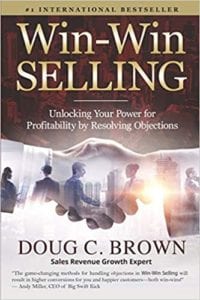
Win-Win Selling: Unlocking Your Power for Profitability by Resolving Objections
It was like, “You’re never good enough no matter what’s going on.” Even the top producers were producing top-wise weren’t rewarding them or showcasing their egos. Let’s face it, salespeople have egos. They wouldn’t be salespeople otherwise. We all have egos to a degree. Some good, some not. I went to him and he said, “No. I built a growth plan.” He was like, “I’ll take it from here.” Two months later, he called me. They have fallen from $50 million to $48 million. Sixty-two percent of his sales team quit in 60 days. He called me back and went, “Can you fix this?” I said, “Sure, I’ll give my best.” I got back in there. I started re-recruiting the people that had left. I got him to agree that this is how we should run the company going forward.
We got some of those back. We hired other new people. After I was doing this actively, I found out that almost 60% of his leads were never going from a lead stage to the first contact. I went back to him again and explained to him. He told me, “No, you’re crazy. This can’t be happening.” A lot of times companies manage numbers from top-line revenue or top-line numbers. They don’t look down below what’s going on and they go, “We’re making money. This is good.” Long story short, we fixed that one ratio. Within the first 30 days, it dropped by half. In the second 30 days, it dropped by another 25%. In the third month, it dropped by a little bit more. Installing that and a couple of other things because it’s usually only a few 3, 4, 5 things. They went from $48 million to $110 million over the next two years.
You get the right processes and systems in place, leads aren’t lost and you treat their people well. It’s not rocket science and yet companies are too inside their own bottle to read the outside of the label. That’s why they need people like you to come in. Almost like a child sometimes with a parent. The parent can say the same thing. Until a teacher says it, it doesn’t stick. Whether it’s a speaker like I am or an outside consultant like you are, sometimes having another perspective and voice helps people go, “That’s the sixth time I’ve heard that. I got to fix it. Let’s try it. What do we have to lose at this point,” especially when things are going down? Thank God he called you when they were only at $48 million and not $20 million and trying to turn that ship around as much harder.
In about six months, he would have been at $20 million.
What do you see the big problem is that salespeople have around rejection? Are they giving up after the first no? They take it personally. I have some ideas around that I’ve experienced being in sales myself for many decades. I’d love to know what you see that causes salespeople to not close sales and take rejection so personally that they are giving up quickly?
No person I’ve ever met loves rejection. I’ve had the opportunity to work with some big names and people. They don’t like rejection, behind every corporate objective is always personal or something. One of the reasons that people do not like rejection is because of how they grew up. All of this goes back to our roots. We grow up and we’re habituated to our behavior. We’re told what’s right and what’s not right by parents, preachers, teachers, classmates and all kinds of things.
What we don’t realize is we’re making agreements all the way through based on what we agree to, even if we don’t agree with it. That sneaks up on people as they become adults because adults are nothing more than grown children who have been taught how to navigate their way through society. However, if one grows up in an environment where it’s rude to interrupt the adults and they are admonished, punished and publicly humiliated going all the way through this, eventually, that starts to become a pattern that they go, “I cannot interrupt people because it’s rude. I won’t get mom and dad’s love.”
[bctt tweet=”Start with a truthful goal.” username=”John_Livesay”]
The core beliefs are founded right there.
They even value it because when they’re not doing that, they might get praise. “Look how well the children are behaving,” and all of that good stuff. That’s well-meant. Fast forward 30 years, they’re now 34 years old. They’re in a sales job. The goal is to make 100 cold calls a day, which is interrupting 100 people a day. What ends up happening is when they start getting rejected, it reminds them of the pain of their youth. There’s a set frame there that until they are aware of it, it’s on autopilot, too. That’s the whole thing. It’s the same thing with closing. It could be a myriad of different things that they learned growing up.
Let’s say that they were taught not to pressure people for whatever reason. No matter how their moral obligation says, “This person needs this. This person wants this.” They’re going to have that duality and that fight within them. I had one sales guy that I help with this. He grew up in an environment where everything was negotiated. “It doesn’t matter. You close the deal, negotiate. That was how we grew up.” I’m sitting there watching. He closed this deal and I was like, “That’s a good deal.” What did he do? He started negotiating right after the deal. Instead of pushing the paper forward and saying, “Can we have your endorsement on this?” He goes, “Well.” He started backing it up again and he undid the deal.
I’ve seen it happen so many times. I tell people, “When you get someone to say yes, stop talking. Don’t tell them ten more features.” It’s so bizarre to me that people feel the false belief that, “You got to get people to know, like, and trust you. I’ll push out a bunch of information. Do you know enough about me now or you still don’t? Even if you want to buy, I still need to give you more facts.” It’s fascinating to tie it all the way back to childhood beliefs that get formed of either the fear of rejection and/or pushy or “I need to negotiate in order to feel like I won.” You’re talking about getting people in the right roles. Some people love to nurture existing clients. Others only like to get the sale and then turn it over to somebody else. They hate the servicing of the clients. If you’ve got the people doing something they don’t like, that’s a big problem, too.
It’s a huge problem. I fully agree with you. Sometimes, that is the solution. I always talk to owners and a lot of times, they make this mistake. They take their top-producing salesperson and promote them to a manager. A top-producing salesperson loves to go out, be social, prospect and do all of those things. A manager loves to do spreadsheets and metrics. You try to take that and say to a top-producing salesperson, “I need you to create pivot tables and this and that.” Without question, it’s a problem. If you have people in the wrong role, they’re not happy and productive.
What I use is sales-specific assessments which will pinpoint, “Are they a farmer? Are they a hunter? Do they have the will to sell?” That’s another closing thing. Because if they don’t, then they’re not going to close well. Closing is not hard. In fact, closing could be a very simple question. “Would you like to move forward with this at this time?” Closing is so important. I’ve seen statistics out there that highly suggest all of them. About 92% of people won’t buy unless they’re asked to buy.
Let’s take a moment on that, 90% won’t buy unless asked. It’s like dating. You’re not going to get someone to knock on your door out of the blue unless you’ve asked them out. No one is sitting at home alone single going, “I don’t know why nobody’s asking me out, knocking on my door. I’m not putting myself out there, but yet I expect that I should not have to do that.” This premise of, “I’ve given you all the information. Please don’t make me ask the closing question because I hate it,” or whatever the belief is, yet I compare it to being a copilot with your buyer.

Win-Win Selling: Storytelling is even more important now than it used to be in the past. It’s telling the picture and getting motivation, inspiration, and a little bit of pain when needed throughout the story to get the clients to understand to move.
I tell the story when I give a talk. When I flew from LA to New York or wherever, the pilot comes on at the end and says, “We’re now landing in New York.” Nobody stands up and says, “What? We’re landing. I thought we’re going to fly around forever.” We see so many salespeople who are afraid to land the plane. The clients are like, “If you’re not going to ask, I’ll keep dragging this thing on forever. I’ll keep picking your brain or asking for more information. We’re doing this endless flight.” Someone is going to run a fuel one way or the other until you start from the get-go going, “This whole journey is expected to have a landing point at someplace. It’s not going to be a shock when I ask you. Does that sound like something you want to move forward with?” It’s like the plane ride. We have a destination in mind. Otherwise, we wouldn’t get on.
We all want that plane ride when it touches down to be smooth and effortless. For too many people in sales, because they’re afraid, they have a fear of rejection or they grew up in whatever environment, “You’re good, but never good enough,” they don’t ask the question or wait until they’re desperate to ask the question. It’s like the plane hitting the runway very hard. No one likes to be in a plane and feel kaboom when it hits the ground because you don’t know what’s going on. When they ask closing questions, a lot of objections will come up because they’ve asked the question in the wrong way. They haven’t made the flight, staying with the analogy, enjoyable all the way through, informative and value-based. Closing begins before you ever meet.
Sales aren’t lost at the end where most people think they’re lost. It’s lost, as you said, even before they meet because of the lack of preparation. Again, with the airplane analogy, pilots don’t just hop on. They go outside and do a whole preflight checklist. We should be doing the same kind of preparation.
If you think about it, the pilot is positioned as the expert because she or he has all of these people’s lives in their hands literally, holding onto the plane. They’re positioned in a place where we respect the pilot. The pilot is like the captain of the naval vessel. What kind of positioning are the salespeople coming in with? Are they positioned as experts, authorities, and advisors? Are they positioned as, “Two salespeople and a manager just came through the door? I bet there are two liars and maybe one honest guy.”
When the pilot comes on and says, “We’re going to be hitting turbulence. Put your seatbelt on.” Nobody says, “How does he know? I don’t believe that he knows we’re going to be hitting turbulence. No, I’m going to risk it. That’s where I’m going to choose to go to the bathroom.” I was like, “Nobody does that.” They went, “He must know coming up. He’s done this 100 times.” Let me ask you about the other big problem salespeople have that I’m sure you have a solution. They struggled to create a sense of urgency. I see that so often without being pushy. Urgency is not, “I need to make my quota.” Many people think that’s what makes this urgent. Can you speak to how you help companies create a sense of urgency for their potential clients?
Again, closing begins before you ever even talk to someone. All of the positioning, marketing and prospecting should be set up in order to have the expectation of what we want as an outcome in a win-win fashion for both parties. In the sales part of this, the conversation that’s going on, all of this urgency must be discovered prior to ever presenting. This is where a lot of salespeople make a mistake. They’re not going through what we would call the discovery process. They’re not asking questions on and around, “What time frame is this to be accomplished? Where are you at? If you made decisions like this in the past, how have you made these decisions?”
They’re not figuring out what the potential is for the close on that particular call. Whether this is a one-call, two-call, or three-call close, whatever it might be in a meeting. A larger sales generally take a little longer time. Not always, but generally. They’re not doing it in the early stages of this. What I see happen with salespeople is they get to this, present, do all this other stuff, and then, “I got to close.” The urgency comes in between the presentation, objections and close side or somewhere around there.
[bctt tweet=”Don’t be afraid to ask questions.” username=”John_Livesay”]
That’s like going up on a big slide and jumping on the slide. When you get toward the end, you figure out where you’re going. You’re going into the water or the sandpit, whatever’s below that slide. If the salesperson or the person selling asks these discovery questions in a non-threatening manner, they will elicit the response that they’re looking to find. Here’s the thing, not everybody is ready to close, no matter what. There’s a Law of Averages. There will be a certain percentage of people who are and a certain percentage of people who are not.
That leads to my next question, which is you have this whole process to help people with follow-up. Much like those leads that get lost, the follow-up and if the system is not in place, “I’ll call you in 30 days.” It’s not on my calendar or whatever and then I never do. Those people aren’t going to call you. Let’s talk about the importance of follow-up and having a system for that. You’re solving all these leaks, I call them, throughout the whole process.
Follow-up is a big leap for a lot of organizations or people, even if they’re solo entrepreneurs. I’ve worked with lots of coaches, consultants and solo entrepreneurs as well. I’ll illustrate it this way. This blew my mind a little bit. I was invited onto a sales consultants’ training call as a guest. I got onto this call and listened to these people. This woman said, “I blew it this time, guys.” They went, “What do you mean?” She went, “I lost 700 units at $500 a unit because they bought from someone else because I didn’t follow-up with them. I did all the work. I got all the way there. We had potential. I didn’t think they were that interested, so I moved on to something else.” That’s a $350,000 sale, if I remember correctly. John, her commission was 50%. Here’s this thing. The average client stays with that particular product or service for 5 to 10 years. She lost somewhere around $175,000 a year in commission for 5 to 10 years each year. The challenge is follow-up is not part of a sale that can be left out because follow-up is a common courtesy. If we think about it in terms of dating, we go out on a date and we have a great time. I have surveyed women for this.
If you don’t call, thank them within a certain period of time, and you try it later, it’s too late. They’re hurt and angry. They’ve made up a story in their head.
It’s 12 to 24 hours depending on the situation. If you don’t call within 12 to 24 hours, every single hour going past there, you’re becoming more in the dirt at that point with the relationship. We meet with somebody, let’s take the first meeting and nothing is recapped and sent. I had another client who went to a trade show. They called me and said, “We went to this trade show.” I said, “How many sales you got?” I think they said about $30,000 in sales. I said, “How many leads you got?” “175.” I said, “When did you get back from the trade show?” They went, “A week ago.” He went, “I called you for a reason.” I said, “I’m not talking to you until you get off this call and at least send all 175 an email or call all of them.”
He went, “I can’t call all of them now.” I said, “Get your team to.” He said, “Why?” I said, “Because you are losing money right now.” They sent an email. They picked up another $35,000 in sales off the email. They followed up with calls. They picked up almost $100,000 more on the calls. All this stuff was going to die. The worst part about follow-up when a person does this is they go through all of the work. They get the client right there and they’re ready to go. They should be calling their competitors, saying, “Give a call upon this client that I just went. They’re all warmed up and you are not going to get the sale.”
I love what you do and how scientific it is. It’s not just guessing. It’s based on data. You’re able to spot these leaks. People can find you at BusinessSuccessFactors.com to explore how you can help them scale their business and fix all these leaks as we described them. Any last thought or comment you want to leave us with, Doug?

Win-Win Selling: If you have people in the wrong role, they’re not happy and productive.
Can I promote my book?
Please.
As we’ve been talking about storytelling, frames, and all of this, I wrote this book called Win-Win Selling: Unlocking Your Power for Profitability by Resolving Objections. You can get it at WinWinSellingBook.com. It brings you right to Amazon. It’s $0.99 for the digital copy. I dropped the digital copy for your folks, John, or $24.95 for a hardcover. This book is written specifically on human-to-human communications. It goes into the psychology, philosophy, formulas and practicality to resolving objections in a win-win fashion. That means they win, you win. It’s not just about business. I’ve had a lot of people comment that they use this in their personal lives and their relationships are better. I go into a lot of what we were discussing on the show. I highly recommend people go do that.
That website again is WinWinSellingBook.com, where you unlock your power for profitability by resolving those objections. It’s a great offer. Thank you so much for that, Doug. Thanks for sharing your wisdom of what’s going on behind these behaviors. Once we identify those beliefs of where did I get so afraid to interrupt anybody and make a cold call, we can get unstuck.
That comes from Alcoholics Anonymous. The first step is awareness or something like that.
Business and personal indeed.
Important Links
Wanna Host Your Own Podcast?
Click here to see how my friends at Podetize can help
Purchase John’s new book
John Livesay, The Pitch Whisperer
Share The Show
Did you enjoy the show? I’d love it if you subscribed today and left us a 5-star review!
- Click this link
- Click on the ‘Subscribe’ button below the artwork
- Go to the ‘Ratings and Reviews’ section
- Click on ‘Write a Review’
Love the show? Subscribe, rate, review, and share!
Join The Successful Pitch community today:
- JohnLivesay.com
- John Livesay Facebook
- John Livesay Twitter
- John Livesay LinkedIn
- John Livesay YouTube
Epic Business With Justin Breen
Posted by John Livesay in podcast | 0 comments


Everyone wants to be successful, but not everyone can be epic. Being epic means being able to recognize opportunities and act on them. John Livesay sits down and talks with veteran journalist and CEO Justin Breen as he talks about the impact his parents had on his life, what he learned from his years in journalism and his formula for an epic business. Learn what you need to be epic!
—
Listen to the podcast here
Epic Business With Justin Breen
Our guest on the show is Justin Breen, the author of Epic Business. He said there’s no competition in his life. There’s only collaboration. He shares with us the three secrets to mindset, abundance, visionary and investment. Let’s see what he means by that. Enjoy the episode.
—
Welcome to the show. Our guest is Justin Breen. He’s the Founder and CEO of a public relations firm, BrEpic Communications. It was launched in 2017. They work with businesses and brands to craft click-worthy stories for local, regional and national outlets. Prior to this, he was a journalist writing for publications as The Times of Northwest Indiana. In 2021, Justin published his first book Epic Business, where he shares secrets from the world’s top entrepreneurs and how he applied this to his own company. We’re going to be talking about one of the things that he was so aggravated about when he was a journalist and how that was the impetus for him to create a completely different public relations firm and flip the script. Justin, welcome to my show.
You’re a great entrepreneur, a high-level thinker and a fellow Illinois graduate from The College of Media Communications. I’m very excited to talk to you and I simplify everything. I love talking to people like you because it’s a perfect collaboration.
The other thing that we have in common is my passion is helping people clarify their stories. Let’s get the elevator pitch so concise and clear that it compels people to want to ask you more. Simplifying, clarifying or kissing cousins in my book is different but very much in that world of let’s do that. That leads us into the concept of sound bites, all kinds of good stuff and the importance of how to be a good guest that you are certainly the expert on. I love to hear people’s stories of origin. We gave away a little bit of it and that you’re from Illinois but that’s the tip of the iceberg there. You can go back to childhood and now that you’re a father, I’m always fascinated to see some of your own childhood memories and your own kids. Feel free to tell us your own little story of origin, how you got into journalism in the first place and that big pivot to start your PR firm.
I was born with a story. I was a journalist before I was even born. What does that mean? When I was born, my father was 61 and my mom was 27, so that’s a 34-year difference. How did that happen? My father was a World War II hero. He was shot down nine times in combat. He became an attorney in the Nuremberg Trials. He and his three brothers came from nothing in Elgin, close to Elk Grove. All of them serve actively. My father died when I was thirteen. My whole life is a wow that it happened. Everyone says, “Wow,” and I appreciate that but wow to me is only a wow if it happened.

Epic Business: Arrogant people think they’re great at everything. Confident people know they’re exceptionally great at one, two, maybe three things.
When my father was fighting toward the end of World War II and the Battle of Hürtgen Forest, he kept a diary of his experiences fighting. I found the diary after he died. Besides my wife and children, it’s my most cherished possession. I don’t care a lot about material things. That’s meaningless to me. That diary is very important. I read it every now and then and I write exactly as he does. Inform and entertain, no fluff, no BS. His diary is one of the greatest things ever written. I’m a world-class writer but he’s a much better writer than I am. It’s the most important thing besides my wife and children because it’s this incredible connection I have to him that’s very powerful. It’s very important to me. One day I’ll get it to publish. That’s my dad.
My mom was 27. When my dad was in his late 50s, he was driving on the expressway near Chicago. A drunk driver went across the median. He hit him head-on. The drunk driver was killed instantly. My dad broke every bone in his body but he survived. My mom was his nurse. My mom nursed him back to health. Most of my day, I’m talking to people like you, the highest performing entrepreneurs, smartest minds, most successful people and I’ve never met anyone in my entire life with more hustle than my mom ever. She’s the ultimate survive and thrive with what she has overcome in her life. You combine the ultimate survive and thrive with a genius writing brain, military war hero and no excuses, you figure it out. Here I am. I’m a byproduct while it happened.
We were talking about Françoise Gilot being with Picasso. They’re having a huge age difference as well. That concept of those moments in life and then you’re able to give a frame of reference of how old your dad would be must impact your whole look on the legacy you’re leaving for your sons.
It’s everything. You’re a hot seat. I was looking forward to it because I do a lot of interviews but I knew talking to you was going to be more than that. You can figure things out very quickly. My sons are young. The older one started his first business when he was seven and the younger one wants to be a Navy SEAL. My father would have been so proud. He might have been the greatest dad ever. The best part of being an entrepreneur by far, there’s not even a close second is that there’s this book called Mastery. It’s my favorite book.
[bctt tweet=”Wow is only wow if it actually happened.” username=”John_Livesay”]
Robert Greene, if they were alive, interviewed all these masters. If they weren’t alive, he did anecdotal research. Almost without exception, masters came from fathers who were exceptionally high-performing entrepreneurs or owned businesses because at the time, only the men work. They learned all this and they rebelled. I’m excited to give my sons this foundation and I can’t wait for them to rebel against me. It’s going to be exciting when they do that and see what they do. You give them this foundation. It’s a shortcut to 99.9% of the world. Most of the world’s not living up here. They’re living wherever they’re living. To give them that foundation is the best part by far.
I think of it in terms of a tree that is planted in fertile soil and has the ideal mother to grow.
That’s all it is. You’re giving them roots. We’re giving them the right roots with the right soil mixture and then whatever they do with that. If they want to be an entrepreneur, I don’t care. They’re just getting that foundation. That’s the key.
There’s research that people who know about their heritage and feel connected to their family are much more successful and much happier than these people who don’t have a sense of identity from childhood. What a great gift you’re giving them and what a great gift your parents gave you to pass on.

Epic Business: The formula for building a successful global company is very simple. See a problem, create solution to problem, problem solved, successful global company.
I was a journalist for years. I interview people my whole life. I never come prepared with any question ever with the exception of two. One, I asked who your parents are or where because when you know where you came from, you can understand who you are and where you’re going. The people that understand where they came from, know who they are and where they’re going. When they think about where they came from, they think about who they are and then where they’re going. It all starts with where you came from. That’s the first question I ask and that you asked that first as well doesn’t surprise me. The only other thing I always ask is at the end of the interview, I ask, “Is there anything else you’d like to add, something that would be good for this story or I’m missing.” Many times, they’re saving something. They’re saving the nugget, they weren’t asked in the way that they could present it. Many times that’s the lead of the story, that last question.
We have hinted that there’s an ability to simplify things and how that makes you cut through the clutter. The entrepreneurs that are listening and they’re wondering, “I tend to be very verbose. What I do is so complicated. I can’t simplify it.” I wanted to give an example that I thought was intriguing, funny and a great example of a wonderful sound bite, which is something I would click on, which your PR firm is a master at is how PR agencies aggravated you for years. In one sentence, we know that you’ve been a journalist for years. We know that there’s something that PR agencies are doing that’s wrong because it’s aggravating you as a journalist. If you have any desire to get any kind of publicity, it would then compel you to say, “Maybe I should click on this and read.” We all don’t want to make the mistakes that other people are making. We know that risk aversion theory is going on there. My question for you is, what were these PR firms doing that were aggravating you as a journalist?
I’m a 100% simplifier. I think you might be like me. Your company is 100% multiplier but at your core, you’re a 100% simplifier. I could be wrong about that but that’s the vibe I get. I hear something and simplify. Less is more. The formula for building a successful global company is very simple. Here it is. This is the whole formula. “See a problem, create a solution to the problem, problem solved, execute it. Successful global company.” I was a journalist for years creating my entire business model based on how PR firms annoy me for years.
I’m giving you that background because a lot of people talk and there’s no meat behind it. I have no tolerance for that. I don’t like to talk unless there’s meat behind it. As a journalist, you received hundreds of useless press releases every single day from people you don’t know. One, they’re from people you don’t know. I don’t know who these people are. Two, they’re useless because they talk about what someone does and not who they are. Nobody cares about what you do. They care about who you are. If they care about who you are, they will care about what you do. All these press releases are talking about new person hired, company sold. Nobody cares.
[bctt tweet=”Less is more when you tell a story.” username=”John_Livesay”]
We’ve talked about the person behind that and what inspires them, where they came from or what they’ve overcome in their life then they will care and they’ll talk about what you do. I was annoyed. The company’s entire process is on my website. There are no tricks. This is the highest level. There’s no competition, only collaboration. I created a solution to that. Problem solved, successful global company. All I hear over and over is, “We’re tired of being the best secret. We want to be the news in media at a high level to create validity and credibility for our brand short-term and long-term.” It doesn’t matter where you’re located, what you do, if you’re a solopreneur or your company is as big as Allstate. That’s meaningless. My company solves that problem.
You give away a lot of your insights in your wonderful book Epic Business: 30 Secrets to Build Your Business. It’s written by a mutual friend. The foreword is written by Chris Voss, who is the expert, in my opinion, on negotiation from his FBI background. It doesn’t surprise me that you would be friends with someone like that. That’s another example of someone backing up what they’re writing about with their actual expertise. He is not someone who is very open to running a lot of forewords or giving his name to other books. That alone is a huge credibility factor that you’re putting your skillset into action for your own book and that wow factor. If Chris Voss thinks this book is worth writing a foreword to and not a blurb, there clearly is some meat to the bones there. That is another example of what is a negotiation expert talking about that relates to having an epic business. I’m going to make people read that to find that out.
One of the insights in your book is the difference between confidence and arrogance. Especially if people are going on TV, that can be intimidating for even the most confident executives or entrepreneurs. There’s nothing else quite like live TV. Those three minutes can go fast. The robotic cameras come zooming in and out of your face. Your mouth can get dry. Your heart can pound. I’m speaking from experience. You know that you have to have your sound bites ready to go and have short answers. TV is not about on and on and giving somebody something that’s valuable in a short amount of time. I want to ask you. You had my new favorite definition of confidence versus arrogance. Please share how you distinguish the two.
Arrogant people think they’re great at everything. Confident people know they’re exceptionally graded 1, 2 or maybe 3 things. The purpose of my life besides hanging out with my family is to be a connecting superhero for every visionary, abundance, investment, mindset, entrepreneur and share their stories with the world. That’s not 99% of my day when I’m not hanging out with my family. That’s 100% of my day. In terms of connecting people on a global level and getting people at the highest level, there are very few people in the world that are better at it than I am. Everything else is useless to society. Arrogant people think that statement comes off as arrogant. Confident people are attracted to that confidence. That’s all my company is. Confident people are attracted to that confidence. Those people are the ones running the most successful companies on earth. Why? It’s because they’re confident in what they do and they’re not arrogant. They replace their deficiencies by hiring people who are not doing it.

Epic Business: The right mindset attracts the right network and creates the right opportunities.
One of your expertise in addition to simplifying things is you are able to simplify mindset into three core things. For most people the content, the word mindset automatically pushes a lot of people into, “What does that mean? Does that mean I have to control all my thoughts all the time and I can’t do that? People tell me I should think this and then that’s going to happen. It’s not happening. I don’t know what my next steps are. The whole concept is overwhelming to me as an entrepreneur.” You’re like, “No surprise. I’ve simplified it into three things.” Let’s hear what the three things are if you don’t mind, Justin. I’m going to ask you to expound a little bit on what each one means to you. I’ve got them memorized because it’s my new roadmap.
Take it, please because all this other stuff is landing the plane. Let me start with this and then I’ll answer your question. If you have the right mindset, it attracts the right network and creates the right opportunities. I haven’t done outbound sales, funnels or any of that nonsense in years. It’s because I have the right mindset that attracts the right people and they create great opportunities for me. Companies pay my firm but I’m the buyer of only the people I want to hang out with. I don’t sell anything. I don’t even talk about what my company does unless someone asks me. There’s no selling anything. It’s just buying. That’s the background of that.
There are three attributes. When you have these three attributes, you can only be one of two types of people. All I do is hear things and simplify everything. I’ve talked to thousands and thousands of people and my brain simplifies everything. The three attributes are abundance, visionary and investment. Here is what you are if you have those three attributes. One, you’re running a high 6 figure to 10 figure business. You have a stellar business. You see your family or friends whenever you want to. You do what you like to do and what you’re good at or you’re going to be one of those people.
They do not have their revenue profit-wise but you will be because you have those three attributes in your mindset. There’s no, “What do you cost?” There’s no nickel and diming. There’s no scarcity nonsense. What does investment look like? It eliminates 99% of the population. I don’t care about that because the 0.1%, people are like, “That’s not a big number.” I go, “That’s a very big number because there are eight billion people on the planet, so 0.1% of eight billion is eight million.” The eight million are the ones that create the ideas, execute, invest in them, and employ everybody else. By working with those eight million, I’m helping eight billion.
[bctt tweet=”Mindset is abundance, vision and investment.” username=”John_Livesay”]
If you are one of two people kinds of mindsets, you either think the world is a safe place or a scary place. You either think you come from a place of scarcity or abundance. That’s the first curation there. The second part of it is visionary. For some people, that word they think about maybe Martin Luther King or so-and-so. Maybe those are visionaries. I don’t know that I’m a visionary. If you are running your own business and even if you’re working for someone else, it’s so crucial to have a vision for what you want your life and your family’s life to be about.
Without a vision, you’re wandering around. Once we’ve got a definition of who we are, what our attributes are, what our values are, and our characteristics. For me, when I was working on my first book, it was all about integrity, passion and joy. Those were my three things. Every decision I make is through that lens. I was like, “Are the people I’m working for have integrity? I know I do. Am I passionate about this, and are they? Does it bring me or somebody else joy?” If the answer is yes to all three, then that’s a fit. Without it, I don’t have a vision. That’s how I interpret what you’re talking about there.
It’s three different words, yet it’s the same thing. I know why you’re phrasing it like this because you’re a visionary. You’re asking me like this or maybe some people in your audience or the general public but I know you’re a total visionary. I have a future that I see that is my vision and all that does is you bring your present into your future. You can’t envision anything unless you have a vision. If you’re floating around in absentia, then there’s no goal and objective. When you have that clear-cut goal and then know who you are, I’m going to dovetail that with, “I know who I’m not first.” He’s like, “I know who I am but I know who I’m not.” My brain goes, “You wrote who you were not first, didn’t you?” He wrote it all out who he’s not. That led to him being who he is. All of that has to do with having a vision, having a bigger and better future. When you have that, then you create that with your present.
One of my favorite chapters in your book is, “Don’t try to do everything yourself. It’s a recipe for failure.” That is a classic example of, “I am not a tech person. I’m going to invest and hire someone to help me become a master at Ecamm so I can have special effects. I’ll be very frustrated if I try to do that myself because that’s not how my brain works.” Many people feel like, “I have to wear all the hats. I don’t want to spend money on hiring a professional.” They never launched the product. They get overwhelmed. They get to put a stop and there’s no time because they’re trying to do everything.
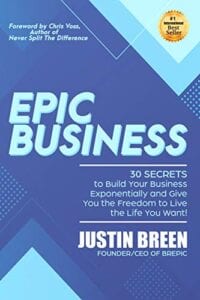
Epic Business: 30 Secrets to Build Your Business Exponentially and Give You the Freedom to Live the Life You Want!
I also love the use of your word because I know enough about you from reading your work and studying you that no word is casually chosen. When you say it’s a recipe for failure, that word recipe has been thought out for some reason. What’s great about a recipe? If you follow it, it works. Leave one ingredient out, it doesn’t work or the wrong amount of the ingredient. All of that nuance is in a recipe. I thought, “Look at his work and action. He simplified it.” If you look at what you wrote there, it’s a recipe for failure. All the implications that a recipe has, why would anybody ever think of trying to do something that is a complete bias?
It’s complete nonsense. My whole life is recipes and patterns. That’s it. Good recipes have the right ingredients. If it’s not the right ingredient, I don’t deal with that recipe or I outsource it.
I can’t believe our time is up already. It goes fast. I would be remiss if I did not ask your question that you’ve asked as a professional journalist for so many years. A good interviewer listens. Is there any question you wished I would have asked you or that you wish somebody else would ask you that nobody has that you could leave us with the last nugget?
My father died when I was thirteen. He lived long enough. He would tell me all the time, “The cream rises to the top.” It sunk in. I worked with the cream that’s risen to the top or the folks that will make the investment to be at the top. Other than that, it’s a waste of my time because they’re not going to do anything to benefit society.
Justin, what a treat. If someone wants to buy your book, they can go to Amazon. The book is called Epic Business. Your company is BrEpic Communications. If you’re not at the top of the 1%, don’t even bother reaching out.
Thank you for taking care of that for me. I appreciate that.
I’m curating for you because when you’re that clear on who you are and who you work with, I compare it to Disneyland, where they say you have to be this tall to ride the ride. You don’t have to be this tall. If you can’t afford Justin’s communications, you can get 30 of his amazing secrets from his book Epic Business. Thanks again, Justin.
What a real honor. This exceeded my expectations, which were very high. Your style is fantastic. I love it.
Thank you. That’s one of the best compliments ever.
Important Links
- Epic Business
- BrEpic Communications
- Mastery
- Epic Business – Amazon
- Better Selling Through Storytelling Method Online Course
Wanna Host Your Own Podcast?
Click here to see how my friends at Podetize can help
Purchase John’s new book
John Livesay, The Pitch Whisperer
Share The Show
Did you enjoy the show? I’d love it if you subscribed today and left us a 5-star review!
- Click this link
- Click on the ‘Subscribe’ button below the artwork
- Go to the ‘Ratings and Reviews’ section
- Click on ‘Write a Review’
Love the show? Subscribe, rate, review, and share!
Join The Successful Pitch community today:
- JohnLivesay.com
- John Livesay Facebook
- John Livesay Twitter
- John Livesay LinkedIn
- John Livesay YouTube
The Mirror Of Motivation With Dre Baldwin
Posted by John Livesay in podcast | 0 comments

Nothing ever gets better when you stop trying. Think about that the next time it gets hard to gain the motivation to keep going, when it feels as if giving up is the path of least resistance. Professional basketball player, keynote speaker and podcast host Dre Baldwin wants to spread this simple but powerful message to the world through his book, The Mirror of Motivation. Joining John Livesay on the show, Dre drums in the importance of listening to your inner voice as opposed to constantly comparing yourself to others, of doing the work as opposed to sitting down and waiting for free lunch. Be it in sports, business or any endeavor in life, these timeless principles will help you work on your game to get that win you’re going after. Listen in and be inspired to be mentally tough like Dre, all day.
—
Listen to the podcast here
The Mirror Of Motivation With Dre Baldwin
Our guest is Dre Baldwin, who went from his high school bench to a nine-year professional basketball career in just five years. Dre has published over 15,000 pieces of content. His daily Work On Your Game podcast has over three million listeners. He’s given over four TEDx Talks and authored 27 books. One we’re going to be talking about is The Mirror of Motivation. Dre, welcome to the show.
Thank you for having me. I’m excited to be here and get into it.
Before we jump into your story, I need to give you a shout-out for a creative, innovative way to get on my radar, to be a guest on my show. I’m sure you know as a host, you’re often getting, “Hit up. Can I be on your show?” A lot of people have somebody else pitching them sometimes or they make the mistake of saying, “Here are all my great accomplishments,” as opposed to, “Here’s what I can bring to your audience.” You took it a step further and created a custom video. How did I know it was custom? You said my name more than once. You looked at my show. Let’s start there and then we’ll go backwards a bit on how’d you get at that idea. It’s such a great example of your work in action.
How I got that idea is I’ve always done things that don’t scale when I started my business, when I was going even back. I was looking to play professional basketball, a lot of people don’t know how the pro basketball world works, especially overseas. It’s not like I was LeBron James with the scouts coming to me. I had to go to the scouts. I had to pitch myself to them to get on their radar in the first place, to get an agent. An agent works in sports the same way they work in modeling or movies. They are the connect. I had to sell myself to an agent to get an agent interested in pitching me to the overseas teams. I had to learn how to reach out to each individual agent because I tried to think how they’re thinking. The same way with someone like yourself, an agent is getting a literary agent, for example, or a movie agent or basketball agent.
Every day, they’re getting hundreds of emails from people who want the agent to do something for them. I’m thinking to myself, “How can I separate myself from all of these other individuals who are copy and pasting the same message? What can I do?” I approached my work from that angle. It worked in basketball. I didn’t do it in the literary world. The one traditional publisher that I did work with, came to me, luckily enough. My podcast is a solo podcast. I don’t even have guests on my show. I get those emails that you mentioned.
They look up any podcasts, copy and paste and send that message and then they follow up, they got their whole funnel sequence. I’m like, “I don’t need guests on my show. You keep emailing me.” I’m sure you get plenty of them because you have guests. I’m saying, “How can I separate myself from all these other individuals? What can I do that they won’t do?” It’s to individually talk to each individual host because most people are not willing to do that. Even if I’ve put it on a billboard and told everybody exactly what I do, 2% of people are going to do it.
You gave us so much value right off the get-go. The one that gave me chills is something that Michael Phelps said almost word for word. I don’t know if it’s an athlete thing or what, but when I was selling advertising to Speedo and I convinced them to advertise with me and get Michael Phelps, who was on this payroll at the time to show up at the event, I walked up to him because I used to be a competitive swimmer. I said, “Everyone says you’re so great because of your physique. Your feet are like fins. You got a big lung capacity. I know enough about success that there’s something else going on.” He said, “My coach asked me when I was young if I’d work out on Sundays.” I said, “Yes.” He said, “We got 52 more workouts than your competition.”
[bctt tweet=”The inner voice doesn’t shout. You’ve got to listen to it intently so it doesn’t get drowned by the louder outside voices.” username=”John_Livesay”]
I took that little story, Dre, and I tell audiences when I give talks, “What are you willing to do that your competition isn’t willing to do?” You said that almost word for word. I’m completely blown away by that lesson you learned. Even if you show people what to do, they still won’t do it to get to that Olympic level. That’s why many people are afraid of sharing their intellectual property or their tips and secrets. I’m like, “Unless you’ve got someone to hold you accountable and/or tweak what you’re doing, it’s still not something people can do or execute.” Let’s use that as the thread for your own story here. Take us back. You’re on high school, you’re not even playing, give us a sense of your height. Basketball is all around the taller you are, the more likely you are to have an advantage.
I was maybe 6’2” in high school. I got a bit taller after college.
You’re 6’4”, you’re in high school. You would think, “Why are you on the bench?” Somehow, what were you willing to do that the other high school athletes weren’t?
In high school, what was I willing to do? I was willing to keep going. When we’re kids, we are very impressionable. Adults are impressionable as well. Social media has up engineered that. As kids, being that we’re impressionable, when we try something and it’s not working, one of the things that we use is we’re thinking about what everybody else is thinking? We know that everybody else sees us trying and failing. A lot of young people, eventually say, “Let me stop trying so I start failing in front of everybody.” You have been a swimmer, I’m sure you know exactly what I’m talking about. I’m sure you knew other swimmers who had at least as much skill as you and as much access to resources as you. They didn’t want to keep trying because they didn’t want to look like they were losing, first of all, to their peers, who probably weren’t thinking about them as much as we think they are into ourselves because we don’t want to keep trying.
In high school, I didn’t accomplish anything. I sat on the bench, but I kept going. I kept working on my game that summer after high school, then I walked on and played in college. I didn’t set the world on fire in college, but I played. After college, I said, “Let me keep going. Let me go try to make it as a pro.” The older you get, if you’re tasting these “dreams,” the more ridiculous you look to the people who are being “realistic.” Because I was willing not to let “reality” stop me from going after what I wanted, that was the thing that separated me from a lot of people who had at least as much talent as I had. I’m not Kobe Bryant, but I kept working. There are no secrets here. It’s just people aren’t willing to do the work.
You said something that is relevant. When I was a competitive swimmer, there was always somebody who beat me, and in this one race, I beat him. In swimming, you touch the wall and it measures your time to the thousands of a second. They had said, “The reason you won is you stayed focused on the wall.” He took that half a second when he lifted his head up to turn to see if he was ahead or not, and that half a second caused you to win.
That was such a big life lesson for me, Dre. It sounds like what you’ve done. When we focus on our own progress, we win, as opposed to worrying about what other people think of us or telling us that we’re crazy to not give up on this dream that we should’ve given up a long time ago. That’s what I’m hearing you say is, you had the blinders on like a thoroughbred racehorse that stays focused on that goal and doesn’t let all the outside distraction, or even the internal mindset stuff of comparing yourself to other people, which in my opinion is the kiss of death. It stopped you from making that happen.

Gain Motivation: Focus on the sound coming through your bones because that is the voice that’s speaking to you internally.
In basketball, we say it’s a game of inches, but in swimming, it’s probably a game of centimeters. It can come down to that. I’ve done my best work and had my best accomplishments when I was only focused on what I was doing, not focused on what everybody else was doing. Looking into my left and to my right and getting distracted by these applications on my smartphone. I was doing what I needed to do and focusing on me. I tell people, I call it the inside-out method. When you focus on the inside, then everybody from the outside eventually comes to you. When you focus on the outside, all the stuff that’s on the inside, if you’re not putting enough focus there, you’re not going to get anything back. It’s focusing on me.
You and I are both keynote speakers and I’m sure this has happened to you. Either you get a request from a speaking bureau or a client and you know you’re not the only speaker they’re talking to. Why would they? Like everybody does their due diligence, they interview 2 or 3 of everything. What you’re saying in that “interview,” what story are you telling in my world to get them to visualize what it would be to have you there speaking or virtually is everything. I remember once getting a speaking gig and the agent said, “Congratulations, they liked your energy. That’s why they decided to hire you.” I thought it’s rarely that distinct and obvious of what people are buying when they’re hiring us to do anything, job, speaker, consultant, coaching or whatever it is you’re selling. They’re hiring your energy.
Your whole premise of, “We’ve got to work on the inside so that we have something positive and attractive to put out into the world,” as opposed to, “Let me see what that person’s wearing and driving, maybe I’ll feel I belong or be good enough.” If you haven’t dealt with that, I’m a good enough issue, which is an ongoing journey for sure, it’s not what you’re saying, it’s the energy. It’s almost metaphysically quantum physics stuff going on. You talk about that from what I can gather from your TEDx Talk around confidence in particular. Let’s double click on that concept of what do you mean. How do you help people with their confidence and their internal world so that they become hunted instead of them having to do the hunting?
The first thing is they got to stop paying attention to the externalities and paying attention to everything going on outside of themselves. One of the things I talk about in one of my books is the concept of listening to the sound that’s coming through the bones. You have your show and you’re a speaker so I’m sure you’ve listened to recordings of yourself speaking before. What’s interesting is that any human being, when you listen to a recording of yourself, your voice sounds different than the way it sounds when we’re talking. When I’m talking right now, I sound a certain way. When I listen to my own voice, it sounds a bit different. The reason scientifically is because the sound that travels through a microphone or through a computer is traveling through airwaves, and air conducts sound a certain way, so it sounds a certain way to you. When you’re talking and you listen to your own voice, that sound is being conducted through bone because it’s coming from inside of your body up into your ear canal.
The sound that’s traveling through the bone sounds completely different than anything you hear traveling through air. If any other person is speaking that’s not you, it has to travel through the air. Even if it’s in an AirPod right in your ear, there’s still a bit of air it has to travel through to get to you, and it sounds completely different. What I tell people to focus on is the sound coming through the bones, which is the voice that is speaking to you internally. As long as that voice is telling you something, that’s what you need to follow. Some people call those voice instincts. Some people call it a hunch.
The challenge is, especially these days, John, is because we are so inundated, or we choose to be inundated by many voices coming from the outside that it drowns out that internal voice. That internal voice does not shout. It doesn’t yell, it just talks, sometimes only in a whisper. When you’re listening to all these outside voices that speak loudly, everybody has a megaphone, then it drowns that voice out to the point that the voice says, “I’m going to stop talking because this guy is not listening anyway.” That’s the start of it when it comes to building confidence.
The more we do listen to our intuition is another way of describing that but I love what you described. I’ve never heard anybody quite say it like that, “Listen to the sound coming from your bones and why it’s coming from your bones,” your internal voice doesn’t shout. When everyone else is shouting and you’re having a cacophony of noise coming at you based on your lack of filters, then how could you possibly hear it? The irony is when we do listen and start to trust it, we get more messages. That’s been my experience anyway. It’s like anything. Why would someone keep trying to get through to you if you never respond? Whether it’s a person or the relationship we have with ourselves. That’s a key part of this.
[bctt tweet=”The biggest mistake you can do is to stop trying.” username=”John_Livesay”]
You also are all about mental toughness. You have some words that you love so much, you’ve tattooed them on your arm. Energy, persistence, preparation and boldness are the four that I can read. Those are big words on a big bicep. It’s not like they’re microscopic or neither is the arm to be able to hold all those letters. That gives you a sense of your discipline and your focus there. What mistake do you see people are making when it comes to mental discipline and mental toughness?
It’s giving up. The biggest mistake is that they stop trying. My favorite rap album is 50 Cent’s, Get Rich or Die Tryin’. The whole point was, I’m going to keep going until I get to the outcome that I want. A lot of people, John, lived their lives with an “if, then” mindset, “If this works, then I’ll keep going,” but with mental toughness or grit or perseverance or stick-to-itiveness, in this sense, they’re interchangeable. The mentality is, “I’m going to work on this until I get the outcome that I want.” It doesn’t mean you have to have that mindset with everything because there are some times that you do need to walk away.
There are some things that you should quit, but the things that matter the most to you, your mentality needs to be, “I’m going to work on this and try different routes and try different hustles until I get to the outcome that I want.” That’s usually maybe one main thing like Napoleon Hill called the definite chief aim. What is that going to be for you? Figuring out, “What do I need to change in order to get to this outcome?” The outcome that you’re desiring doesn’t change, maybe your approach changes. The biggest failure that people have with mental toughness is that they don’t have any, they give up when things are not working.
If someone says, “I want to get more mental toughness. Maybe I have a little, I could use more. Maybe I’m good, but I’m not at a professional athlete’s level.” What advice or what do you tell them in your talks or your books that allow them to improve that? Is there a secret tip besides just don’t give up? Is there something else that they should try to get some discipline in one area that may be transferred to another?
It’s not even necessarily a secret. It’s an open secret. One is, decide what you want strongly enough that you will be willing to keep going. There’s not going to be everything. What is the definite outcome that you want in your life? A lot of people and you probably have seen this, they don’t have a definite outcome. Napoleon Hill called it drifting. Whichever direction the wind blows, that’s where they’re going. If the wind shifts, then they shift. Where exactly are you going?
Shiny new objects, “Everyone’s in Bitcoin, I should buy Bitcoin. Now I should do that. Everyone’s on this platform, now I should go to this platform.” Pick a lane, people.
Now, it’s Clubhouse. That’s the thing everybody’s running to now. It’s, first of all, figuring out what you’re willing to stick to long enough to get to your outcome. The second thing is strategizing, have a plan, “What do you want to get to and what is your process for getting there?” On top of that, having a strategy, because maybe some people look at strategy and they’re like, “I don’t even know what does that even mean? Where do I begin?” Work backwards. Let’s say you want to have a top-rank podcast. What it needs is to be true. You’d have a podcast. What would it need to be true? You need to be publishing consistently.

Gain Motivation: Decide what you want strongly enough that you’d be willing to keep going just to get it.
What would it need to be true? You need to get yourself a mic, an audio person to help edit, make sure your show notes are correct and make sure you have a schedule of guests so that you’re consistently publishing. What would it need to be true? “Let me go get some artwork done. Let me figure out the name of my show, where I’m going to record and what my format is going to be.” What would it need to be true? “Let me start working on this right now. Let me write down a document so I have these answers to start reaching out to people who would be my guests.” You can do that right now. You would work backwards, asking yourself the same question, what would need to be true for that to happen? Keep working backwards until you get to a step that you can take so now you can see the plan.
Here’s the caveat. Your plan will probably be terrible because as they say, “The best-laid plans of mice and men often go awry.” Even though you have a plan, it doesn’t mean it’s going to work. This is where you find mentors. You find people who are smarter than you. People who have already done it. People who are already doing it, or look at their examples, you don’t even have to know these people. You can just look at them, look at the best podcasts out there, the best authors or the best swimmers, see what they did and borrow from their processes. The great thing about the world we live in now, John, is anyone who’s successful is probably on the internet telling everybody about it. All of their business is out there in the street, all you had to do is listen, read, watch, pay attention and they’re giving you the entire game. All you had to do was get it and apply it, but most people don’t want to do the work. That’s the biggest challenge and we have to sum it up in a sentence.
You have so much content. You have some discipline from your athleticism. Working out every day and practicing your jumps and dunking the ball, but you also are vulnerable, which is valuable that people who don’t pretend like they always have it together or always have had it together, are the ones that allow people to relate to. They see themselves a little bit because that’s what a good story does. It takes us on a journey, rags to riches or whatever the challenge is that you’re facing. You were talking about a time when you felt most like a loser and that you were unemployed and waiting for a phone to ring. Give us a sense of what it felt like, and yet you were able to overcome that huge obstacle somehow.
I had gotten my first job to play basketball overseas. I’m doing all this hustling to get on overseas. I go to an exposure camp. It’s like a job fair for athletes. I played well at that exposure camps. It was like the Combine with the NFL, but for basketball. I played well there. I used the video and the scouting report from that. When I was selling myself to agents, I reached out to a bunch of agents. I got one agent to be interested in me. He signed me to his agency and that agent helped me start my career. I played in Kaunas, Lithuania. That’s where I started my career. When that job was done, I came back home to the United States and I didn’t have another playing job lined up.
I also had no stacked up so much money that I was going to be able to live off that for the rest of my life. I ended up probably, after a month or two back home and got a job at a supermarket. I was working the overnight shift at a supermarket. For people who don’t know what happens during the overnight shift at a supermarket, all you’re doing is taking a bunch of boxes off some truck in the back and you’re restocking the shelves from all the stuff that people bought during the day. The good thing about the job is there is no uniform and you don’t have to talk to anybody. The bad thing is you’re just stocking shelves and you’re eating dust for eight hours straight.
You got to understand, I came from playing professional basketball in Europe, and now I’m stocking shelves at the grocery store. Had I not had the basketball job, it wouldn’t have been bad but because I had the basketball job comparatively, it was terrible. I remember the first night, this is back when we had iPods before the iPhone. My iPod died the first night. For the last three hours, I had nobody to talk to and nothing to listen to. At that point, I felt like this is the worst that it could possibly get. I worked that overnight shift for maybe two weeks. I got a call from my agent and I got my next playing job. I didn’t have to do anything that ever again.
The question was a time when you felt like a loser and what you were willing to do? You don’t know how long that time is going to be between, “I have this job it’s boring. I don’t have anything in common with these people, when is something going to change? What I do know is I’m not going to give up on my dream and I’m not going to sit around and feel sorry for myself. I don’t think I’m too good to get a job that I maybe don’t like.” Humility is important for people to realize that “I’m too good ever to go back and do something. Do you know who I am?”
[bctt tweet=”You can’t get something out of nothing. You have to put in some work to achieve an outcome.” username=”John_Livesay”]
All that stuff is such a turnoff to people and the energy and the world. “I’m doing the work. It may not be the work I want to keep doing, but I’m doing some work. I’m showing myself in the universe that I’m going to take care of myself. I’m going to do what I need to do. This isn’t forever. I don’t know how long it’s going to be.” When we do have moments of, “This isn’t going the way I want.” The lesson I got from reading your blog and hearing you tell that story in the first person. Thank you for sharing that. It will get better, but if we keep working at it. It can’t get better if we stop. That’s my big takeaway.
Let me tell you what I was doing during that time because I’m thinking about it a little bit more. I would borrow my mom’s car to go to work. I will work the overnight shift. I would go to work at 10:00. Get off of work at maybe 7:00. I would drive home. I would drop my mom off at work. She was working at a school as a teacher. I would drive back home and sleep. That would be my sleep time. I slept maybe 4 or 5 hours a night during this time period. Now at 23, you can get away with that. I probably couldn’t do it now. I was doing it then. I would wake up probably around 10:00 or 11:00 and I would go to the local LA Fitness, the gym, and then I would lift weights and I will work on my game. I go into the basketball gym, work on my game and play ball with whoever was there.
At around 3:00 or 4:00, I had to go pick my mom up from work, come back home, eat dinner, watch a bit of TV. At 10:00, I had to go to work again. That was my routine for a few weeks. At this time, mind you, I’m a college graduate. I had a Business Degree from Penn State. I had played overseas already, but here I am living in my parents’ home, borrow my mom’s car to go work overnight at a supermarket. I felt like a damn loser. During that time period, I had to stick to my process and say, “Mr. Agent needs to call me and send me an email. Any opportunity, I would have taken it.” He came with any opportunity and I took it, and we took off from there.
Also, the lesson for the readers is you stayed ready in that time. You still kept working out. When you got the call it’s like, “I’m a little rusty. I haven’t shot a basket in weeks here.” No, we need to be ready when that opportunity comes. For all of the young people, for whatever reason during a pandemic that might have had to move back home with their parents and may feel ashamed, guilty, or it’s stressful. The fact that you have this story could not be timelier. Whether you’re a parent having a child move back in that you didn’t expect, or you’re the child moving back in to realize that our identity is bigger than any one moment in time, in any one thing that’s happening.
I got the call, I was asleep. I took my mom to work, I came home. I’m having my sleep. It was about 10:30 in the morning. My agent gave my number to this traveling team in the United States, like a barnstorming type of team. They called me, woke me up out of my sleep and said, “Dre, we got your number from your agent. We’re about to have a training camp in a couple of weeks. Can you fly to Denver for the training camp to be on this pro team?” It was a training camp. They weren’t even offering me the contract yet. Training camp is I could try out. I said, “Yes, I will be on the next flight.” I couldn’t go back to sleep because I said, “This is exactly what I needed.” I slept maybe three hours at night, but I survived. I made it.
“I will be on the next flight.” That is somebody who is ready at the gate. Ready to go. Not, “Let me think about it. I got to figure it out.” One of your websites is DreAllDay.com. You also told me you have a free gift for everyone. It has to do with your Mirror of Motivation. Tell us a little bit about the gift and how they can get it.
One of my books is called The Mirror of Motivation: The Self-Guide To Self-Discipline. Let me tell you why people want this book. The title tells you motivation, but there’s a whole lot more than that. Everyone who’s read a blog like this probably has some goals. You have some things you want to achieve in life. Most people who have any common sense understand it, you can’t get something for nothing. You have to put some work in to achieve an outcome. Most people got those two parts down. They know what they want or at least have some idea, and they know they got to work to get it.
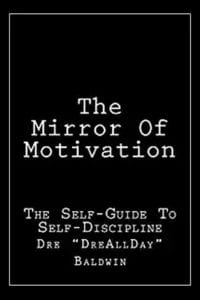
The Mirror Of Motivation: The Self-Guide to Self-Discipline
The challenge is most people never ask themselves the third question, which is, “Who do I need to be? What type of person do I need to be when I walk into life? What kind of energy do I need to have?” I don’t want people to feel when they come across me and my work, “What does my posture needs to be?” When you’re being is in a certain space, the actions automatically come with that be, and then the results follow the actions. When you get your being in the right place, then you’re doing will start producing results.
A challenge a lot of people have is that they spend a whole lot of their lives working, but they’re not getting any of the results they want despite all their hard work and they’re like, “What’s the problem? What’s wrong with me?” Nothing’s wrong with you. It’s that, you don’t even know who you are because you haven’t mastered the being yet. This book, The Mirror of Motivation, will give you the frameworks for you to answer that question for yourself. This is not Dre hyping you up or me telling you who you need to be because that wouldn’t even make sense. This is you telling yourself where you need to be. That’s why it’s called The Mirror of Motivation. You can get the book for free. All you do is cover a small shipping charge and you can get that book at MirrorOfMotivation.com.
I was visualizing you standing before you took a shot with all the pressure and everyone’s staring, and you practiced that 100 times. You know that who you are is someone who dunks baskets. You have the confidence to be that, as opposed to all the negative self-talk and distractions kicking in. That mirror comes back to you. You’ve already visualized it. You’ve done it. The natural outcome is a success. You can mirror that from what you’ve done in your athletic career into your personal life and then into your business life. Thank you so much for reaching out to me in such a creative way. Thank you for sharing your wonderful insights about life and energy and the willingness to keep going no matter what’s distracting you or happening so that you keep focused on your own progress. We win. Hopefully, the readers will win as well.
Thank you for having me on, John. I enjoyed the conversation. I’m looking forward to hearing from your readers who got value from this.
Thanks, Dre.
Important Links
- The Mirror of Motivation
- Work On Your Game
- TEDx Talk – Dear Dre…How to Be Confident When You’re Not
- DreAllDay.com
- Better Selling Through Storytelling Method Online Course
Wanna Host Your Own Podcast?
Click here to see how my friends at Podetize can help
Purchase John’s new book
John Livesay, The Pitch Whisperer
Share The Show
Did you enjoy the show? I’d love it if you subscribed today and left us a 5-star review!
- Click this link
- Click on the ‘Subscribe’ button below the artwork
- Go to the ‘Ratings and Reviews’ section
- Click on ‘Write a Review’
Love the show? Subscribe, rate, review, and share!
Join The Successful Pitch community today:
- JohnLivesay.com
- John Livesay Facebook
- John Livesay Twitter
- John Livesay LinkedIn
- John Livesay YouTube