
Trustworthy: How The Smartest Brands Beat Cynicism With Margot Bloomstein
Posted by John Livesay in podcast | 0 comments
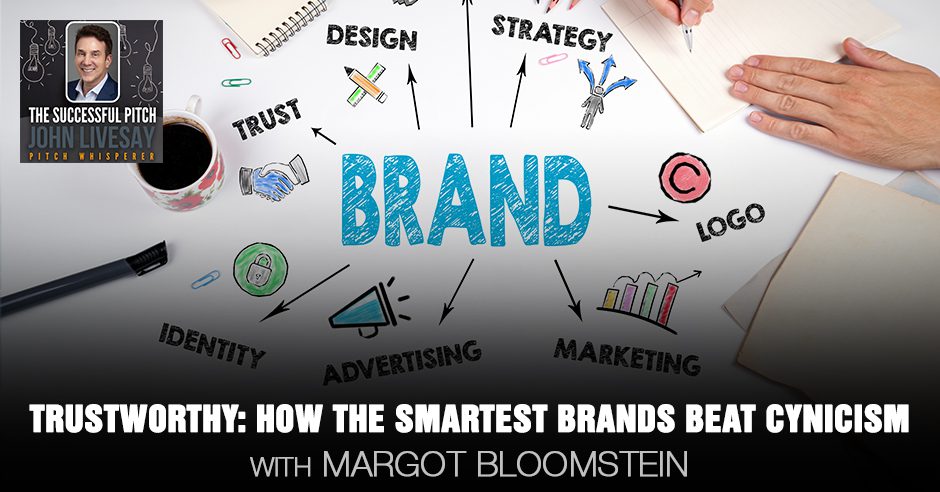
With competition getting tougher by the day, how can you make your brand stand out in the market? John Livesay has the perfect guest who can tell you which brands are doing it right and which ones are doing it wrong. He sits down with the creator of BrandSort, Margot Bloomstein. Bringing her book, Trustworthy: How the Smartest Brands Beat Cynicism and Bridge the Trust Gap, she highlights the importance of regaining the trust of cynical consumers through empathy and authenticity. While having the ability to understand and share the feelings of your customers is key, understanding yourself should come first. Margot then dives into the importance of knowing who you are as a company and brand so you can be in a better position to engage with audiences.
—
Listen to the podcast here
Trustworthy: How The Smartest Brands Beat Cynicism With Margot Bloomstein
Our guest is Margot Bloomstein, the author of Trustworthy. We get into conversations about which brands are doing it right, and which ones are doing it wrong, and why trust is so important as well as an interesting conversation around empathy. Enjoy the episode.
—
Our guest is Margot Bloomstein, who is one of the leading voices in the content strategy industry. She’s the author of Trustworthy: How the Smartest Brands Beat Cynicism and Bridge the Trust Gap and Content Strategy, with real world stories to strengthen every interactive project, as well as being the Principal of Appropriate, Inc., which is a brand and content strategy consultancy based in Boston. She’s a speaker and a strategic advisor. She works with marketing teams, leading organizations for the last several years. She’s the Creator of BrandSort where she developed the popular message, architecture-driven approach to content strategy. She teaches the content strategy graduate program at FH University in Austria, and lectures around the world about brand driven content strategy. Welcome to the show.
Thank you so much. I’m delighted to be here.
I always like to ask my guests their own story of origin. You can go back to childhood, school. Where did you get interested in this concept of trust and content and all that good stuff?
I’ve been working in the content strategy industry for many years, and over that time, I’ve had the opportunity to work with organizations in a pretty broad variety of industries in healthcare, retail and financial services. The common thread that I always see between all of them is this interest in meeting unsolved problems and identifying the problems for their audiences and their customers, and then figuring out how to combine what they offer with what their audiences need. My background before content strategy was in design focused on problem solving. That’s where my interest has remained over time. Our problems and our client’s problems have become more and more complex, but still, some of the tools that we use to meet them around establishing personal relationships and trading and empathy and compassion to meet their needs, those things haven’t changed.
[bctt tweet=”What responsibility do businesses have to care about trust? Why do trust and credibility seem like they’re under attack?” username=”John_Livesay”]
I am all about empathy. I’m always telling audiences when I’m in front of them about the importance of putting on your empathy hat, and the better you can describe a problem, the better people think you have your solution. What are you seeing in your work around empathy?
It’s interesting because in design, in content strategy, in the web industry and how we make the modern web, empathy has become almost like a buzzword in our industry. We talk about empathy and authenticity and transparency, a lot of marketing departments throw around those terms. Over the past several years as we’ve seen different social issues and different social movements come more and more to the forefront. Businesses are trying to figure out how they fit into them if they should comment on them at all. Empathy has become more and more of the latch word. I want to push back on that and say that sometimes empathy demands a level of arrogance of saying that “I can understand exactly your needs, even if I don’t have your life experience.” What we’re realizing more and more is that empathy maybe is a big ask for a lot of organizations, but let’s start with compassion and respect for our audiences first.
How did you come up with the name of your book, Trustworthy?
As I was looking at this problem of trust and seeing how cynicism and gaslighting were undermining the marketing and sales cycles in so many industries, I was starting to notice the brands that were doing it right, that were rising above and saying, “We can still combat cynicism. We can still establish rapport with our audiences. We can still build trust.” I want it to look and see what were the brands that were doing it right, and then figure out why, what can we learn from them, what can we unpack. In Trustworthy, a lot of what I profile are the organizations, brands, campaigns that are doing it right. It’s easy for us to find bad examples of organizations that are destroying trust and we can pile on them, but we don’t necessarily learn from them either.

Smart Brands: Empathy is a big ask for a lot of organizations. Start with compassion and respect for your audiences first.
What’s an example of one that you like?
They’re all my favorites in the book, but one of the ones that keep it much where we all are now is Zoom. When we look at how they’ve faced different challenges over the past several years, it’s a model in how you build trust. Starting back in probably December of 2019, they were seeing maybe 10 million daily users, 10 million daily business users. It’s mostly people coming from within businesses, within marketing departments, having meetings that were all supported by IT teams that were teaching them how to follow security protocols and set passwords. Within a few months, that all changed. Now they have something like 90 million daily users. People are using it that don’t have the support of an IT team. Every schoolteacher or preschool teacher, everyone that wants to get together with a happy hour with their friends over Zoom or celebrate a holiday with family over Zoom.
They’re not doing it with the support of an IT team. That’s when we saw the rise of Zoom bombers pretty early on in the pandemic and all sorts of problems around that. Zoom could have responded by saying, “You’re seeing problems because you’re using it wrong.” They didn’t. Instead, last April 2020, the CEO wrote this open blog post that came out as an apology to say, “You’re having problems with this? That’s our problem. That’s our fault. Thank you for noticing some of these security issues. We appreciate our critics calling out these problems. Here’s what we’re going to do about it.”
He phrased it first in the first-person singular saying, “I’m sorry,” and pivoted to that plural saying, “Here’s what we’re going to do about it.” Calling out his team and giving them credit. He proceeded to say, “Here’s what you can expect to see as far as changes from us. Here’s how we’re going to shift a lot of our engineering resources to support improving security and privacy. We’re going to submit to third-party audits. You can expect to hear from me at this frequency.” He was accountable. That way of building trust when he was at such a point of vulnerability, when the company was at such a point of vulnerability and in the public eye to say, “We’re sorry. Here’s how you can hold us accountable and here’s why things are going to improve from here.” That’s a model in building trust.
[bctt tweet=”Know what your organization is, who you are, and how you are so you don’t lose yourself when engaging with the rest of the marketplace.” username=”John_Livesay”]
The concept of building trust also comes into play for those companies that are trying to win back customers they’ve lost for whatever reason. I was working with one and they had said they didn’t make some deadlines. They were then let go for a year, then they had an opportunity to come back in and convince them to work with them again. I said, “What are you going to say?” They said, “We have all this research we’re going to share on how things have changed.” I was like, “You need to own that you caused the problem, even if it was other vendors and even if it’s the new team, you still have to own it.” What you said is so valuable. That’s why I want to underline it. You have to say, “Here’s what we’re doing to make sure this never happens again.” If you don’t have those systems in place, don’t even bother taking the meeting.
It sounds like you’re describing where a client was saying, “Here’s our new research. Here’s how things have changed maybe in the industry.” When you need to apologize, when you need to demonstrate accountability and show how you are responsible and ethical as a company, it isn’t about pointing to external research. You need to point the mirror back on yourselves and say, “Here’s what we’re doing. Here’s how we are changing.”
Texas was out of electricity and water. People want answers and they want to know what are you doing to make sure this never happens again? It’s not just a business thing. It’s a personal thing. It’s a political governing thing. This concept of trust is in the news.
Texas is a wonderful example. I had the opportunity to speak with someone in their Department of Public Works because I saw him tweeting in a personal way. It was a thread where he was saying, “Yes, this is a problem. I want you to know what I’m experiencing too in this leadership position. Here’s what went wrong. Here’s why we think we’re experiencing this problem. Yes, I am experiencing it too. Customer, as well as a leader here. Here’s what we’re going to do to make sure that hopefully we can right this ship now so that we don’t have this problem in the future.” I reached out to him because I said, “That’s wonderful.” I would love to see that level of discourse and detail and vulnerability as well as voice speaking in a way that your audience can understand. I’d love to see that from more public officials. We can learn from that. That’s what I would love to see moving forward.

Smart Brands: When you need to apologize, demonstrate accountability, and show how you are responsible and ethical as a company. It isn’t about pointing to external research; you point the mirror back on yourself.
You brought up something that if you can explain someone’s problem or their pain points, because you’ve experienced it yourself, your trustworthy factor goes up big time because you’ve been in their shoes. You also talked about that we should double down on qualities that we find that make us unique if we want to increase our social media engagement. The first question I’m thinking our readers will have is, what’s the quality that makes me unique? Let’s start there. How do we even find that?
As you mentioned, a lot of my focus within content strategy has been around brand-driven content strategy, looking at how organizations do identify, what makes them unique so that they can establish that consistent, cohesive, persistent tone of voice. When an organization does that, it does a few things. This is digging into ancient history, but that idea of gnothi seauton. It was carved over the door of the temple in Delphi. Ancient Greece, they said, “First, gnothi seauton.” Know thy self. Before you engage with anybody else, know who you are. In modern branding and modern marketing, we need to embrace that idea, know what your organization is, know who you are and how you are so that you don’t lose yourself when you’re trying to engage with the rest of the marketplace and prospective customers, prospective clients.
That idea of first figuring out who you are, that’s what I dig into around message architecture. A message architecture is simply a hierarchy of communication goals. I developed a tool called BrandSort to help organizations figure out is it more important for us to project that we’re innovative or traditional? We’re maybe witty and polished or scrappier and more creative, because knowing that can then help you determine which platforms should you be using. Where should you be investing your time? What’s the right tone of voice as well as then visually and verbally?
What’s the right look and feel and the color scheme and the style of imagery that projects those qualities? When organizations can first prioritize understanding themselves, then they’re in a better position to engage their audiences, as well as then differentiate better from their competition. I would argue it is a service that we offer our users, our audiences. It’s a service that we provide in saying, “It’s a crowded marketplace. If everybody’s competing with similar products, here’s how we’re different. Here’s how that we aligned with what.”
[bctt tweet=”When organizations can first prioritize understanding themselves, then they’re in a better position to engage their audiences.” username=”John_Livesay”]
Do you have a story from your book of a brand that does that well?
It’s one of the first examples that I have in the book. Writing this book was such a wonderful opportunity to talk with lots of different brands, hear their stories and gather up those examples because we all love the stories. It’s always good to get new stories from brands. One of the first organizations that I spoke with was Mailchimp, because in marketing, small business owners know them well. When Mailchimp first started out, they were a small business serving other small businesses. They’ve grown tremendously over time. Something like 60% of the world’s email marketing now goes through Mailchimp. As they’ve grown over time, they’ve offered new services. They’ve rolled out new offerings to their audience. That was always with a little bit of risk, because for their legacy customers, there’s always that concern of like, “Are you going to forget about me as you’re rolling out new eCommerce offerings? Are you going to forget about what I need and stop servicing basic email marketing customers?”
They’ve made choices to, first, solidify and codify what their brand means and how they manifest their brand. Their voice and tone guidelines are a model in the industry, and they’ve published them publicly so that other organizations can also see the level of detail that they document in them. Their design system, as well, is becoming more and more codified so that their content creators internally know where the guardrails are and then how to be creative within them. It helps them become more efficient and more effective. It also ensures that all their communication is more consistent. It’s serving their different audiences as well, because as they’ve grown over time, they’ve realized that there are parts of their brand that don’t scale or don’t make sense anymore.
It used to be that you would hear error messaging and calls to action in the voice of Freddie, their Mailchimp monkey, their little mascot. You don’t get error messaging from a monkey anymore though, but they have maintained other aspects of their brands, still the same sunny yellow, a lot of the tone of voice is still similar and it’s still consistent. They’ve varied other things around their illustration style, some of their phrasing. They’ve also varied it depending on the different audiences they’re trying to reach. Their guidelines document all of that, both to make things easier for their internal users, their copywriters and any freelancers that they might engage, as well as then their external audience. They know who they are, and they know how they’ve had to change over time to maintain visibility, a familiar face as well as then reassure their audience that, “Yes, we’re still Mailchimp, still the organization you’ve known and trusted for years. You can still make sure and feel confident that you know who we are and how we are and where we’re going.”
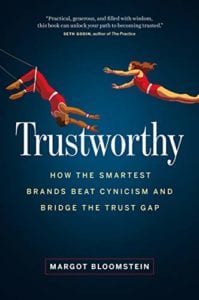
Trustworthy: How the Smartest Brands Beat Cynicism and Bridge the Trust Gap
You bring up a good point about the need to be evolutionary instead of revolutionary as you’re growing your business. If you’ve made your core customers feel they’re not seen and heard or appreciated trying to go after bigger ones, you can trip yourself up there.
Moreover, those customers need to feel both that they’re still important and that they still matter, but also that they know where you’re going. It can be as simple as strategically sharing your roadmap to build that buzz, but also so that people feel confident that, “This is a company I’ve known for a long time, and I know where they’re going in the future.” Also, by giving them hooks of familiarity so that you’re not relaunching your brand right now, you’re still maintaining elements of it that helps to maintain their confidence in themselves that they still know this brand. They feel like they can still trust this brand, that they made a good decision in going with this brand and investing with it. That’s especially important right now because there is so much upheaval in our world and in our economy. For organizations that say now is the time to relaunch, now is the time to completely overhaul our website, when I hear that, I shudder and my head and say, “No, now is not the time for revolution.” It’s more about evolution. Your audience needs to feel they still know you. If you can offer them that level of comfort and confidence in you and in themselves, that’s helping to ground them in a time that is so otherwise unsettled.
In your book, Trustworthy, you have a three-piece action plan. Can you give us the highlights of what that is?
The framework that I present in Trustworthy, it focuses on three parts, voice, volume and vulnerability. I present this as a framework for anybody that’s in professional communication. Designers, the CMO, copywriters, content strategists. If you’re the small business owner and you’re wearing all of those hats, great, this is something that you can take on. To build trust, you need to focus on those three areas. Voice, we’ve been talking about that a lot. Voice refers to the familiar and consistent way in which a brand engages with the world visually and verbally, so word, choice, the overall look and feel of the organization, the different content types you use across different platforms. That’s your voice. That’s what Mailchimp does so well. Some of the other examples I share like Banana Republic, the early days of that, they did so well.
[bctt tweet=”Be evolutionary instead of revolutionary.” username=”John_Livesay”]
The second section, volume, that refers to the volume of information that you’re publishing. The length and level of detail that you go into, in blog posts, in long form copy, if you’re deciding between long form copy and bulleted lists, as well as then, visually. Are you using images that maybe have a great level of detail in them, or are more streamlined to project the sense of simplicity? Do you have images that are maybe in 1 of 50 in a photo gallery or are things more streamlined so that people can get the gist more quickly? For some organizations, they feel like in order to build trust, they need to publish a lot. They need to have a lot of content marketing. That makes sense for some organizations. I profile in the book, Crutchfield Electronics, in order for their audience to feel good about a purchase, maybe it’s high-end audio equipment or camera equipment, they spend a lot of time on the site.
If you look at the pages on that site, they’re long. There’s a lot of different types of content there. You can make sure that you understand a product fully by the time you’re ready to buy because that’s what’s right for their audience. They know that it’s right. They can measure the success of that in the rate of product returns. They’re low because when people are finally ready to make that decision, they can make a decision with confidence. That’s how you know you’ve got enough content, when people can make good decisions and feel good about the decisions they make.
The third section, vulnerability, that focuses is, we were talking about on how organizations maybe prototype in public, come back from a big mistake, take that risk to say, “Do we double down on what we did that was maybe stupid? Maybe the CEO did something wrong or do we seize this opportunity to say we messed up. Here’s how we’re going to own it and here’s how we’re going to make sure it never happens again. Help us in this process, watch how we’re improving, keep giving us feedback.” It’s a tremendous opportunity to bring your audience closer.
The other way that I look at vulnerability in the book is also around how organizations make their values visible. One of the organizations that I profile there is Penzeys Spices. They’re a spice retail chain based in the Midwest. They’ve been bold talking about their politics, why they support immigration, why they oppose some of the other big intractable social problems that we’re facing now and their stance on it. When they first took to social media, sharing their politics, people pushed back. People said, “Stay in your lane there, spice boy. Why are you sharing this?” It was largely the CEO sharing his personal politics. He was pretty upfront about it. He said, “This is our lane. Not only are we a business that sees itself as part of a community, therefore issues in the community are important to us, but also the stuff that we trade in, spices, they come from war torn regions. Furthermore, cooking as an act of love, that’s not just our tagline. We believe that. Many of the recipes that we all love come here on the backs of immigrants. This is much our lane.” It was risky for him to take that position, but when organizations share their values in such a visible way, what usually happens is that people don’t look away. They respond loudly and they got a lot of headlines for that. They lost a lot of customers.
They expanded their audience. They gained a lot of customers, and they weren’t just people that were interested in cooking, they were people that said, “Your values align with my values. This is where I’m shopping next Christmas to get presents for my family. The people that I know that do cook, this is where I’m going to buy presents for them.” They saw something like 50% growth year over year in their profits after they got more political and made their values visible. It’s such an act of vulnerability, but more and more, what we hear is that people do want that level of insight into the organizations where they spend their money.
The book again is called Trustworthy. It’s available wherever you can buy a book. Any last thoughts or link you want to leave us with?
No, thank you so much. This was wonderful. If you want to learn more about it, please visit AppropriateInc.com/Trustworthy. You can follow me on Twitter @MBloomstein. I look forward to hearing how more people use the ideas in this book.
Thanks, Margot.
Important Links
- Trustworthy: How the Smartest Brands Beat Cynicism and Bridge the Trust Gap
- Content Strategy
- Appropriate, Inc.
- BrandSort
- @MBloomstein – Twitter
- Better Selling Through Storytelling Method Online Course
Wanna Host Your Own Podcast?
Click here to see how my friends at Podetize can help
Purchase John’s new book
John Livesay, The Pitch Whisperer
Share The Show
Did you enjoy the show? I’d love it if you subscribed today and left us a 5-star review!
- Click this link
- Click on the ‘Subscribe’ button below the artwork
- Go to the ‘Ratings and Reviews’ section
- Click on ‘Write a Review’
Love the show? Subscribe, rate, review, and share!
Join The Successful Pitch community today:
- JohnLivesay.com
- John Livesay Facebook
- John Livesay Twitter
- John Livesay LinkedIn
- John Livesay YouTube
Be A Professional Human Being With Rajan Nazran
Posted by John Livesay in podcast | 0 comments

We’re all born with a brain and not a calculator. That is why it’s so important to tell stories and connect with people emotionally because that is what drives business. This is what journalist and entrepreneur Rajan Nazran believes in. Calling himself a professional human, he explains on today’s show with John Livesay how being one is all about taking a deeply human approach to deal with whatever situation is on hand. They also talk about the art of storytelling, what the human experience is all about, and so much more. Rajan has travelled to over 58 countries, taking on some of the biggest conversations and covering stories from around the globe the Global Indian Series, an immersive platform that provides original and exclusive content based around the lives of people of Indian origin.
—
Listen to the podcast here
Be A Professional Human Being With Rajan Nazran
Our guest on The Successful Pitch is Rajan Nazran, who talks about the fact that we’re all born with a brain and not a calculator, and why it’s so important to tell stories and connect with people emotionally. He said conflict resolution is a silent orchestra, that you have to interpret what the notes are. Enjoy reading how he’s done this around the world.
—
Our guest is Rajan Nazran, who is an award-winning explorer, content producer, entrepreneur and over the last couple of years, traveled to 58 countries, building networks and building Global Indian communities through his mediums. As a result, he is a highly established network and has brokered many deals independently. His network extends to heads of states, ministers, CEOs, entrepreneurs, and he’s the Senior Partner of NazranRoth and Chief Explorer for the Global Indian Series. He’s also an International Chairman for the Center for Leadership Development in Africa and an Executive Member of The Kenya Society. He’s the International Sports Director at the Corinthians Football Team of Malta, and he sits on the board for the Mental Health Change Working Group of England. Rajan, welcome to the show. That is quite the bio.
One does try. That was pretty good.
I always like to ask my guests to take us to their own story of origin and you decide how far back you go. It could be your childhood or school because you said to me earlier, you consider yourself a professional human, which I’ve never met anybody who’s put those two words together. A lot of us are focused on the awareness of being as opposed to doing. The concept that we can be professional at being human and make money typically is what the word professional means, you’re an expert at it. That alone is fascinating. I’m curious to see how that all came about, this urge to travel and this urge to make such an impact in so many ways?
First and foremost, John, it is a deep privilege to be on your show. I’m humbled for the fact that I’m here, especially amongst your guests that are far greater than I. It’s a nice place. How far back do you go? Being of Indian origin, we believe incarnations or reincarnation, going back too many lives. To give a brief background, my mother was born in the Philippine Islands in Cagayan. My father is born in Punjab, India and I’m from the UK. I am pretty much 50 shades of brown that automatically is the Indian community.
In fact, we’re the karaoke singers of that. Growing up was slightly different for me. I got to see the world in a different light because culturally, you don’t know where you belong to but you get this perception of identity that comes in. My mother was an entrepreneur. She set up a working group for Asian women in mental health. She became an artist and did incredible tapestries in museums now in the VNA. My father is incredibly hard-working from becoming a bus driver towards setting up the factory, then going to cars and they both work hand in hand.
I grew up around this series of passion, which is saying everything we do we do it because we believe that we’re making a difference. Whether it is to help and support Asian women or if it was to say, “What can we do to help support the country that we could have then,” which was the UK. From there, I went to university and this urge came in, which was saying, “I want to explore the world. I want to see where I fit into it all.” As every young person comes through, I did what you normally do, which is door-to-door sales, thinking, “That’s how I’m going to get my financing together.” I did that and went to university.
I was fortunate that I was at the right place at the right time. There was this whole Erasmus Scheme that took us to Italy where we could study abroad. I was there and I happened to be there when the Italian Olympic team was there. I did quick courses in NLP and hypnotherapy. I pitched my way into the Indian team and became their first youngest ever mental coach. That’s where I first started from.
I was there doing things with athletes in the interim. I got headhunted. It’s the right place at the right time. I got to go to Israel for P3 Consideration work. I went to the Middle East working with this great guy. He took me under his wing and told me about the weird and wonderful world of the media so I was getting aboard with him. My story has been one of either the constellations coming together or downright stupidity at times of saying, “What if,” and ending up in places. That’s how it all clicked off.
I want to double click on this background you have on what you called practical soft skills, the neuro-linguistic programming because I wrote a blog about soft skills that make you strong. A lot of people think, “I’m an architect. These are my hard skills.” Soft skills are not something that’s that important and of course, now we realize that soft skills are defined as empathy, listening, storytelling, EQ, emotional intelligence, not only your IQ.
So many entrepreneurs forget that as a key element of their success, whether it’s to get funded or to get the right people to join their team and eventually, you have to create a way to convince people to buy whatever it is you’re selling or download an app, etc. I want to hear and I know that you’ve incorporated this into the NazranRoth offerings of what kinds of things have you’ve done. What do you notice across countries? This ability to connect with an audience and everyone processes things differently is a starting point. Can you tell us a story about using soft skills to help companies in different countries?
[bctt tweet=”Conflict resolution is a silent orchestra you have to conduct.” username=”John_Livesay”]
I’ll continue an even better story than that and I’ll get to that. You probably know that I’ve been held hostage in Eastern Europe, so I have to use my words to get me out of tricky situations. I’ve been to 58 countries. Being held hostage. I was in Syria during the Ebola crisis, and at that moment, I came across a family who unfortunately lost somebody. The police were saying that they’re going to arrest me as a part of it. I was there. The power of soft skills is not left to the wells of business. This is who we are as humans, which is what I say a professional human. This is our faculties to be able to speak, understand and absorb.
Taking that to the wonderful world of internationalization, we work with a lot of clients to help them develop their own narrative, their own story, especially countries towards forging a way for them to get FDI, Foreign Direct Investment. It’s like what you say, everyone looks at this and your first notion is one has to be incredibly strong. You have to be academic and tell people the numbers. The numbers are what make things happen. There are only so many numbers you have for a country.
What we do is we reach out to that and say through the product offerings we have with the Global Indian Series, “Why don’t we showcase a softer form of public diplomacy. Let’s tell the stories that connect human beings together, not with each other but with a country.” We’ve done that with, for example, Portugal. We did this massive pitch in Portugal and we brought together some amazing individuals and we took a massive spin saying, “Rather than focusing on the economic support, let’s focus on the human interest of Portugal.” That feature that we created reached out to over 40 million people.
We did an event at the end of that and brought over $3 billion in private net worth to that event. We brought together people who are interested in the stories and human response to the businesses that showcase their humanity. Lo and behold, business takes place and that’s basically real-life practical soft skills. It’s not about getting people to vote for you. It’s about a country embracing who they are, that living organism of identity and culture. Allowing that to go through the narrative, the tonality of their words, the way that people view them to be. In that sense, we’ve helped.
In corporate, we’ve done the same thing. Some companies get some tricky situations that they need a bit of help and support with. Rather than going down the normal, typical legal route, we help them shape themselves and have those softer conversations with people that have a lot of empathy, emotional intelligence, and intercultural communications. To get them to connect powerfully with people that gets the end result on people saying, “I’m prepared to give you ten minutes of my time to listen to you. Let’s take it from there.” That’s the type of stuff that we get involved in again, comes back to the professional human element saying, “We’re all born with a brain, not a calculator.” If it is emotive beings, John, like you, you’re emotive. You wear your personality and your heart on your sleeve. That’s who we are as human beings. It’s common sense that’s what drives businesses.
I love that because it’s so visual. It brings it to life in a completely different way. The global business partner that you offer companies is what allows them to achieve real-world success because there are differences in culture. I know from my advertising background that certain campaigns don’t translate. I remember Body by Fisher for sportswear translated in Spanish to Corpse by Fisher. A car here in the States was called Nova and of course, in Spanish, that means no go. That’s not probably the best name and that’s the tip of the iceberg from an advertising standpoint of the need to translate what you’re doing from one culture to the other.
Is there anything that you see that’s consistent? For example, we’re all wired for stories, no matter what culture we come from and things like that? I would say, since you’ve been to so many countries, that you might say, “We have more things in common than you might expect. If you’re a global company already, and/or wanting to go global, here are a couple of things you might want to keep in mind.”
Coming into that tone there, the art of storytelling is like what you do. You’re an alchemist. You bring together these remarkable emotions, and you connect them together. If we were to put you in robes, we’ll call you guru, in that sense. The art of storytelling is this since time immemorial. Before TVs, what did we do? We stood around a fire and we told stories. We looked at the stars, and we conjured up images of how the gods or goddesses of our choices created the world. We forget about it. We try to make everything so robotic in nature. We forget that it’s the human element that makes us do things so some of the commonalities are down.
In the story alone, people know that the second thing for companies that do go global is that intercultural competence. One needs to know, as you said, that it goes beyond the notion of words and linguistics, but also the way that business is done in emerging markets. Who do you know? How do you know them? How well can you navigate through the policies and procedures to get the end results? Not everything is clear and the same.
One of the biggest obstacles a lot of international companies have is that they take the month of what they think the world is and they go to those countries and they don’t realize the world is different there. Therefore, we help them navigate those spots with that silent guardian that supports their journey because we can open up the doors where they need to be bearing in mind, I’ve got a footprint in over 58 countries that I’ve been to and I’ve got a lot of exposure there. Also, at the same token, we help them and practically assist them towards speaking to the relevant people because we know what those political landscapes are.

Professional Human Being: We do everything we do because we believe that we’re making a difference.
The other thing that I’ll say that’s a common tonality that I see is yes, “We’re all similar,” but the way we interpret our coaches is dissimilar in those markets. In the US, it is direct and straightforward. In Britain, we have the James Bond attitude of the globe, where if we take them to certain markets like Ethiopia, it doesn’t translate well. You need to be more aware of what takes place. What are their cultures? What are their stories? What defines them? How do they want to be treated?
I know that one of your expertise in NazranRoth is the national branding and PR, so it seems to me that what you’re offering is the ability to have the right message to the right person through your network at the time. When all those things align, then results start an act, people start taking action and wanting to partner with you. If one of those things is off and you don’t have the right person, you’re not in the right room, or you don’t have the right story it’s this recipe for success basically. You’ve got all of these pieces from all of these different experiences and countries, that a lot of people need you as the International Sherpa. That’s how I would phrase it.
The other thing that I’m fascinated about is what you’re doing under human excellence is conflict resolution. That is something that can destroy a start-up faster than anything, is a conflict between founders and it’s a big red flag for potential investors. It’s also a conflict within big companies. People say that they don’t leave their job, they leave their boss. The way conflicts are resolved from country to country is quite different. If you’re interacting with people from Japan, from what my study has been, they hate conflict. You never hear stories of people screaming at each other and they also don’t like to say no.
It’s almost like this silent orchestra that you have to read between the words to understand. It is a sign of orchestra. Conflict resolution, when you go and deeper, as you rightly say, it can be from person to person. Business to business. Communities to communities and nations to nations. It all starts off with understanding what are the core deliverables of human behavior. Why do people behave in a certain way? It goes even deeper into this whole notion of purpose and integrity. That’s how our viewpoints are formed. We’re fortunate, so when it comes to countries, we got four former heads of state on our advisory committee for NazranRoth. That helps because they’ve been through all that and they’ve been to some of the most challenging times you can ever imagine.
Donald Ramotar, the President of Guyana, was there at the most complex trading of Venezuela and Guyana of oil. He was there. He had to navigate the shores amongst the other guys across Africa. The way we normally deal with it is that we take a deeply human approach and that is the common core of the professional human. What is currently taking place, and how does it have a human-based impact? Regardless, if you’re head of state, get your person to the ground on the verge of being destitute, we all have emotions, that EQ that you named it to be.
Once we start taking that approach, and we realize as a species of human beings, we have this common denominator of behavior, it’s a lot easier for us to come in and deal with the situations on hand. It gets slightly difficult and murky is when you got large boards on the brink of almost killing each other along those lines. That’s when we have to deal with multiple personalities. Our secret there is, is there any magic to the toolbox to have a look at what is the human response to this? We need to understand what are the words behind the words. We’ve only got there like you creating incredible work that you’ve been doing over 300-plus podcasts. We’ve only got there because of the years of dedicated travel of experience and practically going to the countries and feeling it, blood, sweat, and tears. There’s no real genius behind it. It’s literally the experience I’ve been able to build up.
I see that some of your clients include Deloitte, which I find fascinating that you’re both well-respected advisors and consultants and yet even a company as big as Deloitte needs your expertise. Is there a story of what they engaged you for? Was it navigating some of that?
I can’t go into too much detail there but you’ve done your research. We worked with Deloitte, BP, SR, and Maersk, the big shipping lines. They sent me to Congo to the DRC to work with their people here and that was onboard a ship. That’s real conflict resolution. There are a lot of things happening. It’s because we know the markets, we know the people and we know how human behavior rates, we’re not in competition with anybody. We got the collaborative approach. If companies see that we can help and support them, we come in and we do that. We have large-scale clients to small start-ups. It makes no difference. We’re all humans on our own voyage of life. If we can be of help, we help out. It’s not an issue.
The takeaway is, no matter how big a company is, the smart ones still engage others to help them, especially in an area that they may not have all the expertise. If we can look at that and incorporate it into our own mindset of not trying to go it alone and think that, “That must mean I’m weak.” It’s flipping it on its head. Soft skills make you strong, collaboration and having other people partner with you makes you stronger. All of that has now led to one of your flagship services, which is the Global Indian Series, where you are everywhere and have some amazing stories there. Can you share with us the origin story of how that came about and what people might want to explore?
Absolutely. The story came from pure and utter frustration like everything else. When one travels, you go to all these countries, you meet with the people and you realize, forget about the flag of India. As people of similar type of origin, we’re everywhere but we don’t know about each other. That has a huge impact because politically and economically, it has an impact, victims of society and identity. Once you start to realize, with every country, everyone defined this notion of indigenous like this white elephant in the room. Some people held the tail, others the trunk, others the legs.
[bctt tweet=”An emotional connection breaks through the noise and clutter.” username=”John_Livesay”]
Everyone’s holding on to the same notion, but we’re different descriptions towards it and that has a huge impact for generations. Some people then take this historical route of, “Our traditions are set in stone. Women behave like this and men behave like that.” Others take it as a fluid part. I thought, “Let’s change this. There’s a lot of misconceptions. Let’s build an active living encyclopedia, a bridge that connects us all together and say, “We are brought up into an identity though, let’s face it, we’re all born into this planet out of luck, an agenda out of luck and in the country out of luck. Any form of wisdom out of luck.” It’s this identity thrust upon you that you have to live and die towards.”
You don’t understand what that identity is because if you don’t it controls you. That’s where we kicked it off. we did not create features. I was physically traveling to these places prior to COVID not in a hazmat suit. All of a sudden, COVID kicks in and you’re thinking, “What do I do next?” That’s when we kicked up from the digital side. We bring the podcast in and now what you hear is this living encyclopedia of the human experience of people.
We’ve had kings on that, heads of state, billionaires, people dealing with alcoholism, nations from around the globe, people there are coming together in a spirit of being a human being and saying, “We’re unmoored from what we thought was normal.” That’s been the beauty of it. It’s something I’m passionate about. It is part and parcel of one’s life mission to understand what is a brief fabric of humanity and is a common core there that we can learn from each other with.
One of the things that fascinated me was the fact that you talked about there are over 70,000 people of Indian origin that call Portugal home. That’s why that partnership made such sense, where you created this whole print feature that was viewed over 30 million times and you were able to get sponsors who wanted to target that audience. I thought it would be interesting for people who might be wondering, “How does a podcast go global and how does tapping into a specific country appeal to the sponsor?” In this case, it was the family hotel and resort. You might want to talk a little bit about that.
We had JLL that supported us. We had PLMJ, a massive law firm. We had Nova Business School in Montana. We’ve got loads of different companies that came together. The whole notion of what we do is a sentimental journey of the human spirit of us and bringing that up all together. What we turn around to our sponsors is, “In this world, there’s a lot of noise.” That’s the reality. You get 1,500 pieces of info thrown at you, bashing for attention and saying, “Listen to me.” What do we all want to know? What we want to know about people like us and the stories that mount our own hearts because that’s the person that gets our attention.
We created and part of what we design in integrity is, “We’re going to cover the story. If I don’t get any sponsors in, I may be bankrupt, homeless, and my wife may be annoyed at me but this is a commitment I have made to me and the high purpose of being, so I’m going to do it.” Lucky for me, the sponsors would rather you do not jump off a cliff, we will help you as well. They got involved with us and what they got out of it was a meaningful connection with not only India, not only with their global audience in Portugal, but they got to be part of the history books on what makes us a living encyclopedia.
They realize quickly at the end of that, that has a lot of collateral because not only now are their responses, the hearts, and minds of a community, the hearts and minds of a community that is across the globe. People that have both wealth and experienced know-how but also community is hard to reach. That’s why they jumped on board with us because there’s a bigger play here like us and like we did with Malta.
The government of Malta supported us and we had big organizations there. We did stuff across the Caribbean. All the large organizations said, “We get you. We understand you,” because now they realize that what we offer is an emotive outreach to the world’s biggest community. What our community realizes is we’re no fluff. We do this without fear or favor. We have no political sides and we say, “Let’s showcase a road as it is not as we are.” That’s a powerful medium for us.
I love what you said here that when you offer emotive outreach, it breaks through the clutter and that’s why sponsors are hungry for that. Every good marketing and advertising is all about good stories about emotional connection. If people don’t have an emotional connection to a story, they don’t remember it but when they do, they share it and tell others about it. That’s what everybody in marketing’s dream is. It’s having something that is so good that people want to tell others and become brand ambassadors for you and that is the magic of what you’re doing.
It doesn’t surprise me that you’re getting all kinds of high-level government officials and high net worth individuals together because it’s your passion that’s driving this. The big takeaway for the readers here is, people buy your energy. I remember once being interviewed for a speaking engagement and my agent wrote back and said, “They picked you. They liked your energy.” I thought, “They said that not, ‘They liked your book or they liked your topic, or whatever you proposed.’” It was, “They liked your energy.” The more we remember that, then the more we transcend all the differences we have with each other.

Professional Human Being: One of the biggest obstacles many international companies have is that they take the mindset off what they think the market is.
If you think of money as energy and action, it’s not such a leap of faith to go, “I am so committed to this.” My passion is so strong, that I know that will attract the right energy, aka money, to support this because it’s giving them real value, which is that laser focus. People are going to as I say, “When you tug at heartstrings, people open their purse strings.” You do that well. I’m excited to see the continued global impact you’re going to have. Is there any last thought you want to leave us with?
It does, doesn’t it? What you said there, we owe it to ourselves to understand who we are as human beings. Your business is your life. Everything you do goes towards a repertoire of your human experience on this planet. Therefore, for us to almost compartmentalize and say, “That is the business side of me now. That is the parental side of me. That’s the lover of me,” is crazy. In the bigger image, if you were to take that 50,000, 60,000, and 70,000 view from above the heavens, then you realize that we are all living in this fragility that is called the human experience.
Everything we do has to drive out who we are internally. Your readers, for example, if they’ve got a business and it’s successful, but they don’t feel happy, that’s a showcase to them saying, “This is your life. Do not waste it.” Likewise, if they’ve got this pursuit of something that they’re going for the finances for, there is a small, narrow-minded existence, because that doesn’t go with them. It’s only going to be who we are, that emerges to the greatest out of there. For me, that is my final thought there. It’s saying, “We owe it to ourselves to become professional humans.”
Whenever we speak, we never speak about money, we never speak about what’s in it for you and what’s in it for me, we speak from the integrity that holds in true of what it means to be human, the species that interacts with each other. That’s what makes me alive. That’s why I’m so drawn to the work that you do, John, because there’s none of this preconceived idea of saying, “This is what I know.” You’re that medium that executes a perfect unionship between people that says, “Let’s have a look at what is that inner yearning that we all have one-on-one together and where are we heading to together as a community of people, not only an individual?”
You’re transcending the concept of having transactional relationships with people, including ourselves. When that happens, everything lines up and your purpose, your meaning and you’re not so it’s a disjointed person going, “Is this all that there is. I thought if I got all these achievements and accolades, I’d be happy and I’m still not happy,” and vice versa, “Why can’t I do what makes me happy as a living and be a professional human being?” What a great way to end and if you want to know more, you can go to the Global Indian Series, the podcast is the same name and also NazranRoth. Thanks so much for sharing your passion and all these wonderful stories.
Thank you. This has been fun. It’s been cool.
I loved it too and I’m sure our readers will as well.
Important Links
- Rajan Nazran
- NazranRoth
- Center for Leadership Development in Africa
- The Kenya Society
- Soft Skills Make You Stronger
- Podcast – Global Indian Conversations
- Better Selling Through Storytelling Method Online Course
Wanna Host Your Own Podcast?
Click here to see how my friends at Podetize can help
Purchase John’s new book
John Livesay, The Pitch Whisperer
Share The Show
Did you enjoy the show? I’d love it if you subscribed today and left us a 5-star review!
- Click this link
- Click on the ‘Subscribe’ button below the artwork
- Go to the ‘Ratings and Reviews’ section
- Click on ‘Write a Review’
Love the show? Subscribe, rate, review, and share!
Join The Successful Pitch community today:
- JohnLivesay.com
- John Livesay Facebook
- John Livesay Twitter
- John Livesay LinkedIn
- John Livesay YouTube
The Right Hustle With Rajesh Setty
Posted by John Livesay in podcast | 0 comments


Many people say you won’t get far without hustle. In truth, it’s not just hustle that will take you far; it has to be the right hustle. John Livesay is joined by author and entrepreneur, Rajesh Setty as they discuss what the right hustle means and how you can achieve it. Rajesh talks about his early forays into writing and the rejections, and ultimately, the first book he sold. He also discusses connecting with people, generosity, and the art of learning.
—
Listen to the podcast here
The Right Hustle With Rajesh Setty
Our guest is Rajesh Setty who talks about his course, The Right Hustle. The big question is, do I care about what you care about? It is the genesis of every relationship he has. Finally, he says, “What is your GQ?” Find out what GQ stands for. Enjoy the episode.
—
Our guest is Rajesh Setty who is Silicon Valley’s secret spark plug from startups to scaleups. He loves to bring meaningful ideas to life via startups like Audvisor.com and MentorCloud.com. His books include Six Foot World and Smart, but Stuck. He also has a course called The Right Hustle. Welcome to the show.
I’m super excited. Thank you for having me.
You’re one of those people that pulls people in. Your magnetism, kindness and creativity are all so inspiring, and people want to be around your energy. I’m curious to know a little bit about your own story of origin. You can take us back to childhood or when you were in school. How did you discover this passion for bringing ideas to life, not just generically but doing it with love?
It was not by design, for sure. By the time I was four, I had started reading all sorts of books. Anything that went past me, I would read it in multiple languages. In India, many people grew up with many languages. I love reading. By the time I was about nine, I had read about 700 books. Most of them were useless books, according to my mom, because they were thrillers, fantasy, adventure, spy thrillers and murder mysteries. You name it, I would read it.

The Right Hustle: Everybody talks about hustle and get things done. Whenever the word is used, the connotation is you have to network to get something. That’s the wrong hustle.
When I read that many books, most of them were fiction, I used to think, “I know what happens in this book.” I know this is what will happen, but most of the time, something else would happen, and I would get frustrated with myself, not with the author, saying, “How can I not guess what it is?” After some time, I thought, “My forecasting powers were good. Authors were making a mistake, and they should have done it this way.” I then got frustrated with them. I said, “The only solution is I should write my book because I can make the characters do whatever I want and the story to develop however I want it to develop.”
I went on a journey for over eight months. I never wrote a poem. I never wrote a short story. I wrote a novel, which was more than 200 pages. My parents thought something was wrong with me. My parents thought I copied it from somewhere else. For me, I thought, “How many people would write a book when somebody is nine years old? I’ll send it to a publisher. I’ll get a red carpet welcome and my books will be in the bookstores, and I will be a celebrity.” That was what I was thinking. Nothing remotely close happened.
The moment I picked up the phone and called the publisher in my baby voice, the first thing is they click the phone back thinking somebody is doing a prank or somebody is playing games. I would call them back again. At that time, there was no internet and in our home, there was no phone. I had to go to a grocery store nearby where there’s a public payphone booth that I had to put money in, and then I had to dial. I keep dialing again and I said, “Please don’t hang up. I’m an author.” Until I say, “Never call me again or I’ll call the police,” or something, I’d keep trying. Long story short, I was rejected 160 times over 3.5 years.
That’s a lot of rejection. Why did you not take it personally?
[bctt tweet=”What is your GQ – Generosity Quotient?” username=”John_Livesay”]
Earlier, I would think they’re making a mistake. They’re wrong. I would think that I’m not getting the right person. I was experimenting with myself. After some time, I realized something is not right. I reframed it thinking, “Everybody gets rejected maybe 200 to 300 times. I’m still not there. Let me finish my rejection quota so that I will get to the right one quickly.” I used to keep on reframing to my convenience. That’s what I used to do.
Whatever story we tell ourselves that keeps us going is the key. Whether it’s overcoming a physical challenge in sports or an illness, our dream is going to happen sooner than later.
I still remember the time when I got a book deal. I was physically meeting a publisher and I gave them the manuscript. By that time, I had built a network of my own because when I get rejected, I reach out to other people, “How do you do it?” You build relationships and I got a referral to this publisher. I went and they said, “This is interesting. Let me take a look.” He turned on the side and then he started reading it. I was a thirteen-year-old kid so I don’t know whether to stay or to leave because he didn’t ask me to leave. I was standing there for about two hours. He forgot that I was there. He finished reading the book, he turned around and said, “You’re still here.” I said, “Yes, I’m here because you didn’t tell me to leave.” He said, “I’m sorry. I’m going to take this. It’s a good book. How much do you want?” That is one question I was not prepared for. I had no idea what to say. With great thought and a lot of stupidity, I said, “I need ₹100.” ₹100 is $1.50, so you can imagine what I asked for. He said, “Are you sure?” I said, “Yes. That is what I want for this book.” He picked up the money, gave it to me and said, “We have a deal.” That was a game-changing moment for me.
That’s a great story and an example of hustle. That leads to my next question, which is you have a course called The Right Hustle, which is this fine art of moving the needle and that it is an art form. It’s not just push, push, push. I love that you talk about choreographing actions, which to me implies that there’s some preparation and thought that goes in before you jump in.

The Right Hustle: We have more tools than ever before on this planet that will make you get closer in the spirit and in the mind.
My thinking is that everybody talks about hustle and get things done. Whenever the word is used, the connotation is you have to network to get something. I think that’s the wrong hustle. The right hustle is to network to give something. You don’t have to get all the time because there’s a universal accounting system that will take care of the checks and balances and all the accounting system. Your goal is to give something meaningful. When you reach out to someone, and you connect with someone, make sure that you give a gift rather than trying to get something from them. How do you do it? That’s the whole thing about the right hustle. What will give you the platform, power, strength, skills and abilities so that you are always giving?
One of your many books is called Six Foot World. How did you come up with the title?
This is probably the first book that got published about the pandemic. As soon as the pandemic was onset, within three months, I wrote and published the book about what might happen. I’m usually often wrong but never in doubt kind of person. I said, “I might be wrong but there is something wrong that is happening here.” People will be caught off guard. I had a friend who is a publisher who took a chance on me. The reason I wrote Six Foot World is when the pandemic was onset, people say, “You need to maintain a 6-foot distance.” I said, “This thing will continue for a very long time.” Several of my friends said, “This is nonsense because it will end in three months, and then this book will be irrelevant quickly.” I said, “I don’t think so.” They said, “Why do you think this is?” I said, “I’m not a doctor and I’m not a futurist, but I studied linguistic philosophy for 7.5 years. When the phenomenon experience is described wrong, everything about it will be wrong or the assessments will be wrong.”
Why do I say it? If you think about it, every big disaster that we have had, the society came back as if nothing happened after a few years post the disaster. That happens on 9/11. Post 9/11, things didn’t come back to normalcy. They underwent a permanent change. The security systems got bolstered, pilots would lock themselves up in the cabin. There is red, blue and all of those kinds of signals. Everything changed. Why? It’s because there is a switch in the internal world that said, “Who knows? One among us may be a terrorist.” Once that switch is internal, the change externally will be semi-permanent.
[bctt tweet=”Be timeless, relevant, actionable, curated and knowledgeable.” username=”John_Livesay”]
Even the concept of social distancing as opposed to physical distancing, I thought once you start flipping that switch that people should be afraid to be connected or be near each other socially as opposed to just stay 6 feet apart. If we’re socially distancing, then it becomes a whole other level of psychological distress. My favorite analogy is one of the worst things they can do to prisoners is put them in solitary confinement.
The post-traumatic stress that people have been experiencing by social distancing, in other words, feeling so isolated from friends and family and meeting new people, once that is switched, it’s going to take a while to heal and recover from that. In this 6-foot world that we’re living in, even after everything might go back to some fewer restrictions in terms of distancing, mask and big events, what do you think is one of the biggest things that people can do? I love the image you have of the kitten is unprepared and the lion is prepared.
If you think about it, we have never met. We both are talking but we never felt that we’ve never met, isn’t it?
Right.

The Right Hustle: The easiest thing to do, whether you’re connected physically or not, is to ask only one question. Do I genuinely care about what they care about?
I’m sure we have many friends like that that you never met, but you always feel connected to them. I always think like this. We have to learn to live in a world however physically disconnected we are, but in the spirit and the mind, we should be fully connected. I’ve worked with several people in my life. One of them is my illustrator, Ming, in Malaysia. I’ve been working with him for around twenty years, but I met him only after sixteen years of working with him. I never felt that I was disconnected because it has to be in the spirit. The easiest thing to do, whether you’re connected physically or not, is to ask only one question. Do I genuinely care about what they care about?
Are the values aligned?
Once you do that, then the physical distance is distilled because we have tools like Zoom and all those things. We have more tools than ever before on this planet that will make you get closer in the spirit and in the mind.
Since you’re all about promoting new ideas, it creates new needs for new projects. For example, when I was speaking to the Olympus Medical sales team, I went from a live event to a virtual event, they said, “Can you also add in some training on how to look and sound good on Zoom calls?” That was never a need before. How do we sell on-camera versus being in person? All those little tips suddenly create another need. If one goes away, another one comes up.
[bctt tweet=”When you reach out to someone, make sure that you give a gift rather than trying to get something from them.” username=”John_Livesay”]
If we think about it, there are only two things. People have concerns or when they are taking care of their concerns, they have breakdowns along the way. That’s what my philosophy teacher taught me. The concerns and the breakdowns while they’re taking care of those concerns are never going to go away as a concept. As soon as you make a change, then the concerns are not going to go away. New concerns will get formed.
Speaking of new concepts, let’s talk about Audvisor, brilliant in three minutes. How did you come to get involved with this startup?
Let’s look at the trend. The trend is people are going to think that they have less and less time. They don’t have less time. I can guarantee you that. They will think they have less and less time. Why? It’s because they’re always connected with people who will want to sell them advertisement or sell them stuff and all those things, but they don’t know that. They always think they’re always connected and it’s a privilege, but it’s a privilege for people who will sell them something. In the process, their time is getting lost and then it becomes this, “I don’t have much time to study. I don’t have much time to grow. I’m always doing something.”
Globalization is not helping, which is you can follow the sun. This means when you sleep, somebody else is working. When they are asleep, you are working and you can do the handoff. In reality, both of them are awake all the time, saying they’re in coordination and all those things. My thinking is with these many changes, the need to learn and grow has never been less. It has to be more and more, but if they have less time, how do they get to learn from some of the world-class experts or top experts? If the only method is to digest your entire book, it’s not possible because you don’t have the time. What if I get the world’s best experts, more than 100 of them, and give their best advice in three minutes or less with zero fluff?

Six Foot World: How to Reimagine the Future in Disruptive Times
It’s laser-focused. Let’s give an example. I recognize so many of these experts who have been guests on my show, everyone from Sam Horn, Dorie Clark to David Meerman Scott, a lot of many smart speakers, thought leaders and authors that people can say, “I don’t have time to read their whole book but I would love to get the essence of it.” It is so powerful. This concept of TRACK is a wonderful acronym. Can you walk us through what that stands for?
It stands for Timely, Relevant, Actionable, Curated Knowledge. It has to be timely and relevant, which means if it has to be relevant for a long time, then the experts or authors that we work with should give timeless advice. That means it should stand the test of time. It has to be actionable and it has to be curated knowledge. Our goal is to deliver the highest wisdom per minute. People say that we want you to spend a lot of time with our app. I said, “No. Don’t spend a lot of time with our app. You can spend 15 minutes per week or even a month. It’s good enough for you.” Why? It’s because we have abstracted the best wisdom in the least possible time, deliver it on the audio, which means that you’ll be eyes-free and hands-free. Just press the button and you can listen to it. There is no excuse for not doing it. What will you say? “I don’t have fifteen minutes a week?” No. You just start to have the discipline.
One of the things I love about Audvisor is that you say, “We perfectly curated a playlist just for you.” I talk to people all the time about the need to think of their brains as a playlist with stories. You don’t have 1 or 2 stories that you tell over and over again. You have multiple stories like a playlist, but in this case, instead of a song, it’s a story that’s relevant to the person you’re speaking to. That requires a lot of practice, curation and being able to have access at a very fast amount of time, “I need to tell this person this story at this moment for them to see themselves in it.” The same thing is true if you start training your brain to absorb a short amount of information, then you can give a quote from someone or something you learned that’s keeping your own knowledge relevant, timely and actionable. People think, “How do you have time to read all these books?” It’s almost the old premise that leaders are readers or readers are leaders, however you like to say that. Now, this is a way to stay cutting edge without exhausting your energy and time.
If you think about it, what is the biggest blind spot that everybody knows but it’s very difficult to do anything about it? It is what you don’t know that you don’t know? You don’t know what to do about it because you don’t know that you don’t know.
[bctt tweet=”Everything that’s there is red, blue, and all of the signals. Everything changed.” username=”John_Livesay”]
You’re in the dark. It’s like when I needed to learn how to make special effects on my virtual presentations. Before that, I didn’t even know that Ecamm existed so I didn’t know what I didn’t know. How am I going to make a Zoom call to 300 or more people engaging, and I didn’t know what I didn’t know? Once I became aware that that was a potential tool, then I had to make the decision, “Am I willing to invest the time and money in it because of my own passion for doing something cutting edge and giving my audiences the best possible experience to keep them engaged?” There’s a whole premise of getting people up from unconscious and competent to “I’m aware that this exists,” to “When do I take action on this? Do I wait until everyone’s using it? Is this a requirement? Do I want to be the kind of person that gives something to people while it’s still new because the wow factor is incredible, and then that’s what makes people remember you and refer you?”
It was one more step deeper. If you think about it, if somebody watches you in action, unless they talk to you in person or in a coaching conversation or sometimes read your book. Let’s say they’re brought you in to help with a big sale. They say to you, “Whatever you want to take inside. We have a $2 million deal. Can you come and help us?” You took that assignment, and then you deliver the best possible pitch. If they don’t know that the underlying theme was how to construct a story with exposition, conflict resolution route. If they don’t know this, they will just conclude, “John is so awesome and he tells amazing stories.” If they say, “Now that you saw him in action, can you please repeat it?” They can’t because they don’t know the ingredients that pertain to what made you awesome. Unless they work with you, read your book or something, it’s not automatically by watching. Nothing happens because that’s only the tip of the iceberg.
I’ve helped an architecture firm, Gensler, win a billion-dollar airport renovation in Pittsburgh. The criteria there was, “We’re going to hire the firm we like the most because you’re all qualified to do the work.” They were like a deer in headlights because they’re used to pitching their designs and hoping that’s enough to win the business, “Likability? Where do we even start?” In addition to helping them tell case stories instead of just presenting before and after pictures of other airports, I worked with them on the team slide to craft a story of origin from each person that made them likable, memorable and gave a sense of their own. It’s one thing to say, “I’m somebody who doesn’t give up.” It’s another to show it a story.
All of those little techniques are something that people can learn and work on. If we start at, “We don’t even know we need to tell stories,” to “Now we know the basics of a story but we still need to be at the blackbelt level of it.” If we’re the only ones telling a story and our competition isn’t, odds are we’re going to win. In this case, they did. If other people start telling stories, then you’re like, “That’s the table stakes. That’s the minimum. Now I have to be a master storyteller to tug at heartstrings.” It’s an ongoing process and your solution Audvisor is certainly another way for people to stay one step ahead of what other people are thinking and doing.

Smart, But Stuck
This is the art of learning as well as a discovery platform. A discovery of what you think you should know, but you didn’t know that you should. For example, if you talk to somebody, let’s say the person on the Wolf of Wallstreet, Jordan Belfort. He will talk about straight-line selling. Maybe that’s useful but if you didn’t even know that such a thing existed that you could use that tool somewhere, you’d have no idea. Maybe it’s about frame control. How do you control the frame? If you didn’t know there was a concept of something called a frame, how will you do it? I created a term called hunger engineering, which means way before you sell something, you have to create the hunger for them to want it. If you never think of it, then you have no clue. They are not tools. First of all, you should know the concept exists, which means somebody has to describe it and put words to it.
I want to talk about your talk, Know Your GQ. I was like, “IQ, EQ and GQ is a fashion magazine.” You have a new definition here of what GQ is. Give us a little hint of what that means so we incentivize to go watch your talk on that.
I gave this talk years ago called Practical Generosity Quotient. I always talk about generosity because that’s a complete advantage that anybody can have with simple changes to their mindset, skillset and the way they do their relationship building. The practical generosity quotient is very simple. It’s the ratio of the capacity you added to the capacity that was needed by someone to make a meaningful thing gets done. For example, somebody wants to write a book. We know the capacity that is needed was 100. Somebody comes to return sixteen books and said, “Can you help me here?” I said, “No problem.” When you want to write a book, you pick a topic, go to Amazon and search on the topic. See the books that come out and look at the top three ones. Read them and you’ll get inspired.”
Be as advised. The capacity you added was 1 out of the 100 that was needed. I can do this very same thing differently. Somebody comes to me. I know what is required for a publisher. It’s like a proposal. I have the best proposal template that anybody can have. I select it and do the proposal. I’ve given talks about writing a book. I’ve written a book about how to write a book fast. I have a video course material and a book called Writing Zero. I give them all of those and say, “Why don’t you take a month or something, read it and then we’ll have a discussion over breakfast or Zoom. I’ll help you come through the content. I’ll create a mind map for you.” Now the capacity I added was way more than 50 out of 100. Imagine if everybody did this to the other person by the PGQ. How much capacity are they’re adding to the capacity that was needed to get a meaningful project or meaningful action done? It will be a different way we look at the world.
It is indeed a wonderful new way to look at the world. Your startup or many that you’re involved with Audvisor, one of your many books, the Six Foot World, one of your many courses, The Right Hustle, and now the generosity quotient. Thank you so much for sharing all of this wisdom with us. If people want to follow you on social media or find out more about the book and the course, where should we go?
My website, RajeshSetty.com.
Thank you so much. It’s been a thrill and an honor to get to spend time with you.
Thank you so much, John.
Important Links
- Rajesh Setty
- The Right Hustle
- Audvisor.com
- MentorCloud.com
- Six Foot World
- Smart, but Stuck
- Sam Horn – Previous Episode
- Dorie Clark – Previous Episode
- David Meerman Scott – Previous Episode
- Know Your GQ
- Practical Generosity Quotient
- Writing Zero
- Better Selling Through Storytelling Method Online Course
Wanna Host Your Own Podcast?
Click here to see how my friends at Podetize can help
Purchase John’s new book
John Livesay, The Pitch Whisperer
Share The Show
Did you enjoy the show? I’d love it if you subscribed today and left us a 5-star review!
- Click this link
- Click on the ‘Subscribe’ button below the artwork
- Go to the ‘Ratings and Reviews’ section
- Click on ‘Write a Review’
Love the show? Subscribe, rate, review, and share!
Join The Successful Pitch community today:
- JohnLivesay.com
- John Livesay Facebook
- John Livesay Twitter
- John Livesay LinkedIn
- John Livesay YouTube