
TSP014 | Nellie Akalp –Transcription
Posted by John Livesay in Uncategorized | 0 comments
John Livesay:
Hi and welcome to today’s episode of The Successful Pitch. We have a guest named Nellie Akalp who is a CEO of CorpNet. She and her husband started a business in 1997 that they sold to Intuit for $20 million dollars. In 2014, she was named one of the top 100 Small Business Influencers. So, Nellie has a lot of great information on what it takes to be successful, to be inspiring, and finally, she is an expert at everything legal, from trademarks to copyrights to patents to what you need to do to structure your business to make it ready for an investor to say yes. Enjoy the episode.
Hi and welcome to back to The Successful Pitch podcast where today’s guest is Nellie Akalp who is a small business expert and the CEO of CorpNet. Nellie has written for Entrepreneur, Huffington post, I’ve read several of her articles on both of those websites and there are quite interesting as she bring her personal expertise of running a small business and being a mother of four and comparing and contrasting how to balance everything, which is fascinating. She’s also been named the 2014 top 100 Small Business Influencers. So, we’re excited to have her today. Nellie, welcome to the show.
Nellie Akalp:
Thank you for having me.
John:
Nellie, you have a really unique perspective for today’s audience, which is there are so many questions that startups have about what do I need to do with the legality of starting a new business and should I be an LLC or do I need to do more and how big do I have to get. So, you have this huge expertise, but before we get into all the legal expertise, I want to talk about your expertise as an entrepreneur and specifically being a small business expert. Can you tell us a little bit about what happened in 1997 when you sold your company, your startup to Intuit for $20 million dollars, wow, congrats.
Nellie:
Thank you so much. Actually I became an entrepreneur, I started being an entrepreneur and started in my own business in 1997 and we sold to Intuit in 2005 and my husband and I decided that after graduating law school the salaries that were available to entry lawyers back then were not going to necessarily support the type of lifestyle that we had envisioned for ourselves and just setting a family and starting a family, so we decided to go into business for ourselves in 1997 and started our first company with $100 investment into a domain name.
Grew that company to where it was doing a substantial amount of sales and in 2005, we were approached to be acquired and we sold the company to Intuit for $20 million cash. Decided after the acquisition that really the culture and mantra after the acquisition of our company was changing and we needed to step back.
So, we decided to resign, step back, focus on our then growing kids and took some time off. We were also under a non-compete. So, after our non-compete ran in 2009, we realized that we were frankly too young, too passionate, too motivated to take on an early retirement so we decided to start all over again with my current company CorpNet.com and that’s when we came up with CorpNet in 2009.
John:
What a great story. I love the passion brings you back, because when you started your company from very humble beginnings, you didn’t have a goal of, oh, I want to sell this in three years and retire for the rest of my years. You had all the passion in the world to focus on making your startup successful and that’s so much of a goal for many of the listeners today is either I want to sell my company or I want to go public, but I want to grow it really fast to get to that end goal, but one of the things you talk about and it’s even in your Skype, it’s a quote about loving the journey. Can you speak to us a little bit about that?
Nellie:
So, I’m a firm believer that success doesn’t happen over night and you truly have to love and believe and be passionate about what you do and ultimately if you truly believe in and love what you do daily, the success will ultimately follow and frankly. in my opinion, you know, with my first business, I never had an exit strategy.
In fact, even the day when I was approached under the guise of, hey, we want to partner up with you, which the conversation soon to one of, hey, we want to acquire your company. We didn’t even have an exit strategy when we were approached by them and my response to them was, how do I put a figure on something I love doing everyday and this is my home, you know?
For me, it’s – I love small business. I love the idea of creating a legacy, making an impression on people. You know, I love the idea of small business. I love the idea of inspiring and motivating people. I love creating that fire under people and getting that response where, hey, it was because of her that I decided to get up and do something with my life and, for me, that’s a huge compliment.
I want to be remembered for hey, you know, it was because of you that all my dreams came true or I did it, but you helped me. For me, that’s excites me. Maybe for others the idea of successful is something else, but for me, it’s about changing people’s lives, creating an impression on people, making a change in our world and frankly when you do right, good things happen to you.
John:
Well, that’s such a huge takeaway. That’s definitely going to be one of our Tweetables quotes from today’s podcast is, creating a legacy and inspiring others is the best way to be successful. I love that. You even talk about it in one of your articles, you know, referencing Richard Branson, wanting to make a difference in the world and clearly you are as well. Tell us a little bit about CorpNet and what inspired you to help small businesses with what you do at CorpNet?
Nellie:
Absolutely. So, our company CorpNet provides new and existing business owners with cost-effective, comprehensive services when it comes to helping entrepreneurs start a business or if it’s an existing entrepreneur and they want to start multiple business, we can assist them with setting up a corporation or an LLC. If it’s a new business owner and they want to start as a sole proprietorship or partnership or if they’re ready to take on the next step of becoming a corporation or LLC, we handle all the paper work required to bring the business entity, the business structure into existence in all 50 states at a fraction of the cost of what an attorney or an account would charge and we do it again in all 50 states.
We truly, truly our – value proposition is really our services and the level of service we provide to our clientele. It’s powered by customer service. We’re very personable with our clientele because we feel that the business startup process is something that’s very personal to the end user, to the entrepreneur, and it requires a lot of hand holding.
So, we’re there to assist them with taking the hassle out of what they need to do to bring the entity into existence by doing all of the leg work for them, but doing all the filings for them and really being their partner throughout the lifetime of their business to make sure not only the business is setup properly as a foundation, but is in compliance to operate with the necessary licenses and permits and being in compliance for years to come.
John:
That’s so great that you’re there from the very, very beginning because you’ve done it and you have an insight and understanding. You literally have incredible empathy for the startups, because you’ve done it yourself and you’re not just doing the paper work without the empathy of what they’re going through and then you’re there to help them grow.
Nellie:
Yes.
John:
When you got named in 2014, one of the top small business influencers, do you now what the criteria was that they used to select you? I mean, what a huge honor.
Nellie:
Well thank you so much. You know I think it’s a number of things and frankly, you know, there are judges that go through the selection process, but I think, you know, they look at you as a complete package as to how socially engaged you are out there, the content that you’re putting out there, what type of content you’re putting out there, how engaged are you, and frankly, what are you doing as far as the type of content that you’re putting out there and are you engaging and following up and being responsive to questions that come back to you as a result of, you know, posting contents and articles out there and of course, you know, Anita Campbell who is, you know, one of the founders of Small Business Trends happens to be a really great colleague of mine.
We’ve been basically friends since the inception of CorpNet and we’ve met at several different venues and she’s a huge supporter of mine and truly believes that I do it because of my love and passion for small business owners and really just being a resource out there to small business owners and trying to take any type of doubt or confusion there is as to what they need to do when they’re trying to setup their business structure and frankly at the end of the day, you know, by being awarded this influencer award, for me, it was just validation that I’m doing exactly what I need to do and to keep doing it.
But, one of the things that I know that they do look very negatively on is the idea of self-promotion and self-promoting yourself for whatever it is that you’re trying to sell, which is what we don’t do, you know. In social media it’s not about being self-promotional, it’s about really being of service to people out there and being helpful to people and frankly, you know, if they’re interested and if they believe in you, then they’ll come to you.
John:
That’s a great takeaway, Nellie, thank you for that. The listeners who are in the process of working on their startup. Starting to craft a pitch to get investors, whether it’s an angel investor or a VC, it’s the same thing. You need to put out good content and then engage with that content with your customers, so that when you’re pitching investor, you have a story just like you have of I put out good content, I know my customers, I respond to questions, and I get engaged with my customers, because investors really want to know that who they are investing is an expert in their field and one of the best ways to do it is how you did it, create a brand that provides content without selling and create that what makes you unique and that you care.
That’s really what people want, because investors talk to me all the time about we invest in the person and the team and then the idea and certainty you are a classic example of someone acknowledging you as a person first and then your product second and that really is how you lead and that’s what made you so successful from day one to where you are now. Can you tell our listeners some of your expertise in the arena of what do they need to have done legally before they ask someone to invest in their company whether it’s a friend or family or angel investor or a big VC? Are there certain things they should definitely have in place legally before even approaching an investor?
Nellie:
Absolutely, John. So, one of the biggest questions that I get is what type of corporate structure is best for funding my business and really, the question that comes up as it applies to this podcast is when you’re seeking venture capital funding, if you’re a business that really from day one wanting to seek VC funding, the C corporation is the best option for anybody seeking funding from an angel investor or venture capitalist LLCs or often referred to as Limited Liability Company or the LLPs are not favored, because of the variation and rules across states as well as the fact that these entities do not really support the legal structure of shareholders, a broad of directors and offices, all which are critical components of VC investments.
So, some venture capitalist actually have specific conditions written that prevent them from investing in any other entity besides a C corporation. However for a small business, the C corporation can be over kill if you’re not seeking venture capital funding. So, at the end of the day, if you are really a small business who wants VC funding down the road or from the get go, choose to take these two different avenues.
The one is get a C corporation and elect for a S corporation tax treatment and basically if you have less than 35 share holders, you can elect to be an S corporation for tax purposes. This conversion is one of the easiest changes to make. It can be done with a single tax forum. You must file IRS election forum 2553 in a short period of time after incorporating.
So, you need to check with the IRS regarding the filing and deadlines. Generally speaking, it’s 75 days after the corporation is formed or by March 15th of that current tax year. We have specialists here at CorpNet that will be happy to help you navigate the process as well and if you need to expand beyond 35 shareholders in the future, you can always change your tax status to a C corporation to do so.
John:
So, just to recap for someone. If you’re starting out now and you start off your small business as an LLC, but now you need some venture capital or some angel investors to grow and scale and all that good stuff, it’s time to A) reach out to CorpNet and Nellie and her team and decide whether you should start off as a C corp right away or maybe there’s that middle step of, what you said, is a S as in Sam and then grow into the C corp.
Nellie:
Yes.
John:
To have all those things in place just makes investors respect you more and only one percent of any VC pitches get funded and so one of the quickest ways to get a no is to not have gone through this process. So, that’s why we’re so happy to have you on the show, because every step of the way you need someone like you, an expert to guide you through a process so that the VCs don’t say no because you haven’t filed the right tax forum to even have shareholders and you’re not even prepared to take the money. So, it really behooves everybody to take some homework and investigate the right status of legality so that the investors know that you’re a serious player.
One of the things I would love to have you talk about is the article I read because it’s such a great story of a startup of Uber versus Lyft and everybody always talks about technology and being disruptive and wanting to be first in the market and in Uber’s case, they were first and they’ve gotten tremendous more funding than Lyft has and you know, yet Lyft is doing okay by almost anybody’s standards, but the premise is interesting because, you know, if you have Uber on your phone, do you really need another app and that competitiveness, but you bring a really interesting perspective in the story you wrote about what’s the legality on the drivers versus Ubers and the Lyfts of the world and all the challenges that when you make something so disruptive, there aren’t any road maps, no pun intended. So, speak to us a little bit about your article on that, if you would.
Nellie:
So, I wrote that article because I feel that, I mean, as you mentioned, this whole Uber phenomenon. I mean, let me step back. The reason why I wrote that article in Entrepreneur was really to bring up the whole issue of liability for the marketplace that Uber and Lyft is creating for these drivers, you know, because what’s happening is that, you know the independent status of these drivers raises the question of liability, in my opinion, becoming a sticky issue for Uber exec and Uberx and Lyft drivers along with any other part-time freelance service job emerging in this sharing economy, you know?
So, the reason why I wrote the article was because it’s wonderful that Uber and Lyft has come out and they’ve created such a great exciting marketplace and have created jobs for all these drivers, but what about the drivers and who is responsible, God forbid, if they are giving a lift to somebody, if they’re giving somebody a ride and God forbid they get into an accident, well who ultimately is responsible, you know?
So, that’s the reason I wrote that article and generally speaking, I wanted to kind of identify, well, are these drivers subcontractors, are they independent contractors, because chances are we need to make sure that they are educated on this whole idea of setting themselves up as a formalized entity to protect themselves and to minimize any personal liability that may, you know, come their way in the long run.
John:
One of the things that I really was so impressed, what you wrote, was that time frame between when somebody books the driver to pick them up and when the driver actually picks them up. If they get into an accident before they have the passenger in the car, who is liable, right? Is it Uber, is it the driver himself?
I mean, you really think through everything that a lot of people wouldn’t go, oh. There is that gap of time and so that is such a fascinating nuance to what something that everybody relates to in the startup world of, oh, I come up with this great idea, but I didn’t think it through that far, yet another reason to reach out to Nellie and CorpNet.
Nellie:
Thank you.
John:
Another thing that a lot of startups talk to me about when I’m working with them on their pitch is they’re so afraid that someone is going to steal their idea and they ask me all the time of like, you know, do I need to get this trademarked and certainty with new technologies they are like, well, how important is it for me to have a patent and, you know, a lot of investors say yes, but technology is changing so fast that even if you have a patent on one thing, you still need to show that you’re staying on top of new things. So, would you mind just walking us through trademarks, copyrights, and patents, just very basic stuff so that we have a differentiator?
Nellie:
Absolutely. So, your company’s intellectual property from your logo to trade secrets can be just as valuable as any physical assets or a balance sheet. This is particularly true for digital startups and in this new social media digital age that we’re in. So, taking the necessarily legal steps to protect your IP can be costly and time consuming, often burdening a young startup before they get off the ground. So, it’s a delicate balance in my opinion to determine what actions to take and when, but I just kind of want to briefly go over and touch the various types of intellectual property.
There’s three of them, let’s start with trademarks. Trademarks basically protect your company name, product name, and slogan, so a trademark is a word, phrase, name or symbol that identifies the source of a product or service and distinguishes it from competitors. A trademark would apply to your company name, product names, logos, tag lines, slogan, and why you need it. Trademarks don’t actually have to be registered with the USPTO, which stands —
John:
Oh, that’s interesting.
Nellie:
Yeah, it stands for the US Patent and Trademark Office. However, if your company creates a logo or name that you want to use exclusively, you can attach the TM symbol and this essentially gives you common law rights. However, in case anyone ends up using your name or logo without your permission, you got a much better chance of winning an infringement suit against them if you actually registered your trademark and with former trademark registration it’s also exponentially easier for you to recover your digital properties, for example, if someone happens to be using a close variation of your domain name or is using your company name as their Twitter handle, you’ll have a higher chance of being successful at recovering it.
John:
Let me give the listeners an example of that. I used to work at W Magazine and I remember when the W Hotels came out, W Magazine was upset, because assumed that the hotels were connected to W Magazine and W Magazine is perceived as a luxury lifestyle magazine and the hotel was trying to reach that same market and so they went to court and everything and yet what the judge decided was that there was enough confusion in the marketplace because the logos were different even though the letter was the same. I can’t tell you how many times I’d say I work at W Magazine and, ‘oh, the hotel?’. No, the magazine.
So, I found a lot of confusion in the market place, but the judges didn’t. So I would think the legal expert that you are that you would have a take on that. That’s fascinating, you know, trademarking a letter, right?
Nellie:
Exactly and, you know what, there’s so much gray area, John, in this area of intellectual property. It’s such a case by case, but you know, again, every case in my opinion can differ from another, but often times my take on everything is if you have a great name, take that time and resister it as a trademark, because chances are, if it’s a great name, somebody’s going to want to grab it from you and to register your business, you’ll need to file application with the United States Patent and Trademark Office. You can file it directly online. It is a little bit high-end fees. It’s $325 per cost, but my takeaway on it is if you have a company that’s on the raise, if you have that great name, if you’re planning on really, really creating a brand from yourself in the market place and doing business in multiple states, chances are trademarking should be on your list of to-dos sooner than later.
John:
Go it. Thank you.
Nellie:
Yes. Copyright on the other hand is protecting website copy, white papers, marketing videos, and computer code. In my case, it’s basically protecting all the content I write on my blog or on my website. If you recall on the bottom footer of our website, for example at CorpNet, it’ll have a C symbol and a circle and it’ll say copyright 2009 until 2015, which gives notice to the public that we are protecting our original works of authorship. For digital startups, this typically means website copy, marketing material, possibly even computer code. Why you need it, which is the big question, by law copyright exists the moment something is written. Photographs, drawn.
As soon as you write and publish the copy on your website, you automatically own a copyright for the week and are able to use the copyright the symbol, as I mentioned, and use the terminology all rights reserve. If copyright protection exists without registration, the question becomes, which I am asked all the time, so why register? And the answer to that is formal registration is, again, a prerequisite if you decide to sue someone for copyright infringement. That’s basically copyright registration gives you a public record of ownership.
John:
I just think that’s so important to make that distinction, because, again, if you’re a startup, especially a tech startup and you can copyright computer code, different than patenting it, why wouldn’t you, especially when an investor would ask you that question, have you copyrighted this and registered it and you say, no. There’s another reason for them to say no.
Nellie:
Yes and I want to also bring up something as well too. For small business owners who outsource their web development or their code, it’s really super important that at the end of the project you get an assessment of the rights to that code, because chances are if you don’t, then the original producer of that code, the creator of that code or whatever software that you paid for, that’s ultimately should be yours and is yours, they would own the copyright on it. So, make sure you have your ducks in a row and make sure you get an assessment of ownership of the copyright after you’ve paid someone to produce code for you.
John:
I love that you think things through that we wouldn’t think to think about. That’s a classic example of your expertise.
Nellie:
Thank you so much, thank you. The question becomes, okay, now that I know I need a formal registration of the copyright, how do I register? So, simply stated, you can register online a copyright through the US Copyright Office or you can come to us and use a reputable filing service such as our CorpNet and have us handle the filing for you. Registering a copyright is relatively straight forward and affordable. I know that if you wanted to do it on your own, you can pay a fee to the US copyright office, which I believe is $35 per filing and it just, you know, makes sense to register a copyright, because chances are if you have a viable business and if somebody is copying your work, you want to be able to sue them and recover any damages and by having a registered copyright, it makes it easier to do so.
John:
Great and then the final thing is tell us just a little bit about the importance of patents, especially when it comes to technology.
Nellie:
So, a patent gives an inventor the exclusive right to manufacture, use or sell an invention for a certain number of years. Patents basically protect your ideas, your inventions, your product designs and processes, and we, you know, it’s a really complicated area, so I don’t cover patents, I don’t provide it as a service, but I can always refer a small business owner to a law firm that specializes in patents and patent filings, but in a nut shell, patents cover tangible things and can include software processes, product design, and other inventions, and it prevents others from copying your ideas and processes.
John:
Great, so helpful. Trademarks, copyrights, patents, what do they all mean. You gave us such a great description, why we need it, what it does for us, again, it all goes back to making you seem professional and organized and sets you apart for those investors who might ask you a question, you want to have all your ducks in a row, as Nellie said, so that you look smart and one of the smartest things you can do is engage CorpNet and Nellie and her team. Nellie, we are approaching the end of our podcast. It goes so fast, doesn’t it? 30 minutes?
Nellie:
Yes.
John:
Especially when you have somebody as interesting as you as a guest. Do you have one or two books that you would recommend startups to read or any book about life and making a difference in the world to be successful that you would like to share?
Nellie:
So, one of my favorite books is actually written by the CEO of Zappos.com Tony Hsieh. I love his book and I like it from the standpoint that I’m a service-based company and Tony Hsieh’s book Delivering Happiness really teaches, it taught me as a small business owner that it’s okay to change, because without change you can’t really have change within your company and at the end of the day, if you create a company culture that’s powered by service and really work from within outwards, it will really set you apart and it taught me that a great company is made by the sum of all its parts, meaning our team members here, our employees, and it taught me to create a culture here that’s happy, fun, and yet we all work hard, but it really sets us apart from our competitor from the standpoint that when you have happy employees who love what they do, they provide really great service.
So, that’s one book that I truly, truly love and it’s like my Bible and then the other one that I read actually when I was really, really young was How to Win Friends and Influence People.
John:
A classic. Yes, a fantastic one. I am sure you know, you’ve got tons of friends because you’re so engaging and you care about people and you created this culture of happiness and fun and so it doesn’t matter whether you’re providing legal expertise or shows or in the case of Starbucks, you know, they really care about their employees, the part time people getting health benefits back in the day so that in turn creates better customer service.
So, that’s, you know, you and Zappos and Starbucks are all in that same league in my mind and really leading the charge for making a difference in the world and being successful, but enjoying the journey. Nellie, how can people get a hold of you? Should we follow you on Twitter and LinkedIn and, of course, we want to hear the website for CorpNet.
Nellie:
So, you can definitely follow me on all the major social mediums I’m on. Facebook, you can follow me on Twitter @CorpNetNellie. I am on LinkedIn under Nellie Akalp. I also have an Instagram account as well under NellieAkalp. If you have any questions or would like more information about our products and services whether it be incorporating, setting up an LLC or trademark or copyright, you can directly come to the website to www.CorpNet.com. You can send us an email to Info (at) CorpNet.com or just pick up the phone and contact us toll free at 800-449-2638. We’re open Monday through Fridays from 6am until 5pm Pacific Standard Time.
John:
That’s great. What’s so engaging about you is you write content on social media that gives real information and that you engage back when you ask people questions and you certainty did that with me today on this interview, so thank you again.
Nellie:
Thank you and thank you for the opportunity and I hope that I was of service and had great info for your listeners.
John:
You definitely did, thanks again.
TSP013 | Jay Samit – Transcription
Posted by John Livesay in Uncategorized | 0 comments
John Livesay:
Today’s guest on The Successful Pitch is the author of Disrupt You, Jay Samit. Jay has raised over $800 million dollars in startups over the decades and the foreword to his book was written by the founder of LinkedIn, so you can imagine how many people he knows and how many connections and insights he has on how to find an idea that disrupts things and solved a problem much like Uber did.
Jay says that businesses don’t sell products, they sell solutions and that all disruptions starts with introspection. He really has three elements to his book. Master your personal transformation, seize opportunity and how to thrive in an era of innovation. Jay’s big takeaway is have an idea that is like a zombie. It’s so great it can’t be killed and be sure to listen to the very end where he tells about a secret contest where you could literally win a day with Jay where he’ll help you with your pitch and valuable information. Enjoy the podcast.
Hi and welcome back to The Successful Pitch. Today’s guest is Jay Samit, the author of a new book coming out July 7th Disrupt You! And boy does that book have great information for startups today. Jay has raised over $800 million dollars over the decades for startups, so clearly he’s an expert. His book Disrupt You! has a foreword written by the founder of LinkedIn, if you could imagine having those kinds of connections, so we are obviously extremely thrilled and honored to have him on the show today. Jay, welcome to the show.
Jay Samit:
Thanks for having me.
John:
Jay, I just gave a little tip of the ice berg of your background, everything from being at Sony and Universal to now you’re the CEO of C-Change, doing multiple-screen TV services and teaching USC on how to build a high-tech startup. You have such an incredible background and your book is full of information. I’m honored to have had a chance to read an advanced copy of it. Can you take us back, I know you sort of do this in your book about how you first came up with the idea of getting into startups in the first place and what made you realize you really have a passion for that?
Jay:
So, I’d like to say it was a plan, but I graduated as many millennials did, although this was many years ago, at a time of a great recession. You know, you did what you were told. You got good grades in high school, got into good college, you got good grades in college and then bam, there’s no jobs. So, back then it wasn’t so easy to raise money, but I figured out if I would just go out and print a business card and suddenly claim to be a business, nobody would ever come and visit the business, and so I could morph and figure out what we did later and so my first company was called Jasmine Productions.
Jasmine, Jay Alan Samit and it was mine and from that humble beginning I happened to look at where were new industries happening, where could growth take place and probably the easiest message is when we look out today, all the changes in our world, I call this the era of endless innovation, there’s constant disruption. Well, disruption is either an obstacle or an opportunity, the choice is yours.
John:
I love that. Your book says, you know, you have to do three things, master personal transform, seize opportunity and thrive in this era of, as you said, endless innovation. I want to start with this whole concept mastering personal innovation. You talk a lot about that in your book about how important it is to think of yourself as a brand, first of all, and you have this great quote about people are so interested in changing the world, but no one thinks of changing themselves. Can you speak to that?
Jay:
Sure, so, most of us by the time we get to be adults are carrying all this baggage of being told what we can’t do. You weren’t good at math, you can’t read a map, you can’t do this, you can’t do that. For most people, they actually believed this, when in fact you can actually do whatever you want and I’m always envious of those people that believe in reincarnation, I don’t know, so I figure I have one shot to get it right and I want to do as much as I can. So, if you really look at it that way and you stop saying what you can’t and start focusing what you can do, almost anything becomes possible. The most successful people in the world have the same 24 hours a day that you do.
John:
Correct, you also talk about in Disrupt You! The important of just taking five minutes and visualizing your success and how important a positive attitude is to being successful.
Jay:
Have you ever met or gotten a great idea from a negative person?
John:
Never.
Jay:
Never. So, if you can just start your day out of what’s great, okay, you woke up, you were ahead of everybody else and just start visualizing what you want to get out of the day, what you want to get out of life, what your goals are. If you don’t know where you want to be in five years, you’re not going to get there. So, your life is just like any other journey. You have to put out a map, what I call, a disruptors map to really plan out. You don’t have to know all the steps. That’s where some people get lost in the process like, I really know that I want to direct Hollywood movies, you know, but I don’t know what to do. Well, most likely, staying in Indiana is not the place to start. So, get yourself there.
John:
I love how you say all disruption starts with introspection and that’s such a key connecting element to your book about take a look at who you are, what your strength are, and what problem you can solve in the world. The real Tweetable quote from your book is, “Business don’t sell products, they sell solutions.” And so many startups that I work with get so in love with their idea, but can’t verbalize to investors what solution it’s fixing for people and so, you have done that time and time again both for big companies like Sony and Universal as well as startups. Can you tell us about the importance of – and when you teach your students to look for things that are disruptive and how that solves problems?
Jay:
So, I’ve taken stakes in over 80 startups in my career and investors have made money almost all of those times.
John:
Wow.
Jay:
What attracts me and what you need to do, the classic elevator pitch, what’s that one sentence that explains what your business does? Tons of people want to come to San Francisco for Mac World, but can’t afford hotel rooms, Airbnb, okay, just solve a problem and so what is unique and where you can succeed is you were the only person seeing the world from your point of view. You are experiencing every single day problems and arrogation. Every one of those is an opportunity, because if it’s bothering you, it’s obviously bothering others, and the bigger the opportunity, the – you’re one click away from billions of people now a days. So, becoming a global brand and solving a global problem is as easy as first identifying it.
So, just write them down. Write down three problems you have every day that you see in the world, okay. The beginning of the month it’s pretty easy, by the end of the month it gets tougher, but you have 90 ideas and then you can work down that list and see which ones scale the most, which one can capture the value that you create. It’s that easy.
John:
That’s such valuable takeaway for our audience, Jay. Thank you. One of the quotes you have in the book is, “Problems are just businesses waiting for the right entrepreneur to unlock the value.” And you certainty gave us an example of that with the Airbnb example. When you talk about the multitude of ideas that you get if you write down three a day at the end of the month obviously and at the end of a quarter you have a lot. One of my favorite takeaways in your book is with this concept you’ve come up with called the zombie idea. Can you tell us what you mean by that?
Jay:
Sure, everybody else tells you to nurture your idea, to grow your idea, to love your idea, and they’re wrong. The best thing you can do with your big idea is kill it! Okay, before you start hiring people, spending money, whatever, go to people in the field and find out – not relatives and friends that want to help you, go to actual customers and have them tell you why your idea sucks, why it’ll fail, what’s wrong with it, because if you can start plugging those holes, wow, you’re right, that’s not a good idea. Oh, yeah, what if I do this? Then you’ll go down a path and when you find that idea that can’t be killed, that’s a zombie idea. That’s the one you start spending money on.
John:
I love it. That’s going to be the big Tweetable moment for sure, because the zombie idea, the walking dead, everybody loves that concept that the idea is so great, the problem that it solves is so needed that it can’t be killed. It’s really a wonderful, wonderful, clever, clever way to get people to think about their ideas.
So, we’ve talked about mastering your personal transformation. The second part of your book is all about seizing opportunities and you have one of the best stories I’ve ever heard of seizing an opportunity, which is happened, I’m sure, anybody who has been in the business world and made appointments to pitch people, which is oh, I’m sorry, there’s been a last minute cancellation, this person is no longer able to see you right now and in your story, the person was catching a limo on the way to LAX. Can you tell the listeners how you seized that opportunity?
Jay:
Sure. So, taking everybody back about 15 years ago when the music industry was being disrupted. Suddenly Napster comes out, everybody stealing music, the industry goes from a $40 billion industry to $20 billion dollar industry. Every group – record companies, losing their money, no body knows what the future is and I as a serial disruptor want to change that industry and jump in with tons of ideas. I finally get a meeting with the CEO of EMI, the world’s stand allow music company. This is the home of Frank Sinatra and The Beatles and Pink Floyd and etc, etc, and Ken Berry, who was early in his career, Richard Branson’s original partner and founding (#10:10?).
So, I have this meeting, I show up at Capital Records, go up to the top, the E floor of the Capital Records building and he’s gracious enough to come out of his office and say, something has changed, he can’t do our meeting and he has to leave right now for the airport. So, I realize it’s LA, to get to the airport is 45 minutes with traffic. I said, “How about I just ride with you in the limo to the airport?” So, instead of getting a 15 minute meeting, I get a 45 minute meeting.
During that time, I explained my visions and thoughts, I hear what his needs are, and while he’s in the air, I now know for the next 12 hours nobody can reach him. I spend those 12 hours like a mad man and write an entire business plan for what I believe the next five years of the music industry will look like, that’s in his inbox when he lands, and got hired right then, the second he landed.
John:
Had you not seized that opportunity and been bold enough and creative enough to say, hey, why don’t I read in the limo and figure out your own way home from the airport, that would have never have happened. What a great example of seizing an opportunity. The other one that you have in your book is this amazing opportunity that came to you, which tells people when you have an idea that really is so great that people find you, which is you gotta call to come meet with President Clinton at the White House. Can you tell us about that opportunity?
Jay:
Yes, so, I was very successful in the early days of launching what became the PC and the internet and the way we see the world and one of the ways I wanted to get back is I had this vision we need to get computers into the schools. We need to get a computer to every class room. It’s a very simple, big idea. Had no idea how to make that happen, but I would write about it and it would appear in magazine and speak at conferences and one day I’m sitting in my little software company, you know, there was 20 of us, nobody knows who we are and I get a call from the President of the United States and I literally thought it was somebody doing an Arkansas accent pretending to be, this is the President.
To make a long story short, the White House believed in the idea and they invited a whole bunch of forward thinking people together and say how do we make this happen and you get all inspired. I mean, you’re sitting in the White House, you’re sitting with the President, Vice President, all these really important people and then they give you a little thing, oh, by the way, there’s no federal dollars to help you.
We’re there for moral support, but that’s all it took. It just took people believing and you got enough great minds together and the people that came out of this – one story, I don’t know if it’s in the book, but the fun out of this is we ended up wiring a Nations school one day, a school in California for the press, you know, so photo opt – back then before wifi, you literally had to wire so the President is wearing a hard hat and the Vice President and at the end of it, there’s photo opts with the White House photography and a month goes by and I get this beautiful signed photo to me that’s going to be framed to my wall forever, but it was a three shot.
It was me, the President, and this other guy. I’m like, I really wish it was just the two of us. He’s one of the guys in the committee that participated, you know, it’s the kind of picture you want to show your mom. About ten years go back and people go, oh, you’re friends with Eric Schmidt. So, there was somebody else that volunteered who went on later to become the founding Chairman of Google.
John:
Yeah, that’s quite a very high group of people that you’re working with. So, that whole concept of figuring out away to solve a problem without a lot of money and everybody pooling their resources together, you never know who you’re going to interact with. That’s such an inspiring story.
Jay:
Yeah, but the takeaway of the story is Eric Schmidt was a guy who just left Nobel. He was looking for something new and meaningful to do. These people that become the legends of entrepreneurship, the disruptors that change our world, it didn’t happen to them. It wasn’t like, oh, I was walking down the street and I won a lottery ticket. They made it happen. They went out of their way. The majority of the world’s billionaires are self-made. That is not something that existed in the past. This isn’t about class, this isn’t about crass, this isn’t about race, and when I look at, you know, the big problems of the world whether you go with climate change or water shortage or anything, the only people that are going to stop these problems are entrepreneurs.
John:
One of the things you talk about, you have a whole chapter devoted about capital, is a lot of entrepreneurs say, you know, I just need funding and then I’ll be successful and you have a whole creative strategy that you’ve used throughout your whole career called, ‘other people’s money’, OPM, without having to necessarily get an investor and one of the stories you talk about is how you got Sony music, McDonald’s, and United Airlines, which seem like completely separate industries to somehow work together and brain storm something that allowed Sony music to piggy back on their money. Can you explain that whole strategy to our listeners or being creative like that?
Jay:
Sure. So, you’re starting a new business and it’s aimed at solving a problem for some segment of the audience, whatever that may be, it may be elder care or maybe young people, maybe women, whatever it is. There are some other brand out there that also wants to sell, reach, and work with that same target audience and they have a non-competitive product. If you can figure out how to use their marketing dollars, their reach, their sales channel to promote what you do, then you’re basically spending off-balance sheet financing. They’re paying for you to become successful.
So, in the case of Sony, we were launching a competitor to iTunes and that is a big task to do and I was trying to figure out who else had problems. It doesn’t matter what their problems were, but who else were in the headlines and the two, one of the headlines at the same time, was United, was coming out of bankruptcy and wanted to tell the world come fly with United and McDonald’s had suffered through a movie called Super Size Me, which shows Spurlock, you know, nearly dying by eating McDonald’s three times a day for 30 days.
So, make a long story short. I went to each of them and United said, wow, United, you have all these people with frequent flyer miles that they’re not using, what if we make it a currency that you can buy digital downloads with it and McDonald’s, what if we make you hip and cool by every time you buy a Big Mac there’s a free code on the box. It’s called the Big Mac value track and you got a song. So, now you have McDonald’s spending millions of dollars to a great TV commercials, putting signs in every store, bags, and all that, and then United we did a concert t in the sky with Sheryl Crow, 30,000 people, filled the plane with press from Chicago to LA and got lead story on all the network news, all the news papers, everybody covered it, and you now have millions of customers coming to your store, opening week, and it didn’t cost you one little cent.
John:
And you were competing against Apple’s huge budget, so that is an amazing story about being creative and using other people’s money, but people are willing to spend their money because you’re solving their problem in addition to having your own problem solved. I think that’s the real genius behind what you did there.
Jay:
And if I could just build on that. When you pitch, if I could give one piece of advice for your listeners to takeaway day. When you pitch it’s the same concept. When I was in my 20s and pitching big companies, I would go in and say, oh, Intel, this will solve this for Intel, this will solve that for Intel. I thought it all out, everything. You know what? That’s not what a pitch is. Pitches solve the problem for the human being across the desk. What motivates them. Are they trying to get a bonus? Are they trying to get a promotion? Are they trying to beat a certain competitor. Get in their mindset, because all you have to do is solve for the individual that you’re pitching and all the rest will work itself out.
John:
It’s really having a huge empathy skills, it sounds like, of what you’re saying there. What is their hot button? Is it they need a promotion, they need to hit a certain number. You also talk about in Disrupt You! The concept of CEOs are happy to buy your startup company if it’s going to make them look good or help them solve a problem, right?
Jay:
Yeah, so, large corporations are not setup to innovate. They’re not setup to what’s our new thing to do. What they’re busy doing is we’ve got this percentage share of the ketchup market and they look at their competitor, who else is selling ketchup or Kodak versus Fuji kept on looking who sol how much film and who sells film at this new land and should we pay to sell our film there and da-da, ad not paying attention, oh, people aren’t using film any more, those are digital cameras.
So, when that moment happens that you take those risks and you have that money losing business for two-three years to prove your new concept, then it’s at a point where they’re willing to say, wow, we need to get in there. We don’t mind overpaying, we don’t mind buying Oculus Rift for billions of dollars though it doesn’t have a penny in revenue, an extreme example, and so even the innovator type companies like Google, about as innovative as you can get, they were late to mobile, they bought Android, they didn’t sit and create that on their own and you’ll see this time and time again.
So, many of the millionaires, most of the millionaires that you think of that came out of these Silicon Valley area did so on businesses that were not profitable.
John:
Just to expand on that concept of coming up with something that necessarily isn’t hugely profitable out of the gate but still has extreme values for someone to want to buy, you also talk about, you know, there are times where you do want to get investors to give you money for a percentage of your company and you have this great tweet in there about 100% of nothing is nothing whereas 50% of something can be worth millions and that you’d rather half the pacific ocean than all of Lake Erie. What a great visual that is.
So many of our startups talk about valuation and, I don’t want to give away too much of my company for this kind of investment, but like you said, 100% of nothing is nothing and if you need the money in order to make your company grow and scale and prove that it’s viable, then 50% of something can be worth billions, so, I’d love to have your insights on that.
Jay:
So, the insights I usually give to people that are afraid to give away something or whatever is tell me a billion dollar company that has no employees and no investors, right? You’re not going to do it alone, so you better start figuring out that it is going to take a whole team of people and you’re going to be the pied piper leading them and in the beginning, your employees are going to have to come on that leap of faith in what’s going to give them that leap is that there are going to get some of that upside, because they’re going to be working for free or less than they could get at a job somewhere else. Your investors know, that, you know, the vast majority of startups won’t make it, so they’re taking a huge risk and so that’s how it starts getting divided up. There’s no other way.
Now, there’s cleaver ways to structure things and various ways to get into detail, too much to get into here, but I try to cover them in the book, but in the basic premise, you want as strong as a team as you can and one of the things that sometimes people forget, LinkedIn is a great tool for solving this issue. There are esteemed people in your field, in your industry, that you can just reach out to on LinkedIn, send them a note, and ask them for advice, and put up a group of advisers around your concept that will make you seem more connected, know the industry better, grow faster, and that’s an easy way and many of these people want to give back and just want to feel validated that they’re experience and expertise made a difference.
John:
When you talk about getting the right team and , you know, people need to feel like they have a huge upside to leave their, especially if you’re recruiting somebody from a really big company that has great skills and is in big demand, one of the other tweets in your book that was so empowering, I thought, and really made me stop was, “Would you rather work 40 hours at a job you hate or 80 hours at work you love?”
Jay:
Yeah, so I don’t feel like I work. I mean, I put in more hours on a seven days a week. I don’t golf, I don’t sit around. I’m on a mission and when you feel like you’re on a mission, there’s nothing that’s going to stop you. There’s nothing more energizing and you sleep because our human carcass forces you to. I’ve been in, I don’t know, 20 cities in the past month. I fly around like crazy because the opportunity to help one more person, to change one person’s life, to inspire one more person, it’s selfish. It makes our world better.
John:
So, if you had to say what’s your mission was in a nutshell. I mean, you sort of gave us a little bit of it, it’s making a difference, encouraging other people to make a difference, right? Is that what gets you going?
Jay:
So, I truly believe the only thing that solves world problems are entrepreneurs and we’ve got a lot of problems and yet we don’t teach people how to be great entrepreneurs. So, I’m on the wrong side of 50 and I grew up with I Love Lucy, so Lucy would have a get rich quick scheme, it would fall apart, and then Ricky would forgive her and like would go on. To today’s generation, they grew up with – Homer Simpson has a crazy idea, it falls apart and life goes on. That is the ethos that is very specific to the American dream. The American dream isn’t that anyone can get rich, the American dream is really anyone can try.
There is no fear in failure. Failure means that you tried. You learn more from failure than you do anything else and every great entrepreneur, Bill Gates and Paul Allen first company wasn’t Microsoft. The first company went out of business. Did they get shunned? No. The next business was Microsoft. So, you know, many people, Henry Ford had gone broke, Walt Disney. I mean, you have to understand that failure is part of the process and not stop, you know, you don’t want to just give up.
John:
Right. Well, that brings up the whole concept of pivoting that you talk about in your book. You say, you know, when you talked earlier today about ask your customers if they think it’s a good idea and why not, I mean, to get that data, you have this great tweet, “Data has no ego and makes an excellent co-pilot.” So, that ability to say, this is what I think, I’m not afraid of failing, I’m going to get some feedback. I’m going to get some data, if that doesn’t work, I’m going to pivot and you tell this amazing story of what YouTube originally had as an idea and I don’t know that many people know that. Would you tell us that story?
Jay:
Sure, so in the early days of internet dating, a couple of guys sat down and said, you know what? Internet dating just shows a still picture and that could be 20 years and 20 pounds ago. I mean, you don’t know what that person is really like. We’re going to make a dating site that has videos on it. So, they put up Tune In Hook Up as a video dating site and they learned two things from the data. Nobody was really excited about dating any of these people, but tons of people liked watching the videos.
So, they got rid of the dating part, put up more videos, and within a year changed the name to YouTube and became billionaires. So, had they not looked at the data, had they believed that their idea was so good and flawless and we know everything, they would have just gone their merry way out of business and never pivoted. Pivoting is a very hard to thing to do.
You have to admit that you were wrong, but the good news is, you wouldn’t haven’t gotten to that point to get that data and see that insight had you not gone down that wrong path. So, going deep into the woods with your eyes closed, you’re going to hit a tree and die. The whole point is to look at all this rich data that we get nowadays and see that insight that not only your competitors have, because they haven’t gone through that experience.
John:
I love that. That really is the third element of your book, which is thrive in this era of endless innovation by seeing the insights that no one else has seen and sometimes that means the only way that you can see is by trying something that doesn’t work. What a great, great book. Jay, in addition to your book, which obviously everybody is going to want to pre-order on Amazon and on any other way you can get it. Are there any other books you have your students read or anything that would suggest for startups that are looking for either great ideas on pitching, getting investors to pick them;since it’s such a percent that get invested?
Jay:
So, I haven’t seen one as far on how to raise money. There’s books on pitching, Pitch Anything. There’s books on how to make a lean startup, tech startup, you know, The Lean Startup has done very well, but what really drove me to write this Disrupt You! Was the fact that I saw a lot of books written by journalists about what they think it should be and then I saw a lot of books about, like Jack Welch, one career, one moment in time, look how smart I am, but I really didn’t see anybody that took the point of view of let’s do a cross section of every industry and show how we all follow the same process, whether you’re Richard Branson, whether you’re starting LinkedIn, whether you’re starting YouTube, any of these business or restaurants or the many of hundreds of examples, silly putty to odor eaters and I really wanted people to see not only how easy it is, but disruptions are not just about releasing value, but focusing where to capture that value.
Shawn Fanning did a great job with Napster of disrupting the music industry, but Napster never captured any value that it unleashed. So, what’s the point? So, it’s really important to understand the complete value chain of a business and where those things go, so I tried to bring this in the most accessible manner. If a moron, like me, can be successful over and over again, anybody can. I hope this inspires the next generation and, if I can be so bold, have those people reach out to me with their success stories, because I really, nothing fires me more than getting to hear from them so they can go tohttp://jaysamit.com/ or follow me at @JaySamit on Twitter.
John:
Oh great, that was going to be my last question is how can readers follow you and keep up with you or reach out to you, so you just gave us that. Twitter and obviously you’re on LinkedIn and you have a website that has all kinds of things and obviously you are also an incredible speaker and you talk about that in your book about – that’s a big way to increase your own brand and you spoken literally around the world, I love that story you have in your book about speaking in Mumbai and how that totally changes your world and your perspective on everything. Jay, this has been so great.
We really appreciate you sharing your wisdom, your insights, Disrupt You! Everybody, comes out July 7th. You’re going to want to pre-order it and you’re going to have so many valuable tweets in that book that you’re going to have a year’s worth of knowledge in one read. I highly recommend it.
Jay:
And John, if I could just give one last thing to your listeners. You did such a great job and I’m so flattered you read the book and you liked and you really did your homework unlike most journalists who just phone it in. I have a trailer out on YouTube for the book and here’s what I’m giving your listeners that haven’t told anybody. There is secret buried in that video trailer that is a contest and the prize is a day with Jay. I will work and help you with your pitch, your deck, get your whole business up to going, so if you’re clever, you’ll figure it out, and it’s just search for my name and Disrupt You! On YouTube and you’ll see the video trailer and I haven’t tipped anybody else off that it’s in there, so you guys have a head start.
John:
Wow! A day with Jay! What a great prize. That is – I can’t even put a dollar on that it’s so huge. Thank you so much, that’s amazing. Everybody, well, I’m sure everybody is going to YouTube right away and try to enter that contest.
Jay:
Yeah, I’m sure you’ll put a link on your podcast.
John:
Yes, we will definitely put that in transcription and also the links and all that stuff. So, thank you for that.
Disrupt You – Interview with Jay Samit
Posted by John Livesay in podcast | 0 comments
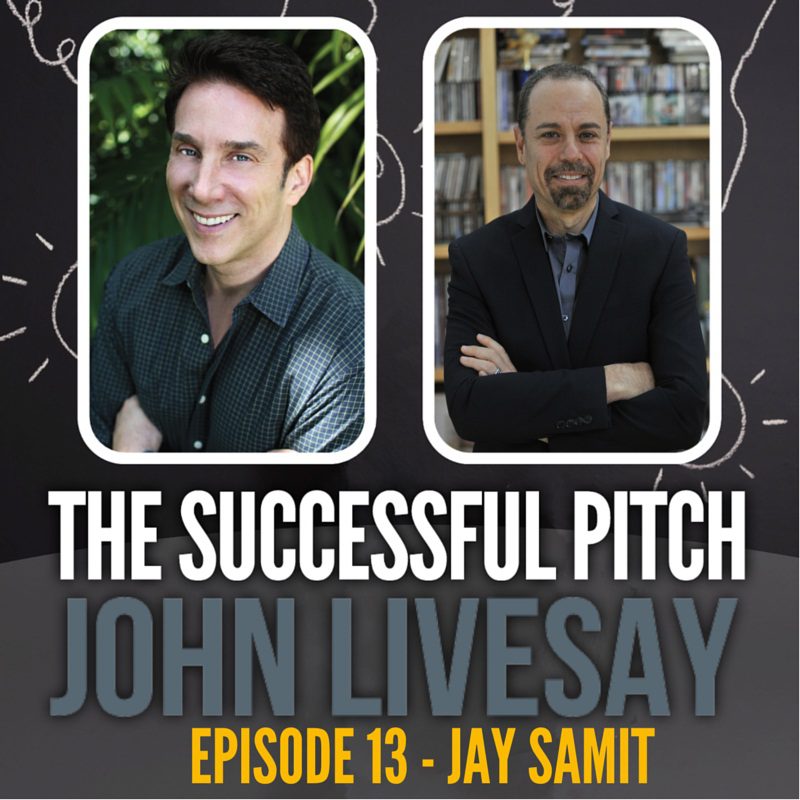
Listen To The Podcast Here
Episode Summary
Jay Samit is widely recognized as one of the world’s leading experts in innovation and disruption. You can pre-order his newest book, which is out July 7th, entitled Disrupt You!: Master Personal Transformation, Seize Opportunity, and Thrive in the Era of Endless Innovation on Amazon. Jay sits down with John Livesay to talk on some of the life lesson’s he’s learned over the years. In the episode, Jay talks about Disrupt You! and shares examples of successful people failing, people pivoting their business, and much more.
Disrupt You – Interview with Jay Samit

Disrupt You!: Master Personal Transformation, Seize Opportunity, and Thrive in the Era of Endless Innovation
Hi and welcome back to The Successful Pitch. Today’s guest is Jay Samit, the author of a new book coming out July 7th, Disrupt You! Boy, does that book have great information for startups today. Jay has raised over $800 million dollars over the decades for startups, so clearly he’s an expert. His book, Disrupt You!, has a foreword written by the founder of LinkedIn, if you could imagine having those kinds of connections. We are obviously extremely thrilled and honored to have him on the show today. Jay, welcome to the show.
Thanks for having me.
Jay, I just gave a little tip of the ice berg of your background, everything from being at Sony and Universal to now you’re the CEO of C-Change, doing multi screen TV services and teaching at USC on how to build a high-tech startup. You have such an incredible background and your book is full of information. I’m honored to have had a chance to read an advanced copy of it.
Can you take us back, I know you do this in your book [Disrupt You!], about how you first came up with the idea of getting into startups in the first place and what made you realize you really have a passion for that?
I’d like to say it was a plan, but I graduated as many Millennials did, although this was many years ago, at a time of a great recession. You did what you were told. You got good grades in high school, got into a good college, you got good grades in college and then bam, there’s no jobs. Back then, it wasn’t so easy to raise money. But I figured out if I would just go out and print a business card and suddenly claim to be a business, nobody would ever come and visit the business. I could morph and figure out what we did later.
[Tweet “Disruption is either an obstacle or an opportunity, the choice is yours.”]
My first company was called Jasmine Productions. Jasmine, Jay Alan Samit, and it was mine. From that humble beginning, I happened to look at where were new industries happening, where could growth take place. Probably the easiest message is, when we look out today at all the changes in our world, I call this the era of endless innovation, there’s constant disruption. Disruption is either an obstacle or an opportunity, the choice is yours.
I love that. Your book [Disrupt You!] says you have to do three things: master personal transform, seize opportunity, and then thrive in this era of, as you said, endless innovation. I want to start with this whole concept of mastering personal innovation. You talk a lot about that in your book about how important it is to think of yourself as a brand, first of all. You have this great quote about people are so interested in changing the world, but no one thinks of changing themselves. Can you speak to that?
[Tweet “Everyone thinks of changing the world but no one thinks of changing themselves.”]
Sure. Most of us, by the time we get to be adults, are carrying all this baggage of being told what we can’t do. You weren’t good at math, you can’t read a map, you can’t do this, you can’t do that. For most people, they actually believe this, when in fact you can actually do whatever you want. I’m always envious of those people that believe in reincarnation. I don’t, so I figure I have one shot to get it right and I want to do as much as I can.
If you really look at it that way and you stop saying what you can’t and start focusing what you can do, almost anything becomes possible. The most successful people in the world have the same 24 hours a day that you do.
[Tweet “The most successful people in the world have the same 24 hours a day that you do.”]
You also talk about it in Disrupt You!, the important of just taking five minutes and visualizing your success and how important a positive attitude is to being successful.
Have you ever met or gotten a great idea from a negative person?
Never.
Never. If you can just start your day out of what’s great, you woke up ahead of everybody else and just start visualizing what you want to get out of the day, what you want to get out of life, what your goals are. If you don’t know where you want to be in five years, you’re not going to get there.
Your life is just like any other journey. You have to put out a map, what I call a disruptor’s map, to really plan out. You don’t have to know all the steps. That’s where some people get lost in the process. “I really know that I want to direct Hollywood movies, but I don’t know what to do.” Most likely, staying in Indiana is not the place to start. Get yourself there.
[Tweet “All disruption starts with introspection.”]
I love how you say, “All disruption starts with introspection.” That’s such a key connecting element to your book [Disrupt You!], about take a look at who you are, what your strength are, and what problem you can solve in the world. The real Tweetable quote that I love from your book is, “Businesses don’t sell products. They sell solutions.”
[Tweet “Businesses don’t sell products. They sell solutions.”]
So many startups that I work with get so in love with their idea, but can’t verbalize to investors what solution it’s fixing for people. You have done that time and time again, both for big companies like Sony and Universal, as well as startups. Can you tell us about the importance of, and when you teach your students to look for things that are disruptive and how that solves problems?
I’ve taken stakes in over 80 startups in my career, and investors have made money almost all of those times.
Wow.
What attracts me and what you need to do, the classic elevator pitch. What’s that one sentence that explains what your business does? Tons of people want to come to San Francisco for Mac World, but can’t afford hotel rooms. AirBnB. Just solve a problem.
[Tweet “What is unique is you are the only person seeing the world from your point of view.”]
What is unique and where you can succeed is you are the only person seeing the world from your point of view. You are experiencing every single day, problems and aggravation. Every one of those is an opportunity, because if it’s bothering you, it’s obviously bothering others. The bigger the opportunity. You’re one click away from billions of people nowadays. Becoming a global brand and solving a global problem is as easy as first identifying it.
Just write them down. If you write down three problems you have every day that you see in the world, the beginning of the month it’s pretty easy. By the end of the month, it gets tougher. But you have 90 ideas and then you can work down that list and see which ones scale the most, which one can capture the value that you create. It’s that easy.
[Tweet “Becoming a global brand and solving a global problem is as easy as first identifying it.”]
That’s such valuable takeaway for our audience, Jay. Thank you. One of the quotes that you have in the book is, “Problems are just businesses waiting for the right entrepreneur to unlock the value.” You certainty gave us an example of that with the AirBnB example.
[Tweet “Problems are just businesses waiting for the right entrepreneur to unlock the value.”]
When you talk about the multitude of ideas that you get if you write down three a day, at the end of the month obviously and at the end of a quarter, you have a lot. One of my favorite takeaways in your book [Disrupt You!] is with this concept you’ve come up with called the zombie idea. Can you tell us what you mean by that?
Everybody else tells you to nurture your idea, to grow your idea, to love your idea. They’re wrong. The best thing you can do with your big idea is kill it. Before you start hiring people, spending money, whatever, go to people in the field and find out, not relatives and friends that want to help you, go to actual customers and have them tell you why your idea sucks, why it’ll fail, what’s wrong with it.
Because if you can start plugging those holes, “Wow, you’re right, that’s not a good idea. Oh, yeah, what if I do this?” Then you’ll go down a path. When you find that idea that can’t be killed, that’s a zombie idea. That’s the one that you start spending money on.
[Tweet “Get a ZOMBIE idea that is so good it can’t die.”]
I love it. That’s going to be the big Tweetable moment for sure, because the zombie idea, the Walking Dead, everybody loves that concept. The idea is so great, the problem that it solves is so needed that it can’t be killed. It’s really a wonderful, wonderful, clever, clever way to get people to think about their ideas.
We’ve talked about mastering your personal transformation. The second part of your book is all about seizing opportunities. You have one of the best stories I’ve ever heard of seizing an opportunity, which has happened, I’m sure, to anybody who has been in the business world and made appointments to pitch people. Which is, “I’m sorry, there’s been a last minute cancellation. This person is no longer able to see you right now.” In your story, the person was catching a limo on the way to LAX. Can you tell the listeners how you seized that opportunity?
Sure. Taking everybody back about 15 years ago when the music industry was being disrupted. Suddenly Napster comes out, everybody’s stealing music. The industry goes from a $40 billion industry to a $20 billion dollar industry. Every record company is losing their money, nobody knows what the future is.

“How about I just ride with you in the limo to the airport?” Instead of getting a 15 minute meeting. I get a 45 minute meeting.
I, as a serial disruptor, want to change that industry and jump in with tons of ideas. I finally get a meeting with the CEO of EMI, the world’s largest standalone music company. This is the home of Frank Sinatra and The Beatles and Pink Floyd and etc. Ken Berry, who was, earlier in his career, Richard Branson’s original partner in founding Virgin.
I have this meeting, I show up at Capital Records, go up to the top, the E floor of the Capital Records building. He’s gracious enough to come out of his office and say something has changed, he can’t do our meeting and he has to leave right now for the airport.
I realized it’s LA. To get to the airport, it’s 45 minutes with traffic. I said, “How about I just ride with you in the limo to the airport?” Now, instead of getting a 15 minute meeting. I get a 45 minute meeting. During that time, I explained my visions and thoughts. I hear what his needs are. While he’s in the air, I now know for the next 12 hours, nobody can reach him. I spend those 12 hours like a mad man and write an entire business plan for what I believe the next five years of the music industry will look like. That’s in his inbox when he lands. Got hired right then, the second he landed.
Had you not seized that opportunity and been bold enough and creative enough to say, “Hey, why don’t I ride in the limo,” and figure out your own way home from the airport, that would have never have happened. What a great example of seizing an opportunity.
The other one that you have in your book [Disrupt You!] is this amazing opportunity that came to you, which tells people that when you have an idea that really is so great, that people find you. Which is you got a call to come meet with President Clinton at the White House. Can you tell us about that opportunity?
I was very successful in the early days of launching what became the PC and the internet and the way we see the world. One of the ways I wanted to give back is I had this vision of we need to get computers into the schools. We need to get a computer into every class room. It’s a very simple, big idea.
Had no idea how to make that happen, but I would write about it and would appear in magazines and speak at conferences. One day, I’m sitting in my little software company. There was 20 of us. Nobody knows who we are. I get a call from the President of the United States. I literally thought it was somebody doing an Arkansas accent pretending to be, “This is the President.”

I had this vision to get computers into the schools. I get a call from the President of the United States. The White House believed in the idea. That’s all it took.
To make a long story short, the White House believed in the idea and they invited a whole bunch of forward thinking people together and saying, “How do we make this happen?” You get all inspired. You’re sitting in the White House, you’re sitting with the President, the Vice President, all these really important people. Then they give you the little thing, “Oh, by the way, there’s no federal dollars to help you. We’re there for moral support,” but that’s all it took.
It just took people believing and you got enough great minds together. One of the stories that, I don’t know if it’s in the book, that spun out of this is we ended up wiring a Nations school one day, a school in California, for the press. Photo op. Back then, before Wi-Fi, you literally had to wire CAT5 wires. The President is wearing a hard hat and the Vice President.
At the end of it, there’s photo ops with the White House photographer. A month goes by and I get this beautiful signed photo to me, that’s going to be framed to my wall forever. It was a three shot. It was me, the President, and this other guy. I’m like, I really wish it was just the two of us. He’s one of the guys in the committee that participated. It’s the kind of picture you want to show your mom. About ten years go by and people go, “Oh, you’re friends with Eric Schmidt?” There was somebody else that volunteered who went on later to become the founding Chairman of Google.
That’s quite a very high group of people that you’re working with. That whole concept of figuring out a way to solve a problem without a lot of money and everybody pooling their resources together, you never know who you’re going to interact with. That’s such an inspiring story.
The takeaway of the story is Eric Schmidt was a guy who had just left Novell . He was looking for something new and meaningful to do. These people that become the legends of entrepreneurship, the disruptors that change our world, it didn’t happen to them. It wasn’t like, “Oh, I was walking down the street and I just won a lottery ticket.” They made it happen. They went out of their way.
The majority of the world’s billionaires are self-made. That is not something that existed in the past. This isn’t about class, this isn’t about race. When I look at the big problems of the world, whether you go with climate change or water shortage or anything, the only people that are going to stop these problems are entrepreneurs.
One of the things you talk about, you have a whole chapter devoted about capital, is a lot of entrepreneurs say, “I just need funding and then I’ll be successful.” You have a whole creative strategy that you’ve used throughout your whole career called Other People’s Money, OPM, without having to necessarily get an investor. One of the stories you talk about is how you got Sony music, McDonald’s and United Airlines, which seem like completely separate industries, to somehow work together and brainstorm something that allowed Sony music to piggy back on their money. Can you explain that whole strategy to our listeners on being creative like that?
Sure. You’re starting a new business and it’s aimed at solving a problem for some segment of the audience, whatever that may be. It may be elder care, it maybe young people, it maybe women, whatever it is. There are some other brand out there that also wants to sell to, reach, and work with that same target audience, and they have a non-competitive product.
If you can figure out how to use their marketing dollars, their reach, their sales channel to promote what you do, then you’re basically spending off-balance sheet financing. They’re paying for you to become successful.

We did a concert in the sky with Sheryl Crow, 30,000 feet, filled the plane with press from Chicago to LA, and got lead story on all the network news.
In the case of Sony, we were launching a competitor to iTunes and that is a big task to do. I was trying to figure out who else had problems. It doesn’t matter what their problems were, but who else was in the headlines. The two on the headlines at the same time was United was coming out of bankruptcy and wanted to tell the world, “Come fly with United,” and McDonald’s had suffered through a movie called Super Size Me, which shows Spurlock nearly dying by eating McDonald’s three times a day for 30 days.
To make a long story short, I went to each of them. In United I said, “Wow. United, you have all these people with frequent flyer miles that they’re not using. What if we make it a currency that you can buy digital downloads with it?” and, “McDonald’s, what if we make you hip and cool by every time you buy a Big Mac, there’s a free code on the box. It’s called the Big Mac value track, and you got a song.”
Now you have McDonald’s spending millions of dollars for great TV commercials, putting signs in every store, bags, and all that. United, we did a concert in the sky with Sheryl Crow, 30,000 feet, filled the plane with press from Chicago to LA, and got lead story on all the network news, all the newspapers, everybody covered it. You now have millions of customers coming to your store, opening week, and it didn’t cost you one little cent.
And you were competing against Apple’s huge budget. That is an amazing story about being creative and using other people’s money, but people are willing to spend their money because you’re solving their problem in addition to having your own problem solved. I think that’s the real genius behind what you did there.
If I could just build on that. When you pitch, if I could give one piece of advice for your listeners to takeaway today. When you pitch, it’s the same concept. When I was in my 20s and pitching big companies, I would go in and say, “Intel, this will solve this for Intel, this will solve that for Intel.” I thought it all out, everything. You know what? That’s not what a pitch is.
Pitches solve the problem for the human being across the desk. What motivates them? Are they trying to get a bonus? Are they trying to get a promotion? Are they trying to beat a certain competitor? Get in their mindset, because all you have to do is solve for the individual that you’re pitching and all the rest will work itself out.
[Tweet “Solve for the individual that you’re pitching and all the rest will work itself out.”]
It’s really having huge empathy skills, it sounds like, of what you’re saying there. What is their hot button? Is it they need a promotion, they need to hit a certain number? You also talk about in Disrupt You!, the concept of CEOs are happy to buy your startup company if it’s going to make them look good or help them solve a problem, right?
Yeah. Large corporations are not setup to innovate. They’re not setup to, what’s our new thing to do? What they’re busy doing is, “We’ve got this percentage share of the ketchup market,” and they look at their competitor or who else is selling ketchup. Or Kodak versus Fuji kept on looking, who sold how much film and who sells film at this Disneyland and should we pay to sell our film there. Not paying attention that people aren’t using film any more, those are digital cameras.

An extreme example of taking a risk that pays off: “We don’t mind buying Oculus Rift for billions of dollars though it doesn’t have a penny in revenue.”
When that moment happens that you take those risks and you have that money losing business for two, three years to prove your new concept, then it’s at a point where they’re willing to say, “Wow, we need to get in there. We don’t mind overpaying. We don’t mind buying Oculus Rift for billions of dollars though it doesn’t have a penny in revenue,” an extreme example.
Even the innovator type companies like Google, about as innovative as you can get, they were late to mobile. They bought Android. They didn’t sit and create that on their own. You’ll see this time and time again. Many of the millionaires if not most of the millionaires that you think of that came out of the Silicon Valley area did so on businesses that were not profitable.
Just to expand on that concept of coming up with something that necessarily isn’t hugely profitable out of the gate but still has an extreme value for someone to want to buy, you also talk about there are times where you do want to get investors to give you money for a percentage of your company. You have this great tweet in there about, “100% of nothing is nothing, whereas 50% of something can be worth millions,” and that you’d rather half the Pacific Ocean than all of Lake Erie. What a great visual that is.
So many of our startups talk about valuation. “I don’t want to give away too much of my company for this kind of investment.” But like you said, 100% of nothing is nothing. If you need the money in order to make your company grow and scale and prove that it’s viable, then 50% of something can be worth billions. I’d love to have your insights on that.
[Tweet “100% of nothing is nothing. 50% of something can be worth millions.”]
The answer I usually give to people that are afraid to give away something or whatever is, “Tell me a billion dollar company that has no employees and no investors.” You’re not going to do it alone. You better start figuring out that it is going to take a whole team of people and you’re going to be the Pied Piper leading them.
In the beginning, your employees are going to have to come on that leap of faith. What’s going to give them a leap is that they’re are going to get some of that upside, because they’re going to be working for free or less than they could get at a job somewhere else. Your investors know, that the vast majority of startups won’t make it, so they’re taking a huge risk and. That’s how it starts getting divided up. There’s no other way.
Now, there’s cleaver ways to structure things and various ways to get into detail, too much to get into here, but I try to cover them in the book [Disrupt You!]. In the basic premise, you want as strong as a team as you can.
[Tweet “You want as strong as a team as you can have.”]
One of the things that sometimes people forget is that LinkedIn is a great tool for solving this issue. There are esteemed people in your field, in your industry, that you can just reach out to on LinkedIn, send them a note, and ask them for advice, and put up a group of advisers around your concept that will make you seem more connected, know the industry better, grow faster. That’s an easy way. Many of these people want to give back and just want to feel validated that their experience and expertise made a difference.
When you talk about getting the right team and people need to feel like they have a huge upside to leave their, especially if you’re recruiting somebody from a really big company that has great skills and is in big demand, one of the other tweets in the book that was so empowering I thought, and really made me stop was, “Would you rather work 40 hours at a job you hate or 80 hours at work you love?”
[Tweet “Would you rather work 40 hours at a job you hate or 80 hours at work you love?”]
I don’t feel like I work. I put in a ton of hours, seven days a week. I don’t golf, I don’t sit around. I’m on a mission. When you feel like you’re on a mission, there’s nothing that’s going to stop you. There’s nothing that’s more energizing. You sleep because our human carcass forces us to. I’ve been in, I don’t know, 20 cities in the past month. I fly around like crazy because the opportunity to help one more person, to change one person’s life, to inspire one more person, it’s selfish. It makes our world better.
If you had to say what’s your mission was in a nutshell? You gave us a little bit of it. It’s making a difference and encouraging other people to make a difference, right? Is that what gets you going?

Homer Simpson has a crazy idea, it falls apart and life goes on. There is no fear in failure. Failure means that you tried.
I truly believe the only people that solves world problems are entrepreneurs. We’ve got a lot of problems. Yet, we don’t teach people how to be great entrepreneurs. I’m on the wrong side of 50. I grew up with I Love Lucy. Lucy would have a get rich quick scheme, it would fall apart, and then Ricky would forgive her and life would go on.
To today’s generation, they grew up with Homer Simpson has a crazy idea, it falls apart and life goes on. That is the ethos that is very specific to the American dream. The American dream isn’t that anyone can get rich. The American dream is really anyone can try. There is no fear in failure. Failure means that you tried. You learn more from failure than you do from anything else.
[Tweet “You learn more from failure than you do from anything else.”]
Bill Gates and Paul Allen’s first company wasn’t Microsoft. The first company went out of business. Did they get shunned? No. Their next business was Microsoft. Henry Ford had gone broke. Walt Disney. You have to understand that failure is part of the process and not stop. You don’t want to just give up.
That brings up the whole concept of pivoting that you talk about in your book. You talked earlier today about, ask your customers if they think that’s a good idea and why not. You have this great tweet, “Data has no ego and makes an excellent co-pilot.” That ability to say, “This is what I think. I’m not afraid of failing. I’m going to get some feedback. I’m going to get some data. If that doesn’t work, I’m going to pivot.”
[Tweet “Data has no ego and makes an excellent co-pilot.”]
You tell this amazing story of what YouTube originally had as an idea. I don’t know that many people know that. Would you tell us that story?
Sure. In the early days of internet dating, a couple of guys sat down and said, “You know what? Internet dating just shows a still picture. That could be 20 years and 20 pounds ago. You don’t know what that person is really like. We’re going to make a dating site that has videos on it.”

They got rid of the dating part, put up more videos, and within a year changed the name to YouTube and became billionaires.
They put up Tune In Hook Up as a video dating site. They learned two things from the data. Nobody was really excited about dating any of these people, but tons of people liked watching the videos. They got rid of the dating part, put up more videos, and within a year changed the name to YouTube and became billionaires.
Had they not looked at the data, had they believed that their idea was so good and flawless and we-know-everything, they would have just gone their merry way out of business and never pivoted.
Pivoting is a very hard to thing to do. You have to admit that you were wrong. But the good news is, you wouldn’t haven’t gotten to that point to get that data and see that insight had you not gone down that wrong path. Going deep into the woods with your eyes closed, you’re going to hit a tree and die. The whole point is to look at all this rich data that we get nowadays and see that insight that none of your competitors have, because they haven’t gone through that experience.
[Tweet “Pivoting is a very hard to thing to do. You have to admit that you were wrong.”]
I love that. That really is the third element of your book, which is thrive in this era of endless innovation by seeing the insights that no one else has seen. Sometimes that means the only way you can see is by trying something that doesn’t work. What a great, great book.
Jay, in addition to your book, which obviously everybody is going to want to pre-order on Amazon and any other way you can get it, are there any other books you have your students read or anything that would suggest for startups that are looking for either great ideas on pitching, getting investors to pick them, since it’s such a percent that get invested?

Pitch Anything: An Innovative Method for Presenting, Persuading, and Winning the Deal
I haven’t seen one as far on how to raise money. There’s books on pitching, like Pitch Anything. There’s books on how to make a lean startup or a tech startup. The Lean Startup has done very well. What really drove me to write Disrupt You! was the fact that I saw a lot of books written by journalists about what they think it should be. Then I saw a lot of books like the famous one by Jack Welch, one career, one moment in time, look how smart I am.
But I really didn’t see anybody that took the point of view of, let’s do a cross section of every industry and show how we all follow the same process, whether you’re Richard Branson, whether you’re starting LinkedIn, whether you’re starting YouTube, any of these business or restaurants or the many of the hundreds of examples, Silly Putty to Odor Eaters. I really wanted people to see not only how easy it is. Disruptions are not just about releasing value, but focusing on where to capture that value.
[Tweet “Disruptions are not just about releasing value, but focusing on where to capture that value.”]
Shawn Fanning did a great job with Napster of disrupting the music industry, but Napster never captured any of the value that it unleashed. So, what’s the point? It’s really important to understand the complete value chain of a business and where those things go. I tried to bring this in the most accessible manner. If a moron, like me, can be successful over and over again, anybody can.

The Lean Startup by Eric Ries
I hope this inspires the next generation. If I could be so bold, have those people reach out to me with their success stories. Because really, nothing fires me more than getting to hear from them. They can go to JaySamit.com or follow me at @JaySamit on Twitter.
Great, that was going to be my last question, is how can readers follow you and keep up with you or reach out to you. You just gave us that. Twitter and obviously you’re on LinkedIn and you have a website that has all kinds of things. Obviously, you are also an incredible speaker. You talk about that in your book, about that’s a big way to increase your own brand. You’ve spoken literally around the world. I love that story you have in your book about speaking in Mumbai and how that totally changes your world and your perspective on everything.
Jay, this has been so great. We really appreciate you sharing your wisdom, your insights. Disrupt You!, everybody, comes out July 7th. You’re going to want to pre-order it and you’re going to have so many valuable tweets in that book. You’re going to have a year’s worth of knowledge in one read. I highly recommend it.
John, if I could just give one last thing to your listeners. You did such a great job and I’m so flattered that you read the book and that you liked and you really did your homework, unlike most journalists who just phone it in. I have a trailer out on YouTube for the book. Here’s what I’m giving your listeners that haven’t told anybody. There is a secret buried in that video trailer that is a contest. The prize is a day with Jay. I will work and help you with your pitch, your deck, get your whole business up to going.
If you’re clever, you’ll figure it out. Just search for my name and Disrupt You! on YouTube and you’ll see the video trailer. I haven’t tipped anybody else off that it’s in there, so you guys have a head start.
Wow, a day with Jay. What a great prize. I can’t even put a dollar amount on that, it’s so huge. Thank you so much, that’s amazing. I’m sure everybody is going to YouTube right away and try to enter that contest.
Yeah, I’m sure you’ll put a link on your podcast.
Yes, we will definitely put that in transcription and also in the links and all that stuff. Thank you for that.
Links Mentioned
Jay Samit
Jay Samit Twitter
Disrupt You! by Jay Samit
Pitch Anything by Oren Klaff
The Lean Startup by Eric Ries
Disrupt You! Book Trailer 2015 – Jay Samit
It’s Time to Disrupt You! | Jay Samit | TEDxAugusta
DISRUPT YOU! Book Trailer 2015 – Jay Samit
Crack The Funding Code!
Register now for the free webinar
How to Engage Investors to Fund your Startup with John Livesay
Share The Show
Did you enjoy the show? I’d love it if you subscribed today and left usd a 5-star review!
- Click this link
- Click on the ‘Subscribe’ button below the artwork
- Go to the ‘Ratings and Reviews’ section
- Click on ‘Write a Review’