
TSP061 | Angela Lee – Transcription
Posted by John Livesay in Uncategorized | 0 comments
John Livesay:
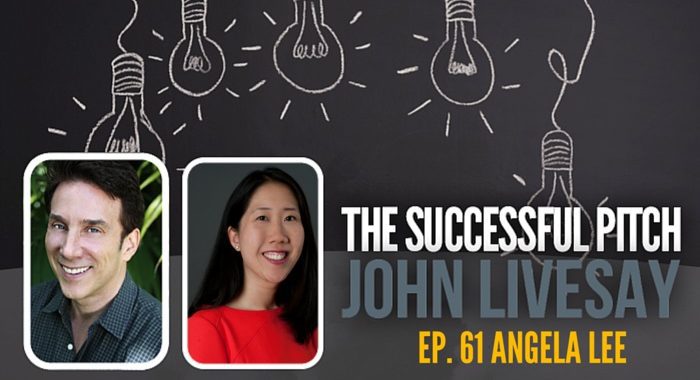
Welcome to the Successful Pitch Podcast. Today’s guest is Angela Lee, who is the founder of 37 Angels and the intent behind that name was they wanted to increase the number of female investors from the current 13% to growing it to 37% and she talks about how they plan to do that in the episode. She has so many great tips on what makes a good pitch, starting with self-awareness. She said, “If a founder says I’m good at X and my co-founder’s good at Y and the first person we’re going to hire will be good at Z,” that is the kind of awareness that she loves to see.
Also, she talks about being an organized hustler. Getting out there, and putting yourself out there and networking so that people know who you are. She really likes to see people who are thoughtful because she said, “How you pitch is how you’re going to run your business and how you’re going to get your customers.” The other insights that she shares are really talk about the size of your market from a smart standpoint so that it’s large enough for the investors to see that there’s a smart exit and potential exit in place and that it’s thought through. If you can have all those things in place, you might just be the people lucky enough to get to work with Angela. Enjoy the episode.
Are you a founder struggling with your investor pitch? Do you need warm introductions to the right investors to get your startup funded? Do you need a funding road map to get you there fast? All of this and more can be found in Crack the Funding Code. Join host, John Livesay and Judy Robinett, bestselling author of How to Be a Power Connector and board member of Illuminate Ventures, on their free Crack the Funding Code webinar. Simply go to judyrobinett.com – that’s J-U-D-Y-R-O-B-I-N-E-T-T dot com – and click on the webinar tab to see how to tap into their network of investors from around the world. There’s a link in the show notes as well. You’re only one click away from getting funded fast.
Hi, and welcome to the Successful Pitch. Today’s guest is Angela Lee, who is the Assistant Dean at Columbia Business School and the founder of 37 Angels. Angela is an educator, an entrepreneur who inspires both in the classroom and the investment arena. As an Assistant Dean at Columbia Business School, Angela is a highly rated professor of strategy, leadership and most importantly, innovation. As the founder and CEO of 37 Angels, she evaluates early stage startups and teaches people how to invest in them. In all her work, Angela is known for demystifying complex topics in curating opportunities. So we’re looking forward to having her demystify some things for us. She’s a sought after expert on CNBC, Bloomberg TV, and Fox Business, and regularly featured in media outlets like Forbes and Huffington Post and FastCompany. In fact, Entrepreneur Magazine recognized Angela as 1 of the 6 innovative women to watch in 2015 and AlleyWatch named her as 1 of the 100 New York City tech-influencers you need to know. So we are thrilled to have her on the show so that we can need to know her. We’re going to get know her. Angela, welcome!
Angela:
Thank you, John. It’s great to be here.
John:
You have such a passion for making a difference in the world. I can see it because anyone who teaches, obviously, is devoting a lot of their skill set and time to not just making money, but also giving back. So, I really love that you do that. I would love to hear you tell us your story of — you know, you graduated from Berkeley then you went to Columbia Business School. Did you know from the get-go that you were going to jump right into being a financial adviser and get into helping people get funded?
Angela:
Absolutely not. People often ask me how I became an investor and I very honestly say completely accidentally. About 8 years ago, there was a movie that I really wanted to help get made. The movie was helping to promote mental health awareness in the Asian-American community. Asian-Americans don’t talk about mental health and I really wanted that movie to get made.
So, I invested in it to promote it and then what basically happens is once you write one check, all of a sudden, you’re an investor. People start sending you deals and then, all of a sudden, you’re kind of wearing this hat of, “Wait, how did this happen?” and it kind of happened very organically. I’ve been on the other side.
So entrepreneurship has always been in my blood and sort of my first kind of undergrad and 37 Angels is my fourth startup and so I’ve always loved the entrepreneurship ecosystem but, becoming an investor was something that happened organically rather than something that was purposeful.
John:
Well, again, it’s always such great story to hear because you had a passion for something that caused you to do whatever it took to get that funded and get that made and that’s the spirit of entrepreneurship that, I think, investors are looking for but you can certainly speak better on that than I can. So, can you give us some qualities that you look for in a founder? Because everyone tells us all the time that what we’re really looking for is the person first and then the idea. So, I’d love to ask, what kind of qualities you think are really important and how does someone communicate that?
Angela:
Absolutely. So, I would say that I’d look for two different things. The first thing is self-awareness and so, what I’d like a founder to say to me is, “I am really good at X. I’m not so good at Y but my co-founder’s really good at Y and then, well, we’re missing Z and that’s where our first hire is going to be.” You have to know that very relative to your startup, right? So people always ask me like what funding do I need? Do I need technical co-founder? Do I need a CMO? When do I need a CFO? And I say, “It depends on the company.”
So, this morning I talked to a company and what I said is, I was like, “You need a data scientist on your team.” So, if they need that, they need the best possible data scientist, not your roommate, who was an undergrad, not who someone you happened to kind of meet at Hackathon two weeks ago. No, thoughtfully saying, “What is the type of being a scientist I need?” and then going out and finding that person very thoughtfully.
This is not my advice; I stole this from another investor. She likes to separate founders and ask them, “What are you really good at? What is your co-founder really good at and what are you both not so good at?” and then ask them that separately. Hopefully, it totally aligns. So that I’m a really good executor. I’m very good at processing. I make an awesome COO, alright? But I hate sales. I don’t love marketing. So, I know that about myself and so, hopefully, my co-founder would say the same thing. That’s 1, self-awareness.
The second thing is, I’ll call it being an organized hustler, which is I want somebody who is out there and just knows — you know, when I say follow up with me, in 6 weeks, they do and so I want them out there. I want for people to say, “Hey you have to talk this founder because it means that they’re out there.” But, again, I want them to be organized about it. So, it’s a hard balance because I don’t want somebody who’s just like spamming the world. But I also don’t want somebody who’s kind of afraid to get out there and network. So, I look for, self-aware, organized hustlers.
John:
Whoo. What a great line. It’s really good and I like the concept that you’re asking the co-founders in separate rooms the same question to see if you get the same answers about their strengths and weaknesses. It reminds me of like a police investigation, almost, to see if everybody’s story can stay as consistent. But it’s so true.
Angela:
Yeah, but not quite so negative.
John:
No. But, yeah, not that you’re trying to trip them up or anything but when people are authentic and credible, that is consistent and that’s a totally fair way to find out if they’re on the same page and if they communicate and if they see each other the same way. I really, really like that a lot. This whole concept of being an organized hustler is so interesting because you have to be persistent without being pushy, right? It’s that fine mix of confidence without arrogance, I would say, too.
Angela:
Yes, and I want to see an Excel spreadsheet or some sort of calendar that shows that you’re really thoughtful because it’s actually less of about fundraising but if you can’t fundraise in an organized way — because the reality is you’re going to have to talk to 50 investors to get a check. If you can’t organize that in a thoughtful way, then you’re also not going to be able to sell the clients. So that’s why I like organized hustlers.
John:
Well, you know, if you can be methodical and thoughtful, as you said, in the way you approach getting investors, it’ll totally translate into how you get customers and probably how you run your business and how the whole relationship rose and including transparency, I would assume, yes?
Angela:
Absolutely. I mean, the whole diligence process as an investor is very much — you can call it — it’s very meta in the sense that, how they interact with you is how they’re going to interact with clients, is how they’re going to interact with their employees. So, everything — it’s always part of diligence, right? Because you want to make sure that their communications with you are thoughtful, their emails are timely and responsive, all that kind of stuff.
John:
Right, and we so take it for granted. It’s almost, for me, the analogy is, when you go to a nice restaurant, you get really great service and everything just flows smoothly and they bring the meals out at the same time and they don’t have to auction the food and say, “Did you order this or did you order that?” It’s all just seamless. But when you go to a restaurant, it can be expensive and you don’t get good service then you’re constantly, “Oh, start and stop, start and stop,” and you realize, “Oh my god, this is really bad and just takes away from the whole enjoyment of the experience.” So, all those basics, if they’re there, it’s seamless and almost invisible but when they’re not, in the case of thoughtful, timely responsiveness, it can drive you crazy. So, let’s talk about what gave you the idea to be the founder of 37 Angels three years ago and how has it changed?
Angela:
I started 37 Angels because I basically built an angel network that I wanted to be a part of and that, as a founder, I wanted to pitch to. So, what I mean by that, is I would walk into rooms of angel investors and literally be surrounded by, primarily, older Caucasian men. I got asked a couple of times if I was lost, I got asked who I work for, stuff like that. So, part of it, was that I wanted to invest in a room that had a lot more women on the investors side. That being said, I didn’t want to be restricted to only investing in female founders.
And there’s a huge assumption to this day, even though I constantly say to people, “We invest in men and women.” There’s always the assumption that we only invest in female founders and, as an investor, I’m gender-blind. I just want to invest in the best possible company but I wanted it to invest alongside a diverse group.
So, basically, I created a group that I wanted to be a part of and the what I’m most proud of these days is if you look at our testimonials on the website from founders, the words they use are transparent, efficient, helpful, easy to work with and that’s what I think we’re known for, hopefully, more than the fact that we’re female investors is there for us and 75% of our founder testimonials come from people who we said no to. So we said “No, we’re not going to fund you,” and they said, ” You know what? That no is so pleasant, I’m going to write you a positive testimonial.” So we’re really proud of that.
John:
Wow! That speaks volumes. What’s also interesting to me, Angela, is two of the qualities that you’ve mentioned: transparency, easy to work with are exactly what you’re looking for in a founder, right?
Angela:
Yes.
John:
So, you’re mirroring to them what you are seeking and that’s the essence of brand consistency. You walk your talk. Look, we’re not going to ask you to be or do anything that we’re not being and doing, right?
Angela:
I hate it when investors and founders talk about the power dynamic and how — during fundraising, investors have all the power that after you closed the round then the entrepreneurs have all the power. No. Nobody ever has all the power. We’re all on the same side of the table trying to grow the pie. I think you, unfortunately, do have both investors and founders who don’t play nice in the sandbox. But, I think you quickly do have to recommend — and reputation and people know who those people are.
John:
Right. Now who is your ideal founder? Or is it specific that they have a working prototype. Do you ever invest in people pre-revenue? Do you have specific industries you like?
Angela:
So we always invest post-traction. Now, traction, ideally, is revenue but traction to-be — we have 5 letters of intent from clients who say we will pay X thousand dollars a month when you build pictures X, Y, and Z and, we’re going to do an unpaid pilot with them for 3 months. That is traction. Traction is — we created a landing page that says “Hey, we’re building this app. Give us your email address and when it’s built, we’ll email it to you,” and we have 50 thousand email addresses collected. That’s traction. So, ideally it’s revenue, but it doesn’t always have to be. But, we will not invest an idea written on the back of an envelope. We want to see some traction, some proof of concept, some marketed option.
John:
Right, and what about categories– Do you like mobile only or are you sort of agnostic as far as what the business is?
Angela:
We’re pretty agnostic. We like healthcare check. They’re certainly probably a quarter of our portfolios on that. I think mobile is a hot space. Everyone does love it. Then, I would say Ad:Tech as well. There’s lot of really cool disruptive technologies in Ad:Tech. Then, it’s kind of a mix from there.
John:
Got it. And, what kind of range — do you like to be like one of the first seed investors and how much do you bring to that party? If somebody needs a million dollars, you’re like, “Okay, we’ll give you 250 and you’re going to need to get 3 other angels to give you the other 250.”? Is that how you –?
Angela:
We write a 50 to 200 thousand dollar check. Typically around, it takes 6 months to close and so we don’t care for the first check or the last check but we won’t — we typically are not the only check because, most of the times, the people who we fund are raising between half a million and 1 and a half million. So, we’re never the only check but we don’t care where we are on that process.
John:
What is the best way for founders to find you? Is it through warm introductions of people in your network, personally? Are there entrepreneurs? Are there investors? I’m sure it’s multiple sources but I’d just love to hear.
Angela:
Yeah, so, I mean you can always find us off of platforms like Gust and you can apply through our website. So those are the unreferred deal flow. So we see about 2,500 companies a year and two thirds of that 2,500 comes from unreferred sources like Gust. That’s G-U-S-T and then about a third of our deal flow comes from your point, warm introductions and referrals from our network. Not surprisingly, 27 of our 33 portfolio companies came from referrals.
So, it’s definitely the best way. If you can get someone to vouch for you and ideally, get 4 people to vouch for you, now that’s great. That being said, make sure it’s somebody who knows you. Because this happens a lot where somebody you met at some event last night and I don’t know their connecting point very well and then they met them last night. That’s not a warm introduction.
John:
Yeah, you worked with them over a period of time, you’ve seen them under duress, you can speak to their character. Something along those lines, right?
Angela:
Exactly.
John:
I like that you like 4 referrals. So if you see 2,500 deals a year, you know, the typical percentages for VCs is as low as 1%. Is it a little higher for you and Angels? How many do you think you fund?
Angela:
We fund 10 to 12 companies a year. So it’s about half percent which is consistent with VCs.
John:
Yeah. Okay. So you have — let’s talk about the importance of a pitch then, right?
Angela:
Yeah.
John:
Let’s assume you’re smart enough to — well-connected enough to have a lot of the boxes checked off, You’ve got some traction, as you described, revenue, emails, or letters of intent, you’ve got this warm intro, you are thoughtful, you’re organized, you’re self-aware, you can answer those questions really strongly. Now comes to pitching, what tips and advice do you have for people when they pitch you?
Angela:
So, I have many but let me start with two. The first thing is, I think founders spend way too much time pitching the product versus pitching the business. I know the product is sexy and amazing and you have amazing design but the products going to change, right? So, spend much more time on the team, on the market, on the business model, and more importantly, why you’re doing those things. Because, everything that you’re presenting to me at the time of pitch is going to change but your thought process isn’t.
So, for me it’s really important to understand why you’re attacking the market that way. What did the product look like 6 months ago? What does it look like now? That’s one. I think not spending so much time pitching the product, more like the business model around it. So that’s one and then the second thing is I feel like — something that I hear all the time is, “We’ve done no marketing or we only have to cash 1% of the market.” No. I want to know that you have a plan of how you’re going to approach that market.
So you can say, “You know, we have tried 7 different marketing channels, we’ve tried Facebook ads, tried email, flyers, tabling, campus ambassadors, whatever it is. These three work and I know that I’m going to pay a campus ambassador extra dollars a month. They’re going to table for these many hours a week, which means this much foot traffic. You know, I collect these many emails addresses and 20% of these email addresses convert into paying customers. Look, I want to see that funnel because then you know that it costs you $30 to acquire a customer and then you know that, in a year, they’re going to give you $200 worth of value then I, as an investor, am giving you a bunch of 30 dollars to go get a bunch of 200 dollars.
John:
I like that.
Angela:
That’s math I can do all day.
John:
Yeah, that lifetime value and the cost to acquire a customer. A lot of people think, “Oh I don’t need that with the angel around,” and, I’m telling you, “You do,” because that’s what sets you apart, right? If you thought that through —
Angela:
Well, it’s interesting because I think — I mean it is very much like the glory days of entrepreneurship right now and you can do so much for so little from a monetary perspective and it’s both wonderful but it cuts both ways because we expect more from you because a founder can do so much with 25 thousand dollars in 6 months and, frankly, we expect it.
John:
Yes, of course. Can you speak to — those are two great things. Any other tips about the pitch? This is The Successful Pitch Podcast so we welcome and love any more insights that you have on that. Don’t hold back.
Angela:
Okay. So, I think having a really thoughtful way to size your market, right? So, obviously, everybody always has a multi-billion dollar tab – total available market. But, what’s really important to me is your SAM and your SOM, which is like, what is really serviceful by you and then what’s really containable by you. Because I, then, can figure out how big is this market really.
So, for 37 Angels, if we don’t think you could make 25 million dollars a year of revenue, it’s too small for us to think about investing in. Now, for a Greycroft, that number is probably 100 million or 200 million. So, you have to know your audience and be very thoughtful about how big is this market really, that you’re going after and is it a believable number? By the way, women between the ages of 19 and 37 is not a market.
So that’s one and then another tip I’ll give is people often articulate who their customer is by using demographics, like a gender, urban role, that kind of stuff. What’s even better to me is identify the use case, meaning this is my customer; this is who they are. Well, these are the three instances and when they are going to use us.
John:
Got it. Like they’re looking for an apartment to — or they just got divorced, or whatever it is that causes them to need to move.
Angela:
Exactly, because if you don’t know that and you also don’t know how you’re going to market to them.
John:
It really speaks to the customer’s mindset and motivation.
Angela:
Absolutely, because you don’t market to me by saying, “Hey, Angela, you’re this age and live in New York City,” you market to me by saying, ” Hey, this is the problem you have. Let me solve it for you.”
John:
I’m constantly telling people that their pitch should say, “Who do you help and what problem do you solve?”
Angela:
Absolutely.
John:
What do they need — Yes. I love it that you’re reinforcing that. It’s really fantastic. Two other things I’d love to get your input on is how important it is when someone is pitching you that they have some kind of exit strategy to show you when and how you are going to get your return in your investment.?
Angela:
Investors are incredibly divided on this, as you know.
John:
Yes.
Angela:
So, I’ll give you my two cents. Although, the reality is these investors are quite divided. So what I want is I want an entrepreneur who has the intention to exit, but I don’t need you to articulate how because the reality is you have absolutely no idea. So, when you say that Google was going to acquire you, you really have no idea. So, I don’t care so much about the articulating how, but I need to know that you have the intention to exit because, unfortunately, as an investor, I only make money if you exit or maybe if someone acquires you.
So what I don’t want to see is somebody who wants to run a family business for 3 generations or something like a restaurant, more like an acquisition model is very, very difficult. I don’t need you to articulate who you’re acquirers might be because, honestly, you don’t know but I want to know that you have the intention to exit and I want to get a rough sense of timing/skill meaning are you hoping a relatively rapid acquisition? Do you want to build this and get acquired quickly for 15 million dollars or you’re looking to IPO. That just gives me a sense of a — how realistic you are, what your mindset is where you’re coming from. Yes.
John:
Great and then the other thing is that there’s all kinds of — it’s more of an art than a science but I always like to find out from people like you, specifically, when someone comes in and says, “Okay, we want a 100 thousand dollars for X%,” assuming a certain valuation, what kind of thought process do you look for in that arena versus how do they come up with what percent they think or equity that would be?
Angela:
So, I would say, 2 years ago, it was very common that a founder would give away 20 to 25 percent of their company in each round. So, if you’re raising a million dollars then your valuations died. These days, I’m seeing 15 to 20 percent. Occasionally, I would see I’m only giving away 10% of my company in a round. So, a lot of is just, frankly, market-driven, and I want to see that they know what that market is. It is very gut-based to your point. I’m trying to think — I wish I had a more thoughtful answer because…
John:
Well, you know, I love what you said because it’s very specific. Yeah, I mean, for each million you’re raising, you’re typically going to give anywhere between 20 and 25 percent. So, clearly, if you think you’re going to need millions and millions, you can’t do that very many times because you won’t have anything left and that’s the problem that some people get into if they don’t think that all the way through, right? We sadly see that happen where they need a lot of money for a big order or inventory and they don’t have any equity left.
Angela:
Yes. So the math I tend to tell most founders to do is figure out how much money you need for 18 months, add like a 10% cushion because you’re going to get it wrong and you’re going to underestimate and then say, “Okay, that’s going to be equal to 20 to 25 percent of my company and that’s a good starting point.
John:
That’s fantastic. I really think that’s so specific and easy to follow and just a gut — a line in the sand, if you will, that people can start evaluating, “Okay, I’m a little below that, a little above that when you’re going in to ask.” At least you’re reasonable within that parameter. So that’s really valuable. Angela, what book do you — you know, you’re obviously an assistant dean. You must assign a lot of reading to your students. But, what book do you recommend founders to read about business or, even more importantly, about life since you have this focus on mental health.
Angela:
Oh. I like the life questions. So, I’ll give you a business one and then I’ll give you a life one. From a business perspective, I really like the book, “Traction”. It outlines the, I think, 18 or so different marketing channels and how to go after them because the reality is, most startups try three or four and they don’t realize there are so many other ways to market and acquire customers. So, I like it. It’s a really great way to kick-start different ways to go after customers because it really is all about traction. So, that’s one.
Then in terms of life, I really love the book, “How Full Is Your Bucket?”. It’s all about what gives you purpose and passion and, it’s a great book, right there.
John:
That’s great.
Angela:
I do love to read though and I’m constantly — I mean, I could answer that question for an hour.
John:
That’s great. I’m an avid reader too. I think it’s important to keep reading even if you’re out of school, and even if you’re crazy busy, right? You need to keep yourself full of new insights and new ways of thinking that keep you fresh from all of that. So, how do people follow you on social media and what’s the best way to keep track of what you’re doing and all that good stuff?
Angela:
Sure. So, 37 Angels is at @37angelsny. My personal Twitter is @angelawlee and I highly encourage your readers to go to our website at 37angels.com. We have a great resources page where we have a glossary, we have recommended blogs, recommended resources, a lot of accelerators, just a lot of stuff that are very helpful for founders.
John:
Well that reminds me of another question. Do you look at founders who’ve gone through an accelerated program no matter where it is as someone that has maybe a little bit of focus, that someone who didn’t have? Do you like seeing people from accelerated programs?
Angela:
No.
John:
Okay.
Angela:
Not all accelerators are created equal.
John:
Ah, okay.
Angela:
So, I will look at the accelerator program that they went through to to see if it’s a group that I trust in terms of their filtering process and then also that it was the right stage for them. So, going to an accelerator is not a box to check if you have a good reason to do it. It’s kind of like business school. It’s why are you going and what are you hoping to get out of it?
John:
Right, and is there a company on your website’s portfolio that you can leave us with a really great case study whether it’s NurturMe or anyone else that comes to mind?
Angela:
Yes. So, I love — Hire An Esquire is disrupting the way that law firms do business. I’m sure you’ve heard the statistic that by 2020, 40% of our workforce is going to be freelance and a lot of that is happening in law firms, and so they are completely disrupting how we hire lawyers and really helping to both, from a technology perspective, help law firms manage their workforce. But, also for the rest of us, decrease legal costs, which is something I’m always for.
John:
Yes, how interesting. Well, I love the name Hire An Esquire.
Angela:
That is right.
John:
Very memorable and everyone knows that that’s a fancy word for lawyers when you put Esq. after your name but, again, their website, in particular, is very much like I imagined their pitch deck was – very clean, very understandable. Here is the 3 things we do, boom, boom, boom, and here’s the problem we’re solving at your fingertips – all that great stuff that makes its seem like, “Oh, this is a new way to managed my legal fees,” and, certainly, founders could use that. That’s fantastic. Do you remember their particular pitch? Was there anything about them or their pitch that stood out? Do you have a sense when people pitch you that even though it might take 6 months that you’re probably going to say yes right away or do sometimes people surprise you?
Angela:
So, we actually give founders the decision guaranteed 4 weeks from when they pitch.
John:
Wow, that’s great.
Angela:
It’s part of our efficiency and transparent process and so, yeah, we do know relatively quickly and if we don’t, we force ourselves to get to an answer. I think I love — a lot of times, I’ll ask the why questions. It’s not just like you have that product feature but why? And what I want to hear is a really well-thought-out answer. “This is what we got from the marketplace.” They know their numbers very, very well, right? So, they know if it matters how much time do people spend on their site. Where are they going most often? Where are they abandoning from your site?
So, I think the more they just know and have really data-backed answers versus — I think there was this big misnomer in the startup space that startups are like mavericks or visionaries or intuition-based. I completely disagree. I think you have to be thoughtful about how you’re taking in data and information and reacting nimbly to it.
John:
Right. And, how did you come up with the name 37? Does that mean you don’t allow more than 37 investors in your group or how does that — what does that mean?
Angela:
When we started, 13% of angel investors were women and we wanted to close the gap from 13 to —
John:
Ah, I see.
Angela:
So, we are an angel investor network. We are also a training program. We train women how to invest in us. We have a month-long boot camp where we take you through soup to nuts how do you deal within a company. It’s over closing the gender gap.
John:
I love that. I always find a fascinating story in the creation of the name or the brand and you just gave a great example of that. So, you would assume, “Oh, maybe it’s only 37 investors,” “No, no, it’s percentage of women, which is fantastic,” and the fact that you’re not just saying that’s your intent but you provided boot camp which, again, is a channel and a funnel to make that percentage grow, which is so inspiring and fantastic. What a great episode, what a great guest you are, what a great mission. Investors are lucky to learn from you. Founders are lucky to have you give them feedback and, ideally, funding. Thank you so much for being on the podcast today, Angela
Angela:
Thank you so much for having me.
John:
Thanks for listening to The Successful Pitch Podcast. If you liked the show, please go to iTunes and write a review and encourage your friends to write reviews too. It really helps get the word out. You know, people say that the longest distance is between someone’s mouth and their wallet. People can tell you they’re going to invest but when it comes time to write the check, they don’t do it. So how do you get people to say yes and then follow through? Visualize yourself on the left side of a riverbank and you have to cross the river and on the other side of the river is where the funding happens.
So, first, you make up your idea and then you make it real and then you make it reoccur. Once you start dipping your toe into the water to get to funding, that’s where I can help. I get you across that river faster than you would on your own with a lot less frustration than you will get when you hear a bunch of no’s and you don’t know why. So, if you want some help getting funded faster with less frustration, go to my free funding webinar, sellingsecretsforfunding.com/webinar and sign up and get in depth information on how you can get funded fast. Thanks.
TSP060 | Kim Kaselionis – Transcription
Posted by John Livesay in Uncategorized | 0 comments
John Livesay:
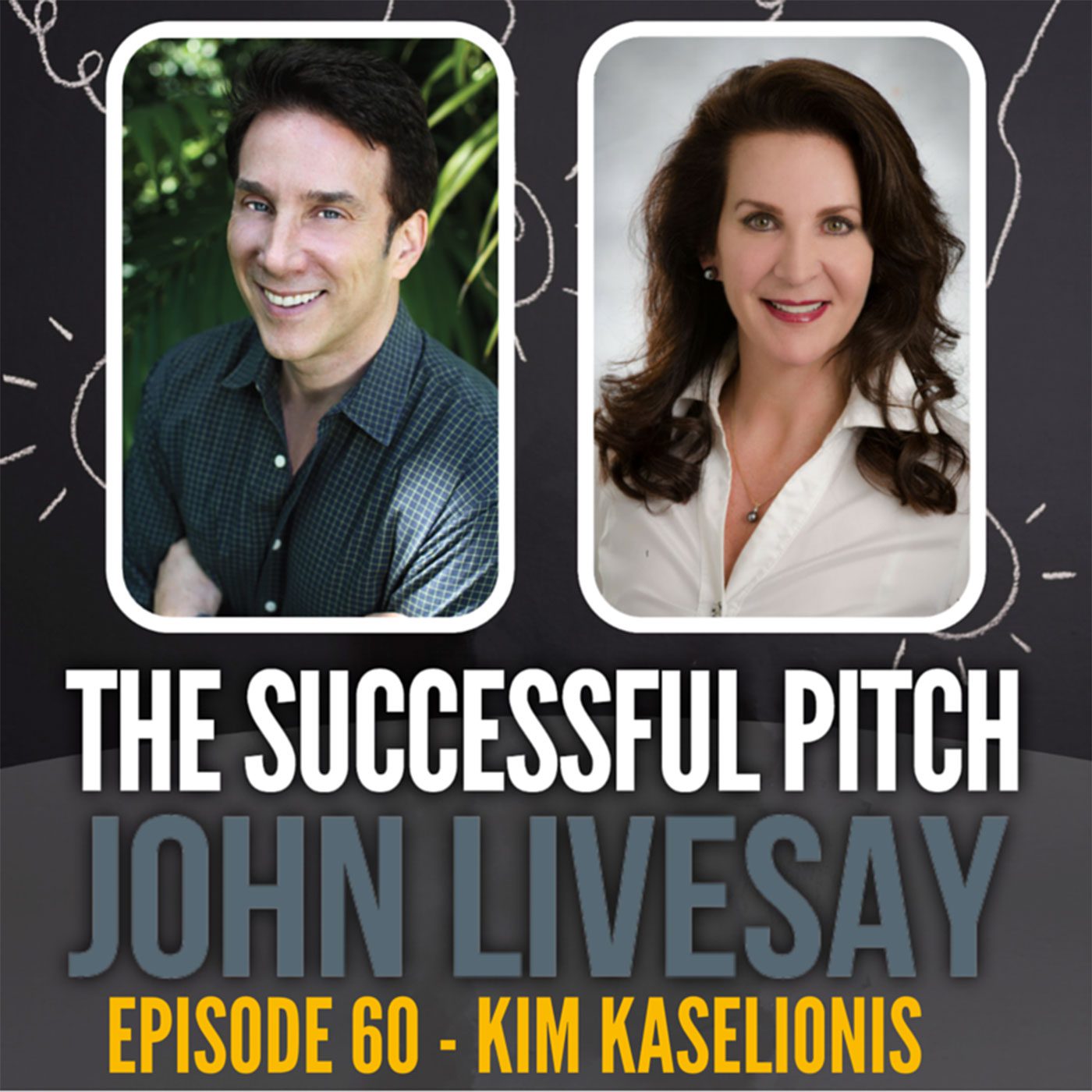
Welcome to The Successful Pitch podcast. Today’s guest is Kim Kaselionis. She has some great insights as to what it takes to be successful when you’re pitching. It includes practice, being confident. She said, “Confidence attracts investors. Being direct and thinking about some kind of exit strategy so the investors are going to see how they get their money back.” She also says, “You can convert your social capital into your venture capital,” and finally, she said, “Have stamina and determination to overcome life’s speed bumps.” Enjoy the episode.
Are you a founder struggling with your investor pitch? Do you need warm introductions to the right investors to get your startup funded? Do you need a funding road map to get you there fast? All of this and more can be found in Crack the Funding Code. Join host, John Livesay and Judy Robinett, bestselling author of How to Be a Power Connector and board member of Illuminate Ventures, on their free Crack the Funding Code webinar. Simply go to judyrobinett.com – that’s J-U-D-Y-R-O-B-I-N-E-T-T dot com – and click on the webinar tab to see how to tap into their network of investors from around the world. There’s a link in the show notes as well. You’re only one click away from getting funded fast.
Hi, and welcome to The Successful Pitch podcast. Today’s guest is Kim Kaselionis, who is the managing partner at Breakaway Funding in the San Francisco Bay Area. That’s the hub of everything. Kim has an amazing track record with so many awards, starting from the Marin Women’s Hall of Fame in business to Innovative Community Bank of the Year finalist to being one of the most — 150 most influential women in the Bay Area in 2012 and now, of course, she’s got her pulse on crowdfunding and is going to be speaking soon because she is an expert. So we are honored to have her on the show today. Kim, welcome.
Kimberly:
Good morning John, it’s great to be here with you today.
John:
That’s our pleasure. Kim, I always love to ask my guests to talk about how did you get to where you are, how did you get to be one of the 150 most influential women in business in the Bay Area and then get to do what you’re doing with Breakaway Funding. You know, back in the day – let’s go back all the way back to your days in college. I know you have a background in business and accounting but did you always have your sights set on getting into innovative ways of funding?
Kimberly:
Not even remotely. As you know, one of my first career was the CEO of circle bank and when I was in college, I thought, “God, could there be any more boring career than one in banking?” and, boy, I was proven wrong. I was really fortunate enough to have a mentor, my mother, who is an entrepreneur in her own right and very opportunistic. So they talked about, “Are entrepreneurs born or are they made?” and I think it’s little bit of both. So I think I benefit really a lot by having a mentor who was — you know, she’s a doer and a shaker.
John:
I love it. Well, what a great role model and how you’re, in turn, the role model for many people, male and female. So you were at the bank for so many years. What made you decide, “Okay, I’m going on to something new.”? That’s always a very pivotal point for people and fascinating to me of leaving this very successful career to change it up. What was the catalyst?
Kimberly:
Well, my dear, it was not my choice. So we’re privately held institution and our small ownership braid decided that they wanted to harvest their investment and, in 2012, as you well know, the capital market still had not quite recovered. So, we were fortunate enough to get into a bidding war on the sale of the institution. So, I decided not to stay with the acquirer and instead attended an economic conference at Sonoma State University where I was introduced in equity crowdfunding and I thought, “Well, equity crowdfunding sounds pretty cool and isn’t it brilliant for banks?”. So, Breakaway Funding was really born both from some pain that I’ve experienced as the CEO of the bank, right? Having a struggle to lend and the ever increasing difficult regulatory environment and small and medium sized business lack of access to capital. So the marrying of equity crowdfunding with traditional bank financing, I thought, “Well, got to do something with that.”
John:
Yes. Well, how great for the listeners to realize that, you know, you have modeled for everyone how to reinvent yourself. You don’t have to be Madonna to reinvent yourself. You can reinvent yourself in all kinds of careers and there’s nothing more successful, in my experience from watching successful entrepreneurs, than when they personally experience a problem and figure out a solution for it and then take that into market. It seems to me that that’s exactly what you did with that. So what was it like going from the president of the bank to launching Breakaway Funding? Were there a lot of lessons learned from the bank that you could take to Breakaway, or what was some surprises that you had?
Kimberly:
Well, I think that any entrepreneur will tell you that, it is challenging, exhausting, scary, exhilarating. As long you are involved in something that you’re passionate — I think the word passionate is a little overused. But, if you are really behind and engrossed and engaged in what you’re doing, you can pretty much just keep showing up every day. So what were the surprises? The surprises are it’s really invigorating to show up every day and I know that I only have to get through the next 24 hours and then I’ll have a chance to do it all again. So, it’s just having the stamina and determination to work through life’s speed bumps.
John:
Well, I like that. We’re going to tweet that out. “Have the stamina and determination to work through life’s speed bumps.” That’s very poetic. It’s really great. What are some of the speed bumps that you encountered that required extra determination?
Kimberly:
Well, how about the fact that my business model, my revenue model didn’t unfold the way that I thought it would.
John:
Yes, let’s hear more about that because you’re not the only one that has that challenge.
Kimberly:
Right. So, when I — you know, coming to this marketplace through the lens of the banker, I thought, “Well, of course, all bankers think like me.” I couldn’t be more wrong and so when I had initially developed my business plan and the revenue model, I thought, “Oh well, banks would love to pay me the subscription model to be their marketing arm or their marketing face to help them engage in crowdfunding.” Well, that didn’t materialize. Now I’m hoping it will be kind of my encore. So, one’s I’ve had some chime over the last 18 months. I spent a lot of time educating and meeting the community banks and some of the credit unions on their opportunity that equity crowdfunding presents to them. So, I’m hoping that I will be able to take my initial business plan piece to the revenue model and have it, maybe, as my third act.
John:
Nice. So how are you monetizing Breakaway Funding now?
Kimberly:
Well, that’s an interesting question. So, we have, as all good startups, a diversified revenue streams. So we really are doing a number of different things including some consulting to startups to help them get ready market and execute their crowdfunding campaigns to loan brokerage services. So, because of my Rolodex and my background in the banking industry, I can help companies access new banking relationships. So, we get paid for doing that. So, we’ve got a couple of different ways of that we divide our revenue and one of these days, I’m hoping I’m going to get paid for speaking.
John:
There you go. Well, let’s talk about both of those things: your speaking, which I know is coming up in Los Angeles. What is your topic going to be and how did they find you for this big event?
Kimberly:
Well, that’s fantastic. You know, well, the last question first. It’s really, really important, as you well know, to network, and whether that network is being involved in social channels, whether it’s LinkedIn or Twitter or Facebook that you are engaged and you’re open to creating new relationships and new friends. So that’s one way that you can have these opportunities unfold.
So, I was introduced to Victoria via LinkedIn and she is hosting – her company as Metropo Global, based out of L.A and they are holding the Fourth Annual Global Alternative Funding Event, as you’ve mentioned, November 7th or November 6th at the Century Plaza. So, it’s going to be a full day or will have been a full day of all things private equity, how to get it, who needs, and let’s work together to make it happen.
John:
And what is your topic going to be, specifically, within that world?
Kimberly:
So, I will be moderating an equity crowdfunding panel.
John:
Oh, how great. So you get to ask the questions like I’m asking you? I love it. You’d be on both sides of the table. Yes, moderating a panel is quite challenging because you try to give everybody equal time and are there certain questions that you know you already want to ask?
Kimberly:
Well, certainly. One of the questions — one of the first questions I’m going to ask – because it’s a theme that I run into and that is, what are the one or two challenges that you, the platforms, run into when working with companies that are trying to raise capital? So, what are some of the themes – the global themes that we’re encountering. So, tell me one.
The others I would say a lot having to do more with what’s the roadmap to a successful capital raise? So, everybody’s going to have their own viewpoint there and then I want to also talk about the various security’s exemptions that are available to both investors, right? Investors of all flavors as well as entrepreneurs through which they can raise capital or which they can invest and, hopefully by that time, the SCC will have ruled on the Title III, the classic crowdfunding legislation.
So, we’re really looking forward to opening up the capital channels, the flow of capital to fund innovation and job creation in this country and create new investment opportunities for everyone.
John:
What I really love about this whole concept of crowdfunding and equity funding is it used to be your choices were much more limited, right? It was either family and friends, and then some seed angels, and then, maybe if you’re successful, you got to series A. Now, with equity crowdfunding put into the mix, a lot of startups are using that as proof of concept that people are willing to pay and that helps them get angels, right?
Kimberly:
Right, so there are four different crowdfunding models and this is not a crowdfunding conversation but the rewards-based model is a great way for businesses to get a proof of concept to your point and not only that, but also to build a community and a following which they can use a springboard then and demonstrated success to actually launch an equity based raise.
John:
We were talking earlier about one of your questions is there’s a lot of global issues now going on so can you speak to that? What’s going on outside of the US and how does that impact us?
Kimberly:
Are you talking about the regulatory front or you talking about just economics?
John:
Just economics, in general. When you’re talking about the global challenges, one of the questions that you’re going to ask at the panel, I think I’ve noticed that the whole event is global-based so I just think it’s interesting for everybody to get a perspective of, typically, angels, for example. I only like to invest with people who are within 150 miles of where they live but now with equity and crowdfunding, that geographic stuff sort of goes away a little bit, doesn’t it?
Kimberly:
Indeed. So, one of the benefits, I think, of crowdfunding is that entrepreneurs and business owners can convert their social capital into financial capital and it is a way for them to get introduced or to reach out to people, prospective investors who are aligned, that the values of the investors are aligned with the mission of the company raising capital and you’re right. There are no geographic barriers that might limit that opportunity of getting those two groups together.
So, the US is – you may well know – is way behind the rest of the world as it relates to equity crowdfunding so we are delighted that SCC is finally coming to the table and as you also may note, 25 states, to date, have enacted their own intrastate crowdfunding rules. So, it is good that the SCC is finally coming to the table because we’re likely to have 50 different interpretations of equity crowdfunding.
John:
I love that line you said. We’re going to tweet that out. “Convert your social capital into your venture capital”. That’s great. That’s such a great way of looking at it too. I have never heard anybody say that so thank you, Kim. That is really wonderful. So, what does a typical day look like for you? I think people would be very interested to hear what it’s like running Breakaway Funding from consulting to speaking to being a loan broker. I’m specifically interested in the consulting aspect of it of how do you help people figure out if this is for them and, if so, how to use it?
Kimberly:
Well, you know, they have that saying. “You have to know the rules of engagement in order to play the game”.
John:
Yes.
Kimberly:
So, really, a lot of what we do here at Breakaway is an extension of what we did at Circle Bank and that is more education and consultative in nature. So, what we do with our clients is we really try to understand, holistically, what it is that they’re trying to achieve, what resources do they have, what gaps do they need to fill, and spend a lot of time with their community. You know, I have particular philosophy as it relates to equity crowdfunding and that is that the entrepreneur and the business owner really stand a greater possibility of raising the capital if they have a community and let me just give you a real quick example.
At Circle Bank in 1990, when the bank was originally established, a group of community members got together, said, “We want to have a bank in town. We don’t want to deal with the big guys.” So, they created a business plan so they could figure out where they were going to go and how much capital they needed to get there and, at that point, they needed 3 million dollars. Well, they all looked at each other and said, “Hey, who wants to write that 3 million dollar check?” Well, nobody, of course, right? So, they said, “Okay, everybody open your Rolodex.” So, the board went to the community. They went to their social network, their social capital, invited the community to become owners of the bank, thereby raising the financial capital, converting the social capital into financial capital and, as a bonus, they were able to generate some strategic capital because those very investors became the first customers of the bank and then they went on to become the brand of Angel List. So, this is really the beauty and the benefit of harvesting, mobilizing your tribe, your community, and your social capital. We’re really about engagement.
John:
Everytime I hear someone talk about their customers become their investors, that is just music to everybody’s ears because it really shows A, you have proof of concept, but B, more importantly, they love it so much that they want to invest in it because they see the potential. That really gets a lot of people to want to join your party, doesn’t it?
Kimberly:
It does indeed, and I like to say it gives them an opportunity to double-dip. If they’re going to buy from you or they’re going to sell to you and they get to, hopefully, enjoy in the value created for the company and the wealth that it’s created, then they have the opportunity to double-dip and why not?
John:
Love it. Do you have any other examples you can share with us of your experience of what you’re doing at Breakaway with clients?
Kimberly:
Absolutely. So, in July of this year and July of 2015, the Cadillac Bar and Grill 2.0 opened. So, in the 80s and 90s, Michael Rodriguez of the Cadillac Bar and Grill owned and operated the restaurant for 17 years south of Market Street in San Francisco. Very, very profitable, very successful company. Well, his landlord was the city of San Francisco. So, when the city decided to expand the Moscone Center, they did not renew his lease. So in 2012, Michael decided he wanted to bring the Cadillac back because, again, it was a destination, it was a hub for community engagement as where people went after work for a drink and for great authentic Mexican food.
So, he developed a business plan, he determined he needed X dollars to open up the restaurant and so through harvesting his own social capital and really looking at some of the other resources in the community – his skin in the game, his community, and a community bank in San Francisco Trans Pacific National Bank, we were able to aggregate the required resources so that he could open up the Cadillac 2.0. They opened, like I said, in August of this year and have been doing very, very successful.
So, it’s not only that but there is a — you know, crowdfunding, we talk about, it’s new and it’s really the way that companies have been capitalized for many, many reason. There’s a great story in Petaluma County. There’s a hotel fancy enough; it’s called the Petaluma Hotel. In the, I think, it was the late 1800s or early 1900s, that hotel was actually crowdfunded. 100 community members got together to raise the 300 thousand or 350 thousand dollars to construct the hotel. Now, why would they do that? Well, they probably want a place for their family members to come, a restaurant to go to, a bar to go to. So, by becoming the financial capital providers, they could also become the strategic capital providers because when Aunt March comes to town or Uncle John comes to town, where are they going to stay? They’re going to stay at the hotel.
John:
Yes. Well, this whole concept of what you’re doing at Breakaway Funding really seems to support the community in a big way and I know you’ve written some great blogs about the sense of caring and everything. Can you speak a little bit about this sense of community?
Kimberly:
Again, I’m just going to go back to, really, the foundation and really the mission of community banks, which is the lens through which I see the world and it’s about engaging for mutual benefit. We are no longer living in a time where I get to benefit at your expense. You’re smart enough, there are enough resources to go around. If we’re willing to think a little differently about how we can engage, we can create relationships for mutual benefit and, really, at the end of the day, that’s what the mission of most community banks is – you know, being an integral part of their community.
John:
Kim, do you have any advice for the listeners on how to pitch their story? Whether you’re going to a bank or engaging Breakaway Funding to help them craft a story that people are going to want to help — like, for the example of the restaurant with the Cadillac, do you have any tips on the importance of getting people emotionally engaged and sharing your vision?
Kimberly:
So, sure, lots of little tidbits for one, practice. Practice pitching. I know it seems a little bit awkward sometimes to practice but it really will help you in that, maybe, moment of terror. The other is confidence. Really, people are attracted to confidence so you really need to have confidence and conviction when you are speaking about it. Passion, of course, there’s that word again. You have to be committed. It has to come from you. People can tell if you’re not authentic with your story. Be direct, right? Be direct, be really clear about what problem you’re solving, what is your unique selling proposition, how are you different, what your market is to the extent that you’ve had an opportunity to engage in a rewards based crowdfunding. Raise, point that out, and then the exit. You know, a lot of times when businesses are thinking about their company launching or expanding and they’re thinking about the capital they raised, sometimes they forget how they’re going to get their investors out.
John:
Yes, especially in the cases of restaurant. He’s like, “Well, that’s going to stay there another 20 years, right?” or, “It’s going to be 20 years before I get my money back?” Not necessarily, right?
Kimberly:
Exactly, exactly. So, I would just say be confident, be authentic, practice, be direct, and figure how your — one or more ways to get your investors out. They will be very happy about that, that you thought about them.
John:
Yes, I love that concept of being direct. One of my favorite phrases is the confused mind always says no and I work with my clients all the time on this is not clear and if it’s not clear, you’re not going to get a yes. So you need to come out and say exactly what the problem is and what the solution is because when people understand that in a clear way, then they can decide whether it’s right for them. But if you confuse them, then they’re like, “I don’t know if I want to say yes or no because I don’t understand it,” and that one thing can make or break it, don’t you think?
Kimberly:
Indeed, and you’re exactly right.
John:
Yeah, it’s really great. Kim, obviously, you are so influential, and so committed, and so passionate. You clearly walk your talk. Are there any books that you would recommend about business or even about life that you think people, as entrepreneurs seeking funding, should be reading?
Kimberly:
Well, one book that comes to mind is Startup Seed Funding for the Rest of Us: How to Raise $1 Million for Your Startup – Even Outside of Silicon Valley. I think you can get it for $4.95 on Kindle. So that will be just some — you know, there are a lot of resources out there that entrepreneurs can flip through and on the lifestyle, I would just say, sometimes get a trashy novel and just disconnect, right? We do need time to reboot and it is absolutely, in my mind, okay to take a timeout from the real world.
John:
Well, there’s been all kinds of studies to support that that if you constantly focus, focus, focus and don’t take a break, you’re not more productive. You’re less productive so that “take time to reboot” will be the other tweet from the show. That’s fantastic. Kim, how can people follow you on social media, reach out to you for future speaking engagements, consulting, et cetera.
Kimberly:
Fantastic. Well, certainly, you can visit us at our website at breakawayfunding.com or follow us @breakingfund, that B-R-E-A-K-I-N-G-F-U-N-D. That’s kind of our Twitter handle. You can reach out to me on LinkedIn. Find me at Kim Kaselionis. So, any of those options or you can call me: 415-729-9482. 415-729-9482.
John:
Great, and your own personal Twitter handle where can people follow you is just @kimkaselionis, yes?
Kimberly:
Indeed. Thank you.
John:
Nice. Well, it’s been a pleasure hearing from you and your expertise. I know you’re going to knock them dead moderating this panel and we look forward to seeing future speeches that you are going to get paid for.
Kimberly:
Well, I appreciate that and, John, it’s really — what a great service that you’re providing all of your listeners. You know, little tools of the trade and little tips that help them become even more efficient in what they’re trying to do. So, thank you for that.
John:
Thanks. My pleasure. It’s my personal passion. I love helping founders get their pitch really focused. Thanks again, Kim. It’s been a pleasure having you on the show.
Kimberly:
Thank you, John.
John:
Thanks for listening to The Successful Pitch Podcast. If you like the show, please go to iTunes and write a review and encourage your friends to write reviews too. It really helps get the word out. You know, people say that the longest distance is between someone’s mouth and their wallet. People can tell you they’re going to invest but when it comes time to write the check, they don’t do it. So how do you get people to say yes and then follow through? Visualize yourself on the left side of a riverbank and you have to cross the river and on the other side of the river is where the funding happens.
So, first, you make up your idea and then you make it real and then you make it reoccur. Once you start dipping your toe into the water to get to funding, that’s where I can help. I get you across that river faster than you would on your own with a lot less frustration that you will get when you hear a bunch of no’s and you don’t know why. So, if you want some help getting funded faster with less frustration, go to my free funding webinar, sellingsecretsforfunding.com/webinar and sign up and get in depth information on how you can get funded fast. Thanks.
Secrets to Crowdfunding, Kim Kaselionis | TSP060
Posted by John Livesay in podcast | 0 comments
Listen To The Episode Here
Episode Summary
Kimberly Kaselionis is the Founder and Managing Partner at Breakaway Funding, a private business investment firm. She has more than 25 years of senior executive experience in the community bank and investment management industry. Kimberly has a wealth of knowledge on how to proof your idea and get funding from your customers.
What Was Covered
- 03:00 – How did Kimberly get started in this space?
- 03:45 – Are entrepreneurs born or are they made?
- 04:25 – Why did Kimberly leave the banking industry?
- 06:00 – What were some of the surprises when Kimberly launched Breakaway Funding?
- 07:05 – What kind of challenges did Kimberly face? Kimberly talks about her business revenue model.
- 09:00 – Kimberly will be a moderator at the Global Alternative Funding conference.
- 13:20 – Kimberly discusses some of the benefits of crowd funding.
- 14:30 – What does a typical day look like for Kimberly at Breakaway Funding?
- 17:35 – Kimberly shares one more example of why crowd funding is so great.
- 20:15 – We are no longer living in a time where we get to benefit at your expense.
- 20:45 – Kimberly shares tips on how to get people emotionally engaged with your vision/pitch.
- 22:30 – Remember, the confused mind always says no.
- 23:10 – We do need time to read books, so read a bad novel and relax! It’s okay to take a time out.
Tweetables
[Tweet “Have stamina and determination to overcome life’s speed bumps.”]
[Tweet “Confidence attracts investors.”]
[Tweet “Convert your social capital to venture capital.”]
[Tweet “Be engaged and engrossed to show passion.”]
Links Mentioned
Judy Robinett’ Website
Breakaway Funding
4th Annual Global Alternative Funding Forum Addresses State Of The Art Options – Los Angeles
Kim Kaselionis on Linkedin
Breakaway Funding on Twitter
Kim Kaselionis on Twitter
Startup Seed Funding for the Rest of US by Mike Belsito
Want the Transcription?
Crack The Funding Code!
Register now for the free webinar
Share The Show
Did you enjoy the show? I’d love it if you subscribed today and left us a 5-star review!
-
- Click this link
- Click on the ‘Subscribe’ button below the artwork
- Go to the ‘Ratings and Reviews’ section
- Click on ‘Write a Review’