
The Purpose Revolution, Show Your Value And Tell Your Story with John Izzo
Posted by John Livesay in podcast | 0 comments

 Episode Summary:
What happens when businesses put purpose at the top of the list? Companies that focus on purpose and people are happier and more successful than the ones that don’t. The Purpose Revolution drives people to do better and be better. Employees become committed to work because they don’t feel like its work when they enjoy doing what they do and where they do it. John Izzo, President of Izzo Associates teaches clients that by connecting with people, you gain competitive advantage with a value level that goes past the product or the service. Learn how you can use purpose to compete with all the disruption and contribute to the social good.
—
Our guest is Dr. John Izzo, who is the author of The Purpose Revolution. John has so many great insights as to the importance of having a purpose in your business and in your personal life. He said, “When you connect to people’s values and have a purpose, you get them to become loyal. It also gives you a competitive advantage, but not forever, so you need to act now.” He also said, “One of the best ways to show your purpose is at the point of sale. Can people see what your purpose and what your story of good is when they’re buying your product at the checkout?” He said, “Begin your meetings with anybody sharing an idea of how what you’re all doing as a company is making a difference in others’ lives.”
Listen To The Episode Here
The Purpose Revolution, Show Your Value And Tell Your Story with John Izzo
John Izzo is the President of Izzo Associates. He has spoken to over 1 million people and advised over 500 companies including IBM, Quantas, Verizon, Walmart, and Microsoft. He is the author of several books including Awakening the Corporate Soul, and the The Purpose Revolution. John, welcome to the show.
Thank you. It’s great to be here.
You are a master storyteller. What we love to talk about here on The Successful Pitch are great stories that pull at people’s heart strings and are memorable. Before we get into your book, The Purpose Revolution, I just wondered if you wouldn’t mind taking us back to your own story of origin. Did you always know you wanted to be an author and a speaker? How did your own journey start?
Growing up in New York City as a young boy, I was always a do-gooder. I was always more driven by purpose than anything else. There’s only three careers I considered doing when I was a young person. One was to go to law school so I could go into politics. At the time, I thought of politics as a worthy profession, not some slimy opportunistic one. Another one was to be a journalist to expose bad things and tell great stories, or to become a minister. I grew up in a Presbyterian Church in New York City. I sometimes like to say I have wound up marrying all three of those careers. I’m involved in issues I care about, especially the role that business plays in society. I’ve written books that have mostly been journalistic exercises to hear and find out what’s working and to tell those stories to inspire others to change. Finally, I preach 70 to 80 times a year. Unlike a good preacher, I don’t have to write a new sermon every week. Even though I was a do-gooder, I always was a type-A entrepreneurial person. The world of business always fascinated me because I liked to get things done and I like the energy of business, which is often very pragmatic. I did a lot of various things in my career before starting Izzo Associates 22 years ago. The rest is history.
What a great background and combination of multiple things all coming together. Many times, people think, “Something I did ten years ago is not going to impact what I’m doing now.” I find the opposite. It’s unexpected connections that happen, so everything we are interested in and curious about and do helps pull us in to being uniquely qualified to talk about something that no one else has because we have our own unique experiences.
In my case, I did spend six years as a Presbyterian minister. I got to be with people in the most profound and important moments of their lives. I honed my skills speaking to the same audience week after week and having to come up with a new talk to inspire them. I got a degree in journalism. You asked if I always wanted to write books. I remember writing my first beginning of a play when I was ten years old. I remember my family making fun it, but it did not dissuade me from the writing life. I did always have a passion for writing and telling stories. My publisher, Berrett-Koehler, the President, says that my real gift is to go out and find out what’s working and to tell the story and connect the dots. This new book is no exception that I believe in many ways that’s what I’ve done.
Let’s take a dive into the book, The Purpose Revolution. I know you have a keynote around that very topic as well. The subtitle is also interesting to me, How Leaders Create Engagement and Competitive Advantage in an Age of Social Good. There’s three things that pop out there. There’s been some research that more and more companies are all talking about the importance of social good, not just making money, in the companies that they invested in and what consumers are looking for. What happens when a business doesn’t have a purpose?
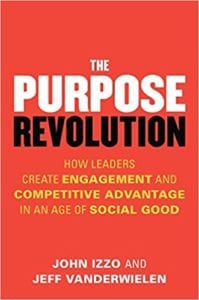
The Purpose Revolution: How Leaders Create Engagement and Competitive Advantage in an Age of Social Good
There are three fundamental things as we think about this idea of The Purpose Revolution. First, purpose-focused people and purpose-focused companies have always been happier and more successful than ones that aren’t. If we think about some of the most successful companies over generations, whether it’s Southwest Airlines that always wanted to treat guests and their employees with great dignity, or Vanguard who soon may pass BlackRock as the largest manager of money in the world that began with a very simple purpose to give the average investor a shot to be successful so they started the low-cost ETF movement. Purpose-focused companies have always been, over time, more successful than ones that are less purpose-focused. We know that people who see their job as a calling, not only are they happier but they perform better on every metric that we care about as business owners. They call in sick less, they’re more productive, they provide better service, they’re more committed, they’re more engaged, they stay longer. We know that purpose has always been a key to a happy life and a successful business.
What’s new is a revolution of expectations where three key groups all over the world are saying, “This is a major reason why I would go to work for someone.” Around 80% of employees say that they want to work for companies they believe in. 50 % of millennials say they would take a pay cut to work for a company or a job that had purpose. A full 40 % of the global workforce are using purpose as a major way they decide who to work for and who not to work for. About 80 % of the customers globally say they want to buy from companies they believe in, who are aligned with their values. About 34 % of global consumers are regularly punishing companies that do bad and rewarding ones that do good. What the revolution is about is that people are saying, “I’m demanding this. It’s becoming a major screen through which I decide who to buy it from, who to work for, and who to invest in.” Wells Fargo and Volkswagen, both of whom share prices were decimated by their choice not to be purpose driven to open accounts for people who didn’t want them and to say you were green and creating green diesel, when in fact you created a software that would lie to the people who would measure your emissions. Increasingly, these companies are being punished and good companies being rewarded with retention, engagement, and stock price.
It’s a demand both from the employees and the consumers to have a purpose be a big part of why they’re going to work and why people are supporting those companies. Starbucks was the first one to come up on my radar of not only giving employees benefits when they work part time, but also tapping into local communities and giving back that way. How can people use this purpose to compete with all the disruption going on? How does that become a competitive advantage?
First, there is a revolution. In the first 30 % of the book, we make the case. Here’s the revolution. Here’s how things are changing customers, employees and investors. Here’s why most companies are failing at purpose and failing to benefit from that. The second is engagement. We’ve talked about employees more engaged, more likely to attract top talent, customers are more loyal. We know at organizations like Unilever that brands that have made a purpose connection with their consumers, like Dove and Ben & Jerry’s, are growing on average 35% faster than their brands that don’t have a connection with their customers. The third piece is competitive advantage. When I’m in front of an audience, one of the questions I ask people is, “In an age of commoditization, how do you find competitive advantage?” Think about the traditional levers we use to compete with other companies. Quality is rarely a differentiator because everyone has quality and great customer service. Everyone has a return policy that’s amazing. You can’t be in business anymore if you’ve got low quality or bad service. Some people are a little better, but the game has gotten even. How about price? Almost everyone now has to compete on price. If your prices are significantly higher than your competitors, in all but a few cases, you will have to match their prices. What about innovation and products?
Whenever I’m doing a keynote, I sometimes will ask people at their table to come up with ten companies in the world that are sustainably successful because their products are fundamentally different than their competitors. No table can get to ten. The obvious ones come up, Apple, Tesla. Once you get past three or four, nobody can find anybody who’s differentiated because their products are fundamentally different. Where then can you find competitive advantage? Connecting to people’s values and connecting to their sense of purpose is an advantage very hard to duplicate. Ben & Jerry’s is one of the companies we feature in the book. They know that about 60% of people buy from them mostly because they like their ice cream, but about 40% of their customers are connected to them because of their values and the things that Ben & Jerry’s stands for whether it’s climate change, LGBT rights, or their support of organic and local farmers. Those 40% of customers that have done the research never leave. When Häagen-Dazs and other premium ice creams put their ice cream on sale, these people don’t leave. The reason is because they feel a part of the Ben & Jerry’s story because of their value. This is one of the few true places of differentiation in an age of commoditization.
You’re doing two things. You’re getting people in the story Which is what I love to do when you’re talking to people how you convince anyone to buy anything from you is put them in your story. In this case, it’s the story of what your values are in Ben & Jerry’s. Once people are in your story or aligned with your values, you’ve got the loyalty factor that is that not sensitive to price differentiation anymore. That’s what everybody wants is to not be seen as a commodity. The best way to do that is this new insight that you provided. Connect to people’s values and you get a competitive advantage.
[Tweet “Connecting to people’s values is the ultimate connection.”]
I support Starbucks on a regular basis even though they’re often more costly. I don’t even like their coffee as much as I like some other people’s coffee, but because of the work they’ve done around social issues, how they’ve treated their employees, some stands they have taken on issues that I care about, I support this company. I support them with my dollars, and it becomes where I feel a part of their story. Steve Jobs once said, “Connecting to people’s values is the ultimate connection.” In the book, we talk about Apple as a great example. If you ask people why Apple was so successful, almost everyone will say because of their products. That’s true now because everyone buys Apple, but in the beginning, people forget that when Steve Jobs came back to Apple, they were performing in a very mediocre way. What he did was he started to think different campaign. He said to his leaders, “We will not be able to compete on bits and feats. Everyone’s got that. We have to stand for something.” “Think different” became the value. In the old days, before everybody bought Apple, you knew an Apple user not because they had an Apple but because their glasses were different, their pants were different, and their shoes were different. They bought Apple in part because of the connection to the value that thinking differently was a value to the world. Even some of the companies we think are successful only because of their products are often successful because they somehow connect to a value that is more powerful than the product.
One of the things you talk about in the book is the purpose gap, which is that employees and customers want a purpose but they’re not getting it. We’ve talked about how few companies seem to have it, but how big is this gap?
The gap is a tremendous opportunity. This book is not just for the CEO. Whether you’re running a little store or a small business or a leader with a team, this book walks you through how to engage purpose whether your whole company has it or not. Here’s the interesting thing about the gap. While 80% of employees say they want to work for a company that gives them a sense of purpose and that they believe in, 70% of global employees say, “The company that I work for mostly cares about profits and its own self-interest, not the well-being of its clients, customers, or society.” Think about the tremendous opportunity there. I don’t think 70% of companies only care about profits, but it means that most companies are doing an incredibly poor job of helping purpose be at center stage in their business, of doing the things we talk about, the practical ideas in the book that the winners are doing, creating line of sight to purpose, getting people engaged in purpose, driving job purpose instead of job function. This is a big opportunity because 80% want it and 70% said, “I’m not getting it.”
The same gap exists with customers where 83% of global customers say, “I want to buy from companies that are good,” but they only have confidence that about 6% of the brands are good. They look and are confused. “I don’t know if Procter & Gamble or Unilever or Clorox is good.” Another gap is we want it but we feel routinely confused about who’s good and who’s not. The book is filled with lots of ideas about how to close that gap whether it’s with employees or customers. Unilever did a study that showed about a trillion-dollar opportunity for companies who can close the gap and help customers see the story of good that is authentic. If you could close that gap, there’s about a trillion-dollar opportunity in terms of increased business globally.
What would you say are three things that companies big or small could do to become more purpose- focused?
There’s a few key things. On the customer side, right at the point of sale, can I easily see your story of good in an authentic way? One of the most powerful things we know for customers is on the label, in the store, in the point of sale, is there some believable story of good? My co-author Jeff VanderWielen tells a wonderful story about being in Peet’s Coffee and having right there at the till, the story of farmers that they’re supporting in Africa and all the good that they’ve done for them. “Buy this particular coffee right here and you can help support the work that we’re doing.” He talked about how right at that point of sale, he believed that story. There’s a restaurant chain that we’re familiar with in Europe called Be Good Foods. Anybody can have a title in their restaurant, “Be Good”, but they have a giant sign in their store that says, “What we mean by being good.” It’s a chalkboard so they can change it over time. They tell you, “Here’s five things about what we mean by being good and how we’re living being good every day.” If you have an authentic story of good right at the point of sale, tell that story in an authentic way that’s believable.

Purpose Revolution: If you have an authentic story of good right at the point of sale, tell that story in an authentic way that’s believable.
On the employee’s side, number one, leaders have to start watching how much they communicate about numbers and task versus profit and purpose. Think about the average meeting in your team or your company and the communications that come from leaders in the company. What percentage is about profit and task and what percentage is telling the story of the real difference you are making with clients, customers, and society? Most companies, if they do that audit, will find out that about 80% of their communication is about profit and task, about 20% are on purpose and the difference they’re making. We have to try and flip that around. It’s not just about the formal communication, it’s the subtle communication. Someone was telling me they were in a meeting in their company. The head of customer service was telling a beautiful story about something they had done to make a difference for a customer who had a problem. Halfway through the story, the CEO interrupted him and said, “Could you hurry up a little bit? We got to get to the finance report.”
That leader probably did not intend to send the message that purpose wasn’t the thing that mattered most in that company, but that’s the message that people received. The first thing you can do is start looking at your communication. If I’m a team leader, how about start every meeting with, “Has anybody have a story of how we made a difference for someone, a client, customer, or community since the last time we were together?” Make that the first thing that begins every meeting in your company. Let people get engaged and tell their story. Another thing you have to do is engage people to talk about their purpose. One of the things we talk about in the book is getting every employee to identify their personal purpose and their purpose in their job. Powerful things happen when you start to engage people in identifying their own purpose at work. As we say in the book, “You’ve got to give people hands-on purpose.” It’s not a spectator sport. You can’t give people their purpose. You’ve got to create an environment where they can identify it for themselves.
I want to share how I’ve taken what you’re talking about and what you wrote about in The Purpose Revolution and put it into action in a startup that I’m the Chief Marketing Officer of. We’re sitting around having these conversations as we go out for investors, as we go out for finding people to become advisers, and ultimately creating our message on the website. We all needed to agree before we even started that we all had a similar purpose and vision beyond just making money. We used your book as the guidepost. This concept of point of sale, what we’re doing is called QUANTM.one, which is going to help people who have equity in their house and want to take it out to possibly take some of that cash and send their kid to college. If they do that, typically their only option is to take out a second mortgage. A lot of people say, “My budget is tight. I can’t pay a second mortgage. If you’re going to give me cash in exchange for owning 10% of my home, it’s not a loan, you’re just owning 10% of my home. I could stay in the house as long as I want, and when I sell the house you get a check and we get a check depending on the percentages.” That seems to be a big social impact on helping people get some cash out without going into more debt.
We got excited about that as purpose for what we’re doing. The way we’re doing it is by using cryptocurrency and creating a token. Instead of Bitcoin, it’s going to be the QUANTM token that is going to be backed by actual real estate. For investors, they suddenly say, “I’m putting my money on buying a token that actually has some net asset value because it is backed by some real estate.” Everyone’s winning. The customer is getting money out without another loan and the investors are saying, “You’re giving me something that I can see the value of because it actually has real estate behind it, and that makes me feel less stressed out.” Let’s start with the customer experience. Does that seem like it’s on track? There are a lot of people that want some of that equity out of their house but don’t want a bigger loan. Do you see that that is a social impact?
I definitely think it is a social impact. One of the things around purpose is that the first purpose of every company is to have the best interests of their customers and clients in mind. Don Guloien, the former CEO and now Chairman of Manulife Financial said something that struck me. He said, “Almost every company, small or large, began in the beginning with that purpose, to solve a real problem that people were having.” That’s how Airbnb started, because the founders couldn’t find a place to stay. That’s the basic first purpose is are we meeting a need that isn’t filled in in people’s lives or in society?
What we do at the end of every week is we recap our progress because it’s so easy to get stuck on the task that we need to do and how much money we raise. I was talking to my mom, whose house is paid off, and she’s tapping out on her IRA savings thinking what’s she going to do. She doesn’t want a reverse mortgage and would this work for her? We said, “Yes.” We would give her cash in exchange for ownership of the house. That way, she doesn’t have to worry about any interest accumulating. We all got jazzed that there’s another group of people that could benefit from this. The following week, someone said, “I know someone who’s not retired, but they’ve paid off their house, and yet their financial planner said to them, ‘70% of your assets are tied up in your house. You need to diversify.’” They’re like, “How do I do that besides selling the house or taking a loan out? I don’t want to do either of those.” They said, “We could own 10% of the house and give them some cash. They can either buy cryptocurrency with it, they could remodel, they could invest in anything else besides real estate, giving them some choices.” It’s fun for us to keep tapping into these individual people and how our overall purpose is creating stories, to begin those meetings with how we’re making a difference keeps us all inspired.
[Tweet “Powerful things happen when you start to engage people in identifying their own purpose at work.”]
It’s a great teaching point. One of the ways you fan purpose in a company is to create line of sight to purpose, which is consistently helping people see how our products and services are making a difference. As your company grows, bringing in people whose lives have been changed by this, making sure that those stories are alive inside the company is so important. One of the people we feature in the book is one of the most successful Molly Maid franchisees in the world, a young woman who’s kicking the pants off of much older franchise owners. One of the things that she does is she regularly brings in busy moms to single moms to say, “I can’t tell you what it’s like to come home to an oasis of calm in my crazy life where everything is always a mess,” or the son or daughter of an older person who’s home they clean are saying, “My mother is lonely. She doesn’t get a lot of visitors, and the way you befriended her has alleviated a lot of loneliness in her life and I want to thank you.” That’s what we call a line of sight to purpose. One thing I recommend for you as your company grows is make sure that is continually happening so that people never forget it’s not just about money. It’s actually about truly contributing.
My goal is always to create little case stories of who this is for and what problem it helps. As we get those stories and those people, get little video testimonials or even a couple of paragraphs with a picture, brings it to life. Part of my job as the Chief Marketing Officer is to find other brands that we might want to do business with. I was thinking, “Who makes sense and how could I align with another company who’s got a similar purpose to what we’re doing?”
One of the companies we’re in conversations with is Farmers Insurance because if you’ve got equity in your house that you’re able to take some cash out of, it probably means your house is worth more than when you bought it. 90% of the people do not increase their homeowner’s insurance when that happens. What happens when there’s a fire or an earthquake or mudslide or a hurricane? There’s not enough insurance to rebuild their home. To partner with a company like Farmers Insurance, to say, “If you’re triggering cash out of your house, then you might want to have us take another look at it to make sure that if you need your house rebuilt, there’s enough insurance for that.” After watching all these stories of people losing their homes and fires in California or hurricanes in Puerto Rico, your heart goes out to them going, “I hope there’s insurance to cover that.” That’s where, for me, got exciting from a marketing standpoint of, “How could we not just market with any brand but market with a company that had an impact socially?”
One could see that as just about making more money or one could say, “We really have a chance to make a difference.” Just continually focusing on that is such a critical aspect of leading for purpose.
One of the things you say in your book is, “Don’t be afraid to claim a moral mandate and state it loudly that you care about people and society.” I just wanted to applaud that because sometimes people are afraid, “We don’t want to be seen as a company that’s not focused on profits because investors won’t do it.” That’s why your book is called The Purpose Revolution. It’s a revolution. If you’re not doing that, you’re not only not attracting the right people, you’re repelling them.
What’s so important for people to understand is this is now a major lever. BlackRock sent out this letter to companies all over the world saying, “If you’re not doing good and you’re doing bad, we’re not going to invest in you, so get ready.” This is a tsunami about to hit companies. Here’s the thing that is important for people to remember. First of all, when we have purpose and we focus on the good we are doing, we are happier and we feel better. I discovered most business owners and leaders want to leave a legacy. They don’t just care about profits. 30 years from now when you’re sitting in your rocking chair, you’re not going to be thinking about the quarterly profits. You’re going to think about what the legacy was of your company.
[Tweet “When we have purpose and we focus on the good we are doing, we are happier and we feel better.”]
The second thing is that increasingly, this is going to become a place of differentiation. Don’t think the window is going to stay open very long. I compare this to the quality revolution in the 1970s and early 1980s. Only a few people benefited from the quality revolution; FedEx, Toyota, Honda. The people who adopted quality early on got almost all the benefit from it. Sooner or later, everyone just had to have great quality. The same thing is true with this. In five or six years or seven years from now, it’s going to be very hard to differentiate around your purpose because if you don’t have one, no one’s going to want to do business with you. Because of this gap we talked about earlier, employees and customers want it but don’t feel they’re getting it or are confused. Those who can close that gap are going to have a big advantage at this time in the age of social good.
It is the same thing with those windows of opportunity to differentiate yourself and have a competitive advantage. We can’t wait for everyone else to be doing it. One of my favorite takeaways from our interview is monitoring this 80/20 rule. 80% of the time, are we just talking about profits and tasks and only 20% about the purpose? What happens if we flip that? The irony is if you keep focusing on purpose, the money and the tasks will come.
It’s always important to remember that profits are a reward and byproduct of us fulfilling a purpose, which is solving real problems for people and society. Steve Jobs, he was considered a jerk to work for personally, but he believed in that mantra that profits were a byproduct of purpose, not the other way around. We forget that at our peril that’s why it’s so important to do that. Communication is so critical. A few years ago, I was coaching an executive who ran a big division for an aerospace company. She was very successful, a great numbers person, but nobody thought she was very connected to the purpose of the business, to keep the peace and to protect the soldiers. She cared deeply about this, but her communications said otherwise. All we did was coach her to begin every one of her talks and meetings connecting to purpose, to consistently start telling stories of the real difference that they are making for the country and for the world. I watched over a year period where her brand grows, where she got more meaning out of her work, where people liked her, where engagement went up, where commitment went up. It all began with a leader examining how they were communicating and what they were talking about day-to-day.
What you focus on, you get more of. That’s my motto. Is there any final thought you have?
If you can’t sing the song that you came to sing in the company or the role that you’re in right now, then you owe it to your life to either find another place to sing your song or to find a way to sing the song you need to sing differently where you are. Purpose is a big thing for organizations, but also for us individually. Life’s too short not to have a job with purpose and a place where you can find meaning. It may mean changing to another place or it may mean starting to reconnect with the purpose of your work and the difference you want to make where you are.
[Tweet “Life’s too short not to have a job with purpose and a place where you can find meaning.”]
We all have music inside of us that needs to come out, and if you’re not in the right place that wants to hear that song, then find another place or change your song. Social media, anything you want to share with us?
DrJohnIzzo.com. It’s the same thing for Twitter, follow us there. It’s on LinkedIn as well, so it’s pretty easy to find me. If people want to know more about the book, just go to PurposeRevolutionBook.com. It has all the links to buy the book or download a free chapter. Whether you’re a business owner, a CEO, or someone who wants more purpose in your work, the book is filled with lots of exercises and practical things you can do to connect to purpose and lead purpose at whatever level you are.
I can’t recommend it enough. I’ve read it several times and I keep referring back to it multiple times. Thank you for being a great guest and for writing such another great book.
Thank you for your great work. Keep spreading those positive messages.
Links Mentioned
- Dr. John Izzo
- The Purpose Revolution
- Izzo Associates
- Awakening the Corporate Soul
- The Purpose Revolution
- Berrett-Koehler
- QUANTM.one
- DrJohnIzzo.com
- PurposeRevolutionBook.com
- BlackRock
Wanna Host Your Own Podcast?
Click here to see how my friends at Brandcasting You can help
Get your FREE copy of John’s latest eBook Getting To Yes now!
John Livesay, The Pitch Whisperer
Share The Show
Did you enjoy the show? I’d love it if you subscribed today and left us a 5-star review!
-
- Click this link
- Click on the ‘Subscribe’ button below the artwork
- Go to the ‘Ratings and Reviews’ section
- Click on ‘Write a Review’
The Power Of Company Culture with Chris Dyer
Posted by John Livesay in podcast | 0 comments

 Episode Summary:
A good team makes good business, so screening for the right person is very critical for every business owner. Chris Dyer, Founder of PeopleG2, know that the key to communicating well with applicants is being honest and transparent. When he does screenings, Chris controls the conversation. He doesn’t just look at the negative patterns of an applicant, but also the positive ones leading people to be more open towards him and communicative. Chris shares the power of company culture as way to know what you should and shouldn’t do during a background check.
—
Our guest on the Successful Pitch is Chris Dyer, the Founder of PeopleG2, which is all about getting Intel, aka G2 in the military, on the people that you hire. He was so successful at what he does that a book publisher approached him to publish his new book, The Power of Company Culture. He has a whole article in Forbes magazine about the things you should be looking for and not looking for when you’re screening to make sure an applicant is not lying to you because as you know, the team is so important. He said that where to focus is so important and looking for patterns that you see in someone’s background, and even share some interesting insights on the personality tests you can give people to see if they’re going to be a cultural fit with your company. Finally, he has some secrets on how to make your team unapproachable from a competitor.
Listen To The Episode Here
The Power Of Company Culture with Chris Dyer
Our guest is Chris Dyer, who founded PeopleG2 in 2001 with a goal of making his vision for excellence, human capital and due diligence a reality. He’s a recognized authority on this, and he understands the challenges that are inherent to talent management decisions. If you’ve been listening to The Successful Pitch at all, you know that having a good team is the key to success. Chris believes that this impersonal automated background check has no value in this global talent spectrum, especially as it relates to finding key people. That’s why he built a company with innovative services that reduce the risk and maximize the best fit, whether it’s for a new candidate or promoting a candidate or anything along those lines. He is all about driving business forward so you have the best intelligence to make when you’re getting people-related decisions. Chris, welcome to the show.
Thank you, John. I appreciate you having me on the show. I love it and I’m excited to be here to have a great conversation with you.
I neglected to say that you’re the host of your own show, Talent Talk Radio, which has been almost four years in existence. You clearly are an expert in this. Did you always know you wanted to be an entrepreneur?
In hindsight, I did. As a child, I didn’t realize what that I was. All I knew was that if I wanted to sneak around the corner liquor store to get candy as a kid, I needed to have a lemonade stand. I needed to shake the cushions on the couches, I needed to somehow talk an adult into paying me to do something, and that was always wired that way. I wasn’t necessarily wired that I wanted to make money for money’s sake, but if I wanted something, I was very good at figuring out how I could go from point A to point B and get that accomplished. That’s very much an entrepreneurial skill. It was very common for me to have a lemonade stand all the time on our street. I don’t know if you have this experience but you think of things in your childhood as normal and then you get older and you start reflecting and having other experiences and you realize that it’s not normal. Not everyone thought those things or did the same things that you did. It was then that I realized I was more entrepreneurial.
I completely relate to that. In my case, instead of a lemonade stand back in the day in the Chicago suburbs, I had a paper route. You had to knock on doors to get people to subscribe, then you had to deliver it and then you had to go once a month and collect the money. It was this whole mini-business of get the client, deliver and then collect the money. You were wearing a lot of hats without even really realizing you were doing that. I’m curious to know, how did you come up with a name PeopleG2? What does it stand for?

The Power Of Company Culture
: Start finding out who that other person is a little bit better and allow yourself to go a little farther and have a better result.
When we started the business, it was originally Liberty Alliance. We started it back in 2011 right around just after 9/11. It was a lot of patriotism going on and that name just felt great. The problem is that everyone thought we sold insurance. For years, we had to fight this assumption that people had, that they knew what we did even though they were wrong. We decided in 2012 that we were going to change the name. We wanted something that made sense but also was nondescript enough that people would ask what does this mean as opposed to knowing in their heads that they knew what we did. People is pretty simple. We have a solution for any people-related transaction. We have employment screening, tenant screening, vendor screening, clients screening. If you’re going to have interaction with a human being, we have a solution to help you check them out to make sure that it’s who they say they are and there’s no big red flags there. The G2 part actually comes from the military. When they go do intelligence gathering, that is referred to as G2.It’s very common for people in the military to say, “We need to go do some G2.” That we found out has translated into Corporate America. A lot of great leaders in Corporate America have come from military backgrounds and they brought that term with them. It was a way for us to combine it. Most people don’t know but those that do seem to grab, “You do intelligence gathering.”If they know that, it’s been a good little connection.
There are several nuggets of wisdom there. First, the willingness to pivot even on your name. A lot of people will go, “We’re committed to it. We’ve spent all this money on branding and website development, etc. That’s what people know us at.” You’re willing enough, smart enough to say, “It’s not working. It could be better and we’re going to rebrand and do this.” Big brands have tried it and sometimes it works and sometimes it doesn’t. I love that you broke it down into that there’s a reason behind. That story of origin for me is what makes interesting conversation.
If someone sees your business card, sees a logo and asks you what it is, you now have a really interesting story about intel in the military and then it totally explains what you do. That’s the sticky factor that everybody wants to have. You’ve done a great job there. It also gives an element of intrigue and a little bit of detectiveness in it. It makes it a little sexier than we just do background checks.
It’s probably important to know that for anyone here, it sounds sexy and it sounds easy. I can tell you it was one of the hardest things we ever did. We fought over it. We tried to bring in consultants. People almost quit over it. It was a really difficult process, and eventually what came out of that, by being brave enough to go down that route, it allowed us then to have that space to actually find something better. We really liked our old name. We had the Statue of Liberty as our mascot and people had those in their office and we really liked our name. Our name just sucked to what we were doing. It was hurting us, not helping.
People go, “That was obvious,” and realize they’ve posted probably the tens if not hundreds of choices you had. The internal disruption that that caused is fascinating to see. How do you background check people who are going to come work for you?
We ran them through the gamut. If they are going to be working in our business and we’re going to be background checking other people, we better have really good people. We run just about everything we can on them. I have yet to have anybody come and want to work for me that has something on their background that’s a problem. We have a natural wall there that they’re not going to show up with two felonies and open court case and say, “I want to work for a background check company.” There’s a natural barrier, much like maybe being a police officer or something. We do a lot of other things that might be valuable for everyone. I absolutely love the Gallup Strengthsfinder. If you go on, you can create an account, you can buy them in advance and it’s $7 or something. You give them to your applicants and allow them to take this little test and they get their five strengths. We put you into this positive mode. Often with applicants, we are looking for ways to disqualify them. What stupid thing did they say? Are they wearing shoes that are ugly? They went to a school I don’t like.
We’re trying to find reasons that we don’t like in this person, and that ends up messing us up because we miss out on great people that don’t fit into our little box that we think is the person who we want. The Strengthsfinder System, aside from being incredibly inexpensive, tells us who this person really is. It doesn’t tell us whether or not they’re going to do a great job doing the work, but it will tell us whether they have that potential. My number one strength is ideation. Essentially what that means is that I’m really good at taking a hundred ideas. I can sit in a room, people throw a hundred ideas at me and I enjoy that and I go, “Those two ideas right here are the ones we should focus on.” For other people, that’s not a skill for them. They don’t enjoy that. It really helps you understand. You can watch a little two-minute fun video and you feel like you understand the person and can make a better choice about them. That’s $7.
[Tweet “We have a solution for any people-related transaction.”]
The second one is Tony Robbins is actually giving away free DISC profiles. DISC profile is one of the best personality assessments out there. Full disclosure, I am an avid hater of Myers Briggs. DISC for me is where it really is. It used to be an expensive test that we would spend a lot of money on. It’s TonyRobbins.com/disc, you can get it for free. We had everyone in our company do it. We have all of our applicants to it. When they become an employee, we take their DISC profile and we put it into our Google Drive and every employee can see every employee’s DISC profile. If you want to understand somebody better, if you’re having a conflict with someone, you want to know how to deliver good news or bad news or an idea to your boss, go in there and read their profile. It tells you exactly what to do and what not to do.
I’ll give you a quick story. I had two managers that really like each other and they do great work, but for some reason when we’re actually doing the work, they seem to butt heads quite a bit. They both independently were telling me, “I don’t know what it is and why we butt heads and I don’t know how to fix it,” and they both could see the conflict and they didn’t know how to resolve it. After we did this DISC profile, they both read each other’s profiles and they both called me independently and said, “I’ve been doing it all wrong. I’ve been making these huge mistakes and they’re silly, simple things.” One person didn’t like small talk. It said this person hates small talk at the beginning of conversation. Essentially what you should do is just get on the phone and get right into it. We’re on the call for this, we get right into it, and then do the small talk at the end, if there are some. That simple switch caused all the conflict to go out of the air. How would you ever know that? You would probably just be upset with that other person until one day you didn’t work there anymore. I find those are great tools for companies that are free, they’re easy or free or almost free, to start finding out who that other person is a little bit better and allow yourself to go a little farther and have a better result.
That’s so interesting to me because I used to work for a boss and she was like that. She was a New Yorker and she was busy and was not into this laid back California way of rapport building. Yet there are certain clients that if you start talking about work right away, they get offended. You really need to adjust and pivot depending on who you’re talking to. Certainly in an interview process, I find with rapport building, people either skip it or spend way too much time on it. That’s an art form of just the right amount. Thank you for that. I’m assuming it also works in personal relationships, not just business, correct?
Absolutely. The first thing I did is I have my wife take that, and I took mine and I gave it to her. We exchanged. Even though her and I had been together since we were sixteen, we’ve been together longer than we’ve ever been now, there were things I learned in that, that I didn’t ever know and insights that helped me in communication, and the same for her. If we can have that, anyone can. Some of the best salespeople in the world learn, whether it’s intuitively or they have a natural ability, that they’ve learned over time they can pick up those personality type, to know when it’s time to have that rapport building and when it’s not. There’s only a handful of those people in the world that are really good at that. The rest of us have to start doing it and this is a great way. If you start doing this with your team and you start to learn people who have a more dominant personality, they tend to fall in this category than people who are more introverted. There are some similarities between those. Not all the time, but you can start to pick and choose how you’re going to operate and be a little bit more successful.
It even reminds me of the book, The Five Languages of Love. Some people hate gifts, some people love it.
I love those books. I found it was harder for work to utilize those. Some people like to be touched. My HR brain was like, “What does that mean?”We’re to have back rubs during work? It got a little weird, but for family or for personal relationships, that is a fantastic book.

The Power Of Company Culture: You should make up your mind about that person and whether or not you think they’d be a good fit, independent of whether or not they have a criminal record.
The thing that translates for me is do something unexpected for the person. The One Minute Manager talks about that, to catch people doing something right, acknowledge it, then you really get a lot of loyalty and stuff. Let’s talk about Forbes sharing your insights on the Ten Dos and Don’ts of Conducting Employee Background Checks. Give us a couple of dos and give us a couple of don’ts.
Some of the dos are you want to keep it broad and thorough. If you come in and run just a criminal search, let’s say. Criminal search is important and you should run it, but based on trying to find the best candidate and also to try to comply with a lot of the movement that’s happening in our country which is called Ban the Box, which is not asking people upfront to disclose that they’ve had a criminal record. That disclosure should come at the end of the process. You should make up your mind about that person and whether or not you think they’d be a good fit, independent of whether or not they have a criminal record. At the end, once you find out if they do, then you can decide whether or not you think that that has anything to do with the job. For example, somebody has a misdemeanor for possession of a joint. They had one marijuana cigarette in their pocket. Does that mean that they are going to do bad? A lot of companies have taken the stance that we hire nobody with any criminal record. In Texas, a $10 bounced check, is a misdemeanor. Having your dog off the leash in Utah is a misdemeanor.
There are some crimes that you just don’t think about and a lot of this has to do with people who have had problems with drugs and so they may have had a past. If they haven’t had anything since then and they can display that they’ve had work and school and all these other things, they got their life figured out and they don’t have this problem anymore, should you consider them for a job? The movement says yes. Personally, I say, yes. We don’t want to have someone who’s harmed a child in charge of watching children, and someone who has stolen money to be in charge of your money. Those clear things where the crime and the job don’t match. We don’t want to get into this situation, which is where it was headed for a while where we make these blanket statements that if you’ve had any crime, you can’t work here, because that puts it back on society. What do we expect those people to do? If they can’t get a job, they have to live, what are they going to do? They’re going to commit more crimes, or live on welfare or one of these other things that we complain that people might be doing. Yet if they can’t get a job, what do you expect them to do? It’s a situation that’s evolving and changing, but that’s some of the things to keep it broad. Look at everything. Employment, education, their DMV record. Get a full picture of this person so that you can understand them. If the only thing they had was they got caught smoking a joint at that concert that one time and everything else was perfect, you should be able to make a better decision about them. We’re not telling you what your decisions should or shouldn’t be, but at least you can make a better decision by having more information.
One of the things you talked about in your article is locate patterns, both positive and negative. I’m always interested in that. People tend to look at the negative when they’re looking for a background check, but you’re encouraging people to look for positive patterns as well. Can you give an example or a story of what a positive pattern could look like?
There are a few for positive patterns. Look at their work history. Have they consistently stayed at jobs for amounts of time that would be reasonable? in this day and age, we don’t see people very often coming in to do your whole life. We don’t ask the people to come in and sign up and work for you for 40 years. It’s really changed to more of a tour of duty. We’re asking people to come in and work for two or three years and then they may re-up again for another tour of duty. We may give them a promotion, we may change where they going to work, or they may decide they’re going to move on. If that works for you, is their work pattern two or three years or three to five years? As opposed to the negative pattern, it might be they worked here for two years, then six months, nine months, a year. They can’t seem to stick somewhere. Finding that positive pattern. Do you see a positive pattern of they consistently seem to be taking on more and more responsibility? Getting a better and better job title? Are they growing and becoming better at what they do, as opposed to someone who’s gone every two years and changed jobs and has the exact same job title?
That’s showing that maybe they are more interested in the money, not necessarily in the growth. You can look for the positives there. Have they gotten better with their education? Is there a DMV record? A funny story I can tell is the jerk test. I don’t know how it is in the rest of the country, but I can tell you in California, for a very long time, there is a law that you must wear a seatbelt. It has been long enough that anyone who was old enough to have gone through that process, it may have been hard for them to deal with that new reality. Those people are old enough that they’re no longer driving or they had spent enough time that they’ve conformed. You have someone who is a viable work candidate who has got three seatbelt tickets on their DMV? They’re probably a jerk. They’re not a criminal, not necessarily having an infraction, but who doesn’t conform to the basic levels of society that you’re supposed to wear a seat belt, and then got called three times and still has not changed their behavior?
[Tweet “You can make a better decision by having more information.”]
I have a funny story to add to that. I was recently in an Uber and I sat in the back. I always wear a seat belt when I’m driving or a passenger in the front seat, but I honestly don’t wear a seat belt when I’m in a taxi and in my mindset, I wasn’t wearing a seatbelt in the backseat when an Uber driver is driving me. The driver asked me something and I lean forward and we got pulled over because I wasn’t wearing a seatbelt in the backseat. We were both stunned like what did we do wrong? He gave me a ticket, and I was like, “Holy cow.” There are so many slight things you can do. It’s even illegal to eat while you’re driving. It’s just so many little things. I could see what you’re saying here that you can’t let those things stop you from hiring a really good person because everybody makes minor mistakes throughout their life.
You got to look for patterns. If they have one ticket for that, okay, whatever. Yours would probably show up as a passenger not wearing a seat belt, which is a different thing than the driver, but it’s patterns. If you can find multiple things in their background that show you good things, then great. If you’re seeing a pattern that might show you a lot of negatives, you got to listen to that and say maybe we shouldn’t hire this person. If you are going to hire them, then you’re going to put them on a tight leash and you got to be really clear about what their goals are and what their expectations are. The moment that they’re not following that, you cannot allow this to fester and go on and on. You need to fail-fast with that person and get them out if they’re not going to do the things that you’re expecting.
A lot of people will say, “I worked at this company for two or three years and then I took another job. It didn’t work out. I only left after three months and then I found another job and I’ve been there for a while.” I’m not going to put that three-month job on my resume or my LinkedIn profile. Would that show up on a background check and is that considered a ding?
We could find it. It’s possible that when we call for one employer, they may tell us that you left with this other one. If we find that out, we’re probably going to really put that on the report. This is really a personal choice, because it could be that you went to this other job, thinking it was going to be great, and it was the most horrible, terrible experience of your life. Maybe you don’t want to put that on there. Maybe those people were terrible and you’re afraid someone’s going to call them and they’re going to know, some reasons it into that. I have found with this scenario and in everything else in life, if you have to lie and someone finds out that you lied, it always sets the relationship up to be problematic. You’re better off putting that out there. Maybe you don’t have to put it on your LinkedIn profile. That’s like your “look how I am social media thing” but on your resume or an application, in the application specifically, if they are asking you, “Tell us the last seven jobs you had,” you need to put that down.
Then you need to walk in there and you need to control that conversation. You need to say, “I don’t put this one on my LinkedIn. I don’t put it on my resume, but you asked me, I put this one down because I want to be honest with you. I went and I did this one. This was the worst job I ever had. It was three months, and I went to this new place and I’ve been happy. Every place I’ve ever gone; this was just a bad fit.”Bring it up front and control that conversation, as opposed to putting it on there and just hoping something happens or hope that no one ever asks you about it. When they catch you in a lie, they think you’re lying about something small, then they start to wonder if you’re lying to them about everything else. You’re just never going to be successful in your new environment if that’s the scenario.
You have a new book. What’s the title and what made you want to write it?
The book is the The Power of Company Culture. Kogan Page approached me and said, “We’d like you to consider writing a book.” It just really came from the stories and the things that we talk about on the radio show and also a lot of the talks that I give. I do a lot of speaking around the country. They came to me and say, “If you did write a book, why don’t you write down what you would do? A rough outline and then we’ll talk about it.” I said, “That’s easy, I can do that.” I essentially just took an outline of what my current speeches are and a couple of the cool people I’ve had on the radio show and inserted that, send it off, honestly thinking they were going to tell me no or they were going to come back and tell me we need to work on this or something. They came back and said, “Cool. We want you to do it.” I was a bit not prepared for that and I thought, “This is a cool challenge.” A lot of my growth in my life has come from saying yes to things that I probably shouldn’t have said yes to. I wasn’t technically ready to do it yet, so I said yes.
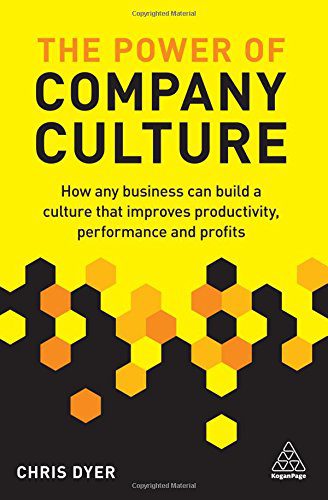
The Power of Company Culture: How Any Business Can Build a Culture That Improves Productivity, Performance and Profits
In the middle of writing the book, jumping off a bridge was a thought that came into my mind a few times. It is far more difficult than I ever thought it was going to be, but it has really helped me grow. My speeches have gotten better. What I’m talking about has gotten better. I learned so much more, read so much more, understand so much more than I did before. They’re just little stories that I would tell sometimes, maybe a little five-minute snippet of a story and a talk. When I went up for the book, I had to go back and really understand that story. Then I would read the entire book about the story and it was like, “I was telling the horrible cracker Jack version of the story when it’s really much better.” I’ve been able to learn and get better at that, but I would say anyone who’s trying to run a company, who does a bunch of other things, I do a lot of other things in my life, adding on a book was daunting. I’m really excited for people to read it. Hopefully my thing on my radio shows, I hope that someone can take one thing away from the conversation I’m having and use it in their life that day or that week. If that can happen, I’m happy. I’m happy to show up every week and have that radio show if there’s someone out there that can take a nugget and improve themselves. I’m hoping the same thing with a book, there might be a chapter in that that really resonates with them that they can take back to their work.
Give us some of your keynote topics because I think since it dovetails into the content of the book, it’ll almost be like a sneak peek on some of the chapter titles.
I do a couple of different talks. We do the traditional boring background check compliance talk, if you want to know how not to get sued and all that. I do that talk a lot. It’s my least favorite one to give, because it’s scary and boring and I feel like everyone turns white as I’m talking. It’s not fun, but it’s important. It’s an intense one. My company is completely virtual. We went from a brick and mortar company to completely virtual back in 2009.I talk a lot about virtual success and how you can do that with your company, how you can handle virtual employees, or a department that might be virtual. A lot of people still don’t understand how to make that work. They think seeing people rustling papers and hearing a stapler go out every once in a while is productivity, and so they can’t wrap their arms around virtual work. We do a lot of talks on that.
I experienced it when I was in Condé Nast and I had friends in law firms that people would literally do crazy things, like I’m going to put my coat on my back in my chair then go out and have dinner, and then come back at 7:30 PM or 8:00 PM for like ten minutes, send a few emails, and give the illusion that I’m working late. All that goes away with virtual. It’s just based on your output, not that you put in ten-hour or twelve-hour days.
[Tweet “Employee engagement WTF means, “Where To Focus?””]
At least be smart enough to go into Outlook and just do a delay delivery. You can send those emails out ahead of time and delay the delivery. Isn’t that crazy that people think they have to do that, and that’s not productivity. For me, productivity is you tell people this is what I expect, this is your goal, this is what I want you to do, and then you got to be able to measure it. That’s one of the chapters in the book, measurement. I do a couple of different talks around company culture. One is employee engagement WTF and that means, “Where To Focus?” That one’s fun. Really we’re morphing with this current version is spectacular workplaces, how to have a fun loving cult. The newest one that I started playing around with that our mutual friend, Mark Goldson, and I developed was unpoachable. How do you get your people to be unpoachable? How do you have an organization where people just don’t want to leave?
Measurement is the place that I see companies doing the worst job at. Some of the best of the best like Google, they do measurement, they kick our butts all day long. They measure everything that is relevant to measure, and they know what not to measure. We don’t want to micromanage people and we don’t want to measure things to the point of exhaustion where all people do is spend their time telling you what they did. I had a buddy whose boss left, and so the owner took over the management of the team temporarily. He had everyone on the sales team do a sheet where you had to tell them in five-minute increments what you had done. He said half of his day was just spent writing out the form, and his productivity absolutely dropped. Fortunately, the boss got frustrated and said he brought in a new VP of sales, because he felt like the salespeople had all started doing a terrible job. Of course, he didn’t recognize that it was over measuring them.
I have another example of that myself. Back in the day before you just paid a fee for your phone and you would get a line item charge for every call you made. They made us go through our phone records and say whether it was a personal call or a business call, and have to write down the account that you called so that you can turn your phoning bill in. They were only paying for the business calls. Do you know how much time that took?

The Power Of Company Culture: If we want to pick one thing where you could start with, it could be getting rid of the crappy people.
Whatever it costs for your phone bill. They lost the money on your productivity and time that you spend doing that report. I guarantee it.
You’ve given us so many incredible takeaways. For me, just that Gallup Strengthsfinder or the DISC profiles from Tony Robbins, really identifying the best way to communicate with people, being honest and transparent, and you control the conversation so you’re not “caught in a lie” and the big one is how to be unpoachable. Can you give us a little snippet of one thing someone could do as a leader to keep their key employees from being poachable?
How do you have one thing? The honest answer is it’s a whole system. It is a culture. If we want to pick one thing where you could start with, it could be getting rid of the crappy people. Nobody wants to work with a bunch of idiots.
It seems obvious to you, but that’s a great starting point for people, that one bad apple. Don’t allow somebody’s negativity, even if they’re a great producer, to overshadow the whole culture because then the other ones are like, “I got to get away from that guy. He gets away with behavior because he’s a top salesperson or whatever his job is. I can’t take it. It’s a toxic workplace. I’m out of here.”Just that one thing, I know that’s the tip of the iceberg. People will buy your book, which is The Power of Company Culture. I can’t thank you enough. Is there any final thought you want to leave us with?
I really appreciate you having me on the show. I know we’re going to have you on our show as well so we can keep the conversation going. It’s been a lot of fun.
Thank you, Chris. I’m looking forward to reading your book, The Power of Company Culture. In the meantime, be sure to tune into Chris’s show, Talent Talk. If you need someone to come and give you an amazing keynote on how to have a fun loving workplace or how to make your team unpoachable, Chris is the guy. Thanks again, Chris.
You’re welcome. I appreciate it.
Links Mentioned
- Chris Dyer
- PeopleG2
- The Power of Company Culture
- Talent Talk Radio
- Gallup Strengthsfinder
- TonyRobbins.com/disc
- The Five Languages of Love
- Ban the Box
- One Minute Manager
- Kogan Page
- Ten Dos and Don’ts of Conducting Employee Background Checks
Wanna Host Your Own Podcast?
Click here to see how my friends at Feed Your Brand You can help
Get your FREE copy of John’s latest eBook Getting To Yes now!
John Livesay, The Pitch Whisperer
Share The Show
Did you enjoy the show? I’d love it if you subscribed today and left us a 5-star review!
-
- Click this link
- Click on the ‘Subscribe’ button below the artwork
- Go to the ‘Ratings and Reviews’ section
- Click on ‘Write a Review’
Change The Rules, Change The Game with David Mammano
Posted by John Livesay in podcast | 0 comments

 Episode Summary:
When successful entrepreneurs look back on their journey, they realize that the obstacles they over came were a part of their path. Failing forward is the first step to success, you just need to learn how to change the rules and change the game so that opportunities line up for you. Founder of Avanti Entrepreneur Group David Mammano teaches his students that every entrepreneur suffers failures, but their success is dictated by their ability and willingness to keep going forward and learn from their mistakes. David shares how he helps businesses see that failure is the path to the next level.
—
Our guest on The Successful Pitch is Dave Mammano who hosts his own podcast called Avanti Entrepreneur. Avant means going forward in Italian and Dave is somebody who definitely goes forward. He’s written many books, including one called Make Love in the Workplace. He assures me it’s G-rated and tells an adorable story of something he did for his employees, kids that make them feel part of the family. He said, “If you don’t like the game, you’ve got to change the rules.” He has some really key insights on when to pivot, when not to pivot, and what lessons to take with you when you do pivot. Finally, he shared some really important insights on goal-setting, and how you have to make things a habit, much like brushing your teeth or breathing, otherwise, it doesn’t get done.
Listen To The Episode Here
Change The Rules, Change The Game with David Mammano
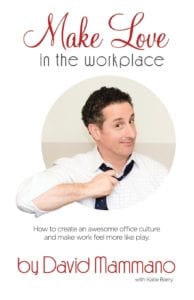
Change The Game: Make Love in the Workplace
Our guest is America’s entrepreneur coach. His name is David Mammano and for more than twenty years, he’s been a serial entrepreneur. He started no less than seven businesses from scratch. Clearly, he likes to start and grow businesses. He thrives in helping others start and grow their businesses, and he has so many different ways he does that. He was a three-time Inc. magazine 5000 Growth Company. He is the host of his own podcast, the Avanti Entrepreneur. He’s a TEDx speaker. He contributes to Forbes and he has a summit. He’s done it all. He sold franchises. He just got a podcast sponsor. He’s going to share with us the secrets he learned there in pitching. He’s got a book out called Make Love in the Workplace. Dave, welcome to the show.
Thanks for having me. I’ve done all those things but it’s been over a number of years. To hear them all at once, it’s like, “I’m accomplishing things. Good.” As entrepreneurs, we’re rarely looking back. We’re always looking forward.
I always like to ask my guest to take us back to their story of origin. You can start any way you want from being a child, right out of college, your first of seven startups, wherever you want to start the story.
I’m going to start at six years old because that’s when I look back and realize that I was meant to be an entrepreneur. I live in Rochester, New York where we’re known to have a very vibrant winter. I’m six and it’s February in Upstate New York. There’s lots of snow and I was going to shovel the driveways and make some extra cash. I went house to house and everybody was politely saying no. “I have a plow service. My father does it. My son does it. My sister does it,” whatever, somebody was taking care of it. I remember walking back home being a little discouraged. All of a sudden, I stopped and I realized that, “I’m a six-year-old kid. Let me use the cute factor.” I changed the rules of the game with this new idea.
I walked over to the next street and I started shoveling the driveway first. Then I would go to the door with my cute little six-year-old smile and held the shovel a very certain cute way. I would say, “Hi. I just shoveled your driveway.” Inevitably, if they were human, they would give me a dollar, a couple of bucks, $5 and sometimes $10 And I walked home with a full pocket. I remember thinking that I look back at that and saying, “I changed the rules.” There was a game and it wasn’t working for me so I had to change the rules of the game, which is what entrepreneurs always do. A lot of times there’s an idea and it doesn’t work out and instead of giving up, we say, “How can we do this differently better or more unique?” I look back and that was the start of my entrepreneurial career. I was that stereotypical kid that had the lemonade stand. I delivered newspapers. I sold magazine subscriptions for boy scouts. Everything you could think about, I did. I sold t-shirts at rock concerts with a friend of mine that did screen printing. I always have that gene of wanting to be in control of making my career. My first business, I was 25 and I started a magazine called Next Step. It was all about helping high school students with college, career, and life planning. It was free. We printed 10,000 copies here in Rochester, New York. I delivered them in bulk to every high school in the area and we made our money by selling advertising, mostly to colleges that wanted to recruit those students. We made a profit, expanded it to Buffalo and Syracuse, started to neighboring cities and made a bigger profit, went to all New York State and made a bigger profit, and then decided I want to go national. We didn’t just go national with one edition because I would lose a lot of my career advertisers. Most colleges are very regional in their recruiting.
What we did is we ended up creating a separate company to be a franchise corporation and we sold Next Step magazine franchises all around the country. For instance, somebody would buy it in Texas and for that they would own that state, all the advertising accounts, etc., and we would do the magazine for them. We would do the cover, the design, the articles. What they would do is sell ads in their state or region. They were allowed to produce some local editorial that we approved and they would pay me on a per issue basis. We had magazines all over the country. We were in every state, 25,000 high schools, five times a year. What’s nice is we sold ads in each other’s magazines, too. For instance, a college in Texas did want to recruit New York State, he would place that ad in my magazine and I would pay him a commission, and vice versa. We all became freelance sales people for each other too, which was a nice little side benefit. Since then, I’ve spun off a lot of that, just magazines and themes and prints. That’s no longer cutting edge technology. That’s all online now. We license that to schools and charter schools and boys and girls clubs.
I’m spending most of my time with my new company called Avanti Entrepreneur Group. Avanti means move forward in Italian which is like Next Step. About two years ago, I got a call from a 25-year-old kid and he just called to thank me. He goes, “I want to thank you, Dave. I have my own business now and did really well. You met with me five years ago when I was graduating college. I picked your brain, I took tons of notes and you gave me some really great advice. I’m doing well now. I look back at my notes and it’s because of a lot of what you told me to do.” He thanked me and before I got off the phone, he goes, “You should really make a living out of this, helping people start businesses.” It just hit me at the right time, right place. I had launched about six businesses by then. I made a lot of mistakes. I’ve done a few things right and I was in a very great state of mind to teach people. I thought, “I’d really enjoyed that.”I got back to the office. To Diana Fisher, my marketing VP, I said, “We’re going to start a new company that I’m going to be a coach and help people start and grow businesses.” She’s like, “What we’re going to call it?” Avanti came later. At first, it was just DavidMammano.com.
[Tweet “If you don’t like the game, you’ve got to change the rules. “]
We still have DavidMammano.com that has a lot of my speaking, you can buy my book, and things like that. We launched Avanti Entrepreneur Group. It is the house for my podcast, our events. We have a lot of Avanti Entrepreneur Summits. They’re one-day events where we bring in some great entrepreneurs, speakers. We do panels as well and we sell tickets. They’re one-day boot camps for people that want to start and build businesses. We’ve created a one-stop shop for people that want to start and grow businesses between the content we put out, between my podcast, we’re starting a YouTube show, we’re starting a new magazine for entrepreneurs, our events, I started an online course for entrepreneurs, and then my coaching services and my speaking services. Everything that we do is very focused on helping people starting to build businesses.
I don’t know how you’re able to juggle all that but it seems to me that it’s under the theme of “I know who I help and what problem I solve.” You started out with having a lot of empathy for the students. The fact that that’s still going on is quite impressive. To take that out into the world, the more you have empathy for customers’ pain points, the better you have the solution. The fact that you heard from someone saying, “You should do this,” versus you trying to figure out, “Do I have an idea? Is anybody interested in this?” I love that takeaway for everybody from your story here of let the market tell you what they need and then decide if you want to give them that. If you do, en your business will probably take off. One of your topics is change the rules, change the game. You talk about twelve characteristics to win the game. Can you share one or two that you think are important?
It’s my new keynote that I’ve been giving. It really came from me thinking about what inspired me to bring my game to the next level. As entrepreneurs, we tend to set a goal, we reach it, and we’re happy for a little while, maybe a day or two, and then we want a new goal. It becomes our drug of choice. We’re always wanting to grow. It’s just a matter of growing the right way. Looking back at the entrepreneurs in the past that have constantly been successful with everything that they touched, that sometimes means failing, but using their failure not as a place to give up but as a learning lesson and a part two. Every entrepreneur that has succeeded has probably failed much more than they have succeeded. The difference and what makes them a successful entrepreneur is they kept on going until they figured it out. I have twelve characteristics of being a successful entrepreneur, and that’s one of them. It’s failing forward. I’m not saying, “This didn’t work out. I’m done.”
One of my favorite quotes that actually inspired me to start my first business was from Tony Robbins. The quote goes something like, “If you are committed, you will always find a way.” That stuck with me. It’s like, “You’re right. I’d be totally committed.”If my first business doesn’t work out, I’ll use those lessons to fuel my part two to say, “I know what doesn’t work. Let me start another business and use those learning lessons to be more successful on my second one.” It’s just keep on going and not giving up and being willing to be adaptive and change. Failing forward is a big characteristic of being an entrepreneur. If you look at Steve Jobs, he got fired from the company that he built. Somebody could say, “That’s failing.” At the time, he viewed it as a failure, but if you read his biography, he said that looking back, that was the best thing that could have happened to him, and because of that, he was able to come back and bring Apple to the next level. We probably never would have the iPad if he wasn’t fired. He would have made better computers.

Change The Game: Use failure not as a place to give up but as a learning lesson and a part two.
Another characteristic is being agile, being willing to pivot, but knowing also when to pivot. Pivot’s a big word now in the business world, and I agree. There’s two things about pivot. One is don’t pivot too soon. Sometimes your idea’s good but you’re just not giving it enough time. Maybe you haven’t given it enough endurance to at least see if it’s going to work. They were about to pull the plug on Seinfeld back in the day, but they said, “Let’s do a few more episodes. See what happens.” Good thing they didn’t pivot and cancel that show. After the instincts that you’ve given it all you’ve got and this is not working, instead of giving up, how can you change the model? Change the rules of that game to make it work. For instance, one of my “failures” was I started a college planning center called The Next Step College Planning Center. It was like a Sylvan, like a Huntingdon, but instead of doing everything that they do, we very hyper-focus on college and career planning.
It’s almost like an outsourced guidance counselor on steroids. There’s a retail center, great location, very suburban across from the most popular mall in Rochester above Starbucks. It just didn’t work out. There was not enough individual families to pay for the service where we were able to make it a profitable business model, paying the rent, paying the instructors, etc. We ended up closing that retail center, but we pivoted it. I looked at what we had and we had created a world class college planning curriculum. That was the crux of the program. That was created by a PhD in the college planning filed, four-year veteran PhD. We created this incredible college planning curriculum.
When we closed the retail center, we put it online with videos and downloadable homework and resources and articles and training videos for counselors to deliver it. It became an online college planning curriculum that I would license to boys and girls clubs and charter schools and high schools and YMCAs. From the ashes, we picked up what was still a really good product and took that retail model and turned it into a really robust online college planning curriculum that now we license to boys and girls clubs and some charter schools, etc. It’s still the same business, still the same employee identification number, but it went from this failed “retail center” to all online. We pivoted. That’s another big trait of successful entrepreneurs, that they know first of all when to pivot and have the courage to pivot, and so keep all of the endurance and energy that they had when they originally started the business to make sure that they can make the second go of it a great success.
I love that because you’re not throwing the baby out with the bathwater. You’re taking the lessons learned before you pivot onto the next thing. Once you do that, there’s a great deal of learning there which is really fantastic. I can’t let you go without talking about this very thought-provoking break-through-the-clutter title, Make Love in the Workplace book as well as one of your keynotes. Everybody knows the importance of having a good culture and a good team. Tell us what you mean by Make Love in the Workplace.
What’s really important to me especially as I built my national magazine was always culture first. People first, culture first. It’s just my nature. I just love people and if I hired somebody, I want to make sure that they were empowered to be engaged and take ownership and really want to do as great a job as they can. What we did is constantly brainstormed different strategies, different ways to keep people engaged in the workplace. I started writing a blog about it.
Then I got asked to do a TEDx Talk about my workplace culture stuff. I named it Making Love in the Work Place. The TEDx Talk was very well received and very popular. Someone suggested I take that and write a book about it, so I did. I put all those ideas together and expanded them. It’s a book that talks about how great it is to have a great workplace culture. I actually give you very tactical things that you can do, that you can bring into your company. Most of them are free. Some of them cost a little bit of money. They’re just a lot of takeaway tips and tactics that you can implement in your company to reach the potential of what your workforce can be by showing them that you care about them in different ways. One of my favorite ones is when someone starts working here, they fill out a general application. We ask them on the form the birthdays of their kids, anyone under eighteen. A lot of times, they’re like, “Why do you have to know the birthdays of my kids?” We’re like, “Just fill it out. You’ll see.” What we do for the kids’ birthdays is we get a birthday card and everyone in the company signs the card. “Happy birthday, Nate. I can’t believe you’re nine already.” Personally, I held Nate when he was first born so I’ve known Nate for these nine years. We all sign it and then we put a gift certificate, a $25 gift card to the movies, and we mail it. Nate is nine. He never gets handwritten mail. He gets to the mailbox, he gets to his mail and he’s thrilled. He’s like, “I got a gift card. All of mommy’s employees and coworkers signed it.” He feels great. The icing on the cake is little Nate tells mommy, “Mom, I love your work. You work at the coolest place ever.” “You’re right. I know.” It goes back to work. It’s a little selfish in that respect but it’s keeping them engaged.
Why that’s so great is sometimes parents have to make sacrifices and miss something or be late coming home, and the kids start resenting their work. If you can create a way for the employee to have their child see their work as, “Not just a place you go to make money because we need to pay the bills, but a place that cares about me like you do,” then you’ve really got a love culture.
[Tweet “Be agile and fail forward. “]
It’s filled with a lot of ideas like that, things you can implement in your workplace to keep people there. A lot of these are not only retention but also attraction, so when you’re hiring people, you could put in the ad some of these things that you do for your team. If you’re marketing what a great place it is to work, it becomes a recruiting tool.
You mentioned your podcast, The Avanti Entrepreneur. You recently pitched and got a sponsor, so clearly, you know how to pitch for a lot of things. Let’s hear what lessons you could give us on pitching as it relates to a sponsor. I’m sure they’ll be takeaways for pitching anything.
I really learned a lot about this from our mutual friend, Stephen Woessner who runs the Onward Nation podcast. He had a guest named Linda Hollander on his show. Linda is someone who created her own events and sponsorships for those events. She teaches people on how to get sponsors for your events. I ended up calling her, reading her book, and I’m doing an event. We’re talking about getting sponsors and she says, “What else do you do, Dave?” I said, “I have a podcast. I’m starting a YouTube TV show. I’m starting a magazine. I have my website, my email list, etc.” She goes, “Don’t just sell the event. Sell something that you can help your sponsors all year long with everything that you do.” She called them properties. She goes, “You have multiple properties.” What I ended up doing is I went to Paychex, the payroll company, and I asked them if they wanted to reach beginning to middle-stage entrepreneurs, because that’s who I reach with my properties, my products, and they were like, “Absolutely.” I put together a proposal based on what I learned from Linda. What Linda does on Stephen’s podcast is spell out her outline for a proposal. I listened to the podcast over and over again, printed out the show notes. I followed her advice. I was a very diligent student and wrote my proposal based on Linda’s advice that I learned on Stephen’s podcast. I sent it to Paychex and got a call two days later. They were like, “Dave, we’re going to do it.” I gave it to my boss and he was like, “It’s the best proposal I’ve ever seen. Let’s give it a shot.” It’s $30,000. It’s $2,500 a month for a year. I call it spreading peanut butter across the whole bread. They’re going to be across all my properties. We’re integrating them into everything that we’re doing, events, podcasts, etc. The whole idea is that by the end of the year, we’re going to get a bunch of new prospective clients and they’re going to be very happy and renew.
I’m always telling people when they pitch, paint a picture. You just painted a really great picture. Spread the peanut butter across the whole bread, Get into my bread and butter and be part of the team and be integrated with it like a peanut butter and jelly sandwich is. Another topic you talk about is goal setting. I’d love to hear your take on goal setting because clearly, you’re able to achieve a lot of goals.
A lot of the goal setting work that I’ve learned is from a friend and mentor, Darren Hardy, who’s the former publisher of Success Magazine. He runs a lot of insane productivity events. He runs a three-day learning event called the High Performance Forum. I learned a lot about goal setting. I use a document that I created. It’s a combination of a lot of the things I learned from different people, and I just made it work for me. Essentially, it’s thinking about where do you want to be in a year and let’s reverse engineer there, quarter by quarter, month by month, week by week, What are the steps that I need to be doing every day, every week? I don’t know if you saw the movie What About Bob? Baby steps is the theme of the movie. How can you baby step into some of these big goals? Darren Hardy is always saying that when you think about the goal, many people get anxiety, they get nervous, they stop doing it because it’s like so unattainable.
If you break it down into bite-sized chunks and steps, and you say, “This month, this is what I need to do, ” then it becomes more attainable. Don’t look at the whole staircase at once. Look at the first step. What do you got to do to get to that first step? Then the next one, and then the next one. Just do it step by step by step. Before you know it, you’re at the top. You don’t even know it. Look at all those steps. I created a spreadsheet every day, it’s a Google doc, and I list in a column all the things I need to be doing everyday in order to be baby-stepping towards my goals. I check those off if I do. Some things I have to do five days a week, three days a week, seven days a week. I’ll check off if I do it, and that helps me stay accountable. At the end of the day, execution. I schedule a lot of these things into my schedule so that I don’t have to rely on my own discipline. It’s there and it becomes almost like brushing your teeth. You don’t think about it. It becomes part of the schedule.

Change The Game: I want to make sure that our employees were empowered to be engaged and take ownership and want to do as great as job as they can.
That’s the real trick to achieving goals, just to schedule it or just make it part of your habits where you don’t even have to rely on your own discipline. Often if you rely on your own discipline, it fades away. If you rely on your own discipline for breathing, you’d probably die because it’s automatic. You brush your teeth but you probably didn’t even think about it. It just became part of your day, part of your habit. About five years ago, I was 30 pounds heavier. I created a whole new lifestyle for myself. I got on the scale and realized I was at maximum density and said, “All right. I got to stop the insanity.” I started eating a lot better. I got some exercise programs and equipment. For a while, it was an effort. Now, every morning six days a week, I don’t even think about it.
I just wake up and before you know it, I’m downstairs in my basement and I’m working out. If I don’t, something’s off. It’s like if I didn’t brush my teeth, something is off. I probably will, at some point throughout the day, go work out, maybe after dinner instead of in the morning, but I just need to do it. I want to write my next book. That’s a big audacious goal right now because I want to write what could be a New York Times’ bestseller. It’s crazy when I think about it all at once, but what can I do this month to take a baby step towards writing that book? Recently, I contacted an agent. She likes my idea and now I have to write a proposal. I’m going to spend this next month writing a really great proposal for my book. I haven’t been thinking about writing the book yet, just writing the proposal. After that, I’ll be thinking about chapter one. That will be the next goal, little by little, and scheduling time to do it, not relying on my discipline to say, “Sometime today I’m going to write the book.” No. At 5:00 AM, whatever it is, or at 7:00 PM, “I’m going to spend an hour and work on this. It’s scheduled. It’s on my calendar.” If you want something done, schedule it.
The Avanti Entrepreneur Summits that you’re doing throughout the year, what’s a big takeaway that people have told you from attending previous events?
The immediate takeaway is that they’re very inspired and excited. I like to think that my energy and my enthusiasm is contagious, but that only lasts for so long. You have that only for a while. I just had coffee with somebody who attended my last Avanti Summit. She said, “You gave me so many great tips on what I need to do to build my business.” She talked about some of the tips that she was implementing. I’m all about giving stuff. I’m going to give you things that you can actually do. I’m not only going to pump you up and make you want to run through that brick wall behind you, I’m going to give you tactical things that you could implement in your life, in your habits, in your company to help build it to the next level. That’s my big thing, I want to give meat, not only the gravy and the wine and the nice stuff. I want to give you meat that you can actually use to bring your business and your life to the next level.
[Tweet “Take baby steps towards your goals so you don’t get over. “]
I’m sure anybody who gets to be even a little bit of peanut butter on any piece of your bread is lucky to learn from you. I can’t thank you enough for being on the podcast today, Dave.
It’s been very fun. I can’t wait to talk to you more and learn from you a little bit as well. As you know, I have my own podcast, the Avanti Entrepreneur Podcasts, and we got to get you on my podcast as well.
People can go to your website, DavidMammano.com. Let’s give out your Twitter handle in case people want to follow you there, too.
It’s @DavidMammano. We have another website which really houses all of our properties. It’s called AvantiEntrepreneurGroup.com. From there, it’s linked to all the content and events and everything that we’re doing as well.
Thanks again, Dave.
Thank you, John. Have a great day.
You too.
Links Mentioned
- Dave Mammano
- Avanti Entrepreneur
- Make Love in the Workplace
- Diana Fisher
- DavidMammano.com
- Avanti Entrepreneur Group
- Avanti Entrepreneur Summits
- Tony Robbins
- Sylvan
- Huntingdon
- Onward Nation
- Linda Hollander
- Paychex
- Darren Hardy
- High Performance Forum
- @DavidMammano – Twitter
- AvantiEntrepreneurGroup.com
- Making Love in the Work Place – TEDx Talk
Wanna Host Your Own Podcast?
Click here to see how my friends at Brandcasting You can help
Get your FREE copy of John’s latest eBook Getting To Yes now!
John Livesay, The Pitch Whisperer
Share The Show
Did you enjoy the show? I’d love it if you subscribed today and left us a 5-star review!
-
- Click this link
- Click on the ‘Subscribe’ button below the artwork
- Go to the ‘Ratings and Reviews’ section
- Click on ‘Write a Review’