

LinkedIn Sales Playbook With Brynne Tillman
Posted by John Livesay in podcast | 0 comments
How can you effectively use LinkedIn as a tool to widen your connections, increase your sales and grow your business? Get ready to take notes as the Pitch Whisperer, John Livesay, joins forces with the LinkedIn Whisperer, Brynne Tillman, to talk about the most important things that you have to remember when selling on the platform. Brynne is the CEO of Social Selling Link and author of the LinkedIn Sales Playbook. Having been in this niche since people barely knew what LinkedIn was, Brynne redefines social selling as something that is beyond pitch-spamming. She teaches her clients how they can earn the likes and the right to connect with people on LinkedIn using strategies that put more emphasis on relationship building rather than sales pitching. Listen in as they discuss the importance of building connections and engaging in conversations and building a profile that reflects your brand message, as well as a number of real-life examples that illustrate these powerful principles.
—
Listen to the podcast here
LinkedIn Sales Playbook With Brynne Tillman
Tactical Guide To Social Selling
Our guest on the show is Brynne Tillman, the Founder of Social Sales. She talks about how we have to earn the likes and earn the right to connect with people on LinkedIn and the big mistakes that she sees people making on a connect and then they try to pitch, or they don’t have a picture on their profile or worse they connect and then forget. She’s going to show you how to avoid all these mistakes and some great tips to make your LinkedIn experience and connections grow your business. Enjoy the episode.
—
Our guest is Brynne Tillman and she is the LinkedIn Whisperer. The LinkedIn Whisperer and Pitch Whisperer have joined forces. She’s also the CEO of Social Sales Link. For over a decade, she’s been teaching entrepreneurs, sales teams, and business leaders how to leverage LinkedIn for social selling. As a former sales trainer and personal producer, Brynne adopted all of the traditional sales techniques and adapted them to the new digital world. She guides professionals to establish a thought leader and a subject matter expert brand, find an exchange, the right target market, leverage clients and networking partners for warm introductions into qualified buyers. She’s also the author of The LinkedIn Sales Playbook: A Tactical Guide to Social Selling. Brynne, welcome to the show.
Thank you. I’m happy to be here, John.
The premise of getting to have you on the show is the timing we were talking about before the show started. I got to see you and your amazing team in action with your clients, helping them go from pushing out content and wondering why they’re not getting engagements on their posts to creating value and building relationships, which is completely in sync with what I’m all about and what this show is all about. You are the perfect guest. One of the things I like to ask my guests is to tell us your own story of origin. You can take us back to childhood, school or wherever you were that you feel like you’ve got this burning desire to want to learn how to connect or sell or whatever you think has led you to become the success you are.
I’ve been in sales since I was a waitress at Friendly’s. I loved being in a server, upselling, tips, the competition. I was a cocktail waitress in college and the fattest of all the girls that made the most money. It didn’t matter. I was competitive and I was going to do it. That’s the way it was. I love sales. Even though my degree is in Culinary Arts and Hospitality Management, I went into a sales career. I ended up in the sales training path versus the sales management path because everyone rode with me.
Every new person sat with me when I was in inside sales and when I was in the field. That was great and I love to train. I started a sales training company and we were teaching LinkedIn as a loss leader, initially. It was like nobody even knew what the heck this thing was when we started teaching it and then I’d have to go back and train traditional sales training. It wasn’t feeling right. I’m like, “I want this LinkedIn thing.” Many years ago, I went off on my own and launched Social Sales Link to train LinkedIn, to help salespeople start more conversations.
[bctt tweet=”The worst thing you can do in LinkedIn is to connect and pitch, because it just makes you sound like every other seller out there.” username=”John_Livesay”]
That’s such a fascinating journey that when you know that something doesn’t feel right anymore and having been in the media ad sales world for so long and I realized that when an ad agency would call us in, they called it media day. We looked at 100 magazines and we’ve narrowed it down to 10. We’re going to run in three and you get to come in one after another, like an actor almost auditioning and you each have half-an-hour. For God’s sake, do not tell us how many readers you have. We know that already. Tell us an idea or have a conversation with us about who your reader is that most people weren’t on that script. They completely flipped out. That was my a-ha moment of, “I’ve got to start learning how to tell stories.”
Whoever my premise is, whoever tells the best story is the one that gets the sale or the new client and all of that because when we tell great stories of which you were the expert at doing, especially on LinkedIn, whether it’s a post or starting a conversation, it allows other people to remember our stories and then you’ve got brand ambassadors without having to pay for them influencers or whatever. It’s more organic. That’s what I saw you doing with your team. I saw you in action, creating authentic connections and not selling. What are the things that made me laugh? Thank goodness I was on mute is one of your clients was reading what his response was to someone and he went, “You spammed him.” I thought to myself being on that Nickelodeon show when you would get all gooey with that green spray, you got slimed. The digital version of, “You got slimed,” is, “You got spammed.” That could be a funny tweet for the show. Tell us what mistakes you see people making on their LinkedIn. Where do you begin?
Number one, absolute most terrible is connect and pitch. It’s awful. All get it. In a new environment, we’re getting them 3 and 5 times a day, “We help companies like you.” It’s connected and disconnect is what it is. It’s terrible. Stop doing that because most of the people reading are doing that because that’s what salespeople do. We want to tell everybody about, “We can help companies like you.” We think it’s going to work and it doesn’t. People say, “If I send a few more, it’ll be a few more, that doesn’t work.” We need to stop.
Number two, you are going out and engaging with a very bad profile. No picture, no banner, a headline that says you’re a sales rep, which makes them go, “I’m not having a conversation with that person or sales rep.” You’ve got to move your profile from your resume to a resource in order to be effective. Another mistake is to connect and forget and we’ve all done this. We connect to that engaging. To me, that’s like going to a networking meeting with a whole bunch of business cards and I walk up and I go, “John, take my card.” I walk away and we have no conversation. That’s what we’re doing on LinkedIn. We’re handing people our business cards and walking away. Let’s start a conversation. Let’s bring value.
If you go back to when you were able to go in person and do your pitch. I can feel the days like people invite you to come to their office and that still happens when the pandemic ends. Now, it’s a virtual invitation, but you fill out a proposal, you get a final 2 or 3, and you’re able to go in and then people think, “I’m going to tell you everything about me.” It’s vomiting of information and then you leave and their competitors come and basically do the same thing. The client turns to each other and says, “That all sounds the same. We should go with whoever has the lowest price.” You’re following up and you’re getting ghosted and like, “What’d I do wrong.”
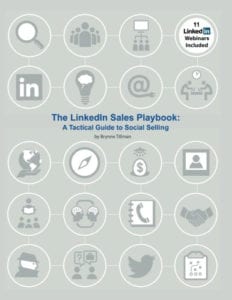
The LinkedIn Sales Playbook: A Tactical Guide to Social Selling
I love connecting with you because our belief systems and the teachings are in sync because my whole premise is, “If you want to be memorable, tell a story.” Your whole premise is, “If you want not to connect and be forgotten, have a conversation.” Most people are like, “If I’m socially awkward or an introvert in real life, I’m equally awkward and introverted in that situation.” That’s where you come in as the LinkedIn Whisperer says to them, “Take a breath, people. I’ve seen you do it. Be human. Tell me something real about yourself for me.” To me, “What’s your story of origin?” I work with a lot of healthcare professionals and they’re like, “You’re pastoring these doctors. Don’t you want to be seen as a welcome guest?” That’s my favorite soundbite with what we’re doing.
We’re taking people from being seen as an annoying pest to a welcome guest. How do you do that? What you’re teaching people to do is give them some content. One of the things that you said to your clients that were gold. I don’t know if they realized it, because sometimes when people are working with an expert like you, they don’t have any comparison, but I do. I was like, “They are getting incredible value one after another.” You said to them, “Instead of spamming somebody with your pitch, how about if you respond to their issue and say, ‘I might know someone else who could help you, would you like an introduction?’” That giving mindset and that extra effort to give instead of picked to, “What can I get?” is how you start a conversation and a relationship. I want you to speak a little bit about how did you learn to do that well?
Trial and error, AB testing, being hyper-aware of human beings in what they need and want, being a conscious person, not just awake, but try to be conscious of what’s happening, empathetic a little. I want to get in the shoes of the other person and a lot of self-reflection about how do I want to show up? What do I want to be? What’s my legacy? I do this to make a living, but what motivates me is when a client comes back to me and said, “I implemented what you taught me and closed a $1.5 million deal.” I go, “That’s my legacy.” We touched about this quote that I’m playing out with which I’m jumping ahead, “It isn’t about you hitting your goals. It’s about you helping your clients hit theirs.”
It’s like a new one. It’s the second time I’m saying it out loud. You’ve got to get a core philosophy. What do you want to achieve? Quarantine had everyone pivoting and making a shift and we recognized we had to redefine social selling because it was a different time. We redefined it as social selling is about showing empathy, building real relationships and being a resource. The sale will come when the time is right. If you can continue to help them achieve their goals when it’s time for them to need what you have you are it.
You’re memorable again because you better resource, you’ve developed a relationship and you’ve shown empathy. I talk about that based on a book I read years ago by Tim Sanders called The Likeability Factor. He did all this research around empathy and doctors spend more time with patients they like, teachers spend more time with students they like. It’s all about how do we up our likability factor? It’s about empathy. When we can show that we understand someone’s problem better than someone else can, the assumption becomes, “You must have then my solution if you’re able to phrase my inner feelings and thoughts in such a way that I haven’t been able to express it, you must have my solution because you’re ‘in my head.’” Part of what makes good headlines or content for LinkedIn is listening to the pain points your clients describe to you, what more of this client and your avatar, but then listen to how they say things. That becomes your headline or the title of a post where I have found works well. Do you have an example of that someone you’ve worked with or where you’ve heard someone say something and then you use that and you get more of your ideal clients from it?
[bctt tweet=”Social selling is about showing empathy, building real relationships and being a resource. The sale will come when the time is right.” username=”John_Livesay”]
All my content comes from conversations I have with clients. That line came from a conversation I had with a client that it’s not exactly like that, but there’s some gravitas here and I played with it until it came out and flowed. Everything that I am now is because a client had a question that needed an answer.
I’ve got a couple of examples myself because I think the more examples you and I toss out on this episode, the more this episode will be read to over again and they’re like, “Did you read that one? I hadn’t even thought of that one.” Working with the tech healthcare company, they were not numbered one in their market and one of the sales reps said, “We’ve got to stop playing defense.” I went, “That’s a headline.” A lot of people feel they’re constantly playing defense against the market leader and never getting to talk about their strengths and only being compared to the other. That was one. Another one, we are tired of coming in second place when we go pitch and then I have a whole thing around, “Unlike the Olympics in business, there’s no medal for 2nd or 3rd place.” Those things help our clients.
My biggest one is when people ask me about, “Is sales navigator worth it? Should I invest the money?” I had a client once, a prospect at the time we turned into a client who came to me and said, “I send it for sales navigator six months ago. I haven’t gotten one sale from it, but it’s because I haven’t logged in.” I said, “It’s like your gym membership.” He laughed. When people say to me and I’ve said this now 100 times publicly, sales navigator was like a gym membership. If you sign up for it and you’ve got a plan, you know when it’s leg day and when it’s arm day and when you’re doing your aerobics, you’re going to get in great shape. If you don’t show up, you’re going to pay your membership every single month and you’re going to look the same and feel exactly the same six months from now. You have to go to the gym three times a week in order to make use of it.
The other thing I heard you stated with your clients is, “Don’t connect and then ask someone to buy from you. It’s like going on a coffee date and asking somebody to marry you.”
This is dating. Take it slow.

LinkedIn Sales: Don’t just connect and be forgotten. Start a conversation.
“I’m not ready to go home with you yet.” I have done the same thing about how to go from invisible to irresistible. I constantly toggled back and forth between a dating scenario and a business scenario because it’s all relationship. In the middle of invisible to irresistible is the interesting rung. I said, “This is where most people get stuck.” In a dating scenario, maybe you say something at a cocktail party that like, “Maybe I wrote you off to pass, but I’m still not going out with you or going home with you, but I’m at least interested to keep talking.”
I see many salespeople and I can’t wait to hear your thoughts on this, get excited and even do a projection to their boss, “I’m going to get a sale. They said they were interested. They wanted some information.” I said, “It’s like being stuck at the friend zone at work.” That concept of going, “Interesting, is not a sale.” I’m stuck at the interesting rung of the ladder. I’ve gotten them into interested enough, but they’re certainly not buying yet and you must have seen that many times and still see it where someone may be interested enough to connect and you can’t get past that framework because you aren’t showing enough empathy or whatever it is.
There is a short game and long game on LinkedIn. I’m going to balance the two. The long game on LinkedIn is we’re connecting with people when they start to engage like, “They’re showing some interest.” We have a responsibility to earn the right for every next step. We put out a piece of content. They like it. We earned that like. We connect with them and thank them for liking our content and because our content was good enough, we’ve earned the right to have the connection. What’s our next step? How do we start a conversation without pitching? “John, thanks for liking the article that I posted out there. Not sure if this is a subject that’s top of mind for you, but I do have another post I’d love to share with you. Let me know. I’ll send you a link.”
Asking for permission. No spamming.
A lot more people are going to say yes, then would click on it If you sent the link.
[bctt tweet=”Don’t spam your clients with your pitches. Interact with them.” username=”John_Livesay”]
They’re engaged. They feel like, “I’m in control.”
It could be a white paper or download. You let them know. When they say yes, if you give them a gated piece of content, you ask permission. They’re not going to feel spam and now we see, did they download it? It’s a conversation and it could be a lot of things, but what level are you exploring? Where are you in exploring this? I’ve got lots of other insights that I’d be happy to share with you. Where are you in this journey? I’d be happy to share insights with you, even if we never worked together. “I’m in this industry. I’ve got lots of ideas. I’m happy to share them with you. Let me know. I’ll send you a link to my calendar. We can set up a time to talk.”
I see you have that on your About Page. It’s inviting. Let’s go back to one of the mistakes you said at the beginning, which is no picture. That’s obviously a square one. Square two is the wrong picture that still is not appropriate. Someone goes to my LinkedIn profile you see a picture of me in front of hundreds of people at a ballroom giving a talk. You know I’m a speaker from that picture, before you even read it in my profile. Make sure the picture you tell the story you want to be telling. I can’t emphasize enough the importance of someone working with someone like you ran because LinkedIn caused me to get my highest speaking engagement. Most people think, speakers spend a lot of money on SEO to get people to come to our website and look at our speaker video demo reels and all that good stuff and all that happened.
It was between me and another speaker, which is often the case. Sometimes it’s between me and multiple speakers. After I got hired, I heard the story because you and I are the same. We were like, “Can you tell me how you found me?” “It just pops in.” The marketing department picked the theme of storytelling, found me and another speaker and presented this to eight different regional vice presidents. One of those regional vice presidents was looking at the two profiles in addition to the video demo reels and the books. On my profile is very clear that I had a career at Conde Nast and I won Sales Person of the Year. It’s a big part of the profile. The other speaker, from what I can see, if I read the fine print was also in sales, but it doesn’t say what company, it’s obscure. That regional vice president said, “I think I prefer a speaker who’s been in sales and has been in my team’s shoes, has quotas, deadlines and pressures.” Here’s the secret sauce, which is when I saw you teaching.
As they were still debating after they had their meeting, it’s almost every sale. Even with hiring the speaker for the meeting, lots of decision-makers. That’s the norm. He reached out to me and I’m like, “I know that client name.” That’s not the person that I’ve been interacting with, but, “He’s in one region.” He asked to connect. I went on his profile, liked and commented on a couple of the articles that he had posted. I responded to the connection and I said, “Your company’s considering me. Would you like me to mail you a copy of my book?” He said, “That’d be great.” He sends me his address. Now, I have an inside brand ambassador salesperson cheering for me. I found out later, he said, “This is what I’m trying to teach my team to do is interact with the doctor’s posts and the fact that you did it, it will be organic for you to teach them how to do it.” There are many things with my LinkedIn that I think a lot of people think, “I’m not looking for a job. I don’t need to have a LinkedIn profile.” You can emphasize how many people you’ve helped like that.
LinkedIn Sales: Using Sales Navigator is like a gym membership. You need to show up for what you paid for.
The first story, I got into Aramark when I was a teeny tiny one person, starting locally still selling sales training, but doing this little LinkedIn thing. Aramark was looking for sale for a LinkedIn trainer. They had gone through the challenger sale training. This was the next thing. I raised my hand, I reached out to the person and she said, “I’m sorry, we’re Aramark. We need a bigger company than you.” I looked at our shared connections and I saw my friend Professor Richardson who taught at Rutgers at that time was connected to her. I taught for free a LinkedIn class one semester for her at Rutgers. I reached out to him and I’m like, “How do you know Nicole Bradley at Aramark?” who is not there anymore. She said, “She was my student.” I said, “Can you throw in my name? Here’s the situation.” She took her to lunch and said, “I’m not going to tell you Aramark who to hire, but you need to talk to Brynne.” Needless to say, I got the gig, they handed me the book and they said, “The way you got in here is the way we want our reps to get into.”
Walk your talk. That’s what you do. That’s what I pride myself on doing too. That’s why the LinkedIn whisperer and then the bitch whisperer is we’re giving people lots of context and content on how to go from invisible to irresistible. SocialSalesLink.com that’s the best place to connect with you. Go to your LinkedIn profile and connect, reach on your company team site if anybody’s looking forward. Here’s the big problem I keep hearing you with companies hire me, especially now during a pandemic, we’re having trouble starting conversations with clients that we normally could either cold call or catch in the hospital where we’re not allowed anymore and all the normal ways of connecting and meeting people is gone. We’re struggling with that first reconnection whether it’s a subject line in an email or what to say when you’re asking someone to connect. We’ve skipped put as might be obvious, but I would be remiss if I didn’t ask you, how important is it when you’re inviting someone to connect, to do it from your laptop and not your phone so you can put a note with it?
You can put a note on your phone. If you’re on your mobile device and you click on the More Button, you can go personal invite. I prefer connecting on the phone because on the desktop, it sends an invite without a message. It says, “If you’d like to add a message, you still can.” You want to hit the More Button and then hit Personalized Message from the phone.
That’s when people can tell that it’s not spam, especially, if you customize it and say how you know them or something you read. The more specific, the feedback or why you like someone’s work or what you like about it whether it’s a poster or an invitation, the better.
Look at their profile, engage on their content before you connect so there’s more con.
I can’t thank you enough for sharing these valuable tips. It’s interesting how certain situations create a need for something that existed before, but now is needed. You’re at the right place at the right time. All that preparation and long game playing have paid off for you and I’m cheering you on every step of the way.
I appreciate it. Thanks for having me, John.
Important Links
- Social Sales Link
- The LinkedIn Sales Playbook: A Tactical Guide to Social Selling
- The Likeability Factor
- LinkedIn – Brynne Tillman
- https://SocialSalesLink.com/brynne-tillman-headshot/
- Better Selling Through Storytelling Method Online Course
Wanna Host Your Own Podcast?
Click here to see how my friends at Podetize can help
Purchase John’s new book
John Livesay, The Pitch Whisperer
Share The Show
Did you enjoy the show? I’d love it if you subscribed today and left us a 5-star review!
- Click this link
- Click on the ‘Subscribe’ button below the artwork
- Go to the ‘Ratings and Reviews’ section
- Click on ‘Write a Review’
Love the show? Subscribe, rate, review, and share!
Join The Successful Pitch community today:
- JohnLivesay.com
- John Livesay Facebook
- John Livesay Twitter
- John Livesay LinkedIn
- John Livesay YouTube
5 Things Salespeople Can’t Do Now
Posted by John Livesay in blog | 0 comments
As a salesperson, are you COVID-ready? Salespeople today have to be like Neo from The Matrix and learn to be a Shape-Shifter Salesperson during COVID through storytelling. This is a new reality that is not going away anytime soon.
Storytelling is more important than ever right now because salespeople have to work even harder to get in the virtual door and build rapport.
5 things salespeople can’t do:
- Face-to-face meetings
- Read body language
- Hear laughs (People on Zoom mute themselves!)
- Social time with clients at tradeshow and events
- Meals with clients
Salespeople used to have to work to get in the right room — or, as Hamilton says, “The Room where it happens.”
Now they have to get in the “Zoom where it happens!”
Salespeople need to craft a compelling story, starting with the subject line of their email, to get people to see them virtually.
Plus, Zoom burn-out makes it even harder to get in the virtual door.
Salespeople have to learn how to look and sound good on Zoom.
Here are 5 tips:
- Stand up and dress up (Most people sit on Zoom and lose energy)
- Lighting must be good so people see your face to build trust
- Gesture on camera, not at the waist
- Good mic, even more important to hear subtle nuances in your voice
- Frame Yourself! Like a picture, you need a good frame.
Not only do salespeople need new ways to get a virtual meeting, but they also need a new way to sell on Zoom once they look and sound good.
They need to turn boring case studies into compelling case stories! People expect to be entertained on a computer screen vs. in person. They are used to watching Netflix on a computer screen, so you have that as competition to grab and hold people’s attention.
How can you improve?
John Livesay, speaker and author of Better Selling Through Storytelling, has been working with clients like Olympus Medical to craft case stories that make their sales team memorable and irresistible. They have created a repository interactive map of all the stories to help break down the silos between divisions. Now all the salespeople can access the successful case stories to share with clients.
Keith Griffis, Executive Director of Marketing, Olympus, said, “John is part artist, philosopher, and sales crushing storyteller. He pulls on your heart, opens your mind, and makes you better with every conversation.We have had the good fortune to virtually teach 200+ sales people, marketers, and leaders using John’s Better Selling Through Storytelling. If he is this effective during a pandemic virtually, I can’t wait to bring him back for a keynote in person. Highly recommend John for any organization looking to change their selling style to be relevant, impactful, and to rise above the noise. #GameChanger”
Times like this call for everyone to embrace a new shape and a new way of doing sales. Crafting stories on Zoom is the crucial step to adapting and getting the jump start on the new virtual way of connecting. Check out John’s Better Selling Through Storytelling course, and contact him to see if and how he can help you and your salesteam.
Global Investing: An Entrepreneur’s Global Perspective With Sleem Hasan
Posted by John Livesay in podcast | 0 comments

As the years go by, it seems like the world has become significantly smaller. It has become easier by the day to reach other people and even set up your own business. In this episode, John Livesay interviews Sleem Hasan, the founder and CEO of Privity FZ LLE, to talk about global investing. He takes us through a global lens of his own journey that spans different countries and shares the different lessons and experiences he got. How can being globally competitive help you? What are the benefits of a global eye? Sleem answers these questions and more with John.
—
Listen to the podcast here
Global Investing: An Entrepreneur’s Global Perspective With Sleem Hasan
Our guest is Sleem Hasan who is an experienced owner with a demonstrated history of working in venture capital and the Japanese capital markets. He is skilled in investor relations, securities, asset management, investment advisory, and working with technology entrepreneurs. His strong entrepreneur professionalism is with a Part III Mathematical Tripos from Cambridge and a Mathematical degree from Oxford. He’s also the CEO and Founder of Privity, which is an independent Dubai-based advisory firm founded back in 2004. Sleem, welcome to the show.
Thank you, John, for having me.
I always like to ask my guests to take us on their own little journey, their own story of origin. You can go back to your days at Oxford or childhood when you first realized, “I’m interested in math,” or I’m guessing back when you were a child, the concept of entrepreneurship was not as well-known as it is now.
I usually share my background using six different flags. The first flag is that of Fiji island because that’s where I was born. The second flag is from Pakistan because that’s where my late parents hail from. The third flag is from Nigeria in West Africa because that’s where I grew up. The fourth flag is the United Kingdom because that’s where I went to study at university. The fifth flag is Japan because I spent 37 years of my life dealing with the Japanese markets, first at Nikko and then with Hasan Financial Corporation, my first startup. The last but not the least flag is the United Arab Emirates, which is where I reside in Dubai. That’s zero to date with six flags.
You would be the definition of a global citizen based on those six flags.
You could say that every part of it was not by choice where you’re born, where you grew up.
[bctt tweet=”You don’t need to get other people to believe in yourself when you believe in yourself.” username=”John_Livesay”]
After that, it becomes your journey. I’m sure a lot of people are as intrigued as I am to ask this next question, which is how many languages do you speak besides English?
Badly, probably about six. Fluently, probably 2 or 3 but I love languages. I speak my own language which is Urdu. Although, I grew up in the northern part of Nigeria. I’m comfortable in Hausa. I learned French at school, a bit of Arabic because of my religious background and a bit of Japanese I picked up working with Japanese. Having said that, I’ve picked up a bit of Italian along the way, a bit of Spanish.
There’s a real connection between music, math and languages, don’t you think? There’s a structure to all of it. There’s a rhythm to it. It’s a tuning your ear and formulas even about, “This is what pass perfectly is,” or those things. The Japanese language is extremely different than the Spanish, Italian, or even English and they write, I believe, with their hands as part of symbols.
It’s funny you say that because I go one step further and I draw parallels between actually Mathematics, which is what I studied at university and Entrepreneurship. What do mathematicians do for a living? They solve problems. What do entrepreneurs do? They solve problems too. In my humble mind, there must be some homeomorphic map in the mind of a mathematician and the mind of an entrepreneur.
I’ve never heard anybody else frame it like that and it’s brilliant because if you’ve ever had any kind of math and I did some calculus a little bit and things like that, or even basic geometry is all about solving for X or Y or whatever the answer is. If you think of yourself as a problem solver, when you create your company and I get into this is where our lives and our passions crisscross is my passion is helping founders be able to craft a story and show empathy for the people whose problems they’re solving. The better they can describe the problem to a potential investor. I think investors like you think, “This entrepreneur probably has the solution because they understand the problem well or they’ve experienced it.”
Whenever any two people meet, whether it’s entrepreneurial and investor, two friends meeting at university on open day or even a boy meeting a girl, what is the most important thing? You’ve got to catch them at hello. The minute you catch somebody at hello, the person gets engaged. That’s exactly what I tell entrepreneurs today. You’ve got to catch the investor at hello because it’s that first initial impression that we’re the chemistry exchange is pointed and very pertinent. If you can capture that and then they get engaged, they want to know more. If you’ve got a ten-minute pitch and you spend the first 5 or 6 minutes taking them down a cul-de-sac, the chances that they’re going to lose, you’re going to get lost in translation and they lose interest. That’s my two cents for whatever it’s worth.

Global Investing: It’s that first initial impression where the chemistry exchange is very pointed and very pertinent.
It’s worth way more than two cents. I tell a lot of investors when I’m working with them on their pitch, “You may have ten minutes in front of an Angel group or even more if you’re a venture level, but you only have 90 seconds.” Grab them at hello. I tell people, “The biggest mistake I see,” and I’d love to hear what yours are, “Is they waste those valuable opening seconds with cliché things like, ‘Thanks for this opportunity. I’m excited to be here.’ No one cares that you’re excited. It’s not about you. It’s about the investor.” I’m all about jumping right into a story that pulls people in.
It’s very important to outline the problem with the story. I think starting your pitch with a compelling story is important. I even say that on my website when I talk about Privity. I say, “I’m agnostic to geography as I am to industry vertical. I only care about the underlying compelling value proposition of the idea.” Straight up on my website for anybody interested. Literally, you go to the first landing page. That’s the first paragraph you’re going to meet. I want to capture you at hello. If you go to Privity, you’ll see I’m practicing what I’m preaching.
First of all, that’s unusual because a lot of investors are not geographically agnostic nor are they open to multiple industries. I always love going to the portfolio page when I prepare to meet an investor whether it’s interviewing them for my show or if I worked with a founder who’s going to pitch an investor. That to me is a sign of respect that you’ve taken the time to do it. The one company that’s on your portfolio page that I would love to hear about is Kiwi Wearable Tech because I have a fashion background. That one intrigued me to know more about that one.
I’ll tell you how it came about. For better or for worse, since I built the portfolio, three companies I’ve exited and three companies crashed. Kiwi is one of the latter, which did not do well, but I had an interesting journey learning about the wearable technology. A brilliant founder I met in my early days in Dubai, got to know him and then we relocated to Canada. He came up with this idea of what he was doing, building up this wearable technology business and the IoT. This was early days IoT. It’s morphed since I got involved with Kiwi, but there was a lot of learning there. They did get an offer early. It was from Intel or Google, I forget which one, but it was a serious offer on the table, but it was a low offer like a $10 million or $12 million exit.
As the shareholder, I told the guy, “It’s a result. You’ve done well,” but like a lot of founders or entrepreneurs, they’ve all got the big unicorn on their minds and they all have the dream. The founder had majority stake in it and whilst we all advised him as shareholders to take the money and start again. He chose to go a different path and then he ran out of money. The classic story. There was a lot of learning one can get out of the Kiwi story and I’m glad you picked that one. Not everything that one gets involved in turns out smelling of roses. It’s being in the trenches, working with these companies day in, day out, and then learning from the mistakes. I always tell people it’s not success or failure, you either succeed or you learn. You learn from the mistakes you make and that should then reinforce when you encounter the next one, you’ve now got that data point you did not have the day before and that is worth its weight in gold.
I would imagine part of your magnetism as an investor too because if someone’s got a great idea, maybe some traction and revenue, they’re looking at multiple investors, like you look at multiple founders. I’m always advising founders, “You don’t want any money, you want smart money,” and someone with your experience and having those data points and references because without a frame of reference whether it’s connections to help the company grow or knowing the right time to exit or not is crucial in who you decide to go with.
[bctt tweet=”No meeting in life is ever a waste of time.” username=”John_Livesay”]
Whilst I don’t make any claims to be a Sand Hill road type VC nor do I even have a fund. I have built up a business in my own way, but I work with entrepreneurs. I cut deals with entrepreneurs because I’m an entrepreneur myself and it’s a different model that I’ve built out here and I have mobilized a significant capital for early stage investing through a network that’s kind enough to share the good, bad and ugly with what I do. There’s one particular investor who’s comw in four times as recent as July 2020 and as early as 2012.
He’s followed me into stuff I do. He’s benefited from the pluses and at the same time, he’s experienced some of the negatives, but he’s backed me because he believes that there’s a method in my madness, which he appreciates. I’m grateful for that. We’re all looking for the ball you want to bat out of the park, but I’m happy to crawl before I walk, before I run and keep working hard and building up that value. Hopefully, your LPs, your investors, people who would like to be part of your journey will see that down the road.
What is the kind of business you’re in, if you don’t mind me asking, that allows you to create an enough income to invest in startups?
I had a separate business which sold in February this year. It was my first startup called Hasan Financial Corporation. That was my first taste of entrepreneurship when I made multiple returns of my capital in the first three years, which was reported at UK Companies House with the UK Regulators. It was a buy and sell side advisory firm focusing on the Japanese markets. I ran that business for 24 years and I sold it in February 2020 before COVID broke. That was one of the funding vehicles I used to finance my experiment I would call it here in Dubai when I started Privity. In fact, the first five years of Privity, it was a nonevent. I got involved in a couple of branches, which were not tech because I was too early here.
Dubai was in build mode back then. I don’t know if you know Dubai, but there were cranes, construction work, real estate. That was the order of the day. I call it Dubai 1.0 because that’s what I found. Nobody was interested in tech. Nobody’s interested in venture. The ecosystem was not what it is. It’s quite robust. There’s a lot of activity in this space, in the region as a whole. A lot of FinTech companies are coming out of the region. There have been interesting exits out of the region. Amazon bought a startup in this region at a huge valuation. It’s on the radar and like anything else in the world. That’s why I talked about the six flags, right at the get-go of our conversation, because that is ultimately who I am.
I don’t have a parochial view to life. I look at the view of the world in a 360 manner. It’s very important. Maybe a data point in China can actually affect what you’re doing here or a data point up in Russia could be moving the needle down here. The whole interplay between all these different data points builds a very interesting fabric around your portfolio. And so I’m open to opportunities wherever they come from and thanks to the six flags I keep referring to, it’s been the biggest blessing in disguise. Perhaps, one of my strengths, it’s like moving a mouse seamlessly through from Japan to Nigeria, to London, to Pakistan, and back to the United States in 0.6 seconds, I can do that because I know where the bodies rlies and who the people are in those different geographies.

Global Investing: No meeting in life is ever a waste. If somebody is kind enough to knock on your door wherever they are, never say no.
You’re the global Sherpa.
If you can move from Asia, Africa, Europe, US seamlessly, that’s a huge swathe of land. It’s a huge content you’re covering. The beautiful thing about sitting in Dubai is that it’s probably one of the few geographies I’ve ever lived in that you can cover the entire world on the same business day, without compromising on your sleep. You could be a one-man shop or a huge multinational sitting in Dubai, but you’ll have that advantage because of its geographic location.
The fact that you have such a success record in FinTech, that must give you a lot of expertise. For looking at FinTech companies, I read one of your articles, you posted on LinkedIn around FinTech. That’s why I was curious to see what your expertise was while you’re not locked into FinTech, you certainly have an ability to analyze it not just from one country in the world.
You flatter me John, I’m not the clever one. In fact, however much somebody on this side of the guy who was writing a check or who’s helping get the checks for the people who wanted, the clever ones are the entrepreneurs. Let’s be clear about that. To me, I bow my head to the guy who’s generating the idea, not the guy who’s writing the check. To me, those are my teachers. In fact, I jokingly refer to Privity as the cheapest MBA program in the world because I’m learning from very very smart minds about different businesses.
That leads me to the question about LF Technologies. That one fascinated me as well. I’m sure there’s a story there. The first time you heard their pitch, the LF is all about rapid creation of marketplaces through how they’ve reinvented two things, online commerce and search. A lot of people I think would say, “I think we’ve got that handled with Google and Amazon. How do you reinvent that?” That’s what fascinates me to hear that story about LF.
You must be either clairvoyant John or something because the two companies in the portfolio have very interesting stories that’s still there. In fact, while it’s a UK holding company base, the operations are out of your backyard sir in Austin.
[bctt tweet=”You’ve got to catch the entrepreneur or the investor at hello.” username=”John_Livesay”]
That is a little same energy. I’m a big believer in quantum physics, energy and trusting your gut a little bit.
And in fact I met the founder through another portfolio company of mine called Boloro whose chairman is a YPO. I helped Boloro in 1st, 2nd and 3rd run. In fact, that was my third small exit out of my portfolio in 2019. This is a company based out of New York. The chairman reached out to me, what I was doing and he said, “I want to introduce you to somebody.” It was word of mouth. When I found out what LF is doing and what they’re doing specifically in artificial intelligence, I rolled my sleeves up and told the founder, “I want to be part of your journey.” Now, he’s a dear friend and we’ve been on that journey.
One of the things that stands out on your portfolio page about LF is they have a paradigm shift called an intelligent marketplace and that alone, as someone who loves stories and good soundbites, is something that intrigues our brain to want to go, “Wow.” I know what intelligence of things are and I know what an intelligent shopper might be, but an intelligent marketplace, that to me is intriguing. Can you shortly give a little hint of what they mean by that phrase?
Nowadays, cars are going to drive themselves. Your fridge will be able to talk to the supermarket and tell it’s running out of milk. Things are going to be talking to one another, but the one thing that still is in the dark ages ever since Google and Amazon came along is searching the marketplaces. What is Amazon? If you think about it. You’ve got a search box, you’ve got some kind of engine at the back that generates searching for let’s say a 40-inch Sony TV. It’ll come up with suggestions and maybe what is it that John Livesay wants doesn’t come up on the first page so you spend more time, 2nd, 3rd, 4th, 5th, 6th, 7th, and maybe 9th page right at the bottom, you may find what you’re looking for.
What if that platform learns a bit more about John Livesay and says, “I’m not going to show you 40-inch TVs. Maybe there’s a 60-inch TV that is within your budget. It’s a good brand?” You would respond to it, “If I knew a bit more, I could find a way.” Instead of you searching, it’ll fetch it for you. Like in the old days, when you used to ring up a broken the marketplace and tell the broker, “Buy IBM for me at $40 if the price hits. I’m not going to spend all my time watching the screen and stuff and if it hits that price, either buy for me or come back and tell me the markets where I can can trade.” Think of it that way. That’s the automation that one can bring into the world of search and market place. I don’t know if that answered your question.
It does, because I went through an experience moving here to Austin. You’ve been here, it’s beautiful. There’s a 300-acre park and there are all kinds of bike trails along the lake. I thought, “I want to buy a bike.” Not realizing that bikes are in the same category as paper towels and toilet paper during a pandemic. There’s a shortage of bikes, but the fact that I was trying to figure out where to go to get the bike, asking friends and started looking at things, suddenly I’m finding things in my feed about, “Here’s a helmet you might like and here are all these other things.” I’m like, “I’m looking for a bike.”
[bctt tweet=”It’s not success or failure. You either succeed or you learn from the mistakes you make.” username=”John_Livesay”]
This particular intelligent agent, intelligent platform can be applied to just about every single vertical you can think of. It could be a real estate, hospitality, travel. It doesn’t matter what the vertical is because the principle, you’ve got two sides of the equation. You’ve got a buyer and a seller. It affects you’re creating intelligent stock exchanges where everybody in the world, anybody can be a buy and sell at the same time. That’s the ultimate vision of it.
It’s because you’re giving people information when they need it at the right time. Otherwise, you’re wasting your time and money at marketing to somebody who’s not in the mode of buying whatever it is.
Inadvertently, you’ve picked on something else which was always my dream at Privity sitting here in Dubai, and that is I want to be agnostic to geography industry, but at the same time, I want to be global. You picked up two portfolio companies. One that’s in the portfolio, one that didn’t work, the first one you picked on was out of Toronto in Canada. The second you picked on is in your backyard in Austin, what you’re hearing about for the first time and where am I sitting? In Dubai. That is my vision. I don’t care where. If I have the good fortune of meeting the founder, whether it’s offline, online, and because of COVID, a lot of us couldn’t meet face-to-face. Zoom and Microsoft Teams are the order of the day. That was my vision to do that. There are examples that you’ve picked and I can talk about sitting thousands of miles away in my little garage in Dubai.
Do you have any last tips or thoughts you want to leave with us? Either a quote or a book you like, or philosophy about resilience or grit?
One of my favorite quotes is that of the late Stephen Keshi who was the coach of the Nigerian Eagles, the Nigerian football team. He said, “I don’t need you to believe in me to succeed. I will work hard and when I succeed, you will believe.” I’ll leave you at that.
What a great way to end the show. I love it. Think of yourself almost like a stock is my takeaway from that. When you know what your work ethic is and your skillset, then you’re not trying to prove anything to other people and you find the courage to stay focused on making your own stock, your own brand if you work stronger.
I also have two simple sayings in life. No meeting in life is ever a waste. If somebody is kind enough to knock on my door wherever he is, I will never say no. That is a conversation for another day because one of my portfolio partners, which has got nothing to do with tech was one of the biggest lessons in my life. If you’re interested, you can learn about an artist who’s in my portfolio by the name of Ralph Heimans. You’ll see it in my portfolio. It’s not a technology, it’s an artist. The question you should be asking is, “What is an artist doing in a tech portfolio?” That’s a conversation for another day and I hope that creates some intrigue.
That’s a fantastic way to get people to go to Privity.com. You’re on LinkedIn. Is there any other way you want people?
PrivityLLE.com is the URL. I’m on LinkedIn under my name. Privity is also on Facebook. I’m on Twitter as well under my own name and I’m socially on Instagram, the usual suspects. Thank you very much for your time.
It was a joy getting to interview you and know you a little bit.
Important Links
- Privity LLE
- Privity.com
- LinkedIn – Sleem Hasan
- Facebook – Privity LLE
- Twitter – Sleem Hasan
- Instagram – Sleem Hasan
- Better Selling Through Storytelling Method Online Course
Wanna Host Your Own Podcast?
Click here to see how my friends at Podetize can help
Purchase John’s new book
John Livesay, The Pitch Whisperer
Share The Show
Did you enjoy the show? I’d love it if you subscribed today and left us a 5-star review!
- Click this link
- Click on the ‘Subscribe’ button below the artwork
- Go to the ‘Ratings and Reviews’ section
- Click on ‘Write a Review’
Love the show? Subscribe, rate, review, and share!
Join The Successful Pitch community today:
- JohnLivesay.com
- John Livesay Facebook
- John Livesay Twitter
- John Livesay LinkedIn
- John Livesay YouTube