

Connecting Investors With Startups With Hall T. Martin
Posted by John Livesay in podcast | 0 comments

Startup businesses must gather all the support it can in order to thrive, especially on the financial side. That’s why fundraising projects such as crowdfunding are an incredible venture every entrepreneur must try. However, without pitching to the right investors, all of these strategies would have been for naught. John Livesay sits down with Hall T. Martin, CEO and Founder of TEN Capital, to share how they guide startups in building their brand and finding the right investors for them. He explains what makes up an enticing pitch as well as the most engaging way to deliver it. Hall also discusses the power of convertible notes and how to build a good growth story.
—
Listen to the podcast here
Connecting Investors With Startups With Hall T. Martin
This episode’s guest is Hall Martin, who’s an expert at connecting investors to startup founders. He’s all about looking at the next thing and not the last thing. He said, “It’s important that you’re solving a big problem that people are willing to pay for.” There’s a growth story he’s looking for when he decides he’s going to help a startup. What are their sales like? What’s the team like? What’s the product like, and where are they in the fundraising process? The biggest mistake he sees people making is not following up and not executing properly. Enjoy the episode.
—
Our guest on The Successful Pitches is Hall Martin, who is the Founder and CEO of TEN Capital and the host of Investor Connect podcast program. He launched the firm as the Texas Entrepreneur Networks in 2009. In 2021, TEN Capital has over 12,000 investors in its network and has helped startups raise over $900 million. Mr. Martin serves as the Vice-Chair of the Baylor Angel Network and he previously led the Central Texas Angel Network as its first Executive Director.
Martin is also the host of the Investor Connect podcast and the Founder and Director of Investor Connect, which is a 501(c)(3) nonprofit dedicated to the education of startup investors. Hall is also a Founder and initial Managing Director of SKU, which is an incubation station and a consumer products good accelerator based in Austin, Texas. He also is the Adjunct Professor for the University of Texas, leading the Idea to IP program, which fosters startups.
—
Hall, welcome to the show.
John, thank you for having me. I’m looking forward to this.
Yes, me as well. As we were saying, having moved here to Austin is exciting to get to speak to someone who’s been here for so long and made such an impact in the city and in the community. I know that you got your MBA here at the University of Texas. Before that, you were a Major in Computer Science. I remember those days in the ‘80s where it was all on cards, and you had to have punch cards and make them spit out. If you had one hole in the wrong place, it didn’t work. I would love to hear your own personal story. You can start anywhere you want. You can talk about childhood or when you started college. How did you get interested in the world of startups?
I went to undergraduate at Baylor from ‘80 to ‘84. That’s when the PC came out. I looked at the PC, and I said, “That’s going to be big.” Indeed, it was. I switched my career from being a Journalism major to being a Computer Science major because I wanted to be a part of that world. I always had an affinity for emerging technologies. I was always looking at the next thing, not the last thing. That’s the way I worked. When I graduated, I came to Austin to go to UT graduate school. I got an MBA there. I thought that was a great time to do it because the market wasn’t so hot just yet and I decided I’d get that done. That’s how I got to Austin back 30 plus years ago. I graduated and didn’t quite have a job yet, so I went backpacking in Europe for a month. I got a call from my family saying some company in Austin found your resume in a book and they want to hire you.
When I got back, I went and talk to them. They were a small company that was growing fast. It was entrepreneurial, and so I said, “This is what I want to be a part of.” I signed up, I joined them, and I was there for 25 years. It was a tech company that later went IPO in 1995. It had a big blowout and it’s great, and I kept working with that. Because the company went IPO and I was employee number 93, I started doing angel investing after that.
We had an angel group in Austin called the Capital Network that ran from ‘95 to 2002. They were tied to the dot-com world. When that went away, they went away with it. I made one investment through the group, I lost all my money and started to realize that startup investing is not as easy as it looks, but I was still interested in it. I started doing some angel investing on my own around Austin at that time. About 2006, the city did a restart and they called it the Central Texas Angel Network. I was the first member to sign up for it.
When you’re the first member to sign up for an angel network, you are automatically on the board in charge of membership. It’s a great honor. There’s no pay, but it’s great. I did that for two years. Two months into that, our director left, and so I stepped in and became the director of the group for the first two years that we ran it. We put in the processes, got it going, had a great time, got a 40X return for the investors. It was a lot of fun.
My undergrad at Baylor called me up saying, “We want an angel network out of our Alumni Association, can you help?” I said, “Okay, I’ll do that.” I stepped out of the CTAN role, and I went to help my alma mater help put their program up and running. I showed them how you do the membership, recruiting, and how you build the deal flow and all the usual things that go with an angel group. I got that up and going, and it became part of the Alumni Association where it’s about the student experience and about job placement.
[bctt tweet=”Be sure to follow up to get funded. Startups fail in the execution of their idea.” username=”John_Livesay”]
That’s one thing I learned in working with universities. It’s not about the money. I remember when I started CTAN, I went to the University of Texas to talk to the alumni director and said, “We ought to start an angel network here.” They were interested in that. Stanford and Notre Dame had one, but they didn’t have one. In the end, they had too many other things going on, but the big mistake I made was I walked in alone. You never walk in alone.
You walk in with a business school professor that’s going to be your sponsor. He’s going to own this thing. He’s going to keep you on the straight and narrow. You also walk in with five check writing alumni. If you bring those things, you can then build it. I learned the hard way that didn’t work. When we went to Baylor, that’s what we did. We got five check writing alumni and a business school professor, and we’re able to kick it off. Now, there are several 100 angel groups at universities around the country because there’s a real affinity between an investor and their alma mater.
What you’ll find is the why is not about making money, the why is about providing a give back to the university. You’ll find that people stay in those groups for a long time compared to the others. I started a third one in Williamson County, North of Austin. We were holding a deal flow in Round Rock, and it was a lot of fun as well. I saw the challenge that startups had in raising funding. What I saw was people coming in and they didn’t have the documents ready. They didn’t know how to pitch, and almost nobody followed up. Some did but the vast majority did not.
I started a company called Texas Entrepreneurs Network. After 25 years, I was ready to move on to my next career. I retired from my day job, and I started Texas Entrepreneurs Network. We were helping those startups raise money from Texas Angel Networks. We were helping them pitch, get their docs ready, and coach them. We did a funding forum series around the state. We got all the way out to Lubbock to El Paso and all the way around the state.
I had a theory that for every 10,000 people in the city, there was one angel investor. Lubbock had 100,000 people. There were ten angels, voila, there you go. We got out to the second-tier cities to do that process. There was one problem. It’s a big state and we’re driving everywhere. We decided to put everything online in the form of a funding portal because crowdfunding was starting to come into its own.
We did a portal style for a while and learned how that worked as well. We had an interstate license and did a whole bunch of breweries and wineries. That was a lot of fun to work with those guys because breweries have a real community flavor to it. We helped a group in Georgetown raise funding. They had almost 2,000 people come out to the opening, and I asked this guy, “Why are there 2,000 people at a microbrewery opening in Georgetown, Texas?” He said, “This is a German community. In 100 years, there’ll be two things left standing, the brewery and the bank. I want to be a part of the brewery because I want to leave a legacy here.” That was a neat vibe that went with crowdfunding breweries and so forth. We did a bunch of others as well.
After a while, we realized that crowdfunding didn’t help the tech companies and the healthcare companies. We wanted to get back into that. We hung up the portal, went back to working with the credit investors. About that time, we started getting calls from outside of Texas. I was getting calls from Seattle, Chicago, and the Bay Area saying, “I’ve talked to everybody in my area. I need more investors. I want access to investors. How do we do this?” We then changed the name to TEN capital and started running our program around the country instead of just around taxes. It kept growing ever since. Now, we have 12,000 investors. We’ve helped companies that went on to raise over $900 million over the years that we’ve been doing this, and we continue to grow and expand.
That’s quite a story. I love it. What I find interesting about what you’re doing with TEN Capital Network is you offer people the ability to figure out which program works best for them. You’re typically working with people who have some revenue, I would say, and have some experience. The biggest problem that I have seen and I tested this a little bit. I’m curious to see if you find this. Investors typically fund about 1% of the pitches they hear. They hear about 2,500 in a year and fund maybe 25, 24 of those 25 are from warm introductions typically.

Startup Businesses: Crowdfunding came up strongly during the pandemic because it was all online and becoming more and more accepted.
The biggest challenge is that the founders are in the wrong room. They’re pitching to people who don’t fund what their industry is, or they don’t have the warm intros. They then have a bad pitch. I remember talking to one investor, and she said, “We listened to this doctor go on and on for twenty minutes, and we still didn’t know what he did. Finally, I asked him some questions, and I said, ‘You fix holes in people’s hearts. Is that what you’re saying?’” “Yes.” “Okay.”
That need to be clear and concise is so important in a pitch. Few people know how to do it. In order to get in that 1% Club, you have to get the right pitch in the right room and then be able to answer some questions, as you said, the paperwork, and have everything ready to go to get the next meeting. You alluded to one of the mistakes you see people making, which is not following up. Having a sales background, that blows my mind, that they would not be organized enough to check back in or give you an update on what they’re doing and things like that. Let’s zoom out a little bit and start with, what do you look for when you hear a pitch?
The first thing I look for is, do they have a real market for it? Are we solving a real problem? The old painkiller versus vitamin test, are we solving something that we’re going to put money down for? It’s hard to get people to pay for it. They have to be needing that. The next thing is, like you said, I try to figure out exactly what they’re doing. I always coach them, “In five words or less, tell me what you do,” and I’ll state that at the beginning of your presentation.
If I don’t know what they’re doing, I don’t have context and it’s hard to focus. My mind is always wandering around wondering, “If they’re in health care, that would make sense.” You have to state that. I once read a business plan with 85 pages. I went through it twice. I went back to the guy and said, “This is great. What is it? What do you do?” They never actually stated it. They kind of talk around it. They have what’s called that curse of knowledge. They’re so close to it that they think everybody knows that when we don’t. There’s that aspect of it.
The thing I look for is a complete plan. They’ve got a complete team, they’ve got the team ready that can take it all the way through because the team is a key part of it. Have they put together a strong team is a big part. We look at post-revenue companies because I had too many people coming by with an idea, they would mess around with it for a while, and then they would drop it in. They need to be a little bit further along before they engage with my ambassadors. I look for some revenue because I want product validation and market validation. If the product works, then somebody will pay for it.
If you get into that stage, you’re ready for post family and friends fundraising. I do see a lot of people doing crowdfunding in that early stage and doing well with it. Crowdfunding came up strongly during the pandemic because it was all online and it’s becoming more and more accepted. The key thing there is, the average investment is anywhere from $100 to $500, so somebody’s transactionally putting in a bit of money off their credit card and it’s no big deal.
When they take the next step forward and they go to the angels or the venture capital, these guys are writing $25,000, $50,000, $100,000 checks. There’s a lot more due diligence that’s going to go on this thing. It has to be a little bit more solid. What I look for is what I call the growth story, which is sales, team, product, and fund raise. The core four are moving up into the ride because when I ran those Angel Networks, the ones who did raise money, 10% of them would come back and give us updates and reminders. Tell us more about it.
It’s part of building a relationship. That’s a little bit of it. You got to get to know people a little bit. Also, they were demonstrating that I’m meeting milestones. I’m clicking forward. It’s in the area that counts. Many startups want to talk about their forecast or they want to talk about how a competitor fell down or how big the market is. Those are things you’re not in control of. What you are in control of are the sales, the team, the product, and the fund raise. Intellectual property could be in there as well.
[bctt tweet=”If you don’t have a lead investor, start with convertible notes.” username=”John_Livesay”]
Investors are looking at how you’re making progress on those things that you’re doing. It took about four of those touches before investors would say, “I know what’s going on here. I can make a decision.” They say it takes seven touches to close a sale, so it takes seven touches to close an investor. That’s what we’re looking for. Do they have a growth story going? Can I see momentum going in the right direction here? There’s that aspect of it.
Let me break down what those are again. The growth story is how are the sales going, is the team strong and is it steady?
Is the product moving forward, and then the fund raises? Those are the core factors that go into driving a startup. You have to be moving your way through the beta to the MVP, through getting out there to generate some revenue. Has anybody put money down for this? It makes a big difference if they do. Team, have you built the right team? Are you adding more with affiliates, partners, board, and other people? Product, if you’re going from beta to MVP, version one, version two, and things are moving forward. Fundamentally, they’re execution level metrics because that’s where most startups fail. It’s not that they didn’t have the right idea or whatever. They just didn’t execute.
Can you execute? That’s the number one reason besides no follow-up.
You’re watching how these guys do before you write the check because afterward, it’s going to be hard. It’s going to take time, and can they execute afterward? You’re looking for a sense that these guys are making good decisions, they’re getting things done, and they can move forward. They are working on the right things at some level. They all make mistakes. Everybody makes mistakes. Nobody worries about that, but fundamentally, are we progressing?
That’s what I look for, the growth story. That’s what investors are trying to see. The last question is, do I want to be in the game with these people for a period of time? It’s because of the team. Do they have the right team? Are they smart and making good decisions? You do spend a lot of time with them. I once wrote a blog post that says, “Are you ready to get married?” At the time, I had found that people were in their startup investment longer than they were in their marriage on average.
About seven years is the divorce thing. You’re in a relationship with your investors longer than that.
In some cases, you are. I saw people doing variations on that theme in other ways. It’s a big decision. That’s the thing that most people don’t get about angel investing. People are in these deals for a long time. They are careful about getting into them, unlike crowdfunding where you’re putting in money and maybe it works, maybe it doesn’t, but you’re not in there working with them or helping them in many ways.

Startup Businesses: Startups must focus on the things within their control: sales, the team, the product, and the fundraiser. Intellectual property could be in there as well.
I’ve heard series A and series B is defined as how much money you’re raising? “We’re revenue, and we’re trying to raise $5 million, does that make a series A or series B?” From what I can see on TEN Capital Group, you look at it through a different lens of tell me how much money in revenue you have, and then we’ll decide whether that’s a series A or B? Is that accurate?
The challenge is everybody counts series A or series B differently. If you’re on the west coast, that’s one thing. If you’re in the Midwest, it’s another. I had one guy say, “Mom gave me a check and dad gave me a check so I must be on my series B now.” It’s the non-standardization around the nomenclature. What I tried to do is go back and say, “Where exactly is the business on the curve, so to speak?” When I go to investors, then I’ll be able to level-set them. “They got $1 million of revenue. They’re in their series A.”
How much does that range? Is that $1 million to $5 million typically, series A, or is it $3 million to $5 million?
Series A’s are typically $1.5 million to $5 million. Seed are $500,000 to $750,000. Pre-seed are $250,000. You don’t raise anything less than $250,000 because it looks funny. Series B is usually $5 million to $15 million, but you have $3 million of revenue. If you get back to what the revenue is, you can start to get a little bit back to how you might relate that to other deals you’re seeing because, by themselves, it is all over the map.
Let’s talk about valuation and convertible notes a little bit. Here’s the mistake I hear a lot. I don’t know if you hear this too. People overvaluing their company so they’re giving up little equity. It’s not based on anything. “Because the competition is this kind of valuation, even though we don’t have that revenue, we should be at that same level of valuation.” What are you looking for? Let’s talk about a convertible note so we don’t have to lock in a valuation based on raising, let’s say, $5 million, and figuring out what percentage of that is going to be. I’m curious to hear what your thoughts are around that, because again, it’s all over the map, right?
I always coach people, “We start with convertible notes if you don’t have a lead investor.” Some people want to come in and artificially set the price. I tell them that’s going to be hard to sell to other investors down the road if you don’t have a real lead investor or someone that put in. My definition of a lead investor is somebody that’s going to put in $100,000, $150,000, and they want equity. They’re going to sit down and take the time to properly value this, look at comps, the status of the business, and be able to make the case that it is what it is because you’ll need to sell that to other people.
We start with convertible notes because there’s a whole bunch of investors that are not going to take the time to do that. What you do is go out and start picking out $25,000, $50,000 checks from people that just want to be in the deal and rolling close. The money comes in and goes into business the next day so you can start to build the business. You’re looking for the right lead investor. When that guy comes in, you say, “I already have $300,000, $400,000 raised.” That’s great validation, there’s something there.
The lead investor says, “Good, I don’t have to raise the rest of it. There’s some interest in this already so I got a sanity check on this deal.” That’s why we start with convertible notes but with the idea that we’ll move to a price round when we find the right lead investor but you don’t know if that’s the 1st, 5th, 25th, 75th investor to walk through the door. I know many companies that live off of convertible notes for several years.
[bctt tweet=”Most people were in their startup investment longer than they were in their marriage on average.” username=”John_Livesay”]
You can raise too much convertible note money. Some people treat it like a credit card. “I need money,” go pull out the note and go and raise money. When you get to series A, that birdie comes home to roost because the series A investor wants 20% of the deal. If you’ve given away too much, it can be a tough time in that case. That’s the idea behind it. It starts with a convertible note. Even when you’re at series A or B, you start with a convertible note. Get out there and start talking to people. What you’re doing is setting up a flow of investors until you find the right lead investor and have that discussion with them as opposed to everybody that walks by because most people don’t want to do it.
Are there specific industries that you at TEN Capital like to invest in? Is it virtual reality or augmented reality? Is that artificial intelligence? Is it healthcare? Is it social media, or are you completely agnostic?
Generally, we like most businesses, half of our investors are tech-enabled. There’s a good section in there for health tech, FinTech, and EdTech. Most investors are tech-enabled businesses. They do look for recurring revenue platform-based businesses, the usual things. Twenty-five percent are healthcare specific. It is a big space with a lot of money and a lot of big exits out of it. We have done devices, therapeutics, diagnostics, as well as digital health. The therapeutics can be a tough space for angels and many VCs given the amount of money that goes into it, but the other spaces are fairly straightforward. Consumer product goods, there’s a tremendous amount going on in the CPG space with brand development, food and beverage innovations, and so forth.
That’s here in Austin, right?
Yes. I started an incubation station called SKU. It was an accelerator here in Austin. It still is. Most people are coming to Austin because they wanted to sell to Whole Foods. It was the premiere, it still is, in many ways. We were repackaging, rebranding them, and putting them into the brick and mortar channel, either Whole Foods or H-E-B in this area. Since then, it has shifted to be direct-to-consumer, there’s a lot going on in that space as well. Those are popular ones for us.
We are seeing more cleantech deals and climate change deals coming through, but those can be out of the range for angels pretty fast. We’re angel, VC, family office, and early-stage funding, so it covers a number of different areas that are out there. Every three years, you get a new type of startups, AR/VR, now you have mobility. Everybody’s got an eBike and a different way of getting people around, different methods for mobility.
There are other things coming out. Cybersecurity is a hot topic once again because of all the hackings that are going on. I learned in cybersecurity, every 3 to 5 years, you have another dozen devices you have to monitor, control, and measure. Now, they’re working on IoT, cars, and those types of things to protect. It’s great to be in the startup world because you get to see all these great new technologies going on. We try to work as much as we can across the board with all of them.
If somebody wants to explore working with TEN Capital Network, the website is so clear about who it’s for and who it’s not for. I thought I’d ask you to sum it all up for people to see if this is a fit for what they want to do.

Startup Businesses: Get out there and start talking to people. What you’re doing is setting up a flow of investors until you find the right lead investor.
Come to our website and we have a Click the Stars button and you go to our company page which shows what we offer. At heart, we’re investor relations and introductions. We’re not a broker. We’re not charging back-end fees. Back when I started Texas Entrepreneurs Network, I looked at becoming a broker/dealer, get a FINRA license and do that, but I found I had such a large network of angel groups and venture capital firms. Most, if not all, don’t allow brokers to be in the deal.
I went the non-broker route. We charge a monthly retainer. You look at the different levels that we have there, set up a call with us and we’ll talk to you about if your deals a good fit for our network. There’s no signing up online. You have to talk to us first because we want to make sure it’s a good fit and nobody is unaware of how it goes. That’s how we work. Sign up on the website for a call and then we’ll discuss your deal and look at it.
The TEN Capital Network is quite an impressive thing. What do you see that you’re excited about for the future? You mentioned a few new industries but is there any particular category that you are jazzed about?
The pandemic has given us a whole new set of care abouts. I’m excited about supply chain manufacturing and reshoring. We’re going to see a lot of hardware come back to the US. We’re going to see a lot of things with blockchain going after supply chain systems. I’ve never talked to a supply chain manager who didn’t just jump up and down on the table wanting blockchain because this is what he needed. It’s going to do well there.
The stock market is at an all-time high. In fact, the stock market is at an all-time high at least once a week these days. It’s a good market. There’s a lot of money coming out. I have investors coming in saying, “I have all this cash. What do I do with it?” If you’re ever going to start a startup, now is the time because you have a whole new startup cycle forming after the pandemic. You have money available to go after it. The ‘20s are going to be a great decade for innovation and moving things forward because the pent-up demand is going to explode across the landscape. The world is ready for something new and different. You feel that in the air. It’s great to be at the beginning of these cycles because that’s where you see some of the great startups form.
What an optimistic, wonderful way to end the episode. Hall, thanks so much for joining us. If anybody’s interested, check out TEN Capital Network.
Thanks for having me, John.
Important Links
- TEN Capital
- Hall Martin – LinkedIn
- Investor Connect
- Baylor Angel Network
- Better Selling Through Storytelling Method Online Course
Wanna Host Your Own Podcast?
Click here to see how my friends at Podetize can help
Purchase John’s new book
John Livesay, The Pitch Whisperer
Share The Show
Did you enjoy the show? I’d love it if you subscribed today and left us a 5-star review!
- Click this link
- Click on the ‘Subscribe’ button below the artwork
- Go to the ‘Ratings and Reviews’ section
- Click on ‘Write a Review’
Love the show? Subscribe, rate, review, and share!
Join The Successful Pitch community today:
- JohnLivesay.com
- John Livesay Facebook
- John Livesay Twitter
- John Livesay LinkedIn
- John Livesay YouTube
Raise Your Resiliency With Kris Coleman
Posted by John Livesay in podcast | 0 comments
No matter what field or industry you’re in, it’s always a good thing to raise your resiliency in order to achieve your goals. In this episode, the founder, President, and CEO of Red Five Security, Kris Coleman, shares some of the skillsets he’s gained in his time with the CIA that will improve your understanding of what it means to be resilient. Learn how he defines critical thinking and how to translate it into your business through communication. Know the importance of building trust, not only with those people you work with but your clients as well. He also talks about the ripple effect that you can originate from you towards the people around you when you decide to be a resilient and self-sufficient individual. In addition, learn how you can train yourself to be resilient if you believe you’re not quite there yet.
—
Listen to the podcast here
Raise Your Resiliency With Kris Coleman
Our guest is Kris Coleman, who’s worked for both the FBI and the CIA and has a wonderful book out called Raise Your Resiliency. He talks about how important it is for us each to be responsible for our own resilience and about getting off the X. More importantly, how critical thinking includes empathy. Enjoy the episode.
—
Our guest is Kris Coleman, who founded Red Five Security back in 2004 to provide world-class state-of-the-art security and protective intelligence services. He continues to use his knowledge, experience and integrity to grow Red Five into a multifaceted company that focused on bespoke security solutions for unique clientele. He’s also the author of Raise Your Resiliency. Kris has worked in both the private and the public sectors throughout his many-year career and served with the Central Intelligence Agency, the FBI, and is a former principal with Good Harbor Consulting. His depth and range of experiences allow the Red Five team to specialize in high-quality, proactive and discreet security services. Kris, welcome to the show.
Thank you, John. It’s a pleasure to be here.
You’ve worked with both the FBI and the CIA. What a fascinating background that is because after 9/11, a lot of people think those two agencies aren’t known for communicating well-enough, let alone sharing staff or having one career lead to the other. That’s something I want to explore. Before we get into that, let’s let you decide where to tell your own story of origin, where you as a child, growing up and you saw an FBI TV show or a movie or a CIA thing and said, “That’s for me.” How did you get into this world?
I had many different majors in my college career. I was undecided, but I was a great fan of different works by Tom Clancy and other writers that were that whole international entry. I’m looking for a job. I’m trying to figure out what I am doing with my life in college. I went to a career fair. There was a CIA that day. They were like, “We’re looking for people that can be trained, that can think critically, and apply their skills to National Security.” I’m like, “What could go wrong? Let’s go.” I signed up, and they were happy to train me and give me some amazing experiences from the training perspective. That was how we got started. I was trained to do a whole lot of things, as you can imagine. I did a lot of time overseas with that particular organization.
Is there a myth that a lot of people have about what happens at the CIA and/or the FBI that you would like to bust?
It’s not everything that you see on TV and in the movies. I got paid to travel the world and see some amazing things, work with amazing cultures, very diverse experience, and then carry out some of the best work in my career in trying to protect this country in a proactive way. I can’t say enough about my coworkers and my colleagues at both those organizations, CIA and FBI. The dedication, sacrifice, and evidence is in the memorials and it’s in the successes that they’ve had. Both those that are publicized and those that are not. That’s my shout-out to those organizations.
I know you were a member of the FBI Enhanced SWAT team, as well as when you were at the CIA, you were a senior instructor and a team leader. My question is that experience has got to help you with what you’re doing at Red Five. Both in terms of figuring out who’s a good fit for your company and the training that’s required because you touched on that in your story of origin there about, “We’re looking for people who have critical thinking.” That leads to the obvious question for me, which is how do you define what critical thinking is? Everyone has their own version of it. I would love to know yours with your incredible background, being trained in it as well as now using it for your clients.
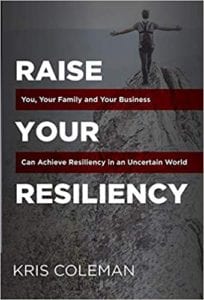
Raise Your Resiliency: You, Your Family and Your Business Can Achieve Resiliency in an Uncertain World
Both organizations spend hundreds of thousands of dollars to train new employees that are new special agents or new intelligence officers. A lot of that, as we said, is about critical thinking. It understands the psychology of who you’re talking to. It’s being able to empathize with who you’re talking to. When you are an active listener, whether you’re interviewing a potential criminal or you’re investigating a crime or talking to a victim, or perhaps trying to understand someone in an overseas country that may want to work for the US government and for the US government’s interest, you need to understand who they are, where they come from, what their motivations are. When you hear them talk, pick apart what they’re saying to you. Get every little bit and piece of the meaning and the nuance out of the conversation.
Whether you’re reading a piece or doing an interview or talking to someone, critically taking it apart and understanding its totality of what’s being said to you, what’s being communicated is important. We do that when we do our deliverables to our clients. We make sure that those things are very clearly articulated. We mean what we say, and we say what we mean and what we write. We can back it up. It’s not just, “When we went to this place, we saw these things, and we wrote these things down.” It’s like, “This is what this means, and this is why it matters.” That’s important. A lot of our products are like that, “This is what it means. This is why you need to listen to us.”
You’re connecting the dots, you’re not just reporting on facts. You’re putting it through the lens of, “Here’s why we recommend doing this or not doing that because of our in-depth understanding and ability to put ourselves in somebody else’s shoes.” This concept that critical thinking includes empathy is fascinating to me. I don’t hear a lot of people saying that. Empathy, storytelling, listening have been labeled sometimes as soft skills. Soft skills can make you strong. It sounds like that’s the direction that you’re also leading that when you have empathy, and you’re this example, that allows you to make those hard skills choices of taking action or not. Whether you can trust someone or not. Can you speak a little bit about how someone can build trust? What’s your red flag when you don’t decide not to trust somebody?
We were trained to look at a whole variety of things when we were talking to people, whether it was interviewing or eliciting information from a foreign source or whatever it might be. There’s a whole element of reading body language, eye contact. Are they leaning forward? Are they speaking in an active voice? Are they hanging back? Are they defensive by turning away? There’s a whole variety of things, eye movement. You’re taking all that in but depending on what your objective is, as the listener, are you trying to help them? Are you trying to recruit them to work for us? Are you trying to get them to confess? Whatever your objectives are of the conversation matter. You need to go into the conversation, knowing what you’re trying to achieve.
In normal daily life, you may not have an objective just to sit down and talk to a friend or to grab a coffee, but in a professional environment, knowing what your objective is and then using empathy to communicate non-verbally as well as verbally with the other person is important. If you want them to work for you, give you information, and collaborate, then that empathy has got to be there. “I understand your current situation.” “No. You need money or you need medical help or whatever it is you need.” In showing that verbally or non-verbally, they’re going to be more likely to collaborate with you, whether they’re a victim, an interview on a witness, or whatever it might be.
One of the services that you offer at Red Five is Private Family and Family Office Security. That’s certainly been in the news with William and Meghan talking about their own security. One of the things that resonated with me was it’s about trust, not about wealth, and that it’s about the mindset. However, you have a whole thing called Measured Risk Management. Can you explain what that is and why it’s important?
We’ve done a lot of work with private families. Since the inception of Red Five many years ago, we’ve been working with high net worth and families that consider themselves more private than others. Discretion is a huge piece of that. We trade and trust. That’s our currency. Our discretion, where we came from in those two organizations. How we know how to keep things quiet and be discreet is important. When you talk about trust, it’s not selling them things they don’t need. There was a big piece of that. There’s a lot of families that have this, “Are you going to give me the Smith family special price?” Which means they’re going to gouge me because I’m wealthy. The reality is we never do that.
[bctt tweet=”Critical thinking includes empathy.” username=”John_Livesay”]
We come in and say, “I know you approached us with an emotionally charged problem. This was happening in the family, or this happened to the state that we were in or while we were traveling, but it’s not my place to take advantage of that. It’s my place to solve the problem.” I will approach it in a way that says, “I hear you. I understand this is a problem. Let me provide you some solutions. What you’re telling me I should do as your vendor, as your partner may not be what you need,” that emotional, “I need a protective detail. I need ten people to protect my family.” You may not need that. It was my job to come in level-headed, take a look holistically at the situation, and give you a measured risk management response. You’re not paying for stuff you don’t need. I’m not taking advantage of the situation. I would never do that.
The approach may be that you’re wildly off in the emotional state of the solution you think you needed. You need me and my team to come in and go, “Here’s a measured risk management approach. We’re going to do A, B and C.” It’s not about men and women, earpieces, sunglasses, and suits standing around a black Suburban or a black Escalade. It is about us changing the process of how your domestic staff walks into the house or how you set up your travel arrangements so that people don’t know that you’re traveling. There are many things we can do that are below the radar in a relatively inexpensive that could raise the security of a private family. That Measured Risk Management approach is a big part of us, building that trust, then I’ll be displaying competence and delivering excellence.
It totally leads right into your expertise on resiliency, which can include safe rooms. I see that sometimes on shows and movies, but that part is real from what I can see on your website that certain families and situations do require a safe room. In a way, I never thought of it as a resilient thing, but it’s a backup. Ithas other options. For example, being here in Austin, when the power and the water went out, the airport closed, the roads were icy, didn’t have stuff going on, and the grocery stores were closed, you had a firsthand experience of, “There’s not a lot of resiliency. I can’t zig or zag here. The heat is up, there’s no water, there’s nowhere to go. I can’t fix this with money.” There are many situations of the need for resiliency over and above the pandemic that everyone is taking a look at a whole new way of looking at it. That’s your expertise, isn’t it? It’s analyzing what could go wrong so that there is something that you never find yourself in this situation that so many of us were in Texas when all that happened.
To talk about safe rooms, you’ve seen them in Hollywood movies. It’s this seven-figure, very expensive, extremely elaborate high-tech room that people run to when things go bad and it doesn’t have to be that. We operated in environments overseas where it’s going to be a closet that we throw a bunch of sandbags in on the lower level floor of a building in Bosnia during the war. We’re going to set up defensive positions, and that’s going to be the safe room. In Africa, we used to set up a whole floor of a house. It would be on the upper-level floor. We would have multiple layers of protection, a strong front door, in the hallway, at the top of the stairs, and at the bedroom.
We’re building into that detection element. Is there a problem than a delay element to slowing down, trying to get in the house? You have to get into this concept of neutralization of the threat. Ideally, by the time they’re getting to that 2nd and 3rd layer of the cavalry, it is coming over the hill and they’re going to save the day. Same thing with wealthy families. Not even the wealthy families and private homes in the US. We’re seeing questions and people are coming to us and saying, “We need a safe room because of the riots or because of some of the uncertainty in our neighborhoods.” That doesn’t have to be a million-dollar room. We can talk about simple upgrades to make that a safe room.
People don’t want to sell you that because it’s not expensive and not a big price tag, but it goes back to measured risk management. We’re going to build you what you need. To speak to Austin in the winter polar vortex for easy guys went through. I had a number of examples come in from my colleagues. They were like, “I am making sure my well though that it doesn’t freeze. I am boiling snow. I am working through two different generators to power the house to keep the well warm, keep the TV on, lights on, the refrigerator.” People were taking food out of the freezer and putting it in the front yard because it’s colder outside than it is in the freezer. There are smart things about that. It’s food, water, shelter and self-defense. We start there and make sure that all those things are taken care of by the family.
What that experience taught Texas and should have taught the rest of the country is that our electrical grid is very fragile, also our infrastructure and supply chain. We built all these things so they are efficient. You only get what you need right when you need it. You hit the button and it shows up at the front door. The reality is those networks and those supply chains are extremely fragile because they are at the last minute. They are built that way on purpose. What we need people to do when we talk about this in the book is if each individual family and each individual thought of themselves as resilient self-sufficient, the whole nation becomes more self-sufficient and more resilient. It’s a National Security thing if you ask me. The more families are resilient, then the more resilient we are going to be as a country. We’re looking at hurricanes, tornadoes, wildfires in the West, all those things drive resiliency. We need to be more aware and become more resilient.

Raise Your Resiliency: The individual is the cornerstone of resilience. As an individual, you have to decide to be resilient and learn to be if you’re not.
You talk about it’s time to get real in the book, Raise Your Resiliency. A lot of people is like an ostrich that we bury our head in the sand, “Let me know when this pandemic is over. Let me know when this crisis is over. I don’t want to ever pretend that there’s never going to be an earthquake in California again.” What I like about what you wrote here is it’s not just the business. It’s you and your family. Everything is connected. This virtual experience we’ve all been through, we used to be one person at work and another person at home.
Now, all that’s completely changed. We’re like, “This is who I am. This is me at home. This is me working.” Those lines have blurred, which increases the need for a book like this. We talked before the show that this cover is fantastic about somebody on the edge of a mountain and holding their hands out. It reminds me a little bit of our mutual friend, Alison Levine, who climbed Mount Everest, talk about resiliency and a mindset. How did you and your publisher decide on that image in that cover?
The premise of the book is that the individual is the cornerstone of resilience. If you, as an individual, decide you’re going to be resilient, and you can learn to be, if you’re not. That’s a key part of the book, but then if you’ve made the decision to be that, that means that those around you will have a chance to benefit from that. If you have a family, then you will then be that cornerstone for the family and the family is going to be resilient. If you’re an entrepreneur or a founder, or you work in an organization that is open to that, you can then be a key element of resiliency in that company or your own company, or perhaps, in a corporation. It could be a nonprofit as well. There’s an element there of the individual achieving resilience.
Getting to the top of that mountain and knowing that we’re going to get knocked back down. We’re not always going to be at the top. There will be people in adversaries and things that we refer to as the jackal that always tries to knock us down. It might be an illness, a divorce, a natural disaster, or a career setback, but regardless of the jackal coming at you, you’re going to make it back to the top. That is the whole core of adversity. The real deal of resiliency and is that you’re bouncing back from adversity. Whatever knocks you down, you get right back to the top of the mountain.
The speed at which you get back up is crucial. From other people I’ve interviewed about salespeople getting a rejection, for example, some people shake it off and move on. Some people keep holding onto that. The ability to get back up fast is like any other skill that we can practice. How important that is to model that for people in our world, whether it’s our family or our coworkers, is to not let something that’s knocked us down keep us down. Is that a good definition of resilience?
Yes. What we talked about is the mindset in the book. It’s one of the five pillars. The mindset is that there are no doomsday thinking. There is no catastrophic thinking like, “I didn’t get picked for the job because I’m this or that. I wasn’t as good as this person. I wish I had done these things.” The reality is it’s all about a positive growth mindset. When you have a setback, it’s like, “I’m going to learn from that. I’m going to turn right around, pick myself up, and get back up there.” That is an important piece. That was drilled into the US at the CIA and FBI. You’re going to have a bad day. You’re going to be confronted on the street.
You’re going to be attacked perhaps by terrorists, whatever’s going to happen to you. You’ve got to mentally be prepared to fight through the gunfight, to fight through the attack that you’re going to experience. We always talked about, “Get off the X. Something bad is going to happen.” Don’t sit still and let it happen. It’s much like a career setback. “Don’t just sit there and let it happen. Change direction, get off the X. If you’re moving forward, stop. If you’re sitting still, move forward, turn left, turn right.” The point is get away from that adversarial environment and move forward through the problem. That is the important key to resiliency.
[bctt tweet=”Get off the X. Get away from the adversarial environment and move forward through the problem. That’s an important piece of resiliency.” username=”John_Livesay”]
I literally experienced when the power went out here. I had a friend’s son visiting me. Suddenly, my responsibility for what I do is not just on what I’m going to do for myself and my choices that I would make for myself. I said, “Your mom will be mad at me if something happens to you while you’re here.” A friend of mine had called and said, “We have electricity. We’re about 12 miles away. If you can get here on these icy bridges, you can stay here. You can bring your dog and your friend. The house is big enough.” Thank goodness for all of that. It reminded me of that moment in the movie where you see people leaving their car in a storm. You’re like, “Should they leave the car?” I’m like, “Technically, we’re safe here in this place, but it’s getting down to 40 degrees inside.”
We decided to get off the X. We’re going to take the risk and drive without snow or icy roads. We saw some cars in the ditches. A truck went by and threw a bunch of snow on our windshield. It was not an easy, fun, 12-mile drive by any stretch of the meat. We are 20% of the way there. I’m like, “That’s all? It seemed like forever.” It was the right choice to make. You would rethink that if you were in the ditch and how long it would take somebody to come get you was a whole other choice. Do you have water in the car? That fight or flight response that you’ve been trained to not have, which is we are deer in headlights, and you freeze. This is a calculated risk, but the reward is worth it. That’s what I think you say about this get off the X.
That’s one of the things we talked about in the book is you shelter in place. What would you have done? Had you stayed, or did you evacuate to a place that appears to be, and by all reports, is safer? You’re making that judgment decision, “I’m safer here. I have a shelter. I have a defense. I have food. I don’t know how long the power will last or how long it will stay warm.” At some point, you may make the decision that it’s safer to take the risk, to travel to point B instead of point A. We talk about what you should have in your vehicle and what you should have at home, then what should be at the other location. If the other locations are predetermined safe place or location, we call like a bug-out location.
You’ve got a bug-out from where you are to get to where you want to be. What supplies are there? What have you already pre-positioned in that other location? Ideally, if they’re saying, “Come to our location.” They’ve got enough water, beds, power, food, and they are in a safe location. Now you’re making a judgment call that a travel element where you are now exposed to other things that you weren’t exposed that when you were at home is a smart choice. Those conditions will be different. Whether it’s a winter storm, a terrorist attack, an earthquake, a wildfire, the conditions will change.
That’s another one of the pillars is awareness. You have to be aware of what’s going on around you. It may not be that Facebook Feed that’s giving you the best information. You may need to turn to an actual news source that’s trusted and then use that or call someone, which we like is get information on the ground in that other location so that someone is telling you firsthand, “I saw this. This is the situation here where we are.” That awareness piece is another key pillar that we talk about in the book to resiliency.
There are five pillars that are in this wonderful book, Raise Your Resiliency: real awareness, real mindset, real fitness, real skills and real relationships. The one that we haven’t touched on that I think might surprise some people is fitness is an attribute of resiliency. I’m not probably ever going to have to fight somebody. We’re talking about stress. Fitness can include a meditation practice, anything to help you not “freak out,” stay calm, and not panic. That’s what your training has done. That’s what this book can help us become a roadmap so that we can not only raise our own resiliency but those around us.
Fitness, emotional, mental, physical. It’s not how much weight you can lift or how many miles you can run. It’s about your flexibility, endurance, whether or not you’re emotionally mature. Are you professionally mature enough to deal with what’s going on around you? That’s a big piece of this fitness. We talk about it when we get into the biophysical elements of stress. If you have poor physical fitness and/or emotional fitness and more poor mental fitness when that stressor hits, your body performance drops, and it usually drops below what we call the hard deck. That’s when you talk about deer in headlights. When you drop below that hard deck, your body dumps a lot of adrenaline in the system, and you typically lockdown. You are now the deer in headlights, and you can’t move.

Raise Your Resiliency: If you’re not resilient, then seek out scenario-based training experiences. Create muscle memory to do good things regularly and have it be an innate part of who you are.
You’re going to go to some level of paralysis. It’s more of an adrenaline lockdown. That’s when people, unfortunately, bad things happen to them. They died in place when things happened because they just froze. If you’ve got that fitness level tool to a higher plateau, where when that stressor does, you don’t drop below. You might go below but you come back quick or you drop down, you’re close, and you may be stressed, but you’re not freezing up. That’s where we were lucky to be fitness-wise. Mentally, emotionally, and physically, don’t drop a low hard deck. Keep your wits about you, and then move to the problem. Get off the X.
Your book and your company, Red Five Security, have never been more needed than they are now. I’m grateful that you and your team are out there helping us all. I highly recommend the book Raise Your Resiliency. Any last thoughts or tips that you want to leave us with?
What we talked about with people is that it can be a learned experience. If you’re not resilient now, if you’re not self-sufficient, you don’t see yourself as ready or prepared in your business, then seek out scenario-based training, experiences like we offer because you can read it in a book. You can do it a single time at a shooting range, but those aren’t training. Those aren’t experiences. Those are one-time things that you did that don’t embed and create muscle memory to do good things regularly and have it be an innate part of who you are. We want resilience to be learned, people to get experiences, then they’re immersed in the environment. They can learn from them and repeat the solutions, so the next time when it hits, they’re ready to go. That’s the ideal path or someone looking to be resilient.
My TEDx Talk is called Be The Lifeguard of Your Own Life. That’s what you’re preaching. Thanks so much, Kris. Thanks for being who you are in the world and for this wonderful book.
Thank you very much for having me.
Important Links
- Kris Coleman
- Raise Your Resiliency
- Red Five Security
- Be The Lifeguard of Your Own Life
- Private Family and Family Office Security
- Measured Risk Management
- Better Selling Through Storytelling Method Online Course
Wanna Host Your Own Podcast?
Click here to see how my friends at Podetize can help
Purchase John’s new book
John Livesay, The Pitch Whisperer
Share The Show
Did you enjoy the show? I’d love it if you subscribed today and left us a 5-star review!
- Click this link
- Click on the ‘Subscribe’ button below the artwork
- Go to the ‘Ratings and Reviews’ section
- Click on ‘Write a Review’
Love the show? Subscribe, rate, review, and share!
Join The Successful Pitch community today:
- JohnLivesay.com
- John Livesay Facebook
- John Livesay Twitter
- John Livesay LinkedIn
- John Livesay YouTube
Trustworthy: How The Smartest Brands Beat Cynicism With Margot Bloomstein
Posted by John Livesay in podcast | 0 comments

With competition getting tougher by the day, how can you make your brand stand out in the market? John Livesay has the perfect guest who can tell you which brands are doing it right and which ones are doing it wrong. He sits down with the creator of BrandSort, Margot Bloomstein. Bringing her book, Trustworthy: How the Smartest Brands Beat Cynicism and Bridge the Trust Gap, she highlights the importance of regaining the trust of cynical consumers through empathy and authenticity. While having the ability to understand and share the feelings of your customers is key, understanding yourself should come first. Margot then dives into the importance of knowing who you are as a company and brand so you can be in a better position to engage with audiences.
—
Listen to the podcast here
Trustworthy: How The Smartest Brands Beat Cynicism With Margot Bloomstein
Our guest is Margot Bloomstein, the author of Trustworthy. We get into conversations about which brands are doing it right, and which ones are doing it wrong, and why trust is so important as well as an interesting conversation around empathy. Enjoy the episode.
—
Our guest is Margot Bloomstein, who is one of the leading voices in the content strategy industry. She’s the author of Trustworthy: How the Smartest Brands Beat Cynicism and Bridge the Trust Gap and Content Strategy, with real world stories to strengthen every interactive project, as well as being the Principal of Appropriate, Inc., which is a brand and content strategy consultancy based in Boston. She’s a speaker and a strategic advisor. She works with marketing teams, leading organizations for the last several years. She’s the Creator of BrandSort where she developed the popular message, architecture-driven approach to content strategy. She teaches the content strategy graduate program at FH University in Austria, and lectures around the world about brand driven content strategy. Welcome to the show.
Thank you so much. I’m delighted to be here.
I always like to ask my guests their own story of origin. You can go back to childhood, school. Where did you get interested in this concept of trust and content and all that good stuff?
I’ve been working in the content strategy industry for many years, and over that time, I’ve had the opportunity to work with organizations in a pretty broad variety of industries in healthcare, retail and financial services. The common thread that I always see between all of them is this interest in meeting unsolved problems and identifying the problems for their audiences and their customers, and then figuring out how to combine what they offer with what their audiences need. My background before content strategy was in design focused on problem solving. That’s where my interest has remained over time. Our problems and our client’s problems have become more and more complex, but still, some of the tools that we use to meet them around establishing personal relationships and trading and empathy and compassion to meet their needs, those things haven’t changed.
[bctt tweet=”What responsibility do businesses have to care about trust? Why do trust and credibility seem like they’re under attack?” username=”John_Livesay”]
I am all about empathy. I’m always telling audiences when I’m in front of them about the importance of putting on your empathy hat, and the better you can describe a problem, the better people think you have your solution. What are you seeing in your work around empathy?
It’s interesting because in design, in content strategy, in the web industry and how we make the modern web, empathy has become almost like a buzzword in our industry. We talk about empathy and authenticity and transparency, a lot of marketing departments throw around those terms. Over the past several years as we’ve seen different social issues and different social movements come more and more to the forefront. Businesses are trying to figure out how they fit into them if they should comment on them at all. Empathy has become more and more of the latch word. I want to push back on that and say that sometimes empathy demands a level of arrogance of saying that “I can understand exactly your needs, even if I don’t have your life experience.” What we’re realizing more and more is that empathy maybe is a big ask for a lot of organizations, but let’s start with compassion and respect for our audiences first.
How did you come up with the name of your book, Trustworthy?
As I was looking at this problem of trust and seeing how cynicism and gaslighting were undermining the marketing and sales cycles in so many industries, I was starting to notice the brands that were doing it right, that were rising above and saying, “We can still combat cynicism. We can still establish rapport with our audiences. We can still build trust.” I want it to look and see what were the brands that were doing it right, and then figure out why, what can we learn from them, what can we unpack. In Trustworthy, a lot of what I profile are the organizations, brands, campaigns that are doing it right. It’s easy for us to find bad examples of organizations that are destroying trust and we can pile on them, but we don’t necessarily learn from them either.

Smart Brands: Empathy is a big ask for a lot of organizations. Start with compassion and respect for your audiences first.
What’s an example of one that you like?
They’re all my favorites in the book, but one of the ones that keep it much where we all are now is Zoom. When we look at how they’ve faced different challenges over the past several years, it’s a model in how you build trust. Starting back in probably December of 2019, they were seeing maybe 10 million daily users, 10 million daily business users. It’s mostly people coming from within businesses, within marketing departments, having meetings that were all supported by IT teams that were teaching them how to follow security protocols and set passwords. Within a few months, that all changed. Now they have something like 90 million daily users. People are using it that don’t have the support of an IT team. Every schoolteacher or preschool teacher, everyone that wants to get together with a happy hour with their friends over Zoom or celebrate a holiday with family over Zoom.
They’re not doing it with the support of an IT team. That’s when we saw the rise of Zoom bombers pretty early on in the pandemic and all sorts of problems around that. Zoom could have responded by saying, “You’re seeing problems because you’re using it wrong.” They didn’t. Instead, last April 2020, the CEO wrote this open blog post that came out as an apology to say, “You’re having problems with this? That’s our problem. That’s our fault. Thank you for noticing some of these security issues. We appreciate our critics calling out these problems. Here’s what we’re going to do about it.”
He phrased it first in the first-person singular saying, “I’m sorry,” and pivoted to that plural saying, “Here’s what we’re going to do about it.” Calling out his team and giving them credit. He proceeded to say, “Here’s what you can expect to see as far as changes from us. Here’s how we’re going to shift a lot of our engineering resources to support improving security and privacy. We’re going to submit to third-party audits. You can expect to hear from me at this frequency.” He was accountable. That way of building trust when he was at such a point of vulnerability, when the company was at such a point of vulnerability and in the public eye to say, “We’re sorry. Here’s how you can hold us accountable and here’s why things are going to improve from here.” That’s a model in building trust.
[bctt tweet=”Know what your organization is, who you are, and how you are so you don’t lose yourself when engaging with the rest of the marketplace.” username=”John_Livesay”]
The concept of building trust also comes into play for those companies that are trying to win back customers they’ve lost for whatever reason. I was working with one and they had said they didn’t make some deadlines. They were then let go for a year, then they had an opportunity to come back in and convince them to work with them again. I said, “What are you going to say?” They said, “We have all this research we’re going to share on how things have changed.” I was like, “You need to own that you caused the problem, even if it was other vendors and even if it’s the new team, you still have to own it.” What you said is so valuable. That’s why I want to underline it. You have to say, “Here’s what we’re doing to make sure this never happens again.” If you don’t have those systems in place, don’t even bother taking the meeting.
It sounds like you’re describing where a client was saying, “Here’s our new research. Here’s how things have changed maybe in the industry.” When you need to apologize, when you need to demonstrate accountability and show how you are responsible and ethical as a company, it isn’t about pointing to external research. You need to point the mirror back on yourselves and say, “Here’s what we’re doing. Here’s how we are changing.”
Texas was out of electricity and water. People want answers and they want to know what are you doing to make sure this never happens again? It’s not just a business thing. It’s a personal thing. It’s a political governing thing. This concept of trust is in the news.
Texas is a wonderful example. I had the opportunity to speak with someone in their Department of Public Works because I saw him tweeting in a personal way. It was a thread where he was saying, “Yes, this is a problem. I want you to know what I’m experiencing too in this leadership position. Here’s what went wrong. Here’s why we think we’re experiencing this problem. Yes, I am experiencing it too. Customer, as well as a leader here. Here’s what we’re going to do to make sure that hopefully we can right this ship now so that we don’t have this problem in the future.” I reached out to him because I said, “That’s wonderful.” I would love to see that level of discourse and detail and vulnerability as well as voice speaking in a way that your audience can understand. I’d love to see that from more public officials. We can learn from that. That’s what I would love to see moving forward.

Smart Brands: When you need to apologize, demonstrate accountability, and show how you are responsible and ethical as a company. It isn’t about pointing to external research; you point the mirror back on yourself.
You brought up something that if you can explain someone’s problem or their pain points, because you’ve experienced it yourself, your trustworthy factor goes up big time because you’ve been in their shoes. You also talked about that we should double down on qualities that we find that make us unique if we want to increase our social media engagement. The first question I’m thinking our readers will have is, what’s the quality that makes me unique? Let’s start there. How do we even find that?
As you mentioned, a lot of my focus within content strategy has been around brand-driven content strategy, looking at how organizations do identify, what makes them unique so that they can establish that consistent, cohesive, persistent tone of voice. When an organization does that, it does a few things. This is digging into ancient history, but that idea of gnothi seauton. It was carved over the door of the temple in Delphi. Ancient Greece, they said, “First, gnothi seauton.” Know thy self. Before you engage with anybody else, know who you are. In modern branding and modern marketing, we need to embrace that idea, know what your organization is, know who you are and how you are so that you don’t lose yourself when you’re trying to engage with the rest of the marketplace and prospective customers, prospective clients.
That idea of first figuring out who you are, that’s what I dig into around message architecture. A message architecture is simply a hierarchy of communication goals. I developed a tool called BrandSort to help organizations figure out is it more important for us to project that we’re innovative or traditional? We’re maybe witty and polished or scrappier and more creative, because knowing that can then help you determine which platforms should you be using. Where should you be investing your time? What’s the right tone of voice as well as then visually and verbally?
What’s the right look and feel and the color scheme and the style of imagery that projects those qualities? When organizations can first prioritize understanding themselves, then they’re in a better position to engage their audiences, as well as then differentiate better from their competition. I would argue it is a service that we offer our users, our audiences. It’s a service that we provide in saying, “It’s a crowded marketplace. If everybody’s competing with similar products, here’s how we’re different. Here’s how that we aligned with what.”
[bctt tweet=”When organizations can first prioritize understanding themselves, then they’re in a better position to engage their audiences.” username=”John_Livesay”]
Do you have a story from your book of a brand that does that well?
It’s one of the first examples that I have in the book. Writing this book was such a wonderful opportunity to talk with lots of different brands, hear their stories and gather up those examples because we all love the stories. It’s always good to get new stories from brands. One of the first organizations that I spoke with was Mailchimp, because in marketing, small business owners know them well. When Mailchimp first started out, they were a small business serving other small businesses. They’ve grown tremendously over time. Something like 60% of the world’s email marketing now goes through Mailchimp. As they’ve grown over time, they’ve offered new services. They’ve rolled out new offerings to their audience. That was always with a little bit of risk, because for their legacy customers, there’s always that concern of like, “Are you going to forget about me as you’re rolling out new eCommerce offerings? Are you going to forget about what I need and stop servicing basic email marketing customers?”
They’ve made choices to, first, solidify and codify what their brand means and how they manifest their brand. Their voice and tone guidelines are a model in the industry, and they’ve published them publicly so that other organizations can also see the level of detail that they document in them. Their design system, as well, is becoming more and more codified so that their content creators internally know where the guardrails are and then how to be creative within them. It helps them become more efficient and more effective. It also ensures that all their communication is more consistent. It’s serving their different audiences as well, because as they’ve grown over time, they’ve realized that there are parts of their brand that don’t scale or don’t make sense anymore.
It used to be that you would hear error messaging and calls to action in the voice of Freddie, their Mailchimp monkey, their little mascot. You don’t get error messaging from a monkey anymore though, but they have maintained other aspects of their brands, still the same sunny yellow, a lot of the tone of voice is still similar and it’s still consistent. They’ve varied other things around their illustration style, some of their phrasing. They’ve also varied it depending on the different audiences they’re trying to reach. Their guidelines document all of that, both to make things easier for their internal users, their copywriters and any freelancers that they might engage, as well as then their external audience. They know who they are, and they know how they’ve had to change over time to maintain visibility, a familiar face as well as then reassure their audience that, “Yes, we’re still Mailchimp, still the organization you’ve known and trusted for years. You can still make sure and feel confident that you know who we are and how we are and where we’re going.”
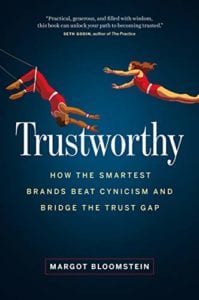
Trustworthy: How the Smartest Brands Beat Cynicism and Bridge the Trust Gap
You bring up a good point about the need to be evolutionary instead of revolutionary as you’re growing your business. If you’ve made your core customers feel they’re not seen and heard or appreciated trying to go after bigger ones, you can trip yourself up there.
Moreover, those customers need to feel both that they’re still important and that they still matter, but also that they know where you’re going. It can be as simple as strategically sharing your roadmap to build that buzz, but also so that people feel confident that, “This is a company I’ve known for a long time, and I know where they’re going in the future.” Also, by giving them hooks of familiarity so that you’re not relaunching your brand right now, you’re still maintaining elements of it that helps to maintain their confidence in themselves that they still know this brand. They feel like they can still trust this brand, that they made a good decision in going with this brand and investing with it. That’s especially important right now because there is so much upheaval in our world and in our economy. For organizations that say now is the time to relaunch, now is the time to completely overhaul our website, when I hear that, I shudder and my head and say, “No, now is not the time for revolution.” It’s more about evolution. Your audience needs to feel they still know you. If you can offer them that level of comfort and confidence in you and in themselves, that’s helping to ground them in a time that is so otherwise unsettled.
In your book, Trustworthy, you have a three-piece action plan. Can you give us the highlights of what that is?
The framework that I present in Trustworthy, it focuses on three parts, voice, volume and vulnerability. I present this as a framework for anybody that’s in professional communication. Designers, the CMO, copywriters, content strategists. If you’re the small business owner and you’re wearing all of those hats, great, this is something that you can take on. To build trust, you need to focus on those three areas. Voice, we’ve been talking about that a lot. Voice refers to the familiar and consistent way in which a brand engages with the world visually and verbally, so word, choice, the overall look and feel of the organization, the different content types you use across different platforms. That’s your voice. That’s what Mailchimp does so well. Some of the other examples I share like Banana Republic, the early days of that, they did so well.
[bctt tweet=”Be evolutionary instead of revolutionary.” username=”John_Livesay”]
The second section, volume, that refers to the volume of information that you’re publishing. The length and level of detail that you go into, in blog posts, in long form copy, if you’re deciding between long form copy and bulleted lists, as well as then, visually. Are you using images that maybe have a great level of detail in them, or are more streamlined to project the sense of simplicity? Do you have images that are maybe in 1 of 50 in a photo gallery or are things more streamlined so that people can get the gist more quickly? For some organizations, they feel like in order to build trust, they need to publish a lot. They need to have a lot of content marketing. That makes sense for some organizations. I profile in the book, Crutchfield Electronics, in order for their audience to feel good about a purchase, maybe it’s high-end audio equipment or camera equipment, they spend a lot of time on the site.
If you look at the pages on that site, they’re long. There’s a lot of different types of content there. You can make sure that you understand a product fully by the time you’re ready to buy because that’s what’s right for their audience. They know that it’s right. They can measure the success of that in the rate of product returns. They’re low because when people are finally ready to make that decision, they can make a decision with confidence. That’s how you know you’ve got enough content, when people can make good decisions and feel good about the decisions they make.
The third section, vulnerability, that focuses is, we were talking about on how organizations maybe prototype in public, come back from a big mistake, take that risk to say, “Do we double down on what we did that was maybe stupid? Maybe the CEO did something wrong or do we seize this opportunity to say we messed up. Here’s how we’re going to own it and here’s how we’re going to make sure it never happens again. Help us in this process, watch how we’re improving, keep giving us feedback.” It’s a tremendous opportunity to bring your audience closer.
The other way that I look at vulnerability in the book is also around how organizations make their values visible. One of the organizations that I profile there is Penzeys Spices. They’re a spice retail chain based in the Midwest. They’ve been bold talking about their politics, why they support immigration, why they oppose some of the other big intractable social problems that we’re facing now and their stance on it. When they first took to social media, sharing their politics, people pushed back. People said, “Stay in your lane there, spice boy. Why are you sharing this?” It was largely the CEO sharing his personal politics. He was pretty upfront about it. He said, “This is our lane. Not only are we a business that sees itself as part of a community, therefore issues in the community are important to us, but also the stuff that we trade in, spices, they come from war torn regions. Furthermore, cooking as an act of love, that’s not just our tagline. We believe that. Many of the recipes that we all love come here on the backs of immigrants. This is much our lane.” It was risky for him to take that position, but when organizations share their values in such a visible way, what usually happens is that people don’t look away. They respond loudly and they got a lot of headlines for that. They lost a lot of customers.
They expanded their audience. They gained a lot of customers, and they weren’t just people that were interested in cooking, they were people that said, “Your values align with my values. This is where I’m shopping next Christmas to get presents for my family. The people that I know that do cook, this is where I’m going to buy presents for them.” They saw something like 50% growth year over year in their profits after they got more political and made their values visible. It’s such an act of vulnerability, but more and more, what we hear is that people do want that level of insight into the organizations where they spend their money.
The book again is called Trustworthy. It’s available wherever you can buy a book. Any last thoughts or link you want to leave us with?
No, thank you so much. This was wonderful. If you want to learn more about it, please visit AppropriateInc.com/Trustworthy. You can follow me on Twitter @MBloomstein. I look forward to hearing how more people use the ideas in this book.
Thanks, Margot.
Important Links
- Trustworthy: How the Smartest Brands Beat Cynicism and Bridge the Trust Gap
- Content Strategy
- Appropriate, Inc.
- BrandSort
- @MBloomstein – Twitter
- Better Selling Through Storytelling Method Online Course
Wanna Host Your Own Podcast?
Click here to see how my friends at Podetize can help
Purchase John’s new book
John Livesay, The Pitch Whisperer
Share The Show
Did you enjoy the show? I’d love it if you subscribed today and left us a 5-star review!
- Click this link
- Click on the ‘Subscribe’ button below the artwork
- Go to the ‘Ratings and Reviews’ section
- Click on ‘Write a Review’
Love the show? Subscribe, rate, review, and share!
Join The Successful Pitch community today:
- JohnLivesay.com
- John Livesay Facebook
- John Livesay Twitter
- John Livesay LinkedIn
- John Livesay YouTube