

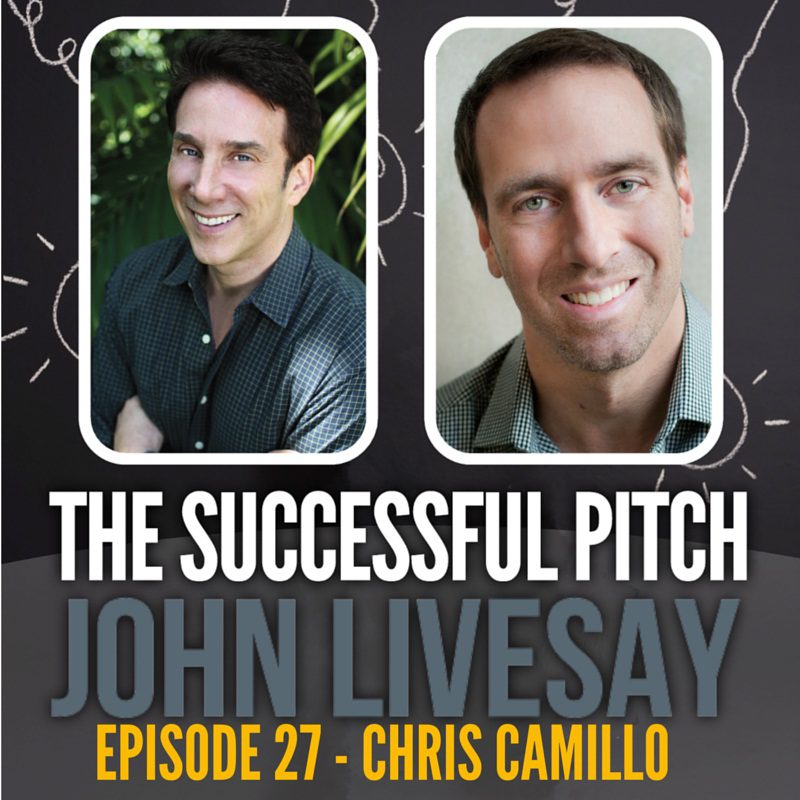
TSP027 | Chris Camillo – Laughing at Wall Street
Posted by John Livesay in podcast | 0 comments
Listen To The Podcast Here
Episode Summary
Chris Camillo has an amazing story on how he turned $20,000 into $2 million through investing wisely in Wall Street. He wrote a book on how he was able to identify game-changing trends before anyone else entitled, Laughing at Wall Street. Chris is now the Co-Founder of a recently launched product called TickerTags. TickerTags analyzes and searches for changing trends on social media based on user-defined keywords. Chris talks about TickerTags, raising $1.5 million at the seed round stage, and how he was able to spot trends before Wall Street financial analysts.
Key Takeaways
- 02:20 – Why does Chris love startups?
- 04:05 – How did Chris turn $20k into $2 million?
- 07:45 – Chris shares a story on how you can spot trends before the financial analysts do.
- 10:10 – Chris talks about TickerTags.
- 14:20 – It’s a fantastic time to be an stock market investor, because technology is making it easier.
- 16:35 – Chris talks on how he plans to monetize TickerTags.
- 19:40 – How did Chris raise $1.5 million at the seed round stage?
- 21:00 – You must establish yourself as a thought leader.
- 23:00 – When investors trust in your team, it makes it easy for them to invest.
- 24:20 – Every entrepreneur should plan to raise money from their customers first.
- 26:20 – When your customers turn into investors, you have traction.
- 29:00 – Always be upfront with your hurdles and know your competitors.
- 33:30 – Chris suggests to regularly read blogs and to keep up to date with the startup finance space.
- 34:45 – Sign up to TickerTags and mention you heard about them on this podcast to get past the waiting list faster.
Tweetables
[Tweet “All change is detectable.”]
[Tweet “Be upfront about your hurdles in your pitch.”]
[Tweet “Know ALL your competitors when you pitch.”]
[Tweet “Be a thought leader to get funding.”]
[Tweet “New investors are successful startups not bankers.”]
Links Mentioned
TickerTags
One Up On Wall Street by Peter Lynch.
Laughing at Wall Street by Chris Camillo
Chris Camillo Twitter
TickerTags Twitter
Want the Transcription?
Share The Show
Did you enjoy the show? I’d love it if you subscribed today and left us a 5-star review!
- Click this link
- Click on the ‘Subscribe’ button below the artwork
- Go to the ‘Ratings and Reviews’ section
- Click on ‘Write a Review’
TSP027 | Chris Camillo – Transcription
Posted by John Livesay in Uncategorized | 0 comments
John Livesay:
Today’s guest, Chris Camillo is the CEO and Co-Founder of TickerTags. Chris wrote a book called Laughing at Wall Street and tells a story of investing $20,000 in three years making it into $2 million. All about analysis of meaningful information before the main street knows what’s going on. So, if you get information on trends like the hot new Christmas toy, for example, then you would know to invest in that company before the stock would go up.
He has an exciting new company, TickerTags, which helps monitor conversations. He, himself, looks at 15,000 tweets a day to see what the trends are, if you can imagine, so he’s automated this process and anyone who listens to the podcast can be invited to use it for free as a beta customer this year, so that’s an incredible takeaway. I think you’re really going to be entertained and inspired by Chris’s success and he said, you know, most investors today are entrepreneurs like myself, not bankers, and we really want you to be upfront in your pitch about the hurdles you’re facing. Enjoy the interview.
Welcome to The Successful Pitch podcast. Today’s guest is Chris Camillo who is the CEO and Co-Founder at TickerTags. Chris has an amazing story starting with writing a wonderful book called Laughing at Wall Street. In 2006, he was able to leverage social media analysis to invest $20,000 in the stock market and in just three years grew it to more than $2 million. That’s an amazing story of success. Obviously he’s been covered in Forbes, in Business Week. Besides doing that, Chris was involved with eCarList and TrueLinkswear. He really is an expert in turning social conversations into market insights. Chris, welcome to the show.
Chris Camillo:
Thanks. I appreciate having me on.
John:
I just want to take a minute and take our readers back to what inspired you even before you wrote the book to get involved with high-tech and your first startup?
Chris:
Well, I guess you have to go way back, way, way back. I was actually, I graduated from college, moved to LA, I was in the film business for a little while and that didn’t go as well as I had hoped. It was 1999 and all these people were starting dot com, what we called them back then, right. Dot com businesses and I just wanted to be part of that, so I kind of said goodbye to my kind of aspirations to be a film producer and I got involved in a startup at age 21, I think it was, and I never left.
I got the bug. I think my entire career has been in startups and each startup I’ve had more accountability, responsibility, and a great equity piece, right, leading up to my last startup, which is eCarList where me and my co-founders own the entire platform and now TickerTag, which is again a new startup of mine where me and my co-founder started the platform, so it was a 20+ year experience, but we’re finally there doing it for ourselves now instead of doing it for others.
John:
How great. I love that your first pivot was before you were 21.
Chris:
Yeah. I’ve been like an entrepreneur since I was 11, so it seems like I’m way – I feel way older than I am.
John:
Well, tell us a little bit about this fantastic title, Laughing at Wall Street. What were you able to do with data that allowed you to take $20,000 and grow it into $2 million?
Chris:
Yeah, so when I was a kid, I had read a book by Peter Lynch called One Up On Wall Street and it was all about, he was one of the most famous, I guess you can say, mutual fund managers of all time who ran the Magellan Fund and a lot of his investing was based on hanging out at the mall with his wife and seeing which stores were crowded, which products were moving. I realized early on that on Wall Street or investing in general, it’s all about information.
So much in life is about information and capturing meaningful information early and doing something with it. Wall Street, that’s certainty the case on Wall Street, so if you were able to identify information that’s meaningful to a publicly traded company before the general public or Wall Street is able to identify that information, that’s the best way for ordinary person like myself or anyone else that’s not necessarily a financial analyst to do well in the market, right, because we can’t really compete in turns of fundamental analysis, there are thousands of intelligence analysts out there that crunch numbers everyday.
If you think you can do that slightly better than someone who’s been doing it for 25 years, you know, Harvard, Wharton graduates, these are smart people, right. I mean, how much better could you possibly do that. The one thing that you can do better is learning how to see things in your life and then associate those things to investment opportunities, because Wall Street spends a lot of time researching ordinary people, right, conducting market research. We’re living the research, right. They’re trying to get inside our heads, so the research that they conduct, there’s a lag in how long it takes them to understand if a product is trending or if there’s a cultural movement that can impact one or more stops.
I realized early on that I can do that myself and where Peter Lynch had to actually see physical people walking in and out of stores, because our generation has Facebook and Instagram and Twitter, I have access to all the world’s conversations in a way and I can read into them in real time, so it’s limitless as to what we can detect if we know what to look for, so I developed a methodology around that.
I called it social arbitrage investing and I just try to find things that would be important, either positive or negative, to publicly traded companies that haven’t yet been digested by Wall Street. I read 15,000 tweets a night. People don’t really believe that, but for the past three or four years I’ve been reading or scanning, I guess you could say, 15,000 a night just trying to get a sense of what’s happening that could be impactful for companies.
I developed a great methodology around that. It’s actually very easy. It’s something anybody can do. In 2010, I became the world’s topped ranked self-directed investors for $20,000 to $2 million. It was audited and being tracked by a portfolio monitoring service, that’s when I got a little bit of publicity and I had an opportunity to write a book about it. I did, it’s called Laughing at Wall Street and it’s about how any ordinary person can overachieve and really do things that even professional can’t in Wall Street.
John:
Chris, can you give us an example of monitoring either the tweets or the trends, positive or negative, of a specific company and how you were able to buy that stock low before it went high or sell it when it was high?
Chris:
Yeah, one of my favorite examples I think anyone can relate to and it’s not necessarily just tweets, but just monitoring the web and blogs and what people are talking about. In 2011, the top selling Christmas toy of the year was called the LeapPad, it was like an iPad for kids and it was made by a company called LeapFrog, an educational toy company that really hadn’t produced a hit product in 10 or 15 years, so in the fall of that year. I think it was late September or October, a lot of the Wall Street analysts and journalists had discovered that this was going to be the hot selling product of the year called the LeapPad and they all wrote articles and analyst reports talking about how it was going to be huge for the publicly traded company LeapFrog that made this product.
So, over the course of about a month, the stock doubled, so that’s great, but what’s interesting is a full month before anyone on Wall Street started talking about this investment thesis, there were a couple hundred mommy bloggers who were the first people in the world to actually receive the product. Well, those mommy bloggers were the people that started the conversation of this is going to be the hot selling Christmas toy of the year.
So, if you were able to come across that information when mommy bloggers were talking about it, three to four weeks before anyone on Wall Street had even knew what a LeapPad was, right, you could have purchased that stock well in advanced of that 100% move when the street started talking about it, right. So, it’s all about figuring out when the kids or the mommy bloggers or just the ordinary people are starting to talk about something before the financial analysts and journalists and researchers catch wind to it, right. That’s one of my favorites.
John:
That’s a great example and it really goes back to what you said earlier. Compiling meaningful information before anybody else gets it is what gives you the leg up. I think that’s a great tweet. Compile meaningful information before anybody else.
Chris:
Yeah and listen, I like to say that, you know, all change is detectable, right.
John:
Oh, that’s even better.
Chris:
All change is detectable, you just have to learn to see things that are happening and you have to know where to look, right, so that’s way now we’re working on this great, this is really the most exciting project of my life. We’ve been working on it for two years and we literally launched it this week. It’s called TickerTags and we have built a database of three hundred, we call the taxonomy of 350,000 tags. A tag could be a product, a brand, a person, a place, a cultural movement, like gluten-free is a tag, right. So, gluten-free is a tag for every company that either makes gluten-free products or makes products that could be harmed by the acceleration of the gluten-free movement. So, in the case of gluten-free, that’s one of 350,000 tags that we track on Twitter. So, we allow investors to monitor social conversations around that tag.
So, you can monitor, are more people talking about that tag today than today a month ago or three months ago or six months ago? Are the level of conversations accelerating or decelerating and are people talking about this thing in a more positive or more negative than they were in the past, that’s what TickerTags is. So, TickerTags essentially allows you to do what I’ve been doing for ten years manually and what Peter Lynch did 25 years ago manually. It allows you to actually automate it and see more, right, rather than doing a one off here or there.
You can actually look at hundreds of thousands of products or brands and people, literally, Kevin Spacey is a tag for Netflix, right. So, he’s the lead actor of House of Cards and God forbid if Kevin Spacey were to get hit by a bus tomorrow, how are we going to find out about that as investors, because that’s certainty a negative thing for Netflix. We could also wait until CNBC announces that and then Netflix stocks start to drop. In our world at TickerTags, since we monitor Kevin Spacey, we know what the normal level of tweets is every minute for the word Kevin Spacey.
So, the word Kevin Spacey starts to accelerate within 60 seconds of people tweeting he got hit by a bus, I just saw it, here’s a picture of it, and people are going crazy on Twitter. We will actually capture that acceleration and social chatter and within a minute, investors of Netflix can see something just happened to Kevin Spacey. I don’t know if it’s good or bad, let me look into it, but something is happening here. Rather than waiting for humans, journalists in this case, to connect dots, curate that into a journalistic story, blog, news report on CNBC, whatever, which takes as we know 10-15-20 minutes, right, for that to happen
John:
Sure, because they have to make sure that he is in fact hurt or dead before they go online. They need confirmation and in the world of stock investing, seconds, let alone minutes, are huge, because stocks go up and down based on rumors and all kinds of stuff, so if you have that information even 30 seconds before it hits the main stream media, you can adjust your investments accordingly. Is that accurate?
Chris:
That’s right and you know, sometimes it’s a few minutes and sometimes you have weeks in the case LeapPad, right? Literally the mommy bloggers were talking about it for weeks and weeks before the first financial journalist saw that and then was smart enough to connect the dots and write a story for the investment community saying that this was going to be a big deal for LeapFrog, right.
So, we try to build those associations in advance so when things happen, you’re able to see it in real time. So, when the Cuba embargo gets lifted, we had the word Cuba in the tag library for a South American airline called Copa Airlines and so in real time, you saw the world Cuba accelerating on Twitter and we showed you the companies that would be positively or negatively impacted by Cuba. So, it’s such a fun time to be an investor, because for the first time, information, we’re really democratizing information for ordinary people. It’s no longer, you know, Wall Street that has this information. I have to wait for them to give it to me after they’ve already traded on it. Now, ordinary people like us can see things on Twitter and Facebook and Instagram in real-time and in many cases beat the professionals to trading on it.
John:
You gotta love that. One of the things that’s interesting to me listening to you talk about TickerTags and this whole phenomenon is it’s very similar metaphor, because angel investors and VCs are trying to anticipate the next big trend on how they decide which startup to fund or invest in. They want to find that little needle in the haystack of I think this is going to be big and this founder has figured out something and if they have it based on any kind of research that validates their premise, then I want to jump on that, whether it’s something disruptive like Uber or just tweaking something to make it better. It’s…
Chris:
You just talked about TickerTags 2.0. It can monitor cultural trends and the startups that are positioned to benefit from those cultural trends or trending topics or whatever it is that people are talking about that’s happening in our world. They can see the companies that can benefit or be harmed by those things that are private, not necessarily public, but that’s until next year.
John:
When is 2.0 come out? I’m so excited for you.
Chris:
In the fall. We’re going to be announcing that probably right around the September time range. We’re working on it. We’re working on it.
John:
I’m sure. It’s fascinating to me that just was organic analysis and then you’re working on it. See, there’s a great example of something making sense when you do product extensions.
Chris:
Absolutely.
John:
Who is your ideal target for TickerTags now? Is it the investment community that wants to or is it other people, individuals? What, I see you’re solving your own problem of having to analyze 15,000 tags a night, is that who you’re solving the problem for? The investment community?
Chris:
Yeah. I’m a self-directed investors. I built TickerTags for myself. So, self-investors, we certainty can benefit from using TickerTags. At the same time, we’re talking to large investment bank institutions, quant funds, hedge funds, professionals, anyone that, any investor of publicly traded securities and in the future private companies as well will have to live on TickerTags. I mean, you can’t ignore the social data that’s impacting these companies, so one thing that’s interesting about TickerTags is we’re building it as an open public free taxonomy and it’s crowd sourced, so anyone can contribute to the taxonomy. So, if you’re on our platform and you’re like, this is great, but you guys should really add this tag for this company. You can suggest tag additions and we’re curate them into the tag libraries, but it’s completely free for the world to use. The only thing we charge for are private tags.
So, we have a tag library for Disney and one of the things I’m trying to figure out this summer, because I’m a Disney investor, is theme park traffic up or down at Disneyland, Disney World, Epcot. So, I’m tracking those conversations around those words. Disneyland, Epcot, Disney World, but those are public tags.
Anybody can see that and anybody can monitor that through our platform for free, but there are some private tags that I thought of that are more intricate than public tags that I’ve added like Disneyland in association with the world crowd or line. That would be Disneyland + crowd would be the tag and that’s proprietary to me. I guess no more because I’m talking about it, but proprietary to me and anytime somebody tweets, “God, the lines are so long today at Disneyland.” Or “Wow, Disneyland is really crowded this morning.” We could see those conversations with those words are happening more often this summer than last summer or less often, right, which is a great social signal to help us try to figure out is Disneyland having a good summer, is it more, are they selling more tickets?
So, we charge for private tags, but the public taxonomy, which is huge, is completely free. The more people that use it, the more people that contribute to it, like Wikipedia, the smarter it gets and the better it is for everyone. The cool thing is we’re in beta all year. So, anyone that signs up for our beta actually gets private tags for free too this year. So, really, the whole thing is free this year.
John:
Wow. So, eventually that’s how you’re going to make your money, you’re going to monetize it through the private tags, is that what you’re..?
Chris:
Yeah. As you can imagine, the quant funds and the institutional users really want to develop these private libraries that are proprietary to their firm or their fund and they’ll think of their own things like Disneyland + Line, they’ll have lots of their own private tags and that’s how we’ll monetize the platform.
John:
Fantastic. Have you had to pitch this concept to get users or to pitch this concept to get investors? Where are you in that stage?
Chris:
Yeah, so I think one of the, we have, we’ve raised a million and a half in a seed round recently. We self-funded the company initially. We just raised a million and a half seed round.
John:
Congrats.
Chris:
Thank you. I had never done that before. Our last company was founder financed. We exited through a publicly traded company. It was interesting to have a real bootstrap company that we never had to deal with outside investors, but TickerTags, we’re trying to do this a big larger. We’re doing a very large A round right now that we’re in the middle of. My process for TickerTags has really been first establishing myself as a thought leader in this niche that we’re in. Social investment analysis.
This is my life, right, and I think that’s been a big part of my success in being able to raise capital. I did this for myself. I had a big track record in social arbitrage investing. I wrote a book about it. I speak about it regularly. Every few weeks I’m speaking at a conference. So, TickerTags for me was the natural extension of my thought leadership on the subject and what I thought the industry needed. So, there’s a huge degree of trust there and that’s helped a lot.
John:
I just need to pause for a second, because that is extremely valuable to the listeners. If you want to get a million and a half in the seed round, you must, must establish yourself as the thought leader of why you, why are you uniquely qualified to take this idea and run with it. That’s what the investors want to know more so than even the idea, because you might end up pivoting. They need to know why you and you’ve done an excellent job from your book and speaking and all those social media things that you do to really establish why you as a thought leader and, I love your insight on this, does that give the investors confidence when they’re looking at the barrier to entry to any potential competition that might come for TickerTags is, well, they don’t have you.
Chris:
Yeah, it absolutely does. I think, by the way, I’m an angel investor as well, so I kind of play both sides. I think most early stage investors will tell you, they’re investing in two things. They’re investing a concept that they believe in, but they’re also investing people they believe can execute on their vision, right, and that’s almost most important, because usually there will be competitors and you’re really investing in the team that can execute on the vision and also the team they believe will have the ability to continue to raise money as the company needs to raise funds because they will be the a-list time for whatever that niche is, whatever that product category is.
You know, we like to believe we are that team for this niche. You know, when we’re raising money for a large A round now, we’re going to our potential customers and/or partner companies. So, the larger Wall Street firms that are talking about patterning with us, the larger funds that are going to be our first clients.
They are also our investors. If you have a product that truly makes sense and I’m a huge fan, just a huge proponent of crowdfunding in general. I don’t know that we’ll crowd fund TickerTags necessarily, but we kind of are in a mini way by taking these institutional clients and partners of ours and they’re the ones that understand our story better than traditional VC firm, because they get the value, they see the value in it. Obviously, they should want to invest. I think that’s really important.
I truly believe that when you have a concept that truly makes sense and you have the right team and you’re executing, the investment piece flows so naturally, people will push you. You know, we’re having people inquire to invest in us daily, because the story resonates with them and they’ve taken meetings with us and they believe that we’re the right team to execute and then the investment, you don’t even have to ask for investment. I think the investment comes up naturally in those conversations.
John:
I use the analogy of landing an airplane. You know where you’re going to go and it’s natural as well. Now it’s time to land. It’s time, the fact that you’re able to get your new customers to also be your investors, that’s the most proof of concept that anybody could hope to get.
Chris:
I think it’s important and I think every entrepreneur should go into, should plan to raise money from their customers, whether they do or not is ultimately – because a VC could always step in or a big investor can step in and make things easier for them, but in the back in my head I always knew that worst case I would have thousands to tens of thousands of self-directed investors like me who would see the value in our platform and if I have to, I would just crowd fund this.
I will crowd fund it with people putting in $500 to $2000 and I’ll raise 2-3-4-5 million that way if I have to, because if you have a product that resonates, someone has to buy it, right, whether it’s a service, platform. Someone has to use it or buy it, so those people should be willing and fortunately, now the laws have changed the last couple of years. We’re not quite there, but we’re getting close to crowdfunding. It’s not as easy or as inexpensive as we like it to be, but certainty over the next few years crowdfunding is an actual option for entrepreneurs and is long as you can get a 1,000, 2, 3, 4,000 customers or theoretical supporters of your product or brand, go with them. Go to them.
Here’s the funny thing. You don’t have to raise 2-3 million from those people. If you can raise a decent amount of money from a couple thousands perspective customers or users, take that to an angel investor. Take that to an early stage angel investor. Take that to an early stage VC firm and go hey – because we’re always trying to figure out, well, is your product really going to resonate? I mean, are you going to be able to get traction? If you can show us that you have hundreds or thousands of customers who have invested $2-3-4-500 each in your platform that does the vetting for us as early stage investors. That’s what the real investors want to see.
John:
It’s the ultimate traction, isn’t it? It’s the ultimate proof of concept. I think the ideal tweet is, when you customers become your investors, you’ve got traction.
Chris:
That’s right, then you really have customers, you have more than customers, you have investors for your product and that’s what we want.
John:
Right, it’s like the people who first started falling in love with Starbucks, for example, and said, oh my God, I love Starbucks. I see a line. I go everyday, I’m going to buy the stock, right. They become the customers and investors on a much bigger scale. Let me ask you Chris since you’re also an angel investor, did you get asked any questions during your pitch for the seed round that you weren’t anticipating or that you thought, oh thank God, I have an answer prepared for that?
Chris:
You know, it was a fairly easy seed round, because all of my investors knew me and knew my track record, so it was fairly easier, but a lot of them, you know, a lot of them did ask barriers to entry competition. Listen, my investors send me articles every two days with another social, I just read this company in the journal. They’re a threat to us. You know, in most cases, those are our potential clients and I know the founders.
So, investors are constantly worried that there’s someone else out there that’s already doing what you’re telling me you want to do, whether we know them or not and they’re better and they’re bigger, they have more money behind them, they’re smarter. Whether they say it or not, that’s what they’re thinking, that’s what I think, right, when I’m investing, of like, I invested in a real estate startup and I started betting on the technology and there were like 600 real estate technology companies and startups. It’s just amazing how many startups there are today versus five, six, seven years ago. It’s so easy to start a company, right, that’s why execution is so important.
John:
Execution. Well, I love what you said, because that unspoken question that an investor has is key for founders to have in their head, so answer it during your pitch. If you only have ten slides in ten minutes, address that issue so that they don’t leave with that question or don’t feel comfortable asking you the question or certainty be prepared to address what the barrier to entry is a very key factor, because everyone is assuming in their head, well, TickerTags is going to be Uber versus Lyft, right?
Chris:
Yeah, exactly. Address your hurdles and I’d say, you know, transparency is key. When I have someone who is pitching me and they’re very upfront about the hurdles the company has and the competitors and they’re like, these are all of our competitors and I always tell someone if I find a competitor that you haven’t told me about that you don’t even know about, that’s a huge red flag for me, because it tells me that you truly are not the thought leader expert in your space.
You should know everyone in your space, right, you should know them backwards and forwards. Not necessarily to do what they’re doing, but you should be so intrenched in whatever your little vertical is that you’re building that you’re living and dying that vertical. I’m so intrenched in my world, if I find out about a conference that I haven’t been invited to be on a panel. I’m calling up, I’m like hey, you know, I’d love to be a panel. I’d love to be part of this.
I want to be on everyone’s radar that is touching the space that I am in and I want to know about everything. If there’s a new startup in my space, I want to know who they are, what they’re doing, and I pride myself on that and I expect that out of other entrepreneurs and I think as an entrepreneur today, you have to understand that most early stage investors were not bankers like it used to be 15-20 years ago.
John:
That’s great.
Chris:
We’re not like financiers. Most of us are entrepreneurs ourselves that have had one or more exits. Now we’re still entrepreneurs, but we’re also investing in other entrepreneurs. Why? Because it’s all we know and we love it and enjoy it and it’s just our world, but we have high expectations for what we expect out of others, because you know, we’ve done it and we’re probably still doing it in the case of me. I’m doing it all over again and I expect to do all the stuff I do.
John:
I mean, you’ve given us so may great takeaways. Most investors today are entrepreneurs, not bankers. We’re going to tweet that out. Be the expert in identifying all of your competitors and certainty be upfront in your pitch on all the hurdles you’re facing. Those are such great takeaways. One quick last question about do you anticipate being very different from the seed round to the series A that you’re going into? Are you preparing any differently? Do you anticipate more people who maybe don’t know you as well or more competition?
Chris:
Yes, totally different. Totally different. This will be my first A-round, so I’m still learning, but it is much different, it’s a larger A round, the vetting process is different. I’m only half way through it. So, I’m still learning, but certainty it’s still ultimately about those two things. It’s about proving that you have the right concept and proving that you have the right team to execute on your vision. I think those two things don’t change. A lot of the ancillary stuff, you know, the pain in the butt stuff.
A lot more paper work, a lot more people, a lot more conversations, but those don’t change and I would like to mention for TickerTags anyone can go on TickerTags.com and sign up for early beta access. If you mention the podcast, we do have a wait list, but if you mention the podcast, you know, we’ll get you in on one of our first, next couple of beta invites that we send out over the next couple of weeks and then also Laughing at Wall Street is a book that I wrote a few years ago that anyone, I don’t care what your background is, what your financial attitude is, you can become an amazing investor.
Laughing at Wall Street. I tell you the stories. It’s a book that’s very easy to read. I tell you the stories from the time I was 11-12-years-old and how I learned to identify trends on the street and how I was able to associate those trends with investable opportunities and I think it’s a bout that people will really enjoy no matter what place in life you’re at.
John:
Well, we’re definitely going to put the link to your book in the show notes and a link to TickerTags and thank you for your generous offer to let our listeners be investing for the beta. I know the listeners do as well. Is there any other book besides Laughing at Wall Street that you would recommend to startups – someone in the pitch world to read?
Chris:
Yeah, I mean, there are so many. I think rather than books, I would really just regularly read kind of blogs and just keep in tune with the startup finance space. You know, whether it’s reading VentureBeat. Just really understanding what type of companies are getting financed. Who’s financing them, you know, I just love Googling everything from how to pitch to how to answer certain types of questions, what to expect, deal terms. I mean, it’s changing all the time, right, so books get updated almost immediately. So, I Google everything. I’m constantly reading the most current blogs on every little subject to raising capital.
John:
So, how can our listeners follow you? Do they just go to TickerTags.com to be invited?
Chris:
Yeah. They can follow me @ChrisCamillo on Twitter or @TickerTags if they want to follow TickerTags, but either me Chris Camillo or TickerTags on Twitter is really the best way to follow us and I would say sign up for TickerTags. It’s open and it’s free, so just join the community.
John:
Fantastic. Chris, you’ve been a great guest. Thank you so much for joining us today.
Chris:
Thank you. Appreciate it.
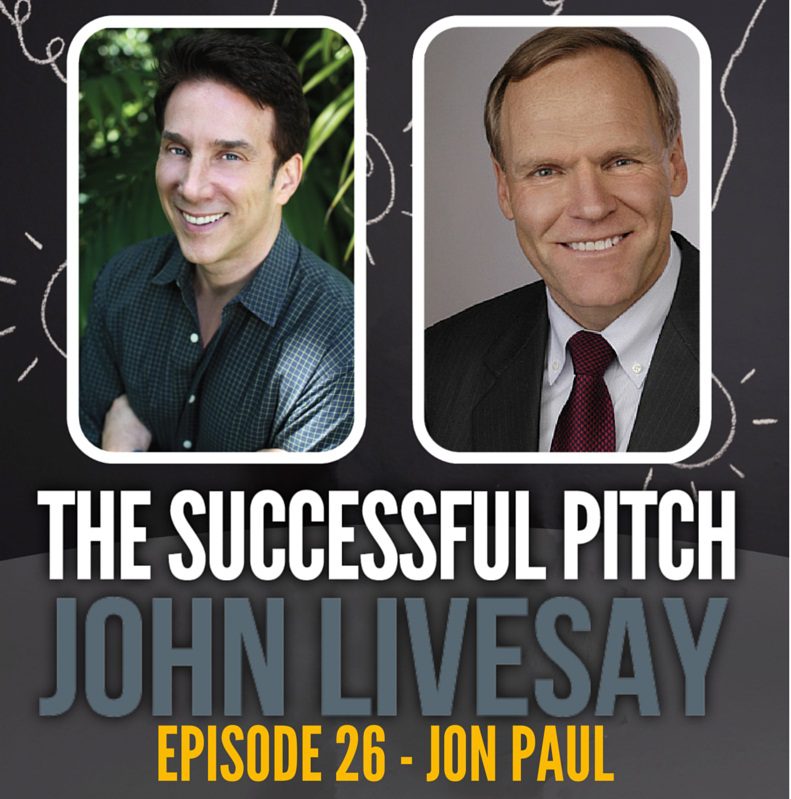
TSP026 | Jon Paul – Harder Faster Cheaper Is Not A Change In Direction
Posted by John Livesay in podcast | 0 comments
Listen To The Podcast Here
Episode Summary
Jon Paul is the CEO of Value Added Finance Resources and brings an incredible amount of experience to this interview. Jon has turned companies hitting rock bottom around to multiple million dollar revenue streams. He prevents entrepreneurs, nonprofits, and startups from making key mistakes that could ruin their success as a business. Jon talks on several different ways you can value your company and how you can prevent a down round from happening on your second round of funding.
Key Takeaways
- 02:10 – Harder, faster, cheaper is not a change in direction.
- 03:15 – What’s Jon’s background?
- 06:55 – Jon talks on helping a telecom provider grow their stock from $2 to $65 in two years.
- 12:45 – How much equity should I gave a CTO or someone similar?
- 14:30 – How do you value a company accurately?
- 19:15 – What’s a down round?
- 21:05 – How can you prevent a down round from happening?
- 23:45 – Tips to keep in mind when pitching?
- 28:45 – Founders need opposite partners. Example: The risk taker who has someone to watch his back.
Tweetables
[Tweet “You need to start even if where you end up is not where you think you’re going.”]
[Tweet “Harder faster cheaper is not a change in direction.”]
[Tweet “Early investors should get rewarded the most.”]
[Tweet “Startups need yin and yang on the team.”]
[Tweet “Learn from the past, but look forward.”]
Links Mentioned
Disrupting Class by Clayton Christensen
The Innovator’s Dilemma by Clayton Christensen
Competitive Strategy by Michael E. Porter
Blink: The Power of Thinking Without Thinking by Malcolm Gladwell
Freakonomics
People Smart in Business by Tony Alessandra and Michael J. O’Connor
Content Chemistry by Andy Crestodina
Value Added Finance Resources
SmartScholar’s Economics Education Resource Guide
Want the Transcription?
Share The Show
Did you enjoy the show? I’d love it if you subscribed today and left us a 5-star review!
- Click this link
- Click on the ‘Subscribe’ button below the artwork
- Go to the ‘Ratings and Reviews’ section
- Click on ‘Write a Review’