

I’ll Be Back With Shep Hyken
Posted by John Livesay in podcast | 0 comments

How do you get your clients to say, “I’ll be back”? Renowned customer service and experience expert Shep Hyken believes that delivering an amazing experience is what keeps customers coming back for more. With this in mind, Shep has managed to work with companies and organizations that want to build loyal relationships with their customers and employees. He sits down with John Livesay in today’s episode to share how his upbringing instilled in him the values that are essential in the service industry. Listen in and learn more as Shep discloses his secrets on how to turn repeat customers into loyal customers.
—
Listen to the podcast here
I’ll Be Back With Shep Hyken
This episode’s guest is Shep Hyken, an expert in customer service and the author of I’ll Be Back. He said that repeat customers are different than loyal customers. Find out what he means. Enjoy the episode.
—
Our guest is Shep Hyken, a customer service experience expert and keynote speaker. Shep works with companies that want to build loyal relationships with their customers and employees. His focus is on delivering amazing customer service, engagement, managing the customer experience, and creating loyalty. He is a Hall of Fame Speaker and a New York Times and Wall Street Journal Bestselling Author. His new book is I’ll Be Back.
—
Shep, welcome to the show.
It is great to be here. One day, I will get to say I am back. Will you have me back? We will find out at the end of this show, won’t we?
That is what is known and storytelling is an open loop. We are already creating them, so take us back if you will to your own experience of getting involved with this. Were you a child that had bad customer service and went, “I am going to fix this,” or did you start thinking you were going to be something else? How did this customer service business come about?
There are two pieces of the story. The first one was when I was a child. At twelve years old, I started my first business. I was a birthday party magician. I would do magic tricks at birthday parties. The first show was on a Wednesday after school. My mom picks me up and takes me over to these people’s homes. I am there in front of 25 screaming little six-year-old kids. I do my show for about 30 to 45 minutes and collect a whopping $16. It was $15 plus a $1 tip. When I came home, my mom said, “What are you going to do after dinner?” It was a school night. The typical answer is my homework. She goes, “Not until you write a thank you note.” I go, “That is a good idea.”
That was a great customer service lesson. I did not realize it. My parents raised me to always say please and thank you and be polite, but she wanted to emphasize that. Even though I had said thank you on the way out the door, maybe a follow-up would be nice. My dad said, “That is a great idea. After they have received the thank you note, by next week, why don’t you give them a call and thank them again? Ask them, ‘How did you like the show?’”
Get some feedback. Find out if you did a good job, and get specific. Ask them what tricks they liked the best. If you do this enough times, people start to say the same tricks and won’t mention some of the tricks. You will notice a pattern. Those are the tricks you get rid of and replace with tricks they will talk about. I was like, “That is a good idea.” That is exactly how my whole entry to customer service got started. I had no idea that is what it was called, but later on, I found out.
It was ingrained in me from even much earlier than that. As I said, I was told to be polite and say please and thank you. I am a people pleaser and that helps if you are in the customer service world because some personalities are meant to take care of customers. Some people are meant to work on that frontline or call center. They live for taking what I call moments of misery, those complaints, and turning them into moments of magic. I might be one of those people.
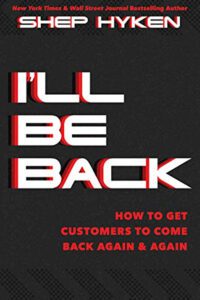
I’ll Be Back: How to Get Customers to Come Back Again & Again
When I was about 19 or 20 years old, I was working at a gas station while I was in college. This was many years ago. Even though we were a self-serve station, we did not have the computer where you paid outside, come in, and get your receipt. We had to stand on the lot, reset the pumps manually, and make the change right out there. Even though the customer pumped their own gas, we walked around with a wad of cash, and I had a little metal changer on my belt, and I made the exact change.
One very cold day, I asked a woman who was elderly who I had seen in the station before. She was probably about 85 or 90 years old. She was pretty old but still driving. I said, “Let me pump the gas for you. It is a little cold.” I thought that was the right thing to do. I go inside and my manager goes, “What did you do?” I go, “I am not sure. What did I do?” He was like, “I saw you pumping that lady’s gas.”
I was like, “Yeah. I did that.” He was like, “Why did you do that?” I was like, “She is 90 years old. It is six below zero outside. It is pretty cold. I had to be out there. Why not let her stay in the car?” He was like, “Now, she is going to want it the next time.” I go, “Maybe she will come back here instead of the gas station across the street or the one on the opposite corner.” He gets mad at me, walks out, and slams the door. All I knew at that moment was that I was right and he was wrong. I have been living my life ever since.
I get out of college and I am looking for something to do. I see a couple of motivational speakers. I think, “I can do that. I am going to talk about customer service.” Within one year out of college, that is exactly what I was doing. I was doing speeches and talking to the companies that I was working for about how to deliver a moment of magic. I have been talking about creating that magic and avoiding misery for years.
I love that your twelve-year-old magician has created a career where you help companies turn unhappy customers into satisfied customers through a moment of magic, what a wonderful through-line of a hero’s journey there. Let’s talk about some of the clients that have hired you to come to speak to them. Let’s start with American Airlines.
I love American Airlines. I realize the airlines have a tough goal, but I have been with that airline and I have worked for the airline for years. Before that, I worked with TWA, Delta Airlines, and Southwest Airlines. I have had the privilege of working with these companies. The airline business is tough because it is very hard to make a customer happy when there is a delay that the airline or the customer has no control.
It could be bad weather or more traffic than usual. There are all kinds of things that could go wrong that can make your trip not perfect. The fact that if you get the right person, it does not matter whether or not they show up on time but eventually get there. If you get the right person, they take great care of you. If you get the right person on the phone when you have a problem, it is amazing how well you feel about that airline. I know you are looking at my list. There are American Airlines and American Express.
That is the other one I wanted to ask a question about, but before we jump off the airlines because I worked for TWA as a ticket agent when I was in college at O’Hare, the training I went through to be a part-time ticket agent was incredible. They always asked, “Did you shine your shoes?” They always made the appearance important. They also had the ability to answer people’s concerns and anger. They stand on the wrong line because they did not read the sign.
Create experiences that people will talk about. Click To Tweet
This is not a place where they sell tickets, check bags or whatever the issue is, or wonder how much sleep the pilot got. Those are the kinds of questions you got. People’s anxiety about flying would manifest in different ways. It could be being tapped on the shoulder while you are standing at the urinal in your uniform asking, “What gate is this?” If the employees feel like they are not being treated right, it will trickle off into the passenger experience.
Which airport were you at?
I was at O’Hare.
I was in LaGuardia, New York, one day, and this was back in TWA. There is this flight that I was on that was canceled. Everybody is getting put on to the next flight. The guy in front of me says, “Are you going to feed us? I was going to get a meal on my other flight.” The lady says, “We will have a meal, but you are going to have to feed yourself.” She smiled and laughed. His exact words were then like, “I am being a jerk, aren’t I?” They were close to the exact words. She goes, “I am not going to judge, but I am happy to put you on your next flight and I will make sure that there is a meal for you to eat if you would like to.”
You have to roll with it and have a sense of humor.
She was so funny and then I walked up to her, and I went, “Can I have a meal too?” She was so nice. That is the thing. You get people that are very difficult to deal with. I remember I was at O’Hare and this was many years ago. When you are a high-ranked flyer on their frequent flyer program, you get privileges. One of the privileges is you get to fly standby, and when you fly standby, they put you on the standby list. Based on the seniority of your frequent flyer status, they put you at the top. The guy said to me, “I am not going to put you on here. We already have too many people on standby. You are not going to make it.” I said, “I am the highest level flyer.” He goes, “Do you want to jump in front of everybody?” I go, “That is exactly what I want to do.” That is the privilege of spending all your money on one airline.
That is what I wanted to talk about. Your book is perfect. When I have maybe more convenient routes or a cheaper fare, but I want to build my points with one particular airline, then that is what keeps me loyal for the potential upgrades with miles or whatever it is.
I write articles about this all the time. There is a difference between a repeat customer and a loyal customer. This is right out of the book I’ll Be Back: How to Get Your Customers to Come Back Again & Again. One of the things I talk about is there is nothing wrong with repeat business. We need to go for it. It is really important. However, to create true loyalty would be for the airline to say, “We are getting rid of the frequent flyer program and we hope that you stay with us.” If you get rid of the free upgrades or the free trips, would that passenger says, “You are good enough to keep me?” That is loyalty.

Loyal Customers: Some personalities are meant to take care of customers, and they live for taking moments of misery and turning them into moments of magic.
A lot of times, even though we call this a loyalty program, it is really a marketing program. It is a way to get perks and points or perks and miles. If you think about those perks, the more points you get, you get a free ticket. What that really is is a discount program. To put it in a more simplistic term, if I go to a restaurant and they give me a little card that says, “Come back here five times and the fifth sandwich is free,” that is like a 20% discount card.
There is nothing wrong with repeat business and giving out the perks to give you discounts or free whatever, but recognize it for what it is. The goal would be you want to create both loyalty, which is an emotional connection, as well as the desire to do business because maybe they do take care of you in such a way. The combination of the two is unbeatable, but the moment you focus just on points, the company that has a better point program is going to win.
I do love American Airlines. They are my airline of choice. They do take care of me and there are times that I hate all airlines. There is no doubt about it. Things happen, but I realized that most of the time, the things that happen are not the person at the front desk control. I have had bad flight attendants. I had one flight attendant many years ago when they were cutting the salaries of people. It was sometime after 9/11.
She was not being very friendly. The person next to me was another flight attendant sitting there. She was deadheading, meaning they were going to another city. They are not in uniform. They are dressed in street clothes. I said to the woman that was working, “Are you having a bad day?” She goes, “They’ve cut my salary, so I am not going to try as hard.” I looked at the person next to me who worked for the airline and she goes, “I can’t believe she said that to you.”
What is interesting about these points or loyalty programs is there are different levels, but you have to qualify. If you flew an X number of miles, then you get up to platinum, executive platinum, etc. I find that mindset fascinating. That ties me into American Express, another one of your big clients. Now, American Express has a premium associated with it. They do the same thing where there is the green, the gold, and the platinum level.
There is also the black card.
The levels of the prestige of everything are fascinating for people trying to impress people at a restaurant.
Here is what is cool about the AmEx card. They did a change that I don’t like, and I have let them know I am unhappy. I am one of those people that never publicly say what is on my mind because I realized I represent a lot of these brands. They changed something, and I wanted to understand why they did it. I understand why they did it, but it is not in sync with the highest level. The highest level is black, but the typical high level most people have is that platinum card.
Your last customer impression should not be a survey. Click To Tweet
It costs $600 a year to buy that card. I use it for FedEx now. I get 10% off FedEx. That almost pays for my card at the end of the year. In addition to that, they give you $200 in airline credit for miscellaneous fees, which could be everything from baggage to flight change fees to an American Airlines wireless. They reimburse you for your TSA approval for your global entry.
I get $200 back when I buy a Dell computer. At the end of the day, not only did all the points accumulate, but I also made money on this card. The American Airlines card that I have, which is a MasterCard, is a point card. The reason I like to use that for certain things is the points go toward miles. It used to be that every mile I have on American Airlines was because I flew it. Now, they said, “We don’t care how many miles you fly as long as you spend money on our airline or our card.”
To get an executive platinum card, you have to spend more than $200,000. They don’t even give you miles. It does not matter if the flight from St. Louis to Chicago is 250 miles, but if it costs you $1,000, they give you 1,000 points times a premium for your status. It is a little higher if you are executive platinum and a little lower if you are gold, but you earn the points.
Anyway, it is a different program. I am not sure I like it or don’t like it, but it is interesting the way credit card companies, airlines, and different companies are working toward creating what they term loyalty, but it is really the repeat business. Even Amazon and Walmart are going head to head trying to create loyalty, and the way they are doing it is by charging you to be part of their program. This is brilliant thinking. I am a member of Amazon Prime. The direct competitor of that is Walmart+.
Walmart+ gives you free grocery delivery and whatever other perks they have. Amazon Prime gives you a number of other perks as well. The question is, which do I like? No matter what, I am paying either $99 for Walmart or $129 for Amazon. I want to get my money’s worth, so what am I going to do? Once I pay, I am going to try to use the card. I love that that is a membership program that has a premium attached to it that you have to pay for.
You have got a company like Nike. Nike has no charge to be a part of their program, and from the standpoint of discounts and perks, they give you nothing, but what they do give you that makes it interesting to be part of that program is content that is served up exactly the way you would want it. What I mean by that is if I buy running shoes and that is all they see that I am buying through their program, they will never send me anything about basketball shoes. They know what I want. They also notice like, “You might be interested in the new version of your shoe. We put new technology in there.” They will give me a preview as to what is going on in my shoes.
People love that insider look.
It is giving me an inside feel.

Loyal Customers: The sense of airline customer service is if the employees feel like they’re not being treated well, it trickles off into the passenger experience.
Before we get off the airline and credit card thing, there is this new phenomenon of the flight attendants trying to get everyone on the plane to subscribe to a credit card that is separate from theirs where you get a free trip or you get so many more miles than a regular credit card. I think the flight attendants get a little commission. Also, it is all premised on that. You are not paying off that debt every month. They get a lot of money by charging a lot of interest. Otherwise, the whole thing is a house of cards.
That is standard credit card marketing. The airlines are brilliant to do that. To me, a guy that flies every single week, especially if I had to take two flights in the day to get where I am going, I got to hear that darn message twice a day. I could do the message for them. Act now and you get 60,000 bonus points. That is enough for two round trip domestic tickets or one to Europe.
With this new insider information that you mentioned that Nike is doing, I experienced that when I was speaking for the Wizards Play Network, which has Dungeons and Dragons. They have salespeople who call on retailers that sell the games and they want them to upgrade and spend around $20,000 to make the stores a special premium level. I said, “What is in it for the store?” They said, “They get to give their regular customers insights into what is going to be on the game before the game comes out.”
People who are avid game players love that bragging right. The throwing the blackboard down at a restaurant is the bragging rights that I know something that is coming before you do because I stopped at this store and this store happens to be one of these levels of premiums. I thought that is a valued commodity. Within the world that these are all of our customers, there is a certain niche that will pay or be loyal out of you giving them some bragging rights, for lack of a better word, yes?
That is right. That is the point. You make them feel like they have insider information, and it is very personalized because it is based on just the game or the shoe. There are other companies that will give you that inside scoop of information. I received an email from a guy that sells this little piece of equipment. Not many people would buy that, but what he said was, “I have 100 of them. The last time, they were gone within a day, so I remade some more for anybody that is interested.” That is like, “I am the insider. I got on his list,” because all my friends, when I said, “You need to go and get this,” they could not get it. It was gone and sold out.
That used to be something that the luxury market would be involved in. That is my background.
It is a scarcity mindset or mentality.
For example, the Hermes Birkin bag. Before, you are on a waiting list with all of that anticipation. Now, it has become much more mass where people wait in line for iPhones and other things like that.
A lot of times, loyalty programs are really just marketing programs. Click To Tweet
Do you know who has done a great job of this? It is Rolex. My son got me fired up about the watch market. I don’t know why he is into that, but interesting. Rolex has done a great job. There are only two watch companies that have done a fine job of making sure their watches on a regular basis will appreciate. They have some duds that they come out with that nobody wants, but Patek Philippe and Rolex are the two companies that have done it.
I watched how Rolex does it. They can release ten times more watches than they are releasing, but they don’t because it keeps the market solid. They would rather keep the demand for what they have so strong that the prices on the secondary market are often 2 and 3 times higher than what you might buy in a jewelry store, but the wait at a jewelry store is sometimes 2, 3, or 4 years to get the watch that you want. They could make a lot more money if they wanted to, but they have done two things. They have created a great experience for the person that owns the watch and think about how they are handling the middle person, the jeweler. They are saying, “We are taking care of you too because we are going to create the demand, and that means you are going to sell every watch that you have.”
What a dream for a retailer. That is loyal. You have this amazing ability to have your pulse on the zeitgeist, and that is what makes you such a great author and speaker. You are verbalizing people’s inner voices and frustrations and figuring out solutions to them. The one that you have done that I went, “There he is again getting ahead of the curve,” are the endless emails asking you to fill out a survey form. Everyone seems to do it and they won’t leave you alone. Shouldn’t there be a limit to how many times you ask?
The same customer gets the same survey. My car dealership is bad about that. I get the same 15 to 20-minute survey every single time I go in there. Whether it be for an oil change or a transmission overhaul, I am going to get the same survey.
These people’s livelihoods are dependent on it. I bought a new home and the people said, “You are going to get a survey of how every department did. Unless you give us all tens, none of us get a raise.” They are begging you to lie on the customer service report. The loan people were horrible, but they were great.
Somebody referred to it as they know that the Uber driver gets dinged if you give them a low rating. If I have bad service, I choose not to give a rating because I don’t want to hurt the guy’s reputation, but I am not going to help it by giving a false rating.
I remember the reverse was the surprise when Uber rates you.
Uber rates you as well. We do a survey every year, and we survey over 1,000 consumers. It is a GenPop survey, so it looks like the cross-section of the US-based on age, ethnicity, geography, gender, and everything else. Forty percent of customers have said they have stopped doing business with a company because the survey was too long.

Loyal Customers: There’s nothing wrong with repeat business and giving out perks or discounts, but you need to recognize it for what it is.
That does not mean they do it to every company, but they have done it. They said, “I am not going back there anymore.” The last impression should not be the survey. Think about this. I have a great meal. If the next day I get a survey that said, “Would you answer two quick questions,” and it took me less than 30 seconds, I probably don’t remember doing that, but if you asked me to spend five minutes on a survey, I am going to remember that.
Your whole brand positioning for what you do is that customer service gives you a competitive advantage and not the product or price. I have to say the reason I love Apple so much is that Genius Bar. Dell does not offer that. I need someone that peace of mind that if I need to go have some buddy help me, I can get that help. I am loyal because of that. That is customer service in my mind.
That is why people love Apple. That is not my favorite way to do business. I don’t want to have to make an appointment to go get customer service. I want to pick up the phone and get it. Apple does a great job. If they can’t fix it on the phone, then I have to go to the Genius Bar. I wrote an article. It reminded me of something that happened a few years back, and I don’t mention the name of the company, but it was Apple.
I bought a new Apple phone and it was so different from the phone I had before that I was ready to smash it on the ground, put the parts in an envelope, send it back, and say, “Give me my money back.” I was that mad, so I called them up. I am talking to the guy and he knows I am not happy. There were things that we had to do to fix something that did not work as it should have, but this is what he said to me. He says, “I understand how upset you are. This is my job now. My job is to make you so happy with your phone that you would jump in front of a moving bus.” I go, “That was the perfect thing to say, wasn’t it?”
That is a passionate level.
What it did is it set a goal. It set a goal that I said, “If this is what this guy wants to do, I am going to give him a chance to do it.” In the end, I said, “I will jump in front of that bus as long as it is moving backward.”
Before I let you go, how do you, as a sales keynote speaker, provide amazing customer service when someone hires you as a speaker?
The first thing is I inform them that I will be the only thing they do not have to worry about at this point. Number two is constant communication. We tell them, “You don’t need to worry about anything. We are going to call you. 6 to 8 weeks before the event, I am going to call you to start working on the content. We are going to have as many content calls as necessary, and I will interview others. If you don’t have the time for it, you tell me who you want me to talk to and I will do that.”
You need to make your customers feel like they have insider information. Click To Tweet
The product is the product. I am going to deliver the speech. I am going to meet the expectation if not exceeded. By the way, I have a really good demo video, but I am better than that video. There are plenty of speakers out there that are not as good as their video. I was very clear. Chris West from Video Narrative did a magnificent job. I said to him, “You cannot make me look better than I am. What I want you to do is make me look good enough to justify what I charge and make good enough to be comfortable that the client is comfortable booking me.” That was our goal because I have seen sizzle reels that are really sizzling, and when you see the speaker on stage, it is a dud.
We have all had that experience. I am not going to name the brand. I saw a car commercial and I thought, “I am going to go experience that.” I went to the dealership and was like, “This is a bait and switch. This is nothing like the commercial of what this experience is supposed to be like.” You hurt yourself by overpromising in a sizzle reel TV commercial.
That is what we are worried about, but the moment I hit the ground, I text the client, “I am maybe not in the building, but I am on my way to the building. Let me know if you need anything before I meet you for my soundcheck.” The soundcheck is often the next morning before everybody gets up, and that is fine, but if they need me the night before, I always fly in. That is the other thing I tell them. I say, “I will never take the last flight.” I tell them a couple of things. Number one is that I have only missed one speaking engagement due to weather-related issues in my entire career, and that is because both airports, mine and theirs, were closed down. I felt bad, but those were acts of God. There is nothing you can do about that type of thing. I said, “I am going to figure out a way for that never to happen again,” and the way you do that is I tell them I am going to keep an eye on my flights.
If I see there is a weather pattern coming in and my speech is in Los Angeles, I might be there two days ahead of time. I showed up to a speech once. I will never forget it. I was out somewhere in the LA area and it was such a bad snowstorm on the East Coast and the Midwest. She was like, “How did you get here?” Only she and I were the only ones that showed up for this meeting. I said, “I told you I would be here.” I had to fly and drive to get to those planes, trains, and automobiles. I got there and she was so impressed. She goes, “The meeting was canceled. Other than the weather, we are going to redo this again. We are going to take care of you.” She was so amazed that I cared that much to get there. You have to do that.
What a great story. Those are the stories that people remember instead of you telling people, “Don’t worry, I will be there,” then you have a story to back it up, and that is everything. If people want to track you down, your website is your last name, correct?
Yeah. It is Hyken.com. It is pretty easy.
If you want to be entertained and learn how you can be better at customer service between the book or if you don’t get to hear Shep speak, then he has got a blog.
Go to the YouTube channel. It is called Shep TV. There are 900 videos. Everything that is in my head eventually ends up on YouTube.
That is impressive. Thanks again for being such a great guest and sharing with us how we can all be a little bit better at giving people an experience that makes them loyal.
Thanks for having me. I will be back.
Important Links
- Shep Hyken
- I’ll Be Back
- Shep TV – YouTube
- Hyken.com
- Better Selling Through Storytelling Method Online Course
Wanna Host Your Own Podcast?
Click here to see how my friends at Podetize can help
Purchase John’s new book
John Livesay, The Pitch Whisperer
Share The Show
Did you enjoy the show? I’d love it if you subscribed today and left us a 5-star review!
- Click this link
- Click on the ‘Subscribe’ button below the artwork
- Go to the ‘Ratings and Reviews’ section
- Click on ‘Write a Review’
Love the show? Subscribe, rate, review, and share!
Join The Successful Pitch community today:
- JohnLivesay.com
- John Livesay Facebook
- John Livesay Twitter
- John Livesay LinkedIn
- John Livesay YouTube
Hunting Discomfort With Sterling Hawkins
Posted by John Livesay in podcast | 0 comments

Getting results comes down to pushing past your comfort zone and limiting beliefs. That is what today’s guest, Sterling Hawkins, the CEO and Founder of the Sterling Hawkins Group, firmly believes. From a multi-billion-dollar startup to collapse and to come back to launch, invest in, and grow over 50 companies, Sterling takes that experience to work with C-level teams from some of the largest organizations on the planet and speaks on stages around the world. Sterling is out to break the status quo. He believes that we can all unlock the incredible potential within ourselves, and he’s on a mission to support people, businesses, and communities to realize that potential regardless of the circumstances. Today, he talks about how important it is to hunt discomfort and how, when you feel seen and heard, your loneliness goes down, and your productivity goes up.
—
Listen to the podcast here
Hunting Discomfort With Sterling Hawkins
Our guest is Sterling Hawkins, the author of Hunting Discomfort. We’ve talked about how important it is to hunt discomfort, not just tolerate it, and how when you feel seen and heard, your loneliness goes down, and your productivity goes up. Enjoy the episode.
—
In this episode, our guest is a repeat guest, which I don’t have many of those, but when someone says stand out and has such amazing new content as Sterling Hawkins does, it’s always a treat to have him back. In case you don’t remember, Sterling is out to break the status quo. He believes that we can all unlock the incredible potential within ourselves.
He’s on a mission to support people, businesses, and communities to realize that potential, regardless of the circumstances. He’s got this amazing story from a multimillion-dollar startup to collapse and coming back to launch, invest in, and grow over 50 companies. He’s got a new book out, which I am a big fan of, called Hunting Discomfort: How to Get Breakthrough Results in Life and Business No Matter What.
—
Sterling, welcome back to the show.
No matter what. Thanks, John. Great to be back with you. Thanks for having me on.
I want to ask you about three ways that we can start hunting discomfort and how that can help us change our lives for the better. Many of us avoid it. The concept of the comfort zone is what we all know, and I remember hearing years ago that if you’re not actively getting outside your comfort zone, your comfort zone shrinks. That was a shock to me. The majority of the time, I’m trying to be in my comfort zone, not hunt discomfort.
That’s probably the thing I hear most about this book. People tell me, “Sterling, look at my business, bank account, relationships, friends, and family. I don’t need to hunt discomfort. I’m surrounded by it.” My answer is always the same. That means you’re living with discomfort, not hunting it. When you’re hunting discomfort, you are forever free of it. Not circumstantially free. Not like, “I need enough money, then I will. I need to be in the right relationship, then I will.” It’s free based on yourself. It’s the only real freedom there is.
It’s an oxymoron, isn’t it? Our brain thinks, “How can I be free of discomfort if I’m hunting it?” Part of it is we’re in control a little bit. Would that be accurate? If you’re hunting something, you’re not afraid of it.
I found this research at the University of Michigan and they were studying my favorite topic, which is discomfort. They were looking at physical discomfort, maybe you broke something, emotional discomfort, you lost a job, broke up with a loved one, and mental discomfort, on and on. They were scanning people’s brains and their bodies. What they found blew me away.
[bctt tweet=”Loneliness can be cured when people feel seen and heard.” username=”John_Livesay”]
No matter what discomfort we were experiencing, physical, mental, emotional, or arguably spiritual, but that wasn’t in the study. Our bodies and brains process them identically. So much so, you can take a sip of methapine, and it will help you with emotional pain, believe it or not. That’s not a bio-hack from Sterling, by the way. I’m not suggesting that.
We have mentioned this hashtag that’s part of your brand, #NoMatterWhat. We’re going to get into why some of us back off from the discomfort the minute it starts to hurt but your whole premise is lean into it a little bit.
It will build the muscle for it because if we process it the same everywhere, we can grow our capacity to deal with it anywhere. You go to the gym to build your biceps. If you want to grow your resiliency and ability to breakout growth, will you hunt discomfort? There’s no other way.
You have all these great social media posts about how you yourself physically push past your own level of comfort, like riding a bike up a mountain or all these athletic things you do. How did you first start to embrace this as one of your favorite topics?
It was forced on me. I don’t wish discomfort on anybody, myself included. As you alluded to a little bit on my introduction, I was part of a massive startup. We raised hundreds of millions of dollars, a multibillion-dollar valuation. It was like the Apple Pay before Apple Pay. Hugely successful for a while then long story, very long story, very painful story, very short is when the company collapsed, so did I. My identity, how I saw success, how I saw my friends, and how I saw everything was so tied to it. The company crashed, and so did I.
It was like I was thrown into the unknown or ultimate discomfort. Having some of those dark nights of the soul kinds of moments, I’m asking myself, “Why am I here? What’s my life about? Where do I go from here?” As part of building myself back, I said, “I don’t know what I’m going to do or how I’m going to do it, but I’m going to take steps forward no matter what.” That was the origin of the whole thing.

Hunting Discomfort: Commit to one thing every day that you’ll do no matter what.
One of my favorite lines from your various successful and popular keynote is from the boardroom back to?
My parents’ house.
I think that’s such a fascinating, humble, vulnerable way to look at that. Let’s assume now that you have got us to start thinking, “I’m going to start hunting discomfort.” Is there one thing we can start to do that would be an easy first step? Is it take a cold shower, or is there something else you recommend?
You could. I’m a fan of that cold exposure therapy, for sure, but I suggest to people, especially those getting started, to commit to one thing every day that you’ll do no matter what. It doesn’t have to be the same thing. It might be, “I’m going to call my mom and I’m going to send this email. I’m going to make a cold call the next day.” It can be different. When you get up in the morning, you commit to one thing you’ll do no matter what. What that does is it builds your capacity to get things done regardless of the circumstances.
Many people give excuses for why they didn’t return the phone call. “I know I promised I was going to do this and I got distracted by this or that.” At the end of the day, it’s an integrity thing, isn’t it? Keeping your word to yourself is the first step.
It is, and when we are thrown into chaos that is not of our own choosing, pandemic, tech disruption, you lose your job, or whatever it is, we have built that muscle inside of us to get things done.
[bctt tweet=”You can hunt discomfort at any age.” username=”John_Livesay”]
A lot of people have goals and dreams, and they get stuck, or they give up on their dreams, but you’re saying that we start working this muscle of hunting discomfort. It gives us more tools in the toolbox to make those dreams come true. Do you have a story of that happening?
I would say it a little bit differently. I would say that you get the discomfort out of the way that’s in the way of reaching your full potential. I think there’s an innate love, joy, happiness, and gratitude inside each of us. That is I promise you greater than whatever is in front of us. When we get the discomfort out of the way at that, we become literally unstoppable.
One of our mutual friends, Emanuel, who’s part of the #NoMatterWhat community, is a great example of this. He lost his job as many did going into the pandemic. He was confronted with this question, “Where do I go from here? What are my next steps?” I think you know this story but he was walking by himself somewhere in the suburbs of New York. He stumbled into this tattoo parlor and said, “I want to get a tattoo of the business I want to start on my left bicep.” He did. It’s massive. It takes over his whole bicep. I don’t know how he explained that to his wife when he got home, but he committed in a way where there was no going back.
It’s a very important part of getting results. I would call it getting a tattoo. Proverbial, but he got literally a tattoo. Within weeks of that, he had moved to Texas. He had started his business. He started working with many clients, myself included. We started doing some work directly with him, and he’s built an eight-figure company.
He and his wife are traveling in Portugal.
They’re in Peru at the moment. They’re living the dream.

Hunting Discomfort: Feeling alone isn’t a function of having people around. It’s a function of being seen for who you are.
I’ve seen that tattoo, and I thought to myself, “That is a level of commitment.” I’ve only seen it when people were drinking the proverbial Kool-Aid at Nike, and they’d get the swoosh tattooed on them. What I love about what he did is he had the tattoo before the outcome. I think that’s what you’re talking about.
That’s critical. Otherwise, it’s a memory, which is fine. This is not a critique of tattoos, obviously, but when you commit and don’t know how you’re going to achieve it. You know it’s not impossible but you’re not exactly sure how. That’s a real commitment that is going to make a difference for you. It worked for him, me, and anybody that uses it.
Yes, and one of the things I admire about him is his willingness to give people a sample at no charge of his work because he believed in it so much and knew that he would pay for it.
I don’t think he’s doing that anymore.
No, he doesn’t need to, but that reminds me of Mrs. Fields’ cookies that used to stand outside. You’d smell it, but they go, “Do you want a free sample?” Everybody would come and eat multiple cookies. When you’re starting out with that commitment, it’s a total belief and has something of value. If I have to give it away or a sample of it, prove it. I will, and most people aren’t willing to do that. He came from a very humble place of that. Look how it’s paid off. It’s great.
You introduced me to him. I introduced him to people here in Austin who since have hired him. It’s very cumulative. That energy is very contagious, and you want to help someone like that. Do you think it’s ever too early or too late for someone to hunt discomfort? They’re like, “I’m 100 years old or I’m only 20 and whatever.”
[bctt tweet=”No matter what kind of discomfort we are experiencing – physical, mental, emotional, or spiritual – our bodies and brains process them identically.” username=”John_Livesay”]
Only the people that aren’t born yet or are already dead. For everybody else, it’s not only helpful but it’s critical and living a meaningful life. One of the reasons I wrote this book is because I want myself and the people I work with to be able to look at their life on their deathbeds and say, “I lived something that was true to myself.” The number one deathbed regret is, “I wish I had the courage to live true to myself.” If this movement can give even a couple of people that courage, that’s what it’s about.
You talk about self-doubt and how our brain is wired to look for patterns of failure if we let it. The awareness is that it’s a fight or flight response. It’s why of doing that but we need to override that. How do we do that?
It’s something that we can have worked to our advantage. There’s something in our brains called the Reticular Activation System, RAS for short. It works like the bouncer of our conscious mind. It looks at all the things in the world and says, “These are the important things for you to pay attention to.” The reason why I bought a new car and now I see that car everywhere. It’s the RAS kicking in, knows that it’s important, and now it looks for it. It’s not everybody bought the same car on the same day I did. It’s the fact that I started noticing.
When we succumb to self-doubt, what happens is that RAS is tuned, looking for reasons to give us an out, to make us fail, to have us crash and burn, especially if we failed in a similar way before. The good news is that RAS also works the other way. This was a perfect segue, John. When you make that big commitment, you’re behind it, and you are all in no matter what, your brain will start to look for openings for action, new opportunities, and new potentials like it did for Emmanuel. That RAS, when we’re a victim of it, it will kill you. When you use it to create breakthrough success, it’s the tool that will let you see things that are invisible from where you sit now. It’s hugely powerful.
It’s almost like we’re rewiring the fight or flight response to work since we’re not being chased by cyber tooth tigers anymore. We’re rewiring it to, “Don’t constantly focus on what could go wrong or what’s a danger here. I want you to start focusing on opportunities and any progress and reinforce that.” It’s helpful. This other part of the exposure, you have something here called The Loneliness Factor, which is rarely addressed in a business book.
I want to give you huge kudos for that. When I moved from being in the heart of everything in Austin near the airport by a house, I had some friends who live in the heart of everything come and visit. They said, “Aren’t you lonely out here?” I thought to myself, “I don’t think loneliness is a geographic thing.”
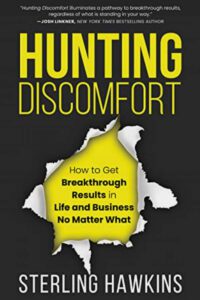
Hunting Discomfort: How to Get Breakthrough Results in Life and Business No Matter What
We’ve been at a party and feel very lonely sometimes or sometimes you feel you’re with one person and you don’t feel that. I don’t need to be crowded to not feel lonely. I thought that was such a fascinating thing. Everybody has different needs. I need to step outside my door in Manhattan and be in Times square in order not to feel lonely is not my MO. This concept of exposure and aloneness, can you address that a little bit? Tell us about the visual of trying to climb a smooth wall. It is so great.
I’d be happy too. Feeling alone isn’t a function of having people around. It’s a function of being seen for who you are. What happens for many of us, and I was certainly a victim of this myself, is we want to be accepted. We want to be successful and seen as successful with the people around us, family, friends, our coworkers, investors, and what have you. From an evolutionary standpoint, it makes a ton of sense because if you were kicked out of your tribe in the caveman days, it didn’t mean you didn’t have friends anymore. It meant death, like literal death.
We now have that same biological response where we’ve constructed these identities, views, ways of thinking, being, and acting that satisfy those around us but maybe aren’t true to who we are. When we let people into that view of who we are, we open ourselves to be a little bit vulnerable. It not only makes us not feel alone anymore. It makes us feel seen. It also helps other people connect with us. The wall analogy you used, I thought of that. I talked to my mom one day. We were out rock climbing and talking about love.
I always have these deep, profound conversations with my mom, and we were talking about perfection because we’re both recovering perfectionists. I said, “Perfectionism is like a smooth granite wall. There’s nothing to grab onto and climb. There’s nothing that makes it stand out. It’s perfect.” As there’s a wall that’s got some cracks in it, crevices, places for a foothold, or a handhold, that’s how you connect to it.
It’s the same with love. When we open ourselves, show those cracks, and show those imperfections, not only is it something that people can grab onto. We feel seen and somewhat paradoxically. We also get all the results, dreams, connections, and even money that we’ve always wanted. They are in the same place.
Talking about perfectionism as a goal and the smoothness of a wall with no cracks reminds me of what people talk about with plastic surgery that it’s called Plastic For A Reason. If you don’t have any character on your face, there’s not a laugh line or a wrinkle, then you can’t relate to that. That’s like a doll instead of a person. It doesn’t feel emotional. Actresses have gotten so much Botox that they lose their acting chops. I think there’s a lot to be explored there in terms of not being afraid to let the light in on those cracks and tell people, “I don’t have all the answers all the time.”
[bctt tweet=”There’s innate love, joy, happiness, and gratitude inside each of us that is greater than whatever is in front of us. When we get the discomfort out of the way, we become unstoppable.” username=”John_Livesay”]
It also leads to high-performing business cultures. It’s not just to feel good. The feel-good component is fantastic and arguably the most important thing. When you’re in a business, community, family, or any cultural dynamic that does that, you’re going to perform infinitely better because, as you said, you’re going to talk about your failures. You’re going to open yourself up and say, “I don’t know but let’s figure it out together.”
One of the other sections in Hunting Discomfort that jumped out at me was the concept of balancing discomfort with surrender. With those two words together, alone seemed like a lot to handle. Let alone coming up with a balance and then you talk about our comfort zone. What I love about this is the concept. There’s a difference, a distinction between mild discomfort and severe discomfort. On the far extreme is it’s paralysis of it, where we’re not even moving at all. Let’s give people a hint so that they want to get the book and read this themselves. On either side of growth is either mild discomfort or severe. I think of it as salsa. Do you want mild, medium, or hot?
One of the quotes that have always meant a lot to me is the Robert Frost quote, the way out is through. If the way out is through, the way through is to surrender. Not in terms of giving up, sitting on the couch, or ordering a pizza. Although there’s a time and a place for that surrender in terms of accepting what is, how it is, and how it isn’t, including yourself. When you do that, it frees you from the views, perspectives, ways of thinking, and enacting that have successfully gotten you to the way you are now, but they’re limiting you from taking that next step. How we surrender and how we move into discomfort is very important.
I saw a lot of these concentric circles on Instagram like you’re in your comfort zone, and the further you get away from that, the more dreamland of growth there is. That’s simply not the case. The sweet spot of discomfort is more like a bell curve. If you’re in your comfort zone all the time, that’s not good. There’s no growth. You’re not going to progress anything for yourself or your business. On the other side of that can be thoroughly paralyzed. Part of the reason I wrote the book is because there are steps for how to do this. You want people around you. You want the right environment to be able to move from that discomfort.
If you don’t have that in place, too much discomfort can be traumatic and make your discomfort even worse. There is this sweet spot that’s different for everybody. That splits the difference between comfort and extreme discomfort. That’s where growth is. When you’re in that spot, according to Yale’s research, you are able to learn four times faster. It’s like a bio-hack to getting better, faster, and smarter.
A lot of companies are bringing you in as the keynote speaker to talk about this very topic. You’re represented by Executive Speakers. They manage you. Who are some of the ideal audiences that you find craving this content?

Hunting Discomfort: When you make that big commitment and you are all in no matter what, your brain will start looking for openings for action, new opportunities, and new potentials.
It’s the audiences that are looking for growth. There are two flavors of them, you could say. One is companies and cultures that are facing extreme adversity. Maybe they’ve had some pandemic fallout, got labor shortages, supply chain issues, and people in Europe somehow involved in the war over there. They’ve got extreme adversity, and yet they still want to grow no matter what.
That is an audience where the #NoMatterWhat and Hunting Discomfort message has resonated. The other group are people that may be doing well already but want a breakthrough. They’re ready from an investment, a culture, and a company standpoint. They’re saying, “We’ve been successful thus far. We’ve been in business for maybe a while, and we’re ready to take it up a notch. Can you help us do that, Sterling?” The answer is certainly yes.
The keynote is just a start. From the keynote, we get into creating the ultimate intent of the company, leadership, and everybody that works there. It’s what matters to them at the end of the day or at the end of their lives. As that becomes a guiding beacon for each of them individually and their company culture, that’s what’s going to produce the breakout growth.
It sounds like you’re also helping companies attract great talent. If someone has that personal motto or I want to keep growing, I’m going to go work for a company that matches that vision versus another offer I have that maybe seems content to rest on their laurels. It’s the company that is growing, pushing, and hunting the discomfort that fits my needs. Those are the top producers in any field, whether it’s sales, tech, or what have you. The book again is called Hunting Discomfort on Amazon and anywhere you buy your book. If people want to get ahold of you as a speaker or a consultant, where should they go, Sterling?
SterlingHawkins.com. That’s got all our social media. You can join that #NoMatterWhat community there and check out all the details around the book and everything else. Thanks for that, John.
Thank you. What a great gift to the world at a time it’s certainly needed. When you’re describing all those people who are facing supply chain challenges and employee shortages or challenges with European at war, I’m like, “Your phone must be ringing off the hook.” It’s well deserved.
Thank you. We’ve been very busy, and I’m grateful for every moment of it.
Thanks again, Sterling.
Thank you, John.
Important Links
- Sterling Hawkins
- Hunting Discomfort
- #NoMatterWhat
- Amazon – Hunting Discomfort
- Better Selling Through Storytelling Method Online Course
- Mrs. Fields
Wanna Host Your Own Podcast?
Click here to see how my friends at Podetize can help
Purchase John’s new book
John Livesay, The Pitch Whisperer
Share The Show
Did you enjoy the show? I’d love it if you subscribed today and left us a 5-star review!
- Click this link
- Click on the ‘Subscribe’ button below the artwork
- Go to the ‘Ratings and Reviews’ section
- Click on ‘Write a Review’
Love the show? Subscribe, rate, review, and share!
Join The Successful Pitch community today:
- JohnLivesay.com
- John Livesay Facebook
- John Livesay Twitter
- John Livesay LinkedIn
- John Livesay YouTube
Just Say Yes With Jim Palmer
Posted by John Livesay in podcast | 0 comments

“Just say yes!” is Jim Palmer‘s battle cry. Get ready as the internationally acclaimed business coach shares valuable insights into building a business. John Livesay interviews Jim as he lets us have a look at how you can build your dream business. Jim also gives us a glimpse of his work mindset and why you need to take action. Tune in and learn more from a master of the craft and build your dream today.
—
Listen to the podcast here
Just Say Yes With Jim Palmer
Our guest is Jim Palmer and he talks about how the fear of perfection kills people launching their business idea. He gives us some insights as to what is behind this fear of perfection and how to overcome it. We also talk about his book Just Say Yes and Stick Like Glue, which cannot only apply to keeping customers but also keeping employees. Enjoy the episode.
—
Our guest is Captain Jim Palmer, who is the Founder and Creator of the Dream Business Mastermind and Coaching Program, the creator of the Dream Business Academy and the host of the Dream Business Radio, a weekly podcast based on his unique brand of smart marketing and Dream Business building strategies. His other business includes No Hassle Newsletters, Success Advantage Publishing and How to Sell from the Stage Like a Pro. He’s also the developer of the Cashflow Conversation Code as well as the acclaimed author of several books. In 2016 after raising four kids and leading his predictable life, he and Stephanie sold their home in Philly and live full-time and travel on their yacht called the Floating Home. Welcome to the show, Jim.
John, how are you doing? Good to see you and hear from you again.
Likewise. What a little adventure and creative third act you have created. I love it, and especially during a pandemic, I imagine there were a lot of advantages to that.
We were in Cocoa Beach in March 2020. Stephanie and I used to be by ourselves unless we wanted to go out and mingle on the docks or meet other people, but our life did not change that much. Other than the town that we were staying in, the marina was void of anything. If you remember it, it was a ghost town. It was a good situation because we were already used to being together 24/7 in a small space.
Some people were in a small home or apartment and had not planned on having to be there 24/7, but you had already planned your life in a space that did not require a lot of changing of location or trying to make things work because you already had set it up.
You mentioned a small adventure. We called it our big adventure. When we sold the house, we bought this boat, intending to do this for one year to go do something crazy. We live the typical, safe, predictable life like, “Let’s do something adventurous and exciting.” We moved on the boat. About six months in, we looked at each other and go, “This is way too much fun.” This is the fifth time that we have traveled down the coast from the Chesapeake Bay. We are in the Keys as you and I are talking.
It’s Gilligan’s Island, in a good way.

Just Say Yes: When you grow a business, you’ve got to be all in.
We are still on top of the water. We did not have any holes in the boat.
Why don’t you take us back to your story of origin? You can go back to childhood or college, wherever you want to start, when you started thinking, “I’m good at helping businesses grow or I want to get into the business world.” Any little nuggets that you could point to as the starting point of all this.
When you start getting a little older, you start looking backward a little more than forward. It’s amazing the clarity you have. Amongst the different jobs I had, I was the Head of Marketing for a training company. I spent ten years helping to grow a franchise. I was the lead trainer and the main support person for these brand new franchise owners, which is very much like I do, helping business owners market and grow their business, but who knew. It was July of 2000. My position was eliminated with that company and I thought, “I’m going to go get another job.” I have always worked for entrepreneurs. I’m very entrepreneurial.
I knew I would probably have my business someday, but Stephanie and I have four children. It never seemed to be the right time to make that leap. God had other plans because he made it like, “There’s no job here. Start a business.” One year into my what was then almost a year and a half of unemployment, I got cancer. It was a whole kerfluffle of circumstances that said, “Once you reach rock bottom, there’s only one way you can go in that’s up.” I started my first business and was very excited. I was a business owner. I had my cards that said, “President of my corporation.” It took me a full year to get my first paying customer. I did some part-time work.
That took off. I grew it to about $300,000 in five years and then I learned about internet marketing. That’s when somebody introduced me to Dan Kennedy and the whole GKIC world. I started learning direct response copywriting. I started my first internet company called No Hassle Newsletters and we grew that about 1,200 small business owners in 9 countries. It was a monthly membership where I created content and done-for-you newsletter templates.
I created a mail program so that we could print their newsletters. I started writing books, training programs and Success Advantage Publishing. We have published about 50 books for my books and my clients. We help my coaching clients get their books done. When we bought this boat, that was a decision I made. I did not want to work five days a week anymore. I restructured my schedule. I do coaching with my clients on Tuesday, Wednesday, Thursday and then Stephanie and I wish we could travel Friday through Monday. We’ve got to be at a Marina where we have some decent Wi-Fi and then if we want, we can travel again or do whatever we want.
Is there a common mistake you see a lot of entrepreneurs making that prevents them from growing their business? Are they wearing too many hats or is it like, “I read your great blog about all the what-ifs that we can what if ourselves in all kinds of horror stories?”
It’s all of these things like the what-if fear of perfection. Perfectionism is a big business killer. People don’t want to launch until it’s perfect. That all stems from not wanting to be criticized. As I say, “The biggest battle you will ever face as an entrepreneur is right between your ears and having the courage to play, win and not simply play, not to lose.”
[bctt tweet=”Stick Like Glue. ” username=”John_Livesay”]
A lot of the folks that I helped are not 22, starting full of pitch vinegar expression, on their second career, might have a home or had some responsibilities. Some of them would say something like, “I want to grow a business, but I don’t want to disturb what I have here.” When you grow a business, you have got to be all in. Whether that’s in marketing, free Facebook posts, LinkedIn articles, working with a coach or joining a mastermind, whatever that is, the people who grow the fastest in most cases, the highest are those that go through the fences every day.
I love this line that you gave us. “Fear of perfection kills launches.” Let’s double click on what you said. What’s behind most people’s fear of perfection?
Nobody’s perfect. I became familiar with this at a real gut level because I have written 6 books and my first book took 18 months. In reality, it took about under 1 year to write but it took me about 6 or 7 months to get the courage to publish it because then everybody would find out how challenged I am with the English language, what blew by him and my name is on the cover. There was a lot of fear about being criticized because who am I to be an author?
I went through that myself when I wrote my first book. I realized that negative self-talk of, “Who am I to be an author or a speaker,” can trigger imposter syndrome. Do you see that as something you help your clients with?
Yes. It’s interesting. A lot of my clients are in the 6-figure to multiple 6-figure ranges. The largest guy that I helped start a coaching program was doing $34 million. He had a very large business and wanted to do events. I used to put on events called Dream Business Academy. He wanted to do that. What I learned from working with startups, people in that mid-six-figure range, and him, everybody has imposter syndrome. Nobody feels good enough. He even said to me, which helps cement my belief that imposter syndrome is real, “I never finished college.” It almost feels like you are going to be found out that you are not all that your marketing says you are.
It is a real thing. As far as perfection, one of the things that helped me, you said when you wrote your first book, you were concerned as well, was that I was so afraid somebody was going to find an error or a mistake. I must have proofread that thing 500 times. Of course, me proofreading it does not guarantee anything. Somebody did reach out in 60 days. This was before on demand. We had to order 3,000 books or something like that. That’s when you had to print the books in 2009.
Somebody said, “There’s an error on page 34. You have a dangling participle.” I’m like, “What is a dangling participle? I have no clue.” I sat in my chair, reading this email. My heart was probably racing and my palms were sweating like, “I knew this was going to happen.” I responded and said, “Thank you for letting me know. I’m going to tell our editing team and we will fix it for the next printing.” I hit a comment. I said, “How did you like the book?”
This guy, who pointed out my dangling participle loved my book. “I know why you need a newsletter, the type of content to use, the ratio of content to pictures and paper to use.” He loved my book. Thankfully, I was smart enough to recognize that my imperfect book was getting customers for me and providing. What I tell my clients when they struggle with this is, “You make a decision. You choose to be judged on the quality of the content, the training and the service you provide and not the imperfect way in which you provide it because it will always be imperfect.”

Just Say Yes: Choose to be judged on the quality of the content, training, and service you provide and not the imperfect way in which you provide it because it will always be imperfect.
For anyone who is working on a book, I have learned a valuable lesson around proofing, which is to record the Audible of the book before it goes to print because you will probably find typos that you and your copy editors missed when you read it out loud. My book The Sale Is in the Tale is 40,000 words. That took four 90-minute sessions to read that, which you would not normally do to prove a book, but if you know it’s being recorded for Audible, then you go, “Wait a minute. There’s a typo or that does not make sense. How is it that nobody caught that?” Hopefully, that’s a little nugget for everybody.
Let’s go to your book Just Say Yes. This concept of not letting the fear of perfection or criticism. I can’t circle that and underline that enough for everybody. I hear a lot of people talk about the fear of perfection, but I don’t think anyone’s dug down to where you were like, “What’s behind that not? Can I tolerate somebody criticizing me?” If you can heal that and let go of what other people think, the judgment or the constant pressure of, “Did you make the New York Times bestseller list yet?” You are like, “That’s not my criteria of how I judge success,” then you are a lot freer in life. Hopefully, we don’t have to wait until we are in our 60s to get that. That’s why you and I are out there preaching to people who are younger than we are saying, “If you can let this go early, you are going to be much happier and be able to say yes more often.”
My last three books were written and published in 60 days. Bill Glazer used to be partners with Dan Kennedy back in the day and I heard him say once, “My imperfect book is getting me customers and serving some customers while your perfect book is still in your word processor.” There’s an old term word processor. I’m like, “That’s right.”
You mentioned New York Times bestseller. What I often tell people is, “How are we going to get this to be a bestseller? There are strategies to do that but let me check in with you why we are writing the book.” I will share my viewpoint because they hire me. I’m sure they are interested in what I say. I don’t know this for sure, John. Maybe you do, but you have got to sell 10,000 books in a short period to even be considered for a list like that.
I said, “Do I want to sell 10,000 books using some tricks, strategies or whatever, get to that scoreboard and you can then hold the badge ‘I’m a New York Times bestseller,’ or with Jim Palmer rather than sell 200 books to prospective customers and have 20 of those people become coaching clients? I will go for the twenty coaching clients.” My ego is, “I’m not about the badge. I’m about my business.” I’m about to be able to afford diesel fuels so I can get back to the North in the summertime.
Another one of your books that’s one of my favorites, because I love the title and the colors, is Stick Like Glue. It’s about creating this bond. This was an interesting question I have been working on for you in our interview. We know how important it is to get our customers to stick and return so we don’t have to keep spending money to get new ones. During this time of The Great Resignation, where so many people are leaving their jobs, I’m wondering if your principles of getting your customers to stick could be applied to small business owners or big companies who want to get their employees to stick?
It’s interesting because I interviewed somebody who’s an expert on workplace staff changes, all the things that we are talking about. She’s a client. We are helping her write a book, Workplace Detox or Detox the Workplace. It’s all these companies, large, small and everything in between have become toxic for several reasons. It goes to all these different things where there’s no trust. It’s my way or the highway. There’s no communication. People don’t see the vision.
Her name is Julie Barcus. The one thing she said to me is, “Have you ever been behind a semi-truck going down the highway and you can’t see around it, so you don’t even know if it’s safe to move out of it?” I said, “Yeah.” She says, “That’s what employees feel like. The boss has the vision. He’s got the view. He knows where you are going, but the people behind them have no clue and meanwhile, you are in the big office going, ‘I have got staff. I’m paying them well. Do their job. Everybody’s happy,’ that’s not the case.”
[bctt tweet=”When you start getting a little older and looking backward a little more than forward, it’s amazing the clarity you have.” username=”John_Livesay”]
It’s The Great Resignation that’s a great term, but to me, it’s like, “How could anybody stop working? There are probably ways to do it.” There’s a big surge in entrepreneurship. People going, “If I’m going to work 80 hours, I might as well do it for myself and have some shot at future.” It was the ‘40s or ‘50s when there was this giant blackout in New York City. Nine months later, babies came as well. As a result of the pandemic, this great reset and everything else, small business owners are popping up left and right.
You said something there that one of your clients has a book titled Detox the Workplace. When you frame something from your personal life and put it into a work situation, our brain loves that because it’s connecting dots that have not been previously connected. One of my most successful soundbites as a sales keynote speaker is, “Are you stuck in the friend zone at work?” People say, “I know what friend zone dating is. What’s the friend zone at work?”
I say, “It’s when they say they are interested and you never hear back.” Everyone laughs. If someone is thinking of creating the name of a book, a business, a newsletter headline and anything that you help people with, try to craft it in such a way that you are combining something that people know what it is and put a little spin on it that grabs people’s attention and you are so good at helping people do that. Tell us about your mastermind.
I want to go back to something you said that was very important. I don’t lose chance on the mastermind but whether it’s a headline on a sales page, website, squeeze page or a book title, the headline and the title are made to grab your attention. It should make sense to somebody when they see whatever it’s 1, 3 or 5 words. The subtitle or the sub-headline cement the whole thing. That’s a big part of what I do.
One of the things I help my clients in the mastermind is I said, “There’s going to be a big shift in your income through the revenue of your business, but your income will go up dramatically when you focus more on who you are and not what you do. I guarantee you, no matter what you do, 10,000 other people also do what you do.”
People are connected to people who they believe have the best chance of satisfying them and want hope in certainty. It’s more about who you are. That’s why I take so much. When I branded myself the newsletter guru years ago, I never went to school for design or writing. I know how to do great newsletters and people took to the fact that I’m the newsletter guru. I must know what I’m talking about.
When I started coaching, I did not want to be Jim Palmer Small Business Coach. I created the whole Dream Business brand. The mastermind is virtual. I was talking with a guy that I have known for a long time. I started my mastermind in 2009. I was traveling, going to a lot of conferences and other entrepreneurs were talking about different masterminds, but they all required you to get on a plane once a quarter or something.
Whether you fly to Chicago, Illinois, Las Vegas, California, sometimes you go to Cancun or whatever, but it’s always like a day of travel, mastermind for 1 day or 2 and then travel for 3 or 4 days. I got the idea. “What if we did it virtually and we all got together virtually?” I don’t think I invented virtual masterminds, but I’m one of the first to make it popular and that’s how I started in 2009. I’m still virtual. We meet once a month on my private conference line. We mastermind through some of our members and some of the challenges or questions they have and then I do private coaching with the members on Tuesday, Wednesday and Thursday.

Just Say Yes: The biggest battle you’ll ever face as an entrepreneur is right between your ears and having the courage to play to win and not simply play, not to lose.
That’s great because you are not learning from yourself, but you are also learning from the other people who are successful enough. Things that have worked for 1 person in 1 industry can be transferred to not have to reinvent the wheel for every single part of your business.
What I love most about our group calls is that I have what’s called profit seats. Sometimes people call them hot seats. I call mine profit seats. On a given call, we might do five profit seats and we could talk about marketing, what’s an idea and how you connect with these people. In a very safe zone, almost every somebody will get transparent. We had our call and one of our ladies in the group, a very tiny, petite person and she has a high, squeaky voice goes, “I have a voice like Minnie Mouse.” I’m like, “My clients are usually men. I feel like I’m not being taken seriously. Many people chimed in about Mike Tyson being a boxer but got a voice like Minnie Mouse.” We gave a lot of love and support.
That’s one of the best things about our group and there are so many other things about that like, “I’m afraid to grow. I have this idea. I want to write a book.” I said, “I got this one.” “What if the book sucks?” There is so much comradery, accountability, and everybody pushing each other during the group calls and the work that I do with them privately on our coaching calls. It’s a wonderful experience.
When you are talking about the need to have even a good subtitle that grabs someone’s attention and breaks through the clutter, I talk about it in terms of most people are drowning in a sea of sameness. “I’m an accountant, lawyer, architect, financial planner.” Everyone thinks, “There are so many of you out there. You are all the same. Are you not? Real estate people on and on.” The need to have something that makes you stand out and that people can put a hook on like, “John is the pitch whisperer. Jim is the newsletter guru. What he does is he builds an iron fence around your business,” that’s a visual.
We know what a fence is and the fact that it’s made of iron. It’s not going to blow over in the wind and you think, “How can a newsletter make something an iron fence that people can’t see in my clients? I’m so intrigued. I need to know more.” That’s what the goal is. You want to have the conversation of, “Do people even read newsletters?” Our brain is going into 100 million. At a time when people are not reading newsletters, that’s the time to do one because you are going to stand out and on and on.
We are talking about print and mail, paper and ink newsletters, not the email newsletters, which only get read by about 6% of your customers at best. We have known each other for a long time. I used to go around the country speaking about newsletter marketing. In a large way, that’s how I grew No Hassle Newsletters. I never marketed my talk as a newsletter talk. It was all about retention-based marketing. How smart companies take more of their energy, effort and resources and don’t figure about new customer acquisition. It’s about how do I get and keep the customers I have longer. We know that customers that stay connected with you longer, spend and refer more, which is pretty much the title of my second book, Stick Like Glue.
Once people understand the relationship between faster growth, higher profits, more referrals and repeat business, then I come in and say, “The newsletter is the best and most effective way to do that. Every month they are seeing you in their mailbox, learning about some tip.” You don’t even have to be about what you do. Maybe it’s about how to keep your car running. It could be anything, but as long as they see your name and the masthead at the top, they get your newsletter every month and you stay top of mind. When they are ready to buy or refer again, they will remember your name.
If people want to find out more about you, they go to GetJimPalmer.com.
[bctt tweet=”Perfectionism is a big business killer. People don’t want to launch until it’s perfect, and that all stems from not wanting to be criticized.” username=”John_Livesay”]
That is the home base. Everything stems off there. I probably got five at this point that I have pared down. GetJimPalmer.com is where people can connect with me. I can say one more thing looking backwards. One of my longtime mastermind members, Dr. David Phelps, wrote a book called What’s Your Next?. One of the chapters was about building your legacy. I know what a legacy is and I thought, “I’m so young. I want to think about my legacy. Maybe I will go down to two days a week because I love my lifestyle,” but I felt conflicted that I’m supposed to be helping more entrepreneurs the skills and the gifts that I have.
I said, “How can I do that if I only want to work two days a week?” I decided to make all of my six books free in the digital download. I found a way. I’m not going to share it here. My Kindle books are free. Not for a ten-day promo. You can go to Amazon and type in Jim Palmer. That will get you an old Baltimore Orioles pitcher. Type in one of the titles of my book and you will see my author page. You can download all six books for free. They are in the iBookstore and also at BarnesAndNobleBNN.com, but you can get all my books for free.
Jim, thank you so much for helping so many people live their dreams because a lot of people have given up on their dreams and people like you help keep them alive.
I appreciate it, John. Thanks for having me on.
My pleasure.
Important Links
- Just Say Yes
- Stick Like Glue
- Dream Business Mastermind and Coaching Program
- Dream Business Academy
- Dream Business Radio
- No Hassle Newsletters
- Success Advantage Publishing
- How to Sell from the Stage Like a Pro
- Cashflow Conversation Code
- Blog – What If It DOES Work?
- The Sale Is in the Tale
- GetJimPalmer.com
- What’s Your Next?
- Jim Palmer – Amazon Author’s Page
- BarnesAndNobleBNN.com
- Better Selling Through Storytelling Method Online Course
Wanna Host Your Own Podcast?
Click here to see how my friends at Podetize can help
Purchase John’s new book
John Livesay, The Pitch Whisperer
Share The Show
Did you enjoy the show? I’d love it if you subscribed today and left us a 5-star review!
- Click this link
- Click on the ‘Subscribe’ button below the artwork
- Go to the ‘Ratings and Reviews’ section
- Click on ‘Write a Review’
Love the show? Subscribe, rate, review, and share!
Join The Successful Pitch community today:
- JohnLivesay.com
- John Livesay Facebook
- John Livesay Twitter
- John Livesay LinkedIn
- John Livesay YouTube