

Eyes Wide Open with Isaac Lidsky
Posted by John Livesay in podcast | 0 comments


Episode Summary
 Today’s guest on The Successful Pitch is Isaac Lidsky, the author of “Eyes Wide Open.” Isaac went blind at the age of 25. It was a slow process when he was in his late teens so he had time to get used to the idea. At first, he thought it was going to be a very sad and small life, but he said, “You know what? I might have lost my sight, but not my vision for what I want my life to be.” He really has great insights into the importance of combining nonverbal cues with verbal cues, so that people really communicate clearly.
And, he said, “You need to take full responsibility for your own definition of success, and if you’re doing something that isn’t making you happy, don’t let other people tell you have to stay doing that very thing.” He leads a life that his eyes are wide open, his heart is wide open, and he shares tips with us on how we can have our ears wide open, and even learn to listen like you speed read. Enjoy the episode.
Listen To The Episode Here
Eyes Wide Open with Isaac Lidsky
Hi, and welcome to The Successful Pitch. Today’s guest is Isaac Lidsky. I have been waiting for a long time to get him on. As soon as I saw his TED Talk, I was completely riveted and moved, and have told everybody about this new amazing book, “Eyes Wide Open.” His popular TED Talk which I highly encourage you to go watch is “What Reality Are You Creating For Yourself?” He has literally done so many things in his life, from being on Saved The Bell as a teen star, to being an entrepreneur, to being a lawyer and clerking with two Supreme Court justices, and running his own business.
And now, he teaches all of us how he dealt with his information that he was going to eventually go blind, I believe it was at 25, and how he took that information, and he said a line in there that I think, well, I will remember the rest of my life which is, “I might have lost my sight, but I’ve not lost my vision for what I want my life to be.” Isaac, welcome to the show.
Thanks so much. I appreciate you having me.
It’s just amazing to see I think some of us think, “Oh, maybe I’ll have two or three different lives,” but you’ve really had five different reincarnations of everything you’ve done, don’t you think?
Yes. I’ve been blessed to do a lot of really neat things in my life along the way, as you generously mentioned. In a remarkable way, slowly losing my sight, I was diagnosed when I was 13 and it took above a dozen years. I lost my sight from 13 to 25. In a remarkable way, of the many things I’ve been able to do, going blind was one of the best things that happened to me. It really was.

Source: Brooke Cagle on Unsplash
[Tweet “Going blind was one of the best things that happened to me”]
As you said, I lost my sight, but I gained a vision in the process, and that vision has brought me immeasurable joy and fulfillment and success.
And not only are you successful, but you also have an amazing wife based on what you describe in your book, and four children I believe, correct?
That is correct, yeah.
And a dog even.
Yeah, so my wife, Dorothy, who is a miraculous woman, and I adore and admire her. Dorothy and I have six and a half year triplets, and a 16 month old baby. That’s the four kids, we call them the Kidskys. You know, my last name being Lidsky, we call them the Kidskys. The triplets are the Tripskys.
Oh, my God.
And yeah, we’re all enjoying a very busy life.
 Yes. You talk about that going blind has actually helped you, but it wasn’t always like that, and you were very candid in your book, “Eyes Wide Open,” talking about your own internal struggles. Can you talk about how other people can deal with these maybe not as dramatic of challenges, but you have some really great tips on how to deal with obstacles in any form?
Sure. When I was first diagnosed with my blinding disease, I was terrified, and I was convinced that blindness was going to ruin my life. It wasn’t really something I thought as much as it was just something that I knew. I knew blindness would end my achievements. It would be an end to independence to me, and then I would never find a woman who would truly love and respect me, ’cause I figured I wasn’t going to love or respect myself, and on and on, and on, and all these awful things.
Psychologists call it awfulizing, which I think is a great term. But it was all these awful images and what was amazing is, it felt real. It felt like truth, right? That’s what’s so pernicious about fear. We all confront fear, we all confront challenges, the unknown types of crisis, and in those moments our fear really fills the void of the unknown with awful, with the worst case scenario. If we’re not careful, if we’re not aware, we believe it, we experience it as truth, and then it becomes true, right? It’s self-realizing.
So, for me, going blind in a lot of ways, the disease was really kind of the cure. As I lost my sight progressively and slowly, produced all these bizarre visual effects. Objects would appear and morph and disappear, and if someone told me about the picture I was holding in my hand then I could suddenly see it, but otherwise it couldn’t, and on and on, and on.
The upshot was, the impact was that this illusion of sight, this human experience of sight which is an illusion, was kind of shattered for me. I realized that far from being some kind of passive perception of some truth or some objective reality out there, sight is this incredible personal, virtual experience that is crafted in the mind. Literally seeing that firsthand was empowering and liberating for me, because the same is true of our fears, the way we experience our fears. The same is true of countless other aspects of life, and once we see our role in shaping our lives, we can take control.
I love it. Well, I neglected to say in your intro that you went to Harvard, have your law degree, and were on this fast track and have clerked for two Supreme Court justices. While you were blind, you were still able to have this amazing career, and yet, you realized that for you, there was something else to do, and that’s the entrepreneurial itch sometimes. You have all this time and money invested in this amazing education, and yet you find yourself going, “This isn’t quite right for me.” Can you tell us about that big decision that you made to leave New York and start something else?
Sure. So, a big part of living life eyes wide open for me is really holding yourself accountable for your own definition of success, your own understanding of what value looks like. Really, being rigorous in assessing how you want to spend your time and who you want to be as a person. So, that has put my money where my mouth is and endeavoring to live that way has played a major role in my repeated invention or career switches along the way. The one you speak of, I was blessed to do a lot of really call things in law in the public sector. I worked for the Justice Department, litigated appeals all over the country, clerked for the Supreme Court, all these great things which I enjoyed.

Source: Warren Wong on Unsplash
[Tweet “I lost my sight, but I gained a vision in the process”]
Then I found myself taking the easy route and big signing bonus and fancy office and paycheck and all of that, and working for a big international law firm, which to be clear, there are people who enjoy that work, who find it rewarding, who find value in their lives in that work. I have no problem with it. That’s great for them. The problem was that it wasn’t so for me. I was pretty dissatisfied and pretty miserable in my career.
So, this was around the end of 2010, the beginning of 2011. I decided with my college roommate that it might be a good time to buy a small company and use it to build an excellent business of our own. My roommate, Zac, helped me find the business and he put up a lot of the money to buy it, but he kept his fancy day job in the world of finance.
I put every single penny that Dorothy and I had into the business, and moved from Manhattan and my fancy law firm office to Orlando, Florida, to serve as the first Chief Executive Officer of our new residential construction company, contractor, and that was in June of 2011.
Yes, that alone is a big decision and I know from listening to you read your book out loud to us on Audible, which is my favorite way to consume content, it is that you, because you’re a lawyer, know due diligence probably better than most, and yet, once again, another challenge appeared that you had to use your eyes wide open skills to figure out how to sort through that.
Well, you know, in retrospect, Zac and I really had little idea what we were doing. We learn in life, often by doing. Experience is the best teacher and all that kind of stuff, so the unfortunate corollary to that is your first time out, you don’t tend to have a lot of way by experience or insight. We thought we knew what we were doing, we meticulously analyzed the financials of the business. We met with the owner, we met with the team, and having bought the business, three months in we realized this data we had been so obsessively focused on really was nonsense. It was garbage in, garbage out.
The truth of the matter was nobody really knew what was going on with the business. The sole proprietor, owner, was relatively unsophisticated and anyway, far from treading water or getting by, this business we had bought was actually sinking like a stone. That led to a pretty miserable time in my life. It looked like Dorothy and I might lose it all, and declare bankruptcy. We even had conversations with her parents about maybe moving in with them and our then year old triplets, and our dog.
But along the way here, my mother revealed, it was a surprise to me and a surprise to really my whole family, but she revealed that over 30-40 years, she had been squirling away some cash to save for that rainy day. It was a lesson her father taught her well, and her father being an immigrant who had to start from scratch a couple of times in his life.
For him, the only way to truly save was by saving cash, right? Banks come and go, governments come and go. Anyway, it turned out my mom had $350,000 in cash tucked away, and she was convinced that I should take it and use it to try to save my dying business.
She said something to you about taking care of yourself, and loving yourself. Can you tell us what that was? It just touched me so much when I heard you say that.
Yeah, so after two or three days of really wrestling with this decision, whether I could actually bring myself to take this money and do something productive with it, we met, actually Dorothy and I drove down Florida’s turnpike, and met my mom. She drove up from Miami, we were driving down from Orlando, we met about halfway in the parking lot of a gas station, at a turnpike rest stop.
I got out of a suburban and stepped into a pretty tight hug from my mom and she said, “Please be good to yourself.” Then, she said, “I know you will fix this” which was pretty remarkable because she didn’t say she thought I could, right? She said she knew I could.
Then, she didn’t say, “Could,” she said, “Will.” “I know you will fix this.” Man, there’s a lot of wisdom in mothers, and I’m glad that she turned out to be right.
Well, you have people like that believing in you, and your wife was equally supportive saying, “Just fix it,” right? Your mom saying, “I know you will fix it,” I love that you differentiated that. Not “I think” and that “You might,” the distinction leads right into one of my many favorite things in “Eyes Wide Open” which is the difference between knowledge and wisdom. Can you tell us the example there? You said the wisdom of mothers and that leads right into this.
Yes. Yeah, that’s fun. So, it’s a saying. I wish I could claim credit for it, but it’s not my own, but they say that “Knowledge is knowing that a tomato is a fruit, and wisdom is knowing not to put tomatoes in a fruit salad.” For me, that very nicely encapsulates this idea that we get a lot of cues around us in the world from other people, from our circumstances, colleagues, friends, family, whatnot, that I would put in the knowledge bucket. But sometimes we do ourselves a disservice. We have a hard time trusting ourselves when it comes to wisdom.
Of course, on matters of who we want to be and how we want to live our lives, and what we’re trying to achieve, our own wisdom is vastly more important and vastly more relevant than any knowledge we might gain from without. So, that’s the way I look at that, I guess.
Well, I think one of the things that you really made me think, and I think’s going to be so interesting for everyone listening, is just because you lose your sight doesn’t make your hearing automatically better. Like, suddenly you have super hearing or something, right? And you’re a superhero with your hearing. But you do talk about we all know about speed reading, but you have this great insight that we can train ourselves even if we are still seeing with our eyes, to be better listeners or even faster listeners. Can you talk about that?
Sure, that’s exactly right. So, there’s a Hollywood shorthand that when you lose sense, your other sense “get better.” That’s not true at all. The truth of the matter is that you learn to use your other senses more effectively. You rely on them more, you pay more attention to them, and you learn ways to use them more effectively. That distinction is critical because it means that all the awesome and amazing ways that I have learned make my ears a lot more productive for me, a lot more useful to me.
You don’t have to be blind to do the same. So, sighted people can do it, too, and one big part of that is listening to people more effectively, truly listening, and trying to communicate at a deeper level, which I talk a lot about in the book. But another example, a fun fact I should say. The average person reads somewhere around 300 words a minute, using their eyes.
I listen to information, I don’t use my eyes obviously, because they don’t work at all. So, the average American English speaker will speak 150 words a minute. Now, getting information primarily through my ears and listening to documents and books and things over time, and slowly nudging up the playback speed a little bit and a little bit, and a little bit, over time, I can now listen to somewhere in the 700 to 725 words per minute.
I literally, I listen to documents far faster than I could ever read them, even with “normal sight.” Again, you don’t have to go blind to do that. Some of my friends are fascinated by the idea, trying to do it as well, and they get through audiobooks in half the time and that kind of thing.
Well, the other really great example that you have used, being the CEO of your company, is when people would go around the room and you present an idea and you’d ask for feedback, and people would just nod. You really came into a big “Ah-huh” moment there when you helped people say, “Look, don’t nod.” Can you tell us that story?
Sure. Yeah, that’s a great one. We get all sorts of visual feedback from people. Facial expressions, gestures, that it’s our tendency to try to imbue them with all sorts of meaning. I think the nod is a great example. It’s a really pernicious example.
When I first took over at OEC and built up my leadership team and we would have these meetings. To your point, I would ask a question and, “Do we all agree?” Someone poses an idea, “Do we all agree or disagree?” Then there would just be silence. It would hit me. I’d say, “Folks, are you guys all nodding again?” They would chuckle. “Oh yeah, sorry, we’ll still nodding.” I’d chuckle back and say, “Yeah, I’m still blind so that doesn’t work. Let’s just go around the table and everybody says, just say, ‘Yes, I agree’ so that I can actually hear it.”
You’d think everyone would say, “Yes, I agree” because everyone just nodded, but it never once happened that way. It was instead, “I guess I sort of agree.” Which leads to the question, “Well, I guess I want to know the ways in which you might not agree.” Then, it leads to more and more discussion, so at first, I was wrong. I mistakenly confused this as some awkwardness, some sort of burden brought about by my blindness.
In fact, the awkwardness and the tension was a necessary component of meaningful communication, right? Of being vulnerable, of telling each other what we really thought, of inviting and perpetuating conflict, right? Disagreement.
Yeah.
And all these things that really were necessary requisites to our communicating effectively, and in the end, because my being blind forced us to get there, it wound up being one of the best things that happened to me as a leader, and I think it’s one of the best things that happened to my business.
That’s such a great takeaway for anyone who is in any way, shape, or form, working for a big or small company, in any kind of leadership capacity, is to really not just take the nonverbal cues, right? And really get people to open up and make that a new practice. I thought that was amazing.
Yeah, and for me, what I argue is, obviously you get a lot of information from your eyes, but to the extent you’re getting facial expressions or mannerisms, or gestures that are maybe inconsistent with what your understanding is, it’s great to pay attention to those if, and that’s a big if, you use them to seek more verbal communication, more words, more clarity. When you take them in lieu of words, or a substitute for words is when you get into trouble.
Oh, that’s a great distinction. Well, not only did you come up with a great title, “Eyes Wide Open,” but then you talk about how we can learn to live with our heart wide open. We’ve already talked a little bit about how we can live with our ears wide open. Can you talk about how we can live with our heart wide open?
Yeah. So, at the core of “Eyes Wide Open” is this idea, this awesome power we have, this inescapable responsibility we have, really in every moment of our lives, to choose how we want to live our lives, and who we want to be.
Circumstances, there are obviously circumstances beyond our control that we confront, but how those circumstances manifest themselves in our lives is entirely within our control. It’s our choice. For me, I would argue that to truly make that choice, with awareness and to hold yourself accountable for that choice, to know yourself and to commit to manifesting the version of yourself that you want.
You’ve got to be willing to really open up your heart, open up your heart to be seen, first and foremost, by yourself. You can’t hide from it, and also by others. I grew up a very I say committed uber rationalist. I did not like to talk about things like hearts and love and emotions, and I just was convinced that all of life was rational and logical.

Source: Tim Marshall on Unsplash
[Tweet “Learn to live with your heart wide open”]
Man, I was completely wrong. This notion that we can be purely rational is a total myth, and it’s a harmful one. It breeds polarization and bias, and it prevents connection and understanding. We’re creatures of the heart, whether we like it or not.
It’s so true. I really like that, ’cause when you bring your heart into the workplace, not only does your team feel more connected, but then even your clients and your customers do as well. From what I can see, that’s been one of your keys to success, whether you’re an actor, a lawyer, or running your own business. That’s really what I saw is a consistent throughline through your life.
That’s very insightful. I think that that’s true. I think that that’s true.
One of the other things about you, Isaac, is that you have a great metaphor about life being like poker. Can you talk to us about that?
Yeah. So, it extends to all forms of poker but Texas Hold ‘Em in particular, No Limit Texas Hold ‘Em which is a game that I enjoy immensely. There’s this debate in the legal world as to whether it’s a game of skill or a game of luck. Literally whether skill predominates, where the outcome is more than 50% skill or more than 50% luck, and it’s been litigated to major consequences.
To me, it’s astounding, because to me it is so obvious that poker is a game of skill. Properly viewed. Like, if you look at it one particular hand, yeah, maybe it’s a game of luck, and it depends on how the cards are dealt that one hand. If you look at playing poker over thousands of hands, over different sessions against different players, there’s just no questions it’s a game of skill.
So, for me, I love that as a metaphor for luck in our lives. I think that generally, we tend to misperceive luck in a couple of really important ways. First, we think that luck can be categorized as good or bad. Circumstances good or bad, and the truth of the matter is really they’re neither. They are what they are, and it’s up to us to make them good or bad in our lives.
I’ll give you an example. For me, going blind, I am certain of the fact that ultimately I was very lucky to go blind. The experience that I had losing my sight, the insights that I gained were one of the biggest blessings of my life. Who’s to say whether luck is good or bad? The second way is that we tend to think that there’s neat and tidy line that divides circumstances beyond our control from the circumstances that are within our control.
Of course, the truth is a lot more complicated and nuanced, and far more often than we realize, we do exert control over the circumstances we confront.
Well, you also talk about the house always wins in the majority of gambling, and you encouraged all of us to look at our life as if we’re the house, right?
Oh, sure. So, yeah, that’s our cosmic edge. Before you even get into the proper way to look at different events in your life, or how to leverage your luck, how to see yourself empowered to influence and take advantage of your luck and all that kind of stuff. First and foremost what I always think about is this cosmic edge. So me, for example, born to a middle class family in America, parents who loved me and nurtured me, never known hunger, always had shelter, always had access to healthcare, and on and on, and on.
You’re looking in the grand scheme of things, there’s just to me, as clear as day, it’s an objective fact that I am just immensely lucky. You look at the cosmic hand that I’ve been dealt. I think going blind in many ways, one of the biggest impacts it had was just that, to help me realize how immensely lucky I am overall in my life.
For me, to then curse my luck with respect to one particular term of the deal, going blind, or deal that doesn’t go my way, or a tough break or whatever, is to lose sight of that immense cosmic edge. Yeah, the metaphor I like to use is picture the owner, the majority owner and chairman and CEO of some huge casino in Vegas, standing on the casino floor and cursing his luck when a roulette player wins a big take on the spin of the wheel. It’s a ridiculous thing even to imagine, because of course, the house doesn’t gamble on any spin or roll or hand, right?
In aggregate, it has the structure in place that guarantees it’s going to win. The rule is rigged in its favor, and I think for so many of us, who live privileged lives, again, the rules of the world have been rigged in our favor, and to then curse your luck to me is a real shame.
I just think that’s a phenomenal perspective to look at life and reframe everything through that lens. It’s really been helpful. It’s been such an honor to have you on the show and get to hear you firsthand describe your vision and your life, and how you’re making a difference in the world. Now, you also are available if companies want to hire you for keynote speeches. Is that right?
Yep. So, since the TED Talk and writing the book and stuff, I have been doing a lot of corporate speaking and keynotes and whatnot as well. My passion these days really is sharing my “Eyes Wide Open” vision with others, because it’s not about blindness or even disability. It’s about taking control of your reality, mastering the life you want to live.
We’re going to put obviously the link to buy “Eyes Wide Open” in the show notes. If someone wants to follow you on social media, can you give us your Twitter handle or all that good stuff?
Sure. So I mean, if you go to my website, lidsky.com. Everything’s there. My TED Talk’s there, the book’s there, Twitter, Facebook, Instagram, LinkedIn, et cetera.
We’ll put all of that in the show notes for everybody to go. Isaac, do you have any last thoughts or comments you want to leave us with?
You know, I would just tell folks that whether you realize it or not, whether you like it or not, whether you believe it or not, your life is not happening to you. You are creating it, and you might as well do so with intention and purpose, because you can live the life you want for yourself if you choose to do so.
Great, great. Fantastic. Thanks again, Isaac.
Thank you for having me.
Links Mentioned
- Book: “Eyes Wide Open”
- Website: lidsky.com
Wanna Host Your Own Podcast?
Click here to see how my friends at Predictive ROI can help
Fox 11 News Los Angeles John Livesay The Successful Pitch book
Share The Show
Did you enjoy the show? I’d love it if you subscribed today and left us a 5-star review!
-
- Click this link
- Click on the ‘Subscribe’ button below the artwork
- Go to the ‘Ratings and Reviews’ section
- Click on ‘Write a Review’
Live An Adventurous Life with Mark Lovett and Dr. Jeff Salz
Posted by John Livesay in podcast | 0 comments


Episode Summary
 Today, I have two guests on the podcast. They are Mark Lovett and Jeff Salz, who have a business called Speaker Adventure. They help people craft a story so that they can become compelling no matter what their pitching for. They have great expertise with the TEDx and TED Events and really becoming an adventurer in your life because when you have a story of why you’re doing something or why someone should hire you, that gets people engaged with the storytelling, our brain works very differently when we tell stories. They say when you do a deep dive into yourself and you start your pitch with the end in mind and work backgrounds, that’s really the key to having a great pitch. Enjoy the episode.
Listen To The Episode Here
Live An Adventurous Life with Mark Lovett and Dr. Jeff Salz
John Livesay: Hi and welcome to “The Successful Pitch” podcast. Today, I have not one, but two amazing guests that are actually in business together at the Speaker Adventure. Dr. Jeff Salz is a professional speaker coach. He’s a 30 year veteran of expedition leadership and Global Exploration turned Hall of Fame Speaker. His passion is helping speakers express their hero’s journey and he’s actually gonna on several himself. Then he’s partnered with this amazing guy named Mark Lovett, who is also a professional speaker coach, who’s been the organizer and chief architect for the San Diego X’d San Diego since 2014. He’s got some really amazing tips having watched over a thousand speakers give their talks. These guys are experts on what it takes to have a great pitch. Gentleman, welcome to the show.
Dr. Jeff Salz: Hello, John.
Mark Lovett: Hello, John. Great to be here.
Glad to have you. Our mutual friend, Mark Golsten, introduced us and, of course, that’s what I’m always talking to everybody about is everything is about your network is your net worth. I always like to ask my guest to take us on the story of origin, of how did you get to where you are? We’ll start with Jeff. If you don’t mind, Mark. We’ll let him go first because he’s got this way of taking adventure and spirit and turning it into a way of life and a career.
And your question is?
How did you get to where you did? How did you decide that this is what you wanted to do with yourself? Did you know in college? Did you ever have a regular quote job or did you just say I’m gonna become an adventurous anthropologist? What? What made you figure out how to get to where you are?
I think it was because I was born and raised in a cultural deprivation zone called New Jersey. I mean no offense, but actually offending each other is how we show our affection in New Jersey. I think growing up on the East Coast and seeing the world around me in fairly mundane, in a mundane world, I just said this is not for me. I want more. I expect more. I demand more.
At a early age, by the time I was 16, I was already attending a crazy college in Arizona called Prescott College, very experiential. By the time I was 17, I dropped out of college, was traveling the world by myself. It’s been a non-stop pursuit of physical heights like the mountains and cultural distances, like the remote areas of Patagonia, Siberia, you name it.
But, ultimately, it took me to a desire and this is the hero’s journey stuff to give back. About 25 years ago, 30 years ago now, I decided to see if I could share the stories, do some writing of books, raising some small children, making a family. My life had become an adventure and now it became an adventure of creativity. That’s how I launched into the world of speaking, which I’ve done now for 30 something years. Most recently, I’ve again taken the next step is to say, the real adventure now is not me doing the thing so much as helping others have the experiences and succeed at. Along with Mark, it got our program.
We were just saying before we spoke to you how it’s an enormous adventure. Every time we sit down with a client and we wonder how the story will unfold and how they’ll express themselves and find more truth about themselves. It’s a real adventure. Maybe my life hasn’t changed that much after all.
 Well, and you turned it into a book called “The Way of Adventure: Transforming Your Life and Work with Spirit and Vision.” We’ll get back to how you define what an adventure is because I always love that topic.
Mark, you have an equally interesting life to tell us about because before you became involved with TEDx, you were doing all kinds of things with Global Patriot. Can you tell us a little bit about that?
Well, Global Patriot came out of a novel that I was writing and the hero in that book basically transformed himself from being an American Patriot to a Global Patriot, which means that he was dedicated to the health and well-being of the entire planet.
That’s where I started blogging and getting into social media on that and meeting a lot of fascinating people along way. Raised money for Doctors Without Borders by putting on three concerts in 18 days in three different countries, which was rather insane, but that got me into event planning in a very strange way. When the TEDx opportunity came up, I saw that ability to bring ideas up onto the stage and create events that impact people.
You’re also involved, for those people who may not know what a TED Talk is or a TEDx Talk is it’s this amazing opportunity for people to be inspired and informed and have an idea that’s worth sharing, but you’ve taken this into something that I have not been aware of before which is taking it into correctional facilities. How did that come about?
Well, each year, I’ve had a new project in tandem with TEDxSanDiego. That’s the main program that I run each fall and in 2015, that different story was that we did the world’s first cross-border TEDx, where we built a stage in the United States and a stage in Mexico and had speakers alternate between the two countries.
The next year, I produced a kid’s event where the speakers ranged from 13-years-old down to 6-years-old. Now this year is TEDx Donovan Correctional, where a friend of mine started volunteering in the prison. She knew I did TEDx. We started talking. We went to the prison administration. They loved the idea. We applied for a license from TED in New York. When we got the license, we started organizing this event that’s happening on May 21. It will involve five inmate speakers and five speakers from the outside.
I once heard Dr. Jerry Jampolsky talking about working with prisoners. He’s the author of books like “Say Goodbye To Guilt.” He said to the prisoners, “Just because your body’s in prison doesn’t mean your mind is.” I’m assuming and guessing that that’s a big part of what you’re trying to help them realize. Would that be accurate?
What I would say is that they have realized that themselves. Most of the men we’re working with have been in for 20 years or more.
Wow. Okay.
They’ve completely transformed themselves. The talks are gonna center around finding purpose, the power of love and the magic of self-forgiveness. If they hear these talks and I’m coaching them inside prison every Tuesday and Sunday and to hear their talks unfold as Jeff mentioned, it’s this magical process. At one point, one of ’em leaned forward to me and said, “You know what? I’ve never told this story to anyone in my entire life.”
Well, that’ll grab somebody’s attention. Jeff, how do you define adventure since that’s your area of expertise?
Good question, John. No, adventure, it isn’t so much about the physical risk that somebody might get hurt or die. It is about more risking assumptions, risking ease and complacency. Adventure is what happens when everything you plan ceases.
Ah.
Adventure is life. Adventure is the realization and the act of undertaking and experiencing of the unexpected, the untoward, the unplanned. Whether we like it or not, life’s an adventure, but adventure’s attitude. It means a willingness to go along and accept whatever comes to you as a gift and an opportunity. I’m just making that up as I go along here.
No, I like it.
Current definition.
Well, a lot of people, I think, whether they’re in prison or not feel “trapped by their life,” right? They don’t feel like they have the time or the money to “go have an adventure” even if they’re not in prison so I think that is really valuable to give people the sense of you don’t go looking for an adventure so much as you bring the adventure to whatever your experience is. That’s my take on it from what your said. Do you have anything else you want to add to that?
No, very well said. Very well said. One of my very favorite quotes is an old Chinese quote: “That we use a finger to point at the moon, but we shouldn’t confuse the finger with the moon.” Adventure is like the finger, but the adventure is not the thing. The adventure is that thing, which points to a greater awareness and appreciation of life or of nature or of a relationship or a discovery of a principal wouldn’t have found had we stayed at home. The adventure is the vehicle toward a greater unfolding of the mysterious nature of life itself.
Yes. That’s great. Well, whether I’m working with big companies and helping them craft a pitch to get new clients or helping startups craft a pitch to get funded, one of the key areas is always the story of origin. Let’s hear the story of origin of how you two met and decided to start Speaker Adventure.
Well, I guess that’ll start with me. Let’s see. Speaker Adventure came out of a program that my sweetheart and I began called Courageous Speaking. Just I don’t wanna get too loquacious here, but I’ve always felt that speaking isn’t just a series of techniques. It isn’t like you stand on stage. You wave your hands. It’s an adventure.
That to really be a great speaker is to dive deep into yourself and to step into what could be and so from the weekends that we ran called Courageous Speaking, we realized we wanted to do more. We wanted to help people take it deeper and go further so when I learned about Mark, I’ll be very honest. His celebrity factor overwhelmed me and then when I met that man, I said, “You think he would really consider working with us?” It turned out that he’s as passionate and as driven about speakers and coaching and storytelling as I am.
Together, we formed a program that is three weeks that begins with coaching with Mark or myself via phone or in person. It culminates in a weekend, where people are on stage in a theater and we work with them there. We film them, but it ends with sort of then a integration into how can they find themselves on a large and powerful platform that could be a TED Talk or TEDx Talk or elsewhere? Or even become a professional speakers by learning more about the business.
It really, I think, Mark and I coalescing around the powerful love that we have and the belief that a story well told can save the world and will certainly save your soul.
Wow. That’s fantastic. I love that. That’s some lofty goals. It really makes people think twice about why they’re speaking in the first place.
Mark, what’s your memory of how you connected with Jeff?
We were introduced by way of a mutual friend.
There it is again. Yep.
Yeah. It was all about the network.
Yeah.
When I first sat down with Jeff and I came to know his background, there was this magic that developed between his many years on the keynote stage and my many years watching over 50 TED and TEDx events. As you alluded to at the beginning of the show, I’ve seen well over a thousand speakers live. My format is really that 15 to 20 minutes in Jeff’s format is more of the 22 to 40 and beyond so we were able to combine our skill sets. One of the things we work with people on is to say take your idea and think about a 15, a 30 and a 45 minute version because you might be on a TEDx stage, you might be at a conference and you might be asked to do a keynote.
We help them develop that idea in a fashion where it can be smaller or bigger and so that’s unique that I’ve seen in the coaching world that our two skill sets came together to be able to do that.
Yes, indeed. What do you think makes a good TEDx Talk versus a keynote? Is there a difference?
The difference for me is that the story is more concise and leading to one specific point. The tagline for TED is ideas worth spreading so they try to focus on what’s this idea and I can expand that to beyond being an idea. It could be a perception. It could be a concept. It could be something that you feel needs to change in society and if you can craft that story in that 15 to 20 minute time range, you really take people on that journey from here’s what I’ve discovered and here’s how this can affect your life.
That’s the journey. That’s part of the storytelling. Jeff, let’s jump back to you and have you describe what you feel is a good story.
Yeah. The first time I heard about TEDx – I’ve never told you this, Mark – but I thought I’m a Keynote Speaker, I need 45 minutes to develop my theme. It’s like saying we wanna see a movie, but can you take your 90 minutes and give us… Yeah. It’s like, okay, character develop. People started asking me can you do an 18 minute talk? I would say, “I would not ding.”
“We’ll pay you twice as much.” I’m not going to do it, you know. I actually refused an opportunity to earn good money giving short talks, but then working with Mark, I came to realize that it’s like anything else. When there’s a certain limitation, that limited structure, it necessitates a greater appreciation and a wiser economy of words and architecture.
To me what constitutes a great story, and to do this in 18 minutes takes true mastery. There has to be an emotional component. Unless there’s an emotional component, it’s just words and we get bored. For there to be an emotional component, there has to be an evolving story. There has to be a story.

Source: Pexels
[Tweet “Stories That Are Emotional and Involving Work Best”]
I was just drawing a diagram for Mark. It’s kind of like a very simple way to look at this is I just came about this coaching yesterday. Imagine an hour or a timer or an hourglass with a wide top and a narrow center and a wide bottom. It’s as if the story … The ideas on top and that becomes the story and that’s the top of your hourglass. Where the hourglass comes together that has to be what it all means. What’s the moral of this? What’s the lesson learned? Then it expands again at the bottom into the implications and the applications.
To me, a good story has topography, contrast, pathos. You distill it into a meaning for your audience. Then you help them see why this meaning is essential and how it could change their lives and affect the world around them.
I love that. I love that visual image that goes with it in particular. We get them emotionally involved. We zoom in and then I think, where most people forget, is to zoom back out and give implications, learn from that so I would love that you covered all of that.
Let’s say someone’s listening and they’re like, “I don’t really have any goals of doing a TEDx Talk, but I would love to learn how to be a better storyteller or pitch person,” or however you wanted to describe it, to get new clients. So many people are invited to come in if you work for a small company, a big company. Okay, we’re gonna see all the architects today from wherever and you each get an hour to come in and quote pitch or show us your ideas. What would you recommend somebody do that brings the elements of storytelling into a pitch to get someone to hire them that makes it so much more interesting than just talking about what they do?
One of the similarities that I see because I not only coach people who are gonna be on the TEDx stage, but I also do work with entrepreneurs and startup companies who wanna learn how to tell their story and it’s really about adding value to the audience.
When you get out of your ego and you completely put yourself in this mode of service. I’m here to improve the life of the people in the audience.
From the standpoint of a TEDx Talk, it would be that ideal worth spreading that people can take and they can pull into their own life. If you’re trying to pitch a product or get yourself hired or you’re a start-up company, you really have to think of what is the value I’m adding to the person on the other side of the table? Stop talking about yourself and bragging about this is what I do and it’s the greatest product on Earth.
It’s really about how will lives be changed if you hire me or if you buy my product.
I love that. Let me just hit the pause button on that because I wanna underline what you said. Circle it. Put it on a tweet. Stop talking about yourself for the first 10 minutes of a presentation and so many companies feel that they have to go into this here’s why were so great and the client’s just sitting there going, okay, this has … You’re just trying to impress me and I’m trying to figure out whether we’re a fit or not. I’m not gonna hire you based on how long you’ve been in business or how many other people you’ve helped. It’s what about me, right, is what I’m I hearing you saying.

Source: Marcos Luiz Photograph on Unsplash
[Tweet “Stop talking about yourself.”]
It is. It is really about understanding the value you can give to somebody else, understanding their pain point, understanding their problem. Why would they develop this product? Why would they hire somebody? Why would they start a company? If you can enhance their world or solve a problem then you become valuable to them and that’s why they want you.
When I work with people, I’d say your team slide. When you’re going in to present for funding or going in to pitch to get hired is the most important slide because people are hiring people they trust and like and wanna work with more than even what you’re selling. That’s how you separate yourself from being a commodity so do you have any tips on how people can sell themselves through storytelling?
Well, again, I think selling yourself is really understanding how you can benefit somebody else rather than just saying hey, I have a PhD and I’ve got all these accolades. Talk about real life examples where you were able to do something creative, you were able to solve a problem, you were able to fix something that was going in the wrong direction. That means that you have to do your homework and understand who the person is on the other side of the table.
Let me jump in here real quick.
Please.
All of the science shows that we really do learn best from stories. That the different parts of the brain and I’m no neuroscientist, but are affected by information and storytelling. One is more affective and the other is more conative. The conative part; the facts come in, they go out, but a story, not only does it create an emotion, actually the listener feels like they’re having the experience themselves. To create a lasting value, a powerful connection, you’ve gotta access that storytelling side of the brain so I encourage people, even if the time is short, make sure you tell a story, a story that will connect and you’ll be memorable and you’ll reach people deeply.
I love that. That really is the way. People remember our stories way more than our numbers if you’re talking about statistics and you know. For example, back to the architect example again. If they start talking about a square footage and stuff like that, you’re putting people to sleep versus if you can tell a story about somebody else you helped.
Jeff, let me ask you about this adventure element in a story and how important it is. Typically, I see a lot of people in businesses giving quote, well, they call them case studies. Even that name sounds boring to me. As opposed to telling an exciting story of someone you helped as Mark was referencing. That you’re showing your skills and your experience as a tool to help somebody else. If you can paint that picture of taking somebody on that journey, that adventure, then they say, “Oh, that’s for me.” That’s what they’re hiring more than you or your credentials.
I guess my question would be do you have any tips on how to include adventure into a story? In other words, that there’s gotta be some conflict and some challenge that people are overcoming. It’s not just this boring we were hired to do this. We built it and we’re done.
Yeah. No, that’s a very good question. A couple things. One is in telling a story, especially if you’re pitching, you don’t wanna be the hero of your own story. That really looks your intent is self-aggrandizing and it’s not becoming.
It’s much better to tell a story where your client is the hero or someone you empowered or enabled wound up becoming heroic and accomplishing something. It’s really about them, which is essential so it’s important that you are the protagonist ’cause you’re there. That’s what you wanna tell, something that you were there for. It gives you credibility, but that you are not trying to make yourself look good.
The other thing about the adventure story. Everybody has heard the phrase the hero’s journey. Some folks know what it is and it’s a beautiful concept where Joseph Campbell looked at all the stories from Mesopotamia to modern times. He said, “There’s basically one schematic for the human experience and it’s in the stories that we tell.” I’m not gonna get into that except to say I recommend highly Joseph Campbell’s work on the hero’s journey. There are tapes. There’s books.
But what the hero’s journey basically is, very simply, in 20 seconds, is an individual sets out in an ordinary world. Something happens. There’s a really deep pit that winds up with this kind of sense of profound adversity and almost surrendering, but then we gain a sense of positivity as we defeat a dragon, as we gain a skill, as we meet an ally. Then we actually vanquish our foe after a moment of complete dissolution. Then we return to a point where things are okay. We learned the lesson. Then after we’ve learned the lesson, we return to share the lesson with others.
Every time we do that, that’s the completed sense of story that then belongs to us. You could tell that story in just a couple of phrases. When you do that, the person listening feels like they just saw a mini-movie. Kinda makes sense.
Basically, things are good. Things get really, really bad. How will our hero survive? There’s a couple of victories that make the hero feel stronger and successful. Then, the hero returns. You could be protagonist so things were great. Things got really bad. Somebody saved me. Fortune’s aided me and now I’ve learned these lessons, and I wanna share with you this view I got from the pit of despair from the mountaintop, from complete disaster.
We listen ’cause we’re happy to hear because we don’t want to ever have to whet it there ourselves. I think that so quickly and no one even knows, but in your mind if that had, that what Mark and I teach are strategies, architecture. If you have architecture in your mind, no one has to know that you got a map, but it will get you to where you wanna go every time.
I love that. When you have a map, you know where you’re going and then so does your audience if you do it right. Now let me ask you, Mark. People say well, at TED Talks, sometimes 10 minutes, sometimes less, a little bit more, but how much preparation do I really need to do it if I’m just speaking for 10 minutes? It’s actually one of my huge pet peeves when people say I don’t wanna practice my pitch. I’m like, “What’s your opening?”
“Ah, I don’t know. I’m just gonna wing it in the moment.” It drives me crazy and I think people have a fear of sounding robotic. Any advice, wisdom after hearing all of this sage? All these talks you’ve heard, you must have some insights into what really the difference between somebody being prepared and not prepared?
The person who’s prepared is someone who is truly embodied their entire talk. In the case of TEDxSanDiego, we have a team of speaker coaches. In fact, I just had a meeting last night with five of them to talk about this year’s event and every single speaker on our stage is assigned a speaker coach. They work with this coach over a four to five month period to craft that narrative, to come up with that idea to wordsmith it down to every single sentence of what are you saying and why? How is the audience gonna react to this? So that you truly do have a journey that you’re taking people on.
There are many techniques for how to open a talk and so you can discuss, which one works best in their case. How are you laying out your personal experience? There might be scientific data in there. How are you presenting that idea based on that journey? Then that closing.
One of the techniques I actually use is to tell speakers start at the end. Tell me what you’re gonna close with. Tell me that one line that the person’s gonna go out and tweet, that they’re gonna put on Facebook, that they’re gonna tell their mother, father, sister, brother. What is that kernel, that pearl of wisdom that you’re gonna give them?

Source: Pexels
[Tweet “Start With The End When You Work On Your Pitch.”]
Then as you construct your story, you constantly ask yourself are we going to that destination. Just like Jeff said with the map. When you have that map, you’re constantly saying, am I going off course here? Am I telling another story that’s not even relevant to this main theme? Those who are best prepared and really rehearse enough, they get beyond the robotic days of reciting and it moves through their head down to their heart.
Ah, nice. Well, that’s the tweet right there. How to move from your head into your heart ’cause I know what you teach is all heart centric based. The other big benefit of that is, guess what? All that preparation causes your confidence to soar, doesn’t it?

Source: Pexels
[Tweet “Move From Your Head To Your Heart”]
Well, absolutely. I’ve seen people who are very nervous and didn’t think they could do this and over a four month period, they come out on stage and they’re a rockstar.
What’s also interesting is when we do Speaker Adventure, which is a much shorter program, we also take people from an initial idea to coaching. We get ’em on stage and they’re actually presenting their talk three times over the weekend. By that third time on stage with cameras facing on them, we have seen these miraculous transformations of confidence because people really dug in. They did they work and they really brought their heart to the stage. And it’s visible.
Well, having two experts on the 30 minutes flies by much faster than it would have if I’d been able to just talk to you one on one, but you’re such a great team and we learn so much from each of you I’m thrilled that you both were willing to schedule a time that it all worked. Now are there any last minute thoughts that each of you wanna leave us with?
I would just say that when you become a storyteller, whatever happens to you in your life becomes grist for the mill. For a speaker, the worse it gets – my God – this is gonna be a great story.
I think part of the beauty of being a speaker and committing your life to any kind of art form is that we’re always on the search for the tastiest fruits, the most profound learnings that there’s nothing like creating a good story out of your life and if you don’t, you really haven’t lived.
Wow. That’s a great line. If you don’t have a good story, you haven’t lived. I love that. You’re playing it too safe.
Yeah.
How about you, Mark?
Yeah. I would probably answer that by saying that the most powerful storytelling is when your story becomes part of someone else’s story. That’s when you’ve imparted something wise and something powerful that they can take and weave into the fabric of their own life. That’s what we try to do in every turn when we’re working with somebody on developing their story. We want to find the piece of them that can affect someone else’s life.
Lastly, I would add is the reason that both Mark and I do this, if I may speak for the two us, is it because we’re enamored with speaking or storytelling? We’re enamored of the human experience. Helping people become better speakers is really helping them become better human beings. We get the real benefit. We get to see things happen. We get to be the mid-wives to magic every single time we work with a group.
Well, there’s a great line. The mid-wives to magic. That’s your new tag line from “The Pitch Whisper.” That’s great.
We’ll put the link in, but if anybody is listening and wants to just go right to it. It’s www.speakeradventure.com and why don’t you just share with us your Twitter handles real quick.
My Twitter handle is @GlobalPatriot.
There we are. Alright, well, we can find you on LinkedIn and other places I’m sure. Of course, your book “The Way of Adventure:” is on Amazon. Gentleman, thank you so much. You’ve been great guests.
Links Mentioned
- Book: “The Way of Adventure:”
- Website: www.speakeradventure.com
- Twitter: @GlobalPatriot
Wanna Host Your Own Podcast?
Click here to see how my friends at Predictive ROI can help
Fox 11 News Los Angeles John Livesay The Successful Pitch book
Share The Show
Did you enjoy the show? I’d love it if you subscribed today and left us a 5-star review!
-
- Click this link
- Click on the ‘Subscribe’ button below the artwork
- Go to the ‘Ratings and Reviews’ section
- Click on ‘Write a Review’
What Made Me Who I Am With Bernie Swain
Posted by John Livesay in podcast | 0 comments

Episode Summary
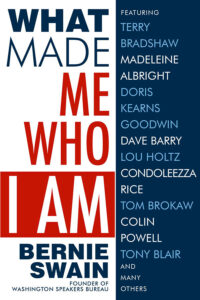
 Today’s guest on The Successful Pitch is Bernie Swain, the author of “What Made Me Who I Am”. He’s the founder of the Washington Speakers Bureau, which represents famous presidents, Tony Blair, Condoleezza Rice, athletes, Tom Brokaw, and he talks about how he started his agency, how long he had to wait while working out of a closet to get his first client, and the resilience it takes to become an entrepreneur. He said, “Passion is much more important than talent, and a pitch works when it’s real and authentic. Really, there’s no short-term path to long-term success.” He said, “You’ll never be happy until you control your own destiny.”
Listen To The Episode Here
What Made Me Who I Am With Bernie Swain
Hi and welcome to The Successful Pitch. Today I’m honored, and quite honestly very thrilled, to have Bernie Swain as my guest today. He’s the co-founder of the Washington Speakers Bureau and today’s foremost authority on the lecture industry. Over the past 35 years, Swain has represented former US presidents, American and world leaders, journalists, authors, business visionaries, and sports legends. He’s got a wonderful new book out called “What Made Me Who I Am”. I highly recommend it. I’ve enjoyed every single chapter. Bernie, welcome to the show.
Thank you. This is an honor. Thank you, John.
Well, your background of coming from a family of humble beginnings definitely resonates with me. My grandfather was a coal miner and I know that that really resonates with your roots, but I always love to ask my guests to take us back to their own story of origin. Feel free to start in any way you’d like as to whether it’s your parents or your own big decisions that you had to make in your career, but how did you get to be who you are?
Well, John, my parents were like yours. They were from Virginia and West Virginia. My mother’s side, they were farmers in Virginia. My father’s side, they lived in the poorest of mining towns in West Virginia and in a two-room house with five sisters, a brother, and assorted relatives who came and went. My father spent part of his childhood, when my grandmother couldn’t always take of care of him, in an orphanage. No one in my family ever went to college before. They were good people, but there was never any conversation in my family about going to college, even when I was a junior and senior in high school.
I had a mentor, one of those first turning points in my life. He was a teacher. He was the athletic director, the football coach at the high school, and everyone looked up to him. I wanted to be just like him. In fact, I was not only inspired by him, but I started a 17-year career based on following in his footsteps. At 36 years old, I was offered the job as the athletic director at George Washington University.
About the same time, a friend of mine had sent me a copy of Fortune Magazine, and in the magazine was an article about the largest lecture agency in the world. They had just walked into the Ford White House and picked up Gerald Ford, Henry Kissinger, and Alexander Hague as clients. Near the end of the article, Henry Kissinger is quoted, complaining about the high commission rate that this agency wanted to charge and saying, “Well, why simply don’t I sign with one of your competitors?” The agency president said, “Well, I have no competitors.”
I took the article home and I put it on the coffee table, thinking I would probably look at the rest of the articles in the magazine, and a couple of days later, I came home and my wife said, “Have you read the article in this magazine? He has no competition.” She sat me down and she said, “You come home two or three times a week and you complain about the bureaucracy of university life, and I don’t think you’ll ever be happy unless you can make decisions on your own.” Over a period of weeks, she pushed and she prodded me and convinced me to walk away from my dream job as an athletic director at a university.
We had no money. We certainly had no experience. We had no plan in order to start our company and to get money to live on. My wife had been making $11,000 a year and I’d only been making $33,000 as the assistant athletic director. In order to get money, we put a second mortgage on our home, and now we had $55,000 of mortgages on a $60,000 house, above 12% interest rate. As I said, we had no money, but then a friend of ours offered to rent us his stationery closet as our first office. To give you an idea what it was like to live in a stationery closet, the person whose office of the stationery closet it was was Chuck Hagel, who would later become Barack Obama’s secretary of defense.
Well, you never know who you’re talking to, do you.
No.
I want to take a moment and just dwell on what Paula said to you, which is you’ll never truly be happy until you control your own destiny. We’re going to tweet that out. It’s such a great line, and I think that’s a pivotal moment for everyone listening, is is that true for you? If it is and you choose happiness over security … because that’s the choice you were having to make, isn’t it, Bernie?
 Source: Pexels
[Tweet “You’ll never truly be happy until you control your own destiny.”]
Yeah, it is. I learned later on, because of some of the people I represented, that there are turning points like my happening to find a mentor in high school. There are turning points in life where if we slow down and we pay attention to these turning points or these forks in the road, we can make good decisions to go one way or the other. The great legendary catcher of the New York Yankees Yogi Berra once said, “I get to a fork in a road, one of these turning points, and I take it.” Unfortunately, that’s what most of us do. We miss these forks in the road. We miss these turning points in life where we can go in one direction or another. I was fortunate, without giving much thought to it, to pay attention to two people in my life early, the high school teacher and my wife, who saw something in me that I didn’t see in myself.
Isn’t that great.
I think that’s the key to success in anything we do, is to listen to others who can see something that we don’t see.
What a great gift. Well, so let’s go back. You’re working out of a closet. You’re in debt up to your ears. You don’t have a lot of experience. Now we’re going, “Okay. We’ve got the Washington Speakers Bureau. Surely we’ll be getting a speaker any day now.” Pick up the story there, because it’s a doozy.
Well, as you said, we had no experience, and so we would sit in this closet and we would try to think of famous names to represent. We were trying to get a telephone number, and none of our calls were ever returned, and our letters were returned from lawyers who said, “My client, this famous person, is under a written contract with another agency. Don’t write them again or we’ll sue you.” You have to remember back in 1980, there was no internet. There was no way for us to determine whether that quote, where, “I have no competition”, was true. Because of those letters, we discovered there were actually five or six other large agencies up and down the east coast of the United States in addition to this one large agency.
We sat in that closet for 12 months, and, really, nothing had changed. We didn’t represent anyone, we had discovered there was competition we did not know existed before, and we were about out of money. Two months more passes, we had been in there for 14 months in this closet, and I get a call from a guy named Steve Bell, who was an anchorman for a news show that started in 1975 called Good Morning America. I had briefly met Steve when I was at the university, I let him use the swimming pool. Steve had been under one of those written contracts. That agency had not fulfilled their obligation to him. The contract had expired.
Steve called me on the phone and said, “I heard that you started a speakers bureau. If you want, I’ll give you a chance.” I went over to his office and I shook hands, and on the way back, I suddenly realized that I had not signed him to a written contract. When I got back to the closet, I tried to justify it to my wife, Paula, by saying, “Well, what good will it do to hold him to a piece of paper if he’s not happy?” That mistake on my part, that error in judgment at the moment, turned into be a defining moment for us because Steve then went and told other journalists, his friends, that if you don’t want to be tied up to a written contract with an agency, you can go shake hands with these new little guys in town and walk out on them any time you want.
 Source: Pexels
[Tweet “What is your defining moment?”]
Well, there’s the defining moment, everybody. That’s the branding. That’s what separates you from the competition. Because everybody’s always asking startups, especially when they’re trying to get funding, “What’s your secret sauce? What separates you from the competition?” And you just gave it that. The question that you need to ask yourself, listeners, is, “What’s my defining moment in my story of origin?” Because those 12, 14 months, I know you’ve said to yourself, “What have I done?” How did you keep going, Bernie? How did you and Paula keep the faith that this was going to work out?
Well, you’re exactly right when you talk about finding that brand, that moment. Sometimes it happens by mistake and sometimes you can identify it in the beginning. The key to it, once you find that branding, is to be truthful to it. It’s to stay with it. I remember about a year and a half passed after I shook his hands, and no other agency that we competed against went to handshakes. They were still signing people to written contracts.
I remember one day I was sitting at my desk and thinking of ways that I could cut corners. “Let’s give up these handshakes. Let’s tie people up. Why worry about whether they’re going to walk out on us? Does it really make a difference? Do people really care about the truth and the faith and the honesty that those handshakes brought for us?” Then, at the same time, I get a letter from a coach at the University of Minnesota named Lou Holtz, who went on to Notre Dame, and in the letter, at the bottom, it said, “I ask of you three questions. Can I trust you? Are you committed to excellence? Do you care about me?”
Now, these were things that Lou Holtz put in every bit of correspondence he ever wrote, so it would be easy to forget it and just pass by it. I remember putting the letter to file it away on my desk, and it sat there for a day and then it sat there for several days. I finally picked it up and I read it again, and it said, “Can I trust you? Are you committed to excellence? Do you care about me?” The very reasons those handshakes worked and the very reasons I started the company in the first place, what that lesson taught me was there’s no short-term path to long-term success. Those handshakes created a brand for me, and it would be foolish for me to give up on that.
That’s a good quote, too. There’s no short-term path to long-term success. We’re going to tweet that out as well. I love those three questions. I find when I work with clients, helping them with their pitch, whether it’s to get funded or to get a new client, that that first question that clients have or investors have is, “Do I trust you?” It’s a fight or flight thing. Is it safe to be in your presence? Are you going to stab me in the back? Or is this someone I want to work with? Then, this commitment to excellence. That really shows up in so many ways. Keeping your word, as you said. If you’re going to say, “We run our business on a handshake,” then you have to keep doing that. Finally, the big one is, “Do you care about me?” Whether you’re listening to someone give a keynote talk or pitch to get someone to hire you, ultimately one of the questions people have after they trust and like you is, “How committed are you to making me look good?” Or, “What extra mile are you going to go for me?”
 Source: Pexels
[Tweet “No short term path to long term success”]
Right.
I just love what you said.
I put that letter in plastic and I look at it every several weeks, because I want to remind myself what’s really important in life. We’ve been in business now for 37 years, so over a 37-year period, we’ve never signed a speaker, including three United States presidents and six prime ministers of Great Britain and countless secretaries of state, authors, journalists.
Right.
None of them have been signed by a contract. It’s all been on a handshake.
What Made Me Who I Am
Isn’t that great. I want to ask the story. Again, the book is “What Made Me Who I Am”. and there’s a riveting story of how you got your first president, Former President Ronald Reagan, to pick you versus much larger agencies that he could’ve gone with after he stopped being president and was going to be a speaker. I think it goes full circle to how we opened the interview today, Bernie, which was who you are, what your values are, what your background is, and how that resonated with Former President Reagan.
Yes. This story shows how powerful it is to have a great reputation no matter what you do. There is nothing more important in your life. We were one of 30 agencies that got a letter asking if we would interview to represent Ronald Reagan when he left office. They were all the big agencies, all bigger than we were. They were Hollywood agencies because Ronald Reagan had been an actor in Hollywood. The idea was that you would take 30 agencies and whittle it down after one interview to 15 and then down to seven, and the top two choices would be given to President and Mrs. Reagan for them to make the choice.
After our final interview, we heard nothing for two months. Washington’s a very gossipy town, so usually you can find out something. You can call somebody on the phone and they can usually say, “Well, here’s what I think is going on,” but nobody could figure out anything. Everything was totally silent. I get a call one day from Fred Ryan, who was the chief of staff of Ronald Reagan and was now a publisher for The Washington Post, and I braced myself for the bad news. I envisaged this conversation by Fred saying, “Well, Bernie, you’ve done a great job, you’ve got to be proud of what you’ve accomplished in nine years, you have a good reputation, but I hope you understand we must go with more experienced people.”
I got on the phone and I braced myself for that bad news, and Fred Ryan got right to the point. “Bernie, President and Mrs. Reagan have selected you to represent them.” I sat there at my desk totally surprised. I did not know what to say, so I promised to do a good job. I told him we’d be in touch in the next day and I hung up the phone. I remember sitting there at my desk that day thinking how totally amazing that a president of the United States would risk his legacy on a totally inexperienced group of people.
But over the years, as I got to know him, I came to understand how this all happened. He was a believer in entrepreneurism and the little guy, and true to the fundamentals that he had been taught young in life. I remember asking Fred Ryan how this all happened later on, and Fred said, “President and Mrs. Reagan recognized that you were young entrepreneurs. They recognized that you had a good reputation. They simply wanted to give you a chance.”
Wow. What a great, great story. Again there’s a theme that I’m hearing, and when I read your book it’s really stuck out with me, was you had to wait 14 months to get your first speaker. Then, after your big pitch to represent President Reagan, you had to wait two months. There’s some skillset there of resilience and maybe a little bit of releasing the attachment to the outcome is what I call it, that I think would be really valuable. I want to ask you about those two situations, because it’s a skill that everybody can use, whether you’re an entrepreneur or working for someone else. After you give a pitch to get hired, to get someone to hire you or to get your startup funded, there’s a waiting period before you hear the yay or nay. Any insights there, Bernie, on how to deal with that time in between?
For some reason, I found it very easy for me to sit down and talk to the president of the United States or Margaret Thatcher, prime minister of Great Britain or Colin Powell or other people who had far exceeded what they accomplished in life than I had, and I did so because the thing about making a pitch is that the pitch is real if it’s based on the life that you live and the way you go about your business and the way you treat other people. If you have a good reputation and you care about other people, then the pitch is really from the heart. It’s not trying to talk somebody into something by creating a set of facts that may or may not exist.
I always found myself talking about family and relationships when I sat down with other people because those are the most important things for all of us in our lives. It is the reason we’re in business in the first place. If we think that we’re in business in order to make ourselves look better or to give ourselves a better reputation, then we’re not going to succeed. We succeed in life because we’re trying to do something good for other people. Other people may be our customers, they may be our family, they may be our employees, but if we put those people first, then the pitches we make in life, no matter whether we’re talking to that customer one-on-one or are pitching to a famous speaker or not, they ring true.
I love that, because so many people have the imposter syndrome, right? You start comparing yourself. “I haven’t done nearly as much as what that person has done,” or, “This is a really big client or a client big investor, and why would they hire little old me?” When you get out of trying to compare yourself to other people and go into what you said, being authentic and talking about relationships and what’s important to you, then you’re talking to people as other people and not about their accomplishments. Would that be a fair summary of what you said?
Excellent. Exactly what I meant.
Terrific. Now, there’s a wonderful story in here that I love about James Carville, which he talks about watching his mother sell. He said, “Mama taught me there’s honor in being a good salesperson, especially when you’re selling a worthy product.” He took that life lesson and said, “Politics is all about selling.” Would you take us back to paint that picture of where he got that life lesson?
Well, they grew up in a very small town in Carville, named not because of their family but because for other reasons, but his mother was, as he said, one of the greatest salespeople he ever knew. She would sell World Book Encyclopedia door to door, and she would take young James whenever she went somewhere. I remember she would say, “Now, James, look for the house that has a bicycle and a boat, a vast boat parked in the front.” James would say, “Well, how come, mom?” She would say, “Well, the bicycle means the family has kids, and therefore the encyclopedia means something to them. The boat means they have enough money to buy the boat.”
She would go in there and she would sit down, and she would start asking, saying the virtues of getting the encyclopedia and how important it was. She would start to ask James some questions, and James would answer, “Yes, the capital of this state is this,” or, “The French Revolution was at this time.” Most often, the lady of the house where the husband was away would say, “Well, I don’t know whether we can do this or not. We have a lot of expenses.” The lady would say, “Well, if you have kids, there’s nothing more important than getting the encyclopedia to teach them knowledge.” They would say, “Well, I’m not sure. We’re struggling.” Well, if you have a boat, then you have the money to invest in those children. It was a well thought out plan by his mother that taught him how important it was to think about selling and the importance of doing a good job selling.
What I love about that story is she qualified. She wasn’t just going door to door, she knew that her buyer had to have kids and had to have enough money to afford the encyclopedias, and that’s so important when you pitch, is to do your due diligence and do your research to see if this potential client is a good fit. That all comes down to knowing who this is for and who it’s not for, right?
Exactly. Knowing your customer.
I love it.
That applies to almost everything. Knowing your customer is so important for the success of any company.
Well, there’s so many great interviews in the book. Again, “What Made Me Who I Am”. Let’s jump to Condoleezza Rice, because she’s always fascinated me with this discipline and focus from being an ice skater to her career in politics.
Right. Well, Condi Rice came from a long line of slaves and, quite surprisingly, a family of ministers. Her grandfather was a great believer in knowledge. They had absolutely no money, and he took what was virtually all the money they had and bought this set of books. His wife, her grandmother, tried to talk him out of getting the books because they really couldn’t afford them, and he insisted on keeping the books because he believes so intently on knowledge and education. That idea of education and believing in knowledge was passed down over the generations. In the book, it’s an example of a turning point in life that can sustain generations. Condi, she is incredibly bright, and she is the provost of Stanford today. All of this is because of one turning point two generations before she was born that happened in her life.
Amazing. Well, I think I would be remiss if I didn’t ask you what advice you have for professional speakers who may not be a famous president or athlete or something along those lines, because you’ve obviously managed a lot of successful people’s careers. What advice do you have for speakers who want to get in an agency like yours but they’re not famous? What would you say to them?
Well, first I will say if you get a chance, go to my website, BernieSwain.com, because in there is a blog that I created called 10 Steps to Get a Speaker’s Bureau Interested In You. One of the most important things in this is that you need to find your own story. It goes back to what I’ve always believed in, in that there are turning points in life. I’ve simply started a lecture agency, but I found a great deal of turning points in my life that create a story for me.
What you need to do as a potential speaker is to find out what in your life, what were the turning points in your life? What created that story for you that made you unique? What do you have to say to others that can change lives? I think that’s the fundamental importance of anybody who’s going out and speaking. It doesn’t do any good to go and find 10 great business ideas and then take those ideas that have been said 100 times and use them. It all comes from inside you. What are the turning points in your life? What are those powerful influences, those defining moments, those people who come into your life, those unexpected events that you experience, those moments in time? If you can find those, then you can create and you can share your story with others.
Got it. Well, my final question to you is how did you come up with the title of your book, “What Made Me Who I Am”?
The people in the book that I think I explained to you earlier before we started the broadcast are people that are older, that I grew up with. What I’m trying to reach are younger people today and entrepreneurs, people in their 20s and 30s who are either starting something new, want to start something new, or they’re in the middle of something and maybe they’re struggling a little bit. Because I want to give good examples in life, people who took adversity and difficult times and changes in their lives and how they reacted to those turning points.
I want to tell the people how important these turning points are, how important it is for us, no matter how small that fork in the road is, to slow down a bit and make good and wise decisions. Because we can look back on life and say, “Gee, I wish I had done this,” but when you’re young and you’re starting out and you’re becoming an entrepreneur or whatever you want to do in life, isn’t it better to discover those moments in time that you can make the right decision before you have to look back and say, “I wish I had done that”?
No regrets, right? Take some risks.
Right.
Well, Bernie, this has been amazing. We’re going to put the link to buy your book, “What Made Me Who I Am,” in the show notes. We’re going to put the link to your website, BernieSwain.com. On Twitter, if people want to follow you, your Twitter handle is @Swain_Bernie. Are there any final thoughts you want to leave us with?
I will say one thing, and you alluded to it a little bit earlier, is that how did we survive in that closet for 14 months without absolutely any success? Why did we sit there for two months when we didn’t think we were going to get Ronald Reagan and we were just simply waiting for who got him and how disappointed we were going to be? The thing is I had no idea I would be good at this. What is important in life for any entrepreneur is passion is more important than talent. It’s important to realize that. You’ve got to say it over and over again. You’ve got to believe in what you do and you have confidence in yourself. Passion is more important than talent.
Well, that’s my favorite quote of the day. We’ll tweet that out as well. What a great way to end the episode. Passion is, in fact, more important than talent. You’re a living example of that. I can feel your passion talking with you. I can feel your passion reading the book. Everyone, get that book “What Made Me Who I Am”. Thanks again, Bernie.
 Source: Pexels
[Tweet “Passion is more important than talent”]
Thank you, John.
Links Mentioned
- Book: “What Made Me Who I Am”
- Website: BernieSwain.com
- Twitter: @Swain_Bernie
Wanna Host Your Own Podcast?
Click here to see how my friends at Predictive ROI can help
Fox 11 News Los Angeles John Livesay The Successful Pitch book
Share The Show
Did you enjoy the show? I’d love it if you subscribed today and left us a 5-star review!
-
- Click this link
- Click on the ‘Subscribe’ button below the artwork
- Go to the ‘Ratings and Reviews’ section
- Click on ‘Write a Review’
- JohnLivesay.com
- John Livesay Facebook
- John Livesay Twitter
- John Livesay LinkedIn
- John Livesay YouTube